
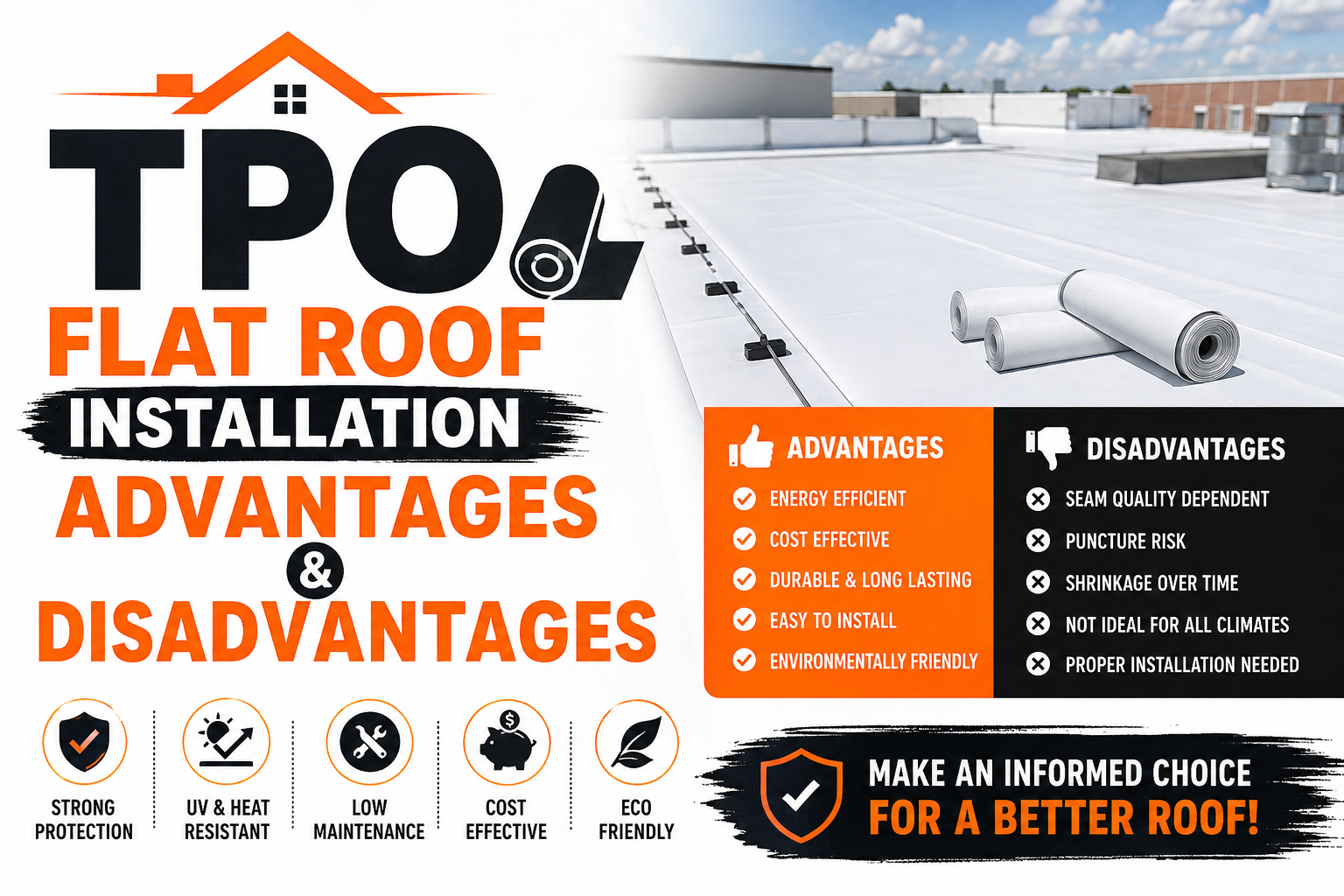
TPO Flat Roof Installation Advantages and Disadvantages
Introduction
Thermoplastic Polyolefin, commonly known as TPO, has become one of the most widely used flat roofing materials in the commercial construction industry. Over the past two decades, it has gained popularity for its combination of durability, energy efficiency, and cost effectiveness. Many property owners now choose TPO roofing when constructing new buildings or replacing aging flat roof systems because it offers reliable protection while helping reduce long-term operating expenses.
Although TPO roofing has become a preferred choice for many projects, it is not the ideal solution for every building. Like any roofing material, it comes with both strengths and limitations that should be carefully evaluated before installation begins. Factors such as climate, roof design, installation quality, maintenance expectations, and budget all influence whether a TPO roofing system is the right investment.
Flat roofing systems represent a significant financial commitment for commercial property owners, facility managers, and even homeowners with modern flat roof designs. Selecting the wrong roofing material can result in unnecessary repairs, higher energy costs, and shorter roof life. Understanding both the advantages and disadvantages of TPO roofing helps owners make informed decisions that align with their long-term goals.
Another important consideration is the installation process itself. TPO roofing performs best when installed according to manufacturer specifications by experienced roofing professionals. Proper preparation, heat-welded seams, insulation placement, and flashing installation all contribute to the roof’s ability to withstand years of weather exposure.
This guide explores every aspect of TPO flat roof installation, beginning with an explanation of how the material works and why it has become so popular. In this first part, we will examine the structure of TPO roofing systems, review the installation process, and discuss the major advantages that make this material a leading choice for modern flat roofing projects.
What Is TPO Roofing?
TPO stands for Thermoplastic Polyolefin, a single-ply roofing membrane engineered specifically for low-slope and flat roofing applications. It combines polypropylene and ethylene-propylene rubber to create a flexible yet durable roofing material capable of resisting weather, ultraviolet radiation, and environmental exposure.
Unlike traditional multi-layer roofing systems, TPO consists of a single waterproof membrane that covers the roof surface. Although the membrane itself is relatively lightweight, it provides excellent protection when combined with proper insulation, flashing, and drainage components.
Manufacturers produce TPO membranes in large rolls of varying thicknesses and widths. These rolls allow installers to cover extensive roof areas efficiently while minimizing the number of seams that require welding. Fewer seams generally reduce the number of potential leak points across the finished roof.
TPO membranes are commonly available in white, light gray, and tan colors. White remains the most popular option because of its ability to reflect sunlight and reduce heat absorption. This reflective property contributes significantly to the material’s reputation as an energy-efficient roofing solution.
Modern TPO roofing continues to evolve through ongoing research and product development. Manufacturers regularly improve membrane formulations to enhance flexibility, weather resistance, and long-term durability while maintaining competitive pricing.
The Basic Structure of a TPO Roofing System
Although many people think of the membrane as the entire roofing system, a complete TPO roof consists of multiple layers that work together to protect the building. Every component contributes to structural stability, insulation, waterproofing, and energy performance.
The installation begins with the structural roof deck, which serves as the foundation for the roofing assembly. Depending on the building, the deck may be constructed from steel, concrete, wood, or gypsum materials.
Above the roof deck, contractors may install a vapor barrier if required by the building’s design or climate conditions. This layer helps control moisture movement from inside the building into the roofing system.
Thermal insulation is then added to improve energy efficiency while creating a smooth surface for membrane installation. In many commercial projects, cover boards are also installed to increase impact resistance and provide additional protection.
Finally, the TPO membrane is secured over the prepared surface using approved attachment methods. Flashing, edge details, and drainage components complete the roofing system and create continuous waterproof protection.
Every layer plays an important role in roof performance. If one component is improperly installed, the effectiveness of the entire roofing assembly can be reduced.
Where TPO Roofing Is Commonly Used
TPO roofing has become popular across many industries because of its versatility and dependable performance. It is frequently installed on buildings with large, low-slope roof areas where energy efficiency and durability are important priorities.
Commercial office buildings often use TPO roofing because reflective membranes help reduce cooling costs during warm weather. Large roof surfaces receive continuous sunlight, making reflective roofing especially beneficial.
Warehouses and distribution centers also benefit from TPO roofing due to its lightweight construction and relatively simple installation process. These facilities often have expansive roof areas where efficient installation can reduce construction timelines.
Educational institutions, hospitals, shopping centers, hotels, manufacturing facilities, and apartment complexes also frequently choose TPO roofing systems. The material’s balance of performance and affordability makes it suitable for a wide variety of commercial applications.
Modern residential buildings with flat or low-slope roof designs increasingly incorporate TPO membranes as well. Homeowners appreciate the material’s clean appearance, energy-saving properties, and relatively low maintenance requirements.
How TPO Flat Roof Installation Works
Although TPO installation may appear straightforward from a distance, it involves multiple carefully planned steps that require specialized equipment and experienced installers. Every stage contributes to the roof’s long-term waterproof performance.
Installation begins with a thorough inspection of the existing roof deck. Contractors verify that the structure is clean, dry, and free from damage before any roofing materials are installed. Necessary repairs are completed to ensure the new roofing system has a stable foundation.
Once the deck is ready, insulation boards are installed according to project specifications. Depending on the roofing design, insulation may be mechanically fastened, adhered with specialized adhesives, or attached using a combination of both methods.
After insulation installation, the TPO membrane rolls are positioned across the roof surface. Installers carefully align each sheet to minimize wrinkles and maintain consistent overlap dimensions between adjacent sections.
The overlapping seams are then permanently joined using hot-air welding equipment. This process melts the membrane surfaces together, creating continuous waterproof seams that are often stronger than the surrounding membrane itself.
Finally, flashing is installed around roof penetrations, parapet walls, drains, skylights, HVAC equipment, and roof edges. These finishing details complete the waterproof barrier while protecting areas most vulnerable to water intrusion.
Why Professional Installation Matters
One of the greatest strengths of TPO roofing is also one of its greatest challenges. The material performs exceptionally well when installed correctly, but installation quality has a significant influence on long-term performance.
Professional roofing contractors receive manufacturer training on proper welding temperatures, membrane handling, fastening patterns, and flashing techniques. This knowledge helps ensure the completed roof meets warranty requirements and performs as intended.
Incorrect welding temperatures may create weak seams that eventually separate under weather exposure. Likewise, improper membrane tension can introduce wrinkles or stress points that reduce roof longevity.
Experienced installers also understand how changing weather conditions affect installation procedures. Temperature, humidity, and wind all influence membrane handling and welding quality during construction.
Choosing qualified roofing professionals reduces installation risks while increasing confidence that the roofing system will achieve its expected lifespan.
Major Advantages of TPO Flat Roof Installation
The growing popularity of TPO roofing is largely due to the many performance benefits it offers compared to older roofing systems. These advantages make it attractive for both new construction and roof replacement projects.
One of the most recognized benefits is energy efficiency. Reflective TPO membranes reduce solar heat absorption by reflecting a significant portion of incoming sunlight away from the building. Lower roof temperatures help reduce cooling demands during hot weather.
Energy savings become especially important for large commercial buildings where air conditioning systems operate continuously. Even modest improvements in roof reflectivity can contribute to noticeable reductions in electricity consumption over time.
TPO roofing also provides excellent resistance to ultraviolet radiation. Continuous sunlight gradually damages many roofing materials, but TPO membranes are engineered to withstand prolonged UV exposure without rapid deterioration.
Another major advantage is resistance to heat aging. Temperature fluctuations cause roofing materials to expand and contract repeatedly throughout the year. TPO’s flexible composition allows it to accommodate this movement while maintaining waterproof performance.
Excellent Waterproof Protection
Waterproofing remains the primary function of every roofing system, and TPO performs exceptionally well when properly installed. The continuous membrane creates a durable barrier that prevents rainwater from entering the building.
Heat-welded seams contribute significantly to waterproof performance. Unlike adhesive-based seams that may weaken over time, properly welded TPO seams create molecular bonds that remain strong throughout years of service.
The material also resists algae growth, mildew development, and many forms of environmental contamination. This resistance helps maintain roof appearance while reducing maintenance requirements.
Proper flashing installation around roof penetrations further enhances waterproof protection. When completed according to manufacturer specifications, the roofing system creates continuous moisture resistance across the entire roof surface.
Strong Seam Performance
Roof seams often represent the weakest points of many roofing systems, but TPO uses heat welding to create exceptionally durable connections between membrane sheets.
Specialized hot-air welding equipment heats overlapping membrane edges until they fuse together. As the material cools, the two sheets become permanently bonded into one continuous waterproof surface.
Properly welded seams offer several performance advantages.
- Excellent waterproof integrity
- High resistance to wind uplift
- Strong long-term durability
- Reduced risk of seam separation
- Consistent performance during temperature changes
These strong seams are one of the primary reasons many commercial building owners choose TPO roofing over older roofing technologies that rely more heavily on adhesives or asphalt-based bonding methods.
Flexibility During Building Movement
Commercial buildings naturally expand, contract, and shift slightly due to changing temperatures, structural loading, and seasonal environmental conditions. Roofing materials must accommodate this movement without developing cracks or leaks.
TPO membranes possess excellent flexibility, allowing them to adjust to minor structural movement while maintaining waterproof protection. This characteristic becomes particularly valuable in climates that experience significant seasonal temperature variations.
The membrane’s flexibility also simplifies installation around complex roof details. HVAC equipment, skylights, vents, parapet walls, and expansion joints can all be integrated into the roofing system using compatible flashing techniques.
This adaptability contributes to the material’s reputation as a reliable solution for a wide variety of commercial roofing designs.
Comparing TPO with Other Flat Roofing Materials
Every commercial roofing material offers unique strengths, making comparisons useful when evaluating roofing options. TPO provides an attractive balance between performance, efficiency, and affordability for many building owners.
| Roofing Material | Main Advantage | Primary Limitation | Typical Application |
|---|---|---|---|
| TPO | Energy efficiency and heat-welded seams | Installation quality is critical | Commercial and residential flat roofs |
| EPDM | Excellent flexibility in cold climates | Dark surface absorbs more heat | Large commercial buildings |
| PVC | Outstanding chemical resistance | Higher material cost | Restaurants and industrial facilities |
| Modified Bitumen | Strong puncture resistance | More labor-intensive installation | High-traffic commercial roofs |
While TPO offers numerous advantages, no roofing material is perfect for every project. Climate conditions, manufacturer quality, installation expertise, maintenance practices, and long-term performance expectations all influence how well a TPO roof performs over time.
Additional Advantages of TPO Roofing
The popularity of TPO roofing continues to grow because its benefits extend beyond energy efficiency and waterproof protection. Building owners often select this roofing system because it offers an excellent balance between performance, installation flexibility, and long-term operating costs. When installed correctly, TPO provides dependable protection while remaining relatively easy to maintain throughout its service life.
Another reason for its widespread adoption is its compatibility with modern commercial construction. Many newly constructed office buildings, warehouses, retail centers, healthcare facilities, and educational institutions use TPO because it meets both performance expectations and current energy efficiency standards.
Although every roofing project has unique requirements, TPO consistently performs well across a broad range of applications. Understanding these additional advantages helps property owners evaluate whether the system aligns with their building’s long-term needs.
Lightweight Construction
One significant advantage of TPO roofing is its lightweight design. Compared with some traditional multi-layer roofing systems, TPO places less structural load on the building while still providing durable weather protection. This characteristic is especially valuable for renovation projects where existing structures have limited load capacity.
A lighter roofing system can simplify material handling during installation. Contractors often move membrane rolls more efficiently across the roof, reducing installation time while minimizing unnecessary strain on workers.
Lightweight construction also supports transportation efficiency. Delivering roofing materials to the project site may require fewer shipments, which can contribute to reduced project costs and improved scheduling.
Despite its relatively low weight, TPO remains strong enough to withstand daily environmental exposure when installed according to manufacturer specifications. Its performance demonstrates that lighter materials can still deliver dependable long-term protection.
Installation Flexibility
TPO roofing systems offer several installation methods, allowing contractors to select the approach that best suits the building’s design and environmental conditions. This flexibility makes the material adaptable to a wide variety of commercial roofing projects.
Mechanically attached systems secure the membrane using specially designed fasteners that anchor it to the roof structure. These systems are commonly used on large commercial buildings because they provide efficient installation and reliable wind resistance.
Fully adhered systems use compatible adhesives to bond the membrane continuously across the insulation or cover board. This method often creates a smooth finished appearance while reducing membrane movement during strong winds.
Ballasted systems, although less common today, use stone or pavers to hold the membrane in place. While this method may not be suitable for every project, it demonstrates the versatility of TPO roofing technology.
Contractors evaluate factors such as building height, local wind requirements, roof shape, and structural capacity before selecting the most appropriate installation method.
Low Maintenance Requirements
Every roofing system requires periodic maintenance, but TPO generally demands less routine attention than many older roofing materials. Its smooth surface resists dirt accumulation better than rough roofing surfaces, making inspections and cleaning relatively straightforward.
Routine maintenance primarily involves visual inspections, debris removal, and checking drainage components for proper operation. Contractors also inspect flashing, seams, and roof penetrations to identify small issues before they become expensive repairs.
The reflective membrane helps reduce thermal stress, which may decrease the frequency of weather-related deterioration over time. Lower surface temperatures reduce expansion and contraction cycles that contribute to material fatigue.
Although maintenance requirements are relatively modest, they should never be ignored. Even the most durable roofing system benefits from regular professional inspections throughout its service life.
Environmentally Friendly Characteristics
Environmental sustainability has become an increasingly important consideration in commercial construction. Many property owners seek roofing systems that improve energy efficiency while reducing environmental impact throughout the building’s lifespan.
Reflective TPO membranes help decrease urban heat island effects by reducing rooftop heat absorption. Cooler roof surfaces contribute to lower surrounding temperatures, particularly in densely developed urban environments.
Many TPO roofing materials are also recyclable at the end of their service life. Recycling helps reduce landfill waste while supporting more sustainable construction practices.
Energy-efficient roofing systems may also contribute toward green building certification programs. While certification depends on numerous building components, reflective roofing often supports overall sustainability objectives.
Reduced energy consumption benefits both the environment and building operating costs. Lower cooling demands translate into decreased electricity usage, reducing the building’s overall environmental footprint.
Resistance to Chemical Exposure
Certain commercial buildings expose roofing systems to chemicals, oils, grease, or industrial pollutants that may damage conventional roofing materials. TPO demonstrates good resistance to many common environmental contaminants encountered in commercial settings.
Restaurants, manufacturing facilities, warehouses, and processing plants often generate airborne substances that settle on rooftop surfaces. Choosing roofing materials capable of resisting these contaminants helps preserve roof performance over time.
Although TPO resists many chemicals, building owners should always verify compatibility with specific industrial environments before selecting the roofing system. Manufacturers provide detailed chemical resistance information for specialized applications.
Regular roof cleaning further improves long-term performance by removing accumulated contaminants before they can affect membrane appearance or durability.
Good Puncture Resistance
Commercial rooftops frequently experience maintenance traffic throughout the year. HVAC technicians, electricians, communication specialists, and roofing inspectors all access rooftop equipment during routine servicing.
TPO membranes provide good resistance to accidental punctures when compared with many older single-ply roofing materials. While no roofing membrane is completely puncture proof, proper installation combined with quality insulation and cover boards improves impact resistance significantly.
Additional protection is often provided in high-traffic areas through designated walkway pads. These reinforced surfaces reduce direct wear on the membrane while improving worker safety during maintenance activities.
Property owners can further protect the roofing system by limiting unnecessary rooftop traffic and requiring maintenance personnel to follow established access procedures.
Disadvantages of TPO Flat Roof Installation
Despite its many strengths, TPO roofing also has limitations that should be considered before making a final roofing decision. Understanding these disadvantages provides a balanced perspective and helps property owners select the roofing system most appropriate for their specific needs.
Many disadvantages relate not to the material itself but to manufacturing differences, installation quality, environmental conditions, and long-term maintenance practices. Recognizing these factors allows owners to reduce potential risks through careful contractor selection and proper roof management.
No roofing material performs perfectly in every situation. Evaluating both advantages and disadvantages leads to more informed investment decisions.
Variation in Manufacturing Quality
One challenge associated with TPO roofing is that product quality may vary among manufacturers. Although industry standards exist, membrane formulations are not identical across all brands.
Different manufacturers use varying combinations of polymers, stabilizers, and reinforcing materials during production. These differences can influence flexibility, weather resistance, seam performance, and long-term durability.
Early generations of TPO roofing experienced performance inconsistencies as manufacturers refined their formulations. Modern products have improved substantially, but choosing reputable manufacturers remains an important part of the selection process.
Property owners should compare warranty coverage, testing certifications, product history, and manufacturer reputation before selecting roofing materials.
Dependence on Installation Quality
Perhaps the greatest limitation of TPO roofing is its dependence on proper installation. Even premium roofing materials cannot compensate for poor workmanship during construction.
Heat-welded seams require precise temperature control, consistent welding speed, and experienced technicians. Incorrect welding may create weak seams that eventually separate under environmental stress.
Improper flashing installation around roof penetrations represents another common source of future leaks. Since many roof failures occur around transitions rather than across open roof surfaces, installation quality becomes critically important.
Selecting experienced contractors significantly reduces these risks. Certified installers receive manufacturer training that helps ensure proper installation procedures are followed throughout the project.
Weather Limitations During Installation
Weather conditions influence nearly every commercial roofing project, and TPO installation is no exception. Although contractors work in a wide range of climates, certain environmental conditions can affect installation quality.
Heavy rain prevents membrane installation because moisture trapped beneath roofing materials may reduce long-term performance. Wet surfaces also interfere with adhesive bonding where fully adhered systems are used.
Strong winds can make handling large membrane sheets difficult. Proper alignment becomes more challenging when high winds lift or shift the membrane during positioning.
Extremely cold temperatures may also affect membrane flexibility and welding procedures. Contractors often adjust installation schedules or equipment settings to maintain quality under varying weather conditions.
Planning projects during favorable weather helps reduce delays while improving installation consistency.
Potential Seam Problems
Heat-welded seams represent one of TPO’s greatest strengths when installed correctly. However, improperly welded seams can become one of its greatest weaknesses.
Insufficient welding temperatures may fail to create complete molecular bonding between adjacent membrane sheets. Excessive heat, on the other hand, can damage the membrane itself.
Poorly aligned overlaps may also reduce seam integrity. Consistent overlap dimensions are essential for creating durable waterproof connections throughout the roofing system.
Routine inspections after installation help identify seam concerns before they develop into active leaks. Early repairs are generally simpler and less expensive than correcting widespread seam failure.
Long-Term Aging Considerations
Although modern TPO formulations continue to improve, all roofing materials experience gradual aging throughout their service life. Continuous exposure to sunlight, temperature fluctuations, wind, precipitation, and environmental pollutants eventually affects membrane performance.
Surface appearance may change gradually as the roof ages. Dirt accumulation, weathering, and normal environmental exposure can reduce reflectivity over time if regular cleaning is neglected.
Thermal movement also contributes to long-term material fatigue. Daily expansion and contraction cycles place repeated stress on seams, flashing, and roof penetrations throughout many years of service.
Fortunately, routine inspections and timely maintenance help address small aging-related concerns before they become significant structural problems.
Factors That Affect TPO Roof Performance
The performance of any TPO roofing system depends on much more than the membrane itself. Several external factors influence how well the roof performs throughout its expected lifespan.
Climate remains one of the most significant considerations. Buildings located in regions with intense sunlight, heavy snowfall, hurricanes, or frequent storms place different demands on roofing materials.
Roof design also influences performance. Buildings with complex layouts, numerous penetrations, and multiple elevation changes require more flashing and detailed waterproofing than simple roof designs.
Foot traffic represents another important factor. Rooftops supporting frequent equipment servicing experience greater wear than roofs requiring only occasional inspections.
Maintenance quality directly affects roof longevity as well. Buildings receiving regular professional inspections generally experience fewer unexpected repairs than those where maintenance is postponed.
Common Installation Mistakes to Avoid
Even experienced contractors follow strict quality control procedures because avoiding installation mistakes is far easier than repairing them after completion.
The most common errors include:
- Installing the membrane over wet or damaged substrates.
- Inconsistent heat welding of membrane seams.
- Improper flashing around penetrations.
- Incorrect fastening patterns.
- Inadequate roof drainage planning.
- Poor membrane alignment creating wrinkles.
- Ignoring manufacturer installation specifications.
Each of these issues has the potential to reduce waterproof performance, shorten roof lifespan, or increase future maintenance costs. Fortunately, experienced roofing professionals minimize these risks through careful planning, continuous quality inspections, and adherence to proven installation procedures.
TPO Roof Maintenance Requirements
Installing a TPO roof is only the beginning of its service life. Like every commercial roofing system, regular maintenance plays an important role in preserving performance, extending lifespan, and reducing repair costs. A well-maintained TPO roof can continue providing reliable protection for many years, while neglected maintenance may allow minor issues to develop into major structural problems.
Fortunately, TPO roofing is considered one of the lower-maintenance flat roofing systems available today. Its smooth membrane resists dirt buildup, supports efficient drainage, and allows roofing professionals to identify visible damage during routine inspections. These characteristics simplify maintenance compared to some older roofing materials.
Property owners should establish a preventive maintenance schedule rather than waiting until leaks appear. Regular inspections make it possible to identify worn sealants, clogged drains, loose flashing, or minor punctures before they affect the building interior.
Maintenance records are also valuable because they provide a documented history of roof condition. These records help contractors monitor changes over time while supporting warranty requirements established by many manufacturers.
Routine Roof Inspections
Professional roof inspections are one of the most effective ways to protect a TPO roofing investment. Experts generally recommend inspecting commercial flat roofs at least twice each year, typically during the spring and fall, as well as after severe weather events.
During these inspections, contractors examine the membrane for punctures, tears, wrinkles, or signs of excessive wear. They also inspect flashing around roof penetrations, HVAC equipment, skylights, parapet walls, and drainage components because these areas experience the greatest exposure to water intrusion.
Inspectors verify that seams remain securely welded and that edge details continue performing as intended. Even if no visible leaks are present, small defects identified early are usually much easier and less expensive to repair.
Regular inspections also allow contractors to evaluate the overall condition of rooftop equipment. Maintenance performed on HVAC systems or communication equipment sometimes causes accidental membrane damage that should be repaired promptly.
Cleaning the Roof Surface
Keeping the roof clean contributes to both appearance and performance. Dirt, leaves, branches, dust, and other debris can accumulate over time, particularly around drains and rooftop equipment.
Removing debris helps maintain proper drainage during rainfall. Blocked drains may allow water to collect on the roof, increasing structural loading while exposing the membrane to prolonged moisture.
Cleaning should always be performed using methods recommended by the membrane manufacturer. Soft brushes, approved cleaning solutions, and low-pressure washing are commonly used to remove accumulated dirt without damaging the roofing surface.
Harsh chemicals or abrasive cleaning tools should be avoided because they may reduce membrane performance or affect surface reflectivity. Using compatible cleaning products helps preserve both the appearance and durability of the roof.
Repairing Minor Damage Promptly
No roofing system is completely immune to accidental damage. Maintenance personnel, contractors servicing rooftop equipment, severe weather, or falling debris may occasionally puncture or damage the membrane.
Fortunately, most minor TPO repairs can be completed without replacing large sections of roofing. Small punctures are typically repaired using manufacturer-approved patches that are heat welded directly onto the existing membrane.
Prompt repair prevents moisture from entering the roofing system where it could damage insulation or the roof deck. Delaying repairs often increases both the complexity and cost of future restoration work.
Building owners should avoid temporary repair methods that are not approved for TPO roofing. Improvised sealants or incompatible repair materials may interfere with future professional repairs and could affect warranty coverage.
Protecting Heat-Welded Seams
The welded seams of a TPO roof represent one of its greatest strengths, but they still require periodic inspection throughout the roof’s lifespan. Although properly welded seams are extremely durable, years of weather exposure and building movement justify routine evaluation.
Roofing professionals inspect seam integrity using specialized probing tools designed to identify areas where bonding may have weakened. If small deficiencies are discovered, repairs can usually be completed before water infiltration occurs.
Maintenance personnel should also avoid dragging heavy equipment across membrane seams during rooftop service work. While welded seams are strong, unnecessary mechanical stress should always be minimized.
Proper seam maintenance helps preserve one of the most important waterproof features of the entire roofing system.
Expected Lifespan of a TPO Roof
The expected lifespan of a TPO roof depends on several factors rather than a single predetermined number. Material quality, installation workmanship, climate conditions, maintenance practices, and rooftop traffic all influence long-term performance.
Most professionally installed TPO roofing systems provide reliable service for approximately 20 to 30 years under normal operating conditions. Premium products installed by experienced contractors and maintained regularly may perform well beyond this general range.
Buildings located in moderate climates often experience less weather-related stress than those exposed to extreme temperatures, hurricanes, hailstorms, or heavy snowfall. Environmental conditions therefore play an important role in determining actual roof longevity.
Routine maintenance also contributes significantly to roof lifespan. Buildings receiving regular inspections and timely repairs generally experience fewer major problems than those where maintenance is postponed until leaks develop.
Factors That Influence Longevity
Several conditions determine how long a TPO roof continues performing effectively. Understanding these factors allows property owners to maximize the value of their roofing investment.
High-quality materials manufactured by reputable companies generally demonstrate more consistent long-term performance. While premium membranes may involve slightly higher initial costs, they often provide better durability over many years.
Installation quality remains equally important. Even the highest quality membrane cannot compensate for poor workmanship during seam welding, flashing installation, or substrate preparation.
Climate exposure also affects longevity. Constant ultraviolet radiation, severe storms, industrial pollution, and frequent freeze-thaw cycles gradually influence roofing performance throughout the roof’s service life.
Maintenance practices complete the equation. Preventive care consistently extends roof lifespan by correcting small issues before they become widespread problems.
Understanding TPO Roof Warranties
Most commercial TPO roofing systems include manufacturer warranty options that provide valuable protection for building owners. Warranty terms vary depending on the manufacturer, membrane thickness, installation method, and contractor certification.
Some warranties cover only manufacturing defects, while others include broader system coverage when certified contractors perform the installation. Property owners should carefully review warranty documentation before selecting roofing materials.
Many manufacturers require installation to follow approved procedures exactly. Failure to comply with specified fastening patterns, seam welding techniques, or flashing details may affect warranty eligibility.
Owners should also understand their maintenance responsibilities. Regular inspections and documented maintenance may be required to maintain warranty coverage throughout the roof’s lifespan.
Cost Considerations
Cost remains one of the most important factors influencing roofing decisions. TPO has earned a reputation for providing strong value because it balances installation affordability with long-term operating savings.
Material costs vary depending on membrane thickness, insulation requirements, roof complexity, geographic location, and manufacturer selection. Labor costs also differ based on project size and local construction markets.
Although TPO may not always represent the least expensive roofing option initially, many owners consider its lifecycle value attractive because of lower energy consumption and relatively modest maintenance requirements.
When evaluating roofing investments, focusing only on installation price can be misleading. Long-term ownership costs often provide a more accurate picture of overall value.
Long-Term Energy Savings
One of TPO roofing’s greatest financial advantages comes from improved energy efficiency. White reflective membranes reduce rooftop temperatures by reflecting a significant portion of solar radiation away from the building.
Lower roof temperatures reduce cooling demands during warm weather, particularly for large commercial facilities with extensive roof areas. Over many years, these energy savings may offset a meaningful portion of the original installation investment.
Energy-efficient roofing also helps reduce strain on heating and cooling equipment. Less demanding operating conditions may contribute to longer HVAC system life while reducing maintenance requirements.
The exact amount of energy savings depends on climate, building design, insulation levels, and mechanical system efficiency. Nevertheless, improved thermal performance remains one of TPO roofing’s strongest economic benefits.
Is TPO Roofing the Right Choice?
Choosing the right roofing material requires balancing performance expectations, budget, environmental conditions, and future maintenance goals. TPO performs exceptionally well in many commercial applications, but every project should be evaluated individually.
Buildings seeking improved energy efficiency often benefit greatly from reflective TPO membranes. Large office buildings, retail centers, warehouses, schools, healthcare facilities, and apartment complexes commonly select TPO because of its balance between cost and performance.
Projects requiring relatively fast installation also benefit from large membrane rolls and efficient heat-welded seam construction. These characteristics can reduce project duration while maintaining installation quality.
However, buildings exposed to unusual chemical environments or specialized industrial conditions may require alternative roofing materials depending on specific operational requirements. Consulting experienced roofing professionals helps determine the most appropriate solution for each building.
Summary of Advantages and Disadvantages
Understanding both the strengths and limitations of TPO roofing allows property owners to make balanced decisions based on practical expectations rather than marketing claims alone.
| Advantages | Disadvantages |
|---|---|
| Excellent energy efficiency | Quality varies among manufacturers |
| Reflective surface reduces cooling costs | Professional installation is essential |
| Strong heat-welded seams | Weather may affect installation scheduling |
| Lightweight construction | Poor welding can reduce seam performance |
| Good UV resistance | Long-term performance depends on maintenance |
| Low maintenance requirements | Premium products may have higher initial costs |
| Flexible installation methods | Requires experienced certified contractors |
| Recyclable and environmentally friendly | Not ideal for every specialized application |
The table demonstrates that many disadvantages relate more to installation quality and project management than to the membrane itself. Selecting experienced contractors and high-quality materials helps minimize many potential concerns.
Tips for Choosing a TPO Roofing Contractor
Even the best roofing material cannot perform properly without skilled installation. Choosing the right contractor is therefore one of the most important decisions during any roofing project.
When evaluating roofing companies, property owners should consider several important qualifications.
- Verify manufacturer certifications.
- Review commercial roofing experience.
- Request references from completed projects.
- Confirm licensing and insurance coverage.
- Compare warranty options.
- Ask about quality control procedures.
Contractors should also communicate clearly throughout the project. Detailed proposals, realistic schedules, and transparent explanations help establish confidence before installation begins.
Obtaining multiple estimates allows owners to compare experience, materials, warranties, and project approaches rather than selecting a contractor based solely on price.
Making an Informed Roofing Decision
Every commercial roofing project represents a long-term investment in building protection and operational efficiency. While TPO has become one of the industry’s most widely used roofing systems, the final decision should always consider the building’s unique characteristics.
Property owners benefit from discussing roofing goals with experienced professionals who understand local climate conditions, building codes, energy requirements, and manufacturer recommendations. Professional guidance helps ensure the selected roofing system aligns with both current needs and future expectations.
Evaluating lifecycle costs rather than initial installation expenses often leads to better investment decisions. A roofing system that performs reliably for decades while reducing maintenance and energy costs frequently provides greater overall value than one selected solely because of a lower purchase price.
Careful planning, quality materials, skilled installation, and ongoing maintenance work together to maximize roofing performance regardless of the specific membrane selected.
Conclusion
TPO flat roof installation has become one of the most popular roofing solutions for commercial and modern residential buildings because it successfully combines energy efficiency, durability, flexibility, and cost effectiveness. Its reflective surface helps reduce cooling costs, heat-welded seams provide dependable waterproof protection, and lightweight construction makes it suitable for a wide variety of building types. These advantages have established TPO as a leading option for property owners seeking long-term roofing performance.
At the same time, TPO roofing is not without its limitations. Installation quality plays a critical role in determining how well the roof performs throughout its lifespan, and differences in manufacturing quality make it important to choose reputable products. Weather conditions during installation, proper maintenance, and routine inspections also influence the system’s long-term reliability.
When professionally installed and maintained, a TPO roof can deliver decades of dependable service while contributing to lower energy consumption and manageable maintenance costs. Regular inspections, prompt repairs, and proper cleaning help preserve both performance and manufacturer warranty coverage, ensuring the roofing system continues protecting the building year after year.
Ultimately, the decision to install a TPO flat roof should be based on a careful evaluation of the building’s requirements, local climate, budget, and long-term objectives. By understanding both the advantages and disadvantages of TPO roofing, property owners can make informed decisions that provide lasting value, dependable weather protection, and improved energy efficiency for many years to come.