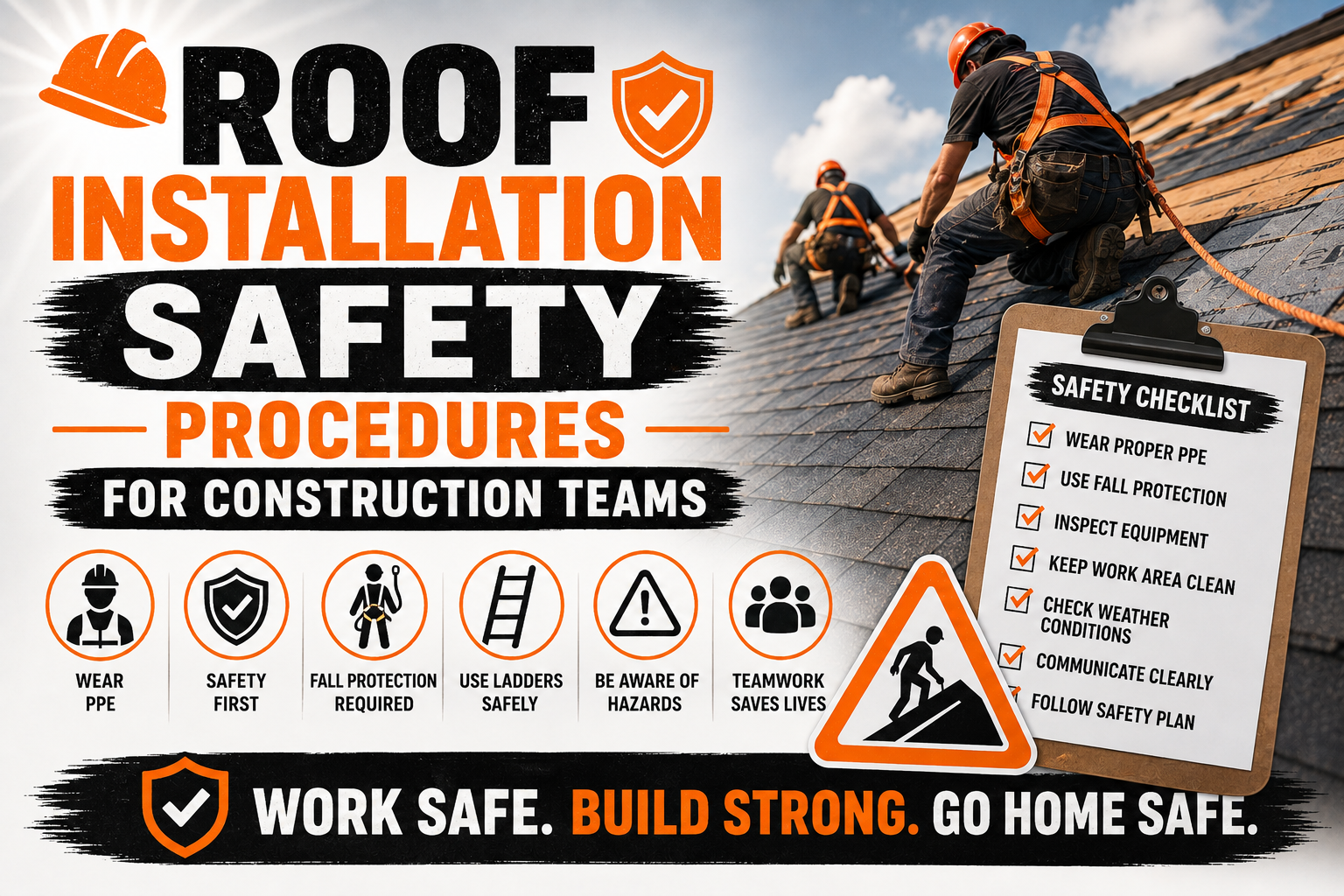
Roof Installation Safety Procedures for Construction Teams
Introduction
Roof installation is one of the most demanding activities in construction because workers must operate at elevation while handling materials, tools, equipment, and roofing components. The work may involve steep surfaces, exposed edges, ladders, power tools, electrical hazards, changing weather, and materials that can fall from elevated areas. Without proper planning and control, these conditions can create serious risks for workers and other people around the property.
A safe roofing project begins before the first worker climbs onto the roof. Construction teams need to assess the site, identify hazards, establish safe access, prepare appropriate fall protection, inspect equipment, organize materials, and communicate responsibilities. These preparations create a controlled environment where workers can perform roofing tasks without relying on improvised solutions.
Fall protection is especially important because roofing workers are frequently exposed to elevated edges and lower levels. The specific requirements depend on the location and type of construction, but recognized construction safety standards generally require appropriate protection where workers are exposed to significant fall hazards. In the United States, OSHA construction requirements commonly address fall protection for workers exposed to unprotected sides, edges, and other elevated hazards.
Roofing safety, however, involves much more than preventing falls. Workers can also be injured by unstable decking, falling tools, sharp flashing, improperly handled materials, damaged ladders, electrical contact, excessive heat, rain, strong winds, and poor housekeeping. A complete safety procedure addresses these hazards together and changes as the roofing project progresses.
Professional roofing contractors understand that safety is part of the installation process rather than a separate activity. The same planning used to determine where shingles, underlayment, flashing, or other components will be installed should also determine how workers will safely reach and work in those areas.
Understanding Roofing Safety Risks
Every roofing project has its own combination of hazards. A simple single-story roof may have different safety requirements from a steep multi-level roof with several valleys, dormers, skylights, and roof-mounted systems. The crew should therefore assess the actual building instead of assuming that a familiar roofing procedure will be suitable for every project.
Falls are among the most serious hazards associated with roofing work. A worker can fall from an unprotected edge, slip while moving across a steep roof, fall through an opening, or lose balance while carrying materials. The possibility of a fall increases when workers are distracted, working in poor weather, or moving around materials and equipment.
Roof openings require particular attention. Skylights, unfinished sections, damaged decking, mechanical openings, and other gaps may not provide safe support even when they appear to blend into the surrounding surface. Workers should know where these hazards are located and ensure that appropriate protection is in place before entering the work area.
The condition of the roof deck is another important consideration. During a roof replacement, workers may discover deteriorated wood, weakened panels, moisture damage, or incomplete sections after the existing roofing materials are removed. A surface that appears safe from a distance may not be capable of supporting a worker.
Slips and trips can also create serious problems. Loose shingles, nails, packaging, cords, tools, scraps, wet surfaces, and uneven areas can interfere with movement, particularly when workers are carrying materials or operating tools.
Falling objects create risks below the roof as well. Tools, fasteners, roofing materials, debris, and equipment can fall from an elevated work area and injure workers, occupants, visitors, or members of the public. The area below active roofing operations therefore needs to be considered as part of the overall safety plan.
Weather can change the risk level quickly. Rain can make surfaces slippery, strong wind can move lightweight materials, extreme heat can cause fatigue, and lightning can make elevated outdoor work particularly dangerous. Conditions should be monitored throughout the workday rather than checked only before the crew begins.
Electrical hazards should also be identified during the initial assessment. Overhead power lines, service connections, rooftop electrical equipment, temporary wiring, solar systems, and other energized components may be present near the work area.
A thorough hazard assessment considers all of these conditions together. The objective is to identify potential problems before workers are exposed to them and establish controls that remain practical throughout the installation.
Pre-Installation Safety Planning and Site Assessment
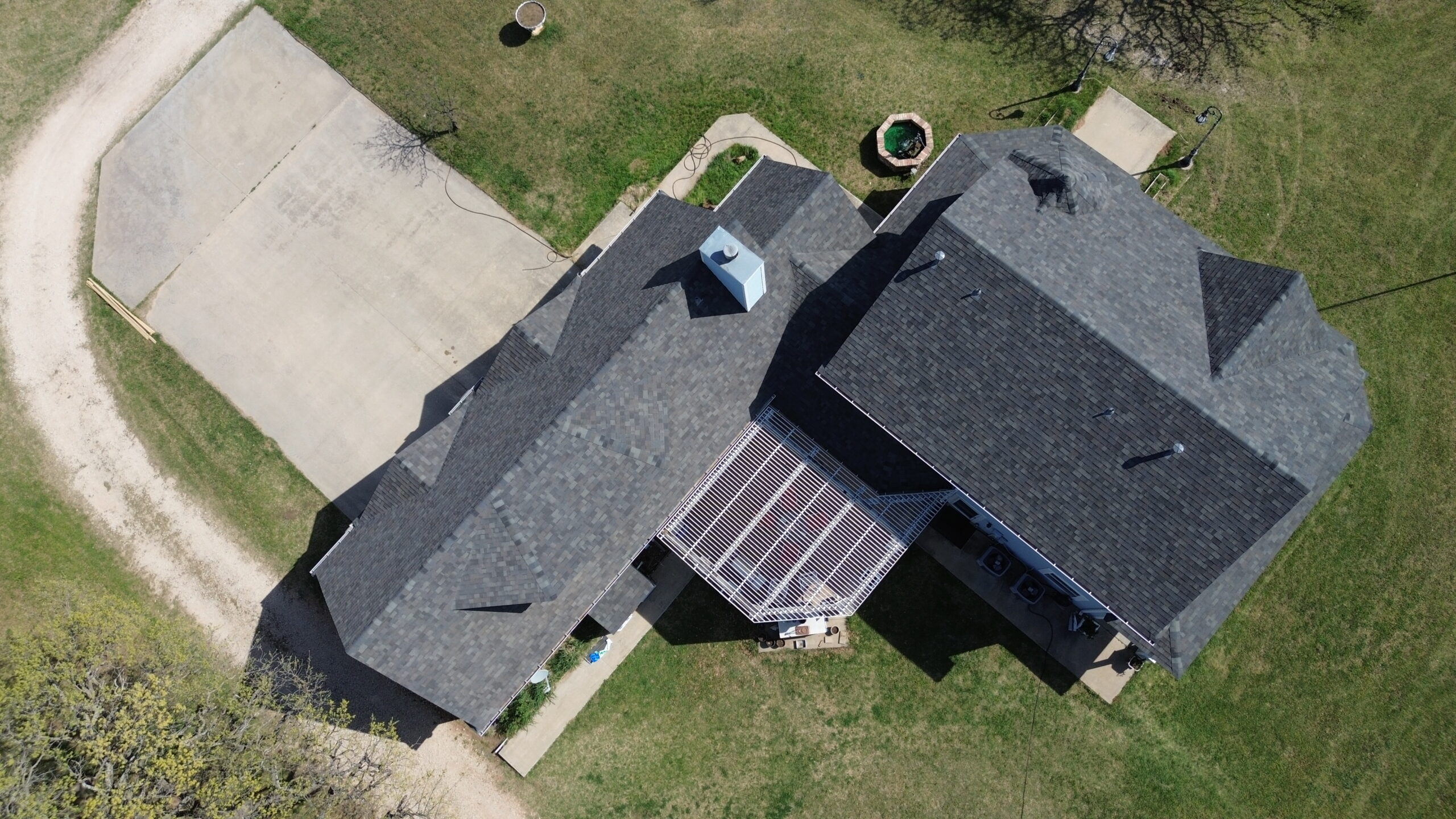
Safety planning starts with a detailed inspection of the jobsite. Before roofing work begins, a supervisor or appropriately qualified person should evaluate the roof, access points, surrounding ground area, existing conditions, equipment, utilities, and expected work activities.
The roof’s height and slope should be identified first because these characteristics influence how workers will move and what type of fall protection may be appropriate. Steeper roofs can make walking and material handling more difficult, while taller buildings can increase the consequences of a fall.
The location of roof edges should be clearly identified. Workers may approach edges while installing drip edge, starter shingles, flashing, metal panels, ridge materials, or other components, so the safety plan should account for normal movements rather than assuming workers will remain in the center of the roof.
Roof openings should also be identified before work starts. Areas that cannot safely support workers need to be protected, covered, or otherwise controlled according to the applicable safety requirements.
Existing roof conditions are particularly important during replacement projects. Once old shingles, membranes, tiles, or panels are removed, the crew may discover damaged decking or structural concerns that change the conditions of the work area.
The site assessment should also include ladders, scaffolds, lifts, and other access systems. Workers need a reliable method for reaching the roof and returning to ground level without climbing through unsafe areas or using improvised access methods.
Ground-level conditions should not be overlooked. Materials may be delivered by trucks, roofing debris may be removed through designated routes, and workers may need to operate equipment below the roof. Pedestrians, vehicles, occupants, landscaping, and nearby structures can all be affected by the work.
The crew should establish areas where people should not enter during active roofing operations. Depending on the project, warning signs, barriers, controlled access areas, or other measures may be appropriate.
Material delivery should also be included in the safety plan. Heavy bundles, long metal panels, rolls of underlayment, and other materials may require mechanical handling or coordinated lifting procedures.
Weather should be reviewed before work starts and monitored during the project. A forecast can provide useful planning information, but actual roof conditions should determine whether the planned work can be performed safely.
The crew should also identify emergency access routes. Workers need to know how emergency personnel can reach the property and how injured workers can be safely accessed from the roof.
A pre-work safety meeting gives the team an opportunity to discuss these conditions. The supervisor can explain the day’s activities, fall-protection arrangements, material movement, access points, weather concerns, restricted areas, and emergency procedures.
Safety planning should not remain fixed after the initial inspection. As the project changes, the crew should reassess the work area and modify controls when new hazards appear.
Personal Protective Equipment for Roofing Crews
Personal protective equipment provides an additional layer of protection against hazards that cannot be completely eliminated through planning and engineering controls. The exact equipment required depends on the work being performed, the materials being handled, and applicable regulations.
Head protection is important where workers may be exposed to falling or moving objects. Roofing crews frequently work beneath elevated materials and equipment, so appropriate head protection can reduce the potential severity of certain impacts.
Eye protection may be needed when cutting, drilling, fastening, grinding, or handling materials that can produce dust or flying particles. Workers should select protection appropriate for the specific task instead of using one type of eye protection for every operation.
Hand protection can be valuable when handling shingles, metal panels, flashing, lumber, fasteners, and other materials with sharp edges. Gloves should allow workers to maintain sufficient control of tools and materials while providing appropriate protection.
Footwear should provide suitable traction for the work conditions. Roofing surfaces can become slippery from moisture, dust, loose granules, or other materials, so footwear should be selected with the working environment in mind.
Hearing protection may be appropriate when workers operate around loud equipment such as compressors, saws, generators, or other machinery. The need for hearing protection depends on exposure levels and the equipment being used.
High-visibility clothing can be useful on sites where roofing crews work around vehicles, material lifts, delivery equipment, or other moving machinery. Clear visibility can help workers recognize one another and reduce confusion.
Fall-protection equipment requires especially careful selection and use. When a personal fall-arrest system is required, workers need compatible components such as an appropriate harness, connecting device, and suitable anchorage arrangement.
Workers should inspect personal protective equipment before use. Damaged, worn, contaminated, improperly fitted, or otherwise unsuitable equipment should be removed from service and addressed appropriately.
Training is also essential. Workers need to understand how protective equipment works, when it is required, how it should be inspected, and what limitations apply to its use.
Personal protective equipment should never be considered a replacement for safer work practices. Guardrails, appropriate access systems, material controls, housekeeping, safe procedures, and other hazard controls remain important parts of the overall safety system.
Safe Roof Access and Fall Protection
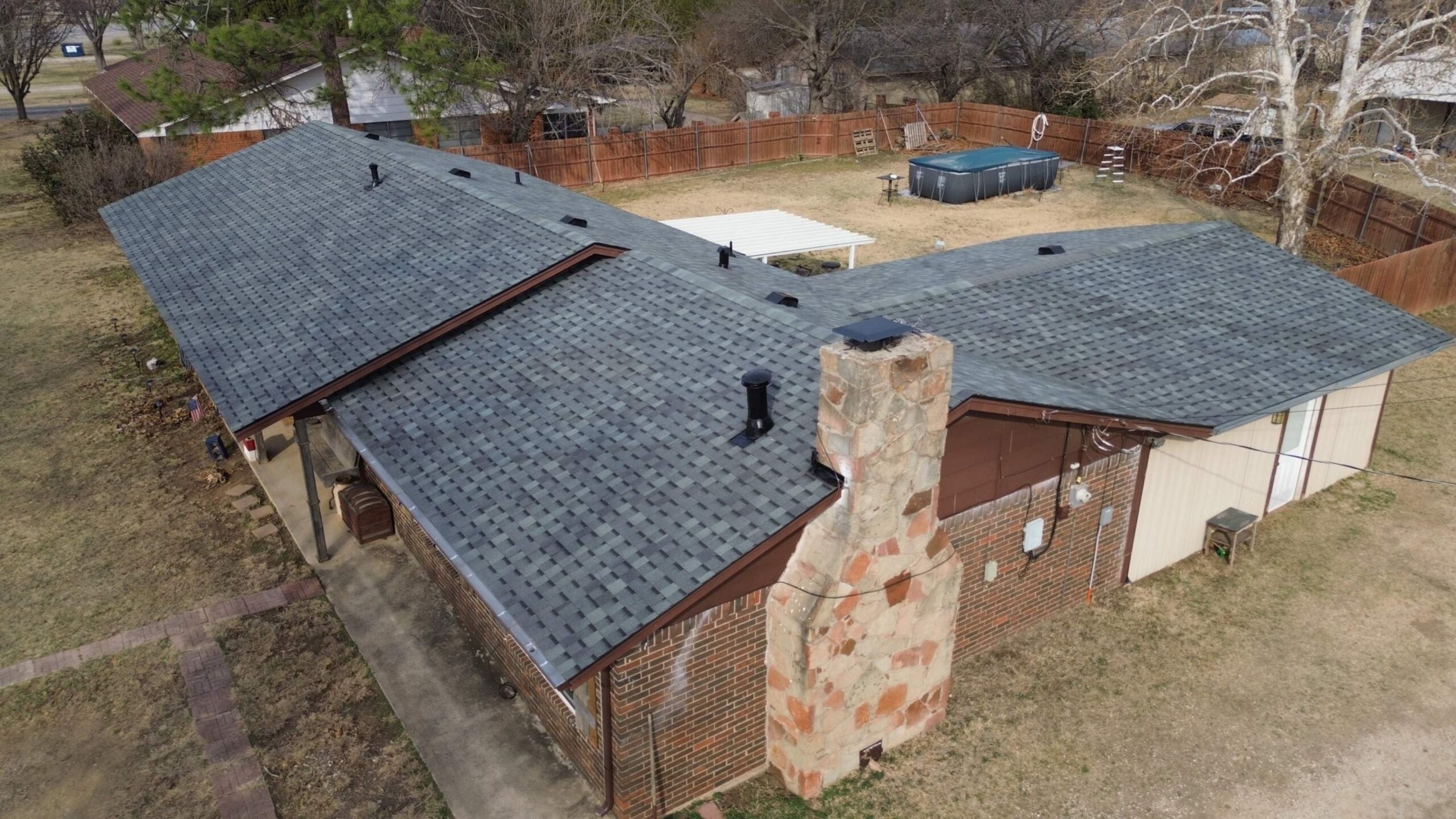
Safe access is one of the first practical requirements of roofing work. Workers need a controlled route from the ground to the roof and a safe method of moving between the access point and the active work area.
Ladders should be selected according to the height and task. They need to be inspected before use and positioned on stable surfaces where they will not shift during climbing.
The area around the ladder should remain clear. Materials, debris, cords, tools, and vehicles should not interfere with the bottom or top of the access route.
Workers should not use boxes, loose boards, buckets, or other makeshift objects to gain additional height. Improvised access can create instability and may place workers in positions where they cannot maintain safe contact with the ladder.
Scaffolds may be appropriate for some roofing operations. When used, they should be erected, inspected, accessed, and maintained according to applicable requirements.
Roof access also needs to be coordinated with fall protection. The point where a worker transitions from a ladder or scaffold onto the roof can create a separate exposure that should be addressed in the safety plan.
Fall protection may involve guardrails, personal fall-arrest systems, safety nets, restraint systems, warning lines, or other methods allowed under the applicable rules and project conditions. The selected system should match the roof configuration and the work being performed.
A personal fall-arrest system must be properly planned and configured. Anchors, connectors, harnesses, and other components should be compatible and used according to the manufacturer’s instructions and applicable requirements.
Fall restraint is another approach that may be suitable in certain circumstances. Unlike fall arrest, a properly configured restraint system is intended to prevent the worker from reaching the fall hazard in the first place.
Workers need to understand the system being used on their project. They should know where they can safely move, how the system limits their movement, and what to do if the system becomes damaged or displaced.
Fall-protection systems should remain available throughout the work. A worker should not remove a protective component simply because a task will take only a few minutes.
Materials should also be organized so workers do not have to approach an exposed edge unnecessarily. Keeping tools and roofing materials within a controlled work area can reduce unnecessary movement toward hazardous locations.
The safety system should be checked whenever the work area changes. A protection arrangement that worked for one roof section may not remain suitable after the crew moves to another section, installs materials, or exposes a new edge.
Preparing the Roof and Work Area Safely
Before roofing installation begins, the work surface should be inspected and prepared. The crew should remove unnecessary debris, identify unstable areas, and establish clear walking and working zones.
During roof replacement, old materials can accumulate quickly. Shingles, nails, underlayment, flashing, and other debris should be managed so they do not block access routes or create slip and trip hazards.
The exposed deck should be checked carefully after tear-off. Damaged or weakened sections should be identified and addressed before workers are expected to move across them.
Roof openings should remain clearly visible and appropriately protected. Workers should never assume that a skylight, temporary covering, or unfinished section can safely support their weight.
Tools should be organized throughout the work. Hammers, nail guns, drills, cutting tools, and other equipment should not be left where workers can trip over them or where they could fall from the roof.
Materials should also be arranged according to the work sequence. Keeping frequently used materials accessible can reduce unnecessary movement, while excess materials should be stored in appropriate locations.
Housekeeping should continue throughout the project rather than being postponed until the end of the day. Small pieces of debris and loose fasteners can quickly create hazards on a busy roof.
The area below the roof should be managed at the same time. Where falling-object hazards exist, appropriate controls should keep workers, occupants, and other people away from exposed areas.
The crew should maintain communication between workers above and below. Workers on the ground should know when materials are being moved overhead, while roof workers should know when people enter or leave the controlled area.
Weather should continue to be monitored while work is underway. If rain, strong wind, lightning, ice, or other conditions make the work unsafe, the crew should follow the project’s procedures for stopping or modifying operations.
Heat should also be considered during warm-weather roofing. Workers may become fatigued or dehydrated when working on exposed roof surfaces, particularly when reflective materials increase the amount of heat around the work area.
The worksite should be reassessed whenever conditions change. New roof sections, material deliveries, equipment movement, weather changes, or unexpected deck damage can all introduce hazards that were not present during the initial inspection.
Safe Material Handling and Storage on the Roof
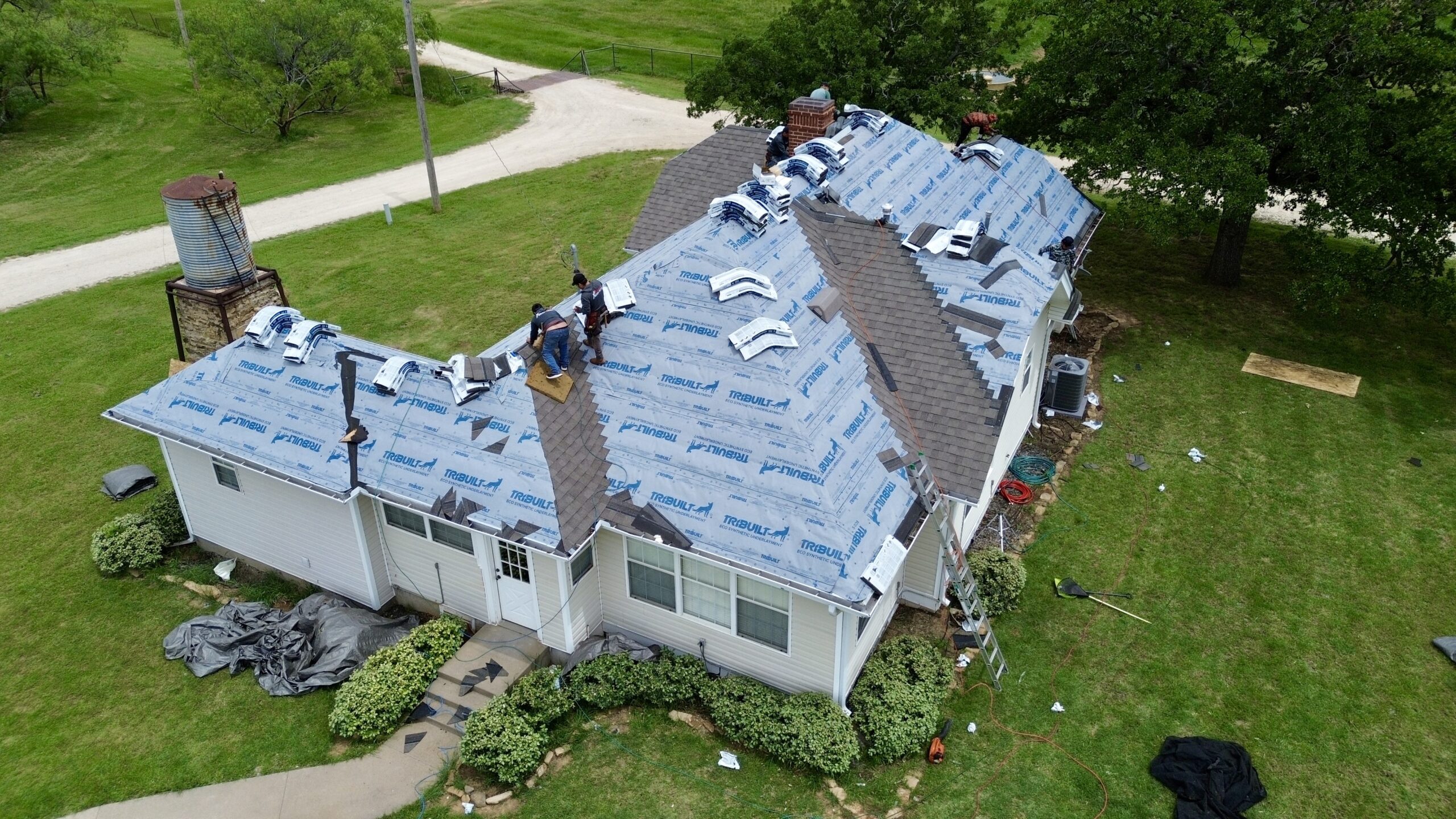
After the work area and fall-protection systems have been prepared, roofing crews need to establish safe procedures for moving and storing materials. Roofing materials can be heavy, bulky, sharp, or difficult to control, and improper handling can create lifting injuries, trip hazards, falling-object risks, and unstable working conditions.
Materials should be delivered using a planned method that considers the building height, roof design, material weight, and available equipment. Depending on the project, contractors may use material lifts, hoists, conveyors, cranes, or coordinated manual handling to move roofing products safely.
Before materials are moved, workers should understand the route from the delivery area to the roof. The route should remain clear of unnecessary obstacles, and workers should not be required to carry large or heavy loads through areas where they could lose their footing.
Heavy roofing bundles should be positioned according to the roof structure and project requirements. Concentrating excessive weight in one location can create unnecessary structural loading, while poorly positioned bundles can interfere with worker movement.
Workers should also consider how materials may behave in changing weather. Lightweight products such as underlayment, insulation, packaging, and sheet materials can move unexpectedly when exposed to strong wind.
Large roofing panels require particular coordination because they can act like sails when wind conditions increase. Workers should not attempt to control oversized materials in conditions where the material cannot be safely handled.
Manual lifting should be planned whenever materials cannot be moved mechanically. Workers should use suitable lifting techniques and coordinate their movements when a load requires more than one person.
Carrying materials that block a worker’s view should be avoided. A worker who cannot see the roof surface may fail to notice an opening, loose material, uneven decking, or another worker in the path ahead.
Materials should be stored away from active walking routes whenever possible. Workers should have enough space to move between the storage area and installation location without stepping over bundles, tools, cords, or debris.
Roof edges require particular attention when storing materials. Materials should be positioned according to applicable requirements and should not be left where they can slide, roll, blow away, or contribute to a falling-object hazard.
Small items need organization as well. Nails, screws, clips, fasteners, and flashing pieces can create puncture or trip hazards when scattered across the roof surface.
Packaging should be removed regularly. Plastic wrapping, cardboard, straps, and protective films can become slippery or airborne and should not be allowed to accumulate around the work area.
Material handling should also be coordinated with workers below. People should not enter areas where materials are being lifted or moved overhead unless the area has been appropriately controlled.
Good organization improves safety and efficiency at the same time. When workers know where materials belong and how they will be moved, unnecessary movement is reduced and the active work area remains easier to control.
Ladder, Scaffold, and Roof Access Safety
Ladders and scaffolds provide important access for roofing crews, but they can also become major hazards when they are damaged, improperly positioned, overloaded, or used incorrectly. Each access system should be selected according to the building, roof height, task, and applicable safety requirements.
Before a ladder is used, workers should inspect it for damage or defects. Broken rungs, damaged rails, loose components, excessive wear, and other problems should be addressed before the ladder is placed into service.
The ground beneath a ladder should be stable and reasonably level. Workers should never use loose objects or makeshift supports underneath the ladder to compensate for an uneven surface.
The area around the ladder should remain clear. Roofing debris, tools, material bundles, vehicles, and other objects can interfere with access and create additional hazards.
Workers should maintain appropriate contact while climbing. Carrying large materials by hand while climbing can interfere with balance and visibility, so suitable material-handling methods should be used instead.
The transition from the ladder to the roof should also be planned. Workers should not have to step across a large gap, climb around an obstruction, or move through an unprotected area to reach the roof.
Scaffolds can provide a more stable working platform for certain roofing activities. However, they must be properly erected, inspected, maintained, and used according to applicable requirements.
Scaffold platforms should remain clear of unnecessary materials. Excessive debris or poorly placed roofing components can reduce the usable working area and create trip hazards.
Workers should not place boxes, buckets, barrels, ladders, or other makeshift devices on a scaffold platform to gain additional height. If more height is needed, the scaffold should be properly adjusted or another suitable access method should be provided.
Scaffold components should also be protected from accidental movement. Workers need to understand the limits of the platform and should not make unauthorized modifications.
Ladders and scaffolds must be considered together with fall protection. A safe access system does not automatically protect workers once they leave the ladder or scaffold and begin working on the roof.
Electrical hazards near access equipment require additional attention. Metal ladders, scaffolds, roofing panels, and other conductive materials can create serious risks around energized power lines.
The access system should be inspected again when the work area changes. Moving to another roof section may require a different ladder position, scaffold arrangement, or access route.
Safe access should never be treated as a minor preparation step. Workers use these systems repeatedly throughout a roofing project, so a problem with access can affect the safety of the entire crew.
Safe Use of Roofing Tools and Equipment
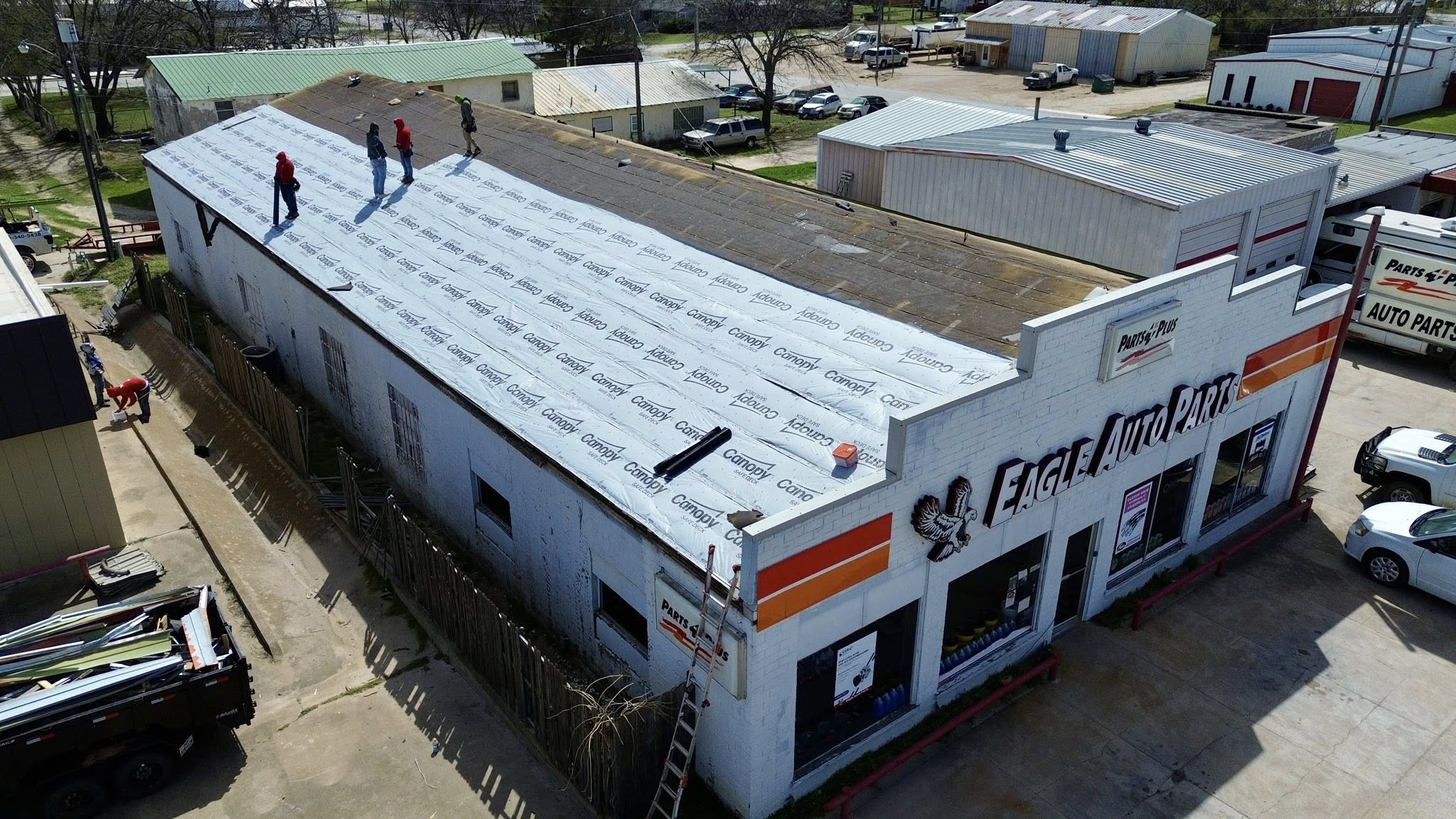
Roof installation requires numerous tools, and each one needs to be used according to its intended purpose. Common equipment may include hammers, nail guns, drills, saws, compressors, generators, cutting tools, and material-handling equipment.
Tools should be inspected before use. Damaged handles, cracked housings, exposed wires, missing guards, broken components, or other defects can make equipment unsafe.
Power tools should be used according to the manufacturer’s instructions. Workers should understand how to start, operate, adjust, maintain, and safely shut down each tool required for their task.
Nail guns require particular care because they can discharge fasteners with significant force. Workers should keep the tool pointed away from other people and avoid placing hands or other body parts near the firing area.
When a nail gun malfunctions or becomes jammed, workers should follow the appropriate procedure for disconnecting or securing the tool before attempting to clear the problem. They should never improvise a repair while the tool remains capable of firing.
Cutting tools can create flying particles and sharp edges. Appropriate eye protection should be used, and workers should position themselves so that other crew members are not unnecessarily exposed to the cutting operation.
Electrical cords should be inspected regularly. Damaged insulation, exposed conductors, broken plugs, or unsuitable connections can create shock and fire hazards.
Extension cords should be used appropriately for the equipment and working conditions. Cords should also be routed so they do not become trip hazards across active walking areas.
Air hoses can create similar problems. They should be organized and positioned so workers can move safely without repeatedly stepping across them.
Generators and fuel-powered equipment require additional precautions. Equipment that produces exhaust should be used in an appropriate location so workers are not unnecessarily exposed to harmful fumes.
Tools should be secured when they are not being used. A hammer, drill, cutting tool, or other object left near a roof edge can fall and create a serious hazard for people below.
Workers should also avoid carrying tools in a way that prevents them from maintaining safe footing. Tool belts, suitable carrying systems, or controlled material movement can help workers keep their hands available when navigating elevated surfaces.
Regular maintenance is important throughout the project. A tool that becomes damaged during the workday should be removed from service rather than being used until the end of the project.
Good tool management also supports workmanship. Properly maintained equipment gives workers better control and reduces the likelihood of rushed or improvised operations.
Electrical and Utility Hazard Prevention
Electrical hazards should be identified before roofing work begins because power lines and electrical equipment may be located near the building. Workers can unintentionally bring ladders, metal panels, flashing, tools, or other conductive materials into dangerous proximity to energized equipment.
Overhead power lines can be difficult to judge accurately from the ground. The crew should identify their location during the site assessment and establish appropriate controls before materials or equipment are brought near them.
Workers should treat power lines as energized unless an appropriate authority has confirmed otherwise. Roofing crews should never assume that a line is inactive simply because it appears unused.
Ladders require particular attention around electrical hazards. Workers should use appropriate equipment and maintain the required clearance from energized lines according to applicable requirements.
Metal roofing materials can create additional challenges because panels may be long, flexible, and difficult to control. Their movement should be planned before they are carried or lifted into the work area.
Temporary electrical systems should also be inspected. Construction equipment, extension cords, generators, and temporary receptacles need to be maintained in safe condition.
Ground-fault protection and other electrical safety measures may be required depending on the construction setup and applicable regulations. The electrical safety arrangement should be reviewed before workers begin using powered tools.
Roof-mounted electrical systems may also require attention. Solar panels, conduits, antennas, HVAC equipment, and other installations can create hazards during roof replacement or repair.
Workers should know which systems are energized and which components may be safely handled. Electrical work should be performed by appropriately qualified personnel when the task requires electrical expertise.
If roofing work must occur near power lines, the contractor should establish appropriate controls before starting. Workers should never attempt to solve an electrical clearance problem through guesswork or informal communication.
Electrical hazards can be particularly dangerous because the worker may not recognize the danger until contact occurs. Careful planning, appropriate separation, and clear communication are therefore essential.
Weather Conditions and Safe Work Practices
Weather conditions can change roofing safety very quickly. A roof that is reasonably manageable in calm, dry conditions can become dangerous when rain, strong wind, lightning, ice, or extreme heat develops.
Rain can make roofing surfaces slippery and can also hide uneven areas, holes, loose decking, and debris. Workers should not continue normal operations when the surface conditions prevent safe movement.
Strong winds create additional problems for materials and workers. Lightweight underlayment, insulation, flashing, and large panels can become difficult to control.
Wind can also affect worker balance, particularly on steep or exposed roofs. If conditions make it difficult to safely control materials or maintain footing, roofing operations should be stopped or modified.
Lightning is another important concern. Workers on elevated roofs are exposed to outdoor weather conditions, so the project should have a clear procedure for suspending work and moving workers to appropriate shelter when severe weather approaches.
Extreme heat can affect worker concentration and physical condition. Roofing surfaces can become significantly hotter than surrounding ground-level areas, increasing the risk of heat-related illness.
Crews should plan appropriate rest, hydration, and heat-management practices according to the conditions and applicable requirements. Workers should also be encouraged to report symptoms such as dizziness, unusual weakness, confusion, or severe fatigue.
Cold weather creates different challenges. Ice, frost, snow, and frozen surfaces can reduce traction and make roofing materials more difficult to handle.
Weather should be monitored throughout the day rather than relying only on the morning forecast. Conditions can change while the crew is already on the roof.
The decision to suspend work should be based on the actual risk. Production schedules should not encourage workers to remain on an unsafe roof simply to complete a planned task.
Materials also need protection when weather changes. Lightweight products should be secured appropriately, while moisture-sensitive materials should be protected from rain and other exposure.
By treating weather as an active jobsite condition, roofing crews can adjust their work before conditions become dangerous. This approach helps protect workers while reducing the chance of material damage and installation errors.
Protecting Workers and People Around the Jobsite
A roofing safety plan must protect people on the ground as well as workers on the roof. Tools, fasteners, roofing materials, and debris can fall from elevated areas and cause injuries or property damage.
The ground beneath active roofing work should be controlled according to the site’s hazard assessment. Barriers, warning signs, controlled access areas, or other measures may be appropriate depending on the project.
Building entrances require special consideration. If roofing work occurs above an entrance or walkway, the contractor should determine how people can safely enter and leave the building without being exposed to falling objects.
Vehicles should also be kept away from active material-handling areas. Delivery trucks, waste containers, lifts, and worker vehicles should be positioned so they do not interfere with safe movement.
Communication between roof workers and ground workers is essential. Before materials are lifted, lowered, or moved overhead, the workers involved should understand what is happening and where people should remain.
Roofing debris should be removed using a controlled method. Throwing materials from the roof can expose people and property below to unpredictable hazards.
The property itself should be considered during planning. Windows, siding, landscaping, vehicles, outdoor equipment, and neighboring structures can all be damaged by falling or improperly handled materials.
At the end of each work period, the ground area should be inspected. Loose materials, debris, sharp objects, and equipment should be secured so the site remains controlled when the crew is not actively working.
Protecting people around the jobsite also demonstrates professional project management. A roofing contractor is responsible for considering how construction activities affect the surrounding property and people, not only the workers performing the installation.
Safe Roofing Procedures for Different Roof Areas
Different roof sections can create different safety conditions, so construction teams should adjust their work practices according to the roof design. Large open roof planes may allow relatively straightforward movement, while valleys, ridges, steep slopes, penetrations, and exposed edges can require additional precautions.
Roof edges should always receive careful attention because workers may approach them while installing drip edge, shingles, flashing, panels, or ridge materials. Required fall-protection systems should remain in place, and workers should avoid unnecessary movement near exposed edges.
Valleys can be difficult to navigate because two roof slopes meet in the same area. Workers should maintain secure footing and avoid stepping into incomplete sections or areas where the surface is wet, damaged, or unable to support their weight.
Steep roofs require additional care because the possibility of slipping increases as the slope becomes more severe. Workers should use the appropriate access and fall-protection systems rather than relying on balance or experience alone.
Roof penetrations such as skylights, vents, and unfinished openings should remain clearly identified. These areas should be protected according to the applicable requirements so workers do not accidentally step into or onto an unsafe opening.
During roof replacement, conditions can change significantly after old materials are removed. Damaged decking, unexpected openings, and weakened sections may become visible, so the crew should reassess the roof before continuing across newly exposed areas.
Emergency Preparedness and Incident Response
Every roofing project should have an emergency plan before work begins. Workers should know how to report an incident, contact emergency services, access first-aid supplies, and provide information about the location of the jobsite.
The emergency plan should identify who is responsible for coordinating the response. Clear responsibilities can reduce confusion when several workers are present and an incident requires immediate action.
Fall incidents require particular planning. A personal fall-arrest system may stop a worker from reaching a lower level, but the worker can remain suspended afterward and may require prompt rescue. The project’s fall-protection plan should therefore address rescue procedures where applicable.
Workers should never attempt an unsafe rescue simply because they want to respond quickly. A rescue should follow the established procedure and should not expose another worker to the same fall hazard.
Electrical incidents require similar caution. If a worker comes into contact with an energized system, other workers should not approach until the electrical hazard has been controlled by appropriately qualified personnel.
Severe weather should also be included in emergency planning. If lightning, extreme wind, or another dangerous condition develops, the crew should know when to stop work and where to move for appropriate shelter.
Emergency routes should remain clear throughout the project. Tools, materials, debris, vehicles, and equipment should not block the routes needed for workers or emergency responders.
After an incident or near miss, the affected area should be evaluated before work resumes. The purpose is to identify the cause, correct the hazard, and prevent a similar event from happening again.
Common Roofing Safety Mistakes to Avoid
Many roofing hazards become more serious when workers take shortcuts or fail to follow established procedures. One common mistake is beginning work without properly assessing the roof, access routes, electrical hazards, weather, and surrounding ground area.
Another mistake is treating fall protection as optional because a task will take only a few minutes. Short tasks can still expose workers to serious falls, particularly when they are performed near roof edges or openings.
Using damaged ladders, scaffolds, tools, or protective equipment is another avoidable problem. Defective equipment should be removed from service and replaced or repaired according to the appropriate procedure.
Poor housekeeping can also create unnecessary risks. Nails, packaging, scraps, cords, tools, and broken roofing materials can become slip and trip hazards when allowed to accumulate.
Materials should not be stored carelessly near roof edges or in active walking paths. Heavy bundles can create loading concerns, while lightweight materials can become airborne during windy conditions.
Workers should also avoid carrying loads that block their view. If a worker cannot see the roof surface ahead, they may fail to notice an opening, loose material, or another person.
Ignoring changing weather is another common mistake. Rain, strong wind, lightning, ice, and extreme temperatures can quickly make previously acceptable work conditions unsafe.
Poor communication can create additional hazards. Workers on the roof and workers below need to understand when materials are being moved, when restricted areas are changing, and when new hazards have been identified.
A strong roofing crew should focus on preventing these problems rather than correcting them after an incident occurs.
Daily Safety Inspections and Crew Communication
Safety inspections should be performed regularly because roofing conditions change throughout a project. New roof sections become exposed, materials are moved, access equipment may be relocated, and weather can affect the working surface.
Before each workday, the responsible supervisor or qualified person should review the roof, fall-protection systems, ladders, scaffolds, tools, materials, electrical hazards, and surrounding work area.
The crew should also discuss the planned activities for the day. Workers should understand which roof areas will be active, where materials will be stored, how equipment will be used, and which hazards require special attention.
Short toolbox talks can help address specific conditions. For example, the supervisor may discuss strong wind, extreme heat, a steep roof section, a new material-delivery method, or hazards created by an exposed roof deck.
Communication should continue during installation. Workers should be able to report damaged equipment, unsafe surfaces, loose materials, changing weather, or other concerns without waiting until the end of the shift.
If a hazard is identified, the crew should follow the established process for controlling it. Workers should not be expected to simply work around serious hazards because the project is behind schedule.
End-of-day inspections are also useful. Tools, materials, debris, ladders, temporary protection, and restricted areas should be reviewed before the site is left unattended.
Final Roofing Safety Checklist
A final safety review can help confirm that essential precautions remain in place before major installation stages or project completion. The checklist should always be adapted to the specific roof, location, equipment, and applicable regulations.
- Confirm that current site hazards have been identified.
- Check that required fall-protection systems are properly installed and usable.
- Inspect ladders, scaffolds, and other access equipment.
- Verify that required personal protective equipment is available and suitable.
- Check the roof deck for unsafe or damaged areas.
- Confirm that materials are stored securely and do not obstruct walking routes.
- Inspect tools and powered equipment before use.
- Review electrical hazards and required clearances.
- Confirm that weather conditions are suitable for the planned work.
- Check the ground area for falling-object and access hazards.
- Verify that emergency procedures and communication methods are understood.
- Remove unnecessary debris and maintain good housekeeping.
This checklist should support the project’s safety plan rather than replace formal requirements. Specific construction regulations and manufacturer instructions may require additional procedures depending on the type of roofing work.
Building a Strong Safety Culture on Roofing Projects
A strong safety culture begins when supervisors treat safety as part of normal roofing operations. Workers are more likely to follow procedures when management consistently demonstrates that safe work is expected and that production pressure does not justify unnecessary risk.
Training should be practical and related to the tasks workers actually perform. Employees need to understand how to recognize hazards, use protective systems, handle materials, operate equipment, and respond when conditions change.
New workers should receive an appropriate site orientation before entering active roofing areas. They should understand access routes, restricted areas, fall-protection requirements, emergency procedures, and communication expectations.
Experienced workers should follow the same rules. Familiarity with roofing does not eliminate hazards, and workers who have completed many projects can still be injured when they become too comfortable with unsafe shortcuts.
Supervisors should lead by example. When safety procedures are consistently followed by everyone, workers are more likely to view them as an essential part of professional roofing work.
Near misses should also be taken seriously. If a tool nearly falls, a worker almost slips, or a material becomes unexpectedly unstable, the event should be reviewed so the underlying hazard can be corrected.
Safety and productivity can support each other. Organized materials, reliable access, maintained tools, clear communication, and proper planning can reduce both accidents and unnecessary delays.
Conclusion
Roof installation safety requires continuous planning, communication, and attention from the beginning of the project through final cleanup. Workers operate around elevated edges, roofing materials, tools, equipment, electrical hazards, changing weather, and other conditions that can create serious risks when they are not properly controlled.
A safe project begins with a detailed site assessment. The construction team should identify roof edges, openings, access points, deck conditions, electrical hazards, material-handling requirements, weather concerns, and risks to people around the property.
Fall protection remains one of the most important elements of roofing safety, but it is only one part of a complete safety program. Appropriate access equipment, personal protective equipment, safe material handling, tool inspections, electrical awareness, housekeeping, weather monitoring, and emergency planning all contribute to safer roofing operations.
Safety procedures should also change as the roof changes. Removing old roofing materials may expose damaged decking, while moving to a steep section or installing materials around a penetration can create new hazards. Regular inspections and crew communication help identify these changes before they result in an incident.
A professional roofing team understands that safety is not separate from quality workmanship. When workers have safe access, organized materials, maintained tools, appropriate protection, and clear instructions, they are better positioned to complete installation tasks carefully and efficiently.
Ultimately, strong roofing safety comes from consistent practices rather than a single inspection or checklist. By identifying hazards early, following appropriate protective measures, communicating throughout the project, and stopping unsafe work when necessary, construction teams can create a safer environment while delivering a professionally installed roofing system.