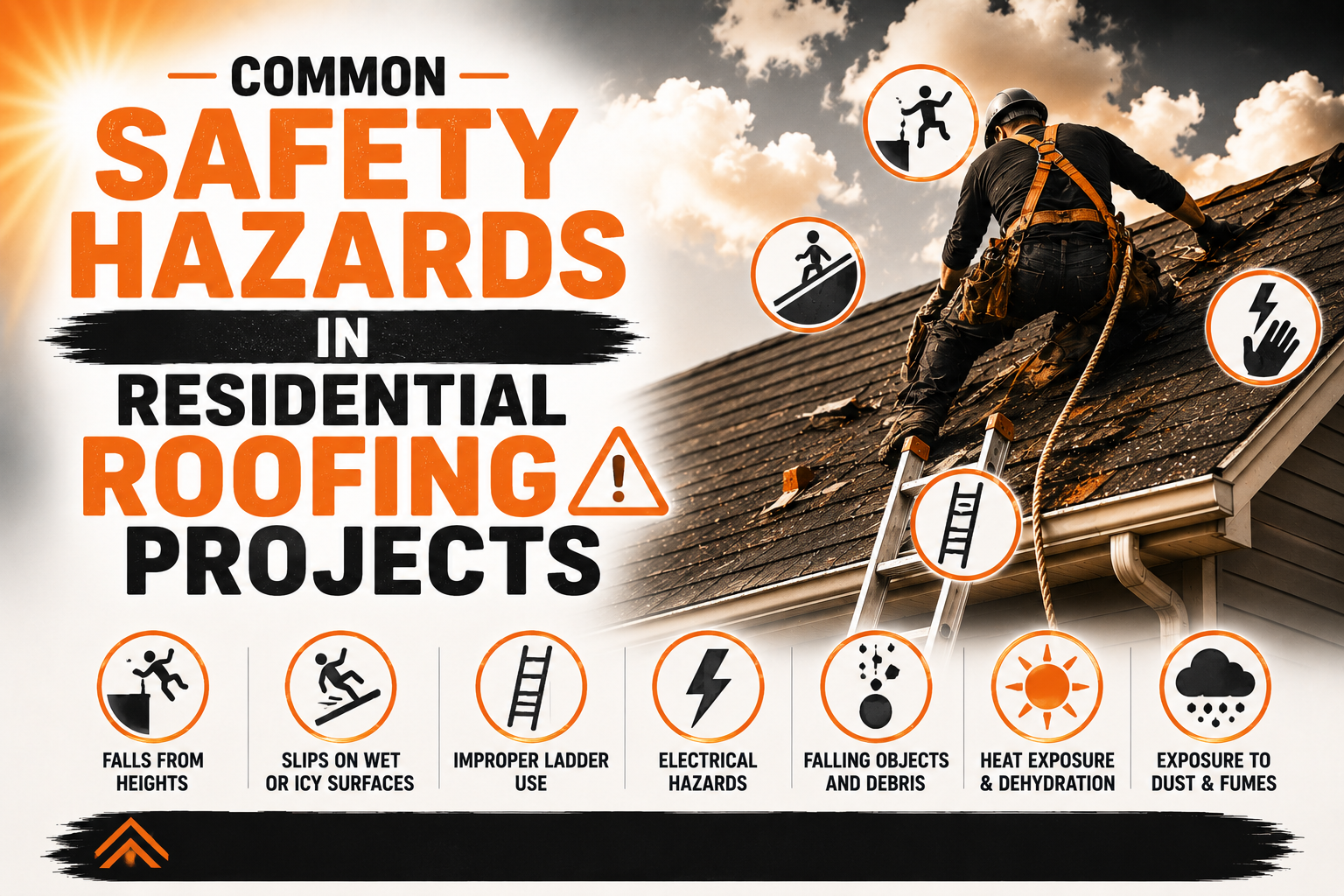
Common Safety Hazards in Residential Roofing Projects
Introduction
Residential roofing projects involve many activities that require workers to operate at height, handle heavy materials, use power tools, and move across changing surfaces. Although roofing work is a routine part of home construction and maintenance, the combination of these activities can create serious safety hazards when proper precautions are not followed. Understanding the most common risks is an important first step toward creating a safer roofing worksite.
A roofing project can involve several different stages, including inspection, preparation, tear-off, material delivery, installation, cleanup, and final inspection. Each stage can introduce different hazards, and conditions can change as the work progresses. A safe worksite therefore requires continuous attention rather than relying on a single safety inspection at the beginning.
Falls are one of the most significant hazards associated with residential roofing. Workers may be exposed to roof edges, steep slopes, ladders, openings, scaffolding, and elevated platforms. Even a fall from a relatively low height can result in serious injuries, making proper fall prevention and protection essential.
Other hazards can occur at ground level. Roofing materials, tools, nails, debris, vehicles, electrical equipment, and ladders can create risks for workers and homeowners. People who are not involved in the project may not recognize these dangers, which makes clear worksite separation especially important.
Weather can also change roofing conditions quickly. Rain can make surfaces slippery, wind can move materials, and extreme temperatures can affect worker concentration and physical performance. Contractors should monitor environmental conditions and adjust work practices when necessary.
Homeowners also have a role in reducing safety risks. Children, pets, and visitors should remain away from active construction areas, while homeowners should follow instructions about parking, entrances, outdoor equipment, and temporary restrictions. Good communication between contractors and residents helps reduce preventable incidents.
The following sections examine some of the most common safety hazards found during residential roofing projects. Recognizing these hazards allows contractors and homeowners to take appropriate precautions before problems develop.
Falls From Roof Edges and Elevated Surfaces
Falls are among the most serious hazards in residential roofing work because workers frequently operate several feet above the ground. A person can lose balance because of a slippery surface, unexpected movement, loose material, or incorrect positioning. Without appropriate protection, a fall can result in severe injury.
Roof edges require particular attention because workers may need to install shingles, flashing, gutters, or other components close to the edge. Even when a worker is experienced, a sudden slip or loss of footing can occur. Appropriate fall prevention and protection measures should be selected according to the roof design, work activity, and applicable safety requirements.
Steep roofs create additional challenges. Maintaining balance becomes more difficult as the slope increases, particularly when workers are carrying materials or using tools. Workers should not attempt to move quickly across steep surfaces or rely on ordinary footwear as their only protection against falling.
Roof openings are another important concern. Skylights, vents, roof penetrations, unfinished sections, and other openings can create fall hazards if they are not properly protected. Some openings may be difficult to recognize when workers are focused on installation tasks or when they are partially covered by materials.
Fall protection systems should be appropriate for the specific worksite. Depending on the project, these may include guardrails, personal fall arrest systems, safety nets, or other approved measures. Workers should understand how the selected system works and use it according to established procedures.
Access to the roof should also be planned carefully. Ladders, scaffolding, and other equipment can introduce additional fall risks if they are improperly positioned or used. Workers should inspect access equipment before use and ensure that it provides a stable route to the working area.
Homeowners should stay away from roof edges and elevated work areas. Watching contractors work may seem harmless, but entering the active work zone can expose residents to falling objects and fall hazards. A designated safe viewing area is a much better option.
Preventing falls requires more than one safety measure. Proper planning, suitable access equipment, fall protection, worker training, and ongoing supervision all contribute to reducing the likelihood of serious incidents.
Ladder and Access Equipment Hazards
Ladders are essential on many residential roofing projects, but they can also become a major source of injuries. A ladder can slip, shift, tip, or become unstable if it is positioned incorrectly. Workers may also lose balance when climbing while carrying tools or materials.
The ground beneath a ladder should be stable and suitable for supporting the equipment. Loose soil, gravel, wet grass, uneven surfaces, or construction debris can affect ladder stability. Workers should never place ladders on boxes, buckets, bricks, or other improvised supports to gain additional height.
The ladder should be appropriate for the height and task. Using a ladder that is too short can encourage workers to stand on unsafe sections or overreach. Selecting equipment with the appropriate length and load capacity helps reduce these risks.
Ladders should be inspected before use. Cracked rails, damaged rungs, worn feet, defective locks, or missing components can affect performance. A damaged ladder should be removed from service rather than used until an accident occurs.
Workers should also consider nearby electrical hazards when positioning ladders. Overhead power lines and electrical service connections can create serious risks, particularly when metal ladders or long materials are involved. The work area should be assessed before ladder placement.
Access equipment should also remain clear of debris and other obstacles. Roofing materials, tools, and waste should not block the ladder’s base or access route. Workers need enough space to climb and descend without stepping around unnecessary hazards.
Homeowners should never move or climb a contractor’s ladder without permission. A ladder may have been positioned according to a specific safety plan, and moving it even slightly could change its stability or create an electrical hazard.
Slips, Trips, and Loss of Balance
Slips and trips are common hazards during roofing projects because workers operate on surfaces that can be steep, dusty, wet, uneven, or covered with loose materials. A worker does not need to fall from the roof edge for a slip or trip to cause injury. Losing balance can also result in contact with tools, equipment, or other workers.
Roof surfaces may become slippery because of rain, moisture, dust, algae, loose granules, or other contaminants. Workers should assess the surface before beginning tasks and use appropriate footwear and work practices.
Loose shingles and roofing materials can create unstable walking areas. During installation, workers may need to move across partially completed sections where the surface is different from the finished roof. Careful movement and proper planning can help reduce unnecessary exposure.
Tools and materials should not be left where workers walk. A hammer, drill, roll of underlayment, or package of fasteners can become a trip hazard when placed in an active pathway. Keeping tools organized makes the work area easier to navigate.
Roofing debris should also be removed regularly. Nails, broken shingles, packaging, and small pieces of flashing can create hazards both on the roof and at ground level. Workers should avoid allowing debris to accumulate during the project.
Footwear should provide appropriate traction and support for the work conditions. However, suitable footwear does not eliminate the need for careful movement. Workers should remain alert when moving between different surfaces and roof sections.
Fatigue can increase the likelihood of slips and trips. A tired worker may become less attentive and slower to respond to changing conditions. Proper breaks and reasonable work scheduling can support better concentration.
Falling Tools, Materials, and Roofing Debris
Objects falling from a roof can seriously injure people below. Roofing projects involve constant movement of shingles, tools, fasteners, debris, and equipment, creating opportunities for objects to fall if they are not properly controlled.
Workers should never leave loose tools on sloped roof surfaces where they can slide downward. Tool belts, containers, and other suitable storage methods can help keep equipment secure while workers move around.
Materials should also be positioned carefully. Shingles, flashing, underlayment, and other supplies should not be placed where they can easily slide toward the roof edge. Wind can make lightweight materials particularly difficult to control.
People should not stand directly below active roofing operations. Ground-level work zones should be established to keep workers, homeowners, visitors, and delivery personnel away from areas where objects may fall.
Roofing debris should be removed using controlled methods. Throwing large amounts of material from the roof can create hazards for people and property below. Appropriate collection systems and designated disposal areas help keep removal operations more predictable.
Tools should be secured when workers move between roof sections. A tool that is safe in a worker’s hand can become dangerous if accidentally dropped from an elevated surface.
Homeowners should keep vehicles, outdoor furniture, and other valuable items away from active roofing areas when instructed by the contractor. This can help reduce both property damage and the temptation for people to enter restricted areas.
Clear communication is also important. Workers at ground level should know when materials are being moved overhead, and roof workers should coordinate activities to avoid dropping or throwing objects toward occupied areas.
Unsafe Handling of Roofing Materials and Equipment
Roofing materials can be heavy, bulky, sharp, or difficult to control. Improper lifting and carrying can lead to strains, falls, cuts, and other injuries. Safe material handling should therefore be planned before materials are moved around the property.
Workers should use appropriate lifting techniques and ask for assistance when an item is too heavy or awkward to handle safely. Attempting to carry excessive loads can affect balance, particularly when workers are moving on ladders or elevated surfaces.
Roofing materials should be stored in stable locations. Heavy materials should not be placed randomly on the roof because concentrated loads can create structural concerns or interfere with worker movement. Material distribution should follow the contractor’s work plan and the requirements of the roofing system.
Sharp materials such as flashing can cause cuts if handled carelessly. Suitable gloves and controlled handling can reduce exposure to sharp edges. Workers should also avoid leaving cut metal pieces in walking areas.
Power equipment presents another category of risk. Nail guns, saws, drills, compressors, and other tools should be inspected before use and operated according to their intended purpose. Workers should understand the hazards associated with each tool and use appropriate protective equipment.
Damaged tools should not be used simply because the project is under time pressure. Defective cords, guards, switches, handles, hoses, or other components can create additional hazards. Equipment problems should be reported and addressed before work continues.
Material handling should also account for weather. Wind can move lightweight materials, while rain can make surfaces and equipment slippery. Workers should modify handling methods when conditions change.
A well-organized material handling process helps reduce physical strain and keeps the worksite under better control. Proper storage, controlled lifting, suitable equipment, and clear communication can prevent many avoidable injuries during residential roofing projects.
Electrical Hazards Around Residential Roofs
Electrical hazards are among the most serious risks that roofing workers may encounter on residential properties. Overhead power lines, electrical service connections, exterior wiring, and other energized equipment can be located close to roofs and access areas. Accidental contact with an electrical source can result in severe injury, burns, or fatal electric shock.
Before roofing work begins, the crew should identify electrical hazards around the property. Workers should look for overhead lines near the roof, service connections attached to the building, and electrical equipment that may interfere with ladders or material movement. These hazards should be considered when planning access routes and work areas.
Ladders require particular attention around electrical lines. Metal ladders can conduct electricity, but workers should not assume that using a nonconductive ladder makes the area completely safe. Required clearances and appropriate electrical safety procedures should always be followed.
Long roofing materials can create additional risks. Flashing, trim, pipes, boards, and other extended materials may reach farther than the worker expects. Before moving these items, workers should evaluate the entire path and ensure that electrical lines are safely separated from the work activity.
Roofing workers should not attempt to move, disconnect, or modify electrical equipment themselves unless they are appropriately qualified and authorized to perform the task. If an electrical obstruction needs attention, the issue should be handled through the proper professional process before roofing work continues.
Power tools and temporary electrical connections also require care. Cords should be inspected for damage, and electrical equipment should be used according to established safety procedures. Damaged wires, plugs, or other components should be removed from service until the issue is properly addressed.
Wet conditions can increase electrical risks. Rain, standing water, and moisture can make the use of electrical equipment more hazardous. Workers should follow established procedures for stopping or modifying work when wet conditions create unacceptable risks.
Homeowners should also avoid interfering with electrical systems to help roofing work proceed faster. Electrical components should remain under the control of qualified professionals. Identifying electrical hazards early and maintaining appropriate separation can significantly reduce the potential for dangerous incidents.
Weather and Environmental Hazards
Weather can change the safety conditions of a residential roofing project within a short period. Rain, strong winds, lightning, extreme heat, cold temperatures, and other environmental conditions can affect worker balance, equipment stability, material handling, and concentration. Roofing crews should monitor conditions throughout the workday rather than relying only on the morning forecast.
Rain can make roof surfaces slippery and increase the risk of falls. It can also affect ladders, scaffolding, tools, and ground-level access areas. Workers should not continue elevated activities simply because rain has only recently started.
Strong winds can be particularly dangerous when roofing materials are lightweight or difficult to control. Underlayment, insulation, flashing, and other materials may move unexpectedly during gusts. Workers can also lose balance when wind affects their body position while working near an exposed roof edge.
Lightning creates a serious risk for workers operating on elevated structures. When thunderstorms approach, crews should follow established procedures for stopping work and moving to a safe location. Trying to finish a small task before a storm arrives can create unnecessary exposure.
Extreme heat can lead to dehydration, fatigue, reduced concentration, and heat-related illness. Workers may need regular breaks, access to drinking water, and scheduling adjustments during periods of high temperatures. Supervisors should remain alert for signs that a worker is struggling with heat.
Cold weather can create hazards through ice, frost, or reduced dexterity. Workers may find it more difficult to maintain a secure grip or stable footing in cold conditions. Surfaces should be assessed before elevated work begins.
Environmental hazards can also include trees, branches, unstable ground, insects, and nearby construction activities. These conditions should be included in the jobsite assessment rather than treated as unrelated issues.
The safest approach is to recognize that roofing conditions are not fixed. When weather or environmental conditions change, the work plan should change as well. Delaying a task may be inconvenient, but continuing under dangerous conditions can create much greater risks.
Power Tool and Roofing Equipment Hazards
Power tools help roofing crews complete work efficiently, but they can cause serious injuries when improperly selected, maintained, or operated. Nail guns, circular saws, drills, compressors, grinders, and other equipment should be used only by workers who understand the equipment and applicable safety procedures.
Tools should be inspected before use. Workers should check cords, guards, handles, switches, hoses, fasteners, and other components for visible damage. A defective tool should not be used simply because replacing it may delay the project.
Nail guns are widely used in residential roofing and require careful handling. Workers should keep the tool pointed away from people and maintain control of the firing area. Appropriate operating procedures should be followed, including safe practices for maintenance and power disconnection.
Cutting tools can create several hazards at the same time. They may produce sharp edges, flying particles, dust, and noise. Workers should use appropriate protective equipment and maintain a stable position while cutting materials.
Power cords and hoses can become trip hazards when they cross walking areas. They should be arranged and managed so workers can move safely around the roof and ground-level worksite. Damaged cords should be removed from service.
Tools should never be modified in ways that bypass safety features. Guards and protective components exist to reduce exposure to moving or cutting parts. Removing or disabling them can create serious hazards.
Workers should also use the correct tool for each task. Improvising with equipment can cause loss of control and increase the possibility of injury. Manufacturer instructions and established workplace procedures should guide tool selection and operation.
When tools are used at height, dropped-object risks must also be considered. Equipment should be secured when possible and should not be placed loosely on sloped surfaces. People below should remain outside areas where tools could fall.
Regular equipment maintenance supports safer operation. Clean, properly maintained tools are easier to control and less likely to develop unexpected problems during use.
Structural Weaknesses and Damaged Roof Decking
A roof may appear stable from the ground while containing hidden weaknesses that become dangerous once workers begin walking across it. Water damage, rot, deterioration, previous construction problems, or damaged decking can reduce the roof’s ability to support weight. These conditions are especially important during tear-off when underlying structures become exposed.
Workers should avoid assuming that every section of an existing roof has equal strength. Areas around leaks, chimneys, valleys, skylights, and other penetrations may have experienced moisture damage. Careful assessment is necessary before workers place their weight on questionable surfaces.
During tear-off, damaged decking may become visible after shingles and underlayment are removed. Work should be evaluated before workers continue across areas that appear weak or unstable. Repairs may be required before installation can safely proceed.
Roof openings can also become more difficult to identify as materials are removed. Temporary coverings or other protective measures should be used according to appropriate safety procedures. Workers should remain aware of openings throughout the project.
Old roofs may contain multiple layers of roofing materials. These layers can affect walking conditions and increase the amount of debris during removal. Workers should use controlled removal procedures rather than rushing through the process.
Structural concerns should be communicated to the project supervisor. Workers should not ignore unusual movement, soft areas, damaged decking, or other warning signs simply to keep the project on schedule.
Homeowners should also avoid entering unfinished roof areas after being told about structural concerns. An apparently small damaged section can represent a significant safety problem when the surface is disturbed.
A careful approach to structural conditions protects both workers and the building. Identifying weak areas early allows the contractor to plan appropriate repairs and reduce the possibility of a fall or structural failure.
Heat Stress, Fatigue, and Physical Strain
Roofing work can be physically demanding, particularly during hot weather or long work periods. Workers may spend hours climbing ladders, carrying materials, bending, kneeling, and working in direct sunlight. Without appropriate precautions, physical fatigue can affect both health and safety.
Heat stress is a concern because roofs can become significantly warmer than surrounding ground-level areas. Direct sunlight, roofing materials, protective clothing, and physical activity can increase the body’s heat load.
Workers should have access to suitable drinking water and regular opportunities to rest. Work schedules may need to be adjusted during extreme temperatures to reduce exposure during the hottest periods of the day.
Supervisors should watch for signs that workers may be struggling with heat or exhaustion. Confusion, unusual weakness, dizziness, excessive fatigue, or other concerning symptoms should not be ignored. Appropriate procedures should be followed when a worker becomes unwell.
Physical strain can also result from repeatedly lifting heavy or awkward materials. Workers should use proper lifting methods and seek assistance when loads are too large for one person.
Repetitive movements can contribute to muscle fatigue. Roofing workers may perform the same fastening, cutting, lifting, or positioning task for extended periods. Reasonable work organization and appropriate breaks can help reduce excessive physical strain.
Fatigue can also affect judgment. A tired worker may be more likely to overlook a damaged ladder, misjudge a roof surface, forget protective equipment, or make an unsafe movement.
Workers should communicate when they are too fatigued to perform a task safely. Creating an environment where workers can report fatigue without unnecessary pressure supports better overall safety.
Poor Housekeeping and Uncontrolled Work Areas
Poor housekeeping can turn a normal roofing worksite into a collection of avoidable hazards. Nails, broken shingles, packaging, tools, cords, scrap metal, and other debris can create trip, puncture, and falling-object risks. Keeping the area organized should therefore be part of the daily roofing process.
Workers should remove waste regularly rather than allowing debris to accumulate. This is particularly important around ladders, walkways, entrances, and material storage areas. Clear routes make it easier for workers to move safely.
Ground-level cleanup is equally important. Roofing nails can remain hidden in grass, soil, driveways, and landscaping. Contractors should use appropriate cleanup methods and inspect work areas after major stages of the project.
Tools should have designated storage locations. Leaving equipment on the roof or ground where people walk increases the likelihood of trips and accidental contact. Organized storage also helps workers find equipment without searching through clutter.
Materials should be stored so they do not block doors, emergency routes, vehicles, or access equipment. Heavy items should remain stable, while lightweight materials should be secured when wind could move them.
Homeowners should be given clear instructions about which areas remain restricted. A construction zone should not become a normal household walkway until the contractor confirms that it is safe.
At the end of each workday, the crew should secure tools, materials, debris, and unfinished sections according to its procedures. A proper end-of-day inspection helps prevent hazards from remaining uncontrolled overnight.
Good housekeeping is not simply about appearance. It directly supports safer movement, clearer access, better material control, and reduced exposure to common roofing hazards. A clean and organized worksite allows workers to focus on their tasks without unnecessary obstacles.
Hazards During Roof Tear-Off and Removal
Roof tear-off is one of the most demanding stages of a residential roofing project because workers remove old shingles, underlayment, flashing, fasteners, and other materials while working at height. The process can expose hidden problems that were not visible before work began. Loose debris, sharp nails, damaged decking, and unstable surfaces can all increase the risk of injury.
Workers should establish controlled procedures before removing existing roofing materials. The area around the house should be restricted so homeowners, children, pets, and visitors do not enter locations where debris may fall. Ground-level workers should also understand where removed materials will be collected.
Old roofing materials should not simply be thrown from the roof. Falling shingles, boards, metal, and other debris can strike people or damage property below. Controlled removal methods and appropriate collection systems help keep the process safer and more predictable.
Nails and sharp fasteners are another major concern. Old roofing may contain large numbers of exposed nails that become scattered during tear-off. Workers should wear appropriate protective equipment and remove or contain sharp debris as the work progresses.
Tear-off can also reveal damaged decking caused by long-term moisture exposure. Soft or deteriorated sections should be identified before workers continue across them. The contractor should evaluate structural concerns and determine the appropriate repair process before exposing workers to unnecessary risk.
Dust can also increase during removal. Depending on the materials involved, workers may require suitable protective measures based on the jobsite assessment and applicable requirements. Homeowners may also need to keep windows and doors closed during particularly dusty activities.
Roof tear-off should be organized in stages rather than allowing large amounts of debris to accumulate. Controlled removal makes it easier to maintain stable walking areas and reduces the possibility of materials sliding toward roof edges.
The transition between tear-off and new installation should also be managed carefully. Once the old roof is removed, the exposed surface may have different traction and structural characteristics. Workers should reassess the work area before continuing.
Chemical, Dust, and Hazardous Material Exposure
Residential roofing projects can involve exposure to dust, fumes, adhesives, sealants, coatings, and other substances. The level of risk depends on the materials being installed or removed and the conditions of the worksite. Workers should understand the products they are handling and follow applicable safety information.
Dust may be generated when old roofing materials are removed, when materials are cut, or when surfaces are cleaned. Excessive dust can irritate the eyes, skin, and respiratory system. Appropriate controls and protective equipment should be selected according to the material and task.
Some roofing products contain adhesives or other substances that can produce strong odors or fumes. Workers should follow product instructions regarding ventilation, handling, storage, and personal protection. Materials should not be used in ways that conflict with their intended application.
Skin contact can also be a concern. Certain sealants, adhesives, coatings, and other products may cause irritation. Suitable gloves and protective clothing can help reduce unnecessary exposure when required.
Workers should never mix chemicals or roofing products unless the manufacturer specifically permits the combination. Improper mixing can create unexpected reactions or produce hazardous fumes.
Storage is another important consideration. Containers should be kept closed when not in use and stored according to product instructions. Materials should not be placed where they can easily tip, leak, or become exposed to unsuitable temperatures.
Homeowners should avoid handling leftover roofing chemicals or containers. Unused products should remain under the contractor’s control until they are properly stored, removed, or disposed of.
Good ventilation can be important when products release fumes. However, ventilation should be managed in a way that does not create additional hazards for workers or nearby residents.
Understanding the materials being used allows contractors to plan suitable controls. Product labels, safety information, worker training, and proper storage all contribute to reducing unnecessary chemical and dust exposure.
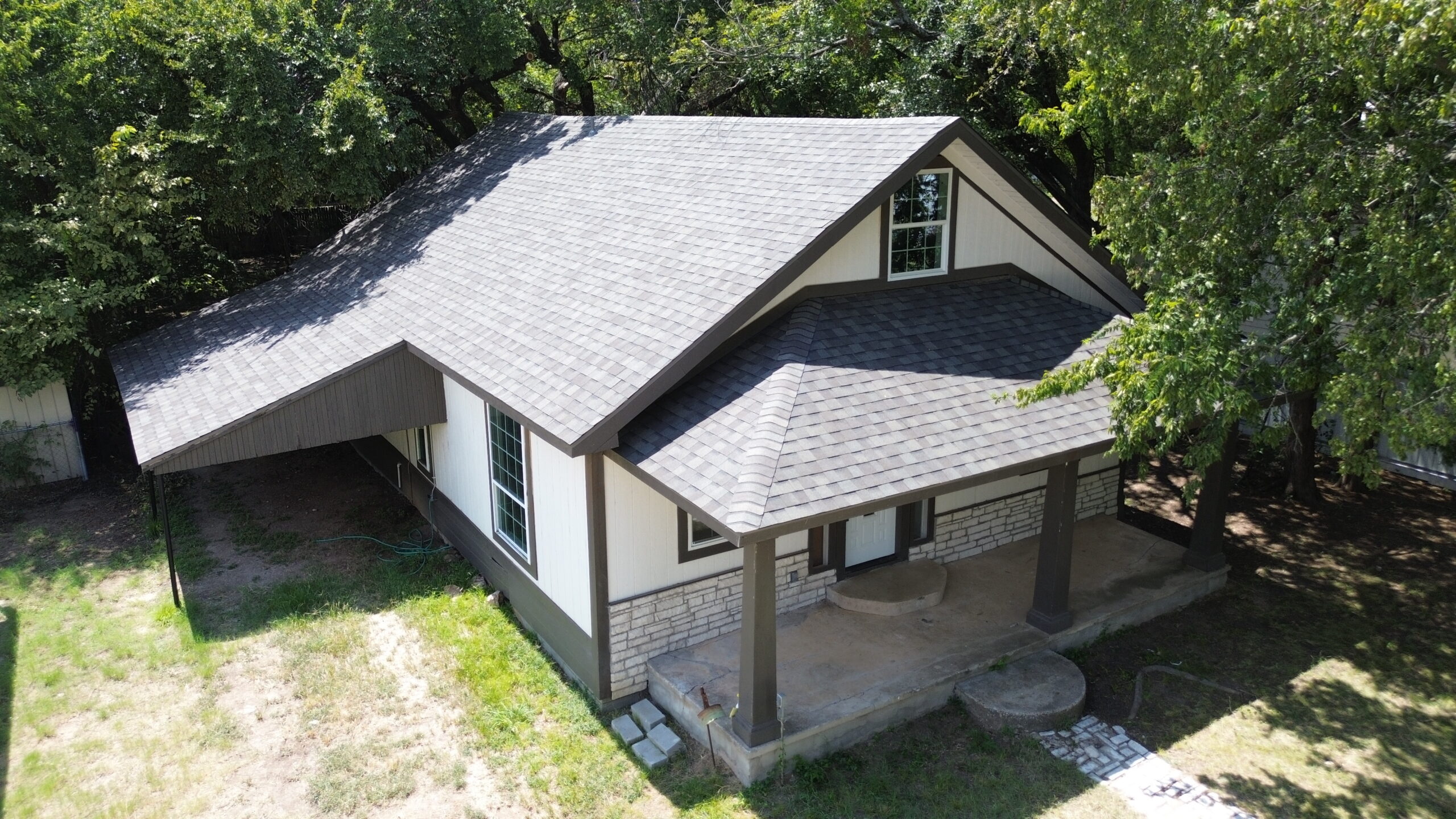
Hazards Around Skylights, Roof Openings, and Penetrations
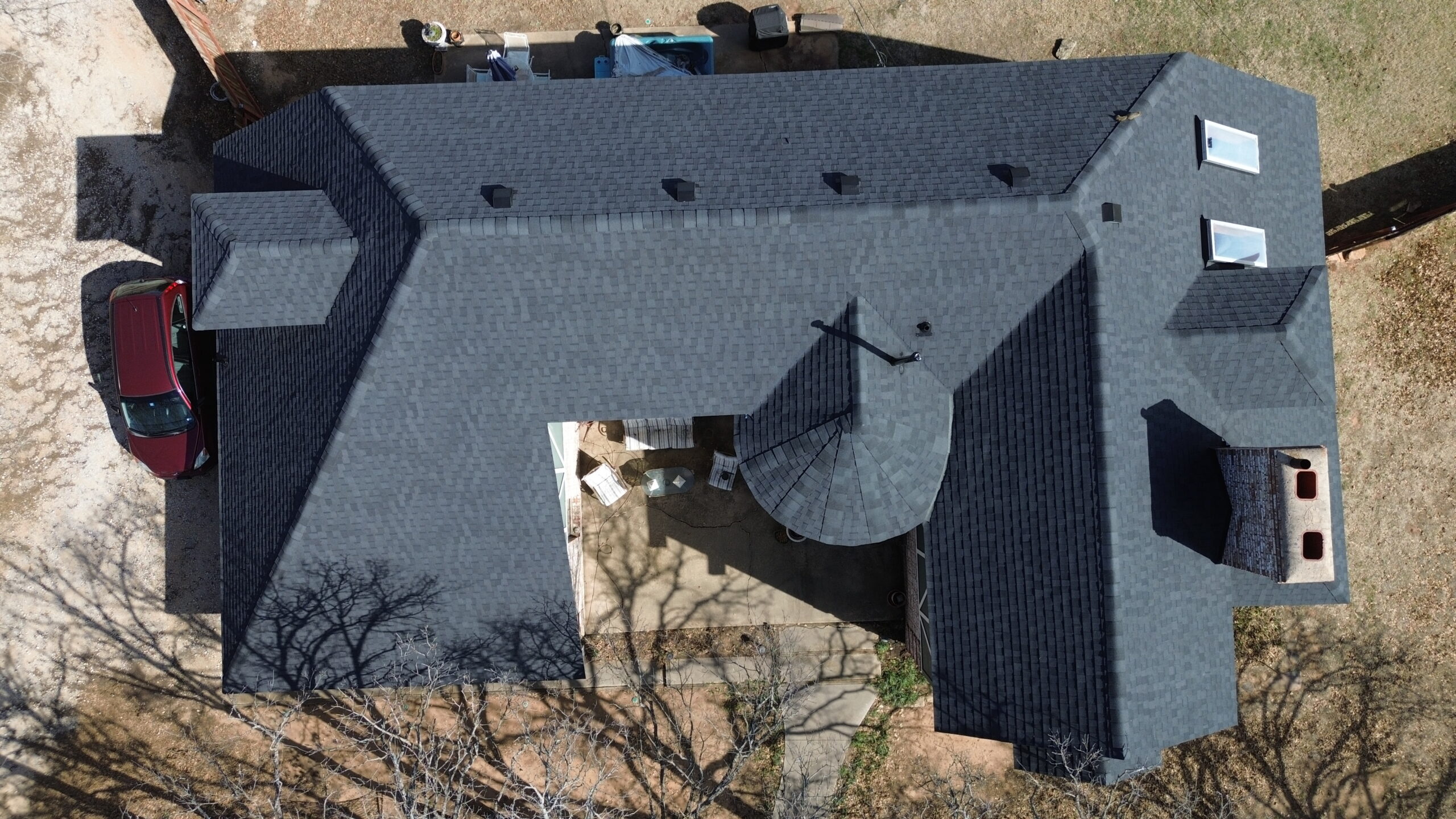
Skylights and roof openings are important hazards because they may not always be obvious from a worker’s position. A person can mistakenly step onto or near a weak covering and fall through the opening. These hazards become particularly important during tear-off and installation when existing protective materials may be removed.
Workers should identify skylights, vents, pipes, chimneys, and other roof penetrations before beginning work. Their locations should remain known throughout the project, even when materials or equipment temporarily surround them.
Skylights should not automatically be treated as safe walking surfaces. Some may not be designed to support a person’s weight. Workers should follow appropriate protection and access procedures rather than stepping on skylight surfaces.
Uncovered roof openings should be protected according to applicable safety requirements. Temporary coverings, guardrails, or other protective measures may be appropriate depending on the situation.
Materials should not be stacked around openings in a way that makes them difficult to recognize. Clear work areas help workers identify hazards before they reach them.
During installation, workers may need to move around vents, pipes, or chimneys while carrying tools and materials. These structures can create trip hazards and restrict movement. Workers should plan their movements carefully rather than attempting to step over obstacles while carrying heavy loads.
Fall protection remains important around roof openings even when workers believe they can simply avoid the hazard. Distraction, fatigue, changing weather, or loose materials can cause a worker to lose awareness.
Homeowners should never approach unfinished skylights or roof openings. These areas may look secure from the ground but can remain dangerous until the roofing contractor completes and verifies the work.
Careful identification and protection of roof openings should continue until the project is finished. Treating these locations as permanent hazards during construction helps reduce the possibility of accidental falls.
Homeowner, Children, and Pet Safety Risks
Roofing work can create hazards for people who are not involved in construction. Homeowners may continue normal activities around the property without realizing that tools, materials, ladders, debris, and falling objects are present. Clear separation between household activities and construction areas is therefore essential.
Children should remain away from active roofing zones. They may be curious about ladders, tools, shingles, and other equipment, but construction materials are not safe toys. Parents and caregivers should establish clear boundaries throughout the project.
Pets can also create unexpected risks. A dog may run beneath a worker carrying materials or bump a ladder while someone is climbing. Keeping pets indoors or in a secure area can protect both the animal and the roofing crew.
Homeowners should follow contractor instructions about parking and vehicle movement. Vehicles parked near the house may be exposed to falling debris or may block access for workers and emergency services.
Outdoor furniture, gardening equipment, decorations, and other property may also need to be moved. Removing these items from active work areas helps prevent damage and gives workers more room to operate safely.
Residents should avoid walking underneath active roof work. Even small objects such as nails or hand tools can cause injury when dropped from an elevated surface. A safe route should be established for entering and leaving the home.
Homeowners should also avoid using contractor ladders or equipment. Moving a ladder without understanding its intended position can create stability or electrical hazards. Any concerns about access should be discussed with the roofing supervisor.
Good communication can prevent many homeowner-related incidents. Contractors should explain restricted areas and expected work activities, while homeowners should communicate any concerns about entrances, children, pets, or special property conditions.
Emergency Preparedness and Preventive Safety Measures
Every residential roofing project should have a basic emergency plan before work begins. Roofing hazards can include falls, cuts, electrical incidents, severe weather, equipment injuries, and other unexpected events. Workers should understand how to respond rather than trying to create a plan after an accident occurs.
Emergency access should remain clear throughout the project. Materials, vehicles, ladders, and debris should not unnecessarily block routes that may be needed by emergency responders.
Workers should know how to contact emergency assistance and should understand the property’s location. First-aid resources should be available according to the requirements and conditions of the worksite.
Fall incidents require particular attention because a worker may remain suspended in a fall protection system after an accident. The crew should follow an established rescue procedure and avoid taking actions that could expose additional workers to danger.
Severe weather should also be included in emergency planning. Crews should know when to stop elevated work and where workers can move to a safer location. Materials and equipment should only be secured when doing so can be completed without exposing workers to additional risks.
Preventive safety checks should continue throughout the project. Supervisors can inspect ladders, fall protection systems, tools, work areas, and material storage before and during daily operations.
Workers should be encouraged to report hazards and near misses. A near miss may reveal a problem even when no one was injured. Correcting the underlying issue can help prevent a similar event from becoming a serious accident.
A useful daily safety routine can include:
- Checking access equipment and fall protection before work begins
- Reviewing weather and changing site conditions
- Keeping workers and homeowners separated from active areas
- Controlling tools, materials, and debris
- Reporting damaged equipment and unsafe conditions immediately
Safety should remain a shared responsibility between contractors, workers, supervisors, and homeowners. Each person can contribute by following established procedures and communicating concerns promptly.
Conclusion
Residential roofing projects involve many different hazards, from falls and electrical risks to weather conditions, power tools, structural weaknesses, debris, and physical strain. These risks can change throughout the project, which means safety cannot be treated as a one-time task. Continuous assessment and appropriate precautions are essential from preparation through final cleanup.
Falls remain one of the most important concerns because roofing workers regularly operate at height. Proper access equipment, fall protection, stable working surfaces, and awareness of roof edges and openings can help reduce the likelihood of serious incidents.
Electrical hazards also require careful planning. Overhead lines, service connections, power tools, and temporary electrical equipment should be considered before work begins. Workers should never improvise when dealing with electrical systems or attempt to work around serious electrical hazards without appropriate controls.
Weather, fatigue, and physical strain can affect worker performance just as much as equipment hazards. Maintaining reasonable work practices, monitoring conditions, providing appropriate breaks, and responding quickly to signs of fatigue can help workers remain focused and capable of performing their tasks safely.
Good housekeeping provides another important layer of protection. Keeping ladders, tools, materials, nails, and debris under control reduces trip hazards and protects people at ground level. An organized worksite also makes it easier for workers to identify changing hazards.
Homeowners have an equally important role in maintaining a safe property during construction. Keeping children and pets away, following restricted-area instructions, protecting vehicles and belongings, and avoiding unauthorized use of roofing equipment can prevent many unnecessary incidents.
Ultimately, a safer residential roofing project depends on preparation, communication, training, appropriate equipment, and consistent attention to changing conditions. When contractors and homeowners work together to recognize hazards and follow established safety procedures, roofing work can be completed in a more controlled environment while reducing preventable risks to everyone on the property.