

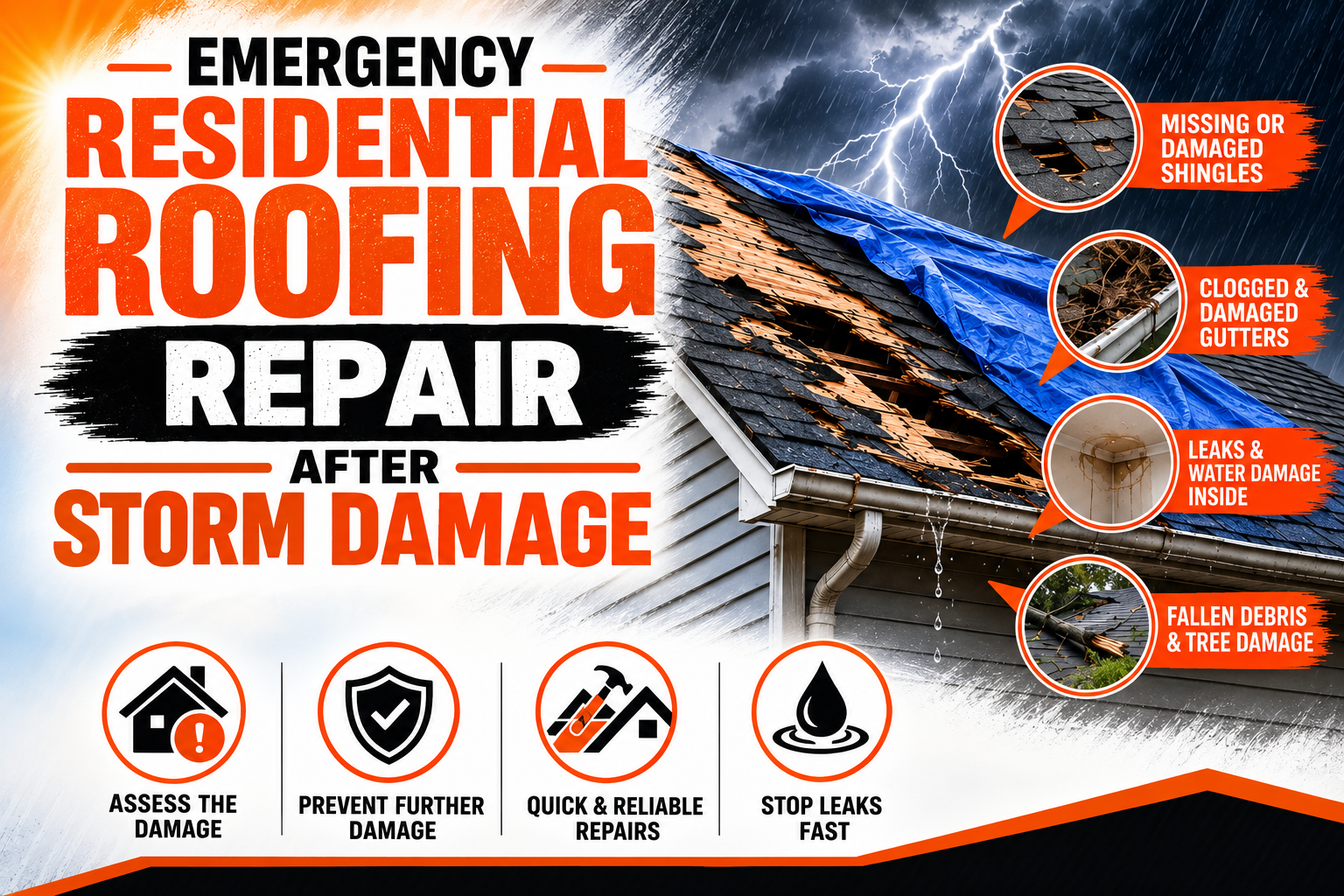
Emergency Residential Roofing Repair After Storm Damage
Introduction
Severe storms can cause sudden and unexpected damage to residential roofing systems. Strong winds, hail, heavy rainfall, falling branches, and flying debris can affect shingles, flashing, gutters, roof edges, vents, skylights, and even the underlying roof deck. When damage occurs, homeowners need to act carefully because delaying necessary protection can allow a manageable roofing problem to develop into extensive water damage.
Emergency roofing repair is different from ordinary maintenance because the immediate goal is to protect the home from further exposure. A storm-damaged roof may have missing shingles, exposed underlayment, punctures, loose materials, or openings that allow rainwater to enter the building. Permanent repairs may require more time, materials, and inspection, so temporary protection can be important immediately after the storm.
The first priority should always be safety. Homeowners should not climb onto a roof immediately after severe weather, particularly when surfaces are wet, unstable, or covered with debris. Electrical hazards, damaged structures, broken branches, and loose roofing materials can create risks that are difficult to recognize from the ground.
A professional roofing contractor can assess the visible and hidden areas of damage and determine what emergency measures are appropriate. The contractor can also help identify whether the damage is localized or whether a larger portion of the roofing system has been affected.
Understanding the basic emergency process helps homeowners respond calmly after a storm. The right approach involves checking for obvious signs of damage, protecting vulnerable interior areas, documenting conditions, and arranging qualified assistance as soon as practical.
Assessing Roof Damage Safely After a Storm
The first step after a storm is to determine whether the property has obvious signs of roofing damage. This should be done from a safe location rather than by immediately accessing the roof. Homeowners can often identify missing shingles, fallen branches, damaged gutters, or visible openings from the ground.
Strong winds can remove shingles completely or lift them partially from their original position. A shingle that appears to remain in place may still have lost its proper attachment, making it vulnerable to additional wind and water exposure.
Large branches or other objects can create more serious damage. A fallen tree limb may break through roofing materials and damage the roof deck or supporting structure beneath them. The surrounding area should be treated cautiously until a professional determines that it is safe.
Homeowners should also inspect accessible interior areas for signs of water intrusion. Ceiling stains, dripping water, damp walls, wet insulation, and unusual moisture around light fixtures can indicate that storm damage has created an opening in the roof.
If water is entering the home, household members should move furniture, electronics, and other valuable items away from the affected area when it is safe to do so. Containers can sometimes be used to collect dripping water temporarily, but they do not solve the underlying roofing problem.
Electrical safety deserves particular attention when water is near outlets, fixtures, appliances, or wiring. Homeowners should avoid touching electrical components in wet areas and seek appropriate professional assistance when an electrical hazard may exist.
From the exterior, homeowners can also check for displaced gutters, downspouts, siding damage, or roofing debris. These signs may provide useful information about the intensity and direction of the storm.
A professional inspection should follow the initial observation. Roofing contractors have the equipment and experience needed to examine the roof more closely and determine whether the damage involves only surface materials or extends into underlying layers.
The inspection should consider the entire roofing system rather than one visible defect. Wind and impact forces can affect several components at once, and hidden damage may not be obvious from the ground.
Protecting the Home From Further Water Damage
After a storm damages the roof, preventing additional water intrusion becomes an immediate concern. Even if permanent repairs cannot be completed on the same day, temporary measures can help reduce exposure while the homeowner waits for professional work.
A damaged section may need temporary covering when roofing materials have been removed or a visible opening has developed. Appropriate temporary protection can help keep rain away from the exposed area until permanent repairs are possible.
Homeowners should not attempt to install a roof covering themselves if doing so requires climbing onto a damaged or slippery roof. Emergency protection should be installed by people with appropriate experience, equipment, and safety procedures.
Interior protection is also important. If water is entering a room, furniture and belongings should be moved away from the affected area when it can be done safely. Valuable items should be protected from continued moisture exposure whenever possible.
Water accumulation on ceilings requires caution. A visibly bulging ceiling may indicate that water has collected above it, and attempting to puncture or manipulate the surface without appropriate knowledge can create additional hazards.
If water is spreading through multiple areas, homeowners should focus on keeping people away from unsafe spaces and arranging professional assistance. The source may be higher on the roof than the location where water is appearing indoors.
Emergency roof protection should be viewed as a temporary solution. It is intended to reduce further damage until the roofing system can be properly inspected and repaired.
A temporary covering should be secured appropriately for the weather conditions. Poorly installed materials can move during additional wind and potentially create more damage.
Homeowners should also monitor weather forecasts after the initial storm. If another period of rain or strong wind is expected, temporary protection becomes even more important.
Once the weather improves, the roofing contractor can evaluate the affected areas and determine the permanent repair requirements. The final repair may involve replacing shingles, repairing flashing, replacing damaged decking, or addressing several components together.
Documenting Storm Damage Before Repairs
Documentation can be extremely useful after a storm because roofing damage may need to be evaluated by contractors, insurers, or other professionals. Homeowners should record the condition of the property as soon as practical, provided it can be done safely.
Photographs can show missing shingles, fallen branches, damaged gutters, visible roof openings, interior stains, and other signs of storm impact. Photos should be taken from safe ground-level positions whenever possible.
The date and approximate time of the storm should also be recorded. Homeowners may want to keep information about severe weather conditions, especially when the storm involved unusually strong winds, hail, or heavy rainfall.
Interior damage should be documented as well. Ceiling stains, damaged walls, wet flooring, affected insulation, and other visible conditions can provide a record of how the storm affected the property.
Homeowners should avoid removing damaged materials before documenting them unless immediate removal is necessary for safety. If emergency cleanup must occur, photographs should ideally be taken before the material is moved.
Contractors should also document the condition of the roof during their inspection. Professional photographs can show damage that was not visible from the ground and can help explain why specific repairs are recommended.
Written estimates and repair recommendations should be retained. Homeowners should understand what work is considered emergency protection and what work is intended as the permanent repair.
It is useful to maintain a simple record of communications with contractors and other relevant parties. Important dates, inspection findings, estimates, repair decisions, and completed work can all be recorded for future reference.
Homeowners should not exaggerate or alter damage when documenting a storm. Accurate records provide a clearer picture of what actually occurred and can make the repair process easier to manage.
Good documentation also helps homeowners compare the roof’s condition before and after repairs. Keeping photographs, invoices, and material information can create a useful maintenance record for future roofing work.
Identifying Common Emergency Roofing Problems
Storms can produce many different types of roofing damage, and each condition may require a different response. Understanding common problems can help homeowners recognize why an emergency inspection is necessary.
Missing shingles are one of the most visible forms of storm damage. When shingles are removed by wind, the layers underneath may become exposed to rain and sunlight, increasing the possibility of water intrusion.
Lifted shingles can also create problems even when they have not completely detached. Wind may break their attachment or damage the sealing strip, leaving the material vulnerable during subsequent storms.
Hail can cause impact damage to asphalt shingles and other roofing materials. The effects may include bruising, surface damage, granule loss, dents, or other signs that are not always obvious from the ground.
Falling branches can puncture roofing materials and damage the roof deck beneath them. Larger impacts may also affect rafters or other structural components, requiring a more detailed assessment.
Flashing can become loose or damaged around chimneys, skylights, vents, walls, valleys, and roof edges. Because these areas are important for directing water, flashing damage can quickly become a source of leaks.
Gutters and downspouts can also be affected by storms. Strong winds and falling branches can loosen or bend them, while debris can block normal drainage.
Roof vents and other penetrations may become damaged during severe weather. A broken component can allow water to enter around an opening even when the surrounding shingles appear intact.
The roof deck can experience hidden damage when water enters through an opening or when an impact is severe. Soft, warped, or deteriorated decking may not be visible until the roofing materials are removed.
Emergency repairs should therefore focus on identifying all affected components. Fixing one missing shingle may not be enough if nearby flashing, underlayment, or decking has also been compromised.
A professional contractor can prioritize the most urgent problems first. Immediate weather protection can then be followed by permanent repairs once the full condition of the roofing system is understood.
Arranging Professional Emergency Roof Repairs
Once visible storm damage has been identified, homeowners should contact a qualified roofing professional as soon as practical. Emergency situations can become more complicated when additional rain or wind reaches an already damaged roof.
When contacting a contractor, homeowners should describe the visible problem clearly. Information about missing shingles, interior leaks, fallen branches, roof openings, or other damage can help the contractor understand the urgency of the situation.
The contractor should inspect the roof and determine whether temporary protection is needed. If an opening is allowing water to enter, immediate weatherproofing may be appropriate before permanent repairs begin.
Homeowners should ask what the emergency service includes. Temporary protection, debris removal, inspection, permanent repairs, and disposal may be separate services depending on the contractor and the circumstances.
A written estimate is helpful when permanent repairs are required. It should explain the proposed work, materials, labor, and any conditions that could result in additional costs.
Homeowners should also be cautious of contractors who pressure them into making immediate decisions without explaining the damage. Storm events can attract unqualified workers, so homeowners should take reasonable steps to verify the contractor’s qualifications and experience.
The contractor should explain whether the damage can be repaired or whether replacement may eventually be necessary. An emergency repair is not always the same as a complete roofing solution, especially when an older roof has widespread deterioration.
After the emergency work, the homeowner should retain photographs, estimates, invoices, and repair records. These documents can help with future maintenance and provide a clear history of the storm-related work.
The immediate objective after storm damage is to restore protection and prevent the situation from getting worse. Once the property is stabilized, homeowners can take the time needed to understand the full extent of the damage and make informed decisions about permanent roofing repairs.
Temporary Roof Tarping and Emergency Protection
When a storm leaves an opening in a residential roof, temporary protection can help prevent additional water from entering the home. This is particularly important when permanent repairs cannot be completed immediately because of continuing rain, limited material availability, or the need for a more detailed inspection.
Roof tarping is one common emergency protection technique. A suitable waterproof covering can be placed over the affected section and secured appropriately to reduce exposure until the damaged roofing materials can be permanently repaired.
Tarp installation should not be treated as a simple household task. A damaged roof may have unstable surfaces, loose shingles, exposed nails, broken decking, or other hazards, while strong winds can make working at height especially dangerous.
A professional roofing contractor can determine the appropriate size and placement of temporary protection. The covering needs to extend sufficiently beyond the damaged area and be secured in a way that reduces the possibility of water entering underneath.
Temporary protection is particularly useful when the roof has missing shingles or a punctured section. It can also help protect exposed underlayment or decking from additional rainfall while the contractor prepares a permanent repair plan.
Homeowners should understand that a tarp is not a permanent roofing material. Prolonged exposure to sunlight, wind, and rain can eventually affect the temporary covering, and movement can create additional openings if it is not properly installed.
Interior protection should also continue while temporary exterior measures are in place. If water has already entered the home, affected furniture, electronics, flooring, and other belongings should be moved away from the area when it is safe to do so.
Ceiling stains and moisture should be monitored after emergency protection is installed. Continued water entry may indicate that the temporary covering is not adequately protecting the damaged area or that water is entering through another location.
A contractor may recommend additional measures depending on the severity of the damage. These can include temporary sealing, covering exposed sections, securing loose materials, or removing dangerous debris that could fall from the roof.
Emergency protection should be followed by permanent repair as soon as practical. Leaving a roof under temporary protection for an extended period can allow hidden deterioration to continue and may increase the eventual repair requirements.
The main purpose of emergency tarping is therefore simple: reduce immediate exposure, protect the interior, and create time for proper permanent repairs. It should never replace a complete evaluation of the storm-damaged roofing system.
Handling Fallen Trees and Large Debris
Fallen branches and trees can create some of the most serious residential roofing emergencies after a storm. A large branch can puncture shingles, damage the roof deck, break rafters, or affect other parts of the home’s structure.
Homeowners should not immediately attempt to remove large branches from the roof. A tree or branch under tension can move unexpectedly, and damaged roofing surfaces may not safely support a person or the equipment required for removal.
Large debris can also conceal the extent of the damage. A branch may cover a puncture or damaged roof section, making it difficult to determine how far the problem extends until the debris has been safely removed.
Professional tree removal may be necessary when a large tree has fallen across the roof. Roofing contractors and tree professionals may need to coordinate their work so the debris can be removed without creating additional structural damage.
If the tree has contacted electrical lines, homeowners should remain away from the area and seek appropriate emergency assistance. Electrical hazards can remain even when the visible damage appears limited.
After safe debris removal, the roof should be inspected carefully. The inspection should include the roofing materials, flashing, underlayment, decking, framing, gutters, vents, and other nearby components.
Small branches can also cause damage even when they do not create an obvious hole. Scraping or impact can loosen shingles, damage protective surfaces, or affect flashing around vulnerable areas.
Debris should not simply be dragged across the roof because this can create additional damage. Appropriate removal techniques and equipment are important, particularly when roofing materials are already weakened by the storm.
Homeowners should document the debris and visible damage before cleanup whenever it is safe to do so. Photographs can help establish the condition of the property and provide a useful record for contractors and other professionals.
Once the debris has been removed, temporary protection may be necessary if the roof has an exposed opening. Permanent repairs can then address the underlying damage.
The repair may involve replacing roofing materials and damaged decking. More severe impacts may require evaluation of structural components before the roof surface can be restored.
Storm-related debris should therefore be treated as more than a cleanup problem. A large object striking the roof can affect several layers of the roofing system, making professional inspection an important part of the recovery process.
Emergency Repairs for Leaks and Water Intrusion
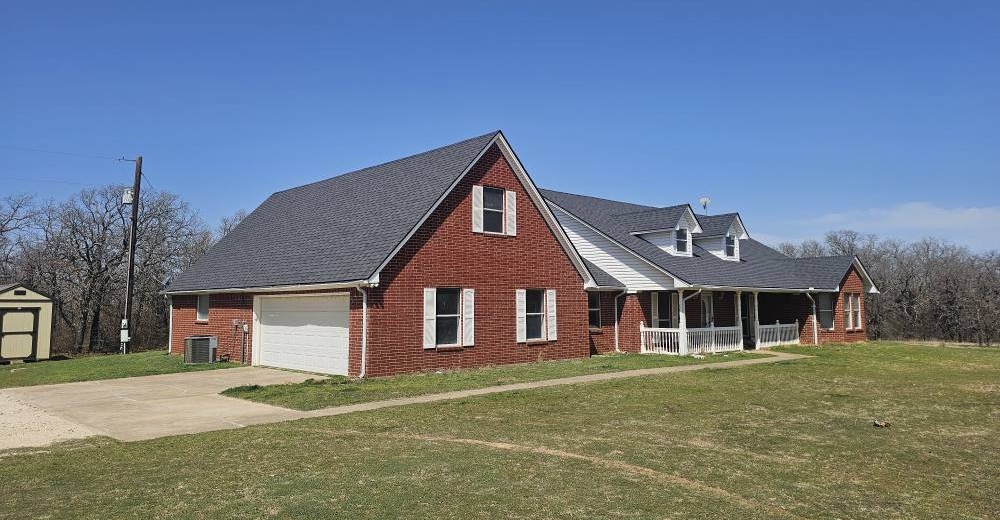
Water intrusion is one of the most urgent concerns following storm damage. Even a small opening can allow rainwater to enter the roof assembly and eventually affect ceilings, insulation, walls, flooring, and structural components.
When a leak is discovered, homeowners should first focus on keeping people and belongings away from unsafe areas. Water near electrical fixtures or equipment can create additional hazards, so caution is especially important.
Visible dripping may not identify the actual source of the leak. Water can travel along roof decking, framing, insulation, or other surfaces before appearing inside the home.
A professional roofing inspection can help trace the likely entry point. The contractor may examine missing shingles, flashing, valleys, penetrations, roof edges, and other areas that could have been affected by the storm.
Temporary protection can be used when permanent repairs are not immediately possible. The goal is to limit additional water entry while the damaged area is being evaluated.
If shingles have been blown away, the exposed section may need to be covered until replacement materials can be installed. If flashing has been displaced, temporary measures may also be required around the affected area.
Interior moisture should be documented carefully. Photographs of ceiling stains, damaged walls, wet insulation, and other visible conditions can help establish the extent of the problem.
Water that has entered the attic should not simply be ignored after the exterior repair. Insulation and wood components may require inspection to determine whether prolonged moisture exposure has caused damage.
The contractor should also investigate why the leak occurred. If a storm exposed a pre-existing weakness, simply replacing one visible component may not prevent another leak from developing later.
Emergency leak repair is intended to stabilize the situation. Permanent work should restore the roofing system’s ability to shed water and protect the underlying structure.
Homeowners should monitor the repaired area during subsequent rainfall. If water continues to appear, another inspection may be necessary because water can sometimes enter through a nearby damaged component.
Prompt attention can limit secondary damage. The longer water remains inside the roof assembly or interior structure, the greater the possibility of deterioration and more extensive repairs.
Dealing With Wind, Hail, and Missing Shingles
Wind and hail can affect roofing systems in different ways, and a storm may produce several types of damage at the same time. Strong wind can lift or remove shingles, while hail can create impact marks and surface deterioration.
Missing shingles are usually easier to identify than partially lifted materials. A shingle that has been lifted but remains attached may still be damaged because its original fastening or weather seal may no longer function properly.
Wind can also damage roof edges and flashing. These areas may require particular attention because they can experience strong forces during severe weather.
Hail damage can be less obvious. Asphalt shingles may show localized impact marks or unusual granule loss, while metal components can develop dents or other visible changes.
Homeowners should not assume that every dark mark on a shingle represents hail damage. Roofing materials naturally change with age, and professional inspection can help distinguish storm-related impact from ordinary deterioration.
When multiple shingles are missing, the surrounding area should be inspected. The storm may have loosened additional shingles that remain in place but are no longer securely attached.
Repairs should use compatible replacement materials. The contractor should consider the condition and age of the existing roof before deciding whether individual shingle replacement is appropriate.
A roof that was already severely deteriorated before the storm may not respond well to isolated repairs. In such cases, a professional can explain whether broader restoration or replacement should be considered.
Wind can also affect gutters and downspouts. Bent or detached components may prevent proper drainage and should be repaired so rainwater does not accumulate along the roof edge.
Hail and wind damage may occur together with fallen debris. A complete inspection should therefore cover the entire roof rather than focusing on one visible type of damage.
Emergency repairs should restore weather protection first. Once the roof is stabilized, homeowners can evaluate the extent of permanent work required and make decisions based on the overall condition of the roofing system.
Addressing Damaged Flashing and Roof Penetrations
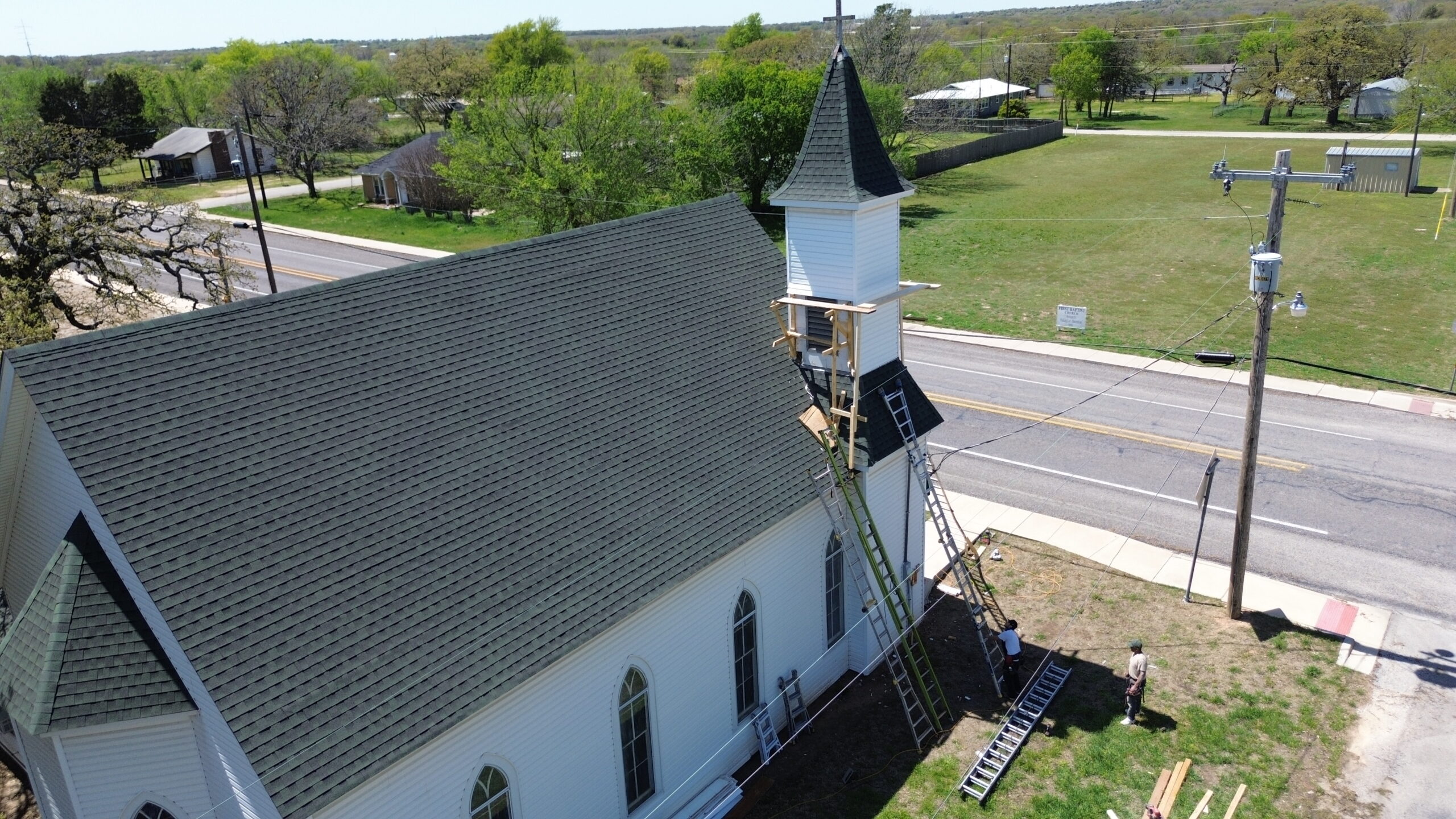
Flashing around chimneys, skylights, vents, walls, and roof valleys is particularly important after storm damage. Strong winds can loosen these components, while falling debris can bend or break them.
Damaged flashing can create water pathways even when surrounding shingles appear intact. Because these areas direct water away from vulnerable transitions, a small opening can result in repeated leakage during rainfall.
Chimneys can be especially complicated because flashing must connect the roofing system with the vertical chimney surface. Wind or impact damage may loosen flashing or expose gaps around the structure.
Skylights can experience similar problems. Damage to the surrounding flashing or frame may allow water to enter the roof assembly and appear as staining around the interior ceiling.
Plumbing vent boots can also be affected by severe weather. If the surrounding material becomes cracked, displaced, or damaged, water may enter around the pipe penetration.
Emergency repairs may involve temporarily covering the affected area or securing loose components. The permanent solution should address the damaged flashing and restore the proper water-shedding connection.
Simply applying sealant over a damaged section may not be enough. Sealants can deteriorate, and they cannot correct flashing that has been severely bent, displaced, corroded, or improperly integrated.
Contractors should inspect surrounding roofing materials when repairing flashing. Water may have entered beneath adjacent shingles or affected the underlayment and decking.
A proper repair may require temporarily removing nearby roofing materials to access the flashing. Although this can increase the scope of work, it allows the contractor to address the problem more thoroughly.
Homeowners should ask what caused the flashing failure and whether the surrounding components remain in good condition. Understanding the cause can help prevent recurring leaks after the storm.
Storm-damaged flashing should receive prompt attention, particularly when rainfall is expected. Restoring these vulnerable areas helps reduce the risk of water entering the home during subsequent weather.
Managing Safety, Cleanup, and Short-Term Protection
Safety remains important throughout the emergency repair process, including after the most obvious damage has been addressed. Roofing debris, broken materials, damaged branches, exposed nails, and unstable surfaces can remain around the property.
Homeowners should keep children and pets away from active work areas. Even after contractors have completed major repairs, small pieces of debris may remain in landscaping, driveways, or walkways.
Roofing crews should use appropriate protective equipment and follow safe work practices when handling damaged materials. Storm conditions can make roofing work more difficult because surfaces may be wet or unstable.
Cleanup should include removal of damaged roofing materials and other debris generated during emergency work. Contractors should explain what cleanup and disposal services are included in the repair agreement.
Gutters may also need attention after a storm. Leaves, branches, shingle granules, and other debris can block water flow and cause additional drainage problems.
Homeowners should monitor temporary protection after installation, particularly if another storm is approaching. A damaged tarp or displaced temporary covering should be addressed promptly by the contractor.
It is also important to distinguish emergency work from permanent repairs. Temporary measures may protect the home for a limited period, but damaged roofing materials, decking, flashing, and other components should eventually be repaired or replaced properly.
After the immediate emergency has passed, homeowners should review all available documentation. Photographs, inspection reports, estimates, invoices, and records of temporary protection can help organize the next stage of the repair process.
The property should also be monitored for delayed problems. Some moisture damage may not become visible immediately, particularly when water has entered insulation or concealed roof components.
A careful recovery process allows homeowners to move from immediate protection toward permanent restoration. Once the property is stabilized, the next priority is understanding the full scope of the damage and planning repairs that restore the roofing system for long-term protection.
Working With Roofing Contractors After Storm Damage
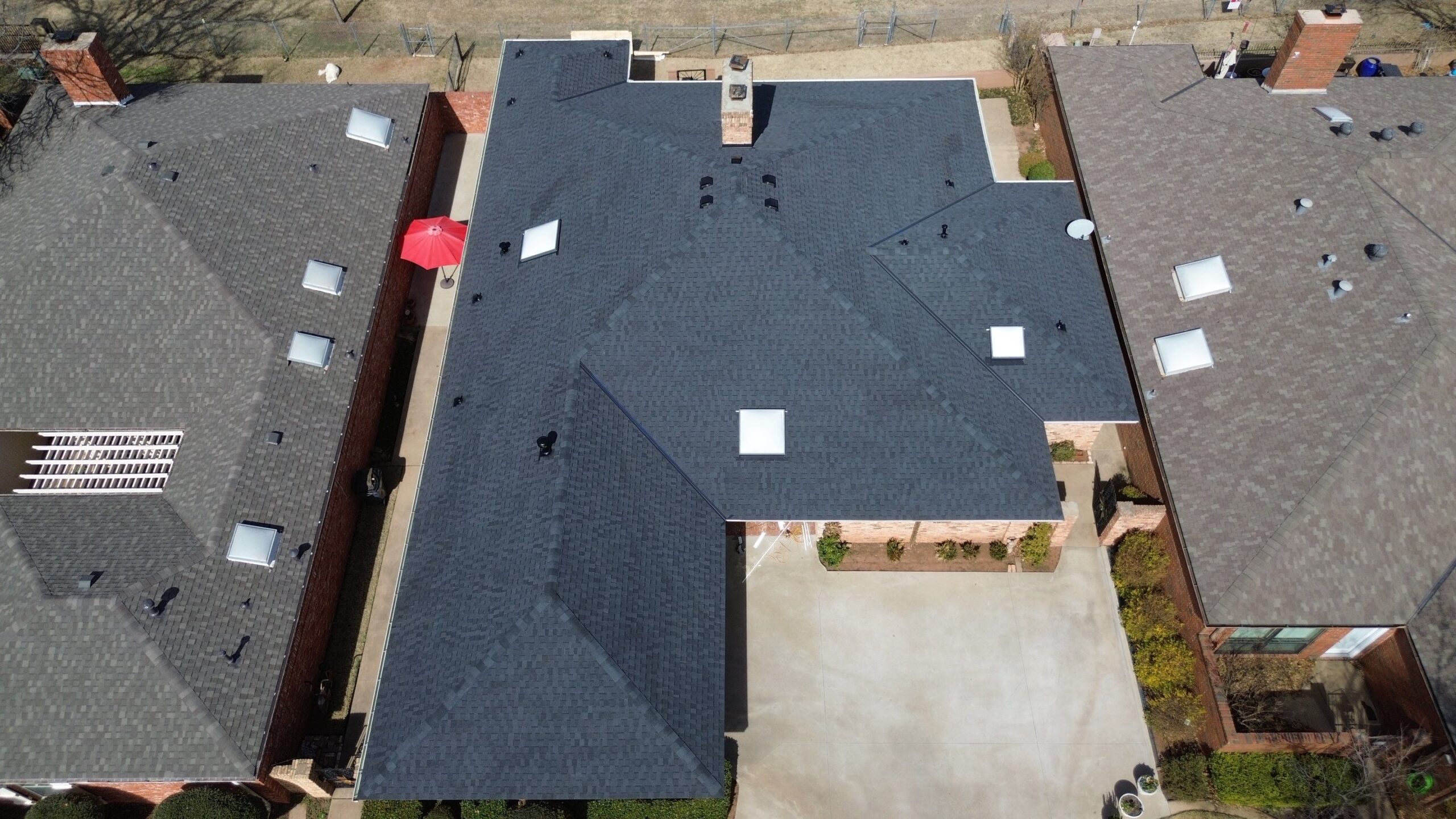
After a severe storm, choosing the right roofing professional is an important part of the recovery process. Emergency situations can create pressure because homeowners may be worried about leaks, damaged ceilings, exposed roofing materials, or additional storms. However, rushing into an agreement without understanding the proposed work can create problems later.
A qualified roofing contractor should inspect the property and explain the visible damage in clear terms. The inspection should cover more than missing shingles because storm damage can also affect flashing, roof edges, valleys, vents, gutters, underlayment, and roof decking.
Homeowners should ask whether the contractor is providing temporary emergency protection, permanent repairs, or both. Temporary work may be necessary to prevent further water intrusion, while permanent repairs can be scheduled after the full condition of the roof has been evaluated.
A written estimate can help prevent misunderstandings. It should describe the work being proposed, materials to be used, labor, debris removal, and any conditions that could result in additional costs.
Homeowners should also ask questions about the contractor’s experience with storm-related repairs. A professional who regularly handles residential roofing emergencies may be better prepared to identify hidden damage and recommend appropriate repair techniques.
Communication should continue throughout the project. If the contractor discovers additional damage after removing roofing materials, the homeowner should receive an explanation before major additional work is performed whenever practical.
It is also useful to keep photographs and records of the roof’s condition before, during, and after repairs. These records provide a clear history of what happened and what work was completed.
Homeowners should be cautious of anyone who uses aggressive sales tactics or demands immediate decisions without providing a reasonable explanation of the damage. Storm recovery can be stressful, but important roofing decisions should still be based on clear information.
A professional contractor should focus on restoring the home’s protection rather than simply completing the fastest possible repair. The objective is to correct the storm damage while maintaining the long-term performance of the roofing system.
Understanding Insurance and Repair Documentation
Storm damage can create significant repair expenses, so homeowners may need to review their insurance policy and understand what documentation is required. Coverage varies by policy and circumstances, so homeowners should avoid assuming that every type of roof damage will be covered.
Documentation is especially important after a major storm. Photographs of damaged shingles, fallen branches, damaged gutters, interior water stains, and other affected areas can provide a record of the property’s condition.
Homeowners should photograph the damage from several safe angles. Interior areas should also be documented if water entered the home, including ceilings, walls, flooring, insulation, and damaged personal belongings.
Repair estimates should be retained along with invoices and receipts for emergency services. If temporary roof protection was installed, records of that work should also be kept.
A contractor’s inspection report can provide additional information about the cause and extent of the damage. Homeowners should review the report and ask questions about unfamiliar roofing terms or recommended repairs.
It is important to distinguish between storm damage and ordinary aging. Roofing materials naturally deteriorate over time, and an inspection may identify both pre-existing wear and new storm-related damage.
Homeowners should provide accurate information and avoid making assumptions about what caused individual defects. A professional inspection can help establish whether damage appears consistent with wind, hail, falling debris, water intrusion, or other conditions.
Before approving major repairs, homeowners should understand which work is considered necessary to restore the roof. Optional improvements or upgrades may be separate from repairs required because of storm damage.
Keeping organized records can make the recovery process easier. A simple folder containing photographs, inspection documents, estimates, invoices, contractor communications, and material information can help homeowners track the project from the initial emergency through completion.
Insurance-related decisions should be handled according to the homeowner’s specific policy and applicable requirements. When coverage questions are unclear, homeowners can contact their insurance provider directly for clarification rather than relying only on assumptions.
Good documentation benefits the homeowner regardless of the final coverage decision. It creates a permanent record of the storm, the damage discovered, and the work performed on the roofing system.
Deciding Between Emergency Repair and Roof Replacement
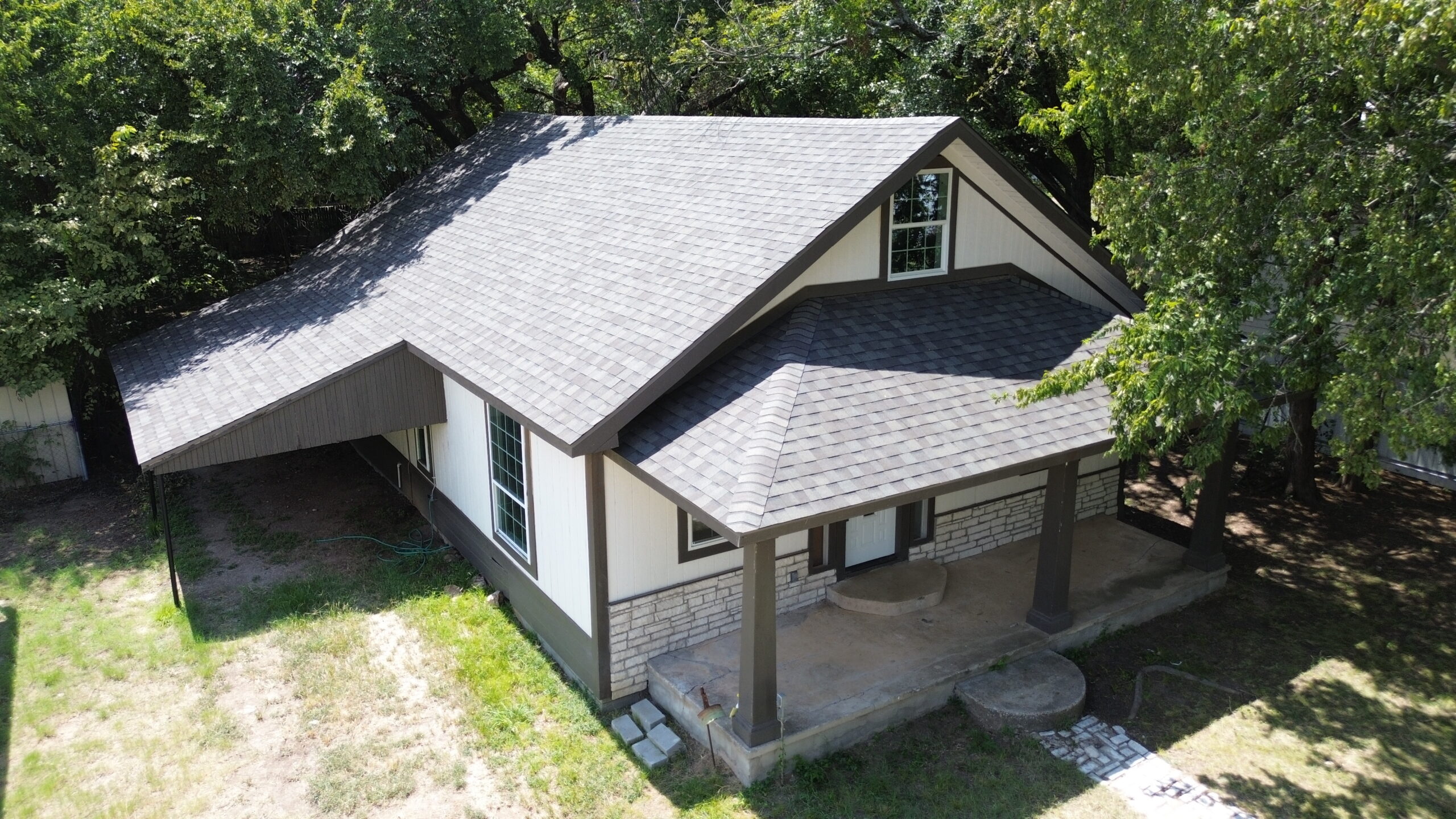
Not every storm-damaged roof needs to be completely replaced. The appropriate solution depends on the extent of damage, the roof’s age, the condition of existing materials, and the performance of the remaining roofing system.
A localized repair may be appropriate when the damage is limited to a small number of shingles or a specific flashing component. If the surrounding roof remains in good condition, replacing the affected materials may restore normal protection without requiring a complete replacement.
Widespread storm damage presents a different situation. If large portions of the roof have been affected, repairs may involve multiple sections and several underlying components.
The age of the roof should also be considered. A relatively new roof with isolated storm damage may be a strong candidate for repair, while an older roof with extensive deterioration may require a broader discussion about replacement.
Pre-existing conditions can influence the decision as well. If shingles were already brittle, curled, cracked, or extensively worn before the storm, repeated repairs may not provide a practical long-term solution.
Roof decking and structural components are another consideration. Severe impact or prolonged water exposure can damage underlying materials, making the project more extensive than a simple surface repair.
Homeowners should ask the contractor to explain the condition of the roof as a whole. Understanding the percentage and location of damage can help homeowners make a more informed decision.
A complete roof replacement may involve removing the existing roofing materials, inspecting the deck, replacing damaged sections, installing appropriate underlayment and flashing, and applying new exterior materials.
Emergency protection should not be confused with the final repair decision. A tarp may protect an exposed area while the homeowner evaluates whether localized repair or full replacement makes more sense.
Cost should also be considered, but it should not be the only factor. The expected remaining service life, frequency of previous repairs, material condition, and long-term performance are equally important.
The goal is to select a solution that restores reliable protection without performing unnecessary work. Professional evaluation can help homeowners understand the difference between damage that requires immediate repair and deterioration that may require future planning.
Preventing Additional Damage After Emergency Repairs
Once emergency repairs have stabilized the roof, homeowners should continue monitoring the property. A storm may have weakened several components even when only one area received immediate attention.
The repaired section should be observed during subsequent rainfall. New stains, dripping, damp insulation, or other signs of water intrusion should be reported promptly to the roofing contractor.
Gutters and downspouts should also be checked after storms. Leaves, branches, and roofing debris can block drainage and cause water to overflow around the roof edge.
Nearby trees should be inspected for damaged or unstable branches. Removing dangerous branches can reduce the possibility of additional impact damage during another period of strong wind.
Homeowners should avoid unnecessary roof access after emergency repairs. A roof may appear stable while still containing fragile materials or areas that were temporarily protected.
Attic areas can provide useful information about the condition of the roof. Homeowners can safely observe accessible areas for visible moisture, staining, or damp insulation, although professional inspection is recommended when concerns are discovered.
Temporary repairs should be monitored until permanent work is completed. Tarps, coverings, and other emergency measures can deteriorate or move during additional weather.
The property should also be kept clear of roofing debris. Nails, broken shingles, branches, and other sharp materials can create hazards for household members and pets.
Homeowners should not make unapproved modifications to emergency repairs. Additional sealants, patches, or coverings may interfere with the contractor’s permanent repair plan or conceal important damage.
If another storm is expected, homeowners should communicate with their contractor about the condition of temporary protection. Additional weather can make an already damaged roof more vulnerable.
Preventing secondary damage requires attention after the initial emergency has passed. The roof should remain protected until all necessary permanent repairs have been completed.
Planning Long-Term Roof Recovery and Maintenance
Emergency repairs address immediate risks, but long-term maintenance determines how well the roofing system performs after the storm. Once the urgent work is finished, homeowners should develop a plan for maintaining the roof and preventing future problems.
The first step is to understand what was repaired. Homeowners should keep records of replaced shingles, flashing work, decking repairs, ventilation changes, and other improvements.
Regular inspections can help identify deterioration before it becomes a serious problem. Professional inspections are particularly useful for older roofs and properties that experience frequent severe weather.
Gutters should remain clean and properly connected. Good drainage reduces moisture exposure around roof edges and helps direct rainwater away from the home.
Trees should be maintained so branches do not scrape or hang directly over the roof. This is especially important in areas that experience strong winds and severe storms.
Homeowners should also monitor the condition of roof penetrations. Chimneys, skylights, vents, and other openings can develop problems independently of storm damage and should receive attention during routine inspections.
Attic ventilation and moisture conditions should be monitored as well. Proper airflow can help manage heat and moisture and support the condition of roofing components.
A maintenance budget can make future repairs easier to manage. Even after a major storm repair, homeowners should expect that normal wear and future weather events can eventually create additional maintenance needs.
Keeping a complete roofing history is particularly useful after storm damage. Future contractors can review previous repairs and determine whether a new problem is related to an earlier repair or represents a separate issue.
Long-term planning can also help homeowners recognize when replacement may eventually be necessary. A roof that requires frequent repairs despite proper maintenance may be approaching the end of its useful service life.
The objective is not simply to repair storm damage once and forget about the roof. Continued maintenance helps protect the investment and can reduce the likelihood of another emergency becoming a major problem.
Conclusion
Emergency residential roofing repair after storm damage requires a careful balance between speed, safety, and long-term planning. Strong winds, hail, heavy rain, falling branches, and flying debris can damage both visible roofing materials and hidden components beneath the surface.
The immediate priority is to protect the home from additional exposure. Homeowners should avoid climbing onto damaged roofs and should arrange professional assistance when missing materials, visible openings, fallen trees, or water intrusion are present.
Temporary protection can reduce further damage while permanent repairs are being planned. However, emergency measures such as tarping should only be considered short-term solutions and should eventually be replaced with appropriate permanent repairs.
Documentation is another important part of storm recovery. Photographs, inspection reports, estimates, invoices, and repair records provide a useful history of the damage and the work performed.
Homeowners should also understand the difference between storm damage and normal roof deterioration. A storm may expose weaknesses that existed before the event, particularly on older roofing systems, so the overall condition of the roof should be considered before deciding between repair and replacement.
Choosing a qualified roofing contractor can make the recovery process more manageable. A reliable professional should inspect the affected areas, explain the recommended work, provide appropriate documentation, and communicate clearly when unexpected conditions are discovered.
After emergency repairs are completed, the roof still requires ongoing care. Gutters should remain clear, nearby trees should be maintained, repaired areas should be monitored, and future storm damage should be addressed promptly.
Long-term maintenance can help protect the repaired roofing system and reduce the chance of recurring problems. Keeping records of all repairs also gives future contractors valuable information when evaluating the roof.
Storm damage can be stressful for homeowners, but a structured response can make the situation easier to manage. By prioritizing safety, preventing further water intrusion, documenting the damage, arranging professional repairs, and planning for continued maintenance, homeowners can restore their residential roofing system and protect the home from future weather-related problems.
Leave A Comment