
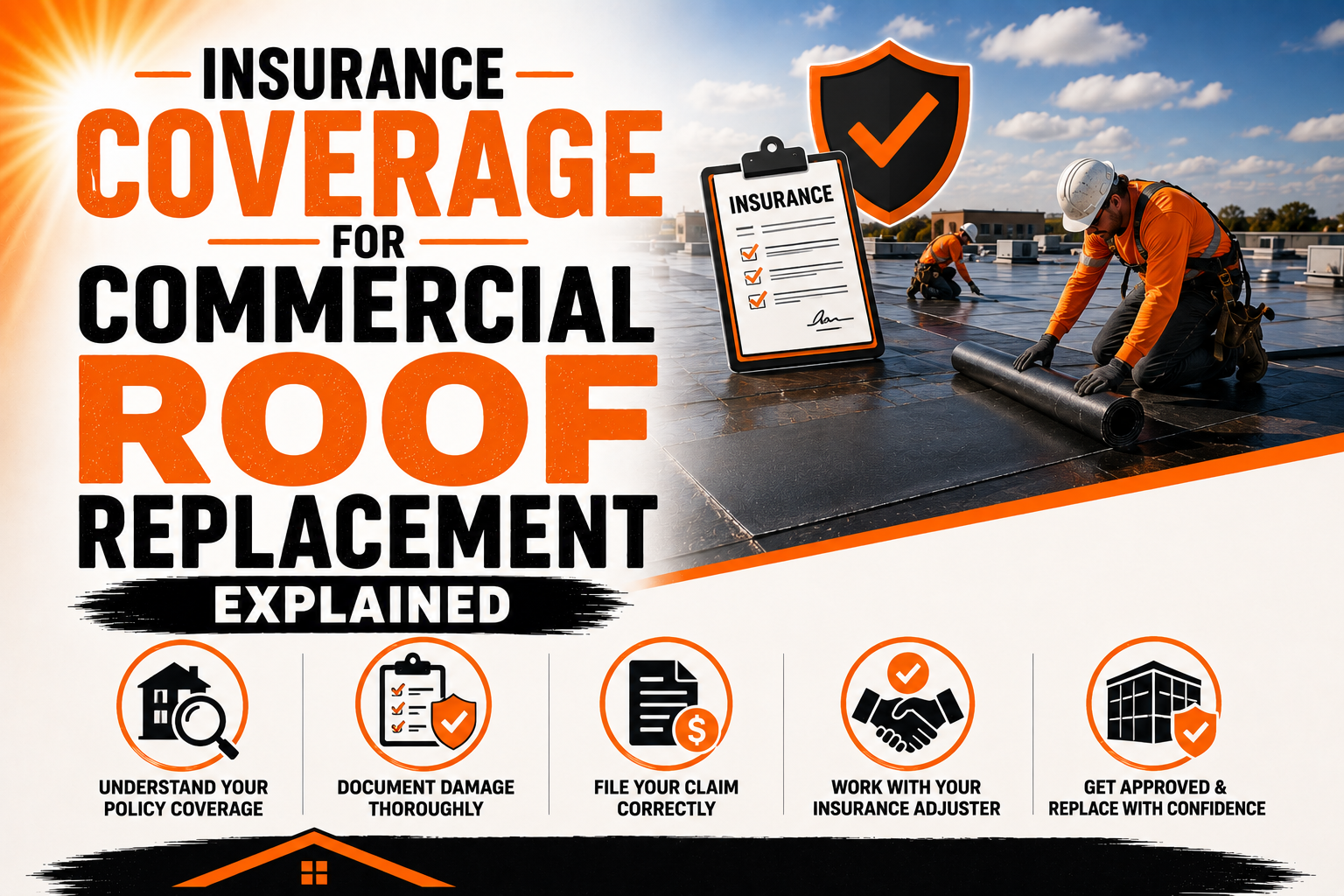
Insurance Coverage for Commercial Roof Replacement Explained
Introduction
Commercial roof replacement can represent a substantial expense for a business, especially when a large roofing system is damaged unexpectedly. Severe storms, hail, wind, falling objects, fire, and other covered events can sometimes cause damage that may qualify for insurance coverage. However, commercial property insurance does not automatically pay for every roof replacement, so business owners need to understand what their policy actually covers before assuming a claim will be approved.
Insurance coverage generally depends on the cause of damage, policy language, exclusions, deductibles, limits, endorsements, and the condition of the roof before the event occurred. A roof that fails because it has reached the end of its useful life may be treated very differently from a roof that is suddenly damaged by a covered storm. This distinction is one of the most important factors in determining whether an insurance-funded replacement is possible.
The claims process also requires documentation and communication. Business owners may need photographs, inspection reports, maintenance records, repair invoices, roofing estimates, and other evidence to establish what happened and what repairs are necessary. Understanding the process before beginning replacement work can help businesses avoid unnecessary complications.
Understanding Commercial Roof Insurance Coverage
Commercial property insurance is designed to protect businesses against certain types of property loss, but coverage varies significantly between policies. A commercial property policy may cover the building and its components, including the roof, when damage results from a covered cause of loss. The exact protection depends on the policy’s terms and conditions.
The roof is normally considered part of the insured building when the policy provides building coverage. However, this does not mean every roofing problem automatically qualifies for payment. The insurer generally evaluates both the cause of damage and the condition of the property when determining coverage.
For example, damage caused by a qualifying windstorm may be treated differently from deterioration caused by years of exposure to sunlight and rain. Similarly, hail damage may receive different treatment from damage caused by poor maintenance or installation defects.
Policy exclusions are particularly important. Commercial property policies can contain exclusions for certain causes of loss, maintenance-related conditions, wear and tear, or other circumstances. Some risks may be available through separate endorsements or specialized coverage.
Business owners should therefore avoid making assumptions based solely on the fact that the roof is insured. The relevant question is whether the specific loss is covered under the policy.
Insurance policies can also contain conditions that affect how a claim must be reported and documented. Reviewing these requirements before taking action can help the business understand its responsibilities during the claims process.
When Insurance May Cover Commercial Roof Replacement
Insurance may cover commercial roof replacement when a covered event causes sufficient damage to the roofing system. Common examples can include certain types of wind, hail, fire, or other covered physical damage, depending on the policy.
The cause of loss is critical. An insurer typically wants to determine what event caused the damage and whether that event falls within the policy’s coverage. Evidence showing when and how the damage occurred can therefore be important.
Severe weather can create different types of roof damage. High winds may loosen or tear roofing materials, while hail can damage membranes, metal components, flashing, or other roof elements. Falling objects associated with a covered event may also cause physical damage in some circumstances.
A professional inspection can help document the extent of damage. Roofing professionals may identify punctures, displaced materials, damaged seams, compromised flashing, or other conditions that appear consistent with the reported event.
The policy’s deductible must also be considered. Even when a claim is covered, the business may be responsible for paying the applicable deductible before insurance contributes toward the covered loss.
Coverage may also depend on whether the roof was in acceptable condition before the event. If a storm damages an already severely deteriorated roof, the insurer may examine which portion of the loss resulted from the covered event and which portion relates to pre-existing conditions.
Because each policy is different, businesses should review the actual policy and discuss coverage questions with their insurance professional rather than assuming a particular event will automatically result in a full replacement payment.
When Commercial Roof Replacement Is Usually Not Covered
One of the most important insurance concepts for commercial property owners is the difference between sudden covered damage and gradual deterioration. A commercial property policy generally is not intended to function as a maintenance plan for an aging roof.
Normal wear and tear can occur as roofing materials are exposed to weather over time. Membranes can age, metal can corrode, flashing can deteriorate, and sealants can lose effectiveness. These conditions may require maintenance or replacement even when no insured event has occurred.
Poor maintenance can also affect a claim. If a roof has been neglected for an extended period, the insurer may determine that some or all of the reported damage is related to maintenance issues rather than the covered event.
Age alone does not necessarily determine coverage, but it can be relevant to the evaluation. An older roof may have pre-existing deterioration that needs to be separated from damage caused by a recent storm.
Defective installation or faulty workmanship may also be treated differently from physical damage caused by a covered event. The responsible contractor, manufacturer, warranty, or another source may need to be considered depending on the circumstances.
Long-term leaks can create additional complications. If water has entered the building gradually because of unresolved maintenance problems, the resulting damage may not receive the same treatment as sudden damage from a covered event.
The business owner should therefore avoid assuming that an old or leaking roof will qualify for a full insurance-funded replacement. The cause and circumstances of the loss need to be established first.
Reviewing the Roof Coverage in Your Commercial Policy
Before filing a claim, business owners should review the commercial property policy carefully. Understanding the coverage can make it easier to determine what information will be needed and what financial responsibilities may remain with the business.
The declarations page can provide useful information about insured property, limits, deductibles, and policy periods. However, the declarations page does not contain every detail, so the complete policy wording and endorsements should also be reviewed.
Business owners should pay attention to how the roof and building are covered. The policy may specify different conditions, valuation methods, deductibles, exclusions, or limitations that can affect a roofing claim.
Wind and hail deductibles deserve particular attention in areas where these events are common. A policy may apply a specific deductible to certain weather-related losses rather than the standard property deductible.
Policy limits also matter. Even when damage is covered, the amount payable may be affected by the applicable limit, valuation method, deductible, and other policy provisions.
Some policies may include endorsements that modify standard coverage. These could potentially affect roof valuation, code-related upgrades, equipment, business income, or other aspects of a property loss.
A business owner does not need to interpret every technical insurance provision alone. An insurance broker, agent, claims professional, or other qualified adviser can help explain how the policy applies to the specific property and circumstances.
The goal of reviewing the policy is to understand the financial and procedural framework before major decisions are made.
Replacement Cost vs. Actual Cash Value
One of the most important valuation concepts in commercial property insurance is the difference between replacement cost and actual cash value. These terms can significantly affect how much an insurer may pay for covered roof damage.
Replacement cost generally refers to the cost of replacing damaged property with comparable new property, subject to the policy’s terms and conditions. If the policy provides replacement cost coverage and the claim qualifies, the settlement may be based on the cost of replacing the damaged property without applying certain depreciation calculations.
Actual cash value generally takes depreciation into account. The age and condition of the damaged roof can therefore influence the amount payable under an actual cash value approach.
Consider a commercial roof that is several years old and suffers covered storm damage. Under an actual cash value settlement, the insurer may account for the roof’s age and depreciation. Under applicable replacement cost coverage, the settlement approach may be different, subject to the policy requirements.
The exact calculation can vary by policy and circumstances. Businesses should not assume that the roofing contractor’s full replacement estimate will automatically equal the insurance payment.
Valuation can also affect financing decisions. If the insurance payment covers only part of the replacement cost, the business may need to fund the remaining amount. Understanding this possibility early can help prevent budget surprises.
Business owners should review the valuation provision before agreeing to major work. If the policy language is unclear, asking the insurance professional for an explanation can provide a better understanding of the potential claim outcome.
Understanding Deductibles and Policy Limits
A deductible is the amount the insured is generally responsible for before insurance contributes to a covered loss. Commercial roof claims can involve significant deductibles, so the business should understand the applicable amount before making financial plans.
The deductible may depend on the type of loss. Some policies use a standard property deductible, while others may have specific deductibles for wind, hail, named storms, or other events.
For example, a business may have one deductible for general property claims and a different percentage-based deductible for certain weather-related damage. The exact structure depends on the policy.
Policy limits are another important consideration. The insurer’s responsibility may be limited by the amount of coverage purchased for the building or particular type of loss.
Coinsurance provisions or other policy conditions can also affect claim calculations in some commercial property policies. These provisions can become important when the insured value of the property does not align with the policy requirements.
The business should therefore estimate its potential out-of-pocket responsibility before committing to a replacement plan. This can include the deductible, uncovered upgrades, non-covered deterioration, code-related expenses not included under the policy, and other project costs.
Clear financial planning can prevent a situation where the business expects insurance to cover the entire roofing project but later discovers significant expenses that remain its responsibility.
Documenting Roof Damage Before Filing a Claim
Strong documentation can be extremely valuable when reporting commercial roof damage. The business should preserve evidence showing the roof’s condition, the reported event, and the resulting damage.
Photographs and videos can document damaged membrane areas, displaced components, dents, punctures, broken flashing, damaged equipment, interior water intrusion, and other visible conditions. Images should ideally show both close-up details and wider views that establish where the damage is located.
The date of the damage should also be recorded when possible. Weather reports, maintenance records, inspection documents, photographs, security footage, and employee observations may help establish when an event occurred.
Previous maintenance records can provide useful information about the roof’s condition before the loss. Repair invoices and inspection reports may help distinguish older problems from newly reported damage.
A professional roofing inspection can provide another layer of documentation. The contractor or consultant can identify observed damage and prepare a written report or estimate describing recommended repairs.
Businesses should avoid making unnecessary changes before the damage has been properly documented, particularly when doing so could make it harder to determine the original condition. At the same time, emergency measures may be necessary to prevent additional damage, and those actions should be documented carefully.
The owner should keep copies of all photographs, reports, correspondence, estimates, invoices, and claim documents in one organized file. This record can make communication with the insurer, adjuster, and roofing contractor much easier.
Filing a Commercial Roof Insurance Claim
After documenting the damage and reviewing the available policy information, the next step is generally to report the loss to the insurance company. Commercial property policies may contain specific requirements regarding how and when claims must be reported, so businesses should follow the applicable policy conditions carefully.
The claim report should provide clear information about what happened, when the event occurred, and what areas of the property appear to be damaged. Business owners should avoid guessing about the cause or extent of damage when those details have not yet been professionally confirmed.
Photographs, videos, inspection reports, maintenance records, repair invoices, and other supporting documents can be submitted as requested. Keeping organized copies of everything sent to the insurer is important because the claim may involve multiple conversations and documents over time.
After the claim is reported, the insurer may assign a claim number and identify an adjuster or claims representative. The business should keep this information available and use it when communicating about the loss.
Emergency measures may be necessary when the roof is actively allowing water into the building. Temporary protection can help reduce additional damage, but emergency work should be documented with photographs, invoices, and descriptions of what was done.
The business should also keep receipts for reasonable expenses associated with protecting the property, while understanding that reimbursement depends on the policy and circumstances. Before authorizing major permanent work, it is generally wise to coordinate with the insurer when practical.
A clear and organized claim submission gives the insurer useful information for evaluating the loss. It also creates a documented record of the damage and the actions taken after the event.
Working With the Insurance Adjuster
The insurance adjuster plays an important role in evaluating a commercial roofing claim. The adjuster may inspect the property, review documentation, assess the reported damage, and determine how the loss should be handled under the policy.
Business owners should provide the adjuster with access to relevant areas of the property and available documentation. A professional and organized approach can make the inspection process more efficient.
The adjuster’s role is to evaluate the claim according to the applicable policy. The business owner should therefore be prepared to explain what happened and provide evidence supporting the reported damage rather than relying only on verbal descriptions.
During the inspection, the adjuster may photograph damaged areas and review the condition of the roof. They may also examine interior damage, rooftop equipment, flashing, drainage components, and other affected property.
A roofing contractor may also be present during an inspection if the owner chooses to involve one. The contractor can explain technical roofing conditions and identify areas that may require repair or replacement.
Differences between the contractor’s findings and the adjuster’s assessment can sometimes occur. A contractor may recommend a larger scope of work, while the insurer may initially determine that only certain damage is related to the covered event.
Business owners should keep communication professional and request explanations for significant differences. Written documentation can be particularly helpful when discussing why a specific repair or replacement component is necessary.
The adjuster’s initial assessment should also not be confused with the contractor’s construction estimate. The two documents serve different purposes and may contain different levels of technical detail.
Getting a Professional Roofing Inspection
A qualified commercial roofing contractor or roofing consultant can provide valuable information during an insurance claim. The professional can inspect the roof and identify visible damage, potential moisture intrusion, damaged components, and areas that may require replacement.
The inspection should be detailed enough to distinguish between different types of conditions. Storm-related damage, normal deterioration, previous repairs, installation defects, and maintenance issues may appear on the same roof.
A professional inspection report can describe the observed conditions and provide photographs that support the findings. It may also include recommendations for repair or replacement based on the roof’s condition.
The business should choose a contractor with relevant commercial roofing experience. Large commercial roofs often involve complex membranes, insulation assemblies, flashing systems, drainage details, and rooftop equipment.
It is also helpful to obtain a written estimate rather than relying on a verbal price. The estimate should identify the proposed scope of work and major components so it can be compared with the insurance assessment.
The contractor should not automatically assume that the entire roof needs replacement simply because a claim has been filed. The recommended scope should be supported by actual conditions and the requirements of the roofing system.
Likewise, the insurer’s initial scope should not automatically be treated as the final technical answer. If the contractor identifies legitimate damage or necessary work that was not included, the business can provide supporting information for further review.
An independent professional inspection can therefore help create a clearer technical record for everyone involved.
Comparing Roofing Estimates and Insurance Estimates
Insurance claims often involve more than one estimate. The roofing contractor may prepare a detailed construction estimate, while the insurer or its adjuster may prepare an estimate based on the covered loss.
These estimates may differ in scope, pricing, labor assumptions, material quantities, or required accessories. A difference does not automatically mean that one party is wrong.
The first step is to compare the scopes line by line. Business owners should identify which areas of work appear in both estimates and which items appear in only one.
For example, the contractor may include additional flashing, insulation replacement, edge metal, disposal, or preparation work. The insurer may initially omit some items because they were not considered necessary, were considered pre-existing, or were not sufficiently documented.
The business should ask the contractor to explain why disputed items are required. Supporting photographs, manufacturer requirements, building code information, or technical documentation may help clarify the need.
The insurer can then be given the additional information for review. Depending on the claim, the adjuster may revise the estimate or request further documentation.
Businesses should also distinguish between covered repairs and improvements. An owner may choose to upgrade materials beyond what was previously installed, but the additional cost may not necessarily be covered by insurance.
Understanding this distinction helps prevent confusion during budgeting. The insurance payment may cover the cost associated with the covered loss while the owner separately pays for elective improvements.
A careful comparison of estimates can therefore identify the difference between insurance-covered work, necessary project work, and owner-selected upgrades.
Understanding Depreciation and Recoverable Depreciation
Depreciation can affect the amount paid on certain commercial property claims. The way depreciation is handled depends on the policy’s valuation provisions and whether the damaged property is covered on an actual cash value or replacement cost basis.
When depreciation is applied, the insurer may initially calculate a lower payment based partly on the age and condition of the damaged roofing materials. The remaining amount may potentially be available later if the policy provides replacement cost coverage and its requirements are satisfied.
This additional amount is commonly associated with recoverable depreciation. However, the exact rules and deadlines depend on the individual policy.
Business owners should ask the insurer how the claim payment is being calculated. They should understand the initial payment, deductible, depreciation amount, and any conditions that must be met before additional payment may be considered.
The roofing contractor’s estimate can help establish the actual cost of completing the covered replacement. Final invoices and proof of completed work may be required for the insurer to evaluate additional amounts.
Owners should also be aware that not every policy allows recovery of all depreciation. Some roofs may be subject to different valuation provisions or limitations.
Because the financial difference can be substantial on a large commercial roof, the business should understand the valuation process before finalizing its project budget.
Ordinance or Law and Code Upgrade Coverage
Building codes can change over time, and replacing an older roof may require certain upgrades that were not part of the original installation. Insurance coverage for these additional requirements depends on the policy and whether appropriate ordinance or law coverage is included.
For example, current requirements may call for different insulation levels, edge details, drainage features, fire performance, or other improvements. These requirements can increase the cost of replacing an older roofing system.
Standard property coverage may not automatically pay for every upgrade required solely because of a change in building regulations. Ordinance or law coverage may provide additional protection for certain qualifying costs.
The business should determine whether this coverage exists before construction begins. The applicable limits, deductibles, conditions, and covered components should be reviewed carefully.
A contractor can identify potential code-related work during the planning process. However, the insurer or insurance professional should clarify whether those costs are covered under the policy.
This is particularly important when replacing an older commercial roof. A business that budgets only for the basic replacement cost may be surprised when current code requirements add additional expenses.
Coordinating code compliance and insurance coverage early can help the owner understand the total financial obligation before signing a construction agreement.
Business Income and Related Insurance Coverage
A commercial roof loss can affect more than the building itself. If damage forces a business to suspend operations, relocate employees, close part of the property, or reduce its normal activities, other forms of insurance coverage may become relevant.
Business income coverage may provide protection for certain lost income or continuing expenses when a covered property loss causes an eligible interruption. The exact coverage depends on the policy and circumstances.
For example, a severe roof failure may damage inventory or equipment and make part of a facility unusable. Repairs could then affect normal business operations for an extended period.
Extra expense coverage may also be relevant in some policies. This type of protection can potentially address certain additional costs incurred to reduce or avoid an interruption, subject to the policy terms.
Business owners should document operational impacts carefully. Records of affected areas, closure periods, additional expenses, lost sales, temporary facilities, and other relevant information may be needed for a related claim.
Roofing contractors can also help businesses coordinate construction schedules around operations. Work may be divided into phases to reduce disruption when the building must remain open.
Insurance coverage for business interruption is separate from the physical roof replacement decision, so it should be evaluated independently. A business may have a covered building claim while having different requirements for any related income or operational loss.
Understanding these different forms of coverage allows the business to approach the roof claim as part of a broader property recovery process rather than treating the roof as an isolated expense.
Once the insurance assessment, professional roofing evaluation, estimates, valuation, and potential code requirements have been reviewed, the business is in a stronger position to decide how to proceed. The final stages involve addressing partial approvals or denials, coordinating the construction work, protecting warranties, maintaining documentation, and establishing a plan for future roof claims.
Handling Claim Denials or Partial Approvals
Not every commercial roofing insurance claim results in approval for the full replacement requested by the building owner or roofing contractor. An insurer may approve some damage while determining that other conditions are related to wear, age, maintenance, or another excluded cause. A partial approval does not necessarily mean the process is finished, because the business can review the explanation and provide additional documentation where appropriate.
The first step is to understand exactly what the insurer has approved and what has been excluded. The claim decision should identify the covered damage, applicable deductible, depreciation, limitations, and reasons for any denied portions when those details are available.
A roofing contractor can help compare the insurance scope with the actual condition of the roof. If the contractor believes important covered damage was overlooked, supporting photographs, inspection findings, measurements, or technical explanations can be submitted for further consideration.
Business owners should avoid relying only on verbal disagreements. Written documentation makes it easier to identify differences between the insurance estimate and the contractor’s proposed scope and gives all parties a clear record of what is being discussed.
If the disagreement remains significant, the business may consider consulting its insurance professional, a qualified claims adviser, or another appropriate expert. Policy interpretation can be complicated, particularly when multiple causes of damage are involved.
The goal should be to establish what the policy actually provides rather than attempting to force unrelated improvements into an insurance claim. Covered repairs and owner-selected upgrades should remain clearly separated throughout the process.
Common Insurance Mistakes Business Owners Make
One common mistake is beginning permanent roof replacement before the insurer has had a reasonable opportunity to inspect the damage. Emergency measures may be necessary to prevent additional loss, but major repairs can make it more difficult to establish the original condition of the roof.
Another mistake is failing to document the damage thoroughly. Photographs taken immediately after a storm, inspection reports, maintenance records, and repair invoices can provide important evidence during the claim evaluation.
Some owners also assume that an old roof will automatically qualify for replacement because a storm occurred. Insurance generally focuses on covered physical damage and policy terms, so age-related deterioration may be treated differently from sudden storm damage.
Choosing a contractor based only on the expectation that insurance will pay the bill can create financial problems. The owner should understand the proposed scope, estimated cost, deductible, and potential uncovered expenses before approving work.
Another mistake is failing to distinguish necessary repairs from optional upgrades. A business may choose a higher-grade membrane, additional insulation, upgraded metal, or other improvements, but the additional cost may not be covered by the insurance policy.
Ignoring policy deadlines can also create complications. Commercial property policies can contain requirements for timely reporting, documentation, proof of loss, or other claim procedures, so owners should review their responsibilities carefully.
Finally, some businesses fail to keep records after the claim is settled. Claim documents, photographs, invoices, warranties, and inspection reports should be retained because they can be valuable for future maintenance and insurance matters.
Coordinating Roofing Work With the Insurance Company
Once the scope and financial responsibilities are reasonably clear, the business can coordinate the construction process. Communication between the owner, insurer, adjuster, and roofing contractor can help reduce confusion when the project involves approved insurance work.
The roofing contractor should understand the approved scope before permanent work begins. If conditions discovered during tear-off require additional work, the contractor should document those findings and communicate them through the appropriate claims process.
This is particularly important when damaged insulation or roof decking is discovered beneath the existing membrane. Such conditions may not have been visible during the initial inspection and could require additional evaluation.
The contractor should also document concealed conditions with photographs before covering them. This evidence can help explain why the project required additional materials or labor.
Change orders should be handled carefully. Any work outside the original agreement should be clearly described, priced, and approved by the appropriate parties before it creates a financial dispute.
The business should also understand which expenses are covered by insurance and which are being paid directly. Maintaining separate records can make the final accounting easier.
Construction scheduling should account for weather, building operations, material availability, and insurance requirements. A coordinated schedule can reduce disruption while ensuring that claim-related documentation is completed properly.
Good communication does not guarantee claim approval, but it can make the replacement process more organized and reduce misunderstandings between everyone involved.
Understanding Warranties After an Insurance-Funded Replacement
Replacing a commercial roof through an insurance claim does not eliminate the need to understand roofing warranties. The completed system may have manufacturer and contractor warranties, each with its own requirements and limitations.
The manufacturer warranty may cover certain defects in roofing materials or system performance, subject to its specific terms. The contractor’s workmanship warranty may address installation-related issues for a defined period.
Business owners should obtain copies of all applicable warranties before closing the project. The documents should identify the roofing system, manufacturer, contractor, coverage period, exclusions, and maintenance requirements.
Insurance coverage and roofing warranties serve different purposes. Insurance generally addresses qualifying property losses under the policy, while a roofing warranty may address specified material or workmanship issues.
The owner should also ask whether maintenance or inspections are required to preserve warranty protection. Regular roof inspections can help identify developing problems and may support compliance with warranty conditions.
Future contractors should be informed about the roofing system and warranty requirements before performing repairs or modifications. Unapproved work can potentially affect warranty protection depending on the applicable terms.
Keeping warranty documents with the insurance claim file creates a complete record of the replacement. This information can become particularly useful when the roof needs maintenance or another insurance claim occurs years later.
Maintaining Records for Future Roof Claims
A commercial roof replacement should generate a substantial amount of documentation, and the business should preserve it in an organized location. These records can support future maintenance, warranty requests, property evaluations, and insurance claims.
Important records can include the original insurance claim, adjuster’s reports, contractor estimates, final invoices, photographs, inspection reports, warranties, material specifications, and approved change orders.
The owner should also maintain a history of future repairs and inspections. This information can demonstrate that the roof has been properly maintained and may help establish its condition if another loss occurs.
Photographs can be particularly useful when documenting concealed components during replacement. Images of the roof deck, insulation, flashing, drains, penetrations, and completed membrane can provide valuable reference information.
Digital records should be backed up so that they remain available if physical documents are lost. A building maintenance file can contain both insurance information and routine roofing records.
When ownership or facility management changes, the records should be transferred to the appropriate person. A new property manager should know the roofing system, installation date, warranty information, maintenance schedule, and previous claim history.
Good documentation reduces uncertainty. Instead of trying to reconstruct the roof’s history years later, the business can refer to a clear record of what happened and what work was completed.
Steps to Take After Commercial Roof Replacement
Once the replacement is complete, the business should confirm that the finished roof matches the approved construction scope. A final inspection can identify incomplete work, damaged areas, drainage concerns, or other items that need correction.
The owner should receive final project documents and confirm that all agreed repairs have been completed. Final photographs can also be added to the building’s permanent maintenance records.
The roof should then be placed on a regular inspection schedule. New roofing systems still need maintenance because weather, rooftop equipment, debris, and foot traffic can affect performance.
Drainage areas should receive particular attention. Drains, scuppers, and gutters should remain clear so water can leave the roof efficiently.
Businesses should also establish rules for rooftop access. HVAC technicians, maintenance personnel, solar contractors, and other workers should understand how to protect the new roofing system when performing their work.
After severe weather, an inspection may be appropriate to identify possible damage. Early detection can help the business respond quickly and determine whether a new insurance claim may be appropriate.
A roof replacement should therefore become part of the building’s ongoing facility management program rather than being treated as a one-time construction event.
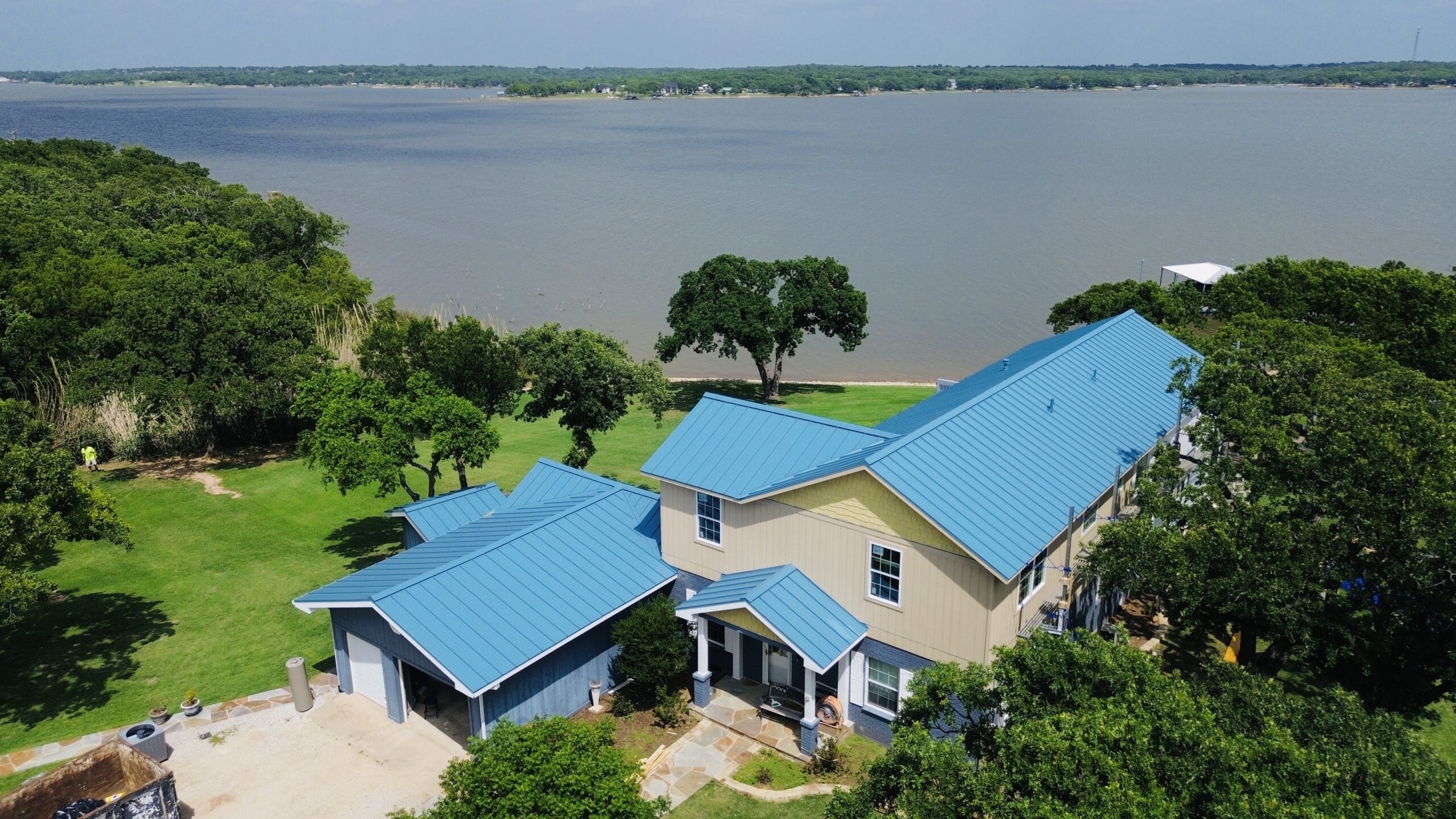
Commercial Roof Insurance Claim Checklist
A clear checklist can help business owners organize the insurance and replacement process. The following steps provide a practical framework:
- Review the commercial property policy and applicable endorsements.
- Document the roof damage with photographs and written observations.
- Report the loss according to the policy’s claim requirements.
- Obtain a professional commercial roofing inspection.
- Meet with the insurance adjuster and provide supporting documentation.
- Compare the contractor’s scope with the insurer’s estimate.
- Confirm the deductible, valuation method, depreciation, and policy limits.
- Identify any code-related or owner-selected upgrades.
- Document concealed damage discovered during tear-off.
- Keep records of final invoices, repairs, warranties, and completed work.
The checklist should be adapted to the specific policy and circumstances of the loss. Insurance requirements can vary, so businesses should rely on their actual policy documents and qualified insurance professionals when making claim decisions.
Conclusion
Insurance can play an important role in helping businesses recover from qualifying commercial roof damage, but coverage is never simply a matter of replacing an old roof and submitting the bill. The cause of damage, policy language, exclusions, deductibles, limits, valuation method, documentation, and claim procedures all influence the outcome.
The process should begin with careful documentation and a review of the commercial property policy. When a covered event causes physical damage, timely reporting and professional inspection can help establish what happened and what work may be required.
Working with both the insurance adjuster and a qualified commercial roofing professional can provide useful perspectives. The adjuster evaluates the loss under the policy, while the roofing professional can explain the physical condition of the roofing system and the technical requirements for proper replacement.
Businesses should also understand the difference between replacement cost and actual cash value, as well as how depreciation may affect claim payments. Deductibles and policy limits should be included in the financial planning process so the owner understands potential out-of-pocket costs.
Code requirements, business interruption, warranties, and future maintenance should not be overlooked. A successful recovery involves more than completing the physical roof replacement. It also involves creating a reliable record of the claim, construction work, warranties, and ongoing maintenance.
Most importantly, business owners should avoid assuming that every roof problem is covered by insurance. Normal aging, wear, poor maintenance, and certain defects may be treated differently from sudden damage caused by a covered event.
By reviewing coverage before problems occur, documenting damage carefully, communicating clearly with the insurer, obtaining professional roofing evaluations, and maintaining the completed roof properly, businesses can approach commercial roof insurance claims with greater confidence and better financial preparation.