
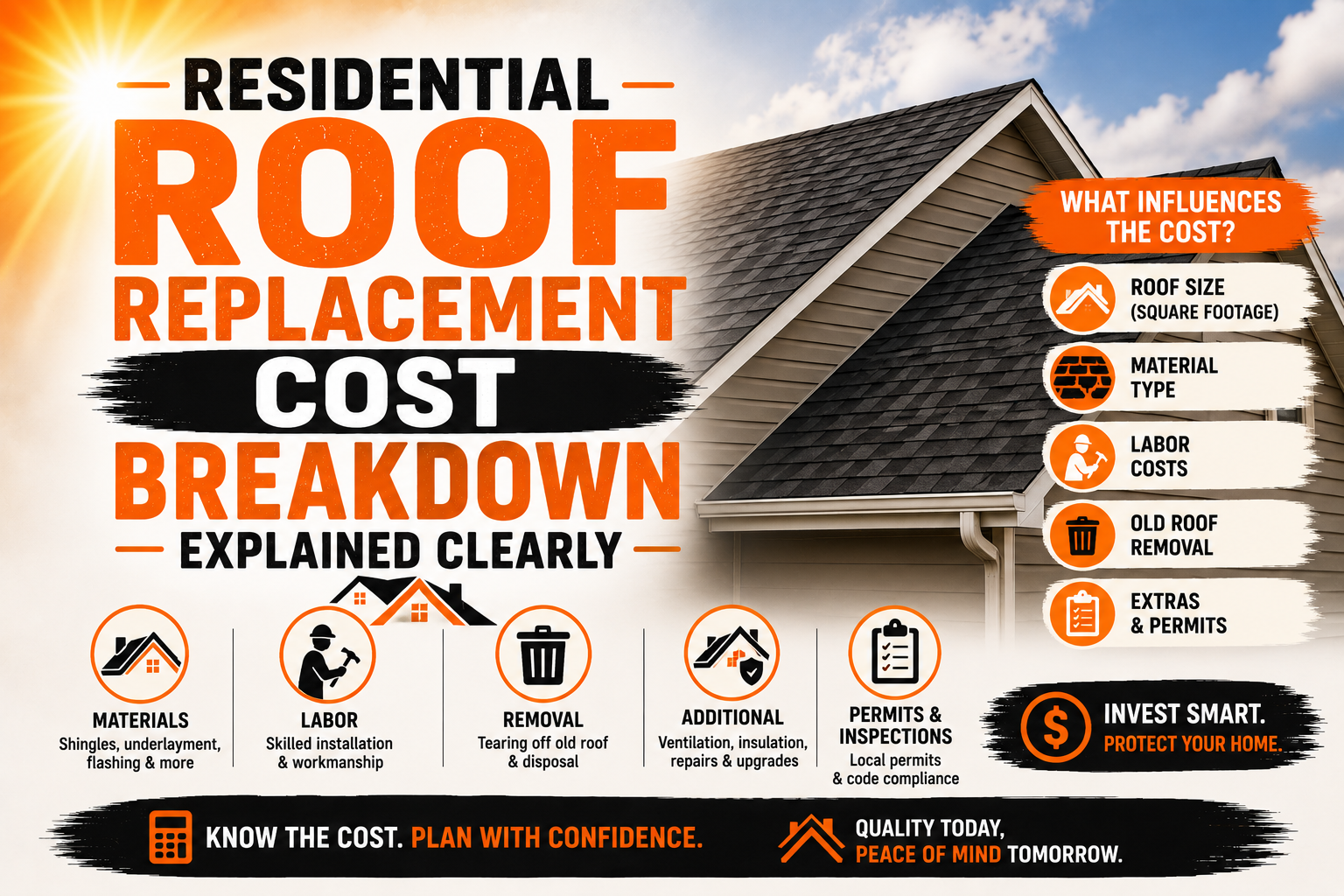
Residential Roof Replacement Cost Breakdown Explained Clearly
Introduction
Replacing a residential roof is a significant investment, and understanding where the money goes can make the process much easier for homeowners. A roof replacement estimate is not based on one simple price because several factors contribute to the final amount, including roof size, roofing material, labor, removal of the existing roof, structural repairs, and additional roofing components.
Homeowners often search for an average roof replacement price before contacting a contractor. While general cost ranges can provide a starting point, they cannot accurately predict the cost of a specific home. Two houses with similar floor plans can have very different roofing costs because roof pitch, design, accessibility, material selection, and existing damage can vary considerably.
A complete cost breakdown is therefore more useful than focusing on one overall figure. Understanding each expense allows homeowners to compare estimates properly and identify whether a contractor has included important work or left certain costs outside the initial quote.
The condition of the existing roof is another major factor. A straightforward replacement on a relatively sound roof may involve predictable expenses, while an older roof with damaged decking, deteriorated flashing, moisture problems, or structural concerns can require additional work after the existing materials are removed.
The total project cost should also be viewed as an investment in the protection of the home. A properly installed roofing system helps protect walls, ceilings, insulation, belongings, and structural components from weather exposure. Planning the budget carefully can help homeowners avoid choosing materials or contractors based solely on the lowest initial price.
Roof Size and How Contractors Measure It
Roof size is one of the most important factors in determining replacement cost because contractors purchase roofing materials and calculate labor according to the amount of roof surface that must be covered. The size of the roof is not always the same as the square footage of the home’s interior. Roof overhangs, multiple levels, pitch, and architectural features can all increase the actual roofing area.
Roofing contractors commonly use the term “square” when discussing roofing quantities. One roofing square generally represents 100 square feet of roof surface. This measurement allows contractors to estimate material requirements and labor more consistently across different types of residential projects.
For example, a house with a relatively simple roof may have a roofing area that is only moderately larger than its floor area. A home with several roof sections, large overhangs, dormers, or multiple levels can have significantly more roofing surface. This is why homeowners should not estimate replacement costs simply by multiplying their home’s living area by a general roofing price.
Roof pitch also affects the amount of material and labor required. A steep roof can be more difficult and time-consuming for workers to access safely than a low-slope roof. Contractors may need additional safety equipment, specialized procedures, and more time to complete the installation, which can increase labor costs.
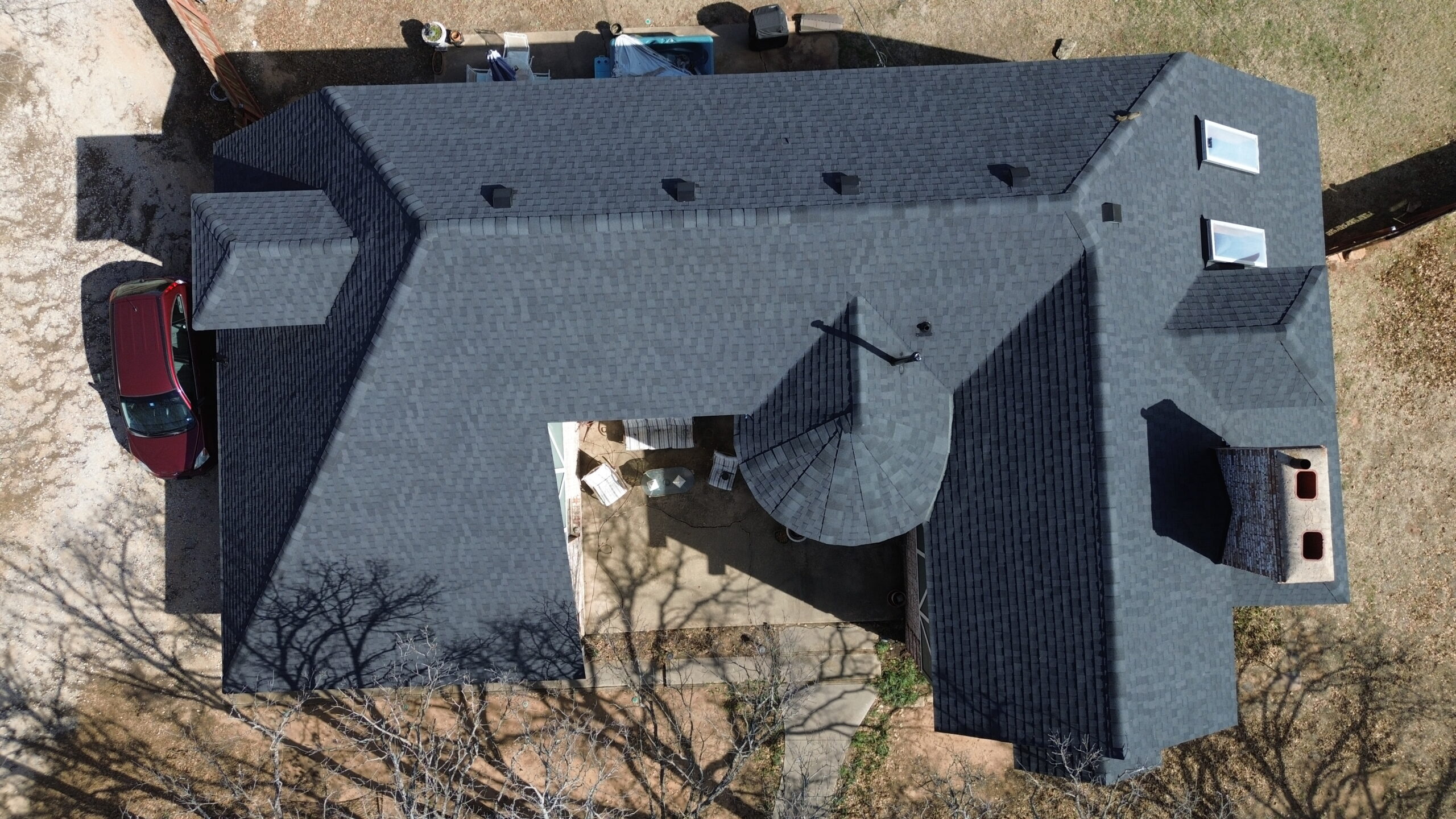
The roof’s design can add further complexity. Valleys, hips, ridges, dormers, skylights, chimneys, and numerous roof penetrations require additional cutting, flashing, sealing, and installation work. A simple rectangular roof may therefore cost considerably less to replace than a roof with the same approximate surface area but a complicated architectural design.
Contractors typically measure the roof or use detailed measurements to determine its surface area and calculate material requirements. Homeowners should ask how the roof size was determined when reviewing an estimate. Understanding the measurement can help explain why two contractors may provide different quantities or prices for what appears to be the same house.
The amount of roofing material needed is also affected by waste. Roofing materials must often be cut around valleys, edges, penetrations, and irregular sections. A certain amount of additional material may therefore be required to account for cutting and installation waste. A professional estimate should factor this into the material quantity rather than assuming every purchased piece will cover a full usable area.
Roofing Material Costs
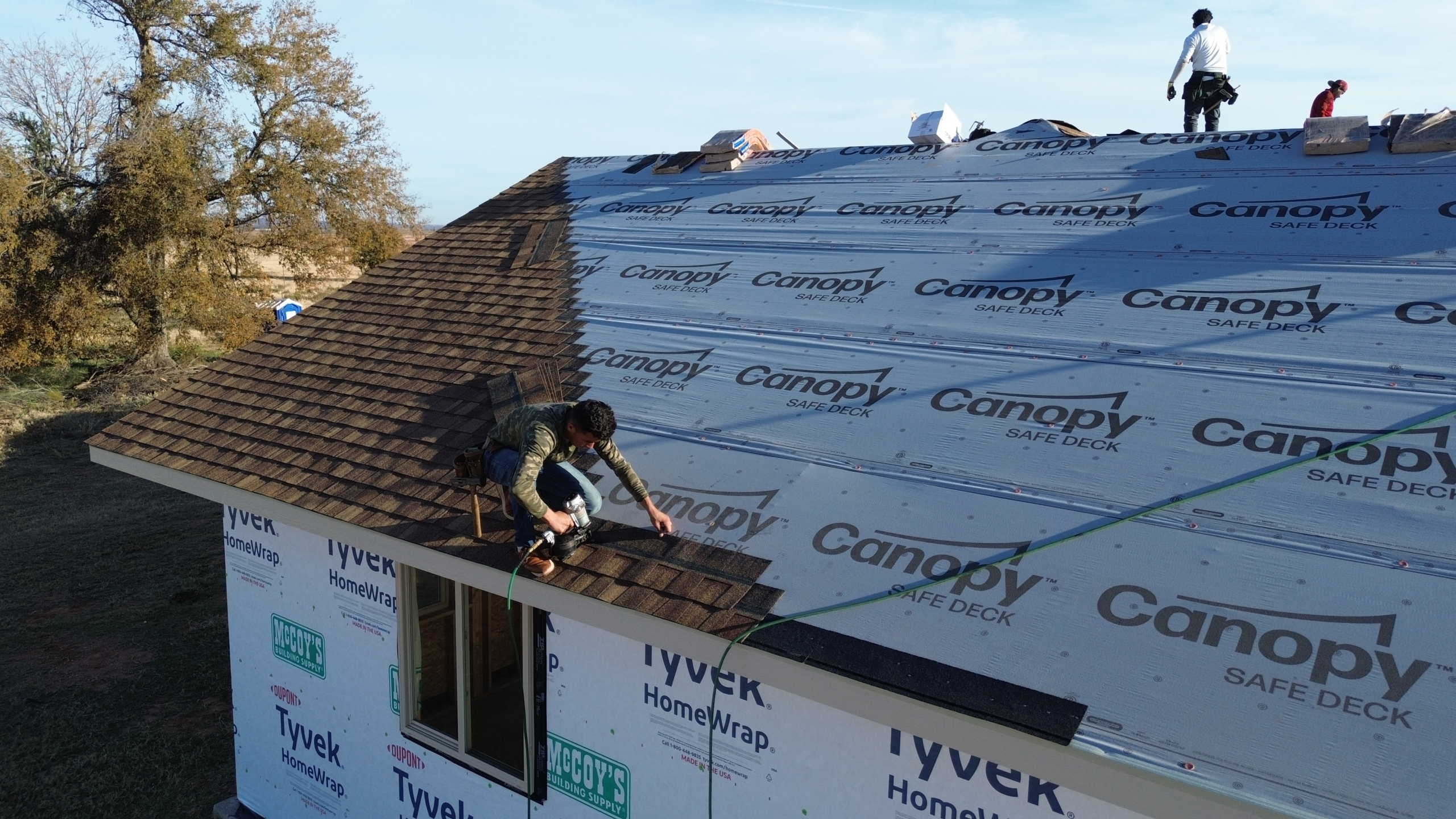
Roofing materials can account for a substantial portion of the total replacement budget, and the material selected can change the project cost significantly. Asphalt shingles are often considered one of the more budget-friendly choices for residential properties, while metal, tile, slate, and other specialized systems can require a considerably larger initial investment.
Asphalt shingles are available in different grades and styles. Basic options may have a lower upfront cost, while architectural or premium shingles can offer different appearances, warranties, and performance characteristics. Homeowners should compare the specifications of each product rather than assuming that all asphalt shingles provide identical durability.
Metal roofing is another popular option for homeowners seeking a durable roofing system. Metal products can be available in different materials, profiles, finishes, and installation methods. Their cost can vary significantly depending on the type of metal, design, coating, and complexity of installation.
Tile roofing can also provide a distinctive appearance and long service life when properly installed and maintained. However, tile can be heavier than some other roofing materials, meaning the home’s structure and installation requirements need to be considered. The material cost is only one part of the expense because specialized installation can also affect the final price.
Slate and other premium roofing materials can represent an even larger investment. These systems may provide long-term durability and a high-end appearance, but they can require specialized labor and additional structural considerations. Homeowners should evaluate whether the material is appropriate for the property rather than choosing it based only on its expected lifespan.
Material selection should also account for local weather conditions. Homes exposed to strong winds, heavy rainfall, hail, intense sunlight, or other challenging conditions may benefit from products designed for those environments. Local building requirements can also influence which materials and installation methods are appropriate.
Warranties are another factor to consider when comparing roofing products. A higher-priced material may provide different warranty coverage or performance characteristics than a basic product. Homeowners should read the actual warranty terms and understand whether installation requirements, maintenance obligations, or other conditions apply.
The most expensive roofing material is not automatically the best choice for every home. A better approach is to compare upfront cost, expected service life, maintenance needs, appearance, weather performance, and installation requirements. This allows homeowners to select a roofing system that fits both their property and their long-term budget.
Labor and Installation Costs
Labor is another major component of residential roof replacement costs. Installing a new roof involves much more than placing shingles or panels on top of the building. Workers must prepare the property, remove existing materials, inspect the roof deck, install multiple roofing components, handle difficult areas, and clean the property afterward.
The amount of labor required depends partly on roof size and design. A larger roof naturally requires more work, while a complicated roof can require additional time because workers must carefully handle valleys, edges, penetrations, dormers, chimneys, and other features.
Roof accessibility can also influence labor costs. A two-story home may require more equipment and safety precautions than a single-story property. Limited access around the building can make it harder to move materials and debris, potentially increasing the time required for the project.
Steep roofs may require additional safety measures and specialized equipment. Workers must be able to move safely across the roof while installing materials accurately. The additional preparation and slower working pace associated with steep slopes can contribute to higher labor expenses.
The contractor’s experience also matters when evaluating labor costs. A qualified and experienced roofing crew may charge more than a less-established contractor, but installation quality can have a major effect on the performance and lifespan of the new roof. Poor workmanship can lead to leaks, premature deterioration, flashing failures, and other expensive problems.
Labor estimates should be reviewed alongside the work being performed rather than treated as an isolated number. A contractor offering a very low labor price may have excluded important preparation, cleanup, safety measures, or installation components from the estimate.
Homeowners should ask whether the quoted labor includes complete installation or whether certain tasks are charged separately. The estimate should ideally explain the work involved in removing the existing roof, preparing the surface, installing the new system, and completing final cleanup.
Tear-Off, Disposal, and Roof Preparation
Removing the existing roofing system can represent a significant part of the total project cost. Before the new roof can be installed, contractors may need to remove old shingles, underlayment, flashing, and other materials. The amount of work required depends on the existing roofing system and how many layers are present.
A single layer of roofing material may be relatively straightforward to remove, while multiple layers can require more labor. Older homes may have several roofing layers installed over time, increasing the weight of the materials that must be removed and disposed of.
Disposal also contributes to the project cost. Removed roofing materials need to be collected, transported, and processed through an appropriate waste-management method. Contractors may use dumpsters, trailers, or other collection systems depending on the size and location of the project.
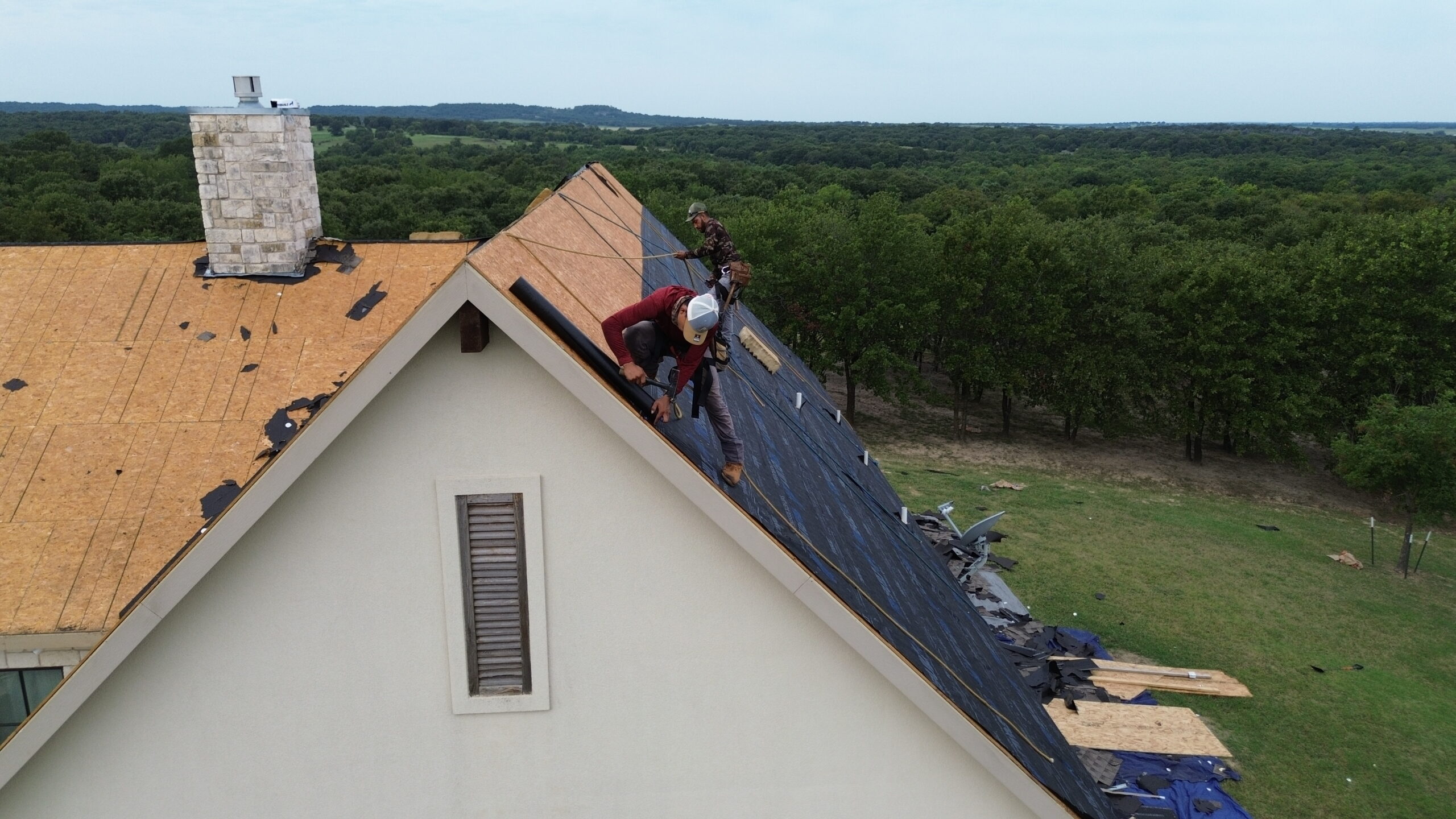
The condition of the roof deck becomes especially important after the old materials are removed. Problems that were hidden beneath the existing roof may become visible during tear-off. Water damage, rot, cracked decking, or other deterioration may need to be repaired before the new roofing materials can be installed.
Roof preparation can also include replacing deteriorated flashing, installing new underlayment, improving ventilation, and addressing other components. These tasks may not always be obvious when homeowners look at the roof from the ground, but they are important to the performance of the finished system.
Homeowners should ask whether tear-off and disposal are included in the estimate. A quote that lists only the new roofing material and installation may not represent the actual project cost. Comparing complete estimates is important because one contractor may include removal and disposal while another may list them as separate charges.
The number of existing roofing layers should also be confirmed during the initial assessment. If the contractor expects multiple layers, the estimate should explain how removal will be handled and whether additional costs could arise from difficult tear-off conditions.
Underlayment, Flashing, Ventilation, and Other Components
A residential roof consists of many components beyond the visible exterior roofing material. These components contribute to water resistance, drainage, ventilation, and overall durability. A complete cost breakdown should therefore include the materials and labor needed to install or replace these supporting elements.
Underlayment is installed beneath the primary roofing material and provides an additional protective layer against moisture. The type of underlayment can vary depending on the roofing material, roof design, climate, and applicable installation requirements. Homeowners should confirm what product is included in their estimate rather than assuming it is automatically part of the basic material price.
Flashing is particularly important around areas where water can enter more easily. Chimneys, skylights, walls, roof valleys, vents, and other penetrations may require properly installed flashing to direct water away from vulnerable joints. Damaged or deteriorated flashing on the existing roof may need to be replaced during the project.
Drip edges and other edge components can also contribute to proper water management. These materials help direct water toward drainage systems and protect vulnerable roof edges. Although they may represent a smaller portion of the total budget, they should not be overlooked when comparing estimates.
Ventilation is another important part of the roofing system. Proper attic ventilation can help manage heat and moisture conditions within the roof assembly. If the existing system has inadequate or damaged ventilation components, the replacement project may provide an opportunity to correct the issue.
Pipe boots and other roof penetrations may require specialized materials and careful installation. These areas can become common sources of leaks when seals deteriorate or installation is poor. Replacing them during a roof replacement can help create a more complete and coordinated weather barrier.
Homeowners should therefore look beyond the price of shingles or other exterior materials when reviewing an estimate. A roofing system with quality supporting components can provide better overall protection than one that focuses heavily on the visible material while minimizing essential layers.
A detailed estimate should identify the major components included in the replacement. This makes it easier for homeowners to compare contractors based on the complete roofing system rather than selecting a bid that appears inexpensive because important components have been excluded.
Roof Decking and Structural Repairs
One of the biggest sources of unexpected roof replacement costs is damage beneath the visible roofing material. The roof deck, usually made from plywood or another type of structural sheathing, provides the surface on which the roofing system is installed. If this material has been weakened by moisture, rot, age, impact, or previous leaks, it may need to be replaced before the new roof can be installed.
Roof decking damage is often difficult to identify completely during an exterior inspection. Shingles can hide soft or deteriorated areas, particularly around valleys, chimneys, vents, skylights, and locations where previous leaks occurred. Once the existing roofing material is removed, the contractor can inspect the exposed deck more thoroughly and determine whether repairs are necessary.
The extent of decking replacement can have a noticeable effect on the final project cost. Replacing a few damaged sections is very different from replacing large portions of the roof deck. Homeowners should therefore ask how the contractor handles decking repairs and whether the estimate includes a specific allowance for unexpected damage.
Moisture-related deterioration can sometimes extend beyond the decking itself. If water has been entering the roof for a long period, rafters, trusses, insulation, or other structural components may also be affected. Structural repairs can require specialized evaluation and labor, making them substantially different from ordinary roofing installation.
Homeowners should not automatically assume that every discovered defect requires replacing the entire structure. A qualified professional should determine the extent of the damage and recommend repairs based on the actual condition. However, structural problems should never be covered simply to keep the project within the original budget.
A useful way to prepare for these costs is to include a contingency amount in the overall project budget. This does not mean homeowners should expect major damage, but it provides financial flexibility if legitimate hidden problems are discovered. Having a planned reserve can prevent delays when necessary repairs need to be approved.
The contractor should also explain how additional work will be authorized. A written change order or similar documentation can identify the problem, explain the recommended repair, and show the additional cost before the work proceeds. This gives the homeowner a clear record of why the final price changed.
Permits, Inspections, and Local Requirements
Permits and inspections can also affect the total cost of a residential roof replacement. Requirements vary by location and can depend on the type of work being performed, the property’s characteristics, and applicable building regulations. Some projects may require permits and inspections, while others may have different requirements.
Homeowners should discuss these requirements with the contractor before signing the agreement. The contractor should explain whether obtaining the permit is included in the project and whether the associated fees are part of the quoted price. If the homeowner is responsible for the permit, that responsibility should be clearly understood before construction begins.
Local building requirements can influence more than paperwork. Regulations may address roofing materials, ventilation, structural requirements, weather protection, installation methods, and other aspects of the roofing system. Following these requirements helps ensure that the replacement is completed appropriately for the property and location.
Inspection requirements can also influence the project schedule. If an official inspection is necessary, the contractor may need to coordinate specific stages of the work with the appropriate authority. Delays can occur if an inspection cannot be scheduled promptly, so homeowners should ask about the expected process before work starts.
Permit costs are usually only one portion of the overall project, but they should still be included when building a realistic budget. A homeowner who compares one estimate that includes permit fees with another that excludes them may incorrectly assume that the first contractor is more expensive.
Homeowners should also keep copies of permits and inspection records after the project is complete. These documents can become useful if the property is sold, refinanced, inspected, or modified later. They can also provide evidence that the replacement was completed through the appropriate local process.
A professional contractor should be willing to discuss regulatory requirements rather than treating them as an unexpected issue after work begins. Asking about permits, inspections, and code-related costs early gives homeowners a clearer picture of the actual financial commitment.
Gutters, Fascia, Soffits, and Drainage Components
Roof replacement sometimes involves related exterior components that are not technically part of the roof covering itself. Gutters, fascia, soffits, and downspouts can be affected by age, moisture, construction activity, or the way the existing roof is installed. Their condition should be reviewed before the replacement begins.
Gutters are particularly important because they collect water flowing from the roof and direct it toward downspouts. During roof removal, gutters can sometimes be exposed to tools, debris, ladders, and falling materials. Depending on their condition, they may need to be removed temporarily, protected, reinstalled, or replaced.
If existing gutters are severely damaged or poorly positioned, replacing them during the roofing project may make sense. However, homeowners should distinguish necessary drainage improvements from optional upgrades. A contractor should explain why a gutter replacement is being recommended and how it relates to the roof replacement.
Fascia boards are located along the edges of the roof and can be affected by prolonged moisture exposure. Rot or deterioration may become visible when old roofing materials and gutters are removed. If damaged fascia is left untreated, it can affect the stability of related components and create opportunities for further moisture problems.
Soffits can also require attention, particularly when ventilation or moisture problems exist. Damaged or blocked soffit areas may affect attic airflow and contribute to poor ventilation. If replacement or repair is recommended, homeowners should ask whether the work is necessary for the roofing system or represents a separate exterior improvement.
Downspouts and drainage paths should be evaluated as part of the overall water-management system. A new roof can shed water effectively, but that water still needs to be directed away from the home’s foundation. Poor drainage can create moisture problems even when the roof itself is installed correctly.
The cost of these related components can vary considerably depending on their condition and the amount of work required. Homeowners should ask contractors to separate roofing costs from optional or related exterior repairs when possible. This makes the estimate easier to understand and allows homeowners to prioritize essential work.
Chimneys, Skylights, Vents, and Roof Penetrations
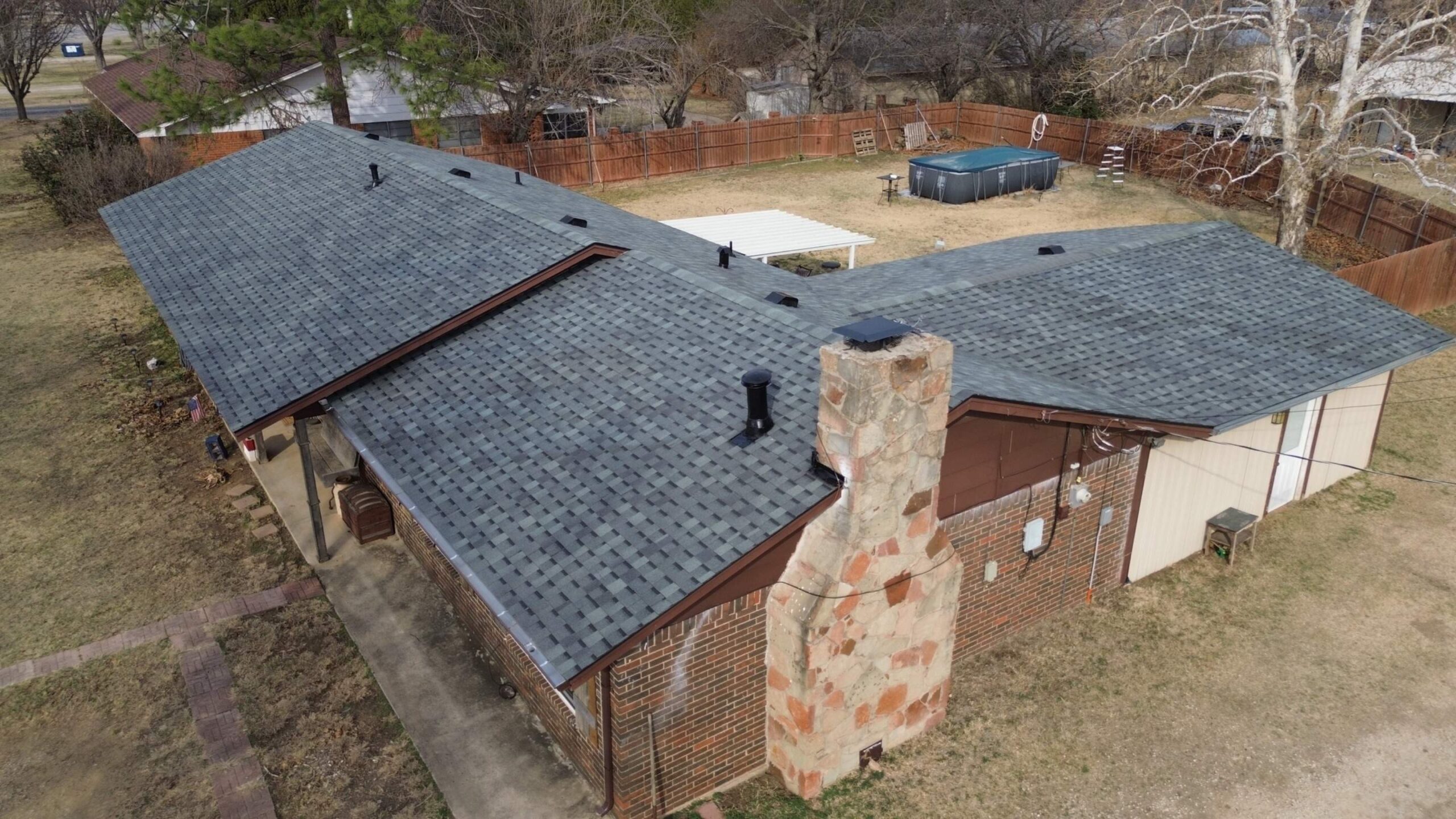
Roof penetrations are areas where the roofing system meets another structure or component, making them particularly important when calculating replacement costs. Chimneys, skylights, plumbing vents, exhaust vents, satellite mounts, and similar features can require additional labor and specialized materials.
Chimney flashing is one example. During a roof replacement, existing flashing may be inspected and replaced if it is damaged or deteriorated. If the chimney itself has masonry problems, however, repairing the chimney may fall outside the basic roofing contract and create an additional expense.
Skylights can create similar considerations. An existing skylight may be in good condition and suitable for continued use, or it may be old, damaged, or approaching the end of its useful life. Homeowners should decide whether skylights will remain, be repaired, or be replaced before the roofing work progresses.
Plumbing vent boots are smaller components, but they play an important role in sealing openings around pipes. Older boots can crack or deteriorate, creating potential leak points. Replacing them during a roof replacement is often more practical than leaving aging components in place around a new roofing system.
Roof vents and other ventilation components also need to be considered. If the existing vents are damaged or inadequate, the replacement project may include new components. Improving ventilation can require additional materials and labor, but it can also support the long-term performance of the roofing assembly when properly designed.
The number and complexity of roof penetrations can therefore influence labor costs. A roof with several chimneys, skylights, vents, and other features generally requires more detailed installation than a simple roof with few penetrations. Each location must be properly integrated with the new roofing material to reduce the risk of water intrusion.
Homeowners should ask contractors to identify these areas individually in the estimate. A detailed proposal can make it easier to determine whether flashing replacement, skylight work, vent replacement, or other penetration-related tasks are included in the quoted price.
Geographic Location and Seasonal Pricing
Where a home is located can have a substantial influence on residential roof replacement costs. Labor rates, material prices, disposal fees, permit requirements, transportation expenses, and contractor demand can differ from one area to another. As a result, a national average should only be treated as a general reference rather than a precise local price.
Labor is often one of the biggest geographic variables. Areas with higher operating costs may have higher roofing labor rates, while markets with strong contractor competition may have different pricing patterns. The availability of skilled roofing crews can also affect how much contractors charge.
Material transportation can influence costs as well. Roofing materials must be delivered to the property, and locations that are farther from suppliers or more difficult to access may involve additional logistical expenses. Heavy materials such as tile can be especially affected by transportation and handling requirements.
Disposal costs also vary by location. Contractors may need to pay different rates for dumpsters, landfill services, recycling, or other waste-management arrangements. These expenses can become significant on larger projects where substantial amounts of old roofing material are removed.
Seasonal demand can affect both pricing and availability. Roofing companies may become particularly busy during periods of favorable weather or after major storms. High demand can make scheduling more difficult and may affect estimates because contractors have limited crew availability.
Weather can influence project timing as well. In regions with frequent rain, extreme heat, snow, or strong seasonal storms, contractors may need to plan around conditions that make roofing work more difficult. Longer project schedules can sometimes increase labor or logistical expenses.
Homeowners should therefore seek estimates from contractors who regularly work in their area. Local professionals are more familiar with regional material availability, typical labor conditions, applicable requirements, and weather patterns. This makes their estimates more relevant than generalized online cost figures.
Insurance, Financing, and Comparing Roofing Estimates
Insurance can sometimes help homeowners manage the cost of roof replacement when damage results from a covered event. Storm damage caused by certain types of wind, hail, or other qualifying events may be treated differently from ordinary deterioration caused by age and lack of maintenance. Coverage depends on the individual policy, so homeowners should review their terms carefully.
A homeowner should document storm-related damage as soon as it is safe to do so. Photographs, inspection reports, repair records, and information about the event can help create a clearer record of the roof’s condition. The insurance company may also send an adjuster to evaluate the damage before determining the claim.
The deductible is another important part of the financial calculation. Even when a claim is covered, the homeowner may remain responsible for the applicable deductible. The expected insurance payment should therefore not automatically be treated as the amount available for the entire replacement project.
Homeowners should also be careful when choosing a contractor based on insurance-related promises. Contractors can provide estimates and documentation, but coverage decisions are made according to the terms of the insurance policy. Homeowners should avoid assuming that a contractor can guarantee what an insurer will approve.
For homeowners paying out of pocket, financing may be another consideration. Financing can spread the cost over time, but the total amount paid can be higher because of interest and other terms. Before accepting financing, homeowners should review the repayment period, interest rate, fees, and total cost.
When comparing roofing estimates, homeowners should focus on completeness rather than simply selecting the lowest number. An estimate should clearly identify the roofing material, labor, tear-off, disposal, underlayment, flashing, ventilation, permits, cleanup, and procedures for handling unexpected decking damage.
A useful comparison should ask whether each contractor is pricing the same scope of work. If one estimate includes replacement of damaged decking and new flashing while another does not, the two totals cannot be compared fairly without adjusting for those differences.
Homeowners should also review warranty terms and contractor credentials. A slightly higher estimate may provide better value if it includes quality materials, experienced installation, comprehensive documentation, and stronger workmanship coverage.
Estimating the Total Roof Replacement Budget
Once homeowners understand the individual expenses involved in roof replacement, the next step is combining them into a realistic project budget. The final price is usually influenced by several categories rather than one fixed rate. Material, labor, roof removal, disposal, preparation, repairs, permits, accessories, and cleanup can all contribute to the final amount.
A useful starting point is the total roof area rather than the home’s interior square footage. Contractors commonly measure roofing quantities in squares, with one roofing square representing 100 square feet of roof surface. The actual amount of material required can increase because of roof pitch, waste, valleys, dormers, overhangs, and other design characteristics.
The selected roofing material can then be used to establish a basic material and installation estimate. Asphalt shingles generally provide a more accessible starting price, while metal, tile, slate, and other premium systems can increase the initial investment. However, homeowners should compare complete systems rather than looking at material prices alone.
Labor should be considered separately because installation difficulty can vary considerably. A simple single-story roof may require less labor than a steep, multi-level roof with numerous penetrations. Access, safety requirements, removal difficulty, and the number of roofing details can all affect installation time.
Homeowners should also include tear-off and disposal in their planning. Removing an existing roof requires labor and waste management, while multiple roofing layers can make the process more demanding. If the existing roof contains damaged decking or other deteriorated components, additional preparation costs may be added after removal.
The following categories provide a practical framework for organizing the budget:
| Cost category | What it can include |
|---|---|
| Roofing materials | Shingles, metal, tile, slate, or other selected material |
| Labor | Installation, preparation, and specialized roofing work |
| Tear-off | Removal of existing roofing materials |
| Disposal | Dumpster, transportation, and waste processing |
| Roof preparation | Underlayment, drip edges, flashing, and related components |
| Repairs | Decking, structural, moisture, or rot-related work |
| Accessories | Ventilation, pipe boots, skylights, and other components |
| Other expenses | Permits, inspections, cleanup, and approved extras |
A contingency amount should also be considered. Hidden damage cannot always be identified before the existing roofing material is removed, so homeowners should have some financial flexibility for necessary repairs. The purpose is not to assume that unexpected problems will occur, but to prevent a legitimate discovery from creating an immediate financial crisis.
Example Residential Roof Replacement Cost Breakdown
A hypothetical example can help explain how different expenses combine into a complete project price. Consider a moderately sized home with a relatively straightforward asphalt shingle roof. The existing roof requires removal, the new system needs standard underlayment and flashing, and only limited decking repairs are expected.
The material portion of the project would depend on the selected shingle type, required quantity, accessories, and installation specifications. A homeowner choosing basic shingles would generally have a different material budget from someone selecting premium architectural shingles. The difference can become substantial when multiplied across the entire roof surface.
Labor would represent another major category. The contractor needs to remove the existing roof, prepare the surface, install the new system, manage flashing and roof penetrations, and complete cleanup. A simple roof may require less labor than one with steep slopes, several valleys, skylights, chimneys, or multiple roof levels.
Tear-off and disposal would then be added to the estimate. The cost can increase when multiple layers of old roofing materials are present or when the property is difficult to access. The contractor may also need to arrange specialized waste containers or additional labor for debris handling.
Suppose the roof deck inspection reveals several damaged sections. The contractor may need to remove and replace those sections before continuing with the new installation. Because the extent of hidden damage cannot always be determined before tear-off, the estimate may include an allowance or explain a separate price for additional decking replacement.
Other components can add smaller but important amounts to the total. These may include flashing, ventilation improvements, pipe boots, drip edges, ridge vents, or other roofing accessories. Each component may represent a relatively small percentage of the project individually, but together they can have a meaningful effect on the final cost.
For this reason, homeowners should avoid judging a roof replacement estimate by one headline number. A complete estimate should show how the price was developed and what work is included. Two estimates with different totals may actually represent different project scopes, materials, warranties, and levels of preparation.
The final invoice may also differ from the original estimate when legitimate hidden conditions are discovered. The homeowner should have a clear written process for approving additional work. This protects the homeowner from unexpected charges while allowing necessary repairs to be completed properly.
Ways Homeowners Can Control Replacement Costs
Roof replacement can be expensive, but homeowners can take practical steps to manage the overall cost without sacrificing essential quality. The first step is obtaining several detailed estimates from qualified contractors. Comparing multiple proposals can reveal unusual pricing and help homeowners understand what is considered normal for the planned scope.
The estimates should be compared line by line rather than only by total price. Homeowners should check whether each contractor includes tear-off, disposal, underlayment, flashing, ventilation, permits, cleanup, and possible decking repairs. A lower estimate may appear attractive until omitted expenses are added later.
Material selection is another area where homeowners can control spending. Choosing a suitable mid-range product may provide an appropriate balance between price, durability, appearance, and warranty coverage. Premium materials can be worthwhile in certain situations, but homeowners should determine whether their additional cost provides benefits that are actually important for the property.
Planning ahead can also reduce unnecessary expenses. Emergency roof replacement often creates less flexibility because homeowners need immediate protection from weather. When replacement is anticipated because the roof is approaching the end of its useful life, homeowners can research materials and contractors before a major failure occurs.
Homeowners should avoid unnecessary upgrades when the primary goal is restoring a sound roofing system. Optional improvements can be discussed separately so that essential structural and weatherproofing work remains the priority. This approach makes it easier to keep the project aligned with the available budget.
Preventive maintenance before replacement is also valuable when the roof is not yet at the end of its service life. Promptly addressing minor leaks, damaged flashing, blocked drainage, and other small problems can sometimes delay a full replacement. However, repairs should not be used to postpone replacement indefinitely when the roofing system has widespread deterioration.
Scheduling can influence costs as well. Contractors may have different availability throughout the year, and high-demand periods can make scheduling more difficult. Planning the project in advance can provide more opportunity to compare contractors and coordinate material delivery.
Finally, homeowners should understand the contract before approving the project. A clear agreement reduces the chance of surprise charges and explains how additional work will be handled. Cost control is not simply about paying less; it is about making sure the money spent is directed toward necessary, quality work.
Understanding Long-Term Value Instead of Initial Price
The cheapest roof replacement estimate is not always the most affordable choice over the entire life of the roofing system. A lower initial price may result from cheaper materials, reduced preparation, fewer included components, or less comprehensive workmanship. Homeowners should therefore consider long-term value alongside the upfront investment.
Durability is one important factor. A roofing material that costs more initially may provide a longer service life or better resistance to the conditions experienced by the home. However, homeowners should evaluate manufacturer information and professional recommendations rather than assuming that a higher price automatically guarantees better performance.
Installation quality is equally important. Even an excellent roofing material can perform poorly when installed incorrectly. Proper flashing, underlayment, ventilation, fastening, drainage, and roof preparation all contribute to the system’s ability to protect the home.
Maintenance requirements should also be considered. Some roofing materials may require more specialized maintenance or repairs than others. Understanding these future responsibilities can help homeowners compare the actual cost of ownership rather than focusing only on the initial installation price.
Warranty coverage can add value as well. Homeowners should compare both product warranties and workmanship warranties while paying attention to their conditions. A warranty is most useful when homeowners understand what it covers and what responsibilities they must meet to maintain that coverage.
Energy and weather performance may also influence the long-term value of a roof. Depending on the material, design, ventilation, and local climate, certain roofing systems may provide advantages related to heat management or weather resistance. These factors should be considered alongside the home’s specific needs.
A good roof replacement should protect the property while providing reasonable value for the money invested. The objective is not to purchase the most expensive system available but to choose a suitable combination of materials and workmanship that fits the home’s structure, climate, budget, and expected service life.
Questions to Ask Before Accepting a Roofing Estimate
Before approving a roof replacement project, homeowners should make sure they understand exactly what they are paying for. A detailed conversation with the contractor can reveal differences between estimates that may not be obvious from the final price. Asking questions before construction begins is much easier than resolving misunderstandings after the work is underway.
Homeowners should first ask what roofing materials are included and what specific products will be installed. The estimate should identify the material type, product specifications, quantity, color where applicable, and major supporting components. If substitutions become necessary, the homeowner should understand how approval will be handled.
The tear-off process should also be discussed. Homeowners should ask how many existing roofing layers are expected, whether removal is included, and how debris will be disposed of. They should also ask how damaged decking will be priced if hidden problems are discovered.
Permits and inspections should be clarified before signing the agreement. The contractor should explain who obtains required permits, whether permit fees are included, and whether the project requires an official inspection. These details can prevent unexpected administrative costs.
Warranties deserve specific attention as well. Homeowners should ask what manufacturer warranty applies to the materials and what workmanship warranty the contractor provides. The terms, duration, exclusions, and claim procedures should be understood and documented.
The payment schedule should be clearly stated in the contract. Homeowners should know when deposits and progress payments are due and what conditions apply to the final payment. Any additional work should be approved through a documented process rather than appearing unexpectedly on the final bill.
Finally, homeowners should ask what happens if weather or hidden damage changes the schedule. A realistic project plan should allow for conditions that cannot be controlled while maintaining clear communication. These questions can help homeowners select a contractor based on the complete value of the proposal rather than the lowest advertised price.
Conclusion
Understanding residential roof replacement costs becomes much easier when the project is divided into its individual components. Roof size, material selection, labor, tear-off, disposal, underlayment, flashing, ventilation, structural repairs, permits, drainage components, and roof penetrations can all influence the final price.
Homeowners should remember that general cost averages are only starting points. The actual cost of a specific replacement depends on the home’s roof design, local labor conditions, selected materials, existing roof condition, and the scope of work required. A professional inspection and detailed written estimate provide a much more useful basis for budgeting.
Comparing contractors also requires more than looking at the final number. Homeowners should compare the materials, installation methods, warranties, included components, cleanup responsibilities, and procedures for unexpected repairs. An estimate that costs slightly more may offer considerably better value when it provides a more complete and durable roofing system.
Planning for unexpected costs is equally important. Hidden decking damage, moisture problems, deteriorated flashing, and other conditions may only become visible after the existing roof is removed. A reasonable contingency and a clear change-order process can help homeowners manage these situations without losing control of the project budget.
The best approach is to balance upfront affordability with long-term performance. Choosing appropriate materials, hiring qualified professionals, and ensuring that essential roofing components are included can reduce the likelihood of premature repairs and additional expenses.
Ultimately, a residential roof replacement should be viewed as a long-term investment in the protection of the home. By understanding each cost category, comparing complete estimates, preparing for potential repairs, and focusing on quality rather than price alone, homeowners can make more informed decisions and build a roofing budget that is realistic, transparent, and suited to their property’s needs.