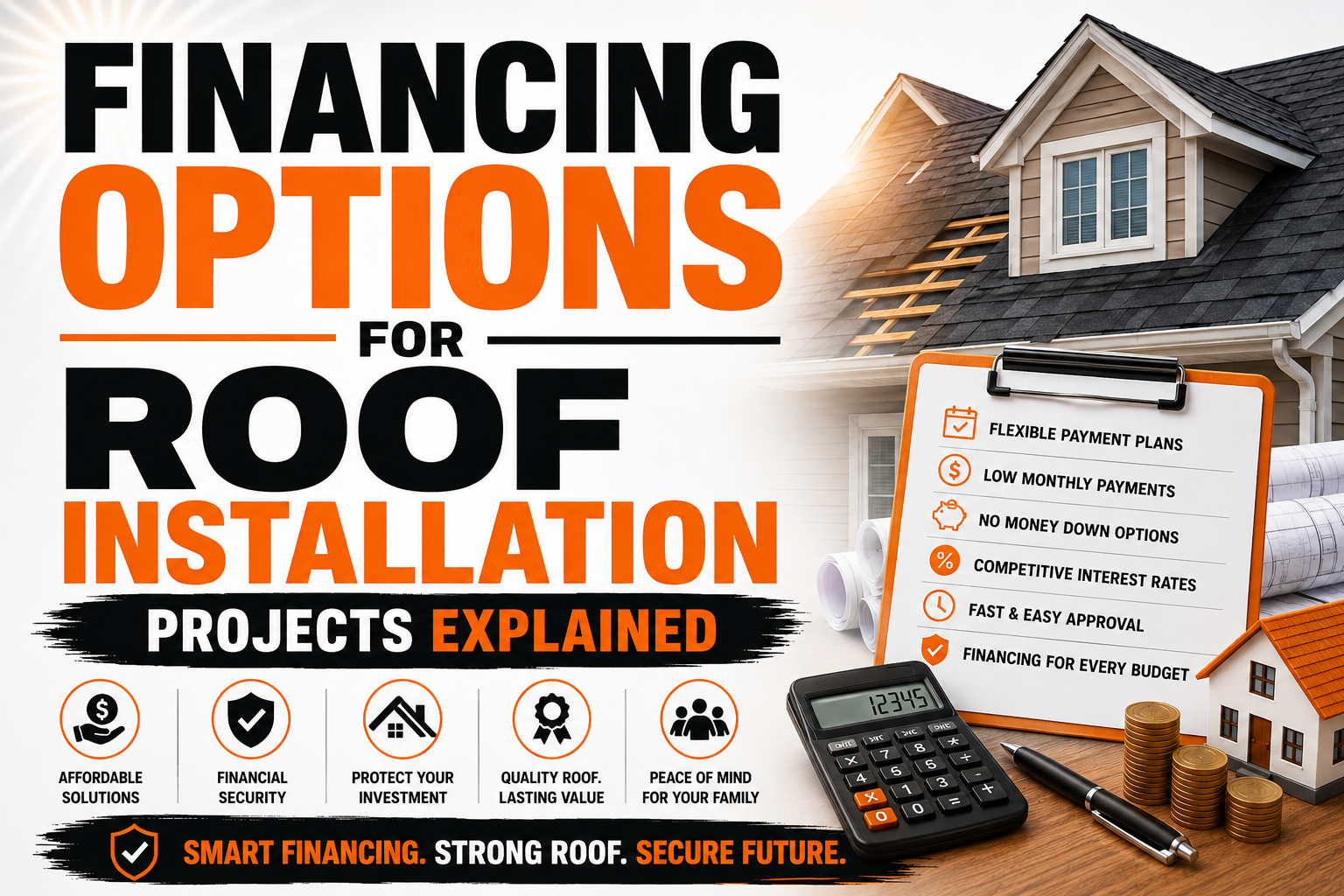
Financing Options for Roof Installation Projects Explained
Introduction
A new roof is one of the most important investments a homeowner can make in a property, but it can also be one of the more expensive home improvement projects. The total cost can vary significantly depending on the size of the roof, selected materials, labor requirements, roof design, and whether the existing roofing system needs to be removed before installation. For many homeowners, covering the entire expense from savings is not always practical, which makes roof installation financing an important option to consider.
Roof financing allows homeowners to spread the cost of a roofing project over a period of time instead of paying the entire amount upfront. Depending on the situation, homeowners may be able to use personal loans, home improvement loans, home equity products, credit cards, contractor financing, or other available payment solutions. Each option comes with different interest rates, repayment terms, fees, eligibility requirements, and financial risks.
Choosing a financing method should involve more than looking at the monthly payment advertised by a lender or roofing contractor. Homeowners should consider the total project cost, the overall borrowing cost, the length of repayment, and whether the payment comfortably fits within the household budget. Understanding the available choices can make it easier to finance a roof without creating unnecessary financial pressure.
Understanding Roof Installation Financing
Roof installation financing refers to borrowing or payment arrangements that allow homeowners to pay for a roofing project over time. Instead of providing the full installation cost at the beginning, the homeowner makes scheduled payments according to the terms of the selected financing agreement. Some options are provided by financial institutions, while others may be offered through roofing contractors or third-party financing companies.
Financing can be especially useful when a roof has reached the end of its useful life and replacement cannot reasonably be postponed. A damaged or aging roof can allow water to enter the home, contribute to structural deterioration, and create additional repair expenses if problems continue. Financing may allow homeowners to address the roofing issue sooner while distributing the cost across manageable payments.
The right financing method depends on several personal and project-related factors. A homeowner with sufficient savings may prefer to pay cash, while another homeowner may choose a loan with a fixed monthly payment to preserve savings for emergencies and other household needs.
Before selecting a financing option, it is helpful to understand the difference between financing and a simple payment plan. Financing generally involves borrowing money from a lender or financing provider and repaying that amount with interest and potentially additional fees. A payment plan offered directly by a contractor may have different terms, so homeowners should carefully review who is providing the financing and what obligations apply.
Assessing the Total Cost of a Roof Installation Project
Before applying for financing, homeowners should determine how much the entire roofing project is expected to cost. Looking only at the basic price of roofing materials can lead to an inaccurate estimate because a complete installation often involves several additional expenses. Getting a detailed written estimate from a professional roofing contractor can help establish a more realistic financing target.
The roofing material is usually one of the most visible components of the project cost. Asphalt shingles may have a different price than metal roofing, tile, slate, or other premium materials, and each material can also have different installation requirements and expected lifespans. Homeowners should compare material quality and long-term value rather than selecting an option based entirely on the lowest initial price.
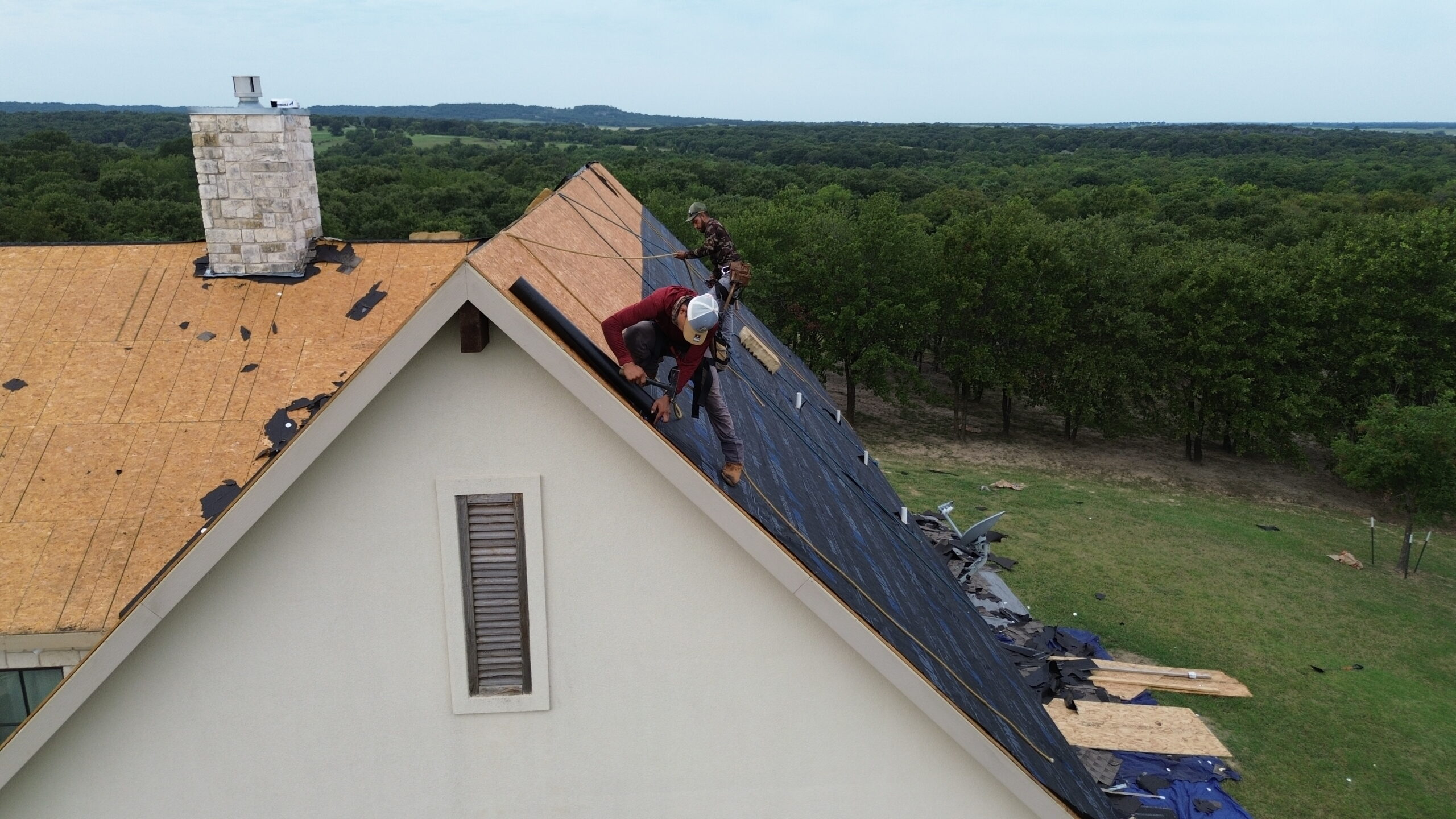
Labor can represent a substantial portion of the overall project cost. Installation becomes more complicated when a roof has multiple slopes, steep sections, difficult access points, skylights, chimneys, or other architectural features. Professional installation may also involve specialized safety procedures and additional preparation that should be included in the estimate.
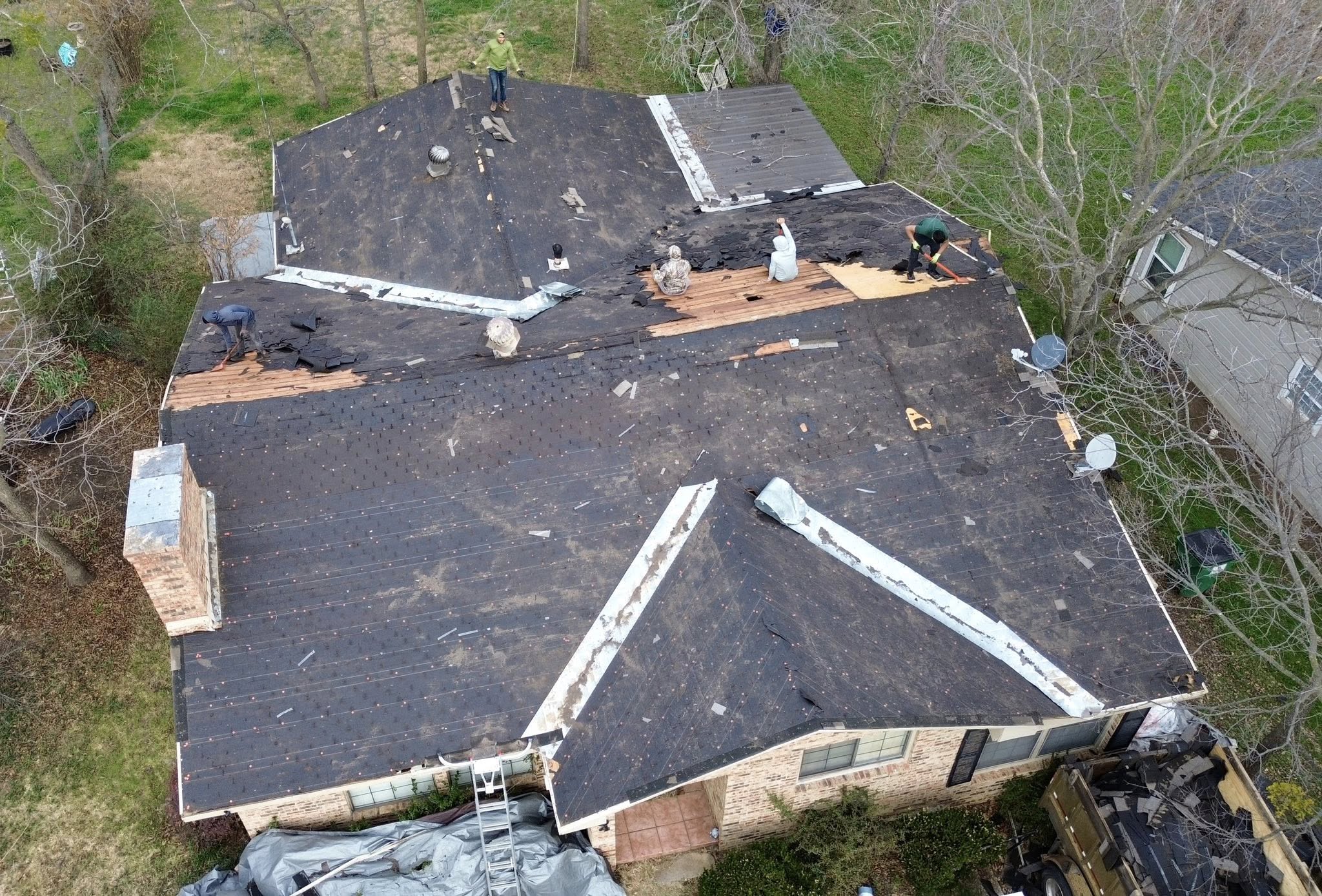
Removing the existing roofing system can add another expense to the project. If old shingles or other materials need to be removed, the contractor may charge for tear-off labor, disposal, and related cleanup. Some roofing projects may require multiple layers of old material to be removed before the new roof can be properly installed.
Other expenses can include permits, inspections, flashing replacement, ventilation improvements, decking repairs, underlayment, ice and water protection, gutters, or other related work. Not every roof requires all of these services, but homeowners should ask the contractor whether any additional work may be necessary after the existing roof is inspected.
It is also wise to leave room in the budget for unexpected conditions. Once an old roof is removed, contractors may discover damaged decking, deteriorated flashing, moisture-related problems, or other issues that were not visible during the initial inspection. Having a reasonable financial buffer can reduce the need to seek additional borrowing if unexpected work becomes necessary.
Paying for a Roof Installation With Personal Savings
Using personal savings is one of the simplest ways to pay for a roof installation because it does not normally involve interest charges or loan fees. Homeowners who have enough available funds may be able to pay the project cost without taking on additional debt. This can make the overall cost of the roof easier to understand because the homeowner is primarily paying for the installation itself rather than the installation plus financing charges.
Paying cash can also eliminate concerns about loan approval, credit requirements, repayment periods, and changing interest rates. Once the contractor has been paid, there are no future loan payments associated with the roofing project. For homeowners with substantial savings, this can be an attractive approach.
However, using savings for a major home improvement project requires careful planning. Paying for a roof entirely from savings could leave a household with little money available for emergencies, medical expenses, vehicle repairs, or other unexpected costs. A roof may be important, but it should not necessarily consume every dollar of a homeowner’s accessible savings.
A practical approach is to compare the roofing expense with the amount that would remain after paying for the project. If paying cash would leave a comfortable emergency reserve and still allow the household to manage regular expenses, it may be worth considering. If the payment would significantly reduce financial flexibility, financing part or all of the project may provide a better balance.
Homeowners can also consider a combination approach. For example, some may use a portion of their savings toward the initial project cost and finance the remaining balance. This can reduce the amount borrowed while preserving some cash for unexpected needs.
Home Improvement Loans for Roof Installation
Home improvement loans are designed to help homeowners finance repairs, renovations, and upgrades to their properties. Depending on the lender and loan structure, these loans may be secured by the property or offered as unsecured financing. A roof installation can generally fit within the types of home improvement expenses these loans are intended to cover.
Secured home improvement loans may use the property as collateral, which can sometimes allow borrowers to access larger amounts or more favorable interest rates. However, using a home as collateral also increases the financial risk because failure to meet the repayment obligations can have serious consequences.
Unsecured loans do not typically require the homeowner to provide the property as collateral. Instead, lenders generally evaluate factors such as credit history, income, existing debt, and other financial information when determining eligibility and loan terms. Because there is no property collateral, the interest rate may be higher depending on the borrower’s financial profile.
Homeowners should compare the complete loan terms rather than focusing on the approved amount. Important factors include the annual percentage rate, repayment period, origination fees, monthly payment, and total amount that will be repaid over the life of the loan.
A longer repayment period can reduce the monthly payment, but it may increase the total amount paid in interest. A shorter term may result in higher monthly payments while reducing the overall borrowing cost, so homeowners should consider both affordability and total expense before choosing a term.
Lenders may also have minimum and maximum borrowing limits. If the roofing project is relatively small, a large loan may not be necessary, while a complete replacement using premium materials may require more financing than a basic roof installation. Borrowing only what is needed can help prevent unnecessary interest expenses.
Personal Loans for Roofing Projects
Personal loans are another option homeowners may consider when they need to finance a roof installation. These loans are often available through banks, credit unions, and online lenders, and the funds can generally be used for qualifying personal expenses such as home improvement projects. The borrower receives the approved amount and then repays it according to the agreed schedule.
One potential advantage of a personal loan is predictable repayment. Many personal loans have fixed interest rates, which means the monthly payment generally remains consistent throughout the repayment period. Predictable payments can make household budgeting easier because homeowners know approximately how much they need to set aside each month.
Personal loans may also be useful because they typically do not require homeowners to use their property as collateral. This can make them an alternative for people who prefer not to borrow against their home. However, unsecured personal loans can carry higher interest rates than some secured financing options, particularly for borrowers with weaker credit profiles.
Credit history can have a significant effect on the terms available to a borrower. A stronger credit profile may help a homeowner qualify for a lower interest rate, while a lower credit score may result in higher borrowing costs or fewer available offers. Income and existing debt can also affect how much a lender is willing to approve.
Before accepting a personal loan, homeowners should compare several offers when possible. Looking at the APR, monthly payment, repayment period, fees, and total repayment amount provides a more complete picture than comparing advertised interest rates alone.
Roofing Company Financing Programs
Many roofing contractors work with financing providers to give homeowners additional ways to pay for installation projects. These programs can be convenient because financing information may be available while the homeowner is discussing the roofing project and reviewing the installation estimate. In some cases, the contractor may offer promotional financing options for qualifying customers.
Contractor financing can sometimes include introductory interest rates, deferred payment periods, or other promotional terms. These offers may be useful when the homeowner understands exactly how the promotion works and can meet all required payment conditions. Promotional financing should never be evaluated solely on the initial offer because the terms may change after the promotional period ends.
For example, a financing program may advertise a low or zero interest rate for a specific period while requiring the balance to be paid under particular conditions. If the homeowner does not meet those conditions, the cost of financing could be significantly different from what was initially expected. Reading the complete agreement is therefore essential.
Homeowners should also determine whether the financing company is independent of the roofing contractor. The contractor may arrange the financing, but the actual loan could be provided by a separate financial institution. Understanding this relationship can help homeowners know who receives payments, who handles account questions, and which company is responsible for the financing agreement.
Before accepting contractor financing, homeowners should review the key terms carefully. It can be helpful to ask about the interest rate, APR, promotional period, repayment length, late-payment consequences, fees, early payoff rules, and the total amount that will ultimately be paid.
A roofing contractor should also provide a clear project estimate separate from the financing agreement. Keeping the installation price and financing terms understandable makes it easier to determine whether the homeowner is receiving a reasonable roofing proposal and an affordable way to pay for it.
When comparing financing programs, homeowners should avoid choosing an option simply because the application process is convenient. A financing offer that takes only a few minutes to arrange may still cost substantially more over several years than another option with a lower overall borrowing cost.
The most suitable financing choice is one that matches both the roofing project’s actual cost and the homeowner’s broader financial situation. With several financing possibilities available, comparing the terms carefully can help homeowners avoid unnecessary expenses while moving forward with a needed roof installation.
Home Equity Loans for Roof Installation
A home equity loan allows homeowners to borrow against the equity they have built in their property. Equity generally represents the difference between the home’s current value and the amount still owed on the existing mortgage. Because the loan is secured by the property, homeowners may be able to access a larger amount of funding for major roofing projects than they could through some unsecured options.
Home equity loans commonly provide a fixed interest rate and a structured repayment period. This can make them attractive for homeowners who want predictable monthly payments while financing a substantial roof replacement. The funds may be provided as a lump sum, allowing the homeowner to pay the roofing contractor and any other approved project expenses.
One potential advantage is that the interest rate may be lower than the rate available on certain unsecured forms of borrowing. However, the lower rate comes with an important consideration because the home is used as collateral. If the borrower cannot meet the repayment obligations, there can be serious financial consequences.
Homeowners should also consider the costs associated with obtaining a home equity loan. Depending on the lender and loan structure, there may be application, appraisal, closing, or other fees. These costs should be included when comparing the home equity loan with personal loans or contractor financing.
A home equity loan may make more sense for a large roofing project than a small repair because borrowing costs can be easier to justify when the required amount is substantial. Even so, homeowners should avoid borrowing more than the roofing project requires simply because additional equity is available.
Home Equity Lines of Credit for Roofing Expenses
A home equity line of credit, commonly called a HELOC, works differently from a traditional home equity loan. Instead of receiving the entire approved amount at once, the homeowner receives access to a revolving credit line and can generally borrow funds as needed during the draw period. This flexibility can be useful when the final roofing cost is uncertain or when additional repairs become necessary during installation.
For example, a homeowner may initially expect to pay for a standard roof replacement but discover damaged decking after the old roofing material is removed. With a suitable line of credit, additional funds may be available without requiring the homeowner to arrange an entirely new loan. However, the availability and terms depend on the lender and the borrower’s qualifications.
HELOCs often have variable interest rates, meaning the borrowing cost can change over time. A lower initial rate may be attractive, but homeowners should consider what could happen if interest rates rise during the repayment period. A changing rate can cause monthly payments or total borrowing costs to increase.
Another important consideration is the difference between the draw period and repayment period. During the draw period, homeowners may be able to borrow and repay funds within the available credit line, while the later repayment period generally requires the outstanding balance to be paid according to the loan agreement.
Because a HELOC is secured by the home, homeowners should approach this option carefully. It can provide useful flexibility for expensive roofing work, but borrowing against home equity should be based on a realistic assessment of the household’s ability to repay the balance.
Cash-Out Refinancing for Roof Replacement
Cash-out refinancing is another method that some homeowners may consider when they need funds for a major roof replacement. With this approach, an existing mortgage is replaced with a new mortgage for a larger amount, and the difference between the old mortgage balance and the new loan amount may be received as cash, subject to the lender’s requirements.
The additional funds can potentially be used for significant home improvement projects, including roof replacement. This approach may be appealing when the homeowner needs a substantial amount and wants to combine the existing mortgage and new borrowing into one loan.
However, refinancing involves more than simply obtaining cash for a roofing project. Homeowners may need to consider closing costs, the new interest rate, the remaining mortgage term, and how the refinance changes the total amount paid over time. Extending the mortgage term could result in paying interest for many additional years.
Cash-out refinancing may therefore be more suitable for homeowners who are already considering refinancing for broader financial reasons rather than solely to pay for a roof. If the only goal is to finance a moderately sized roofing project, other options may involve fewer costs and less disruption to the existing mortgage.
Homeowners should compare the complete financial impact before choosing this method. A seemingly convenient source of funding can become expensive if the new mortgage terms significantly increase long-term borrowing costs.
Credit Cards and Roofing Expenses
Credit cards can provide another way to cover roofing expenses, particularly when the project is relatively small or when the homeowner has access to a promotional financing offer. Some credit cards may offer an introductory period with a reduced or zero promotional interest rate for qualifying purchases. When used carefully, this can provide short-term flexibility.
The main concern is that standard credit card interest rates can be considerably higher than many traditional loan options. Carrying a large roofing balance for an extended period could therefore increase the final project cost substantially. A homeowner should understand exactly when the promotional period ends and what rate applies afterward.
Credit card financing may work better when the homeowner has a clear plan for repaying the balance within the promotional period. It is less suitable when the homeowner expects to make only small minimum payments for several years. Minimum payments can extend repayment considerably and increase the amount of interest paid.
Homeowners should also consider their available credit limit. Using a large percentage of available credit may affect credit utilization and could make it harder to manage other expenses. Before placing a major roofing charge on a credit card, homeowners should review the card’s interest rate, promotional terms, fees, and repayment requirements.
Government and Local Assistance Programs
Some homeowners may qualify for government, community, or local assistance programs that help fund certain home improvements. Availability varies significantly by location, household circumstances, property characteristics, and the type of improvement being completed. Roofing assistance may be included in some programs, while others may focus on broader housing rehabilitation or energy-efficiency improvements.
Energy-related improvements can sometimes qualify for specific incentives or assistance depending on the roofing system being installed. For example, certain projects involving energy-efficient materials or improvements may meet requirements established by a particular program. Homeowners should verify the current requirements rather than assuming that every roof installation qualifies.
Local housing agencies and community organizations may also provide assistance to qualifying homeowners. Programs can have requirements related to income, property ownership, age, location, or the condition of the home. Some may provide grants, while others may offer low-interest loans or other forms of financial support.
Homeowners should use official sources when researching assistance programs. Be cautious of companies that promise guaranteed government funding or request large upfront payments in exchange for access to supposed assistance. Verifying eligibility and program details independently can help prevent homeowners from making decisions based on misleading claims.
Insurance and Roof Installation Financing
Homeowners insurance can sometimes reduce the amount a homeowner needs to finance when a roof has been damaged by a covered event. Depending on the policy, circumstances, and cause of damage, insurance may help cover eligible repairs or replacement costs after a claim is approved. Normal aging and maintenance-related deterioration are often treated differently from sudden covered damage.
The cause of the roof problem is therefore an important factor. Damage caused by certain storms or other covered events may be treated differently from a roof that has simply reached the end of its expected service life. Homeowners should review their policy and communicate with their insurance provider before assuming that a replacement will be fully covered.
Even when an insurance claim is approved, the homeowner may still have an out-of-pocket responsibility. The deductible is one common expense, while other costs may arise if certain upgrades or portions of the project are not included under the policy. Financing can potentially be used to manage an eligible remaining balance.
Homeowners should also be careful about contractors who encourage them to assume that insurance will pay for the entire project before the claim has been evaluated. Insurance coverage should be determined by the insurer and the terms of the policy rather than by a contractor’s promise.
If insurance will contribute to the project, homeowners can compare the expected insurance payment with the contractor’s complete estimate. This makes it easier to determine how much actually needs to be financed and prevents unnecessary borrowing.
Comparing Roof Financing Options
Comparing financing options requires looking beyond the advertised monthly payment. Two loans may have similar monthly payments while having very different interest rates, repayment periods, and total costs. A lower monthly payment can sometimes result from a longer repayment period, which may increase the total amount paid.
The following factors can help homeowners make a more meaningful comparison:
- Annual percentage rate and interest rate
- Total amount being financed
- Monthly payment
- Repayment period
- Origination and administrative fees
- Promotional financing conditions
- Late-payment charges
- Early repayment terms
The annual percentage rate, or APR, can be particularly useful because it may provide a broader indication of the borrowing cost than the interest rate alone. Fees and other charges can affect the effective cost of financing, so homeowners should review how the lender calculates the APR and what charges are included.
The repayment period is equally important. A five-year loan and a ten-year loan may finance the same roof, but the longer loan can result in more interest being paid over time. Homeowners should choose a term that provides an affordable payment without unnecessarily extending the debt.
Understanding the True Cost of Financing
The true cost of a roof installation is not always the same as the amount shown on the contractor’s estimate. When financing is involved, the homeowner may ultimately pay the project price plus interest and applicable fees. Understanding this difference is essential when deciding whether a financing offer is genuinely affordable.
For example, a roof that costs $15,000 could appear manageable if the financing provider advertises a relatively low monthly payment. However, if the repayment period is extended over many years, the homeowner may pay substantially more than $15,000 by the time the balance is completely repaid.
Promotional financing requires particular attention. A homeowner should determine how long the promotional period lasts, what happens when it ends, and whether interest is calculated differently under the agreement. These details can make a significant difference in the final cost.
Homeowners should also consider whether they can make additional payments when financially possible. Paying more than the required amount may reduce the outstanding balance faster, depending on the loan terms and whether there are restrictions or penalties for early repayment.
A useful way to evaluate financing is to compare the total amount paid under each option rather than simply comparing monthly payments. This approach helps reveal which option provides the best balance between affordability, flexibility, and overall cost.
Choosing Financing Based on the Roofing Project
The best financing method can vary depending on the size and complexity of the roofing project. A relatively small project may not justify the costs associated with a long-term secured loan, while a complete roof replacement involving premium materials may require a larger financing solution.
Homeowners should also consider whether the project is urgent. If a roof is actively allowing water into the home, delaying necessary work solely to find a perfect financing option could allow damage to spread. In such circumstances, comparing available options quickly while still reviewing the major financial terms can help balance urgency with responsible borrowing.
For larger projects, homeowners may benefit from collecting multiple roofing estimates before determining how much they need to finance. Different contractors may recommend different materials, scopes of work, or installation methods, so comparing estimates can provide a clearer understanding of the actual project requirements.
The financing decision should ultimately support the roofing project rather than determine the quality of the roof solely on the basis of monthly affordability. Cutting necessary materials or installation work simply to reduce the immediate payment could create higher maintenance and repair costs later.
Choosing the Right Financing Option for Your Roof Project
Choosing a financing option for a roof installation should be based on more than the amount a lender is willing to approve. The right choice should fit the project’s actual cost, the homeowner’s monthly budget, credit profile, and broader financial goals. A financing arrangement that looks affordable initially may become difficult if the repayment period is too long or the interest and fees are excessive.
The size of the roofing project can help narrow down the available choices. A smaller project may be easier to manage with savings, a short-term personal loan, or a suitable promotional credit card offer, while a complete replacement with premium materials may require a larger loan or home equity financing.
Homeowners should also consider how quickly the roof needs to be installed. If the existing roof has serious leaks or structural concerns, delaying the project for an extended period can result in additional damage and higher repair costs. In such cases, finding a financing option that can be arranged promptly may be more practical than waiting indefinitely for a potentially better offer.
Monthly affordability is another important consideration. The payment should fit comfortably alongside mortgage payments, utilities, insurance, food, transportation, and other regular expenses. Leaving some room in the household budget can make it easier to handle unexpected costs without falling behind on the roofing loan.
Questions to Ask Before Financing a Roof Installation
Before signing a financing agreement, homeowners should understand exactly how much they will borrow and how much they will eventually repay. The contract should clearly explain the interest rate, APR, repayment period, fees, and consequences of missed payments. If any part of the agreement is unclear, homeowners should request an explanation before accepting the financing.
Important questions can include the following:
- What is the total amount being financed, including any applicable fees?
- What interest rate and APR apply to the financing?
- How long will the repayment period last?
- Are there promotional rates, deferred payments, or special conditions?
- What happens if a payment is late or missed?
- Can the balance be paid off early without an additional penalty?
These questions can help homeowners identify costs that may not be obvious from an advertised monthly payment. They are particularly important when financing is arranged through a roofing contractor because the contractor’s project agreement and the financing agreement may be separate documents.
Homeowners should also confirm when payments begin. Some financing programs may allow payments to begin after a specified period, while others may require the first payment soon after the loan is issued. Knowing the payment schedule makes it easier to prepare the household budget.
How Credit Scores Affect Roof Financing
Credit history can influence the financing options available for a roofing project. Lenders may use credit information along with income, existing debt, and other financial factors to determine whether an applicant qualifies and what terms may be offered. Borrowers with stronger credit profiles may have access to more competitive rates, although approval criteria differ between lenders.
A lower credit score does not necessarily mean that roof financing is impossible. However, it may result in higher interest rates, lower borrowing limits, or fewer available options. Homeowners should consider whether improving their financial profile before applying could potentially lead to better terms.
Credit improvement can take time, so it may not be practical when a roof needs immediate replacement. Nevertheless, homeowners who have some flexibility may review their credit reports for errors, reduce unnecessary outstanding balances, and avoid taking on additional debt before applying.
It is also important not to submit numerous financing applications without understanding how each lender handles credit inquiries. Comparing lenders can be useful, but homeowners should determine whether they can prequalify without a hard credit inquiry when that option is available.
How to Prepare a Roof Financing Budget
A realistic financing budget begins with a complete estimate of the roofing project. Homeowners should account for materials, labor, tear-off, disposal, permits, necessary repairs, and other project-related expenses. Having a complete estimate makes it easier to determine how much financing is actually needed.
The next step is to establish a monthly payment that fits comfortably within the household budget. Instead of asking how much a lender will approve, homeowners should first determine how much they can reasonably repay without sacrificing essential expenses or financial reserves.
It can also be useful to maintain a contingency amount for unexpected roofing work. Problems such as damaged decking or deteriorated flashing may not become apparent until the existing roofing system is removed. Having additional funds available can prevent an unexpected repair from turning into a financial emergency.
Homeowners should avoid borrowing substantially more than the project requires. A lender may approve an amount greater than the roofing estimate, but unused borrowing capacity does not necessarily represent useful money. Borrowing less can reduce interest costs and make repayment easier.
Common Roof Financing Mistakes to Avoid
Roof financing can make a major home improvement more manageable, but poor financing decisions can increase the project’s long-term cost. One common mistake is selecting a loan solely because it has the lowest advertised monthly payment. A low payment may result from a long repayment period, which can cause the homeowner to pay significantly more interest.
Another mistake is overlooking fees and promotional conditions. An offer may appear inexpensive at first but include origination charges, administrative costs, changing interest rates, or conditions that affect the final amount paid. Reading the complete financing agreement helps homeowners understand these details before committing.
Some homeowners also accept the first financing option offered by a contractor without comparing alternatives. Contractor financing can be convenient, but convenience does not automatically mean it is the least expensive option. Comparing a contractor’s financing with personal loans, home equity options, savings, or other suitable choices can provide a better basis for the decision.
Borrowing more than necessary is another issue to avoid. Financing extra expenses simply because additional credit is available can increase the monthly obligation and total interest cost. The amount borrowed should be based on the actual project requirements and a reasonable contingency rather than the maximum amount offered.
Finally, homeowners should avoid ignoring the roof itself while focusing on financing. Choosing a cheaper financing option should not automatically mean selecting lower-quality materials or reducing necessary installation work. A professionally installed roofing system can provide long-term protection and may reduce the likelihood of premature repairs.
Comparing Financing Scenarios for Different Roofing Projects
The appropriate financing method can change depending on the scope of the work. A small roof repair may be manageable with available savings, while a complete replacement may require a more structured financing arrangement. Homeowners should match the financing term to the expected size and importance of the project.
For a standard asphalt shingle replacement, a homeowner may have several practical choices, including savings, a personal loan, or financing provided through the roofing contractor. The most suitable option will depend on the project’s total price, available cash, and the financing terms offered.
Premium roofing materials such as metal, tile, or slate can increase the initial project cost. When the investment is significantly larger, homeowners may need to compare longer-term financing options, including home equity products, while carefully considering the additional interest and risks associated with borrowing against the property.
Complex roofs can also increase installation expenses. Multiple roof sections, steep slopes, difficult access, structural repairs, and additional ventilation requirements can make the project more expensive than a simple roof replacement. Obtaining a detailed estimate before choosing the financing amount can help prevent underestimating the required funds.
The important principle is to finance the actual project rather than choosing a financing product first and then adjusting the roofing work to fit it. The roofing requirements should be identified first, followed by a comparison of payment options that can cover those requirements responsibly.
Financing a Roof Installation While Protecting Your Long-Term Finances
A roof protects the rest of the home, making timely installation important, but homeowners should still consider their overall financial stability. Taking on a large payment can affect the household budget for years, particularly when the financing term is lengthy. The goal should be to solve the roofing problem without creating another financial problem.
Emergency savings should be considered before using a large portion of available cash. Homeownership involves many unexpected expenses, including plumbing problems, appliance replacements, electrical repairs, and other maintenance needs. Keeping an appropriate financial reserve can provide protection after the roofing project is completed.
Homeowners should also consider other existing debts. Adding a roof loan to an already demanding mortgage, vehicle payment, credit card balance, or personal loan can make the overall financial situation more difficult. Reviewing all monthly obligations can help determine whether the new payment is genuinely affordable.
The quality of the roofing installation should remain part of the financial decision. A roof is not simply an expense because it protects the structure and interior of the property from weather exposure. Choosing appropriate materials and professional installation can help support the roof’s expected performance and reduce the risk of avoidable problems.
At the same time, homeowners do not necessarily need the most expensive roofing system available. The best approach is usually to choose materials and installation specifications that meet the property’s needs, local conditions, and available budget. Financing should make a suitable roofing solution more accessible rather than encourage unnecessary upgrades.
Final Tips for Making a Confident Financing Decision
Taking time to compare both roofing estimates and financing options can improve the decision-making process. Homeowners should request detailed project proposals that explain the scope of work and identify what is included in the quoted price. Comparing several estimates can make it easier to recognize unusual costs or missing services.
The financing should then be evaluated separately from the contractor’s proposal. Homeowners can compare the APR, repayment period, monthly payment, fees, promotional conditions, and total repayment amount. Looking at these details together provides a clearer picture of the true financial commitment.
It is also important to keep copies of the roofing contract, financing agreement, receipts, warranties, insurance documents, and other relevant records. These documents can be useful if questions arise about the project, payments, materials, or warranty coverage later.
A homeowner can use the following process to make the final decision:
- Determine the complete roofing project cost.
- Decide how much can reasonably be paid from savings.
- Calculate a comfortable monthly payment.
- Compare multiple financing options.
- Review interest, APR, fees, and repayment terms.
- Confirm all promotional conditions before signing.
- Select a financing amount that covers the project without unnecessary borrowing.
The final decision should balance immediate affordability with long-term cost. A financing option that requires a slightly higher monthly payment but ends much sooner may be less expensive overall than one with a very low payment spread across many years.
Conclusion
Financing a roof installation can give homeowners greater flexibility when the cost of a new roofing system is too large to pay upfront. Personal savings, personal loans, home improvement loans, contractor financing, home equity products, credit cards, and potential assistance programs each offer different advantages and limitations. The best option depends on the project cost, household budget, credit profile, urgency of the work, and the terms available to the homeowner.
The most important step is to understand the complete cost before borrowing. A detailed roofing estimate can help identify materials, labor, removal, disposal, repairs, permits, and other expenses, while a careful review of financing terms can reveal the actual amount that will be repaid. Comparing APR, interest rates, fees, repayment periods, and promotional conditions is much more useful than choosing an option based only on its advertised monthly payment.
Homeowners should also avoid borrowing more than necessary and should consider how the new payment will interact with existing financial obligations. Maintaining reasonable savings and leaving room for unexpected expenses can help protect household finances after the roof has been installed.
Insurance may reduce the amount that needs to be financed when eligible roof damage is covered by a policy, but homeowners should confirm coverage and out-of-pocket responsibilities before making assumptions. Government or local assistance programs may also be available in certain circumstances, although eligibility and requirements vary and should always be verified through reliable sources.
A roof is a major investment in the protection and long-term condition of a home, so financing decisions should support a quality installation rather than encourage unnecessary compromises. By obtaining a detailed estimate, comparing financing choices, understanding the total repayment cost, and selecting a payment that fits the household budget, homeowners can approach roof installation with greater financial confidence.