

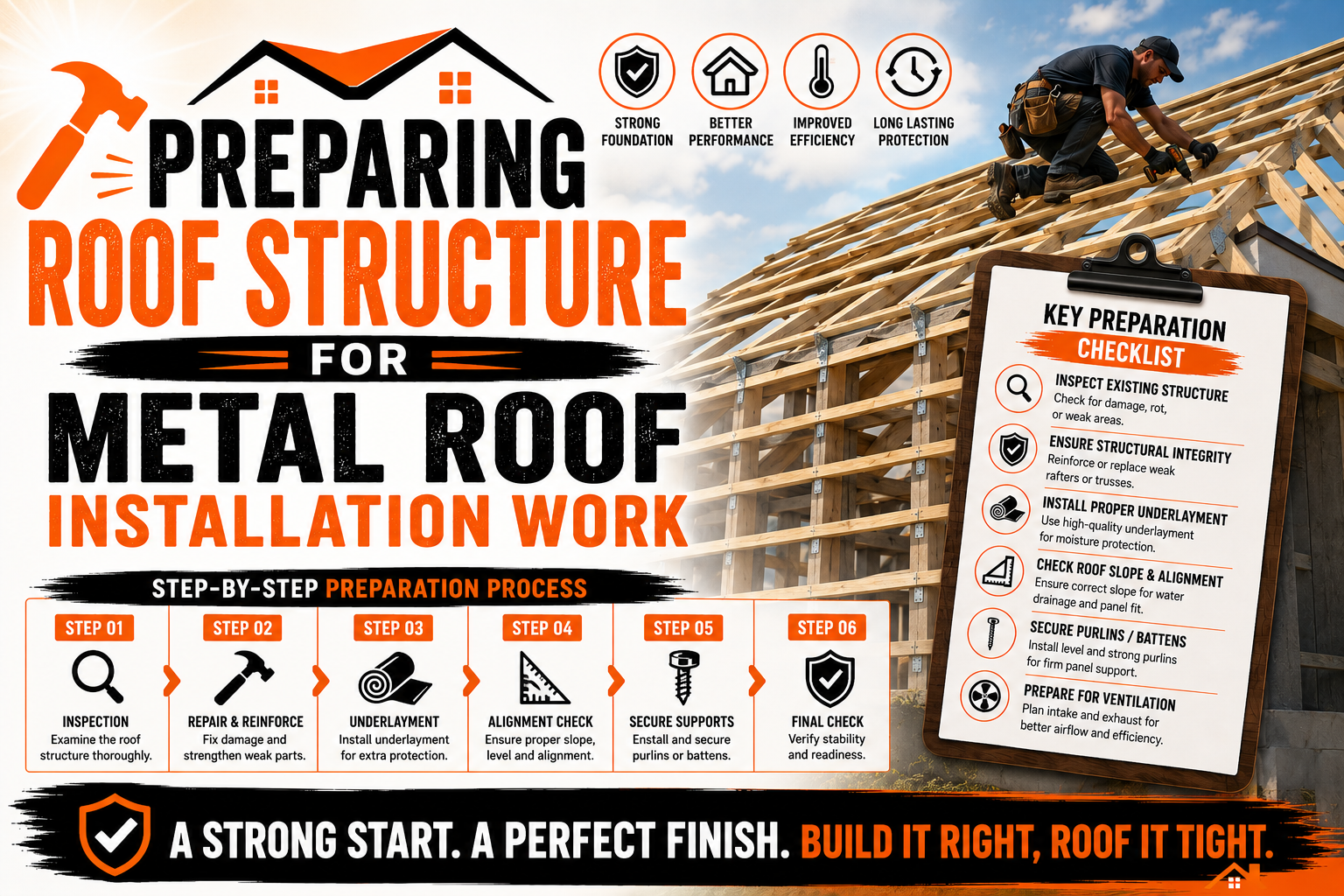
Preparing Roof Structure for Metal Roof Installation Work
Introduction
Preparing the roof structure is one of the most important stages of any metal roof installation project. While many homeowners focus on selecting the right metal panels, colors, or roofing style, the condition of the structure beneath the roof is equally important. A strong and properly prepared roof provides the stable foundation needed for a successful installation and ensures the roofing system performs as intended for decades. Skipping or rushing this preparation stage can result in costly repairs, reduced durability, and unnecessary installation delays.
A metal roof is a long term investment designed to withstand harsh weather, temperature changes, and everyday environmental exposure. However, even the highest quality roofing materials cannot compensate for structural problems hidden beneath the surface. Damaged roof decking, weakened framing, moisture intrusion, or poor preparation can compromise the performance of the entire roofing system regardless of how well the metal panels are installed.
Professional roofing contractors understand that preparation begins long before the first panel is placed on the roof. Every part of the existing roof structure must be carefully evaluated to identify damage, assess strength, and determine whether repairs are necessary. This careful inspection helps ensure that the new roofing system is supported by a solid, reliable foundation capable of handling both the roofing materials and future weather conditions.
Proper roof preparation also improves installation efficiency. Contractors who begin with a clean, structurally sound roof deck can install underlayment, flashing, and metal panels more accurately while reducing unexpected interruptions during construction. Homeowners also benefit because addressing hidden problems before installation helps prevent future maintenance issues and protects the value of their roofing investment.
This guide explains why roof structure preparation is essential before installing a metal roof. It explores the inspections, repairs, and preparation steps that create a safe and dependable foundation for a roofing system designed to provide reliable protection for many years.
Why Roof Preparation Should Never Be Overlooked
Every successful roofing project begins with a properly prepared structure. Although roof preparation is not the most visible part of the installation process, it has a greater influence on long term performance than many homeowners realize. A well prepared roof supports the metal panels evenly, helps prevent water intrusion, and ensures the installation follows manufacturer recommendations from the very beginning.
One of the primary reasons preparation is so important is that roofing problems often develop beneath the surface where they cannot be seen during everyday inspections. Moisture damage, wood rot, loose decking, or weakened framing may remain hidden beneath old roofing materials for years. Installing a new metal roof over these existing problems simply conceals them rather than correcting them.
Preparation also improves the accuracy of installation. Metal roofing systems require precise panel alignment, secure fastening, and properly fitted flashing. An uneven or unstable roof structure makes achieving this level of precision much more difficult. Correcting structural irregularities before installation allows every roofing component to fit together properly.
Another important benefit is long term durability. A properly prepared roof distributes loads more evenly across the structure, reducing stress on individual roofing components. This becomes particularly important during heavy rain, snow accumulation, or strong wind events when the roof experiences greater structural demands.
Ignoring roof preparation may also affect manufacturer warranty coverage. Many manufacturers require roofing systems to be installed on structurally sound roof decks that meet specific installation requirements. Failure to address existing structural problems before installation may reduce warranty protection if roofing issues develop later.
Professional contractors treat roof preparation as an investment rather than an additional expense. Spending time identifying and correcting problems before installation often prevents much larger repair costs in the future while extending the overall lifespan of the roofing system.
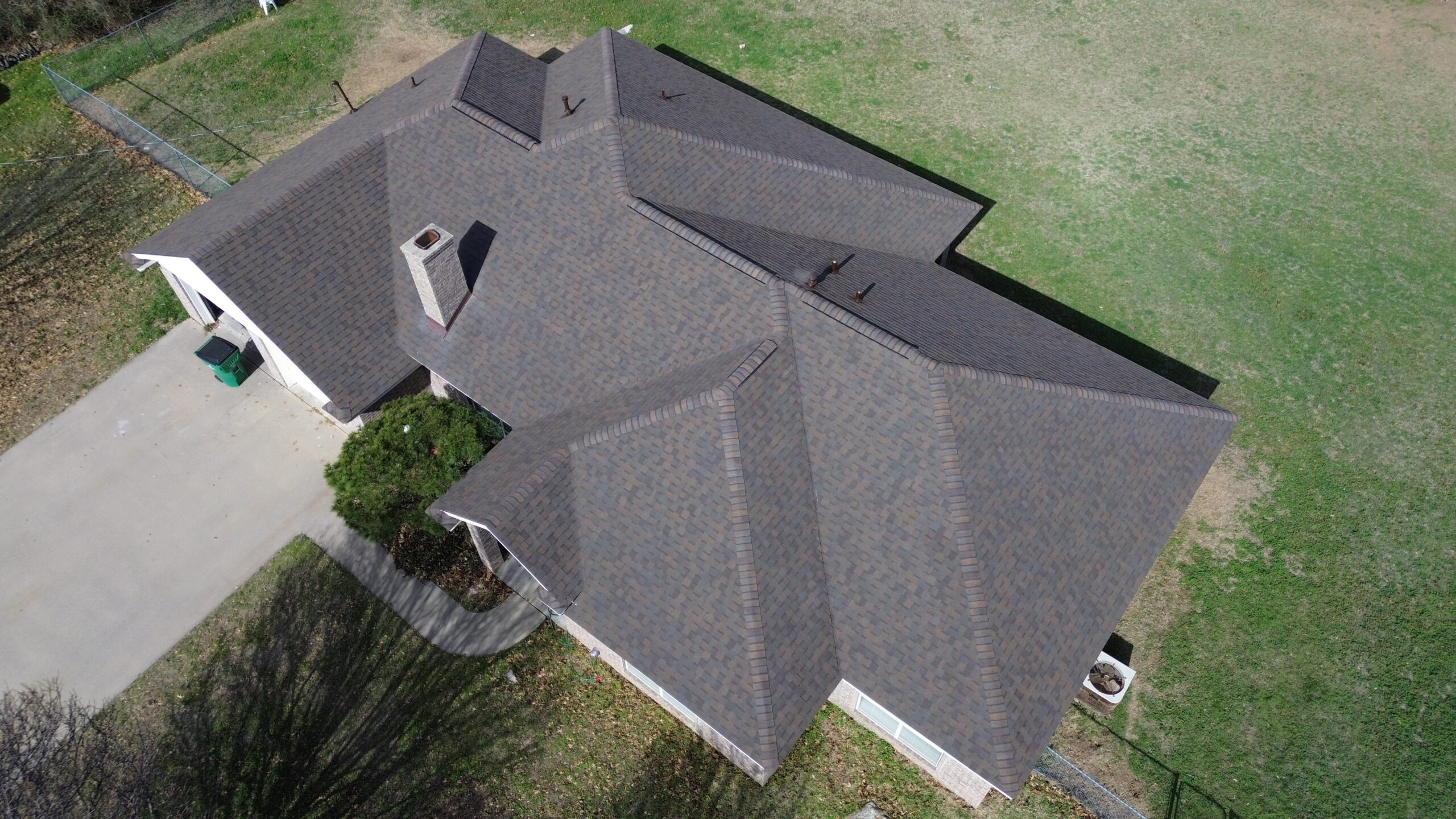
Inspecting the Existing Roof Structure
Before any roofing materials are removed or installed, the existing roof structure should undergo a detailed inspection. This evaluation allows contractors to determine whether the roof is capable of supporting the new metal roofing system while identifying repairs that should be completed before installation begins.
The roof deck is usually one of the first components examined. Contractors inspect the decking for signs of softness, warping, moisture damage, loose fasteners, or structural deterioration. Because the roof deck provides direct support for the underlayment and metal panels, it must remain solid and stable throughout the installation process.
Roof framing is also carefully evaluated. Rafters and trusses distribute the weight of the roofing system across the building, making their condition essential for structural safety. Contractors look for cracked members, excessive sagging, insect damage, or weakened connections that could reduce load carrying capacity.
Special attention is given to areas surrounding roof penetrations. Chimneys, skylights, plumbing vents, and ventilation openings often experience greater exposure to moisture than other parts of the roof. These locations require careful inspection because long term water intrusion may weaken surrounding structural components without creating immediately visible interior leaks.
Roof geometry is another important consideration during the inspection. Contractors evaluate the alignment of roof planes, ridge lines, valleys, and overhangs to identify any signs of structural movement or settlement. Uneven roof sections may indicate underlying structural issues that require correction before installation proceeds.
Attic inspections often provide valuable information as well. Looking at the roof structure from below allows contractors to identify water stains, mold growth, inadequate ventilation, or framing problems that may not be visible from above. Combining interior and exterior inspections provides a more complete understanding of the roof’s overall condition.
This comprehensive evaluation helps contractors develop accurate installation plans while ensuring the new roofing system will rest on a dependable structural foundation.
Checking for Water Damage and Rot
Water damage is one of the most common problems discovered during roof preparation. Even small roof leaks can gradually affect wooden structural components over many years, weakening the roof long before visible signs appear inside the building. Identifying and repairing moisture damage before installing a new metal roof is essential for long term performance.
Roof decking is particularly vulnerable because it sits directly beneath the roofing materials. Continuous moisture exposure may cause wood fibers to soften, weaken, or decay over time. Walking across damaged decking often reveals areas that feel spongy or flexible compared to surrounding sections.
Rot frequently develops around roof penetrations where flashing has deteriorated or previous repairs have failed. Chimneys, skylights, plumbing vents, and valleys should all receive careful inspection because these locations experience concentrated water flow during storms. Moisture entering through these areas may spread beyond the visible damage.
Mold and mildew growth may also indicate long term moisture problems. While mold itself can create indoor air quality concerns, it often signals hidden water intrusion that has affected nearby structural materials. Removing mold without correcting the underlying moisture source only provides a temporary solution.
Water damage is not limited to wood alone. Metal connectors, fasteners, and structural hardware may also experience corrosion after prolonged exposure to moisture. Rusted connectors reduce structural strength and should be replaced before installation continues.
Professional contractors carefully determine whether damaged materials can be repaired or require complete replacement. Replacing weakened structural components before installation provides greater confidence that the new roofing system will perform reliably throughout its expected lifespan.
Addressing moisture damage during preparation may increase initial project costs slightly, but it prevents much more expensive structural repairs that could otherwise become necessary after the new roof has already been installed.
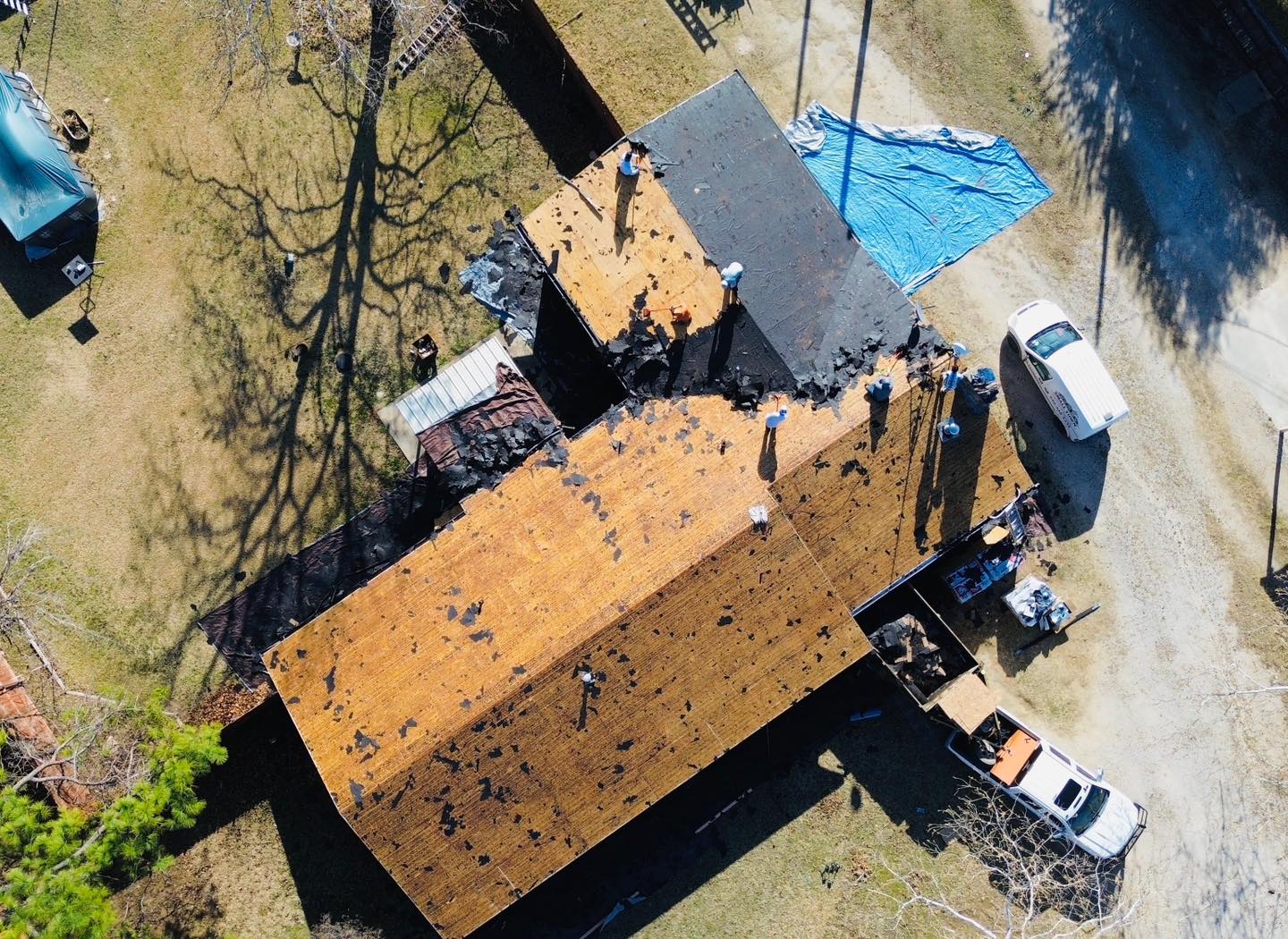
Repairing Structural Weaknesses
Once structural problems have been identified, repairs should be completed before the new roofing system is installed. Correcting these weaknesses creates a stable platform that supports the metal roof evenly while improving overall building safety and durability.
Damaged roof decking is commonly replaced during this stage. Contractors remove deteriorated sections and install new panels that match the surrounding structure. This process restores structural integrity while providing a smooth surface for underlayment and metal roofing installation.
Framing repairs may also be necessary if rafters or trusses have been weakened by moisture, insect damage, or age. Depending on the extent of the damage, contractors may reinforce existing members or replace severely deteriorated structural components entirely.
Loose connections throughout the roof framing should also be secured. Fasteners, brackets, and structural connectors help distribute roof loads efficiently across the building. Tightening or replacing these components improves stability while reducing movement that could affect roofing performance over time.
Sagging roof sections require special attention because they often indicate more significant structural concerns. Contractors determine the underlying cause before recommending appropriate repairs. Correcting these problems before installation prevents uneven panel alignment and improves the finished appearance of the roof.
Structural repairs also provide an opportunity to improve overall roof performance. Additional reinforcement may be recommended in regions exposed to heavy snowfall, high winds, or severe storms. Strengthening the structure before installation helps the roofing system perform more effectively under challenging environmental conditions.
Although structural repairs may extend the project timeline, they create a much stronger foundation for the new roofing system. Investing in these improvements during preparation often eliminates future concerns while increasing the overall value of the roofing project.
Removing Old Roofing Materials
Before a new metal roof can be installed, contractors must determine whether the existing roofing materials should be removed or whether an overlay installation is appropriate. This decision depends on the condition of the current roof, local building regulations, and the recommendations of the roofing manufacturer.
Complete roof removal provides the greatest opportunity to inspect the underlying structure. Once old shingles, underlayment, and flashing have been removed, contractors gain full access to the roof deck, allowing hidden damage to be identified and repaired before installation begins.
Removing existing roofing materials also creates a clean and level surface for the new roofing system. Uneven layers left beneath the metal panels may interfere with proper alignment or create unnecessary stress on the finished roof. Beginning with a fresh roof deck improves installation accuracy while reducing potential performance issues.
Overlay installations may be permitted in certain situations if the existing roof remains structurally sound and local building codes allow the practice. Installing metal roofing over a single layer of asphalt shingles can reduce demolition costs while shortening the overall project timeline. However, careful inspection is still required to ensure the underlying structure remains in good condition.
Roof removal also allows contractors to replace outdated flashing, repair damaged decking, and improve moisture protection systems before the new roofing materials are installed. These improvements are much easier to complete when the roof structure is fully exposed.
Proper disposal of removed roofing materials is another important consideration. Contractors typically separate recyclable materials whenever possible while disposing of remaining waste according to local environmental regulations. Maintaining an organized work area improves safety throughout the preparation process.
Choosing the appropriate removal strategy requires careful evaluation of both the existing roof and the planned metal roofing system. Professional contractors provide recommendations based on structural condition, building code requirements, and long term performance expectations.
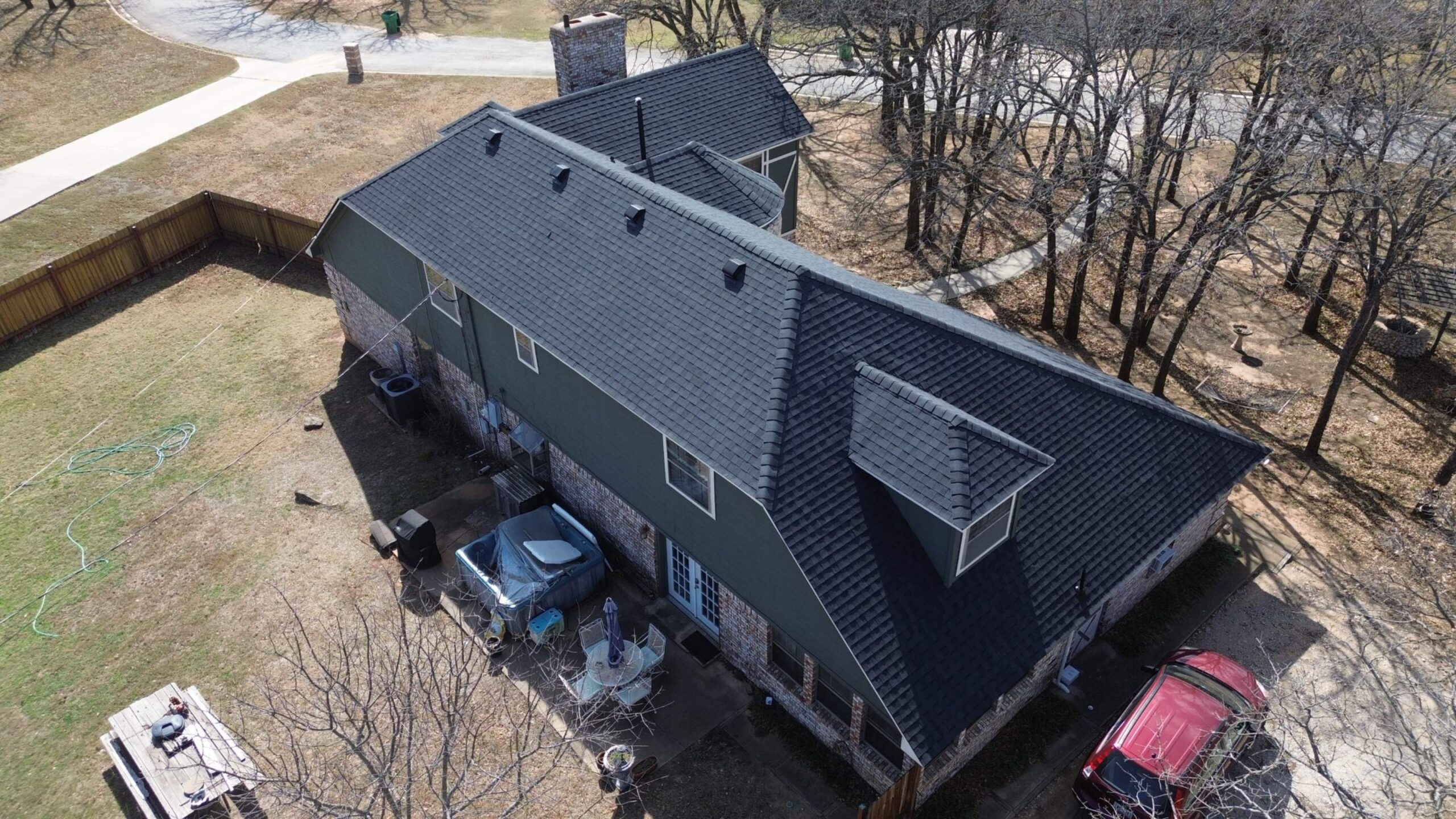
Cleaning and Preparing the Roof Surface
Once structural repairs have been completed and old roofing materials have been removed when necessary, the roof surface must be thoroughly cleaned before installation begins. This final preparation step creates the ideal foundation for underlayment, flashing, and metal roofing panels.
Loose debris should be removed from the roof deck completely. Dust, wood fragments, old fasteners, adhesive residue, and remaining roofing materials may interfere with proper installation if left in place. A clean work surface allows roofing components to fit together more accurately.
Old nails and damaged fasteners should also be removed or secured. Protruding fasteners may damage underlayment materials or create uneven surfaces beneath the roofing panels. Contractors inspect the entire roof carefully to ensure the deck remains smooth and free from unnecessary obstructions.
The roof deck should also be checked one final time for levelness and stability. Walking the surface allows contractors to identify any remaining loose sections that may require additional fastening before installation proceeds.
Proper cleaning also improves the performance of moisture protection systems. Underlayment materials bond more effectively to clean surfaces, helping create a reliable secondary barrier against future water intrusion. This attention to detail contributes directly to the long term durability of the completed roofing system.
Material staging often begins during this phase as well. Roofing panels, underlayment, flashing, and accessories are organized near the work area while remaining protected from weather exposure. Efficient organization allows installation to begin smoothly once preparation has been completed.
Inspecting and Installing Roof Underlayment
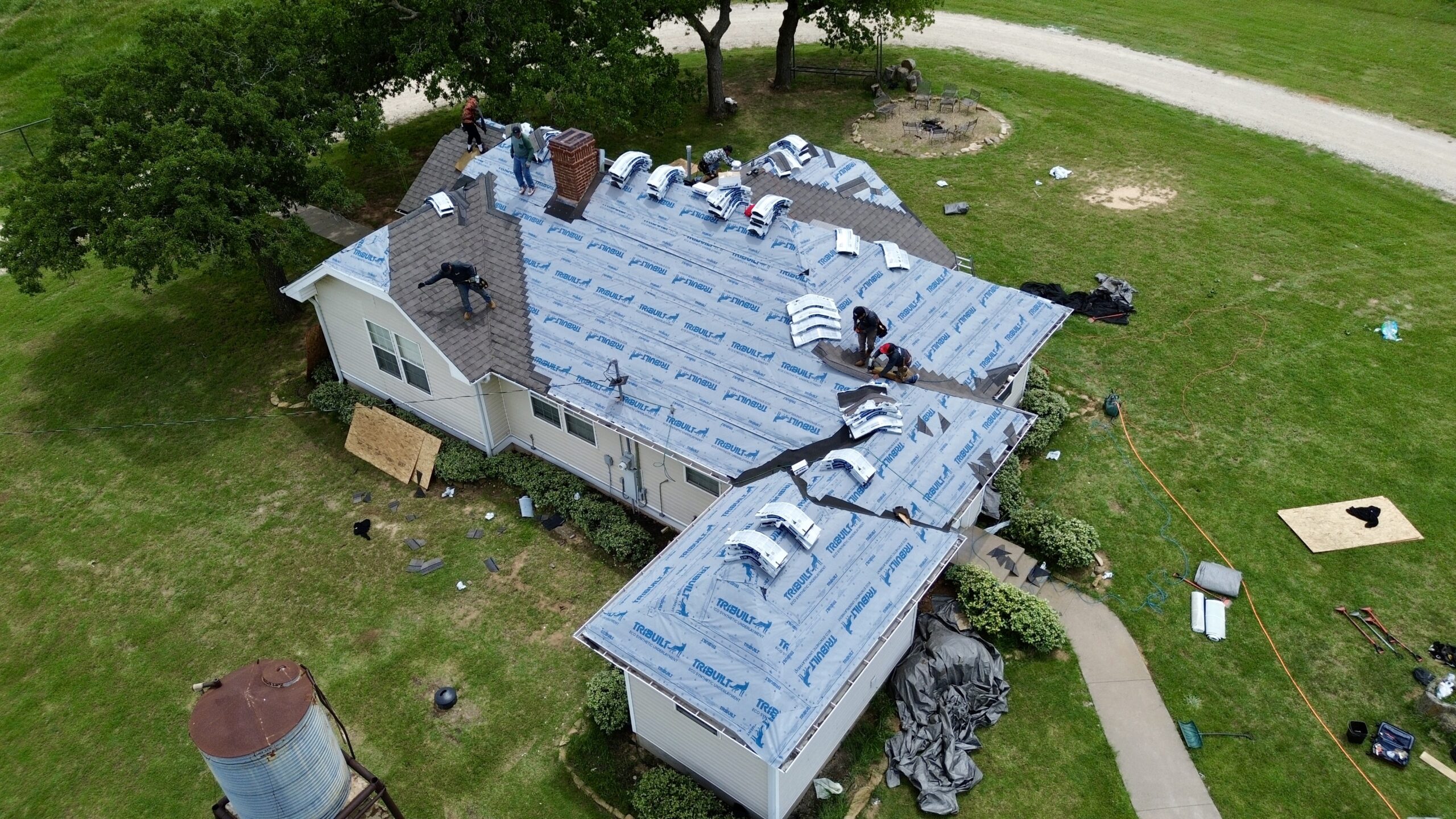
Once the roof structure has been inspected, repaired, and cleaned, the next step is preparing the underlayment system. Although it remains hidden beneath the finished metal roof, underlayment is one of the most important components of the entire roofing assembly. It serves as a secondary moisture barrier that protects the roof deck if water ever passes beneath the metal panels.
Before installation begins, contractors inspect the roof deck one final time to confirm that it is completely dry, smooth, and securely fastened. Any remaining loose nails, raised edges, or damaged areas are corrected because even small imperfections can affect the performance of the underlayment.
Synthetic underlayment has become the preferred choice for many modern metal roofing systems because it offers greater durability, tear resistance, and water protection than traditional felt paper. These materials are designed to withstand temporary weather exposure while providing reliable moisture protection throughout the life of the roof.
Proper installation is just as important as selecting the right material. Contractors carefully overlap each section according to manufacturer recommendations, creating continuous protection across the roof surface. Correct overlap prevents water from reaching the roof deck if wind driven rain or condensation ever passes beneath the metal panels.
Special attention is given to roof edges, valleys, and transitions where water naturally collects. Additional protective membranes may be installed in these high risk areas to improve resistance against leaks and ice related moisture intrusion in colder climates.
Underlayment preparation may seem like a hidden part of the project, but it has a direct influence on the long term durability of the roofing system. A carefully installed moisture barrier provides an additional level of protection that homeowners may never see but will certainly appreciate if severe weather occurs.
Ensuring Proper Roof Ventilation
Roof ventilation is another critical part of structural preparation before metal roof installation. Many homeowners focus primarily on the visible roofing materials, but proper airflow beneath the roof plays a major role in protecting the entire building. Without effective ventilation, moisture and heat can accumulate inside the attic, reducing both roof performance and energy efficiency.
A balanced ventilation system typically combines intake vents located near the lower edges of the roof with exhaust vents positioned near the ridge. This natural airflow allows cooler outside air to enter while warmer, moisture laden air exits through the highest point of the roof.
Before installing a new metal roof, contractors evaluate whether the existing ventilation system provides sufficient airflow. Older homes sometimes have inadequate ventilation because building standards have changed over time. Improving ventilation during roof replacement is often more efficient than making modifications after installation has been completed.
Proper ventilation helps reduce condensation beneath the roofing system. Moisture generated inside the home naturally rises into the attic, where it can condense on cooler roof surfaces if ventilation is insufficient. Over time, trapped moisture may damage insulation, roof decking, and structural framing while encouraging mold growth.
Temperature regulation is another important benefit. During warm weather, attic temperatures can rise dramatically if heat cannot escape efficiently. Improved ventilation reduces heat buildup, helping lower cooling demands while extending the lifespan of roofing components exposed to excessive temperatures.
Metal roofing performs best when combined with a properly designed ventilation system. Preparing ventilation before panel installation ensures all components work together to create a durable, energy efficient roofing system.
Checking Roof Slope and Drainage
Water management begins with the overall design of the roof. Before installing metal roofing panels, contractors evaluate roof slope and drainage patterns to ensure water will flow efficiently away from the building. Even durable roofing materials can experience problems if water is allowed to collect in areas where drainage is restricted.
Roof pitch influences the type of metal roofing system that should be installed. Some panel profiles are designed specifically for steeper roofs, while others perform well on lower slopes when installed according to manufacturer recommendations. Confirming the roof pitch during preparation helps contractors select the appropriate installation methods.
Drainage pathways receive careful attention during the inspection process. Valleys, roof intersections, gutters, and downspouts should all allow rainwater to move freely away from the structure. Any obstructions or design problems should be corrected before installation begins.
Standing water is one of the primary concerns during roof preparation. Areas where water remains after rainfall may indicate structural sagging or drainage problems that require correction. Allowing water to remain on any roofing system for extended periods increases the likelihood of future leaks and material deterioration.
Contractors also inspect roof edges to ensure water will discharge properly into the gutter system. Damaged fascia boards, improperly aligned gutters, or blocked downspouts should be repaired before installation because these components contribute to the roof’s overall drainage performance.
Snow and ice should also be considered in colder climates. Proper drainage design helps reduce ice dam formation by encouraging efficient water flow during seasonal melting periods. Preparing drainage systems before installation supports long term roof performance under changing weather conditions.
Preparing Roof Penetrations
Every roof contains areas where objects pass through the roofing system. Chimneys, plumbing vents, skylights, HVAC equipment, satellite mounts, and ventilation pipes all require careful preparation before a new metal roof is installed. These roof penetrations represent some of the most vulnerable locations for future water intrusion if not properly addressed.
Contractors begin by inspecting each penetration for structural stability and existing damage. Loose vent pipes, deteriorated flashing, cracked chimney masonry, or damaged skylight frames should all be repaired before roofing installation proceeds. Correcting these issues now prevents future leaks after the new roof has been completed.
Old flashing materials are typically removed during preparation. Flashing components experience years of weather exposure and often show signs of wear by the time a roof replacement becomes necessary. Installing new flashing with the metal roofing system provides more reliable long term protection.
Proper spacing around roof penetrations is also important. Contractors ensure there is adequate room for flashing components, sealants, and panel transitions without forcing roofing materials into tight or irregular spaces. Careful planning improves both appearance and weather resistance.
Sealant compatibility is another consideration during preparation. Manufacturers often specify products designed to work with their roofing systems. Using compatible sealants helps maintain durable weather resistant seals around every roof penetration.
Preparing roof penetrations before panel installation reduces interruptions during construction while improving the quality of the finished roofing system. Since these areas are responsible for many roofing leaks, careful preparation provides significant long term value.
Verifying Structural Load Capacity
Although metal roofing is generally lighter than many traditional roofing materials, contractors still evaluate the roof’s structural load capacity before installation. Every building must safely support not only the roofing materials themselves but also additional loads created by weather, maintenance activities, and building occupancy requirements.
Roof framing is carefully inspected to confirm it remains capable of supporting the planned roofing system. Rafters, trusses, beams, and supporting walls should all be free from significant deterioration or structural movement before installation begins.
Building age is another important consideration. Older homes may have experienced decades of settling, moisture exposure, or previous renovations that affect structural performance. Contractors evaluate whether reinforcement is necessary before adding the new roofing system.
Regional weather conditions also influence structural requirements. Homes located in areas that receive heavy snowfall must support additional seasonal loads beyond the weight of the roofing materials themselves. Coastal regions exposed to strong winds may require additional structural reinforcement to improve wind resistance.
Building codes establish minimum structural standards that contractors must follow. During roof preparation, they verify that the existing structure meets current requirements or identify upgrades needed to achieve compliance. Completing these improvements before installation helps ensure long term safety.
If reinforcement is necessary, contractors complete these modifications before underlayment and roofing panels are installed. Strengthening the structure beforehand provides a more dependable foundation while preventing future concerns related to structural movement or excessive loading.
Organizing Materials and Safety Equipment
Successful roofing projects depend not only on structural preparation but also on careful organization before installation begins. Preparing materials and safety equipment allows contractors to work efficiently while maintaining high standards of workmanship throughout the project.
Roofing panels should be delivered and stored according to manufacturer recommendations. Materials are typically placed on level surfaces where they remain protected from standing water, excessive moisture, and accidental damage before installation. Proper storage helps preserve protective coatings and prevents unnecessary scratches or dents.
Contractors also organize flashing, fasteners, underlayment, sealants, ridge caps, trim pieces, and specialized accessories so each item is readily available when needed. Efficient material staging reduces unnecessary movement across the roof and minimizes installation interruptions.
Safety equipment receives equal attention during preparation. Fall protection systems, safety harnesses, anchor points, roof brackets, ladders, and scaffolding should all be inspected before work begins. Roofing remains one of the most hazardous construction activities, making proper safety preparation essential.
Access routes to the roof should also be planned carefully. Materials must be transported safely without damaging landscaping, driveways, or other parts of the property. Organized delivery routes improve efficiency while reducing the risk of accidents during material handling.
Weather protection is another important consideration. Contractors prepare tarps, temporary coverings, and secure storage areas in case unexpected weather develops during installation. Having these materials readily available allows exposed sections of the roof to be protected quickly if conditions change.
Good organization creates a smoother installation process from the very first day. Careful preparation allows roofing crews to focus on accurate installation rather than searching for tools or materials after work has already begun.
Roof Preparation Checklist Table
The following table summarizes the major preparation tasks completed before metal roof installation and explains why each one is important.
| Preparation Task | Purpose | Problems It Helps Prevent |
|---|---|---|
| Inspect roof decking | Verify structural condition | Hidden damage, weak support, installation failure |
| Install quality underlayment | Create secondary moisture barrier | Water intrusion and deck deterioration |
| Improve roof ventilation | Maintain attic airflow | Condensation, mold, excessive heat buildup |
| Check roof slope and drainage | Ensure efficient water runoff | Standing water and future leaks |
| Prepare roof penetrations | Install proper flashing protection | Water leaks around chimneys and vents |
| Verify structural load capacity | Confirm roof can support new system | Structural stress and safety concerns |
| Organize materials properly | Protect roofing products before use | Material damage and installation delays |
| Prepare safety equipment | Protect roofing crews | Workplace accidents and project interruptions |
Working with an Experienced Roofing Contractor
Preparing a roof structure for a metal roof installation requires knowledge, planning, and attention to detail. While some homeowners focus primarily on the installation itself, experienced roofing contractors understand that the quality of the preparation stage often determines the long term success of the entire project. A properly prepared structure provides the stable foundation necessary for a durable and weather resistant metal roofing system.
Professional contractors begin by performing a comprehensive inspection rather than assuming the existing roof is ready for installation. They examine the roof deck, framing, attic ventilation, drainage systems, flashing locations, and structural supports before making recommendations. This thorough approach helps identify hidden problems that could otherwise remain unnoticed until after the new roof has been completed.
Experienced roofing professionals are also familiar with manufacturer installation requirements. Different metal roofing systems may have unique recommendations regarding underlayment, decking, ventilation, fastening methods, and structural support. Following these specifications helps maximize roof performance while protecting manufacturer warranty coverage.
Another advantage of hiring qualified professionals is access to specialized equipment and trained installation crews. Structural repairs often require precision measurements, proper fastening techniques, and safe working practices that experienced contractors perform on a regular basis. Their expertise improves both construction quality and workplace safety throughout the project.
Communication is another characteristic of a reliable roofing contractor. Professional companies explain inspection findings, discuss repair recommendations, and provide clear estimates that outline the work required before installation begins. Homeowners gain confidence when they understand exactly why certain preparation steps are necessary and how they contribute to the finished roofing system.
Contractors with established reputations also maintain appropriate licensing, insurance, and industry certifications. These qualifications demonstrate professionalism while providing additional protection for both the homeowner and the installation team. Choosing a contractor based on experience and quality rather than price alone often results in a stronger, longer lasting roofing system.
Although experienced contractors may require a larger initial investment, their careful preparation frequently prevents costly structural repairs and roofing problems later. Proper workmanship during the early stages of the project protects the value of the entire roofing investment for many years.
Questions to Ask Before Installation Begins
Before work starts, homeowners should have a clear understanding of how the roof structure will be prepared. Asking detailed questions encourages productive discussions with the contractor and helps ensure every important preparation step has been considered before installation begins.
The following questions provide an excellent starting point.
- Will the entire roof structure be inspected before installation starts?
- How will you identify hidden moisture damage or structural weaknesses?
- Will damaged roof decking be repaired or replaced if necessary?
- Which type of underlayment do you recommend for this roofing system?
- How will you evaluate and improve roof ventilation if required?
- Will existing flashing be replaced around chimneys, skylights, and roof penetrations?
- Does the roof structure meet current building code requirements?
- How will roofing materials be protected before installation begins?
- What safety measures will your crew follow during preparation and installation?
- Will photographs or inspection reports be provided before the new roof is installed?
These questions help homeowners understand both the preparation process and the contractor’s overall approach to quality. Contractors who answer confidently and provide detailed explanations often demonstrate greater experience and professionalism.
Written documentation is also valuable. Inspection reports, repair recommendations, product specifications, warranties, and project schedules should all be reviewed before installation begins. Having these details in writing creates clear expectations while reducing the possibility of misunderstandings later in the project.
Common Roof Preparation Mistakes to Avoid
Even high quality roofing materials cannot compensate for poor preparation beneath the surface. Many long term roofing problems develop because important preparation steps were overlooked before installation. Understanding these common mistakes helps homeowners recognize why careful planning is essential.
Some of the most common roof preparation mistakes include:
- Installing new metal roofing over damaged or weakened roof decking.
- Ignoring signs of moisture damage, mold, or wood rot.
- Failing to inspect attic ventilation before installation.
- Using low quality or incompatible underlayment materials.
- Leaving old flashing in place instead of replacing worn components.
- Skipping structural inspections to save time.
- Installing roofing materials on an uneven roof surface.
- Failing to remove loose fasteners, debris, or damaged materials before installation.
- Not verifying that the roof structure meets current building code requirements.
- Choosing inexperienced contractors based only on the lowest project price.
Avoiding these mistakes significantly improves the likelihood of a successful roofing project. Investing time in proper preparation creates a stronger foundation while reducing the risk of future repairs and maintenance expenses.
Homeowners should also avoid rushing the preparation process. Structural inspections and repairs require careful attention, and attempting to shorten this stage often creates larger problems after installation has already been completed.
Preparing Your Property Before Installation Day
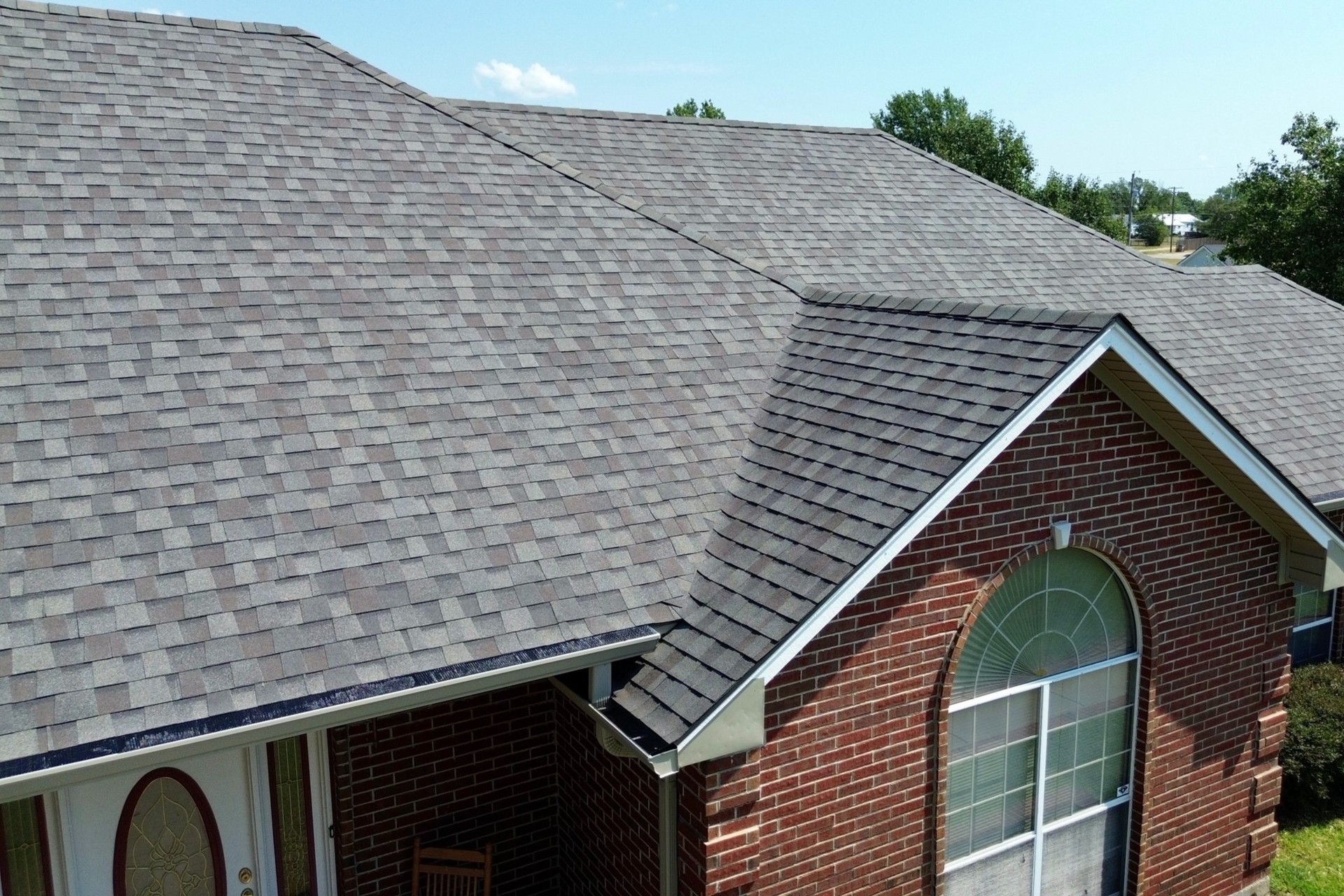
Roof preparation extends beyond the roof itself. Homeowners can contribute to a smoother installation by preparing the surrounding property before the roofing crew arrives. These simple steps improve safety, protect personal belongings, and allow contractors to work more efficiently.
Vehicles should be moved away from the house before work begins. Roofing materials, tools, and construction debris may temporarily occupy driveways or nearby work areas. Clearing these spaces provides contractors with easier access while reducing the possibility of accidental vehicle damage.
Outdoor furniture, decorative items, grills, and potted plants should also be relocated if they are close to the building. Although contractors use protective measures whenever possible, removing fragile items provides additional peace of mind throughout the project.
Landscaping deserves careful attention as well. Flower beds, shrubs, and garden features located near the home may benefit from temporary protective coverings. Discussing these areas with the contractor before installation helps ensure appropriate precautions are taken.
Homeowners should also inform family members about the upcoming project. Roofing work creates noise, vibration, and increased activity around the home during normal working hours. Preparing everyone in advance helps minimize disruptions while improving overall safety.
Pets may require temporary accommodations during installation. The sounds of construction equipment and unfamiliar workers can create stress for many animals. Keeping pets indoors or arranging alternative care during working hours helps prevent unnecessary anxiety and reduces the risk of accidental escapes.
Interior preparation is equally worthwhile. Vibrations from roofing work may cause items hanging on walls or shelves to shift slightly. Securing valuable or fragile belongings before installation begins provides additional protection throughout the project.
Maintaining open communication with the contractor remains important during this preparation period. Confirming arrival times, discussing access requirements, and reviewing the daily work schedule allows both homeowners and contractors to begin the project with clear expectations.
How Proper Preparation Improves Long Term Roof Performance
Every preparation step completed before installation contributes directly to the future performance of the metal roof. Although much of this work becomes hidden once installation is finished, it continues supporting the roofing system throughout its service life.
One of the greatest benefits is improved structural stability. A properly repaired and reinforced roof deck provides consistent support beneath every roofing panel, reducing unnecessary movement that could affect fasteners, seams, or flashing over time. Stable support helps maintain the roof’s appearance while improving weather resistance.
Moisture protection also improves significantly. High quality underlayment, properly installed flashing, and corrected drainage pathways work together to reduce the risk of water intrusion. Preventing moisture from reaching the roof deck protects the building structure while minimizing future repair costs.
Ventilation improvements contribute to better temperature regulation and reduced condensation inside the attic. Balanced airflow helps preserve insulation, framing, and roofing components while improving overall energy efficiency. Homeowners often notice these benefits through more comfortable indoor temperatures and lower heating or cooling demands.
Proper preparation also strengthens the roof’s ability to withstand severe weather. Reinforced structural components, secure decking, and carefully installed moisture barriers improve resistance against heavy rain, snow, and strong winds. This added durability becomes especially valuable in regions exposed to challenging weather conditions.
Manufacturer warranties frequently depend on proper installation practices that begin with structural preparation. Meeting these requirements helps preserve warranty coverage while providing additional confidence in the roofing investment. Homeowners benefit from knowing their roof was installed according to recognized industry standards.
Maintenance requirements are often reduced as well. Roofs installed on well prepared structures generally experience fewer installation related problems because hidden issues were corrected before construction began. Lower maintenance demands translate into reduced long term ownership costs while extending the roof’s service life.
Perhaps most importantly, proper preparation increases homeowner confidence. Knowing that the roof structure was thoroughly inspected, repaired, and prepared before installation provides reassurance that the roofing system is built to perform reliably for many decades.
Final Thoughts
Preparing the roof structure is not simply an early stage of metal roof installation but the foundation upon which the entire roofing system depends. Every inspection, repair, reinforcement, and cleaning task completed before installation contributes to the quality, durability, and long term performance of the finished roof.
Although homeowners naturally focus on visible roofing materials, much of the roof’s future reliability depends on work that remains hidden beneath the metal panels. Strong decking, proper ventilation, effective moisture protection, and carefully repaired structural components continue protecting the home long after installation has been completed.
Working with experienced contractors, asking thoughtful questions, and allowing adequate time for preparation all contribute to better installation results. These efforts help ensure the roofing system performs efficiently while reducing future maintenance concerns and protecting one of the home’s most valuable structural investments.
Conclusion
Preparing the roof structure before metal roof installation is one of the most important steps in creating a durable, reliable, and long lasting roofing system. Thorough inspections, structural repairs, moisture damage correction, proper ventilation, quality underlayment, drainage improvements, and careful surface preparation all work together to create a stable foundation that supports every component of the finished roof.
Skipping or rushing these preparation stages can lead to installation problems, reduced weather resistance, premature repairs, and unnecessary maintenance costs. In contrast, investing time in proper structural preparation allows contractors to install the roofing system with greater precision while helping homeowners maximize the lifespan and performance of their investment.
By choosing experienced roofing professionals, communicating openly throughout the project, and recognizing the importance of preparation before installation begins, homeowners can enjoy the full benefits of a metal roof. A carefully prepared structure not only improves installation quality but also provides the strength, protection, and peace of mind needed for decades of dependable roofing performance.