
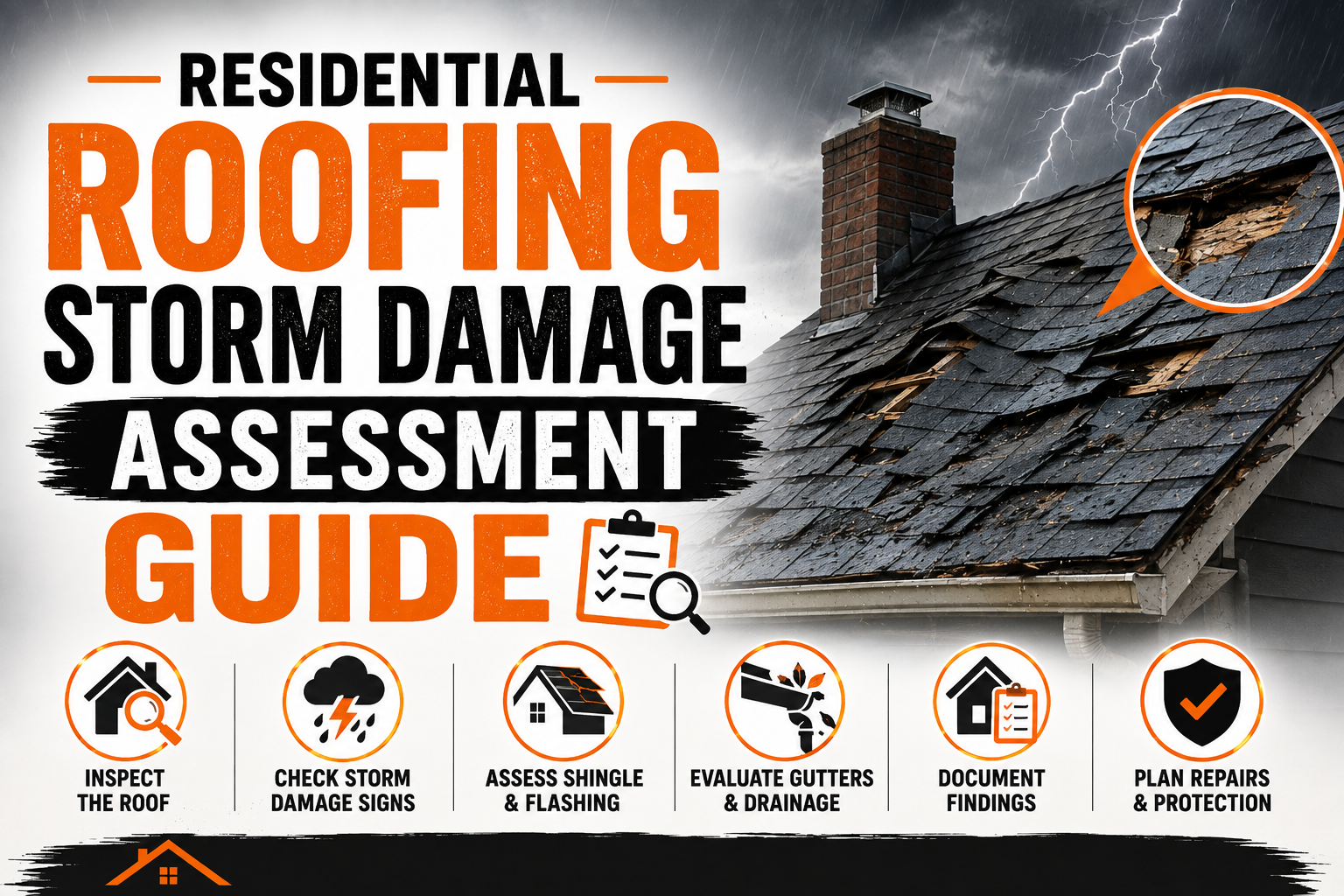
Residential Roofing Storm Damage Assessment Guide
Introduction
Severe weather can affect a residential roofing system in many different ways. Strong winds may loosen or remove shingles, hail can create impact damage, heavy rainfall can expose weak areas, and falling branches can damage roofing materials and the underlying structure. Some storm damage is immediately visible, while other problems may remain hidden until water enters the home.
A storm damage assessment helps homeowners understand the condition of the roof after a weather event. The purpose is not simply to find obvious damage but to identify areas that may have been weakened, displaced, punctured, or exposed to future moisture. A careful assessment can help homeowners determine whether professional repairs or additional inspection are needed.
Homeowners should avoid climbing onto a roof immediately after a storm. Wet surfaces, loose materials, damaged decking, fallen branches, and electrical hazards can make roof access dangerous. Initial observations should be made from the ground or from safe interior areas, while qualified professionals should handle difficult or unsafe inspection work.
The timing of an assessment can also matter. A roof that appears acceptable from the ground may have damaged shingles or flashing that become more problematic during the next rainfall. Documenting conditions soon after the storm can help establish what was observed and provide useful information for later repair decisions.
Storm damage should also be considered in relation to the roof’s age and previous condition. An older roof may already have signs of wear before the storm, while a newer roof may experience isolated damage from a particularly severe weather event. A professional assessment can help distinguish storm-related damage from normal aging and pre-existing deterioration.
Understanding How Storms Damage Residential Roofing
Different types of storms affect roofing systems in different ways. High winds can lift shingles, break seals, damage flashing, and remove loose materials from exposed areas. Hail can strike roofing surfaces repeatedly, potentially damaging shingles, metal components, vents, and other exposed parts.
Heavy rain may not directly damage a roof covering, but it can expose existing weaknesses. Water may enter through damaged flashing, missing shingles, open seams, or compromised roof penetrations. When rainfall is combined with strong winds, water can sometimes reach areas that normally remain protected.
Hail damage can be difficult to recognize without close inspection. Small impact marks may not be obvious from the ground, and some damage may become more apparent as roofing materials continue to weather. A professional inspector can determine whether visible marks are consistent with storm impact or another form of deterioration.
Falling branches can create more obvious physical damage. A branch may break shingles, puncture roofing materials, damage flashing, or place stress on the roof structure. Even when the branch appears to have caused only surface damage, the area should be assessed carefully because the impact may have affected materials beneath the visible surface.
Strong winds can also damage roof edges and other exposed areas. Ridge caps, hip sections, flashing, and perimeter materials may experience greater wind forces than some central roof areas. Once one component becomes loose, additional weather exposure can increase the possibility of further damage.
Storms can also affect drainage systems. Leaves, branches, and other debris may collect in gutters, valleys, or drains, preventing water from flowing normally. Blocked drainage can cause water to accumulate in areas that are not designed to hold standing water for extended periods.
The overall effect of a storm depends on many factors, including wind speed, hail size, rainfall intensity, roof design, material condition, installation quality, nearby trees, and the roof’s age. Because these factors vary from property to property, homeowners should avoid assuming that every roof in the same neighborhood has experienced the same level of damage.
Initial Safety Assessment After a Storm
Safety should be the first priority after severe weather. A storm can create hazards that are not immediately obvious, including unstable roofing materials, exposed nails, broken branches, damaged electrical equipment, standing water, and weakened structural components. Homeowners should not put themselves at risk simply to obtain a closer look at the roof.
Begin by observing the property from ground level. Look for missing shingles, visible roof openings, large pieces of roofing material in the yard, fallen branches, damaged gutters, or sections of the roof that appear uneven. Binoculars or a camera with a suitable zoom can provide additional visibility without requiring roof access.
The surrounding property should also be checked for storm-related hazards. Fallen trees, damaged utility lines, broken branches, and unstable structures can create risks around the home. If electrical lines have fallen or are damaged, homeowners should stay away from the area and contact the appropriate utility or emergency service.
The attic can sometimes provide useful information if it can be accessed safely. Homeowners may notice new water stains, damp insulation, dripping water, or visible openings where daylight can enter. However, an attic should not be entered if the flooring, framing, electrical system, or other components appear unsafe.
Interior rooms should also be checked for evidence of water intrusion. Look for new ceiling stains, wet drywall, peeling finishes, or water around light fixtures. Water near electrical components requires particular caution, and homeowners should avoid touching wet fixtures, outlets, or wiring.
If active water is entering the home, temporary measures may help reduce interior damage while professional assistance is arranged. Furniture and belongings can be moved away from affected areas, and containers may be used to collect minor dripping water. These actions should be performed without climbing onto the roof or entering unsafe areas.
Homeowners should document what they observe before cleanup or repairs begin. Photographs of visible damage, fallen materials, interior stains, and affected property can create a useful record. Notes about the storm date and approximate weather conditions can also help provide context for the assessment.
Inspecting Shingles and Other Roofing Materials
Shingles are among the most visible components of many residential roofing systems and can show several forms of storm-related damage. Strong winds may lift, crease, loosen, or completely remove shingles. Hail can create impact marks, while falling objects may crack, puncture, or break roofing materials.
Missing shingles are one of the clearest signs of storm damage. Areas where the underlying roof material is exposed should receive prompt attention because they may be more vulnerable to rainfall and ultraviolet exposure. The number and location of missing shingles can help indicate whether the damage is isolated or widespread.
Lifted or displaced shingles can be more difficult to recognize from the ground. A shingle may remain attached while its edges have been lifted by wind. If the material no longer lies flat or appears separated from surrounding shingles, professional evaluation may be appropriate.
Creased shingles can also occur after strong winds. A crease may affect the material’s ability to remain properly positioned and sealed. Homeowners should avoid attempting to press or nail down damaged shingles themselves, especially when the condition is associated with a larger storm event.
Hail may leave small impact marks across the roofing surface. These marks can vary depending on the roofing material and severity of the storm. Because some impact damage is difficult to confirm visually, homeowners should avoid making a final determination from ground-level observations alone.
Metal roofing can experience dents, scratches, displaced panels, damaged seams, or issues around fasteners following severe weather. The significance of a dent depends on its location and effect on the roofing system. A professional should assess whether the damage is primarily cosmetic or could affect roof performance.
Tile roofing may crack, break, or become displaced during severe weather. Broken tiles can expose areas beneath the roof covering to weather. Walking across tile roofs can also create additional damage, so homeowners should leave close inspection to appropriately equipped professionals.
The condition of the roof before the storm should also be considered. Existing cracks, curling, brittle materials, or previous repairs may make it more difficult to determine whether a particular defect was caused by the recent event. Inspection photographs and maintenance records can provide useful evidence when available.
Checking Roof Flashing, Edges, Valleys, and Penetrations
A complete storm damage assessment should include more than the main roofing surface. Flashing, valleys, roof edges, and penetrations are important areas where roofing materials meet other components or change direction. These locations can be particularly vulnerable to wind and water after severe weather.
Flashing is used around areas such as chimneys, skylights, walls, vents, and other transitions. Strong winds may loosen flashing or damage surrounding sealant and roofing materials. Heavy rainfall can then take advantage of these weaknesses and enter the building assembly.
Roof valleys deserve particular attention because they collect and direct significant amounts of rainwater. Debris can accumulate in valleys after a storm, restricting water movement. Damaged or displaced materials in these areas may increase the likelihood of water intrusion during subsequent rainfall.
Roof edges can also experience substantial wind exposure. Shingles near eaves and rakes may lift or become displaced when wind forces overcome their attachment. Damage along the perimeter should be documented because it can sometimes indicate that other exposed roof sections also require closer examination.
Ridge caps and hip sections should be considered as well. These areas are positioned at the highest points of many roof systems and may experience strong wind forces. Loose or missing ridge materials can create openings that require prompt professional attention.
Roof penetrations include plumbing vents, exhaust vents, skylights, chimneys, and other features that pass through the roof surface. Storm conditions can damage the materials around these openings even when the penetration itself appears intact.
Homeowners should look for visible gaps, displaced components, broken materials, or unusual changes around these areas from a safe viewpoint. They should not remove flashing, lift shingles, or disturb sealants to investigate further. Such work can create additional openings and may interfere with professional assessment.
Interior evidence can help connect these exterior areas with possible water intrusion. For example, a new ceiling stain beneath a damaged skylight area may provide useful information for an inspector. However, water can travel through roofing assemblies, so the visible interior location may not directly correspond with the exterior entry point.
A storm assessment should therefore consider the roof as a complete system. Examining shingles without considering flashing, drainage, penetrations, and edges may overlook important damage. A professional inspection can combine these observations and determine which areas require repair, monitoring, or additional investigation.
Identifying Water Intrusion and Interior Storm Damage
One of the most important parts of a post-storm assessment is checking whether water has entered the home. Exterior roofing damage can become more serious when it allows moisture into the attic, walls, ceilings, or living areas. Interior evidence may sometimes reveal problems that cannot be identified from the ground.
Ceiling stains are a common indication of possible water intrusion. A new brown, yellow, or darkened area may appear after rainfall when water has entered through a damaged roofing component. Homeowners should photograph the stain and note whether it changes during or after subsequent rain.
Damp insulation can also indicate moisture exposure. If insulation appears wet, stained, compressed, or unusually dark, the surrounding area may require professional investigation. Water can travel through insulation, so the location of the damp material may not identify the exact roof entry point.
Attic roof decking can provide additional clues. Dark stains, wet surfaces, or water marks beneath the roofing materials may indicate that moisture has entered the roof assembly. Condensation can create some similar signs, so the cause should be determined rather than assumed.
Homeowners should also inspect upper-floor walls and ceilings for peeling paint, bubbling finishes, or other changes. These conditions may occur when moisture enters through the roof and travels before becoming visible. Plumbing or HVAC problems can create similar symptoms, so the complete situation should be considered.
Water around electrical fixtures is a serious concern. If moisture appears near light fixtures, outlets, switches, or electrical equipment, homeowners should avoid touching the affected components. Qualified professionals should determine whether the electrical system has been exposed to water.
The presence of interior damage does not necessarily mean that the entire roof requires replacement. Storm damage can be localized, and appropriate repairs may restore the affected area. A professional assessment can determine the extent of the damage and identify whether the roof covering, underlying materials, or interior components also need attention.
Prompt assessment is especially important when water intrusion is active or recurring. Continued exposure can increase damage to drywall, insulation, wood, and other building materials. Addressing the source early can help limit secondary damage and make the repair process more manageable.
Assessing Wind Damage to Residential Roofs
Wind is one of the most common causes of residential roof damage during severe weather. Strong gusts can affect shingles, flashing, ridge caps, gutters, vents, and other exposed components. The amount of damage depends on wind speed, direction, roof design, material condition, installation quality, and the presence of nearby trees or structures.
One of the easiest signs to recognize is missing roofing material. Shingles may be completely blown away, leaving sections of the roof exposed. When this happens, the underlying roofing layers can become vulnerable to rain and sunlight, increasing the possibility of additional deterioration.
Wind can also lift shingles without completely removing them. A lifted shingle may have edges that no longer lie flat or may appear displaced compared with surrounding materials. Even when the shingle remains attached, the damaged attachment can affect its ability to protect the roof during future storms.
Creased or folded shingles can also indicate wind-related stress. These conditions may be difficult to identify from the ground, especially on higher or more complex roofs. A professional inspection can determine whether the affected shingles can be repaired or require replacement.
Roof edges are particularly important during a wind damage assessment. Eaves, rakes, corners, hips, and ridges can experience strong wind pressure, making them vulnerable to lifting and displacement. Damage in these areas may allow additional wind to reach beneath surrounding roofing materials.
Wind can also affect flashing around chimneys, skylights, walls, and vents. Loose or displaced flashing can create openings through which rainwater may enter. Because flashing is an important part of the roof’s water-shedding system, even relatively small damage can deserve prompt attention.
Ridge caps may become loose or damaged during strong winds. Since these components protect the highest areas of the roof, damage can expose vulnerable sections to subsequent weather. Homeowners should avoid attempting to secure loose ridge materials themselves, particularly when roof access is unsafe.
Gutters and downspouts can also suffer wind damage. Gutters may pull away from fascia boards, while downspouts can become disconnected or bent. These conditions can affect drainage and may cause water to collect near the foundation or against exterior walls.
Wind damage should be assessed in context rather than by counting only missing shingles. A roof with several missing shingles may have additional hidden problems, while a roof with obvious material loss may require broader inspection. The pattern and location of damage can provide valuable information about how the storm affected the system.
Homeowners should photograph visible wind damage from a safe location and record when it was discovered. If professional inspection is required, these observations can help the inspector understand the situation. Roof access should be left to qualified professionals who can evaluate loose materials without creating additional safety risks.
Identifying Hail Damage and Impact Marks
Hail can cause roofing damage that is sometimes difficult to recognize without close examination. Unlike missing shingles caused by wind, hail damage may appear as small impact marks or changes in the surface of roofing materials. The severity can vary depending on hail size, wind conditions, roofing material, and the number of impacts.
Asphalt shingles can show areas where hail has struck the surface. Impact may remove granules, create indentations, or affect the protective surface of the material. Some marks may be visible immediately, while others can be difficult to distinguish from ordinary wear.
Granule loss can be an important observation after a hailstorm. Granules help protect asphalt shingles from weather and sunlight, so significant localized loss may affect the material’s surface. However, granule accumulation in gutters can also occur as part of normal aging, meaning it should be considered with other evidence.
Hail can also damage metal roof components. Vents, flashing, gutters, downspouts, and other exposed metal surfaces may show dents after a severe hail event. The presence of dents does not automatically mean that the entire roofing system has lost its ability to perform, so the location and severity should be evaluated.
Hail may affect skylights and other roof-mounted features as well. Cracks, chips, or impact marks can create potential openings for moisture. Any damaged transparent roofing component should be assessed carefully because even a small crack may allow water to enter.
The surrounding property can provide additional evidence of a hail event. Dented outdoor equipment, damaged siding, broken plants, or other impact marks may help establish that hail occurred. These observations do not prove the condition of the roof, but they can provide useful context for a professional assessment.
Hail damage can sometimes be confused with aging or manufacturing defects. This is why homeowners should avoid making a final determination based solely on one mark. A qualified inspector can examine the pattern, location, and characteristics of suspected impact damage.
The roof’s pre-storm condition should also be considered. Older shingles may already have granule loss, cracking, or surface deterioration. Inspection records or photographs taken before the storm can help distinguish existing conditions from newly observed damage.
After a hailstorm, homeowners should document visible conditions as soon as practical. Photographs should show both close-up details and wider views of affected roof sections when possible. A professional can then determine whether further examination or repair is warranted.

Evaluating Damage From Fallen Trees and Branches
Trees near a home can create significant roofing hazards during storms. Strong winds may break branches or uproot entire trees, causing them to fall onto the roof. Even smaller branches can damage shingles, flashing, gutters, vents, or other roofing components.
Large branches can create impact damage that is immediately visible. Shingles may be broken or displaced, roof surfaces may be punctured, and gutters can become crushed. However, visible surface damage may not show the full extent of the impact.
A heavy tree or branch can place considerable force on the roof structure. Rafters, trusses, roof decking, and other structural components may be affected even when the exterior damage appears limited. Structural concerns require professional evaluation rather than a simple visual judgment from ground level.
Homeowners should never climb onto a roof to remove a branch after a storm. The branch may have created unstable conditions, and the roof surface may already be weakened. Professional tree removal and roofing assistance may be necessary when a large object remains on the roof.
Smaller debris can also create problems. Branches, leaves, and twigs may collect in valleys, around vents, or near drainage areas. If this material remains on the roof, it can interfere with water flow and may retain moisture against roofing materials.
Damage to gutters should be assessed after a tree-related event. A falling branch can bend or separate gutters and damage their attachment points. Even when the roofing surface appears intact, compromised drainage can cause water to collect in unwanted areas.
Interior inspection is especially important after a significant tree impact. Homeowners may notice ceiling stains, cracks, unusual sounds, or changes in the shape of interior surfaces. Any signs of structural movement or significant water intrusion should receive prompt professional attention.
Tree-related damage may require coordination between different professionals. A tree service may need to safely remove the fallen material, while a roofing professional evaluates the roof. Structural specialists may also be necessary if the impact appears to have affected framing.
Homeowners should photograph the fallen tree or branch, visible roof damage, and interior evidence from safe locations. Documentation can help professionals understand what occurred and identify areas that need closer assessment. Cleanup should not begin in a way that creates additional risks or destroys useful evidence of damage.
After the immediate situation is addressed, homeowners should also consider future tree maintenance. Branches that extend over the roof can create recurring risks during storms. Properly maintaining nearby trees can reduce the possibility of future impact damage while also helping keep roof drainage areas clear.
Inspecting Gutters, Downspouts, and Roof Drainage
Roof drainage systems are an important part of storm damage assessment because heavy rainfall places significant demands on gutters, downspouts, valleys, drains, and related components. A roof may remain structurally sound while drainage problems create water-related risks around the home.
Gutters can become clogged with leaves, branches, and other storm debris. When water cannot move freely, it may overflow over the sides of the gutter or collect near roof edges. Continued overflow can contribute to moisture exposure around fascia boards, exterior walls, and foundations.
Homeowners should look for gutters that appear bent, separated, sagging, or pulled away from the roof edge. These conditions can occur when branches strike the system or when strong winds place stress on gutter attachments. Damaged sections may need professional repair to restore proper drainage.
Downspouts should also be checked for disconnection, crushing, or blockage. A downspout that cannot carry water away from the building can reduce the effectiveness of the entire drainage system. Extensions should direct water away from the foundation where appropriate.
Roof valleys deserve attention after heavy storms because they carry concentrated amounts of water. Leaves and branches can accumulate in these areas and restrict normal drainage. Homeowners should not climb onto steep or wet roofs to remove debris because doing so can create serious fall risks.
Standing water may also be documented when it is visible from a safe location. Persistent ponding can indicate drainage problems or conditions that require additional investigation. The presence of water after heavy rainfall does not automatically identify the cause, so professional evaluation may be appropriate.
Gutter damage can sometimes provide clues about the direction or force of a storm. For example, a gutter section that has been pulled away near a tree may indicate impact or wind stress. These observations can help an inspector understand the overall storm event.
Drainage systems should also be checked after repairs are completed. Fixing a damaged roof while leaving blocked or disconnected drainage components can allow water-related problems to continue. A complete storm recovery plan should consider the roofing surface and the systems that move water away from it.
Documenting Storm Damage With Photographs and Inspection Notes
Good documentation is one of the most useful parts of a residential storm damage assessment. Photographs and written notes can create a clear record of what was visible after the event. This information can help homeowners communicate with roofing professionals and track repairs.
Begin by photographing the property from several safe locations. Wider images can show the overall condition of the roof and surrounding property, while closer photographs can document specific damage. Avoid climbing onto the roof simply to obtain a closer image.
Photographs should include visible missing shingles, damaged flashing, fallen branches, damaged gutters, debris, and interior water stains when present. When possible, take several images of the same condition from different distances. This can make it easier to understand both the detail and location of the damage.
Homeowners should also record the date of the storm and the date the damage was discovered. Notes about strong winds, hail, heavy rainfall, or falling branches can provide useful context. If the exact storm conditions are unknown, homeowners should simply record what they personally observed.
It can be helpful to organize photographs by location. For example, images can be grouped according to the front roof section, rear roof section, left or right side, attic, interior rooms, gutters, and surrounding property. Clear organization makes the documentation easier to review later.
Do not alter or repair significant damage before documenting it when it is safe to wait. Emergency protection may sometimes be necessary, especially when water is entering the home, but homeowners should still document the original condition whenever possible.
Inspection notes should distinguish between what was directly observed and what is suspected. A homeowner might document that a ceiling stain appeared after the storm without stating that the stain was definitely caused by the roof. This distinction keeps the record accurate.
Professional inspection reports can later be added to the homeowner’s documentation. Keeping photographs, reports, repair estimates, invoices, and completed repair records together creates a useful storm damage history. This information can support future maintenance and help identify whether previously damaged areas continue to experience problems.
Temporary Protection After Residential Roof Storm Damage
Temporary protection may be necessary when storm damage has created an opening or exposed part of the roofing system to additional weather. The purpose of temporary protection is to reduce further damage until permanent repairs can be completed. It should not be considered a substitute for professional repair.
Homeowners should avoid climbing onto the roof to place tarps, cover openings, or secure loose materials. Wet surfaces, wind, damaged roofing components, and unstable structures can make this work extremely dangerous. Temporary protection should generally be handled by professionals with appropriate safety equipment and experience.
Interior protection can sometimes be performed safely. If water is entering a room, furniture and belongings can be moved away from the affected area when possible. Containers may be placed beneath minor drips, provided doing so does not require contact with electrical equipment or unsafe ceiling materials.
If a ceiling is visibly swollen or sagging from accumulated water, people should remain away from the affected area. A weakened ceiling can become unstable, particularly when moisture continues to accumulate. Professional assistance should be arranged rather than attempting to puncture or manipulate the damaged surface.
Temporary exterior protection should be inspected after installation, especially if additional severe weather occurs. A temporary covering can itself become loose if exposed to strong wind. Homeowners should not attempt to adjust it during unsafe weather conditions.
Permanent repairs should be scheduled as soon as practical after temporary protection is installed. Leaving temporary coverings in place for an extended period may allow underlying problems to remain unresolved. A professional assessment can determine the extent of damage and identify the appropriate repair strategy.
A storm damage assessment should therefore move from safety and documentation toward professional evaluation and temporary protection where necessary. By addressing visible damage promptly while avoiding unsafe DIY roof access, homeowners can reduce the risk of additional damage and prepare for the next stage of the recovery process.
Determining Whether Storm Damage Requires Roof Repair or Replacement
After a severe storm, one of the most important questions for a homeowner is whether the roof needs a localized repair or a complete replacement. Storm damage does not automatically mean that the entire roofing system must be replaced. The appropriate solution depends on the type, location, extent, age, and overall condition of the roofing system.
Localized damage may often be addressed through repairs when only a limited number of shingles, flashing sections, vents, or other components are affected. For example, a small area of wind-damaged shingles may be repairable when the surrounding roofing materials remain in good condition. A professional should determine whether the repair can restore the affected area effectively.
Widespread damage can create a different situation. If large sections of shingles are missing, extensive hail impact is present, or numerous roof components have been compromised, broader work may be necessary. The inspector should explain the extent of the damage and why a particular repair strategy is recommended.
Roof age should also be considered. A relatively new roof with isolated storm damage may be a strong candidate for targeted repairs, while an older roof with widespread deterioration may be more practical to replace after significant storm damage. Age alone, however, should not be used as the only reason for replacement.
The condition that existed before the storm can also affect the decision. Existing curling, cracking, brittle materials, previous repairs, or advanced wear may make extensive storm damage more difficult to repair effectively. A professional assessment can help distinguish storm-related conditions from normal aging and pre-existing deterioration.
Homeowners should ask several practical questions before approving major work. They should understand which areas are damaged, whether the damage is localized or widespread, whether underlying materials were affected, and why the recommended repair or replacement is appropriate. Clear answers can make the decision easier and reduce confusion when comparing estimates.
Understanding Hidden Damage After Severe Weather
Not all storm damage can be identified by looking at the roof surface. Strong impacts, falling branches, and water intrusion can affect materials beneath the visible roofing layer. Hidden damage may involve roof decking, underlayment, insulation, framing, flashing connections, or interior finishes.
Water is particularly difficult to trace because it can travel away from the original entry point. A ceiling stain may appear several feet from the actual location where water entered the roof. This is why repairing the visible interior stain without identifying the source may not solve the problem.
Attic areas can provide useful evidence of hidden moisture. Stained roof decking, damp insulation, water marks, or deteriorated wood may indicate that moisture has entered the roofing assembly. However, condensation and other moisture sources can produce similar conditions, so the evidence should be evaluated carefully.
Structural damage can also remain hidden after a major impact. A fallen tree or large branch can place significant force on rafters, trusses, or roof decking. If the roof appears uneven, sagging, or structurally altered after an impact, homeowners should avoid entering potentially unsafe areas and arrange professional evaluation.
Hidden damage may become more obvious during subsequent rainfall. A roof that appears acceptable immediately after a storm may develop interior stains or leaks during the next heavy rain. This is one reason homeowners should continue monitoring the property after the initial assessment.
A professional inspection can help identify conditions that are not visible from ground level. Depending on the situation, the inspector may recommend additional investigation of the attic, roof assembly, structure, or interior spaces. The goal is to understand the complete condition before permanent repairs are finalized.
Working With Professional Roofing Inspectors
A qualified roofing inspector can provide a more detailed assessment than most homeowners can safely perform themselves. Professionals can evaluate roofing materials, flashing, penetrations, drainage components, roof edges, and other areas that may be difficult or dangerous to access. Their observations can help homeowners understand the extent of storm-related damage.
Before an inspection, homeowners should provide useful information about the storm and any symptoms noticed afterward. Details about missing shingles, hail, falling branches, ceiling stains, or recurring leaks can help direct attention toward potentially affected areas. Previous inspection reports and repair records can also provide valuable background.
Homeowners should expect the inspector to document findings with photographs and written descriptions. A detailed report may identify individual damaged areas, explain their significance, and recommend repairs or further investigation. Clear documentation can make it easier to understand what needs attention.
It is reasonable for homeowners to ask questions during or after the inspection. If a report identifies a damaged component, the homeowner can ask where it is located, what caused the concern, and what could happen if it remains unrepaired. Questions about urgency can also help homeowners prioritize work.
A professional inspection should not automatically result in a recommendation for complete roof replacement. A thorough assessment should consider the actual condition and extent of damage. When localized repairs are appropriate, the inspector should be able to explain why those repairs are sufficient.
Homeowners should also be cautious about anyone who pressures them into immediate major work without providing clear evidence. Storm events can create a sense of urgency, but decisions involving significant roofing costs should be based on documented conditions and understandable recommendations.
Reviewing Storm Damage Repair Estimates
Once the damage has been assessed, homeowners may receive one or more repair estimates. These estimates should be reviewed carefully rather than compared only by total price. The scope of work, materials, affected areas, labor, disposal, and other details can vary between contractors.
A useful estimate should explain what work is being proposed. For a repair, it may identify specific shingles, flashing, vents, gutters, or other components. For replacement, it should provide enough information to understand the proposed roofing system and the areas included in the project.
Homeowners should compare estimates against the inspection report. If an estimate includes work that does not appear in the documented findings, the contractor should explain why it is necessary. Additional work may sometimes be discovered during closer evaluation, but homeowners should understand the reason before approving it.
Material information is also important. Different roofing materials and product grades can have different characteristics, warranties, and costs. Homeowners should understand what materials are being proposed and whether they are compatible with the existing roofing system when a localized repair is planned.
The estimate should also make clear whether related components are included. Depending on the damage, work may involve flashing, ventilation components, gutters, underlayment, decking, or other materials. A detailed scope reduces the chance of misunderstandings later.
Homeowners should also ask about warranties and workmanship coverage. They should understand what is covered, how long coverage applies, and whether specific conditions or maintenance requirements affect the warranty. Written documentation should be retained with the inspection report and other project records.
Comparing several qualified contractors can be helpful when major work is involved. However, homeowners should avoid selecting a contractor solely because the estimate is the lowest. Experience, communication, scope clarity, materials, warranties, and professional qualifications can all influence the value of the proposed work.

Preventive Maintenance After Storm Damage Assessment
Storm damage assessment should not end when repairs are completed. Once the roof has been restored, homeowners can use the inspection findings to improve future maintenance and reduce avoidable risks. Regular observation is particularly useful after a roof has experienced severe weather.
Nearby trees should be evaluated for branches that extend over or close to the roof. Weak or overhanging branches can become hazards during future storms. Appropriate tree maintenance can reduce the risk of impact damage while also limiting the amount of leaves and debris that collect on the roof.
Gutters and downspouts should also remain clear and properly connected. Good drainage helps move rainfall away from the roofing system and the home’s foundation. After major storms, homeowners should safely observe these components for visible separation, sagging, or damage.
Roof penetrations and flashing deserve continued attention during professional inspections. Areas around chimneys, skylights, vents, and roof-to-wall transitions can be vulnerable to weather exposure. Early identification of deteriorated materials may allow smaller maintenance issues to be addressed before they contribute to water intrusion.
Homeowners should keep a record of completed storm repairs. The record can include photographs, inspection reports, estimates, invoices, product information, and dates of work. Maintaining this information makes future inspections easier and creates a useful history of the roof.
It is also helpful to schedule periodic professional inspections based on the roof’s condition and circumstances. Older roofs, roofs exposed to severe weather, and systems with previous damage may benefit from closer monitoring. A professional can identify developing problems that may not be obvious from the ground.
After future storms, homeowners can compare new observations with previous documentation. This makes it easier to identify changes and determine whether an area that was previously repaired has remained stable. Consistent documentation supports a proactive approach to residential roof care.
Conclusion
A residential roofing storm damage assessment helps homeowners understand how severe weather has affected their roofing system and what should happen next. Wind, hail, heavy rainfall, fallen branches, and debris can damage both visible roofing materials and components hidden beneath the surface. Careful assessment is therefore important even when the roof appears relatively normal from the ground.
Safety should always come before inspection. Homeowners can document visible conditions from safe locations, but roof access, structural concerns, loose materials, and significant storm debris should be handled by qualified professionals. Interior signs such as ceiling stains, damp insulation, or water around electrical components should also be treated seriously.
The assessment should consider the complete roofing system rather than focusing only on missing shingles. Flashing, roof edges, valleys, penetrations, drainage systems, gutters, and underlying materials can all influence the roof’s ability to protect the home. A professional inspection can help determine whether the damage is isolated, widespread, visible, or potentially hidden.
Repair or replacement decisions should be based on documented conditions rather than storm severity or roof age alone. Localized damage may be repairable, while extensive damage combined with advanced deterioration may justify broader replacement planning. Homeowners should understand the evidence supporting any recommended work before approving major repairs.
Repair estimates should also be reviewed carefully. Comparing scope, materials, warranties, workmanship, and contractor qualifications can be more useful than comparing prices alone. Clear communication with roofing professionals can help homeowners avoid unnecessary work while ensuring important damage is addressed properly.
Finally, storm damage assessment can become part of a long-term roofing maintenance strategy. Keeping inspection reports, photographs, repair records, and estimates allows homeowners to track changes over time. Regular maintenance, safe post-storm observations, proper drainage, and professional inspections can help protect the roof and reduce the likelihood that future weather events will lead to unexpected problems.