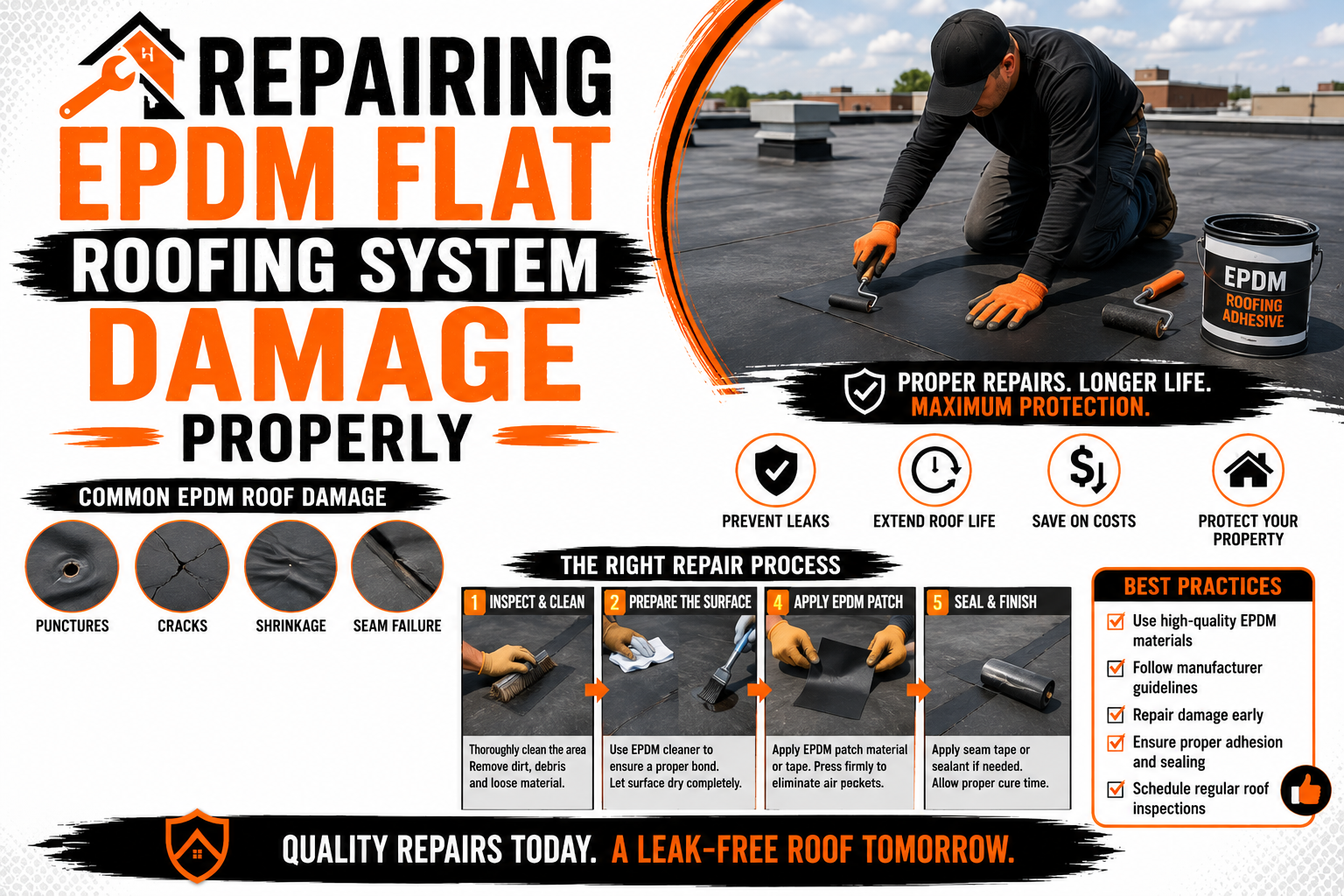
Repairing EPDM Flat Roofing System Damage Properly
Introduction
EPDM flat roofing systems have earned a strong reputation for durability, flexibility, and long service life. Used on commercial buildings, industrial facilities, schools, and residential properties, EPDM membranes provide reliable waterproof protection while withstanding a wide range of weather conditions. Their ability to expand and contract with temperature changes makes them one of the most widely installed flat roofing materials in the industry.
Despite their excellent performance, EPDM roofs are not immune to damage. Years of exposure to sunlight, heavy rainfall, wind, fluctuating temperatures, and routine foot traffic gradually affect the roofing membrane. Small issues such as punctures, seam separation, or surface cracks may seem insignificant at first, but they can eventually lead to water infiltration and expensive structural repairs if left unaddressed.
One of the biggest misconceptions among property owners is that an EPDM roof only requires attention once an interior leak becomes visible. In reality, water often travels beneath the membrane long before it reaches ceilings or walls. By the time indoor damage appears, moisture may have already affected insulation, decking, adhesives, and other roofing components.
Proper repair techniques play an essential role in extending the lifespan of an EPDM roofing system. Temporary patches or incompatible repair materials may provide short term relief, but they often fail to restore the membrane’s waterproof integrity. Using the correct methods and materials helps ensure repairs remain durable under changing weather conditions and normal building movement.
Understanding how EPDM roofing systems function, why damage develops, and how early repairs protect the entire building allows property owners to make informed maintenance decisions. Preventive care not only reduces repair costs but also helps maximize the roof’s expected service life while minimizing operational disruptions.
This guide explores the most common causes of EPDM roof damage, the warning signs that indicate repairs are necessary, and the importance of addressing problems before they become major roofing failures. Later sections will explain professional repair techniques, preventive maintenance strategies, and when replacement becomes a better option than continued repairs.
Understanding EPDM Flat Roofing Systems
EPDM, short for Ethylene Propylene Diene Monomer, is a synthetic rubber roofing membrane designed specifically for low slope and flat roofing applications. Its combination of flexibility, weather resistance, and durability has made it one of the most trusted roofing materials for both commercial and residential buildings around the world.
Unlike traditional roofing materials that rely on overlapping components, EPDM membranes create a nearly continuous waterproof barrier across the roof surface. Large membrane sheets reduce the number of seams, minimizing potential entry points for moisture when installed correctly. This seamless appearance contributes significantly to the roof’s ability to resist water infiltration.
EPDM membranes remain flexible throughout a wide range of temperatures. Whether exposed to intense summer heat or freezing winter conditions, the material is designed to expand and contract without losing its waterproof properties. This flexibility helps accommodate normal building movement that naturally occurs over time.
Most EPDM roofing systems are installed using one of several attachment methods. Fully adhered systems use specialized adhesives to bond the membrane directly to the insulation or roof deck. Mechanically attached systems rely on fasteners placed beneath overlapping membrane sections, while ballasted systems use stone or pavers to hold the membrane securely in place.
The membrane works together with several supporting roofing components. Insulation improves energy efficiency, flashing seals roof transitions, drainage systems remove excess water, and roof decking provides structural support. When all components function properly, the roofing system provides dependable protection for many years.
One reason EPDM remains so popular is its relatively low maintenance requirements. Regular inspections and timely repairs often allow these roofing systems to perform well beyond two decades under favorable conditions. However, even durable materials eventually experience wear that requires professional attention.
Because the membrane serves as the roof’s primary waterproof barrier, maintaining its condition is essential. Damage affecting even a small section of the membrane can eventually compromise larger areas if repairs are delayed.
Why EPDM Roofs Become Damaged
Although EPDM membranes are engineered for long term durability, continuous exposure to environmental conditions gradually affects every roofing system. Damage rarely develops from a single cause. Instead, multiple factors often work together over time until the membrane begins showing visible signs of deterioration.
Natural aging remains one of the most common reasons EPDM roofs require repairs. As years pass, the membrane slowly loses some of its original elasticity due to constant exposure to sunlight, changing temperatures, and weather conditions. While EPDM generally ages more slowly than many roofing materials, gradual wear is unavoidable throughout its service life.
Temperature fluctuations create continuous movement within the membrane. During warm weather, the rubber expands slightly as temperatures increase. Cooler conditions cause contraction, producing thousands of expansion and contraction cycles over many years. This repeated movement eventually places stress on seams, flashing, and attachment points.
Ultraviolet radiation also contributes to long term aging. Although EPDM offers excellent resistance to sunlight, prolonged exposure gradually affects the surface. Protective characteristics slowly diminish as the membrane experiences decades of environmental exposure.
Wind introduces another source of stress. Strong winds create uplift forces that repeatedly flex sections of the roofing membrane. While properly installed EPDM systems are designed to withstand these conditions, years of repeated movement can contribute to localized wear around seams and roof edges.
Standing water presents additional challenges. Flat roofs depend on efficient drainage systems to remove rainwater promptly. When drains become blocked or roof slopes change due to settlement, water may remain on the membrane longer than intended. Continuous moisture exposure increases stress on adhesives, flashing, and vulnerable roof details.
Mechanical damage frequently occurs during routine building maintenance. Service technicians working on heating, cooling, communication, or electrical equipment sometimes unintentionally puncture or scrape the membrane. Dropped tools, sharp equipment edges, and concentrated foot traffic may create damage that is not immediately noticeable.
Improper previous repairs can also shorten the lifespan of an EPDM roof. Using incompatible sealants, unsuitable adhesives, or incorrect patching techniques may create weak points that eventually allow moisture to penetrate beneath the membrane.
Understanding these causes helps property owners recognize that most EPDM damage develops gradually. Regular inspections allow small concerns to be corrected before they evolve into costly roofing failures.
Common Types of EPDM Roofing Damage
EPDM roofs may experience several different forms of damage throughout their lifespan. Identifying the specific type of deterioration helps determine the most effective repair method while preventing unnecessary replacement of otherwise healthy roofing sections.
Punctures are among the most common forms of membrane damage. Sharp tools, construction debris, falling branches, and maintenance equipment can create small openings in the rubber membrane. Although punctures may appear minor, they provide direct pathways for water to enter the roofing system.
Surface cuts and tears also occur when heavy objects drag across the membrane or when roofing materials experience excessive mechanical stress. Depending on their size and location, these defects may require localized patching or replacement of larger membrane sections.
Seam separation develops as adhesives age or repeated thermal movement affects bonded joints. Since seams connect individual membrane sheets, any separation increases the possibility of water infiltration during rainfall. Early repair helps prevent moisture from spreading beneath adjacent roofing sections.
Flashing deterioration frequently appears around roof penetrations such as pipes, vents, skylights, and HVAC equipment. These transitions experience greater movement than open roof surfaces, making them more susceptible to stress related damage over time.
Shrinkage may affect older EPDM roofs after many years of service. As the membrane gradually contracts, additional stress develops around flashing details, corners, and roof edges. Increased tension may eventually contribute to seam failure or membrane separation if not addressed promptly.
Blisters occasionally develop when air or moisture becomes trapped beneath the membrane. While not every blister immediately causes leakage, larger raised sections experience uneven stress during temperature changes and deserve professional evaluation.
Surface weathering represents another common form of aging. Although EPDM remains highly durable, decades of exposure gradually affect its appearance and flexibility. Minor weathering is expected as the roof ages, but widespread deterioration may indicate that more extensive repairs will eventually become necessary.
Each type of damage affects the roofing system differently. Proper diagnosis ensures repairs address the underlying problem rather than simply covering visible symptoms.
Early Warning Signs That Repairs Are Needed
Most EPDM roofs provide warning signs before serious leaks develop. Recognizing these indicators allows property owners to schedule repairs while damage remains localized and significantly less expensive to correct.
Visible surface damage is often the first indication that maintenance is required. Small cuts, punctures, abrasions, or cracks may appear insignificant, yet they often represent the earliest stage of water intrusion. Routine inspections help identify these defects before rainfall enlarges the affected area.
Loose or separating seams deserve immediate attention. Since seams form connections between membrane sections, even slight separation reduces the roof’s waterproof reliability. Repairing seams early prevents moisture from reaching insulation beneath the membrane.
Changes in membrane appearance may also indicate developing problems. Areas that appear unusually stretched, wrinkled, or distorted sometimes suggest movement beneath the roofing system or aging adhesives that no longer provide adequate support.
Persistent ponding water should never be ignored. Although EPDM membranes tolerate moisture well, water remaining on the roof for extended periods increases stress on seams, flashing, and repair areas. Drainage issues often accelerate other forms of roof deterioration.
Flashing around roof penetrations requires regular observation. Cracked sealants, loose flashing, or lifting membrane edges frequently become starting points for future leaks. These transitions experience constant movement and therefore deserve careful inspection after severe weather.
Interior warning signs often appear only after hidden damage has progressed beneath the membrane. Water stains on ceilings, peeling paint, damp insulation, musty odors, unexplained mold growth, or increased indoor humidity may all indicate that the roofing system has already allowed moisture inside.
Higher energy bills sometimes provide another subtle clue. Wet insulation loses much of its thermal efficiency, forcing heating and cooling systems to operate longer than normal. While many factors influence energy consumption, unexplained increases may justify a professional roof inspection.
Regular inspections make these warning signs easier to identify before they develop into widespread roofing failures. Property owners who respond quickly often avoid much larger repair projects later.
Why Prompt EPDM Repairs Matter
Delaying EPDM roof repairs often transforms minor maintenance issues into extensive restoration projects. What begins as a small puncture or partially separated seam can gradually allow water to penetrate deep within the roofing assembly, affecting components far beyond the visible membrane surface.
One of the greatest risks associated with delayed repairs is hidden moisture migration. Water entering through a small opening rarely remains directly beneath the damaged area. Instead, it spreads beneath the membrane, saturating insulation and traveling across the roof before eventually appearing as an interior leak.
Wet insulation loses much of its ability to regulate indoor temperatures. As thermal performance declines, heating and cooling equipment works harder to maintain comfortable conditions, increasing long term energy costs. Prompt repairs help preserve insulation effectiveness while reducing unnecessary utility expenses.
Structural materials also benefit from early intervention. Roof decking, fasteners, adhesives, and supporting components remain protected when moisture is prevented from entering the roofing assembly. Once these materials begin deteriorating, repair costs increase significantly because restoration extends beyond the membrane itself.
Interior spaces face additional risks when leaks remain unresolved. Ceiling finishes, drywall, flooring, furniture, electronics, inventory, and building contents may all suffer water damage following prolonged roof leaks. For commercial properties, operational disruptions often create financial losses beyond direct repair expenses.
Early repairs also preserve the overall lifespan of the roofing system. Localized restoration places less stress on surrounding membrane sections than widespread deterioration requiring repeated emergency patches. Well maintained EPDM roofs often remain reliable for many years beyond their initial warranty period when minor damage receives timely attention.
Routine maintenance further supports manufacturer warranty requirements. Many warranties expect property owners to perform regular inspections and address damage promptly. Neglecting obvious maintenance needs may affect warranty coverage if extensive failures develop later.
Investing in prompt EPDM roof repairs is ultimately an investment in the entire building. By correcting small problems before water spreads beneath the membrane, property owners reduce long term maintenance costs, protect structural components, and maintain dependable waterproof performance. In the next part, we will examine how professionals inspect EPDM roofs before repairs, the methods used to repair different types of membrane damage, the materials involved, common repair mistakes to avoid, and the maintenance practices that help extend the life of an EPDM roofing system.

Inspecting an EPDM Roof Before Repairs
Every successful EPDM roof repair begins with a thorough inspection. Repairing visible damage without identifying the underlying cause often results in recurring problems because hidden defects remain unaddressed. A systematic inspection helps determine the extent of damage and ensures repairs restore the roof’s long term waterproof performance.
Professional roofing contractors typically begin with a visual assessment of the entire roof surface. They examine the membrane for punctures, cuts, cracks, seam separation, wrinkles, blisters, and areas showing signs of excessive weathering. Instead of focusing only on the location where a leak is reported, they inspect surrounding sections because water frequently travels beneath the membrane before becoming visible indoors.
Special attention is given to roof penetrations such as vents, skylights, HVAC equipment, drainage outlets, and pipe flashings. These areas experience greater movement than open roof surfaces and are often the first locations where membrane deterioration appears. Loose flashing, deteriorated sealants, or lifted membrane edges may indicate that repairs are needed even before active leaks develop.
Contractors also inspect the roof’s drainage system. Blocked drains, clogged gutters, and areas of persistent ponding water place additional stress on the membrane and can shorten the lifespan of previous repairs. Correcting drainage problems is often just as important as repairing the membrane itself.
If moisture infiltration is suspected, professionals may use specialized diagnostic equipment to locate hidden water beneath the roofing system. Infrared imaging, electronic leak detection, or moisture meters help identify saturated insulation without unnecessarily removing large sections of the membrane. These methods improve repair accuracy while minimizing disruption to the roofing system.
Interior inspections also provide valuable information. Ceiling stains, damp insulation, peeling paint, or mold growth may help contractors trace the path of water movement beneath the membrane. Since interior leak locations rarely align directly with exterior damage, combining interior and exterior observations creates a more complete understanding of the problem.
A detailed inspection report typically documents the roof’s condition with photographs, identifies damaged areas, recommends appropriate repairs, and highlights maintenance priorities. This documentation helps property owners understand the current condition of their roofing system while supporting future maintenance planning.
How Different Types of EPDM Damage Are Repaired
EPDM roofing damage varies considerably depending on its cause, size, and location. Professional repair methods are selected according to the specific defect rather than using a single approach for every situation. Proper preparation and compatible materials remain essential regardless of the repair type.
Small punctures are usually repaired with EPDM compatible patch kits. The damaged area is cleaned thoroughly to remove dirt, oxidation, and moisture before primer is applied where required. A properly sized repair patch is then bonded over the puncture, ensuring adequate overlap beyond the damaged section to create a watertight seal.
Surface cuts and tears often require larger repair patches. Contractors inspect the surrounding membrane to confirm that the damage has not extended beyond the visible opening. Once the surface has been prepared, the repair material is carefully applied to eliminate trapped air and achieve full adhesion across the entire patch.
Seam separation requires a different repair technique because restoring the bond between membrane sheets is critical for waterproof performance. Loose sections are cleaned, primed if necessary, and resecured using seam tape or manufacturer approved adhesives. Proper pressure is applied during installation to ensure complete contact between the repaired surfaces.
Damaged flashing around roof penetrations frequently involves replacing deteriorated flashing materials while preserving the surrounding membrane whenever possible. New flashing components are carefully integrated with the existing roofing system to maintain continuous waterproof protection around pipes, drains, and rooftop equipment.
Blisters are evaluated carefully before repairs begin. Small stable blisters may simply be monitored if they do not affect waterproof performance. Larger blisters containing moisture or showing signs of deterioration may require controlled opening, drying of underlying materials, replacement of damaged insulation if necessary, and installation of new membrane patches.
Repairs involving saturated insulation require additional work beneath the membrane. Wet insulation is removed because it cannot regain its original thermal performance after prolonged moisture exposure. New insulation is installed before the membrane is restored, ensuring the repaired section performs as effectively as the surrounding roof.
Every repair concludes with a careful quality check. Contractors verify proper adhesion, inspect patch edges, confirm flashing integrity, and ensure repaired areas blend smoothly with the existing membrane. Thorough verification reduces the likelihood of future leaks while extending the lifespan of the repair.
Repair Materials Used for EPDM Roofing
Successful EPDM repairs depend not only on proper workmanship but also on selecting materials specifically designed for rubber roofing systems. Using incompatible products may reduce adhesion, limit flexibility, or shorten the lifespan of the repair.
The following table outlines common materials used during professional EPDM roof repairs and their primary purposes.
| Repair Material | Primary Purpose | Typical Application |
|---|---|---|
| EPDM Repair Patch | Covers punctures, cuts, and tears | Localized membrane repairs |
| EPDM Seam Tape | Restores separated seams | Rebonding membrane joints |
| EPDM Primer | Improves adhesion before repairs | Surface preparation for patches and seam tape |
| EPDM Bonding Adhesive | Secures membrane sections | Larger repairs and membrane attachment |
| Lap Sealant | Protects exposed repair edges | Edge sealing and weather protection |
| Replacement Flashing | Restores waterproof transitions | Pipes, vents, curbs, and roof penetrations |
Each material serves a specific function within the repair process. Combining products according to manufacturer recommendations creates repairs capable of withstanding normal building movement, temperature fluctuations, and long term weather exposure.
Using substitute materials not intended for EPDM roofing often produces disappointing results. Some general purpose sealants lose flexibility over time or fail to bond properly with rubber membranes, allowing repairs to separate prematurely. Choosing compatible products is therefore just as important as selecting the correct repair method.
Common Repair Mistakes to Avoid
Even experienced maintenance personnel can unintentionally shorten the lifespan of an EPDM repair by overlooking critical preparation steps. Avoiding common mistakes helps ensure repairs remain durable under real world conditions.
One frequent error involves repairing a dirty membrane. Dust, oxidation, oils, and debris interfere with adhesive bonding, reducing the strength of repair patches. Thorough cleaning before applying repair materials is essential for achieving reliable waterproof performance.
Applying patches to wet surfaces creates another common problem. Moisture trapped beneath repair materials prevents proper adhesion and may eventually lead to bubbling or separation. Roofing professionals ensure surfaces are completely dry before beginning repairs whenever weather conditions allow.
Using incompatible products is another mistake that often results in premature failure. Generic roofing sealants or adhesives may appear suitable initially but frequently lack the flexibility required for EPDM membranes. Repairs should always use materials recommended by the membrane manufacturer.
Ignoring underlying damage also creates long term issues. Covering a visible puncture without replacing saturated insulation or correcting drainage problems addresses only part of the issue. Hidden moisture continues affecting the roofing system even though the membrane surface appears repaired.
Poor patch sizing can reduce repair effectiveness. Patches should extend well beyond the damaged area to distribute stress evenly across the repair. Small patches placed directly over punctures may experience concentrated movement that weakens the repair over time.
Insufficient pressure during patch installation may leave trapped air beneath repair materials. These air pockets reduce adhesion and create locations where moisture can eventually enter beneath the patch. Professional installation techniques eliminate these voids before repairs are completed.
Delaying repairs after identifying damage is perhaps the most costly mistake. Small punctures, loose seams, or flashing defects rarely improve on their own. Addressing problems promptly prevents water from reaching deeper roofing components where repairs become more extensive and expensive.
Preventive Maintenance for Longer EPDM Roof Life
Preventive maintenance helps EPDM roofing systems achieve their maximum expected lifespan while reducing emergency repair costs. Consistent care preserves membrane flexibility, supports drainage performance, and allows developing issues to be corrected before they expand into major failures.
A well planned maintenance program should become part of every building owner’s long term asset management strategy. Regular inspections and simple maintenance tasks often prevent the need for extensive repairs later.
Recommended preventive maintenance practices include:
- Schedule professional roof inspections at least twice each year.
- Remove leaves, branches, dirt, and debris from the roof surface.
- Keep drains, gutters, and scuppers clear to prevent standing water.
- Inspect seams, flashing, and roof penetrations after major storms.
- Repair punctures, loose seams, and flashing damage as soon as they are discovered.
- Limit unnecessary foot traffic and use designated walkway pads where appropriate.
- Trim nearby tree branches that could damage the membrane during high winds.
- Maintain detailed records of inspections, repairs, and maintenance activities.
Property owners should also encourage anyone accessing the roof to exercise caution. Service technicians working on rooftop equipment should avoid dragging heavy tools across the membrane or placing sharp objects directly on the roof surface. Simple protective practices significantly reduce accidental damage.
Routine cleaning also contributes to membrane longevity. Removing debris improves drainage, reduces moisture retention, and allows inspections to identify developing problems more easily. A clean roof provides better visibility for maintenance personnel while reducing the likelihood of hidden defects remaining unnoticed.
Preventive maintenance is not simply about avoiding leaks. It also protects insulation performance, preserves structural components, improves energy efficiency, and helps maximize the return on investment in the roofing system.
As every EPDM roof continues to age, however, property owners eventually face an important decision between continued repairs and complete replacement. In the final part of this guide, we will explore when repairs remain the most practical option, discuss best practices for achieving long lasting EPDM repairs, explain how to choose a qualified roofing contractor, review long term maintenance after repairs, and conclude with key recommendations for protecting an EPDM flat roofing system for years to come.
When an EPDM Roof Can Be Repaired Instead of Replaced
One of the most common questions property owners ask after discovering roof damage is whether repairs will be sufficient or if a complete replacement is necessary. The answer depends on the condition of the membrane, the extent of the damage, the age of the roofing system, and whether moisture has affected the underlying components. A professional assessment helps determine which option offers the best long term value.
Localized damage is usually an excellent candidate for repair. Small punctures, isolated cuts, limited seam separation, or minor flashing issues can often be corrected without replacing large sections of the roof. When the surrounding membrane remains flexible and structurally sound, targeted repairs restore waterproof performance while extending the roof’s service life.
Repairs are also appropriate when leaks are identified early. If water has not saturated large areas of insulation or damaged the roof deck, contractors can address the affected membrane section and restore the roofing system with minimal disruption. Acting quickly significantly reduces both repair costs and project complexity.
The overall age of the roof also influences the decision. An EPDM roof that has been properly maintained for several years and only exhibits isolated defects often continues performing well after professional repairs. Replacing an otherwise healthy roofing system would provide little additional benefit in these situations.
Replacement becomes a stronger consideration when damage is widespread. Multiple recurring leaks, extensive membrane shrinkage, deteriorated seams across large areas, or significant moisture trapped beneath the membrane often indicate that the roofing system has reached the end of its practical service life. Continuing to patch numerous problem areas may become less economical than installing a new roof.
Structural damage beneath the membrane also changes the repair strategy. If prolonged water infiltration has weakened the roof deck, damaged insulation, or affected supporting components, replacing only the membrane does not solve the underlying issue. Comprehensive restoration becomes necessary to rebuild the roofing assembly correctly.
Property owners should also evaluate future maintenance costs. A roof requiring frequent emergency repairs may eventually cost more to maintain than replacing it with a modern system designed to provide decades of reliable performance. Looking beyond immediate repair expenses helps support better long term financial planning.
The best decision balances current roof condition, expected remaining lifespan, repair history, operational needs, and available budget. Professional inspections provide the information needed to choose the most practical and cost effective solution.
Best Practices for Long Lasting EPDM Repairs
The quality of an EPDM repair depends not only on the materials used but also on the methods followed throughout the repair process. Consistent best practices help ensure repairs remain durable under changing weather conditions and normal building movement.
Following these recommendations significantly improves the longevity of EPDM roof repairs:
- Perform a complete roof inspection before beginning repairs to identify both visible and hidden damage.
- Clean and prepare the membrane thoroughly so repair materials achieve maximum adhesion.
- Use only EPDM compatible primers, adhesives, seam tapes, sealants, and repair patches recommended by the manufacturer.
- Replace moisture damaged insulation or deteriorated roof components before restoring the membrane.
- Apply repair patches with adequate overlap beyond the damaged area to distribute stress evenly.
- Verify that repaired seams, flashing, and patch edges are fully bonded before completing the project.
- Inspect repaired areas after major weather events to confirm they continue performing as expected.
- Maintain a routine inspection schedule to identify new concerns before they become significant roofing problems.
These practices create repairs capable of lasting for many years when combined with regular maintenance. They also reduce the likelihood of recurring leaks caused by incomplete preparation or incompatible repair materials.
Property owners should avoid viewing repairs as one time solutions that eliminate the need for future inspections. Even professionally repaired roofs continue aging, making routine maintenance an essential part of preserving long term performance.
Choosing a Qualified EPDM Roofing Contractor
The success of any EPDM roof repair depends heavily on the knowledge and experience of the contractor performing the work. While many roofing professionals offer general repair services, EPDM roofing requires specialized techniques, compatible materials, and careful attention to manufacturer specifications.
A qualified contractor begins by performing a detailed inspection rather than immediately recommending repairs or replacement. Understanding the source of damage allows repairs to address the underlying problem instead of simply covering visible defects. This investigative approach often prevents recurring leaks that result from incomplete repairs.
Experience with EPDM systems is particularly valuable because rubber membranes require different repair methods than thermoplastic or asphalt based roofing materials. Contractors familiar with EPDM understand proper cleaning procedures, adhesive application, seam preparation, flashing installation, and membrane compatibility.
Clear communication also reflects professional workmanship. Reliable contractors explain their findings, outline recommended repair options, discuss expected outcomes, and provide realistic timelines before work begins. Property owners benefit from understanding exactly what repairs are being performed and why they are necessary.
High quality contractors use manufacturer approved repair materials whenever possible. Compatible products provide the flexibility, adhesion, and weather resistance required for long lasting repairs. Using substitute materials may reduce costs initially but often increases the likelihood of premature repair failure.
Safety standards should never be overlooked. Roofing projects involve elevated work areas, changing weather conditions, electrical equipment, and specialized tools. Contractors who prioritize safety help protect both workers and the roofing system throughout the repair process.
Written documentation also adds long term value. Detailed inspection reports, photographs, repair records, and warranty information provide useful references for future maintenance planning. These records help track roof performance over time while supporting warranty requirements where applicable.
Establishing an ongoing relationship with a trusted roofing contractor often proves beneficial. Contractors familiar with the roof’s maintenance history can identify gradual changes more accurately and recommend preventive measures before significant deterioration develops.
Long Term Maintenance Tips After Repairs
Completing a successful repair is only one step in maintaining a reliable EPDM roofing system. Long term performance depends on consistent care that protects repaired areas while preserving the condition of the entire roof. Preventive maintenance remains the most effective strategy for maximizing the roof’s service life.
Routine inspections should continue even after repairs have been completed. Seasonal evaluations allow contractors to confirm that repaired sections remain secure while identifying any new issues developing elsewhere on the membrane. Detecting small concerns early helps prevent them from affecting recently repaired areas.
Keeping the roof clean is another important maintenance practice. Leaves, branches, dirt, and other debris trap moisture against the membrane while restricting water flow toward roof drains. Regular cleaning reduces prolonged moisture exposure and improves overall drainage performance.
Drainage systems deserve ongoing attention throughout the year. Gutters, drains, scuppers, and downspouts should remain free from obstructions so rainwater leaves the roof efficiently. Proper drainage reduces standing water, which is one of the primary contributors to membrane deterioration over time.
Roof access should be carefully managed to prevent accidental damage. Maintenance personnel servicing HVAC equipment or other rooftop systems should use designated walkways whenever available and avoid placing sharp tools directly on the membrane. Protective measures help preserve both repaired and original roofing sections.
Nearby vegetation also requires periodic maintenance. Overhanging tree branches can scrape the membrane during strong winds or drop debris that blocks drainage systems. Trimming branches reduces these risks while making roof inspections easier.
Property owners should remain alert for subtle changes inside the building. Water stains, peeling paint, musty odors, damp ceiling materials, or unexpected increases in indoor humidity may indicate developing roof issues before significant structural damage occurs. Prompt investigation protects both the roof and the building interior.
Maintaining organized service records further strengthens long term roof management. Inspection reports, repair documentation, warranty information, and maintenance schedules create a valuable history that helps contractors evaluate future repairs more accurately. This information also supports budgeting decisions by identifying patterns of wear over time.
A proactive maintenance approach protects far more than the roofing membrane. It preserves insulation efficiency, safeguards structural components, reduces emergency repair expenses, and helps ensure the building remains dry and operational throughout every season.
Conclusion
EPDM roofing systems are recognized for their durability, flexibility, and long service life, but even these highly dependable membranes require proper care to perform at their best. Punctures, seam separation, flashing deterioration, weather related wear, and accidental damage can all compromise the roof’s waterproof barrier if repairs are delayed. Understanding how these issues develop allows property owners to respond before minor defects become major roofing failures.
Throughout this guide, we explored the structure of EPDM roofing systems, the common causes of damage, early warning signs that repairs are needed, professional inspection methods, repair techniques, compatible materials, maintenance practices, and the factors that determine whether repair or replacement is the better solution. Each stage of the repair process plays an important role in restoring the membrane’s ability to protect the building from water intrusion.
Successful EPDM roof repairs depend on more than simply covering visible damage. Proper inspection, careful surface preparation, manufacturer compatible materials, and skilled workmanship ensure repairs remain durable under changing weather conditions and normal building movement. When combined with regular inspections and preventive maintenance, these repairs can significantly extend the lifespan of the roofing system.
The most effective way to protect an EPDM flat roof is through proactive maintenance rather than reactive emergency repairs. By addressing damage early, maintaining proper drainage, limiting unnecessary roof traffic, and working with qualified roofing professionals, property owners can preserve their investment, reduce long term repair costs, and keep their buildings protected for many years to come.