
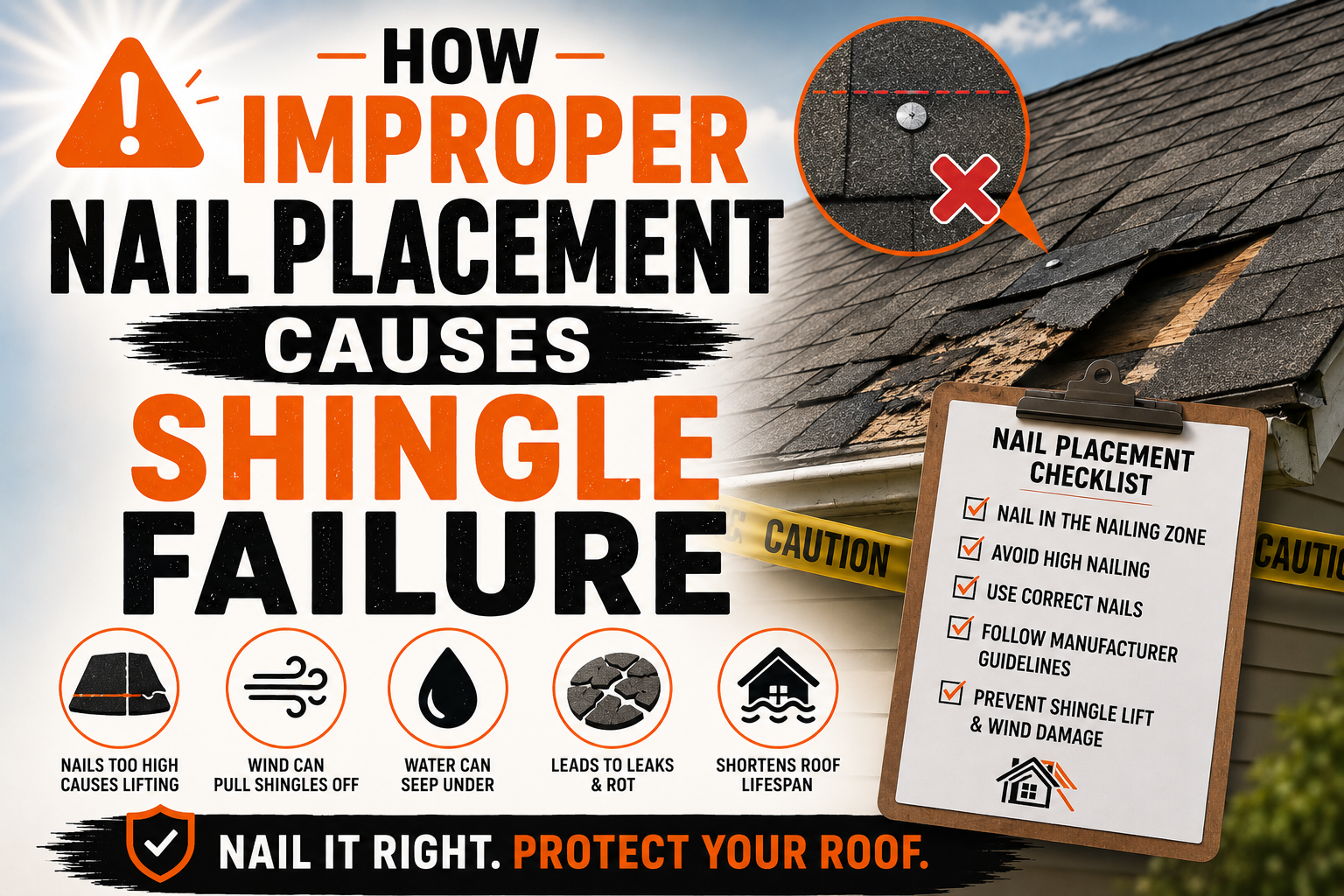
How Improper Nail Placement Causes Shingle Failure
Introduction
An asphalt shingle roof is designed to withstand years of exposure to wind, rain, sunlight, and changing temperatures. While homeowners often focus on the quality of the shingles themselves, one of the most important factors in roof performance is something much smaller that usually remains hidden from view. Proper nail placement plays a critical role in keeping every shingle securely attached and functioning as intended.
Even premium roofing materials can fail prematurely if the nails are installed incorrectly. A misplaced nail may weaken the shingle’s ability to resist strong winds, allow water to penetrate beneath the roofing system, or cause shingles to loosen over time. These problems often begin with a single installation mistake but can eventually affect large sections of the roof.
Improper nail placement does not always produce immediate damage. In many cases, the roof appears normal for months or even years before signs of failure become visible. By the time homeowners notice missing shingles, leaks, or sagging roof sections, the underlying fastening problem may already have caused significant deterioration.
Correct nail placement is not simply about driving nails through shingles. Roofing manufacturers carefully design each shingle with specific fastening zones that distribute wind loads, secure overlapping layers, and support the roof’s ability to shed water effectively. Installing nails outside these designated areas compromises the entire roofing system.
Understanding how improper nail placement causes shingle failure helps homeowners recognize early warning signs, appreciate the importance of professional installation, and make informed decisions when repairing or replacing a roof. This guide explains why roofing nails matter, how proper installation supports long term performance, and the common mistakes that lead to premature roof failure.
Why Roofing Nails Matter More Than Many Homeowners Realize
Roofing nails may seem like simple fasteners, but they perform several important functions that directly influence the strength and durability of the entire roofing system. Every nail helps anchor shingles securely while allowing the roof to withstand years of changing weather conditions.
One of the primary purposes of roofing nails is resisting wind uplift. During strong winds, air pressure attempts to lift shingles away from the roof surface. Properly positioned nails distribute these forces across multiple overlapping shingles, helping the roof remain intact during severe weather.
Roofing nails also maintain the alignment of every shingle course. Consistent fastening prevents shingles from sliding downward over time, preserving the roof’s appearance while maintaining proper water drainage.
Moisture protection depends on nail placement as well. Correctly installed nails remain covered by overlapping shingles, reducing direct exposure to rainwater. Improperly placed nails may become exposed, creating potential entry points for moisture that can eventually reach the roof deck.
Manufacturer warranties frequently depend on proper fastening methods. Most roofing manufacturers provide detailed installation instructions specifying nail type, quantity, placement, and spacing. Failure to follow these requirements may affect warranty coverage if roofing problems develop later.
Although roofing nails are relatively inexpensive compared with other roofing materials, their installation quality has a significant impact on the roof’s long term performance and reliability.
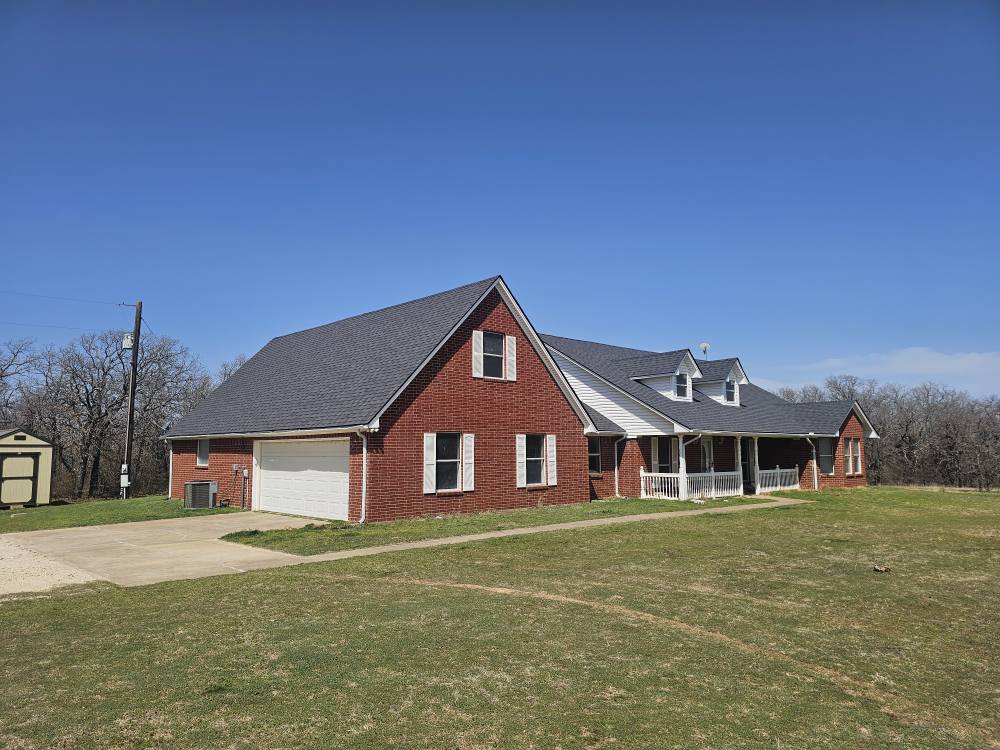
Anatomy of a Properly Installed Asphalt Shingle
Understanding where roofing nails should be placed begins with understanding how an asphalt shingle is designed. Every component of the shingle works together to create a weather resistant roofing system when installed according to manufacturer specifications.
The most important feature for fastening is the nail line. This reinforced section is specifically designed to receive roofing nails while securing both the current shingle and the overlapping shingle above it. Correct nail placement within this zone creates a strong mechanical connection across multiple layers.
Below the nail line is the visible exposure area. This portion of the shingle remains exposed to sunlight, rainfall, and changing weather after installation. Because this section is not intended to receive nails, placing fasteners here increases the likelihood of water intrusion and visible roofing defects.
The sealant strip represents another critical component. This adhesive material bonds neighboring shingles together after installation, improving wind resistance and reducing the chance of shingles lifting during storms. Proper nail placement supports this sealing process by maintaining consistent shingle alignment.
Overlapping layers create the roof’s primary waterproof barrier. Each shingle covers the nails installed in the row below while directing rainwater safely toward the roof edge. Incorrect nail placement disrupts this overlapping system and increases the possibility of leaks.
The underlayment beneath the shingles provides additional moisture protection, but it is not intended to serve as the roof’s primary defense against water. Correct nail placement ensures the shingles perform their intended role while minimizing stress on the underlying roofing components.
Common Nail Placement Mistakes
Although roofing installation appears straightforward, several fastening mistakes occur frequently enough to become major causes of premature roof failure. These errors vary in severity, but each one reduces the roofing system’s ability to perform as intended.
High nailing occurs when nails are installed above the manufacturer’s designated fastening zone. Because the nails fail to secure the overlapping shingle correctly, the lower shingle remains vulnerable to movement during strong winds.
Low nailing creates a different problem. Nails driven too low become exposed beneath the overlapping shingle, increasing the likelihood of moisture penetration while reducing the strength of the fastening system.
Angled nails also create weaknesses. Instead of entering the roof deck perpendicular to the surface, angled nails fail to distribute pressure evenly and may damage surrounding roofing materials during installation.
Overdriven nails occur when excessive force pushes the nail head too deeply into the shingle. Rather than holding the shingle securely, the nail head may tear through the roofing material, reducing its holding strength.
Underdriven nails create raised nail heads that prevent shingles from lying flat against one another. These raised fasteners interfere with proper sealing and increase the risk of wind lifting the shingles during storms.
Crooked fastening patterns present another issue because uneven nail placement creates inconsistent support across the roof. Although individual mistakes may appear minor, repeated fastening errors throughout the roof significantly reduce overall performance.
How Incorrect Nail Placement Weakens the Roofing System
Every roofing component depends on the others for reliable performance. When nails are installed incorrectly, the resulting problems extend well beyond the individual shingle where the mistake occurred.
Wind resistance declines almost immediately because improperly secured shingles cannot distribute wind forces effectively. During severe weather, loose shingles experience increased movement that places additional stress on surrounding roofing materials.
Water protection also becomes less reliable. Exposed nail heads, lifted shingle edges, and disrupted overlap patterns allow moisture to bypass the roof’s primary weather barrier. Once water reaches the underlayment or roof deck, additional deterioration often follows.
Improper fastening affects the roof’s appearance as well. Shingles may become uneven, slide out of alignment, or develop irregular shadow lines that reduce curb appeal. These cosmetic changes often indicate larger structural concerns developing beneath the surface.
Repeated movement gradually accelerates material wear. As shingles shift during wind events or temperature changes, the surrounding asphalt and granules experience increased stress. This repeated movement shortens the lifespan of the roofing materials and increases the frequency of future repairs.
The roofing system functions as an integrated structure rather than a collection of individual shingles. Weakness in one area often spreads gradually, making early identification of fastening problems especially important.
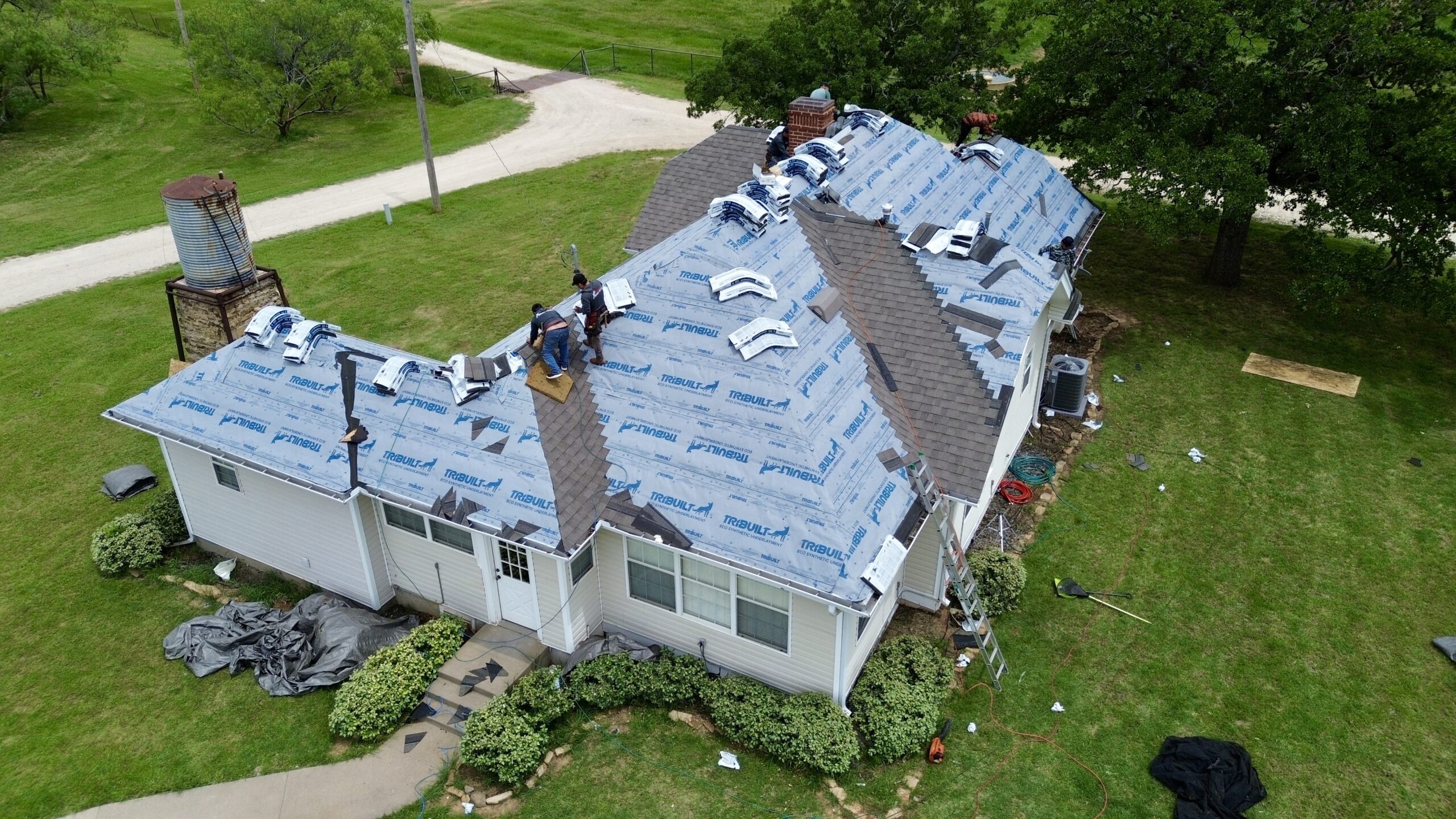
Early Warning Signs of Improper Nailing
Improper nail placement rarely becomes obvious immediately after installation. Instead, the roof gradually develops symptoms that become more noticeable as weather exposure continues. Recognizing these warning signs allows homeowners to arrange inspections before more serious damage occurs.
Loose shingles are often among the first visible indicators. Shingles that shift slightly during windy conditions or appear uneven compared with neighboring shingles may no longer be securely fastened beneath the overlapping layers.
Lifted shingle edges provide another important warning. If adhesive strips remain intact but portions of the shingle continue lifting repeatedly, incorrect nail placement may be preventing the roofing system from resisting normal wind forces.
Visible nail heads also deserve attention. Roofing nails should generally remain concealed beneath overlapping shingles. Exposed fasteners increase the possibility of moisture intrusion while suggesting installation errors may exist elsewhere on the roof.
Small interior leaks sometimes develop long before significant roof damage becomes visible from the outside. Water stains near ceilings, damp attic insulation, or minor dripping during heavy rainfall may all indicate that improperly installed shingles are allowing moisture to enter.
Missing shingles after relatively moderate storms can also signal fastening problems. While extreme weather may damage any roof, repeated shingle loss during ordinary wind events often suggests that the original installation failed to secure the roofing materials correctly.
Early inspection following these warning signs frequently prevents more extensive repairs by identifying fastening issues before widespread roof failure develops.
Why Manufacturer Installation Guidelines Are So Important
Every roofing manufacturer develops detailed installation instructions through extensive testing under a wide variety of weather conditions. These guidelines specify where nails should be placed, how many nails each shingle requires, and the type of fasteners approved for use with specific roofing products.
The recommended nail line is not selected randomly. Manufacturers determine this location because it provides the strongest combination of holding power, wind resistance, and waterproof performance. Moving nails even a short distance away from this designated area changes how forces are distributed throughout the roofing system.
Different roofing products may also require different fastening patterns. Architectural shingles, luxury shingles, and specialty roofing materials often have unique installation requirements based on their size, weight, and construction. Assuming that every roofing product uses identical fastening methods increases the likelihood of installation errors.
Climate conditions may also influence fastening requirements. Roofs installed in regions prone to hurricanes or exceptionally high winds sometimes require additional nails or modified fastening patterns to improve wind resistance. Following regional installation guidelines helps roofs perform more effectively under local weather conditions.
Manufacturer instructions also protect warranty coverage. If roofing problems develop and inspections reveal improper nail placement, warranty claims may be affected because the installation did not follow the approved specifications. Proper installation therefore protects not only the roof itself but also the homeowner’s long term investment.
The Long Term Impact of Small Installation Errors
Many homeowners assume that one misplaced nail cannot significantly affect the performance of an entire roof. In reality, roofing systems rely on thousands of individual fasteners working together, and repeated small mistakes gradually create much larger problems.
A single improperly secured shingle experiences slightly more movement during every wind event. That movement places additional stress on neighboring shingles, adhesive strips, and fasteners. Over months and years, this repeated stress weakens surrounding materials and increases the likelihood of additional failures.
Seasonal temperature changes further accelerate the process. Roofing materials naturally expand in warm weather and contract as temperatures fall. Properly installed nails accommodate these normal movements while maintaining secure attachment. Incorrectly placed nails, however, create concentrated stress points that may contribute to cracking, tearing, or loosening of the shingles.
As more shingles become affected, the roof gradually loses its ability to resist severe weather. Water infiltration becomes more likely, repair costs increase, and the overall lifespan of the roofing system begins to decline well before the materials themselves have reached the end of their expected service life.
These long term effects demonstrate why proper nail placement should never be viewed as a minor installation detail. Correct fastening is one of the fundamental elements that determines whether a roof provides decades of reliable protection or develops preventable problems far earlier than expected.
High Nailing and Its Consequences
High nailing is one of the most common roofing installation mistakes and one of the leading causes of premature shingle failure. This problem occurs when roofing nails are driven above the manufacturer’s designated nail line instead of through the reinforced fastening area.
When nails are positioned too high, they fail to secure the overlapping shingle beneath them. Instead of fastening two layers of shingles together as intended, the nail may hold only a single layer. This significantly reduces the roof’s resistance to wind uplift because the lower shingle remains partially unsecured.
Strong winds place continuous pressure on improperly fastened shingles. As the shingles lift and settle repeatedly, the movement weakens the surrounding material and increases stress on neighboring fasteners. Eventually, the affected shingles may loosen completely or separate from the roof during storms.
High nailing also interferes with the roof’s sealing system. Since shingles cannot remain firmly aligned, the factory adhesive strips may fail to bond correctly, allowing additional wind driven rain to reach vulnerable areas beneath the roofing surface.
Because high nailing often remains hidden beneath the shingles, homeowners may not discover the problem until multiple shingles begin failing during severe weather. At that point, localized repairs may be necessary before additional damage spreads across the roof.
Low Nailing Problems
Low nailing creates a different set of challenges that can affect both the appearance and weather resistance of the roof. This mistake occurs when roofing nails are driven below the recommended fastening zone, placing them too close to the exposed portion of the shingle.
Unlike high nailing, low nailing often leaves the nail head positioned where it may become partially exposed after installation. Even when covered initially, natural roof movement and weathering can eventually reveal the fastener, creating a direct path for moisture to enter the roofing system.
Low nails also reduce the strength of the overlapping shingle connection. Instead of distributing wind forces through the reinforced fastening area, the load is transferred to weaker portions of the roofing material that were not designed to support continuous stress.
Repeated weather exposure gradually enlarges the nail hole as the shingle moves around the improperly positioned fastener. This movement weakens the surrounding asphalt and increases the likelihood of tearing during high winds.
Water penetration becomes another significant concern. Moisture entering around exposed or poorly protected nail heads can eventually reach the underlayment and roof decking, leading to wood deterioration, insulation damage, and interior leaks if left uncorrected.
Effects of Overdriven Roofing Nails
Roofing nails must be driven firmly enough to secure the shingles without damaging the roofing material itself. Overdriven nails occur when excessive force pushes the nail head too deeply into the shingle, often cutting through the asphalt surface instead of holding it securely.
This problem frequently develops when pneumatic nail guns are improperly adjusted. Air pressure that is too high causes the nail head to sink beneath the shingle surface, reducing the amount of material available to hold the shingle in place.
Instead of clamping the shingle against the roof deck, the overdriven nail tears through the asphalt around the fastener. The resulting damage weakens the attachment point and significantly lowers wind resistance.
As the roof experiences repeated wind and temperature changes, the damaged fastening area continues to enlarge. Eventually, the nail may pull completely through the shingle, allowing sections of roofing to loosen or detach during storms.
Overdriven nails also reduce the effectiveness of manufacturer recommended fastening patterns. Even if the correct number of nails has been installed, excessive driving force prevents them from providing the intended level of structural support.
Correct air pressure, regular equipment inspection, and careful installation techniques help minimize the risk of overdriven fasteners throughout the roofing project.
Why Underdriven Nails Create Roofing Issues
Underdriven nails present the opposite problem. Instead of being driven too deeply, the nail head remains raised above the shingle surface because it has not been fully seated against the roofing material.
Raised nail heads prevent shingles from lying flat against one another. Since asphalt shingles depend on close contact between overlapping layers, this uneven surface interferes with the roof’s ability to create an effective weather barrier.
The raised nail may also press against the underside of the overlapping shingle. Continuous pressure combined with normal roof movement gradually wears the asphalt, increasing the possibility of punctures or premature material deterioration.
Wind resistance declines as well because improperly seated shingles cannot seal correctly along the factory adhesive strips. Even moderate wind gusts may lift these areas repeatedly, weakening both the adhesive bond and the surrounding roofing material.
Underdriven nails may also become exposed over time as shingles shift slightly during seasonal expansion and contraction. Once exposed, they increase the risk of moisture intrusion and create additional maintenance concerns.
Although underdriven nails appear less severe than overdriven fasteners, they can produce equally significant roofing problems if not corrected promptly.
Angled and Crooked Nails
Roofing nails should enter the roof deck perpendicular to the roofing surface. Angled or crooked nails reduce holding strength while increasing the possibility of damaging surrounding shingles during installation.
An angled nail creates uneven pressure beneath the nail head. Instead of distributing force evenly across the shingle, the fastener concentrates pressure on one side, increasing the likelihood of tearing under wind loads.
Crooked nails may also fail to penetrate the roof deck completely. In some cases, they partially miss the decking or enter at an unstable angle, providing much less resistance to wind uplift than properly installed fasteners.
Another concern involves adjacent shingles. Angled nails sometimes protrude beneath overlapping shingles, creating raised pressure points that gradually wear through the roofing material as the roof expands and contracts.
Improper nail alignment also complicates future repairs. Contractors replacing damaged shingles may encounter hidden angled fasteners that make shingle removal more difficult while increasing the chance of damaging nearby materials.
Although angled nails may seem like isolated installation errors, repeated fastening mistakes across an entire roof substantially reduce the overall performance of the roofing system.
Nail Placement Compared
Different nail placement mistakes produce different types of roofing problems. Understanding these differences helps homeowners recognize why correct fastening is essential for long term roof performance.
| Nail Placement Issue | Primary Cause | Common Symptoms | Potential Long Term Damage |
|---|---|---|---|
| High Nailing | Nails installed above the nail line | Loose shingles, wind lifting | Shingle blow offs and widespread roof failure |
| Low Nailing | Nails installed below the fastening zone | Visible nail heads, water intrusion | Leaks and accelerated shingle deterioration |
| Overdriven Nails | Excessive nail gun pressure | Torn shingles around nail heads | Reduced holding strength and storm damage |
| Underdriven Nails | Nails not fully seated | Raised shingles and poor sealing | Wind damage and premature wear |
| Angled Nails | Incorrect installation angle | Uneven fastening and lifted shingles | Weak attachment and moisture penetration |
While each mistake affects the roof differently, they all reduce the roofing system’s ability to perform under normal weather conditions. Correct installation remains the most effective way to prevent these problems from developing.
Weather Conditions That Make Improper Nailing Worse
Improper nail placement often remains unnoticed until severe weather exposes the weakness. Environmental conditions place continuous stress on roofing systems, and incorrectly fastened shingles generally fail much sooner than properly installed materials.
Strong winds are especially demanding because they generate uplift forces beneath the exposed edges of shingles. Properly positioned nails distribute these forces evenly, while misplaced fasteners allow excessive movement that eventually loosens or removes the shingles.
Heavy rainfall compounds the problem by introducing moisture into areas where shingles no longer lie flat. Water driven beneath lifted shingles may reach the underlayment and roof deck, increasing the risk of leaks and wood deterioration.
Snow and ice create additional weight on the roofing system. Improperly fastened shingles experience greater stress under these conditions, particularly during repeated freeze and thaw cycles that cause roofing materials to expand and contract.
Hot weather also contributes to long term deterioration. Asphalt shingles become more flexible in high temperatures, making improperly fastened areas more susceptible to movement during windy conditions. As temperatures drop again, repeated expansion and contraction gradually enlarge the weaknesses around misplaced nails.
These weather related forces demonstrate why fastening accuracy is so important. Small installation mistakes often remain hidden until environmental conditions place the roof under significant stress.
How Improper Nailing Can Affect Roofing Warranties
Many homeowners are unaware that roofing warranties depend not only on the quality of the materials but also on how those materials are installed. Manufacturers develop precise fastening requirements because proper nail placement directly influences roof performance.
If roofing problems occur and an inspection reveals incorrect nail placement, warranty coverage may be limited depending on the specific circumstances and warranty terms. Manufacturers generally expect installers to follow their published fastening instructions throughout the roofing project.
Installation guidelines typically specify the required number of nails, their exact location, approved fastener types, and acceptable installation methods. Deviating from these recommendations changes how the roofing system performs under normal weather conditions.
Workmanship warranties provided by roofing contractors may also become important when fastening errors are identified. Reputable contractors often stand behind their installation quality and address verified workmanship issues according to the terms of their agreement.
Keeping installation records, warranty documentation, and inspection reports helps homeowners understand their coverage while providing valuable information if roofing concerns develop later.
Following manufacturer specifications from the beginning protects both the roof and the homeowner’s investment. Proper nail placement supports long term performance while preserving the warranty benefits associated with quality roofing materials.
How Small Fastening Errors Spread Across the Roof
Roofing systems operate as interconnected structures rather than individual components. Because every shingle overlaps and supports neighboring shingles, problems caused by improper nail placement rarely remain isolated to one location.
A poorly fastened shingle experiences greater movement whenever strong winds pass over the roof. That movement transfers additional stress to surrounding shingles, adhesive strips, and fasteners that were originally installed correctly. Over time, these neighboring components begin experiencing accelerated wear as well.
As more shingles loosen, water gains additional opportunities to enter beneath the roofing surface. Moisture may spread through the underlayment, reach the roof decking, and eventually affect attic insulation or interior ceilings. What started as a small fastening mistake can gradually develop into a much larger repair project.
The roof’s appearance also changes as these problems spread. Uneven shingle alignment, lifted corners, missing shingles, and irregular shadow lines become more noticeable with each passing season. These visible changes often indicate that the underlying fastening issue has expanded beyond the original installation error.
Understanding how these failures progress highlights the importance of early inspections and timely repairs. Correcting fastening problems before they spread can significantly reduce repair costs while extending the overall lifespan of the roofing system.
Professional Installation Best Practices
Proper nail placement begins long before the first shingle is fastened to the roof. Professional roofing contractors follow detailed installation procedures that ensure every shingle is secured according to manufacturer specifications. Consistency throughout the installation process helps the entire roofing system perform as designed for many years.
The first priority is selecting the correct roofing nails. Manufacturers specify nail length, head diameter, and corrosion resistance based on the roofing material and roof deck. Using approved fasteners ensures each nail provides adequate holding strength while resisting rust and long term deterioration.
Correct placement along the designated nail line is equally important. Roofers carefully position every nail within the reinforced fastening zone to secure both the current shingle and the overlapping shingle above it. This creates a strong connection that improves wind resistance and maintains proper shingle alignment.
Installation equipment also requires regular adjustment. Pneumatic nail guns must be calibrated correctly to avoid overdriven or underdriven nails. Professional crews frequently inspect their equipment throughout the project because changes in air pressure can affect fastening quality.
Experienced roofers also inspect their work continuously during installation. Identifying and correcting fastening errors immediately prevents small mistakes from spreading across the roof and affecting the performance of surrounding shingles.
How Roof Inspections Detect Nailing Problems
Improper nail placement often remains hidden beneath overlapping shingles, making professional roof inspections an important part of identifying fastening issues before they develop into major failures. Experienced inspectors understand where fastening mistakes are most likely to occur and what warning signs indicate underlying problems.
Visual inspections usually begin by examining the overall condition of the roof. Uneven shingle courses, lifted edges, exposed nail heads, and missing shingles may all suggest fastening problems even when the nails themselves are not visible.
Inspectors also evaluate how shingles respond to gentle lifting in appropriate locations. Excessive movement can indicate that nails were placed too high, too low, or failed to secure the overlapping shingles properly.
Attic inspections provide additional information. Water stains beneath apparently intact roofing sections sometimes reveal moisture entering around improperly installed fasteners. These interior signs often help inspectors narrow the search for hidden roofing defects.
When repairs are already planned, contractors may remove selected shingles to examine fastening patterns directly. This allows them to verify nail placement, identify widespread installation errors, and determine whether localized repairs or larger corrective work will provide the most reliable solution.
Routine inspections are especially valuable after severe storms because wind often exposes fastening weaknesses that previously remained unnoticed. Early detection reduces repair costs while helping preserve the roof’s overall lifespan.
Steps Homeowners Can Take to Protect Their Roof
Although homeowners typically do not install roofing shingles themselves, they can take several practical steps to reduce the risk of problems related to improper nail placement and improve the long term performance of their roofing system.
- Schedule professional roof inspections at regular intervals, especially as the roof ages.
- Arrange prompt repairs whenever loose or missing shingles are discovered.
- Hire experienced roofing contractors who follow manufacturer installation guidelines.
- Review warranty documentation to understand installation requirements and coverage.
- Inspect the roof after major storms for visible signs of shingle movement or damage.
- Maintain records of inspections, repairs, and roofing invoices for future reference.
These simple actions help homeowners identify potential problems before they become expensive repairs. Consistent maintenance also improves the likelihood that the roofing system will achieve its expected service life.
Repairing Shingles Damaged by Incorrect Nailing
Once improper nail placement has been identified, the next step is determining the most effective repair strategy. The appropriate solution depends on the extent of the damage, the roof’s age, and whether the fastening problems are isolated or widespread.
Minor fastening issues affecting only a few shingles can often be corrected by carefully removing the damaged shingles and installing new ones according to manufacturer specifications. During this process, contractors inspect the surrounding roofing materials to ensure neighboring shingles have not also been weakened.
If overdriven or underdriven nails have damaged the shingles themselves, replacing the affected shingles is generally more reliable than attempting to repair the existing materials. Torn asphalt, enlarged nail holes, and damaged sealant strips rarely regain their original strength after fastening problems occur.
Roof decking should also be inspected whenever shingles are removed. Moisture intrusion caused by incorrect nail placement may have affected the wood beneath the roofing material. Any deteriorated decking should be repaired before replacement shingles are installed.
Matching replacement shingles with the existing roof also deserves attention. Choosing compatible materials helps preserve the roof’s appearance while maintaining consistent weather resistance across the repaired section.
Prompt repairs prevent localized fastening problems from spreading and reduce the likelihood of more extensive structural damage in the future.
When Localized Repairs Are Enough Versus Full Roof Replacement
Not every roof affected by improper nail placement requires complete replacement. The decision depends on how widespread the fastening problems have become and whether the roofing materials remain in otherwise good condition.
If inspection reveals that only a small section of the roof was installed incorrectly, localized repairs often provide an effective solution. Replacing the affected shingles and correcting the fastening pattern restores performance without disturbing the remainder of the roofing system.
Widespread installation errors present a different situation. If large portions of the roof contain high nails, low nails, or extensive overdriven fasteners, repairing isolated areas may not resolve the underlying problem. Additional failures could continue appearing across the roof as weather exposure increases.
The roof’s age also influences the decision. A relatively new roof with fastening defects may justify more extensive corrective work because the roofing materials still have significant remaining service life. Older roofs nearing the end of their lifespan may benefit more from complete replacement rather than repeated repairs.
Structural conditions beneath the shingles must also be considered. Moisture damaged decking, deteriorated underlayment, or widespread leaks often require broader restoration before new shingles can be installed successfully.
Professional inspections provide the information needed to evaluate these factors together and recommend the most practical long term solution.
Long Term Benefits of Proper Nail Placement
Correct nail placement delivers advantages that extend throughout the entire lifespan of the roofing system. While these benefits are largely invisible after installation, they influence the roof’s durability, appearance, and maintenance requirements year after year.
Proper fastening significantly improves wind resistance. Securely attached shingles distribute wind loads evenly across the roofing system, reducing the likelihood of lifted edges, missing shingles, and storm related damage during severe weather.
Moisture protection also improves because correctly installed nails remain covered beneath overlapping shingles. This minimizes opportunities for water to reach the roof deck while supporting the roof’s natural drainage system.
Consistent fastening helps preserve the roof’s appearance as well. Properly aligned shingles remain flat, maintain uniform shadow lines, and resist sliding over time, contributing to better curb appeal throughout the roof’s service life.
Additional long term advantages include:
- Greater resistance to wind uplift during storms.
- Improved protection against water intrusion.
- Longer overall lifespan for roofing materials.
- Lower maintenance and repair costs over time.
- Better compliance with manufacturer warranty requirements.
These benefits demonstrate that correct nail placement is not merely an installation detail. It is one of the key factors that determines how well the roof performs over decades of exposure to changing weather conditions.
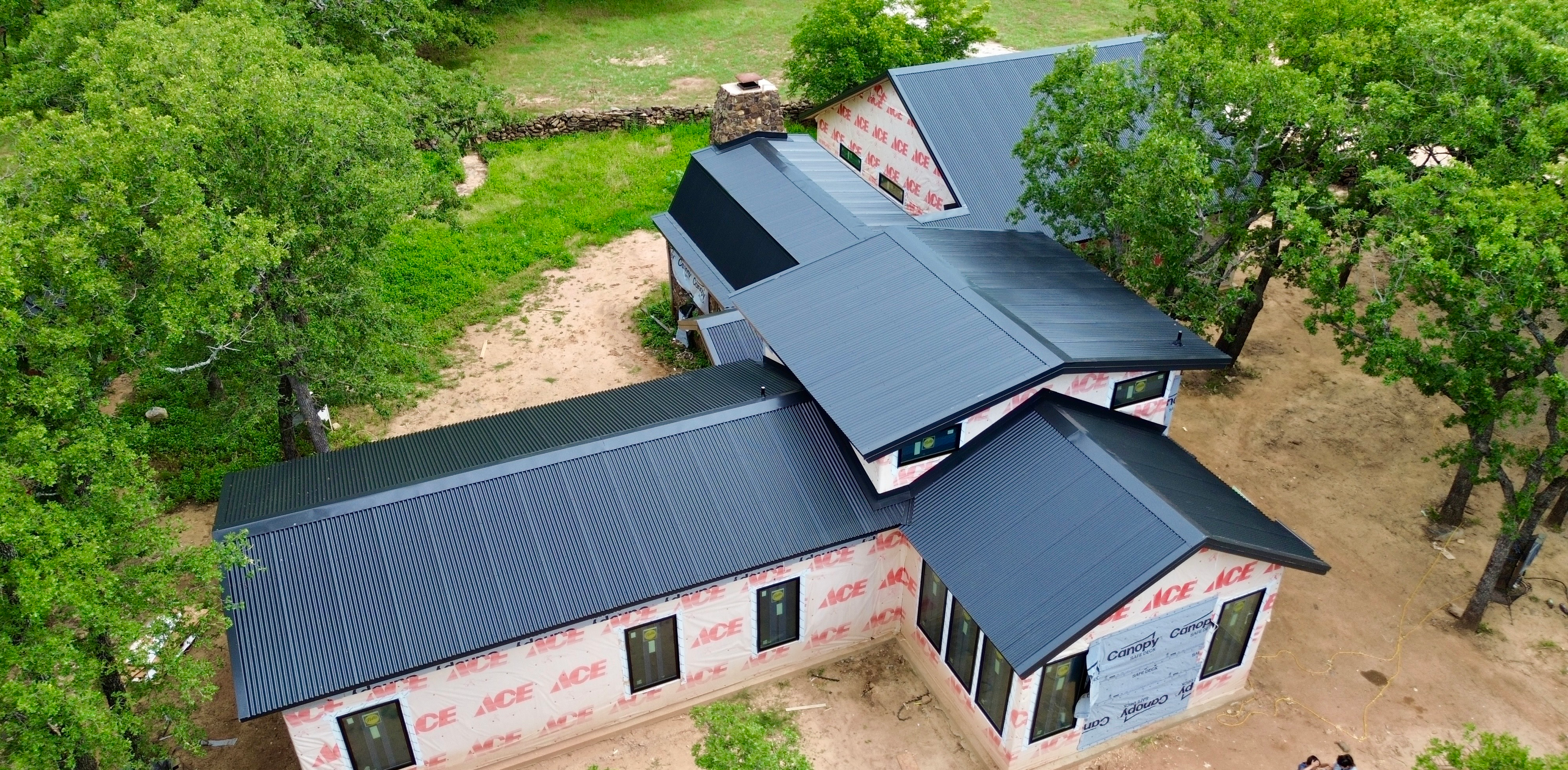
Choosing the Right Roofing Contractor
Because nail placement has such a significant impact on roof performance, selecting a qualified roofing contractor is one of the most important decisions a homeowner can make. Even high quality roofing materials cannot compensate for poor installation practices.
Experienced contractors understand manufacturer requirements for different shingle types and roofing systems. They know where nails should be placed, how many fasteners each shingle requires, and how changing weather conditions may influence installation techniques.
Professional roofing companies also invest in properly maintained equipment. Nail guns, compressors, and fastening tools are inspected regularly to ensure they deliver consistent results throughout the installation process. Well maintained equipment reduces the likelihood of overdriven or underdriven nails.
Clear communication is another indicator of quality workmanship. Reliable contractors explain the installation process, answer questions about materials and warranties, and provide written documentation outlining the scope of the roofing project. This transparency helps homeowners understand the work being performed and the standards being followed.
Checking references, confirming licensing where applicable, and reviewing previous roofing projects can also provide confidence before hiring a contractor. Investing time in selecting an experienced professional often prevents installation problems that could otherwise lead to costly repairs in the future.
Maintaining a Roof After Installation
Even a perfectly installed roof benefits from regular maintenance. Proper nail placement provides a strong foundation, but ongoing care helps preserve the roofing system and identify developing issues before they become major concerns.
Seasonal inspections allow homeowners to detect loose shingles, damaged flashing, clogged gutters, and debris accumulation that may affect roof performance. Addressing these issues promptly reduces unnecessary stress on the roofing materials.
After severe storms, the roof should be checked for visible signs of wind damage or displaced shingles. Early identification of minor problems allows repairs to be completed before water intrusion causes more extensive structural damage.
Tree branches should also be trimmed when they begin hanging over the roof. Branches rubbing against shingles during windy conditions can loosen roofing materials and gradually weaken the fastening system.
Keeping gutters clean further supports roof performance by directing rainwater away from the roof efficiently. Proper drainage reduces standing water near roof edges and minimizes moisture exposure around the shingle system.
Routine maintenance works together with proper installation to maximize roof lifespan. A well maintained roof not only performs better but also requires fewer unexpected repairs throughout its service life.
Conclusion
Improper nail placement is one of the most common yet preventable causes of asphalt shingle failure. Although roofing nails are small components, their placement directly affects the roof’s ability to resist wind, shed water, maintain proper alignment, and protect the home from the elements. Even premium shingles cannot perform as intended when they are fastened incorrectly.
Mistakes such as high nailing, low nailing, overdriven nails, underdriven nails, and angled fasteners weaken the roofing system in different ways. While these problems may not be immediately visible, they often lead to loose shingles, water intrusion, reduced wind resistance, premature wear, and costly repairs over time. Recognizing the early warning signs allows homeowners to address fastening issues before they spread across larger sections of the roof.
Professional installation remains the most effective way to prevent nail related shingle failure. Following manufacturer guidelines, using the correct fastening techniques, maintaining properly adjusted equipment, and performing thorough quality inspections all contribute to a stronger and more reliable roofing system. Regular maintenance and periodic inspections further help identify developing issues while preserving long term roof performance.
Homeowners also benefit from choosing experienced roofing contractors who understand the importance of correct nail placement and stand behind the quality of their work. A properly installed roof not only provides dependable protection against changing weather conditions but also supports manufacturer warranty coverage and reduces future maintenance expenses.
Ultimately, successful roofing depends on careful attention to every installation detail, including the placement of each individual nail. By understanding how improper nail placement causes shingle failure and taking proactive steps to ensure quality workmanship, homeowners can protect their investment, extend the life of their roof, and enjoy greater confidence in the safety and durability of their home for many years to come.