
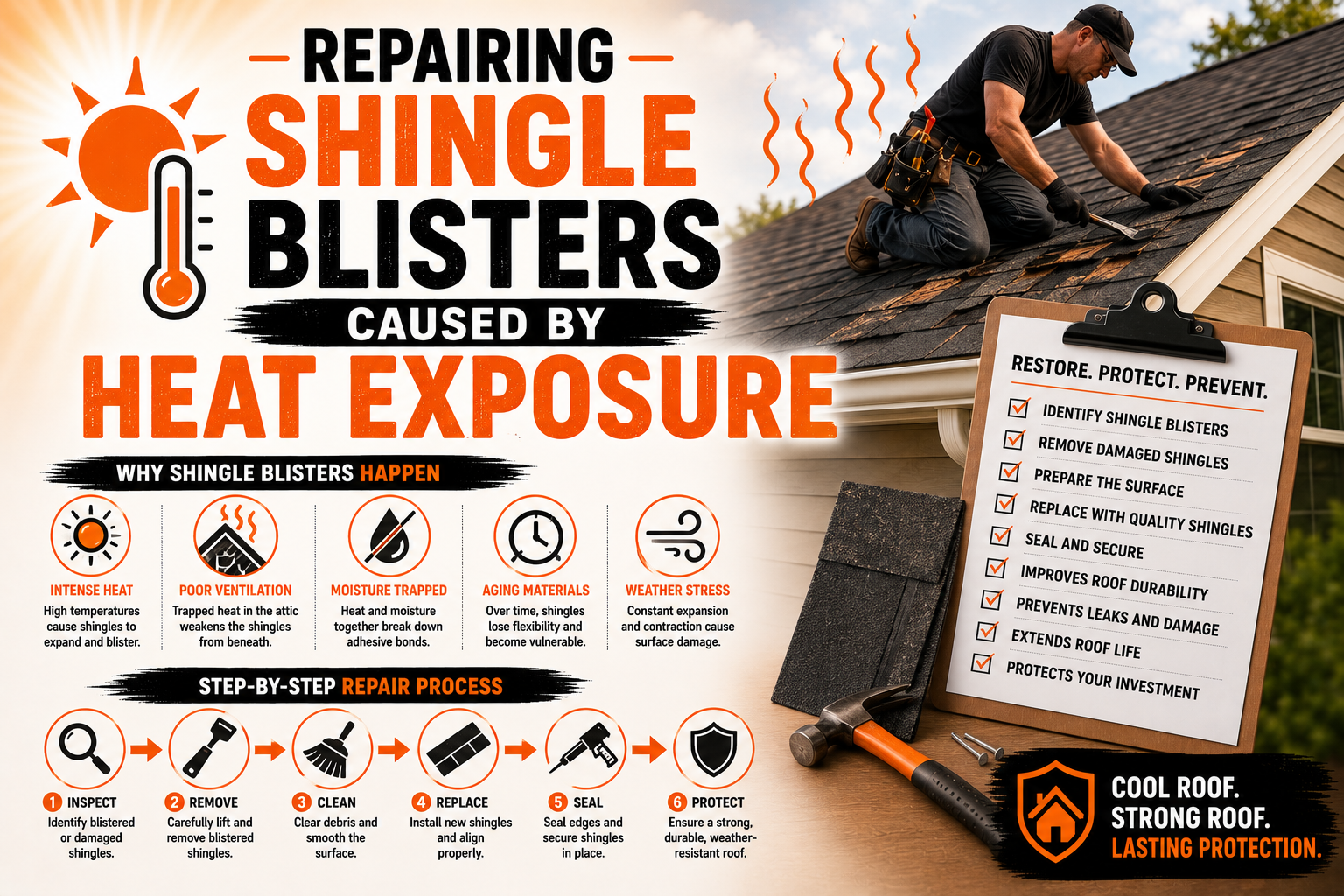
Repairing Shingle Blisters Caused by Heat Exposure
Introduction
Asphalt shingles are designed to endure years of sunlight, changing temperatures, rainfall, and seasonal weather. Even with this durability, prolonged heat exposure can gradually affect the materials that make up the roofing system. One of the earliest visible signs of heat-related deterioration is the formation of shingle blisters, which often indicate that the protective surface of the shingles has begun to weaken.
Shingle blisters appear as raised bubbles or small bumps on the surface of asphalt shingles. At first glance, they may seem like minor cosmetic imperfections that have little effect on the roof. In reality, blistering often signals that excessive heat has altered the internal structure of the shingle, making it more vulnerable to weathering, granule loss, cracking, and premature aging.
Many homeowners overlook blistered shingles because they rarely cause immediate leaks. However, once blisters begin breaking open, the protective granules covering the asphalt may detach, exposing the underlying material to direct sunlight and moisture. This exposure accelerates deterioration and reduces the roof’s ability to withstand future weather conditions.
Heat-related blistering also serves as an indicator that the roofing system may be experiencing conditions beyond normal aging. Poor attic ventilation, excessive roof temperatures, manufacturing characteristics, prolonged ultraviolet exposure, and environmental conditions can all contribute to the development of blisters. Understanding these factors helps homeowners determine whether the issue is isolated or part of a broader roofing concern.
Identifying blistered shingles early provides an opportunity to inspect the roof before more significant deterioration occurs. Depending on the severity and distribution of the damage, repairs may help extend the roof’s service life while preventing additional weather-related problems. Delaying inspections, however, allows continued heat exposure to worsen the condition over time.
This guide explains how heat creates shingle blisters, the early warning signs homeowners should recognize, the common causes of blister formation, and why even small surface defects deserve attention before they affect the performance of the entire roofing system.
What Are Shingle Blisters and Why They Develop
Shingle blisters are small raised areas that develop on the surface of asphalt shingles after prolonged exposure to heat and environmental stress. These raised spots form when gases or moisture trapped within the shingle expand as temperatures increase, creating pressure beneath the outer surface.
Unlike cracks or tears that occur from physical damage, blisters usually begin beneath the surface of the shingle. The outer mineral granules may initially remain intact, making the blister appear as a smooth raised bump. Over time, continued heat and weather exposure weaken the blister until it eventually breaks open.
Once a blister ruptures, the protective granules covering that area are often lost. This leaves the darker asphalt beneath directly exposed to sunlight and changing weather conditions. Without its protective mineral coating, the exposed asphalt begins aging more rapidly.
Blister formation is generally a gradual process rather than a sudden event. Individual blisters may appear small and isolated during the early stages, but repeated heat cycles can lead to additional blistering across larger sections of the roof. The condition often becomes more noticeable as the roof continues aging.
Not every blister indicates immediate roof failure. Small isolated blisters sometimes remain stable for extended periods without significantly affecting roof performance. However, widespread blistering often suggests that the shingles have experienced prolonged thermal stress and deserve closer inspection.
The appearance of blistered shingles may also vary depending on the roofing materials and environmental conditions. Some roofs develop numerous small blisters, while others display fewer but larger raised areas. Both patterns indicate that the shingles have been subjected to conditions capable of altering their surface structure.
Because blisters affect the protective outer layer of asphalt shingles, they often represent an early stage of deterioration rather than a purely cosmetic defect. Understanding why they develop helps homeowners recognize their importance before more extensive damage occurs.
How Heat Exposure Damages Asphalt Shingles
Heat is one of the most significant environmental factors affecting the lifespan of asphalt shingles. Every day, roofing materials absorb solar energy that raises surface temperatures well above the surrounding air temperature. Although shingles are designed to tolerate this exposure, years of repeated heating gradually affect their physical properties.
The asphalt binder holding the shingle together becomes more flexible during periods of high heat and contracts again as temperatures fall. Thousands of these expansion and contraction cycles occur throughout the life of the roof. Over time, this repeated movement weakens the internal structure of the shingles.
Ultraviolet radiation accelerates the aging process by slowly breaking down the asphalt binder. As the material loses flexibility, it becomes increasingly brittle and less capable of resisting environmental stress. Heat and ultraviolet exposure work together to shorten the service life of the roofing material.
High roof temperatures also affect the protective granules covering the shingles. Although these mineral particles help reflect sunlight and shield the asphalt beneath, prolonged thermal stress gradually weakens the bond holding the granules in place. Granule loss often follows extensive heat exposure.
Poor attic ventilation can significantly increase roof temperatures from below. Heat trapped inside the attic raises the temperature of the roof deck, exposing shingles to elevated temperatures from both above and below. This additional stress accelerates aging throughout the roofing system.
Thermal expansion also places stress on roofing nails, adhesive strips, and overlapping shingle joints. Repeated movement weakens these connections over time, increasing the roof’s vulnerability to wind uplift and moisture intrusion.
Heat affects different roof sections unequally. South-facing or west-facing roof slopes often receive more direct sunlight than shaded areas, making them more susceptible to blister formation and accelerated aging. Environmental conditions therefore influence where blistering first becomes visible.
Although asphalt shingles are manufactured to withstand challenging weather, prolonged exposure to excessive heat gradually reduces their ability to perform as intended. Blister formation is often one of the earliest visible indicators of this ongoing deterioration.
Common Causes of Heat-Related Shingle Blistering
Several factors contribute to the development of shingle blisters, and the condition is usually influenced by more than one cause. Understanding these contributing factors helps homeowners evaluate whether blistering reflects isolated wear or broader roofing issues.
Prolonged sunlight remains the primary environmental cause. Roofs exposed to intense solar radiation throughout the day experience higher surface temperatures, increasing the thermal stress placed on asphalt shingles. Years of continuous exposure gradually increase the likelihood of blister formation.
Poor attic ventilation is another major contributor. When heat becomes trapped beneath the roof deck, shingles remain hotter for longer periods each day. Elevated temperatures from below accelerate the aging of asphalt materials and encourage blister development.
Natural aging also plays an important role. As shingles grow older, the asphalt binder gradually loses flexibility due to repeated exposure to heat and ultraviolet radiation. Aging materials become less capable of resisting thermal expansion without developing surface defects.
Manufacturing characteristics may influence blister formation as well. During production, very small amounts of moisture or volatile compounds can become trapped within the asphalt layers. Under prolonged heat, these materials expand and contribute to the formation of surface blisters.
Improper roof ventilation combined with dark-colored roofing materials may further increase surface temperatures. Dark shingles absorb more solar energy than lighter-colored materials, causing them to experience greater thermal expansion throughout the day.
Climate also affects blister development. Homes located in regions with consistently high temperatures or intense summer sunlight often experience faster thermal aging than roofs located in cooler climates. Extended heat waves may accelerate existing deterioration.
Moisture trapped beneath roofing materials can contribute indirectly by creating pressure changes during heating and cooling cycles. Although moisture alone does not usually cause blistering, it may worsen existing weaknesses within the roofing system.
Roof design influences heat exposure as well. Large unshaded roof slopes facing direct afternoon sunlight generally experience greater thermal stress than areas protected by surrounding structures or mature trees.
Recognizing these contributing factors helps homeowners understand why blistering develops and why certain roof sections may deteriorate more rapidly than others.
Early Signs of Shingle Blisters
Shingle blisters usually begin as subtle surface changes that become more noticeable over time. Learning to recognize these early warning signs allows homeowners to arrange inspections before the damage becomes widespread.
One of the first indicators is the appearance of small raised bumps scattered across the surface of individual shingles. These bumps may be difficult to notice from the ground but become more visible under angled sunlight.
As blisters enlarge, the roof surface may appear uneven compared with surrounding shingles. Areas that once looked smooth begin displaying irregular textures or slight distortions, particularly on roof slopes receiving prolonged sunlight.
Granule loss often accompanies blister formation. Once a blister ruptures, the protective mineral granules detach from the raised area, leaving behind small dark spots where asphalt becomes exposed. Clusters of these dark spots may indicate ongoing blister deterioration.
Changes in roof color can also reveal developing blister problems. Sections with multiple ruptured blisters often appear darker because exposed asphalt absorbs more sunlight than the surrounding granule-covered surface.
During roof inspections, blistered shingles sometimes feel slightly raised or uneven compared with undamaged shingles. Although homeowners should avoid walking unnecessarily on the roof, qualified inspectors often identify subtle surface changes before they become visually obvious.
Attic inspections occasionally provide indirect evidence of excessive roof heat. Elevated attic temperatures, poor ventilation, or signs of accelerated roof aging may indicate conditions favorable for blister development even before surface damage becomes widespread.
Comparing roof slopes is another useful observation. If one section of the roof consistently receives stronger afternoon sunlight and displays more blistering than shaded areas, prolonged heat exposure is likely contributing to the deterioration.
Routine inspections performed several times each year greatly improve the chances of identifying blister formation during its earliest stages. Early recognition allows maintenance decisions to be made before widespread granule loss and surface deterioration occur.
Why Small Blisters Can Lead to Larger Roofing Problems
At first, a few isolated blisters may seem insignificant. Because they rarely cause immediate roof leaks, homeowners sometimes postpone inspections or repairs. However, these small surface defects often represent the beginning of a broader deterioration process.
Each blister weakens a small portion of the shingle’s protective surface. When the blister eventually ruptures, granules detach and expose the asphalt beneath. Even though the exposed area may be small, it becomes far more vulnerable to sunlight and weather than the surrounding shingle.
As exposed asphalt continues aging, flexibility decreases while brittleness increases. The weakened section becomes more susceptible to cracking during temperature changes or wind events. Over time, multiple small defects combine to reduce the overall strength of the roofing material.
Granule loss also accelerates surrounding deterioration. Once protective granules disappear, the exposed asphalt absorbs more solar heat than neighboring shingles. Higher surface temperatures encourage additional aging and increase the likelihood that nearby blisters will develop.
Repeated heating and cooling cycles place extra stress on blistered shingles. Areas already weakened by blister formation respond less effectively to thermal expansion, allowing damage to spread gradually across larger roof sections.
Wind-driven rain creates another concern once blistered areas begin breaking open. Although blisters themselves do not usually create immediate leaks, progressive deterioration increases the chance that cracks or other defects will eventually allow moisture beneath the shingles.
Widespread blistering often indicates that environmental conditions affecting one roof section may also be influencing the rest of the roofing system. Recognizing small blisters early allows homeowners to evaluate these broader conditions before more extensive repairs become necessary.
Understanding why minor blistering deserves attention establishes the foundation for evaluating how blistered shingles continue deteriorating over time, how hidden roofing components may become affected, and what inspection and repair strategies provide the most effective long-term protection.
How Shingle Blisters Progress Over Time
Shingle blisters rarely remain unchanged once they appear. Instead, they typically progress through several stages as the roof continues experiencing sunlight, heat, wind, and seasonal weather. Understanding this progression helps homeowners recognize why early attention is often more effective than waiting until obvious roof damage develops.
The process usually begins with the formation of small raised bubbles beneath the shingle surface. At this stage, the outer layer may still appear intact because the protective granules remain attached. Although the blister is visible, the roof often continues performing normally under typical weather conditions.
As temperatures continue rising during repeated heat cycles, pressure inside the blister increases. The raised surface gradually becomes thinner and weaker, making it more susceptible to rupture. Wind, hail, or normal weather exposure may eventually cause the blister to break open.
Once the blister bursts, the protective granules covering that small section are usually lost. A dark patch of exposed asphalt remains where the granules once provided protection. Without this mineral coating, the asphalt begins deteriorating much more rapidly under direct sunlight.
The exposed asphalt gradually loses flexibility as ultraviolet radiation continues affecting the material. Instead of expanding and contracting normally during temperature changes, the weakened section becomes increasingly brittle. Small surface cracks may begin developing around the damaged area.
Over time, additional blisters often appear nearby because the surrounding shingles have experienced the same environmental conditions. What initially seemed like an isolated defect gradually spreads across larger roof sections as the roofing materials continue aging.
Eventually, the combined effects of blistering, granule loss, ultraviolet exposure, and thermal stress weaken the shingles enough that other problems begin appearing. Curling, cracking, wind damage, and moisture intrusion become increasingly likely as deterioration progresses.
Understanding this gradual progression explains why blistered shingles should be viewed as an early warning sign rather than simply a cosmetic imperfection. Timely inspections provide opportunities to address roofing concerns before they affect larger portions of the roof.
Hidden Damage Beneath Blistered Shingles
The visible blister on the surface of an asphalt shingle often represents only part of the deterioration taking place. Beneath the raised surface, several hidden roofing components may also experience increasing stress as blistering progresses.
One of the first materials affected is the asphalt binder within the shingle itself. As heat weakens this layer, the shingle loses much of the flexibility required to withstand changing weather conditions. Although this internal deterioration cannot be seen directly, it significantly reduces the shingle’s durability.
The fiberglass reinforcement embedded inside many asphalt shingles also depends on the surrounding asphalt for support. As the asphalt becomes brittle, the reinforcement experiences greater stress during expansion, contraction, and wind movement. This weakens the structural integrity of the roofing material over time.
Underlayment beneath the shingles may become more vulnerable if blistered areas eventually crack or allow moisture beneath the roof covering. While underlayment provides important secondary protection, prolonged exposure to water gradually reduces its effectiveness.
Roof decking also becomes susceptible once water bypasses deteriorating shingles. Wood-based decking absorbs moisture slowly, allowing swelling, softening, and structural weakening to develop if leaks remain unresolved. This damage often remains hidden until roof repairs or inspections reveal the affected areas.
Roofing nails and fasteners may also experience additional stress. Repeated thermal expansion combined with weakening shingles gradually increases movement around nail locations. Over time, this movement may reduce the holding strength of the roofing system during strong winds.
Moisture entering through damaged roofing materials may eventually affect attic insulation as well. Wet insulation loses much of its thermal performance while creating favorable conditions for mold development. These problems often occur long after the original blister first appeared.
Because these forms of damage develop beneath the roof surface, they frequently remain unnoticed during routine visual observations. Comprehensive roof inspections help identify hidden deterioration before it spreads throughout the roofing system.
Environmental and Roofing Conditions That Worsen Blistering
While heat exposure initiates many blistering problems, several environmental and structural factors influence how quickly the condition progresses. Understanding these conditions helps homeowners identify roofs that may require more frequent inspections.
Continuous direct sunlight places the greatest thermal stress on asphalt shingles. Roof slopes facing south or west often experience higher afternoon temperatures than shaded areas. Over many years, these sections commonly develop blistering sooner than less exposed roof surfaces.
Poor attic ventilation significantly accelerates heat-related deterioration. Warm air trapped beneath the roof deck raises shingle temperatures from below while sunlight heats them from above. This combination increases thermal stress throughout the roofing system.
Dark-colored shingles generally absorb more solar energy than lighter roofing materials. Higher surface temperatures increase the likelihood of blister formation, particularly in regions with prolonged summer heat.
Climate also influences the rate of deterioration. Homes located in hot, sunny environments often experience faster thermal aging than roofs exposed to cooler seasonal conditions. Extended heat waves further increase the stress placed on asphalt roofing materials.
Rapid temperature changes contribute additional strain. Roofing materials expand during the day and contract as temperatures fall overnight. Thousands of these repeated cycles gradually weaken the internal structure of asphalt shingles and encourage blister development.
Debris accumulation may worsen localized heat exposure. Leaves and organic material trapped on the roof retain moisture while reducing airflow across the surface. This combination creates uneven temperature conditions that may accelerate deterioration.
Improper attic insulation can indirectly contribute by allowing excessive heat transfer into the attic. Uneven roof temperatures increase stress on roofing materials while reducing the effectiveness of attic ventilation.
Roof age remains another important factor. Older shingles have already experienced years of thermal expansion, ultraviolet exposure, and environmental weathering. As flexibility decreases naturally over time, the likelihood of blister formation increases significantly.
Although many of these conditions cannot be completely eliminated, recognizing them allows homeowners to focus maintenance efforts where the roof experiences the greatest stress.
How to Inspect a Roof for Shingle Blisters Safely
Routine roof inspections help identify blistering before widespread deterioration develops. A careful inspection also provides valuable information about whether the blistering appears isolated or affects larger portions of the roofing system.
Begin by observing the roof from ground level. Walk around the home and examine each roof slope from different angles. Early morning or late afternoon sunlight often makes raised blisters easier to identify because shadows highlight surface irregularities.
Use binoculars to inspect roof sections more closely. Pay particular attention to slopes receiving prolonged sunlight because these areas commonly develop blistering before more shaded portions of the roof. Compare different roof sections for changes in texture or color.
Look for dark spots where blisters may have already ruptured. These exposed asphalt areas usually appear darker than surrounding shingles because protective granules have detached from the surface.
Inspect gutters for excessive roofing granules. Although granule loss has several possible causes, blistered shingles frequently shed granules after surface bubbles break open. Repeated accumulation may indicate ongoing surface deterioration.
If attic access is available and conditions are safe, inspect the underside of the roof for signs of excessive heat or moisture. Elevated attic temperatures, damp insulation, water stains, or mold growth may reveal conditions contributing to blister formation.
Avoid walking unnecessarily on the roof. Foot traffic may damage blistered shingles or remove additional protective granules from aging roofing materials. Professional roof inspections remain the safest option when close examination is required.
Photographing the roof during routine inspections helps document changes over time. Comparing images from different seasons or years makes it easier to determine whether blistering is remaining stable or becoming more widespread.
Regular inspections performed before and after hot weather seasons improve the chances of identifying early deterioration while maintenance options remain more practical.
Repair vs Replacement Decisions for Blistered Shingles
Once blistering has been identified, homeowners often wonder whether individual repairs are sufficient or whether broader roof replacement should be considered. The appropriate solution depends on the extent of the damage, the age of the roof, and the condition of the roofing system as a whole.
Small areas of isolated blistering may not require immediate replacement if the surrounding shingles remain structurally sound. In some situations, routine monitoring combined with localized repairs provides an effective short-term maintenance strategy.
Widespread blistering across multiple roof sections generally indicates more advanced aging. When numerous shingles display similar deterioration, replacing only the visibly damaged areas may not significantly extend the roof’s overall lifespan.
The condition of the protective granules also influences repair decisions. Blisters that have already ruptured and exposed large areas of asphalt usually indicate more advanced deterioration than intact surface blisters. These shingles often continue aging rapidly after the protective surface has been lost.
Roof age remains an important consideration. Asphalt shingles approaching the end of their expected service life often benefit more from replacement than repeated repairs. Investing in multiple repairs on an aging roof may provide only temporary improvement.
Hidden structural conditions should also be evaluated carefully. Moisture-damaged roof decking, deteriorated underlayment, weakened flashing, or attic ventilation problems may require broader repairs than replacing surface shingles alone.
Energy efficiency may also improve when an aging roof is replaced with modern roofing materials designed to better manage heat and weather exposure. Improved ventilation and updated installation methods often contribute to longer roof performance.
A comprehensive roof inspection provides the most reliable basis for making repair or replacement decisions. Evaluating both visible blistering and hidden roofing components ensures that maintenance addresses the underlying causes rather than only the visible symptoms.
| Blister Condition | Typical Roof Appearance | Recommended Action |
|---|---|---|
| Small isolated blisters | Few raised areas with intact granules | Monitor regularly and schedule routine inspections |
| Moderate blistering | Multiple raised areas with limited granule loss | Professional evaluation and localized repairs if appropriate |
| Widespread blistering | Large sections affected with frequent ruptured blisters | Assess overall roof condition for broader repair needs |
| Severe blister damage | Extensive granule loss, cracking, and brittle shingles | Evaluate roof replacement for long-term protection |
| Blistering with leaks | Surface deterioration accompanied by moisture intrusion | Immediate professional inspection and comprehensive repairs |
Understanding how blistering progresses and affects both visible shingles and hidden roofing components helps homeowners make informed maintenance decisions. Recognizing the relationship between heat exposure, blister formation, and long-term roof deterioration provides the foundation for protecting the roofing system before more extensive structural damage develops.
What Homeowners Should Do After Discovering Shingle Blisters
Finding blistered shingles does not necessarily mean the roof requires immediate replacement, but it does indicate that the roofing system deserves careful evaluation. Blisters are often one of the earliest visible signs that prolonged heat has begun affecting the condition of the asphalt shingles. Taking prompt action helps prevent further deterioration and protects the roof from more extensive damage.
Start by determining whether the blistering is limited to one area or spread across multiple roof slopes. A few isolated blisters may reflect localized heat exposure, while widespread blistering often suggests that the entire roof has experienced prolonged thermal stress. Comparing different sections of the roof provides a clearer understanding of the overall condition.
Avoid attempting to puncture or flatten the blisters. Although it may seem like a simple way to remove the raised areas, doing so often causes protective granules to detach and exposes the asphalt beneath. Once the surface is damaged, the affected shingle becomes more vulnerable to sunlight, moisture, and weather-related wear.
Inspect nearby shingles for related signs of deterioration such as granule loss, curling, cracking, or lifted edges. Heat exposure rarely affects only a single shingle, and surrounding materials may already be showing early signs of aging. Looking beyond the obvious blisters provides a more complete assessment of the roof.
If attic access is available, examine the underside of the roof for signs of excessive heat or moisture. High attic temperatures, damp insulation, water stains, or poor ventilation may indicate conditions contributing to blister formation. Correcting these underlying issues helps reduce future deterioration.
Photograph the blistered areas and keep a record of future inspections. Comparing images over time makes it easier to determine whether the condition is stable or continuing to spread. This documentation can also assist roofing professionals when evaluating the roof.
Arrange a professional roof inspection if blistering becomes widespread or is accompanied by other forms of deterioration. A thorough inspection helps determine whether localized repairs are sufficient or whether broader maintenance should be considered.
Responding early provides the greatest opportunity to preserve the roof while minimizing long-term repair costs. Waiting until blistered shingles begin cracking or leaking often results in more extensive work.

Preventing Future Heat-Related Shingle Blistering
Although blistering cannot always be prevented completely, proper maintenance and roof care can significantly reduce the likelihood of premature heat-related deterioration. A well-maintained roofing system experiences less thermal stress and generally performs more effectively throughout its lifespan.
Maintaining proper attic ventilation is one of the most effective preventive measures. Good airflow removes excess heat from beneath the roof, helping reduce temperatures that accelerate asphalt aging. Balanced ventilation also limits moisture buildup, which can contribute to roofing problems over time.
Adequate attic insulation works together with ventilation to create more stable roof temperatures. Proper insulation reduces heat transfer from the living space into the attic, lowering thermal stress on the roofing materials during hot weather.
Routine roof inspections allow homeowners to identify early blister formation before it becomes widespread. Detecting small areas of deterioration early often provides opportunities for maintenance that extend the life of the roofing system.
Keeping gutters clean supports better roof performance by allowing rainwater to drain efficiently. Proper drainage reduces prolonged moisture exposure around roof edges and helps maintain healthier roofing materials.
Removing debris from the roof also contributes to long-term durability. Leaves, branches, and other organic material can trap moisture and reduce airflow across the roof surface, creating conditions that accelerate weather-related aging.
Tree maintenance provides additional protection by reducing unnecessary shade variation and preventing branches from rubbing against shingles during windy conditions. Limiting physical contact with roofing materials helps preserve the protective granule surface.
Prompt storm repairs are equally important. Wind, hail, and falling debris can weaken shingles that have already experienced heat-related stress. Addressing minor damage quickly prevents additional deterioration during future weather events.
Professional roof evaluations become increasingly valuable as the roof ages. Experienced inspectors can identify developing problems that homeowners may overlook while recommending maintenance strategies appropriate for the roof’s condition.
Roof Inspection Checklist for Blistered Shingles
Following a consistent inspection routine helps homeowners recognize blistering before it progresses into more serious roofing problems.
- Walk around the property and inspect the roof from multiple angles using binoculars if necessary.
- Look for raised bubbles, uneven roof surfaces, dark patches, or areas with missing granules.
- Compare different roof slopes to identify sections receiving greater heat exposure.
- Check gutters and downspouts for excessive roofing granules after heavy rain.
- Inspect flashing around chimneys, skylights, roof vents, and valleys for signs of deterioration.
- Examine the attic for high temperatures, moisture, water stains, mold, or poor ventilation.
- Photograph blistered areas and schedule a professional roof inspection if blistering continues spreading.
Performing these inspections several times each year helps identify gradual changes while maintenance options remain relatively simple. Regular monitoring also provides valuable information about how the roof responds to seasonal weather.
Best Practices for Protecting Asphalt Shingles from Heat Damage
Long-term roof performance depends on consistent maintenance combined with practical strategies that reduce unnecessary heat stress.
The following practices help protect asphalt shingles from heat-related deterioration:
- Inspect the roof before and after the hottest seasons of the year.
- Maintain proper attic ventilation and balanced insulation.
- Clean gutters and roof valleys regularly.
- Remove debris that traps moisture on the roof surface.
- Replace damaged shingles before deterioration spreads.
- Trim overhanging tree branches that may scrape the roof.
- Monitor attic conditions for excessive heat or moisture.
- Arrange periodic professional roof inspections, particularly for aging roofs.
These preventive measures support healthier roofing materials while reducing the likelihood of blister formation, premature aging, and expensive repairs. Consistent maintenance also improves the roof’s ability to withstand prolonged sunlight and seasonal weather changes.
Frequently Asked Questions
What causes shingle blisters to form?
Shingle blisters usually develop when prolonged heat causes trapped gases or moisture within the asphalt shingle to expand. Over time, the resulting pressure creates raised bubbles on the shingle surface.
Are blistered shingles a sign that my roof is failing?
Not always. Small isolated blisters do not necessarily indicate immediate roof failure. However, widespread blistering often suggests that the roofing materials are experiencing accelerated aging and should be inspected.
Can blistered shingles be repaired?
In some cases, localized repairs may be appropriate if only a few shingles are affected. Extensive blistering across large roof sections often requires broader evaluation to determine whether replacement is a better long-term solution.
Do blistered shingles always leak?
No. Blisters themselves do not usually cause immediate leaks. The risk increases after blisters rupture, lose their protective granules, and eventually develop cracks or other forms of deterioration.
Can poor attic ventilation contribute to blistering?
Yes. Poor ventilation allows excessive heat to build beneath the roof deck, increasing thermal stress on asphalt shingles and accelerating the conditions that contribute to blister formation.
Should I walk on blistered shingles?
It is generally not recommended. Blistered shingles may be weaker than healthy roofing materials, and walking on them can break the blisters, remove granules, or create additional surface damage.
How often should I inspect a roof with blistered shingles?
A roof showing blistering should be inspected at least twice each year and after severe storms or extended periods of extreme heat. Regular inspections help monitor changes and identify developing problems early.
Conclusion
Shingle blisters are one of the earliest visible indicators that prolonged heat exposure has begun affecting the condition of an asphalt roof. Although these raised surface defects may initially appear minor, they often signal that the protective structure of the shingles is gradually weakening. Ignoring blister formation allows continued heat, sunlight, and weather exposure to accelerate deterioration throughout the roofing system.
The progression from small surface blisters to widespread roof wear typically occurs over many years. As blisters rupture, protective granules are lost, exposing the asphalt beneath to direct ultraviolet radiation and higher surface temperatures. This process reduces shingle flexibility, encourages cracking and curling, and gradually increases the roof’s vulnerability to wind damage and moisture intrusion.
Understanding the causes of blister formation provides valuable insight into long-term roof maintenance. Prolonged sunlight, poor attic ventilation, repeated thermal expansion, aging materials, and environmental conditions all contribute to the development of heat-related roofing problems. Evaluating these contributing factors helps homeowners address the underlying causes rather than focusing only on visible surface damage.
Routine inspections remain one of the most effective ways to identify blistering before it affects larger portions of the roof. Monitoring roof conditions, maintaining proper attic ventilation, cleaning gutters, removing debris, and arranging professional evaluations all contribute to extending the service life of asphalt shingles while reducing the likelihood of premature roof replacement.
Ultimately, repairing blistered shingles is only one part of protecting the roofing system. Preventing future heat-related deterioration through consistent maintenance and early inspections provides far greater long-term value. By recognizing blister formation as an early warning sign rather than a cosmetic defect, homeowners can make informed maintenance decisions, preserve the structural integrity of their roof, and ensure dependable protection for their home through many years of changing weather.