
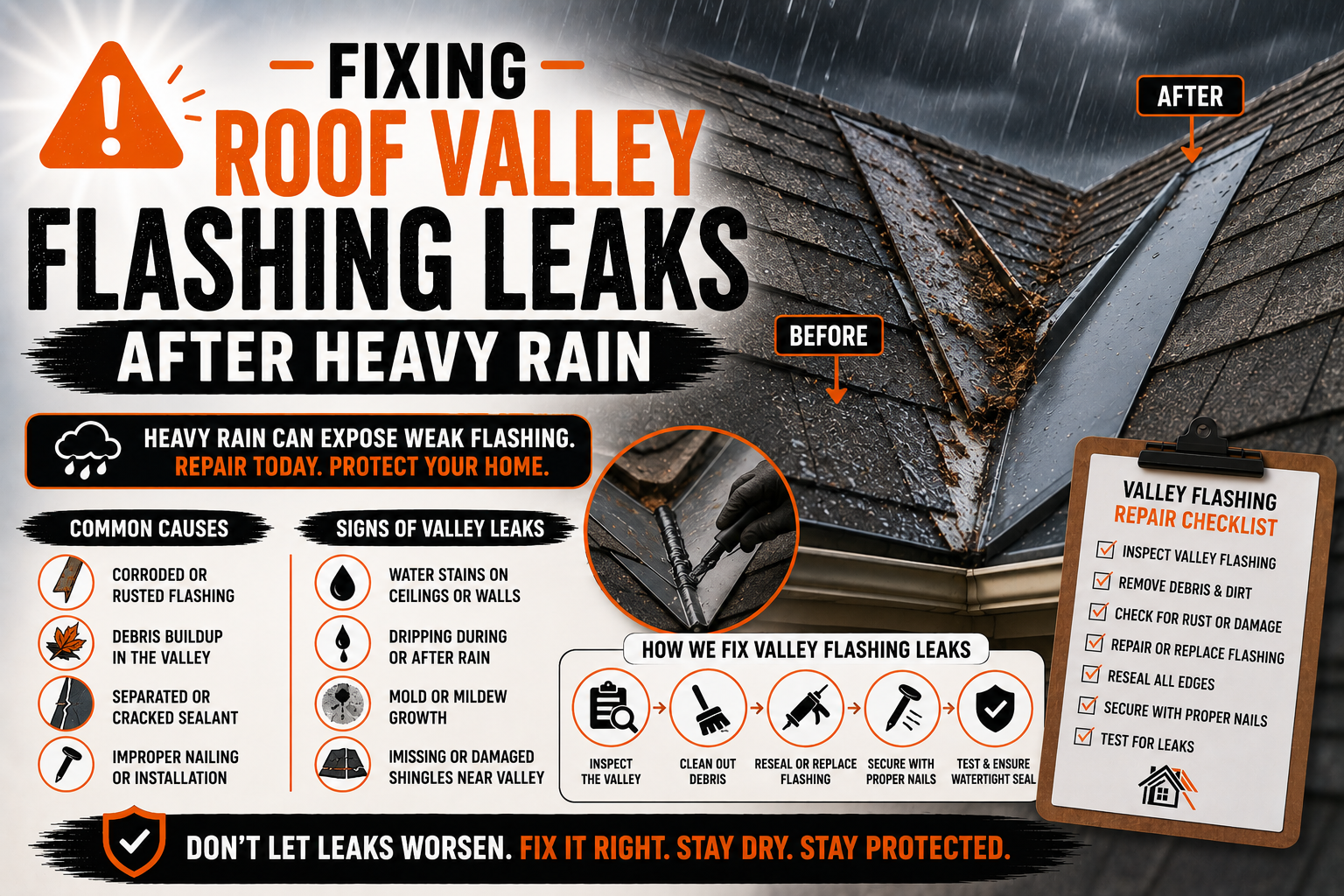
Fixing Roof Valley Flashing Leaks After Heavy Rain
Introduction
A roof is designed to direct rainwater safely away from a home, but not every section of the roof handles the same amount of water. Roof valleys carry more runoff than almost any other part of the roofing system because they collect water flowing down two roof slopes at the same time. During heavy rain, thousands of gallons of water may pass through these narrow channels, placing tremendous stress on the flashing that protects them.
Roof valley flashing serves as a waterproof barrier beneath or between roofing materials, guiding water safely toward the gutters while preventing it from reaching the roof deck. When the flashing is properly installed and maintained, it performs this task efficiently for many years. However, as flashing ages or becomes damaged, heavy rainfall often exposes weaknesses that remain hidden during lighter weather.
Many homeowners first notice roof valley problems after a major storm. Water stains on ceilings, damp attic insulation, dripping during prolonged rainfall, or visible leaks near roof intersections frequently indicate that the valley flashing is no longer providing complete protection. Although these symptoms may appear suddenly, the flashing deterioration that caused them usually develops gradually over time.
Ignoring valley flashing leaks can lead to much more than cosmetic water damage. Moisture entering beneath the roofing materials may weaken the roof deck, reduce insulation performance, encourage mold growth, and eventually affect structural framing. Addressing flashing problems early helps prevent these secondary issues while extending the life of the entire roofing system.
Understanding why roof valleys are especially vulnerable, how flashing protects these areas, and what causes leaks after heavy rain allows homeowners to recognize warning signs before extensive damage occurs. This guide explains the purpose of roof valley flashing, the conditions that lead to flashing failure, and the early indicators that repairs may be needed.
What Is Roof Valley Flashing?
Roof valley flashing is a protective metal material installed where two sloping roof sections meet to form a valley. Because this intersection naturally collects and channels large amounts of rainwater, flashing provides an additional waterproof layer that protects the roof deck beneath the shingles.
Unlike standard roof surfaces where shingles alone manage most water flow, valleys require enhanced protection because runoff from multiple roof planes combines into a concentrated stream. Flashing reinforces this high traffic drainage area while helping water move safely toward the roof edge.
The flashing typically extends along the full length of the valley beneath or between the roofing materials. Depending on the roofing system, portions of the flashing may remain visible or be almost completely covered by shingles while still providing reliable moisture protection.
Roof valley flashing works together with underlayment and shingles to create several overlapping waterproof barriers. If wind driven rain or heavy runoff bypasses one layer, the remaining layers continue directing water away from the roof deck.
Proper installation is essential because even durable flashing materials cannot prevent leaks if they are installed with incorrect overlap, improper fastening, or poor integration with surrounding roofing components.
Why Roof Valleys Are Vulnerable to Leaks
Roof valleys experience more demanding conditions than most other parts of the roofing system. Since water naturally follows gravity, valleys become the primary drainage channels that collect runoff from multiple roof surfaces during every rainfall.
Heavy rain significantly increases the amount of water flowing through these areas. While the rest of the roof sheds water across broad surfaces, valleys concentrate that runoff into relatively narrow channels where flashing must withstand continuous exposure to moving water.
Debris accumulation presents another challenge. Leaves, pine needles, twigs, and dirt often collect inside roof valleys because changing roof angles naturally slow water movement in these locations. Trapped debris holds moisture against flashing while restricting normal drainage.
Roof geometry also contributes to valley vulnerability. The intersection of two roof slopes creates multiple joints where shingles, flashing, underlayment, and roof decking work together to maintain a watertight seal. If any one of these components begins deteriorating, water may find a pathway beneath the roofing materials.
Seasonal weather adds further stress throughout the year. Heavy rain, wind driven moisture, snow accumulation, ice formation, and repeated temperature changes all affect valley flashing more frequently than many other roofing components.
Because valleys experience constant water exposure combined with changing environmental conditions, they often become one of the first areas where roofing problems develop as a roof ages.
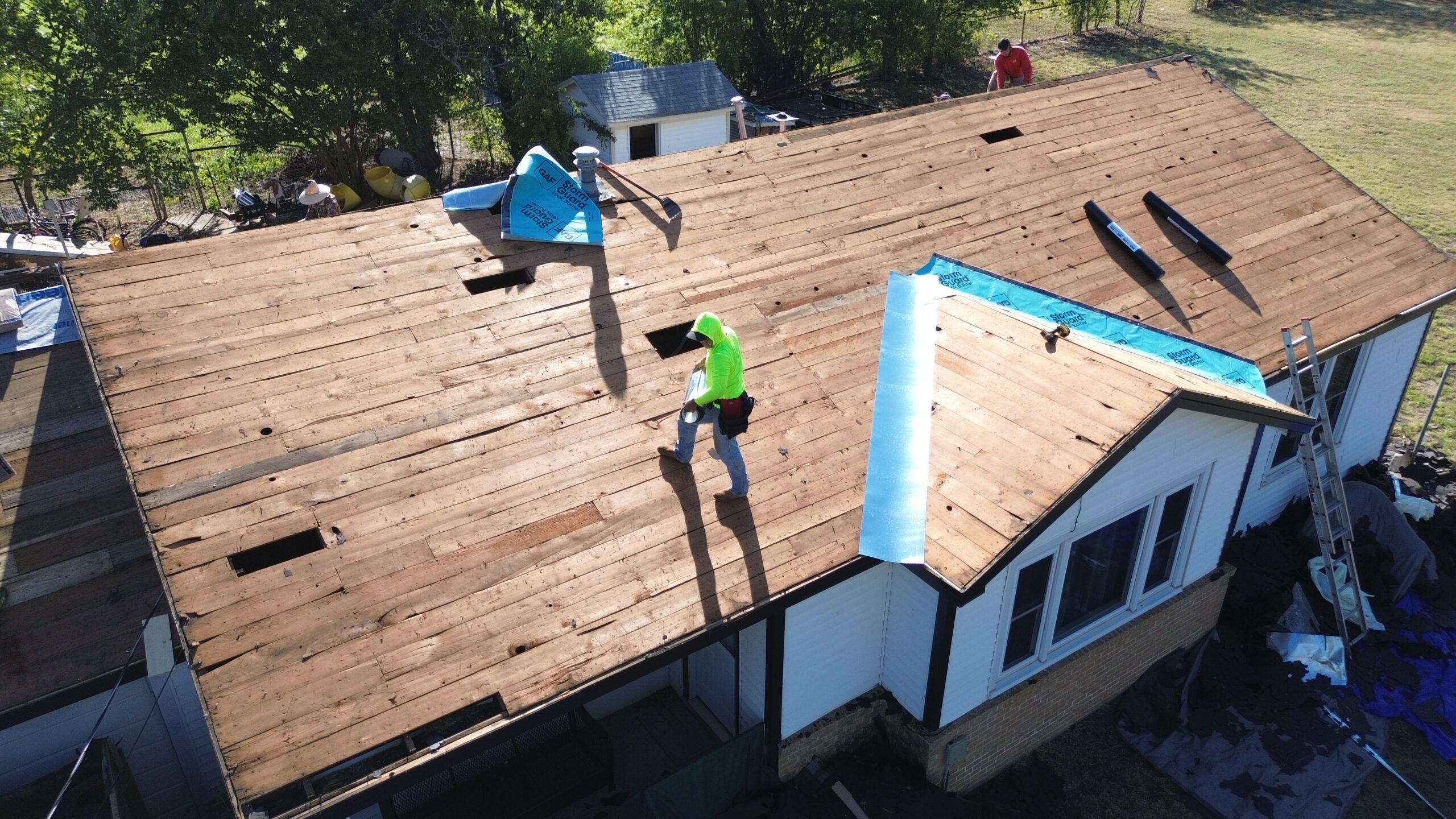
Common Types of Roof Valley Flashing
Several different flashing materials are commonly used to protect roof valleys. Each offers specific advantages depending on the roofing system, climate, and expected service life.
Galvanized steel remains one of the most widely used options because it combines strength with reasonable cost. Its protective zinc coating helps resist corrosion, although prolonged exposure to moisture eventually wears this coating over time.
Aluminum flashing is another popular choice due to its lightweight construction and natural resistance to rust. It performs well in many residential roofing systems, particularly when installed with compatible roofing materials.
Copper flashing provides exceptional durability and is often selected for premium roofing projects. Rather than developing traditional rust, copper forms a protective green patina that helps preserve the metal for many decades.
Stainless steel flashing offers excellent corrosion resistance and performs particularly well in regions experiencing frequent rainfall or coastal conditions. Although it generally costs more than galvanized steel, its long service life often offsets the initial investment.
Some roofing systems also use woven or cut valley designs that combine flashing with carefully arranged shingles to manage water flow effectively. The specific design depends on roof style, roofing material, and manufacturer recommendations.
Selecting an appropriate flashing material is an important step in building a roofing system capable of handling years of heavy rainfall.
Common Causes of Valley Flashing Leaks After Heavy Rain
Heavy rain often reveals roofing problems that remain hidden during ordinary weather. Although water may appear to enter suddenly during a storm, the underlying flashing damage usually develops gradually over months or years.
Natural aging is one of the most common causes of valley flashing deterioration. Continuous exposure to sunlight, moisture, temperature changes, and flowing water gradually weakens flashing materials while reducing the effectiveness of surrounding sealants and roofing components.
Corrosion also contributes to flashing failure. Protective coatings eventually wear away, allowing rust or oxidation to weaken the metal. As corrosion progresses, small openings may develop that allow water to reach the roof deck.
Improper installation creates another major source of leaks. Flashing installed with insufficient overlap, incorrect fastening, or poor integration with shingles cannot direct water efficiently during periods of heavy rainfall.
Storm damage frequently accelerates existing problems. Strong winds may loosen flashing, falling branches can bend metal sections, and hail may damage protective coatings that normally resist corrosion.
Clogged valleys further increase leak potential. Accumulated leaves and debris slow water flow, allowing heavy rainfall to back up beneath shingles and flashing where moisture can enter the roofing system.
Loose, cracked, or missing shingles surrounding the valley also expose flashing to greater water pressure while increasing the likelihood of leaks during prolonged storms.
Early Warning Signs of Valley Flashing Problems
Roof valley flashing rarely fails without first producing warning signs. Identifying these symptoms early allows homeowners to arrange repairs before water damage spreads into the structure of the home.
Interior ceiling stains often provide the first indication that valley flashing is no longer functioning properly. Brown discoloration appearing after heavy rainfall frequently suggests water entering somewhere above the visible stain.
The attic should also be inspected whenever roof leaks are suspected. Damp insulation, stained roof decking, mold growth, or visible water trails near roof valleys indicate that moisture has bypassed the roofing system.
Visible rust on exposed flashing deserves prompt attention. Surface corrosion may initially appear minor, but continued deterioration gradually weakens the flashing while increasing the possibility of water penetration.
Homeowners should also watch for lifted or damaged shingles surrounding the valley. Since flashing and shingles work together to create a waterproof barrier, movement affecting either component often reduces overall roof performance.
Granule accumulation in gutters or at the base of downspouts may signal that shingles near the valley are wearing prematurely because of continuous water exposure. As shingles deteriorate, flashing becomes more vulnerable to direct weather conditions.
Prompt inspection following these warning signs often prevents small flashing defects from developing into extensive structural repairs.
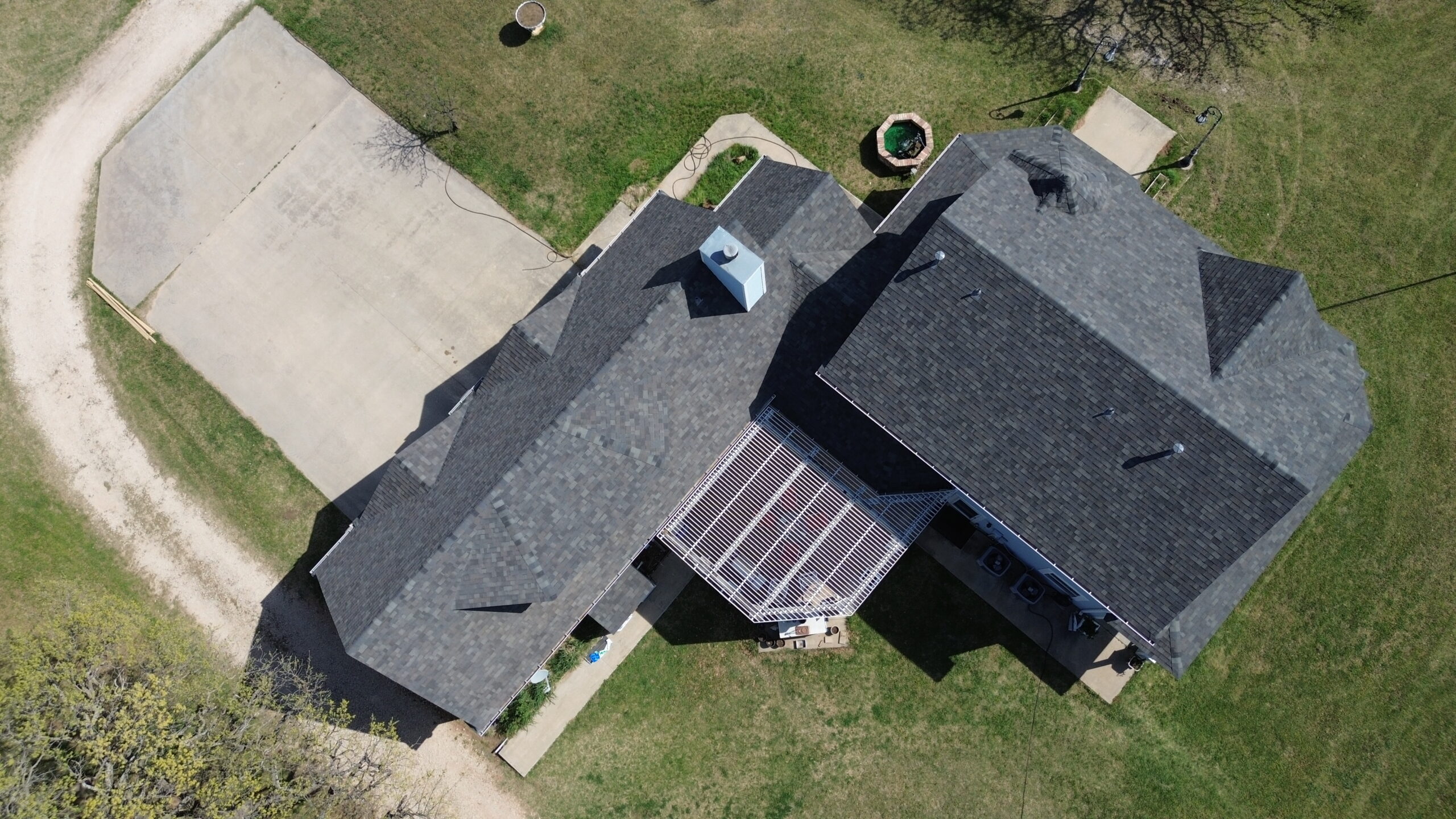
How Heavy Rain Exposes Hidden Flashing Problems
Light rainfall may not always reveal weaknesses in a roofing system because relatively small amounts of water pass through the roof valley. Heavy rain, however, dramatically increases the volume and speed of runoff, placing much greater pressure on flashing and surrounding roofing materials.
As water flows rapidly through the valley, even tiny openings become potential entry points. Small gaps that remain dry during ordinary weather may begin allowing water beneath the shingles when runoff increases significantly.
Wind driven rain creates additional challenges. Strong storms often force water sideways beneath overlapping shingles, testing the flashing’s ability to redirect moisture under conditions far more demanding than normal rainfall.
Prolonged storms also extend the amount of time flashing remains wet. Continuous exposure increases the likelihood that moisture will find weaknesses around fasteners, flashing joints, or deteriorated sealants that might not leak during shorter rain events.
If drainage becomes restricted by leaves or debris, heavy rain can cause water to pool temporarily within the valley. Standing water places additional pressure on flashing seams while increasing opportunities for moisture to bypass damaged roofing components.
These conditions explain why many homeowners first discover valley flashing problems immediately after periods of unusually heavy rainfall.
Why Prompt Repairs Protect the Entire Roofing System
Roof valley flashing serves as one of the primary defenses against water intrusion because it protects the busiest drainage channel on the roof. When flashing begins to fail, moisture rarely remains confined to the valley itself.
Water entering beneath damaged flashing often spreads across the roof deck before becoming visible inside the home. This hidden movement allows moisture to affect larger portions of the roofing system than homeowners initially realize.
Wet roof decking gradually loses structural strength while providing favorable conditions for mold and mildew. Damp insulation also becomes less effective, reducing the home’s energy efficiency while increasing heating and cooling costs.
Repeated moisture exposure may eventually damage ceiling finishes, interior walls, electrical systems, and wooden framing. Repair costs increase significantly once water reaches these structural components compared with correcting flashing problems during their early stages.
Prompt repairs help interrupt this progression before extensive damage develops. Replacing damaged flashing, correcting installation defects, and restoring proper drainage preserve both the roof and the home’s structural integrity while extending the overall lifespan of the roofing system.
Understanding the importance of timely maintenance encourages homeowners to address flashing concerns early rather than waiting until leaks become more severe.
Inspecting the Roof Valley Safely
Before any repair begins, the roof valley should be inspected carefully to determine the source of the leak and evaluate the overall condition of the flashing. Since valleys collect large amounts of rainwater, damage is not always limited to the visible leak location. A thorough inspection helps ensure every contributing problem is identified before repairs begin.
The inspection should start inside the home. Water stains on ceilings, damp attic insulation, mold growth, or stained roof decking often help narrow the search for the point where water entered the roofing system. Following these moisture trails toward the roof valley frequently provides valuable clues.
Exterior inspections should only be performed when weather conditions are safe. Wet shingles, strong winds, or unstable roof surfaces significantly increase the risk of falls. Waiting until the roof has dried completely provides a much safer working environment.
Once on the roof, the valley should be examined from top to bottom. Inspectors should evaluate flashing condition, surrounding shingles, exposed fasteners, sealants, and debris accumulation rather than focusing only on one visible problem area.
Photographing the roof before beginning repairs also creates useful documentation. These images help compare conditions after repairs and provide a reference if additional maintenance becomes necessary later.
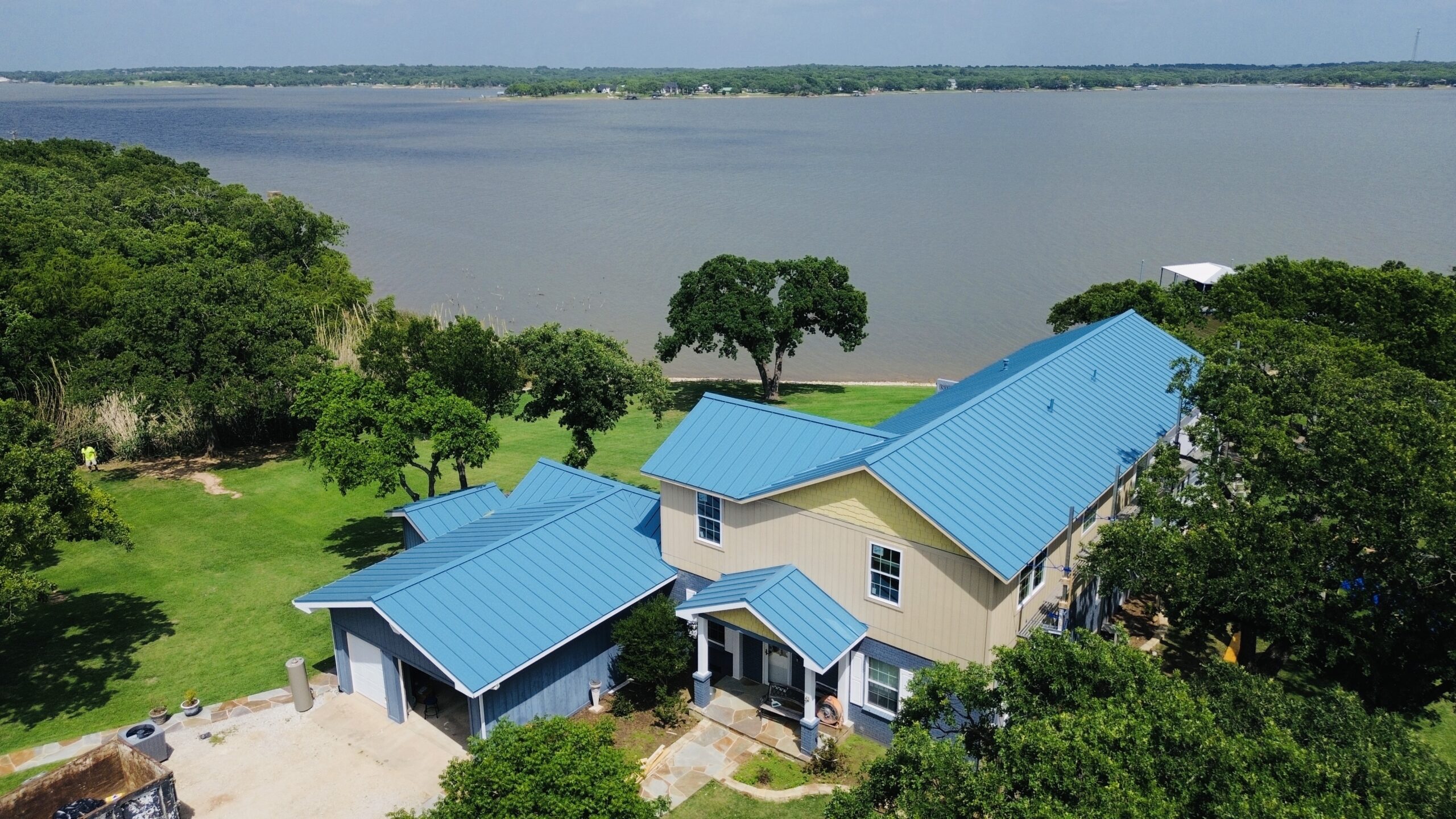
Removing Debris and Identifying the Leak Source
Roof valleys naturally collect leaves, twigs, pine needles, dirt, and other debris because water flowing from multiple roof slopes slows slightly as it changes direction. Before evaluating the flashing itself, all debris should be removed to expose the roofing materials beneath.
Cleaning should be performed carefully to avoid damaging shingles or scratching exposed flashing. Plastic tools or soft brushes are generally preferred because they reduce the likelihood of removing protective metal coatings while clearing accumulated material.
Once the valley is clean, the flashing becomes much easier to inspect. Rust, corrosion, bent metal, lifted flashing edges, separated seams, and damaged shingles often become visible after debris has been removed.
The inspection should also extend beyond the valley itself. Water entering higher on the roof may travel beneath shingles before appearing inside the valley area. Examining nearby roof penetrations, flashing intersections, and surrounding shingles helps eliminate other possible sources of leakage.
Water staining patterns also provide valuable information. Clean streaks on dirty flashing, mineral deposits, or areas where debris has washed away differently may indicate the path water follows during heavy rainfall.
Careful cleaning and observation improve the accuracy of the repair while reducing the likelihood that hidden problems remain unnoticed.
Evaluating the Condition of Valley Flashing
After the valley has been cleaned, the flashing should be evaluated to determine whether localized repairs or more extensive replacement will provide the most reliable solution. Surface appearance alone does not always indicate structural condition, so several factors should be considered during the inspection.
Corrosion is one of the first conditions to examine. Minor surface rust may require only preventive maintenance, while deeper corrosion, pitting, or holes often indicate that replacement flashing will provide better long term performance.
The flashing should also remain securely attached throughout the valley. Loose sections, lifted edges, or shifting metal may allow wind driven rain to enter beneath the roofing materials during severe weather.
Proper overlap between flashing sections deserves careful attention as well. Water should flow continuously down the valley without encountering exposed joints where moisture could penetrate beneath the flashing.
Fasteners should also be inspected for corrosion or movement. Rusted nails, loose screws, or improperly placed fasteners reduce the stability of the flashing while creating additional opportunities for water intrusion.
The surrounding shingles and underlayment should also be evaluated because flashing functions as part of a complete roofing system. Damage affecting these materials may contribute to leaks even if the flashing itself remains relatively sound.
A complete evaluation helps ensure repairs address every contributing factor rather than only the most visible symptoms.
Repairing Minor Flashing Damage
When damage is limited to small areas, localized repairs often restore the valley’s ability to shed water effectively without requiring complete flashing replacement. Early intervention is particularly valuable because minor defects generally involve less labor and fewer roofing materials.
Small bends in the flashing may sometimes be corrected if the metal remains structurally sound and free from significant corrosion. Restoring proper alignment helps maintain efficient water flow while preventing runoff from collecting in damaged areas.
Minor corrosion should be addressed before it spreads further. Cleaning affected surfaces and applying appropriate protective treatments may help slow additional deterioration when the metal has not yet become structurally weakened.
Loose flashing sections should be secured according to accepted roofing practices. Refastening damaged areas restores stability while helping the flashing remain properly positioned during heavy rainfall and strong winds.
If surrounding shingles have been damaged during the same event, they should be repaired or replaced as part of the flashing repair. Since shingles and flashing work together, correcting only one component may leave the roofing system vulnerable to future leaks.
Localized repairs are generally most successful when the surrounding flashing remains in good condition and the underlying roof deck has not experienced significant moisture damage.
Replacing Damaged Valley Flashing Sections
More extensive flashing deterioration often requires replacing damaged sections rather than attempting repeated repairs. Severely corroded, cracked, or bent flashing can no longer provide dependable waterproofing even if temporary repairs appear successful.
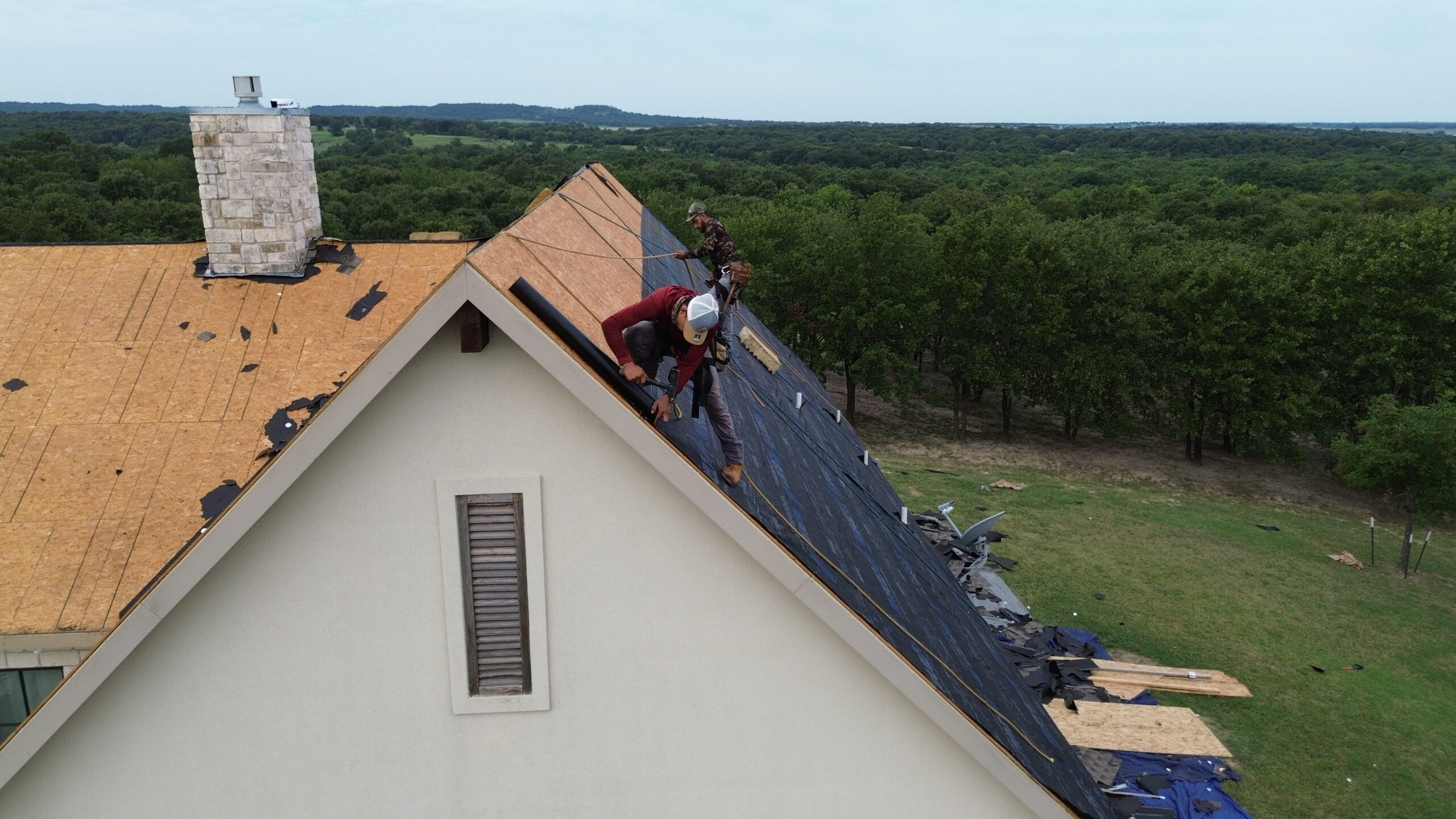
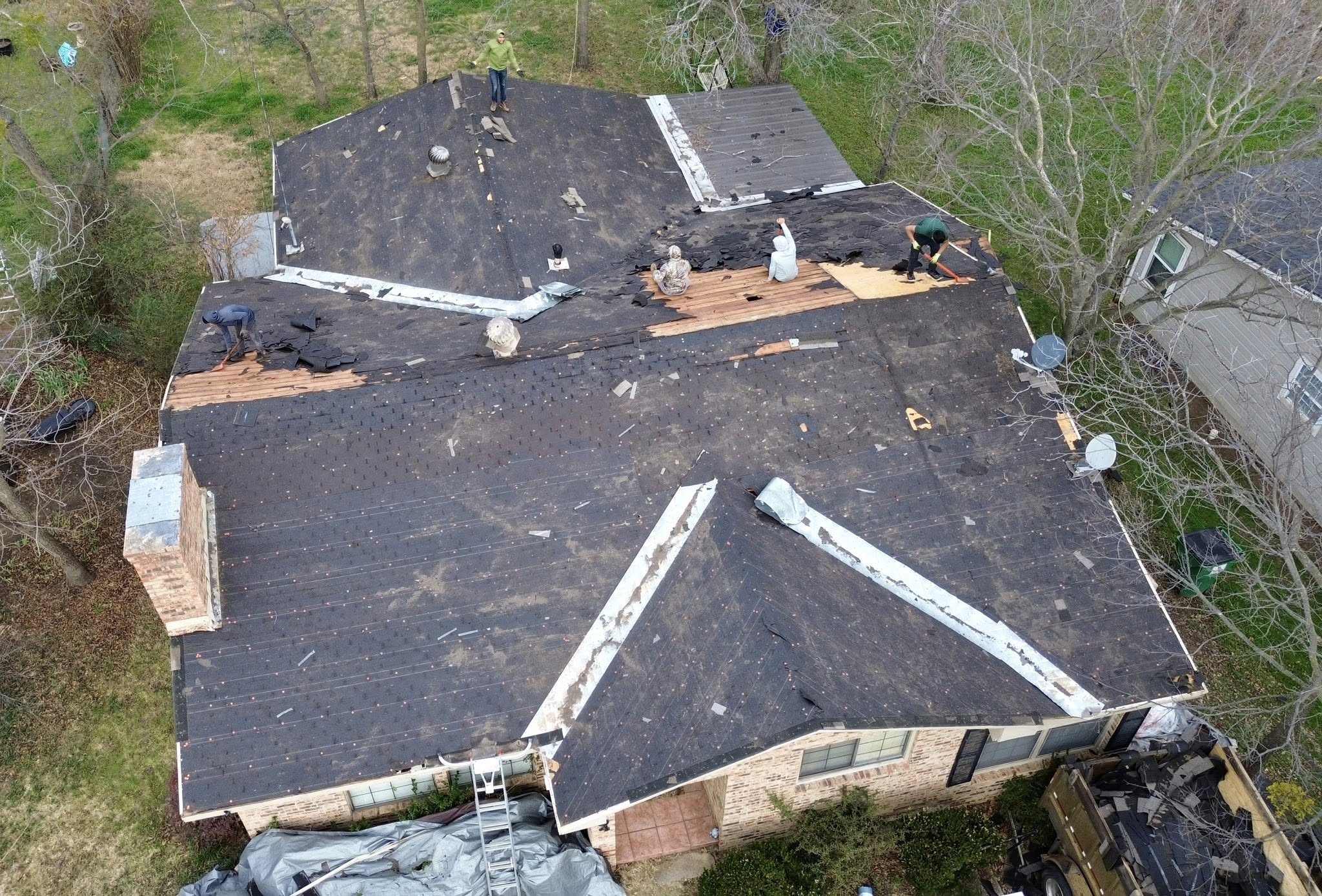
Replacement begins by carefully removing the shingles covering the affected valley section. This allows full access to the flashing while minimizing unnecessary disturbance to surrounding roofing materials that remain in good condition.
The damaged flashing should then be removed without harming the roof deck beneath. During this process, the decking and underlayment should be inspected for signs of moisture damage that may require additional repairs before new flashing is installed.
Replacement flashing should match the existing roofing system in both material and thickness whenever practical. Using compatible materials promotes consistent performance while reducing the likelihood of future corrosion or expansion related issues.
Each new flashing section must overlap the adjacent pieces correctly to create a continuous drainage path. Proper overlap allows gravity to carry water smoothly down the valley while preventing moisture from reaching vulnerable joints.
Once the flashing has been installed, the surrounding shingles are replaced according to manufacturer recommendations, completing the repair and restoring the roof’s ability to manage heavy rainfall effectively.
Comparing Common Roof Valley Flashing Problems
Different flashing problems require different repair strategies. Understanding these conditions helps homeowners recognize why professional inspections are often recommended before repair work begins.
| Valley Flashing Issue | Primary Cause | Visible Symptoms | Recommended Repair |
|---|---|---|---|
| Rusted Flashing | Long term moisture exposure | Rust, discoloration, weakened metal | Replace affected flashing sections |
| Loose Flashing | Aging fasteners or storm damage | Lifted flashing and shifting metal | Secure or replace flashing as needed |
| Bent Flashing | Falling debris or impact damage | Distorted drainage path | Replace damaged sections |
| Corroded Flashing | Salt, moisture, and aging | Pitting, holes, surface deterioration | Install new flashing where corrosion is severe |
| Improper Flashing Overlap | Incorrect installation | Persistent leaks during heavy rain | Reinstall flashing using proper overlap |
Although each issue develops differently, they all reduce the flashing’s ability to direct water safely away from the roof valley if repairs are delayed.
Common Repair Mistakes to Avoid
Roof valley repairs require careful attention to installation details because even small mistakes can create recurring leaks during future storms. Understanding these common errors helps explain why proper repair techniques are so important.
One frequent mistake is relying entirely on roofing sealants instead of correcting the underlying flashing problem. Sealants provide temporary protection but should never replace properly installed flashing that sheds water mechanically through overlapping layers.
Another error involves installing replacement flashing over severely corroded existing metal. Covering deteriorated flashing without removing the damaged material often traps moisture while allowing corrosion to continue beneath the repair.
Improper flashing overlap is another common problem. Each flashing section must direct water onto the next lower section. Incorrect overlap interrupts this drainage path and increases the possibility of water entering beneath the roofing materials.
Fastener placement also deserves careful attention. Nails or screws positioned where water naturally flows create unnecessary entry points that increase leak potential during heavy rainfall.
Some repairs overlook surrounding roofing components. Damaged shingles, deteriorated underlayment, or loose flashing higher in the valley may continue allowing water intrusion even after visible flashing defects have been repaired.
Avoiding these mistakes significantly improves the durability and long term success of valley flashing repairs.
Testing the Repair After Completion
Once repairs have been completed, the roof valley should be evaluated to confirm that water flows properly and the flashing provides dependable protection against future rainfall. Testing helps identify any remaining concerns before the next storm arrives.
The first step is a careful visual inspection. Flashing should remain flat against the roof, overlap correctly from top to bottom, and integrate smoothly with the surrounding shingles. Any visible gaps, loose edges, or uneven alignment should be corrected before the repair is considered complete.
Controlled water testing may also be appropriate when conditions allow. Water should be applied gradually above the repaired section to simulate natural rainfall while another person monitors the attic or interior ceiling for signs of leakage. Applying water slowly provides a more accurate representation of actual storm conditions.
After the first significant rainfall, homeowners should inspect both the attic and the repaired valley again. Confirming that no moisture has entered the roofing system provides additional confidence that the repair is performing as intended.
The surrounding shingles should also be checked after several days. Properly installed flashing supports the shingles without causing lifted edges or uneven roof surfaces that could affect future drainage.
Thorough testing ensures the repair functions as part of a complete roofing system rather than simply covering the original leak.
Why Professional Roof Repairs Often Provide Better Long Term Results
Although homeowners may successfully perform some basic roof maintenance, repairing roof valley flashing often requires specialized knowledge because this area manages more water than almost any other section of the roof.
Professional roofing contractors understand how flashing, shingles, underlayment, roof decking, and drainage patterns work together. They can identify subtle installation defects or hidden moisture damage that may not be visible during a basic inspection.
Experienced roofers also recognize when localized repairs are sufficient and when broader replacement provides a more dependable long term solution. Addressing only the visible leak without correcting underlying problems often results in recurring water intrusion after future storms.
Professionals also select flashing materials compatible with the existing roofing system and install them according to manufacturer specifications. Proper overlap, fastening, and integration with surrounding roofing materials all contribute to repairs that remain effective through years of heavy rainfall.
Finally, experienced contractors perform detailed final inspections to verify drainage, flashing alignment, and roof condition before completing the project. This attention to detail helps ensure the repaired valley continues protecting the home during future weather events.
Investing in quality workmanship often reduces future maintenance costs while extending the service life of both the flashing and the surrounding roofing system.
When Repairs Are Enough Versus Full Valley Replacement
Not every roof valley leak requires replacing the entire flashing system. In many situations, localized repairs provide a reliable solution when the damage is limited and the surrounding roofing materials remain in good condition. Determining the appropriate approach depends on the extent of the deterioration, the age of the roof, and the condition of the roof deck beneath the flashing.
Minor issues such as a loose flashing section, a small area of surface corrosion, or isolated shingle damage near the valley can often be repaired without replacing the entire valley. Prompt repairs restore proper drainage while preventing additional moisture from entering the roofing system.
More extensive damage requires a different approach. Flashing that has developed widespread corrosion, multiple holes, severe bending, or repeated leaks after previous repairs generally provides better long term performance when replaced rather than repaired repeatedly.
The condition of the roof deck should also influence the decision. If prolonged water intrusion has caused wood rot, mold growth, or structural weakening beneath the flashing, those damaged components should be repaired before installing new flashing.
Roof age is another important consideration. If the roofing system is already approaching the end of its expected lifespan, replacing the valley flashing during a complete roof replacement often proves more practical than performing isolated repairs that may soon be disturbed again.
A thorough professional inspection helps determine which solution offers the greatest long term reliability while protecting the overall integrity of the roof.
Roof Valley Maintenance Checklist
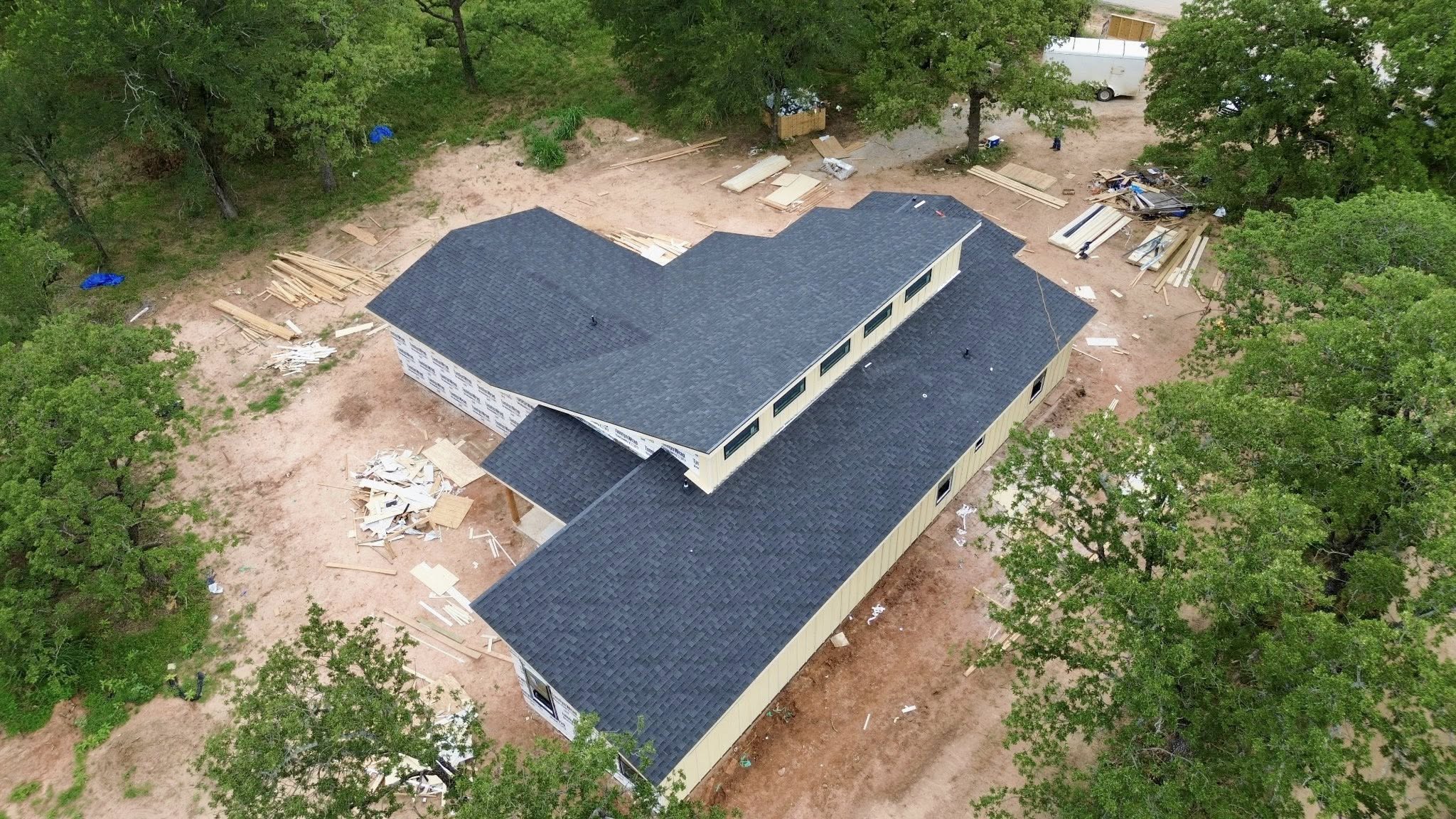
Regular maintenance greatly reduces the likelihood of leaks developing after heavy rain. A consistent inspection routine allows homeowners to identify small problems before they become major repairs.
- Inspect roof valleys at least twice each year.
- Remove leaves, branches, and debris regularly.
- Examine valleys after heavy rain, hail, or strong wind events.
- Replace cracked, loose, or missing shingles immediately.
- Schedule professional roof inspections on a regular basis.
- Repair even minor leaks before they spread beneath the roofing system.
Following these simple maintenance practices helps preserve flashing performance while reducing long term repair costs.
Choosing the Best Valley Flashing Materials
The durability of roof valley flashing depends greatly on the material selected during installation or replacement. Since valleys experience continuous water flow during every rainfall, choosing corrosion resistant materials helps improve long term roof performance.
Galvanized steel remains a popular choice because it offers strength at a relatively affordable cost. When properly installed and maintained, it provides dependable protection for many residential roofing systems. However, its protective coating should be monitored over time because prolonged moisture exposure gradually reduces corrosion resistance.
Aluminum flashing performs well in many climates because it naturally resists rust while remaining lightweight and easy to install. It is commonly used on residential roofs where compatibility with surrounding materials has been carefully considered.
Copper flashing provides outstanding longevity. Rather than deteriorating through traditional rust, copper develops a protective patina that shields the underlying metal from further corrosion. Although the initial investment is higher, copper often delivers decades of reliable service.
Stainless steel offers exceptional resistance to corrosion and structural wear. It is particularly beneficial in regions experiencing frequent rainfall, coastal conditions, or severe weather where flashing remains exposed to prolonged moisture.
Selecting durable materials matched to the local climate allows homeowners to maximize flashing lifespan while reducing future maintenance requirements.
Professional Installation Best Practices
Even the highest quality flashing material cannot compensate for poor installation. Professional roofing contractors follow established installation procedures that ensure the valley can manage heavy rainfall safely while maintaining reliable waterproof protection.
Preparation begins with inspecting the roof deck before installing new flashing. Damaged decking, deteriorated underlayment, or weakened structural components should be repaired first because they support every layer of the roofing system above.
Flashing sections are then installed with careful overlap from the top of the valley downward. This sequence allows gravity to move water naturally over each flashing section rather than beneath it, reducing opportunities for leaks.
Proper fastening is equally important. Nails should secure flashing without being placed where water naturally flows through the valley. Correct fastener placement minimizes unnecessary penetrations while allowing the flashing to remain secure during severe weather.
Roofing professionals also ensure the flashing integrates properly with surrounding shingles and underlayment. Every roofing component must work together as a complete drainage system rather than functioning independently.
Before completing the project, contractors perform a final inspection to verify flashing alignment, drainage, overlap, and shingle placement. This quality control process helps ensure the repaired valley will continue protecting the roof through future heavy rain events.
Long Term Roof Valley Maintenance Strategies
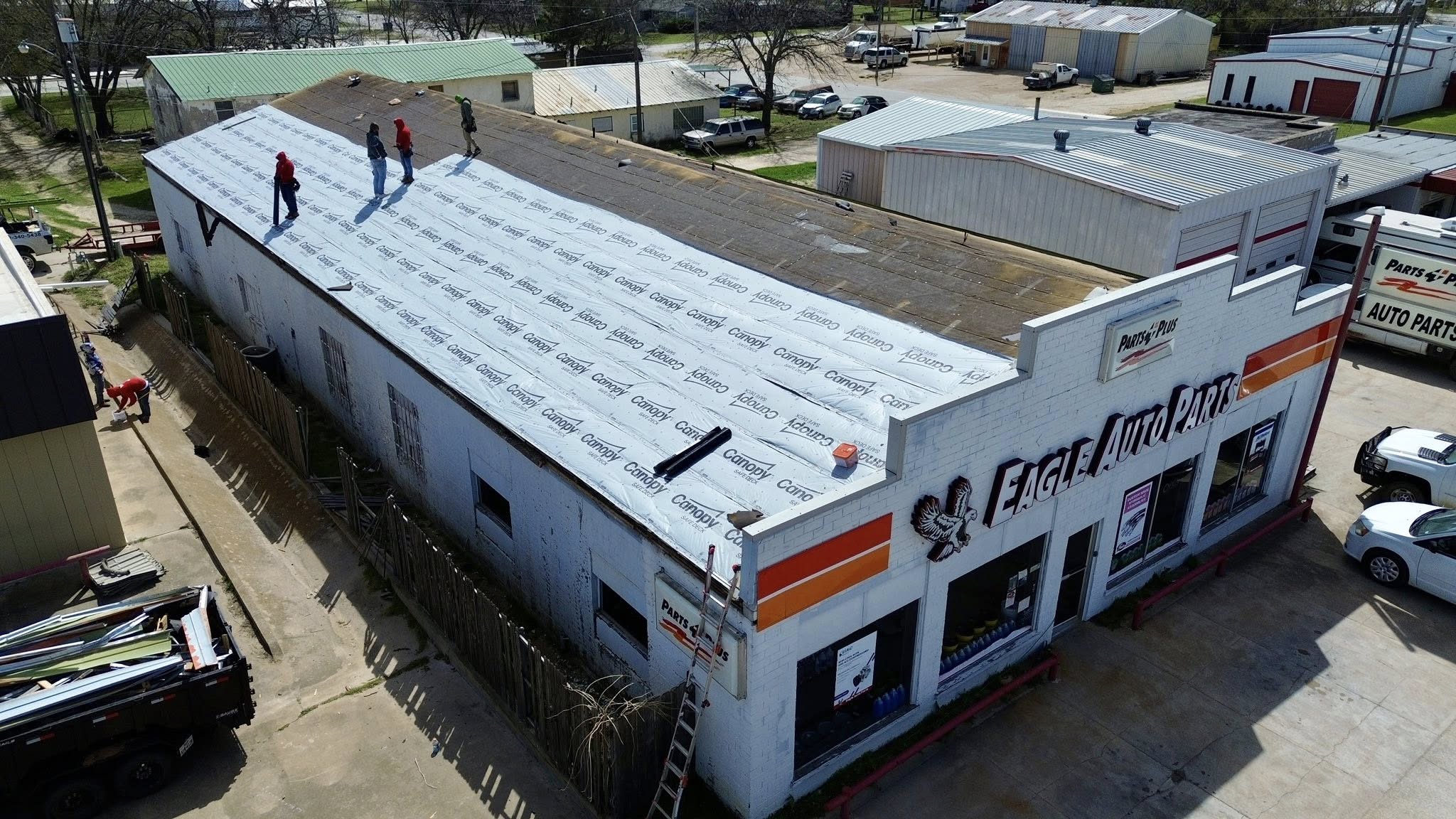
Maintaining roof valleys consistently throughout the year is one of the most effective ways to extend flashing lifespan and reduce the likelihood of unexpected leaks. Preventive care often costs far less than repairing water damage after flashing failure occurs.
Regular debris removal remains one of the most important maintenance tasks. Leaves, branches, moss, and dirt trap moisture while restricting water flow through the valley. Keeping the drainage path clear allows rainwater to move efficiently toward the gutters.
Gutter maintenance also supports valley performance. Clogged gutters slow roof drainage and may cause water to back up into the valley during heavy rainfall. Clean gutters reduce unnecessary pressure on flashing while improving overall roof drainage.
Nearby tree branches should be trimmed periodically. Falling limbs can dent flashing, while overhanging branches continually deposit debris into roof valleys where moisture accumulates more easily.
Seasonal roof inspections are especially valuable following severe weather. High winds, hail, and prolonged rainfall may loosen flashing, damage shingles, or expose hidden weaknesses that require prompt attention before the next storm arrives.
Maintaining surrounding roofing components is equally important. Healthy shingles, secure ridge caps, functioning ventilation, and intact underlayment all contribute to the long term performance of valley flashing by directing water efficiently across the roof.
Why Professional Roof Inspections Prevent Expensive Repairs
Many flashing problems remain hidden until significant rainfall exposes them. Professional roof inspections identify developing issues before they produce noticeable leaks, allowing homeowners to address maintenance needs while repairs remain relatively straightforward.
Experienced roofing contractors evaluate more than the visible flashing. They examine roof decking, underlayment, shingles, drainage patterns, fasteners, and surrounding roofing components that all influence valley performance.
Professionals also recognize subtle warning signs such as early corrosion, slight flashing movement, deteriorating sealants, and improper water flow that homeowners may not notice during routine visual inspections.
Post storm inspections are particularly valuable. Heavy rain, hail, and strong winds frequently affect roof valleys because they carry the highest volume of water across the roof. Identifying hidden damage soon after severe weather helps prevent additional deterioration during future storms.
Routine inspections also support long term maintenance planning. Contractors can estimate flashing condition, recommend preventive repairs, and help homeowners prepare for future replacement projects before emergency leaks develop.
Investing in regular professional evaluations often reduces total roofing costs by correcting small issues before they evolve into structural repairs involving decking, insulation, or interior finishes.
Coordinating Valley Flashing Maintenance With Overall Roof Care
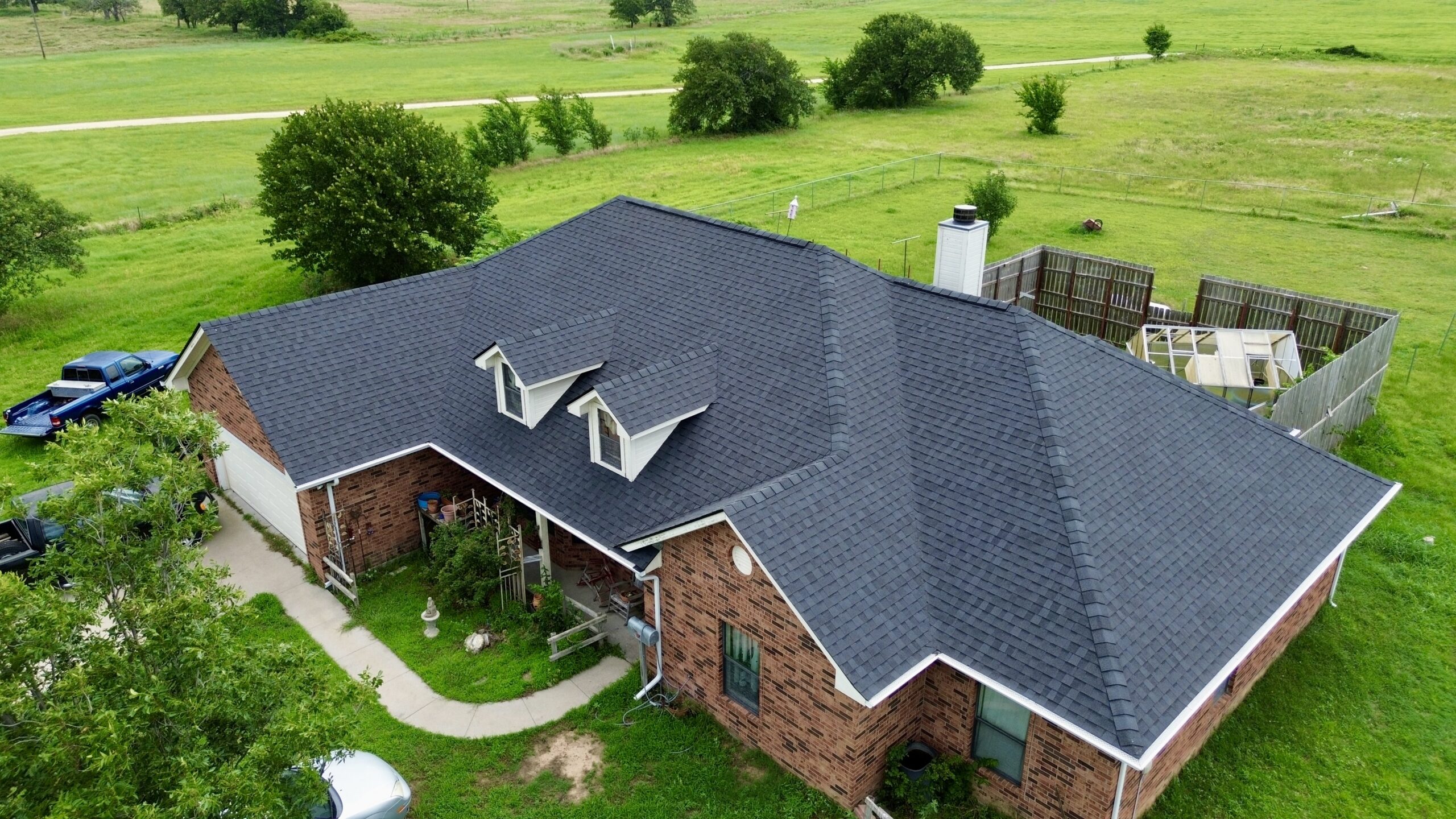
Roof valley flashing performs best when maintained as part of a complete roofing system. Every roofing component influences how water moves across the roof, making comprehensive maintenance more effective than focusing on the valley alone.
Seasonal roof care should include cleaning gutters, inspecting roof penetrations, checking flashing around chimneys and skylights, examining shingles, and removing debris from valleys. Addressing these areas together improves overall drainage while reducing stress on the flashing.
Homeowners should also maintain detailed records of inspections, repairs, storm damage, and replacement work. This maintenance history helps contractors monitor gradual changes in roof condition while planning future repairs more accurately.
When a roof replacement eventually becomes necessary, replacing the valley flashing at the same time provides the most dependable long term solution. Installing new flashing alongside new underlayment and shingles ensures every waterproofing layer works together according to current installation standards.
A comprehensive maintenance strategy strengthens the entire roofing system while maximizing the lifespan of every component, including the heavily used roof valleys.
Conclusion
Roof valleys play one of the most important roles in protecting a home because they carry large volumes of rainwater every time it rains. Valley flashing serves as the primary waterproof barrier in these high drainage areas, directing water safely toward the gutters while protecting the roof deck and structural components beneath the roofing materials.
Heavy rain often exposes flashing problems that have been developing gradually over many months or years. Corrosion, aging, storm damage, improper installation, clogged valleys, and damaged shingles all reduce the flashing’s ability to manage concentrated water flow. When these issues remain unaddressed, moisture may enter the roofing system and lead to wood rot, mold growth, damaged insulation, and costly interior repairs.
Recognizing early warning signs such as ceiling stains, attic moisture, rusted flashing, loose shingles, and debris accumulation allows homeowners to respond before small problems become major structural concerns. Routine inspections, prompt repairs, and regular maintenance help preserve flashing while extending the service life of the entire roofing system.
Selecting durable flashing materials and ensuring proper professional installation are equally important. Correct overlap, secure fastening, effective integration with shingles and underlayment, and careful attention to drainage all contribute to a roof valley capable of handling years of heavy rainfall with dependable performance.
By understanding how roof valley flashing functions, recognizing the causes of leaks after heavy rain, and following a consistent maintenance program, homeowners can significantly reduce the risk of water intrusion, avoid expensive repairs, and maintain a strong, weather resistant roofing system for many years to come.