
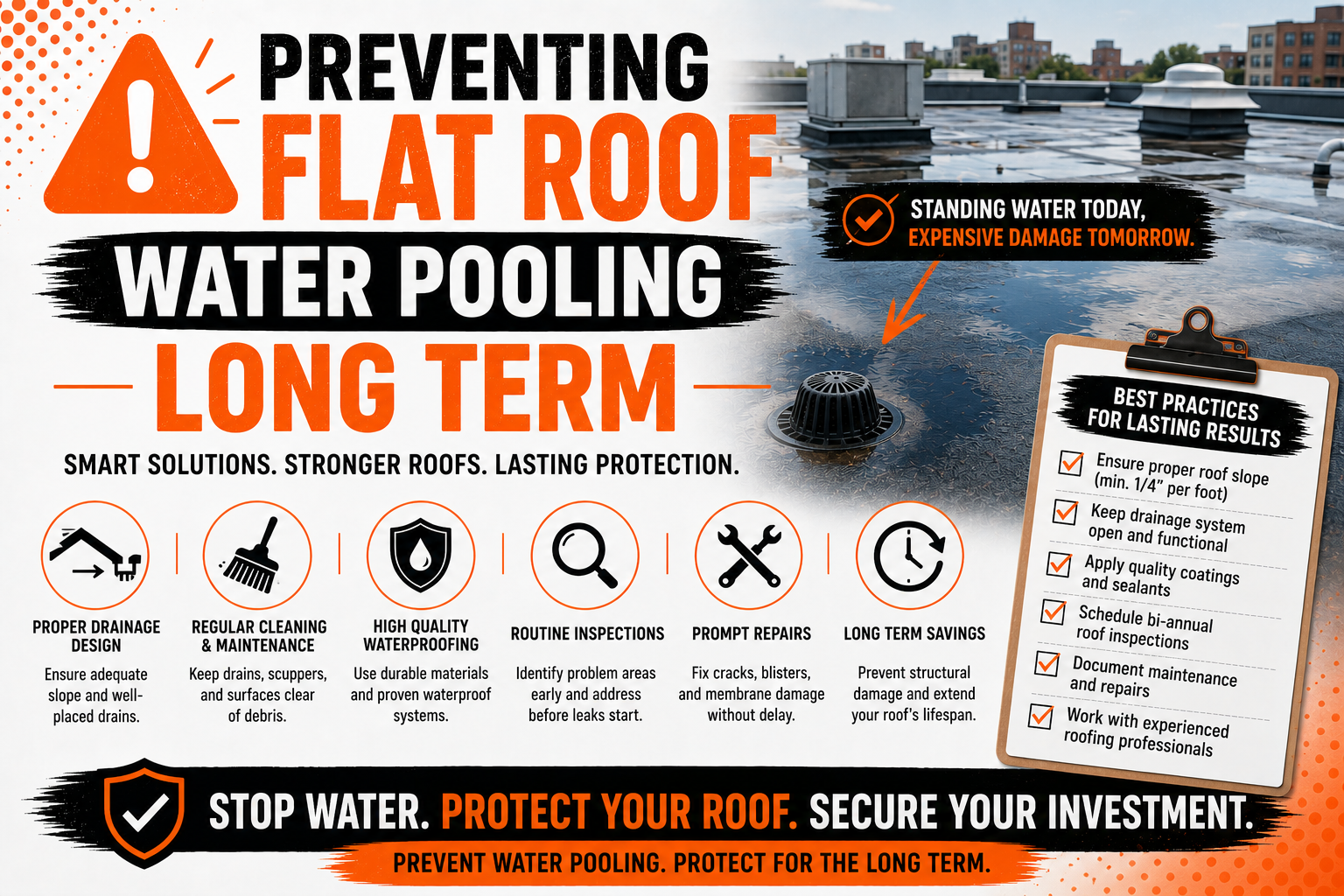
Preventing Flat Roof Water Pooling Long Term
Introduction
Flat roofs are designed to handle rainwater efficiently, but they are not intended to hold standing water for extended periods. Although the name suggests a completely level surface, most flat roofs are constructed with a slight slope that directs water toward drains, scuppers, or gutters. When this drainage process is interrupted, water begins to collect in low areas, creating a condition commonly known as water pooling or ponding.
Small amounts of water may remain on a roof immediately after heavy rainfall, and this is not always a cause for concern. However, when water stays on the roof for more than a day or two, it can gradually affect the performance of the roofing system. Prolonged moisture exposure increases stress on roofing materials, accelerates aging, and raises the likelihood of leaks and structural problems if left unaddressed.
Water pooling is especially common on older flat roofs where gradual settlement, drainage issues, or material deterioration have altered the roof’s original slope. Newer roofs are not immune either. Poor design, improper installation, clogged drains, or heavy rooftop equipment can all contribute to standing water even on recently completed projects.
Many property owners overlook early signs of drainage problems because the roof appears to function normally during most weather conditions. By the time interior leaks or visible roof damage develop, water pooling may have already caused significant deterioration beneath the roofing membrane. Early identification and preventive maintenance are therefore essential for avoiding costly repairs.
Long term prevention requires more than simply removing standing water after every storm. Property owners need to understand why water collects, how different roofing systems respond to prolonged moisture, and what maintenance practices help preserve proper drainage throughout the roof’s lifespan.
This guide explains the causes of flat roof water pooling, the warning signs that indicate developing drainage problems, and the practical steps that help maintain effective water management over many years. Understanding these principles provides the foundation for protecting both the roofing system and the building below.
What Water Pooling on a Flat Roof Really Means
Water pooling occurs when rainwater remains on the roof surface instead of draining away within a reasonable period after rainfall ends. In a properly functioning flat roof system, water should flow gradually toward designated drainage points. When that process is interrupted, shallow ponds begin forming in low sections of the roof.
Many people assume that every flat roof naturally holds water because it appears level from the ground. In reality, professionally designed flat roofs include subtle slopes that are carefully engineered to encourage drainage. These slopes may be difficult to notice visually, but they play a critical role in preventing prolonged water accumulation.
Temporary standing water immediately after a heavy storm does not automatically indicate a roofing problem. Large storms may overwhelm drainage systems for a short time, especially if rainfall intensity exceeds the roof’s drainage capacity. As long as the water drains within a relatively short period, the roofing system is generally functioning as intended.
Long term pooling is different. Water that remains on the roof for extended periods continuously exposes roofing materials to moisture, increasing the risk of membrane deterioration, seam stress, and gradual structural loading. Over time, repeated water accumulation often worsens existing low spots, creating an ongoing cycle of poor drainage.
Water pooling also affects rooftop maintenance. Standing water hides surface defects, making inspections more difficult while increasing slip hazards for maintenance personnel. Debris carried by rainwater often settles in pooled areas as well, further reducing drainage efficiency and encouraging additional water retention.
Even relatively shallow water places continuous pressure on the roofing membrane. Although modern roofing materials are designed to withstand normal environmental exposure, constant moisture contact shortens the lifespan of many roofing components when compared with roofs that drain effectively.
Understanding the difference between temporary drainage delay and persistent water pooling helps property owners recognize when professional evaluation is necessary. Identifying drainage issues early prevents minor roof depressions from developing into much larger maintenance concerns.
Why Long Term Water Pooling Is a Serious Concern
Standing water may appear harmless at first, but prolonged moisture exposure creates several conditions that gradually reduce roof performance. Unlike occasional rainfall that quickly drains away, pooled water remains in constant contact with the roofing membrane, exposing materials to continuous environmental stress.
One of the most significant concerns is accelerated membrane aging. Constant moisture, combined with sunlight and temperature fluctuations, gradually weakens roofing materials. As flexibility decreases, the membrane becomes more susceptible to cracking, blistering, and seam deterioration.
Water pooling also increases the likelihood of leaks. Small imperfections that might never cause problems under normal drainage conditions become vulnerable when submerged for long periods. Moisture has more time to penetrate seams, flashing, or membrane defects, allowing water to reach insulation and structural components beneath the roof.
The additional weight of standing water should not be overlooked. Water is surprisingly heavy, and large pooled areas place continuous loads on the roof structure. While properly designed buildings account for expected rainwater loads, persistent pooling may contribute to gradual structural deflection that further worsens drainage problems.
Prolonged moisture exposure also encourages biological growth. Algae, moss, and other organisms thrive in damp conditions, particularly where debris accumulates. Although these growths may seem primarily cosmetic, they often retain additional moisture and make roof inspections more difficult.
Energy efficiency may decline as well. Wet insulation beneath the roofing membrane loses much of its thermal performance, increasing heat transfer between the building interior and the outdoor environment. Higher heating and cooling costs often follow if moisture remains trapped within the roofing system.
Long term pooling can also shorten the lifespan of sealants, flashing, adhesives, and drainage components. These materials are designed to withstand normal weather exposure, but constant water contact accelerates wear and increases maintenance requirements over time.
The longer water remains on the roof, the greater the likelihood that several of these issues will develop simultaneously. Addressing drainage problems early helps avoid costly repairs while preserving the overall integrity of the roofing system.
Common Causes of Water Pooling on Flat Roofs
Water pooling rarely results from a single problem. Instead, it usually develops because several factors gradually reduce the roof’s ability to drain efficiently. Understanding these causes allows property owners to correct problems before extensive damage occurs.
Poor drainage design is one of the most common contributors. If the roof lacks sufficient slope or contains too few drainage points, rainwater may collect faster than it can leave the roof surface. Proper drainage planning during construction is essential for preventing future ponding.
Clogged roof drains frequently create standing water. Leaves, branches, dirt, and other debris restrict water flow, causing rainwater to back up across the roof. Regular cleaning greatly reduces this risk and helps maintain efficient drainage throughout the year.
Roof settlement also plays a significant role. Over many years, structural movement or gradual compression of insulation may create low spots where water naturally accumulates. These depressions often become more pronounced as repeated pooling increases structural stress.
Improper installation can contribute to drainage problems from the beginning. Uneven insulation placement, inaccurate slope construction, or poorly positioned drains may allow water to collect even on relatively new roofs. Careful installation helps avoid these issues before they become long term maintenance concerns.
Heavy rooftop equipment may also influence drainage patterns. HVAC units, solar panels, communication equipment, and maintenance walkways can alter the way water flows across the roof. Poorly planned equipment placement sometimes creates unexpected low areas where water begins collecting.
Membrane deterioration may further reduce drainage performance. Wrinkles, blisters, seam movement, or damaged flashing can obstruct water flow while creating localized depressions that encourage pooling after rainfall.
Several conditions commonly contribute to long term water pooling:
- Blocked roof drains and scuppers.
- Inadequate roof slope.
- Structural settlement over time.
- Uneven insulation installation.
- Heavy rooftop equipment.
- Accumulated debris restricting drainage.
Because these issues often develop gradually, routine inspections remain the most effective way to identify drainage problems before they become severe.
How Roof Design Influences Drainage Performance
The overall design of a flat roof has a major influence on how efficiently rainwater drains after storms. While maintenance is essential, even the best maintenance program cannot fully compensate for poor drainage design if the roof was not constructed with effective water management in mind.
Roof slope is one of the most important design features. Flat roofs are intentionally built with a slight incline that directs water toward drains, gutters, or scuppers. Although this slope is subtle, it allows gravity to move water away from the roof before prolonged pooling can occur.
Drain placement is equally important. Drainage points must be positioned so that water can reach them from every section of the roof. Poorly located drains leave certain areas without effective water flow, increasing the likelihood of standing water after rainfall.
Large roofs often require multiple drainage systems working together. Internal drains, perimeter scuppers, overflow drains, and gutters each serve specific purposes depending on the building design. Proper coordination between these components helps prevent localized water accumulation.
Roof penetrations also influence drainage. Skylights, HVAC units, vents, and other rooftop installations interrupt normal water flow and must be integrated carefully into the drainage design. Improper placement can create obstructions that divert water into low areas.
Expansion joints deserve attention as well. These components allow the building to move naturally as temperatures change, but they must also maintain proper drainage without trapping water. Careful detailing ensures both structural flexibility and efficient water movement.
Roof insulation contributes indirectly to drainage performance. Tapered insulation systems are often used to create consistent slopes where the structural deck alone does not provide sufficient drainage. Proper insulation layout therefore plays an important role in long term water management.
A well designed roof encourages water to move naturally toward designated drainage points without relying on emergency maintenance after every rainfall. Thoughtful planning during design and construction greatly reduces the likelihood of persistent ponding throughout the roof’s service life.
Early Warning Signs That Water Pooling Is Becoming a Problem
Recognizing drainage problems early allows property owners to take corrective action before standing water causes extensive roof damage. Many warning signs appear gradually, making routine inspections one of the most valuable preventive maintenance practices.
Visible standing water that remains for more than a day or two after rainfall is one of the clearest indicators of a developing drainage issue. Even shallow pools deserve attention if they repeatedly appear in the same location following storms.
Accumulated dirt and debris often reveal where water collects regularly. As rainwater evaporates, it leaves behind sediment that gradually forms visible rings or dark stains around low areas of the roof. These marks provide valuable clues during inspections.
Membrane discoloration may also indicate prolonged moisture exposure. Areas that remain wet longer than the surrounding roof often develop different surface appearances due to algae growth, dirt accumulation, or gradual material aging.
Wrinkled roofing membranes sometimes develop near ponding areas because repeated moisture exposure and thermal movement affect the membrane over time. While wrinkles do not always indicate immediate failure, they often deserve closer evaluation.
Property owners should also watch for interior warning signs. Ceiling stains, damp insulation, peeling paint, musty odors, or recurring leaks after rainfall may all suggest that standing water has begun affecting the roofing system.
Other common warning signs include:
- Water stains around roof drains.
- Blistering or bubbling of the membrane.
- Soft areas beneath the roofing surface.
- Vegetation or moss growth in low sections.
- Cracked or deteriorated sealants near drainage points.
- Repeated ponding in the same locations after storms.
These warning signs rarely disappear without corrective action. Identifying them early allows maintenance teams to improve drainage before long term water pooling compromises the roof’s structural integrity or waterproof performance.
How Different Flat Roofing Materials Respond to Standing Water
Flat roofing materials are designed to withstand normal weather conditions, including rainfall and temporary moisture exposure. However, prolonged standing water affects each roofing system differently. Understanding how various materials respond to ponding helps property owners develop maintenance plans that protect the roof over the long term.
EPDM roofing is known for its excellent flexibility and resistance to weathering. The synthetic rubber membrane generally tolerates temporary standing water well, but continuous ponding may gradually affect seam adhesives and flashing details. While the membrane itself is durable, prolonged moisture exposure can still shorten the lifespan of surrounding roofing components if drainage problems remain unresolved.
TPO roofing performs well under many environmental conditions and often includes reflective surfaces that reduce heat absorption. Standing water does not immediately damage properly installed TPO membranes, but repeated ponding increases stress on heat welded seams, rooftop penetrations, and areas subjected to regular expansion and contraction.
PVC roofing also provides good resistance to moisture because its heat welded seams create strong waterproof connections. However, constant water exposure combined with debris accumulation may accelerate wear around flashing and roof penetrations if routine maintenance is neglected.
Modified bitumen roofing reacts differently because it contains asphalt based materials. Extended water exposure may gradually accelerate surface aging, especially on older roofing systems. Small defects can become more vulnerable when submerged for long periods, making routine inspections particularly important.
Roof coatings can improve resistance to standing water when properly selected and maintained. Certain reflective coatings also reduce heat absorption, helping minimize thermal stress while providing an additional protective layer against weather exposure. However, coatings should never be viewed as a substitute for correcting poor drainage.
Regardless of the membrane type, the greatest concern is often not the material itself but the hidden effects of prolonged moisture. Water that reaches insulation, flashing, or structural components beneath the membrane can create problems that remain invisible until significant damage has already occurred.
Every roofing material benefits from effective drainage because reducing water exposure slows the aging process, preserves waterproof integrity, and extends the overall service life of the roofing system.
Structural and Environmental Factors That Increase Water Pooling
Water pooling develops through the combined influence of roof design, environmental conditions, and gradual structural changes. Even a well constructed roof can experience drainage challenges if these factors are not managed over time.
Structural settlement is one of the most common long term causes of ponding. Buildings naturally shift as foundations settle and construction materials adjust over many years. These gradual movements may create small depressions that collect water after rainfall.
Insulation compression can also influence roof drainage. Certain insulation materials may compress slightly under continuous loading, particularly beneath heavy rooftop equipment. Over time, these localized depressions alter water flow and contribute to recurring ponding.
Weather conditions play a major role as well. Frequent heavy rainfall increases the amount of water that must be drained after each storm. If drainage systems cannot remove water efficiently, low areas remain wet for longer periods and gradually experience greater deterioration.
Strong winds affect drainage by blowing leaves, branches, and other debris onto the roof. Accumulated debris often blocks drains, scuppers, and gutters, preventing water from leaving the roof as intended. Regular cleaning becomes especially important in areas surrounded by trees.
Snow and ice introduce additional challenges during colder months. Melting snow may overwhelm drainage systems if drains remain partially blocked by ice or debris. Freeze thaw cycles can also enlarge small surface irregularities that eventually contribute to more noticeable ponding.
Temperature fluctuations influence roof movement throughout the year. Daily expansion and contraction gradually affect membranes, flashing, and structural components, altering drainage characteristics over time. Although these movements are normal, they reinforce the importance of regular roof evaluations.
Rooftop modifications can unexpectedly change drainage patterns. New HVAC systems, solar panels, communication equipment, or maintenance walkways may redirect water flow if not integrated carefully into the existing roof design.
These structural and environmental influences rarely act independently. Instead, they combine gradually over many years, making preventive maintenance essential for preserving proper roof drainage.
Inspection Methods for Identifying Drainage Problems
Routine inspections provide the best opportunity to detect drainage problems before standing water begins causing significant roof damage. Effective inspections evaluate both the visible roof surface and the underlying conditions that influence long term drainage performance.
Visual roof inspections remain the first step in every evaluation. Roofing professionals examine the membrane for ponding areas, dirt accumulation, membrane wrinkles, seam movement, damaged flashing, and blocked drains. Particular attention is given to locations where water repeatedly collects after rainfall.
Inspection timing is important. Evaluating the roof shortly after rain often provides valuable information because standing water clearly identifies low areas and drainage pathways. Follow up inspections after the roof has dried help determine whether water remained longer than expected.
Drainage components should also be examined carefully. Roof drains, scuppers, gutters, downspouts, and overflow systems must remain free from debris and structural damage. Even partially blocked drainage openings reduce water flow and increase the likelihood of ponding.
Roof slope assessments may be performed when recurring drainage issues are suspected. Professional survey equipment allows contractors to identify subtle depressions that may not be visible during routine inspections. These measurements help determine whether structural settlement or insulation compression has affected drainage.
Moisture detection technology provides additional insight when hidden water infiltration is suspected. Infrared thermography identifies temperature differences associated with wet insulation beneath the roofing membrane. Moisture meters and electronic testing may also be used to evaluate concealed water damage.
Inspection documentation is equally valuable. Photographs, drainage maps, moisture readings, and written observations create a maintenance history that allows property owners to compare roof conditions over time. Gradual drainage changes often become easier to recognize when previous inspection records are available.
Professional inspections should also include evaluation of rooftop equipment. HVAC units, skylights, vents, solar panels, and communication systems may influence drainage patterns if installations have altered the roof surface or obstructed water flow.
A comprehensive inspection does more than identify existing ponding. It also helps predict where future drainage problems are likely to develop, allowing preventive repairs before standing water becomes a recurring issue.
Preventive Maintenance Strategies to Minimize Water Pooling
Long term prevention depends on consistent maintenance rather than occasional repairs after major storms. A proactive maintenance program preserves drainage efficiency while reducing the likelihood of standing water causing expensive roof damage.
Routine cleaning should be one of the highest priorities. Leaves, dirt, branches, and windblown debris accumulate throughout the year, especially around drainage points. Removing these materials regularly allows rainwater to flow freely across the roof and into the drainage system.
Scheduled roof inspections help identify developing problems before they become serious. Spring inspections reveal damage caused by winter weather, while autumn inspections prepare the roof for seasonal rainfall and colder temperatures. Additional inspections following severe storms provide further protection.
Minor repairs should never be postponed. Small membrane defects, deteriorated sealants, loose flashing, or partially blocked drains may appear insignificant individually, but together they often contribute to recurring ponding. Prompt repairs preserve roof performance while reducing future maintenance costs.
Drainage systems require ongoing attention. Internal drains, gutters, scuppers, and downspouts should remain clean and structurally sound throughout the year. Overflow drains should also be inspected regularly to ensure they function properly during periods of heavy rainfall.
Tree maintenance contributes to effective drainage as well. Trimming overhanging branches reduces the amount of leaves and organic debris reaching the roof while minimizing the risk of storm related damage.
Property owners should also limit unnecessary roof traffic. Frequent walking across vulnerable roofing areas may gradually create membrane wear that affects water flow around seams and flashing. Designated walkway pads help distribute loads while protecting the roofing surface.
Maintenance records provide valuable long term information. Tracking inspection findings, repair history, drainage performance, and recurring ponding locations helps identify patterns that support better planning and more effective preventive maintenance.
Best Practices for Maintaining Flat Roof Drainage Systems
A properly functioning drainage system is essential for preventing long term water pooling. Even the highest quality roofing membrane cannot perform effectively if rainwater cannot leave the roof efficiently after storms.
Drains should be inspected frequently throughout the year. Removing accumulated debris before major rainfall events helps maintain unrestricted water flow and reduces the likelihood of emergency drainage failures.
Gutters and downspouts also require routine maintenance. Dirt, leaves, nests, and other obstructions reduce drainage capacity while increasing the amount of water remaining on the roof. Regular cleaning supports efficient water movement from the roof to the ground.
Overflow drainage systems should never be ignored. These secondary drainage components provide important protection if primary drains become blocked during heavy rainfall. Ensuring they remain operational adds an extra level of safety during severe weather.
Drain strainers and protective covers help reduce debris accumulation while allowing water to flow freely. Replacing damaged strainers promptly prevents larger debris from entering drainage systems and creating difficult blockages.
Drainage pathways across the roof surface should remain clear as well. Temporary storage of maintenance materials, equipment, or construction supplies may obstruct water flow and contribute to localized ponding. Keeping drainage routes open improves overall roof performance.
Professional evaluations are recommended whenever drainage problems persist despite regular maintenance. Persistent ponding often indicates underlying structural or design issues that require more comprehensive corrective action than routine cleaning alone.
Well maintained drainage systems reduce standing water, extend roof lifespan, lower maintenance costs, and improve overall building protection throughout every season.
Flat Roof Water Pooling Inspection Checklist
Routine observations help property owners recognize drainage issues before standing water causes extensive damage. While major repairs should always be completed by qualified roofing professionals, consistent monitoring supports effective preventive maintenance.
The following checklist provides a practical framework for routine roof evaluations.
- Inspect the roof after rainfall for areas where water remains longer than expected.
- Check roof drains, scuppers, gutters, and downspouts for debris or blockages.
- Look for dirt rings or discoloration that indicate recurring ponding.
- Examine seams, flashing, and roof penetrations for signs of deterioration.
- Inspect the membrane for wrinkles, blisters, or surface depressions.
- Remove leaves, branches, and debris from the roof surface.
- Document recurring ponding locations with photographs.
- Schedule a professional roof inspection if standing water continues to appear in the same areas.
Following this checklist consistently allows property owners to identify drainage problems while they remain relatively easy to correct. Combined with regular professional inspections, these preventive measures significantly reduce the long term impact of water pooling and help preserve the overall performance of the flat roofing system.
Long Term Solutions for Preventing Water Pooling
Preventing water pooling over the long term requires addressing the underlying causes rather than repeatedly removing standing water after every storm. While temporary solutions may reduce immediate concerns, lasting improvements focus on restoring proper drainage and maintaining the roof throughout its service life.
One of the most effective long term solutions is improving roof slope where drainage problems consistently occur. Roofing professionals may install tapered insulation systems to create gradual slopes that direct water toward existing drains. This approach often corrects localized ponding without requiring a complete roof replacement.
Drainage upgrades also provide significant long term benefits. Adding new roof drains, enlarging existing drainage capacity, or installing additional scuppers can improve water flow during heavy rainfall. These improvements reduce the amount of time water remains on the roof while lowering stress on the roofing membrane.
Replacing aging drainage components is equally important. Older drains, damaged strainers, deteriorated gutters, and worn downspouts may no longer function efficiently even when they appear serviceable. Modern drainage components often improve reliability while reducing maintenance requirements.
Roof restoration projects may include correcting localized depressions that have developed because of structural settlement or insulation compression. Carefully rebuilding these low areas restores proper drainage and helps prevent water from repeatedly collecting in the same locations.
Reflective roof coatings can also contribute to long term roof performance. By lowering surface temperatures, these coatings reduce thermal expansion and contraction that may gradually influence roof movement. Although coatings do not eliminate ponding by themselves, they support the durability of the roofing system when combined with proper drainage improvements.
Routine maintenance should remain part of every long term strategy. Even well designed roofs require periodic inspections, cleaning, and minor repairs to maintain efficient drainage. Ignoring maintenance eventually allows small drainage problems to develop into larger structural concerns.
Property owners should also establish a scheduled roof management program that includes inspections, documentation, preventive maintenance, and long term budgeting. Consistent planning helps extend roof lifespan while reducing unexpected repair costs and emergency maintenance.
Repair Options for Roof Areas Affected by Standing Water
When prolonged water pooling has already affected a flat roof, repairs should focus on correcting both the visible damage and the drainage issue that caused it. Repairing the membrane without improving drainage often leads to recurring problems in the same location.
Minor membrane deterioration can usually be repaired using manufacturer approved patching materials. Roofing professionals clean the damaged area thoroughly before restoring the waterproof barrier with compatible repair products. These repairs are most effective when completed before moisture reaches the insulation.
Separated seams located within ponding areas require prompt attention. Depending on the roofing system, contractors may apply new seam tape, specialized adhesives, or heat welding techniques to restore waterproof performance. Proper surface preparation remains essential for long lasting repairs.
Damaged flashing surrounding roof penetrations, parapet walls, and expansion joints should also be repaired or replaced if prolonged moisture exposure has weakened these components. Because flashing connects different roofing materials, maintaining its integrity is critical for preventing future leaks.
If standing water has saturated insulation, simply repairing the membrane may not be enough. Wet insulation generally needs to be removed and replaced because it loses much of its thermal performance and may encourage mold growth if left in place.
Structural repairs may occasionally be necessary when repeated ponding has contributed to deck deterioration or significant roof deflection. Correcting these underlying conditions restores proper support while allowing drainage improvements to function as intended.
In some situations, partial roof restoration provides a practical alternative to complete replacement. Rebuilding isolated low sections while preserving the remaining roofing system can improve drainage and extend roof life when the overall membrane remains in good condition.
Professional follow up inspections after repairs help verify that drainage improvements are working correctly. Observing the roof during future rainfall confirms whether water now flows efficiently toward drainage points without forming new ponding areas.
Cost Factors That Influence Water Pooling Prevention Projects
The cost of preventing long term water pooling depends on the condition of the roof, the extent of drainage problems, and the type of corrective work required. Addressing drainage issues early usually costs far less than repairing widespread water damage caused by years of standing water.
Roof size has a significant influence on project costs. Larger roofs require more inspection time, additional drainage components, and greater quantities of repair materials. Extensive roof areas also increase the amount of labor needed for cleaning, surveying, and maintenance.
The severity of the ponding problem is another important factor. Minor drainage improvements such as cleaning drains or repairing localized depressions generally require less investment than major structural modifications or roof restoration projects.
Roof accessibility also affects overall costs. Buildings with multiple roof levels, limited access points, heavy rooftop equipment, or complex layouts often require additional labor and safety precautions during inspections and repairs.
The type of roofing material influences repair expenses because each membrane requires compatible products and installation methods. EPDM, TPO, PVC, and modified bitumen systems each have specific repair techniques that should be followed to maintain long term performance.
Hidden moisture damage can significantly increase project costs. If prolonged ponding has allowed water to saturate insulation or affect structural components, restoration work becomes more extensive than repairing the membrane alone.
Preventive maintenance programs should also be considered when evaluating costs. Although regular inspections and routine cleaning involve ongoing expenses, they usually prevent the much higher costs associated with emergency repairs, structural damage, and premature roof replacement.
Planning drainage improvements before major failures occur provides the greatest financial benefit. Investing in preventive maintenance helps property owners avoid repeated repair cycles while extending the service life of the roofing system.
Comparison Table of Common Water Pooling Causes, Risks, and Solutions
| Cause of Water Pooling | Primary Risk | Long Term Impact | Recommended Solution |
|---|---|---|---|
| Blocked roof drains | Standing water after rainfall | Accelerated membrane aging | Clean and maintain drainage systems regularly |
| Inadequate roof slope | Recurring ponding in low areas | Increased leak potential | Install tapered insulation or improve roof slope |
| Structural settlement | Permanent roof depressions | Progressive drainage problems | Evaluate structure and correct affected sections |
| Damaged roofing membrane | Water infiltration beneath the roof | Wet insulation and interior leaks | Repair or replace damaged membrane areas |
| Poor maintenance | Debris accumulation and blocked drainage | Reduced roof lifespan | Implement scheduled inspection and maintenance program |
The table demonstrates that water pooling usually develops because of identifiable drainage problems rather than unavoidable weather conditions. Correcting the underlying cause provides a far more effective long term solution than repeatedly addressing the visible symptoms.
Frequently Asked Questions
How long is it acceptable for water to remain on a flat roof?
Temporary standing water immediately after heavy rainfall is generally expected. However, water that remains on the roof for more than 48 hours should be evaluated because persistent ponding may indicate drainage problems that require attention.
Does every flat roof experience some water pooling?
Small amounts of temporary water may appear after intense storms, but properly designed and maintained flat roofs should drain efficiently. Persistent or recurring ponding is not considered normal and should be investigated.
Can standing water cause roof leaks?
Yes. Prolonged water exposure increases the likelihood that moisture will penetrate seams, flashing, or small membrane defects. The longer water remains on the roof, the greater the risk of leaks developing.
Can clogged drains alone cause major roof problems?
Yes. Blocked drains prevent rainwater from leaving the roof efficiently, allowing ponding to occur. Regular drain cleaning is one of the simplest and most effective ways to reduce long term roof damage.
Is roof coating enough to solve water pooling?
Reflective or protective coatings can improve membrane durability, but they do not eliminate drainage problems. Standing water should be addressed by improving roof drainage rather than relying solely on surface coatings.
How often should flat roofs be inspected for drainage issues?
Most roofing professionals recommend inspections at least twice each year, typically during the spring and fall. Additional inspections after severe storms help identify drainage problems before they become more serious.
Conclusion
Long term prevention of flat roof water pooling begins with understanding that standing water is usually a symptom of an underlying drainage issue rather than an unavoidable characteristic of flat roofing systems. Although temporary water accumulation after heavy rainfall may be normal, persistent ponding places unnecessary stress on roofing materials and gradually increases the risk of leaks, structural deterioration, and expensive repairs.
Proper roof design, effective drainage systems, quality installation, and routine maintenance all work together to minimize water accumulation. Even the most durable roofing membranes depend on efficient drainage to achieve their expected lifespan. Keeping drains clear, maintaining roof slopes, repairing minor defects promptly, and monitoring areas where water tends to collect are essential parts of a successful maintenance strategy.
Regular inspections provide the best opportunity to identify drainage problems before they become major concerns. Early warning signs such as recurring ponding, dirt rings, membrane wrinkles, clogged drains, or localized depressions should never be ignored. Addressing these issues promptly helps preserve waterproof performance while reducing the likelihood of hidden moisture damage beneath the roofing system.
When standing water has already affected the roof, repairs should always focus on correcting the underlying cause in addition to restoring damaged roofing materials. Improving drainage, replacing wet insulation when necessary, repairing membranes, and correcting structural depressions provide much more reliable long term results than temporary surface repairs alone.
Preventive maintenance remains one of the most valuable investments a property owner can make. Scheduled inspections, regular cleaning, detailed maintenance records, and timely repairs reduce emergency repair costs while extending the overall service life of the roofing system. These proactive measures also improve energy efficiency, protect the building structure, and provide greater confidence that the roof will continue performing reliably through changing weather conditions.
A well maintained flat roof is capable of providing many years of dependable protection, but effective drainage is essential to achieving that goal. By understanding the causes of water pooling, implementing long term prevention strategies, and responding quickly to developing drainage problems, property owners can preserve roof performance, minimize repair costs, and protect their buildings from unnecessary water related damage for years to come.