
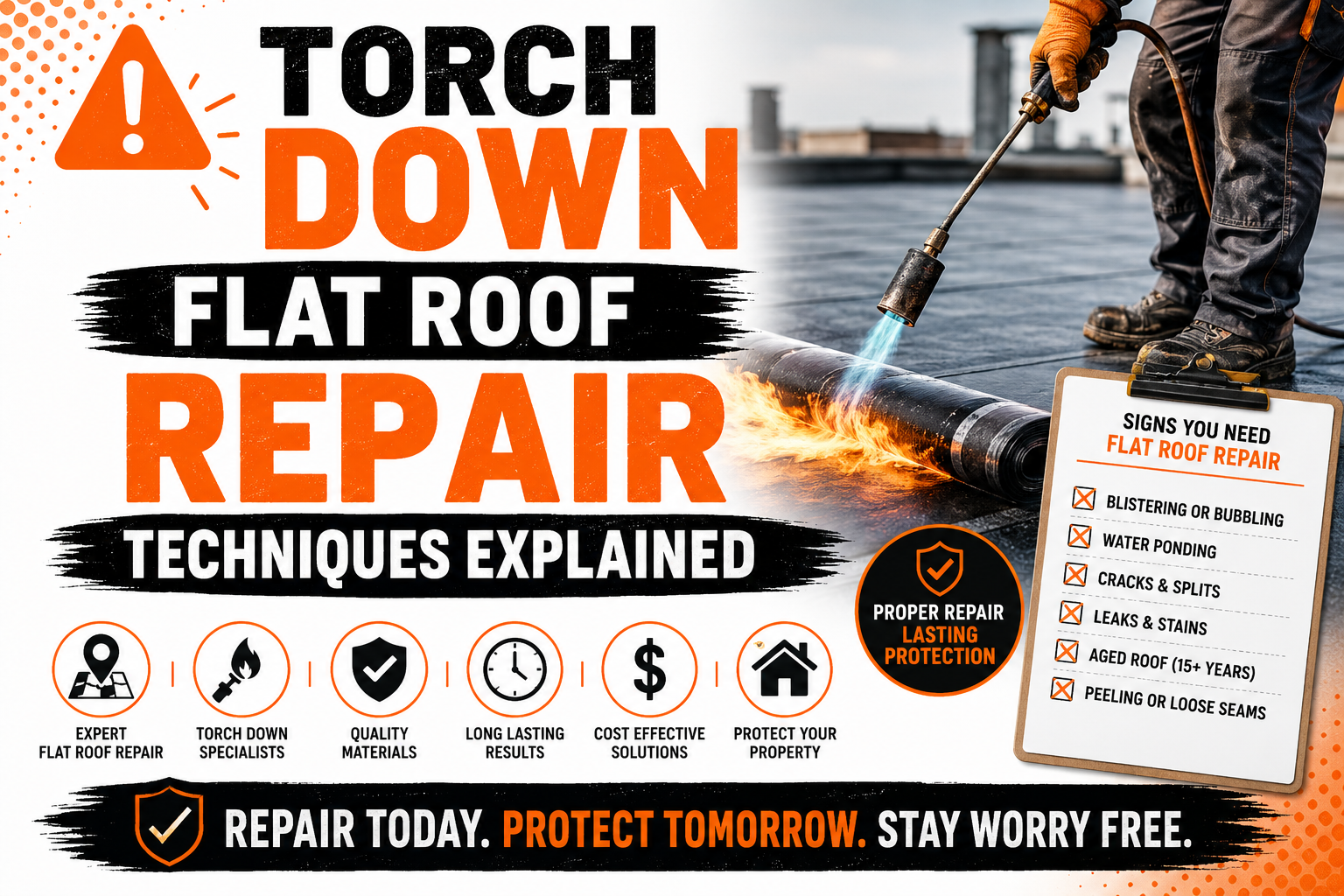
Torch Down Flat Roof Repair Techniques Explained
Introduction
Torch down roofing is one of the most durable and widely used flat roofing systems for commercial buildings, garages, apartment complexes, and low slope residential properties. Its multi layer construction, excellent waterproofing capabilities, and resistance to harsh weather conditions make it a dependable choice for property owners seeking long term roof protection. When installed correctly and maintained regularly, a torch down roof can provide reliable performance for decades.
Despite its durability, no roofing system is immune to wear and damage. Years of exposure to sunlight, heavy rainfall, temperature fluctuations, strong winds, and routine roof traffic gradually affect the roofing membrane. Small issues such as cracked seams, punctures, flashing damage, or membrane deterioration may initially appear minor, but they can quickly develop into serious leaks if repairs are delayed.
Many property owners mistakenly believe a torch down roof only requires attention once water begins dripping inside the building. In reality, moisture often penetrates beneath the roofing membrane long before visible interior damage appears. By the time ceiling stains or damp insulation become noticeable, the roofing system may already require more extensive restoration than a simple surface repair.
Proper repair techniques are essential for preserving the waterproof integrity of a torch down roof. Because this roofing system relies on heat fused membrane layers to create a continuous protective barrier, repairs must be completed using compatible materials and proven installation methods. Temporary fixes or poorly executed repairs often fail to restore long term performance and may even create additional roofing problems.
Understanding how torch down roofing systems function, why damage develops, and how repairs should be performed helps property owners make informed maintenance decisions. Prompt repairs reduce long term ownership costs, protect structural components, and extend the overall lifespan of the roofing system.
This guide explains the structure of torch down roofing, the common causes of damage, the warning signs that indicate repairs are needed, and why addressing roofing problems early is critical. Later sections will examine professional inspection methods, repair techniques, preventive maintenance practices, and the situations in which repair provides a better solution than complete roof replacement.
Understanding Torch Down Flat Roofing Systems
Torch down roofing is a modified bitumen roofing system designed specifically for flat and low slope roofs. It consists of reinforced asphalt based membranes that are heat bonded together using a propane torch during installation. This process creates strong waterproof seams that help protect the building from moisture infiltration.
Modified bitumen combines traditional asphalt with polymer modifiers that improve flexibility, durability, and weather resistance. These enhancements allow the roofing membrane to expand and contract as temperatures change while maintaining its waterproof properties throughout different seasons.
Most torch down roofing systems consist of multiple layers working together as a complete roofing assembly. A base sheet is first installed over the roof deck or insulation, followed by one or more modified bitumen cap sheets that provide additional waterproof protection and resistance to environmental exposure. The finished surface often includes mineral granules that shield the membrane from ultraviolet radiation and physical wear.
Unlike single ply roofing systems that depend on adhesives or mechanical fasteners, torch down roofing creates heat welded bonds between membrane layers. Properly fused seams form a continuous waterproof barrier capable of resisting heavy rainfall, standing water, and changing weather conditions.
Torch down roofing performs particularly well on commercial properties because of its strength and puncture resistance. Buildings with rooftop equipment, maintenance traffic, or occasional service access often benefit from the membrane’s durability compared with lighter roofing materials.
The roofing system also relies on supporting components such as flashing, insulation, roof drains, and expansion joints. These elements work together to maintain waterproof performance while accommodating natural building movement and directing water safely away from the roof.
Because torch down roofing functions as an integrated system, damage affecting even one component may eventually influence the performance of surrounding roofing materials. Maintaining every part of the assembly helps preserve the roof’s long term reliability.
Why Torch Down Roofs Become Damaged
Although torch down roofing is designed for durability, continuous environmental exposure gradually affects every roofing system. Damage usually develops through the combined effects of weather, aging, structural movement, and everyday use rather than from a single isolated event.
Natural aging remains one of the primary reasons torch down roofs eventually require repairs. Over many years, repeated exposure to sunlight, rain, and seasonal temperature changes slowly reduces the flexibility of roofing materials. As membranes become less resilient, they become more susceptible to surface cracking and seam deterioration.
Ultraviolet radiation contributes significantly to long term aging. While the mineral granule surface protects the underlying membrane, years of direct sunlight gradually weaken exposed roofing materials. Areas where protective granules have worn away often deteriorate more rapidly than the surrounding roof.
Thermal movement places continuous stress on the roofing system. Daily heating causes the membrane to expand slightly, while nighttime cooling results in contraction. Thousands of these expansion and contraction cycles gradually affect seams, flashing, and roof transitions.
Standing water also accelerates deterioration. Although torch down roofs are designed to resist moisture, prolonged ponding places additional stress on seams and membrane surfaces. Poor drainage allows water to remain on the roof longer than intended, increasing the likelihood of future leaks.
Strong winds contribute another source of long term stress. Wind uplift repeatedly flexes roofing materials, particularly near roof edges, corners, and parapet walls. Over time, this movement may weaken flashing attachments or create localized membrane separation.
Mechanical damage frequently occurs during routine building maintenance. Service technicians accessing rooftop HVAC units, communication equipment, or solar panels may accidentally puncture or scrape the membrane with tools or equipment. Even minor damage should be repaired promptly to maintain waterproof protection.
Improper previous repairs sometimes shorten roof lifespan as well. Using incompatible materials or applying temporary patches instead of permanent repairs often creates weak points that deteriorate faster than the surrounding roofing system.
Recognizing these causes helps property owners understand why regular inspections remain essential even when no visible leaks are present.
Common Types of Torch Down Roof Damage
Torch down roofing systems may experience several different forms of damage throughout their service life. Identifying the specific problem helps determine the most effective repair method while preventing unnecessary replacement of otherwise healthy roofing sections.
Surface cracks are among the most common forms of deterioration. As roofing materials age and lose flexibility, small cracks may develop within the membrane surface. While these cracks often begin as minor defects, they gradually enlarge under continued weather exposure if repairs are delayed.
Membrane punctures typically result from falling debris, dropped tools, construction activities, or heavy rooftop equipment. Even small punctures create direct pathways for water to enter the roofing system and should be repaired before moisture spreads beneath the membrane.
Seam separation represents another significant concern. Since torch down roofing relies on heat fused seams for waterproof protection, any separation reduces the roof’s ability to resist water infiltration. Poor installation, thermal movement, or aging materials may all contribute to seam failure.
Flashing damage commonly appears around roof penetrations such as vents, skylights, HVAC equipment, and drainage components. These transitions experience greater movement than open roof surfaces, making them more vulnerable to stress related deterioration.
Blistering occasionally develops when moisture or trapped gases become sealed beneath the membrane. Some blisters remain stable for extended periods, while others continue expanding until the membrane ruptures. Professional evaluation determines whether monitoring or immediate repair is the appropriate response.
Granule loss also deserves attention. Mineral granules protect modified bitumen membranes from ultraviolet exposure and physical wear. As granules gradually loosen over time, the underlying membrane becomes more vulnerable to weather related deterioration.
Pooling water may contribute to multiple forms of damage simultaneously. Areas where water consistently remains after rainfall often experience accelerated membrane aging, seam stress, and increased risk of leaks.
Each type of damage affects the roofing system differently. Proper diagnosis ensures repairs address both the visible defect and any underlying conditions contributing to the problem.
Early Warning Signs That a Torch Down Roof Needs Repairs
Most torch down roofing systems provide noticeable warning signs before serious leaks develop. Recognizing these indicators allows property owners to arrange repairs while problems remain localized and more affordable to correct.
Visible membrane cracking often represents one of the earliest signs of deterioration. Fine surface cracks may initially appear cosmetic, but they frequently indicate that the roofing material is becoming less flexible because of age and weather exposure. Addressing these defects early helps prevent them from expanding into larger openings.
Loose or separated seams also require prompt attention. Since seams form the waterproof connections between membrane sections, even slight separation increases the possibility of moisture entering the roofing assembly during rainfall.
Changes in the roof’s appearance may provide additional clues. Discoloration, excessive granule loss, blister formation, or uneven membrane surfaces often suggest that the roofing system is beginning to experience weather related deterioration.
Standing water remaining on the roof for more than forty eight hours after rainfall should never be ignored. Persistent ponding increases stress on roofing materials while creating conditions that accelerate membrane aging and seam deterioration.
Damaged flashing around roof penetrations frequently signals developing waterproofing problems. Cracked sealants, lifting membrane edges, or loose flashing components should be inspected before water reaches underlying roofing materials.
Interior warning signs often appear only after hidden moisture has already spread beneath the membrane. Ceiling stains, damp insulation, peeling paint, mold growth, musty odors, or unexplained increases in indoor humidity may all indicate that the roof has begun allowing water into the building.
Higher energy bills sometimes provide another subtle warning. Wet insulation resulting from hidden roof leaks loses much of its thermal efficiency, forcing heating and cooling systems to operate longer than normal.
Routine inspections help identify these warning signs before they develop into extensive roofing failures. Early detection consistently reduces repair costs while preserving the overall condition of the roofing system.
Why Timely Torch Down Roof Repairs Are Important
Delaying repairs on a torch down roof often transforms minor maintenance issues into much larger restoration projects. What begins as a small crack, puncture, or flashing defect can gradually allow moisture to enter the roofing system, affecting components well beyond the visible damage.
One of the greatest risks associated with postponed repairs is hidden water migration. Moisture entering through a small membrane opening rarely remains directly beneath the damaged area. Instead, it spreads through insulation layers and across the roof assembly before eventually becoming visible inside the building.
Wet insulation quickly loses its ability to regulate indoor temperatures. Reduced thermal performance increases energy consumption while making heating and cooling systems work harder throughout the year. Prompt repairs help preserve insulation efficiency and reduce unnecessary operating costs.
Structural components also benefit from early intervention. Roof decking, fasteners, flashing, and supporting materials remain protected when moisture is prevented from penetrating the roofing assembly. Once these components begin deteriorating, repairs become considerably more expensive because restoration extends beyond the roofing membrane itself.
Interior building damage presents another significant concern. Ceiling finishes, drywall, flooring, electrical systems, furniture, inventory, and sensitive equipment may all suffer water damage if roof leaks continue unchecked. Commercial properties often experience additional financial losses through interrupted operations and reduced productivity during repair work.
Timely repairs also help maximize the lifespan of the roofing system. Localized restoration places less stress on surrounding membrane sections than repeated emergency patches applied after widespread deterioration has already occurred. Well maintained torch down roofs often provide reliable service for many years when minor issues receive prompt attention.
Routine maintenance may also support manufacturer warranty requirements. Many roofing warranties expect property owners to perform regular inspections and address developing damage before it becomes extensive. Ignoring obvious maintenance needs can affect warranty protection if larger failures occur later.
Investing in timely repairs ultimately protects both the roof and the building beneath it. By correcting small problems before moisture spreads through the roofing assembly, property owners reduce long term maintenance costs while preserving the strength, durability, and waterproof performance of their torch down roofing system. In the next part, we will examine how professionals inspect torch down roofs before repairs, the repair techniques used for different types of damage, the materials involved, common repair mistakes to avoid, and the preventive maintenance practices that help extend the life of a torch down roof.
Inspecting a Torch Down Roof Before Repairs
Every successful torch down roof repair begins with a detailed inspection. Repairing only the visible damage without identifying the underlying cause often leads to recurring problems because hidden defects remain within the roofing system. A thorough inspection helps contractors determine the full extent of the damage and select the most effective repair method.
Professional inspections usually begin with a visual assessment of the entire roof surface. Contractors examine the membrane for cracks, punctures, blistering, granule loss, open seams, flashing deterioration, and signs of prolonged standing water. Instead of focusing only on reported leak locations, they inspect surrounding areas because water frequently travels beneath the membrane before becoming visible inside the building.
Roof penetrations receive special attention during the inspection. HVAC units, vents, skylights, plumbing pipes, and electrical conduits interrupt the roofing membrane and create areas where movement is more likely to occur. Flashing around these components is carefully evaluated for lifting edges, cracked sealants, or membrane separation.
Drainage systems are also inspected thoroughly. Roof drains, scuppers, gutters, and downspouts must remove water efficiently to prevent ponding. Any debris, blockages, or drainage deficiencies identified during the inspection should be corrected because poor drainage accelerates membrane deterioration.
If hidden moisture is suspected, contractors may use specialized equipment to investigate conditions beneath the roofing surface. Infrared imaging identifies temperature variations associated with wet insulation, while moisture meters and electronic leak detection help locate concealed water without removing large sections of the roof.
Interior inspections often provide additional information. Water stains, peeling paint, damp ceiling materials, mold growth, or musty odors may help trace the path of water infiltration beneath the roofing membrane. Since the point where water enters the roof rarely matches the location of interior leaks, combining interior and exterior observations improves diagnostic accuracy.
Photographs, measurements, and written observations are typically compiled into a detailed inspection report. This documentation helps property owners understand the roof’s condition while supporting maintenance planning and future repair decisions.
Repair Techniques for Different Types of Torch Down Roof Damage
Torch down roofing damage varies in severity, location, and cause, so repair methods must be selected accordingly. Using the correct repair technique ensures the roofing system regains its waterproof integrity while maintaining compatibility with the existing membrane.
Small surface cracks are often repaired by cleaning the damaged area and applying compatible modified bitumen repair materials. The surrounding membrane is prepared carefully to ensure proper adhesion before the repair is completed. Once finished, the repaired section restores waterproof protection while maintaining flexibility during temperature changes.
Minor punctures usually require localized patch repairs. Contractors remove loose material, prepare the surrounding membrane, and install a properly sized modified bitumen patch that extends beyond the damaged area. Heat is carefully applied to bond the new material securely to the existing roof, creating a continuous waterproof seal.
Seam separation requires particular attention because seams represent the primary waterproof connections between roofing sheets. Loose sections are reheated when appropriate or repaired using compatible modified bitumen materials to restore a secure bond. Proper fusion of repaired seams helps prevent future water infiltration.
Blister repairs depend on the condition of the affected area. Stable blisters that remain fully sealed may only require monitoring if they do not affect roof performance. Larger blisters containing trapped moisture often require controlled removal of damaged materials, replacement of wet insulation if necessary, and installation of new membrane sections.
Flashing repairs are common around roof penetrations and roof edges. Damaged flashing is removed and replaced with new compatible materials that integrate seamlessly with the surrounding roofing system. Proper flashing installation ensures waterproof transitions around vents, skylights, drains, and equipment curbs.
Repairs involving saturated insulation require additional work beneath the membrane. Wet insulation must be removed because it permanently loses much of its thermal performance after prolonged moisture exposure. New insulation is installed before the roofing membrane is restored, ensuring the repaired section performs as intended.
Every completed repair undergoes careful inspection before the project is considered finished. Contractors verify membrane adhesion, seam integrity, flashing performance, and overall waterproof continuity to ensure the repaired area provides reliable long term protection.
Materials Commonly Used in Torch Down Roof Repairs
Professional torch down roof repairs rely on compatible materials specifically designed for modified bitumen roofing systems. Using the correct products ensures repairs remain durable while maintaining flexibility and waterproof performance throughout changing weather conditions.
The following table summarizes the materials commonly used during torch down roof repairs and their primary purposes.
| Repair Material | Primary Purpose | Typical Application |
|---|---|---|
| Modified Bitumen Repair Patch | Repairs punctures, cracks, and damaged membrane sections | Localized membrane restoration |
| Modified Bitumen Cap Sheet | Replaces larger damaged roofing areas | Partial membrane replacement |
| Roofing Primer | Improves adhesion before repairs | Surface preparation |
| Asphalt Roofing Cement | Seals small repair areas and flashing details | Supplemental waterproofing |
| Metal Flashing | Restores waterproof transitions | Roof penetrations, edges, and parapet walls |
| Roofing Granules | Protect repaired membrane from ultraviolet exposure | Surface finishing on repaired sections |
Selecting compatible materials is essential because torch down roofing depends on heat fused waterproof connections. Products designed specifically for modified bitumen systems provide the flexibility and durability necessary for long lasting repairs.
Using incompatible materials or temporary sealants often creates weak points that fail under normal weather conditions. Professional contractors follow manufacturer recommendations to ensure repair materials integrate properly with the existing roofing system.
Common Mistakes to Avoid During Torch Down Roof Repairs
Even relatively small repair projects require careful preparation and proper installation techniques. Avoiding common mistakes significantly improves repair durability while reducing the likelihood of recurring roofing problems.
One frequent mistake involves repairing dirty roofing surfaces. Dust, loose granules, moisture, oils, and debris interfere with proper bonding between repair materials and the existing membrane. Thorough surface preparation remains one of the most important steps in achieving successful repairs.
Attempting repairs during unsuitable weather conditions creates another challenge. Moisture trapped beneath repair materials weakens adhesion and reduces long term waterproof performance. Roofing professionals carefully evaluate weather conditions before beginning heat applied repairs.
Using incompatible repair materials often results in premature failure. Generic sealants or products intended for different roofing systems may appear effective initially but frequently lack the flexibility and weather resistance required for modified bitumen roofing. Manufacturer approved materials provide much more reliable results.
Ignoring hidden moisture beneath damaged membrane sections also creates long term problems. Covering visible defects without replacing saturated insulation or correcting drainage issues allows deterioration to continue beneath the repaired area. Comprehensive repairs address both the membrane and any underlying damage.
Insufficient patch overlap reduces repair strength. Repair patches should extend well beyond the damaged section to distribute stress evenly across the repaired area. Small patches placed directly over defects experience concentrated movement that may shorten repair lifespan.
Poor heat application represents another common issue. Excessive heat may damage surrounding roofing materials, while insufficient heat prevents proper bonding between membrane layers. Experienced contractors apply controlled heat to create strong waterproof seams without compromising the roofing system.
Perhaps the most costly mistake is delaying repairs after damage has been identified. Minor cracks, loose seams, punctures, or flashing defects rarely remain unchanged. Addressing problems promptly helps prevent hidden moisture infiltration and much more extensive restoration work later.
Preventive Maintenance to Extend the Life of a Torch Down Roof
Preventive maintenance remains the most effective strategy for maximizing the lifespan of a torch down roofing system. Routine inspections and timely repairs help preserve membrane integrity while reducing emergency maintenance expenses.
A structured maintenance program also protects insulation, flashing, drainage components, and other critical parts of the roofing system that contribute to long term performance.
Recommended preventive maintenance practices include:
- Schedule professional roof inspections at least twice each year.
- Remove leaves, branches, dirt, and debris from the roof surface regularly.
- Keep roof drains, scuppers, gutters, and downspouts clean to prevent standing water.
- Inspect seams, flashing, and roof penetrations after major storms.
- Repair cracks, punctures, and loose seams as soon as they are discovered.
- Limit unnecessary roof traffic and use designated walkway pads where frequent access is required.
- Maintain complete records of inspections, repairs, and maintenance activities.
Property owners should also ensure that contractors servicing rooftop equipment understand how to work safely on modified bitumen roofing systems. Preventing accidental membrane damage during maintenance visits helps preserve the roof’s waterproof performance.
Routine cleaning further supports roof longevity by improving drainage and making developing defects easier to identify during inspections. Clean roofing surfaces allow contractors to detect early signs of deterioration before they become major repair projects.
Preventive maintenance is not only about avoiding leaks. It also protects energy efficiency, preserves structural components, reduces operating costs, and helps torch down roofing systems reach or exceed their expected service life.
As torch down roofs continue to age, however, some eventually require more than routine repairs. In the final part of this guide, we will examine when a torch down roof can be repaired instead of replaced, discuss best practices for achieving long lasting repairs, explain how to choose a qualified roofing contractor, review long term maintenance after repairs, and conclude with practical recommendations for protecting a torch down flat roofing system for years to come.
When a Torch Down Roof Can Be Repaired Instead of Replaced
Discovering damage on a torch down roof does not necessarily mean the entire roofing system must be replaced. In many situations, professional repairs restore the roof’s waterproof integrity and extend its service life without the expense of a complete replacement. The decision depends on the extent of the damage, the age of the roof, and the condition of the underlying roofing components.
Localized damage is often well suited for repair. Small punctures, isolated cracks, limited seam separation, or flashing defects can usually be corrected without affecting the rest of the roofing system. When the surrounding membrane remains firmly bonded and structurally sound, targeted repairs provide an effective and economical solution.
Early leak detection also increases the likelihood that repairs will be sufficient. If water has not spread beneath large sections of the membrane or saturated significant areas of insulation, contractors can repair the affected section while preserving the remainder of the roof. Acting quickly reduces both repair costs and project complexity.
The overall condition of the roof is another important consideration. A torch down roof that has been maintained properly and only exhibits isolated areas of wear often continues providing dependable performance after professional repairs. Replacing an otherwise healthy roofing system would offer little practical benefit in these cases.
Replacement becomes more appropriate when damage is widespread. Multiple recurring leaks, extensive membrane deterioration, repeated seam failures, severe granule loss, or widespread moisture beneath the roofing assembly often indicate that the roof has reached the end of its practical service life. Continuing to patch numerous areas may become less cost effective than installing a new roofing system.
Moisture damaged insulation and structural components also influence the decision. If prolonged leaks have affected the roof deck or supporting materials, simply repairing the membrane does not restore the roofing assembly completely. Comprehensive replacement allows damaged materials to be removed while rebuilding the roof with modern components.
Future maintenance costs should also be considered. A roof requiring frequent emergency repairs may ultimately cost more over several years than replacing it with a new system designed for long term reliability. Looking beyond immediate repair expenses supports better long term investment decisions.
Professional roof assessments provide the information needed to choose between repair and replacement. Contractors evaluate membrane condition, insulation moisture levels, structural integrity, repair history, and expected remaining service life before recommending the most practical approach.
Best Practices for Long Lasting Torch Down Roof Repairs
The durability of a torch down roof repair depends on proper planning, quality materials, and skilled workmanship. Following proven repair practices helps ensure repaired sections remain reliable through changing weather conditions and years of normal roof movement.
The following recommendations support long lasting torch down roof repairs:
- Perform a complete roof inspection before beginning repairs to identify both visible and hidden damage.
- Clean and prepare the repair area thoroughly to ensure proper bonding between existing and new roofing materials.
- Use only compatible modified bitumen membranes, primers, flashing materials, and repair products designed for torch down roofing systems.
- Replace any moisture damaged insulation or deteriorated roof decking before restoring the membrane.
- Ensure repair patches extend beyond the damaged area to distribute stress evenly across the roofing surface.
- Apply controlled heat carefully to create strong waterproof seams without damaging surrounding roofing materials.
- Inspect repaired areas after severe weather to verify that seams, flashing, and membrane sections remain fully intact.
- Continue routine maintenance inspections even after repairs have been completed to identify future issues early.
Following these practices improves repair quality while reducing the likelihood of recurring leaks. Consistent maintenance also allows repaired sections to perform effectively alongside the original roofing system for many additional years.
Property owners should remember that even professionally repaired roofs continue aging. Routine inspections remain essential for identifying new concerns before they develop into larger roofing problems.
Choosing a Professional Torch Down Roofing Contractor
Torch down roofing requires specialized installation and repair techniques that differ from many other flat roofing systems. Selecting an experienced roofing contractor helps ensure repairs restore the roof’s waterproof integrity while preserving the long term performance of the roofing system.
A qualified contractor begins with a comprehensive roof inspection rather than immediately recommending repairs. Understanding the source of damage allows repairs to address the underlying issue instead of simply covering visible defects. This approach reduces the likelihood of recurring leaks while improving overall roof reliability.
Experience with modified bitumen roofing systems is particularly important. Torch down roofs require proper heat application, membrane preparation, flashing installation, and seam fusion to achieve durable waterproof protection. Contractors familiar with these techniques are better equipped to perform repairs that withstand years of environmental exposure.
Clear communication also reflects professional service. Reliable contractors explain inspection findings, discuss available repair options, provide realistic project timelines, and outline future maintenance recommendations. Written reports help property owners understand both the current roof condition and the expected performance of completed repairs.
Manufacturer approved materials should always be used whenever possible. Compatible membranes, primers, flashing components, and repair products provide better adhesion, flexibility, and weather resistance than substitute materials that may not perform as intended.
Safety standards are equally important during torch down roofing work because open flame equipment is used throughout the repair process. Experienced contractors follow established fire safety procedures, monitor surrounding conditions carefully, and use appropriate protective measures to reduce project risks.
Many professional roofing companies also offer scheduled maintenance programs that include regular inspections, preventive repairs, drainage evaluations, and condition reports. These services help identify developing issues before they become major restoration projects.
Building long term relationships with experienced roofing contractors often provides additional value. Familiarity with the building’s repair history allows contractors to monitor aging trends more accurately while recommending maintenance strategies that extend roof lifespan.
Long Term Maintenance After Torch Down Roof Repairs
Completing a successful repair is only one step in preserving a torch down roofing system. Long term performance depends on consistent maintenance that protects repaired areas while maintaining the overall condition of the roof. Preventive care remains the most effective strategy for reducing future repair costs.
Routine inspections should continue throughout the roof’s remaining service life. Seasonal evaluations allow contractors to confirm that repaired sections remain secure while identifying any new signs of membrane aging, seam movement, or flashing deterioration before they become significant issues.
Keeping the roof clean also contributes to long term performance. Leaves, branches, dirt, and other debris trap moisture against the membrane while reducing drainage efficiency. Regular cleaning minimizes prolonged moisture exposure and makes developing roofing defects easier to identify during inspections.
Drainage systems require ongoing attention as well. Roof drains, scuppers, gutters, and downspouts should remain free from obstructions so rainwater flows away quickly after storms. Efficient drainage reduces standing water, which is one of the primary contributors to premature membrane aging.
Roof access should be carefully controlled to prevent accidental damage. Maintenance personnel servicing rooftop equipment should use designated walkways whenever possible and avoid dragging heavy tools across the membrane. Simple precautions help preserve both repaired areas and the original roofing system.
Nearby vegetation should also be monitored. Overhanging branches may scrape the membrane during strong winds, while leaves and small debris increase the likelihood of clogged drains. Routine tree maintenance reduces these risks while improving overall roof cleanliness.
Property owners should remain alert for subtle changes inside the building as well. Ceiling stains, damp insulation, musty odors, peeling paint, or unexplained increases in indoor humidity may indicate developing roofing issues before major structural damage occurs. Prompt investigation protects both the roof and the building interior.
Maintaining organized service records strengthens long term roof management. Inspection reports, repair documentation, warranty information, and maintenance schedules provide valuable references that support future budgeting and help contractors evaluate roof performance over time.
A proactive maintenance program protects much more than the roofing membrane. It preserves insulation efficiency, safeguards structural components, improves energy performance, reduces emergency repair costs, and helps the torch down roofing system achieve its maximum expected service life.
Conclusion
Torch down roofing systems provide exceptional durability, weather resistance, and waterproof protection for commercial and residential flat roofs, but even these dependable systems require proper maintenance and timely repairs to continue performing effectively. Surface cracks, punctures, seam separation, flashing deterioration, blistering, and drainage problems can all compromise the roofing membrane if left unresolved. Recognizing these issues early allows property owners to prevent minor defects from developing into costly structural repairs.
Throughout this guide, we explored how torch down roofing systems are constructed, the common causes of damage, the warning signs that indicate repairs are needed, professional inspection methods, repair techniques, compatible materials, maintenance practices, and the factors that determine whether repair or replacement is the better long term solution. Each stage of the repair process contributes to restoring the roof’s waterproof integrity while preserving the overall roofing system.
Successful torch down roof repairs depend on more than simply covering damaged areas. Proper diagnosis, careful surface preparation, compatible modified bitumen materials, controlled heat application, and skilled workmanship all work together to create durable repairs capable of withstanding years of environmental exposure. Regular inspections and preventive maintenance further increase the effectiveness of these repairs by identifying new concerns before they become significant problems.
The most reliable way to protect a torch down flat roof is through proactive maintenance rather than reactive emergency repairs. By addressing damage promptly, maintaining effective drainage, limiting unnecessary roof traffic, and working with experienced roofing professionals, property owners can extend roof lifespan, reduce long term maintenance costs, improve building performance, and keep their properties protected through every season.