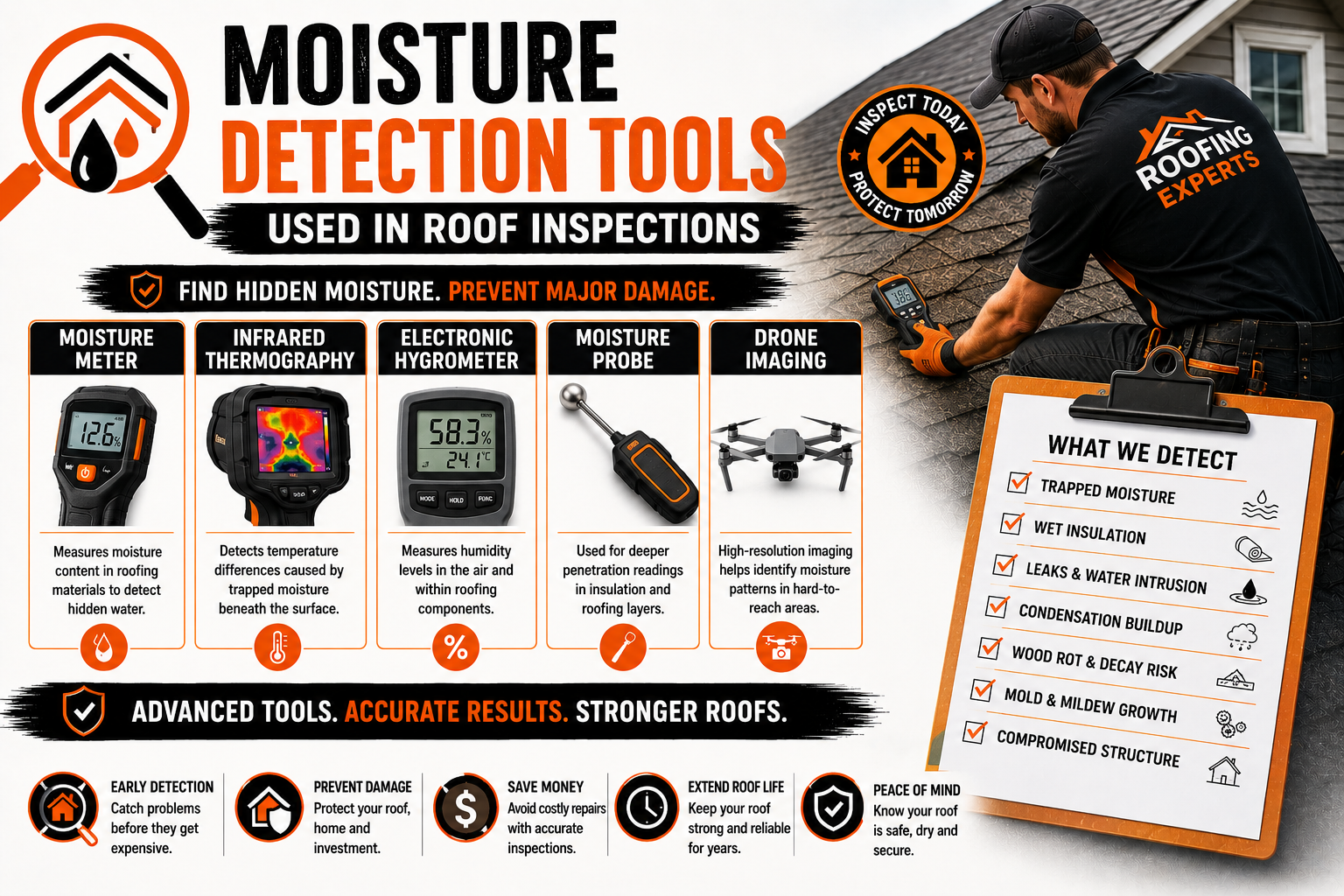
Moisture Detection Tools Used in Roof Inspections
Introduction
A roof protects every part of a home or commercial building from rain, wind, snow, and changing weather conditions. While most property owners pay attention to visible roof damage such as missing shingles or obvious leaks, hidden moisture often causes far more expensive problems over time. Water can travel beneath roofing materials, soak insulation, weaken structural components, and create ideal conditions for mold growth long before visible signs appear inside the property.
Modern roof inspections have evolved far beyond simple visual assessments. Professional inspectors now use specialized moisture detection tools that help locate hidden water intrusion without removing large portions of the roofing system. These advanced technologies provide accurate information about moisture levels, allowing property owners to repair affected areas before the damage spreads further.
Moisture detection has become an essential part of preventive roof maintenance because hidden water rarely remains in one location. Once moisture enters a roofing system, it often follows unexpected paths through insulation, decking, framing, and structural joints. This movement makes leaks difficult to identify through visual inspection alone, which is why specialized equipment has become a standard part of professional roof evaluations.
Understanding how these tools work helps homeowners and property managers appreciate the value of comprehensive roof inspections. Instead of relying on guesswork, inspectors gather measurable data that supports repair recommendations and helps extend the lifespan of the roofing system. Throughout this guide, we will explore the most effective moisture detection tools used in roof inspections, explain their advantages, and discuss how they contribute to accurate roof assessments.
Understanding Why Moisture Detection Matters in Roof Inspections
Moisture is one of the most destructive elements affecting roofing systems because it often remains hidden while continuously damaging building materials. Even a small roof leak can gradually saturate insulation, weaken wooden decking, corrode metal fasteners, and reduce the overall performance of the roof. By the time interior water stains appear, significant damage may already exist beneath the surface.
Professional roof inspections aim to identify moisture before it creates structural or financial problems. Early detection allows contractors to repair localized damage instead of replacing large sections of the roof. This proactive approach saves money while protecting the long-term integrity of the building.
Hidden moisture also affects energy efficiency. Wet insulation loses much of its thermal resistance, forcing heating and cooling systems to work harder throughout the year. As utility costs increase, homeowners may not realize that trapped roof moisture is contributing to higher monthly energy bills.
Beyond structural concerns, excess moisture creates conditions that encourage mold and mildew growth. These biological contaminants can spread into ceilings, walls, and ventilation systems, affecting indoor air quality and potentially creating health concerns for building occupants. Identifying moisture before mold develops is far less expensive than dealing with widespread remediation later.
Another important reason for moisture detection involves preserving roofing warranties. Many manufacturers require routine inspections and timely repairs to maintain warranty coverage. Detecting hidden moisture early helps property owners address developing problems before they become severe enough to void warranty protections.
How Water Travels Through Roofing Systems
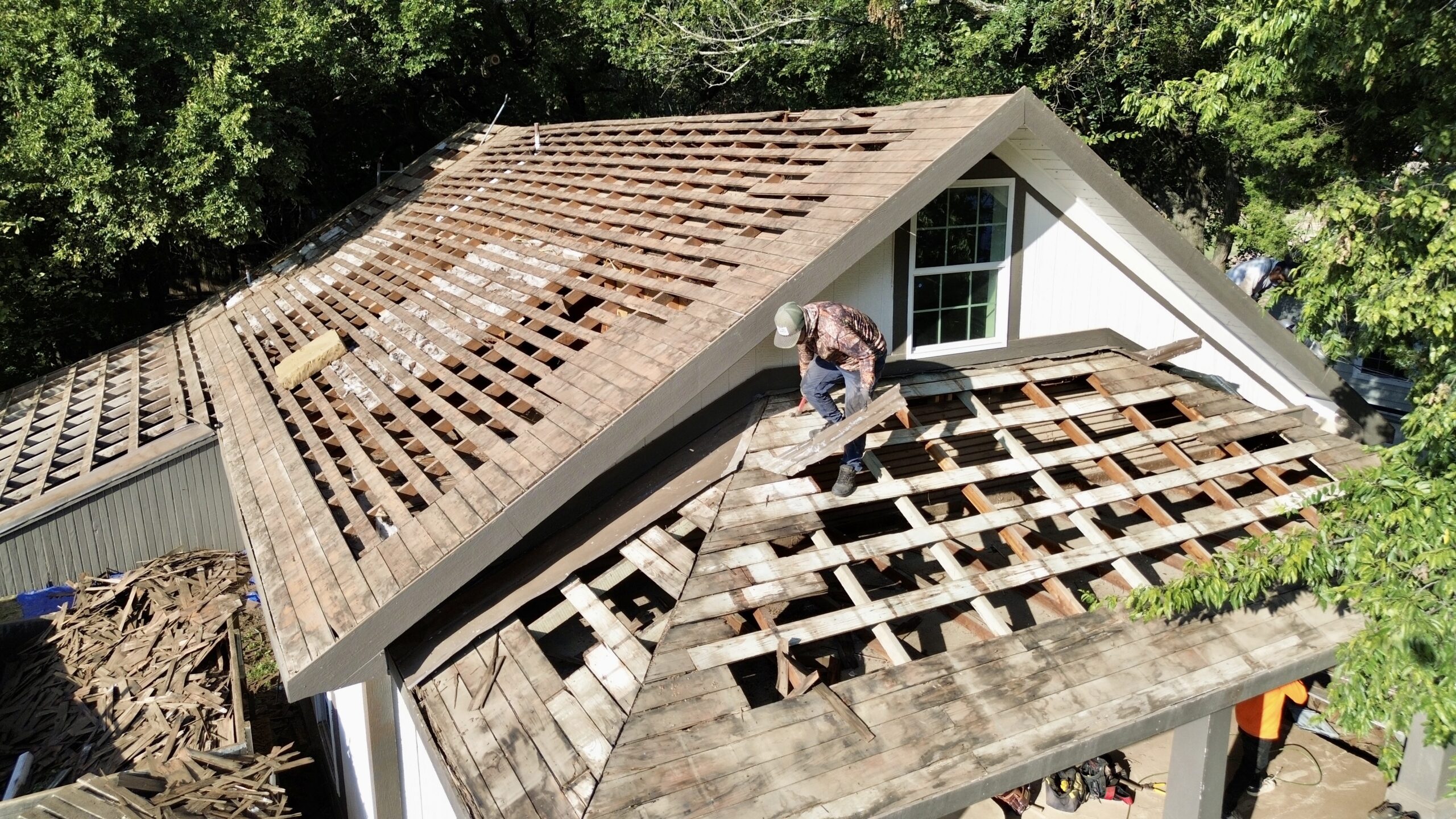
Many homeowners assume that roof leaks occur directly above the area where water appears inside the building. In reality, water rarely follows a straight path after entering the roof. Understanding how moisture moves through roofing systems explains why professional detection equipment is necessary.
Water typically enters through small openings created by damaged shingles, deteriorated flashing, cracked sealants, loose fasteners, or storm damage. Once inside, gravity, wind pressure, insulation density, and structural framing influence the direction of moisture movement.
Instead of dripping immediately into a room below, water often travels horizontally across roof decking before reaching an opening where it can enter the building. This means the visible ceiling stain may be several feet away from the actual entry point.
Flat roofs present additional challenges because water can migrate beneath roofing membranes without becoming visible. Moisture may spread across large sections of insulation before signs appear on the building interior. By then, significant portions of the roofing system may already require repair.
Steep-slope roofs also experience hidden moisture movement. Water may travel beneath underlayment, around nail penetrations, and along rafters before reaching ceilings or walls. These concealed pathways make leak detection difficult without specialized inspection tools.
Seasonal weather changes further complicate moisture movement. During freezing temperatures, trapped water expands as it turns into ice, creating larger cracks and openings that allow additional moisture to enter. Repeated freeze and thaw cycles accelerate roof deterioration while expanding hidden damage.
Understanding these moisture pathways helps explain why professional inspectors evaluate the entire roofing system instead of focusing only on visible leak locations. Their goal is to identify the original source of water intrusion and assess how extensively moisture has spread throughout the roof assembly.
Common Sources of Hidden Roof Moisture
Roof moisture does not always originate from dramatic storm damage. In many cases, water enters through gradual deterioration that develops over several years. Identifying these common entry points allows inspectors to focus on areas with the highest risk of hidden moisture accumulation.
One of the most frequent sources involves aging roofing materials. As shingles, membranes, or metal panels deteriorate over time, they become more vulnerable to cracking, shrinking, and separation. Even small defects can allow rainwater to enter beneath the roof covering.
Flashing failures represent another major cause of hidden moisture. Flashing protects roof penetrations such as chimneys, skylights, vents, and valleys where different roof sections meet. When flashing corrodes, loosens, or develops gaps, water often enters unnoticed until extensive damage has occurred.
Roof penetrations also require continuous attention because sealants naturally deteriorate after years of exposure to sunlight and weather. Vent pipes, HVAC equipment, satellite mounts, and solar panel attachments all create potential entry points for moisture if seals begin to fail.
Improper drainage contributes significantly to hidden moisture problems, particularly on low-slope and flat roofing systems. Standing water increases the amount of time moisture remains in contact with roofing materials, making small defects more likely to develop into leaks.
Clogged gutters and downspouts may seem unrelated to roof leaks, but they often force water beneath roof edges and flashing. Overflowing water can saturate fascia boards, soffits, and roof decking without immediately becoming visible inside the building.
Storm damage should never be overlooked, even when the roof appears intact after severe weather. High winds may loosen shingles without removing them completely, while hail can create small impact fractures that gradually allow moisture infiltration over time.
Construction defects also contribute to moisture intrusion. Poor installation techniques, inadequate ventilation, improper flashing placement, or incorrect fastener spacing may leave roofing systems vulnerable long before visible damage develops.
Early Warning Signs That Suggest Moisture Is Present
Although specialized equipment provides the most accurate moisture assessment, many roofing problems begin with subtle warning signs. Recognizing these indicators allows homeowners to schedule inspections before extensive deterioration occurs.
Interior ceiling stains remain one of the most recognizable signs of roof moisture. However, discoloration often appears only after water has already traveled through insulation and structural components. The visible stain usually represents a much larger hidden problem above the ceiling.
Peeling paint and bubbling drywall frequently indicate prolonged moisture exposure. As water becomes trapped within walls or ceilings, building materials begin losing their bond, causing surfaces to separate and deteriorate gradually.
Musty odors inside attics or upper floors can signal hidden moisture even when no water stains are visible. Persistent damp smells often indicate wet insulation or developing mold growth within concealed roof spaces.
Unexpected increases in indoor humidity may also point toward roof moisture problems. Buildings with hidden leaks sometimes retain excess moisture that affects overall indoor comfort despite normal heating and cooling operation.
Exterior roof changes deserve equal attention during routine property maintenance. Curled shingles, lifted flashing, cracked sealants, and sagging roof sections often indicate areas where moisture has already compromised roofing materials.
The following warning signs should never be ignored:
- Water stains on ceilings or upper walls
- Persistent musty odors indoors
- Bubbling paint or peeling wallpaper
- Sagging ceiling surfaces
- Mold growth in attic spaces
- Damp insulation
- Visible roof deterioration after storms
These indicators do not always confirm extensive roof damage, but they strongly suggest that a professional moisture inspection should be scheduled. Early evaluation prevents minor issues from becoming major structural repairs.
Why Visual Roof Inspections Alone Are Not Enough
Traditional roof inspections remain an important part of routine maintenance, but visual observations have clear limitations when hidden moisture is involved. Many roofing systems conceal water beneath multiple layers of materials that appear completely normal from the surface.
An inspector may observe intact shingles while moisture continues spreading beneath underlayment and roof decking. Similarly, flat roofing membranes often hide saturated insulation without displaying any visible surface defects. Without specialized tools, these concealed problems may remain undetected for months or even years.
Interior inspections face similar challenges. Ceiling stains indicate that water has already traveled through several building components before becoming visible. By the time occupants notice discoloration, moisture may have affected insulation, framing, and structural decking over a much larger area.
Environmental conditions further reduce the effectiveness of visual inspections. Bright sunlight, recent rainfall, debris accumulation, or rooftop equipment can conceal developing moisture problems that require advanced diagnostic methods to identify accurately.
Professional inspectors therefore combine visual observations with moisture detection technology to develop a complete understanding of roof conditions. Rather than relying on assumptions, they gather objective information that supports accurate repair planning.
Another limitation of visual inspections involves repair verification. After roof repairs are completed, inspectors often use moisture detection equipment to confirm that hidden water has been eliminated and that no additional wet areas remain within the roofing system.
Property owners also benefit from documented inspection results. Moisture detection reports provide measurable evidence of roof conditions, helping support maintenance decisions, insurance claims, warranty documentation, and long-term asset management.
The Science Behind Modern Moisture Detection
Professional moisture detection tools operate using scientific principles that allow inspectors to identify hidden water without causing unnecessary damage to roofing materials. Instead of relying on guesswork, these technologies measure physical changes created by moisture within the roof assembly.
Water influences several measurable characteristics of building materials. It changes temperature patterns, alters electrical conductivity, affects dielectric properties, increases material density, and modifies electromagnetic responses. Modern inspection equipment detects these changes and converts them into meaningful diagnostic information.
Different tools focus on different physical properties depending on the roofing system being inspected. Some technologies identify temperature differences caused by wet insulation, while others measure electrical resistance or electromagnetic variations associated with moisture.
No single detection method works perfectly in every situation. Roofing materials vary significantly between asphalt shingles, metal panels, clay tiles, concrete tiles, single-ply membranes, modified bitumen systems, and built-up roofs. Professional inspectors select equipment based on roof construction, weather conditions, accessibility, and the type of information needed.
Many inspections combine multiple technologies to improve accuracy. When several detection methods identify moisture in the same location, inspectors gain greater confidence in their findings and can recommend repairs with increased precision.
Advancements in digital technology have also improved moisture detection over the past decade. Modern instruments provide faster readings, greater sensitivity, digital recording capabilities, and more detailed reports than earlier generations of inspection equipment. These improvements help contractors communicate findings more clearly while reducing uncertainty during roof evaluations.
Overview of Moisture Detection Tools Used by Professional Roof Inspectors
Professional roof inspectors use several specialized tools because each technology excels under different conditions. Rather than depending on a single device, experienced inspectors often combine multiple methods to obtain the most accurate assessment possible.
Some tools quickly scan large roof surfaces to identify areas requiring closer examination. Others provide highly detailed measurements within localized sections of the roof. Together, these technologies allow inspectors to balance efficiency with precision while minimizing unnecessary roof disturbance.
The selection of moisture detection equipment depends on several important factors. Roof design, roofing material, weather conditions, building occupancy, insulation type, accessibility, and inspection objectives all influence which tools produce the most reliable results.
In the remaining sections of this guide, we will examine each major moisture detection technology in detail. We will explore how infrared thermal imaging identifies hidden temperature differences, how moisture meters measure water content within roofing materials, and how advanced electronic detection systems locate concealed leaks with remarkable accuracy.
We will also compare the strengths and limitations of each inspection method, explain when professionals choose one technology over another, and discuss how combining multiple tools leads to the most dependable roof inspection results. Understanding these technologies helps property owners make informed decisions when selecting professional roof inspection services and interpreting inspection reports.
Infrared Thermal Imaging for Roof Moisture Detection
Infrared thermal imaging has become one of the most widely used technologies in professional roof inspections because it allows inspectors to identify hidden moisture without removing roofing materials. Thermal cameras detect differences in surface temperatures that may indicate water trapped beneath the roof covering. Since wet materials store and release heat differently than dry materials, moisture often creates recognizable thermal patterns.
The effectiveness of thermal imaging depends on environmental conditions. Inspectors usually perform thermal scans after the roof has absorbed heat during the day and begins cooling in the evening. Wet insulation releases stored heat more slowly than dry insulation, creating temperature variations that appear clearly on the thermal image.
This method is especially useful for inspecting large commercial buildings where manually checking every section of the roof would require significant time. A thermal scan allows inspectors to identify suspicious areas quickly before conducting more detailed examinations with additional moisture detection tools.
Thermal imaging does not directly see water. Instead, it identifies temperature anomalies that suggest moisture may be present. Because other factors can also influence roof temperatures, professional inspectors always verify thermal findings using complementary inspection methods before recommending repairs.
Another advantage of infrared technology is its ability to document inspection results visually. Thermal images become part of the inspection report, making it easier for property owners to understand where moisture has likely accumulated and why repairs are recommended.
Modern thermal cameras provide high-resolution images that reveal subtle temperature differences across roofing systems. Improved image quality allows inspectors to distinguish between isolated moisture pockets and widespread saturation, resulting in more accurate repair planning.
Despite its advantages, thermal imaging requires trained interpretation. Shadows, rooftop equipment, changing weather conditions, reflective surfaces, and recent rainfall can all influence temperature readings. Experienced inspectors understand these variables and adjust their inspection procedures accordingly.
Moisture Meters and How They Measure Water Content
Moisture meters are among the most commonly used diagnostic tools during roof inspections because they provide measurable information about the amount of water present within building materials. Unlike thermal cameras that identify temperature differences, moisture meters directly evaluate the moisture content of specific locations.
These instruments help inspectors confirm whether suspicious areas identified during visual or thermal inspections actually contain excess moisture. They also help determine the severity of water intrusion, allowing contractors to distinguish between minor dampness and significant saturation.
Most professional roof inspections use one of two primary moisture meter designs. Each serves a different purpose depending on the roofing material and inspection requirements.
| Moisture Meter Type | Primary Method | Best Applications | Main Advantage | Limitation |
|---|---|---|---|---|
| Pin-Type Meter | Measures electrical resistance between probes | Wood decking, framing, structural materials | Highly accurate point readings | Requires small probe penetration |
| Pinless Meter | Uses electromagnetic signals | Roofing systems, insulation, finished surfaces | Non-destructive scanning | Less effective on some dense materials |
Pin-type moisture meters use two metal probes inserted into the material being tested. Since water conducts electricity more effectively than dry materials, the meter measures electrical resistance and converts it into a moisture reading. Higher moisture levels produce lower electrical resistance.
Pinless moisture meters work differently by generating low-frequency electromagnetic fields. These fields respond to changes in material density caused by moisture without penetrating the roof surface. This non-destructive approach makes them especially valuable when inspectors want to avoid damaging finished materials.
Moisture meters provide valuable confirmation after thermal imaging identifies potential problem areas. By comparing moisture readings from different sections of the roof, inspectors develop a clearer understanding of how extensively water has spread beneath the roofing system.
Professional inspectors rarely rely on a single moisture reading. Instead, they take multiple measurements throughout the affected area to establish moisture patterns and determine where repairs should begin and end.
Nuclear Moisture Gauges and Their Specialized Applications
Nuclear moisture gauges represent one of the more advanced technologies used in commercial roofing inspections. Although they are not commonly required for residential inspections, they play an important role when evaluating large flat roofing systems where hidden moisture can spread across extensive areas.
These instruments use low-level radioactive sources to measure changes in material density beneath the roof surface. Wet insulation becomes denser than dry insulation, allowing the gauge to identify moisture without opening the roof assembly.
The amount of radiation emitted by these devices is extremely small and carefully regulated. Licensed professionals follow strict operating procedures to ensure safe use during inspections. Proper training and certification are essential because handling radioactive equipment requires compliance with safety regulations.
One of the greatest advantages of nuclear moisture gauges is their ability to evaluate insulation hidden beneath roofing membranes. This makes them particularly useful for commercial facilities where removing roof sections simply to investigate moisture would be expensive and disruptive.
Because these gauges provide quantitative measurements, inspectors can compare readings across different roof sections to identify the boundaries of moisture intrusion. This information helps building owners replace only the damaged insulation rather than removing the entire roofing system unnecessarily.
However, nuclear gauges are not appropriate for every inspection. Their cost, licensing requirements, and specialized operating procedures mean they are generally reserved for large-scale commercial projects where their unique capabilities provide significant value.
Many inspectors combine nuclear moisture readings with infrared imaging to improve diagnostic confidence. Thermal scans identify areas of interest, while nuclear gauges provide additional confirmation regarding insulation saturation beneath the roof membrane.
Electronic Leak Detection Systems for Flat Roofs
Electronic leak detection has transformed the way professionals locate water entry points on flat and low-slope roofs. Unlike many other moisture detection methods that identify wet materials, electronic leak detection focuses on finding the actual path through which water enters the roofing system.
This technology works because roofing membranes are designed to act as electrical insulators. When the membrane develops a puncture, tear, or failed seam, electrical current can pass through the opening where moisture is present. Specialized equipment detects this change and pinpoints the location of the defect.
Electronic leak detection proves especially valuable after storms, rooftop equipment installation, or maintenance work where accidental membrane damage may have occurred. Instead of replacing large roof sections based on assumptions, contractors can identify the exact location requiring repair.
Several factors influence the success of electronic leak detection. The roofing membrane must be compatible with the testing method, and environmental conditions such as standing water or excessive surface contamination may require adjustments to inspection procedures.
This method also reduces unnecessary demolition. Rather than removing large sections of roofing to search for leaks, inspectors can locate damage accurately while leaving most of the roofing system undisturbed.
Electronic leak detection supports long-term preventive maintenance as well. Regular inspections help identify small membrane defects before they allow significant amounts of water to enter the roof assembly. Early repairs are generally faster, less expensive, and far less disruptive than addressing widespread moisture damage later.
Another benefit involves quality assurance following roof installation or major repairs. Contractors often perform electronic leak testing before project completion to verify that roofing membranes remain watertight and free from hidden defects.
Capacitance Based Roof Moisture Scanners
Capacitance-based scanners provide another effective method for detecting hidden roof moisture without damaging roofing materials. These instruments measure changes in the dielectric properties of roofing assemblies, which vary depending on the amount of water present beneath the surface.
When moisture accumulates inside insulation or decking, the electrical characteristics of the material change. The scanner detects these variations and identifies areas where hidden moisture may exist. Because the device glides across the roof surface without penetrating the roofing system, inspections remain completely non-destructive.
Capacitance scanners are particularly valuable when evaluating large commercial roofs because they allow inspectors to cover substantial areas efficiently. Instead of testing isolated points individually, inspectors create moisture maps that illustrate how water is distributed throughout the roofing system.
The accuracy of capacitance scanners depends on proper calibration and understanding of the roof’s construction. Different insulation materials, membrane types, and roof assemblies respond differently to electromagnetic signals, making professional interpretation essential.
These scanners also help prioritize repair efforts. Rather than replacing roofing materials based solely on visible damage, contractors can identify which sections remain dry and which areas require further investigation or replacement.
Capacitance technology works best when combined with additional inspection methods. Thermal imaging, moisture meters, and visual observations help verify scanner readings and eliminate uncertainty caused by unusual roofing materials or environmental conditions.
As roofing technology continues advancing, newer capacitance scanners provide digital mapping capabilities that improve documentation. Inspection reports now include detailed moisture distribution diagrams that help building owners monitor roof conditions over time and compare results from future inspections.
Comparing Moisture Detection Methods
No moisture detection tool performs perfectly under every condition. Each technology has strengths that make it valuable for specific roofing systems, while certain limitations require inspectors to supplement one method with another.
Choosing the appropriate detection method depends on several factors, including roof type, weather conditions, accessibility, construction materials, inspection goals, and budget. Experienced inspectors evaluate these variables before selecting the equipment that will provide the most reliable results.
The decision-making process generally follows these steps:
- Assess the roof type, construction materials, and accessibility before selecting inspection equipment.
- Perform a detailed visual inspection to identify obvious signs of deterioration and potential leak locations.
- Use large-area scanning technologies, such as thermal imaging or capacitance scanners, to locate suspicious zones.
- Verify findings with moisture meters, electronic leak detection, or other specialized equipment depending on the roofing system.
- Document all confirmed moisture locations and recommend repairs based on verified evidence rather than assumptions.
Following this systematic approach improves inspection accuracy while reducing unnecessary repairs. Multiple verification methods provide stronger evidence than relying on any single technology alone.
Another important consideration involves environmental timing. Some tools perform best after sunny weather, while others require dry roof surfaces or specific temperature conditions. Professional inspectors schedule evaluations accordingly to maximize the reliability of their findings.
Ultimately, the most effective moisture detection strategy combines experience with technology. Advanced equipment provides valuable data, but accurate interpretation depends on the knowledge and judgment of trained roofing professionals who understand how different roofing systems respond to moisture intrusion.
In the next section, we will explore how drone technology supports moisture inspections, discuss how professionals choose the right detection tool for different roof types, explain what happens after moisture is discovered, and review the best practices that help property owners protect their roofing systems for years to come.
Drone Technology and Moisture Detection Support
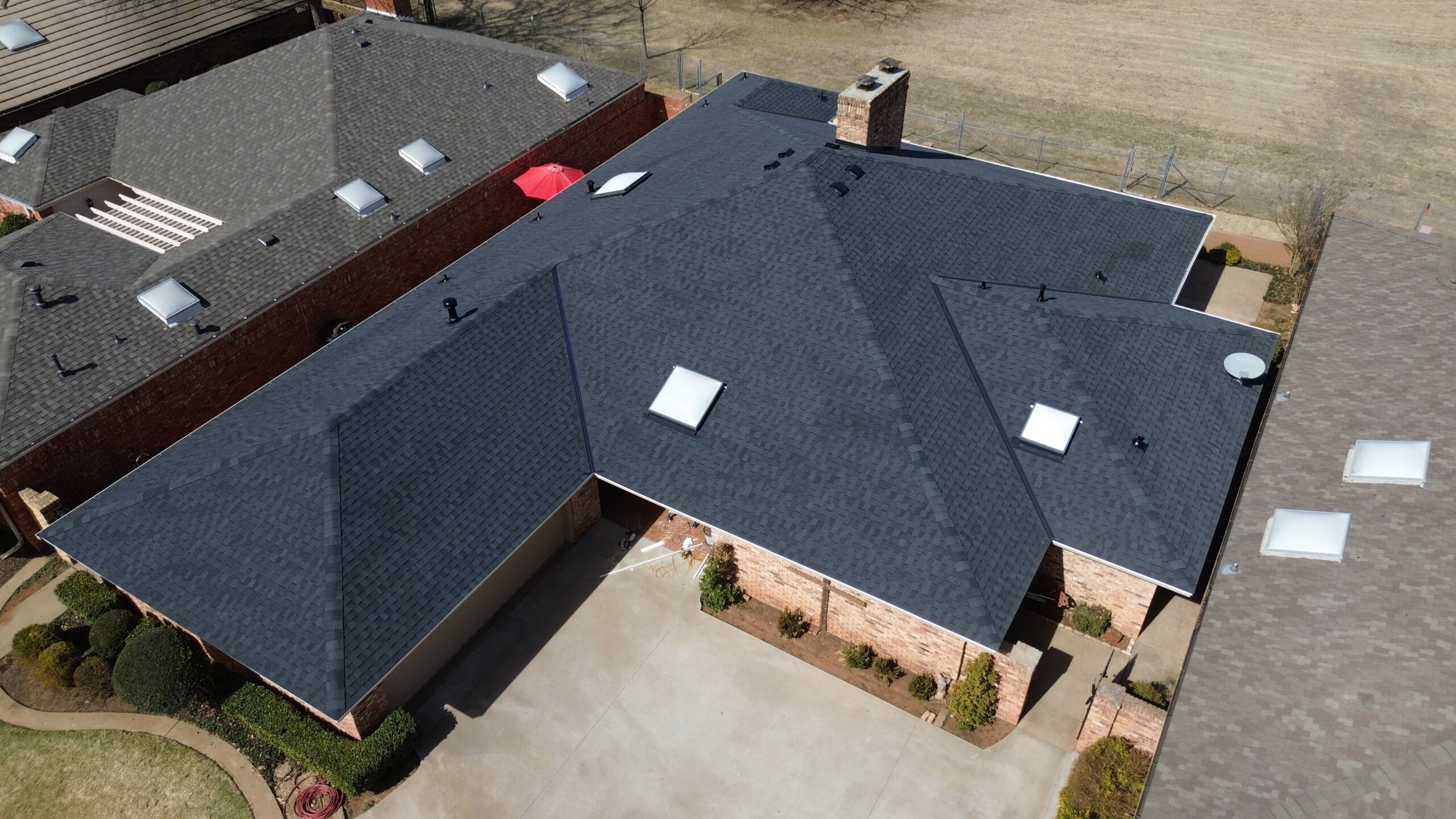
Drone technology has become a valuable addition to professional roof inspections, especially for large buildings, steep roofs, and structures with difficult access points. Although drones do not replace specialized moisture detection tools, they support the inspection process by providing detailed aerial imagery and, in some cases, thermal imaging capabilities.
High-resolution cameras mounted on drones allow inspectors to capture close-up images of roof surfaces without walking across fragile or hazardous areas. This reduces the risk of causing accidental damage while improving inspector safety. It also enables inspections to be completed more efficiently, particularly on expansive commercial properties.
Some inspection drones are equipped with infrared cameras that collect thermal data from above the roof. These thermal images help inspectors identify temperature variations that may indicate trapped moisture. The information gathered from drone flights is often combined with ground-based inspections to verify findings and develop a more complete understanding of roof conditions.
Drone inspections also improve documentation. Property owners receive detailed photographs and aerial views that clearly show roof conditions before and after repairs. These records become valuable references for maintenance planning, warranty documentation, insurance claims, and future inspections.
Despite these advantages, drone technology works best as a supporting tool rather than a standalone solution. Thermal images captured by drones still require professional interpretation, and suspicious areas usually need confirmation with moisture meters or other specialized equipment before repair decisions are made.
Choosing the Right Moisture Detection Tool for Different Roof Types
Different roofing systems respond differently to moisture intrusion, which means no single inspection tool works equally well for every roof. Professional inspectors select their equipment based on the construction materials, roof design, accessibility, and the goals of the inspection.
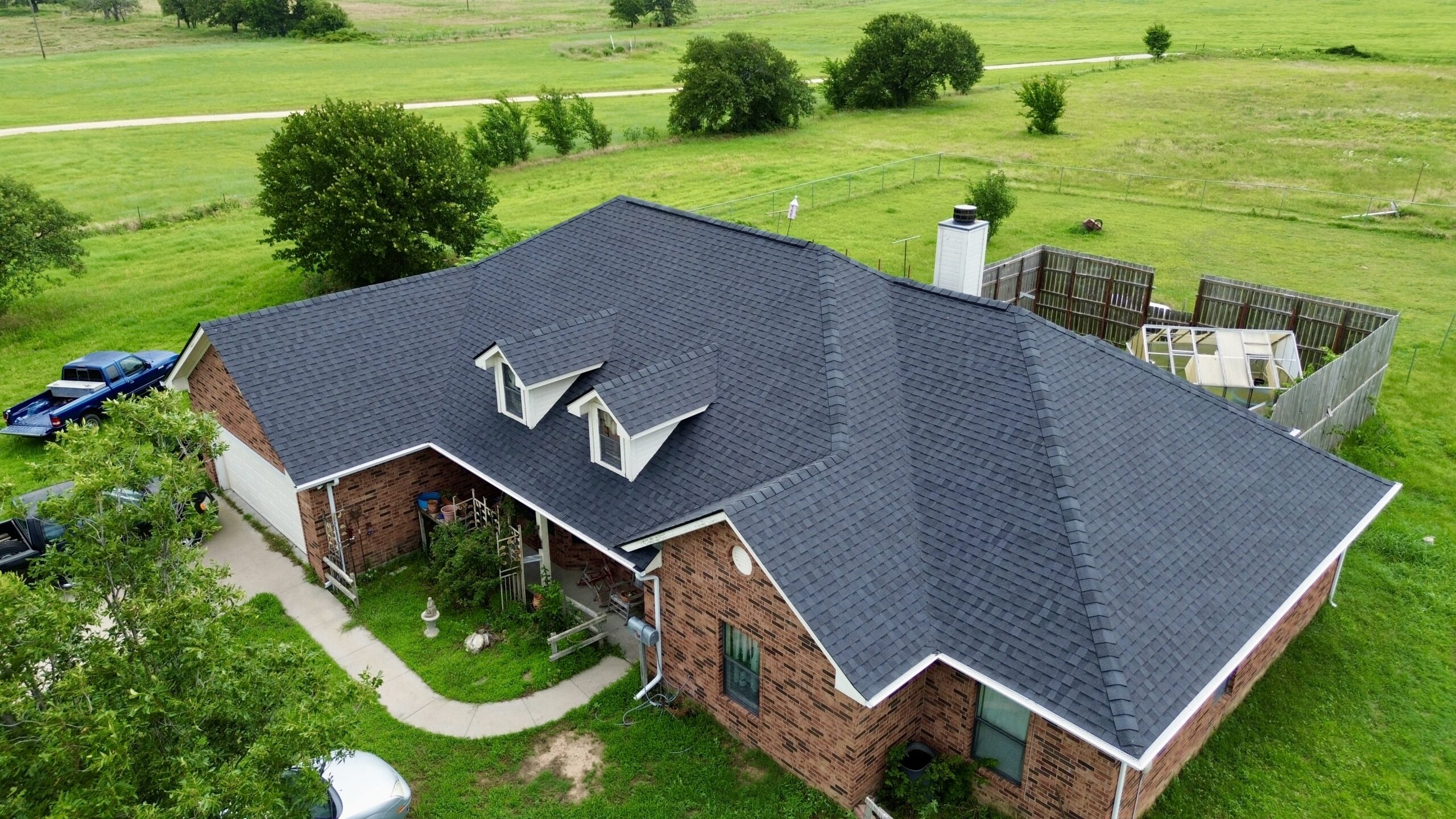
Asphalt shingle roofs often benefit from a combination of visual inspections, moisture meters, and thermal imaging. Since shingles conceal underlayment and decking, inspectors frequently use multiple techniques to determine whether moisture has penetrated beneath the surface.
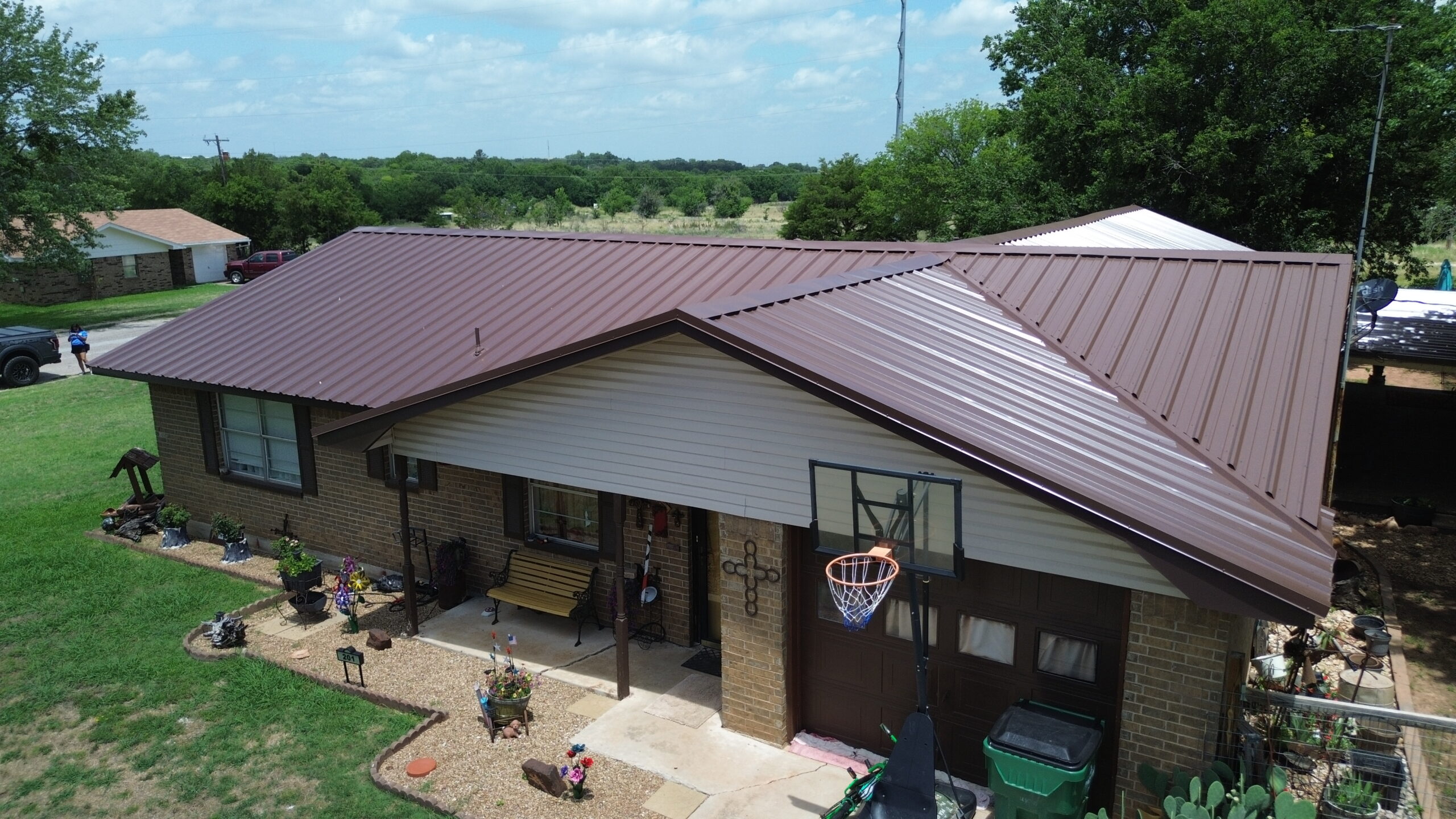
Metal roofs present different challenges because reflective surfaces can influence thermal readings. Inspectors may rely more heavily on moisture meters and careful examination of seams, fasteners, flashing, and roof penetrations to identify water intrusion accurately.
Flat commercial roofs usually require the broadest range of inspection technologies. Thermal imaging, capacitance scanners, electronic leak detection, and nuclear moisture gauges may all play important roles depending on the roof’s construction and the suspected extent of moisture damage.
Tile roofs require careful inspection because the roofing material itself often remains intact while water travels beneath the tiles. Moisture detection tools help inspectors evaluate hidden underlayment and structural decking without unnecessarily removing large sections of roofing material.
Green roofs and other specialty roofing systems present unique inspection requirements due to vegetation, growing media, drainage layers, and waterproof membranes. Inspectors select moisture detection methods that evaluate the waterproofing system without disturbing the roof’s specialized components.
Professional experience is just as important as the equipment itself. An experienced inspector understands how different roofing materials behave under changing weather conditions and knows which combination of tools will provide the most reliable assessment.
Benefits of Professional Moisture Detection During Roof Inspections
Professional moisture detection offers advantages that extend far beyond identifying existing leaks. By uncovering hidden moisture before visible damage develops, property owners gain valuable time to plan repairs, protect building components, and reduce long-term maintenance costs.
One of the greatest benefits is early intervention. Small areas of trapped moisture can often be repaired before they spread into insulation, structural framing, ceilings, and interior finishes. Addressing localized problems is generally far less expensive than replacing extensive sections of a damaged roofing system.
Accurate moisture detection also improves repair precision. Instead of replacing roofing materials based on assumptions, contractors focus their work on verified areas of damage. This targeted approach minimizes unnecessary demolition while preserving roofing materials that remain in good condition.
Professional inspections contribute to longer roof life as well. Routine moisture monitoring allows building owners to correct developing issues before they accelerate material deterioration. Preventive maintenance often adds years to the service life of a roofing system.
Energy efficiency is another important consideration. Dry insulation performs much better than wet insulation, helping buildings maintain consistent indoor temperatures throughout the year. By identifying moisture early, property owners preserve insulation performance and reduce unnecessary energy consumption.
Comprehensive moisture detection also supports better financial planning. Inspection reports provide clear documentation of current roof conditions, allowing property owners to prioritize repairs and budget for future maintenance rather than reacting to unexpected emergencies.
Insurance claims may also benefit from professional moisture inspections. Detailed reports, photographs, thermal images, and moisture measurements help document the extent of roof damage following storms or other covered events.
Common Mistakes That Lead to Inaccurate Moisture Readings
Even the most advanced inspection equipment can produce misleading results if it is not used correctly. Professional roof inspectors receive specialized training to minimize errors and ensure that moisture readings accurately reflect the condition of the roofing system.
One common mistake involves performing thermal inspections under unsuitable weather conditions. Heavy cloud cover, recent rainfall, strong winds, or insufficient temperature differences between wet and dry materials can reduce the effectiveness of infrared imaging.
Improper calibration is another source of inaccurate readings. Moisture meters, thermal cameras, and other electronic devices require regular calibration to maintain reliable performance. Inspectors verify equipment settings before beginning detailed evaluations.
Using only one detection method can also create problems. Every moisture detection technology has limitations, and relying on a single tool increases the likelihood of false positives or overlooked damage. Professional inspectors verify findings using multiple techniques whenever possible.
Misinterpreting environmental influences represents another challenge. Shadows, rooftop mechanical equipment, reflective metal surfaces, and varying insulation thicknesses can affect inspection results if they are not properly considered during the evaluation.
Inexperienced interpretation may also lead to unnecessary repairs. Identifying temperature differences or elevated moisture readings does not automatically confirm active roof leaks. Inspectors analyze the complete roofing system before drawing conclusions about the source and extent of moisture intrusion.
Finally, delaying inspections after visible warning signs appear often allows hidden damage to worsen. Scheduling professional evaluations promptly improves the chances of identifying moisture before it spreads throughout the roofing assembly.
What Happens After Moisture Is Found
Finding hidden moisture is only the beginning of the inspection process. The information collected during the evaluation helps inspectors develop repair recommendations that address both the immediate leak and any damage caused by prolonged water intrusion.
The first step usually involves confirming the source of the moisture. Inspectors determine whether water entered through damaged roofing materials, deteriorated flashing, failed sealants, poor drainage, or another point of entry. Correcting the source prevents the problem from recurring after repairs are completed.
Next, inspectors evaluate how far the moisture has spread. Wet insulation, deteriorated decking, damaged underlayment, and compromised structural components may all require different repair approaches depending on the severity of the damage.
Repair recommendations are then prioritized based on urgency. Active leaks threatening structural integrity or interior spaces typically receive immediate attention, while less severe moisture issues may be incorporated into planned maintenance schedules.
After repairs are completed, many contractors perform follow-up inspections to verify that the roofing system is once again dry and watertight. Confirming successful repairs provides confidence that hidden moisture has been eliminated rather than temporarily concealed.
Detailed documentation accompanies each stage of the process. Inspection reports often include photographs, moisture readings, thermal images, repair recommendations, and maintenance guidance that help property owners make informed decisions about their roofing investment.
Best Practices for Homeowners Before and After an Inspection
Property owners play an important role in protecting their roofs between professional inspections. Routine observation and timely maintenance help reduce the likelihood of hidden moisture developing into major structural damage.
Before scheduling a professional inspection, homeowners should note any recent leaks, ceiling stains, unusual odors, or storm events that may help inspectors focus their evaluation. Sharing this information improves the efficiency and accuracy of the inspection process.
After the inspection, carefully reviewing the findings allows property owners to understand the condition of the roof and prioritize recommended repairs. Delaying necessary maintenance often increases repair costs as moisture continues spreading through the roofing system.
The following practices help maintain a healthy roofing system throughout the year:
- Schedule routine roof inspections even when no leaks are visible.
- Keep gutters and downspouts free of debris to promote proper drainage.
- Trim tree branches that may damage roofing materials during storms.
- Address damaged flashing, sealants, or shingles promptly.
- Monitor attic spaces for moisture, mold, or unusual odors.
- Keep inspection reports for future maintenance planning and warranty documentation.
Consistent maintenance combined with professional moisture detection significantly reduces the risk of unexpected roof failures. Preventive care remains one of the most cost-effective ways to protect any residential or commercial roofing system.
Frequently Asked Questions
Can a roof contain hidden moisture even if there are no visible leaks?
Yes. Moisture can remain trapped beneath roofing materials, inside insulation, or within structural decking for months before visible signs appear indoors. Professional moisture detection tools are designed to identify these concealed problems early.
How often should a roof be inspected for hidden moisture?
Most residential roofs should receive a professional inspection at least once every year and after major storms. Commercial buildings may require more frequent evaluations depending on roof type, age, and maintenance requirements.
Are moisture detection tools harmful to roofing materials?
Most modern moisture detection methods are completely non-destructive. Technologies such as infrared imaging, capacitance scanners, and electronic leak detection evaluate roof conditions without damaging the roofing system.
Can moisture detection reduce repair costs?
Yes. Early detection allows contractors to repair localized damage before moisture spreads throughout the roof assembly. Smaller repairs are generally much less expensive than replacing extensive sections of roofing materials and structural components.
Is thermal imaging enough to confirm a roof leak?
Thermal imaging is an excellent screening tool, but it usually requires confirmation with additional inspection methods. Professional inspectors often combine thermal imaging with moisture meters or electronic leak detection to verify their findings.
Conclusion
Hidden roof moisture is one of the leading causes of premature roof deterioration, yet it often remains unnoticed until significant damage has already occurred. Modern moisture detection tools have transformed roof inspections by allowing professionals to locate concealed water intrusion quickly, accurately, and with minimal disruption to the roofing system.
From infrared thermal imaging and moisture meters to capacitance scanners, electronic leak detection systems, nuclear moisture gauges, and drone-assisted inspections, each technology provides valuable information that supports more informed maintenance decisions. Rather than relying solely on visible signs of damage, inspectors use scientific measurement techniques to evaluate the true condition of roofing materials beneath the surface.
The most reliable roof inspections combine advanced technology with professional expertise. Experienced inspectors understand the strengths and limitations of each detection method and know when multiple tools should be used together to verify results. This comprehensive approach improves diagnostic accuracy while reducing unnecessary repairs and replacement costs.
Routine moisture detection should be viewed as an investment rather than an expense. Identifying hidden moisture early helps preserve structural integrity, maintain energy efficiency, extend roof lifespan, protect indoor air quality, and prevent small problems from developing into costly emergencies. By scheduling regular professional roof inspections and addressing moisture issues promptly, property owners can safeguard both their buildings and their long-term investment for many years to come.