
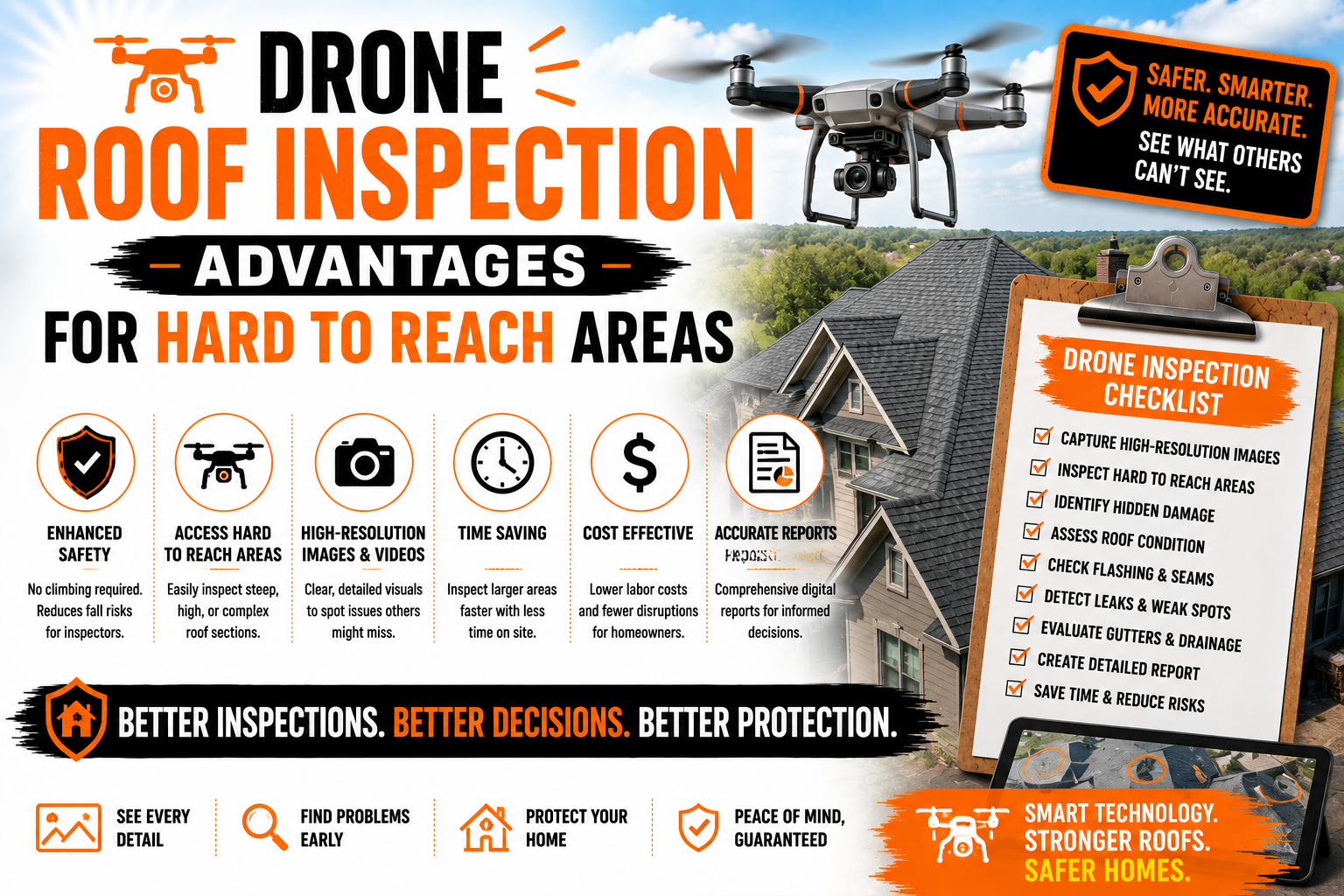
Drone Roof Inspection Advantages for Hard to Reach Areas
Introduction
Roof inspections have traditionally required inspectors to climb ladders, walk across roofing surfaces, and manually examine every accessible section of the roof. While this approach remains valuable, it is not always practical or safe for every property. Steep slopes, tall buildings, fragile roofing materials, and storm damaged structures can make conventional inspections difficult while increasing the risk of accidents.
Drone technology has transformed the way roofing professionals evaluate hard to reach areas. Equipped with high resolution cameras and advanced flight controls, modern inspection drones capture detailed images and videos without requiring inspectors to access dangerous sections of the roof physically. This approach improves both safety and efficiency while providing a clearer view of roofing conditions.
Hard to reach areas often contain the earliest signs of roof deterioration because they receive less attention during routine maintenance. Valleys, ridge lines, chimneys, skylights, and elevated roof sections may develop damage that remains unnoticed until water intrusion or structural issues become apparent inside the home. Drone inspections allow professionals to evaluate these areas thoroughly without unnecessary risk.
As drone technology continues to improve, it has become an important tool for residential and commercial roofing inspections. Although drones do not completely replace traditional inspection methods, they provide valuable information that helps roofing professionals identify damage, document roof conditions, and recommend timely repairs. Understanding how drone inspections work explains why they have become an increasingly popular solution for properties with difficult roof access.
Why Some Roofs Are Difficult to Inspect
Not every roof presents the same inspection challenges. While a single story home with a moderate roof pitch may be relatively easy to examine, many properties include architectural features or environmental conditions that make conventional inspections more complicated. These situations often require additional equipment, specialized safety procedures, or alternative inspection methods.
Steep roof pitches are one of the most common obstacles. Walking safely on sharply angled surfaces demands specialized training and safety equipment because even experienced inspectors face increased fall risks. Wet surfaces, loose debris, or aging roofing materials further increase the difficulty of performing a thorough inspection.
Multi story buildings create another significant challenge. Greater building height requires taller ladders, additional fall protection systems, and more time to safely reach inspection areas. Even after gaining roof access, inspectors may still struggle to examine every section efficiently due to the building’s overall size.
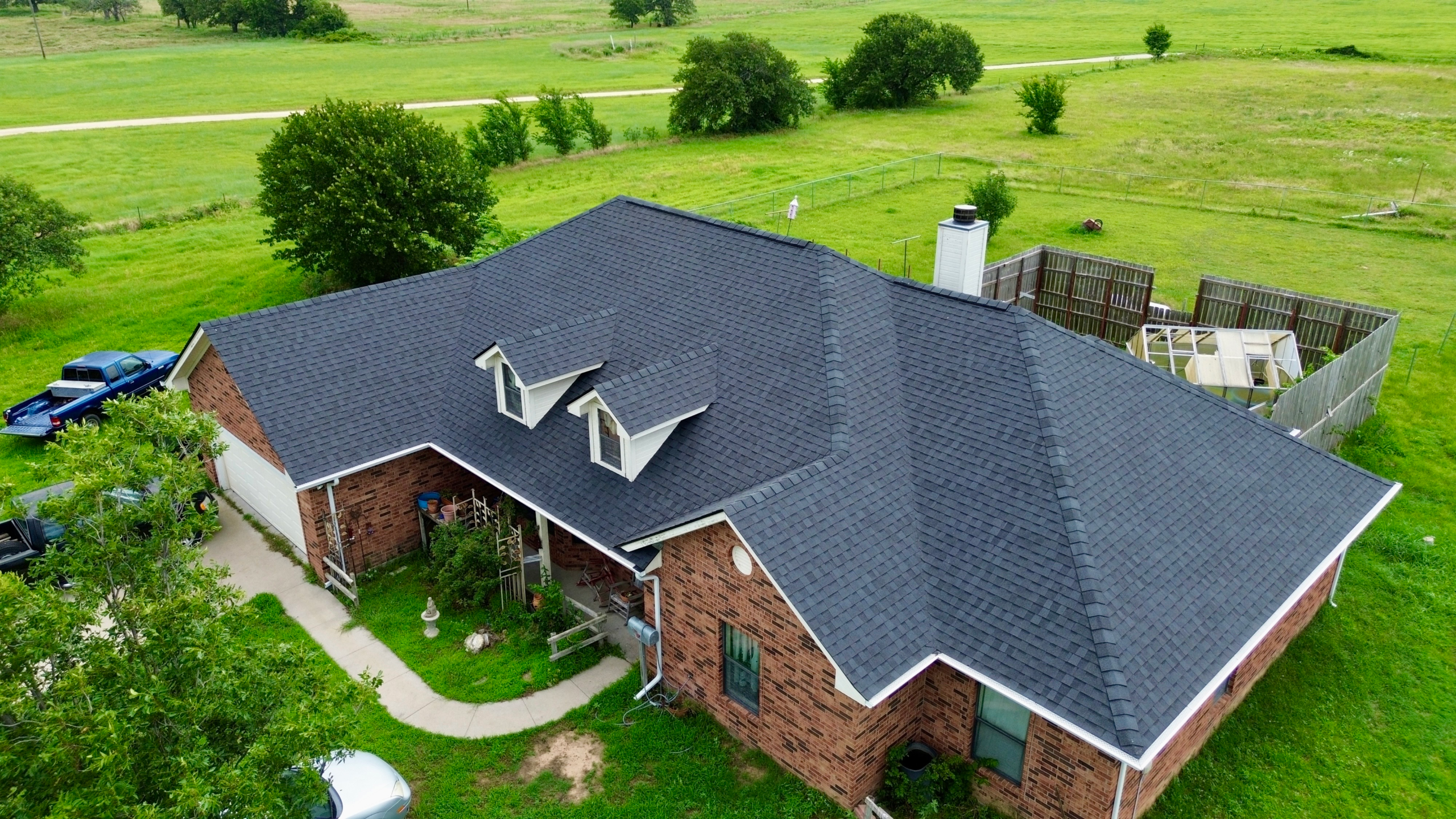
Complex roof designs also complicate inspections. Homes featuring multiple roof levels, intersecting valleys, dormers, skylights, and decorative architectural elements create numerous hidden areas where damage can develop unnoticed. These intricate designs often limit visibility from a single inspection position.
Certain roofing materials require extra caution because they can be damaged during normal foot traffic. Clay tiles, slate roofing, and some metal roofing systems may crack, loosen, or become scratched if inspectors walk across them improperly. Drone inspections reduce unnecessary contact with these delicate surfaces while still providing detailed visual information.
Vegetation surrounding a property can further restrict roof access. Large trees, landscaping features, fences, or neighboring buildings sometimes prevent inspectors from positioning ladders safely or viewing important roof sections from the ground. These obstacles make aerial inspections particularly valuable.
Storm damage introduces additional safety concerns. Roofs weakened by fallen branches, hail, strong winds, or structural movement may no longer support safe foot traffic until their condition has been evaluated. Inspectors frequently use drones as an initial assessment tool before determining whether direct roof access is appropriate.
Every difficult roof presents its own combination of challenges. Professional inspectors evaluate these conditions before selecting the safest and most effective inspection method, ensuring that important damage is identified without exposing people or property to unnecessary risk.
How Drone Roof Inspections Work
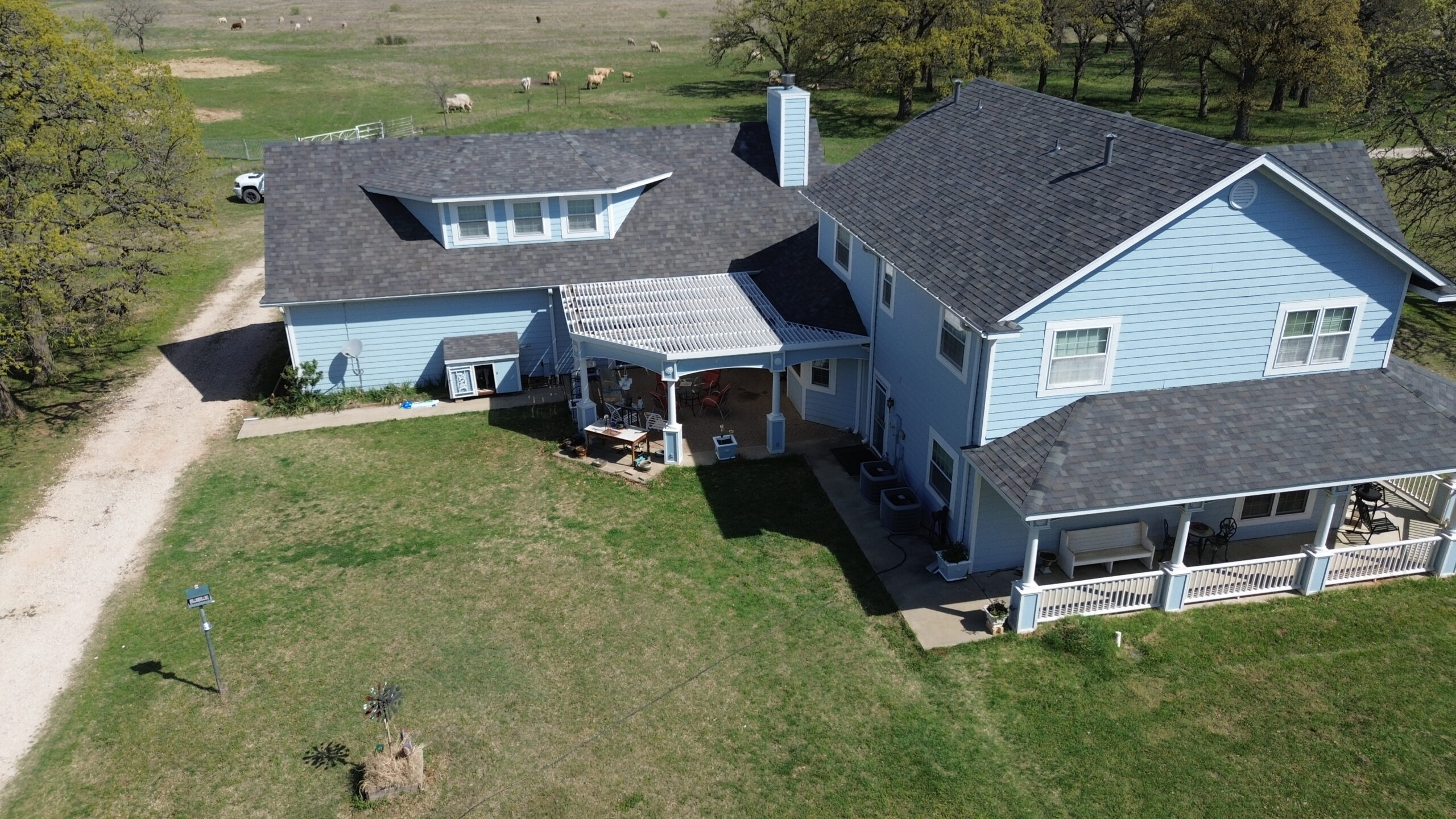
Drone roof inspections combine advanced aerial technology with professional roofing expertise to evaluate roof conditions from multiple perspectives. Rather than relying solely on ground observations or physical roof access, inspectors fly specialized drones over and around the property while capturing detailed visual information throughout the inspection.
Before launching the drone, inspectors perform a preliminary evaluation of the property. They identify nearby obstacles such as trees, power lines, antennas, and neighboring buildings while considering current weather conditions that could affect flight safety or image quality. Careful planning helps ensure a smooth inspection while reducing operational risks.
Modern inspection drones are equipped with high resolution cameras capable of capturing detailed photographs and stabilized video footage. These cameras allow inspectors to zoom into specific roofing components without sacrificing image clarity, making it easier to identify small defects that might otherwise remain unnoticed.
During the inspection, the drone follows a systematic flight pattern designed to document every major roof section. Inspectors carefully examine ridge caps, valleys, flashing, vents, skylights, chimneys, gutters, and roof edges from multiple angles. Capturing overlapping images helps ensure that no important areas are overlooked.
Video recording provides additional benefits by allowing inspectors to observe roofing conditions continuously as the drone moves across the property. Slow, controlled flight paths make it easier to identify subtle irregularities such as lifted shingles, uneven roof surfaces, or areas where debris has accumulated.
After completing the flight, inspectors review all captured images and footage in detail. Enlarging photographs often reveals minor cracks, flashing separation, deteriorating sealants, or storm damage that may not have been immediately noticeable during the live inspection. This careful analysis supports more accurate repair recommendations.
Digital documentation also allows inspectors to compare roof conditions over time. Images collected during future inspections can be matched with previous records to determine whether existing damage has progressed or whether repairs continue performing effectively. This long term monitoring helps homeowners make informed maintenance decisions.
Although drone technology provides exceptional visual access, professional interpretation remains essential. Experienced roofing specialists understand how different types of damage appear in aerial images and can distinguish between cosmetic wear and conditions requiring immediate attention.
Improved Safety During Roof Inspections
Safety is one of the greatest advantages of using drones for roof inspections, particularly when evaluating hard to reach or potentially hazardous structures. Traditional inspections often require climbing ladders, walking on elevated surfaces, and navigating steep roof slopes. Drone technology significantly reduces the amount of physical roof access needed while maintaining a high level of inspection quality.
Falls remain one of the leading hazards associated with roofing work. Even experienced inspectors face risks when working on wet shingles, unstable decking, or roofs covered with debris. Conducting much of the inspection from the ground allows professionals to gather valuable information without exposing themselves to unnecessary danger.
Storm damaged roofs deserve special attention because their structural condition may be uncertain. High winds, hail, fallen branches, or heavy rainfall can weaken roofing materials without creating immediately visible signs of instability. A drone inspection provides a safe first assessment before anyone steps onto the roof.
Homeowners also benefit from improved safety because inspectors require less physical access to the property. Fewer ladders, less roof traffic, and reduced equipment movement decrease the possibility of accidental damage to gutters, landscaping, or fragile roofing materials during the inspection process.
Drone inspections further improve safety by allowing professionals to examine difficult locations without improvising access methods. Instead of attempting awkward climbing positions to inspect chimneys or elevated roof sections, inspectors simply reposition the drone to obtain the required viewing angle.
Safety improvements extend beyond residential properties. Commercial buildings often include expansive roof areas containing mechanical equipment, skylights, or elevated structures that increase inspection complexity. Drone technology allows professionals to evaluate these environments efficiently while minimizing worker exposure to potential hazards.
Reducing physical risk does not reduce inspection quality. Instead, drones enable roofing professionals to collect detailed visual information while reserving direct roof access only for situations where hands on examination is truly necessary.
Better Access to Hard to Reach Roof Areas
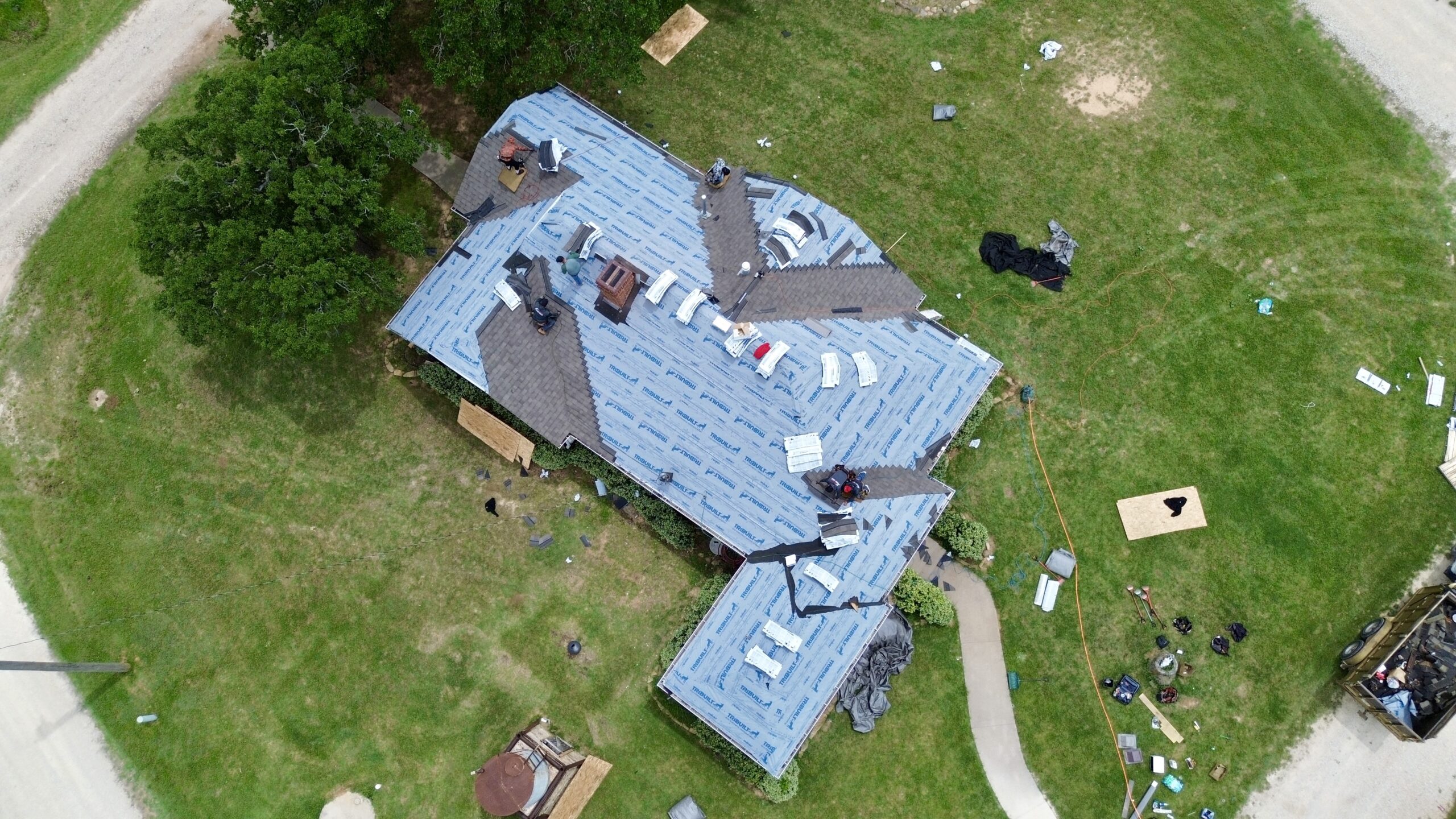
One of the most significant advantages of drone inspections is the ability to access roof sections that are difficult, time consuming, or unsafe to examine using conventional methods. Aerial photography provides clear views from multiple angles, allowing inspectors to evaluate locations that may otherwise receive only limited attention.
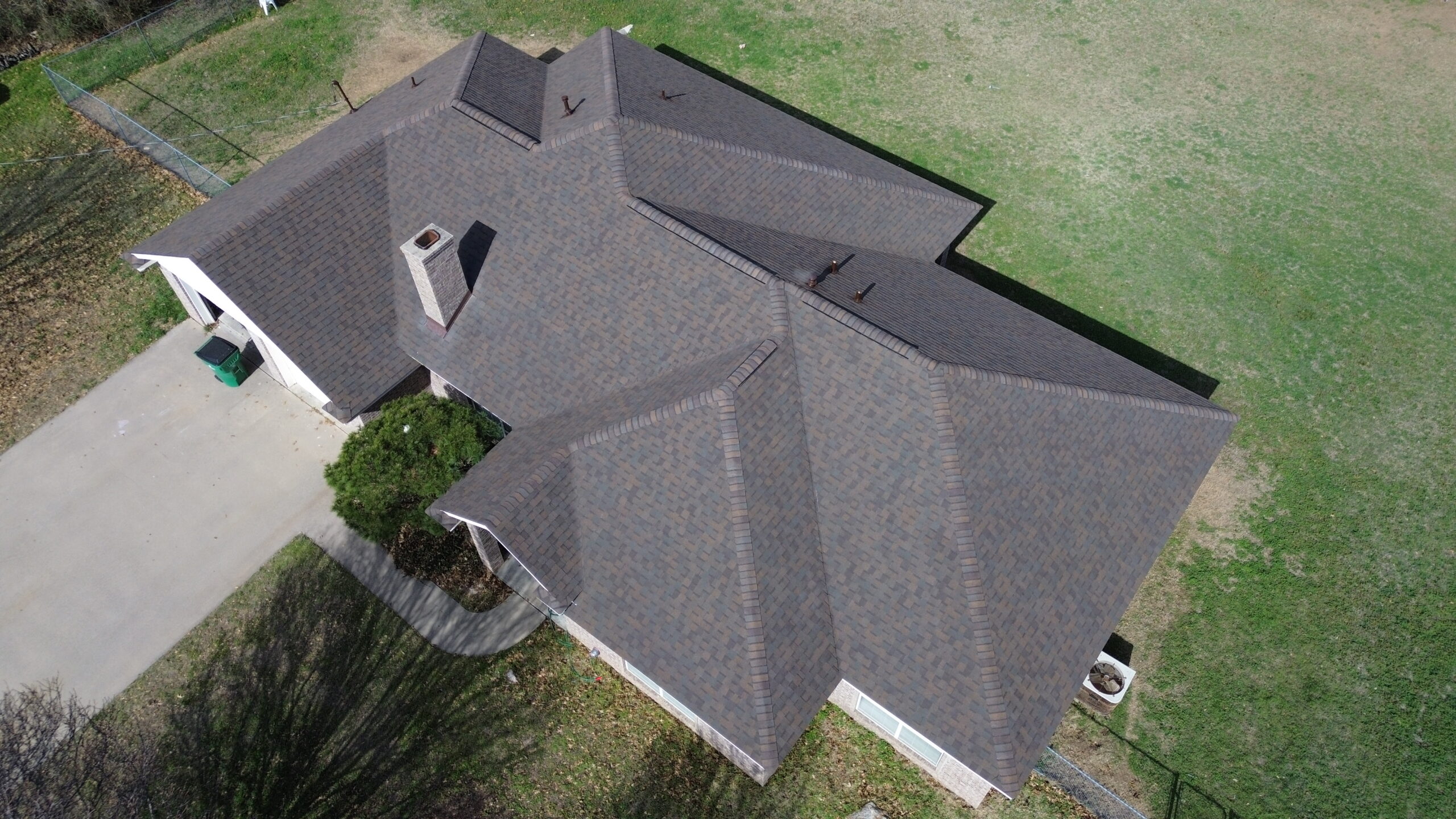
Chimneys are among the most common areas where hidden roof damage develops. Flashing surrounding the chimney experiences constant expansion and contraction as temperatures change throughout the year. Drones capture close up images that help inspectors identify deteriorating sealants, loose flashing, or cracked masonry without climbing onto steep roof surfaces.
Skylights require careful inspection because they create openings within the roofing system that must remain properly sealed. Drone photography allows inspectors to examine flashing, glazing, surrounding shingles, and drainage patterns from above while minimizing contact with potentially fragile roof sections.
Roof valleys receive large volumes of rainwater during storms, making them especially vulnerable to debris buildup and moisture related deterioration. Because valleys often sit between intersecting roof slopes, they can be difficult to inspect thoroughly from ground level. Drone imagery provides detailed views that help identify developing drainage problems.
Dormers introduce additional roof intersections where flashing and roofing materials meet at multiple angles. These architectural features increase the number of potential leak points while making inspections more complex. Aerial images simplify the evaluation of these detailed roof sections.
Roof edges also benefit from drone inspections because gutters, fascia boards, and drip edges can be examined continuously along the entire perimeter of the building. Inspectors look for loose materials, drainage issues, corrosion, or storm damage that may affect water management.
Tall commercial buildings present some of the greatest inspection challenges due to their size and height. Drone technology allows inspectors to evaluate extensive roofing systems efficiently while documenting large areas that would otherwise require considerable time and specialized access equipment.
The roof areas most commonly examined using drones include:
- Chimneys and flashing systems.
- Skylights and surrounding roofing materials.
- Roof valleys and drainage pathways.
- Dormers and intersecting roof sections.
- Ridge caps and roof edges.
- Tall residential and commercial roof surfaces.
Better access leads to more complete inspections because fewer roof sections remain hidden or difficult to evaluate. By reaching areas that are challenging through traditional methods, drone technology helps roofing professionals detect developing problems earlier and provide homeowners with a more accurate understanding of their roof’s overall condition.
Superior Image Quality and Inspection Accuracy
One of the greatest strengths of drone roof inspections is the ability to capture highly detailed images from perspectives that are difficult to achieve using traditional inspection methods. Modern inspection drones are equipped with advanced cameras capable of producing high resolution photographs and stabilized video footage, allowing roofing professionals to examine even small roofing components with remarkable clarity.
Image quality plays an important role in identifying hidden or developing roof damage. Small cracks, lifted shingles, deteriorating sealant, exposed fasteners, or damaged flashing may appear insignificant during a quick visual inspection. When viewed through enlarged drone images, however, these minor defects often reveal the beginning stages of larger roofing problems.
High resolution photography also improves consistency during inspections. Rather than relying only on written observations, inspectors can document the exact condition of roofing materials at the time of the inspection. These visual records become valuable references when evaluating changes during future inspections.
Zoom capabilities provide another significant advantage. Inspectors can closely examine roof penetrations, ridge caps, chimneys, and valleys without physically walking across the roof. This approach reduces unnecessary contact with delicate roofing materials while maintaining excellent inspection accuracy.
Detailed images also support more effective communication between contractors and homeowners. Instead of describing hidden damage verbally, inspectors can present photographs showing exactly where deterioration has developed. Seeing the problem directly often helps homeowners better understand why specific repairs are recommended.
Digital records also simplify long term roof maintenance. Images captured during annual inspections can be compared side by side to determine whether repairs remain effective or whether damage has progressed. This historical documentation supports better maintenance planning and more informed repair decisions.
Although image quality is impressive, accurate interpretation remains essential. Professional roofing experience allows inspectors to distinguish between normal weathering and damage that requires immediate attention, ensuring that repair recommendations are based on evidence rather than appearance alone.
Faster Roof Inspection Process
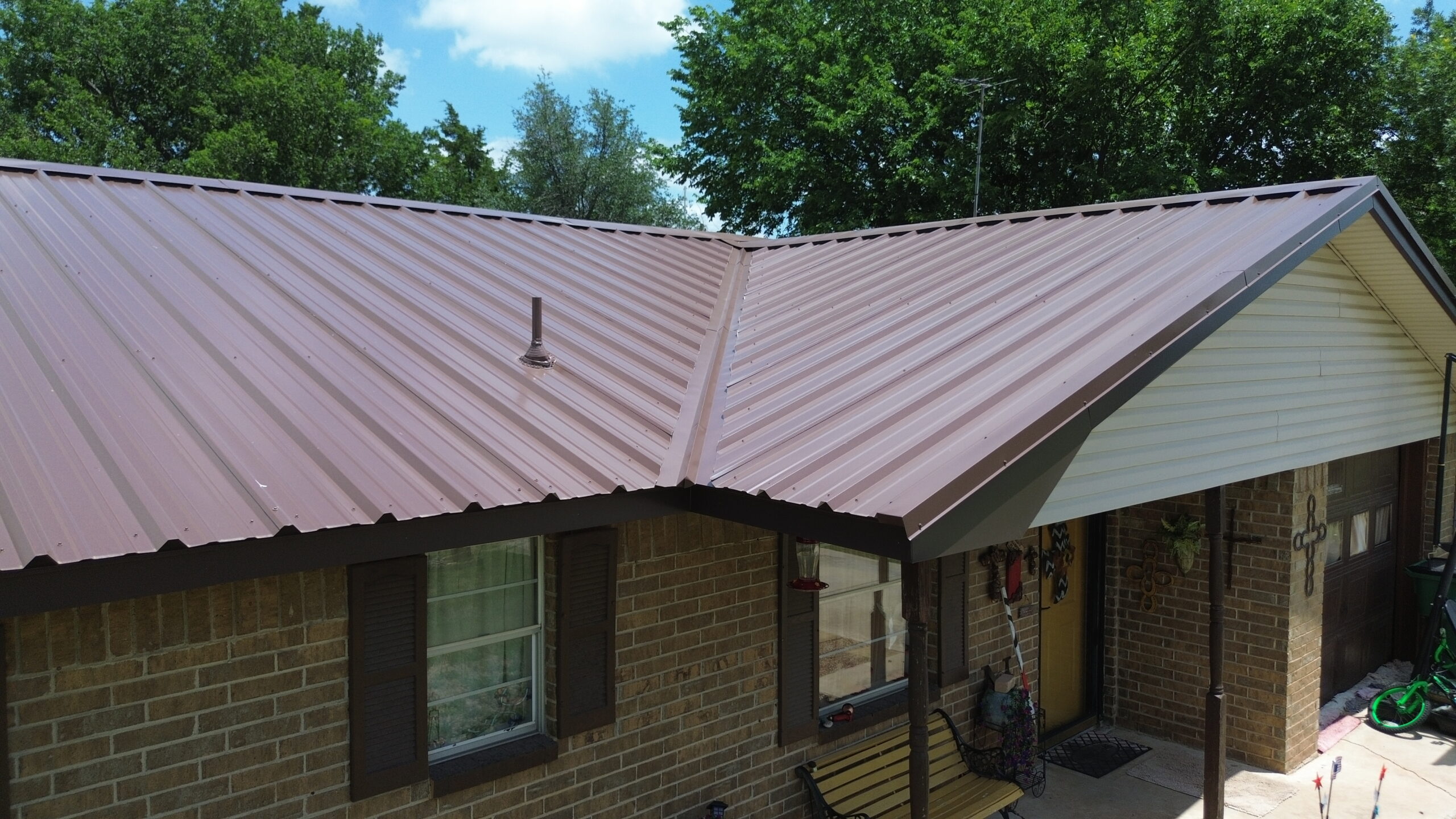
Time efficiency is another major reason drone inspections have become increasingly popular within the roofing industry. Traditional inspections often require extensive preparation, ladder placement, safety equipment installation, and careful movement across multiple roof sections. Drone technology streamlines many of these steps while still producing comprehensive inspection results.
The inspection process typically begins shortly after the drone is prepared for flight. Once safety checks are completed, inspectors can quickly survey the entire roof from multiple angles without repeatedly climbing, repositioning ladders, or navigating difficult roof surfaces. This efficiency becomes especially valuable when inspecting larger properties.
Large residential homes often feature multiple roof elevations, intersecting slopes, and complex architectural details that increase inspection time. A drone can capture these areas continuously during a planned flight path, reducing the amount of manual repositioning required throughout the inspection.
Commercial buildings benefit even more from improved efficiency. Warehouses, apartment complexes, schools, office buildings, and industrial facilities may contain thousands of square feet of roofing. Inspecting these properties manually can require several hours or even multiple visits, while drone technology allows inspectors to evaluate extensive roof surfaces much more quickly.
Emergency situations highlight another advantage of faster inspections. After severe storms, roofing companies frequently receive a large number of inspection requests within a short period. Drone technology allows professionals to assess storm damage efficiently, helping homeowners receive repair recommendations sooner while allowing contractors to prioritize the most urgent cases.
Reduced inspection time also minimizes disruption for property owners. Businesses can continue operating with fewer interruptions, while homeowners experience less inconvenience during the inspection process. This improved efficiency benefits everyone involved without compromising inspection quality.
Faster inspections should never mean rushed evaluations. Professional inspectors still review captured images carefully after the flight, ensuring that every important roofing component receives detailed analysis before final recommendations are prepared.
Cost Benefits of Drone Roof Inspections
Drone inspections often provide financial advantages that extend well beyond the inspection itself. While the technology requires specialized equipment and operator training, it frequently reduces overall inspection costs by improving efficiency, minimizing labor requirements, and helping identify problems before expensive repairs become necessary.
Traditional roof inspections sometimes require scaffolding, lift equipment, additional workers, or extended labor hours depending on the property’s size and complexity. Drone inspections eliminate many of these requirements because aerial access replaces much of the physical climbing and manual roof navigation.
Lower equipment requirements may also reduce project expenses. Since inspectors spend less time setting up access systems, more time can be devoted to evaluating roofing conditions and documenting findings. This streamlined process often translates into better overall value for homeowners.
Perhaps the greatest financial benefit comes from early damage detection. Identifying deteriorating flashing, loose shingles, blocked drainage systems, or developing structural concerns before they worsen allows homeowners to complete relatively small repairs instead of facing major restoration projects later.
Preventive maintenance becomes easier when accurate inspection records are available. Regular drone inspections create visual documentation that helps homeowners monitor gradual roof aging and schedule repairs according to actual roof conditions rather than waiting for emergencies.
Insurance documentation represents another valuable benefit. Clear aerial photographs provide evidence of roof condition before and after storms, supporting insurance claims when covered damage occurs. Well documented inspections may also simplify communication between homeowners, contractors, and insurance representatives.
Long term maintenance planning ultimately saves money because repairs can be scheduled strategically. Rather than responding to unexpected roof failures, homeowners gain the opportunity to budget for maintenance while extending the useful lifespan of the roofing system.
Types of Roof Damage Drones Can Detect
Drone technology provides excellent visibility across nearly every section of the roof, making it possible to identify many forms of damage before they become serious structural concerns. While certain hidden problems still require physical inspection, aerial imaging successfully detects a wide variety of visible roofing defects.
Missing shingles remain one of the easiest problems for drones to identify. High resolution images clearly reveal exposed underlayment, uneven roof patterns, or areas where wind has displaced roofing materials. Early replacement prevents moisture from entering vulnerable sections of the roof.
Damaged shingles can also be identified through detailed aerial photography. Curling edges, cracked surfaces, blistering, granule loss, and lifted corners often become visible when images are enlarged during the review process. These warning signs frequently indicate normal aging or weather related deterioration.
Flashing deterioration is another common finding during drone inspections. Flashing installed around chimneys, skylights, roof vents, and valleys experiences continuous expansion and contraction throughout the year. Small separations or damaged sealant often appear clearly in close up drone images.
Storm damage receives particular attention after severe weather events. Hail impacts, fallen branches, displaced roofing materials, and punctured roof surfaces may affect isolated sections that are difficult to observe from the ground. Drone inspections provide comprehensive documentation of these conditions shortly after storms occur.
Debris accumulation also becomes easier to identify from above. Leaves, branches, and other materials frequently collect in roof valleys, behind chimneys, or inside gutters where they restrict proper drainage. Removing debris promptly reduces moisture retention and helps preserve roofing materials.
Drainage problems often reveal themselves through standing water, clogged gutters, or uneven roof surfaces. Although water may eventually evaporate, photographs captured shortly after rainfall allow inspectors to identify drainage patterns that deserve further attention.
Some structural concerns can also become visible through drone imagery. Slight roof sagging, uneven ridges, or surface depressions sometimes indicate underlying framing or decking issues requiring closer examination. While aerial photography alone cannot confirm structural damage, it helps inspectors identify areas that may benefit from additional evaluation.
The following comparison highlights how drone inspections differ from traditional roof inspections in several important areas.
| Inspection Factor | Drone Inspection | Traditional Inspection |
|---|---|---|
| Safety | Minimal roof access required | Greater physical roof access |
| Speed | Faster for large and complex roofs | More time required |
| Accessibility | Excellent for hard to reach areas | Limited by roof design and height |
| Documentation | High resolution photos and video | Primarily manual observations with photos |
| Roof Contact | Very limited | Frequent foot traffic on roof |
| Hidden Interior Damage | Limited detection | Can be combined with attic inspection |
Drone inspections provide outstanding visual coverage, but their greatest value comes when combined with professional roofing knowledge. Experienced inspectors understand how visible damage relates to the overall roofing system, allowing them to recommend repairs that address underlying causes rather than simply treating surface level symptoms.
Limitations of Drone Roof Inspections
Drone technology has significantly improved the roofing inspection process, but it is important to recognize that no inspection method is perfect. While drones provide exceptional visual access and high quality documentation, there are certain situations where they cannot fully replace traditional inspection techniques. Understanding these limitations helps homeowners develop realistic expectations and appreciate the importance of combining technology with professional expertise.
Weather is one of the biggest factors affecting drone operations. Strong winds, heavy rain, lightning, dense fog, or snowfall can reduce flight stability and image quality. Professional inspectors always evaluate weather conditions before launching a drone because poor visibility or unstable flight conditions may compromise both safety and inspection accuracy.
Battery capacity also affects inspection planning. Modern inspection drones can remain airborne for a considerable amount of time, but extremely large commercial properties may require multiple flights to capture every section of the roof. Experienced operators plan flight routes carefully to maximize coverage while ensuring adequate battery reserves for safe operation.
Some hidden roofing problems simply cannot be confirmed through aerial photography alone. Moisture trapped beneath roofing materials, deteriorated insulation, or structural movement inside the attic requires additional inspection methods that go beyond surface imaging. Drone photographs may indicate areas of concern, but further evaluation is often necessary to determine the full extent of the damage.
Tree canopies, nearby buildings, antennas, and power lines occasionally limit flight paths around a property. Although skilled drone pilots can usually work around these obstacles, certain viewing angles may still be difficult to obtain. Inspectors adapt their inspection strategy based on the property’s layout while maintaining safe operating distances.
Local aviation regulations must also be followed during every drone inspection. Professional operators understand airspace restrictions, licensing requirements, and safe flight practices that govern commercial drone use. Compliance with these regulations protects both property owners and inspection professionals.
Despite these limitations, drones remain one of the most valuable tools available for roof inspections. Their greatest strength lies in improving efficiency and safety while providing detailed visual information that supports more informed maintenance decisions.
Combining Drone Technology with Traditional Inspections
The most effective roof inspections combine drone technology with conventional inspection techniques. Rather than viewing drones as a replacement for experienced inspectors, roofing professionals use aerial imaging to complement hands on evaluations and create a more complete understanding of the roofing system.
Drone photography provides outstanding views of the roof’s exterior, but interior attic inspections remain equally important. Inspectors examine insulation, roof decking, rafters, trusses, and ventilation systems for signs of moisture intrusion, condensation, mold growth, or structural movement that cannot be observed from above.
Moisture detection equipment also plays an important role during comprehensive inspections. Moisture meters and thermal imaging cameras help identify hidden water intrusion beneath roofing materials or inside structural components. These diagnostic tools confirm whether visible roof defects have already affected the underlying structure.
Physical inspection becomes necessary whenever roofing materials require closer examination. Inspectors may gently test flashing stability, evaluate sealant condition, inspect fasteners, or verify the integrity of roofing components that appear questionable in aerial photographs. This direct assessment provides valuable confirmation before repair recommendations are finalized.
Professional experience remains the most important element of the inspection process. Technology collects information, but trained inspectors understand how roofing systems function and how different forms of damage interact over time. Their ability to interpret inspection findings accurately ensures that homeowners receive practical recommendations rather than unnecessary repairs.
Combining multiple inspection methods also improves documentation quality. Drone images, attic observations, moisture readings, and written notes together create a comprehensive record that supports maintenance planning, insurance claims, and future roof evaluations.
An effective inspection strategy often follows this sequence.
- Conduct a preliminary visual assessment of the property.
- Complete a comprehensive drone inspection of the roof exterior.
- Review aerial images to identify potential areas of concern.
- Perform an attic and interior structural inspection.
- Use moisture detection equipment where necessary.
- Verify findings through selective hands on examination.
- Prepare a detailed report with photographs and repair recommendations.
This combined approach provides homeowners with a more accurate assessment than relying on either drone technology or traditional inspection methods alone.
Choosing a Roofing Contractor That Uses Drone Inspections
Not every roofing contractor uses drone technology in the same way. While many companies advertise drone inspections, the quality of the inspection depends on the experience of both the drone operator and the roofing professional interpreting the results. Selecting the right contractor ensures that the technology is used effectively rather than simply as a marketing feature.
Experience should always be one of the first considerations. Contractors who regularly perform drone inspections understand how to capture useful images, recognize subtle roof damage, and integrate aerial findings into a complete roof evaluation. Familiarity with different roofing materials also improves inspection accuracy because each roofing system has unique characteristics.
Homeowners should also ask about the inspection process itself. A professional contractor should explain whether the drone inspection will be combined with attic evaluations, moisture testing, or traditional roof assessments when necessary. Comprehensive inspections provide much more value than aerial photography alone.
Detailed reporting is another sign of a reputable roofing company. Inspection reports should include organized photographs, clear explanations of findings, repair priorities, and practical maintenance recommendations. Homeowners should understand both the current roof condition and the reasoning behind any suggested repairs.
Communication is equally important throughout the inspection process. Reliable contractors take time to explain technical findings in language that property owners can easily understand. This transparency builds confidence and helps homeowners make informed decisions about future maintenance.
When evaluating roofing contractors, consider asking questions such as:
- How long have you been performing drone roof inspections?
- Are drone inspections combined with traditional roof evaluations?
- Will I receive high resolution photographs and a written inspection report?
- How do you verify hidden damage identified during aerial imaging?
- Can you explain the urgency of recommended repairs?
Choosing a contractor who combines advanced technology with professional roofing expertise provides the greatest confidence that hidden issues will be identified accurately and addressed appropriately.
Future of Drone Technology in Roofing
Drone technology continues evolving rapidly, bringing new capabilities that promise even greater accuracy and efficiency for roof inspections. As hardware and software improve, roofing professionals gain access to more advanced tools that simplify damage detection while providing increasingly detailed property assessments.
Artificial intelligence is becoming an important addition to drone inspections. Modern software can analyze aerial images automatically, highlighting areas that may contain damaged shingles, deteriorating flashing, standing water, or surface irregularities. Although human expertise remains essential, artificial intelligence helps inspectors review large collections of images more efficiently.
Thermal imaging integration is another exciting development. Some inspection drones now carry infrared cameras capable of detecting temperature variations across roofing surfaces. These thermal differences often indicate trapped moisture, insulation deficiencies, or hidden leaks that cannot be identified through standard photography alone.
Automation is also improving inspection consistency. Pre programmed flight paths allow drones to follow identical routes during annual inspections, making it easier to compare roof conditions over time. Consistent image angles improve long term monitoring and help identify gradual deterioration that might otherwise go unnoticed.
Cloud based reporting systems continue to enhance communication between contractors and homeowners. Inspection data, photographs, videos, and maintenance recommendations can now be organized digitally, allowing property owners to review roof conditions from virtually any location. These records simplify maintenance planning and preserve valuable inspection history.
Future advancements may also support predictive roof maintenance. By combining historical inspection data, artificial intelligence, and environmental information, roofing professionals may eventually forecast which areas of a roof are most likely to develop problems. This proactive approach could further reduce repair costs while extending roof lifespan.
Although technology will continue advancing, professional judgment will remain essential. Successful roof inspections depend not only on sophisticated equipment but also on experienced inspectors who understand how roofing systems perform under real world conditions.
Common Misconceptions About Drone Roof Inspections
As drone technology becomes more common in the roofing industry, several misconceptions continue to influence how homeowners view this inspection method. While drones provide impressive capabilities, understanding what they can and cannot accomplish helps property owners make informed decisions when scheduling inspections. Professional roofing companies often spend time explaining these misconceptions because accurate expectations lead to better maintenance planning and more effective repair decisions.
One common belief is that a drone inspection completely replaces the need for a professional roofing expert. In reality, the drone serves as a highly advanced inspection tool rather than the inspector itself. Capturing detailed photographs is only one part of the process, while interpreting those images correctly requires roofing knowledge, construction experience, and an understanding of how different roofing systems perform over time.
Another misconception is that drones can detect every hidden problem inside a roofing system. While aerial imaging provides exceptional views of exterior surfaces, it cannot directly see beneath shingles, inside insulation, or through structural framing. Hidden moisture, deteriorated roof decking, and attic ventilation problems often require additional inspection techniques before an accurate diagnosis can be made.
Some homeowners assume drone inspections are useful only after severe storms. Although storm assessments are one of the most common applications, drone inspections provide value throughout the entire life of a roof. Annual maintenance inspections help identify gradual aging, minor flashing movement, blocked drainage systems, and developing wear long before emergency repairs become necessary.
There is also a perception that drone inspections are only suitable for large commercial buildings. In reality, residential properties benefit just as much from aerial inspections. Multi story homes, houses with steep roof pitches, complex architectural designs, or delicate roofing materials can all be evaluated more safely and efficiently using drone technology.
Another misunderstanding involves inspection speed. Because drones capture images quickly, some people assume the entire inspection only takes a few minutes. The flight itself may be relatively short, but professional inspectors spend considerable time reviewing photographs, enlarging images, comparing roof sections, documenting observations, and preparing detailed reports. Careful image analysis is often more time consuming than the flight itself and plays a major role in inspection accuracy.
Some homeowners also worry that drones may damage roofing materials while flying nearby. Professional inspection drones never make contact with the roof during normal operation. They remain safely above the surface while capturing photographs from carefully controlled distances. This significantly reduces the possibility of accidental damage that can sometimes occur when inspectors walk across fragile roofing materials.
Privacy concerns occasionally arise as well. Licensed drone operators follow established regulations and focus exclusively on the property being inspected. The purpose of the inspection is to evaluate roofing conditions rather than observe surrounding properties. Reputable roofing contractors operate professionally while respecting both legal requirements and homeowner privacy.
Finally, many people believe drone inspections are significantly more expensive than traditional roof inspections. While pricing varies depending on the property’s size and complexity, drone technology often reduces labor requirements and improves efficiency. Earlier damage detection also helps homeowners avoid costly structural repairs, making drone inspections a worthwhile investment for long term roof maintenance.
Understanding these misconceptions helps homeowners appreciate the true role of drone technology within modern roofing services. Rather than replacing professional expertise, drones enhance the inspection process by providing safer access, better documentation, and more detailed visual information. When combined with experienced roofing professionals, drone inspections offer one of the most effective methods available for evaluating hard to reach roof areas and identifying developing problems before they become major repairs.
Conclusion
Drone roof inspections have transformed the way roofing professionals evaluate hard to reach areas by providing safer access, faster inspections, and exceptionally detailed visual documentation. Properties that once required extensive climbing, specialized equipment, or prolonged inspection times can now be assessed efficiently while reducing unnecessary risks for both inspectors and homeowners.
Throughout the inspection process, drones provide valuable perspectives that help identify damaged shingles, deteriorating flashing, drainage concerns, storm impacts, debris accumulation, and other visible roofing issues. High resolution imagery, video documentation, and digital records also improve communication by allowing homeowners to see exactly what inspectors observe during their evaluations.
Despite their many advantages, drone inspections deliver the best results when combined with traditional roofing expertise. Interior attic inspections, moisture detection tools, structural evaluations, and hands on verification remain important for confirming hidden problems that cannot be identified through aerial imaging alone. Together, these inspection methods create a comprehensive assessment that supports accurate repair recommendations and long term roof maintenance.
As drone technology continues evolving with artificial intelligence, thermal imaging, and automated inspection systems, its role within the roofing industry will continue expanding. Homeowners who choose contractors that combine modern drone technology with professional roofing knowledge benefit from more complete inspections, earlier damage detection, and better informed maintenance decisions. Investing in comprehensive drone assisted roof inspections is an effective way to protect both the roofing system and the long term value of the property.