Common Flat Roof Ponding Water Problems Explained
Introduction
Flat roofs are widely used on commercial buildings, apartment complexes, warehouses, schools, and even modern residential homes because they offer practical advantages, efficient use of space, and easier access for maintenance. Despite these benefits, flat roofs also present unique challenges that sloped roofs rarely encounter. One of the most common and potentially damaging issues is ponding water.
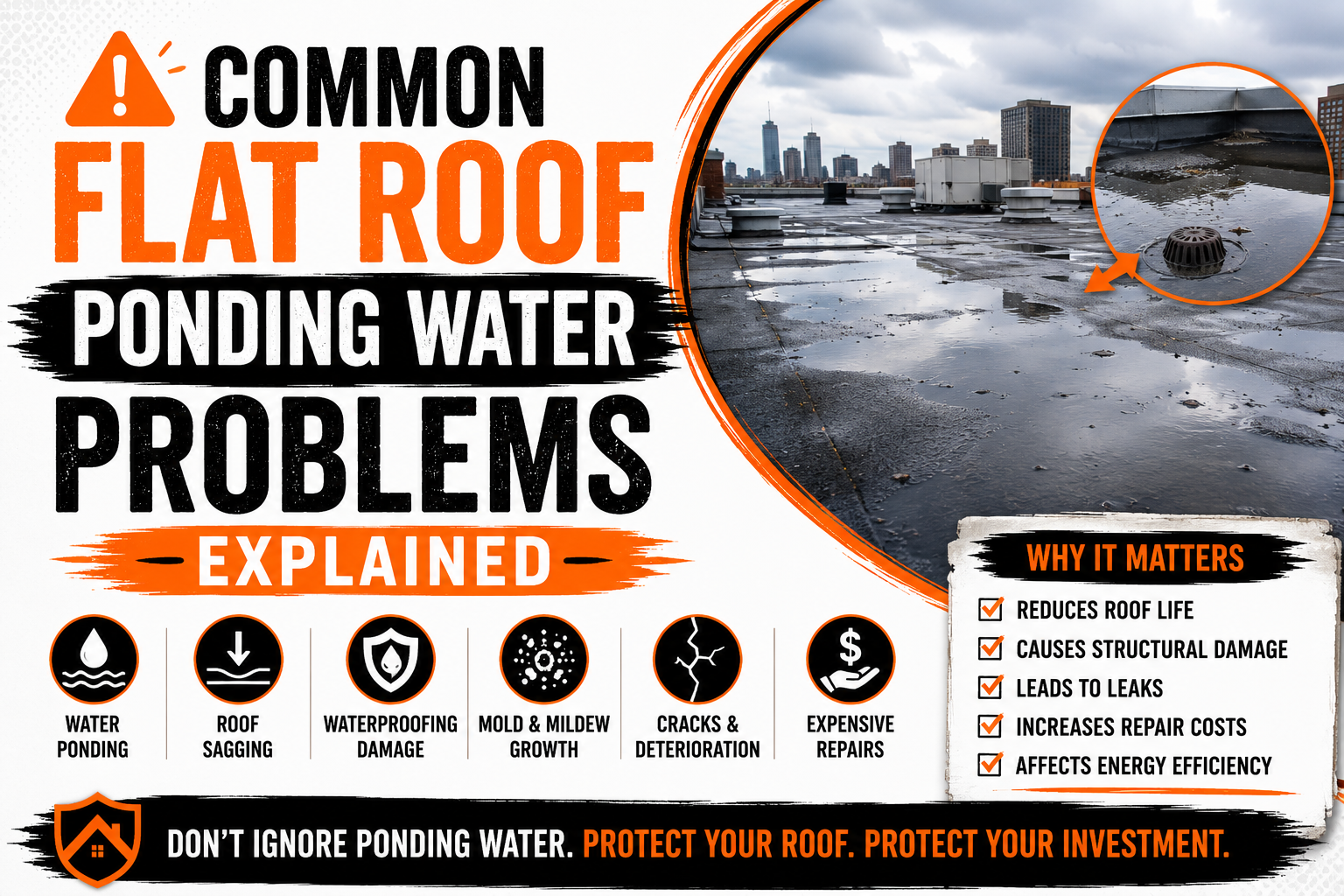
Ponding water refers to rainwater that remains on a roof long after a storm has passed instead of draining away as intended. While a small amount of water may temporarily collect following heavy rainfall, standing water that remains for extended periods often signals an underlying problem with the roof’s drainage or structural design.
Many property owners assume that a little standing water is harmless, especially if there are no visible leaks inside the building. However, prolonged ponding can gradually damage roofing materials, increase structural loads, shorten the lifespan of the roof, and create conditions that lead to expensive repairs. What appears to be a minor maintenance concern can eventually develop into a significant structural issue if ignored.
Flat roofs are carefully engineered with subtle slopes and drainage systems that allow water to move toward drains, gutters, or scuppers. When these systems fail to perform correctly, water begins accumulating in low areas where it can remain for days after rainfall. Over time, repeated exposure to standing water accelerates deterioration throughout the roofing system.
Understanding why ponding water occurs and how it affects a roof helps property owners identify problems before major damage develops. Early intervention not only extends the life of the roof but also reduces maintenance costs and protects the building beneath it.
This article explains the causes of flat roof ponding water, the warning signs that indicate developing problems, and why addressing standing water promptly is essential for maintaining a safe, durable, and efficient roofing system.
What Is Roof Ponding Water?
Roof ponding water is defined as water that remains on a flat or low-slope roof for an extended period after rainfall has stopped. Although exact definitions may vary among roofing professionals and manufacturers, water that remains on the roof for more than 48 hours is generally considered ponding rather than normal temporary accumulation.
Flat roofs are not completely level despite their name. They are designed with a slight slope that encourages water to flow toward designated drainage points. This subtle pitch is often difficult to notice from ground level but plays a critical role in preventing standing water.
Temporary puddles immediately following heavy rain are not necessarily cause for concern. During intense storms, drainage systems may require some time to remove accumulated water. Problems begin when water consistently remains on the roof long after surrounding surfaces have dried.
Ponding typically develops in low spots where water naturally collects. These depressions may form because of structural movement, deteriorated insulation, poor construction, or long-term settling. Once water begins collecting in these areas, the added weight often deepens the depression, making future ponding even more likely.
Standing water varies greatly in depth and size. Some ponds measure only a few inches across, while others cover large sections of a commercial roof. Even shallow water can create significant long-term problems when it remains on roofing materials repeatedly throughout the year.
Many roofing systems are designed to resist occasional water exposure, but few are intended to remain submerged continuously. Constant contact with standing water accelerates material aging, increases the likelihood of leaks, and places additional stress on structural components beneath the roof surface.
Recognizing the difference between normal post-rain drainage and persistent ponding helps property owners determine when professional evaluation is necessary.
Why Flat Roofs Are Vulnerable to Water Ponding
Flat roofs naturally face greater challenges with water drainage than steeply pitched roofs. Because they rely on carefully engineered slopes rather than gravity alone, even small imperfections can interfere with proper water flow and allow ponding to develop.
The slight slope built into flat roofs is generally enough to direct water toward drains under normal conditions. However, this system depends on precise construction and ongoing maintenance. Minor changes in roof elevation, structural movement, or blocked drainage pathways can disrupt water flow significantly.
Building movement also contributes to vulnerability. As structures age, framing members, roof decking, and support systems gradually settle or shift. Although these movements are often small, they can create shallow depressions where water naturally collects after rainfall.
Large commercial roofs face additional drainage challenges because water must travel greater distances before reaching drains or scuppers. A small obstruction or slight variation in roof elevation can interrupt this flow, allowing water to accumulate in localized areas.
Mechanical equipment installed on flat roofs may also influence drainage patterns. Heating and cooling units, ventilation systems, piping supports, and maintenance walkways create obstacles that alter the direction of water flow. If drainage is not carefully planned around these features, ponding may occur nearby.
Weather conditions further increase the likelihood of standing water. Heavy rainfall, wind-driven debris, and seasonal leaf accumulation can temporarily overwhelm drainage systems or block outlets. Without regular maintenance, these obstructions become recurring sources of ponding.
Roofing materials themselves also change over time. Insulation may compress, roof decking can weaken, and structural members gradually lose stiffness after years of service. These subtle changes alter the roof profile enough to affect drainage, even if the original construction was properly designed.
Understanding these vulnerabilities highlights why flat roofs require routine inspections and proactive maintenance to ensure water continues draining efficiently throughout the roof’s lifespan.
Common Causes of Ponding Water on Flat Roofs
Ponding water usually develops because one or more conditions prevent the roof from draining as originally intended. Identifying the root cause is essential because removing standing water alone does not prevent the problem from returning.
Poor roof design is one of the most common causes. If the roof lacks sufficient slope or drainage points, water naturally remains in low areas after rainfall. Although modern building standards address proper drainage more effectively, older roofs may have been constructed using outdated design practices.
Blocked drains and gutters create another frequent problem. Leaves, dirt, branches, roofing debris, and even bird nests can obstruct drainage pathways, preventing water from reaching designated outlets. Routine cleaning significantly reduces this risk.
Structural settlement gradually changes roof elevation over time. As support members settle unevenly or roof decking weakens, shallow depressions form across the surface. These low spots become natural collection points where water repeatedly accumulates.
Compressed or deteriorated insulation also contributes to ponding. Wet insulation loses structural stability and may compress under the weight of roofing materials and accumulated water. The resulting depressions continue collecting additional water during future storms.
Improper roof repairs occasionally create unintended drainage problems. New roofing materials installed without correcting underlying low spots may temporarily solve leaks while allowing ponding to continue affecting the structure beneath.
Heavy rooftop equipment sometimes creates localized deflection in structural framing. HVAC units, solar panels, communication equipment, and maintenance platforms increase loads in specific areas, potentially altering drainage if adequate structural support is not provided.
Repeated reroofing projects can also influence roof performance. Multiple roofing layers increase dead weight, placing additional stress on structural components and insulation. Over many years, this extra weight may contribute to roof deflection and water accumulation.
Because several factors often contribute simultaneously, successful repairs begin with identifying every condition affecting drainage rather than addressing only the most obvious symptom.
How Ponding Water Affects Roofing Materials
Standing water exposes roofing materials to conditions they were never intended to endure continuously. Although modern roofing products provide excellent weather resistance, prolonged water exposure gradually accelerates aging and increases the likelihood of material failure.
Roof membranes experience some of the earliest effects. Constant contact with water can weaken adhesives, soften certain membrane materials, and increase the risk of seam separation. Once waterproofing layers begin deteriorating, moisture can enter the roof assembly and affect underlying structural components.
Protective surface coatings also degrade more rapidly under ponding conditions. Coatings designed to reflect sunlight and shield roofing materials from ultraviolet exposure may wear away faster when submerged repeatedly. As protective layers deteriorate, the roofing system becomes more vulnerable to weather-related damage.
Flashing details surrounding roof penetrations face additional stress. Water collecting around skylights, vents, HVAC curbs, and parapet walls increases the likelihood of moisture entering through joints or sealants. These areas often become the first locations where leaks develop.
Roof fasteners may also deteriorate over time. Persistent moisture encourages corrosion, reducing the holding strength of mechanical attachments and increasing the risk of wind damage during severe weather. Corroded fasteners can also create pathways for water intrusion.
Standing water often traps dirt and organic debris as well. This accumulation supports algae, moss, and vegetation growth, particularly in warm, humid climates. Plant roots and biological growth gradually interfere with roofing materials while retaining even more moisture against the roof surface.
Repeated cycles of wetting and drying accelerate material fatigue. Roofing products expand when saturated and contract as they dry, creating ongoing stress throughout the system. Over many years, this movement contributes to cracking, blistering, and premature aging.
Protecting roofing materials from prolonged ponding significantly extends their useful life and reduces the frequency of costly repairs or premature replacement.
Early Warning Signs of Ponding Water Problems
Ponding water rarely develops without producing warning signs. Recognizing these indicators early allows property owners to investigate drainage issues before standing water causes widespread structural or waterproofing damage.
Visible standing water remains the most obvious sign. Water that consistently remains on the roof for several days after rainfall indicates that drainage is not functioning properly. Even if the water appears shallow, repeated ponding should not be ignored.
Dark stains or discoloration on roofing membranes often reveal areas where water regularly accumulates. These stains may appear before significant deterioration becomes visible and help identify low spots requiring closer inspection.
Roof surface depressions also deserve attention. Areas that appear lower than surrounding sections or feel noticeably softer during professional inspections may indicate deteriorating insulation or weakened structural support beneath the roofing materials.
Interior water stains frequently accompany long-term ponding problems. Although leaks may not occur directly beneath standing water, persistent moisture often travels through the roof assembly before becoming visible inside the building. Ceiling discoloration, peeling paint, or damp insulation all suggest that water has entered the structure.
Commercial buildings sometimes experience recurring drainage issues around rooftop equipment. Water remaining near HVAC units, vents, or mechanical supports often indicates that drainage pathways have been disrupted or blocked.
Vegetation growth on the roof surface provides another important clue. Moss, algae, or small plants typically develop where moisture remains present for extended periods. Their presence usually indicates recurring ponding rather than temporary rainfall accumulation.
Property owners should also monitor gutters and drains after storms. Overflowing drains, slow drainage, or repeated blockages often signal maintenance issues contributing to ponding across the roof.
Identifying these warning signs early gives roofing professionals the opportunity to correct drainage deficiencies before extensive damage develops beneath the roofing system.
Why Ignoring Standing Water Can Lead to Bigger Issues
Many property owners postpone addressing ponding water because the roof continues performing without obvious leaks. Unfortunately, standing water often causes gradual damage that remains hidden until repairs become significantly more expensive and complex.
One of the first consequences is accelerated material deterioration. Roofing membranes exposed to continuous moisture generally age faster than those draining properly. As waterproofing performance declines, the likelihood of leaks increases with every storm.
Structural loading also becomes a growing concern. Water is surprisingly heavy, and large areas of standing water add considerable weight to the roof. Aging structural members already weakened by years of service may begin deflecting further under this additional load, creating deeper depressions that trap even more water.
Moisture eventually reaches insulation beneath the roofing membrane if waterproofing begins to fail. Wet insulation loses much of its thermal efficiency while becoming substantially heavier. This combination increases energy costs and places additional stress on the roof structure.
Interior building damage often follows. Water entering through the roof may affect ceilings, electrical systems, interior finishes, stored inventory, and sensitive equipment before occupants realize a problem exists. Repairs frequently extend far beyond the roof itself.
Long-term ponding can also shorten the overall lifespan of the roofing system. Instead of achieving its expected service life, the roof may require major repairs or complete replacement years earlier than anticipated because of preventable drainage problems.
Ignoring standing water often transforms a manageable maintenance issue into a costly structural concern. Addressing drainage deficiencies promptly protects roofing materials, preserves structural integrity, and helps ensure the roof continues performing efficiently throughout its intended lifespan.
How Ponding Water Weakens Roof Structures
Standing water does more than affect the surface of a flat roof. Over time, it places continuous stress on the structural system supporting the roofing assembly. Even if the roof was originally designed to handle temporary rainwater loads, prolonged ponding introduces conditions that gradually weaken structural components.
Water is extremely heavy, and its weight increases quickly as larger areas become submerged. A shallow layer of standing water spread across a wide section of roof can add thousands of pounds of additional load. This constant pressure causes roof decking, joists, and supporting beams to work harder than intended for extended periods.
As structural members carry the extra weight, slight deflection may occur. Although this movement is often gradual, even small changes in roof elevation create deeper low spots where more water collects after the next rainfall. This cycle repeats over time, making the ponding problem progressively worse.
Wood framing is particularly vulnerable to prolonged moisture exposure. If water penetrates the roofing membrane, timber components begin absorbing moisture, reducing their strength and increasing the risk of decay. As the framing weakens, the roof becomes less capable of supporting normal loads safely.
Steel roof structures experience different but equally serious challenges. Persistent moisture encourages corrosion, especially around fasteners, welded connections, and support brackets. Corrosion gradually reduces the strength of structural members and weakens critical load-bearing connections.
Concrete roof systems are not immune either. Water infiltration may eventually reach reinforcing steel embedded within the concrete. As reinforcement corrodes, the surrounding concrete can crack or separate, reducing structural reliability and increasing repair complexity.
The longer standing water remains on a roof, the greater the opportunity for these structural problems to develop. Eliminating ponding early helps preserve the roof’s original load-carrying capacity and reduces the likelihood of costly structural restoration.
Membrane Damage and Waterproofing Failures
Roof membranes serve as the primary waterproof barrier protecting the building beneath the roof. While these materials are designed to resist rain and environmental exposure, continuous ponding places them under conditions that accelerate wear and increase the likelihood of failure.
Many roofing membranes expand and contract naturally as temperatures change throughout the day. When standing water remains on the surface, temperature fluctuations occur more slowly beneath the water, creating uneven expansion across different sections of the roof. This repeated movement places additional stress on seams and attachment points.
Membrane seams often represent the most vulnerable areas. Adhesives may gradually weaken after long-term water exposure, while welded seams can become stressed through repeated thermal cycling. Once seams begin separating, water gains direct access to the layers beneath the roofing system.
Protective coatings also deteriorate faster under ponding conditions. Coatings designed to reflect ultraviolet radiation and protect membrane materials remain submerged for extended periods, reducing their effectiveness over time. As coatings wear away, the underlying membrane becomes more vulnerable to sunlight, weathering, and physical damage.
Blistering may also develop within the roofing membrane. Moisture trapped beneath the surface expands as temperatures rise, creating raised areas that weaken the membrane. Repeated expansion and contraction eventually increase the likelihood of cracking or punctures.
Roof penetrations deserve particular attention because standing water often surrounds vents, skylights, HVAC units, and plumbing pipes. Constant moisture exposure accelerates deterioration of flashing materials and sealants, making leaks more likely around these critical details.
Waterproofing failures rarely occur suddenly. Instead, they develop gradually as repeated ponding weakens one component after another. Addressing drainage problems before waterproofing begins failing significantly extends the service life of the roofing system.
The Impact on Roof Insulation and Energy Efficiency
Roof insulation performs two important functions. It improves energy efficiency by reducing heat transfer while also helping support the roofing assembly above it. Ponding water threatens both of these functions when moisture enters the roof system.
Once water penetrates the roofing membrane, insulation begins absorbing moisture. Wet insulation loses much of its ability to resist heat flow, allowing indoor temperatures to fluctuate more rapidly. Heating and cooling systems must then work harder to maintain comfortable indoor conditions, increasing energy consumption.
Moisture also changes the physical characteristics of many insulation products. Some materials compress under prolonged water exposure, reducing their thickness and creating additional low spots in the roof. These depressions encourage even more ponding during future rainfall, creating a repeating cycle of deterioration.
Saturated insulation becomes significantly heavier than dry insulation. This additional weight increases structural loading across the roof, placing greater stress on decking, framing, and support systems. Combined with standing water above the membrane, the increased load can accelerate structural deflection.
Thermal performance declines unevenly when only portions of the insulation become wet. These localized areas create temperature differences across the roof, increasing condensation risks within the building and reducing overall energy efficiency.
Replacing wet insulation often requires removing sections of the roofing system because trapped moisture rarely dries completely once enclosed beneath waterproof membranes. Attempting to repair only the roofing surface without replacing damaged insulation usually leaves hidden problems unresolved.
Modern roofing systems are designed to perform as complete assemblies rather than individual components. Protecting insulation from ponding water preserves structural stability, improves energy performance, and extends the lifespan of the entire roof.
Drainage System Failures and Their Role
Proper drainage is the foundation of every successful flat roofing system. Even high-quality roofing materials cannot perform effectively if water cannot leave the roof quickly after rainfall. Drainage failures remain one of the leading reasons ponding develops and continues recurring.
Roof drains often become blocked by leaves, dirt, gravel, roofing debris, or nesting materials carried onto the roof by wind. Even partial blockages reduce drainage efficiency, allowing water to remain on the roof much longer than intended.
Gutters and downspouts also require regular maintenance. Debris accumulation restricts water flow, causing gutters to overflow or back up onto the roof surface. Overflowing water may eventually enter areas not designed for continuous moisture exposure.
Scuppers installed along parapet walls help remove water from many commercial roofs. If these openings become obstructed or are positioned too high above the roof surface, standing water remains trapped in low areas rather than draining properly.
Roof slope plays an equally important role. Over time, structural movement, compressed insulation, or deteriorated decking may alter the original drainage pattern. Even if drains remain completely clear, water cannot reach them efficiently when depressions interrupt natural flow.
Improperly located rooftop equipment sometimes contributes to drainage problems as well. Mechanical units, pipe supports, and maintenance platforms may block water pathways or create localized depressions where standing water repeatedly forms.
Routine inspections help identify drainage deficiencies before major damage develops. Cleaning drains, repairing gutters, adjusting drainage pathways, and correcting low areas all contribute to more effective water removal and reduced structural risk.
A well-maintained drainage system protects every part of the roofing assembly. By allowing water to leave the roof efficiently, it minimizes structural loading, preserves waterproofing materials, and reduces long-term maintenance expenses.
Repairing Ponding Water Problems
Successfully repairing ponding water requires more than simply removing standing water after storms. Long-term solutions focus on correcting the conditions preventing proper drainage so that water no longer accumulates in the same locations.
The repair process usually begins with a detailed roof inspection. Professionals identify low spots, evaluate structural movement, assess drainage performance, and determine whether ponding results from blocked drains, deteriorated insulation, weakened decking, or structural deflection.
Minor drainage issues may be corrected by cleaning drains, repairing gutters, or improving water flow around rooftop equipment. These relatively simple maintenance measures often eliminate localized ponding before more extensive damage develops.
When roof depressions have formed, tapered insulation systems may be installed to improve slope and direct water toward drainage points. These systems create gradual elevation changes without requiring major structural reconstruction.
Structural repairs become necessary when ponding results from weakened framing or roof decking. Damaged structural components are repaired or replaced before restoring the roofing system. Correcting structural movement prevents new low spots from developing after repairs are completed.
Roof membrane repairs frequently accompany drainage improvements. Areas affected by prolonged ponding are inspected carefully for seam separation, blistering, punctures, or deteriorated flashing. Restoring waterproof integrity ensures that corrected drainage systems continue protecting the roof assembly effectively.
In cases involving widespread deterioration, complete roof replacement may provide the most practical long-term solution. Installing a new roofing system allows contractors to correct drainage design, replace damaged insulation, restore structural stability, and improve overall roof performance simultaneously.
Selecting the appropriate repair strategy depends on identifying the true cause of ponding rather than simply treating visible symptoms. Comprehensive repairs provide longer-lasting results and reduce the likelihood of recurring drainage problems.
Repair vs Replacement Comparison Table
Choosing between repairing ponding water problems and replacing the entire roof depends on the extent of damage, the condition of the roofing system, and the remaining service life of the roof. While repairs are often appropriate for localized issues, more extensive deterioration may justify complete replacement.
The following comparison outlines common situations where each approach is generally more suitable.
| Roof Repairs | Roof Replacement |
|---|---|
| Localized ponding caused by blocked drains | Widespread ponding across multiple roof sections |
| Roofing membrane remains in good condition | Membrane nearing the end of its service life |
| Minor insulation damage | Extensive wet or compressed insulation |
| Limited structural movement | Significant roof deflection or structural deterioration |
| Isolated flashing or seam repairs | Multiple recurring leaks and waterproofing failures |
| Lower short-term cost | Greater long-term durability and performance |
Every roofing system should be evaluated individually because no single solution fits every building. Professional inspections help determine whether targeted repairs will restore proper drainage or whether replacement provides the safest and most cost-effective investment over the roof’s remaining lifespan.
Improving Roof Drainage Design
An effective drainage system is the most important defense against ponding water on a flat roof. While roofing materials provide waterproof protection, proper drainage ensures that rainwater leaves the roof quickly instead of remaining on the surface. Designing drainage correctly from the beginning, or improving it during renovations, significantly reduces the risk of long-term roof damage.
One of the most effective methods is maintaining the proper roof slope. Although flat roofs appear level, they are intentionally built with a slight pitch that directs water toward drains, gutters, or scuppers. If structural movement has reduced this slope over time, corrective measures such as tapered insulation systems can restore efficient drainage.
The placement of roof drains is equally important. Drains should be positioned where water naturally flows while providing enough capacity to handle heavy rainfall. Large commercial roofs often require multiple drains to ensure water is removed efficiently even during intense storms.
Overflow drainage systems provide another layer of protection. Secondary drains or overflow scuppers prevent excessive water accumulation if primary drainage systems become blocked during severe weather. These backup systems help reduce structural loading while protecting the roofing assembly.
Gutters and downspouts should also be properly sized for the building. Undersized drainage components may struggle during heavy rainfall, allowing water to back up onto the roof. Properly designed systems accommodate expected rainfall while reducing the likelihood of overflow.
Mechanical equipment should be positioned carefully during roof design or renovation. HVAC units, solar panels, and other rooftop installations should not interfere with natural drainage pathways. Maintaining clear water flow around these features minimizes localized ponding and improves overall roof performance.
Investing in improved drainage design not only reduces maintenance requirements but also extends the lifespan of the entire roofing system by preventing water from remaining on the roof after storms.
Maintenance Practices That Prevent Water Accumulation
Even the best-designed flat roof requires regular maintenance to continue draining efficiently. Leaves, dirt, debris, and weather-related wear gradually affect drainage performance, making routine maintenance essential for preventing recurring ponding problems.
Scheduled roof inspections allow property owners to identify drainage issues before they become serious. Inspectors evaluate drains, gutters, flashing, roof membranes, and structural conditions to ensure water continues flowing as intended. Regular inspections also help identify small defects before they develop into expensive repairs.
Cleaning drainage systems is one of the simplest yet most effective maintenance tasks. Roof drains, gutters, downspouts, and scuppers should remain free from leaves, branches, roofing debris, and sediment that restrict water flow. Regular cleaning is particularly important during autumn and after major storms.
Roof surfaces should also be kept clear of unnecessary debris. Dirt, loose gravel, and organic material not only block drainage pathways but also retain moisture against roofing materials, increasing the likelihood of premature deterioration.
Routine inspections after heavy rainfall provide valuable information about drainage performance. Observing how quickly water leaves the roof helps identify developing low spots or partially blocked drains before standing water becomes a recurring issue.
Property owners should also inspect rooftop equipment periodically. Loose supports, damaged flashing, or improperly installed mechanical systems can interfere with water flow and create localized ponding areas around equipment bases.
Maintaining a written maintenance schedule improves consistency and helps ensure inspections are not overlooked. Regular care protects the roof, reduces emergency repair costs, and significantly lowers the risk of structural deterioration caused by prolonged standing water.
Choosing Roofing Systems That Resist Ponding
Not all roofing systems respond to standing water in the same way. While every flat roof should be designed to drain efficiently, selecting materials capable of withstanding occasional water exposure provides additional protection against unexpected drainage problems.
Roofing membranes should be selected based on the building’s climate, expected rainfall, maintenance requirements, and intended service life. High-quality membrane systems generally provide better resistance to prolonged moisture than lower-grade alternatives, helping reduce deterioration if temporary ponding occurs.
Durability should be considered alongside waterproof performance. Roofing materials exposed to frequent rainfall, temperature fluctuations, and ultraviolet radiation must resist aging while maintaining flexibility over many years. Selecting durable products helps preserve waterproof integrity even under challenging environmental conditions.
Insulation systems also contribute to ponding resistance. High-compressive-strength insulation better supports roofing materials and reduces the likelihood of developing low spots caused by long-term loading. Stable insulation helps maintain the roof’s designed slope throughout its service life.
Protective coatings provide additional defense against weather exposure. Reflective roof coatings reduce surface temperatures, minimize thermal movement, and improve resistance to environmental aging. Some coatings also help protect membrane surfaces from the effects of temporary standing water.
Material compatibility should never be overlooked during replacement projects. Roofing membranes, insulation, adhesives, fasteners, and flashing should function as one integrated system. Combining compatible components improves durability and reduces the likelihood of premature failures.
Although no roofing material completely eliminates the need for proper drainage, selecting systems designed for long-term performance provides greater resilience and reduces maintenance requirements over the roof’s lifespan.
Questions Property Owners Should Ask During Roof Inspections
Regular roof inspections become even more valuable when property owners know which questions to ask. Meaningful discussions with roofing professionals help identify developing drainage issues before they evolve into structural or waterproofing problems.
Rather than focusing only on visible leaks, inspections should evaluate the overall health of the roofing system. Understanding drainage performance, structural condition, and maintenance priorities allows owners to make informed decisions about repairs and long-term planning.
Several questions can help guide productive roof inspections.
- Is water draining completely after rainfall?
- Are there any areas where ponding regularly occurs?
- Have new low spots or roof depressions developed since the last inspection?
- Are drains, gutters, and scuppers functioning properly?
- Has moisture entered the insulation or roof decking?
- Do any structural components show signs of movement or deterioration?
- What maintenance or repairs should be completed before the next rainy season?
The answers to these questions provide valuable insight into the roof’s condition and help prioritize preventive maintenance. Addressing small drainage concerns early often prevents larger structural and waterproofing problems from developing later.
Clear communication with roofing professionals also supports long-term planning. Property owners can better budget for maintenance, schedule repairs strategically, and avoid unexpected emergency expenses caused by neglected ponding issues.
Long-Term Benefits of Eliminating Ponding Water
Correcting ponding water problems produces lasting benefits that extend well beyond eliminating visible standing water. Improving drainage protects nearly every component of the roofing system while reducing maintenance demands throughout the roof’s service life.
One of the greatest advantages is improved roof longevity. Roofing membranes, flashing, sealants, and protective coatings experience less stress when water drains efficiently after rainfall. Reduced moisture exposure slows material deterioration and helps the roof achieve its expected lifespan.
Structural components also benefit significantly. Eliminating standing water reduces unnecessary loading on roof decking, joists, beams, and supporting walls. Lower structural stress decreases the likelihood of roof deflection, helping preserve proper drainage for many years.
Energy efficiency improves when insulation remains dry. Moisture-free insulation maintains its thermal performance, reducing heating and cooling costs while improving indoor comfort. Preventing insulation saturation also avoids the additional structural weight associated with trapped moisture.
Maintenance expenses generally decrease after drainage improvements. Roofs that shed water effectively require fewer leak repairs, less membrane restoration, and fewer emergency service calls following severe weather. Planned maintenance becomes more predictable and cost-effective.
Property value may also benefit from a well-maintained roof with documented drainage improvements. Prospective buyers, tenants, and insurers often view properly maintained roofing systems as indicators of responsible property management and reduced future repair risks.
Perhaps most importantly, eliminating ponding water provides confidence that the roof is performing as intended. Property owners gain peace of mind knowing that the roofing system is better protected against weather-related damage and capable of delivering reliable long-term performance.
Final Thoughts
Ponding water is one of the most common challenges affecting flat roofs, yet it is also one of the most preventable. Although standing water may seem harmless after a heavy rainfall, repeated accumulation gradually weakens roofing materials, increases structural loads, reduces insulation performance, and creates conditions that lead to costly repairs.
Understanding why ponding occurs allows property owners to move beyond treating symptoms and instead address the underlying causes. Whether the problem results from blocked drains, structural settlement, deteriorated insulation, or poor drainage design, correcting it early helps preserve both the roofing system and the building it protects.
Routine inspections, proactive maintenance, effective drainage design, and high-quality roofing materials all work together to minimize the risk of recurring ponding. When combined, these measures provide a stronger, more durable roofing system capable of performing reliably through changing weather conditions and years of service.
Conclusion
Flat roof ponding water should never be dismissed as a minor inconvenience. While temporary puddles immediately after heavy rain may be expected, standing water that remains for extended periods often signals drainage deficiencies or structural concerns that require attention. Ignoring these issues allows damage to progress beneath the roof surface, where repairs become increasingly expensive and disruptive.
Throughout this article, we explored the causes of ponding water, how it affects roofing materials, insulation, waterproofing systems, and structural components, as well as the role proper drainage plays in maintaining roof performance. We also examined practical repair methods, preventive maintenance strategies, and the importance of selecting roofing systems designed for long-term durability.
The most effective way to protect a flat roof is through a proactive approach. Regular inspections, timely maintenance, efficient drainage systems, and prompt repairs help prevent water accumulation before it leads to serious structural or waterproofing failures. These practices not only extend the lifespan of the roof but also reduce long-term ownership costs and improve building performance.
Ultimately, eliminating ponding water is about more than removing standing rainwater. It is about protecting the structural integrity of the building, preserving the investment in the roofing system, and ensuring that the roof continues to provide reliable protection for many years to come.