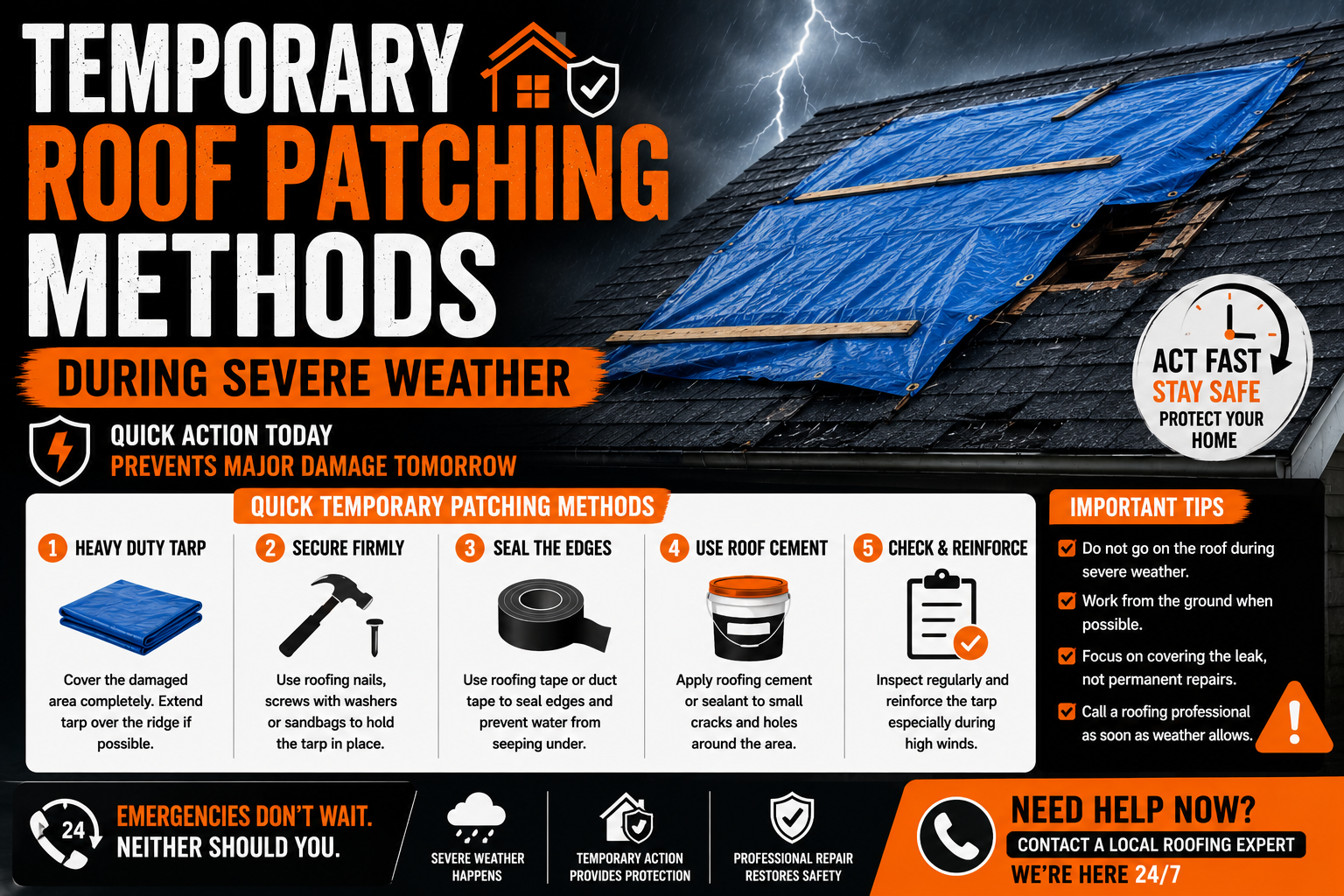
Temporary Roof Patching Methods During Severe Weather
Introduction
Severe weather can strike without much warning, leaving homeowners and commercial property owners facing unexpected roof damage that requires immediate attention. Heavy rain, high winds, hail, and falling debris can create openings in a roofing system within minutes, allowing water to enter the building before permanent repairs can be arranged. In these situations, temporary roof patching becomes an essential step in protecting the structure from additional damage.
A temporary roof patch is designed to reduce water intrusion until a professional repair or full roof replacement can be completed. While it is not intended to serve as a permanent solution, it can significantly limit the spread of moisture, preserve structural components, and reduce repair costs. Acting quickly after storm damage often makes the difference between a simple repair and a major restoration project.
Every roofing emergency is different because the extent of damage depends on the type of roof, the severity of the storm, and the condition of the roofing materials before the event occurred. A missing shingle may require a different temporary solution than a punctured metal roof or a damaged flat roof membrane. Understanding the available patching methods helps property owners make informed decisions while waiting for professional assistance.
Safety should always remain the highest priority during any emergency roof repair. Temporary patching is only appropriate when weather conditions are stable and the roof can be accessed without creating unnecessary risks. In many cases, protecting the interior of the building while waiting for trained professionals is the safest approach.
This guide explains the most effective temporary roof patching methods for severe weather situations. It also covers the causes of storm related roof damage, essential safety precautions, emergency repair materials, and the factors that determine which temporary solution is most appropriate for different roofing systems.
Understanding Roof Damage During Severe Weather
Roofs are designed to withstand changing weather conditions throughout the year, but extreme storms can exceed their design limits. Strong winds, heavy rainfall, hail, snow, and flying debris all place significant stress on roofing materials. Even a well maintained roof can develop leaks when exposed to severe weather for an extended period.
Wind damage is one of the leading causes of emergency roof repairs. Powerful gusts can loosen shingles, lift flashing, tear away roofing materials, or expose the roof deck. Once protective layers have been removed, rainwater gains direct access to the underlying structure and can spread quickly through insulation, ceilings, and walls.
Heavy rainfall creates another major challenge because water naturally finds the smallest openings in a roofing system. Cracked sealants, loose flashing, worn shingles, and tiny punctures may not leak during light showers, but prolonged rainfall often exposes these hidden weaknesses. A small opening can allow a surprising amount of water into a building over several hours.
Hailstorms create both visible and hidden roof damage. Large hailstones may crack asphalt shingles, dent metal roofing panels, loosen protective granules, or weaken roof coatings. Although the roof may appear functional immediately after the storm, damaged materials often deteriorate rapidly during future weather events.
Falling branches and airborne debris frequently puncture roofing materials during severe storms. These impacts can create localized openings that expose the roof deck directly to rain. Immediate temporary protection becomes essential because exposed wood absorbs moisture quickly, increasing the likelihood of structural deterioration.
Winter storms introduce additional concerns through snow accumulation and ice dams. As snow melts, water can become trapped behind accumulated ice near roof edges. This water may back up beneath shingles and leak into the home even when the roofing materials themselves remain intact.
Each weather event affects roofing systems differently, making proper damage assessment an important first step before choosing any temporary repair method.
Common Signs That Your Roof Needs Immediate Temporary Patching
Not every roof leak begins with water dripping from the ceiling. Many forms of storm damage develop gradually, allowing moisture to spread throughout the building before becoming obvious. Recognizing early warning signs allows homeowners to apply temporary protection before more serious damage occurs.
One of the most noticeable signs is water staining on ceilings or upper walls. These stains often appear as yellow, brown, or dark discoloration that expands after each rainfall. Although the stain may seem minor, it usually indicates that moisture has already entered the roofing system.
Missing or visibly damaged shingles also require immediate attention. When shingles are displaced by strong winds, the protective layers beneath become vulnerable to rain, sunlight, and additional weather exposure. Temporary covering helps reduce further deterioration until replacement materials can be installed.
Pieces of roofing material found around the property after a storm may indicate more extensive roof damage than is visible from the ground. Shingles, flashing fragments, or sections of metal roofing should never be ignored because they often signal that additional materials remain loose on the roof.
Granules collecting in gutters provide another indication that asphalt shingles have suffered weather related deterioration. As shingles lose their protective surface, they become increasingly susceptible to cracking, water penetration, and accelerated aging.
Inside the attic, damp insulation, water stains on wooden framing, or visible daylight shining through the roof all suggest that immediate action is necessary. These warning signs often reveal leaks before they become noticeable in finished living spaces.
Homeowners should also pay attention to musty odors that develop shortly after heavy rainfall. Persistent moisture trapped inside insulation or structural framing can encourage mold growth long before visible damage appears inside the home.
Why Immediate Temporary Repairs Matter
Many people assume a small roof leak can wait several days before being addressed. Unfortunately, even minor openings often allow enough moisture to create extensive secondary damage throughout the building. Water rarely stays where it first enters and instead follows framing members, insulation, wiring, and wall cavities before becoming visible.
Roof decking is particularly vulnerable once protective roofing materials have been compromised. Exposed wood absorbs water rapidly, causing swelling, warping, and gradual deterioration. Repeated saturation may eventually weaken the structural integrity of the roof, increasing repair costs significantly.
Insulation also loses much of its effectiveness after becoming wet. Moisture trapped inside insulation reduces energy efficiency while creating favorable conditions for mold and mildew growth. Replacing water damaged insulation often adds considerable expense to storm restoration projects.
Interior finishes can suffer just as quickly. Ceiling drywall softens, paint begins peeling, flooring materials absorb moisture, and wooden trim may warp when roof leaks remain untreated. Temporary patching limits ongoing water intrusion and helps preserve these interior components.
Electrical systems represent another important concern. Water entering light fixtures, ceiling fans, electrical outlets, or wiring creates potential safety hazards that require immediate attention. Reducing continued water entry through temporary roof repairs helps lower these risks until permanent restoration can begin.
Quick action following storm damage not only protects the building but may also help support insurance claims. Many insurance providers expect property owners to take reasonable steps to prevent additional damage after a covered weather event.
When Temporary Roof Patching Is the Right Solution
Temporary roof patching is most appropriate when immediate permanent repairs are not possible. Severe storms often create widespread roof damage across entire communities, resulting in longer wait times for roofing contractors. Temporary repairs provide valuable protection during this period.
Emergency patching is also useful when additional rainfall is expected before a roofing company can begin permanent work. Preventing repeated water intrusion reduces the likelihood that structural components will deteriorate while waiting for repairs.
Insurance inspections sometimes delay restoration work after major weather events. Homeowners may need to document storm damage before replacing roofing materials, making temporary protection an important step while the claims process moves forward.
Temporary repairs are especially valuable during evenings, weekends, or holidays when roofing contractors may have limited availability. Applying emergency protection helps reduce water damage until professional assistance becomes available.
In some situations, roofing materials required for permanent repairs must be specially ordered. Matching existing shingles, metal panels, or specialty roofing products can take time, making temporary weatherproofing an effective way to protect the structure during the waiting period.
However, temporary roof patching should never be viewed as a substitute for permanent restoration. Emergency repair materials gradually deteriorate under continued exposure to sunlight, wind, temperature fluctuations, and rainfall. Every temporary repair should eventually be replaced with a professionally installed long term solution.
Temporary Roof Repairs Versus Permanent Roof Repairs
Understanding the distinction between temporary and permanent repairs helps set realistic expectations following storm damage. Although both approaches aim to stop roof leaks, they serve different purposes and use different materials.
Temporary repairs focus on preventing additional water intrusion until permanent restoration can be completed. These emergency solutions prioritize speed and weather protection rather than long term durability. Materials such as waterproof tarps, roofing tape, emergency sealants, and temporary membranes are commonly used because they can be installed quickly.
Permanent roof repairs involve replacing damaged roofing materials with products designed to restore the roof’s original performance. This process may include replacing shingles, repairing roof decking, installing new flashing, restoring underlayment, and correcting drainage issues. Permanent repairs are intended to withstand years of weather exposure while meeting current roofing standards.
The following table highlights some of the key differences between temporary and permanent roof repairs.
| Feature | Temporary Roof Repair | Permanent Roof Repair |
|---|---|---|
| Primary Purpose | Prevent additional water intrusion | Restore complete roof performance |
| Expected Lifespan | Days to several weeks | Many years depending on roofing material |
| Installation Time | Usually completed quickly | Requires detailed inspection and planning |
| Materials Used | Tarps, roofing tape, emergency sealants | New shingles, flashing, underlayment, decking |
| Structural Restoration | Limited | Complete repair of damaged components |
| Weather Resistance | Short term protection | Long term durability |
Recognizing these differences helps property owners understand why emergency repairs should always be followed by permanent restoration as soon as practical.
Essential Safety Precautions Before Attempting Any Roof Patch
Personal safety should always take priority over protecting the roof. Storm damaged roofs often contain hidden hazards that make emergency repairs more dangerous than they initially appear. Taking time to evaluate conditions before climbing onto a roof can prevent serious injuries.
The weather should always be stable before attempting any temporary repair. Heavy rain, lightning, strong winds, snow, or icy conditions create extremely hazardous working environments. Waiting until the storm has completely passed is usually the safest decision.
Roof pitch also influences safety. Steeper roofs require greater balance and often demand specialized fall protection equipment. Without proper training and safety gear, working on a steep roof presents unnecessary risks.
Structural damage may not always be visible from above. Sections weakened by prolonged water exposure, fallen trees, or severe impacts may no longer support a person’s weight safely. Walking across compromised decking increases the possibility of collapse.
Electrical hazards should also be considered after severe weather. Downed power lines, damaged electrical service connections, and water exposed wiring create conditions that require extreme caution. If electrical hazards are suspected, roof access should be avoided until the area has been declared safe.
Proper personal protective equipment improves safety during emergency repairs. Non slip footwear, work gloves, eye protection, and sturdy clothing help reduce injuries caused by sharp roofing materials, exposed nails, and storm debris.
Ladders should always be positioned on stable, level ground and extend above the roof edge to provide secure access. Whenever possible, another person should remain nearby to stabilize the ladder and assist if an emergency occurs.
Emergency Roof Patching Materials and Tools
Having the right materials available makes temporary roof repairs more effective and reduces response time after severe weather. Many emergency repair supplies are inexpensive, easy to store, and capable of providing reliable short term protection until permanent repairs can be arranged.
Heavy duty waterproof tarps remain one of the most commonly used emergency roofing materials. They are capable of covering large damaged sections while diverting rainwater away from exposed roof decking. Reinforced tarps generally perform better than lightweight plastic because they resist tearing during strong winds.
Roofing tape is ideal for sealing small cracks, punctures, and separated flashing. High quality roofing tapes contain durable waterproof adhesives that bond to many roofing surfaces when applied correctly. They provide a quick solution for localized damage that does not require full roof covering.
Emergency roofing sealants help fill small gaps around flashing, roof penetrations, exposed fasteners, and minor cracks. These products remain flexible after curing, allowing them to accommodate normal expansion and contraction caused by changing temperatures.
Plastic sheeting may also serve as a temporary moisture barrier when reinforced tarps are unavailable. Although it is generally less durable, thick polyethylene sheeting can provide short term protection during emergency situations.
Basic tools improve both the speed and quality of temporary repairs. Keeping these items available before storm season allows homeowners to respond more efficiently when unexpected roof damage occurs.
Useful emergency repair supplies include:
- Heavy duty waterproof tarp
- Roofing tape
- Emergency roofing sealant
- Plastic sheeting
- Utility knife
- Hammer
- Roofing nails
- Measuring tape
- Work gloves
- Extension ladder
Proper preparation before severe weather arrives often makes emergency roof protection faster, safer, and more effective.
Choosing the Right Temporary Patching Method
Selecting the right temporary roof patch depends on several factors, including the type of roofing material, the size of the damaged area, and the severity of the storm damage. A repair method that works well for a small puncture may not provide enough protection for a large section of missing shingles. Taking a few moments to evaluate the situation helps ensure the temporary repair performs as intended.
The location of the damage also plays an important role. Damage near roof valleys, chimneys, skylights, or vents often requires a different approach than damage in the middle of an open roof slope. These areas naturally collect or redirect water, making proper temporary protection even more important.
Weather conditions should also influence the chosen repair method. If additional rain or high winds are expected before permanent repairs can be completed, stronger temporary materials may provide better protection. Reinforced waterproof coverings generally perform better than lightweight materials during extended periods of severe weather.
Compatibility with the existing roofing system is another consideration. Asphalt shingles, metal roofing, tile roofs, and flat roofing systems all respond differently to emergency repair products. Using materials designed for the specific roof type helps improve adhesion and reduces the chance of premature failure.
Proper surface preparation is equally important. Loose debris, standing water, dirt, and damaged roofing fragments should be removed carefully whenever conditions allow. A clean surface improves the effectiveness of temporary repair materials and creates a stronger barrier against water intrusion.
Temporary Roof Tarp Installation During Storm Emergencies
Roof tarps remain one of the most effective temporary solutions for protecting large sections of storm damaged roofing. They provide immediate coverage over exposed areas and help divert rainwater away from vulnerable structural components until permanent repairs can begin.
Tarps are especially useful when strong winds have removed multiple shingles or when falling tree branches have punctured the roof. They also provide reliable protection after severe hailstorms that leave large portions of the roofing system compromised. Because they cover broad areas, tarps often reduce the risk of additional interior damage during repeated storms.
A tarp should always extend well beyond the damaged section of the roof. Simply covering the visible opening may leave surrounding areas exposed to wind driven rain. Extending the material onto undamaged roofing helps create a more dependable waterproof barrier.
The upper edge of the tarp should be secured carefully to prevent water from flowing beneath it. Proper fastening also minimizes movement during windy conditions, reducing the likelihood of tearing or displacement. Reinforced attachment methods generally provide greater stability throughout changing weather conditions.
After installation, the tarp should be inspected periodically from the ground whenever possible. Loose edges, torn sections, or shifting material should be addressed promptly because even small openings can allow water to enter beneath the temporary covering.
Best Practices for Installing a Temporary Roof Tarp
Installing a roof tarp correctly improves its ability to withstand severe weather while protecting the damaged area beneath. Rushing the process often results in loose coverings that provide only limited protection during the next storm.
Before placing the tarp, loose roofing materials, broken branches, and other debris should be removed from the damaged section whenever it is safe to do so. Sharp objects left beneath the tarp may puncture the material or prevent it from lying flat against the roof.
The tarp should be pulled tightly across the damaged area without excessive stretching. A secure fit reduces flapping during strong winds and limits the amount of water that can collect on the surface.
Following these basic steps helps improve the effectiveness of a temporary roof tarp:
- Inspect the damaged area from a safe location.
- Remove loose debris if conditions allow.
- Position the tarp so it extends beyond all sides of the damaged section.
- Secure the upper edge firmly before fastening the remaining sides.
- Check the installation after the next rainfall to ensure it remains secure.
Taking the time to install the tarp properly often provides better protection than attempting multiple quick repairs over several days.
Common Mistakes During Emergency Tarp Installation
Even quality roofing tarps can fail if they are installed incorrectly. Understanding common mistakes helps homeowners avoid unnecessary problems while protecting the roof during severe weather.
One frequent mistake involves selecting a tarp that is too small. Wind driven rain can enter beneath uncovered edges if the material does not extend far enough beyond the damaged area. Choosing a larger tarp usually provides better overall protection.
Another common issue is failing to secure every edge properly. Fastening only the corners allows the remaining edges to lift during strong winds, reducing the effectiveness of the repair. Consistent attachment around the perimeter improves stability and weather resistance.
Some homeowners also attempt tarp installation while storms are still active. Wet roofing surfaces, lightning, and powerful winds create dangerous working conditions that greatly increase the risk of injury. Waiting until the weather improves is usually the safest option.
Using Roofing Tape for Small Roof Leaks
Roofing tape is an excellent temporary solution for small openings that do not require a full waterproof covering. It is commonly used to seal cracks, punctures, lifted flashing, and minor splits in roofing materials following severe weather.
Modern roofing tapes contain waterproof adhesive layers that bond firmly to clean roofing surfaces. Once applied correctly, they create a temporary seal that slows water intrusion while remaining flexible enough to accommodate normal roof movement.
Proper surface preparation is essential for successful application. Dirt, dust, loose granules, and moisture reduce the strength of the adhesive and shorten the lifespan of the repair. Cleaning and drying the damaged area before installation greatly improves overall performance.
Roofing tape is particularly useful when damage is confined to one small location. It provides a faster and less intrusive repair than installing a large tarp while still offering valuable short term protection against rainfall.
Although roofing tape performs well for localized leaks, it should not be relied upon to cover large storm damaged sections. Extensive damage usually requires broader waterproof protection until permanent repairs can be completed.
Applying Emergency Roofing Sealants
Emergency roofing sealants provide another practical method for reducing water intrusion after severe weather. These products are designed to fill small gaps and cracks while creating a temporary waterproof barrier that limits additional moisture penetration.
Sealants are especially effective around roof penetrations where flashing has separated slightly during storms. Areas surrounding plumbing vents, skylights, exhaust vents, and chimneys often develop small openings that respond well to temporary sealing.
Applying the correct amount of sealant is important. Thick, uneven applications may trap water or crack more easily as temperatures change. A smooth and continuous seal generally provides better short term performance.
Temperature also affects how roofing sealants cure. Most products perform best within specific temperature ranges recommended by the manufacturer. Applying sealants outside these conditions may reduce their ability to adhere properly.
While emergency sealants help control localized leaks, they cannot restore damaged shingles, repair broken flashing, or replace missing roofing materials. Their primary purpose is to slow water intrusion until professional repairs become possible.
Temporary Patching for Missing Shingles
Missing shingles expose some of the roof’s most important protective layers to direct weather exposure. Even a relatively small area without shingles can allow significant amounts of water to enter during heavy rainfall.
The surrounding shingles should always be inspected after storm damage because high winds often loosen nearby materials that have not yet detached completely. Identifying these weakened sections early helps reduce the likelihood of additional losses during future storms.
Temporary waterproof coverings may be placed over the exposed section to shield the underlayment and roof deck from moisture. Depending on the size of the damaged area, roofing tape, waterproof repair fabric, or small membrane patches may all provide suitable short term protection.
Protecting exposed underlayment is particularly important because prolonged exposure to sunlight and rain gradually reduces its effectiveness. Preserving this layer helps limit additional deterioration until replacement shingles can be installed.
If the roof deck itself has become exposed, temporary protection should be installed as soon as it is safe. Unprotected wood absorbs moisture rapidly, increasing the risk of swelling, rot, and structural weakening.
Protecting Damaged Flashing
Flashing directs water away from vulnerable roof joints and transitions. When severe weather bends, loosens, or separates flashing, water can enter areas that normally remain well protected.
Storm damage commonly affects flashing around chimneys, skylights, roof valleys, dormers, and plumbing vents. These locations experience frequent water flow during rainfall, making temporary repairs particularly important.
Small flashing separations may be sealed temporarily using compatible roofing tape or emergency sealants. These materials reduce water entry while helping stabilize loose flashing until permanent replacement can be completed.
If flashing has been severely distorted or partially detached, covering the area with waterproof material often provides more dependable short term protection than attempting to reshape damaged metal.
Protective gloves should always be worn while handling damaged flashing because sharp metal edges can easily cause cuts during emergency repairs.
Temporary Solutions for Flat Roof Leaks
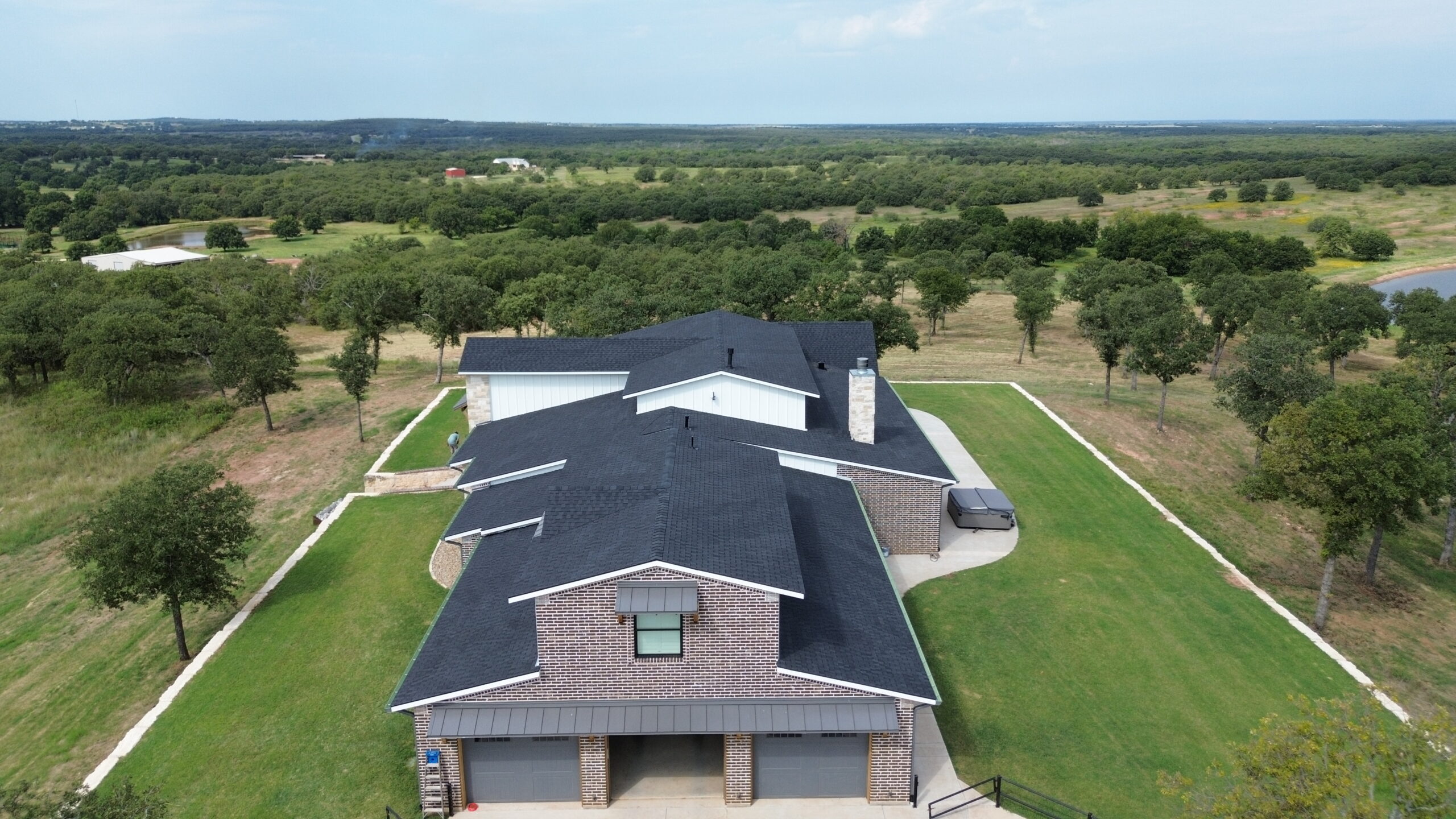
Flat roofs require different temporary repair methods because water drains much more slowly than on sloped roofing systems. Standing water remains in contact with damaged areas longer, increasing the likelihood of leaks developing through even small openings.
Storm damage on flat roofs often includes punctured membranes, seam separation, surface blisters, and impact damage from debris. These problems may appear minor initially but can allow substantial moisture intrusion during prolonged rainfall.
Temporary membrane patches are frequently used to cover localized tears while restoring a temporary waterproof surface. These products adhere directly over damaged areas and help prevent additional water from entering beneath the roofing membrane.
Whenever practical, standing water should be removed before applying temporary repair materials. Dry surfaces generally improve adhesion and create stronger waterproof seals.
Flat roofs should also be monitored carefully after each rainfall. Areas where water continues collecting may reveal additional hidden damage requiring professional attention.
Managing Ponding Water During Temporary Repairs
Ponding water is one of the most common issues affecting flat roofs after severe weather. Water that remains on the roof for extended periods increases stress on roofing materials and accelerates deterioration.
Temporary drainage improvements may reduce the amount of standing water while permanent repairs are being planned. Clearing blocked roof drains, removing leaves, and eliminating accumulated debris helps restore proper drainage during rainfall.
If ponding continues despite these efforts, a professional inspection should be arranged. Persistent standing water often indicates underlying drainage or structural issues that temporary repairs cannot fully resolve.
Allowing ponding water to remain on the roof for long periods increases the likelihood of membrane deterioration, additional leaks, and more extensive structural repairs.
Common Mistakes That Make Temporary Roof Repairs Less Effective
Emergency roof repairs are intended to reduce damage, but certain mistakes can unintentionally create larger problems. Avoiding these common errors improves the effectiveness of temporary patching and helps protect the roof until permanent restoration begins.
Using products that are not designed for roofing applications is a frequent mistake. Household adhesives and general purpose sealants often deteriorate quickly when exposed to sunlight, moisture, and changing temperatures, making them unreliable for emergency roof protection.
Another common problem is focusing only on the visible damage. Storms often affect surrounding roofing materials even if they appear undamaged at first glance. Overlooking nearby weaknesses may allow new leaks to develop during the next rainfall.
Many homeowners also leave temporary repairs in place much longer than intended. Even the highest quality emergency materials gradually weaken under continuous weather exposure and should never replace permanent roofing repairs.
Ignoring attic inspections is another missed opportunity. Hidden moisture may continue entering the building even when exterior repairs appear successful. Periodic inspections help identify problems before they cause significant structural damage.
Temporary roof patching provides valuable short term protection, but its effectiveness depends on proper installation, regular monitoring, and timely permanent repairs.
Monitoring Temporary Roof Repairs After Severe Weather
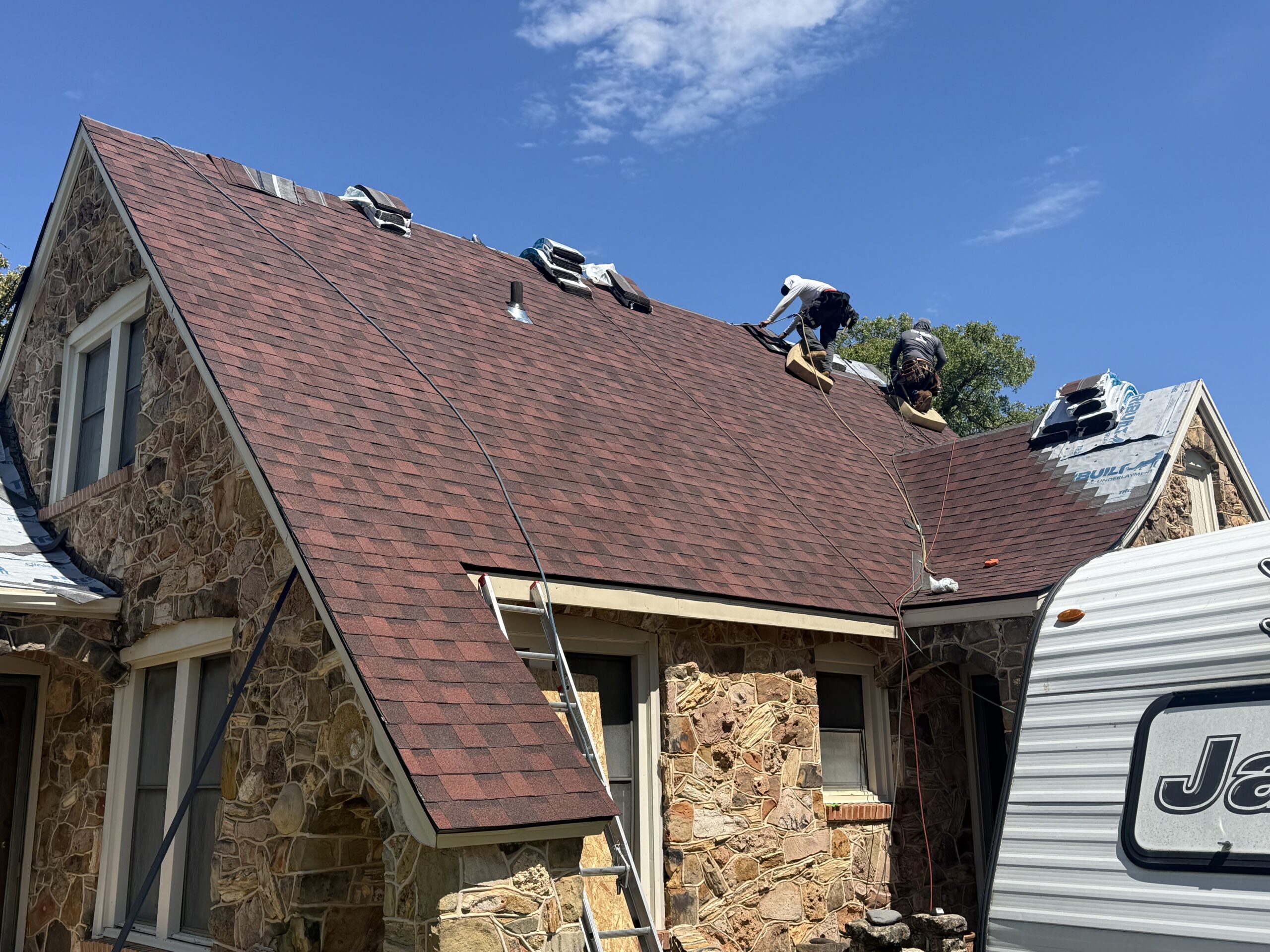
Once a temporary roof patch has been installed, regular monitoring becomes essential to ensure it continues protecting the home. Weather conditions can change quickly, and emergency repair materials gradually lose effectiveness after prolonged exposure to rain, sunlight, wind, and fluctuating temperatures. A temporary repair that performs well during the first storm may require adjustments after additional severe weather.
The first inspection should ideally take place after the next rainfall if conditions are safe. Homeowners should check for new water stains on ceilings, damp insulation in the attic, or active dripping around previously damaged areas. Even a small amount of moisture may indicate that the temporary patch needs reinforcement.
Ground level inspections can also reveal important warning signs without requiring anyone to climb onto the roof. Loose tarp edges, torn waterproof coverings, lifted roofing tape, or displaced repair materials often become visible from outside the home. Identifying these issues early helps prevent further water intrusion.
The attic should not be overlooked during follow up inspections. Fresh water marks on framing, damp insulation, or increasing humidity levels often indicate that hidden leaks are still present. Monitoring these conditions allows homeowners to respond before structural damage becomes more extensive.
Signs That a Temporary Roof Patch Is Failing
Every temporary roof repair has a limited lifespan, regardless of the materials used. Over time, exposure to changing weather conditions weakens adhesives, stretches waterproof coverings, and reduces the effectiveness of emergency sealants. Recognizing the signs of failure allows homeowners to arrange permanent repairs before the roof suffers additional damage.
Recurring ceiling stains are one of the clearest indicators that a temporary repair is no longer performing properly. If stains continue expanding after rainfall, water may be entering beneath the patch or through nearby damaged roofing materials that were not initially visible.
Roof tarps should also be inspected for loose edges, tears, or areas where wind has shifted the material. A tarp that moves excessively during windy conditions becomes less effective because rainwater can reach the exposed roofing underneath.
Roofing tape may begin lifting around the edges after prolonged exposure to sunlight and moisture. Once the adhesive weakens, water can travel beneath the tape and continue entering the roofing system.
Emergency sealants can eventually crack as roofing materials expand and contract with changing temperatures. Small cracks may seem insignificant at first, but they can quickly allow moisture to penetrate the roof during heavy rainfall.
Some common warning signs that require attention include:
- New or expanding interior water stains.
- Loose or damaged roof tarps.
- Roofing tape peeling away from the surface.
- Cracked or separated emergency sealant.
- Damp attic insulation after rain.
- Visible movement in temporary repair materials during windy weather.
Promptly addressing these issues helps extend the effectiveness of emergency repairs while permanent restoration is being scheduled.
Protecting the Interior While Waiting for Permanent Repairs
Even well installed temporary roof patches cannot guarantee complete protection during prolonged severe weather. Taking preventive measures inside the building helps minimize damage if small amounts of water continue entering through the roof.
Furniture, electronics, important documents, and valuable belongings should be moved away from active leak areas whenever possible. Relocating these items reduces the chance of permanent damage while repairs are still pending.
Buckets or waterproof containers may be placed beneath active leaks to prevent water from spreading across flooring materials. These containers should be emptied regularly during periods of heavy rainfall to prevent overflowing.
Plastic sheeting can provide additional protection for flooring, furniture, and personal belongings located beneath damaged roof sections. Although it does not stop the leak itself, it helps reduce cleanup efforts and limits water damage inside the home.
Good ventilation also plays an important role after roof leaks occur. Improving airflow with fans or open windows, when weather permits, helps moisture evaporate more efficiently and reduces conditions that encourage mold growth.
Electrical safety should remain a priority throughout this period. If water reaches light fixtures, ceiling fans, electrical outlets, or wiring, the affected circuits should remain off until inspected by a qualified electrician.
When Temporary Repairs Are No Longer Enough
Temporary roof patching is designed to provide short term protection, but every emergency repair eventually reaches a point where permanent restoration becomes necessary. Delaying professional repairs beyond that point increases the risk of structural deterioration and more expensive restoration work.
Repeated leaks despite multiple temporary repairs often indicate that hidden storm damage extends beyond the visible opening. Water may be entering through several locations, making localized emergency repairs less effective with each passing storm.
Visible sagging along the roof surface is another serious warning sign. Water saturated roof decking and weakened framing components can no longer provide the same level of structural support, creating safety concerns that require immediate professional attention.
Persistent mold growth despite temporary leak control may also suggest that moisture remains trapped inside insulation, wall cavities, or structural framing. Surface drying alone cannot eliminate hidden water damage once it has spread beyond the original leak.
If emergency materials require frequent replacement after every rainfall, permanent repairs should no longer be postponed. Repeated temporary patching often costs more over time than completing the necessary long term restoration.
Structural Warning Signs That Require Immediate Professional Attention
Certain types of roof damage should never be managed with temporary repairs alone because they indicate possible structural failure. Recognizing these warning signs helps homeowners avoid situations that could become dangerous.
Large sagging sections of the roof often indicate that framing members or roof decking have weakened after prolonged moisture exposure. Continued rainfall increases the weight placed on these damaged areas, raising the possibility of partial roof collapse.
Ceilings that begin bowing downward deserve immediate attention because they may contain trapped water above the drywall. If a ceiling appears swollen or begins cracking significantly, the affected room should be avoided until the situation has been evaluated safely.
Rapidly widening cracks in interior ceilings or walls may also indicate structural movement related to water damage. While not every crack signals a major problem, changes that appear shortly after severe weather should always be investigated.
Doors and windows that suddenly become difficult to open or close may reflect subtle structural shifting caused by prolonged roof leaks. Although these changes can have several causes, they should never be ignored following significant storm damage.
Whenever structural concerns exist, personal safety should take precedence over protecting the property. Professional evaluation provides the safest path forward.
Documenting Roof Damage for Insurance Claims
Accurate documentation helps support insurance claims following severe weather. Insurance providers typically expect homeowners to record both the original damage and the temporary measures taken to prevent further loss.
Photographs should be taken before temporary repairs begin whenever conditions are safe. Wide photographs help document the overall condition of the roof, while close up images capture details such as missing shingles, damaged flashing, punctures, or fallen debris.
Additional photographs should be taken after temporary repairs have been completed. These images demonstrate that reasonable steps were taken to minimize additional damage while waiting for permanent restoration.
Keeping receipts for emergency repair materials is equally important. Expenses for waterproof tarps, roofing tape, emergency sealants, plastic sheeting, and related supplies may support portions of an insurance claim depending on the policy.
Maintaining a written record also provides valuable documentation. Recording the date of the storm, when damage was discovered, temporary repairs performed, contractor communications, and subsequent weather events creates a clear timeline that may simplify the claims process.
How Professional Roofers Transition From Temporary Repairs to Permanent Solutions
Professional roof repairs begin with a detailed inspection rather than immediately replacing damaged materials. Roofing contractors evaluate the visible storm damage while also searching for hidden problems that may affect the long term performance of the roof.
Exterior inspections include examining shingles, flashing, vents, valleys, ridge caps, and roof penetrations for signs of impact, lifting, cracking, or moisture intrusion. Temporary repair materials are carefully removed so the full extent of the damage can be assessed.
The roof deck receives particular attention because prolonged water exposure often affects the structural wood beneath the finished roofing materials. Soft spots, discoloration, swelling, or rot help determine whether portions of the decking require replacement.
Interior inspections are equally important because water often travels through insulation and framing before becoming visible. Contractors evaluate attic spaces, insulation, ventilation systems, ceilings, and wall cavities to identify hidden moisture that may not yet have caused visible damage.
Only after completing this comprehensive assessment can a permanent repair plan be developed. Addressing every damaged component helps restore the roof’s long term durability while reducing the likelihood of future leaks.
Preventing Future Storm Damage
Although no roof can completely eliminate the effects of severe weather, routine maintenance significantly improves its ability to withstand future storms. Preventive care reduces the likelihood that small defects will develop into emergency roof leaks.
Scheduling regular roof inspections allows minor issues to be identified before severe weather arrives. Loose shingles, deteriorated flashing, damaged sealants, and clogged drainage systems can often be repaired quickly, preventing more serious damage during storms.
Cleaning gutters and downspouts is another important maintenance task. Proper drainage allows rainwater to flow away from the roof efficiently, reducing the risk of overflow, standing water, and ice dam formation.
Tree maintenance also contributes to roof protection. Overhanging branches should be trimmed regularly because they may break during storms and strike the roof. Removing weak or diseased trees located near the home further reduces the risk of impact damage.
When roof replacement eventually becomes necessary, homeowners may wish to consider upgraded roofing materials designed for improved storm resistance. Modern impact resistant shingles, durable synthetic underlayments, and enhanced flashing systems often provide greater protection than older roofing products.
Following these maintenance practices helps strengthen the roof throughout the year:
- Schedule a professional roof inspection annually.
- Inspect the roof after major storms whenever conditions are safe.
- Clean gutters and downspouts regularly.
- Trim overhanging tree branches before storm season.
- Replace damaged roofing materials promptly.
- Address minor leaks before they become major repairs.
Consistent maintenance reduces the likelihood of emergency situations while extending the overall lifespan of the roofing system.
Frequently Asked Questions
How long can a temporary roof patch last?
The lifespan depends on the materials used, installation quality, and weather conditions. Most temporary repairs are intended to provide protection for several days to a few weeks until permanent repairs can be completed.
Can I leave a roof tarp installed for several months?
A roof tarp should only be considered a temporary solution. Extended exposure to sunlight, wind, and rain gradually weakens the material, making permanent roof repairs the safer long term option.
Will temporary roof patching completely stop a leak?
Temporary repairs can significantly reduce water intrusion, but they may not eliminate every leak. Hidden damage beneath roofing materials sometimes allows moisture to continue entering until permanent repairs are performed.
Is roofing tape waterproof?
Most roofing tapes are designed to create a waterproof temporary seal when applied to clean, dry roofing surfaces. They work best on small cracks, punctures, and localized damage rather than large openings.
Should I repair my roof during an active storm?
No. Roof work should never be attempted during heavy rain, lightning, high winds, or icy conditions. Waiting until the weather improves greatly reduces the risk of injury.
Does homeowners insurance usually cover temporary roof repairs?
Many insurance policies encourage homeowners to take reasonable temporary measures to prevent additional damage after a covered storm event. Coverage varies by policy, so it is always best to review policy details with the insurance provider.
Conclusion
Temporary roof patching is an essential response to severe weather because it helps limit water intrusion while permanent repairs are being arranged. Whether the damage involves missing shingles, damaged flashing, punctured roofing materials, or leaks around roof penetrations, applying the appropriate temporary solution can significantly reduce additional structural and interior damage.
Successful emergency roof patching depends on choosing the right repair method, using suitable materials, and placing safety above all other considerations. Temporary repairs should always be viewed as protective measures rather than permanent solutions, and they should be monitored regularly to ensure they continue performing effectively.
Routine inspections, prompt maintenance, and timely professional repairs remain the best long term strategies for protecting any roofing system. By responding quickly after severe weather and following up with permanent restoration, homeowners can extend the life of their roof, reduce repair costs, and maintain a safer, more resilient property for years to come.