
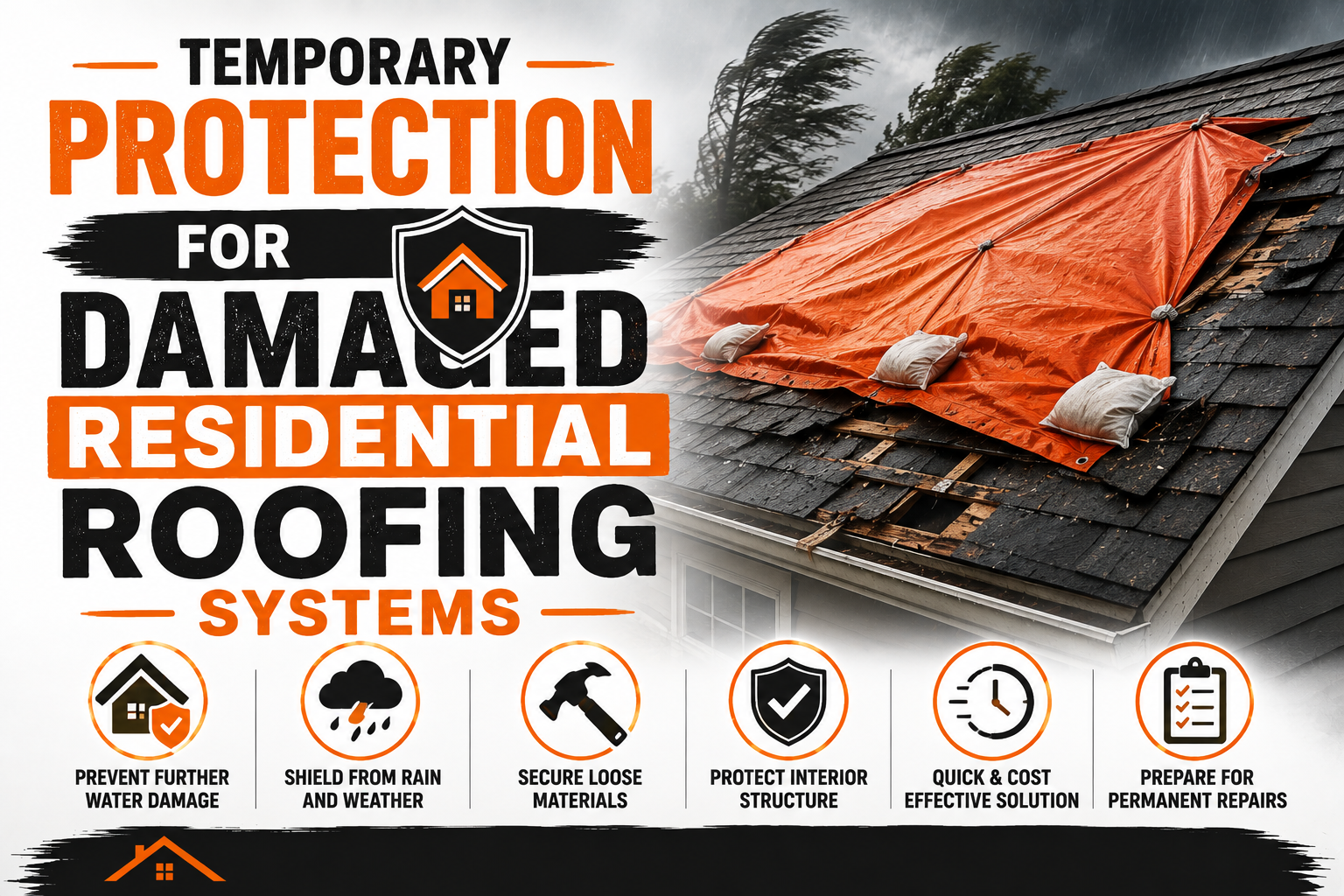
Temporary Protection for Damaged Residential Roofing Systems
Introduction
A damaged residential roof can leave a home vulnerable to rain, wind, debris, and additional weather exposure. Missing shingles, cracked tiles, displaced metal panels, damaged flashing, fallen branches, and other storm-related problems can create openings that allow water to reach areas that are normally protected. When permanent repairs cannot be completed immediately, temporary roof protection can help reduce the risk of further damage.
Temporary protection is not intended to replace permanent roofing repairs. Its purpose is to stabilize the damaged area and provide short-term protection until a qualified professional can complete a proper assessment and repair. The approach used depends on the type of roofing system, the size and location of the damage, current weather conditions, and the overall condition of the roof.
Homeowners should treat damaged roofing as a potential safety hazard. Storm-damaged roofs may contain loose materials, broken components, wet surfaces, exposed fasteners, or weakened decking. Attempting to climb onto the roof without appropriate training and equipment can result in serious injury.
A professional roofing contractor can determine whether temporary protection is necessary and what method is appropriate. In some situations, a temporary covering may be installed over an exposed section, while other cases may require securing loose components or removing dangerous debris before protection can be applied.
Understanding temporary protection helps homeowners respond appropriately when permanent repairs are delayed. It also explains why emergency roof covering should be installed carefully rather than treated as a simple do-it-yourself task.
Why Temporary Roof Protection Is Important
When roofing materials are damaged, the roof may no longer provide complete protection against the elements. Even a small opening can allow rainwater to enter the roofing assembly, particularly during wind-driven storms. Temporary protection helps reduce this exposure while permanent repairs are being organized.
Water can travel through damaged roofing materials and affect the layers underneath. Depending on the location, moisture may reach the roof deck, insulation, attic, ceilings, walls, and interior finishes. The original roofing problem may therefore become much more expensive if additional water enters the home.
Strong winds can also make an existing opening larger. A partially lifted shingle may become completely detached during another gust, while a loose metal panel may move further if it is not properly secured. Temporary stabilization can reduce the chance of the affected area becoming more exposed.
Temporary protection can also be useful when a storm creates widespread demand for roofing services. After a major weather event, many properties may require repairs at the same time. A properly installed temporary covering can help protect the home while the homeowner waits for permanent repair work.
The need for protection depends on the severity and location of the damage. A small surface defect may not require the same response as a large opening above a bedroom or living area. Professionals consider the potential for water entry and additional deterioration when deciding what action is appropriate.
Temporary protection also gives homeowners time to arrange a complete inspection. Rather than rushing into permanent work without understanding the full condition of the roof, the damaged area can be stabilized while a detailed repair plan is developed.
Common Causes of Residential Roof Damage
Residential roofing systems can be damaged by many different events. Severe weather is a major cause, but ordinary deterioration and unexpected incidents can also create situations where temporary protection becomes necessary.
High winds can lift or remove shingles, loosen flashing, damage ridge components, and affect metal panels. Wind can also move branches or other debris onto the roof, causing impact damage. In some cases, the damage may be visible from the ground, while other problems require closer inspection.
Hail can create dents, cracks, fractures, or other surface damage depending on the roofing material. Multiple impacts across a roof may weaken the surface and increase vulnerability to later rainfall. Temporary protection may be appropriate if the storm creates openings or exposes underlying materials.
Heavy rainfall can reveal existing weaknesses around flashing, valleys, skylights, vents, and other roof penetrations. Water may enter through areas that had already deteriorated before the storm. Once an active leak develops, temporary protection can help control additional exposure.
Falling trees and branches can cause more severe damage. A heavy branch may puncture the roof, break roofing materials, or affect the underlying decking. These situations may require coordination between roofing and tree-removal professionals before temporary protection can safely be installed.
Other incidents can also damage roofing systems. Construction accidents, fallen equipment, animal activity, and localized structural problems may create openings. Regardless of the cause, the basic objective remains the same: prevent additional exposure until permanent repairs can be completed.
Assessing the Damage Before Applying Protection
Before temporary protection is installed, the damaged area should be evaluated carefully. The visible opening may not represent the full extent of the problem. For example, missing shingles can expose an area where surrounding materials have also been loosened.
A professional assessment begins by considering what happened. Information about recent storms, falling branches, visible changes, and previous roof problems can help establish the circumstances. Homeowners should explain when they first noticed the damage and whether water entered the property.
The roof should then be examined from a safe position. Professionals look for missing or displaced materials, damaged flashing, exposed underlayment, punctures, broken tiles, loose panels, and other conditions. They also consider whether the affected area appears stable enough for temporary work.
The surrounding roof should not be ignored. Wind can affect neighboring materials even when they remain attached, while impact damage can spread beyond the point where a branch initially struck. Checking the surrounding area helps prevent a temporary covering from hiding additional problems.
The attic may also provide useful information when it can be accessed safely. Water stains, damp insulation, damaged decking, or unexpected daylight can indicate that the roof has been compromised more extensively than initially visible.
Professionals also consider the weather forecast and current conditions. Installing temporary protection during active high winds or severe rain may be unsafe or ineffective. The work should be performed when conditions allow appropriate installation.
A careful assessment helps determine the correct temporary solution. It also prevents homeowners from covering an area without understanding what lies beneath the damaged surface.
Temporary Roof Coverings
One of the most common methods of protecting an exposed roof area is the use of a temporary covering. A suitable covering can create a barrier between the damaged section and incoming rain while permanent repairs are pending.
The covering needs to be appropriately sized for the damaged area. It should extend beyond the opening enough to protect vulnerable edges while being secured in a manner suitable for the roof and weather conditions. Simply placing a loose sheet over a hole is unlikely to provide reliable protection.
The attachment method is equally important. A temporary covering that is not properly secured can move during wind and potentially create additional damage. Professionals consider the roof material, location, slope, and expected weather when determining how the covering should be stabilized.
Temporary coverings may be particularly useful when roofing materials are missing and the underlying layers are exposed. They can help reduce water exposure until replacement materials are available. However, the covering should still be inspected periodically if it remains in place for an extended period.
A temporary covering should not conceal active problems indefinitely. If water continues to enter, the installation may need adjustment or additional repair. Homeowners should communicate any continuing leaks to the roofing professional.
The condition of the covering also matters after subsequent weather. Strong winds can loosen temporary protection, while heavy rain can reveal gaps. Professional follow-up may be necessary if the temporary installation becomes compromised.
Temporary Protection for Different Roofing Materials
Different roofing systems require different approaches to temporary protection. Asphalt shingles, metal panels, clay tiles, concrete tiles, and other materials have unique attachment methods and vulnerabilities.
Asphalt shingle roofs may have sections where individual shingles are missing or lifted. Temporary protection can be placed over exposed areas when necessary, while surrounding shingles are evaluated for additional movement or damage.
Metal roofs require particular care around panels, seams, and fasteners. A temporary covering should not interfere with the roof’s drainage or create unnecessary pressure on damaged panels. Professionals evaluate the condition of the panel system before selecting an appropriate method.
Tile roofs can be more difficult to protect because individual tiles may be cracked or displaced. Walking on tiles can create additional damage if done incorrectly. Temporary protection should therefore be handled by someone familiar with the specific roofing system.
Flat and low-slope roofs have different drainage characteristics. Water may remain on the surface longer, making proper temporary protection especially important when the membrane or other roofing surface has been damaged.
Regardless of material, the goal is to protect the exposed area without creating additional problems. The temporary solution should work with the roof’s design rather than interfering with drainage, ventilation, or other system components.
Protecting the Interior While the Roof Is Damaged
Temporary roof protection should be combined with appropriate interior precautions when water has already entered the home. Interior damage can continue even after rainfall stops if moisture remains trapped in ceilings, walls, or insulation.
Homeowners can move furniture and personal belongings away from areas where water is entering, provided it is safe to do so. Containers can be placed under active drips when appropriate, but homeowners should avoid standing in water near electrical equipment.
Ceiling materials may become weakened after significant water exposure. Sagging or visibly damaged ceilings should not be touched or placed under unnecessary pressure. If a ceiling appears unstable, professional assistance may be required.
Attic areas should also be approached carefully. Wet insulation, damaged decking, and exposed nails can create hazards. Homeowners should not enter an attic simply to inspect a leak if the area is difficult to access or appears unsafe.
Interior moisture should be documented and communicated to the roofing professional. Information about where water appears inside can provide useful clues about the location of the exterior problem.
Protecting the interior does not replace repairing the roof. It is another temporary measure designed to limit secondary damage while the roofing problem is being addressed.
When Temporary Protection Should Be Installed
The timing of temporary protection depends on the severity of the damage and the possibility of additional weather. If a roof has an exposed opening and more rain is expected, prompt protection may be especially important.
Active leaks can also increase urgency. Water entering a living area, attic, or other interior space may cause additional damage if the source remains exposed. A professional can determine whether immediate covering or another emergency measure is appropriate.
Temporary protection may also be necessary after a tree impact. Even if the weather has cleared, an exposed section can remain vulnerable until permanent repairs begin. The area should be assessed before any attempt is made to remove debris or access the roof.
Not every roof defect requires emergency covering. Minor cosmetic damage or conditions that do not expose the roof assembly may be handled differently. A professional assessment helps determine the appropriate level of response.
Weather conditions should always be considered. High winds can make temporary installation unsafe, while ongoing heavy rain may limit roof access. Safety and proper installation should take priority over speed.
The most effective temporary protection is therefore based on the actual condition of the roof rather than a one-size-fits-all method. Stabilizing the damaged area, reducing water exposure, and preparing for permanent repairs are the main goals. Once the roof has been protected, homeowners can move forward with a detailed repair plan that addresses both visible damage and any underlying problems discovered during the assessment.
Temporary Protection for Roof Openings
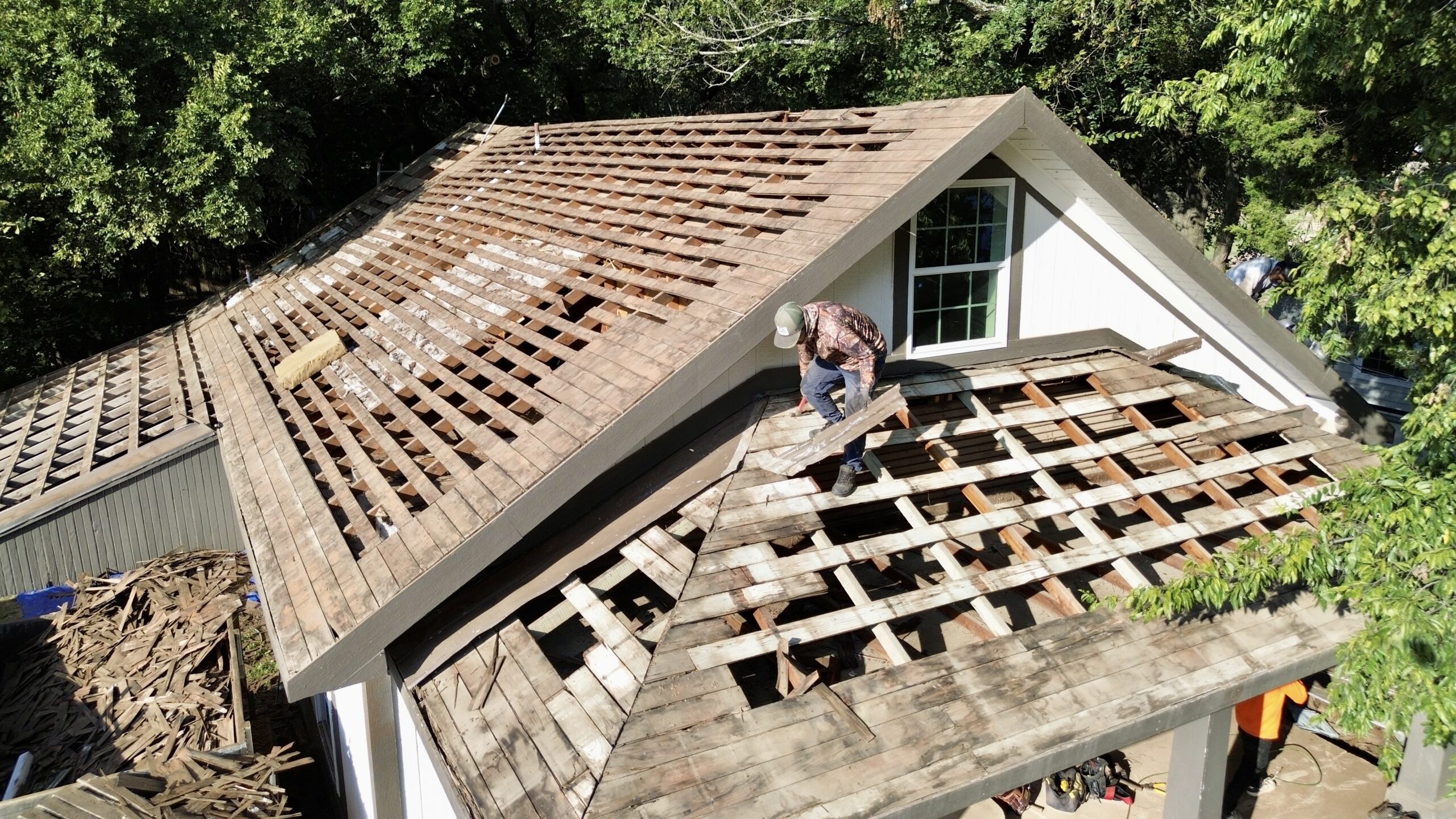
Roof openings are among the most urgent conditions that may require temporary protection. A missing section of shingles, broken tile, punctured membrane, or displaced metal panel can expose the roofing layers beneath to rain and wind. If the opening remains uncovered, even ordinary rainfall can increase the extent of the damage.
The size of the opening does not always determine its importance. A relatively small opening near a roof penetration can allow water to enter a sensitive area, while a larger opening over a well-drained section may behave differently. Professionals consider location, roof design, material condition, and expected weather before selecting a temporary solution.
Temporary coverings can create a short-term barrier over exposed sections. The covering must be positioned carefully so that water continues to move toward the appropriate drainage path. If installed incorrectly, it can redirect water toward vulnerable areas or create additional stress on the roof.
The condition of the surrounding materials should also be considered. If nearby shingles, tiles, or panels have become loose, simply covering the center of the damaged area may not be enough. The surrounding components may require stabilization before temporary protection is installed.
A professional may also identify areas that should remain accessible for further inspection. Temporary protection should not make it impossible to evaluate important components later. The temporary solution should therefore balance immediate protection with the need for proper permanent repair.
Securing Loose Roofing Materials
Storms do not always completely remove roofing materials. Strong winds can leave shingles, metal panels, ridge caps, flashing, or other components partially detached. These materials may appear relatively normal from the ground but can become dangerous or cause additional damage during another gust.
Loose materials should be handled carefully because attempting to reposition them without proper equipment can make the situation worse. A professional can determine whether the component can be safely secured temporarily or should be removed and replaced.
Ridge caps and hip components deserve particular attention because they are exposed to wind from several directions. A loose ridge component can allow water into the roof assembly and may become completely detached during subsequent weather.
Flashing can also become partially separated from the roof. Temporary stabilization may reduce immediate water exposure, but permanent repair may require removing and reinstalling the affected flashing correctly.
Metal panels may require specialized attention if fasteners or seams have been affected. Forcing a panel back into position without evaluating the attachment system may leave an underlying weakness unresolved.
Temporary stabilization is therefore different from simply pushing a loose component back into place. The goal is to reduce movement and exposure while preserving the integrity of the roofing system until permanent work can be completed.
Protecting Roof Valleys and Drainage Areas
Roof valleys are important drainage channels where two roof sections meet. During storms, these areas can receive significant amounts of water, making damage or blockage particularly concerning.
Debris can accumulate in valleys after high winds. Leaves, branches, roofing fragments, and other materials can interfere with normal water movement. If the valley is already damaged, blocked drainage may increase the chance of water reaching vulnerable areas.
Temporary protection around a damaged valley must be installed carefully. Covering the area without considering water flow can redirect rainfall toward another part of the roof. Professionals therefore evaluate the drainage path before deciding how to protect the damaged section.
Flashing in valleys may also be affected by storm conditions. If it becomes displaced or damaged, water can move beneath surrounding roofing materials. Temporary measures may reduce exposure until permanent flashing repairs are completed.
Homeowners should not attempt to clear difficult or unstable roof valleys themselves. Wet surfaces and loose debris can create serious fall hazards. Professional access is particularly important when the roof is steep or heavily damaged.
Proper drainage remains important after temporary protection is installed. The temporary solution should not block gutters, valleys, drains, or other designed water pathways.
Temporary Protection Around Chimneys and Skylights
Chimneys and skylights create interruptions in the roof surface and therefore require careful attention after storm damage. Flashing and seals around these structures can be affected by wind, impact, or water exposure.
A damaged chimney flashing system may allow rain to enter around the base or sides of the chimney. Temporary protection can help reduce water exposure, but the area should eventually receive a complete inspection to determine whether flashing or surrounding materials require permanent repair.
Skylights can also develop leaks when their flashing or surrounding roofing materials are damaged. A temporary covering may protect the opening from additional rainfall when appropriate, but it should not interfere with the skylight structure or redirect water toward the building.
Professionals may inspect both the exterior and interior sides of these areas. Interior staining near a chimney or skylight can help identify possible water intrusion. The visible interior location may not be directly beneath the actual exterior opening because water can travel along the roof assembly.
Temporary protection around penetrations should therefore be treated as part of a broader repair process. Covering the visible symptom without examining the surrounding system can leave the underlying problem unresolved.
Protecting Damaged Flat and Low-Slope Roofs
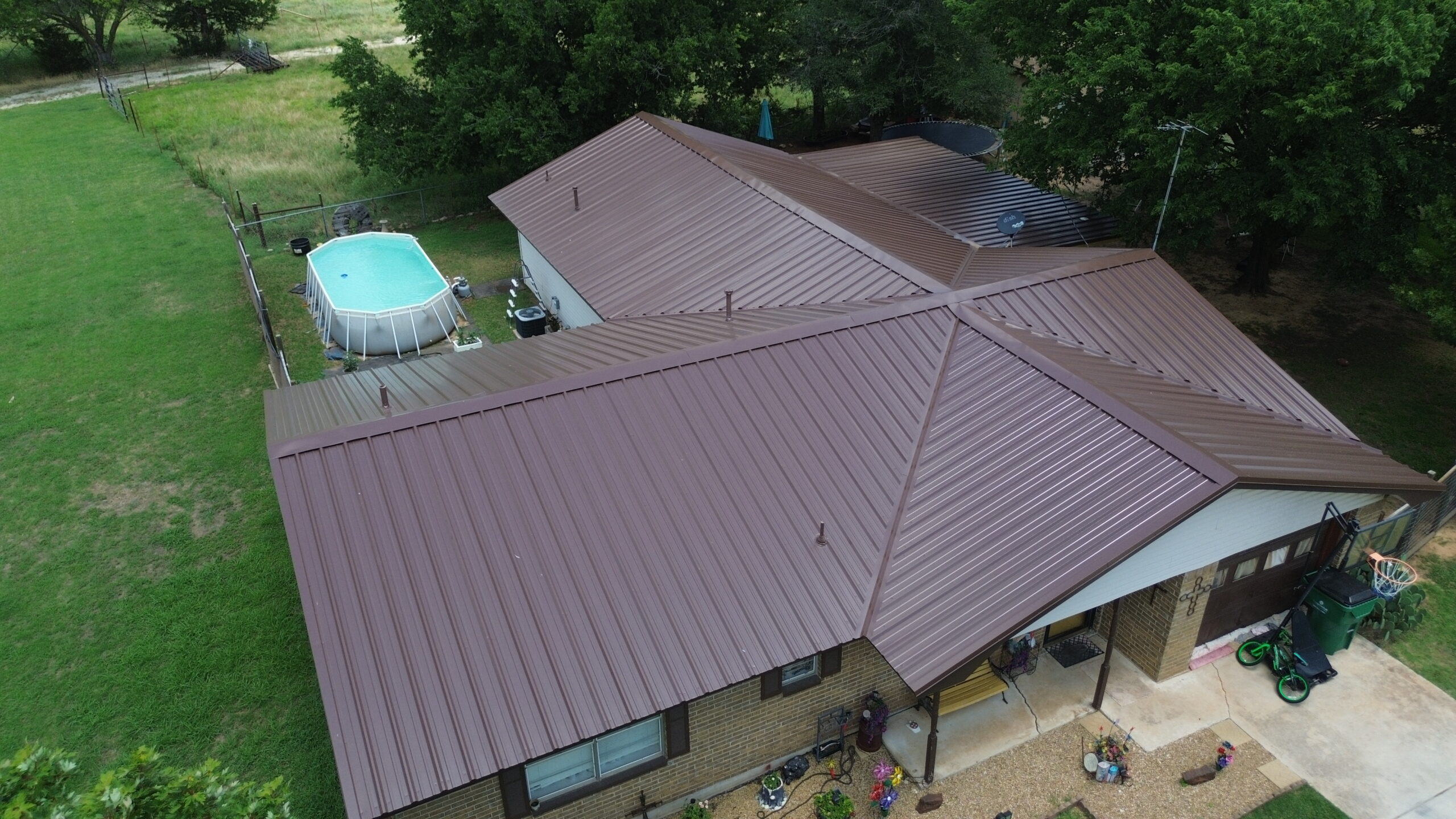
Flat and low-slope roofs require special consideration because their drainage patterns differ from steep-sloped roofing systems. Water may remain on the surface for longer periods, making an exposed opening particularly vulnerable to continued moisture.
Temporary protection must account for existing drains, scuppers, seams, and other drainage features. Blocking a drain with a temporary covering can create additional problems by allowing water to accumulate around the damaged area.
Membrane roofing systems may experience punctures, tears, lifted edges, or damaged seams. A temporary measure may reduce immediate exposure, but permanent repair usually requires materials and methods compatible with the specific membrane.
Low-slope roofs may also have equipment or penetrations on the surface. HVAC components, vents, pipes, and other structures can become potential points of damage during severe weather. Temporary protection should account for these areas rather than treating the roof as one uninterrupted surface.
Because water movement can be difficult to judge from ground level, professional evaluation is especially valuable for low-slope systems. A small opening may have consequences beyond the immediately visible area.
Temporary Protection During Ongoing Bad Weather
Installing temporary protection during active severe weather can be challenging. Strong winds, heavy rain, lightning, and slippery surfaces can make roof access unsafe. Professionals must determine whether conditions are suitable for emergency work.
If weather remains dangerous, homeowners should not attempt to access the roof simply because an opening is visible. Personal safety should take priority over immediate exterior repair. A temporary interior response may be safer until professional assistance can be provided.
When conditions improve enough for safe access, a professional can assess the roof and install appropriate protection. The method may need to account for continued wind or additional rainfall expected later.
Temporary protection should also be checked after severe weather if it remains in place. A covering or stabilization measure can become loose if exposed to strong wind. Follow-up inspection may be necessary to confirm that it continues to protect the damaged area.
Homeowners should communicate changing weather conditions to the roofing professional. If another storm is approaching, the repair team may adjust the temporary protection strategy accordingly.
How Professionals Install Temporary Roof Protection
Professional installation begins with an assessment rather than immediately placing a covering over the damage. The roofer identifies the opening, examines surrounding materials, considers drainage, and evaluates whether the roof can be safely accessed.
The covering material and installation method depend on the roofing system. The professional considers the roof slope, surface material, damage location, expected weather, and duration of the temporary measure.
Edges must be secured appropriately so that wind cannot easily lift the covering. At the same time, the installation should avoid unnecessary damage to intact roofing materials.
Professionals also try to ensure that water is directed away from the opening. A temporary covering should not create a pocket where water can collect or redirect runoff toward the building.
The surrounding area may require additional stabilization. Loose shingles, panels, flashing, or debris can interfere with the temporary installation and may need to be addressed first.
After installation, the professional should explain the temporary nature of the protection. Homeowners should understand what areas remain damaged, what permanent work may be required, and whether another inspection is necessary.
Why DIY Temporary Roof Covering Can Be Risky
Homeowners may be tempted to cover a damaged roof themselves, especially after a storm when contractors are busy. However, roof access can be dangerous even when the damage appears straightforward.
Wet shingles and tiles can become extremely slippery. Strong winds can make large covering materials difficult to control, while damaged decking may not safely support a person’s weight. Hidden structural problems can make an apparently stable area unsafe.
Improper attachment can also create additional damage. A loose covering may flap against the roof surface, while incorrect fasteners can penetrate areas that were previously weather-resistant. Poorly positioned protection may also interfere with drainage.
Another concern is incomplete assessment. A homeowner may cover the most obvious opening without recognizing nearby damaged materials. This can leave additional areas exposed to water.
Professional assistance is particularly important when the roof is steep, the damage is extensive, a large tree is involved, or there are signs of structural damage. Temporary protection should reduce risk rather than create a new safety problem.
Monitoring Temporary Protection
Temporary roof protection should not be forgotten once it has been installed. Homeowners should monitor the property from safe locations for signs that the protection has shifted or that water continues to enter.
Interior areas can provide useful warning signs. New ceiling stains, dripping water, damp insulation, or moisture around previously affected areas may indicate that the temporary measure needs attention.
Exterior observations should be limited to safe ground-level viewing. Homeowners can look for obvious movement, displaced coverings, or new debris without climbing onto the roof.
If the temporary protection becomes loose or damaged, a professional should be contacted. Homeowners should not attempt to climb onto the roof to make emergency adjustments during unsafe weather.
Temporary protection is most effective when it is treated as part of an active repair plan. The homeowner and roofing professional should know what permanent work remains and when further evaluation is expected.
Transitioning From Temporary Protection to Permanent Repair
The purpose of temporary protection is to create time for proper permanent repairs. Once weather conditions, materials, scheduling, and safety requirements allow, the damaged area should receive a complete repair.
Permanent work may involve replacing shingles, tiles, metal panels, flashing, decking, vents, or other components. In some cases, the surrounding roofing area may require additional attention because storm damage extends beyond the original opening.
The temporary covering should be removed carefully so that it does not damage intact roofing materials. The area underneath should then be inspected for moisture or deterioration that may have developed during the period of exposure.
A final assessment can confirm whether the roofing system has been restored appropriately. The goal is not simply to close the visible opening but to restore the roof’s ability to resist normal weather exposure.
Temporary protection is therefore a bridge between storm damage and permanent restoration. Used correctly, it can help reduce additional exposure while allowing homeowners and professionals time to evaluate the roof properly. The final stage focuses on completing permanent repairs, checking for hidden damage, restoring drainage, and maintaining the roofing system so it remains prepared for future weather events.
Permanent Repairs After Temporary Protection
Temporary roof protection provides short-term defense against weather, but it should always lead toward permanent repair. Once the roof can be safely accessed and appropriate materials are available, the damaged area should receive a complete evaluation and lasting repair.
Permanent work should address both visible and hidden damage. Replacing a missing shingle may be enough in one situation, while another roof may have damaged underlayment, decking, flashing, or insulation beneath the surface.
The repair process should also consider the age and overall condition of the roof. A relatively new roof with isolated damage may be suitable for targeted repairs, while an older roof with widespread deterioration may require a broader assessment before deciding on the most practical solution.
Temporary coverings should be removed carefully when permanent work begins. The area underneath should be inspected for moisture, deterioration, or additional damage that was not visible during the initial emergency assessment.
A proper permanent repair should restore the roof’s ability to resist normal weather exposure. Simply closing an opening without correcting the surrounding problem may leave the home vulnerable to future leaks.
Checking for Hidden Damage
Storm-related roof damage is not always limited to the visible surface. Water can travel beneath roofing materials, while impact from branches or other debris can affect the roof deck without creating an obvious exterior opening.
During permanent repair work, professionals may discover moisture staining, damaged decking, deteriorated underlayment, or weakened attachment points. These conditions should be evaluated before new roofing materials are installed.
Hidden damage is particularly important when the roof has experienced water intrusion for an extended period. Moisture may affect insulation and interior materials even when the roof opening was relatively small.
The attic can provide useful information during the assessment. Signs such as staining, damp insulation, or unexpected daylight may indicate that the roof assembly has been compromised.
Homeowners should not assume that the absence of an interior leak means there is no hidden damage. Some moisture problems may remain concealed until additional rainfall occurs or materials are removed during repair.
Restoring Roofing Materials and Flashing
Permanent restoration depends on the type of roofing material installed on the home. Asphalt shingles may require replacement in affected sections, while tile systems may need individual tiles replaced and properly positioned.
Metal roofing may require replacement or repair of damaged panels, seams, fasteners, or flashing. The repair should be compatible with the existing system so that the restored section performs properly with surrounding materials.
Flashing deserves particular attention because it protects transitions around chimneys, skylights, vents, walls, valleys, and other penetrations. If flashing was damaged during the storm, repairing only the nearby roofing surface may leave a potential water entry point.
The surrounding roofing materials should also be checked before flashing is restored. If shingles, tiles, or panels have shifted, they may need to be corrected so that the entire transition functions properly.
A professional repair should aim to restore the complete weather-resistant system rather than focusing only on the most visible defect.
Repairing Gutters and Drainage Components
Storm damage can affect gutters and downspouts as well as the main roofing surface. Once the roof is repaired, drainage components should be checked to make sure they can safely handle rainfall.
Detached or bent gutters may need to be repaired or replaced. Downspouts should also be checked for blockages, damaged connections, and proper discharge.
Roof valleys and drainage channels should remain clear of debris. Branches, leaves, and roofing fragments can collect during storms and interfere with water movement.
Proper drainage is especially important after temporary protection has been used. A temporary covering may have changed how water moves across a section of the roof, so the permanent repair should restore the intended drainage pattern.
A roof that has been repaired but continues to experience drainage problems may remain vulnerable to future water damage. Roofing and drainage systems should therefore be considered together.
Protecting the Interior After Roof Damage
When storm damage has allowed water into the home, interior restoration may be necessary after the roof has been repaired. Ceiling stains, damaged drywall, wet insulation, and affected flooring can remain even after the exterior problem has been corrected.
The first step is to stop the source of water. Repairing the roof helps prevent additional moisture from entering, but existing wet materials may still require attention.
Insulation that has become saturated may need evaluation because trapped moisture can remain after the storm. Ceiling and wall materials may also require repair or replacement depending on the extent of exposure.
Homeowners should be particularly careful around electrical systems affected by water. Electrical components should be evaluated by qualified professionals when necessary rather than handled as a routine roofing repair.
Interior repairs should be coordinated with the roofing work so that cosmetic improvements do not hide unresolved moisture problems. The roof should be properly restored before final interior finishes are completed.
Documenting Temporary and Permanent Repairs
Keeping records of emergency and permanent roofing work can be valuable for future maintenance. Homeowners should retain photographs, inspection reports, invoices, repair descriptions, and other relevant documentation.
Photographs can show the condition of the roof before temporary protection, during the emergency stage, and after permanent repairs. This creates a useful visual history of the property.
Repair records can also help future roofing professionals understand what materials were used and which areas were previously affected. This information can make future inspections more efficient.
Documentation may also be useful when communicating with an insurance provider. Coverage decisions depend on the applicable policy and circumstances, but accurate records can help establish what happened and what repair work was performed.
Homeowners should avoid delaying emergency protection simply to create documentation. Safety and preventing additional damage should always come first.
Preventing Future Roofing Problems
Temporary protection provides an opportunity to think about long-term roof maintenance. Once permanent repairs are complete, homeowners can reduce some future risks by addressing conditions that may make the roof more vulnerable.
Regular professional inspections can help identify loose materials, deteriorated flashing, damaged gutters, and other weaknesses. Detecting these conditions before severe weather occurs may make repairs easier and less disruptive.
Nearby trees should also be monitored. Dead branches or unstable limbs can become dangerous during high winds and may fall onto the roof. Proper tree maintenance can reduce some of the risks associated with storm debris.
Gutters and downspouts should be kept clear so that heavy rainfall can move away from the roof efficiently. Drainage problems can increase the effects of storm damage by allowing water to remain around vulnerable areas.
Homeowners should also pay attention to signs of roof deterioration between professional inspections. Missing materials, visible sagging, new stains, damaged flashing, or recurring leaks should be evaluated rather than ignored.
Preventive maintenance cannot eliminate the possibility of storm damage. However, keeping the roof in good condition can reduce vulnerabilities and make it easier to identify problems when severe weather occurs.
When Temporary Protection Is No Longer Enough
Temporary protection should not remain in place indefinitely. It is designed to provide short-term coverage while permanent repairs are arranged, not to become a substitute for a properly functioning roof.
If a temporary covering begins to move, tear, or allow water through, it should be evaluated promptly. Additional weather can compromise temporary materials just as it can affect permanent roofing.
A roof may also require more extensive work if repeated temporary repairs have been necessary. Recurring damage can indicate that the underlying roofing system has broader deterioration or that previous repairs did not fully address the problem.
Homeowners should also seek further evaluation if new leaks appear after temporary protection has been installed. This may indicate that another damaged area was overlooked or that water is entering through a different pathway.
The decision to move from temporary protection to permanent repair should be based on the actual roof condition. Professionals can determine what materials and repairs are needed to restore long-term performance.
Conclusion
Temporary protection for damaged residential roofing systems is an important emergency measure when a roof cannot be permanently repaired immediately. It helps reduce exposure to rain, wind, debris, and other environmental conditions while homeowners arrange a complete assessment and lasting repairs.
The need for temporary protection can arise from many situations, including missing shingles, cracked tiles, damaged metal panels, displaced flashing, fallen branches, punctures, and severe weather. The appropriate response depends on the type and extent of damage, roof design, material, and expected weather conditions.
Safety should remain the first consideration throughout the process. Homeowners should avoid climbing onto damaged roofs, especially when surfaces are wet, unstable, steep, or affected by structural problems. Professional roofers have the equipment and experience needed to evaluate difficult conditions and install appropriate temporary protection.
A temporary covering or stabilization measure should never be considered a permanent solution. Its purpose is to reduce immediate risk while providing time for a detailed inspection and repair plan. Once conditions allow, the damaged area should be opened, examined, and permanently restored.
Permanent repairs may involve replacing roofing materials, repairing flashing, restoring damaged decking, addressing gutters, correcting drainage problems, and repairing interior moisture damage. The work should address the full roofing system rather than only the most obvious visible defect.
Documentation is also valuable throughout the process. Photographs, inspection reports, repair records, and maintenance information can provide a useful history of the roof. These records may help homeowners and professionals understand previous damage and make better decisions during future inspections.
Preventive maintenance can further reduce roofing vulnerabilities. Regular inspections, proper gutter maintenance, tree care, timely repairs, and attention to deteriorating materials can help keep the roof prepared for future weather.
Ultimately, temporary roof protection is most effective when it is treated as the first step toward permanent restoration. By responding quickly, protecting exposed areas, avoiding unsafe do-it-yourself work, and arranging professional repairs, homeowners can reduce additional damage and protect the structure beneath the roof. A carefully managed emergency response can turn a storm-damaged roofing system into a properly restored and better-maintained part of the home.