
Green Roofing Systems Installed for Sustainability
Introduction
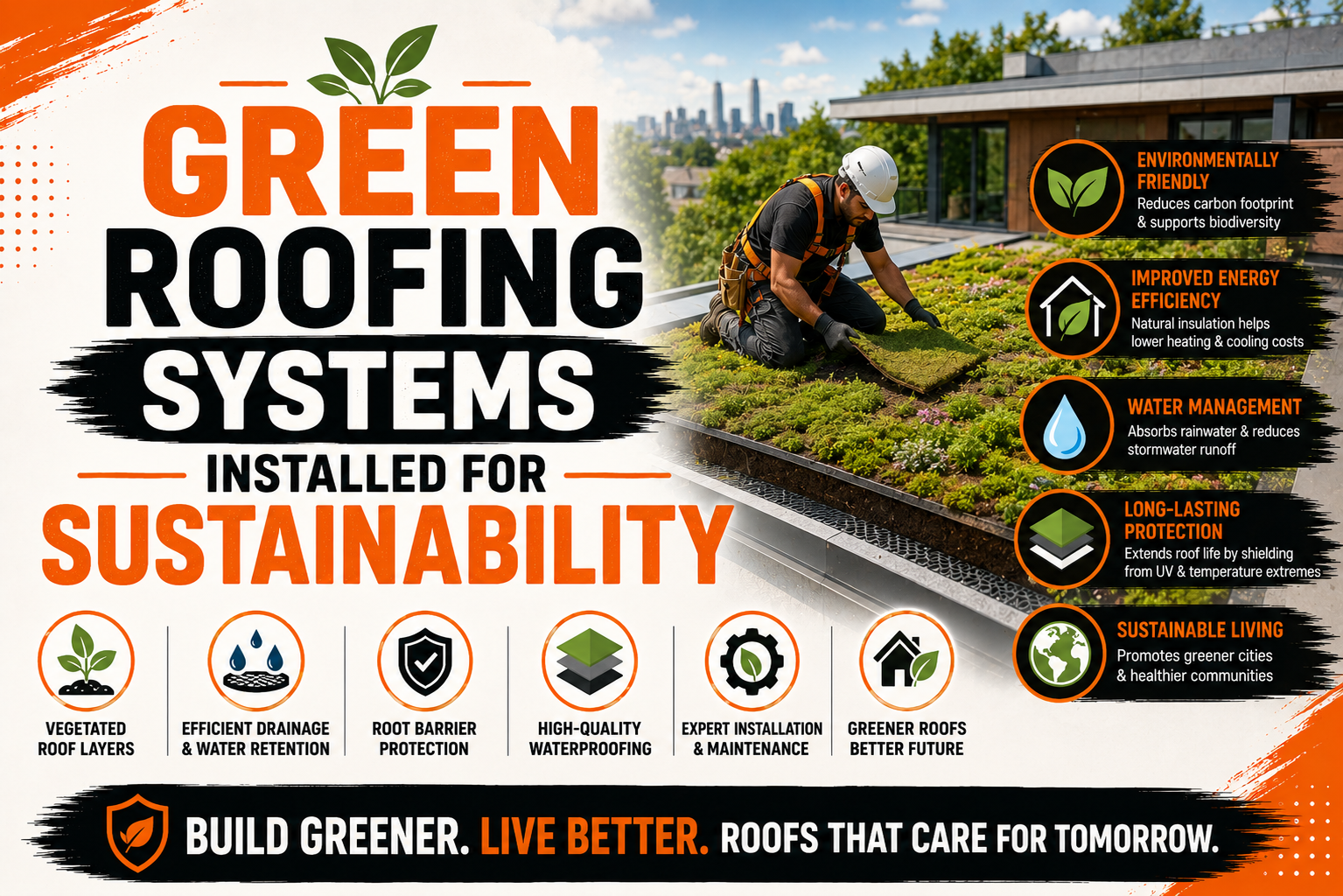
Green roofing systems are becoming an increasingly practical option for buildings that aim to improve environmental performance while maintaining reliable protection from weather. Unlike conventional roofs, green roofs incorporate vegetation and growing media as part of the roofing assembly. When properly designed and installed, these systems can help manage rainwater, reduce surface temperatures, support biodiversity, and improve the long-term performance of the building.
A green roof is more than a layer of plants placed on top of a building. It is a carefully engineered system that typically includes waterproofing, root protection, drainage, growing media, and vegetation. Each layer has a specific purpose, and the performance of the complete system depends on how effectively these components work together.
Sustainability is one of the main reasons property owners consider green roofing. Vegetated roof surfaces can absorb and retain a portion of rainfall, reducing the speed at which water reaches drainage systems. They can also provide a natural layer of protection against direct sunlight, potentially helping manage roof temperatures during warmer periods.
Green roofs can also contribute to urban environmental improvements. Vegetation can provide habitat for insects and other organisms, while larger installations may contribute to reducing the heat-island effect associated with heavily developed areas. The actual environmental benefits depend on the roof design, plant selection, climate, and surrounding environment.
However, green roofing is not suitable for every building without modification. Vegetation, growing media, and retained water add weight to the roof structure, making structural evaluation essential before installation. Waterproofing and drainage must also be carefully planned because the system will experience regular exposure to moisture.
The installation process therefore requires more planning than many conventional roofing systems. Contractors need to understand the structural capacity of the building, existing roof condition, waterproofing requirements, drainage design, vegetation needs, and long-term maintenance expectations.
When these factors are addressed correctly, a green roof can become a durable part of a building’s sustainability strategy. It can combine weather protection with environmental functions while creating opportunities for improved water management, thermal performance, and biodiversity.
Understanding Green Roofing Systems
A green roofing system is a roof assembly designed to support vegetation above a waterproofed building structure. The vegetation is planted in a specially selected growing medium rather than ordinary garden soil. Beneath the growing medium are additional layers that protect the building and control water movement.
The exact construction varies according to the type of green roof. Extensive systems are generally designed with relatively shallow growing media and lower-maintenance vegetation. Intensive systems are deeper and can support a wider range of plants but typically require greater structural capacity and more maintenance.
Semi-intensive systems provide an intermediate option. They can support more vegetation than a basic extensive roof while requiring less growing medium and maintenance than some intensive designs. The appropriate system depends on the building structure, desired environmental benefits, available maintenance resources, and project budget.
The main layers of a green roof work together as a complete system. A typical arrangement may include a structural roof deck, waterproofing membrane, root barrier, protection layer, drainage component, growing medium, and vegetation. Some designs may include additional insulation, filtration, water-retention, or irrigation components.
The waterproofing layer is particularly important because it protects the building from moisture. Since the roof will remain exposed to water and growing media, the waterproofing system must be suitable for the application and properly installed before the upper layers are added.
The root barrier provides another layer of protection. Plant roots can spread through growing media and may damage unsuitable waterproofing materials if they are allowed to reach them. A properly selected root-resistant layer helps prevent this problem.
Drainage manages excess water after rainfall or irrigation. While green roofs are designed to retain some moisture, they must still allow excess water to leave the system. Poor drainage can create excessive weight, damage vegetation, and increase the risk of moisture-related problems.
The growing medium provides the environment in which plants develop. It needs to provide appropriate support, drainage, water retention, and nutrients while remaining compatible with the roof’s structural limitations. Ordinary soil is often too heavy and may not provide the characteristics required for a roof environment.
Vegetation is selected according to climate, roof exposure, maintenance requirements, and system design. Plants need to tolerate the conditions found on the roof, including wind, sunlight, temperature fluctuations, and periods of limited water availability.
Green roofs differ from conventional roofs because the roof surface becomes a living system. This creates additional environmental functions but also introduces requirements that do not exist with ordinary roofing materials. Structural support, waterproofing, drainage, plant health, and maintenance all need to be considered together.
Structural Requirements Before Installation
Structural evaluation is one of the most important steps before installing a green roofing system. The additional weight of growing media, vegetation, drainage layers, and retained water can be significant. A roof that safely supports a conventional roofing system may not automatically have enough capacity for a vegetated assembly.
The weight of the green roof should be considered under both dry and saturated conditions. Rainfall can add substantial temporary weight because the growing medium and drainage components may retain water. Structural planning therefore needs to account for expected loads rather than considering only the weight of the system when it is dry.
An existing building should be inspected before installation begins. The roof deck, supporting members, connections, and other structural components should be evaluated for deterioration or damage. Any weaknesses should be addressed before additional loads are introduced.
Roof age is another consideration. Installing a green roof over an aging roofing system may create future maintenance complications if the underlying waterproofing needs replacement. The existing roof should be assessed to determine whether it can provide a suitable foundation for the planned system.
Roof slope also affects green roof design. Very steep surfaces may require additional measures to prevent growing media and vegetation from shifting. Specialized retention systems can help stabilize the layers, but their design needs to account for water movement, wind, and the roof’s geometry.
Wind exposure should also be considered. Vegetation and lightweight components can be affected by strong winds, especially during the early establishment period. The system needs appropriate edge detailing and secure installation to prevent movement or damage.
Structural planning is particularly important for intensive green roofs. Deeper growing media and larger plants create greater loads than lightweight extensive systems. Some intensive designs may also include pathways, seating areas, or other features that increase the structural requirements.
Green roof planning should therefore begin with engineering rather than plant selection. The building needs to be capable of supporting the complete system before materials are ordered or installation begins. This approach reduces the risk of expensive modifications and helps ensure that sustainability improvements remain structurally safe.
Waterproofing and Root Barrier Installation
Waterproofing is one of the most critical components of a green roof because the vegetation system remains in contact with moisture for extended periods. The waterproofing membrane creates the primary barrier between the roof assembly and the building interior. Any failure in this layer can allow water to reach the structure.
The existing roof deck should be properly prepared before waterproofing is installed. Damaged, uneven, or deteriorated sections should be repaired so the membrane has a suitable surface. Moisture problems should also be addressed before the new system is covered by growing media and vegetation.
The selected waterproofing material needs to be appropriate for green roof applications. Not every roofing membrane is designed for long-term exposure to the conditions associated with vegetated systems. Compatibility with root barriers, drainage components, and other layers should be confirmed during design.
Seams and transitions require particular attention. A membrane can perform well across large areas but become vulnerable where sections join or where the roof contains penetrations. Proper installation of seams, edges, drains, vents, and other details is essential to maintaining a continuous waterproof barrier.
A root barrier is typically installed above or integrated with the waterproofing system according to the roof design. Its purpose is to prevent plant roots from reaching and potentially damaging the waterproofing layer. The root barrier must be continuous and properly detailed around penetrations and edges.
Testing the waterproofing before covering it is an important quality-control step. Once drainage layers, growing media, and vegetation are installed, locating and repairing a membrane defect can become considerably more difficult. Early testing provides an opportunity to correct problems while the waterproofing remains accessible.
Protection layers may also be installed above the waterproofing and root barrier. These layers can help protect the membrane from physical damage caused by subsequent construction activities. Moving materials across the roof or placing drainage components can otherwise create punctures or other defects.
Flashing is equally important. Roof edges, walls, vents, skylights, drains, and other transitions need proper flashing to prevent water from bypassing the waterproofing system. These details should be coordinated with the green roof layers so that the finished assembly remains secure and watertight.
Waterproofing should not be treated as an invisible component that receives less attention because it will eventually be covered. It is one of the most important parts of the system, and its condition determines how effectively the green roof can protect the building.
Drainage and Water Management
Drainage is a fundamental part of green roof installation because the system needs to retain enough water for vegetation without allowing excessive water to accumulate. The drainage layer provides a controlled pathway for surplus water to move toward designated roof outlets.
Green roofs are designed to retain some rainfall, which is one of their important sustainability benefits. However, complete water retention would create excessive weight and could damage plants or other roof components. A properly designed drainage system balances water retention with safe removal of excess moisture.
Drainage layers may use specialized boards, mats, aggregates, or other engineered materials. The selected product needs to support the weight of the upper layers while providing sufficient water movement. It should also remain functional under expected loads and environmental conditions.
Drainage outlets need to remain accessible after installation. If vegetation or growing media covers an outlet completely, maintenance becomes difficult and blockages may go unnoticed. Access points should be planned so that drainage components can be inspected and cleaned when necessary.
Edges and low points deserve special attention because water naturally collects in these areas. Poorly planned drainage can lead to standing water, which may increase structural loads and create conditions that are harmful to some plants. The roof should have a clear pathway for excess water to reach designated outlets.
Irrigation may also be necessary, particularly during plant establishment or periods of extended dry weather. The irrigation strategy should provide enough water to support vegetation without creating unnecessary consumption. Drought-tolerant plant selections can reduce irrigation requirements in suitable climates.
Green roof drainage must also work with the building’s existing stormwater system. Water leaving the roof needs to be directed safely away from walls, foundations, and other vulnerable areas. Proper connections between roof drains, gutters, downspouts, and site drainage systems are essential.
The environmental value of a green roof depends partly on how effectively it manages rainfall. By temporarily storing and slowly releasing water, the system can help reduce the speed and volume of runoff during suitable weather conditions. Its performance varies according to roof design, growing-medium depth, vegetation, rainfall intensity, and seasonal conditions.
Drainage therefore needs to be considered from the beginning of the project rather than added after the vegetation system has been planned. A properly designed drainage layer protects the building, supports plant health, manages water, and contributes to the long-term sustainability of the green roof.
Growing Medium and Vegetation Installation
The growing medium is one of the most important layers in a green roofing system because it provides the environment required for plants to grow while also influencing the total weight of the roof. Unlike ordinary garden soil, green roof growing media are specially designed to balance water retention, drainage, weight, stability, and plant support. Selecting and installing the appropriate medium is essential for both environmental performance and roof durability.
The depth of the growing medium depends on the type of green roof being installed. Extensive systems generally use shallower layers that support low-growing and drought-tolerant vegetation, while intensive systems use deeper layers capable of supporting larger plants. The selected depth must remain compatible with the structural capacity established during the planning stage.
Growing media should be distributed evenly across the roof surface. Uneven application can create areas with excessive weight or insufficient support for vegetation. Contractors need to avoid damaging the waterproofing, drainage, and protection layers while placing and spreading the material.
Plant selection should be based on the conditions expected on the roof rather than appearance alone. Plants may experience strong sunlight, wind exposure, temperature changes, limited soil depth, and periods of dryness. Species that can tolerate these conditions generally require less water and maintenance after they become established.
Local climate is especially important when choosing vegetation. Plants adapted to the region are often better prepared for seasonal temperature and rainfall patterns. Selecting unsuitable species can result in poor growth, increased irrigation needs, and frequent replacement, reducing some of the sustainability benefits of the system.
Vegetation should also be selected according to the intended maintenance level. An extensive roof designed for limited maintenance may require hardy, low-growing plants, while an intensive roof can support a broader range of vegetation when regular care is available. The maintenance plan should be established before installation rather than after problems appear.
Planting methods vary according to the system and selected vegetation. Plants may be installed as plugs, cuttings, pre-grown mats, or other suitable forms. The installation method should allow vegetation to establish effectively without interfering with drainage or other roof components.
During the early establishment period, plants may require more water than they will need after becoming established. Temporary irrigation can help vegetation develop roots and achieve adequate coverage. Watering should be managed carefully so that the roof receives enough moisture without creating unnecessary runoff or excessive saturation.
Growing media should also be protected from erosion. Strong wind or heavy rainfall can move loose material before vegetation becomes established. Appropriate surface stabilization and installation timing can reduce this risk, particularly on exposed roofs or sloped systems.
A successful vegetation layer should provide environmental benefits while remaining compatible with the roof assembly below. Proper growing media, suitable plants, controlled irrigation, and careful installation create a foundation for a green roof that can perform reliably over time.
Green Roof Insulation and Thermal Performance
Green roofs can contribute to the thermal performance of a building by adding another layer between the exterior environment and the roof structure. Growing media and vegetation can reduce direct solar exposure, while moisture retained within the system can influence surface temperatures. The exact thermal benefit depends on the roof design, climate, vegetation, moisture conditions, and building construction.
During hot weather, vegetation can provide shade over portions of the roof surface. Plants can also release moisture through natural processes, which may help reduce surface temperatures under suitable conditions. This can limit some of the heat reaching the roof assembly.
The growing medium provides additional thermal mass. It can absorb and store heat rather than allowing all of the solar energy to pass immediately toward the building. The effect changes throughout the day and depends on the moisture content and depth of the growing medium.
Green roofs can also contribute to winter performance in some buildings. The additional layers can provide some resistance to heat movement, although the level of insulation should not be assumed to replace dedicated roof insulation. Proper insulation remains an important part of the building envelope.
Moisture protection is critical to maintaining thermal performance. If water reaches insulation or structural components because the waterproofing system fails, the roof may experience reduced performance and material deterioration. This makes waterproofing, drainage, and regular inspection essential parts of an energy-conscious green roof.
Green roof installation should therefore coordinate insulation with all other roof layers. Insulation may be positioned below or within the roof assembly according to the design. The selected arrangement needs to account for moisture movement, structural requirements, thermal performance, and the specific roofing system.
Green roofs can be especially useful in urban environments where large areas of exposed roofing contribute to high surface temperatures. Vegetated surfaces can provide an alternative to conventional dark roof surfaces and may help moderate local heat conditions. The broader environmental effect depends on the scale and design of the installation.
Thermal benefits should not be the only reason for choosing a green roof. The system can provide multiple functions, including water management, habitat creation, surface protection, and environmental improvement. Its thermal performance is best understood as one part of a broader sustainability strategy.
Stormwater Management Benefits
Stormwater management is one of the most important environmental advantages of green roofing. Conventional roofs typically direct rainfall quickly toward gutters, drains, and surrounding drainage systems. A green roof can temporarily retain a portion of that rainfall within the vegetation and growing medium.
The amount of water retained depends on several factors, including growing-medium depth, vegetation, rainfall intensity, roof slope, season, and the existing moisture level of the system. During a period when the growing medium is relatively dry, it may have more capacity to absorb incoming rainfall.
Water that is retained can later be released gradually through drainage and natural evaporation processes. This can reduce the speed at which rainfall leaves the roof and may help lower peak runoff during suitable storm events. The effect is particularly valuable in heavily developed areas where drainage systems can become overloaded during intense rainfall.
Green roofs can also reduce the amount of direct rainfall reaching conventional drainage surfaces. Instead of all precipitation immediately moving across a hard roof surface, some water interacts with vegetation and growing media first. This can provide a more controlled pathway for rainfall.
Drainage design remains essential because green roofs cannot retain unlimited amounts of water. Excess rainfall needs to move safely toward drains or other designated outlets. The drainage system must remain accessible and functional throughout the life of the roof.
Overflow planning is also important. Heavy storms can exceed the retention capacity of the growing medium, so the roof should include suitable pathways for excess water. Emergency drainage provisions may be necessary depending on the building design and applicable requirements.
Green roof stormwater performance can vary across seasons. Vegetation, growing-medium moisture, and weather conditions change throughout the year, affecting how much water the system can retain. This variation should be considered when evaluating the expected environmental benefits.
Stormwater management also protects the building itself. Proper drainage reduces the risk of standing water and excessive structural loads. It can also help protect roof edges, walls, foundations, and surrounding landscaping from uncontrolled runoff.
When correctly designed, green roofs can therefore become part of a broader sustainable water-management strategy. They do not eliminate the need for conventional drainage systems, but they can help control the amount and timing of water leaving the roof.
Biodiversity and Environmental Benefits
Green roofs can create small habitats within built environments where natural vegetation may otherwise be limited. Plants provide resources for insects and other organisms, while a variety of vegetation can increase the ecological value of otherwise unused roof space.
Plant selection influences biodiversity. A roof containing several suitable plant species can provide a broader range of resources than a system with only one type of vegetation. However, species should always be selected according to climate, roof conditions, structural limitations, and maintenance requirements.
Pollinator-friendly plants can provide opportunities for bees, butterflies, and other insects when appropriate species are used. The environmental benefit depends on the surrounding landscape because isolated green roofs may have different ecological value from roofs connected to other green spaces.
Green roofs can also contribute to urban heat management. Buildings, roads, parking areas, and other hard surfaces can absorb and retain significant amounts of solar energy. Vegetated roofs can introduce a cooler surface into this environment, although the effect on surrounding temperatures depends on the size and distribution of green infrastructure.
Vegetation can also capture certain airborne particles on its surfaces. While a green roof should not be considered a replacement for broader air-quality measures, additional vegetation within cities can contribute to a healthier and more diverse urban environment.
The environmental benefits can extend to the roof itself. Vegetation and growing media can protect waterproofing materials from direct sunlight and temperature fluctuations. By reducing exposure to some environmental stresses, the system may help protect the underlying roof membrane and contribute to longer service life when properly maintained.
Green roofs can also provide visual benefits. In areas with limited natural space, a vegetated roof can introduce greenery into the built environment. Depending on the design, residents or building occupants may be able to view the vegetation from nearby windows or surrounding structures.
These benefits make green roofs attractive for projects with broader sustainability goals. However, environmental performance should be considered alongside structural, waterproofing, drainage, and maintenance requirements. A poorly designed green roof can create building problems that outweigh its intended benefits.
Installation Methods for Different Green Roof Types
Extensive green roofs are generally designed to be relatively lightweight and require less maintenance than deeper systems. They typically use shallow growing media and plants that can tolerate limited water and harsh rooftop conditions. Their simpler design can make them suitable for buildings where structural capacity and maintenance resources are limited.
Intensive green roofs use deeper growing media and can support a wider variety of plants. Some systems may support grasses, shrubs, and other larger vegetation. Because of the additional weight and maintenance requirements, intensive roofs require more detailed structural and irrigation planning.
Semi-intensive systems fall between these two approaches. They can provide greater planting diversity than many extensive roofs while remaining less demanding than intensive systems. The design can be adjusted according to the available structural capacity and desired environmental features.
The choice of system should begin with the building rather than the desired appearance. Structural capacity, roof condition, slope, drainage, climate, maintenance resources, and budget all influence which type is practical.
Installation sequencing is also important. The roof deck and waterproofing should be completed and inspected before drainage, growing media, and vegetation are added. Covering the waterproofing too early can make defects more difficult to locate and repair.
Materials should be transported and placed carefully to avoid damaging lower layers. Heavy equipment or concentrated material piles can place unexpected loads on sections of the roof. Contractors should distribute materials according to the project plan and protect sensitive surfaces.
The selected green roof type should also have a clear maintenance strategy. Extensive systems may require periodic inspection and vegetation management, while intensive systems can require more frequent irrigation, trimming, and care. Planning these requirements before installation helps protect the long-term sustainability of the roof.
Green Roof Irrigation and Establishment
Irrigation is particularly important during the early stages of plant establishment. Newly installed vegetation may not yet have developed the root systems needed to survive periods of dry weather. Controlled watering can help plants establish while reducing unnecessary water consumption.
The amount of irrigation required depends on plant selection, climate, growing-medium depth, rainfall, and roof exposure. Drought-tolerant plants can reduce long-term irrigation requirements in appropriate climates. However, even drought-tolerant vegetation may need additional water during establishment.
Irrigation systems can be designed to deliver water efficiently to the growing medium. Drip systems and other targeted approaches may reduce water loss compared with uncontrolled watering. Automated systems can also adjust schedules according to seasonal requirements when properly configured.
Water conservation should remain a priority. Overwatering can increase runoff, add unnecessary weight, and create conditions that are unsuitable for some plants. The objective is to provide enough moisture for healthy vegetation without keeping the system excessively wet.
Once plants become established, irrigation requirements may decrease depending on the roof type and local climate. Regular monitoring can help determine whether the vegetation is receiving appropriate moisture. Seasonal adjustments may be necessary during periods of drought or unusually heavy rainfall.
The establishment period should therefore be treated as an important stage of green roof installation rather than an afterthought. Proper watering, vegetation monitoring, drainage inspection, and protection from erosion can help create a stable system that requires less intervention after establishment.
A well-planned green roof combines structural strength, waterproofing, drainage, suitable vegetation, thermal performance, and responsible water use. When these elements are installed as one coordinated system, the roof can provide meaningful sustainability benefits while continuing to protect the building beneath it.
Sustainable Materials for Green Roof Installation
Sustainable material selection is an important part of installing a green roof because the environmental benefits of vegetation can be reduced when the underlying materials are poorly chosen or frequently replaced. The goal is to create a roof assembly that remains durable while using resources responsibly. Materials should be evaluated for their performance, service life, weight, recyclability, transportation requirements, and compatibility with the complete green roof system.
Recycled or partially recycled materials may be suitable for drainage layers, protection components, and other parts of the roof assembly. Using recovered materials can reduce demand for newly manufactured resources when the products meet the required performance standards. However, sustainability should always be considered alongside durability and compatibility.
Growing media should also be selected carefully. Specialized green roof media can contain lightweight mineral components, organic materials, and other ingredients designed to provide drainage and plant support without adding unnecessary weight. The material should provide suitable water retention while allowing excess moisture to drain safely.
Local materials can sometimes reduce transportation requirements, particularly when suitable products are available close to the project. Shorter transportation distances may reduce some environmental impacts associated with delivery. However, distance should not be the only consideration because material durability and performance are equally important.
Durable waterproofing is especially valuable because replacing a failed membrane beneath a green roof can require removing vegetation and growing media. A reliable waterproofing system can reduce the likelihood of major disruption and help preserve the roof assembly for a longer period.
Installation waste should also be minimized. Contractors can use accurate measurements and carefully planned material quantities to reduce unused products. Packaging, leftover materials, and removed roofing components should be separated where recycling or responsible disposal options are available.
Green Roof Maintenance Practices
Maintenance is essential for preserving both the environmental benefits and structural performance of a green roof. Vegetation should be inspected regularly to identify unhealthy plants, bare areas, invasive growth, and other changes that may affect the system. Early attention can prevent small problems from spreading across the roof.
Drainage components require particular attention because blocked outlets can cause water to accumulate. Drains, inspection chambers, gutters, and overflow pathways should remain accessible and free from vegetation or debris. Regular checks help ensure that excess water can leave the roof safely.
Weed management may also be necessary, particularly during the early establishment period. Unwanted plants can compete with the selected vegetation and may have root systems that are unsuitable for the roof environment. Maintenance should remove problematic growth without unnecessarily disturbing the waterproofing or drainage layers.
The waterproofing membrane is usually hidden beneath the upper layers, so regular visible inspection focuses on areas where it can be accessed. Edges, penetrations, drainage points, and other exposed details should be checked for signs of deterioration or movement. Problems in these areas should be addressed before moisture reaches the building structure.
Seasonal maintenance can vary according to climate. Dry periods may require additional irrigation, while periods of heavy rainfall may require closer attention to drainage. Strong winds or severe weather can also disturb vegetation and lightweight components.
A maintenance program can include:
- Inspecting vegetation and growing media
- Checking drainage outlets and overflow paths
- Removing unwanted vegetation
- Monitoring irrigation requirements
- Inspecting exposed flashing and roof edges
- Checking for signs of erosion or displaced materials
Maintenance should be performed by people familiar with green roofing systems. Walking across a vegetated roof without appropriate access routes can damage plants, growing media, drainage layers, or other components. Planned maintenance pathways help protect the system while making inspections easier.
Common Green Roof Installation Mistakes
One of the most serious mistakes is failing to evaluate structural capacity before installation. A green roof becomes heavier when growing media and vegetation retain water, and the additional load can be substantial. Structural professionals should determine whether the building can safely support the complete system.
Poor waterproofing is another major concern. A green roof exposes the waterproofing layer to persistent moisture, making proper membrane selection and installation particularly important. Seams, penetrations, edges, and drainage points should receive careful attention before the upper layers cover them.
Inadequate drainage can create several problems at once. Excess water can increase roof loads, damage vegetation, create unsuitable growing conditions, and increase moisture exposure. Drainage pathways should therefore be designed before growing media and vegetation are installed.
Incorrect plant selection can also reduce sustainability. Plants that cannot tolerate local rooftop conditions may require excessive irrigation or frequent replacement. Choosing suitable, climate-adapted vegetation can reduce maintenance and resource consumption.
Another mistake is treating green roofs as maintenance-free systems. Vegetation needs monitoring, drainage systems require inspection, and irrigation may be necessary during establishment or dry conditions. A maintenance plan should be established before the roof is completed.
Costs and Long-Term Benefits
Green roofing generally requires more planning and specialized installation than a conventional roof, which can increase the initial project cost. Structural assessment, waterproofing, drainage layers, growing media, vegetation, and maintenance planning all contribute to the overall investment. The long-term benefits should therefore be considered alongside the initial price.
One benefit is stormwater management. By retaining and delaying a portion of rainfall, a green roof can reduce the speed and amount of runoff leaving the roof during suitable conditions. This can support broader drainage-management goals in developed areas.
Green roofs can also help protect the waterproofing membrane from direct sunlight and temperature fluctuations. Reduced exposure may contribute to longer membrane service life when the complete system is properly designed and maintained. Extending the useful life of the roof can reduce the frequency of major replacement work.
Thermal benefits can provide additional value. Vegetation and growing media can reduce direct solar exposure and influence roof surface temperatures. These effects may contribute to improved building performance, although the level of energy savings depends on climate, roof construction, insulation, and building use.
The sustainability benefits of a green roof can be summarized as follows:
| Green roof feature | Potential long-term benefit |
|---|---|
| Vegetation | Supports biodiversity and reduces direct solar exposure |
| Growing medium | Retains some rainfall and provides thermal mass |
| Drainage system | Controls excess water and protects the structure |
| Durable waterproofing | Protects the building and supports longer roof service |
| Sustainable materials | Can reduce resource use and construction waste |
The financial value will differ from one property to another. Property owners should consider installation costs, expected service life, maintenance requirements, energy performance, stormwater benefits, and local environmental priorities when evaluating the investment.
Planning a Green Roof Installation Project
Successful green roof installation requires careful coordination between structural, waterproofing, drainage, vegetation, and maintenance requirements. Planning should begin with an assessment of the existing building and roof rather than immediately selecting plants or growing media.
A practical project sequence can include:
- Inspect the existing roof and supporting structure.
- Determine the appropriate green roof type and expected loads.
- Evaluate waterproofing and repair unsuitable roof areas.
- Design drainage, root protection, and growing-medium layers.
- Select vegetation suited to the local climate and roof conditions.
- Install and test the roofing layers before adding vegetation.
- Establish a long-term inspection and maintenance program.
Communication between contractors and other professionals is particularly important. Structural engineers, roofing contractors, landscape professionals, and building owners may all have different responsibilities during the project. Coordinating their work helps prevent conflicts between structural requirements, waterproofing, drainage, and vegetation.
Future of Green Roofing Systems
Green roofing technology is continuing to develop as designers look for lighter, more durable, and more resource-efficient systems. Lightweight growing media may allow additional buildings to support vegetation without the same loads associated with deeper traditional systems. Improved drainage materials may also provide better water management while reducing system weight.
Smart irrigation is another developing area. Sensors can monitor moisture conditions and help determine when additional water is needed. Automated systems may reduce unnecessary irrigation by responding to changing weather and growing-medium conditions.
Green roofs may also be combined with solar installations. Carefully designed systems can use portions of the roof for vegetation while other areas support photovoltaic equipment. These combinations can provide multiple sustainability functions, although structural capacity, access, maintenance, shading, and equipment placement must be carefully coordinated.
Frequently Asked Questions About Green Roofing Systems
What is a green roof?
A green roof is a roofing system that supports vegetation above a waterproofed structure using layers such as drainage components, growing media, and plants. The system is engineered to protect the building while supporting environmental functions.
Can any roof support a green roof?
Not necessarily. Structural capacity, roof condition, slope, waterproofing, drainage, and access requirements must be evaluated before installation.
How much maintenance does a green roof require?
Maintenance varies by system type. Extensive roofs may require relatively limited care, while intensive systems with deeper growing media and larger plants generally require more frequent inspection and maintenance.
Does a green roof prevent leaks?
A green roof does not automatically prevent leaks. Reliable waterproofing, root protection, flashing, drainage, and professional installation are necessary to protect the building.
Can green roofs reduce energy use?
They can influence roof temperatures and heat transfer, but actual energy savings depend on the roof assembly, insulation, climate, vegetation, and building design.
Conclusion
Green roofing systems can transform an ordinary roof surface into a multifunctional part of a sustainable building. Through vegetation, growing media, drainage, durable waterproofing, and appropriate supporting materials, these systems can help manage stormwater, support biodiversity, moderate roof temperatures, and protect the underlying structure.
The success of a green roof depends heavily on proper planning and installation. Structural capacity must be confirmed, waterproofing must be reliable, drainage must be carefully designed, and vegetation must be suited to the local environment. These requirements make professional installation especially important.
Long-term maintenance is equally valuable. Regular inspections, drainage checks, vegetation management, irrigation control, and prompt repairs can help preserve the roof’s environmental and structural performance. A green roof should be treated as a living roofing system that requires appropriate care rather than as a conventional roof covered with plants.
When sustainability goals are balanced with structural safety, waterproofing, durability, and maintenance requirements, green roofing can provide meaningful long-term value. A properly installed system can protect the building while making productive use of roof space and contributing to broader environmental goals.