

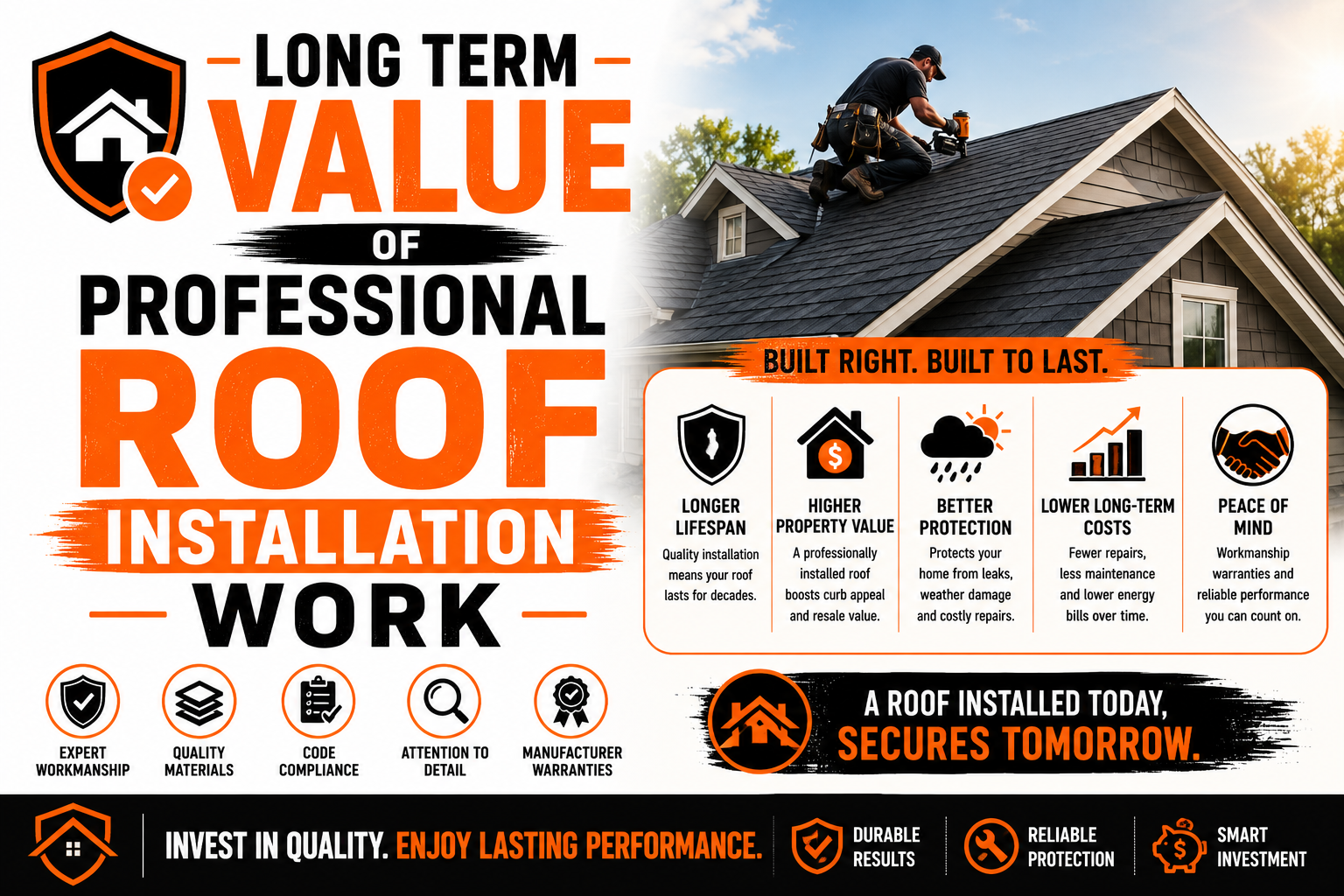
Long Term Value of Professional Roof Installation Work
Introduction
A roof is one of the most important protective systems in any home or commercial property. It shields the structure from rain, wind, sunlight, temperature changes, and other environmental conditions while helping protect the interior spaces and everything inside them. Because of this role, the quality of the installation can have an influence far beyond the day the roofing project is completed.
Professional roof installation is often viewed primarily as an upfront expense, especially when homeowners compare contractor estimates and material prices. However, the value of professional workmanship becomes more apparent over time through roof performance, maintenance requirements, repair frequency, energy efficiency, and the overall condition of the property. A properly installed roofing system can help reduce avoidable problems and support the expected service life of the selected materials.
The long-term value of professional installation also depends on how well the roofing system is matched to the property. Material selection, roof design, ventilation, underlayment, flashing, drainage, and local weather conditions all need to be considered during installation. Professional contractors can evaluate these factors and follow appropriate installation practices instead of treating every roof as if it requires the same approach.
Cutting installation costs may seem appealing when a roofing budget is limited, but reducing essential workmanship can create expenses later. Poor fastening, inadequate flashing, improper ventilation, weak drainage details, or incorrect material placement can contribute to premature deterioration and water intrusion. In contrast, professional installation focuses on completing the entire roofing system correctly so that it can perform as intended.
Understanding the long-term value of professional roof installation can help property owners make better decisions when planning a new roof. Instead of comparing contractors only by their initial price, homeowners can consider the expected performance, maintenance needs, durability, protection, and potential future costs associated with each installation approach.
How Professional Installation Supports Roof Longevity
One of the clearest benefits of professional roof installation is the potential to support the expected service life of roofing materials. Manufacturers design roofing products to perform for a particular period when they are installed and maintained according to their requirements. Correct installation helps ensure that the material has a suitable foundation for reaching its intended performance potential.
Every roofing material has its own installation requirements. Asphalt shingles, metal panels, tile, slate, wood products, and synthetic systems can require different fastening methods, underlayment, flashing details, spacing, ventilation, and preparation. A contractor who understands these requirements can adapt the installation process to the material rather than relying on a single method for every project.
Proper fastening is particularly important because roofing components need to remain secure under normal environmental stresses. Wind can place pressure on roofing materials, while repeated temperature changes can cause materials to expand and contract. Following the appropriate fastening pattern and manufacturer specifications can help reduce the risk of premature movement or failure.
The preparation of the roof surface is equally important. Before new materials are installed, the contractor should evaluate the existing roof deck and identify areas that are damaged, weakened, or unsuitable for the new system. Installing new roofing over an inadequate surface can hide underlying problems instead of resolving them.
Professional installation also involves paying attention to transition areas. Roof edges, valleys, ridges, walls, chimneys, skylights, and vents can require additional detailing because these areas may be more vulnerable to water entry. Careful installation around these locations can support the overall integrity of the roofing system.
A longer-lasting roof does not necessarily mean that the material itself will never experience damage or require maintenance. Weather exposure, falling branches, severe storms, and other conditions can affect any roofing system. However, proper installation can reduce problems caused by avoidable workmanship errors and give the roofing material a stronger foundation for long-term performance.
Reducing the Risk of Water Damage
One of the most valuable functions of a roof is keeping water outside the building. Even a small roofing problem can become expensive if moisture reaches the roof deck, insulation, walls, ceilings, electrical components, or interior finishes. Professional installation can help reduce the risk of water intrusion by addressing the areas where water is most likely to enter.
Flashing plays an important role in this process. It is used around roof penetrations, walls, chimneys, skylights, valleys, and other transition points to direct water away from vulnerable areas. Poorly installed or damaged flashing can allow water to enter even when the primary roofing material appears to be in good condition.
Underlayment provides another layer of protection beneath many roofing materials. Its installation must be appropriate for the roofing system and local conditions, and it needs to be properly integrated with flashing and other components. A professional contractor can identify how these layers should work together rather than treating each component as an isolated part.
Drainage is also important to long-term roof performance. Water should be able to move away from the roofing surface without becoming trapped around vulnerable areas. Proper slopes, valleys, gutters, downspouts, and drainage details can help prevent prolonged moisture exposure.
A professional installation can also help identify existing drainage problems before they become more serious. If a roof has areas where water repeatedly collects, simply replacing the visible roofing material may not address the underlying cause. Correcting drainage-related concerns during installation can provide greater long-term value than leaving the problem unresolved.
Preventing water intrusion can have financial benefits beyond avoiding a roof repair. Moisture that enters the structure can contribute to damaged insulation, deteriorated wood, mold-related concerns, stained ceilings, and damaged interior finishes. Addressing roofing vulnerabilities early can therefore help protect other parts of the property.
Improving Energy and Building Performance
A professionally installed roof can also contribute to the overall performance of a building. Roofing is only one part of the building envelope, but its materials, ventilation, insulation interaction, and installation quality can influence how the structure responds to outdoor temperatures.
Proper attic ventilation is an important consideration in many roofing systems. Ventilation helps manage heat and moisture in the attic space when the system is appropriately designed and installed. A roofing replacement can provide an opportunity to identify inadequate ventilation and address related concerns.
Poor ventilation can contribute to excessive heat or moisture accumulation under certain conditions. Over time, these conditions may affect roofing components, insulation, and portions of the building structure. Professional installation allows the contractor to consider ventilation as part of the complete roofing system rather than treating the roof covering as the only important component.
The selection of roofing materials can also influence building performance. Certain products are designed with reflective properties or other characteristics that may affect heat absorption. However, material performance depends on the complete roofing assembly, local climate, installation methods, and other building characteristics.
Professional installation can help ensure that these materials are used according to their intended specifications. Incorrect placement, inadequate ventilation, or poorly sealed areas can reduce the benefits that homeowners expect from a particular roofing system.
Energy performance should not be viewed as a guarantee of lower utility bills because many factors affect a building’s energy use. Insulation, windows, doors, HVAC systems, building orientation, weather, and household behavior all contribute. Nevertheless, a properly installed roofing system can support the building envelope and help the roof perform as designed.
Lowering Future Maintenance and Repair Expenses
The initial cost of professional roof installation is only one part of the financial picture. Over the years, homeowners may spend additional money on inspections, maintenance, repairs, replacement components, and eventually another roof. Installation quality can influence how frequently some of these expenses occur.
A roof installed correctly is less likely to develop problems caused specifically by poor workmanship. Incorrect fastening, inadequate flashing, improper underlayment installation, or poor detailing can create issues that may require repairs well before the roofing material reaches the end of its expected service life.
Professional installation can also make future maintenance more predictable. When roofing components are installed correctly and the system is properly documented, contractors can more easily identify the type of materials used and the areas that may require attention during later inspections.
Regular maintenance remains important even when a roof has been professionally installed. Homeowners should still monitor the condition of shingles, panels, tiles, flashing, gutters, and other components. Promptly addressing minor problems can prevent them from becoming more expensive repairs.
A professional installation may therefore provide value by reducing avoidable maintenance problems rather than eliminating maintenance altogether. Roofing systems remain exposed to weather throughout their lives, so inspections and occasional repairs should be considered part of responsible property ownership.
The financial benefit becomes particularly relevant when comparing installation approaches. A low-cost installation that leads to repeated repairs can eventually cost more than a properly completed project with a higher initial price. Evaluating the expected cost over the roof’s useful life gives homeowners a more realistic understanding of the investment.
The value of professional workmanship can also extend to the property’s overall condition. A roof that consistently protects the structure can help reduce the likelihood of moisture-related deterioration in other building components. This protection can preserve the property’s condition while reducing the potential for unexpected repair expenses.
Protecting Property Value Over Time
A professionally installed roof can contribute to the overall condition and value of a property for many years. The roof is one of the first lines of defense against weather, and its condition can influence how buyers, inspectors, insurers, and property professionals view the building. A roof that has been properly installed and maintained can provide greater confidence that the property has received appropriate care.
When homeowners eventually decide to sell, the condition of the roof can become an important consideration during the transaction. Buyers may be concerned about the age of the roofing system, visible deterioration, signs of leaks, and the possibility of needing an immediate replacement. A newer roof with documented professional installation can help reduce some of these concerns.
A well-installed roof can also improve the overall appearance of a property. Roofing materials cover a large portion of a building’s exterior, so uneven installation, visible defects, damaged components, or inconsistent detailing can affect curb appeal. Professional workmanship helps create a finished appearance that complements the property’s design.
Property value is influenced by many factors, so a new roof does not automatically increase a home’s value by a specific amount. Location, market conditions, property size, neighborhood, interior condition, and many other characteristics contribute to value. However, maintaining a structurally sound and visually appealing roof can support the overall condition of the property.
Documentation can make the investment easier to demonstrate. Homeowners should keep copies of the installation contract, material information, warranties, invoices, permits, inspection records, and other relevant documents. These records can help establish when the roof was installed, which materials were used, and what workmanship or product protections may apply.
Professional installation can also reduce concerns during future property inspections. An inspector may identify obvious signs of poor workmanship, water intrusion, inadequate flashing, or other roofing problems. Addressing these issues during the original installation can help prevent avoidable complications when the property is evaluated later.
The value of professional installation is therefore not limited to the physical roof itself. It can contribute to maintaining the property’s appearance, condition, marketability, and documentation over an extended period. These benefits can become particularly important when the homeowner eventually transfers ownership or refinances the property.
Improving Protection Against Weather and Environmental Conditions
Roofs are constantly exposed to environmental conditions, including rain, wind, sunlight, temperature changes, and seasonal weather. Professional installation helps ensure that the selected roofing system is prepared to handle these conditions according to its intended design and installation requirements.
Wind resistance is one important consideration. Roofing materials need to be securely attached to the structure using appropriate fastening methods and patterns. Weak fastening, improperly installed edges, or inadequate detailing can increase the risk of damage during strong winds.
Professional installation also pays attention to roof edges and corners, which can experience significant wind forces. These areas may require specific installation procedures depending on the roofing material and applicable requirements. Completing these details correctly can help support the stability of the roofing system during severe weather.
Rain protection is equally important. Water needs to move efficiently across the roof and into the appropriate drainage system without becoming trapped around vulnerable areas. Professional installation can help ensure that valleys, flashing, underlayment, penetrations, gutters, and other components work together to manage water.
Sun exposure can also affect roofing materials over time. Repeated exposure to ultraviolet radiation and temperature changes can contribute to aging, depending on the material and local conditions. Proper installation cannot eliminate normal weathering, but it can help ensure that the roofing product begins its service life under appropriate conditions.
Temperature changes can create expansion and contraction in certain roofing materials. Metal roofing is one example where installation details need to account for the characteristics of the material. Appropriate fastening, seams, flashing, and other components can help the system accommodate normal movement.
Professional installation can also help address local environmental requirements. Roofing systems in areas exposed to heavy rain, strong winds, snow, intense sunlight, or other conditions may need to meet specific performance standards. Contractors familiar with local requirements can select and install appropriate systems for the property.
Severe weather can still damage a professionally installed roof. No installation can guarantee protection against every storm or environmental event. The long-term value comes from reducing avoidable vulnerabilities and giving the roofing system the best opportunity to perform as intended.
Supporting Manufacturer and Workmanship Warranties
Warranties are another important part of the long-term value associated with professional roof installation. Roofing products may come with manufacturer warranties, while contractors may provide separate workmanship warranties. These protections can have different requirements and should be reviewed carefully before the project begins.
Manufacturer warranties generally relate to the roofing product itself, but the conditions can vary depending on the material and manufacturer. Some warranties may require the product to be installed according to specific instructions. Failure to follow those requirements can potentially affect warranty coverage.
Professional contractors are familiar with installation specifications for the products they use. They can follow appropriate procedures for fastening, underlayment, flashing, ventilation, and other components. This can help homeowners meet applicable installation requirements associated with the roofing system.
Workmanship warranties address a different area. They may provide coverage for certain installation-related defects during a specified period. The length and scope of coverage can vary considerably between contractors, so homeowners should review the actual terms rather than assuming all workmanship warranties provide the same protection.
A warranty should not be treated as a substitute for quality installation. Even when a warranty exists, dealing with a roofing problem can be inconvenient and may involve inspection, communication, scheduling, and repair work. Preventing installation problems in the first place is generally preferable to relying on warranty coverage later.
Homeowners should ask who is responsible for warranty claims and what documentation must be retained. Keeping the original contract, receipts, product information, and installation records can make it easier to establish the history of the roofing system.
It is also useful to understand warranty exclusions. Normal wear, storm damage, improper maintenance, unauthorized modifications, and certain environmental conditions may not be covered. A professional contractor should be able to explain the basic warranty structure without presenting coverage as more extensive than it actually is.
When evaluated properly, warranty support can add value to professional installation because it provides an additional layer of accountability. However, the most valuable outcome remains a roofing system that is correctly installed, properly maintained, and capable of performing without frequent warranty-related problems.
Reducing the Risk of Premature Roof Replacement
One of the largest long-term expenses associated with a roof is premature replacement. Roofing materials are designed to provide service for a certain period, but their actual performance can be affected by climate, maintenance, material quality, installation, and other factors. Professional installation can help reduce the risk that avoidable workmanship problems shorten the roof’s useful life.
A premature replacement can be expensive because the homeowner may need to pay for labor, materials, removal, disposal, permits, and other project expenses much earlier than expected. If the original roof was installed incorrectly, the homeowner may effectively pay twice for work that should have provided longer service.
Improper installation can create several pathways to premature deterioration. For example, inadequate fastening can allow components to move, poor flashing can permit water intrusion, and insufficient ventilation can contribute to moisture or heat-related concerns in certain roofing systems.
Professional installation focuses on the complete roofing assembly rather than just the visible outer layer. Contractors need to consider the roof deck, underlayment, flashing, ventilation, drainage, material placement, fastening, and finishing details.
The condition of the roof deck is particularly important. New roofing materials should be installed over a suitable and properly prepared surface. If damaged decking is ignored, problems beneath the new roof may continue and affect the performance of the entire system.
Professional installation can also help ensure that incompatible materials or incorrect installation methods are avoided. Roofing manufacturers provide specifications for their products because materials have particular requirements for handling, fastening, spacing, and detailing.
Regular maintenance is still necessary to maximize the benefits of professional installation. Gutters should remain clear, visible damage should be addressed, and periodic inspections can help identify problems before they spread. A properly installed roof and responsible maintenance work together to support long-term performance.
The financial value of preventing premature replacement can be significant. Even if professional installation costs more initially than an informal or poorly documented alternative, extending the useful life of the roofing system can make the original investment more economical over time.
Creating Long-Term Financial and Structural Value
Professional roof installation provides value not only through the roof itself but also through the protection it gives to other parts of the building. A properly functioning roof helps keep rain and moisture away from structural components, insulation, ceilings, walls, electrical systems, and interior finishes.
When moisture enters through a roofing problem, the resulting damage can extend beyond the original leak. Water may travel through concealed areas before becoming visible inside the property. By the time stains or deterioration appear, the repair may involve several components rather than just one section of roofing.
Professional installation can reduce the likelihood of these problems by addressing vulnerable areas during the original project. Proper flashing, underlayment, drainage, ventilation, and material installation create multiple layers of protection.
The financial benefits can also accumulate gradually. Avoiding repeated minor repairs, reducing the likelihood of premature replacement, protecting interior components, and maintaining the property’s condition can all contribute to lower long-term ownership costs.
However, homeowners should evaluate value realistically. Professional installation does not eliminate maintenance or guarantee that a roof will never require repair. Every roofing system eventually experiences normal aging, and severe weather can create damage regardless of installation quality.
The goal is to minimize preventable problems and maximize the useful performance of the investment. A professional installation provides a stronger foundation for achieving that goal because the roofing system is installed according to appropriate standards and material requirements.
Long-term value can also be viewed through the relationship between installation quality and total ownership cost. A low initial price may appear attractive, but repeated repairs or early replacement can erase the initial savings. A somewhat higher upfront investment in qualified workmanship may prove more economical when the roof is evaluated over many years.
| Factor | Poor or Inadequate Installation | Professional Installation |
|---|---|---|
| Initial cost | May be lower | May be higher |
| Installation quality | Can vary significantly | Follows appropriate installation practices |
| Water protection | Greater risk of avoidable vulnerabilities | Proper attention to flashing and drainage |
| Material performance | May be reduced by installation errors | Better opportunity to meet intended performance |
| Maintenance | Potentially more frequent avoidable issues | More predictable with proper maintenance |
| Replacement risk | Premature replacement may be more likely | Better potential for expected service life |
| Documentation | May be limited | Contracts, warranties, and records are generally clearer |
| Long-term value | Initial savings may disappear through repairs | Higher upfront cost may support long-term value |
The comparison demonstrates why homeowners should evaluate roofing decisions beyond the initial estimate. Professional installation is not simply about paying more for labor. It is about investing in the correct preparation, skills, materials, safety practices, and installation details that support the roofing system over time.
A roof should ultimately be viewed as a long-term building investment rather than a short-term construction expense. When installed properly, it can provide protection, support property condition, reduce avoidable risks, and contribute to a more predictable ownership experience.
Making Maintenance More Predictable
Professional roof installation can make future maintenance easier to manage because the roofing system begins with proper preparation and documented installation practices. When materials are installed correctly, homeowners have a clearer starting point for monitoring the roof as it ages. This can make it easier to identify normal wear versus problems that may require professional attention.
Regular maintenance remains necessary regardless of how well a roof was installed. Homeowners should periodically inspect visible roofing components, gutters, flashing, roof edges, and drainage areas for signs of damage or deterioration. Small problems can sometimes be addressed before they develop into larger issues that require extensive repairs.
Professional installation can also make maintenance more predictable by reducing workmanship-related vulnerabilities. If flashing, underlayment, ventilation, and drainage components were properly installed from the beginning, homeowners may face fewer avoidable problems during the roof’s service life.
Maintenance should also take the property’s environment into account. Homes surrounded by trees may require more frequent attention to leaves, branches, gutters, and roof surfaces, while properties in areas with strong storms may need inspections after severe weather. Local conditions can influence how often professional inspections are appropriate.
The ability to identify the roofing material is another advantage of professional documentation. Homeowners who know the manufacturer, product type, installation date, and warranty information can provide more useful information to contractors during future repairs or inspections.
A maintenance plan can also help homeowners budget for future expenses. Rather than waiting for a major problem to appear, property owners can anticipate routine inspections, gutter cleaning, minor repairs, and eventual replacement. This creates a more controlled approach to roof ownership.
Professional installation does not eliminate maintenance, but it can establish a stronger foundation for maintaining the roofing system. When installation quality and ongoing care work together, homeowners have a better opportunity to preserve the roof’s condition and maximize its expected service life.
Supporting Energy Efficiency and Indoor Comfort
The long-term value of professional roof installation can also extend to the building’s energy performance. A roof interacts with the attic, insulation, ventilation system, and exterior environment, so installation details can influence how effectively the building manages heat and moisture.
Proper attic ventilation is particularly important in many roofing systems. When ventilation is appropriately designed and installed, it can help manage heat and moisture within the attic space. This can support the condition of roofing components and other building materials.
Roofing materials can also have different thermal characteristics. Reflective surfaces, coatings, colors, and material composition can affect how much solar energy the roof absorbs. However, roofing material alone does not determine the building’s overall energy efficiency.
Insulation, windows, doors, HVAC equipment, air sealing, and household behavior all have major effects on energy consumption. Professional roof installation should therefore be viewed as one part of a broader building-performance strategy rather than a guaranteed method of reducing utility bills.
Installation quality still matters because gaps, improperly sealed areas, inadequate ventilation, or incorrectly installed components can reduce the effectiveness of the roofing assembly. A professional contractor can identify these details and install the system according to the requirements of the selected materials.
In certain climates, managing heat and moisture can be especially important. Hot conditions may place additional demands on roofing materials and attic spaces, while humid environments can make moisture management more significant.
The long-term benefit comes from creating a roofing system that works appropriately with the rest of the building. When the roof, ventilation, insulation, and drainage systems are considered together, homeowners can make more informed decisions about property performance.
Considering Insurance and Documentation Benefits
Professional installation can also provide practical benefits when homeowners need to document the condition and history of their property. Roofing projects often involve significant expenses, so keeping accurate records can be valuable for future maintenance, warranty claims, property transactions, and insurance discussions.
A complete roofing file may include the contractor’s agreement, invoices, material specifications, warranty documents, permits, inspection records, photographs, and information about repairs. These documents can help establish when the roof was installed and what materials and workmanship were involved.
Insurance coverage varies by policy, property, location, and cause of damage, so professional installation does not guarantee that every future roofing problem will be covered. However, maintaining documentation can make it easier to provide relevant information if the homeowner needs to communicate with an insurance provider after a covered event.
Homeowners should not assume that an insurer will automatically pay for a roof simply because it was professionally installed. Coverage decisions depend on the specific policy and circumstances, including the cause of damage and applicable exclusions.
Documentation can also be useful when maintaining the manufacturer’s warranty. Some roofing products have specific installation requirements, and records can help demonstrate what materials were used and which contractor completed the work.
Keeping photographs of the roof before and after installation can provide additional information. Images can document the condition of the roof deck, flashing, vents, and other areas that may later become difficult to see after the roofing system is completed.
These records create value even when they are never needed for a claim. Having an organized history of the roof can make future maintenance decisions easier and provide useful information to another qualified contractor if the original installer is no longer available.
Evaluating the Investment When Selling or Refinancing
The condition of a roof can become particularly important when a property is sold or refinanced. Buyers and lenders may want information about the age and condition of major building components, and the roof is often one of the most significant exterior systems.
A professionally installed roof can provide evidence that the property has received recent investment and maintenance. This does not guarantee a particular increase in market value, but it can make the property more appealing to buyers who prefer to avoid immediate major repairs.
A roof nearing the end of its service life can create uncertainty for prospective buyers. They may need to account for the possibility of replacement soon after purchasing the property, which can affect their assessment of the home.
A newer, properly documented roof can reduce some of that uncertainty. Buyers can review installation records, material information, and warranty documentation to better understand the roofing system and its expected condition.
Homeowners should still avoid assuming that the entire cost of a roof installation will automatically be recovered through a higher selling price. Real estate value depends on many factors, including location, market conditions, property condition, neighborhood demand, and buyer preferences.
The more realistic benefit is that a sound roof can support the overall marketability of the property. A well-maintained home with a professionally installed roofing system may create greater confidence during inspections and negotiations.
For homeowners planning to sell within several years, professional installation can therefore be part of a broader property-maintenance strategy. The roof can protect the home while occupied and potentially reduce concerns when the property eventually enters the market.
Calculating Long-Term Roofing Value
Evaluating the long-term value of professional installation requires homeowners to consider more than the original invoice. The total ownership cost can include installation, maintenance, repairs, energy-related considerations, storm damage, and eventual replacement.
A lower initial installation price may appear attractive, but it should be compared with the quality and expected service life of the roofing system. If poor workmanship contributes to repeated repairs or early replacement, the original savings may become much less meaningful.
A professional installation can have greater long-term value when it helps the selected materials perform closer to their intended capabilities. This does not mean that every professionally installed roof will reach the maximum possible lifespan, because weather, maintenance, material quality, and other factors remain important.
Homeowners should also consider the cost of disruption. Major roof repairs or premature replacement can interfere with daily life, require repeated contractor visits, and create additional planning responsibilities. Reducing the likelihood of avoidable roofing problems can therefore provide value beyond the direct financial savings.
The expected ownership period is another important factor. A homeowner planning to remain in the property for decades may benefit more from investing in durable materials and professional installation than someone planning to move within a short period.
However, professional installation is valuable for both situations because a properly functioning roof protects the property regardless of how long the homeowner plans to stay. The difference is primarily in how the long-term benefits align with the owner’s financial and property goals.
A useful evaluation should consider the complete picture rather than asking whether professional installation costs more than an informal alternative. The better question is whether the additional investment provides meaningful benefits through durability, protection, workmanship, maintenance, and reduced risk.
Choosing a Professional Roofing Contractor
The long-term value of professional installation depends heavily on selecting a contractor capable of delivering quality workmanship. Homeowners should evaluate more than the contractor’s price when comparing roofing companies.
Experience with the selected roofing material is particularly important. A contractor who regularly installs asphalt shingles may not have the same level of expertise with slate, tile, complex metal systems, or specialty roofing products.
Homeowners should also review the scope of work carefully. A detailed estimate should identify the roofing material, preparation, tear-off, underlayment, flashing, ventilation, cleanup, warranties, and other relevant services.
Insurance and applicable licensing or registration requirements should also be verified according to local rules. These credentials can provide useful information about the contractor’s professional operation and responsibilities.
Communication is another important consideration. A contractor should be able to explain the project, identify potential issues, answer questions, and communicate changes when unexpected conditions arise.
Homeowners should also be cautious about estimates that are dramatically lower than competing proposals without a clear explanation. Price differences can occur for legitimate reasons, but a significantly lower bid may sometimes reflect a narrower scope or omitted components.
The final decision should balance cost, experience, materials, workmanship, documentation, warranty support, and overall confidence in the contractor. Choosing a qualified professional can be one of the most important decisions homeowners make when trying to maximize the long-term value of their roof.
Conclusion
The long-term value of professional roof installation extends far beyond the appearance of a newly completed roof. Quality workmanship can support material longevity, improve weather protection, reduce avoidable water intrusion, protect other parts of the building, and create a stronger foundation for ongoing maintenance.
Professional installation can also help homeowners avoid some of the costs associated with premature deterioration. Proper fastening, flashing, underlayment, ventilation, drainage, and preparation can reduce vulnerabilities that may otherwise lead to repairs or early replacement.
The value of skilled workmanship becomes especially clear when the roof is considered as part of the entire property. A properly functioning roofing system helps protect ceilings, walls, insulation, structural components, interior finishes, and personal belongings from weather-related damage.
Documentation adds another layer of long-term value. Keeping contracts, invoices, warranties, material information, permits, inspection records, and photographs can make future maintenance, insurance discussions, warranty claims, and property transactions easier to manage.
Professional installation may also support property marketability. While a new roof does not guarantee a specific increase in resale value, a well-maintained and properly documented roofing system can reduce concerns for potential buyers and demonstrate that an important part of the property has received appropriate attention.
Homeowners should also recognize that professional installation does not eliminate every roofing expense. Regular inspections, maintenance, minor repairs, and eventual replacement are normal parts of property ownership. The objective is to reduce preventable problems and give the roofing system the best possible conditions for long-term performance.
When comparing roofing contractors, homeowners should therefore look beyond the initial labor price. Experience with the selected material, quality of preparation, installation procedures, warranties, documentation, communication, insurance, and overall project scope can all influence the value received.
A cheaper installation may provide short-term savings, but those savings can disappear if poor workmanship contributes to leaks, premature deterioration, repeated repairs, or early replacement. Paying a fair price for qualified professional installation can instead represent a long-term investment in the property’s protection and condition.
Ultimately, the true value of a professional roof is measured over the years it protects the building, not simply on the day installation is completed. By choosing appropriate materials, hiring qualified professionals, maintaining the finished system, and keeping accurate records, homeowners can make a roofing investment that supports durability, property protection, and long-term financial value.
Leave A Comment