
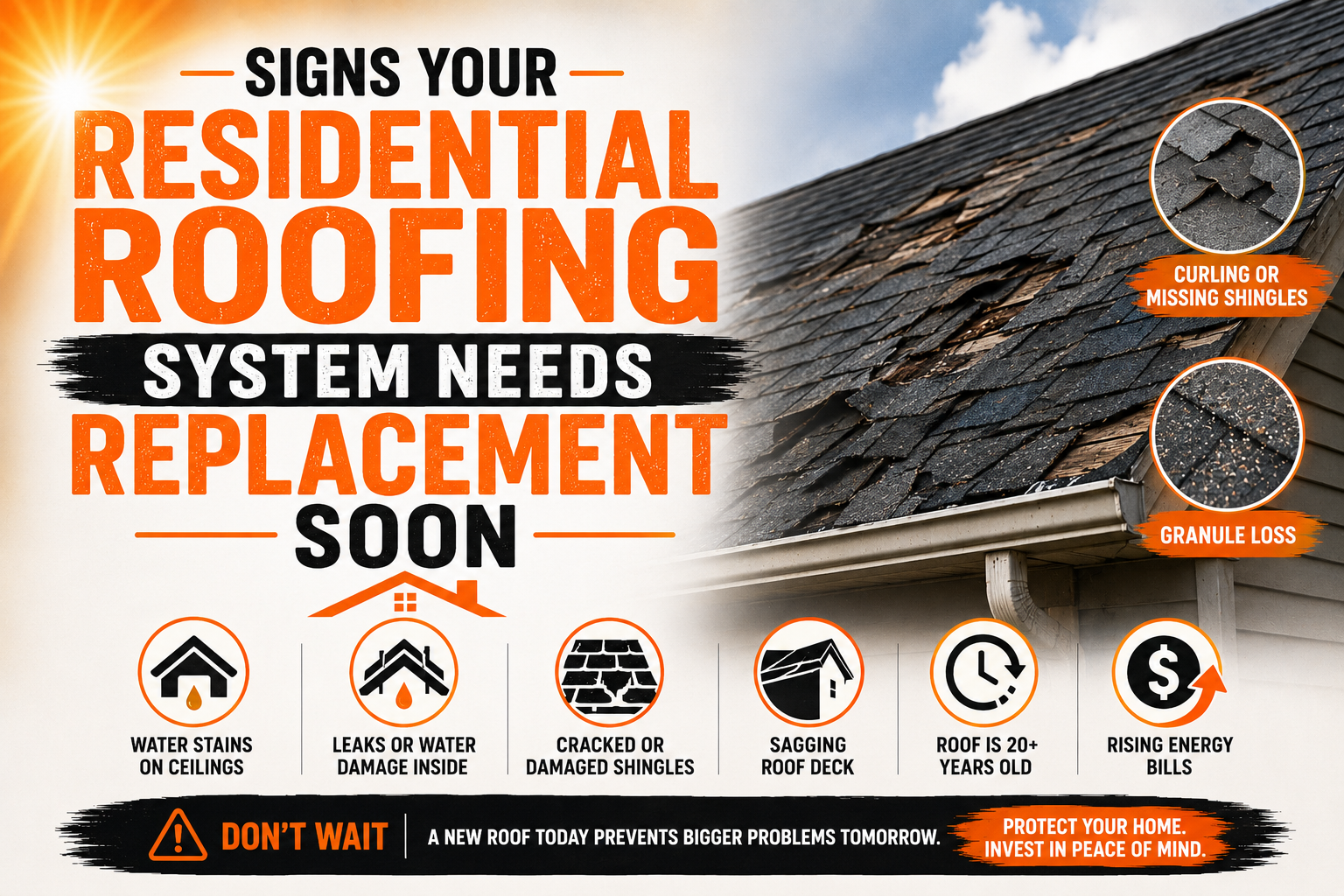
Signs Your Residential Roofing System Needs Replacement Soon
Introduction
A residential roofing system protects a home from rain, wind, sunlight, temperature changes, and other outdoor conditions throughout the year. Because the roof is constantly exposed to the elements, its materials gradually wear down, and some problems can become serious before they are obvious from the ground. Recognizing the warning signs early can help homeowners determine when repairs may no longer be enough and a complete roof replacement should be considered.
Roof deterioration does not always happen suddenly. In many cases, a roofing system develops several smaller signs over time, such as damaged shingles, recurring leaks, sagging areas, excessive granule loss, or deteriorated flashing. When these issues begin appearing together, they may indicate that the roof is approaching the end of its useful service life.
The age and overall condition of the roof are also important factors. Different roofing materials have different expected lifespans, and weather exposure can shorten that period. A roof that has experienced repeated storms, poor ventilation, moisture problems, or years of inadequate maintenance may require replacement sooner than a similar roof in better conditions.
Homeowners should avoid waiting until a major leak occurs before evaluating their roofing system. Early identification of deterioration provides more time to compare replacement options, plan the project, and address underlying problems before they cause extensive interior or structural damage.
An Aging Roof That Is Approaching the End of Its Service Life
One of the clearest indicators that a residential roof may need replacement soon is its age. Roofing materials are designed to provide protection for a certain period, but their performance gradually decreases as they are exposed to weather, ultraviolet radiation, moisture, and temperature changes.
The expected lifespan depends on the type of roofing material, installation quality, local climate, ventilation, maintenance, and exposure to severe weather. An older roof does not automatically require immediate replacement, but its age should become an important consideration when other warning signs begin appearing.
Homeowners should review any available records to determine when the existing roof was installed. If the installation date is unknown, a professional inspection can help estimate the roof’s age and condition based on the appearance and deterioration of its materials.
An aging roof may continue to look acceptable from the street even when important components are becoming less reliable. Shingles can lose flexibility, protective granules can wear away, flashing can deteriorate, and underlayment can become less effective over time.
Repeated repairs can also indicate that the roof is reaching the point where replacement is more practical. Fixing one damaged area may temporarily solve a problem, but additional failures can develop as the surrounding materials continue to age.
Homeowners should consider the bigger picture rather than focusing on one isolated defect. When an older roof has several areas of deterioration, frequent leaks, or a history of repairs, investing in a replacement may provide better long-term protection than continuing to repair individual problems.
Age becomes especially important after severe weather. An older roofing system may have less remaining capacity to withstand additional damage, meaning a storm that would cause limited problems on a newer roof could accelerate deterioration on an aging one.
A professional inspection can help determine whether the roof is still providing dependable protection or whether replacement planning should begin. Having this assessment before an emergency develops gives homeowners greater control over the timing and scope of the project.
Damaged, Curling, Cracked, or Missing Shingles
The visible condition of shingles provides valuable information about the health of a residential roofing system. Shingles are the primary protective surface on many homes, so widespread deterioration can indicate that the roofing system is no longer performing as intended.
Curling shingles are a common warning sign on aging roofs. Shingles may curl upward at the edges or develop a raised appearance across their surfaces, reducing their ability to provide consistent protection against water and wind.
Cracked shingles can also indicate deterioration. Cracks may develop because of age, repeated temperature changes, weather exposure, manufacturing issues, or physical impact. A few isolated damaged shingles may be repairable, but widespread cracking suggests a more significant problem.
Missing shingles should receive prompt attention because they leave sections of the roofing system exposed. Strong winds can remove shingles, while aging materials may become increasingly vulnerable to wind damage as their fastening and flexibility deteriorate.
Homeowners should also look for shingles that appear loose, lifted, or displaced. These conditions can allow wind-driven rain to reach areas beneath the roofing surface and may become worse during future storms.
The overall pattern is more important than a single damaged shingle. If deterioration is visible across several slopes of the roof, replacing a few individual shingles may not provide a dependable long-term solution.
Another warning sign is inconsistent shingle appearance. Areas that look noticeably darker, thinner, flatter, or more worn than surrounding sections may have experienced accelerated deterioration or previous damage.
When these conditions appear across a large portion of the roof, homeowners should arrange a professional assessment. A roofing contractor can determine whether the damage is localized enough for repair or whether the roofing system has deteriorated to the point where replacement is more appropriate.
Excessive Granule Loss and Visible Roof Surface Deterioration
Granules are small protective particles attached to the surface of asphalt shingles. They help protect the roofing material from sunlight and weather exposure, so significant granule loss can reduce the roof’s ability to withstand continued environmental stress.
Some granules naturally wash away over time, especially after rainfall or during the early life of newly installed shingles. However, excessive accumulation of granules in gutters or downspouts can indicate that the shingles are deteriorating more rapidly than expected.
Homeowners may notice that some shingles appear smoother or more exposed than others. Areas with substantial granule loss can have a noticeably different texture or color compared with sections that remain in better condition.
Bald spots are another important warning sign. When large areas of a shingle lose their protective granules, the underlying material becomes more exposed to ultraviolet radiation and weather conditions.
Granule loss can occur because of normal aging, severe weather, foot traffic, improper installation, or other forms of damage. The cause should be considered because widespread loss across an older roof may indicate general deterioration, while isolated loss could be associated with a specific event.
The condition of the shingle surface should also be considered alongside other signs. If granule loss occurs together with curling, cracking, missing shingles, or recurring leaks, the likelihood that the roof needs replacement becomes more significant.
Homeowners should avoid judging the roof solely by how it looks from the ground. Some deterioration is easier to identify from a professional inspection, especially on steeper roofs or areas that are difficult to see from surrounding property.
A contractor can examine the roofing surface and determine whether the remaining materials are still capable of providing reliable protection. If deterioration is widespread, replacement can address the entire roofing system instead of repeatedly treating individual damaged areas.
Recurring Leaks and Water Damage Inside the Home
Water intrusion is one of the most important warning signs that a residential roofing system needs professional attention. A single leak does not necessarily mean the entire roof must be replaced, but repeated leaks can indicate that the system is losing its ability to keep moisture outside the home.
Homeowners may first notice water stains on ceilings or walls. Brown or discolored patches can indicate previous or ongoing moisture exposure, although the visible stain may not be directly beneath the point where water entered the roof.
Recurring leaks are particularly concerning. If the same area continues to leak after repairs have been performed, the underlying cause may be more extensive than a single damaged shingle or visible gap.
Water can travel beneath roofing materials before entering the interior of the home. This means a leak near a chimney, valley, vent, skylight, or roof edge may cause staining in a different location inside the house.
Moisture can also affect roofing components that are not immediately visible. Prolonged exposure can contribute to deterioration of the roof deck, insulation, framing, or other building materials, potentially increasing the scope and cost of future repairs.
Homeowners should investigate water damage as soon as it is discovered rather than waiting for another rainfall. Even when the interior area appears dry, the source of the moisture should be identified to determine whether the problem has been fully resolved.
A roof that has developed multiple leak locations may be approaching the end of its service life. When leaks are combined with significant surface deterioration and an aging roofing system, full replacement may be more appropriate than continuing with repeated localized repairs.
The presence of interior water damage does not automatically prove that the roof must be replaced. However, it is a strong reason to arrange a professional inspection, particularly when the problem is recurring or accompanied by other signs of roof deterioration.
Sagging Areas and Problems Beneath the Roofing Surface
Sagging is a serious warning sign because it can indicate that the problem extends beyond the visible roofing material. A roof should generally maintain a consistent shape, so noticeable dips, depressions, or uneven sections deserve prompt professional evaluation.
Sagging may be associated with prolonged moisture exposure, damaged roof decking, weakened structural components, excessive loads, or other underlying problems. The exact cause cannot always be determined from the exterior appearance alone.
A small uneven area may have a localized cause, while widespread sagging can indicate more significant structural deterioration. Homeowners should not assume that installing new shingles alone will correct the problem.
Moisture is one of the common factors that can contribute to deterioration beneath the roof surface. When water repeatedly reaches the decking or framing, wood components can weaken over time, potentially affecting the stability of the roofing assembly.
Changes in the roofline can sometimes be easier to notice from a distance. Homeowners may see an area that appears lower than surrounding sections or notice that the roof no longer has the consistent lines it previously had.
Interior signs can provide additional clues. Doors or windows that become difficult to operate, ceiling irregularities, or visible changes in attic materials may sometimes occur alongside structural or moisture-related problems, although these signs can have other causes as well.
Because structural conditions can involve safety concerns, homeowners should not attempt to walk across a visibly sagging roof. A qualified roofing professional or appropriate building specialist should evaluate the area and determine whether structural repairs, roof replacement, or both are necessary.
When replacement is recommended because of underlying deterioration, the project should address the cause rather than simply covering the visible problem. The next stages of evaluation involve examining other vulnerable components, including flashing, ventilation, drainage, and areas around roof penetrations.
Deteriorated Flashing and Repeated Problems Around Roof Penetrations
Flashing is one of the most important protective components of a residential roofing system because it helps keep water away from vulnerable joints and transitions. It is commonly installed around chimneys, skylights, vents, walls, valleys, and other areas where different surfaces meet. When flashing becomes damaged, loose, corroded, or improperly sealed, water can gradually find its way beneath the roofing materials.
Homeowners may notice problems around these areas before the rest of the roof appears severely damaged. Water stains near chimneys or skylights, damp areas around attic penetrations, or repeated leaks after rainfall can indicate that flashing needs professional attention. While isolated flashing damage can sometimes be repaired, widespread deterioration on an older roof may be a sign that replacement should be considered.
Flashing materials can deteriorate because of age, weather exposure, physical damage, improper installation, or movement between connected building components. Metal flashing may develop corrosion or holes, while sealants around certain transitions can crack or lose their effectiveness over time. These changes can create openings that become more vulnerable during heavy rain or wind-driven storms.
Repeated repairs around the same roof penetration are another warning sign. If a contractor has already repaired a chimney, skylight, vent, or wall intersection several times and moisture continues to return, the problem may involve more than one defective component. The surrounding roofing materials may also have deteriorated to the point where localized repairs are no longer a reliable long-term solution.
Roof penetrations deserve special attention because they interrupt the continuous surface of the roofing system. Every vent, chimney, skylight, or similar feature creates a transition that must be properly integrated with the surrounding materials. As a roof ages, these areas can become increasingly difficult to maintain without addressing the condition of the broader system.
Homeowners should also watch for visible gaps or lifted flashing from a safe location. Flashing that appears separated from a wall or chimney may allow water to enter behind the roofing materials, especially during storms. However, homeowners should avoid climbing onto the roof to inspect these areas themselves because damaged or steep roofs can present serious fall hazards.
A professional inspection can determine whether the flashing can be repaired independently or whether replacement of the surrounding roofing system would provide a more dependable solution. If several flashing areas are deteriorating at the same time as shingles, underlayment, and other components, a complete replacement may offer better long-term protection.
Excessive Moss, Algae, Moisture, and Organic Growth
Moss, algae, and other organic growth can sometimes appear on residential roofs, particularly in areas that remain shaded or retain moisture. Their presence does not automatically mean that a roof needs replacement, but extensive growth can be a warning sign when it occurs alongside other forms of deterioration.
Moss can hold moisture against roofing materials and may gradually affect the surface as it expands. On some roofing systems, persistent moss growth can contribute to lifted or displaced materials, especially when growth develops beneath shingle edges. This can create pathways through which rainwater may reach areas below the outer roofing surface.
Algae generally produces dark streaks or discoloration on many asphalt roofs. Although these streaks may initially be considered an appearance issue, widespread discoloration can indicate that the roof is exposed to conditions that encourage moisture retention. The underlying cause, such as poor sunlight exposure or drainage problems, may also need to be considered.
Organic growth becomes more concerning when the roofing material is already old or weakened. A newer roof with limited surface growth may remain structurally sound, while an aging roof with extensive moss, curling shingles, granule loss, and recurring moisture problems may be approaching the end of its useful life.
Homeowners should also examine the surrounding environment. Overhanging trees can reduce sunlight, drop leaves and branches, and increase the amount of organic debris that remains on the roof. Poorly maintained gutters can add to the problem by preventing water from draining efficiently away from the roofing system.
Cleaning may help manage limited growth, but aggressive methods can damage roofing materials. Homeowners should avoid scraping, pressure washing, or applying unsuitable chemicals without professional guidance because these actions can remove protective granules or weaken the surface.
If organic growth has been present for a long period, a professional inspection can determine whether the roof has suffered actual material deterioration. When extensive growth is combined with significant aging, moisture intrusion, and surface damage, replacement may be more appropriate than repeatedly treating the visible growth.
The important point is to look beyond the appearance of moss or algae. These conditions can sometimes reveal an environment in which moisture remains on the roof for extended periods, making it worthwhile to evaluate drainage, ventilation, surrounding vegetation, and the condition of the roofing materials.
Damaged Gutters, Poor Drainage, and Persistent Water Accumulation
A residential roofing system depends on effective drainage to move rainwater away from the roof and protect the structure below. Gutters, downspouts, valleys, slopes, and roof edges all work together to control water movement. When drainage repeatedly fails, moisture can contribute to accelerated deterioration and may increase the likelihood of a roof replacement becoming necessary.
Homeowners may notice gutters that frequently overflow during rain. Overflow can occur because of leaves and debris, but it can also result from improper slope, damaged gutters, insufficient capacity, or water being directed toward the wrong area. If the problem continues after basic cleaning and maintenance, the drainage system may require further evaluation.
Water accumulation on or near the roof is another concern. Roofs are designed with slopes and drainage paths that should move water away from vulnerable areas. Persistent standing water can place additional stress on roofing materials and may create conditions that encourage deterioration.
Damaged or sagging gutters can also affect the roof edge. When gutters pull away from the fascia or become overloaded with water, surrounding components may be exposed to moisture for extended periods. In older homes, repeated water exposure can affect wood trim and other materials near the roofline.
Downspouts are equally important because they carry collected water away from the building. If downspouts discharge too close to the foundation or become blocked frequently, water may remain around the property instead of being directed to an appropriate drainage area.
Some drainage problems can be corrected without replacing the entire roof. Cleaning gutters, adjusting slopes, replacing damaged sections, or improving downspout placement may solve localized issues. However, persistent drainage problems can contribute to broader roof deterioration when they have been present for a long time.
Homeowners should pay particular attention after heavy rainfall. Observing overflowing gutters, unusual water paths, or areas where water remains after surrounding surfaces have dried can provide useful information for a professional inspection.
When poor drainage occurs together with an aging roof, damaged shingles, recurring leaks, or deteriorated roof edges, replacement may be worth considering. Addressing drainage during a roof replacement can help protect the new system and reduce the chance of repeating the same problems.
Poor Attic Ventilation and Signs of Moisture or Heat Problems
The condition of the attic can provide important clues about the health of a residential roofing system. Proper ventilation helps manage heat and moisture within the roof assembly, while inadequate airflow can contribute to conditions that accelerate deterioration.
During hot weather, an improperly ventilated attic can become excessively warm. While attic temperatures naturally rise during sunny conditions, inadequate ventilation can contribute to prolonged heat exposure that may affect roofing materials and other components over time.
Moisture is another major concern. Warm indoor air can move into attic spaces and condense when it reaches cooler surfaces, particularly when ventilation and moisture control are inadequate. Persistent moisture can contribute to wood deterioration, insulation problems, unpleasant odors, and other building concerns.
Homeowners may notice condensation on nails, damp insulation, staining on roof decking, or signs of moisture around attic vents. These conditions do not automatically mean the roof needs replacement, but they should be investigated because ventilation problems can affect the performance and lifespan of a roofing system.
A roof replacement can provide an opportunity to evaluate ventilation and improve the overall system where appropriate. However, adding vents without considering the complete airflow pathway may not solve the problem. Intake and exhaust ventilation need to work together according to the home’s design and applicable requirements.
Poor attic ventilation can also become more noticeable as a roof ages. Materials that have already experienced years of heat and moisture exposure may become less resilient, making it important to consider the condition of the entire roofing system rather than treating ventilation as an isolated issue.
Homeowners should not block existing vents during insulation projects or other attic improvements. Restricting intended airflow can create additional moisture and temperature problems that may shorten the service life of roofing components.
If attic moisture problems are found alongside an aging roof, recurring leaks, deteriorated decking, or widespread surface damage, replacement may be the most practical long-term approach. The new roofing system should be designed with appropriate ventilation and moisture management so the underlying causes are addressed rather than simply covered.
Rising Repair Frequency and Increasing Roofing Costs
A roof does not necessarily need replacement because of one repair. However, a growing pattern of repairs can indicate that the roofing system is approaching the end of its useful life. When problems begin appearing in different areas within a short period, homeowners should consider the condition of the entire roof.
For example, one year may bring a damaged flashing repair, followed by missing shingles after a storm and then another leak several months later. Each individual issue may be repairable, but repeated failures can become increasingly expensive and inconvenient.
Homeowners should keep records of roofing repairs whenever possible. Recording the date, location, type of repair, and approximate cost can reveal patterns that may not be obvious when each problem is considered separately.
The financial side of repeated repairs deserves careful consideration. Spending money on several repairs does not necessarily build additional service life into the entire roof, particularly when the underlying materials are already heavily deteriorated.
A useful comparison involves looking at both immediate and future costs. A repair may be less expensive today, but if similar repairs are likely to continue, the combined expense can approach the cost of a planned replacement while still leaving the homeowner with an aging roof.
Several factors can help homeowners evaluate whether replacement planning is becoming more sensible:
- Review how often repairs have been needed during recent years.
- Compare the total repair expenses with the estimated cost of replacement.
- Consider the roof’s age and remaining expected service life.
- Evaluate whether new problems are appearing in unrelated areas.
- Ask a qualified contractor whether the existing roof can reasonably provide dependable service for several more years.
The number of repairs alone should not determine the decision. A newer roof may experience an isolated storm-related problem that is easily corrected, while an older roof may require frequent repairs because multiple components are deteriorating simultaneously.
Repeated repairs can also become disruptive. Each repair may involve scheduling contractors, waiting for suitable weather, dealing with interior protection, and temporarily interrupting normal household routines.
When repair frequency continues to increase, homeowners may benefit from planning replacement before an emergency occurs. A planned project provides more time to compare materials, review estimates, select a contractor, and prepare the household.
Visible Roof Wear Across Multiple Areas
One of the strongest signs that replacement may be approaching is widespread deterioration across multiple sections of the roof. A roofing system can develop individual defects without requiring complete replacement, but extensive wear suggests that the problem is no longer isolated.
Homeowners may notice several warning signs at the same time, such as curled shingles, missing materials, granule loss, cracked surfaces, exposed areas, damaged flashing, and discoloration. When these conditions appear across different slopes or sections of the roof, they may indicate that the roofing system is aging as a whole.
The roof’s appearance should be evaluated from several safe viewpoints around the property. Looking from the ground can reveal uneven areas, missing shingles, visible wear, and changes in the roofline without requiring the homeowner to climb onto the structure.
Weather exposure can cause different sections of the same roof to age at different rates. Areas facing stronger sunlight or prevailing weather may deteriorate faster, while shaded sections may experience more moisture and organic growth.
A professional inspection can identify whether visible wear is limited to the surface or extends into underlying components. The inspector may also evaluate flashing, ventilation, drainage, roof decking, and other parts that are difficult to assess from ground level.
Replacement becomes more likely when widespread surface deterioration is accompanied by other serious signs. An older roof with recurring leaks, sagging areas, significant granule loss, damaged flashing, and repeated repairs may no longer be a good candidate for continued patching.
Homeowners should also consider whether the roof can reasonably withstand future weather conditions. A roof that is already showing widespread wear may become significantly more vulnerable during the next period of heavy rain, strong wind, hail, or other severe weather.
Recognizing widespread deterioration early allows homeowners to make a planned decision rather than waiting for a major failure. In the next stage of evaluating a replacement, homeowners need to consider how to confirm the roof’s condition, understand replacement timing, and prepare financially and practically for the work.
When a Professional Roof Inspection Becomes Necessary
Knowing the warning signs of roof deterioration can help homeowners recognize when professional evaluation is necessary. Some problems are easy to identify from the ground, while others may develop beneath shingles, around flashing, or within the roof structure where they cannot be seen without a proper inspection.
A professional inspection becomes especially important when several warning signs appear at the same time. An aging roof with recurring leaks, damaged shingles, poor drainage, and deteriorated flashing should not be evaluated based on one problem alone because the combined condition may indicate that the entire roofing system is approaching the end of its useful life.
Homeowners should also arrange an inspection after significant weather events. Strong winds, hail, falling branches, and heavy rainfall can cause damage that is not immediately visible from inside the home, and a professional can evaluate vulnerable areas before a small problem develops into a larger one.
The inspection should cover more than the visible shingles. A thorough assessment may consider the following areas:
- Roofing materials and visible surface deterioration
- Flashing around chimneys, vents, skylights, and walls
- Roof edges, valleys, and drainage paths
- Roof deck and areas showing signs of moisture
- Attic ventilation and moisture conditions
- Gutters and downspouts
Homeowners should ask questions during the inspection and request explanations for significant findings. Photographs can also be useful because they allow the homeowner to understand problems that may be difficult to see from the ground.
An inspection does not automatically mean replacement is required. The purpose is to determine the actual condition of the roofing system and establish whether localized repairs, preventive maintenance, or complete replacement is the most appropriate solution.
Determining Whether Repair or Replacement Is the Better Option
Once the roof has been inspected, homeowners need to determine whether the identified problems can reasonably be repaired or whether replacement is a better long-term choice. This decision should consider the roof’s age, material condition, repair history, remaining service life, and the extent of underlying damage.
A repair may make sense when the roofing system is relatively young and the problem is limited to one clearly defined location. A small number of damaged shingles, isolated flashing deterioration, or a localized storm-related problem may be corrected without disturbing the rest of the roof.
Replacement becomes more likely when deterioration is widespread. If shingles are failing across multiple slopes, leaks continue appearing in different locations, and repairs are becoming increasingly frequent, repairing individual sections may provide only temporary benefits.
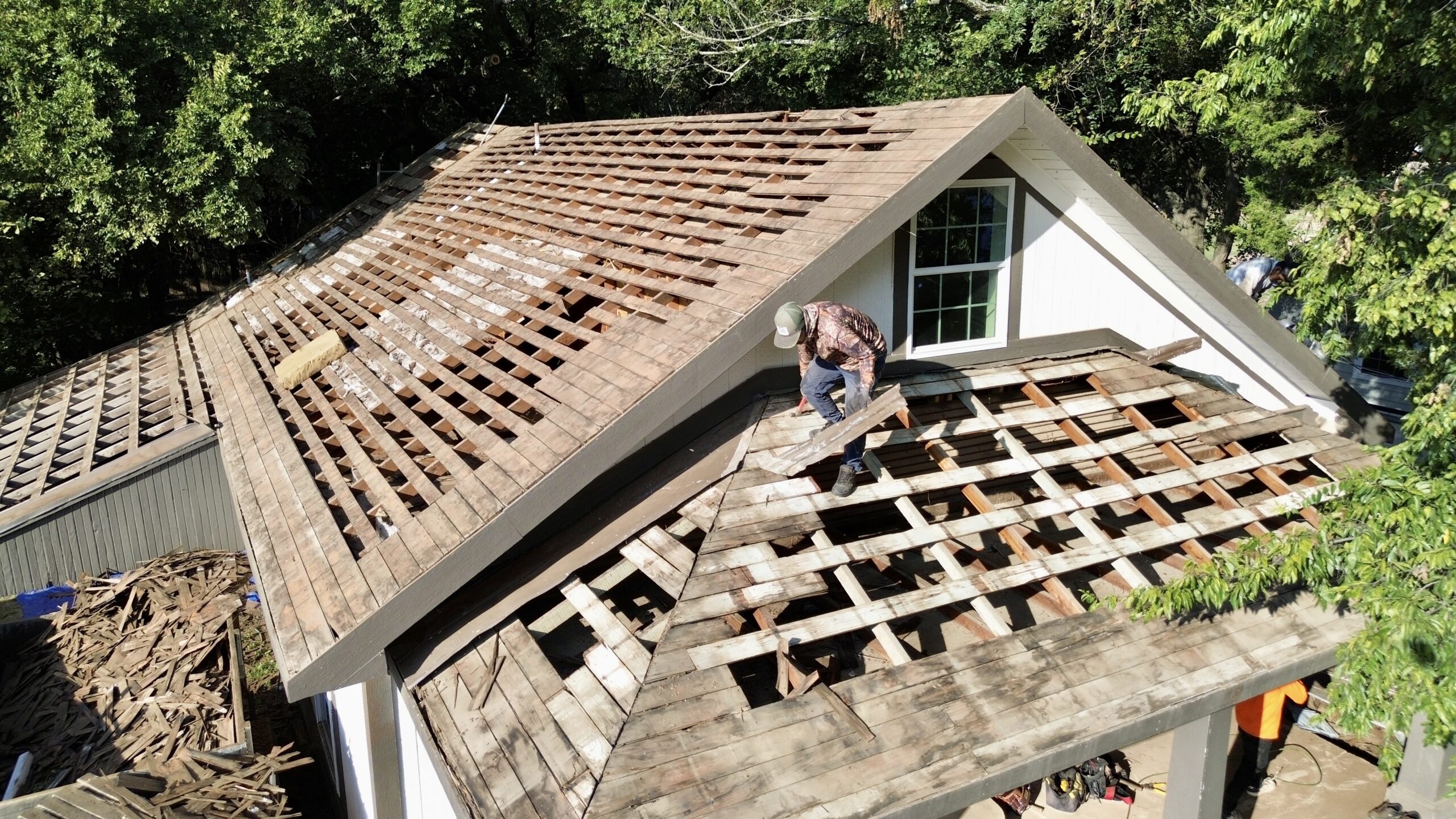
The condition of the roof deck is another important consideration. If moisture has damaged significant portions of the underlying decking, replacing only the visible roofing materials may not address the complete problem.
Cost should also be evaluated carefully. The lowest immediate expense is not always the most economical option over several years, especially when repeated repairs are likely to continue.
Homeowners can compare the two approaches by considering the roof’s current condition and expected future costs. A professional contractor should explain what can realistically be repaired, what replacement would involve, and which option is likely to provide dependable protection.
It is also important to consider the timing of the project. If replacement appears inevitable within the near future, homeowners may benefit from planning the work before a major storm or emergency leak forces a rushed decision.
A planned replacement provides greater control over material selection, contractor comparison, scheduling, and budgeting. It also allows homeowners to address ventilation, drainage, flashing, and other underlying concerns as part of one coordinated project.
Planning for an Upcoming Roof Replacement
When a professional evaluation confirms that replacement is necessary, homeowners should begin preparing for the project rather than waiting for the roof to fail completely. Early planning creates an opportunity to make careful decisions instead of choosing materials and contractors under emergency conditions.
The first step is understanding the expected scope of work. A replacement estimate should identify the roofing materials, underlayment, flashing, ventilation components, removal of existing materials, disposal, cleanup, and any potential roof deck repairs.
Homeowners should compare detailed estimates instead of focusing only on the final price. Two contractors may provide very different prices because they are including different materials, preparation work, warranties, or levels of service.
Material selection should also be based on the home’s design and environmental conditions. Asphalt shingles, metal roofing, tile, slate, and other systems have different characteristics, costs, maintenance requirements, and installation considerations.
Weather should be considered when planning the project. Although contractors can work in many conditions, rain, strong winds, and severe weather can affect scheduling and may require temporary protection until installation can safely continue.
Homeowners should also prepare the interior and exterior of the property. Fragile items stored in the attic may need to be moved, outdoor furniture should be relocated, and vehicles may need to remain away from material delivery and construction areas.
Communication with the contractor is essential throughout this stage. Homeowners should understand how unexpected decking damage will be handled, who is responsible for debris removal, how long the work is expected to take, and what steps will be followed if weather causes delays.
A clear written agreement can reduce misunderstandings. It should explain the scope of work, materials, payment terms, warranty information, and procedures for approved additional work.
Protecting the Home During the Replacement Process
Once replacement begins, the property will become an active construction area. Removing old roofing materials can create noise, dust, falling debris, and temporary access restrictions, so homeowners should understand how the work may affect daily routines.
Professional crews generally use tarps, protective coverings, collection equipment, and other measures to reduce the impact of construction. These precautions can help protect landscaping, windows, exterior walls, doors, and other areas around the home.
The household should remain aware of the work zone while construction is underway. Children and pets should be kept away from areas where roofing materials, tools, ladders, or debris are present because even small roofing components can create hazards.
Attic preparation may also be useful. Roof replacement creates vibrations that can disturb dust or small particles in the attic, so valuable or fragile belongings should be protected or temporarily relocated.
Homeowners should follow the contractor’s instructions regarding access. Roofing crews may need space for material delivery, equipment, waste containers, and vehicles, which can temporarily change how driveways and outdoor areas are used.
Weather protection is another important consideration. A professional contractor should have procedures for protecting exposed portions of the roof if changing weather interrupts the work.
The replacement process may reveal concealed damage after the old roofing materials are removed. Homeowners should expect that some additional repairs may become necessary, particularly on older roofs that have experienced long-term moisture exposure.
The key is to establish how such situations will be communicated before the work begins. When the homeowner and contractor already understand the approval process for unexpected repairs, decisions can usually be made more efficiently.
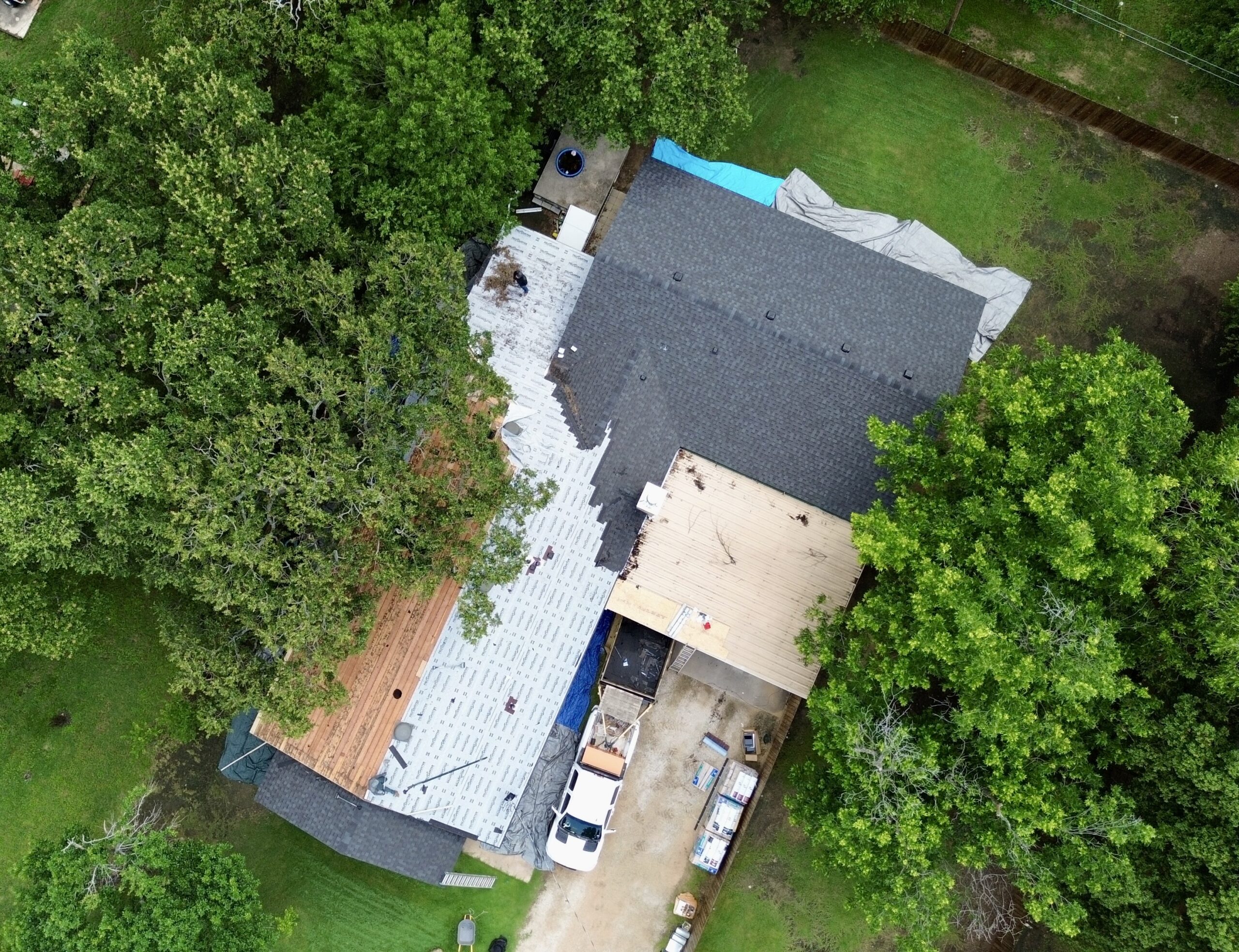
Maintaining the New Roof After Replacement
A newly installed roofing system should provide improved protection, but regular maintenance remains important. Replacement does not eliminate the effects of weather, debris, moisture, or aging, so homeowners should continue monitoring the roof throughout its service life.
Gutters and downspouts should be kept clear so rainwater can drain properly. Leaves, branches, and accumulated debris can interfere with water flow and may contribute to moisture problems around the roof edges.
Trees near the home should also be maintained. Overhanging branches can scrape roofing materials, deposit organic debris, and create additional risks during storms, while excessive shade can encourage moss and moisture accumulation.
Homeowners should arrange professional inspections when they notice new problems or after significant weather events. Early evaluation can help identify loose materials, damaged flashing, blocked drainage, or other concerns before they become more extensive.
The attic should also be monitored for signs of moisture or unusual conditions. Staining, condensation, damp insulation, or persistent musty odors can justify further investigation, particularly if these conditions were not present before the replacement.
It is important to avoid unnecessary foot traffic on the roof. Walking across roofing materials can cause damage or disturb components, especially when the person is not trained to identify safe walking areas.
Regular maintenance should focus on prevention rather than waiting for obvious failure. Keeping drainage systems functional, maintaining nearby vegetation, monitoring attic conditions, and responding promptly to storm damage can help protect the replacement investment.
Homeowners should also keep records of inspections, repairs, and maintenance. Documentation can be useful for warranty purposes and can provide future contractors with valuable information about the roofing system.
Conclusion
A residential roofing system rarely fails without warning. In many cases, homeowners can identify several signs that the roof is approaching the end of its useful life, including an advanced age, curling or missing shingles, excessive granule loss, recurring leaks, sagging areas, damaged flashing, poor drainage, and widespread surface deterioration.
One isolated problem does not always mean that complete replacement is necessary. However, when multiple warning signs appear together, especially on an older roof, they can indicate that continued repairs may no longer provide the most practical long-term solution.
Professional inspection is an important step because many roofing problems cannot be accurately evaluated from the ground. A qualified contractor can examine the roofing surface, flashing, drainage, ventilation, roof deck, and other components to determine the overall condition of the system.
Homeowners should also avoid delaying evaluation when water damage or structural concerns appear. A small roofing problem can become more expensive when moisture reaches insulation, decking, framing, ceilings, or walls.
Planning ahead can make the replacement process easier and more manageable. Homeowners have more time to compare contractors, select appropriate materials, understand estimates, prepare their property, and schedule the work under suitable conditions when they recognize the need for replacement before a major failure occurs.
The goal is not simply to replace an old roof as quickly as possible. A successful replacement should address the underlying causes of deterioration and create a complete roofing system that includes appropriate materials, flashing, drainage, ventilation, and weather protection.
After installation, regular maintenance remains essential. Keeping gutters clear, maintaining nearby trees, arranging inspections when necessary, and responding promptly to storm damage can help extend the useful life of the new roofing system.
Recognizing the signs of roof deterioration early gives homeowners an important advantage. Instead of waiting for a serious leak or structural problem to force an emergency decision, they can evaluate the condition of the roof, plan the necessary work, and protect their home with a replacement strategy that is based on its actual needs.