
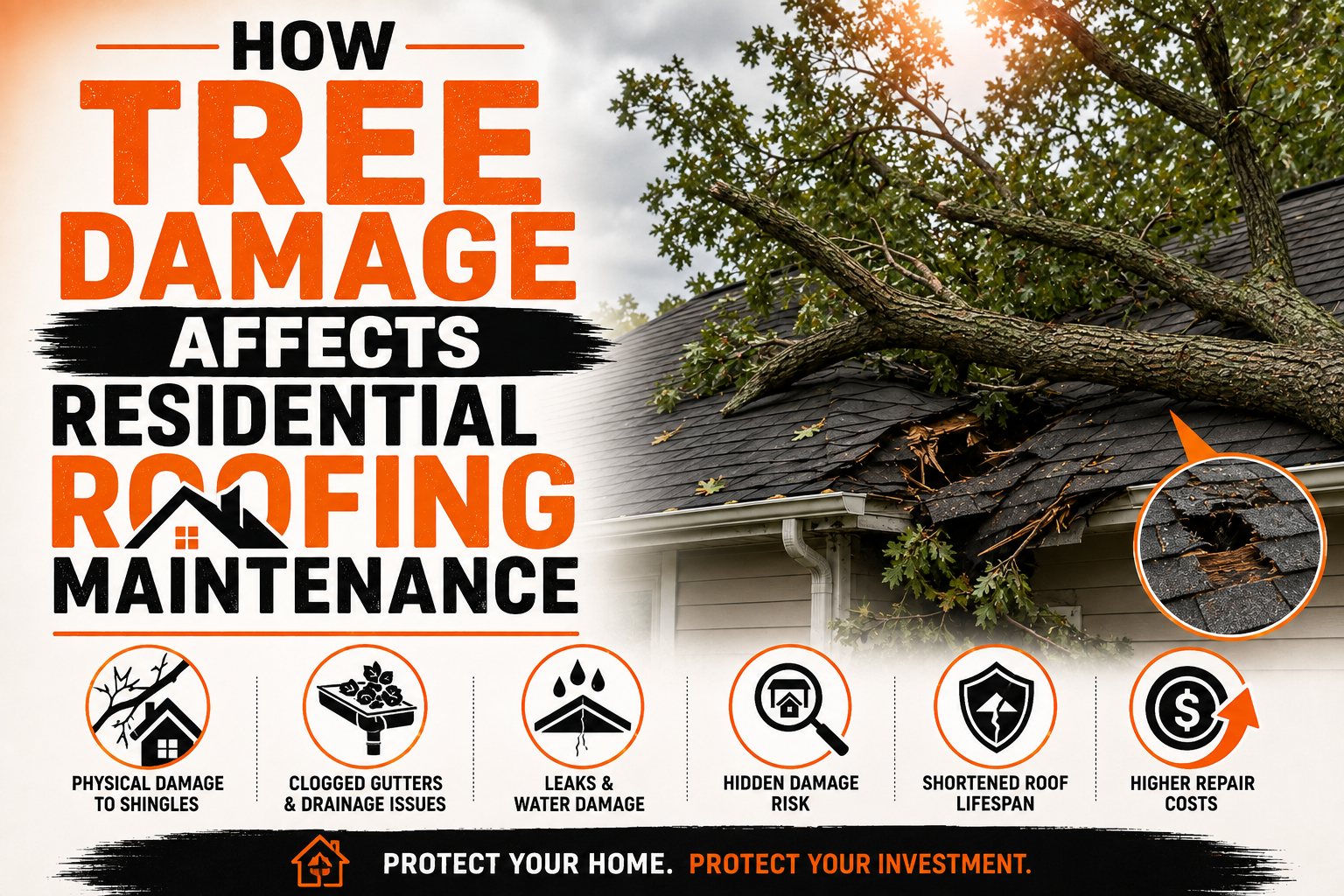
How Tree Damage Affects Residential Roofing Maintenance
Introduction
Trees can add shade, beauty, privacy, and value to a residential property, but they can also create maintenance challenges for the roof. Branches that extend over a roof, falling limbs during storms, and leaves that accumulate in gutters can gradually affect roofing materials and drainage systems. Understanding these risks helps homeowners protect both their trees and their roofing investment.
Tree-related roof damage can range from minor surface wear to serious structural problems. Small branches may repeatedly rub against shingles or other roofing materials, while larger limbs can fall and cause sudden impact damage. Even when a tree does not directly strike the roof, its leaves and moisture can create conditions that contribute to deterioration.
The relationship between trees and roofs is particularly important in properties surrounded by mature vegetation. A tree that was safely positioned when it was small may eventually grow branches over the roof. Seasonal growth, storms, and changes in tree health can also increase the risk of contact with roofing materials.
Regular maintenance can reduce many of these risks. Trimming appropriate branches, clearing roof debris, maintaining gutters, and inspecting the roof after severe weather can help homeowners identify potential problems early. These tasks should be performed carefully because both roof access and tree work can involve significant safety hazards.
Tree maintenance and roofing maintenance should therefore be viewed as connected parts of home care. A healthy tree can remain an asset to the property when it is properly managed, while a poorly positioned or damaged tree can create repeated roofing problems.
Homeowners should also understand that not every tree near a house needs to be removed. In many cases, appropriate pruning and regular monitoring can reduce contact and debris without unnecessarily eliminating valuable landscaping. The goal is to maintain a safe relationship between vegetation and the roofing system.
How Trees Can Affect Residential Roofs
Trees can affect residential roofs in several different ways, and the level of risk depends on tree size, distance from the building, branch structure, weather conditions, and roofing material. A tree located several feet from the roof may create little concern, while branches extending directly over the roof can require regular attention.
Overhanging branches are one of the most common concerns. Wind can cause branches to move repeatedly against shingles, tiles, metal panels, or other roofing materials. Even without breaking, this repeated contact can gradually create wear or disturb components.
Branches can also drop smaller twigs and bark onto the roof. These materials may collect in valleys or around roof penetrations and can retain moisture after rainfall. If they remain on the roof for long periods, they may contribute to surface deterioration.
Larger branches present a more immediate risk. During strong winds, heavy rain, ice, or other severe weather, branches can break and fall onto the roof. Depending on their size and impact, they can crack tiles, puncture roofing materials, damage flashing, or even affect the underlying roof structure.
Tree shade can also influence roof conditions. A roof that receives limited sunlight may remain damp for longer periods after rainfall. These conditions can encourage moss, algae, or other organic growth on some roofing materials.
Leaves are another significant concern. They can collect on roof surfaces and move into gutters and downspouts. When drainage becomes restricted, water may accumulate around roof edges or overflow onto exterior walls.
Trees can also make inspections more difficult. Dense branches may hide sections of the roof from view, making it harder for homeowners to notice damaged or deteriorating materials. Regular pruning can improve visibility as well as reduce physical contact.
The distance between a tree and the roof should therefore be considered as part of routine property maintenance. Homeowners should observe how branches move during windy conditions and whether they touch or hang directly above vulnerable roofing areas.
Common Types of Tree Damage to Roofing Systems
Tree-related roofing damage can occur gradually or suddenly. Understanding the different types can help homeowners recognize warning signs and respond appropriately.
One common form is surface abrasion. Branches that repeatedly rub against roofing materials can scratch or wear surfaces over time. On asphalt shingles, continued contact may disturb protective granules or damage the upper surface.
Impact damage can be much more severe. A falling branch can crack tiles, break shingles, dent metal panels, or puncture the roof. Large limbs can also damage roof decking, rafters, flashing, gutters, and other components beneath the visible roofing surface.
Tree debris can create another type of damage. Leaves, twigs, bark, and small branches can accumulate in valleys and around roof penetrations. When these materials remain wet, they can contribute to moisture retention and make drainage more difficult.
Gutter damage is also common when branches fall or heavy debris accumulates. Gutters can become bent, detached, or clogged, preventing rainwater from moving away from the roof properly.
Tree limbs can damage flashing around chimneys, skylights, and roof-to-wall transitions. Even a relatively small impact can loosen or deform flashing, creating a potential pathway for water.
Fallen branches can also damage vents and other roof penetrations. A damaged vent opening may allow water to enter the roof system or attic if it is not repaired promptly.
In severe cases, a tree or large limb can affect the roof structure itself. Significant structural damage may result in sagging, broken framing, or movement of major roofing sections. These conditions require immediate professional assessment.
The effects of tree damage are not always visible immediately. A branch may cause a small opening that allows water to enter gradually, while the interior damage develops over time. This is why post-storm inspection is an important part of residential roofing maintenance.
Warning Signs of Tree-Related Roof Damage
Homeowners should know what to look for when trees are located close to a residential roof. Early warning signs can help identify problems before they become more extensive.
Visible branches touching the roof are one of the simplest signs. If branches consistently contact shingles, tiles, or metal roofing during normal weather, the situation should be evaluated. Trimming may be appropriate depending on the tree and property layout.
Damaged or missing roofing materials can also indicate tree contact or falling debris. Homeowners should look for displaced shingles, cracked tiles, bent metal panels, or unusual gaps when observing the roof from a safe location.
Accumulated leaves and branches are another warning sign. A small amount of debris after a storm may be normal, but persistent accumulation can indicate that nearby trees are creating a maintenance problem.
Gutters that repeatedly become clogged may also point to excessive tree debris. If gutters require unusually frequent cleaning, homeowners may need to evaluate the surrounding vegetation as part of the solution.
Ceiling stains or attic moisture can indicate that a branch has damaged the roofing system. Water does not always enter directly beneath the visible exterior damage, so professional evaluation may be necessary to locate the actual entry point.
Homeowners should also watch for changes in tree health. Dead branches, split limbs, leaning trees, or visible decay can increase the possibility of branches falling during severe weather.
Another warning sign is repeated scraping or scratching sounds during windy conditions. Although some movement is normal, persistent contact between branches and roofing materials can cause gradual damage.
Trees that have grown significantly since the roof was installed should also be reassessed. Branches may now extend over areas that were previously clear, creating a new maintenance requirement.
Warning signs should be documented rather than ignored. Photographs from safe ground-level positions can help homeowners compare conditions over time and provide useful information to roofing or tree-care professionals.
How Branches and Leaves Affect Roof Drainage
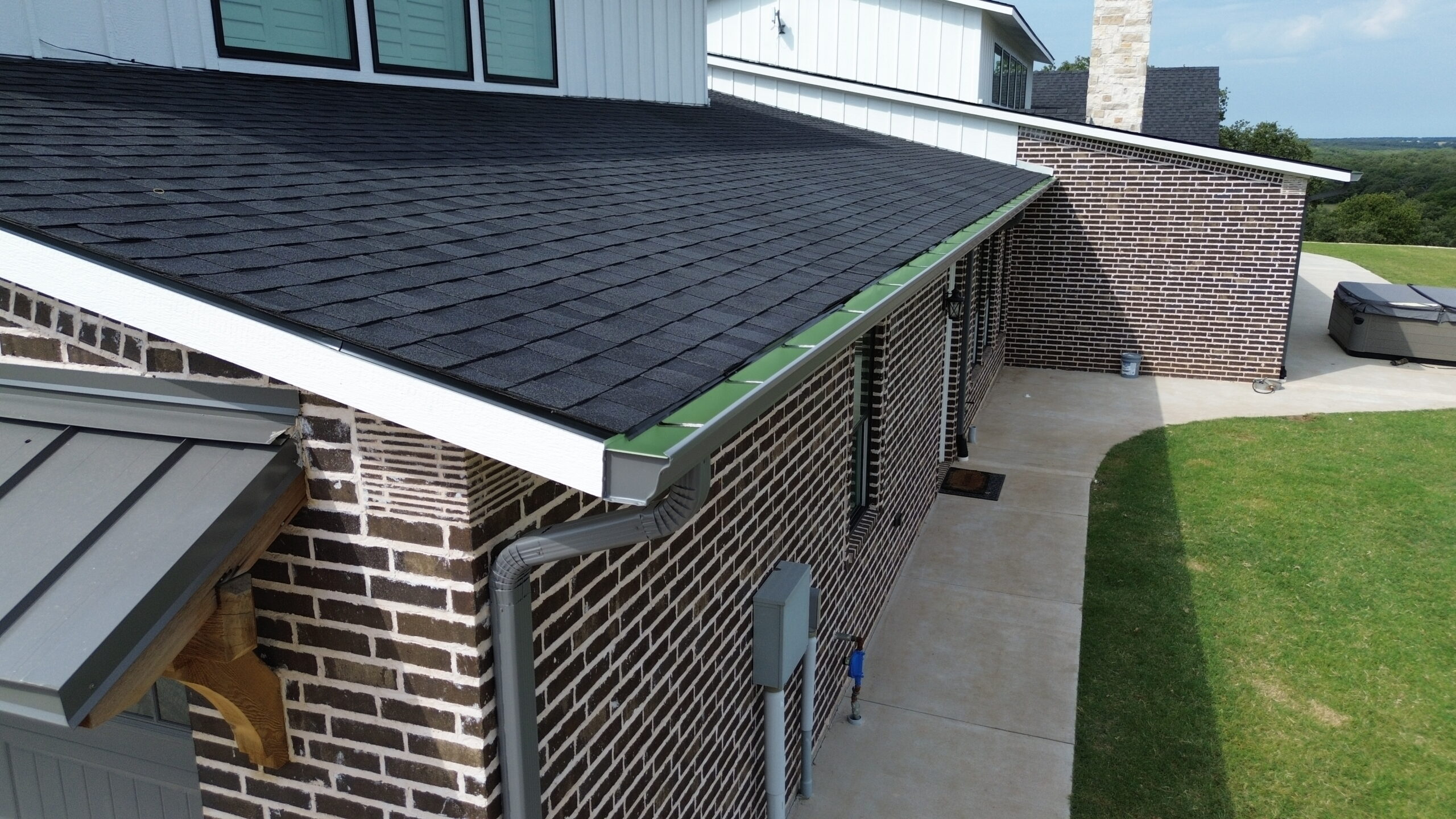
Roof drainage is one of the areas most affected by nearby trees. Rainwater must move efficiently across the roofing surface and into gutters or other drainage systems. Leaves, branches, and organic debris can interfere with this process when they accumulate in key areas.
Roof valleys are particularly vulnerable because they collect water from multiple roof sections. Leaves and small branches can become trapped in these areas, slowing water movement and retaining moisture against roofing materials.
Gutters can become heavily blocked when trees are located close to the home. Leaves may enter the gutter system during normal weather, while larger twigs can collect after storms. A blocked gutter can cause water to overflow rather than move through the downspout.
Overflowing water can affect more than the roof. It may run down exterior walls, damage siding, contribute to erosion around the foundation, or enter areas where the building envelope is vulnerable.
Debris can also remain wet for extended periods. Organic material that stays against roofing surfaces may create a damp environment that encourages moss and algae growth on suitable materials.
Regular gutter maintenance is therefore especially important for homes surrounded by trees. Homeowners may need to inspect and clean gutters more frequently than properties with little surrounding vegetation.
Gutter guards can help reduce certain types of debris but should not be considered a complete solution. Leaves, seeds, small particles, and organic material can still accumulate, and the system should be inspected periodically.
Downspouts should also be checked for blockages. Debris from the roof can travel into downspouts and restrict water flow, creating problems even when the gutters appear relatively clear.
Homeowners should avoid climbing onto the roof simply to remove debris. Ground-based tools or professional services may provide safer alternatives, particularly for steep or high roofs.
Maintaining clear drainage helps protect the roofing system from unnecessary moisture exposure. By managing tree debris and keeping gutters and downspouts functional, homeowners can reduce one of the most common indirect effects that nearby trees have on residential roofing.
Tree Roots and Their Indirect Impact on Roofing Maintenance
Tree roots generally do not damage the roof directly, but they can have indirect effects on residential property maintenance. Large trees require stable root systems, and roots can interact with underground structures, drainage systems, foundations, and landscaping around the home.
One important connection involves drainage. If tree roots affect underground drainage lines, water management around the property may become more difficult. Poor drainage can increase moisture around the foundation and may create broader property maintenance concerns.
Tree growth can also affect the physical environment around the house. As trees become larger, branches may extend toward the roof and create direct contact that did not exist when the tree was younger. Root growth and tree growth should therefore both be considered when planning long-term landscaping.
Trees planted too close to a building may eventually create maintenance challenges even if there are no immediate roofing problems. Homeowners should consider mature tree size rather than the current size of a young tree.
Large trees can also make roof inspections more difficult. Dense canopies may block sunlight and visual access to parts of the roof. This can make it harder to identify damaged roofing materials or organic growth from the ground.
Roots can also affect nearby hardscaping and drainage features, which may indirectly influence how rainwater is managed around the property. Water that is not properly controlled can contribute to moisture problems in different areas of the building.
Homeowners should not remove or cut major roots without professional advice. Root systems contribute to tree stability, and improper cutting can weaken a tree or increase its risk of falling. Tree professionals can evaluate the situation and recommend appropriate action.
When landscaping is being planned around a new home or roof, mature tree growth should be considered from the beginning. Selecting suitable planting locations can reduce future conflicts between trees, roofs, gutters, and exterior structures.
The goal is not to eliminate trees simply because they are near a house. Instead, homeowners should understand how tree growth can change over time and incorporate vegetation management into the property’s long-term maintenance plan. Proper planning can help preserve the benefits of trees while reducing unnecessary roofing risks.
How Falling Branches Damage Roofing Materials
Falling branches are among the most serious tree-related hazards for residential roofs. A small twig may cause little more than surface debris, but a large or heavy limb can create substantial damage when it strikes the roofing system. The severity depends on the branch size, falling distance, impact location, roof material, and condition of the existing roof.
Asphalt shingles can be cracked, torn, displaced, or punctured by falling branches. A branch may also scrape away protective granules, exposing the underlying material to sunlight and weather. Even when the damage looks minor from the ground, a compromised shingle can create an opening through which water may eventually enter.
Tile roofing can experience a different type of damage. A falling limb may crack or break individual tiles, while the impact can also disturb neighboring tiles. Broken pieces should not simply be removed without checking the surrounding area because movement caused by impact can affect the roof’s water-shedding ability.
Metal roofing is generally durable, but it is not immune to falling tree limbs. A heavy branch can dent panels, damage protective coatings, bend flashing, or affect seams and fasteners. In some situations, the visible dent may be primarily cosmetic, while in others the impact can compromise the roofing system.
Wood shingles and shakes can split or break when struck by branches. Older wood roofing may be especially vulnerable because weather exposure can make materials more brittle. Damaged sections should be evaluated to determine whether localized repairs are possible.
A large branch can also damage components beneath the roof covering. Roof decking, rafters, insulation, vents, and flashing may be affected even when the visible roofing damage appears limited. Water intrusion can become a secondary problem if the damaged area is not properly inspected.
After a significant branch impact, homeowners should avoid walking on the affected roof. Additional damage may exist beneath the surface, and unstable branches can create continuing hazards. A qualified roofing professional can assess the area and determine what repairs are necessary.
Temporary protection may sometimes be needed when a storm leaves an opening in the roof. However, homeowners should not attempt complicated emergency repairs themselves. Proper temporary protection can reduce further water exposure while permanent repairs are arranged.
Effects of Overhanging Branches and Tree Contact
Overhanging branches may appear harmless when they are not broken or damaged, but continuous contact with roofing materials can create gradual wear. Wind causes branches to move, and repeated rubbing can affect shingles, tiles, coatings, flashing, and other components.
The problem is particularly noticeable when branches scrape across the roof during windy conditions. Repeated movement can disturb shingle surfaces and remove protective granules. Over time, this may reduce the roof’s ability to withstand sunlight and weather exposure.
Branches can also fall onto the roof even when they appear healthy. Deadwood, weak joints, disease, storms, and strong winds can cause limbs to break unexpectedly. Regular tree inspections can help identify branches that may pose a greater risk.
Homeowners should observe how trees interact with the roof throughout the year. A branch that does not touch the roof during calm weather may move significantly during strong winds. Seasonal growth can also bring branches closer to roofing materials.
Trimming can reduce direct contact, but tree work must be performed carefully. Cutting large branches without proper knowledge can damage the tree, destabilize it, or create a safety hazard. Professional tree-care services are often appropriate for branches near roofs, electrical lines, or other structures.
The distance between branches and roofing materials should also be monitored after pruning. Trees continue to grow, and branches that were safely separated from the roof may eventually extend toward it again. Long-term tree maintenance is therefore more effective than treating pruning as a one-time task.
Homeowners should also consider branches near chimneys, skylights, and vents. These areas contain additional components that may be vulnerable to falling debris or repeated contact. Keeping nearby branches appropriately managed can make inspection and maintenance easier.
Overhanging branches can also create more shade on the roof. Reduced sunlight may cause moisture to remain longer after rainfall, especially in humid environments. This can contribute to moss or algae growth on roofing materials that are susceptible to organic buildup.
The objective should not be to remove every branch near a home. Trees provide valuable shade and environmental benefits, so the better approach is usually to maintain appropriate clearance and monitor growth. Proper tree care can reduce roofing risks while preserving healthy vegetation.
Moss, Algae, and Moisture Problems Caused by Trees
Trees can indirectly contribute to moss and algae growth by creating shaded and moist conditions around the roof. Dense tree canopies can reduce direct sunlight, while leaves and branches may retain moisture on the roofing surface after rain.
Moss is more likely to develop where moisture remains for extended periods. It can grow around roofing materials and retain additional moisture against the surface. On some roofing systems, heavy moss growth may contribute to deterioration if it remains untreated for long periods.
Algae can also create dark streaks or discoloration on certain roofing materials. While discoloration does not automatically indicate roof failure, persistent organic growth can affect appearance and may indicate that the roof remains damp.
Leaves can make the problem worse by collecting on the roof. Wet leaves can form layers that retain moisture and slow drying. If these materials remain in roof valleys or other low areas, they may interfere with normal drainage.
Homeowners should avoid aggressively scraping moss from roofing materials. Pulling or scraping can damage shingles, loosen components, or remove protective surfaces. A suitable cleaning or treatment method should be selected according to the specific roofing material.
Tree pruning can help reduce future organic growth by allowing more sunlight and airflow around the roof. However, pruning should be performed responsibly and should not damage the tree.
Roof cleaning may also be necessary when organic growth becomes excessive. Cleaning should use methods appropriate for the roofing material, and high-pressure washing should generally be avoided unless specifically approved for that particular system.
Moisture problems should not be addressed through cleaning alone. If water is not draining properly, gutters are blocked, or the roof has damaged areas, those underlying issues should also be evaluated.
Homeowners should regularly observe shaded roof sections because problems may develop faster in these areas. A roof that remains damp and covered by debris may require more frequent maintenance than a roof with good sunlight and airflow.
Managing vegetation, drainage, and organic growth together provides a more effective long-term strategy. By reducing excessive shade and keeping debris under control, homeowners can help create conditions that are less favorable for persistent moss and algae.
Gutter and Downspout Problems From Tree Debris
Trees can have a major effect on residential gutter maintenance. Leaves, seeds, bark, needles, and small branches can enter gutters and gradually restrict water flow. During heavy rainfall, blocked gutters may overflow and allow water to run down areas of the home that are not designed to handle continuous runoff.
Gutters beneath large trees may need more frequent inspection than gutters on properties with little surrounding vegetation. Seasonal leaf fall can create especially heavy buildup. Homeowners should monitor the system rather than waiting for visible overflow.
Downspouts can also become blocked when tree debris moves through the gutter system. A blocked downspout prevents water from leaving the roof efficiently and may cause water to remain in the gutter. This can contribute to sagging, separation, or damage over time.
Overflowing gutters can affect siding and exterior walls. Water may repeatedly run down surfaces and cause staining or deterioration. In some circumstances, poorly directed water can also contribute to moisture accumulation around the foundation.
Roof valleys should be considered alongside gutters. Leaves may collect on the roof before entering the drainage system, creating localized moisture and restricting the movement of rainwater.
Gutter guards can reduce some debris but should not be considered maintenance-free. Certain leaves, seeds, and small particles can still collect on the surface or pass through openings. The gutter system should continue to be inspected and maintained.
Homeowners should also watch for gutters that pull away from the roofline after storms. Heavy debris and water can increase the load on gutter supports. A damaged or detached gutter should be professionally repaired when necessary.
Cleaning gutters from a ladder can involve fall risks, particularly around steep roofs or uneven ground. Homeowners who are uncomfortable with ladder work should use a professional service rather than taking unnecessary risks.
A coordinated tree and gutter maintenance plan can reduce repeated blockages. Proper pruning can reduce the amount of material reaching the roof, while regular gutter cleaning keeps the drainage system functioning effectively.
Good drainage protects the roof and the rest of the property. Keeping gutters and downspouts clear is therefore one of the simplest ways homeowners can reduce the indirect roofing problems associated with nearby trees.

Safe Tree Trimming Around Residential Roofs
Tree trimming can be an effective way to reduce contact between branches and roofing materials, but it should be approached as a safety-sensitive task. Cutting branches near a roof requires consideration of branch weight, direction of fall, tree stability, nearby structures, and electrical hazards.
Small, accessible branches may sometimes be manageable by homeowners if they have the appropriate knowledge and equipment. However, branches that are high, large, unstable, or close to the roof are generally better handled by qualified tree professionals.
Improper pruning can damage a tree as well as the property. Cutting too much growth, removing major structural branches, or making inappropriate cuts can weaken the tree and increase future problems.
Homeowners should never cut branches that are close to electrical lines. Electrical hazards can be severe, and utility professionals or qualified tree specialists should handle such situations.
Tree trimming should also consider the tree’s long-term growth. Removing a branch that currently touches the roof may not solve the problem if nearby branches will quickly grow into the same space. A broader pruning strategy can provide more lasting clearance.
The condition of the tree should be evaluated as well. Dead branches, visible decay, cracks, leaning trunks, and weak branch connections can indicate increased risk. These conditions may require assessment by a qualified arborist or tree-care professional.
Trimming should ideally be performed before branches become a recurring roofing problem. Preventive tree care can be less disruptive than responding after a large limb has already damaged the roof.
Homeowners should also coordinate tree work with roof maintenance. If branches are being trimmed because they have caused repeated contact, the roof should be checked afterward for signs of abrasion or damage.
Safe trimming protects more than the roof. It also helps protect people, vehicles, windows, siding, fences, and other property features. A carefully managed tree can continue providing shade and environmental benefits without creating unnecessary structural risks.
When Tree Damage Requires Professional Roofing Repairs
Not every tree-related roofing issue requires immediate replacement. Some problems may involve a small number of damaged shingles, tiles, or other components that can be repaired individually. However, homeowners should have significant or uncertain damage professionally evaluated.
A professional inspection is particularly important after a large branch falls onto the roof. The visible impact area may not show the full extent of the damage. Roofing professionals can evaluate the covering, flashing, decking, and other components that may have been affected.
Active leaks require prompt attention. Water entering the attic or living space after tree contact may indicate an opening in the roofing system. Delaying repairs can allow moisture to damage insulation, ceilings, walls, and structural components.
Large areas of missing or damaged roofing materials should also be addressed quickly. Open sections expose the underlying roof to weather and can allow additional water intrusion.
Structural concerns require immediate professional assessment. Sagging, broken framing, major depressions, or movement around the impact area may indicate damage beyond the visible roofing surface.
Homeowners should also seek professional advice when tree damage occurs on an older roof. Aging materials may already have reduced resistance to impact and weather, making it more difficult to determine whether localized repairs will provide a reliable long-term solution.
A qualified roofer can explain whether repair, partial replacement, or complete replacement is appropriate. The decision should be based on the extent of damage and overall roof condition rather than simply the presence of a fallen branch.
Tree professionals may also need to be involved when a damaged or unstable tree remains near the home. Repairing the roof without addressing an ongoing tree hazard may leave the property vulnerable to another incident.
Coordination between roofing and tree-care professionals can therefore be important after major damage. The tree should be made safe before permanent roof work is performed when there is a continuing risk of falling branches.
Prompt professional evaluation can prevent a tree-related roofing problem from becoming a larger property issue. By addressing both the immediate roof damage and the vegetation that contributed to the risk, homeowners can create a more reliable long-term maintenance plan.
Preventive Tree and Roof Maintenance Strategies
Preventive maintenance is one of the most effective ways homeowners can reduce the risk of tree-related roof damage. Trees do not need to be removed simply because they are located near a home. With appropriate monitoring, pruning, and roof inspections, many potential problems can be identified before they result in expensive repairs.
Homeowners should regularly observe branches that extend toward or above the roof. Branches that repeatedly touch shingles, tiles, metal panels, chimneys, or other roofing components should receive attention. Keeping appropriate clearance can reduce abrasion and prevent small branches from accumulating on the roof.
Tree health should also be monitored as part of routine property maintenance. Dead branches, visible decay, cracked limbs, and unstable growth can increase the possibility of falling debris. A qualified tree-care professional can assess trees that appear unhealthy or structurally unstable.
Roof inspections should be coordinated with tree maintenance. After pruning, homeowners can check the roof for signs of scraping, broken materials, or newly exposed areas. This makes it easier to identify whether previous branch contact has already affected the roofing system.
Gutters should receive additional attention on properties surrounded by trees. Leaves and small branches can quickly accumulate, particularly during seasonal changes and storms. Keeping gutters and downspouts clear helps prevent drainage problems caused by tree debris.
Homeowners can also reduce risk by maintaining trees before severe weather arrives. Removing hazardous branches in advance may lower the likelihood of large limbs falling during strong winds. Preventive work is generally easier to organize than emergency tree removal after a storm.
The surrounding landscape should be considered as well. Trees planted too close to a home may eventually grow into the roof’s space. When planting new trees, homeowners should consider their mature height, canopy spread, root growth, and distance from the building.
A practical preventive routine can include:
- Inspecting trees for dead or unstable branches.
- Checking for branches touching or hanging directly over the roof.
- Cleaning gutters and downspouts regularly.
- Observing roof surfaces after storms.
- Scheduling professional tree care when needed.
- Recording recurring areas of debris or roof damage.
These simple steps can reduce repeated maintenance problems. The objective is to create enough separation between trees and roofing materials while preserving healthy vegetation whenever possible.
Inspecting Roofs After Tree-Related Storm Damage
Storms can change the condition of both trees and roofs within a short period. Strong winds may break branches, heavy rain can expose existing roofing weaknesses, and falling limbs can cause direct impact damage. A post-storm inspection should therefore be part of every homeowner’s roof maintenance routine when trees are located near the property.
Safety must come first after a storm. Homeowners should never climb onto a wet, unstable, or visibly damaged roof. A ground-level inspection using binoculars can reveal many obvious problems without creating unnecessary fall risks.
Look for missing shingles, cracked tiles, displaced roofing materials, damaged metal panels, and large branches resting on the roof. Gutters and downspouts should also be checked for visible damage or heavy debris accumulation.
A fallen branch should not automatically be removed by the homeowner. Large limbs may remain under tension or be unstable after impact. Attempting to move them without suitable equipment can cause additional roof damage or serious personal injury.
Interior areas should also be inspected after severe weather. New ceiling stains, damp insulation, dripping water, or unusual odors may indicate that the roof has been compromised. Water can travel beneath roofing materials, so the interior location may not directly match the exterior impact point.
Photographs can provide useful documentation. Homeowners should photograph visible damage from safe locations and record the approximate date of the storm. This information can help roofing professionals understand what occurred and determine the appropriate next steps.
If a branch has created an opening in the roof, prompt professional attention is important. Temporary protection may be necessary to reduce additional water exposure until permanent repairs can be completed.
Storm inspections should also consider the trees themselves. A damaged tree may contain additional unstable branches that could fall later. Tree-care professionals can evaluate whether pruning, removal, or other measures are necessary.
A careful post-storm inspection helps homeowners identify problems while they are still manageable. Responding promptly can reduce the chance that a single storm-related incident develops into prolonged moisture or structural damage.
Managing Trees Near Aging Residential Roofs
Older roofs generally require closer monitoring when mature trees are located nearby. Aging roofing materials may have already experienced years of sunlight, rain, wind, and temperature changes. Additional abrasion from branches or impact from falling debris can increase the possibility of damage.
Homeowners should not assume that an older roof needs replacement simply because trees are nearby. Instead, the roof should be evaluated according to its actual condition. Missing materials, widespread cracking, repeated leaks, and significant deterioration are more meaningful indicators than age alone.
Tree growth should also be reassessed as the roof ages. Branches that were once safely separated from the house may eventually extend over the roof. Regular pruning can reduce direct contact and improve visibility for future inspections.
Older roofs may also have more frequent debris-related maintenance needs. Accumulated leaves can retain moisture and create additional stress on materials that are already approaching the later portion of their service life.
When a roof is nearing the end of its useful life, homeowners may benefit from planning ahead. A professional inspection can identify current conditions and help determine whether continued repairs are reasonable or whether replacement should be considered.
Tree management should be part of that planning. Replacing the roof without addressing a recurring branch-contact problem may allow the same issue to continue. Coordinating roof replacement with appropriate tree maintenance can help protect the new roofing system.
Homeowners should also consider the cost of repeated repairs. If branches have caused several incidents over the years, the underlying vegetation problem may need to be addressed. Preventing future damage can sometimes be more practical than repeatedly repairing the same areas.
Mature trees can provide significant benefits, including shade and privacy, so removal should not automatically be the first solution. Professional assessment can help determine whether pruning, structural tree care, relocation of young trees, or removal of hazardous vegetation is most appropriate.
Managing trees and aging roofs together allows homeowners to make better long-term decisions. Instead of treating every incident separately, they can consider the condition of the entire property and reduce recurring risks.
Repairing and Maintaining Tree-Damaged Roofing Components
When tree damage occurs, repairs should begin with a proper assessment. A visible broken shingle or tile may be only one part of the problem. The impact may also have affected underlayment, flashing, decking, vents, or structural components beneath the surface.
Localized damage can sometimes be repaired without replacing the entire roof. For example, a limited number of damaged shingles or tiles may be replaced if the surrounding roofing system remains in suitable condition. The appropriate repair depends on the material, age, availability of matching components, and extent of damage.
Flashing should be inspected whenever a branch strikes an area near a chimney, skylight, vent, or roof edge. Bent or displaced flashing can create water-entry points even when the main roofing material appears intact.
Gutters may also require repair after a falling branch. Bent sections, detached supports, damaged downspouts, or separated joints can affect drainage. Restoring the gutter system helps prevent additional water-related problems after the roof has been repaired.
If the impact caused structural damage, a more detailed assessment may be required. Damaged decking or framing can affect the roof’s stability and should not be covered simply with new surface materials.
Homeowners should avoid temporary cosmetic fixes that hide damage without resolving the underlying issue. Applying sealant or placing materials over an opening may provide short-term protection, but permanent repairs should address the actual source of the problem.
The condition of the entire roof should also be considered. If the roof is already significantly deteriorated, repairing one tree-damaged section may not provide the best long-term solution. A professional can explain whether localized repair or broader replacement is more appropriate.
Tree-related repairs should be followed by continued inspection. Even after the damaged area is restored, nearby branches may continue creating abrasion or debris. Without addressing the source of repeated damage, the repaired section may become vulnerable again.
Good repair practices focus on restoring the roofing system rather than simply improving its appearance. Proper materials, suitable installation methods, and attention to surrounding components can help the repaired area perform reliably.
Coordinating Tree Care and Roofing Maintenance
Tree care and roofing maintenance are closely connected when vegetation grows near a home. Treating them as separate responsibilities can lead to recurring problems, while coordinating the two can reduce risk and simplify property maintenance.
Before major tree trimming, homeowners should consider whether branches have already been touching the roof. After pruning, the roof can be inspected for abrasion, broken materials, or debris. This provides an opportunity to address small problems before they worsen.
After roof repairs, nearby trees should also be reviewed. If the repair was caused by falling or rubbing branches, simply restoring the roofing materials may not prevent another incident. Tree maintenance should address the conditions that contributed to the original damage.
Professional coordination can be especially important after a major storm. A tree professional may need to stabilize or remove hazardous branches, while a roofing professional assesses the condition of the roof. Both tasks may need to occur before permanent repairs are completed.
Communication between contractors can also improve safety. If a tree is resting on the roof, for example, removing the tree incorrectly could create additional structural damage. Appropriate professionals can determine the safest sequence for handling the situation.
Homeowners should maintain records of both tree work and roofing repairs. Dates, photographs, pruning details, and repair information can reveal recurring patterns. These records can also help professionals understand how the property has changed over time.
Coordinated maintenance can be especially valuable for large properties with several mature trees. A planned inspection can identify which trees create the greatest roofing risk and which areas of the roof require closer monitoring.
The goal is not to eliminate all vegetation near the home. Trees can be an important part of a property’s landscape, and thoughtful management allows homeowners to preserve their benefits while reducing roofing hazards.
Conclusion
Trees can have a significant effect on residential roofing maintenance, both through direct physical damage and through indirect problems involving moisture, debris, and drainage. Branches can scrape roofing materials, falling limbs can cause serious impact damage, and leaves can clog gutters and create conditions that keep parts of the roof damp.
Preventive maintenance is one of the best ways to reduce these risks. Regular tree inspections, appropriate pruning, gutter cleaning, and routine roof observations can help homeowners identify potential problems before they result in costly repairs.
Storms deserve particular attention because they can quickly change the condition of both trees and roofs. After severe weather, homeowners should inspect the property from safe locations and arrange professional evaluations when branches have fallen, roofing materials appear displaced, or interior moisture is discovered.
Older roofs may require additional monitoring because their materials have already experienced years of environmental exposure. However, roof age alone should not determine whether replacement is necessary. The actual condition of the roofing system, repair history, tree exposure, and extent of deterioration should all be considered.
When tree damage occurs, homeowners should avoid assuming that a visible repair is the only work required. A professional inspection can determine whether the impact affected flashing, decking, gutters, vents, or structural components beneath the roofing surface.
Long-term protection comes from managing both sides of the problem. Maintaining healthy trees and maintaining a sound roof should be treated as connected parts of residential property care.
Homeowners do not necessarily need to remove trees to protect their roofs. With appropriate tree selection, responsible pruning, regular inspections, and prompt response to storm damage, many properties can maintain healthy vegetation while reducing roofing risks.
Ultimately, successful residential roofing maintenance requires homeowners to look beyond the roof itself. Trees, gutters, drainage, weather conditions, and surrounding property features all influence how well a roofing system performs. By coordinating tree care with regular roof maintenance, homeowners can reduce preventable damage, respond to problems earlier, and help protect the roof and home for the long term.