
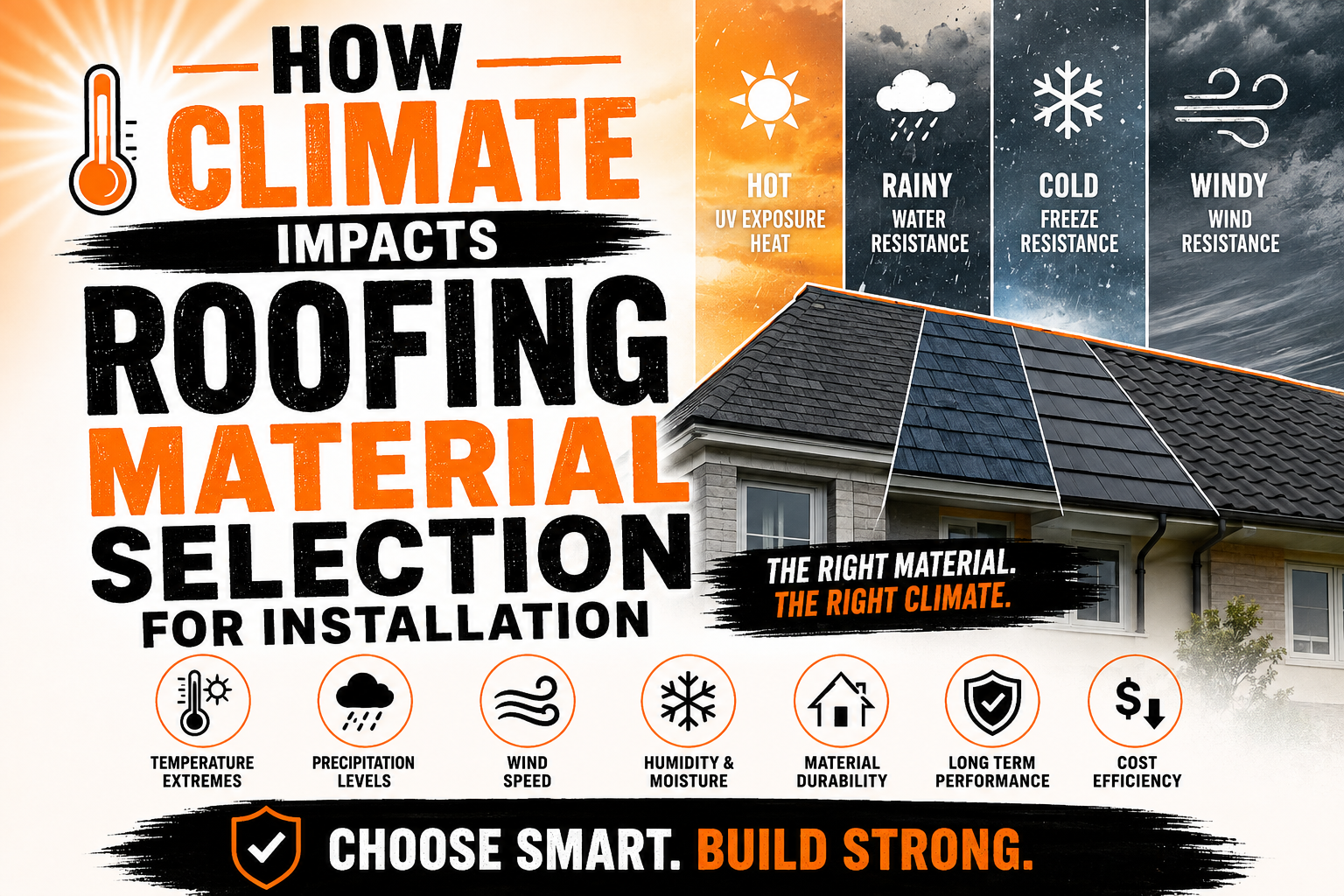
How Climate Impacts Roofing Material Selection for Installation
Introduction
Choosing the right roofing material is one of the most important decisions during any roof installation project. While appearance, budget, and durability are often major considerations, climate is equally important. A roofing system that performs exceptionally well in one region may experience frequent problems in another because weather conditions place different demands on roofing materials throughout the year.
Every roof is exposed to the environment every day. Intense sunlight, heavy rainfall, freezing temperatures, high winds, humidity, and snow all affect roofing materials differently. These environmental conditions influence not only the lifespan of the roof but also its energy efficiency, maintenance requirements, and long-term performance. Selecting a roofing material without considering the local climate can result in premature wear, costly repairs, and reduced protection for the building.
Modern roofing products are designed to perform under specific environmental conditions. Manufacturers test roofing materials for wind resistance, fire resistance, impact resistance, ultraviolet exposure, and moisture protection. Understanding these performance characteristics helps property owners choose materials that match the weather patterns common in their area.
Climate also affects the installation process itself. Contractors may use different underlayments, fastening systems, ventilation designs, and waterproofing techniques depending on the environmental challenges the roof is expected to face. These installation decisions play an essential role in ensuring that the roofing system performs as intended over its entire lifespan.
This guide explains how climate influences roofing material selection and installation. It explores the effects of different weather conditions, compares roofing materials for various climates, and highlights the factors property owners should evaluate before beginning a roofing project. By understanding the relationship between climate and roofing performance, you can make a more informed decision that protects your investment for many years.
Why Climate Matters in Roofing Material Selection
Climate affects every aspect of a roof’s performance from the day it is installed. Unlike many building components that remain protected inside the structure, the roof continuously faces changing environmental conditions throughout every season.
A roof installed in a hot desert environment experiences different challenges than one located in a region with heavy snowfall. Similarly, coastal buildings face salt exposure and strong winds, while humid climates create conditions that encourage moisture-related problems. Because of these differences, selecting roofing materials based solely on appearance or price may lead to disappointing results.
Roofing materials respond differently to environmental stress. Some materials expand significantly during high temperatures, while others remain relatively stable. Certain roofing systems resist moisture exceptionally well, whereas others perform better under prolonged sunlight or freezing conditions.
The climate also influences how quickly roofing materials age. Constant ultraviolet exposure may gradually weaken some roofing products, while repeated freezing and thawing cycles create stress that affects others. Choosing materials specifically designed for local conditions helps maximize roof lifespan and reduce maintenance costs.
Another important consideration is energy efficiency. Roofing materials influence how much heat enters or escapes a building. In warmer climates, reflective roofing products help reduce cooling costs, while colder regions often benefit from roofing systems that support effective insulation and snow management.
Professional roofing contractors evaluate climate carefully before recommending materials. They consider not only average temperatures but also seasonal weather patterns, rainfall intensity, humidity levels, wind exposure, and the likelihood of severe weather events.
Selecting climate-appropriate roofing materials provides several long-term advantages:
- Improved durability
- Better energy efficiency
- Lower maintenance requirements
- Greater weather resistance
- Longer service life
- Enhanced indoor comfort
- Reduced repair expenses
- Better overall property protection
These benefits demonstrate why climate should always be one of the primary factors influencing roofing decisions.
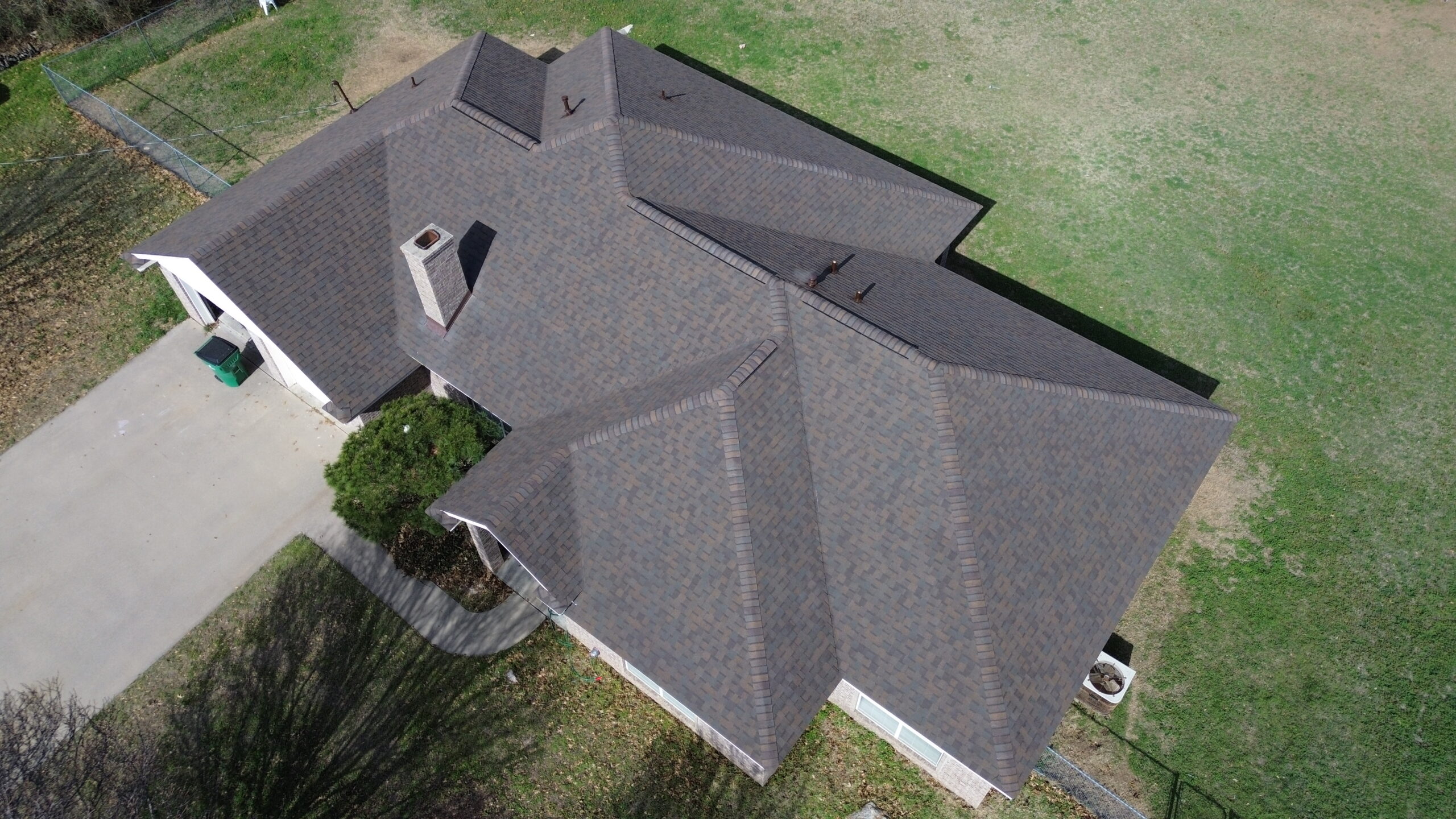
Understanding How Weather Affects Roof Performance
Weather continuously affects roofing materials through physical and environmental forces. Some effects occur gradually over many years, while others result from sudden storms or extreme seasonal conditions.
Sunlight is one of the most consistent environmental influences. Ultraviolet radiation slowly breaks down many roofing materials, causing fading, surface deterioration, and reduced flexibility over time. Modern roofing products include protective coatings and additives that improve resistance, but prolonged exposure still contributes to natural aging.
Heat also affects roofing systems through expansion and contraction. During the day, roofing materials absorb solar energy and expand. As temperatures drop at night, the materials contract. Repeating this cycle thousands of times throughout the roof’s lifespan creates stress on seams, fasteners, flashing, and joints.
Moisture presents another major challenge. Rainwater tests every waterproof component of the roofing system, including shingles, membranes, flashing, underlayment, and drainage systems. Even small installation defects may eventually allow water infiltration if moisture repeatedly reaches vulnerable areas.
Cold weather creates different challenges. Snow adds significant weight to the roof structure, while ice formation increases pressure around roof edges and drainage systems. Repeated freeze-thaw cycles may also widen small cracks or openings that develop naturally over time.
Wind subjects roofing materials to lifting forces that test attachment systems and fastening methods. High winds can loosen shingles, damage flashing, or carry debris that impacts the roof surface. Roofing systems designed for storm-prone regions often include enhanced fastening requirements to improve wind resistance.
Humidity influences roofing performance by increasing moisture levels throughout the roofing assembly. Excess moisture may encourage mold growth, reduce insulation effectiveness, and accelerate deterioration if ventilation is inadequate.
These weather-related factors rarely operate independently. Most roofs experience several environmental challenges simultaneously, making comprehensive material selection essential for long-term performance.
Key Climate Factors That Influence Roofing Choices
Climate consists of more than temperature alone. Several environmental conditions work together to determine how well a roofing material will perform throughout its service life.
Understanding these factors allows property owners to evaluate roofing products more effectively before installation begins.
Temperature Extremes
Regions experiencing very high or very low temperatures require roofing materials capable of handling thermal movement without cracking, warping, or becoming brittle.
Materials with good flexibility generally tolerate repeated expansion and contraction better than rigid alternatives. Manufacturers often publish performance ratings that indicate how roofing products respond to changing temperatures.
Solar Radiation
Strong sunlight exposes roofing materials to continuous ultraviolet radiation. Roofs in sunny climates require products with high UV resistance to minimize fading and material degradation.
Reflective roofing materials also help reduce roof surface temperatures by reflecting sunlight instead of absorbing it.
Rainfall
Heavy rainfall increases the importance of waterproofing and drainage. Roofing materials should shed water efficiently while maintaining watertight seals around penetrations, valleys, and roof edges.
Installation quality becomes especially important in rainy regions because flashing and underlayment must provide dependable long-term protection.
Snow and Ice
Cold climates require roofing systems capable of supporting accumulated snow while managing ice formation safely.
Proper roof slope, ventilation, insulation, and waterproof underlayments all contribute to better performance under winter conditions.
Wind Exposure
High winds create uplift forces that challenge roofing attachment systems. Roofing products selected for windy regions often feature enhanced fastening methods and higher wind resistance ratings.
The roof’s shape also influences wind performance because complex roof designs may experience different pressure patterns during storms.
Humidity
High humidity increases the likelihood of condensation within roofing assemblies.
Proper attic ventilation and moisture management become particularly important in humid climates to protect both roofing materials and structural components.
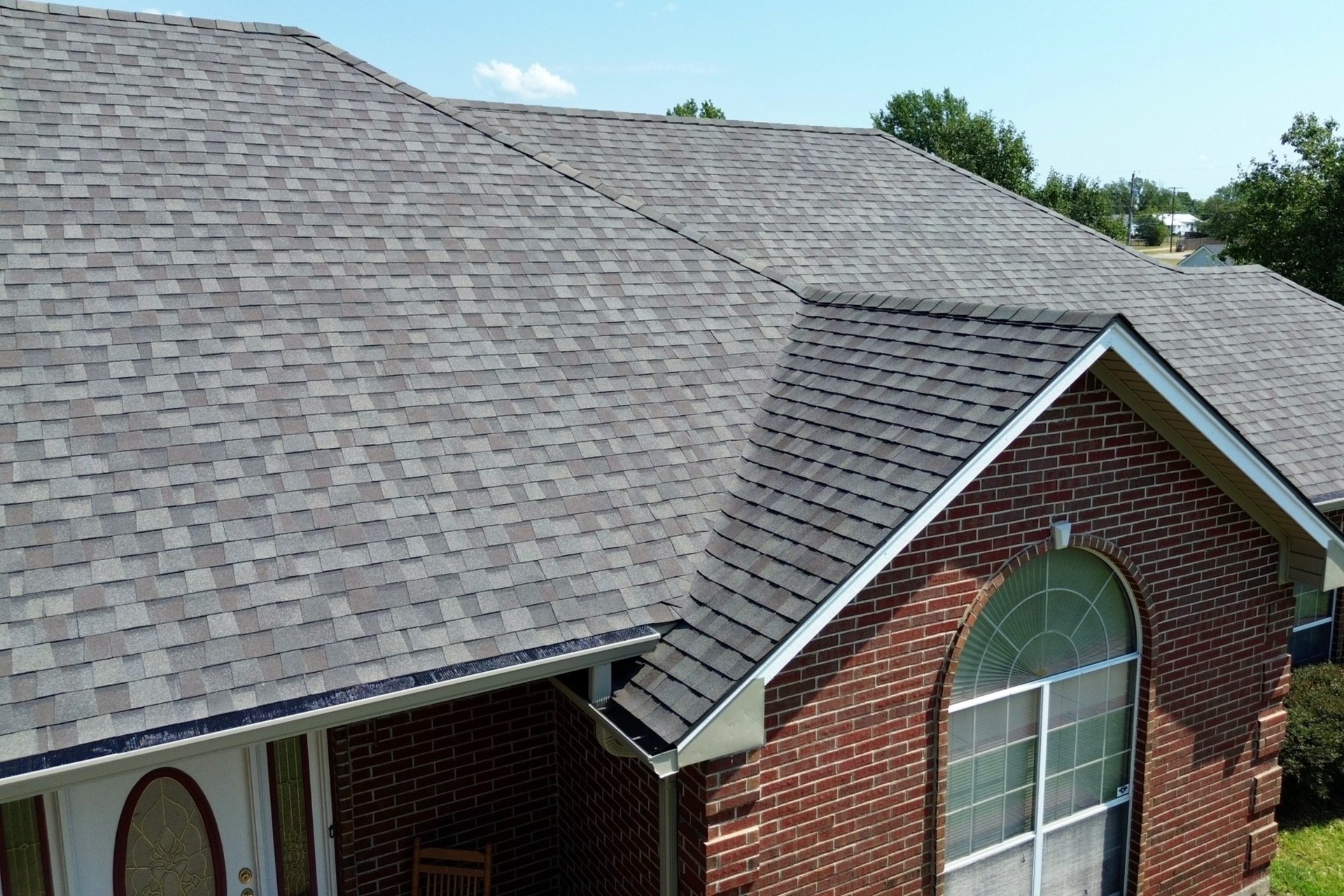
Roofing Materials for Hot and Sunny Climates
Hot climates expose roofing systems to intense sunlight, prolonged ultraviolet radiation, and high surface temperatures. These conditions gradually affect roofing materials while increasing indoor cooling demands.
Selecting heat-resistant roofing materials helps improve both durability and energy efficiency.
Metal Roofing
Metal roofing performs exceptionally well in warm climates because many systems include reflective coatings that reduce solar heat absorption.
Rather than storing large amounts of heat, reflective metal panels help lower roof temperatures during sunny weather. This reduces the amount of heat transferred into the building while improving overall energy efficiency.
Metal roofing also resists ultraviolet damage effectively, making it suitable for regions experiencing year-round sunshine.
Clay Tile Roofing
Clay tiles have been used successfully in hot climates for centuries. Their natural composition resists heat while creating an air space beneath the tiles that improves ventilation.
This natural airflow helps reduce heat transfer into the building, contributing to more comfortable indoor temperatures during summer months.
Clay tiles also maintain their appearance well because prolonged sunlight causes very little fading compared to some other roofing materials.
Concrete Tile Roofing
Concrete tiles provide many of the same thermal benefits as clay tiles while offering excellent durability under intense sunlight.
Their density helps moderate temperature fluctuations, reducing the effects of daily heating and cooling cycles.
Proper installation remains essential because the weight of concrete tiles requires adequate structural support.
Reflective Asphalt Shingles
Traditional dark asphalt shingles absorb considerable solar heat, but manufacturers now produce reflective versions designed specifically for warmer climates.
These shingles incorporate specialized granules that reflect more sunlight while maintaining the familiar appearance many homeowners prefer.
Although reflective asphalt products may not match the cooling performance of metal roofing, they provide an affordable option for improving energy efficiency.
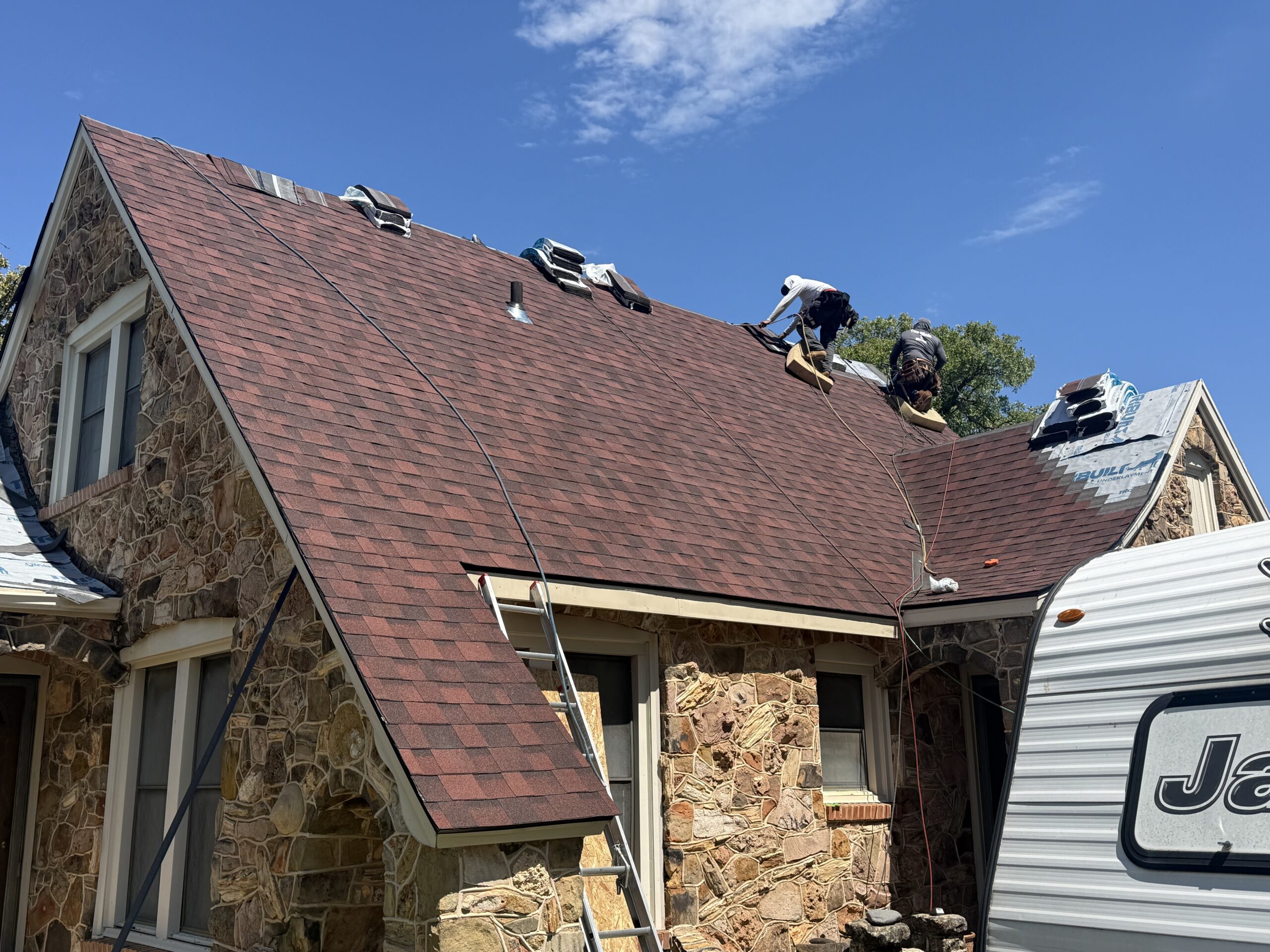
Roofing Materials for Cold and Snowy Regions
Cold climates present very different challenges from hot environments. Roofing systems must support snow loads, manage ice formation, resist freezing temperatures, and protect against repeated freeze-thaw cycles.
Selecting materials designed for winter conditions helps prevent structural stress while maintaining reliable waterproof protection.
Asphalt Shingles
High-quality asphalt shingles remain one of the most common roofing choices in cold climates.
Modern shingles provide dependable weather resistance while accommodating moderate thermal movement caused by changing temperatures. When combined with proper underlayment and attic ventilation, asphalt roofing performs well under typical winter conditions.
Ice and water barriers installed along roof edges and valleys provide additional protection against water infiltration caused by melting snow.
Metal Roofing
Metal roofing offers several important advantages in snowy regions.
Its smooth surface encourages accumulated snow to slide away naturally rather than remaining on the roof for extended periods. This reduces structural loading while helping prevent excessive snow accumulation.
Metal roofing also withstands freezing temperatures without becoming brittle, making it suitable for climates experiencing prolonged winters.
Slate Roofing
Natural slate provides exceptional durability under cold weather conditions.
Its dense composition resists moisture absorption while maintaining excellent resistance to freezing temperatures. Properly installed slate roofs often remain functional for many decades despite repeated exposure to snow and ice.
Because slate is heavy, structural evaluation remains necessary before installation.
Composite Roofing Products
Modern composite roofing materials continue to gain popularity in colder climates.
Many engineered products combine lightweight construction with improved impact resistance and flexibility. These characteristics help reduce cracking while providing dependable weather protection during seasonal temperature changes.
Regardless of the roofing material selected, successful cold-climate installation depends on more than the surface covering alone. Proper insulation, ventilation, drainage, flashing installation, and moisture protection all work together to create a roofing system capable of handling winter weather effectively.
Roofing Materials for Rainy and Humid Climates
Regions that experience frequent rainfall and high humidity place unique demands on roofing systems. In these environments, moisture becomes the primary concern rather than extreme heat or heavy snowfall. Roofing materials must prevent water infiltration, resist mold and algae growth, and maintain their structural integrity despite constant exposure to damp conditions.
A roof in a rainy climate may remain wet for long periods after storms. This prolonged moisture exposure increases the importance of proper installation because even small weaknesses around flashing, valleys, or roof penetrations can eventually allow water to enter the building. Selecting moisture-resistant materials and ensuring professional installation significantly improve long-term performance.
Humidity creates additional challenges that are not always visible from the outside. Moist air can become trapped beneath the roofing system if ventilation is inadequate. Over time, this moisture may reduce insulation efficiency, encourage mold growth, and contribute to wood rot within the roof structure.
Modern roofing systems address these concerns through a combination of durable materials, waterproof underlayments, effective ventilation, and well-designed drainage systems. Property owners should evaluate all of these components rather than focusing only on the visible roofing material.
Metal Roofing in Wet Climates
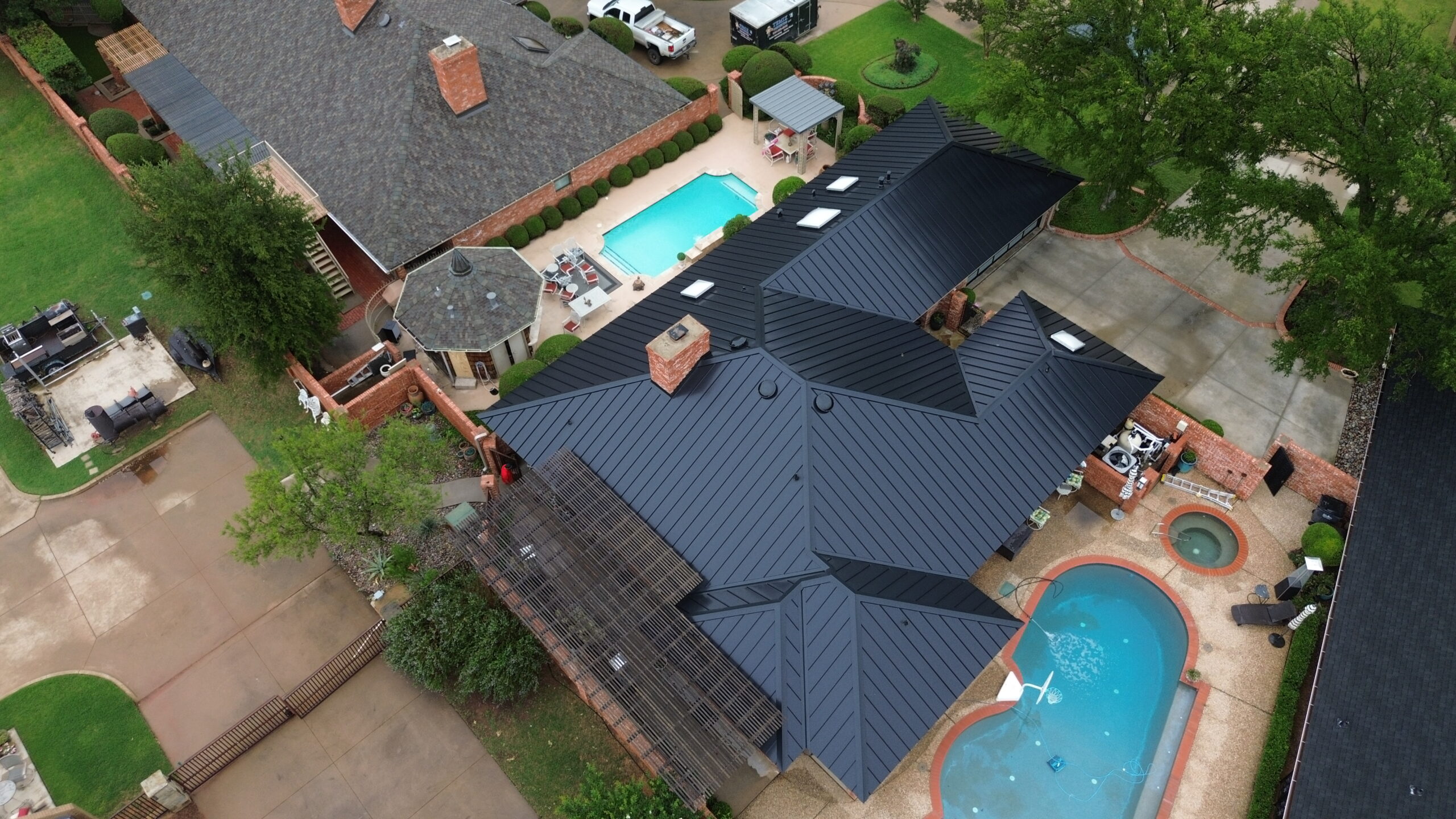
Metal roofing performs well in rainy regions because its smooth surface allows water to drain quickly. Properly installed panels create a continuous protective barrier that reduces the number of exposed seams where moisture could enter.
Corrosion-resistant coatings are particularly valuable in areas with frequent rainfall. Galvanized steel, aluminum, and coated metal roofing systems provide dependable protection while requiring relatively little maintenance.
Standing seam metal roofs offer another advantage because concealed fasteners reduce the number of exposed attachment points. This design improves waterproofing while minimizing opportunities for leaks.
Asphalt Shingles in Humid Regions
Asphalt shingles remain a practical option for many humid climates when quality products are selected. Modern shingles often include algae-resistant granules that help reduce staining caused by moisture-loving organisms.
Proper attic ventilation is especially important beneath asphalt roofing. Good airflow removes excess moisture before it accumulates within the roofing assembly, helping extend both roof and insulation life.
Routine maintenance should include cleaning leaves and debris from valleys and gutters. Moisture trapped beneath accumulated debris can shorten the lifespan of roofing materials if ignored for long periods.
Tile Roofing in Rainy Areas
Clay and concrete tiles also perform well in wet climates because they naturally resist water damage. Their overlapping design directs rainfall toward the roof edge while protecting the underlayment beneath.
Although the tiles themselves are highly durable, the waterproof underlayment remains an essential component. Contractors should install high-quality moisture barriers to provide reliable secondary protection throughout the roof’s lifespan.
Regular inspections remain important because cracked or displaced tiles may allow water to reach the underlayment more easily during prolonged storms.
Roofing Materials for Coastal Areas
Coastal environments combine several environmental challenges into one location. Salt carried by ocean air, strong winds, high humidity, and intense sunlight all influence roofing performance. Materials selected for inland regions may not always perform as well near the coast.
Salt exposure gradually affects certain roofing components, particularly untreated metal fasteners and flashing. Corrosion-resistant materials help reduce deterioration while extending roof lifespan.
Wind resistance is another major consideration because coastal storms often produce stronger gusts than inland weather systems. Roofing materials should be installed according to local wind-load requirements to improve long-term performance.
Aluminum Roofing
Aluminum roofing is one of the most popular choices for coastal properties because it naturally resists corrosion. Unlike some other metals, aluminum develops a protective oxide layer that helps prevent further deterioration.
Its lightweight construction also reduces structural loading while providing excellent resistance to harsh coastal conditions.
Galvanized and Coated Steel
Modern galvanized steel roofing includes protective coatings that significantly improve corrosion resistance. High-quality finishes help shield the underlying metal from salt exposure while maintaining an attractive appearance.
Regular inspections remain important because scratches or damaged coatings may expose bare metal over time.
Clay and Concrete Tiles
Tile roofing also performs exceptionally well in coastal climates. Clay and concrete naturally resist salt exposure while maintaining their appearance despite constant sunlight and humidity.
Because coastal regions often experience strong winds, proper fastening methods become especially important during installation.
Composite Roofing Products
Engineered composite roofing materials continue gaining popularity in coastal regions because they combine lightweight construction with excellent weather resistance.
Many composite products resist moisture, ultraviolet radiation, and salt exposure while requiring relatively little maintenance.
Regardless of the roofing material selected, stainless steel fasteners and corrosion-resistant flashing should be used whenever possible to improve long-term durability in coastal environments.
Roofing Materials for High Wind and Storm-Prone Regions
Storm-prone areas require roofing systems capable of resisting strong winds, heavy rainfall, hail, and flying debris. Material selection alone is not enough. Proper installation techniques play an equally important role in determining how well the roof performs during severe weather.
High winds create uplift forces that attempt to lift roofing materials away from the building. Manufacturers test roofing systems under controlled conditions to establish wind resistance ratings that help contractors select appropriate products.
Roof shape also influences storm performance. Simple roof designs generally experience more uniform wind pressure than highly complex roof structures containing numerous valleys, dormers, or intersecting roof sections.
High-Performance Asphalt Shingles
Modern architectural shingles often include enhanced wind resistance compared to traditional three-tab shingles. Improved adhesive strips and stronger construction help shingles remain attached during severe weather.
Contractors must follow manufacturer fastening requirements carefully because incorrect nail placement can significantly reduce wind performance.
Standing Seam Metal Roofing
Standing seam metal roofing performs exceptionally well in many storm-prone regions.
Interlocking panels and concealed fastening systems reduce opportunities for wind uplift while creating strong, continuous roof surfaces. Proper installation remains essential because panel alignment and fastening directly influence storm resistance.
Concrete and Clay Tile Systems
Tile roofing can also perform well during storms when installed according to local building codes. Mechanical fasteners, clips, or specialized attachment systems improve resistance against high winds.
Individual tiles damaged by flying debris can often be replaced without removing large sections of the surrounding roof.
Synthetic Roofing Materials
Many modern synthetic roofing products are specifically engineered for impact resistance. These materials often perform well in regions experiencing frequent hailstorms because they absorb impacts more effectively than some traditional roofing materials.
Impact-resistant roofing products may also qualify for insurance incentives in certain locations due to their improved storm performance.
How Climate Influences Installation Methods
Climate affects more than roofing material selection. It also determines how roofing systems are installed. Contractors adjust installation techniques according to local environmental conditions to maximize long-term performance.
In hot climates, reflective underlayments and ventilation systems help reduce heat buildup beneath the roof covering. Proper airflow lowers attic temperatures while improving energy efficiency.
Cold climates require additional waterproof protection near roof edges where ice dams commonly develop. Ice and water shields create extra protection beneath shingles or other roofing materials in these vulnerable areas.
Rainy climates emphasize waterproof flashing and efficient drainage design. Contractors pay particular attention to valleys, chimneys, skylights, plumbing vents, and roof penetrations because these areas experience concentrated water flow.
Coastal regions often require corrosion-resistant fasteners, stainless steel flashing, and stronger attachment systems designed for higher wind loads.
Local building codes frequently specify installation requirements based on regional climate risks. These regulations help ensure roofing systems provide adequate protection against common environmental hazards.
Roof slope also influences installation decisions. Steeper roofs generally shed water and snow more effectively, while low-slope roofs require specialized waterproof membranes and drainage planning.
Material expansion and contraction represent another climate-related consideration. Metal roofing systems require fastening methods that allow controlled thermal movement without damaging panels or creating stress at attachment points.
Professional contractors understand these regional requirements and adjust installation practices accordingly.

The Importance of Ventilation and Insulation in Different Climates
Ventilation and insulation are essential components of every roofing system regardless of climate. Together, they help regulate temperature, control moisture, and improve overall roof performance.
Proper attic ventilation allows warm, moist air to escape before condensation develops within the roofing assembly. Without adequate airflow, trapped moisture may damage insulation, encourage mold growth, and reduce roof lifespan.
In hot climates, ventilation removes excess heat from attic spaces. Lower attic temperatures reduce cooling demands while minimizing thermal stress on roofing materials.
Cold climates benefit from balanced ventilation because it helps maintain consistent roof temperatures. Stable temperatures reduce uneven snow melting, lowering the risk of ice dam formation.
Insulation complements ventilation by slowing heat transfer between the building interior and the roof. During summer, insulation helps keep indoor spaces cooler. During winter, it reduces heat loss while improving overall energy efficiency.
The appropriate insulation level depends on local climate conditions. Buildings in colder regions generally require higher insulation values than those located in milder environments.
Moisture-resistant insulation products are especially valuable in humid climates because they maintain thermal performance even when exposed to elevated moisture levels.
Proper installation of insulation remains just as important as selecting the correct product. Gaps, compression, or uneven placement reduce effectiveness while creating opportunities for heat loss or condensation.
Ventilation systems may include ridge vents, soffit vents, gable vents, roof vents, or powered ventilation depending on building design and climate requirements. These components work together to maintain continuous airflow throughout the attic.
Property owners sometimes underestimate the importance of ventilation because it remains hidden beneath the roof covering. However, many roofing warranties require proper attic ventilation as part of the installation process.
When roofing materials, ventilation, insulation, waterproofing, and drainage function together as an integrated system, the roof performs more efficiently and remains protected against climate-related stresses.
Climate-Based Roofing Material Comparison
Choosing a roofing material becomes much easier when its strengths are compared against the climate in which it will be installed. While no roofing material performs perfectly in every environment, understanding the advantages of each option helps property owners select a system that offers the best balance of durability, energy efficiency, and maintenance requirements.
The following comparison provides a general overview of how common roofing materials perform under different climate conditions.
| Roofing Material | Hot Climates | Cold Climates | Rainy & Humid Areas | Coastal Areas | High Wind Regions | Overall Lifespan |
|---|---|---|---|---|---|---|
| Asphalt Shingles | Good | Very Good | Good | Moderate | Good | 20 to 30 years |
| Metal Roofing | Excellent | Excellent | Excellent | Excellent | Excellent | 40 to 70 years |
| Clay Tile | Excellent | Moderate | Very Good | Excellent | Very Good | 50 to 100 years |
| Concrete Tile | Very Good | Good | Very Good | Very Good | Very Good | 40 to 75 years |
| Composite Roofing | Very Good | Very Good | Excellent | Very Good | Excellent | 30 to 50 years |
| Slate Roofing | Good | Excellent | Excellent | Good | Very Good | 75 to 100+ years |
This table provides general guidance rather than absolute rules. Installation quality, building design, ventilation, insulation, and maintenance all influence actual roof performance.
A material that performs well in one climate may require additional installation features in another. For example, asphalt shingles may perform successfully in snowy regions when combined with proper attic ventilation and ice barrier membranes. Likewise, metal roofing installed in coastal environments should include corrosion-resistant coatings and stainless steel fasteners to maximize durability.
Property owners should use comparison tables as one part of the decision-making process rather than relying on them as the only source of information.
How to Choose the Right Roofing Material for Your Location
Every roofing project begins with understanding the local environment. Climate affects roofing systems every day, making it one of the most important considerations before installation begins.
Property owners should first identify the weather conditions their roof will experience throughout the year. Some regions receive intense sunshine for most of the year, while others experience heavy rainfall, strong winds, freezing winters, or seasonal storms. Selecting materials designed for these conditions reduces the likelihood of premature wear.
The age and structure of the building should also be evaluated before choosing a roofing material. Heavy roofing products such as clay or concrete tiles may require additional structural support, while lightweight materials like asphalt shingles or metal panels generally place less stress on the building.
Budget remains an important consideration, but it should be viewed from both short-term and long-term perspectives. A lower installation cost may appear attractive initially, yet a roofing system with a longer lifespan and fewer maintenance requirements often provides better overall value.
Energy efficiency should also influence material selection. In warmer climates, reflective roofing systems help reduce cooling expenses by lowering roof surface temperatures. In colder regions, roofing systems that support effective insulation contribute to lower heating costs.
Property owners should consult experienced roofing contractors familiar with local climate conditions. Contractors understand regional weather patterns, building code requirements, and installation techniques that improve long-term roof performance.
Choosing the most appropriate roofing material usually involves balancing several factors rather than focusing on only one feature.
Important considerations include:
- Local weather conditions throughout the year.
- Building structure and load capacity.
- Expected lifespan of the roofing system.
- Initial installation budget.
- Long-term maintenance expectations.
- Energy efficiency goals.
- Architectural style of the property.
- Local building code requirements.
Evaluating each of these factors helps property owners select roofing materials that provide dependable performance while meeting both practical and financial objectives.
The Role of Professional Installation in Different Climates
Even the highest-quality roofing material cannot perform as intended if installation is completed incorrectly. Climate-specific installation techniques play a major role in determining whether the roof achieves its expected lifespan.
Professional roofing contractors understand that installation methods vary according to regional weather conditions. A roof installed in a snowy climate requires different waterproofing details than one installed in a hot desert environment. Similarly, coastal regions often demand stronger fastening systems and corrosion-resistant components than inland locations.
Underlayment selection is one example of climate-specific installation. Water-resistant underlayments help protect roofs in rainy regions, while ice barrier membranes provide additional protection against melting snow in colder climates.
Fastening systems also vary depending on environmental conditions. High-wind regions often require additional fasteners or different fastening patterns to improve uplift resistance during severe storms.
Ventilation design changes according to climate as well. Warm climates benefit from increased attic airflow to reduce heat buildup, while colder climates require balanced ventilation that helps control moisture without increasing heat loss.
Professional contractors also understand the importance of flashing installation around roof penetrations. Chimneys, skylights, plumbing vents, roof valleys, and wall intersections all require careful waterproofing because these locations experience concentrated water flow.
Manufacturer warranties frequently require installation according to published specifications. Hiring qualified roofing professionals helps ensure warranty compliance while maximizing long-term roof performance.
Common Mistakes to Avoid When Selecting Roofing Materials
Choosing roofing materials without considering climate often leads to unnecessary maintenance, reduced durability, and higher ownership costs. Understanding common mistakes helps property owners avoid expensive decisions.
Choosing Based Only on Price
Many people naturally compare roofing materials according to installation cost. While budget is important, selecting the least expensive material without considering durability may increase long-term expenses.
A roof with a longer lifespan and fewer repair requirements often provides greater value over several decades.
Ignoring Local Climate Conditions
A roofing material performing well in one region may not provide the same results elsewhere.
Property owners should always evaluate local temperatures, rainfall, humidity, snowfall, wind exposure, and seasonal weather before making a final decision.
Overlooking Structural Requirements
Heavy roofing systems require adequate structural support.
Installing clay or concrete tiles on buildings not designed for their weight may create structural concerns unless reinforcement is completed before installation.
Hiring Inexperienced Contractors
Roof installation requires specialized knowledge that varies according to roofing material.
Contractors experienced with asphalt shingles may require additional training before installing standing seam metal roofing or clay tile systems.
Selecting experienced professionals improves workmanship while reducing installation errors.
Neglecting Ventilation
Some property owners focus entirely on roofing materials while overlooking attic ventilation.
Poor ventilation may trap moisture, reduce insulation performance, increase attic temperatures, and shorten roof lifespan regardless of the roofing material selected.
Ignoring Maintenance Requirements
Every roofing system requires periodic inspections.
Assuming that a roof is completely maintenance free often allows small problems to develop into expensive repairs over time.
Long-Term Value Versus Initial Investment
Roofing decisions should always consider total ownership costs rather than installation expenses alone. Initial price represents only one portion of the roof’s overall value.
A lower-cost roofing material may require earlier replacement, more frequent repairs, or higher energy expenses during its lifespan. In contrast, premium roofing systems often provide lower maintenance costs while remaining functional for many additional years.
Metal roofing offers a good example of this principle. Although installation costs are generally higher than asphalt shingles, the longer lifespan, lower maintenance requirements, and energy savings frequently offset the additional investment over time.
Tile roofing presents a similar situation. Initial installation costs may be substantial due to both material price and structural requirements. However, its exceptional longevity often allows property owners to avoid multiple replacement cycles experienced with shorter-lived roofing systems.
Property owners planning to remain in their homes for many years often benefit from evaluating roofing materials according to lifetime value rather than purchase price alone.
Frequently Asked Questions
Which roofing material performs best in extremely hot climates?
Metal roofing with reflective coatings and clay tile roofing are among the best choices for hot climates. Both materials reduce heat absorption while maintaining excellent durability under prolonged sunlight.
What roofing material is recommended for areas with heavy snowfall?
Metal roofing performs particularly well because its smooth surface encourages snow to slide away naturally. High-quality asphalt shingles and slate roofing also perform effectively when installed with proper insulation and ventilation.
Is asphalt roofing suitable for humid climates?
Yes. Modern asphalt shingles perform well in humid regions when combined with quality underlayments, proper ventilation, and routine maintenance. Algae-resistant shingles provide additional protection against staining caused by moisture.
Which roofing material requires the least maintenance?
Metal roofing and tile roofing generally require less routine maintenance than asphalt shingles. However, all roofing systems benefit from regular inspections and prompt repairs when needed.
Does climate affect roof installation costs?
Yes. Regions experiencing severe weather may require specialized underlayments, stronger fastening systems, additional waterproofing, or structural improvements that increase installation costs.
Can one roofing material work well in every climate?
No roofing material is perfect for every environment. The most appropriate choice depends on local weather conditions, building design, maintenance preferences, and budget.
Why is ventilation important regardless of climate?
Ventilation controls heat and moisture within the roofing system. Proper airflow improves energy efficiency, protects insulation, reduces condensation, and extends the lifespan of roofing materials in both hot and cold climates.
Conclusion
Climate plays a central role in every successful roofing installation. While appearance, cost, and material preference are important considerations, long-term roof performance depends heavily on how well the roofing system matches the environmental conditions it will face throughout its lifespan.
Hot climates demand roofing materials that resist ultraviolet radiation and reduce heat absorption. Cold regions require systems capable of handling snow loads, freezing temperatures, and repeated freeze-thaw cycles. Rainy and humid environments emphasize moisture resistance, drainage, and ventilation, while coastal areas call for corrosion-resistant materials capable of withstanding salt exposure and strong winds. Storm-prone regions benefit from roofing systems engineered for enhanced wind resistance and impact protection.
Material selection alone, however, does not guarantee long-term performance. Professional installation remains equally important because climate-specific techniques ensure that underlayments, flashing, ventilation, fastening systems, and drainage components work together as a complete roofing system. Even premium materials can fail prematurely if they are installed without considering local environmental conditions.
Routine maintenance further protects the investment by identifying small concerns before they develop into significant problems. Regular inspections, debris removal, drainage maintenance, and timely repairs allow roofing systems to perform as intended while extending their service life.
Ultimately, the best roofing material is not simply the strongest or the most expensive option. It is the material that aligns with the property’s climate, structural requirements, energy efficiency goals, maintenance expectations, and long-term ownership plans. By carefully evaluating these factors and working with experienced roofing professionals, property owners can select a roofing system that provides dependable protection, improved energy performance, and lasting value for many years to come.