
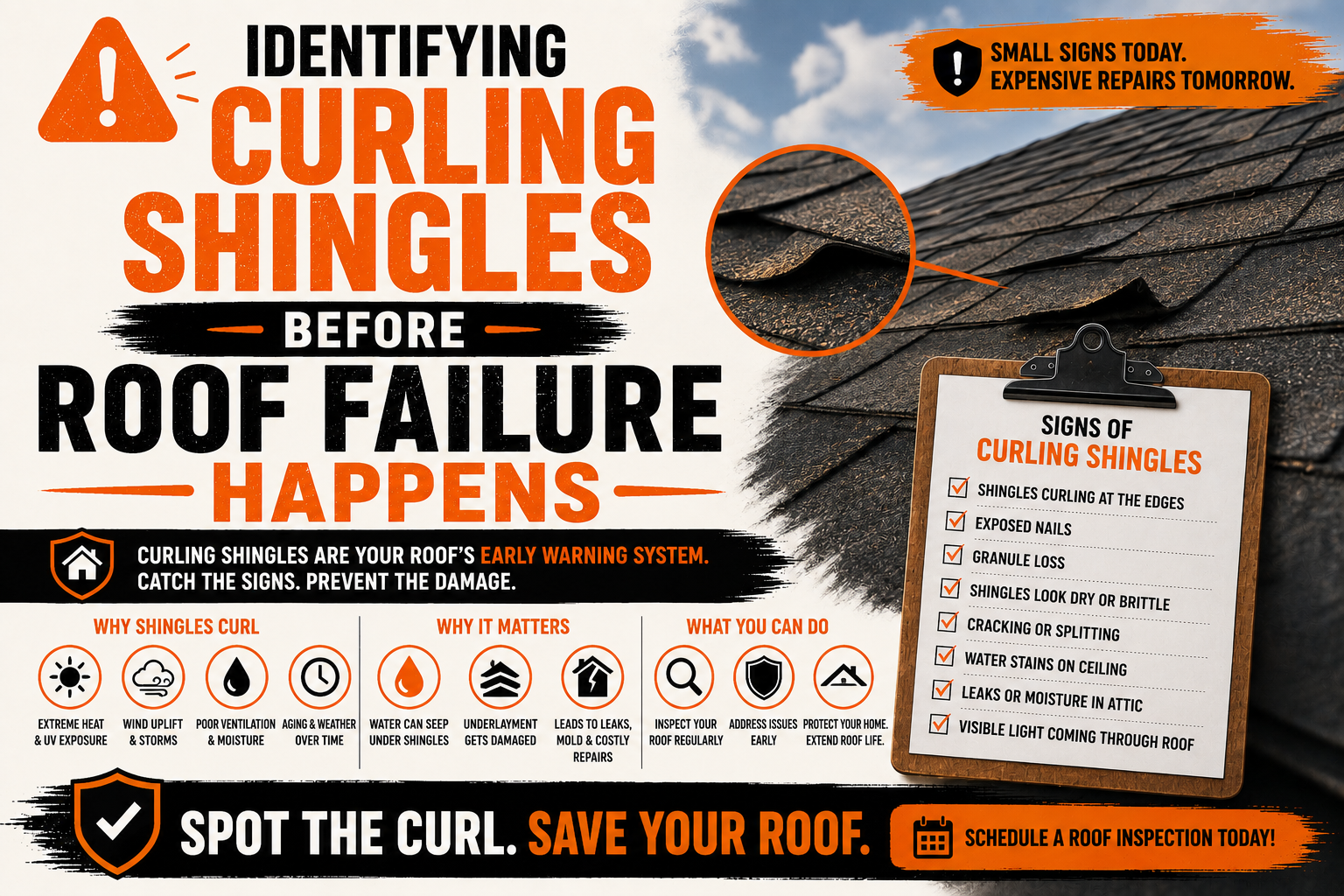
Identifying Curling Shingles Before Roof Failure Happens
Introduction
A roof rarely fails without warning. In many cases, one of the earliest and most noticeable signs of deterioration is the appearance of curling asphalt shingles. While curling may seem like a minor cosmetic issue from the ground, it often indicates that the roofing system is beginning to lose its ability to protect the home from weather, moisture, and temperature extremes.
Curling shingles develop gradually as roofing materials age and respond to years of environmental exposure. The process usually starts with subtle lifting along the edges or corners of individual shingles before becoming more widespread across larger sections of the roof. By the time the curling is easily visible from the ground, the roof may already be experiencing reduced weather resistance.
Many homeowners make the mistake of assuming that curling shingles simply reflect the natural aging of the roof and do not require immediate attention. Although aging is certainly a major factor, curling often signals changes taking place beneath the roofing surface. Adhesive bonds weaken, protective granules wear away, moisture may begin reaching vulnerable layers, and the roof becomes increasingly susceptible to wind damage and water intrusion.
The condition of individual shingles also affects the performance of the roofing system as a whole. Asphalt shingles are designed to overlap tightly, creating a continuous barrier that directs rainwater safely toward the gutters. Once shingles begin lifting away from the roof surface, that protective barrier becomes less effective, increasing the likelihood of future leaks.
Recognizing curling shingles early gives homeowners an opportunity to address roofing problems before widespread structural damage occurs. Depending on the cause and severity, timely repairs may extend the roof’s service life and reduce the need for costly emergency restoration. Delaying inspections, however, often allows deterioration to spread until replacement becomes the only practical solution.
This guide explores why shingles curl, how to identify the earliest warning signs, the different forms curling can take, and why these changes should never be ignored. Understanding these indicators helps homeowners make informed maintenance decisions while protecting both the roof and the structure beneath it.
Why Curling Shingles Are an Early Warning Sign
Curling shingles are more than an indication that a roof is getting older. They often reveal that the roofing materials are beginning to lose the physical properties required to withstand changing weather conditions. The shape of a shingle is carefully designed to maintain contact with the roof surface, and any change in that shape reduces its effectiveness.
One reason curling is such an important warning sign is that it develops gradually. Unlike storm damage, which may remove shingles suddenly, curling usually progresses over several months or years. This slow process provides homeowners with valuable time to identify problems before complete roof failure occurs.
As shingles begin lifting along their edges, wind gains easier access beneath the roofing material. Even moderate wind gusts create additional stress on weakened shingles, increasing the likelihood that they will lift further or eventually detach from the roof.
Curling also changes how rainwater flows across the roof. Instead of moving smoothly over tightly sealed shingles, water may collect around raised edges or be driven beneath overlapping courses during storms. This increases the possibility of hidden moisture reaching the underlayment and roof decking.
Sunlight contributes to the problem as well. Curled shingles expose portions of the asphalt that would normally remain protected by overlapping layers. Increased ultraviolet exposure accelerates aging, dries out the asphalt, and weakens the shingle even further.
The condition often spreads gradually rather than remaining isolated. A few curled shingles may initially appear in one section of the roof, but similar deterioration usually develops across nearby areas as roofing materials continue aging under the same environmental conditions.
Roofing professionals frequently view curling as an indicator that additional inspection is necessary. Although not every curled shingle requires immediate roof replacement, widespread curling often signals that the roof has entered a stage where ongoing deterioration will become increasingly difficult to prevent.
Recognizing curling as an early warning rather than a cosmetic defect allows homeowners to make more informed decisions about inspections, repairs, and long-term roof planning.
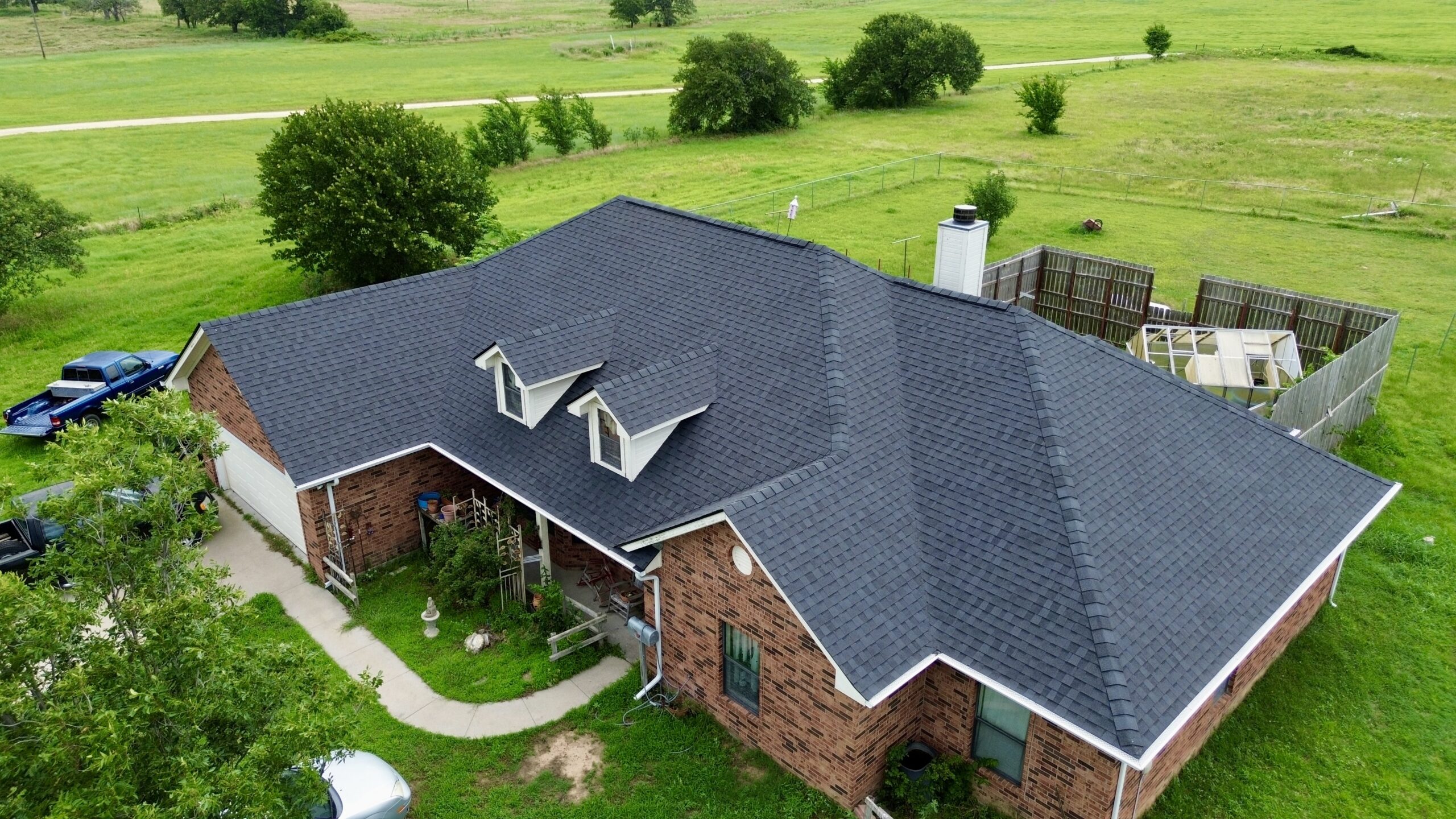
What Causes Asphalt Shingles to Curl
Several factors contribute to curling shingles, and the condition is often the result of multiple influences rather than a single cause. Understanding these factors helps homeowners determine whether the problem is limited to a specific area or reflects broader roof deterioration.
Natural aging remains one of the most common causes. Asphalt shingles gradually lose flexibility after years of exposure to sunlight, rain, changing temperatures, and seasonal weather. As the asphalt becomes more brittle, shingles are less able to maintain their original flat shape.
Ultraviolet radiation plays a major role in this aging process. Constant sunlight slowly dries the asphalt binder that holds the shingle together. As moisture evaporates from the material, flexibility decreases and curling becomes more likely.
Temperature fluctuations also place continuous stress on roofing materials. Shingles expand during hot weather and contract when temperatures fall. Thousands of these expansion and contraction cycles over many years gradually weaken the internal structure of the shingles.
Poor attic ventilation can accelerate the process. Excessive heat trapped beneath the roof raises shingle temperatures beyond normal operating conditions, speeding up asphalt aging and reducing the lifespan of adhesive components.
Moisture is another important contributor. Water entering beneath shingles due to small roof leaks or poor ventilation may affect the roof deck, causing slight movement that influences how shingles rest on the surface. Persistent moisture can also weaken adhesive bonds between overlapping shingles.
Improper installation occasionally contributes to premature curling. Incorrect nail placement, poor alignment, inadequate fastening, or failure to follow manufacturer installation guidelines may prevent shingles from lying flat throughout their service life.
Manufacturing quality also affects long-term performance. While modern asphalt shingles undergo extensive testing, lower-quality materials or older manufacturing standards may result in products that age more rapidly under challenging environmental conditions.
Roof slope influences weather exposure as well. Steeper roofs often experience stronger wind forces, while low-slope sections may retain moisture for longer periods. These environmental differences affect how quickly shingles begin showing signs of curling.
Environmental pollution, airborne debris, and nearby vegetation may also contribute to faster aging. Roofs located beneath large trees often remain damp longer after rainfall, while debris accumulation can trap moisture against roofing materials.
Because multiple factors frequently interact, identifying the exact cause requires evaluating the roof as a complete system rather than focusing only on the visible curling.
The Different Types of Shingle Curling
Not all curling shingles look the same. Different patterns of deformation often suggest different underlying causes or stages of deterioration. Learning to distinguish between these forms helps homeowners understand the condition of their roofing system more accurately.
One of the most common forms is edge curling. In this pattern, the long edges of the shingles begin lifting away from the roof surface while the center remains relatively flat. Edge curling usually develops gradually as asphalt loses flexibility with age.
Corner curling affects only one or more corners of individual shingles. This type frequently appears during the earlier stages of deterioration and may initially affect only isolated areas of the roof. Wind exposure often accelerates further lifting once corners separate from the roof surface.
Cupping represents another distinct pattern. Instead of edges lifting upward, the center of the shingle begins sinking while the edges curve slightly upward, creating a shallow bowl-like appearance. Moisture variation and long-term weather exposure commonly contribute to this condition.
Clawing differs from cupping because the lower edges of the shingles bend downward rather than upward. Older asphalt shingles nearing the end of their service life often develop this form of deformation as the material becomes increasingly brittle.
Some roofs display mixed curling patterns where different sections experience different types of deformation. This often occurs because environmental conditions vary across the roof. Areas receiving more sunlight, stronger winds, or greater moisture exposure may age differently than shaded sections.
Localized curling confined to one roof slope may indicate unique environmental conditions or installation issues affecting that particular area. Widespread curling across the entire roof generally suggests overall aging rather than an isolated problem.
Regardless of the specific pattern, curling indicates that shingles are no longer performing exactly as designed. The greater the amount of lifting or distortion, the more vulnerable the roof becomes to weather-related damage. Recognizing curling shingles is only the first step in understanding the overall condition of a roof. Once shingles begin losing their original shape, the deterioration often extends beneath the surface and affects other roofing components. Examining how this progression occurs provides a clearer picture of why early identification is so important.
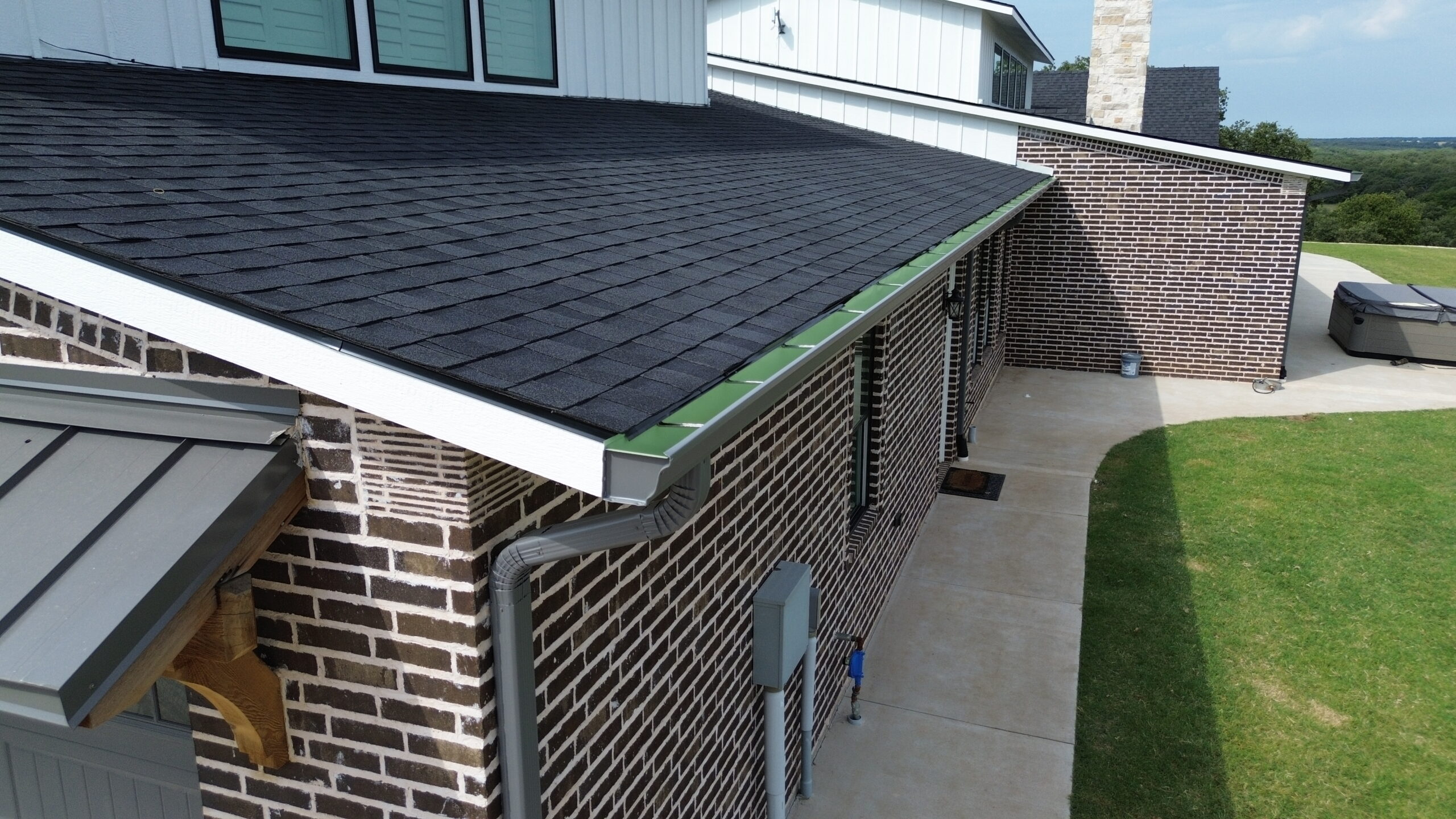
How Curling Shingles Affect Roof Performance
Asphalt shingles rely on their flat, overlapping design to create a continuous barrier against water and wind. Once curling begins, that carefully engineered system becomes less effective, reducing the roof’s ability to protect the home.
Raised shingle edges provide opportunities for wind to reach beneath the roofing material. Instead of flowing smoothly across the roof, moving air lifts weakened shingles more easily during storms. This repeated movement accelerates deterioration and increases the risk of shingle loss.
Water management also changes significantly. Curled shingles disrupt the normal flow of rainwater, creating areas where moisture may collect or penetrate beneath overlapping layers. Wind-driven rain becomes especially problematic because lifted edges expose portions of the roof that normally remain protected.
Adhesive seals between shingles gradually weaken as curling progresses. Once these bonds fail, shingles no longer function as a tightly connected system. Individual shingles become more susceptible to movement, increasing stress on roofing nails and surrounding materials.
The roof’s resistance to temperature changes declines as well. Curled shingles often allow greater air movement beneath the roofing surface, contributing to uneven heating and cooling of the roof assembly. Over time, this may accelerate additional aging throughout the roofing system.
Protective granules also wear away more quickly from curved surfaces. As shingles lift and flex, surface granules loosen more easily, exposing the asphalt beneath to direct ultraviolet radiation. This speeds up weathering and shortens the remaining service life of the shingles.
Even the appearance of the home is affected. Widespread curling creates an uneven roof surface that may reduce curb appeal and raise concerns during property inspections. Potential buyers often recognize curling shingles as an indication that roofing work may soon be necessary.
Although curling usually begins gradually, its effect on roof performance becomes increasingly significant as more shingles lose their original shape.
Early Signs Homeowners Should Watch For
Roof failure rarely begins with missing shingles or major leaks. Instead, several subtle warning signs often appear before curling becomes severe. Identifying these changes early provides valuable time for maintenance or repairs.
One of the earliest indicators is slight lifting along the edges of individual shingles. These changes may only be noticeable during close inspection but often represent the beginning of the curling process.
Uneven shadow lines across the roof can also reveal early deformation. As shingles begin lifting, sunlight creates small shadows that make affected sections appear slightly irregular when viewed from different angles.
Small gaps developing between overlapping shingles deserve careful attention. These openings indicate that shingles are no longer resting flat against one another, reducing their ability to shed water efficiently.
Excessive granule accumulation inside gutters may accompany early curling. Although some granule loss occurs naturally, noticeable increases suggest accelerated surface wear that often develops alongside shingle deformation.
Changes in roof appearance after periods of strong sunlight should also be monitored. Heat may temporarily exaggerate early curling, making subtle lifting easier to identify during inspections.
Inside the home, attic inspections occasionally reveal the earliest consequences of curling shingles. Damp insulation, minor water stains on roof decking, or small areas of moisture following heavy rain may indicate that weather resistance has already begun declining.
Homeowners should also compare different sections of the roof. If one slope shows noticeably more curling than another, environmental conditions or localized roofing issues may be accelerating deterioration in that area.
Routine inspections performed at least twice each year greatly improve the chances of identifying curling during its earliest stages. Early recognition often allows homeowners to plan maintenance strategically rather than facing unexpected roof failure during severe weather.
How Curling Shingles Progress Toward Roof Failure
Curling shingles rarely result in immediate roof failure. Instead, they represent one stage in a gradual process where the roofing system slowly loses its ability to resist weather, protect structural components, and maintain a watertight seal. Understanding this progression helps homeowners recognize when a roof is approaching the point where repairs become more extensive.
The earliest stage usually involves slight lifting along the edges or corners of individual shingles. At this point, the roof may still prevent water intrusion under normal weather conditions. However, the affected shingles have already lost some of their flexibility and no longer lie completely flat against the roof deck.
As weather exposure continues, the lifting becomes more pronounced. Wind repeatedly catches the raised edges, placing additional stress on the shingles and gradually weakening the adhesive strips that bond neighboring shingles together. Each storm contributes to further movement, even if no shingles are blown away.
The next stage involves noticeable distortion across larger roof sections. Instead of isolated curled shingles, entire rows may begin showing similar patterns. This widespread curling indicates that the roofing materials are aging consistently and approaching the later stages of their expected service life.
Once adhesive bonds fail, shingles become increasingly vulnerable to wind uplift. Air can move beneath the roofing material more easily, lifting shingles higher during storms and increasing the chances of cracking or tearing. This repeated movement accelerates the breakdown of the roofing system.
Water intrusion becomes a greater concern as curling worsens. Raised edges create openings where wind-driven rain can reach the underlayment beneath the shingles. Although the underlayment provides temporary protection, it is not designed to serve as the primary weather barrier for long periods.
Eventually, the roof begins showing additional signs of deterioration beyond curling alone. Granule loss increases, shingles become brittle, flashing may separate from surrounding materials, and roof leaks become more likely during heavy rain or strong winds.
The final stage occurs when multiple roofing components begin failing together. Curled shingles, weakened underlayment, deteriorated flashing, and moisture-damaged decking combine to reduce the roof’s overall performance. At this point, localized repairs may no longer provide a long-term solution.
Recognizing these progressive stages allows homeowners to schedule inspections and repairs before widespread roof failure develops. Acting during the earlier stages often extends the roof’s service life while reducing overall repair costs.
Hidden Damage Beneath Curled Shingles
The visible curling seen from outside often represents only a small portion of the problem. Beneath the raised shingles, hidden damage may already be developing within the roofing system. This concealed deterioration is one reason why curling should never be dismissed as purely cosmetic.
One of the first materials affected is the roof underlayment. As shingles lift, rainwater and moisture have more opportunities to reach this protective layer. While underlayment helps prevent immediate leaks, continuous exposure gradually reduces its effectiveness.
Roof decking is particularly vulnerable once moisture bypasses the shingles. Plywood or oriented strand board absorbs water over time, allowing the wood to swell, soften, and lose structural strength. These changes usually occur long before homeowners notice ceiling stains inside the home.
Fasteners also experience additional stress beneath curled shingles. Roofing nails are designed to hold shingles securely against the roof deck, but repeated lifting places constant pressure on the nail holes. Over time, these holes may enlarge, reducing the holding strength of the fasteners.
Adhesive strips hidden beneath overlapping shingles gradually lose their bonding ability as curling progresses. Once these seals fail, neighboring shingles no longer support one another effectively. This increases the likelihood that additional shingles will begin curling or lifting during future storms.
Moisture trapped beneath curled shingles creates another concern. Instead of drying quickly after rainfall, damp areas may remain wet for extended periods because airflow beneath distorted shingles is inconsistent. Prolonged moisture exposure accelerates deterioration throughout the roofing system.
Roof ventilation may also become less effective if widespread curling alters normal airflow across the roof surface. Although ventilation problems alone do not cause curling, they can worsen existing deterioration by increasing heat buildup beneath the roof.
In some cases, hidden mold begins developing on roof decking or structural framing after repeated moisture exposure. Since this growth usually remains concealed within the attic, homeowners may remain unaware until odors or visible stains begin appearing inside the house.
By the time curling becomes widespread, these hidden forms of damage may already require attention. A thorough roof inspection should therefore evaluate both the visible shingles and the underlying roofing components.
Environmental and Installation Factors That Accelerate Curling
While natural aging contributes to every roofing system, certain environmental conditions and installation practices can significantly accelerate shingle curling. Understanding these influences helps homeowners identify risks before extensive damage develops.
Sun exposure remains one of the strongest environmental factors. Roof slopes facing prolonged direct sunlight experience higher surface temperatures for much of the day. Continuous heat gradually dries the asphalt binder, reducing flexibility and increasing the likelihood of curling.
Regions with frequent temperature fluctuations also place additional stress on roofing materials. Daily cycles of heating and cooling cause shingles to expand and contract repeatedly. Over many years, this movement contributes to gradual deformation and loss of structural integrity.
Strong winds indirectly accelerate curling by repeatedly lifting weakened shingle edges. Even if shingles remain attached, constant movement weakens adhesive bonds and increases mechanical stress around roofing nails. Areas exposed to prevailing winds often show deterioration earlier than more sheltered roof sections.
Heavy rainfall contributes by introducing moisture beneath partially lifted shingles. Although modern roofs are designed to shed water efficiently, curled shingles create pathways where wind-driven rain may reach vulnerable roofing layers.
Poor attic ventilation often shortens roof lifespan by increasing attic temperatures during warm weather. Excessive heat beneath the roof accelerates asphalt aging while reducing the effectiveness of adhesive strips that help keep shingles flat.
Inadequate insulation may also contribute indirectly. Uneven roof temperatures caused by poor insulation create localized thermal stress, affecting how shingles expand and contract throughout changing seasons.
Installation quality remains equally important. Incorrect nail placement, insufficient fasteners, improper shingle alignment, or failure to follow manufacturer specifications all reduce long-term roof performance. Small installation errors may not become apparent until several years after construction.
Installing new shingles over an uneven or deteriorated roof deck can also encourage premature curling. If the underlying surface lacks proper support, shingles cannot rest evenly across the roof, increasing stress during temperature changes and wind events.
Material quality influences durability as well. High-quality shingles typically contain stronger reinforcement, improved asphalt formulations, and more durable adhesive technology. Lower-grade materials may begin curling sooner under identical environmental conditions.
Routine maintenance helps reduce many of these risks. Regular inspections, prompt repairs, and proper attic ventilation work together to slow the progression of curling and extend the life of the roofing system.
How to Inspect a Roof for Curling Shingles Safely
Routine inspections are one of the best ways to identify curling shingles before they lead to larger roofing problems. However, inspections should always be performed with safety as the highest priority.
Begin with a visual inspection from ground level. Walk around the home and observe the roof from several angles. Curled shingles often create uneven shadow lines that become more noticeable when viewed during early morning or late afternoon sunlight.
Binoculars provide a closer view without requiring roof access. Look for raised shingle edges, lifted corners, irregular roof surfaces, or areas where shingles appear warped compared to surrounding sections.
Pay particular attention to roof edges, ridges, valleys, and slopes receiving prolonged sunlight. These locations commonly experience earlier signs of curling because they are exposed to greater environmental stress throughout the year.
Inspect gutters for excessive roofing granules. While some granule loss is expected as shingles age, unusually large amounts may indicate accelerated surface wear associated with curling shingles.
If the attic is safely accessible, inspect the underside of the roof for water stains, damp insulation, mold, or visible daylight entering through the roofing system. Interior evidence often confirms that curled shingles have already affected the roof’s weather resistance.
Avoid climbing onto the roof unless proper safety equipment and experience are available. Curled shingles may be brittle or unstable, increasing the risk of slips or accidental damage. Professional inspections are generally the safest choice when roof access is necessary.
Seasonal inspections improve the chances of identifying early changes. Examining the roof before and after severe weather seasons allows homeowners to compare conditions over time and recognize gradual deterioration before it becomes extensive.
Keeping written notes and photographs of inspections provides valuable documentation. Comparing images from different years makes it easier to determine whether curling is progressing or remaining relatively stable.
Repair vs Replacement Considerations
One of the most common questions homeowners ask after discovering curling shingles is whether the roof can be repaired or whether complete replacement is necessary. The answer depends on several factors, including the extent of the curling, the age of the roof, and the condition of the underlying roofing system.
Localized curling affecting only a few shingles may sometimes be addressed through targeted repairs. If the surrounding roofing materials remain in good condition and the roof is relatively young, replacing the affected shingles may restore the roof’s performance.
Repairs become less practical when curling is widespread. If large sections of the roof show similar deterioration, replacing only isolated shingles may not provide a lasting solution because neighboring shingles are likely to continue aging at the same rate.
Roof age also plays an important role. A roof approaching the end of its expected service life often benefits more from replacement than repeated repairs. Investing in multiple repairs on an aging roof may ultimately cost more than installing a new roofing system.
The condition of the roof deck and underlayment should also influence the decision. Hidden moisture damage, deteriorated decking, or widespread underlayment wear may require more comprehensive repairs than replacing shingles alone.
Budget considerations are naturally important, but long-term value should also be evaluated. While repairs may reduce immediate costs, replacing a severely deteriorated roof often improves energy efficiency, weather resistance, and long-term maintenance requirements.
A professional roof inspection provides the most reliable basis for deciding between repair and replacement. Evaluating both visible and hidden components ensures that the chosen solution addresses the root cause of the curling rather than only its appearance.
| Curling Condition | Typical Roof Condition | Recommended Action |
|---|---|---|
| Slight edge lifting | Isolated shingles with minimal aging | Monitor and perform localized repairs if needed |
| Moderate curling | Multiple affected areas with aging shingles | Professional inspection and targeted repairs |
| Widespread curling | Large roof sections showing consistent deterioration | Evaluate for partial or full roof replacement |
| Severe clawing or cupping | Advanced aging with brittle shingles | Replacement usually provides the best long-term solution |
| Curling with active leaks | Roofing system compromised by moisture | Immediate professional assessment and comprehensive repairs |
Understanding how curling develops and the hidden damage it can create makes it easier to evaluate the roof’s overall condition. Equally important is knowing how to respond after curling is discovered and what maintenance practices can help slow future deterioration. These practical steps allow homeowners to protect both the roof and the structure beneath it.
What to Do When You Discover Curling Shingles
Finding curling shingles does not always mean the roof has reached the end of its service life, but it does mean the roofing system deserves immediate attention. The sooner the condition is evaluated, the greater the opportunity to prevent additional deterioration and avoid more expensive repairs.
Start by determining whether the curling is isolated or widespread. A few affected shingles in one area may indicate localized wear, while curling across multiple roof slopes often suggests that the roofing materials are approaching the later stages of their lifespan. Comparing different sections of the roof helps identify how extensive the problem has become.
Avoid attempting to flatten curled shingles manually. Asphalt shingles become more brittle as they age, and forcing them back into position can create cracks or break the shingle entirely. Once curling develops, the material has usually lost much of the flexibility it originally had.
Inspect the attic for signs of moisture if it is safe to do so. Water stains on the underside of the roof decking, damp insulation, musty odors, or visible daylight may indicate that the curling has already affected the roof’s weather resistance. These signs should be documented before repairs begin.
Monitor the roof after heavy rain and strong winds. If ceiling stains, damp attic conditions, or loose shingles begin appearing, the deterioration may be progressing more quickly than expected. Active leaks should always be treated as a priority because moisture can spread rapidly through the roofing system.
Take photographs of all visible curling and note the date of the inspection. Keeping a record allows homeowners to compare changes over time and determine whether the condition is remaining stable or becoming worse. This documentation also helps roofing professionals understand the progression of the damage.
Arrange for a professional roof inspection rather than relying only on a ground-level assessment. An experienced roofer can evaluate the shingles, flashing, roof decking, underlayment, and ventilation system to determine whether repairs or replacement will provide the most effective long-term solution.
Responding early gives homeowners more options. Addressing curling before leaks develop often reduces repair costs while extending the useful life of the roofing system.
Preventing Premature Shingle Curling
Although no asphalt roof lasts forever, several maintenance practices help slow the aging process and reduce the likelihood of premature curling. Consistent care allows roofing materials to perform more effectively throughout their expected lifespan.
Proper attic ventilation is one of the most important preventive measures. Balanced airflow removes excess heat and moisture from beneath the roof, reducing thermal stress on asphalt shingles. Lower attic temperatures also help preserve the adhesive strips that keep shingles securely bonded together.
Adequate attic insulation supports ventilation by maintaining more consistent roof temperatures. Well-insulated attics reduce extreme temperature differences that contribute to repeated expansion and contraction of roofing materials.
Routine roof inspections allow homeowners to identify developing issues before widespread curling occurs. Loose flashing, damaged shingles, clogged gutters, or early signs of moisture can often be corrected before they affect larger sections of the roof.
Keeping gutters clean improves roof drainage and prevents water from backing up beneath shingles. Proper water flow helps reduce unnecessary moisture exposure along roof edges, where curling sometimes develops more rapidly.
Tree maintenance also contributes to longer roof life. Trimming branches that extend over the roof reduces debris accumulation while allowing sunlight and airflow to dry roofing materials more efficiently after rainfall.
Prompt storm repairs help preserve the integrity of the roofing system. Replacing damaged shingles quickly prevents wind and rain from affecting neighboring materials that would otherwise remain protected.
Choosing quality roofing materials during installation or replacement also influences long-term performance. Asphalt shingles with strong wind ratings, durable construction, and manufacturer-approved installation methods generally resist environmental stress more effectively.
Regular professional inspections become increasingly valuable as the roof ages. Identifying early signs of deterioration allows maintenance to be scheduled before curling progresses to the point where widespread replacement becomes necessary.
Roof Inspection Checklist for Homeowners
A consistent inspection routine helps identify curling shingles before they develop into larger roofing problems. The following checklist provides a practical approach for evaluating the condition of an asphalt shingle roof.
- Walk around the home and inspect the roof from multiple angles for raised edges, lifted corners, or uneven shingle lines.
- Use binoculars to examine roof ridges, valleys, edges, and sun-exposed slopes more closely.
- Look for missing granules collecting inside gutters or at the base of downspouts.
- Check for cracked, brittle, or visibly distorted shingles in addition to curling.
- Inspect flashing around chimneys, skylights, and roof vents for separation or deterioration.
- Enter the attic if it is safe and look for water stains, damp insulation, mold, or daylight entering through the roof.
- Record observations with photographs and schedule a professional inspection if widespread curling or moisture is discovered.
Following this checklist several times each year improves the likelihood of detecting problems while they remain manageable. Seasonal inspections also help homeowners recognize gradual changes that may otherwise go unnoticed.
Best Practices to Extend Asphalt Shingle Life
Small maintenance habits performed consistently throughout the year can significantly improve the durability of asphalt shingles and delay the onset of curling.
The following best practices support long-term roof performance:
- Inspect the roof before and after severe weather seasons.
- Maintain proper attic ventilation and insulation.
- Clean gutters and downspouts regularly.
- Replace damaged shingles promptly.
- Trim overhanging tree branches to reduce debris and physical damage.
- Monitor the attic for moisture, mold, or unusual odors.
- Repair flashing and roof penetrations as soon as deterioration appears.
- Arrange regular professional roof inspections, especially for aging roofs.
These preventive measures help preserve the condition of both the shingles and the underlying roofing system. Consistent maintenance also improves energy efficiency while reducing the likelihood of unexpected roofing emergencies.
Frequently Asked Questions
Are curling shingles always a sign that the roof needs replacement?
Not necessarily. A few isolated curled shingles may be repaired if the rest of the roof remains in good condition. However, widespread curling often indicates that the roofing system is approaching the end of its service life.
What is the difference between curling and cupping shingles?
Curling generally refers to shingles lifting along their edges or corners, while cupping describes a condition where the center of the shingle becomes lower than the raised edges. Both indicate deterioration but may develop for different reasons.
Can curled shingles cause roof leaks?
Yes. Raised edges allow wind-driven rain to reach the underlayment beneath the shingles. Over time, repeated moisture exposure can lead to roof leaks and hidden structural damage.
Should I walk on a roof with curling shingles?
It is generally not recommended. Curled shingles are often brittle and may crack under foot traffic. Walking on an aging roof can also increase the risk of personal injury and additional damage.
How often should I inspect my roof for curling shingles?
Most homeowners should inspect their roof at least twice each year and after major storms. Older roofs or homes located in areas with harsh weather may benefit from more frequent inspections.
Can poor attic ventilation cause shingles to curl?
Poor ventilation does not always cause curling by itself, but excessive attic heat can accelerate asphalt aging and contribute to premature shingle deterioration. Proper ventilation helps extend roof lifespan.
Does replacing a few curled shingles solve the problem?
It depends on the extent of the damage. If curling is isolated, replacing a few shingles may be effective. If large areas of the roof are affected, broader repairs or roof replacement may provide a better long-term solution.
Conclusion
Curling shingles are one of the earliest visible indicators that an asphalt roof is beginning to lose its ability to protect a home. Although the condition often develops gradually, it should never be viewed as merely a cosmetic concern. Raised edges, curled corners, cupping, and clawing all suggest that roofing materials are aging, weathering, or experiencing conditions that reduce their long-term performance.
Recognizing curling during its early stages gives homeowners valuable time to respond before widespread damage occurs. Small areas of deformation may initially affect only the shingles themselves, but continued exposure to wind, rain, sunlight, and changing temperatures can eventually compromise underlayment, roof decking, insulation, and structural framing. Timely inspections help identify these risks while repairs are still relatively straightforward.
Understanding the causes of curling is equally important. Natural aging, prolonged ultraviolet exposure, poor attic ventilation, installation issues, moisture, and environmental conditions all influence how quickly asphalt shingles deteriorate. Evaluating the roof as a complete system rather than focusing only on individual shingles provides a more accurate picture of its overall condition.
Routine maintenance remains the most effective strategy for extending roof life. Regular inspections, proper attic ventilation, clean gutters, prompt storm repairs, and professional evaluations all help preserve the integrity of the roofing system while reducing the likelihood of premature roof failure. Preventive care is almost always less expensive than repairing widespread structural damage caused by neglected roofing problems.
Ultimately, curling shingles should be viewed as an opportunity to act rather than a reason to wait. By recognizing the warning signs early, understanding what they reveal about the condition of the roof, and responding with timely maintenance or professional repairs, homeowners can improve the longevity of their asphalt roof, protect their home’s structural integrity, and avoid the significant costs associated with complete roof failure.