
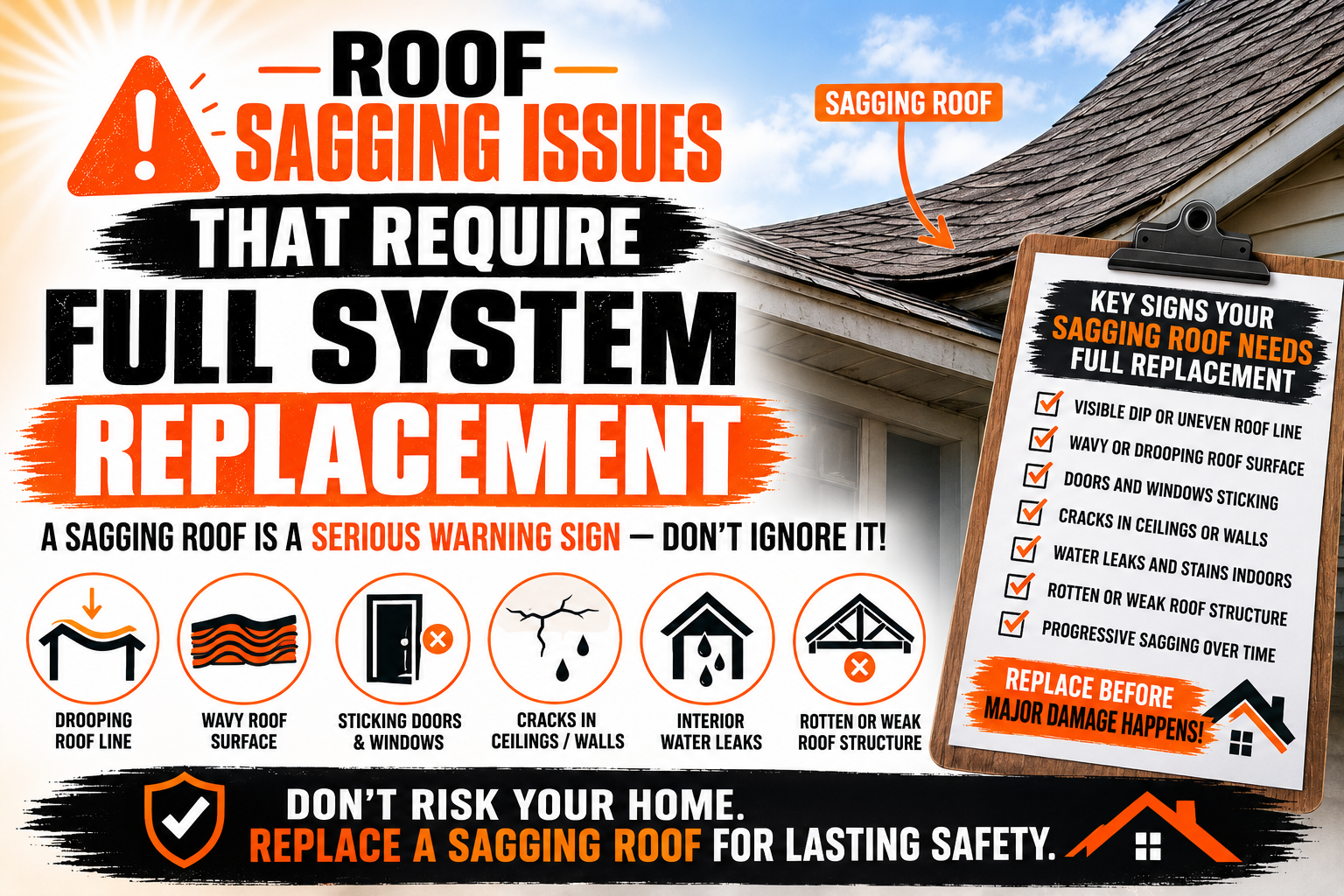
Roof Sagging Issues That Require Full System Replacement
Introduction
A roof should maintain a straight, stable, and well-supported shape throughout its service life. When sections of the roof begin to dip, bow, or sag, it is often a sign that something much more serious is happening beneath the surface. While cosmetic roofing issues may be resolved with routine repairs, structural sagging usually demands immediate attention because it affects the safety and stability of the entire roofing system.
Many homeowners assume a slight roof depression is simply the result of an aging home. Although some older houses naturally settle over time, noticeable roof sagging should never be dismissed as normal. In many cases, it signals weakened structural components, prolonged water damage, overloaded framing, or deterioration that has developed over many years.
Unlike missing shingles or small leaks, roof sagging often involves the underlying framework that supports the roof. Rafters, trusses, roof decking, and load-bearing components work together to distribute weight evenly across the home. When one or more of these elements begin to fail, the roof may no longer be capable of safely carrying its intended load.
Ignoring structural sagging can have serious consequences. Continued movement allows water to collect in low areas, accelerates material deterioration, increases the risk of additional structural damage, and may eventually compromise the safety of the entire home. Delaying corrective action also makes repairs more expensive because damage continues spreading over time.
Not every sagging roof requires complete replacement, but many do when structural deterioration extends throughout the roofing system. Knowing how to recognize the warning signs helps homeowners make informed decisions before conditions become dangerous or emergency replacement becomes unavoidable.
In this guide, we will examine why roof sagging occurs, the structural problems that cause it, how to identify early warning signs, and why widespread sagging often indicates that a full roof system replacement is the safest and most practical long term solution.
Understanding Why Roof Sagging Should Never Be Ignored
Roof sagging is much more than an appearance issue. It usually indicates that one or more structural components are no longer supporting the roof as intended. Because the roof protects every part of the home beneath it, structural weakness should always receive prompt professional evaluation.
A properly built roof distributes weight evenly across rafters, trusses, walls, and the home’s foundation. This balanced support allows the roof to withstand changing weather conditions, seasonal temperature changes, and years of continuous use. When any part of this support system weakens, the roof may begin changing shape.
Sagging often develops gradually rather than suddenly. Small structural changes may go unnoticed for months or even years before becoming visible from the ground. By the time homeowners recognize the problem, hidden deterioration beneath the roofing materials may already be extensive.
One important concern is that sagging rarely remains isolated. A weakened section of the roof places additional stress on surrounding structural members, increasing the likelihood that nearby areas will also begin shifting. As weight redistributes unevenly, the problem often expands beyond its original location.
Water creates additional complications once sagging begins. Depressed sections of the roof allow rainwater to collect rather than draining efficiently. Standing water increases the roof’s weight while encouraging moisture penetration into decking, insulation, and framing, accelerating structural deterioration.
Ignoring roof sagging also increases safety risks during severe weather. Heavy rainfall, snow accumulation, or strong winds place additional loads on already weakened structural components. A roof that has lost part of its structural integrity becomes much less capable of resisting these external forces.
Because sagging typically reflects problems beneath the visible roofing surface, replacing shingles alone rarely solves the issue. A thorough structural evaluation is necessary to determine whether repairs remain possible or whether the entire roofing system requires replacement.
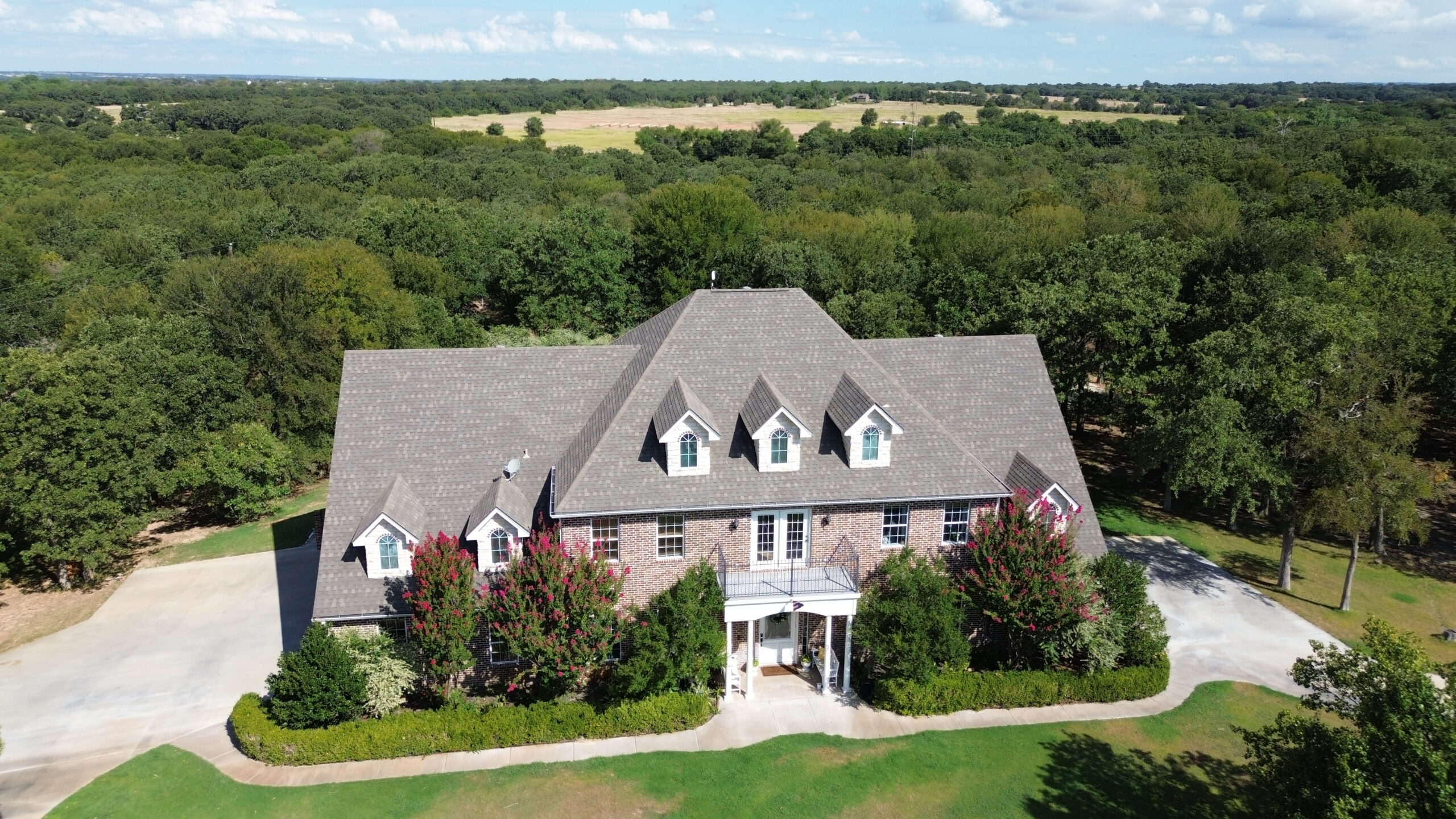
How a Healthy Roof Maintains Its Structural Shape
Understanding how a roof normally functions helps explain why sagging represents such a serious warning sign. Every roofing system depends on multiple structural components working together to distribute weight evenly while maintaining the roof’s intended shape.
Roof decking forms the base that supports shingles, tiles, or metal roofing materials. Attached to the rafters or trusses below, the decking creates a stable surface that transfers weight throughout the structural framework. Strong decking helps maintain a smooth and level roof appearance.
Rafters and roof trusses serve as the primary structural framework. These components carry the weight of roofing materials while supporting additional loads created by rain, snow, maintenance workers, and temporary weather conditions. Proper spacing and construction ensure that weight remains evenly distributed across the home.
Load-bearing walls transfer roof loads safely to the home’s foundation. This continuous support system prevents excessive movement while maintaining structural stability. When every component performs correctly, the roof remains straight and capable of handling changing environmental conditions.
Fasteners also contribute to structural integrity. Nails, screws, connectors, and brackets secure structural members together, preventing movement as the roof expands and contracts with seasonal temperature changes. Even small connector failures may eventually contribute to structural shifting.
Roofing materials themselves help protect the supporting structure. Shingles, flashing, underlayment, and ventilation systems prevent moisture from reaching wooden framing and roof decking. By keeping structural components dry, these protective layers preserve the roof’s strength over many years.
Proper attic ventilation also plays an important role in maintaining structural stability. Balanced airflow reduces moisture accumulation while limiting excessive heat that could weaken roofing materials from below. A well ventilated attic helps extend the lifespan of both roofing materials and structural framing.
When all these components remain in good condition, the roof retains its original shape while providing dependable protection throughout its expected service life. Sagging develops when one or more of these supporting elements begins deteriorating or can no longer perform its intended function.
Common Causes of Roof Sagging
Roof sagging rarely results from a single event. In most cases, multiple contributing factors gradually weaken the structural system until visible movement appears. Understanding these causes helps homeowners recognize why some sagging roofs require complete replacement rather than localized repairs.
Long term water damage remains one of the leading causes of roof sagging. Even small leaks allow moisture to penetrate roof decking and structural framing over time. As wood repeatedly absorbs water, it loses strength and becomes increasingly vulnerable to rot and structural deformation.
Roof age also contributes significantly to sagging. Decades of exposure to changing temperatures, weather, and natural material aging gradually reduce the strength of wooden structural members. Older roofs become more susceptible to movement as fasteners loosen and framing components weaken.
Excessive roof loads can also create structural problems. Heavy snow, accumulated debris, multiple roofing layers, or improperly installed rooftop equipment increase the amount of weight the roof must support. Continuous overloading gradually stresses framing until noticeable sagging develops.
Poor construction practices sometimes contribute to premature structural failure. Incorrect rafter spacing, undersized framing members, inadequate connectors, or improper load distribution reduce the roof’s long term strength. Even relatively new roofs may develop sagging if structural design or installation was inadequate.
Insect damage should not be overlooked. Wood destroying insects gradually weaken rafters, trusses, and roof decking from within. Because much of this damage occurs inside structural members, homeowners often remain unaware until visible roof movement begins appearing.
Foundation movement occasionally affects roof alignment as well. Shifting foundations alter the distribution of structural loads throughout the home, placing additional stress on roofing components. Although foundation issues originate below the house, they can eventually contribute to roof sagging.
Storm damage represents another common cause. Falling trees, heavy impacts, and severe weather may weaken structural framing even if exterior roofing materials appear relatively intact. Hidden damage sometimes remains unnoticed until gradual sagging develops months later.
Understanding these causes highlights why professional inspections become essential whenever roof sagging is observed. Identifying the underlying source of structural movement determines whether repairs remain practical or whether replacement provides the safest long term solution.
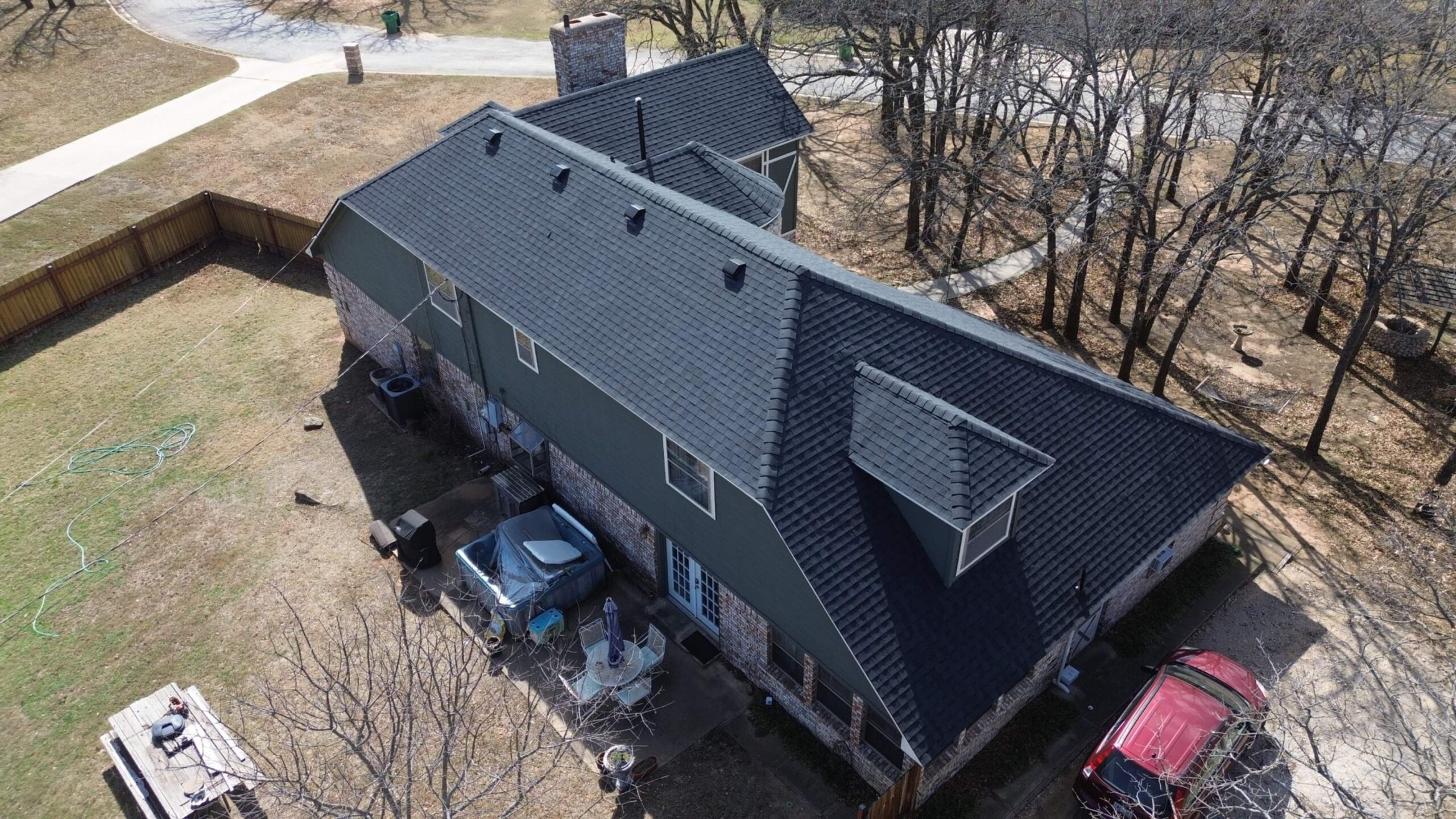
Early Warning Signs of Structural Roof Movement
Roof sagging usually develops gradually, providing several warning signs before major structural failure occurs. Recognizing these indicators early allows homeowners to seek professional evaluation before damage becomes more extensive and expensive.
One of the most obvious warning signs is a visible dip along the roofline. Instead of maintaining a straight appearance, portions of the roof may appear uneven or depressed when viewed from the ground. These irregularities often become easier to notice when comparing roof edges with gutters or nearby structures.
Interior ceiling changes may also indicate structural movement. Cracks forming near ceiling corners, uneven ceiling surfaces, or doors and windows that suddenly become difficult to open may all result from shifting structural loads affecting the home’s framework.
Repeated roof leaks often accompany structural sagging. Low areas created by sagging allow water to collect rather than draining efficiently, increasing the likelihood of moisture penetration. These leaks may continue returning despite previous repair attempts because the underlying structural problem remains unresolved.
Attic inspections frequently reveal additional warning signs. Bowed rafters, cracked truss members, damp roof decking, mold growth, or soft wooden framing all suggest structural deterioration that deserves immediate professional attention. These conditions often develop before sagging becomes obvious from outside.
Roof surfaces may also appear uneven after storms. Water pooling in certain sections, shingles lying unevenly, or visible depressions across the roofing material indicate that the supporting structure may no longer be maintaining proper alignment.
Homeowners should also pay attention to unusual sounds coming from the roof structure. Persistent creaking, popping, or cracking noises during temperature changes or heavy winds sometimes indicate structural members shifting under stress. While occasional settling sounds are normal, repeated structural noises deserve investigation.
Exterior wall cracks appearing near roof intersections may provide another clue. As structural loads redistribute unevenly, additional stress transfers to surrounding walls, creating cracks that continue widening over time.
Recognizing these warning signs allows homeowners to respond before structural movement becomes severe. Early evaluation often limits further deterioration while providing more options for addressing the underlying problem.
How Minor Sagging Progresses into Major Structural Damage
Many sagging roofs begin with relatively small structural changes that appear harmless at first. Unfortunately, structural problems rarely stabilize on their own. Instead, they usually worsen as weakened components continue carrying the same loads while experiencing additional stress from weather and daily use.
A slight roof depression initially affects drainage. Water remains on the roof longer because it cannot flow efficiently toward gutters and downspouts. Prolonged moisture exposure accelerates deterioration of roofing materials while increasing the amount of water reaching structural decking below.
As moisture continues penetrating the roofing system, wooden framing absorbs water and gradually loses strength. Softened rafters and decking begin flexing more under normal roof loads, causing the sagging area to expand. What began as a small dip gradually becomes a much larger structural concern.
Additional weight further accelerates the problem. Standing water, heavy rainfall, snow accumulation, and even maintenance workers place extra pressure on already weakened framing. Structural members that once supported these loads easily may begin bending noticeably as deterioration progresses.
Movement in one structural section also affects surrounding components. Adjacent rafters, trusses, connectors, and roof decking begin carrying uneven loads, increasing stress throughout the roofing system. This redistribution often causes structural damage to spread well beyond the original sagging area.
Interior damage typically becomes more noticeable as structural deterioration advances. Ceiling cracks widen, drywall joints separate, insulation becomes saturated, and recurring leaks develop throughout the home. At this stage, repairs often extend beyond roofing materials into structural reconstruction.
Eventually, the roof may no longer provide reliable structural support during severe weather. Heavy storms, strong winds, or additional moisture can accelerate deterioration rapidly once structural capacity has been significantly reduced. Delaying corrective action at this stage increases both repair costs and safety risks.
Understanding how sagging progresses emphasizes the importance of early intervention. A small structural issue identified promptly may require limited corrective work, but widespread sagging affecting multiple structural components often signals that full roof system replacement has become the safest and most dependable long term solution.
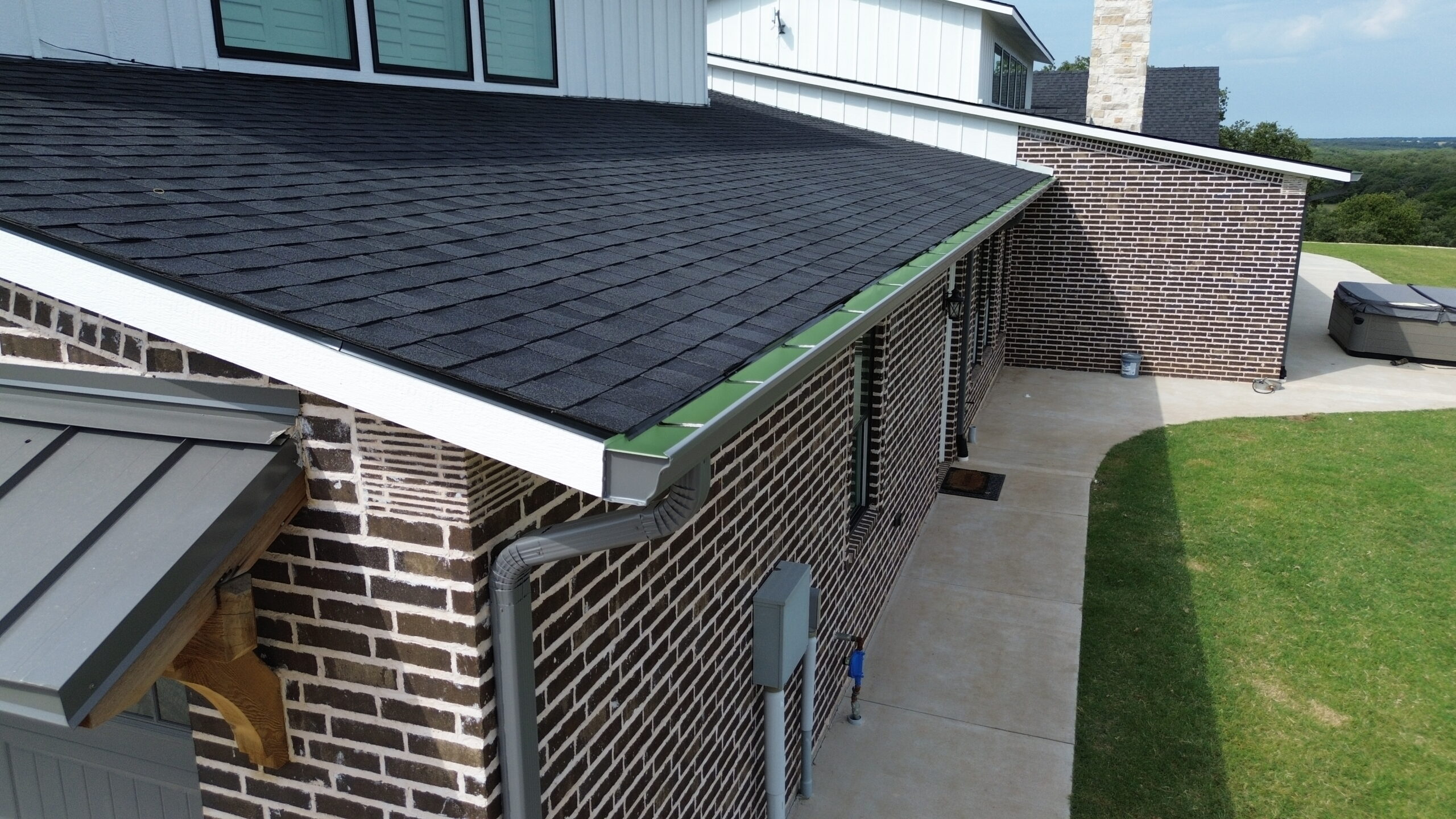
Structural Problems That Make Roof Replacement Necessary
Not every sagging roof requires complete replacement, but certain structural problems extend far beyond what localized repairs can safely correct. When the supporting framework of the roof has been significantly weakened, replacing only the visible roofing materials does not restore the roof’s strength or stability. Understanding these structural issues helps homeowners recognize when full system replacement becomes the safest solution.
One of the most serious concerns is widespread deterioration of the roof decking. Decking forms the foundation beneath shingles or other roofing materials, and it must remain strong enough to support both the roof and additional weather related loads. When large sections become soft, warped, or rotten, replacing surface materials alone cannot solve the underlying problem.
Damaged rafters also indicate more significant structural failure. Rafters carry the weight of the roof and distribute it evenly to the home’s supporting walls. When several rafters show signs of rot, cracking, or permanent bending, the structural integrity of the entire roofing system is compromised.
Roof trusses deserve equal attention because they function as engineered structural units. Unlike individual rafters, trusses work together to support the roof through carefully designed load distribution. Damage to multiple truss members often requires extensive structural reconstruction that is commonly completed as part of a full roof replacement.
Long term moisture exposure frequently weakens connectors, brackets, and fasteners that secure structural components together. Corrosion or deterioration of these connections reduces the roof’s ability to resist movement during storms. Even if the framing itself appears relatively sound, weakened connections can create serious structural concerns.
Structural shifting sometimes affects multiple areas simultaneously. Instead of one isolated sagging section, homeowners may notice uneven roof lines, depressions, and subtle movement across different parts of the roof. Widespread movement generally indicates that structural deterioration has progressed beyond a localized repair.
Another factor involves repeated structural repairs. If framing has already been reinforced several times but new sagging continues developing, the overall roofing system may no longer provide dependable long term performance. In these situations, replacement often becomes more practical than continuing piecemeal structural corrections.
Structural problems should never be evaluated based only on appearance. Hidden deterioration beneath roofing materials often extends farther than visible sagging suggests. Comprehensive professional inspections help determine whether repairs remain practical or whether the safest recommendation is replacing the complete roofing system.
Water Damage and Rot Behind a Sagging Roof
Water is one of the most common causes of structural roof failure because it gradually weakens wooden components over many years. Unlike sudden storm damage, moisture related deterioration often develops quietly until visible sagging finally appears. By that stage, hidden structural damage may already be extensive.
Even small roof leaks create long term problems if moisture repeatedly reaches roof decking. Wood absorbs water slowly, causing gradual swelling, softening, and loss of structural strength. Over time, weakened decking begins flexing under normal roof loads, contributing to visible roof sagging.
Rot develops when moisture remains trapped inside structural wood for extended periods. Fungi responsible for wood decay thrive in damp conditions, gradually breaking down the fibers that provide structural strength. As rot spreads, framing members lose their ability to support the roof safely.
Insulation also suffers from prolonged moisture exposure. Wet insulation compresses, loses thermal efficiency, and creates favorable conditions for mold growth. Although insulation itself does not cause roof sagging, its deterioration often indicates that water has been affecting structural components for an extended period.
Hidden moisture frequently spreads farther than homeowners expect. Water entering through one damaged area may travel along decking, rafters, or trusses before becoming visible inside the home. This movement allows structural deterioration to expand well beyond the original leak location.
Repeated freeze and thaw cycles accelerate moisture damage in colder climates. Water trapped inside wood expands as it freezes, creating additional stress within structural members. Repeating this cycle over multiple seasons gradually increases cracking, splitting, and structural weakening.
Standing water caused by roof sagging creates a destructive cycle. As the roof sags, water drains less efficiently and remains on the surface longer after rainfall. The additional moisture further weakens structural components, causing even greater sagging and creating conditions for continued deterioration.
Because water damage often affects multiple structural elements simultaneously, replacing only damaged shingles rarely solves the problem. Comprehensive replacement allows deteriorated decking, framing, and moisture barriers to be restored together, creating a stronger and longer lasting roofing system.
Comparing Repairable Sagging with Full Roof System Failure
Determining whether a sagging roof can be repaired or requires complete replacement depends on the extent of structural damage. Evaluating both visible symptoms and hidden structural conditions provides a clearer understanding of which solution offers the safest long term result.
The following comparison highlights common differences between repairable sagging and widespread structural failure.
| Condition | Repairable Sagging | Full Roof System Failure |
|---|---|---|
| Sagging Area | Limited to a small localized section | Multiple areas or widespread roof movement |
| Roof Decking | Mostly solid with minor isolated damage | Extensive soft, warped, or rotten decking |
| Structural Framing | Rafters and trusses largely remain sound | Multiple weakened, cracked, or deteriorated framing members |
| Leak History | Isolated leaks that respond well to repairs | Recurring leaks across different locations |
| Water Damage | Minimal moisture exposure | Long term widespread water intrusion and rot |
| Repair History | Few previous repairs | Frequent repairs with recurring structural problems |
| Long Term Outlook | Repairs likely restore normal performance | Replacement provides the safest and most reliable solution |
This comparison illustrates why structural evaluations must consider the entire roofing system rather than one visible problem. A small sagging section caused by isolated damage may respond well to structural repair if surrounding components remain healthy.
When multiple structural issues occur together, replacement generally becomes the more dependable investment. Repairing individual components while leaving widespread deterioration in place often results in continued structural movement and additional repair costs.
Professional inspections help homeowners distinguish between these situations by evaluating hidden structural conditions that cannot be observed from the ground.
Professional Inspection Findings That Confirm Replacement
Professional roofing inspections provide essential information whenever structural sagging is present. Experienced contractors examine not only visible roofing materials but also the structural framework supporting the entire roof. Their findings often determine whether repairs remain practical or whether complete replacement has become necessary.
Inspectors begin by evaluating the overall roof profile. Uneven roof lines, depressed ridges, bowed sections, and structural movement provide valuable clues about how loads are being distributed throughout the roofing system. These observations help identify areas requiring more detailed examination.
Roof decking receives careful attention during inspections. Contractors look for soft spots, moisture damage, warping, and evidence of long term deterioration. Extensive decking failure often indicates that moisture has been affecting the roof for many years rather than resulting from a recent leak.
Structural framing inspections focus on rafters, trusses, and supporting members. Cracks, wood rot, excessive deflection, insect damage, or previous structural modifications all influence replacement recommendations. Multiple weakened framing members generally suggest that localized repairs will not restore adequate structural integrity.
Moisture detection equipment helps identify hidden water damage beneath roofing materials. Trapped moisture may remain invisible from both inside and outside the home while continuing to weaken structural components. Discovering widespread hidden moisture often changes the recommended solution from repair to replacement.
Ventilation assessments also play an important role. Poor attic ventilation allows excessive heat and humidity to accumulate, accelerating structural deterioration from below. Correcting ventilation deficiencies often becomes part of a comprehensive roof replacement project.
Contractors also review the roof’s maintenance and repair history. Numerous previous repairs, recurring leaks, and repeated structural concerns indicate that the roof may have reached the end of its practical service life. Inspection findings combined with repair history provide a more complete picture of the roof’s overall condition.
Professional inspection reports offer homeowners objective guidance based on structural evidence rather than assumptions. These evaluations help ensure replacement decisions are supported by the actual condition of the roofing system.
Safety Risks of Living Under a Sagging Roof
Structural roof sagging affects more than the building itself because it also creates potential safety hazards for everyone inside the home. Even when structural movement appears gradual, weakened roofing systems become less capable of handling normal weather conditions and everyday loads.
One of the greatest concerns involves reduced structural capacity. A sagging roof no longer distributes weight evenly, placing additional stress on weakened framing members. Heavy rain, snow accumulation, or strong winds may overload these compromised components much more easily than a properly supported roof.
Falling building materials present another potential danger. As structural movement continues, ceiling finishes, drywall, insulation, or damaged roofing materials may begin separating from supporting structures. Even relatively small falling debris can create hazardous conditions inside occupied areas.
Electrical systems also become vulnerable when roof leaks accompany structural sagging. Moisture entering ceilings or attic spaces may contact wiring, lighting fixtures, or electrical connections. Water and electricity create obvious safety concerns that require immediate professional attention.
Indoor air quality may decline if moisture continues entering the roof structure. Damp insulation and wooden framing provide favorable conditions for mold growth, allowing spores to circulate throughout the home. Continued exposure may affect both building materials and indoor comfort.
Structural movement may also affect doors, windows, and interior walls. Uneven loads transferred through the home’s framework sometimes cause doors to stick, drywall cracks to widen, or windows to become difficult to operate. These changes often indicate that structural forces are extending beyond the roof itself.
Perhaps the most significant risk involves delaying corrective action. Structural deterioration rarely remains stable and typically worsens over time. Waiting too long increases the likelihood of more extensive damage while reducing the number of repair options available.
Protecting occupants should always remain the highest priority whenever structural roof sagging is identified. Prompt professional evaluation allows homeowners to address safety concerns before conditions become significantly more dangerous.
Questions Homeowners Should Ask Before Attempting Repairs
Before deciding to repair a sagging roof, homeowners should carefully evaluate whether localized repairs will provide a safe and lasting solution. Asking the right questions helps distinguish between situations where repairs remain practical and those where full replacement offers greater long term value.
Consider the following questions before authorizing structural roof repairs:
- Is the sagging limited to one small area or affecting multiple sections of the roof?
- Has a professional inspection identified weakened decking, rafters, or trusses?
- Are recurring leaks contributing to the structural movement?
- Has the roof already undergone several structural or roofing repairs?
- Will repairing one area restore the entire roof’s structural integrity?
- Would replacing the complete roofing system provide greater long term safety and reliability?
These questions encourage homeowners to evaluate the roof as a complete structural system rather than focusing only on the visible sagging. Honest answers often reveal whether repairs truly address the underlying problem or merely postpone a larger replacement project.
Preventing Roof Sagging Through Proper Maintenance
Although some causes of roof sagging cannot be completely avoided, consistent maintenance significantly reduces the likelihood of structural problems developing prematurely. A well maintained roofing system experiences less moisture damage, better weight distribution, and fewer hidden issues that gradually weaken structural components. Preventive care remains one of the most effective ways to maximize the lifespan of a roof.
Routine roof inspections should be performed throughout the year, especially after severe storms. Looking for missing shingles, damaged flashing, clogged gutters, or visible changes in the roofline allows homeowners to identify concerns before structural damage becomes widespread. Small problems are generally much easier and less expensive to correct than advanced structural deterioration.
Keeping gutters and downspouts clean is another essential maintenance practice. Proper drainage allows rainwater to leave the roof quickly instead of collecting near roof edges or low areas. Reducing standing water minimizes moisture exposure while protecting roof decking and supporting framing.
Tree maintenance also contributes to long term structural stability. Overhanging branches can scrape roofing materials, drop heavy limbs during storms, and allow leaves to accumulate on the roof. Trimming nearby trees helps prevent unnecessary weight while improving airflow and drainage.
Attic inspections provide valuable insight into the condition of the roofing system. Homeowners should periodically check for damp insulation, mold growth, water stains, or visible structural movement. Identifying these warning signs early often prevents minor moisture problems from developing into major structural failures.
Proper attic ventilation should never be overlooked. Balanced airflow helps control temperature and humidity levels throughout the year, reducing condensation that can weaken roof decking and framing from below. Good ventilation supports both roofing materials and structural components.
Prompt repairs are equally important. Addressing small leaks, replacing damaged flashing, and repairing isolated storm damage quickly prevents water from reaching structural wood. Consistent maintenance protects the entire roofing system while reducing the risk of future sagging.
Although maintenance cannot stop natural aging, it greatly improves the chances that a roof will remain structurally sound throughout its expected service life. Preventive care also gives homeowners more time to plan replacement before serious structural problems develop.
Common Mistakes That Allow Roof Sagging to Worsen
Many roof sagging problems become severe because early warning signs are overlooked or temporary solutions are relied upon for too long. Avoiding common mistakes helps homeowners protect both the roofing system and the structural integrity of the home.
The following mistakes are among the most common.
- Assuming a slight roof dip is simply part of an older home’s appearance.
- Ignoring recurring leaks that continue affecting the same structural areas.
- Installing new roofing materials without repairing damaged roof decking or framing.
- Delaying professional inspections after noticing uneven roof lines.
- Allowing clogged gutters to create standing water on the roof.
- Continuing repeated cosmetic repairs while structural movement becomes more noticeable.
These mistakes often allow structural deterioration to continue unnoticed beneath the roofing surface. By the time visible sagging becomes significant, the scope and cost of restoration may be much greater than if corrective action had been taken earlier.
Taking structural warning signs seriously helps homeowners avoid emergency situations while preserving the long term strength of the home. Early intervention almost always provides more repair options and better financial outcomes.
What to Expect During a Full Roof System Replacement
Replacing a structurally damaged roof involves much more than installing new shingles. The entire roofing system must be evaluated and rebuilt where necessary to restore structural integrity and long term reliability. Understanding the replacement process helps homeowners prepare for the project with greater confidence.
The process begins with a comprehensive structural assessment. Contractors inspect roof decking, rafters, trusses, flashing, ventilation, and supporting components to determine the full extent of structural deterioration. This evaluation forms the basis of the replacement plan.
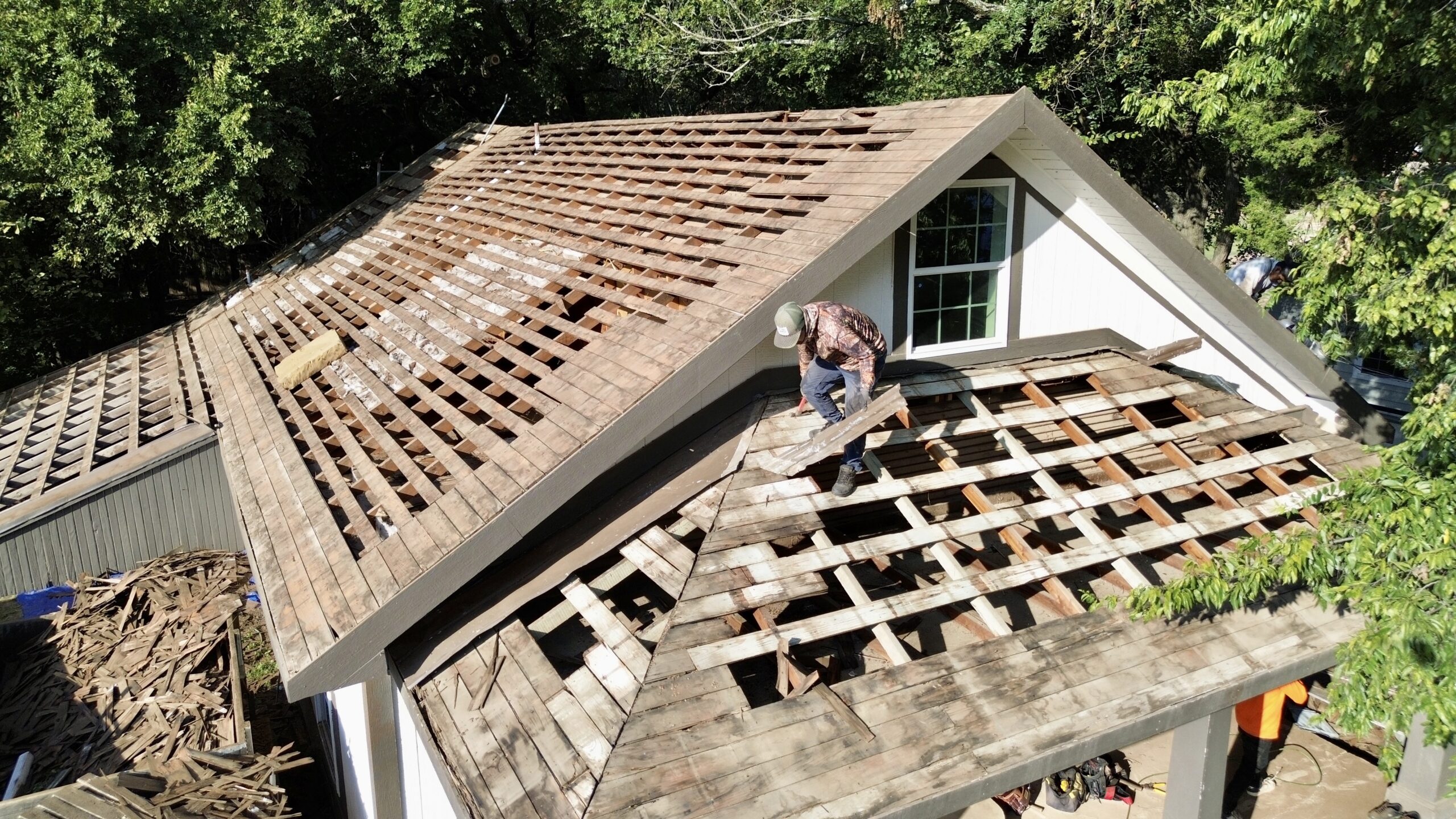
Once work begins, existing roofing materials are removed completely. Shingles, underlayment, flashing, and fasteners are stripped away to expose the roof decking. Removing every layer allows contractors to identify hidden damage that was not visible during the initial inspection.
Damaged decking is then replaced before new roofing materials are installed. If weakened rafters or trusses are discovered, structural repairs are completed to restore the roof’s ability to carry design loads safely. Rebuilding the structural foundation ensures that the new roofing system performs as intended.
After structural repairs are complete, new underlayment and moisture barriers are installed. These protective layers provide additional defense against water intrusion while supporting the long term durability of the roof. Flashing around chimneys, vents, skylights, and valleys is also replaced to improve leak resistance.
The selected roofing material is then installed according to manufacturer specifications. Proper fastening, alignment, and ventilation all contribute to long term performance. Careful installation ensures the roof functions as a complete system rather than simply a collection of individual materials.
Once installation is finished, contractors conduct a final inspection to verify workmanship and confirm that every component has been installed correctly. Debris is removed, nails are collected, and the property is cleaned before the project is considered complete. Homeowners also receive warranty information and maintenance recommendations for the new roofing system.
Understanding this process helps explain why full replacement provides much greater long term value than attempting to repair only visible structural damage.
Long Term Benefits of Replacing a Structurally Damaged Roof
Replacing a structurally compromised roof provides benefits that extend far beyond correcting visible sagging. A new roofing system restores the home’s structural integrity while improving overall safety, efficiency, and long term value. These advantages continue throughout the life of the new roof.
One of the most important benefits is renewed structural stability. Replacing weakened decking, damaged framing, and deteriorated roofing materials restores the roof’s ability to distribute weight properly. This greatly reduces the likelihood of future structural movement under normal weather conditions.
Improved weather protection is another significant advantage. Modern roofing systems include advanced moisture barriers, durable flashing, and higher performing roofing materials that provide better resistance against rain, wind, and changing temperatures. This added protection helps prevent future water related structural damage.
Energy efficiency often improves as well. New insulation, proper ventilation, and updated roofing materials help regulate indoor temperatures more effectively than aging roofing systems. Better thermal performance may reduce heating and cooling demands while improving comfort throughout the home.
Maintenance requirements generally become much lower after replacement. Instead of arranging repeated repairs for recurring structural problems, homeowners can focus on routine inspections and preventive care. This reduces both maintenance costs and the inconvenience associated with ongoing roofing issues.
Property value also benefits from structural roof replacement. Buyers are often more confident purchasing a home with a recently installed roofing system because they know one of the property’s most important structural components has already been updated. Improved curb appeal further enhances the home’s overall presentation.
Another important benefit is increased peace of mind. Homeowners no longer need to worry that heavy rain, strong winds, or seasonal weather changes will worsen existing structural damage. Confidence in the roof’s strength allows families to focus on enjoying their home rather than anticipating future repairs.
Replacing a structurally damaged roof also creates a stronger foundation for future home improvements. Projects such as attic insulation upgrades, solar panel installation, or ventilation improvements perform more effectively when supported by a sound and stable roofing structure.
Choosing the Right Roofing Contractor for Structural Replacement
Selecting an experienced roofing contractor becomes even more important when structural damage is involved. Unlike routine roofing projects, structural replacements require knowledge of both roofing systems and the underlying framework that supports them. Choosing the right professional helps ensure the project is completed safely and correctly.
Homeowners should begin by looking for contractors with proven experience handling structural roof replacement projects. Companies familiar with repairing roof decking, rafters, trusses, and related structural components are better prepared to manage complex installations. Experience reduces the likelihood of hidden issues being overlooked during construction.
Proper licensing and insurance should always be verified before work begins. Licensed contractors follow applicable building requirements, while insurance protects homeowners if unexpected accidents occur during the project. Requesting documentation provides added confidence before signing a contract.
Detailed written estimates help homeowners compare proposals accurately. Estimates should clearly explain structural repairs, roofing materials, labor, project timelines, warranty coverage, and cleanup procedures. Transparent communication makes it easier to evaluate value rather than focusing only on price.
References and previous projects also provide valuable insight into workmanship quality. Speaking with former clients or reviewing completed structural roofing projects helps homeowners understand how the contractor approaches similar work. Consistent positive results often indicate reliable service.
Communication remains essential throughout the replacement process. Contractors who explain structural findings, answer questions clearly, and provide regular progress updates create a more organized and less stressful experience. Strong communication also helps homeowners understand each stage of the project.
Finally, homeowners should carefully review both manufacturer and workmanship warranties. Material warranties protect roofing products, while workmanship warranties cover installation quality. Together, these protections provide additional confidence that the investment will deliver long term performance.
Choosing a qualified contractor is one of the most important decisions in any structural roof replacement project. High quality installation ensures the rebuilt roofing system performs safely and reliably for many years to come.
Conclusion
Roof sagging is never a problem that should be ignored because it often indicates serious structural issues developing beneath the visible roofing materials. While minor cosmetic imperfections may not require extensive repairs, noticeable sagging usually reflects weakened decking, deteriorated framing, prolonged water damage, or other structural concerns that affect the safety and stability of the entire roofing system. Recognizing these warning signs early gives homeowners the opportunity to act before conditions become significantly worse.
Throughout this guide, we have explored how roof sagging develops, the common causes behind structural movement, and the warning signs that indicate deterioration is progressing. We also examined how water damage, wood rot, overloaded framing, and aging structural components contribute to roof deformation, along with the inspection findings that often confirm the need for a full roof system replacement rather than isolated repairs.
Replacing a structurally damaged roof provides much more than an improved appearance. It restores structural strength, enhances weather protection, improves energy efficiency, reduces long term maintenance costs, and increases property value. Just as importantly, it eliminates the uncertainty associated with living beneath a roofing system that can no longer safely perform its intended function.
Delaying replacement after structural sagging has been identified often allows damage to spread into additional areas of the home. Moisture intrusion, worsening structural movement, and increasing repair costs make future restoration more extensive and more expensive. Taking action at the appropriate time protects both the building and everyone living inside it.
Every roof eventually reaches the point where structural deterioration makes replacement the safest and most practical solution. By monitoring the condition of your roof, scheduling regular professional inspections, addressing small problems promptly, and responding quickly to signs of sagging, you can protect your home’s structural integrity and enjoy the confidence that comes with a strong, dependable roofing system for decades to come.