
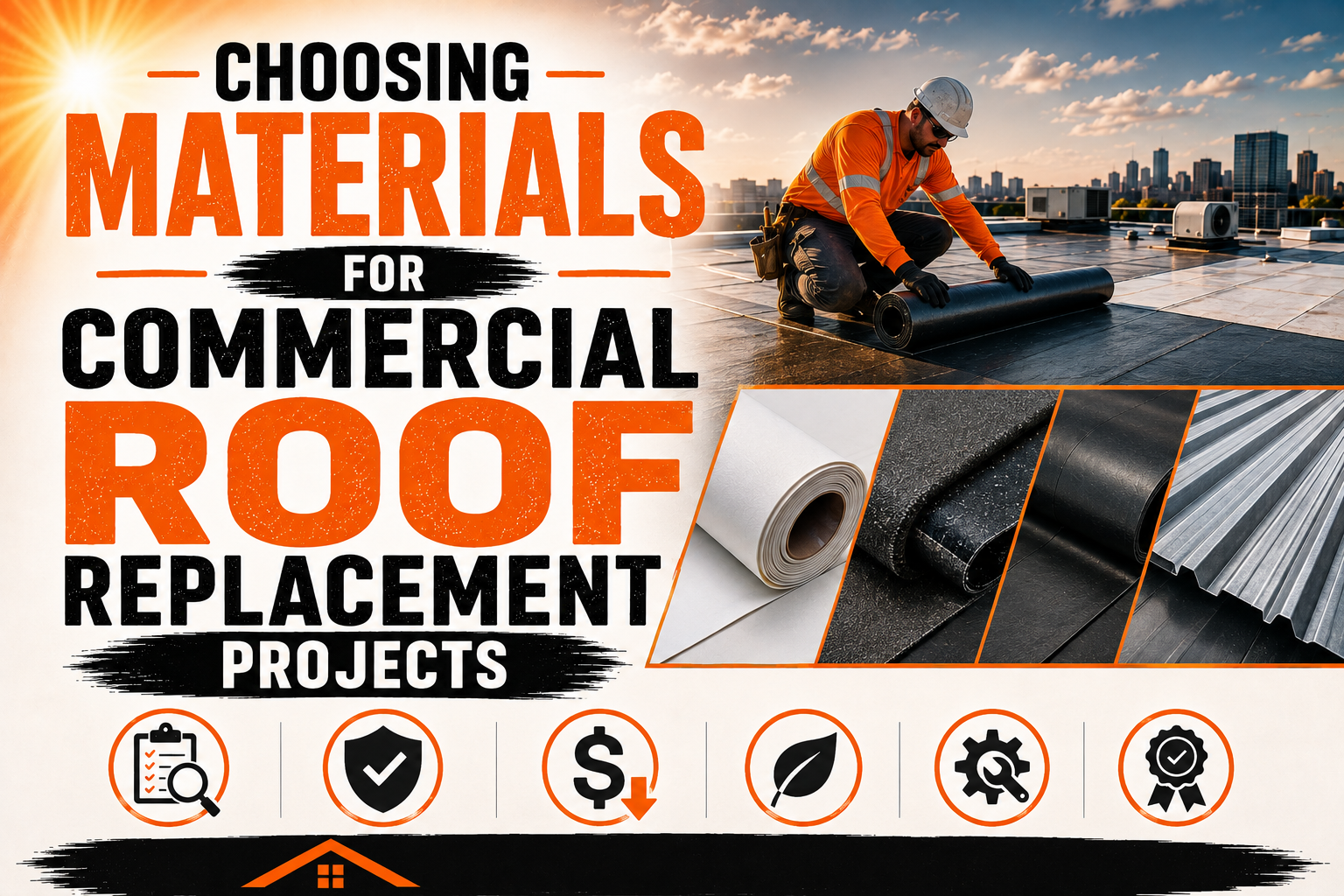
Choosing Materials for Commercial Roof Replacement Projects
Introduction
Choosing the right materials for a commercial roof replacement project is one of the most important decisions a building owner can make. A commercial roof is expected to protect the building, employees, inventory, equipment, and interior spaces while handling weather exposure and ongoing rooftop activity. The selected materials can influence durability, maintenance requirements, energy performance, installation time, warranty coverage, and the overall cost of ownership.
Commercial roofing is not a one-size-fits-all decision. Different buildings have different structural conditions, climates, drainage characteristics, rooftop equipment, operating requirements, and budgets. A material that performs well on one property may not be the best choice for another, which is why selection should begin with a careful evaluation of the building and existing roof.
The decision should also look beyond the initial purchase price. A lower-cost material may require more maintenance or have different performance characteristics than a higher-quality system. Considering installation requirements, expected service life, repairs, energy performance, and warranty conditions can help businesses choose a roofing assembly that provides appropriate long-term value.
Understanding Commercial Roofing Material Selection
Commercial roofing materials are selected as part of a complete roofing system rather than as individual products. The system can include the roof deck, insulation, cover board, membrane or surface material, flashing, fasteners, adhesives, edge components, and drainage details. Each component needs to work with the others to provide reliable performance.
The first consideration should be the building’s specific requirements. A large warehouse may have different needs from an office building, retail property, manufacturing facility, or industrial site. Rooftop traffic, equipment placement, interior conditions, energy requirements, and maintenance access can all affect the appropriate material selection.
The roof’s configuration also matters. A simple low-slope roof may provide different material options from a complex roof with numerous penetrations, equipment curbs, parapets, drains, and expansion joints. The more complicated the roof, the more important it becomes to evaluate detailing and installation requirements.
Local weather conditions should also influence the decision. Strong winds, intense sunlight, heavy rainfall, temperature changes, and other environmental conditions can affect roofing performance. The selected system should be appropriate for the conditions the building is expected to experience throughout its service life.
The owner’s long-term plans are another consideration. A business planning to remain in the building for decades may prioritize durability and lifecycle value, while a property owner with a shorter ownership horizon may evaluate the financial decision differently. The goal is to select a material system that aligns with both the building and the owner’s objectives.
Evaluating the Existing Roof Before Choosing Materials
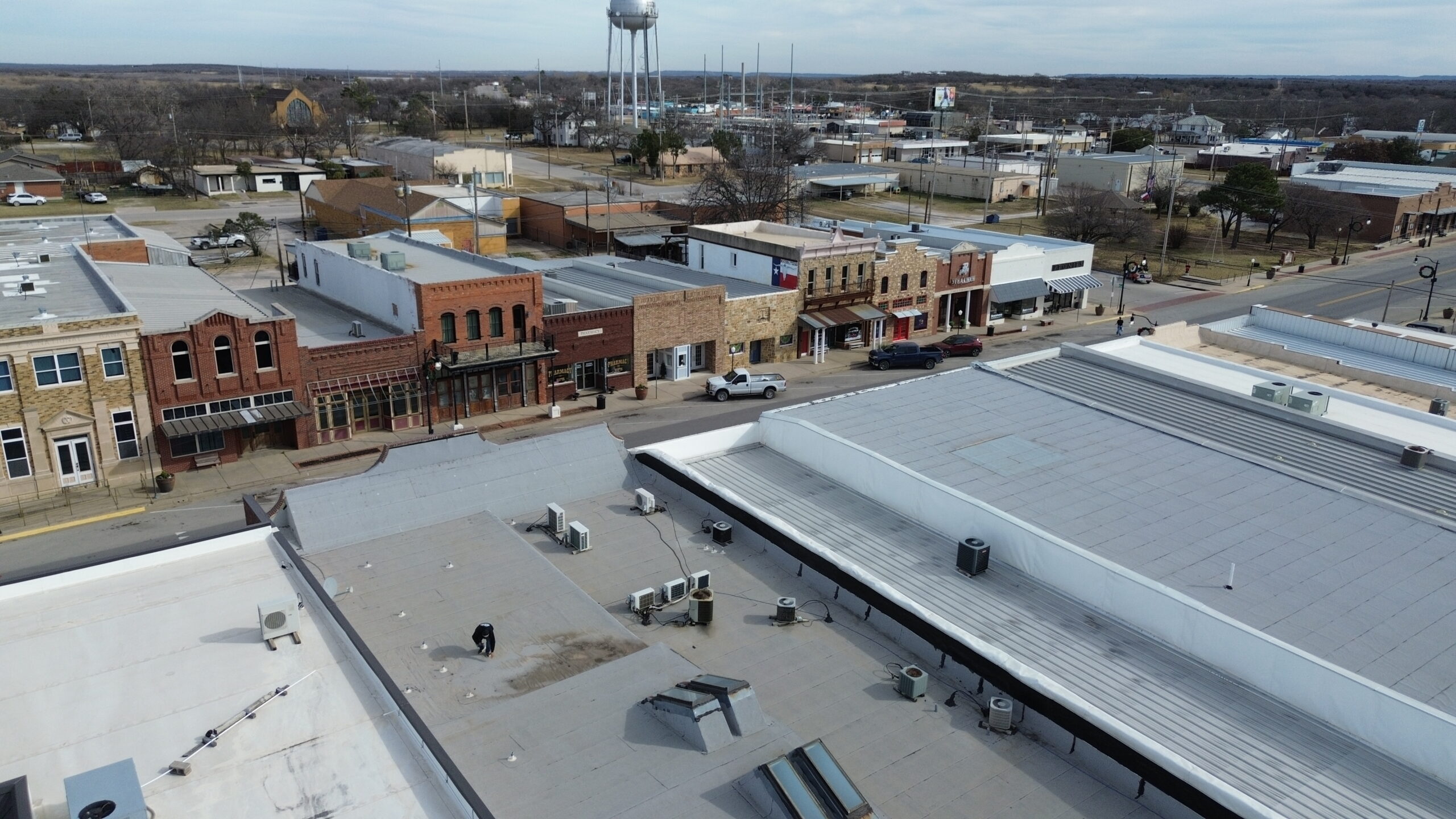
Before selecting new roofing materials, the existing roof should be inspected carefully. The condition of the current system can influence whether a complete tear-off, roof recovery, or another approach is appropriate. It can also reveal conditions that affect the design of the new assembly.
The inspection should examine the existing membrane, insulation, flashing, drainage system, penetrations, perimeter details, and visible areas of deterioration. Previous repairs should also be documented because repeated failures can indicate areas requiring special attention.
Moisture is particularly important. Water can become trapped within insulation or other roof components even when the surface does not show obvious damage. Moisture surveys or targeted investigation may be appropriate depending on the existing system and the condition of the building.
The roof deck should also be evaluated. Steel, concrete, wood, and other deck types may require different preparation procedures and attachment methods. If sections of the deck are damaged, those areas should be addressed before the new roofing system is installed.
Drainage should be reviewed as part of the assessment. Standing water, blocked drains, damaged scuppers, or insufficient slopes may indicate problems that should be corrected during replacement. Installing new materials without addressing underlying drainage deficiencies can limit the performance of the new system.
The information gathered during this evaluation gives the owner and contractor a stronger foundation for comparing materials. It can also reduce the risk of choosing a system that is incompatible with the existing building conditions.
Comparing Major Commercial Roofing Systems
Several roofing systems are commonly considered for commercial replacement projects. These include thermoplastic membranes such as TPO and PVC, EPDM membranes, modified bitumen, built-up roofing, and metal roofing systems. Each has different characteristics, installation methods, maintenance considerations, and applications.
TPO and PVC are thermoplastic single-ply membranes commonly used on low-slope commercial roofs. They can offer resistance to various environmental conditions and are often selected for their heat-welded seams and installation flexibility.
EPDM is a synthetic rubber membrane that has been widely used in commercial roofing. It is available in large sheets and can be installed using different attachment methods depending on the project requirements.
Modified bitumen is an asphalt-based roofing material that can be used in multiple layers or configurations. It is often considered for buildings where a robust membrane assembly is desired.
Built-up roofing uses multiple layers of roofing materials to create a multi-layer system. These systems can provide substantial redundancy because several layers work together as part of the roof assembly.
Metal roofing is another option, particularly for certain commercial buildings and roof configurations. Metal systems can provide a durable exterior surface and may be available in different profiles, coatings, and materials.
The right choice depends on the building rather than the popularity of a particular material. Comparing systems according to actual project requirements is more useful than assuming one material is universally better.
TPO Roofing for Commercial Replacement Projects
Thermoplastic polyolefin, commonly known as TPO, is a single-ply membrane used on many commercial low-slope roofs. It is available in sheets that are installed over the prepared roofing assembly using approved attachment methods.
One notable feature of TPO systems is the ability to heat-weld membrane seams. Properly completed welded seams can create continuous connections between membrane sheets. The quality of the welding process and installation technique is therefore important to overall system performance.
TPO is often considered for commercial buildings where reflective roof surfaces and single-ply installation are desired. Depending on the specific product and design, the membrane may be available in different thicknesses and colors.
The material should still be evaluated based on the building’s conditions. Rooftop equipment, traffic, wind exposure, penetrations, drainage, and expected maintenance activity can all affect the appropriate specification.
Installation quality is particularly important. Membrane sheets need to be properly positioned, attached, and welded, while flashings and penetrations must be detailed according to the system requirements.
Businesses considering TPO should compare specific products and assemblies rather than treating all TPO membranes as identical. Thickness, reinforcement, attachment method, accessories, manufacturer requirements, and warranty conditions can vary.
PVC Roofing for Commercial Buildings
Polyvinyl chloride, or PVC, is another thermoplastic single-ply membrane used for commercial roofing. Like TPO, PVC membranes can have heat-welded seams and can be installed using different approved attachment approaches.
PVC systems are often considered for buildings where resistance to particular chemicals or rooftop conditions is important. This can make material selection especially relevant for certain commercial and industrial facilities.
The building’s operations should be considered before selecting PVC. If chemicals, oils, grease, or other substances are present around rooftop equipment, the roofing professional should evaluate material compatibility.
PVC membranes are available in different thicknesses, reinforcements, and configurations. These differences can affect durability, installation requirements, and cost, so the specification should be based on project needs.
As with other roofing systems, proper detailing is essential. Penetrations, perimeter conditions, seams, drains, and equipment curbs need to be installed according to the manufacturer’s requirements.
A business should compare the complete PVC assembly rather than focusing only on the membrane itself. Insulation, cover boards, attachment methods, flashing materials, and edge details all contribute to the performance of the finished roof.
EPDM Roofing and Its Applications
EPDM, or ethylene propylene diene monomer, is a synthetic rubber roofing membrane commonly used on commercial buildings. It has a long history of use in low-slope roofing and is available in different thicknesses and sheet sizes.
EPDM can be installed using mechanically attached, fully adhered, or other approved methods depending on the system. Seams can be completed using compatible tapes or adhesives according to the manufacturer’s installation requirements.
One consideration with EPDM is the building’s exposure and design requirements. The membrane, insulation, attachment method, flashing system, and other components should be selected as one compatible assembly.
EPDM can be considered for many commercial applications, but it should not be selected simply because it has a long history in the industry. The building owner should compare its characteristics with those of other available systems based on climate, roof configuration, maintenance expectations, and budget.
Rooftop traffic should also be considered. Areas that receive frequent service activity may require additional protection or carefully planned walkways to reduce the risk of accidental membrane damage.
When properly specified and installed, EPDM can form an effective commercial roofing system. However, long-term performance depends on correct installation, compatible components, appropriate detailing, and regular maintenance.
Modified Bitumen and Built-Up Roofing Options
Modified bitumen roofing is an asphalt-based system that can be used in different configurations. It may be installed as a multi-layer assembly and can provide a durable membrane for suitable commercial buildings.
Built-up roofing, often referred to as BUR, uses multiple layers of roofing materials. The system can include alternating layers of reinforcing material and asphalt, followed by an appropriate surfacing layer.
These systems may be considered where owners want a multi-layer assembly with substantial redundancy. However, the installation process can differ from single-ply membranes and may require specific equipment, labor skills, and safety procedures.
The building’s occupancy and surrounding environment should be considered before selecting an asphalt-based system. Certain installation methods may involve odors, heat, or other construction impacts that need to be coordinated with occupants and nearby operations.
The existing roof assembly can also influence whether modified bitumen or built-up roofing is practical. The contractor should evaluate the deck, insulation, drainage, existing layers, and other conditions before recommending a specific assembly.
Cost should be evaluated alongside installation requirements and long-term maintenance. A material that appears economical at the product level may have different labor or preparation costs depending on the building.
Choosing between these systems and single-ply membranes should ultimately be based on the complete project. Material performance, installation quality, building conditions, contractor experience, maintenance needs, and long-term objectives all deserve consideration.
Comparing Metal Roofing Systems
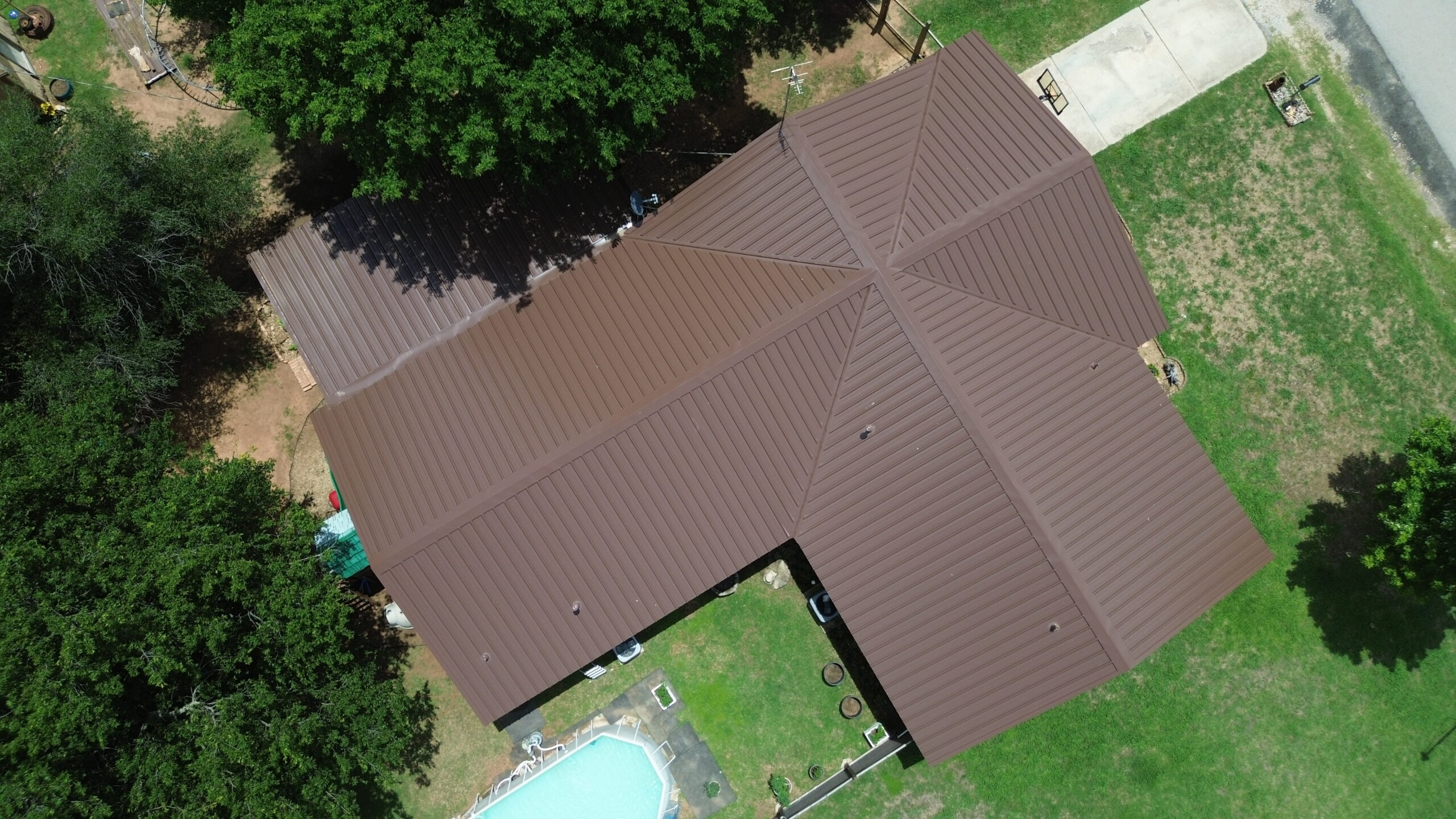
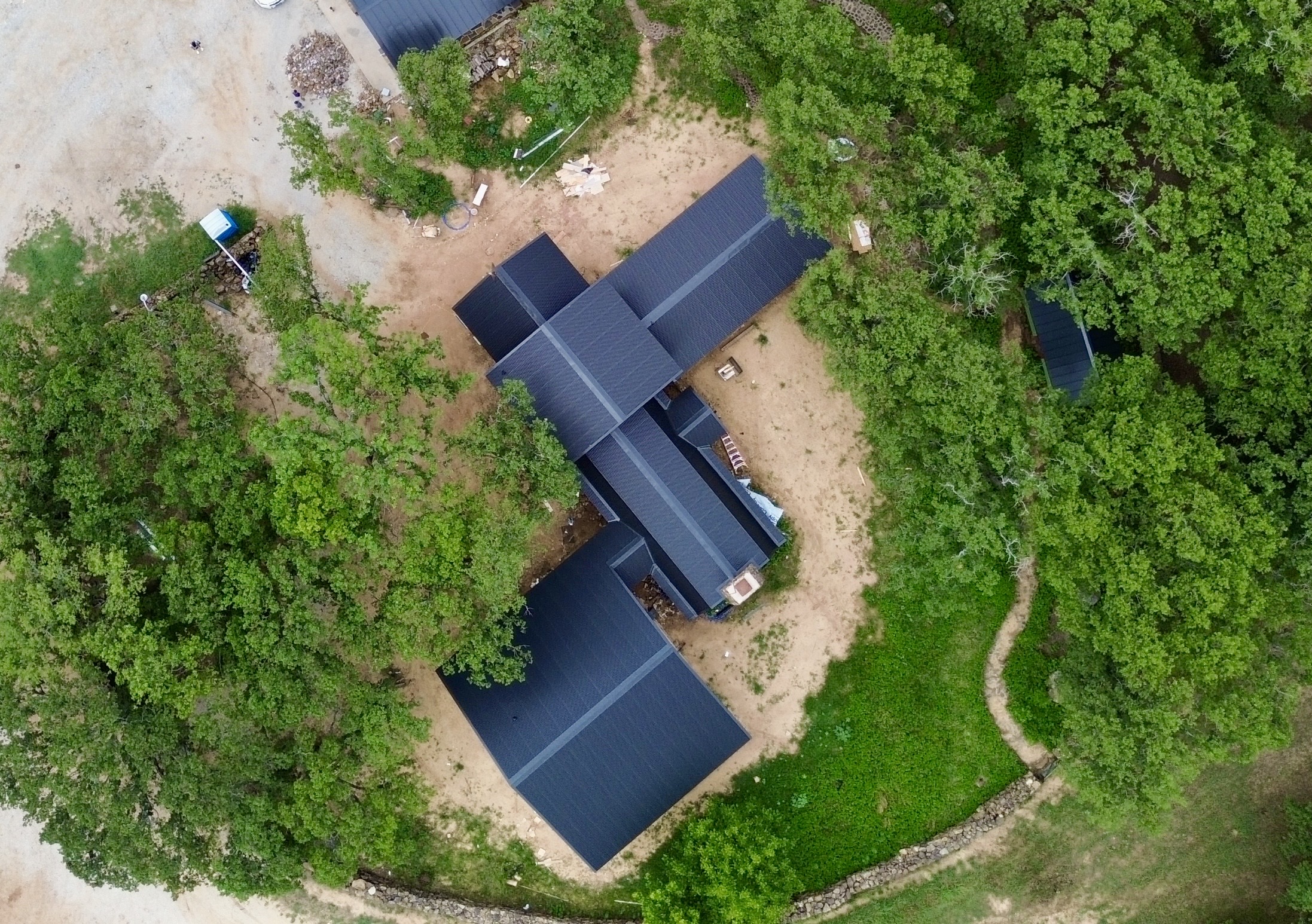
Metal roofing can be an effective choice for certain commercial replacement projects, particularly buildings with suitable roof designs and long-term durability requirements. Commercial metal systems can be manufactured from materials such as steel or aluminum and may be available in different profiles, coatings, thicknesses, and finishes. The correct specification depends on the building structure, climate, appearance requirements, and expected service conditions.
One advantage of metal roofing is its ability to provide a durable exterior surface when properly designed and maintained. Metal panels can also be available with protective coatings that help manage exposure to sunlight, moisture, and other environmental conditions. However, the performance of a metal roof depends heavily on panel connections, fasteners, seams, flashing, and perimeter details.
Thermal movement should be considered when selecting metal roofing. Metal expands and contracts as temperatures change, so the system needs to accommodate movement without compromising connections or waterproofing details. Proper design and installation are especially important on large roof areas where temperature changes can affect substantial lengths of material.
Corrosion resistance is another consideration. Buildings located in environments with high moisture or corrosive exposure may require particular metal types or protective coatings. The surrounding environment should be evaluated before the final specification is selected.
Metal roofing may also require different maintenance practices from membrane systems. Fasteners, seams, coatings, penetrations, and drainage areas should be inspected periodically. Repairs should use compatible materials to avoid creating new corrosion or leakage problems.
Businesses should compare metal roofing with membrane systems based on the entire building rather than assuming that greater material strength automatically means better performance. Roof slope, structure, drainage, climate, installation conditions, and long-term maintenance all influence the final decision.
Evaluating Insulation and Cover Board Materials
The roofing membrane receives most of the attention during material selection, but insulation and cover boards are equally important parts of the roof assembly. These layers influence thermal performance, durability, moisture management, and the surface available for membrane installation.
Different insulation materials have different characteristics. Common commercial roofing insulation options can include polyisocyanurate, expanded polystyrene, and extruded polystyrene, although the appropriate product depends on the roofing assembly and project requirements.
Insulation thickness should be evaluated as part of the complete roof design. The required thermal performance may depend on building codes, climate conditions, energy goals, and the building’s existing construction. Increasing insulation may affect both project cost and roof height, so it should be planned carefully.
Cover boards can provide a more durable surface above insulation and may offer additional protection from rooftop activity. They can also help create a suitable substrate for certain membrane systems. The selected cover board should be compatible with the membrane, attachment method, and overall roof assembly.
Moisture resistance is another consideration. Roofing materials can be exposed to rain and humidity during construction, so the contractor should follow proper storage and installation procedures. Wet or damaged insulation should not simply be covered without evaluation.
The attachment method also matters. Insulation and cover boards can be mechanically fastened or adhered depending on the system. Fastener patterns, adhesives, substrate conditions, and manufacturer requirements need to be coordinated.
Selecting insulation and cover boards as part of the complete system helps avoid compatibility problems. The goal is to create a roof assembly where the membrane, insulation, cover board, deck, and attachment method work together rather than functioning as unrelated components.
Considering Climate and Weather Conditions
Climate is one of the most important factors when selecting commercial roofing materials. A roof must withstand the environmental conditions that occur throughout its service life, including heat, sunlight, rainfall, wind, temperature changes, and severe weather events.
High temperatures and intense sunlight can place continuous stress on roofing materials. Reflective surfaces may be considered where reducing solar heat gain is an important building objective. However, reflectivity should be evaluated together with insulation and the building’s complete energy strategy.
Heavy rainfall makes drainage and waterproofing particularly important. The roofing material itself is only one part of water protection. Seams, flashing, penetrations, drains, and perimeter details must all be designed and installed correctly.
Wind exposure can influence membrane attachment and perimeter requirements. Large commercial roofs may experience significant wind forces, especially around corners and edges. The selected system should be designed for the building’s applicable wind conditions.
Temperature changes can also affect materials and connections. Some systems need to accommodate expansion and contraction, while others require specific installation practices under different temperature conditions.
Local weather patterns should therefore be discussed with the roofing professional before material selection. The objective is to choose a system that matches the building’s actual environmental exposure rather than selecting a material based only on general popularity.
Evaluating Durability and Expected Service Life
Durability is a major consideration because commercial roof replacement is a substantial investment. Businesses generally want a system that can provide reliable protection for many years while maintaining manageable maintenance requirements.
Expected service life depends on several factors, including material quality, installation workmanship, weather exposure, rooftop traffic, drainage, maintenance, and building conditions. A high-quality material can still perform poorly if it is installed incorrectly or neglected after completion.
Material thickness and reinforcement can influence durability in membrane systems. However, thicker material is not automatically the best choice for every building. The specification should reflect the expected conditions and the manufacturer’s approved system design.
Rooftop traffic deserves special attention. Buildings with frequent HVAC servicing or other rooftop activity may experience more opportunities for accidental damage. Protective walkways or other measures may be incorporated into the design where appropriate.
Drainage also affects durability. Persistent standing water, blocked drains, or poor slopes can increase stress on the roofing assembly. Selecting a durable material without addressing drainage problems may limit its expected performance.
Maintenance should be included in the durability discussion. Regular inspections can identify small defects before they become significant failures. Prompt repairs can help preserve the condition of the system and protect the original investment.
Businesses should therefore evaluate durability as part of a complete lifecycle rather than relying on a manufacturer’s expected service-life statement alone. Installation quality and ongoing maintenance are just as important to long-term performance.
Comparing Installation Requirements and Labor
Different commercial roofing materials require different installation techniques, equipment, and levels of specialized labor. These requirements can influence project cost, schedule, and the availability of qualified contractors.
Single-ply membranes may be installed using mechanical attachment, adhesives, or other approved methods. Thermoplastic systems can require specialized equipment for seam welding, while other systems use different seam and flashing techniques.
Modified bitumen and built-up roofing may require additional layers and specialized installation procedures. Depending on the system, the project may involve equipment or processes that need careful coordination with building occupants and safety personnel.
Metal roofing requires accurate panel alignment, fastening, flashing, and accommodation of thermal movement. Errors in these areas can create leakage or durability problems even when the panels themselves are high quality.
The contractor’s experience with the selected material is therefore important. Businesses should not choose a roofing system without considering whether qualified installers are available for the project.
Installation speed can also affect the business. A system that requires more labor or complicated preparation may extend the project schedule. On an occupied building, longer construction can increase disruption to employees, tenants, customers, and daily operations.
Material availability should also be considered. If specialized products have long lead times, the project schedule may be affected before installation even begins. Ordering materials early can reduce the risk of delays.
A material should therefore be evaluated not only for how it performs after installation but also for how realistically it can be installed on the specific building.
Considering Energy Efficiency and Building Performance
Energy performance is becoming an increasingly important consideration in commercial roof replacement. The roofing system can influence how much heat enters or leaves the building, particularly when combined with appropriate insulation.
Insulation is one of the most important components of thermal performance. A properly designed insulation layer can reduce heat transfer and help the building maintain more consistent interior temperatures.
Reflective roofing materials may also be considered in suitable climates. A reflective roof can reduce the amount of solar energy absorbed at the roof surface, which may influence cooling demand under appropriate conditions.
However, energy performance should not be evaluated by membrane color alone. Insulation levels, HVAC efficiency, building orientation, windows, air sealing, and other factors also influence overall building energy use.
Businesses should consider their long-term energy objectives when selecting the roof assembly. If the replacement is part of a broader building improvement program, the roofing project may provide an opportunity to coordinate insulation upgrades with other energy improvements.
The roof’s energy performance should also be balanced against durability and maintenance. A material should not be selected solely because it offers one attractive energy characteristic if it is otherwise poorly suited to the building.
A qualified roofing professional can help compare complete assemblies rather than individual products. This provides a more realistic understanding of how the selected roof may contribute to building performance.
Evaluating Maintenance and Repair Requirements
Maintenance requirements should be considered before the final roofing material is selected. Every commercial roofing system requires some level of inspection and care, even when the material is designed for long-term durability.
Businesses should understand how the selected system should be inspected. Seams, flashing, drains, penetrations, perimeter details, and areas around rooftop equipment can require regular attention.
Repair methods can vary between roofing systems. A business should know whether qualified contractors are readily available to perform future repairs and whether compatible materials can be obtained easily.
The location and type of rooftop equipment can also influence maintenance requirements. HVAC technicians and other contractors may regularly access the roof, increasing the risk of accidental damage. Clearly defined access paths can help protect the roofing surface.
Drainage maintenance is particularly important. Debris can accumulate around drains and scuppers, reducing water flow and increasing the risk of standing water. Keeping these components clear should be part of the building’s routine maintenance program.
Warranty conditions may also include maintenance requirements. The owner should understand whether inspections, approved repairs, documentation, or other procedures are necessary to preserve warranty coverage.
A material that requires slightly more maintenance may still be a good choice if it provides significant long-term benefits for the building. The important point is to understand these responsibilities before installation rather than discovering them after the roof is complete.
By evaluating metal systems, insulation, climate exposure, durability, installation requirements, energy performance, and maintenance needs, businesses can narrow their material choices more effectively. The final stage of selection should then focus on cost, warranties, code requirements, business operations, compatibility, and long-term value.
Comparing Initial Cost and Long-Term Value
Cost is naturally one of the most important factors when choosing materials for a commercial roof replacement, but the lowest initial price does not always represent the best financial decision. A roofing system should be evaluated according to its complete cost over its expected service life. Material price, installation labor, maintenance, repairs, energy performance, and eventual replacement should all be considered when comparing options.
A low-cost membrane may reduce the initial project budget, but differences in thickness, reinforcement, accessories, installation requirements, and expected durability can affect long-term expenses. A more expensive system may provide additional performance characteristics that make sense for a particular building. The right decision depends on whether those benefits justify the additional investment.
Installation costs can vary significantly between roofing systems. Some materials require specialized equipment or highly trained installers, while others may have simpler installation procedures. Labor availability in the local market can also influence the final project price.
The building’s expected ownership period should be included in the comparison. A property owner planning to keep the building for many years may place greater emphasis on durability, maintenance, and lifecycle value. Someone planning a shorter ownership period may have different financial priorities.
Energy performance can also affect long-term value. Insulation and reflective roofing characteristics may contribute to building efficiency under suitable conditions. However, energy benefits should be evaluated as part of the complete building rather than treated as the only reason to select a material.
A useful comparison should therefore look beyond the material’s purchase price. Businesses should consider the total investment required to install, maintain, repair, and eventually replace the roofing system.
Understanding Roofing Warranties and Material Compatibility
Warranties are an important part of commercial roofing material selection, but they should not be treated as a substitute for quality installation. A warranty provides certain protections under specified conditions, while the actual performance of the roof depends on design, materials, workmanship, maintenance, and building conditions.
Commercial roofing projects may involve both manufacturer warranties and contractor workmanship warranties. These warranties can cover different aspects of the roof, so business owners should understand who is responsible when a problem occurs.
Warranty terms may depend on using approved materials and installation methods. Mixing incompatible products from different manufacturers can create problems if the components have not been tested or approved together. The complete assembly should therefore be reviewed before installation.
Flashing materials, adhesives, fasteners, insulation, cover boards, membranes, and edge components should be compatible with one another. Compatibility is particularly important at transitions and penetrations where different materials meet.
Businesses should also understand maintenance requirements connected to the warranty. Some warranties may require regular inspections, approved repairs, or specific maintenance procedures. Failing to follow these conditions could affect coverage.
The warranty should be reviewed before the final material selection rather than after installation. Owners should ask what is covered, what is excluded, how long coverage lasts, and what responsibilities remain with the building owner.
A strong warranty can provide useful protection, but the best result comes from combining a suitable roofing system with qualified installation and consistent maintenance.
Considering Fire, Wind, and Building Code Requirements
Commercial roofing materials must satisfy applicable building and project requirements. Fire performance, wind resistance, energy requirements, structural considerations, and other regulations can influence which roofing assemblies are appropriate.
Wind resistance is particularly important on large commercial roofs. The roof edges and corners can experience significant forces, so the attachment method and perimeter details should be designed according to the applicable requirements.
Fire performance should also be evaluated. Roofing assemblies may have specific classifications or testing requirements, and the complete system may need to meet requirements associated with the building’s use and construction.
Building codes can affect insulation levels, roof assemblies, drainage, structural requirements, and other project components. These requirements can change over time, so the replacement should be evaluated against the rules applicable to the project.
The building’s location can also influence material selection. Local environmental conditions, weather exposure, and regulatory requirements may create specific design considerations that should be addressed before construction.
A roofing contractor or qualified design professional can help identify applicable requirements, but the building owner should still ask questions about compliance. Choosing a material first and discovering later that the proposed assembly does not meet requirements can result in expensive changes.
The selected system should therefore be evaluated as a complete approved assembly rather than simply as a roll of membrane, sheet of metal, or package of roofing material.
Matching Roofing Materials to Business Operations
The best roofing material is one that fits the way the building is actually used. A commercial property with frequent rooftop activity may require different considerations from a building where the roof is rarely accessed.
Manufacturing facilities may have rooftop equipment, exhaust systems, or environmental exposures that influence material compatibility. Retail properties may prioritize minimizing disruption and maintaining customer access during installation. Warehouses may place greater emphasis on durability, drainage, and cost-effective maintenance.
Buildings with sensitive interior operations may also need materials and installation methods that minimize disruption. Noise, odors, vibration, and construction traffic can influence which system and installation approach is most practical.
Rooftop equipment should be considered as part of the material selection process. HVAC units, solar equipment, vents, pipes, and other components create penetrations and maintenance requirements. The selected roofing system should accommodate these features effectively.
Future building changes should also be considered. If the business expects to add equipment, solar panels, mechanical systems, or other rooftop installations, the roof design should allow appropriate access and detailing.
Employee and contractor traffic is another factor. If many people regularly access the roof, protective walkways or designated service areas may be appropriate. These features can help reduce accidental damage to the finished system.
Matching materials to operations helps prevent a common mistake: selecting a roofing system based entirely on general specifications without considering how the building will function after installation.
Making the Final Material Selection
After comparing roofing systems, the business should narrow the options according to the building’s actual requirements. The final decision should consider climate, roof configuration, deck condition, insulation needs, drainage, rooftop equipment, maintenance expectations, installation requirements, warranty conditions, and budget.
It can be useful to compare several complete roofing assemblies rather than individual materials. For example, a proposal should identify the membrane, insulation, cover board, attachment method, flashing, edge details, and other components that make up the system.
Businesses should ask contractors to explain why they recommend a particular system. A good recommendation should connect the material’s characteristics to the building’s specific conditions rather than simply stating that one product is popular.
The final selection should also consider the contractor’s experience with the chosen system. Even a high-quality material may perform poorly when installed incorrectly. Availability of qualified installers can therefore be an important part of the decision.
A practical comparison can focus on these areas:
| Factor | Questions to Consider |
|---|---|
| Durability | Can the system handle the building’s exposure and rooftop activity? |
| Climate | Is it suitable for local heat, rain, wind, and temperature conditions? |
| Installation | Are qualified installers and required equipment available? |
| Maintenance | What inspections, repairs, and access controls will be needed? |
| Energy performance | Does the assembly support the building’s thermal objectives? |
| Warranty | What protection is provided and what conditions apply? |
| Cost | What are the initial and expected long-term expenses? |
| Compatibility | Do all components work together as an approved assembly? |
Using a comparison like this can make the final decision more objective. It also gives business owners a clear framework for discussing differences between contractor proposals.
Common Mistakes to Avoid When Choosing Roofing Materials
One common mistake is selecting a material based entirely on the lowest quotation. Price is important, but an unusually low proposal may exclude necessary preparation, repairs, accessories, or other project components.
Another mistake is focusing only on the membrane. A commercial roof is a complete assembly, and insulation, cover boards, attachment systems, flashing, drainage, and edge details all influence performance.
Ignoring the existing roof condition can create additional problems. If wet insulation, damaged decking, or poor drainage is left unresolved, even a high-quality new membrane may not perform as expected.
Businesses should also avoid choosing materials without considering maintenance. Every roof requires some level of inspection and care, and the building owner should understand those responsibilities before making a final decision.
Another issue is failing to consider rooftop activity. Frequent access by HVAC technicians or other contractors can increase the possibility of damage. The roof should be designed and managed around these activities.
Finally, businesses should avoid treating warranties as guarantees against every roofing problem. Warranty coverage has conditions and exclusions, so owners should understand their responsibilities and maintain the roof appropriately.
Commercial Roofing Material Selection Checklist
Before approving a commercial roof replacement material, business owners should confirm several important points:
- The existing roof and roof deck have been properly evaluated.
- The selected material is appropriate for the building’s climate and roof configuration.
- Insulation and cover boards are compatible with the roofing system.
- Drainage requirements have been addressed.
- Rooftop equipment and penetrations have been considered.
- The contractor has experience installing the selected system.
- Applicable code, fire, and wind requirements have been reviewed.
- Warranty conditions and maintenance obligations are understood.
- Installation and material availability fit the project schedule.
- Long-term costs have been considered alongside the initial price.
This checklist can help keep the selection process focused on the complete project. It also gives property owners useful questions to discuss with contractors before signing a replacement agreement.
Conclusion
Choosing materials for a commercial roof replacement project requires more than comparing prices or selecting the most widely used membrane. The best roofing system is the one that matches the building’s structure, climate, operations, maintenance expectations, budget, and long-term goals. Every component should work together as part of a complete roofing assembly.
The process should begin with an evaluation of the existing roof. Understanding the condition of the membrane, insulation, roof deck, drainage system, flashing, and rooftop equipment provides the information needed to develop an appropriate replacement strategy.
Businesses can then compare systems such as TPO, PVC, EPDM, modified bitumen, built-up roofing, and metal roofing. Each option has different characteristics, installation requirements, maintenance considerations, and potential applications, so the final decision should be based on the property’s actual needs.
Insulation and cover boards should receive the same level of attention as the primary roofing material. Climate, wind, sunlight, rainfall, rooftop traffic, energy performance, and future equipment installations can all influence the complete assembly.
Cost remains important, but long-term value should be part of the decision. Installation expenses, maintenance, repairs, energy performance, durability, warranty requirements, and expected service life can all affect the true cost of a roofing system.
Finally, professional installation and ongoing maintenance are essential regardless of the material selected. A high-quality product cannot compensate for poor workmanship or neglected maintenance. By evaluating the complete system and choosing materials based on the building’s specific requirements, businesses can make a more informed investment and create a commercial roof designed to provide reliable protection for years to come.