
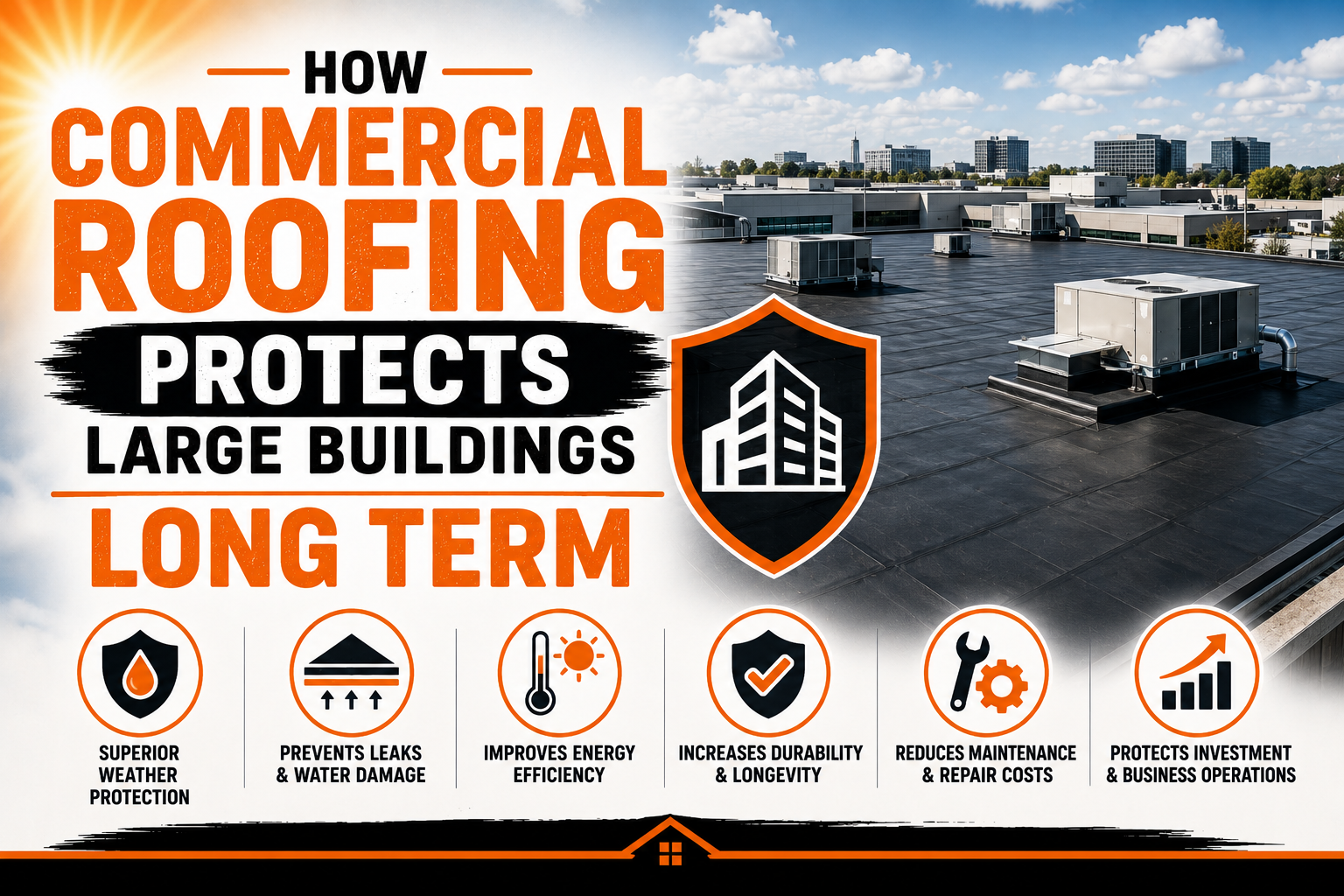
How Commercial Roofing Protects Large Buildings Long Term
Introduction
Commercial roofing plays a critical role in protecting large buildings over many years. Warehouses, offices, retail centers, manufacturing facilities, schools, healthcare buildings, apartment complexes, and other large properties depend on their roofing systems to shield the structure and everything inside it from rain, wind, sunlight, temperature changes, and severe weather.
A commercial roof is more than a visible outer surface. It is a complete building system that can include a structural deck, insulation, vapor control layers, membranes, flashing, drainage components, edge details, penetrations, and protective walkways. Each component contributes to the roof’s ability to keep water outside and protect the building beneath it.
Large buildings can have extensive roof areas and complicated layouts. They may contain multiple roof sections, low-slope surfaces, parapet walls, internal drains, rooftop HVAC units, vents, skylights, access equipment, and other penetrations. Because of this complexity, long-term protection depends on proper design, quality installation, regular inspection, and consistent maintenance.
The condition of a commercial roof can affect much more than the building envelope. Water intrusion can damage insulation, ceilings, electrical systems, equipment, inventory, interior finishes, and structural materials. In occupied buildings, serious roofing failures can also interrupt business operations and create additional costs.
Understanding how commercial roofing provides long-term protection helps property owners and facility managers make better decisions throughout the roof’s service life. Rather than treating the roof as an expense that only matters when it leaks, it should be managed as a long-term asset that supports the safety, performance, and value of the entire property.
The Role of Commercial Roofing in Long-Term Building Protection
The primary function of commercial roofing is to create a protective barrier between the building interior and the outdoor environment. Large buildings are constantly exposed to weather, and the roof is often one of the most directly exposed parts of the structure. A properly designed roofing system helps control this exposure and reduces the chance that outside conditions will reach vulnerable building components.
Water protection is particularly important. Rainwater can enter through damaged membranes, deteriorated flashing, open seams, defective penetrations, or blocked drainage systems. Once moisture enters the roofing assembly, it may travel through insulation or other materials before becoming visible inside the building.
A reliable roofing system also protects the structural components beneath it. The roof deck and supporting materials are designed to perform under specific conditions, but prolonged moisture exposure can contribute to deterioration. Keeping water out helps preserve these components and supports the overall integrity of the building.
Commercial roofing can also protect interior assets. Large buildings may contain expensive machinery, computer equipment, inventory, furniture, documents, and specialized systems. A roof failure that allows water into these areas can result in losses that are much greater than the cost of repairing the roof itself.
The roof also helps maintain the building’s usable interior environment. Roofing assemblies commonly incorporate insulation that limits heat transfer between the outside and inside. This can help the building maintain more consistent temperatures and support the performance of heating and cooling systems.
Long-term protection also depends on how the roof interacts with other parts of the building. Walls, parapets, windows, mechanical systems, vents, and rooftop equipment may connect directly with the roofing assembly. Proper flashing and transition details help maintain a continuous weather-resistant barrier around these areas.
The roof’s protective role becomes even more important as a building ages. Materials naturally experience wear, and environmental exposure can gradually affect membranes, flashing, fasteners, insulation, and drainage components. Regular maintenance helps preserve the protective function instead of allowing deterioration to progress unnoticed.
A commercial roof should therefore be considered part of the building’s overall defense against environmental conditions. When it is properly designed, installed, and maintained, it helps protect both the physical structure and the activities taking place inside it.
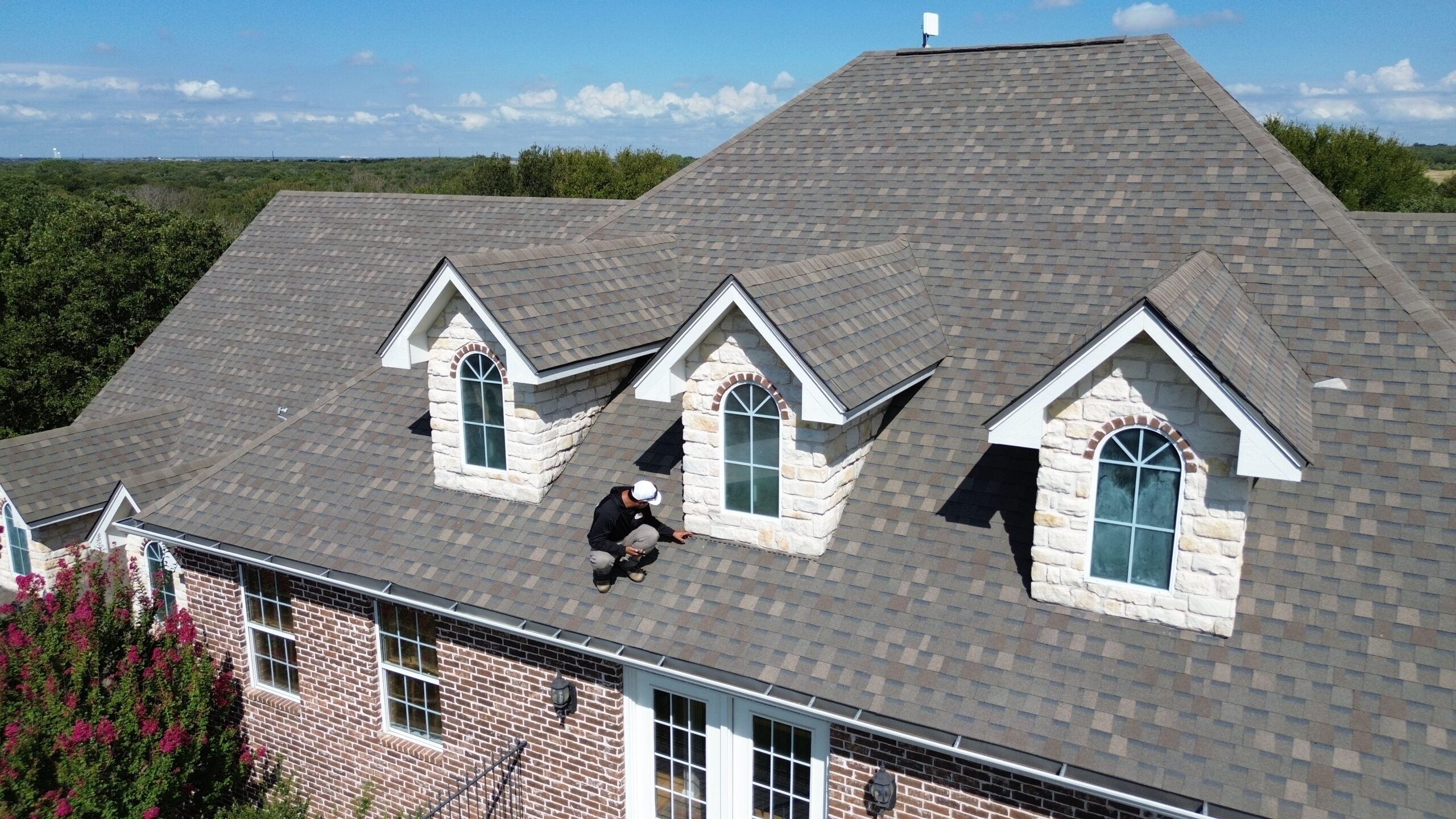
How Commercial Roofs Manage Water and Moisture
Water management is one of the most important ways a commercial roofing system protects a large building over the long term. Many commercial buildings use low-slope roofs, meaning rainfall may not move away as quickly as it does on steep residential roofs. These systems therefore require carefully designed drainage to collect and remove water.
Commercial drainage systems may include internal drains, scuppers, gutters, downspouts, and other water-management components. The roof surface is typically designed to guide water toward these outlets. Some systems use tapered insulation or other methods to create subtle slopes that direct water toward designated drainage points.
Internal drains can collect water from large roof areas and carry it through drainage piping. These drains must remain clear so that water can enter the system effectively. Debris, leaves, dirt, construction materials, and other objects can obstruct drainage and create conditions that increase the risk of ponding.
Scuppers provide another method of removing water from a roof. They allow water to pass through parapet walls or roof edges and discharge outside the building. Gutters and downspouts can then direct water away from walls and foundations.
Persistent ponding should be treated as a condition that deserves investigation. Water remaining on a roof for extended periods can increase exposure to moisture and place additional stress on roofing materials. Repeated ponding may indicate blocked drainage, inadequate slope, membrane deformation, structural movement, or another underlying condition.
Moisture protection also depends on the roofing membrane. Membranes are designed to provide a continuous water-resistant surface, but seams and transitions must be properly installed. A small opening in a seam or puncture in the membrane can create an entry point for water.
Flashing plays an equally important role around penetrations and transitions. Areas surrounding vents, HVAC equipment, skylights, pipes, walls, curbs, and roof edges require carefully designed details. These areas are more complex than open sections of the roof and can become vulnerable if flashing deteriorates.
Water can also move beneath a roofing surface after entering through a localized defect. This means the location of an interior leak may not directly correspond to the point where water entered the roof. Professional investigation may therefore be necessary when moisture problems occur.
Effective moisture management is a combination of design, materials, installation, drainage, and maintenance. When these elements work together, they help keep water away from insulation, structural components, interior finishes, and valuable building contents.
Commercial Roofing Materials and System Design
The materials used in a commercial roofing system influence how effectively it can protect a large building throughout its service life. Different buildings have different requirements, so roofing materials should be selected according to factors such as roof size, slope, climate, building use, maintenance expectations, and project budget.
Single-ply membrane systems are commonly used on commercial buildings. These flexible membranes can be installed using different attachment methods and are available in several material categories. Their performance depends not only on the membrane itself but also on seams, fasteners, adhesives, flashing, insulation, and edge details.
Built-up roofing systems use multiple layers to create a durable roofing assembly. The layered construction can provide substantial protection when properly designed and installed. Maintenance requirements depend on the particular materials, surface condition, drainage arrangement, and exposure.
Modified bitumen systems are another option for commercial properties. These asphalt-based systems can be configured using different installation methods and are often used on low-slope buildings. Proper detailing around seams, edges, penetrations, and transitions remains important for long-term performance.
Metal roofing systems can also provide durable protection for suitable commercial buildings. Metal roofs require careful attention to seams, fasteners, flashing, movement, penetrations, and drainage. The correct design and installation approach depends on the specific metal system and building configuration.
Roof coatings may be appropriate for certain existing roofing systems. Depending on the roof’s condition and the coating selected, a coating can provide additional surface protection or support restoration efforts. However, coatings are not suitable for every roof, so the existing system should be evaluated before this approach is selected.
The complete roof assembly matters as much as the visible roofing material. Insulation can influence thermal performance, while the structural deck provides support. Flashing protects transitions, drainage removes water, and edge components help secure the roof perimeter.
Large commercial buildings often have complicated roof layouts. Different sections may have different slopes, materials, drainage paths, and equipment. The system must be designed so that these areas work together rather than creating weak points where water or weather can enter.
Material selection should therefore be based on long-term requirements rather than initial appearance or price alone. A roofing system that is compatible with the building, properly installed, and appropriately maintained can provide more reliable protection over time.
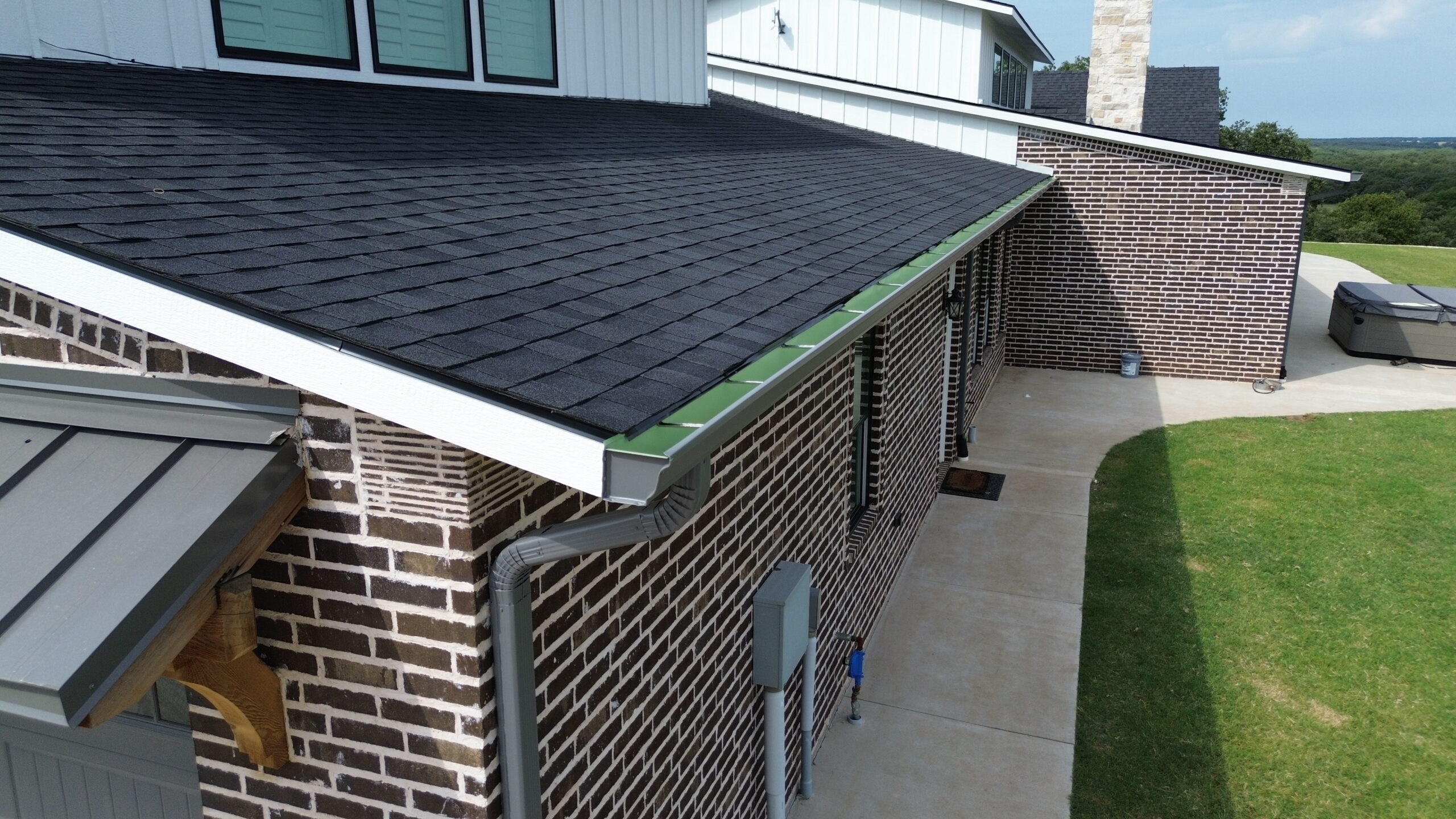
Protecting Structural Components and Interior Spaces
One of the most important long-term benefits of commercial roofing is the protection it provides to the structure below. A roof that successfully controls water and environmental exposure helps shield the deck, insulation, walls, ceilings, and other building components from deterioration.
The roof deck supports the roofing assembly and can be constructed from different materials depending on the building. If moisture reaches the deck and remains there for extended periods, deterioration may occur depending on the material and conditions. Protecting the deck from unnecessary moisture exposure helps preserve the building’s structural system.
Insulation is another important component. Wet insulation may lose some of its intended performance and can contribute to broader roofing problems. Keeping the roofing assembly dry helps the insulation continue performing its intended function.
Interior ceilings and walls can also be affected by roof problems. Water entering from above may create stains, damage finishes, or affect electrical and mechanical systems. In commercial properties, these problems can spread beyond a single room depending on the building layout.
Large buildings may contain sensitive equipment directly beneath roof areas. Manufacturing machinery, servers, electrical systems, inventory, and other assets can be expensive to repair or replace. Effective roofing reduces the likelihood that these assets will be exposed to water from above.
Moisture can also create secondary building problems if it remains undetected. Persistent damp conditions may affect materials and indoor conditions, making early detection particularly important. Regular inspections can help identify roofing defects before they result in extensive interior consequences.
The roof also protects the building envelope during severe weather. Properly installed edge details, flashing, membranes, and other components help the building resist wind-driven rain and other environmental exposure. The strength of the overall system depends on the quality and compatibility of these individual components.
Property owners should therefore consider roof maintenance as a form of building preservation. Money spent identifying and correcting roofing problems can help protect much larger investments located beneath the roof.
Long-term structural protection is not achieved by the membrane alone. It results from maintaining the entire roofing assembly and ensuring that water, weather, and other external forces are effectively controlled before they can reach vulnerable building components.
How Commercial Roofing Supports Energy Efficiency
Commercial roofing contributes to the overall energy performance of a large building by helping control heat transfer between the interior and exterior. Because roofs are exposed directly to sunlight, outdoor temperatures, wind, and changing weather conditions, their design can influence how hard heating and cooling systems must work. A properly designed roofing assembly can therefore support more consistent indoor conditions and efficient building operation.
Insulation is one of the most important components affecting thermal performance. It creates resistance to heat movement through the roof assembly and can help reduce unwanted temperature changes inside the building. The appropriate insulation type, thickness, and placement depend on the building design, climate, roofing system, and applicable requirements.
Roof surface characteristics can also influence heat absorption. Some commercial roofing materials and systems are designed to reflect more solar energy than others. Under suitable conditions, a reflective roof surface may help reduce heat gain through the roof, particularly in buildings where cooling demand is significant.
Energy performance should not be considered separately from moisture protection. A roofing assembly that allows water to enter insulation may experience reduced performance and additional deterioration. Keeping insulation dry is therefore important for maintaining both the thermal and protective functions of the roof.
The roof can also interact with other building systems. HVAC equipment located on or beneath the roof depends on a properly protected building envelope to operate effectively. If the roof allows excessive heat or moisture into the building, heating and cooling systems may have to compensate for changing interior conditions.
Large buildings can have extensive roof areas, making even small improvements in thermal performance potentially relevant to overall building operation. However, property owners should evaluate proposed energy improvements according to the building’s actual conditions rather than assuming that one roofing solution will provide the same results everywhere.
Solar installations can also affect long-term roofing performance. Mounting equipment, electrical connections, supports, and maintenance access can introduce additional roof details. Before installing solar systems, property owners should consider the remaining service life of the existing roof and how future roof replacement might affect the installation.
Energy-efficient roofing should ultimately be viewed as part of a broader building strategy. Proper insulation, suitable surface materials, moisture control, ventilation where applicable, and compatible mechanical systems can work together to improve building performance. A well-managed roofing assembly can therefore provide both weather protection and valuable support for long-term energy management.
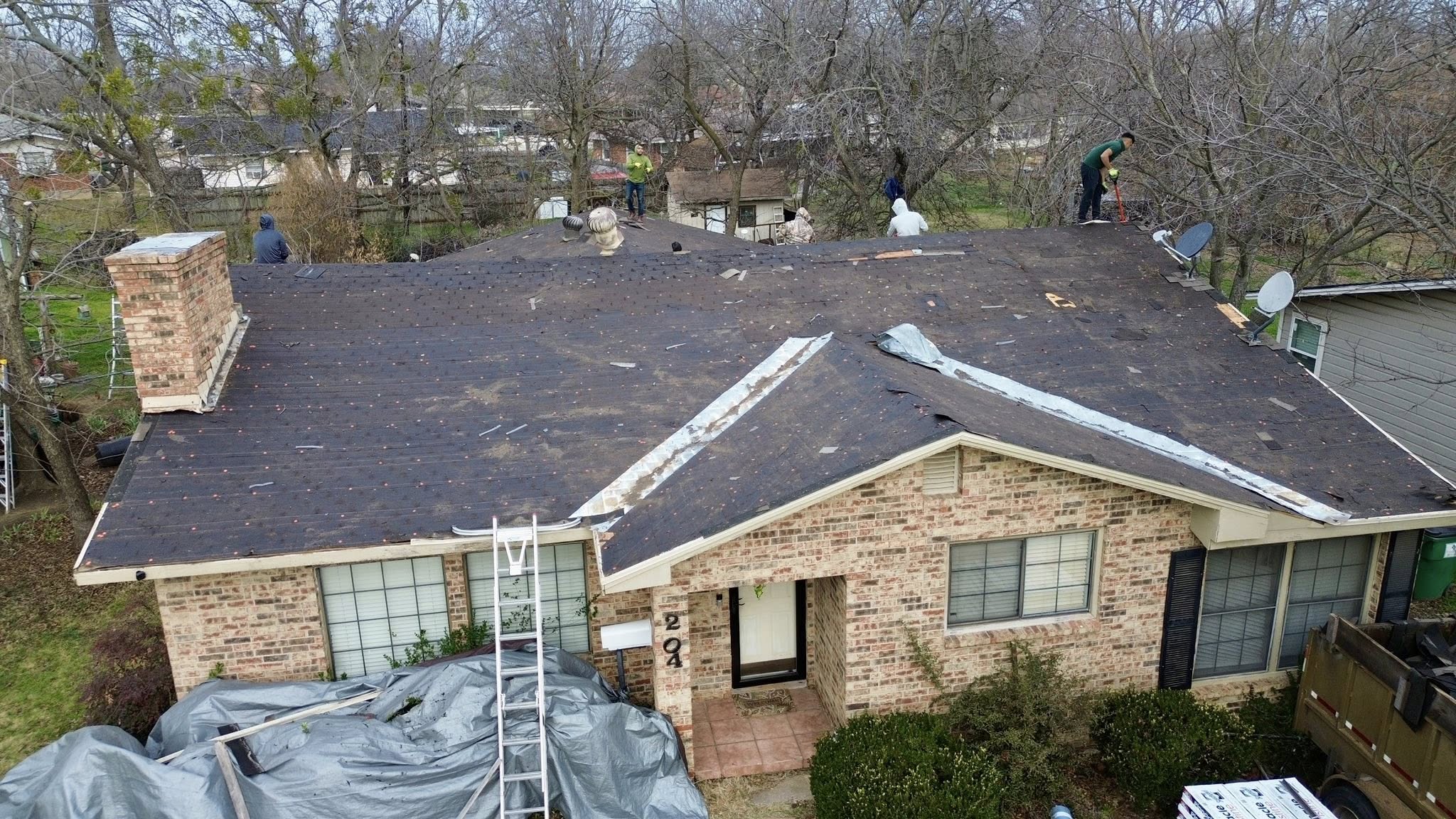
Protecting Rooftop Equipment and Building Systems
Large commercial buildings often use their roofs to support important mechanical and electrical equipment. HVAC units, exhaust systems, vents, skylights, communication equipment, solar installations, and other systems may be located above occupied areas. Commercial roofing must accommodate these features without allowing them to compromise the building’s weather protection.
Every roof penetration creates a potential vulnerability. Pipes, ducts, equipment supports, curbs, and other openings interrupt the continuous roofing surface. Proper flashing and sealing are therefore essential to prevent water from entering around these locations.
Equipment curbs are commonly used to support rooftop mechanical units. The roofing system must be properly integrated with these curbs so that water cannot enter around their edges. Deteriorated flashing or damaged seals should be evaluated promptly because these areas can become sources of recurring leaks.
Maintenance access is another important consideration. Technicians may need to visit rooftop equipment regularly, which means they will walk across certain areas of the roof. Repeated foot traffic can cause wear or physical damage to some roofing materials if access is not properly managed.
Designated walkways and protective pads can help direct maintenance personnel toward equipment while reducing unnecessary contact with vulnerable roof surfaces. These features can be particularly useful on large properties where many technicians may access rooftop systems throughout the year.
Property managers should coordinate equipment work with roofing requirements. When HVAC units are replaced or electrical systems are modified, contractors may need to work directly around roofing components. Poor coordination can result in punctures, damaged flashing, or other defects that may not become apparent until rainfall occurs.
Solar equipment requires similar consideration. Mounting systems can involve penetrations, attachments, or other details that must remain compatible with the existing roof. Before installation, the roof’s condition should be assessed to determine whether it has enough remaining service life to justify adding another long-term installation.
Equipment replacement should also be considered during roof replacement planning. If major mechanical units are nearing the end of their service life, coordinating their replacement with roofing work may reduce future disruption. Proper planning can also make it easier to design appropriate curbs, supports, and access areas.
Protecting rooftop equipment is therefore closely connected with protecting the roof itself. Good coordination, proper flashing, controlled access, and regular inspection can help prevent equipment-related activities from creating roofing problems. This protects both the building systems above the roof and the interior spaces below it.
The Importance of Commercial Roof Drainage
Effective drainage is fundamental to long-term commercial roofing performance. Large buildings may receive substantial amounts of rainfall across extensive roof areas, and the system must collect and remove that water efficiently. Poor drainage can leave water on the roof and increase the risk of leaks, material deterioration, and damage to supporting components.
Commercial drainage systems can include internal drains, scuppers, gutters, downspouts, and other outlets. The appropriate combination depends on the building’s design and roof configuration. These components work with the roof slope to guide water toward designated discharge points.
Internal drains are often used on large low-slope roofs. They collect water at strategic locations and direct it through internal piping. Drain openings and strainers must remain clear because even a well-designed drainage system cannot perform effectively when debris blocks the entrance.
Scuppers can move water through parapet walls or roof edges. They provide a direct pathway for water to leave the roof and may connect with gutters or downspouts. Their condition should be monitored because damage or blockage can restrict water movement.
Gutters and downspouts help move water away from roof edges and exterior walls. If these components become blocked, disconnected, or damaged, water may overflow onto walls, entrances, foundations, or surrounding areas. This can create problems beyond the roofing system itself.
Some commercial roofs incorporate tapered insulation or other slope-forming methods to improve drainage. These features create gradual pathways toward drains or outlets while maintaining the overall low-slope appearance of the roof. Correct slope planning is especially important on large surfaces where small elevation differences can affect water movement.
Persistent ponding should be investigated. Water that remains in the same location after rainfall may indicate inadequate drainage, structural movement, membrane deformation, or another condition. Continued ponding can increase exposure to moisture and may place additional stress on the roofing assembly.
Drainage maintenance should be performed regularly and adjusted according to property conditions. Trees, construction activity, rooftop equipment, and surrounding environmental conditions can increase the amount of debris reaching the roof.
A drainage system protects the entire building by controlling where rainfall goes. Keeping drains and outlets clear, monitoring recurring ponding, and addressing drainage defects promptly can help preserve roofing materials and reduce the possibility of water reaching vulnerable structural and interior components.
Preventive Maintenance for Long-Term Roof Performance
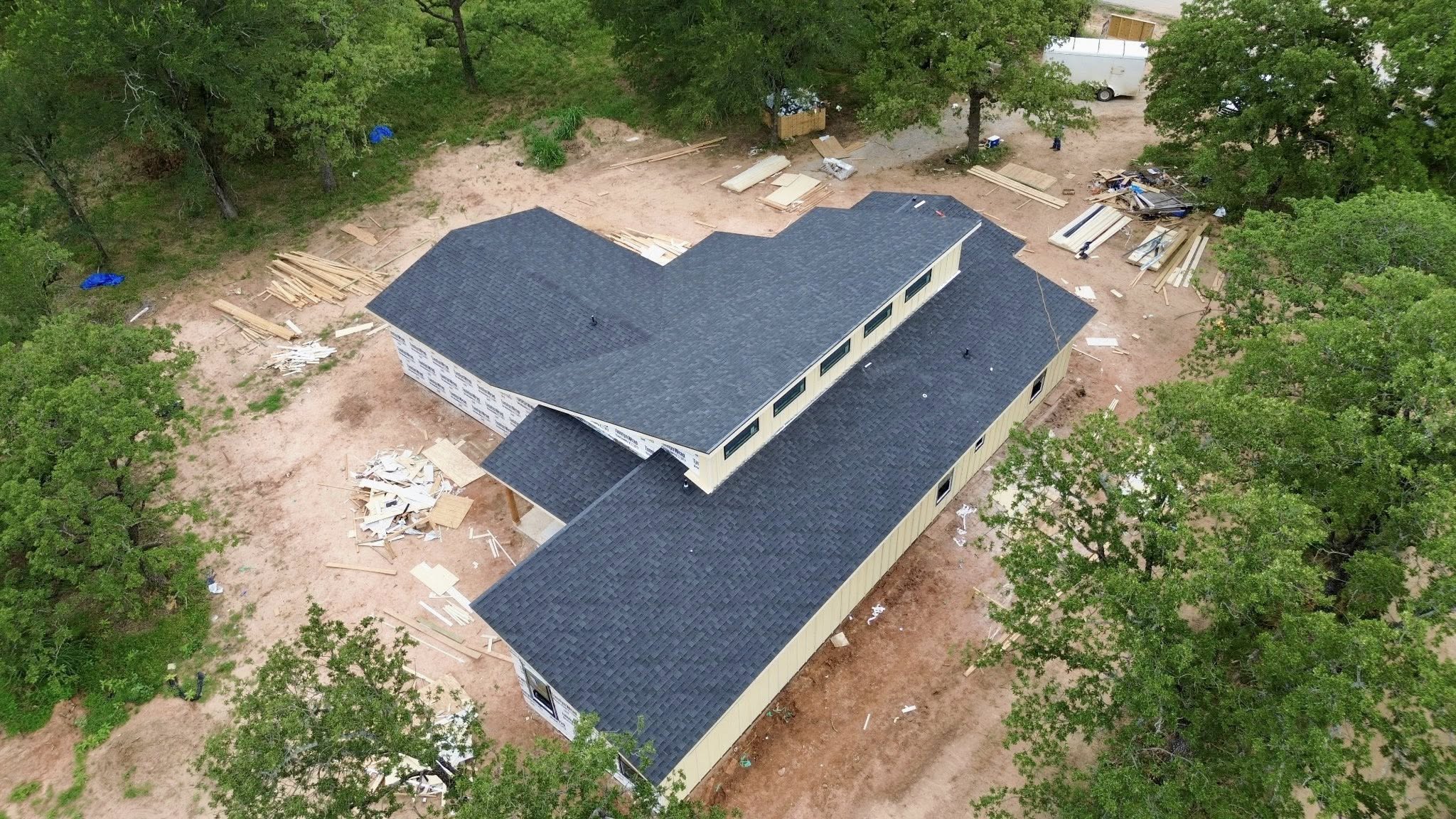
Preventive maintenance is one of the most effective ways to preserve a commercial roof over the long term. Even durable roofing systems experience gradual wear from weather, rooftop activity, and normal aging. Regular maintenance gives property owners an opportunity to identify developing problems before they become expensive failures.
Routine inspections should evaluate the roof surface, seams, flashing, drainage components, roof edges, penetrations, and equipment areas. The frequency of inspections should reflect the roof’s age, material, climate, building use, and previous maintenance history.
Drainage maintenance should receive particular attention. Leaves, dirt, branches, packaging materials, and construction debris can restrict drains and other outlets. Keeping these components clear helps ensure that rainfall can leave the roof efficiently.
Flashing should also be monitored because it protects many of the roof’s most complex transitions. Areas around walls, vents, skylights, equipment curbs, pipes, and expansion joints can experience movement and weather-related deterioration. Small defects should be evaluated before they become sources of significant water intrusion.
Rooftop traffic should be controlled through designated pathways and protective surfaces where necessary. Workers should avoid unnecessary movement across sensitive roof areas and should report accidental damage immediately.
Maintenance records should be kept for every inspection and repair. Useful information includes the inspection date, observed conditions, photographs, repair locations, materials used, and recommendations for future work. These records allow property managers to recognize recurring problems and track changes in roof condition.
Preventive maintenance should also account for severe weather. After major storms, the roof should be evaluated for visible damage when appropriate. Strong winds, hail, falling branches, and heavy rainfall can affect membranes, flashing, drainage components, and rooftop equipment.
Other contractors should be included in the maintenance strategy. HVAC technicians, electricians, solar installers, and construction crews can unintentionally damage roofing materials while performing their work. Clear access procedures and coordination can reduce this risk.
Preventive maintenance does not eliminate the need for eventual replacement. Instead, it helps the roof perform effectively for as long as practical and provides better information for future decisions. A consistent maintenance program can make major roofing expenses more predictable and reduce the likelihood of emergency failures.
Detecting and Repairing Commercial Roof Damage
Early detection is essential for protecting large buildings from the consequences of commercial roof damage. A small defect may initially affect only a limited area, but water can travel through roofing assemblies and cause damage beyond the visible problem. Prompt investigation can help prevent a localized issue from becoming a larger building problem.
Interior warning signs can include ceiling stains, damp insulation, peeling finishes, unusual odors, or moisture around walls and equipment. These signs should not automatically be assumed to identify the exact source because water can travel from its entry point before appearing inside.
Exterior inspections should look for damaged membranes, open seams, deteriorated flashing, punctures, loose components, blocked drainage, and damaged roof edges. Professional inspections may also be necessary when concealed moisture or underlying deterioration is suspected.
Repairs should address the cause rather than simply covering the visible symptom. Depending on the problem, repair work may involve restoring a membrane section, repairing a seam, replacing flashing, correcting drainage, or addressing damage around a penetration.
Temporary measures may sometimes be necessary during an emergency. They can help control water entry while permanent repairs are arranged. However, temporary solutions should be followed by a complete assessment and appropriate corrective work.
Recurring leaks deserve special attention. If the same location repeatedly requires repair, the underlying cause may not have been resolved. The problem could involve movement, drainage, flashing, installation details, or deterioration beneath the visible roof surface.
Property owners should also evaluate the condition surrounding a damaged area. A single defect on a healthy roof may be suitable for localized repair, while numerous defects across an aging system may indicate broader deterioration.
Repair records should document the location, cause, method, materials, and completion date. This information helps property managers evaluate the roof’s repair history and determine whether continued maintenance remains practical.
Timely repairs protect more than the roof itself. They help prevent moisture from reaching insulation, decking, structural components, equipment, inventory, and interior finishes. A responsive repair strategy is therefore an important part of long-term building protection.
How Professional Installation Affects Roof Longevity
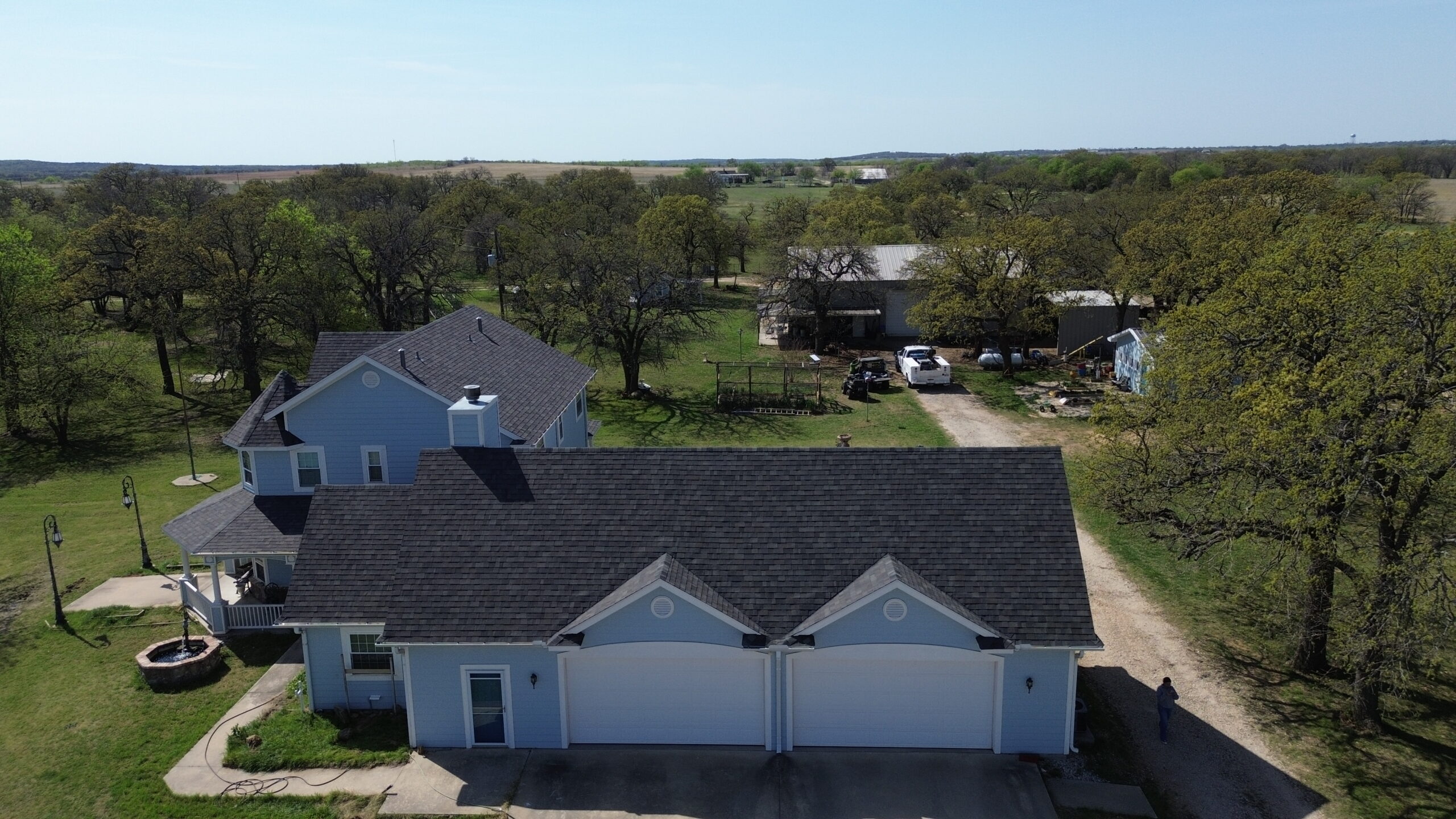
The quality of commercial roof installation has a major influence on how effectively the system protects a large building over time. Even high-quality materials can experience premature problems if they are installed incorrectly or if important details are overlooked.
Installation should begin with proper preparation. The existing surface or structural deck should be evaluated, damaged areas should be addressed, and the roof assembly should be prepared according to the requirements of the selected system. Installing new materials over unsuitable conditions can compromise long-term performance.
Each component must be installed according to the roofing system’s specifications. Insulation, membranes, fasteners, adhesives, seams, flashing, drainage components, and edge details all require appropriate installation methods.
Seams deserve particular attention because they connect separate sections of membrane or material. If seams are not properly formed, secured, or sealed, they can become vulnerable to water intrusion. Quality control during installation can help identify these problems before the roof is placed into long-term service.
Flashing and penetrations also require skilled workmanship. These areas involve transitions between different building components and often experience movement or concentrated weather exposure. Proper detailing helps maintain a continuous protective barrier around them.
Roof edges are another critical installation area. Wind can exert significant forces along the perimeter of large commercial roofs. Appropriate edge securement and flashing help maintain the integrity of the system during severe weather.
Installation quality should also include attention to drainage. Drains, scuppers, gutters, slopes, and related components must work together to move water away from the roof. Poorly installed drainage details can undermine an otherwise well-constructed roofing system.
Property owners should select contractors with relevant commercial roofing experience and appropriate qualifications. Written scopes, manufacturer requirements, safety practices, references, warranties, and project documentation should all be reviewed before major work begins.
Professional installation is ultimately an investment in long-term protection. When the roofing assembly is properly designed, correctly installed, carefully inspected, and consistently maintained, it can provide a strong protective barrier for the large building throughout its useful service life.
Commercial Roofing and Business Continuity
A commercial roof protects much more than the physical structure of a large building. It also supports the continuity of the activities taking place inside that building. Offices, warehouses, retail centers, manufacturing facilities, schools, and other commercial properties depend on reliable roof performance to keep employees, customers, equipment, inventory, and daily operations protected from weather-related problems.
A serious roof failure can quickly become an operational issue. Water entering through a damaged membrane may affect electrical equipment, ceilings, flooring, machinery, stored products, or computer systems. In some cases, affected areas may need to be closed temporarily while repairs and cleanup are completed.
The financial impact can extend beyond the immediate repair. A business may experience lost productivity, damaged inventory, disrupted customer service, temporary relocation expenses, or delays in scheduled activities. For properties with tenants, significant roof problems can also create complaints and affect tenant satisfaction.
Long-term roof management reduces the likelihood of these disruptions. Regular inspections allow property managers to identify deteriorated materials, damaged flashing, blocked drainage, and other concerns before they develop into major failures. Early repairs can often be planned around normal building operations instead of being performed as emergency work.
Weather events make preparedness especially important. Heavy rainfall, strong winds, hail, and falling debris can place additional stress on commercial roofing systems. After significant weather events, appropriate inspection can help identify damage that might otherwise remain unnoticed until the next rainfall.
Roof access and maintenance activities should also be coordinated with business operations. Contractors may need to use equipment, restrict certain areas, or create temporary noise and access limitations. Advance scheduling allows building managers to reduce disruption and communicate expectations to occupants.
A reliable roof also helps protect business assets over the long term. Large commercial properties may contain expensive equipment and materials that cannot easily be moved away from vulnerable areas. Maintaining the roof therefore contributes to protecting the investments housed beneath it.
Business continuity should be considered whenever major roofing decisions are made. Property owners should evaluate not only the cost of repairs but also the potential consequences of postponing necessary work. A planned roofing project may be considerably easier to manage than an unexpected failure during severe weather or an important business period.
Ultimately, commercial roofing supports operational stability by keeping the building protected and usable. When maintenance, inspections, repairs, and replacement planning are handled proactively, the roof becomes a dependable part of the building’s long-term business infrastructure.
Extending Commercial Roof Service Life
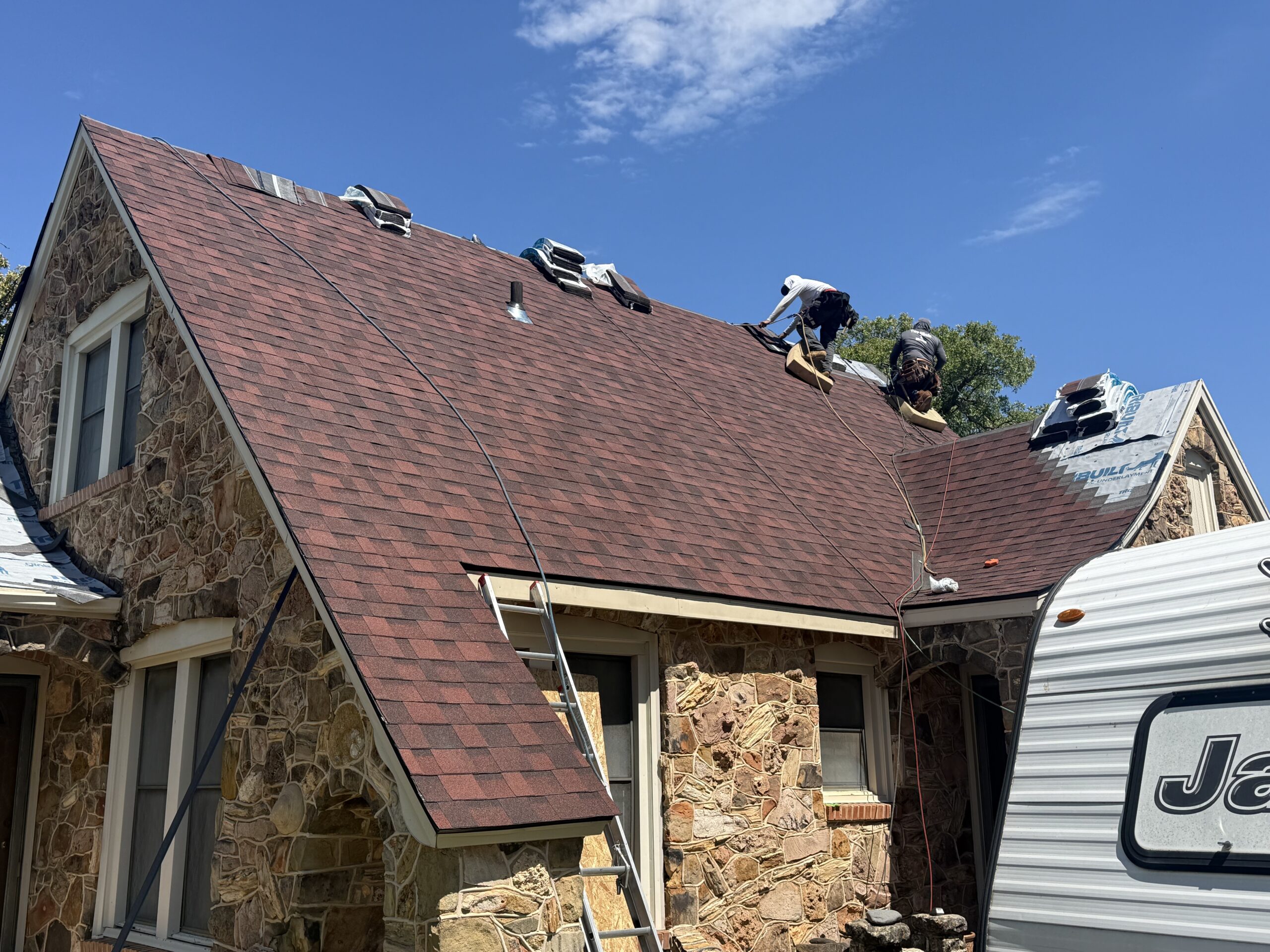
Extending the useful service life of a commercial roof requires consistent attention to the conditions that cause deterioration. Even high-quality systems experience gradual aging, but proper management can reduce avoidable damage and help the roof perform effectively for a longer period.
Regular inspections are the foundation of service-life management. Professional inspections can identify early signs of membrane deterioration, damaged seams, aging flashing, blocked drainage, loose components, and other developing concerns. Addressing these conditions early can reduce the likelihood of more extensive damage.
Drainage maintenance is particularly important. Water should be able to move toward drains, scuppers, gutters, and other outlets without unnecessary obstruction. Leaves, dirt, branches, trash, and construction debris should be removed so they do not interfere with normal water flow.
Rooftop traffic should also be controlled. Workers who regularly service HVAC units, electrical systems, communication equipment, or other installations may need to cross the roof frequently. Designated walkways and protective pads can reduce concentrated wear in high-traffic areas.
Other contractors should understand that the roof is a finished protective system that requires care. HVAC replacement, solar installation, electrical work, and construction projects can accidentally puncture or damage roofing materials. Coordination between contractors can reduce these risks.
Small repairs should not automatically be postponed because the roof appears generally functional. Minor defects can provide pathways for water and may worsen through repeated weather exposure. Timely repair can help preserve surrounding materials and reduce the size of the affected area.
The surrounding property can also influence roof longevity. Overhanging branches may fall onto the roof, while vegetation and debris can contribute to drainage blockages. Proper exterior property maintenance can therefore support the roofing system.
Roof coatings or restoration treatments may sometimes extend the useful life of an appropriate existing system. However, these approaches are not suitable for every roof. The existing membrane, moisture condition, substrate, drainage, and other components should be professionally evaluated before restoration is selected.
Maintenance records are equally valuable. Keeping inspection reports, repair documentation, photographs, and recommendations creates a history that helps property owners understand how the roof is changing. This information can support better decisions about future repairs and replacement.
Extending service life does not mean delaying replacement indefinitely. The goal is to obtain reliable performance for as long as the system remains technically and financially practical. A well-managed roof can provide valuable additional years of protection while allowing owners time to plan future capital work.
Repair vs Replacement for Long-Term Protection
One of the most important decisions in commercial roof management is determining whether an existing system should be repaired or replaced. The answer depends on the roof’s overall condition, age, repair history, remaining service life, and the extent of deterioration rather than on one visible defect.
Localized damage can often be repaired when the surrounding roofing system remains in good condition. Examples may include isolated punctures, limited flashing deterioration, individual seam problems, or specific drainage defects. Professional repairs can restore these areas without requiring complete roof replacement.
Replacement becomes more reasonable when problems are widespread. Numerous leaks, extensive membrane deterioration, widespread flashing failures, damaged insulation, or significant underlying moisture can indicate that the roof is approaching the end of its practical service life.
Age is useful when evaluating a roof, but it should not be the only factor. An older system with a strong maintenance history may continue to perform effectively, while a newer roof with poor installation or neglected maintenance may have serious problems. Condition assessment provides a more complete picture.
Repair history can reveal important patterns. If a roof requires increasingly frequent repairs, owners should consider whether continued spending is providing sufficient value. Repeated failures in the same locations may also indicate that previous repairs addressed symptoms without correcting the underlying cause.
The condition of the roof assembly beneath the visible surface is another consideration. Wet insulation, deteriorated decking, or other concealed problems can influence whether repair or replacement is appropriate. Additional investigation may be required when visible evidence does not provide enough information.
The building’s future plans should also influence the decision. If major renovations, equipment changes, or solar installations are planned, the remaining service life of the existing roof should be considered before investing in new rooftop systems.
A replacement project provides an opportunity to improve more than the membrane. Owners can evaluate insulation, drainage, flashing, edge details, access pathways, and other components as part of the overall roofing strategy. Addressing these elements together can improve long-term performance.
Financial considerations are also important. A low-cost repair may make sense when it restores a healthy roof, but repeated repairs can become expensive when deterioration is widespread. Comparing projected repair costs with the expected service life of a replacement system can provide a clearer basis for decision-making.
The objective should always be long-term protection rather than simply solving the most visible problem. Professional evaluation allows property owners to determine whether the existing roof can reasonably continue protecting the building or whether replacement offers greater reliability and value.
Planning Commercial Roofing Costs and Future Needs
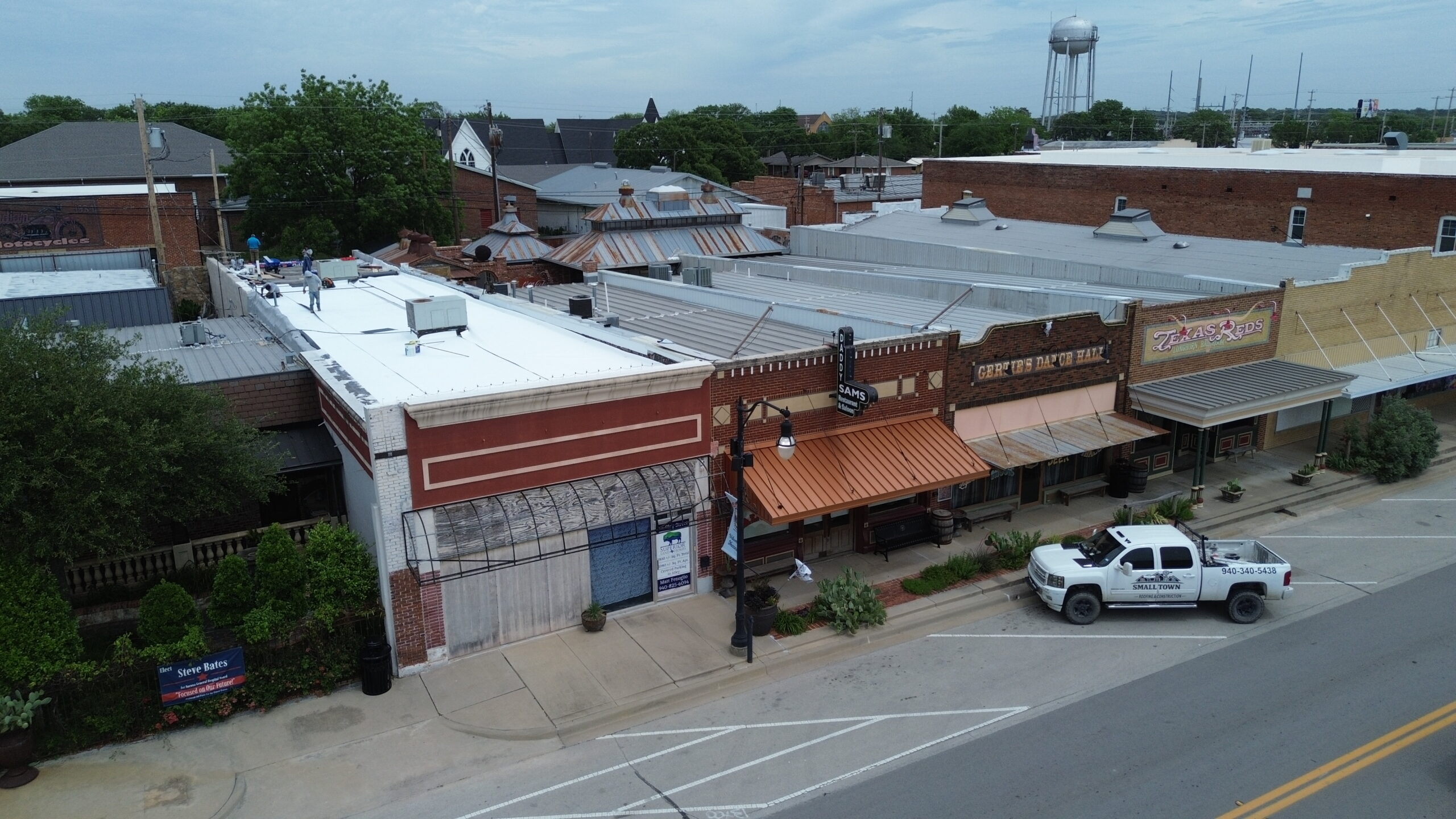
Long-term commercial roofing protection requires financial planning as well as technical maintenance. Large buildings can have extensive roof areas, complicated drainage systems, multiple equipment penetrations, and specialized materials. As a result, major roofing projects can represent significant capital expenses that should be anticipated rather than handled only after a failure occurs.
A useful starting point is a current roof condition assessment. Property owners should understand the roof’s approximate age, material, condition, repair history, drainage performance, and expected remaining service life. This information provides a foundation for estimating future roofing needs.
Routine maintenance and major capital work should be considered separately. Cleaning drainage systems, repairing isolated defects, and conducting inspections may be ongoing maintenance expenses. Full replacement, extensive restoration, structural repairs, or major insulation upgrades may require separate capital planning.
Project proposals should be evaluated based on complete scope. Important items may include material removal, insulation, deck repairs, flashing, drainage improvements, edge details, equipment protection, cleanup, warranties, and testing. Comparing only the final price can make substantially different proposals appear equivalent.
Unexpected conditions should also be considered. Roofing materials may conceal damaged decking, wet insulation, or other deterioration that becomes visible only during construction. A reasonable contingency can help property owners manage necessary additional work without compromising the project’s quality.
Future building improvements should be incorporated into roofing plans. New HVAC equipment, solar systems, skylights, communication equipment, and other installations can affect the roof. Coordinating these projects can reduce unnecessary penetrations and prevent situations where new equipment must later be removed or disturbed during roof replacement.
Long-term budgeting should consider the consequences of postponement. Delaying necessary work may result in larger repair costs, interior damage, business disruption, or emergency replacement. Planned investment generally provides greater control over scheduling and project scope.
Property owners can also use inspection records to establish a rolling capital plan. If reports show gradual deterioration, replacement funds can be planned before the roof reaches a critical condition. This approach helps reduce the likelihood of sudden and unexpected expenses.
A roofing budget should therefore account for the complete life cycle of the system. Installation is only the beginning, followed by inspection, maintenance, repair, restoration, and eventually replacement. Considering these stages together provides a more realistic picture of the roof’s total long-term cost.
Financial planning strengthens the building’s protection because it allows necessary work to be completed at the appropriate time. When roofing decisions are made proactively, property owners have more opportunities to select suitable materials, qualified contractors, and practical project schedules.
Building a Long-Term Commercial Roofing Strategy
A long-term commercial roofing strategy brings inspection, maintenance, repair, budgeting, documentation, and replacement planning together. Instead of treating each roofing problem as an isolated event, property owners can manage the roof as a building asset with a defined life cycle.
The strategy should begin with reliable documentation. Information about roofing materials, installation dates, warranties, previous repairs, inspection findings, drainage layouts, and rooftop equipment should be organized and kept accessible. Accurate records provide continuity when property managers or contractors change.
Regular professional inspections should then be scheduled according to the roof’s condition and exposure. Older systems or buildings with complex rooftop equipment may require closer attention. Inspections should also be considered after significant weather events or major construction activities.
Each inspection should result in practical recommendations. Conditions can be classified according to urgency so that immediate risks are addressed first while lower-priority concerns are monitored. This allows property owners to focus resources where they can provide the greatest protective benefit.
Maintenance should follow a predictable schedule. Drainage cleaning, flashing checks, debris removal, rooftop access management, and minor repairs can all be incorporated into the program. Consistency is more valuable than waiting until visible problems become severe.
Contractor relationships should also be managed strategically. Property owners can benefit from working with qualified commercial roofing professionals who understand the building’s history and system. Clear scopes, written recommendations, documentation, and communication help ensure that roofing work remains aligned with long-term objectives.
The strategy should include emergency procedures as well. Property managers should know whom to contact if severe weather causes damage or a significant leak occurs. Roof plans, warranties, inspection reports, and contractor information should be readily available when urgent decisions are required.
Replacement planning should begin before failure becomes unavoidable. Tracking roof age, deterioration, repair frequency, and projected service life gives property owners time to investigate options and develop funding plans. This reduces dependence on emergency decisions.
Long-term strategies should also be reviewed periodically. Building use may change, new equipment may be installed, energy requirements may evolve, or new construction may affect the roof. The roofing plan should adapt to these changes rather than remaining fixed for decades.
A successful strategy treats commercial roofing as part of overall facility management. The roof affects structural protection, energy performance, equipment protection, business continuity, maintenance costs, and property value. Coordinating these considerations creates a stronger and more sustainable approach to building management.
Conclusion
Commercial roofing provides long-term protection by creating a durable barrier between large buildings and the outdoor environment. Its role extends beyond preventing leaks because the roofing system also protects structural components, insulation, equipment, inventory, interior spaces, and the daily activities carried out within the property.
Water management remains one of the most important functions of the system. Proper membranes, flashing, drainage components, roof slopes, and penetrations work together to control rainfall and reduce moisture exposure. Maintaining these components helps protect the building from deterioration that may otherwise develop beneath the visible roof surface.
Energy performance is another important benefit. Proper insulation and suitable roofing materials can help control heat transfer and support more stable interior conditions. When the roof works effectively with HVAC and other building systems, it can contribute to the property’s broader operational performance.
Long-term protection also depends on maintenance. Regular inspections, clear drainage pathways, controlled rooftop traffic, prompt repairs, and careful coordination with other contractors can prevent avoidable damage. These practices help extend useful service life while giving property owners better information about when major work may be necessary.
Professional installation provides the foundation for reliable performance. Properly installed membranes, seams, flashing, insulation, drainage, and edge details are better positioned to withstand years of environmental exposure. Choosing qualified contractors and maintaining accurate project records can strengthen the value of the initial investment.
Repair and replacement decisions should be based on the complete condition of the roofing system. Localized defects may be repairable, while widespread deterioration may justify restoration or replacement. Considering roof condition, repair history, remaining service life, operational requirements, and long-term costs leads to more practical decisions.
Financial planning is equally important. Roofing costs should be anticipated through inspections, maintenance budgets, capital planning, and reasonable contingencies for unexpected conditions. Planned investment gives property owners greater control and reduces the risk of emergency expenses caused by preventable failures.
Ultimately, a commercial roof should be managed as a long-term building asset rather than a component that receives attention only when a leak appears. A combination of quality design, professional installation, preventive maintenance, timely repairs, accurate records, and future planning can help large buildings remain protected for many years. When roofing management becomes part of an organized facility strategy, property owners can preserve building performance, reduce disruption, protect valuable assets, and maximize the useful life of the entire roofing system.