
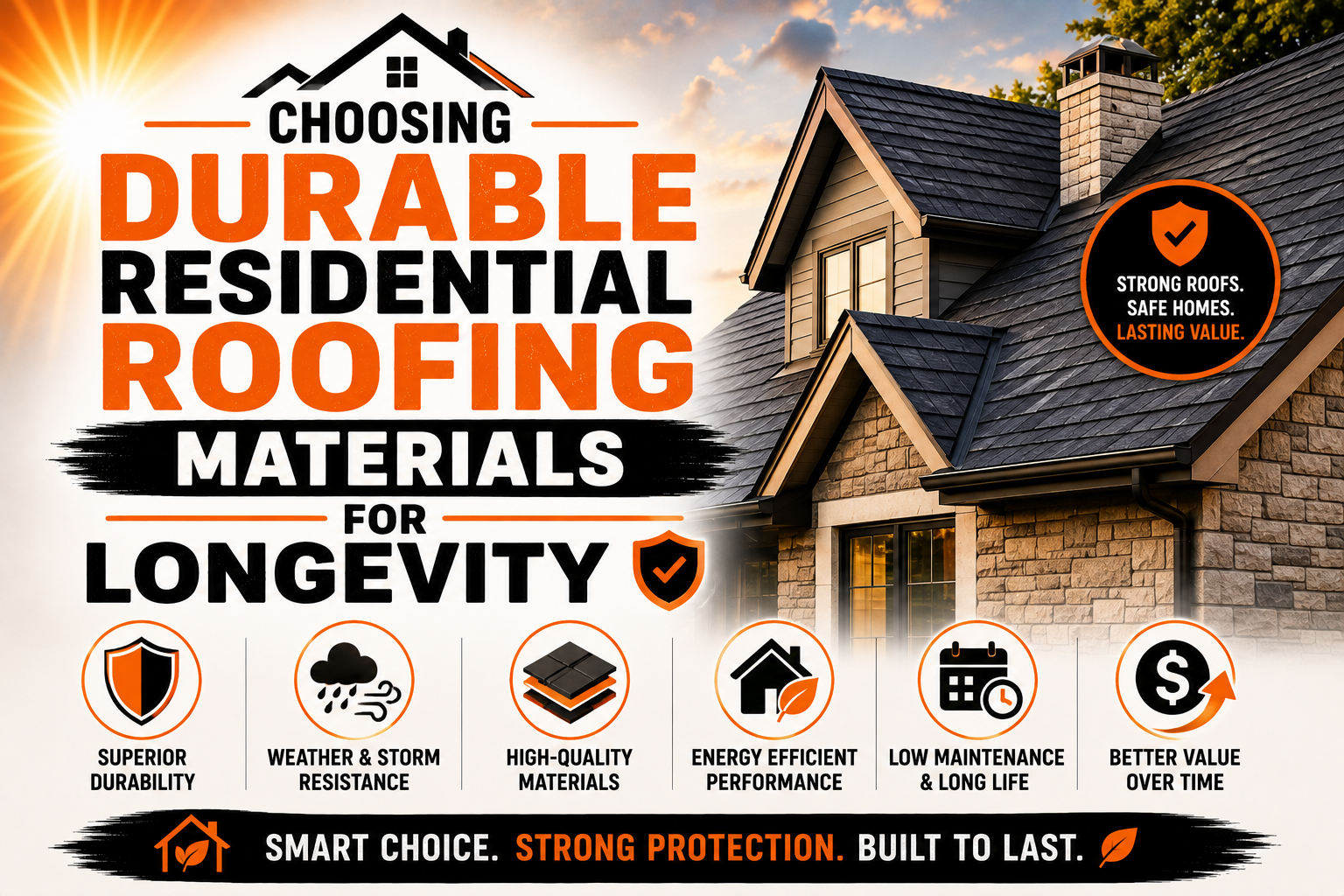
Choosing Durable Residential Roofing Materials for Longevity
Introduction
Choosing durable residential roofing materials is one of the most important decisions a homeowner can make when planning a new roof or replacing an aging system. A roof protects the home from rain, wind, sunlight, temperature changes, falling debris, and other environmental conditions. Selecting a material that can withstand these challenges for many years can reduce repair requirements, replacement frequency, and long-term ownership costs.
Roofing durability does not depend only on the material itself. Installation quality, climate, roof design, ventilation, drainage, maintenance, and the condition of the supporting structure all influence how long a roof remains effective. Even a premium roofing product can experience premature deterioration when it is installed incorrectly or exposed to conditions for which it was not designed.
Homeowners also have many roofing options available today. Asphalt shingles remain popular because they are accessible and versatile, while metal roofing is valued for durability and weather resistance. Clay and concrete tiles can provide decades of service, and premium materials such as slate can offer exceptionally long service lives when properly installed and maintained.
The best choice depends on the property and the homeowner’s priorities. Initial cost, expected lifespan, appearance, maintenance requirements, structural capacity, and local weather should all be considered before selecting a material.
Understanding these factors can help homeowners avoid choosing a roof based only on price or appearance. A durable roofing system should provide reliable protection while offering reasonable long-term value for the property.
Understanding Residential Roofing Durability
Roofing durability refers to a material’s ability to continue performing its intended functions despite exposure to weather, aging, and normal environmental stresses. A durable roof should resist moisture, wind, sunlight, temperature changes, and other conditions that can gradually weaken roofing components.
Service life is one of the clearest ways to evaluate durability. Different roofing materials can have significantly different expected lifespans, but these estimates depend on installation quality, climate, maintenance, and product specifications. A material that performs well in one region may have a different lifespan in another.
Weather resistance is another major factor. Roofs in areas with strong winds require secure fastening and appropriate material selection, while homes in regions with heavy rainfall need effective drainage and waterproofing. Areas with frequent hail may require materials designed to better withstand impact.
Ultraviolet exposure can also affect roofing materials. Continuous sunlight may cause some surfaces to fade, become brittle, or lose protective properties over time. Products designed for prolonged solar exposure can provide better long-term performance in particularly sunny environments.
Moisture is one of the most common causes of roofing problems. Water can enter through damaged shingles, failed flashing, cracked tiles, deteriorated sealants, or poorly protected roof penetrations. Once moisture reaches the roof deck or supporting structure, the resulting damage can become much more extensive.
Proper ventilation also contributes to durability. Excessive heat and moisture in attic spaces can affect roofing components and structural materials. A properly designed ventilation system can help manage these conditions and support the overall health of the roof assembly.
The quality of installation is equally important. Roofing materials must be installed according to manufacturer requirements and applicable building standards. Correct fastening, underlayment, flashing, spacing, and drainage details can significantly influence service life.
Maintenance should also be part of the durability equation. Regular inspections can identify minor problems before they become major failures. Replacing a few damaged roofing components can sometimes extend the life of an otherwise sound roof.
Homeowners should therefore evaluate durability as a combination of material quality and system performance. A strong material installed on a poorly prepared roof may not last as expected, while a suitable material installed correctly and maintained properly can provide reliable service for many years.
Asphalt Shingles for Reliable Residential Roofing
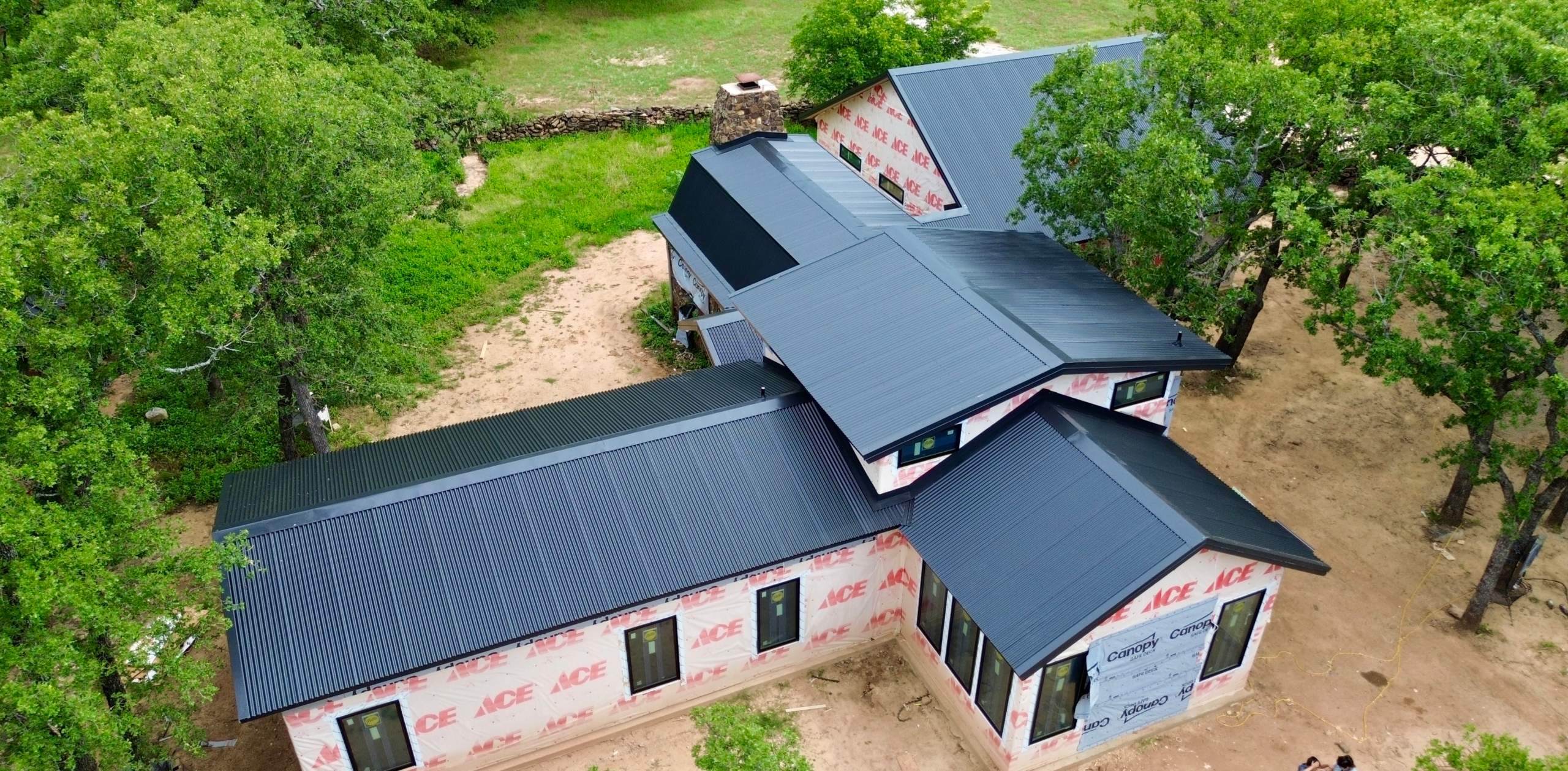
Asphalt shingles are among the most common residential roofing materials because they offer a practical combination of affordability, appearance, availability, and performance. They are available in different grades and styles, allowing homeowners to select products according to budget and desired durability.
Standard asphalt shingles are designed to protect the roof from normal weather exposure. Higher-quality architectural or dimensional shingles can provide improved appearance and additional performance characteristics compared with basic products.
One of the advantages of asphalt shingles is their relatively straightforward installation. Many roofing contractors have extensive experience with these systems, making qualified installation services widely available. Proper installation remains essential because incorrect nailing, poor alignment, inadequate flashing, or improper ventilation can shorten the roof’s useful life.
Asphalt shingles can perform well in many climates, but homeowners should select products appropriate for local conditions. Areas with strong winds may require shingles and fastening systems with suitable wind resistance. Regions with severe weather may also benefit from products designed to provide improved impact resistance.
Sunlight can affect asphalt shingles over time. High-quality products may include protective features designed to withstand ultraviolet exposure. Homeowners should review manufacturer specifications and warranty information rather than assuming every shingle product provides the same level of durability.
Moisture protection also depends on the complete roofing system. Underlayment, flashing, valleys, roof penetrations, and drainage must be properly installed to prevent water from reaching the roof deck.
Another advantage is repairability. If individual shingles become damaged, they can often be replaced without removing the entire roof. This can help homeowners extend the useful life of the roofing system when localized problems occur.
Maintenance should include checking for missing, cracked, curling, or damaged shingles. Gutters and downspouts should also remain clear so that water can drain efficiently away from the roof.
Although asphalt shingles generally have a shorter service life than premium materials such as slate or some tile systems, they can still provide dependable protection when properly selected and maintained. Their lower initial cost can make them an attractive choice for homeowners who need a balance between durability and affordability.
Metal Roofing for Long-Term Performance
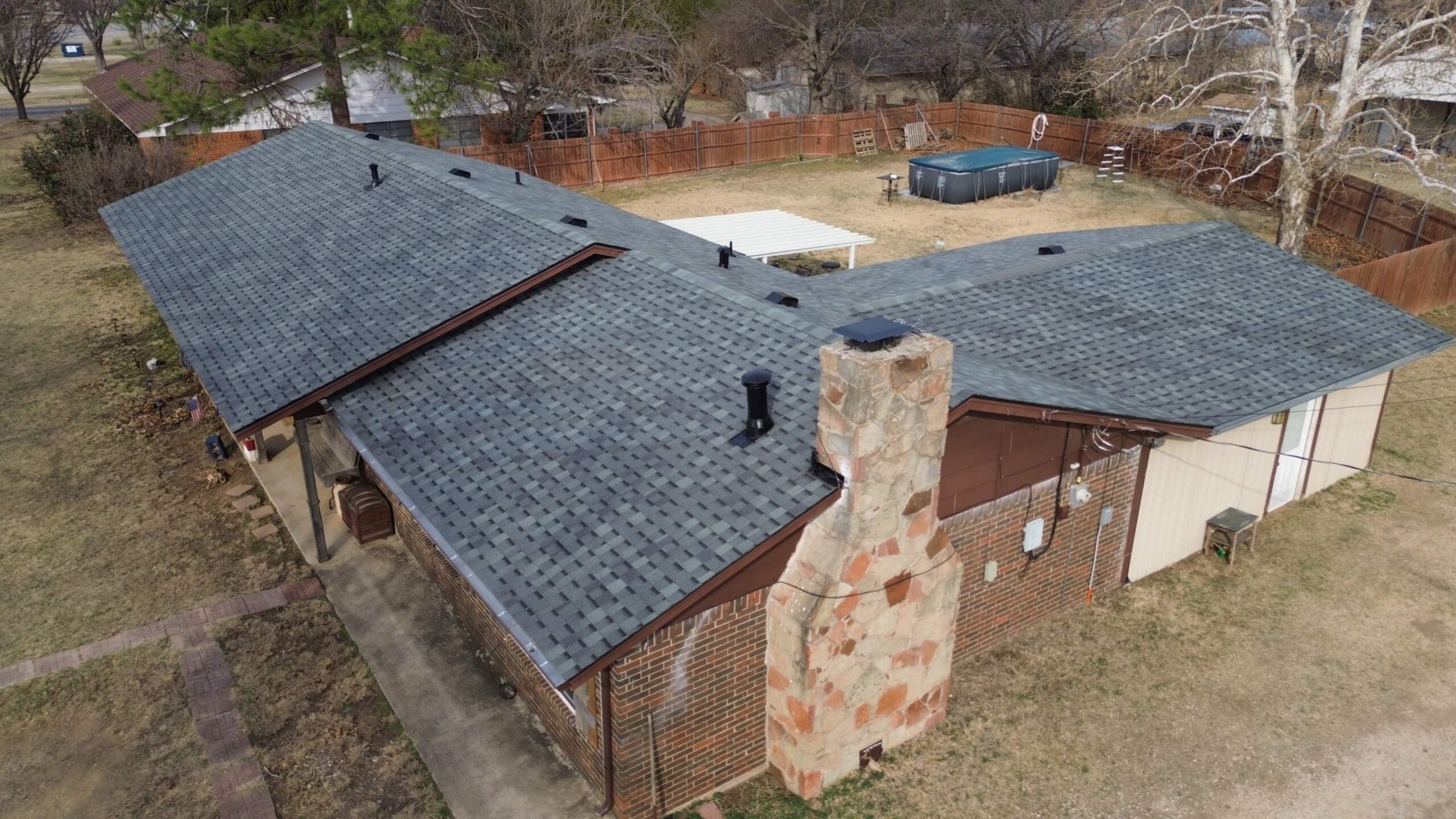
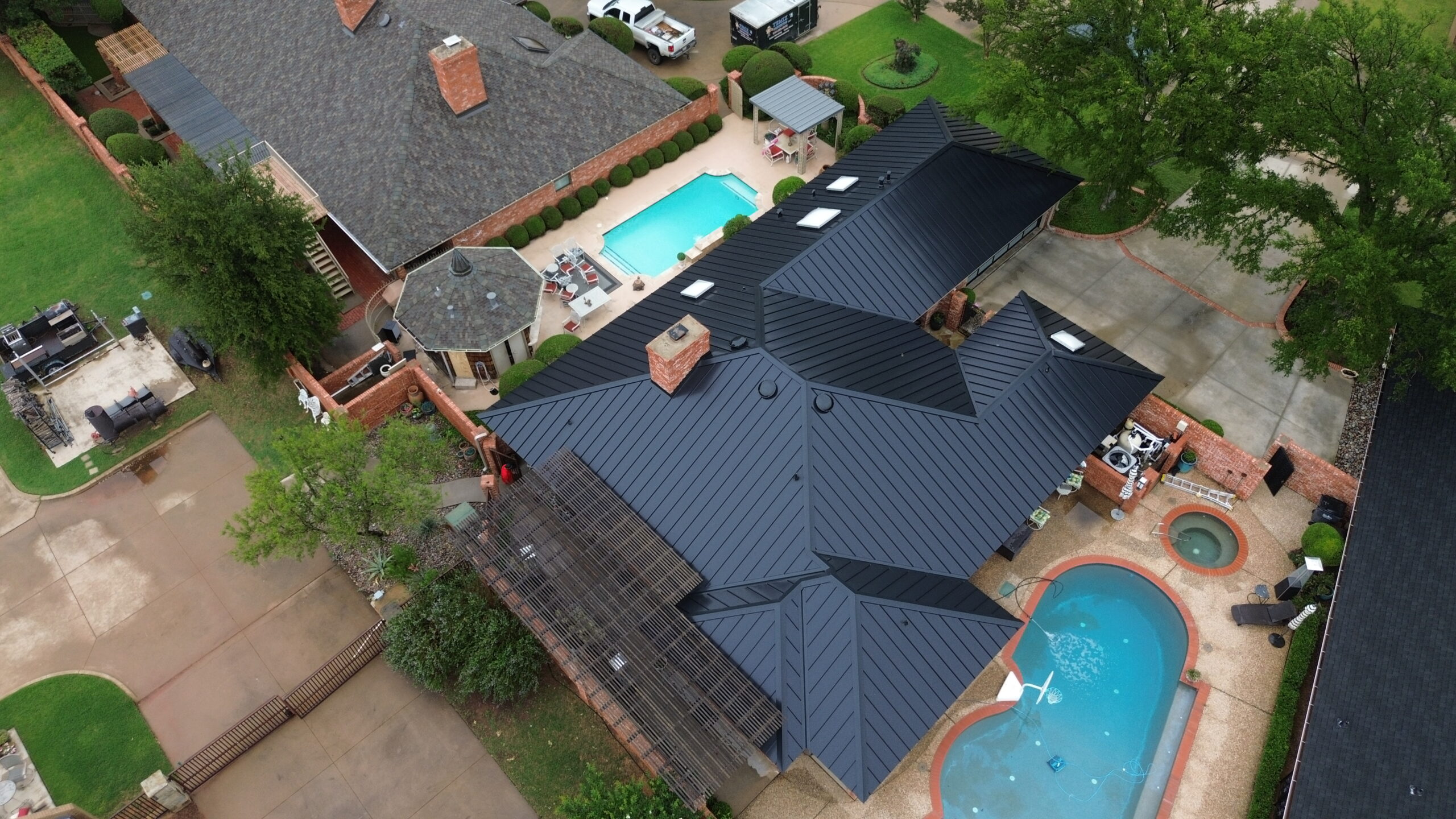
Metal roofing is widely recognized for its durability and long-term performance. Residential metal roofs can be manufactured from materials such as steel and aluminum and are available in panels, standing seam systems, and styles designed to resemble other roofing products.
One of the primary advantages of metal roofing is resistance to many environmental conditions. Properly installed metal can withstand sunlight, rain, wind, and temperature changes for extended periods. Coatings can also provide additional protection against corrosion and weather exposure.
Metal roofing can have a long service life when maintained correctly. This can reduce the frequency of complete roof replacements and make it an attractive choice for homeowners planning to remain in a property for many years.
Wind resistance depends on the specific product and installation method. Panels must be properly fastened, and seams, edges, and penetrations require careful attention. A professional installer should follow the manufacturer’s requirements for fastening and flashing.
Metal can also perform well in areas with heavy rainfall because its surface allows water to move efficiently toward drainage systems when the roof is correctly designed. Proper slope and flashing remain important regardless of the roofing material.
Another benefit is fire resistance. Many metal roofing systems are noncombustible, which can provide an advantage in areas where wildfire exposure or fire safety is an important consideration.
Metal roofing can also support energy efficient design. Reflective coatings and lighter finishes can reduce solar heat absorption in suitable climates. However, the overall thermal performance still depends on insulation, ventilation, and the complete roof assembly.
Maintenance requirements are generally manageable. Homeowners should periodically inspect seams, fasteners, flashing, coatings, and areas around roof penetrations. Early attention to corrosion or loose components can help prevent more extensive problems.
Metal roofing may cost more initially than basic asphalt shingles, but its long service life can provide strong long-term value. Homeowners should compare expected lifespan, maintenance, energy performance, and replacement frequency rather than looking only at the initial installation price.
When properly selected and installed, metal roofing can be a strong option for homeowners seeking a combination of durability, weather resistance, and long-term performance.
Clay and Concrete Tile Roofing
Clay and concrete tiles are valued for their durability, distinctive appearance, and ability to provide long-term protection. Tile roofing has been used for generations, and modern products continue to offer homeowners a wide variety of profiles, colors, textures, and finishes.
Clay tiles are produced from natural clay that is shaped and fired at high temperatures. The resulting material can remain durable under prolonged exposure to sunlight and weather. Properly installed clay tile roofs can provide very long service lives.
Concrete tiles are manufactured using cement-based mixtures and can be formed into many different profiles. They can provide strong resistance to normal weather exposure and are available in styles that complement both traditional and contemporary homes.
One important consideration is weight. Tile roofing can be considerably heavier than asphalt shingles and some metal systems. The roof structure should therefore be evaluated before installation to determine whether it can safely support the complete roofing assembly.
Tile can perform well in hot climates because its shape can create an air space between the tile surface and the underlying roof structure. This can help moderate heat transfer when combined with suitable insulation and ventilation.
Individual tiles can occasionally crack or break because of severe weather, falling objects, improper handling, or people walking on the roof incorrectly. However, localized damage can often be repaired by replacing individual tiles rather than replacing the entire roof.
Proper installation is essential. Underlayment, flashing, valleys, fasteners, and drainage systems must be correctly integrated with the tile surface. Problems in these hidden components can lead to leaks even when the visible tiles remain in good condition.
Maintenance should include periodic inspection for cracked, displaced, or damaged tiles. Gutters and valleys should also be kept clear so water can flow properly away from the roof.
Tile roofing can require a larger initial investment than basic roofing materials, but its long service life can provide substantial value. Homeowners who prioritize durability, architectural appearance, and long-term performance may find clay or concrete tile particularly suitable.
Slate and Other Premium Roofing Materials
Slate is considered one of the most durable natural roofing materials available for residential applications. It is a natural stone that can provide exceptionally long service when properly selected, installed, and maintained. Its distinctive appearance also makes it attractive for homeowners seeking a premium architectural finish.
One of slate’s major advantages is its resistance to many forms of weather exposure. Quality slate can remain functional for many decades, and some properly maintained systems can last for generations.
However, slate roofing requires specialized installation. The material can be fragile if handled incorrectly, and its weight can place significant demands on the supporting structure. A structural assessment is therefore important before installation.
The quality of slate also matters. Different slate products have different characteristics, and not all slate has the same expected lifespan. Homeowners should select suitable material from reliable sources and work with contractors experienced in slate installation.
Flashing and fastening are particularly important because the long life of the slate should be supported by durable components underneath it. If the underlying materials fail prematurely, repairs can become complicated.
Other premium roofing materials may include specialized synthetic products designed to imitate slate or other high-end materials. These alternatives can provide different combinations of weight, cost, durability, and appearance.
Premium roofing generally requires a greater initial investment than conventional materials. However, its long service life can reduce the frequency of complete roof replacement.
Homeowners should consider whether the existing structure, budget, architectural style, and long-term plans justify the investment. A premium roof is most valuable when it is properly matched to the property and maintained throughout its service life.
The main lesson is that durability involves more than selecting the longest-lasting material. The roof structure, installation method, climate, maintenance plan, and supporting components all contribute to longevity. When these factors are considered together, homeowners can choose a roofing system that provides dependable protection and lasting value.
Synthetic and Composite Roofing Materials
Synthetic and composite roofing materials have become increasingly popular among homeowners who want the appearance of traditional roofing materials with different performance characteristics. These products can be manufactured from polymers, recycled materials, engineered compounds, or combinations of materials designed to imitate slate, wood shakes, and other roofing styles. Their durability varies by product, so homeowners should review specifications carefully before making a decision.
One major advantage of synthetic roofing is its ability to provide consistent appearance and dimensional stability. Some products are designed to resist cracking, splitting, moisture absorption, and ultraviolet exposure. These characteristics can help the roofing system remain functional under changing weather conditions.
Composite roofing can also provide an alternative to heavier materials such as natural slate or concrete tile. Some synthetic products are considerably lighter, which may reduce structural demands on the home. However, the exact weight and installation requirements vary, so the roof structure should still be evaluated before installation.
Weather resistance is an important consideration when choosing synthetic roofing. Homeowners should look for products that are appropriate for the local climate and capable of handling expected wind, rain, temperature changes, and sunlight exposure. Product warranties can provide useful information about expected performance, although warranty length should not be treated as the only measure of durability.
Maintenance requirements are another advantage of many synthetic systems. Unlike natural wood, some composite materials are designed to resist moisture-related deterioration and insect damage. This can reduce certain maintenance requirements, although regular inspections and repairs are still necessary.
Installation quality remains important because synthetic products have specific fastening, spacing, flashing, and underlayment requirements. A durable material can still experience premature failure when installation does not follow manufacturer instructions.
The environmental characteristics of composite roofing should also be considered. Some products incorporate recycled materials, while others may offer recycling options at the end of their service life. Homeowners interested in sustainability should ask manufacturers about material composition and disposal procedures.
Synthetic roofing can provide strong long-term value when durability, appearance, weight, and maintenance are important considerations. However, comparing products individually is essential because not every synthetic roofing system offers the same service life or weather resistance.
Weather Resistance and Climate Considerations
Climate has a major influence on roofing longevity because different environments expose roofing materials to different types of stress. A material that performs exceptionally well in one region may require more maintenance or experience a shorter service life in another. Homeowners should therefore select roofing materials according to the actual weather conditions affecting the property.
Strong wind can place significant stress on shingles, panels, tiles, flashing, and roof edges. In areas where high winds are common, homeowners should select products with suitable wind resistance and ensure that fastening methods meet applicable requirements. Proper installation is particularly important around edges and corners because these areas can experience increased wind pressure.
Heavy rainfall creates another set of challenges. Water must be directed away from the roof through appropriate slopes, valleys, flashing, gutters, and downspouts. Materials that resist moisture can perform well, but even durable roofing can develop problems if drainage or flashing is poorly designed.
High temperatures and intense sunlight can gradually affect roofing surfaces. Ultraviolet exposure may cause some materials to fade, become brittle, or lose protective properties. Products designed for strong solar exposure can provide better long-term performance in hot and sunny environments.
Cold climates require attention to freezing temperatures, snow, and ice. Roofing materials and underlayment should be suitable for repeated temperature changes and moisture exposure. The roof structure must also be capable of supporting expected snow loads where applicable.
Hail can damage certain roofing materials, particularly when impacts are severe. Homeowners in hail-prone areas may want to investigate products designed with improved impact resistance. Reducing storm damage can help extend the service life of the roof and reduce unexpected replacement costs.
Humidity and biological growth can also affect roofing. Moss, algae, and other growth may retain moisture on certain roof surfaces. Good drainage, appropriate roof design, and regular maintenance can help control these problems.
The following factors are especially useful when evaluating climate suitability:
- Wind resistance and fastening requirements should match local weather conditions.
- Moisture resistance and drainage should be appropriate for rainfall levels.
- Solar exposure should be considered when selecting surface finishes and materials.
- Snow and ice conditions should be evaluated in colder regions.
- Impact resistance may be valuable in areas with frequent hail.
Choosing a roofing material that naturally matches the local environment can reduce premature deterioration. Climate-appropriate selection is therefore one of the most effective ways to improve roofing longevity.
Roof Installation Quality and Material Longevity
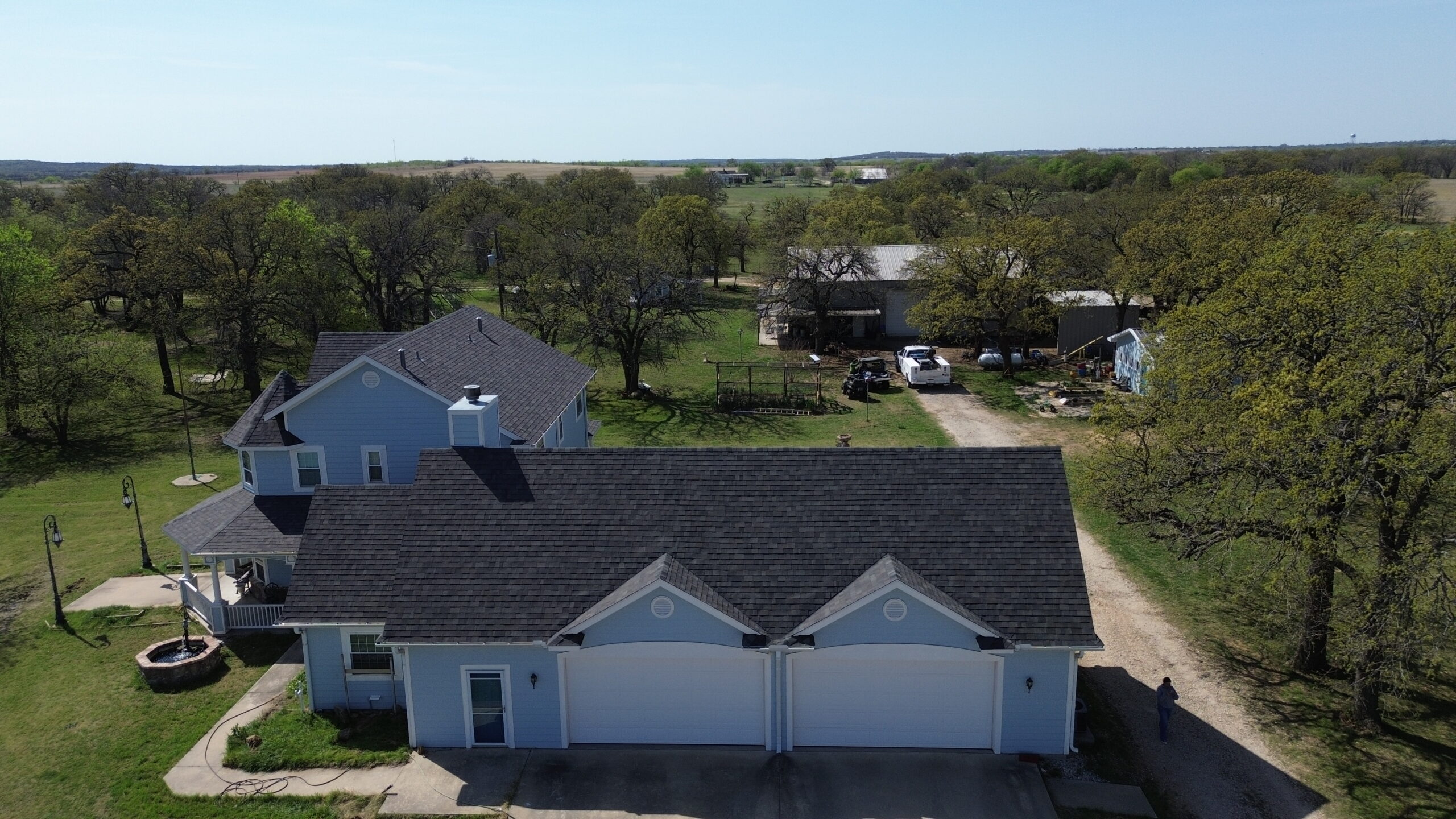
Even the most durable roofing material can fail prematurely when it is installed incorrectly. Installation determines how effectively the roof manages water, wind, temperature changes, and other environmental stresses. For this reason, contractor experience and attention to detail should be considered just as carefully as the roofing material itself.
Proper preparation begins with inspection of the existing roof structure. Damaged decking, deteriorated framing, moisture problems, and other structural issues should be identified before the new roofing material is installed. Covering existing problems without correcting them can shorten the life of the new roof.
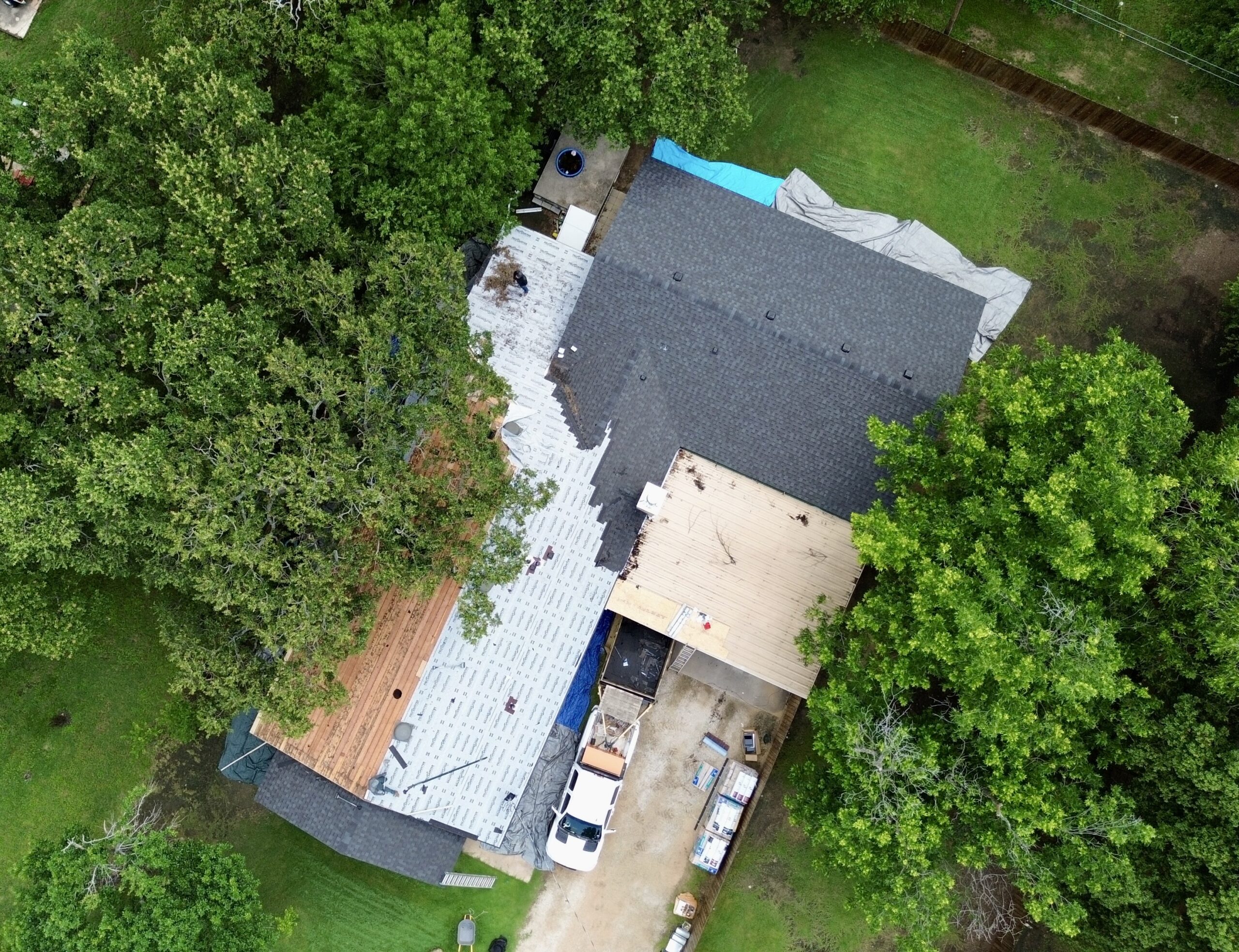
Underlayment provides an additional layer of protection beneath many roofing materials. It helps protect the roof deck from moisture that may pass beneath the primary roofing surface. The appropriate underlayment depends on the roofing material, climate, roof design, and applicable requirements.
Flashing is equally important around chimneys, skylights, walls, valleys, vents, and other roof penetrations. These areas are common locations for water intrusion when installation is inadequate. Durable flashing materials and correct installation can significantly improve long-term protection.
Fastening must also follow the manufacturer’s specifications. Too few fasteners, incorrect placement, or inappropriate fasteners can reduce wind resistance and cause roofing components to move or fail.
Roof ventilation should be evaluated as part of the installation. Excessive heat and moisture in an attic can contribute to deterioration of roofing components and structural materials. Proper ventilation can help create more stable conditions within the roof assembly.
Drainage is another essential consideration. Gutters, valleys, slopes, and downspouts must work together to move water away from the structure. Standing water can create unnecessary stress on roofing components and increase the likelihood of moisture-related damage.
A qualified contractor should understand the requirements of the selected material. Metal roofing, tile, slate, asphalt shingles, and synthetic products all have different installation methods.
Homeowners can protect their investment by ensuring that the project includes:
- Inspection and preparation of the roof deck before installation.
- Appropriate underlayment and flashing around vulnerable areas.
- Correct fastening and installation according to product requirements.
- Proper ventilation and drainage throughout the roof system.
Installation quality can determine whether a roofing material reaches its expected service life. Spending time selecting a qualified contractor can therefore be one of the most important decisions in a long-term roofing project.
Maintenance and Preventive Care
Regular maintenance is essential for preserving the durability of residential roofing. Even high-quality materials are exposed to continuous weather conditions, and small problems can gradually develop into serious damage. Routine inspections allow homeowners to identify issues before they affect larger areas of the roof.
Inspections should look for visible damage such as cracked or missing shingles, displaced tiles, damaged metal panels, deteriorated flashing, and exposed roofing components. The roof should also be checked after severe weather because wind, hail, heavy rain, or falling branches can cause damage that is not immediately obvious from inside the home.
Gutters and downspouts should remain clear of leaves, branches, and other debris. Blocked drainage can cause water to collect around the roof edge or overflow against exterior walls. Keeping water moving away from the structure can help protect both the roof and the building.
Trees near the home should also be managed carefully. Overhanging branches can scrape roofing surfaces, drop debris, and potentially fall onto the roof during storms. Trimming appropriate branches can reduce these risks.
Moss and algae should be addressed when they become a problem. Persistent biological growth can retain moisture and affect some roofing materials. Cleaning methods should be appropriate for the specific roofing material because aggressive techniques can cause unnecessary damage.
Roof penetrations should receive particular attention. Chimneys, vents, skylights, pipes, and other openings can develop problems as sealants and flashing age. Early repairs can help prevent moisture from reaching the roof deck.
Attic inspections can provide additional information about roof condition. Signs of moisture, daylight through unexpected openings, damaged insulation, or unusual staining may indicate problems that are not visible from outside.
Maintenance should always be performed safely. Roof surfaces can be steep, slippery, or fragile, and walking directly on certain materials can cause damage. Homeowners should use qualified professionals for inspections or repairs when safe access is not available.
Preventive maintenance can extend the useful life of a roof by addressing minor problems before they become major failures. It can also help homeowners plan future repairs rather than facing an unexpected full replacement.
Comparing Roofing Lifespans and Long-Term Value
Roofing materials differ substantially in expected service life, but lifespan should never be considered in isolation. A material with a long potential service life may require a higher initial investment, specialized installation, or additional structural preparation. A lower-cost material may provide shorter service but still offer good value when properly selected and maintained.
The following comparison provides a general perspective on durability characteristics:
| Roofing material | General durability | Maintenance considerations | Important factor |
|---|---|---|---|
| Asphalt shingles | Moderate to high | Periodic inspections and repairs | Product quality and installation |
| Metal roofing | High | Check coatings, fasteners, and seams | Corrosion and installation quality |
| Clay tile | Very high | Replace damaged tiles and inspect flashing | Structural capacity |
| Concrete tile | High | Monitor cracked or displaced tiles | Weight and climate |
| Slate | Very high | Specialized inspection and repair | Installer expertise |
| Synthetic roofing | Varies | Usually moderate maintenance | Product quality |
These categories are general rather than guarantees. Actual service life depends on climate, material quality, installation, maintenance, ventilation, roof slope, and exposure to severe weather.
Initial cost should be compared with expected replacement frequency. A roof that costs more initially but lasts significantly longer may provide better value over decades. However, homeowners should also consider whether the structure can accommodate the material and whether specialized maintenance will increase long-term costs.
Repairability is another important factor. Materials that allow individual components to be replaced can sometimes remain in service even after localized damage. This can delay complete replacement and reduce unnecessary material waste.
Energy performance can also contribute to long-term value. Reflective finishes or thermally efficient roofing assemblies may help manage indoor temperatures in appropriate climates. Although energy savings vary between homes, these benefits can complement the physical durability of the roof.
Warranty terms should also be reviewed carefully. A warranty can provide useful protection, but homeowners should understand what is covered, how long coverage lasts, and which installation or maintenance conditions apply.
Appearance and architectural compatibility can influence long-term satisfaction as well. A durable roof should not only protect the property but also complement its design.
The most valuable roofing system is usually the one that provides an appropriate balance of service life, performance, maintenance, installation quality, and cost. Comparing these factors together can help homeowners make a decision that remains practical for many years.
Common Factors That Reduce Roof Lifespan
Several problems can shorten the life of a residential roof even when the original roofing material is durable. Identifying these factors early can help homeowners protect their investment and avoid premature replacement.
Poor installation is one of the most significant risks. Incorrect fastening, inadequate flashing, improper underlayment, and poor drainage can create vulnerabilities that may not become obvious until after the roof has been exposed to several seasons of weather.
Neglected maintenance can also accelerate deterioration. Small leaks, damaged shingles, cracked tiles, and loose flashing can allow moisture to enter the roofing assembly. If these issues remain unresolved, damage can spread into the roof deck and other structural components.
Poor attic ventilation may contribute to excessive heat and moisture. These conditions can affect certain roofing materials and may also damage insulation and structural components.
Blocked gutters can cause water to back up around roof edges. Over time, this can contribute to moisture damage and deterioration of related building materials.
Excessive foot traffic is another concern. Some roofing materials are not designed to support regular walking, and careless movement can crack tiles, damage shingles, or affect protective surfaces.
Improper repairs can create additional problems. Using incompatible materials, incorrect sealants, or unsuitable fasteners may temporarily hide an issue without resolving its underlying cause.
Severe weather can naturally shorten roof life as well. Strong winds, hail, falling branches, heavy snow, and other events can cause damage even to well-maintained roofing systems.
By understanding these risks, homeowners can take practical steps to protect a durable roof. Proper installation, regular maintenance, climate-appropriate material selection, and timely repairs all work together to help a residential roofing system reach its expected service life.
Choosing Roofing Materials Based on Home Structure
The structure of a home plays an important role in determining which roofing material is suitable for long-term use. Roofing materials differ considerably in weight, installation requirements, and structural demands, so homeowners should evaluate the existing roof structure before selecting a product. A material that performs well on one property may not be appropriate for another without structural modifications.
Lightweight asphalt shingles and some synthetic roofing products generally place less demand on the roof structure. This can make them practical for homes that were originally designed for lighter roofing systems. However, the roof deck, framing, and supporting components should still be inspected before a replacement project begins.
Clay and concrete tiles are considerably heavier than many other residential roofing materials. Their durability can make them attractive for long-term use, but the supporting structure must be capable of handling the additional load. A professional assessment can determine whether reinforcement is required before installation.
Natural slate also requires careful structural consideration. Slate can provide an exceptionally long service life, but its weight and specialized installation requirements mean that it is not suitable for every home. The condition of the roof structure and the expertise of the installer should both be evaluated.
Roof slope is another important factor. Some roofing materials require specific minimum slopes to drain water effectively. Installing a material on a roof that does not meet its requirements can lead to water accumulation, leakage, and premature deterioration.
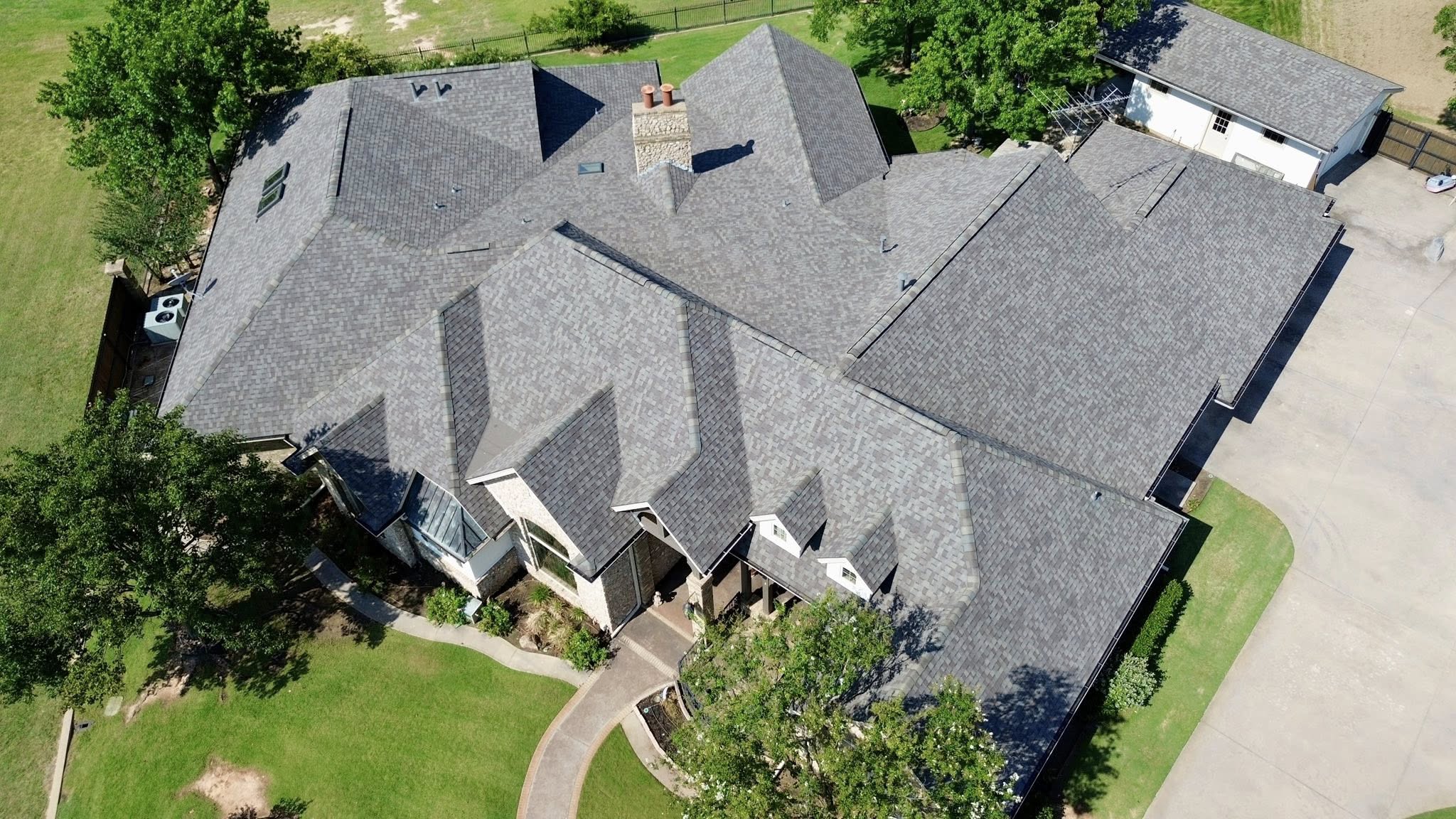
Roof complexity can also affect material selection. Homes with multiple slopes, dormers, valleys, skylights, and other features have more areas where flashing and drainage must be carefully installed. A durable material may require additional planning when used on a complex roof.
The existing roof deck should be checked for rot, moisture damage, sagging, or other structural concerns. Installing new roofing over damaged decking can hide underlying problems and may reduce the expected life of the new system.
Ventilation should also be considered during the planning stage. An appropriate ventilation system can help control heat and moisture in the attic, supporting the durability of both the roof structure and roofing material.
Homeowners should also consider whether future repairs will be practical. Materials that can be individually repaired or replaced may provide advantages when localized damage occurs.
A durable roofing choice should therefore be compatible with the entire building. Evaluating structure, slope, ventilation, drainage, and roof complexity before selecting the material can help homeowners avoid expensive problems later.
Balancing Cost, Durability, and Service Life
Initial price is an important consideration in any roofing project, but it should not be the only factor used to determine value. A roofing material with a lower purchase price may require replacement sooner, while a more expensive system may remain functional for several decades. Comparing cost against expected service life provides a more useful way to evaluate long-term value.
Asphalt shingles are often attractive because of their accessible initial cost and widespread availability. Higher-quality shingles can provide improved durability compared with basic products, making them suitable for homeowners who want a balance between affordability and performance.
Metal roofing generally requires a larger initial investment, but its long service life can make it appealing to homeowners planning to remain in the property for many years. Properly selected metal can resist many common weather conditions and may require relatively manageable maintenance.
Tile roofing can also require greater upfront spending, especially if structural preparation is necessary. However, clay and concrete tiles can provide long-term durability and allow individual damaged pieces to be replaced in many situations.
Slate usually represents a premium investment. The material, installation, structural requirements, and specialized maintenance can all increase project costs. However, its exceptionally long potential service life can make it valuable for homeowners seeking a roof designed to last for generations.
Synthetic roofing provides a wide range of price and performance levels. Some products are designed as affordable alternatives, while premium synthetic systems can offer long service life, impact resistance, and distinctive appearances.
Homeowners should consider maintenance costs alongside installation costs. A material that requires frequent specialized maintenance may have a different lifetime value from one that needs only periodic inspection and localized repairs.
Energy performance can also influence long-term value. Reflective roofing surfaces, suitable insulation, and proper ventilation may help manage household energy demand in appropriate climates.
Warranty coverage is another factor worth reviewing. Homeowners should understand what the warranty covers, how long coverage lasts, and whether specific maintenance or installation requirements must be followed.
The best value is not necessarily the cheapest material or the longest-lasting product. Instead, homeowners should consider the combination of purchase price, installation, maintenance, repairability, expected lifespan, and performance.
Making this comparison before installation can help prevent a situation where a low initial price leads to higher replacement costs later. Long-term planning is especially important for homeowners who intend to stay in the property for many years.
Roofing Materials for Different Weather Conditions
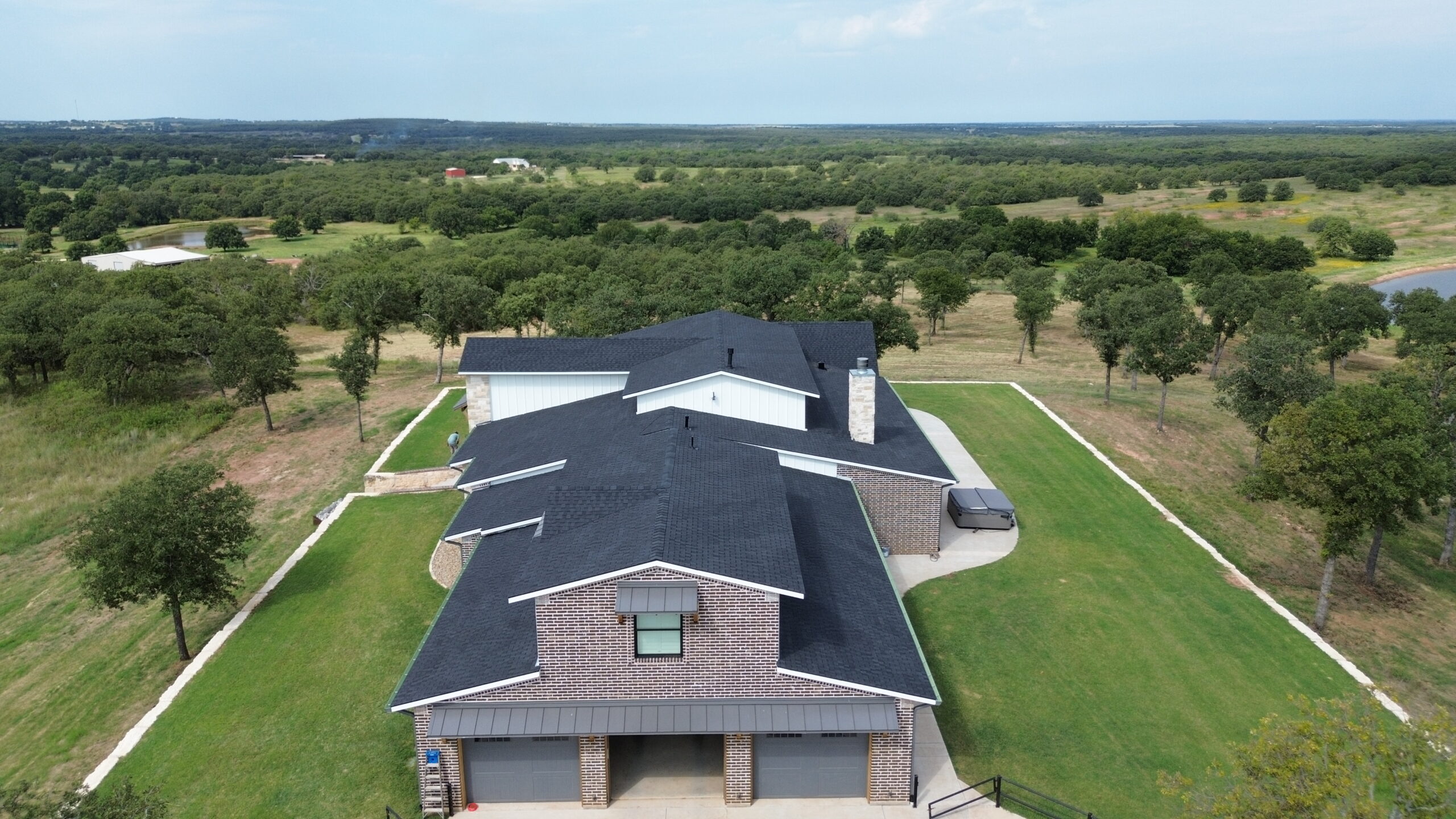
Weather exposure has a direct effect on roofing longevity, making climate one of the most important factors when choosing a durable material. Roofing systems must withstand the conditions they are likely to encounter throughout the year, including sunlight, rain, wind, temperature changes, and severe storms.
In hot and sunny regions, prolonged ultraviolet exposure can gradually affect roofing surfaces. Metal roofing with suitable protective finishes, durable tile, and appropriately designed asphalt shingles can provide strong performance when selected for the local climate.
Heavy rainfall creates a strong need for effective drainage and waterproofing. The roofing material should work with suitable underlayment, flashing, valleys, gutters, and downspouts to move water away from the structure.
Areas with strong winds require careful attention to fastening and installation. A roofing material may have good wind resistance on paper, but poor installation can significantly reduce its ability to withstand storms.
Hail-prone areas may benefit from roofing products designed to resist impact. Damage from repeated hail events can shorten the life of certain roofing materials, so homeowners should investigate suitable impact-resistant options where severe hail is common.
Cold climates present different challenges. Snow loads can place additional pressure on the roof structure, while freezing and thawing can expose weaknesses in roofing components. Proper insulation, ventilation, underlayment, and drainage can help manage these conditions.
Humid environments can encourage moss and algae growth on certain roof surfaces. Regular maintenance and suitable material selection can help reduce moisture-related deterioration.
Coastal environments can expose roofing materials to salt, strong winds, and high humidity. Materials and protective finishes should therefore be selected according to the local conditions, particularly where corrosion may be a concern.
Homes located in areas with frequent temperature changes also require materials capable of handling expansion and contraction. Fasteners, flashing, sealants, and other components should be compatible with the selected roofing system.
Weather resistance is therefore not simply a characteristic of the visible roofing material. The entire roof assembly must be designed to handle local conditions.
Choosing a material that matches the climate can help reduce premature deterioration and repair requirements. It can also improve the likelihood that the roofing system will achieve its expected service life.
Sustainability and Long-Term Roofing Performance
Durability and sustainability are closely connected because a roof that lasts longer generally requires fewer complete replacements. Each replacement involves additional raw materials, transportation, labor, energy, and disposal. Selecting a roofing material that can provide reliable service for many years can therefore support both financial and environmental goals.
Metal roofing can offer sustainability advantages through long service life and recycling potential. Many metal products can be recovered and recycled after removal, although actual recycling options depend on local facilities and material composition.
Clay tile can also provide long-term value because of its durability. Individual tiles can often be replaced when damaged, allowing the rest of the roof to remain in service.
Some synthetic and composite products contain recycled materials. However, homeowners should consider the complete life cycle of the product rather than focusing only on recycled content.
Responsible sourcing is important for natural materials such as wood. Properly sourced wood roofing can be a renewable option, but its environmental benefits depend on responsible forestry practices, maintenance, and service life.
Maintenance contributes to sustainability as well. Repairing localized damage instead of replacing an entire roof can reduce unnecessary material consumption.
Homeowners should also consider the possibility of reuse or recycling at the end of the roof’s service life. Roofing materials that can be recovered or processed instead of being sent directly to landfill may provide additional environmental advantages.
Energy performance can contribute to sustainability as well. Reflective surfaces and appropriate insulation can reduce heat transfer in suitable climates, potentially lowering the amount of energy required to maintain comfortable indoor temperatures.
A sustainable roof should also be properly installed. Premature failure caused by poor workmanship can result in unnecessary material replacement, reducing the environmental benefits of even a highly durable product.
Homeowners should therefore look beyond product labels when evaluating sustainability. Longevity, repairability, maintenance, energy performance, material sourcing, and end-of-life options all contribute to the overall environmental profile.
A durable roofing system that remains functional for decades can be one of the most practical forms of sustainable construction. Keeping the roof in service through proper care is often more efficient than replacing it prematurely.
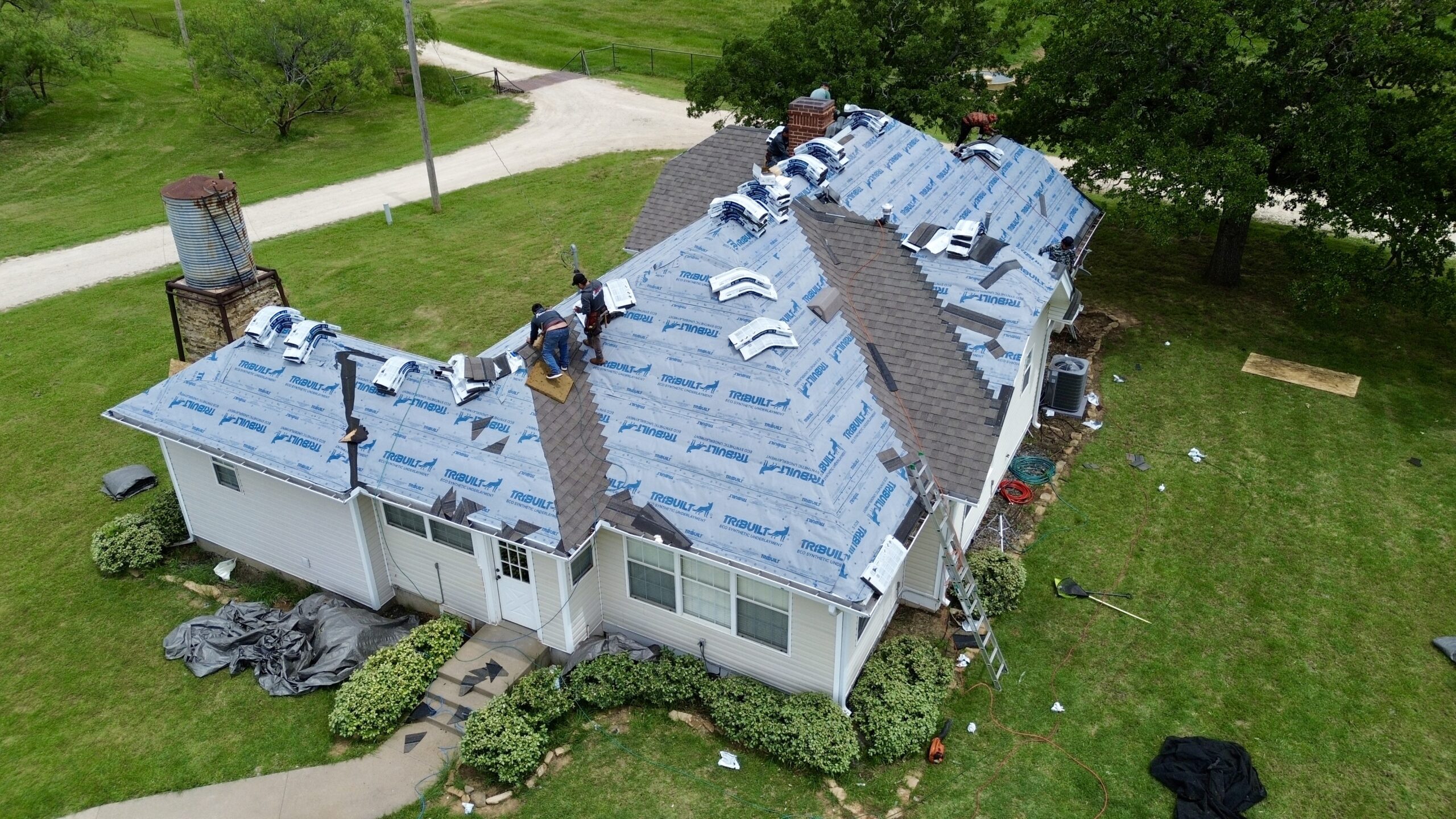
Planning for Repairs and Future Replacement
Even the most durable residential roof will eventually require repairs or replacement. Planning for these future needs can help homeowners protect their investment and avoid unexpected problems.
Routine inspections are one of the simplest ways to monitor roof condition. Homeowners should look for damaged shingles, cracked tiles, loose metal panels, deteriorated flashing, blocked drainage, and signs of moisture intrusion.
After severe weather, an additional inspection may be appropriate. Wind, hail, falling branches, and heavy rainfall can cause localized damage that may worsen if it is not addressed promptly.
Repairability should be considered when choosing a roofing material. Asphalt shingles, tiles, and certain other systems allow damaged components to be replaced individually. This can extend the useful life of the roof without requiring complete replacement.
Homeowners should also maintain records of repairs and inspections. Keeping track of the roof’s installation date, material specifications, repairs, and maintenance can make future decisions easier.
When replacement eventually becomes necessary, homeowners should avoid waiting until the roof has suffered extensive structural damage. Signs such as widespread deterioration, repeated leaks, extensive moisture damage, or significant material failure may indicate that replacement planning should begin.
A replacement project should include an assessment of the roof deck and supporting structure. Hidden damage should be corrected before new materials are installed.
Homeowners can also plan financially for future replacement. Setting aside funds over the expected service life of the roof can reduce the financial pressure associated with a major roofing project.
Choosing readily available materials can make future repairs easier. If replacement components are difficult to obtain, even minor repairs may become more complicated.
Professional guidance can be valuable when determining whether a roof should be repaired, restored, or replaced. An experienced roofing professional can evaluate visible and hidden components and recommend an appropriate approach.
Long-term roofing planning is ultimately about preserving the value and performance of the home. A roof should not be viewed as a one-time purchase but as a building system that requires monitoring, maintenance, and eventual renewal.
Conclusion
Choosing durable residential roofing materials requires homeowners to look beyond appearance and initial price. The best roofing system should match the home’s structure, climate, design, maintenance expectations, and long-term budget while providing reliable protection from the elements.
Asphalt shingles can provide a practical balance of affordability and durability, while metal roofing offers strong long-term performance and weather resistance. Clay and concrete tiles can provide decades of service when the structure is suitable, and slate can deliver exceptionally long-lasting performance when installed and maintained by experienced professionals.
Synthetic and composite roofing materials provide additional choices for homeowners seeking specific combinations of weight, appearance, durability, and maintenance requirements. Their performance varies by product, so homeowners should review specifications carefully rather than relying on general assumptions about synthetic materials.
Climate should remain a central part of the decision. Wind, rain, sunlight, hail, snow, humidity, and temperature changes can all affect roofing performance, making it important to choose materials designed for the conditions surrounding the home.
Installation quality and maintenance are just as important as material selection. Proper flashing, underlayment, fastening, ventilation, drainage, and roof preparation can help a durable material reach its expected service life, while regular inspections and timely repairs can prevent small problems from becoming major failures.
Homeowners should also consider long-term value instead of focusing only on upfront cost. A roof that lasts longer, can be repaired efficiently, and requires reasonable maintenance may provide greater value over time than a cheaper system that needs frequent replacement.
Ultimately, the most durable roofing material is the one that is properly matched to the property and correctly installed and maintained. By considering structure, climate, service life, cost, sustainability, and future repair needs together, homeowners can choose a roofing system that provides dependable protection and lasting value for many years.