
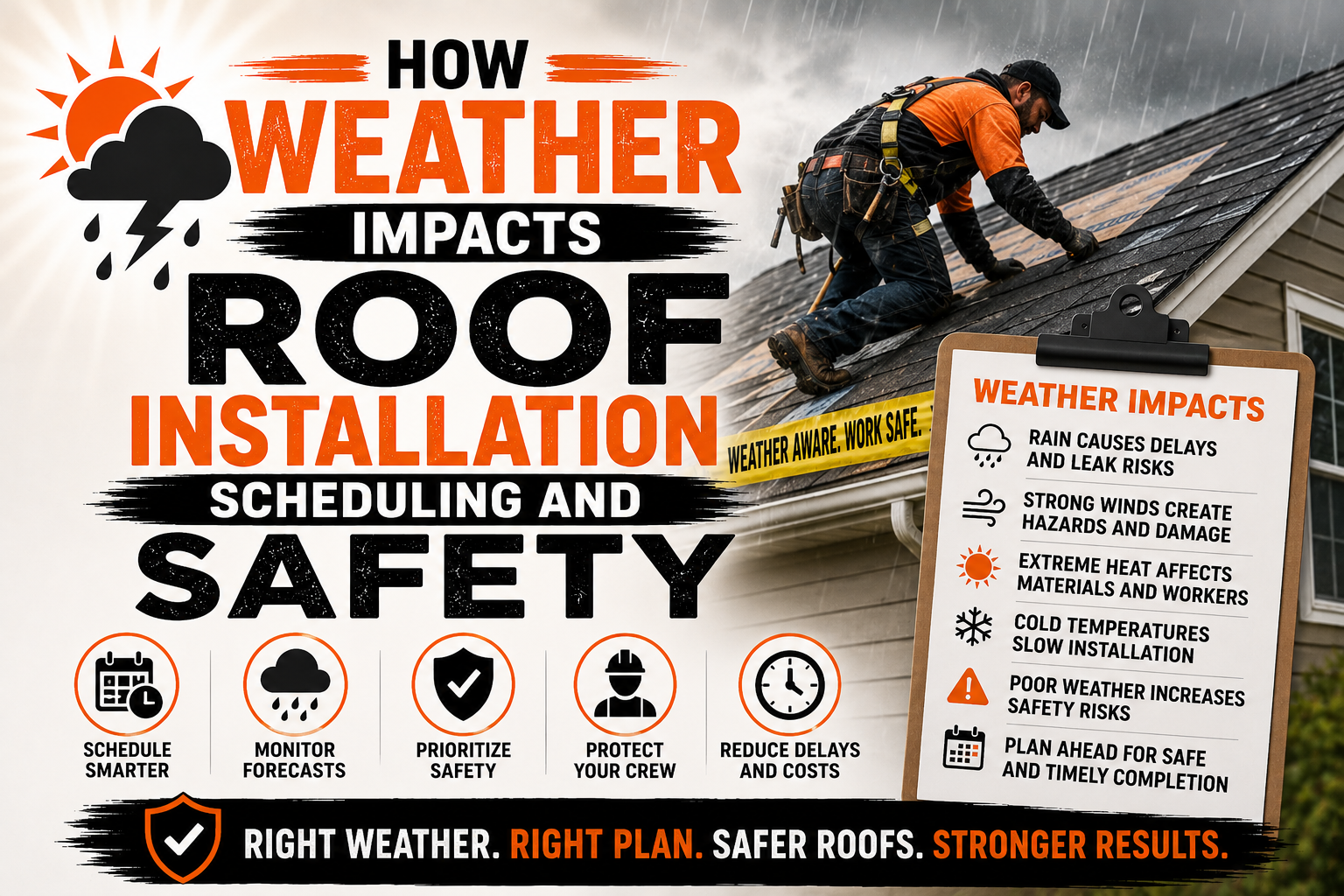
How Weather Impacts Roof Installation Scheduling and Safety
Introduction
Weather is one of the most important factors contractors must consider when scheduling a roof installation. Unlike many indoor construction activities, roofing takes place in an exposed environment where rain, wind, heat, cold, and storms can directly affect both the work surface and the people performing the job. Even a well-planned project can require schedule changes when weather conditions make installation unsafe or prevent roofing materials from being installed correctly.
A roofing contractor may have materials delivered, workers assigned, and equipment prepared for a particular day, but those plans can change quickly when the forecast indicates severe conditions. Continuing work simply to maintain a planned completion date can increase the risk of falls, damaged materials, installation defects, and worker injuries. A responsible schedule therefore needs enough flexibility to accommodate reasonable weather interruptions.
Weather can also affect the technical performance of roofing materials. Certain products have manufacturer requirements concerning temperature, moisture, adhesives, sealants, or installation conditions. Contractors should follow the applicable product instructions and local requirements instead of assuming that every roofing material can be installed under the same conditions.
For property owners, understanding the relationship between weather and roofing schedules can make project delays easier to understand. A weather-related postponement may be frustrating, but delaying work can sometimes protect workers and prevent the installation from being compromised by conditions that are unsuitable for the roofing system.
Why Weather Matters for Roof Installation
Roof installation combines elevated work, physical labor, tools, materials, and exposed surfaces, making weather an important safety consideration from the beginning of the project. Rain can make surfaces slippery, wind can move materials, extreme heat can increase worker fatigue, and cold temperatures can affect both people and certain installation products. Severe weather can create multiple hazards at the same time.
The Occupational Safety and Health Administration identifies falls as a major hazard in construction and requires appropriate fall protection under applicable circumstances. Weather can make fall hazards more difficult to control because wet, icy, or windy conditions can reduce stability and make it harder for workers to maintain safe footing.
Weather can also change the condition of the roof during the day. A surface that is dry and stable in the morning may become wet after an afternoon shower, while strong winds may develop unexpectedly as a storm approaches. Contractors should therefore monitor conditions throughout the workday rather than relying only on the forecast checked before the crew leaves for the property.
The effect of weather depends on the roof design and installation stage. A partially completed roof can have different risks from a fully covered roof, and material installation may be more sensitive to weather than preparation work. Contractors should evaluate conditions according to the task being performed rather than applying one general rule to the entire project.
How Rain Affects Roofing Schedules
Rain is one of the most common reasons roof installation schedules change. Wet surfaces can become slippery, reducing traction for workers who need to move across sloped areas while carrying tools and materials. Rain can also interfere with certain roofing products and create challenges when sections of the roof are temporarily exposed.
Working on a wet roof can increase the likelihood of slips and falls. Workers may also have difficulty maintaining a secure position while using hand tools or power equipment. If the rain becomes heavy enough to reduce visibility or create uncontrolled water movement across the roof, continuing work can become increasingly hazardous.
Rain can also affect the installation of materials that require dry surfaces. Some adhesives, sealants, coatings, membranes, and other products may have specific application conditions stated by the manufacturer. Contractors should check those requirements before installation rather than assuming that a product will perform normally when applied during wet conditions.
Temporary weather protection becomes particularly important when a roof is partially completed. If the existing roof covering has been removed, the contractor may need to protect the exposed structure from incoming water. The method used should be appropriate for the project and should not create additional hazards for workers.
Rain can therefore affect both safety and productivity. A short shower may cause a temporary pause, while prolonged rainfall can require the crew to reschedule an entire workday. Contractors should build reasonable weather flexibility into their schedules instead of assuming that every planned installation day will remain available.
Wind and Roof Installation Safety
Wind can create serious hazards during roofing work because workers operate at elevation while handling materials that may have large or lightweight surfaces. Shingles, insulation boards, underlayment, metal panels, membranes, flashing, and packaging can all become difficult to control when wind speeds increase.
Strong gusts can also affect worker balance. A person carrying a large roofing panel may suddenly encounter resistance from the wind and lose control of the material. On a sloped roof, this can create both a fall hazard for the worker and a falling-object hazard for people below.
Contractors should consider wind conditions before moving materials onto the roof. Materials that have not yet been installed should be secured appropriately so they do not slide, lift, or blow away. Loose items should never be left unsecured simply because the weather is currently calm.
Wind can also affect ladders, scaffolds, lifts, temporary covers, and other equipment used around the building. The safety of these systems depends on their specific design and operating requirements, so contractors should follow manufacturer instructions and applicable regulations. OSHA’s construction standards include requirements addressing scaffolds and protection from hazards associated with construction work at elevation.
The decision to continue roofing during windy conditions should be based on the actual risk rather than a desire to stay on schedule. Contractors should consider wind speed, gusts, roof height, roof slope, material type, surrounding buildings, and the task being performed. If conditions prevent workers from safely controlling materials or maintaining stable footing, the work should be paused.
Extreme Heat and Worker Safety
Hot weather can create significant challenges for roofing crews because workers are exposed to direct sunlight while performing physically demanding activities on surfaces that can become considerably hotter than the surrounding air. The combination of heat, sun exposure, protective clothing, and physical exertion can increase the risk of heat-related illness.
OSHA identifies heat as a workplace hazard and recommends employers provide appropriate protections, including water, rest, shade, acclimatization, and training as part of a heat illness prevention approach.
Roofing contractors should consider heat conditions when planning the workday. Where practical, demanding tasks may be scheduled during cooler portions of the day, while breaks and hydration should be incorporated into the work plan. Supervisors should also pay attention to signs that workers may be struggling with heat rather than expecting employees to continue at the same pace regardless of conditions.
Extreme heat can affect concentration and physical performance. A tired worker may be more likely to make mistakes while operating a nail gun, cutting material, climbing a ladder, or moving across a roof. Heat management is therefore not only a health issue but also an important part of overall jobsite safety.
Workers who are new to hot conditions may require additional attention because their bodies may need time to adjust. OSHA recommends acclimatization as part of heat illness prevention, particularly for employees who are newly exposed to hot working conditions.
Property owners should also understand that extreme heat can affect productivity. A crew may need more frequent rest periods or may need to reduce work during the hottest portion of the day. These adjustments can extend the project schedule but may be necessary to protect workers and maintain safe working conditions.
Cold Weather and Winter Roofing Challenges
Cold weather presents a different set of challenges for roofing contractors. Low temperatures can reduce worker dexterity, make surfaces slippery through frost or ice, and affect certain roofing materials. Snow and freezing precipitation can create additional hazards that may make elevated work unsafe.
Workers handling tools in very cold conditions may have reduced hand sensitivity and coordination. This can make tasks such as fastening, cutting, lifting, and climbing more difficult. Contractors should consider whether workers can safely perform the planned tasks rather than focusing only on whether the calendar allows the work to proceed.
Ice and frost are particularly dangerous on sloped roofs because they can substantially reduce traction. Even a thin layer may make walking or positioning equipment unsafe. Contractors should assess the actual roof surface before beginning work and should not assume that cold weather is acceptable simply because there is no active snowfall.
Some roofing materials can also have temperature-related installation requirements. Adhesives, sealants, coatings, membranes, and other products may require specific temperature ranges or preparation procedures. Contractors should follow the manufacturer’s instructions because installing a product outside its recommended conditions can affect its performance.
Winter daylight hours can also affect scheduling. Crews may have fewer hours of suitable daylight available, particularly when safe visibility is required for elevated work. Contractors may need to shorten daily work periods or adjust the sequence of tasks to account for these conditions.
Weather Forecasting and Daily Project Planning
Weather forecasting should be incorporated into roofing project planning before workers and materials are committed to a specific installation date. Contractors should review reliable forecasts for the project location and consider precipitation, wind, temperature, storms, and other conditions relevant to the planned work.
A forecast should not be treated as a guarantee. Weather can change during the day, especially when storms develop quickly or conditions are affected by local terrain and seasonal patterns. Contractors should therefore maintain a process for checking updated conditions before and during roofing operations.
The forecast should be compared with the specific work planned for that day. A light rain may affect one task differently from another, while strong wind could make material handling unsafe even when precipitation is not expected. Contractors should evaluate the forecast in relation to roof slope, height, materials, equipment, and worker exposure.
A practical weather review can consider:
- Expected precipitation and the timing of rain or snow.
- Wind speed and forecasted gusts.
- Temperature and expected changes during the workday.
- Heat, humidity, and sun exposure.
- Lightning or severe-weather potential.
- Visibility and daylight conditions.
- Conditions affecting roof surfaces and access equipment.
This information can then be used to decide whether the crew should proceed, modify the day’s tasks, or postpone work. If the forecast indicates that the planned installation window is unsuitable, making the decision before workers arrive can reduce wasted travel, equipment setup, and material handling.
Weather planning should also be connected to customer communication. When contractors explain that the schedule includes weather-dependent work, property owners are more likely to understand why a planned installation date may change. Providing realistic expectations from the beginning can reduce frustration when safety or material requirements require the crew to pause.
The most effective roofing schedules therefore treat weather as a normal project variable rather than an unexpected inconvenience. By monitoring conditions, protecting materials, adjusting work hours, and prioritizing safe working conditions, contractors can reduce the risks associated with weather while keeping the project moving whenever conditions allow.
How Weather Affects Different Roofing Materials
Weather does not affect every roofing material in the same way. Asphalt shingles, metal panels, tiles, membranes, coatings, and other roofing products can have different requirements for temperature, moisture, wind, adhesives, fastening, and handling. Contractors should review the manufacturer’s installation instructions for the specific product being used and plan the work around those requirements.
Asphalt shingles can be affected by cold temperatures because some products rely on heat to activate or strengthen their self-sealing features. In cooler conditions, contractors may need to follow specific manufacturer procedures to ensure the shingles are properly secured. Wind conditions should also be considered because loose or improperly secured shingles can be vulnerable before the roof system is fully established.
Metal roofing creates different weather challenges. Large panels can act like sails in strong winds, making them difficult to carry and position safely. Wet conditions can also increase slip hazards while workers are handling long panels on elevated surfaces.
Tile and slate materials require careful handling regardless of weather because they can be heavy, fragile, and difficult to move across a roof. Rain or frost can make the supporting surface more slippery, increasing the difficulty of positioning these materials. Contractors should consider both material handling and worker footing before proceeding.
Membrane roofing and other systems that use adhesives, primers, or heat-applied products may have specific environmental requirements. Temperature and moisture can affect how these products adhere or cure. Contractors should not assume that a material can be installed under unsuitable conditions simply because the work area appears manageable.
The same principle applies to coatings and sealants. Some products may require a particular temperature range or dry substrate before application. If rain arrives before a product has properly cured, the contractor may need to protect the area or repeat part of the application depending on the manufacturer’s instructions.
Humidity, Moisture, and Roof Installation
Humidity can affect roofing work even when there is no visible rainfall. High moisture levels can slow the drying or curing of certain products and may make it more difficult to establish a dry installation surface. Contractors should consider humidity alongside temperature and precipitation when planning weather-sensitive work.
Moisture is particularly important when materials need to bond to a substrate. Adhesives, sealants, coatings, and membranes may perform differently when applied to damp surfaces. Before using such products, workers should confirm the required surface conditions in the manufacturer’s instructions.
Roof decking should also be considered during wet weather. If the underlying surface becomes saturated, the contractor may need to allow appropriate drying or take other measures before continuing with certain installation activities. Covering a wet surface without considering the roofing system’s requirements can create problems later.
Moisture can also enter the building if an existing roof is removed before the replacement system is ready. Contractors should plan temporary protection before beginning tear-off, particularly when rain is possible. The protection should be secure and suitable for the expected weather conditions.
Humidity can also contribute to worker discomfort, especially during hot weather. High humidity can make it more difficult for the body to cool itself through evaporation, which can increase heat stress. OSHA notes that environmental conditions such as humidity can affect the risk of heat-related illness, so contractors should consider the overall conditions rather than temperature alone.
Storms, Lightning, and Severe Weather
Severe weather can create several hazards at once, making roofing work particularly dangerous. Thunderstorms may bring lightning, heavy rain, strong winds, hail, and rapidly changing conditions. When severe weather is approaching, contractors should evaluate whether the crew has enough time to safely stop work, secure materials, and leave elevated areas.
Lightning presents a serious concern for workers on roofs because they are exposed and may be near conductive materials, tools, ladders, scaffolds, or other structures. OSHA identifies lightning as a hazard for outdoor workers and recommends that employers establish procedures for recognizing and responding to thunderstorms.
A roofing crew should not wait until a storm is directly overhead before considering evacuation. Weather monitoring should provide enough warning to stop work and move employees to a safe location. Contractors should establish procedures in advance so workers know who makes the decision to suspend operations and where they should go.
Severe weather can also create problems after the storm passes. Strong winds may leave loose materials on the roof, rain can make surfaces slippery, and hail can damage newly installed components. Contractors should inspect the work area before allowing workers to resume operations.
Storms can therefore affect the schedule even when they last only a short time. The crew may need time to secure materials before the storm, wait for conditions to improve, and inspect the site afterward. A realistic schedule should allow for these interruptions.
Weather-Related Fall and Slip Hazards
Falls are among the most serious hazards associated with roof installation, and adverse weather can make existing fall risks significantly worse. Wet shingles, metal panels, underlayment, ladders, scaffolds, and roof decking can become slippery. Ice and frost can create even more severe traction problems.
OSHA’s construction standards require fall protection in applicable situations and include requirements for systems such as guardrails, safety nets, and personal fall arrest systems. Weather does not remove the obligation to use required protection, and contractors should assess whether conditions require additional precautions or a temporary suspension of work.
Workers should also be aware that protective equipment does not make every weather condition safe. A properly installed fall arrest system can reduce the consequences of a fall, but it does not eliminate the possibility of slipping or losing control of tools and materials. The safest approach is to combine required fall protection with appropriate weather decisions and good housekeeping.
Ladders and scaffolds require particular attention after rain or snow. Their surfaces should be checked before use, and any condition that makes access unsafe should be corrected. Workers should not assume that equipment remains safe simply because it was inspected earlier in the day.
Roofing contractors should also consider visibility. Heavy rain, fog, blowing snow, or severe weather can make it difficult to see roof edges, openings, tools, and other hazards. Reduced visibility can increase the likelihood of mistakes, particularly during tasks that require precise positioning.
Protecting Roofing Materials During Delays
When weather forces a roofing project to pause, materials need to be protected as carefully as workers. Materials left exposed to rain, wind, or extreme temperatures may become damaged or difficult to use. Contractors should follow the storage requirements provided by manufacturers and protect products from conditions that could compromise their performance.
Bundles of shingles should be positioned securely and stored according to the manufacturer’s recommendations. Lightweight materials should be protected from wind so they do not blow across the property or fall from elevated surfaces. Metal panels, insulation boards, membranes, and packaging may require additional measures because of their size or weight.
Materials should not be stored in locations where they could obstruct emergency access, ladders, walkways, or drainage paths. A weather delay can turn a normally organized worksite into a temporary storage area, so contractors should continue applying the same housekeeping principles used during active installation.
Partially installed roofing systems also need protection. If a crew stops work before the roof is fully weatherproof, the exposed section should be secured using an appropriate temporary method. The contractor should determine how long the temporary protection can remain effective and inspect it after significant weather events.
Protecting materials during a delay can reduce the amount of rework required when installation resumes. It also helps prevent loose materials from becoming hazards for workers, property occupants, neighbors, pedestrians, and vehicles.
Adjusting Crew Schedules for Weather Conditions
Weather-related scheduling requires contractors to think beyond simply moving a project from one day to another. When conditions are unsuitable for roofing, the contractor may be able to rearrange the sequence of work and complete tasks that are less sensitive to weather.
For example, a crew may be able to perform certain ground-level preparation, material organization, equipment maintenance, or planning tasks while waiting for roof conditions to improve. The exact alternatives depend on the project and should not expose workers to unnecessary risks.
Crew assignments can also be adjusted based on the expected weather. During hot periods, contractors may schedule physically demanding activities during cooler portions of the day and reserve less strenuous tasks for hotter periods where practical. During shorter winter days, crews may prioritize tasks that require good visibility and plan the work around available daylight.
Weather delays can also affect subcontractors. If several trades are scheduled around the roofing work, postponing installation may require changes to their schedules as well. Contractors should communicate changes quickly so other workers are not sent to the site when the roof is not ready.
A flexible schedule should include realistic weather allowances. This does not mean adding an arbitrary number of days to every project, but rather considering the season, location, roof type, project duration, and typical weather patterns. The more weather-sensitive the work, the more important this flexibility becomes.
When Contractors Should Stop Roofing Work
Knowing when to stop work is an essential part of roofing safety. Contractors should establish clear criteria for suspending operations rather than leaving the decision entirely to individual workers under pressure to finish a task.
Work may need to stop when roof surfaces become dangerously slippery, winds make materials difficult to control, lightning or severe storms approach, visibility becomes inadequate, or extreme temperatures create unsafe conditions. The exact decision depends on the specific hazards and applicable safety requirements.
OSHA emphasizes that employers should evaluate workplace hazards and implement appropriate measures to protect workers from recognized dangers. For roofing operations, this means weather conditions should be considered as part of the overall job hazard assessment rather than treated as an unrelated issue.
Supervisors should communicate the decision clearly when work is suspended. Workers should know how to secure tools, materials, temporary protection, and equipment before leaving the roof. A rushed shutdown can create additional hazards if materials are abandoned or access routes are left obstructed.
Resuming work also requires a deliberate decision. The fact that rainfall or wind has stopped does not automatically mean the roof is safe. Supervisors should check the roof surface, access equipment, materials, fall protection systems, and surrounding work area before allowing workers to return.
Weather Forecasting During Active Installation
Forecasting should continue after the roofing project has started. Conditions can change during the day, and a forecast reviewed several hours earlier may no longer accurately represent the immediate risk. Contractors should monitor updated forecasts and, where appropriate, use reliable weather alerts during the workday.
The most important information depends on the current task. If workers are carrying large metal panels, wind and gusts may be the main concern. If a roof is partially exposed, precipitation may become the most important factor. During summer work, temperature and heat-related conditions may require greater attention.
Weather monitoring should have a clear purpose. Contractors should use the information to make decisions about starting work, changing the sequence, securing materials, taking breaks, suspending operations, or leaving the site. Simply checking a forecast without connecting it to actual safety decisions provides limited value.
A designated supervisor can be responsible for reviewing conditions and communicating changes to the crew. This creates a consistent process rather than leaving each worker to interpret weather information independently.
Balancing Schedule Pressure With Safety
Roofing contractors often face pressure to complete projects quickly, particularly when customers have arranged travel, property access, inspections, or other activities around the installation. However, weather-related delays should not be ignored simply to preserve an original completion date.
Continuing unsafe work can result in injuries, damaged materials, poor installation, and additional delays that are much more costly than a short postponement. A project that is delayed for a day because of severe weather may still be completed successfully, while an accident or major installation failure can disrupt the project for much longer.
Contractors should communicate the reason for weather-related decisions professionally. Instead of simply telling a customer that the crew cannot work, the contractor can explain how the current conditions affect worker safety or material installation and provide the next reasonable work window.
This approach helps property owners understand that weather management is part of responsible roofing practice. A realistic schedule should prioritize safe installation and proper material performance rather than treating the original completion date as more important than changing site conditions.
Weather should therefore remain a central consideration throughout the roofing project. By evaluating material requirements, monitoring storms and changing conditions, protecting unfinished work, adjusting crew schedules, and establishing clear stop-work procedures, contractors can manage weather risks while maintaining as much productivity as conditions safely allow.
Planning Roof Installation Around Seasonal Weather
Seasonal weather should be considered before a roofing project is assigned a firm installation date. Different seasons create different combinations of temperature, precipitation, wind, daylight, and worker-safety concerns, so contractors should consider the expected conditions rather than treating every month as equally suitable for roofing.
Summer can provide longer daylight hours but may introduce extreme heat and sudden thunderstorms. OSHA recommends that employers exposed to conditions that can cause heat illness establish appropriate prevention measures, including water, rest, shade, acclimatization, schedule adjustments, emergency planning, and worker training.
Winter can create different challenges, including cold temperatures, frost, snow, ice, and reduced daylight. Some roofing materials may also require specific installation conditions, while workers may have more difficulty maintaining safe footing or handling tools in cold weather.
Spring and fall can bring unpredictable weather patterns, including rain, wind, temperature changes, and storms. Contractors should avoid assuming that a mild average temperature means every day will be suitable for roofing because short-term weather conditions can still affect safety and installation quality.
Seasonal planning should therefore consider both the typical climate and the specific forecast for the project period. Contractors can use historical weather patterns to plan generally, but decisions about whether work should proceed should be based on current conditions and the requirements of the particular roofing system.
Managing Weather Delays and Customer Expectations
Weather delays are a normal possibility in roofing, but they can become a source of frustration when customers are not prepared for them. Contractors should explain before work begins that the schedule may change when weather creates unsafe conditions or prevents materials from being installed correctly.
A clear contract can help establish how weather-related delays will be handled. The agreement can identify the expected project duration, explain that certain work is weather-dependent, and describe how the contractor will communicate schedule changes.
Contractors should avoid promising a completion date that assumes perfect weather. Instead, they can provide a target date or completion window while explaining that severe weather may require adjustments. This approach gives the customer a realistic expectation without making the schedule unnecessarily vague.
Communication should happen as soon as a significant delay becomes likely. If a storm is expected to prevent work for several days, the contractor should inform the property owner rather than waiting until the original installation date has passed.
Weather delays should also be documented when they materially affect the project. Recording the dates, conditions, work suspended, and revised schedule can help explain why the project took longer than originally anticipated.
Weather Safety Procedures for Roofing Crews
A roofing crew should have clear procedures for responding to changing weather conditions. Workers should know who monitors the forecast, who can suspend work, how materials should be secured, and where employees should go when conditions become unsafe.
OSHA guidance for residential roofing recognizes that adverse weather such as high winds, rain, snow, or sleet can create hazardous conditions and states that roofing operations should be suspended when such conditions create a hazard. This reinforces the importance of treating weather as part of the job hazard assessment rather than simply a scheduling inconvenience.
Strong winds require particular attention because they can affect both worker balance and material control. Roofing workers may be exposed to sudden gusts while carrying panels, membranes, insulation, or other materials, and loose objects can become hazards for people below.
Thunderstorms require an even more cautious response. The National Roofing Contractors Association recommends avoiding roofing work during storms, securing tools and materials, clearing the roof, monitoring weather, and inspecting the area before work resumes.
Rain and snow can also make roof surfaces slippery. OSHA notes that roof workers can face unpredictable fall hazards from sudden wind gusts, loose materials, and surfaces that become slick when wet. Contractors should therefore reassess the roof before allowing employees to return after precipitation.
Documenting Weather-Related Schedule Changes
Documentation can help contractors manage weather delays professionally. A simple project record can show when weather affected the work, what activities were postponed, and when the crew was able to safely resume operations.
Useful records may include weather alerts, daily jobsite notes, photographs, revised schedules, customer communications, and records of temporary protection. Contractors do not need to create excessive paperwork for every cloudy day, but significant interruptions should be documented clearly.
Weather documentation can also help when a project involves multiple parties. If a subcontractor, supplier, property owner, or inspector is affected by a delay, the contractor can provide a clear explanation of what caused the schedule change.
Photographs can be particularly useful after severe weather. If strong winds or storms affect an unfinished roof, images can document the condition of temporary protection, materials, or exposed areas before corrective work begins.
Documentation also supports better future planning. If a contractor notices that projects repeatedly experience delays during a particular seasonal period, that information can be used when creating schedules for future customers.
Best Practices for Weather-Ready Roofing Projects
A weather-ready roofing project begins with planning before the crew arrives. Contractors should review the forecast, evaluate the roofing system’s installation requirements, inspect the site, prepare protective materials, and determine what actions will be taken if conditions deteriorate.
The following practices can help contractors manage weather more effectively:
- Check updated weather conditions before starting work.
- Continue monitoring conditions during the workday.
- Protect unfinished roof sections before bad weather arrives.
- Secure loose tools, materials, equipment, and debris.
- Adjust work hours during extreme heat or limited daylight.
- Stop elevated work when weather creates unsafe conditions.
- Inspect the roof and access equipment before resuming work.
- Communicate schedule changes promptly to the property owner.
- Follow manufacturer requirements for weather-sensitive products.
- Document significant weather interruptions and corrective actions.
These practices should be adapted to the project rather than applied mechanically. A low-slope commercial roof, steep residential roof, metal roof, and membrane system may respond differently to the same weather conditions.
Contractors should also make sure weather planning does not undermine other safety requirements. For example, rushing to complete a roof before an approaching storm should never involve removing fall protection, leaving unsecured materials on the roof, or asking workers to continue after conditions become hazardous.
Final Weather and Safety Checklist
Before starting roofing work, contractors can use a weather-focused checklist to identify conditions that may affect the day’s activities. This review should be completed alongside the normal job hazard assessment and should be updated when conditions change.
| Weather and Safety Area | What Contractors Should Check |
|---|---|
| Rain | Whether precipitation could make surfaces or materials unsafe |
| Wind | Wind speed, gusts, material handling, and worker stability |
| Temperature | Whether conditions affect workers or roofing products |
| Heat | Water, shade, rest periods, acclimatization, and schedule adjustments |
| Cold | Frost, ice, worker dexterity, and material requirements |
| Lightning | Storm development and safe procedures for stopping work |
| Visibility | Daylight, rain, fog, and other conditions affecting visibility |
| Roof surface | Wet, icy, unstable, or otherwise hazardous areas |
| Materials | Proper storage and protection from weather |
| Temporary protection | Whether exposed roof sections are adequately protected |
| Equipment | Safe condition of ladders, scaffolds, lifts, and tools |
| Resumption | Roof and site checked before work restarts |
The checklist should not be used as a substitute for professional judgment or applicable safety requirements. Its purpose is to ensure that weather-related issues are considered before workers commit to elevated construction activities.
A contractor should also review conditions after significant weather events. A storm may leave behind damage that is not immediately obvious, including weakened materials, displaced equipment, standing water, damaged temporary protection, or structural concerns.
Conclusion
Weather can influence nearly every stage of a roof installation, from the initial scheduling decision to the final cleanup. Rain can create slippery surfaces and interfere with weather-sensitive installation activities, while wind can make materials difficult to control and increase fall hazards. Extreme heat and cold can affect workers as well as roofing materials, and severe storms can require immediate suspension of operations.
The safest approach is to treat weather as a core part of roofing project planning. Contractors should review forecasts, understand the requirements of the roofing products being installed, monitor changing conditions, protect unfinished work, and establish clear procedures for suspending and restarting operations.
Weather delays should also be communicated professionally to property owners. A short postponement may be inconvenient, but attempting to maintain a schedule under unsafe conditions can create much greater problems. OSHA guidance recognizes adverse weather as a factor that can make roofing hazardous, while roofing-industry guidance emphasizes monitoring conditions, securing materials, leaving the roof during storms, and conducting post-storm inspections before resuming work.
Good weather planning also protects the quality of the finished roof. Following manufacturer requirements for temperature, moisture, sealing, adhesives, and other weather-sensitive processes can reduce the risk of installation problems. Contractors should never assume that a product can be installed under unsuitable conditions simply because the crew is available.
Ultimately, a successful roofing schedule is not one that ignores weather to meet an arbitrary deadline. It is one that anticipates weather-related risks, allows reasonable flexibility, protects workers and materials, and keeps the property owner informed. By making weather assessment part of everyday roofing operations, contractors can maintain safer jobsites while improving the reliability and quality of their installation projects.