
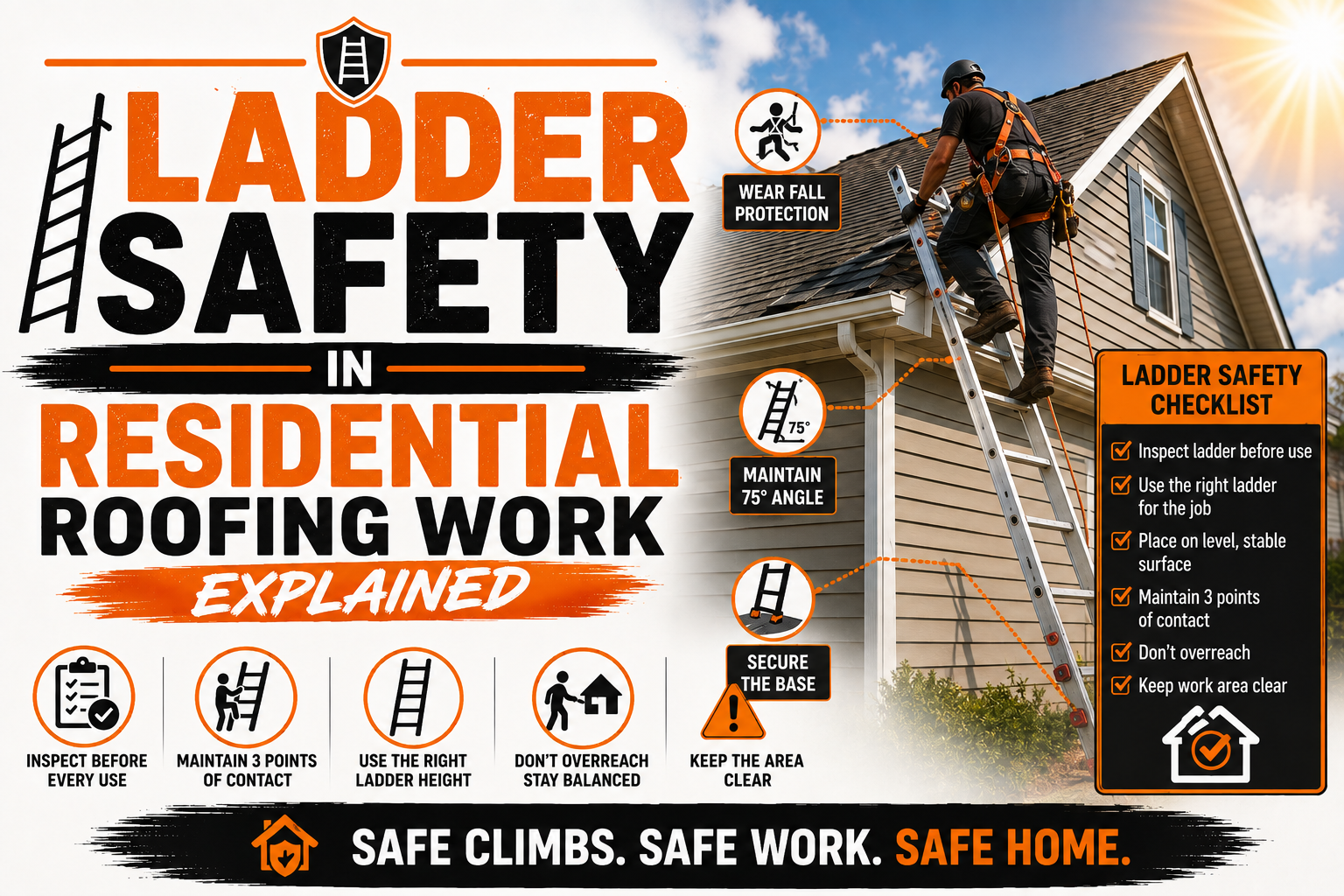
Ladder Safety in Residential Roofing Work Explained
Introduction
Ladders are among the most commonly used access tools on residential roofing projects, but they can also become a major source of injuries when they are selected, positioned, or used incorrectly. Roofing workers frequently move between ground level and elevated surfaces while carrying tools, inspecting roof areas, installing materials, or removing old roofing. These activities make proper ladder safety an essential part of every residential roofing job.
A ladder may appear simple to use, but roofing conditions can make ordinary climbing more complicated. Uneven ground, sloped driveways, landscaping, wet surfaces, overhead power lines, changing weather, and nearby construction materials can all affect ladder stability. Workers also face additional risks when they need to transition from a ladder onto a roof or carry equipment while climbing.
Ladder safety begins before the ladder is placed against the building. The worker or supervisor should consider the height of the roof, the location of the access point, the ground conditions, surrounding hazards, and the type of ladder needed for the task. Choosing the correct equipment and preparing the work area can prevent many problems before climbing begins.
A ladder should never be treated as a substitute for proper fall protection or another suitable access system when the roofing task requires additional protection. The appropriate access method depends on the roof design, working height, task, and applicable safety requirements. Workers should follow established procedures and manufacturer instructions rather than improvising.
Homeowners also need to understand ladder hazards during roofing work. A ladder left at the side of a house can look like a convenient way to reach the roof, but it may be positioned for professional use and may not be safe for household members. Children and pets can also be attracted to ladders, making site control particularly important.
Good ladder safety is therefore a combination of equipment selection, inspection, setup, climbing technique, communication, and worksite organization. When these practices are followed consistently, ladders can provide safer access while reducing unnecessary risks during residential roofing projects.
Choosing the Right Ladder for Roofing Work
Selecting the correct ladder is one of the first important safety decisions on a roofing project. Ladders are available in different types, sizes, materials, and weight capacities, and each design has specific uses. A ladder that is suitable for one task may be inappropriate for another, especially when roofing work involves significant height or difficult access.
Extension ladders are commonly used to provide access to residential roofs because they can reach elevated areas while remaining relatively compact when stored. Their length should be appropriate for the required access height, and the ladder should be positioned according to the manufacturer’s instructions and applicable safety requirements.
Stepladders can be useful for certain ground-level tasks, but they are not automatically appropriate for roof access. Their design is intended for use on a stable, level surface, and workers should not use them as improvised access equipment for reaching elevated roof sections.
The ladder’s load capacity should also be considered. The total load includes the worker as well as clothing, tools, and materials being carried. Selecting a ladder with insufficient capacity can create unnecessary stress on the equipment and increase the risk of failure.
Ladder length matters as well. A worker should not attempt to gain additional height by standing on a top step or climbing beyond the safe working area specified by the manufacturer. Choosing a ladder of suitable length is safer than trying to compensate for inadequate equipment through unsafe positioning.
The ladder’s material can also be relevant. Fiberglass ladders may provide advantages around certain electrical hazards compared with conductive metal ladders, but no ladder should be considered automatically safe around energized electrical systems. Electrical hazards should be identified and controlled before ladder placement.
The condition of the ladder should be considered before it is selected for use. A ladder with cracked rails, damaged rungs, missing hardware, bent components, or worn feet should not be used simply because it is the only equipment available. Damaged equipment should be removed from service according to the appropriate workplace procedure.
Workers should also consider the surrounding environment. A ladder may be technically capable of reaching the roof but still be unsuitable if it must be positioned on unstable soil, near traffic, close to an electrical line, or beside an area where people regularly walk.
The correct ladder is therefore the one that safely matches the height, task, load, environment, and access requirements. Taking a few minutes to select appropriate equipment can prevent much more serious problems later.
Inspecting Ladders Before Use
A ladder should be inspected before every use, especially on a roofing project where equipment may be moved repeatedly throughout the day. Regular inspection helps identify damage that could affect stability or safe operation. A quick visual check should never be skipped simply because the ladder appeared to be in good condition earlier.
Workers should examine the ladder’s rails for cracks, bends, splits, or other visible damage. The rails provide much of the ladder’s structural support, so any serious defect can affect the equipment’s ability to safely support the intended load.
Rungs should also be checked carefully. They should be secure, clean, and free from conditions that could cause slipping. Loose, broken, or badly worn rungs should be treated as defects that require attention before the ladder is used.
The feet and other contact surfaces are equally important. Worn or damaged feet can reduce traction and make the ladder more likely to slide. Workers should check that these components are present and in suitable condition.
Extension ladders require additional inspection of their locks, guides, ropes, pulleys, and extension sections where applicable. These components need to function correctly so the ladder can be extended and secured safely. Workers should follow the manufacturer’s instructions for checking and operating these features.
The ladder should also be checked for contamination. Mud, oil, grease, wet roofing materials, or other substances can make climbing surfaces slippery. A ladder that is structurally sound can still be unsafe if its rungs or contact points are contaminated.
Workers should never attempt to repair a defective ladder through an improvised method. Using tape, wire, loose screws, or another temporary solution may create a false sense of security. Repairs should be handled according to the manufacturer’s requirements or the employer’s equipment procedures.
If a ladder is damaged, it should be clearly identified and removed from service so another worker does not accidentally use it. Simply telling one person about a defective ladder may not be enough when several workers share equipment.
Supervisors should also maintain a culture where workers feel comfortable reporting equipment problems. A worker should not feel pressured to use a damaged ladder because the project is busy or because replacing the equipment could cause a delay.
Routine inspection is one of the simplest ladder safety practices available. Identifying a damaged component while the ladder is still on the ground is much safer than discovering the problem after a worker has climbed several meters above the ground.
Safe Ladder Placement and Setup
Proper ladder placement is critical because even a high-quality ladder can become dangerous when it is positioned incorrectly. The ground should be evaluated before the ladder is placed. A stable, level, and suitable surface provides a much better foundation than loose soil, gravel, wet grass, or an uneven area.
Workers should avoid placing ladders on boxes, blocks, buckets, pallets, or other objects to gain additional height. These improvised methods can create unstable conditions and make the ladder more likely to shift or tip.
The area around the ladder should also be kept clear. Tools, roofing materials, debris, vehicles, and other objects can interfere with climbing or create additional hazards. A clear access zone gives workers more space to approach and leave the ladder safely.
The ladder should be positioned according to the manufacturer’s instructions and applicable safety requirements. Extension ladders should generally be set at an appropriate angle rather than placed too steeply or too far away from the building. The correct setup helps balance the forces acting on the ladder during climbing.
The top of the ladder should have suitable support against the structure. Workers should not rely on weak surfaces, unstable materials, gutters, or temporary objects to support the ladder. The contact point should be appropriate for the ladder and the building.
Where required, the ladder should be secured to prevent movement. The method used should be suitable for the specific equipment and worksite. Workers should not assume that simply leaning a ladder against a wall provides sufficient protection from slipping or shifting.
The area below the ladder should also be controlled when there is a risk of people walking into it. On busy residential properties, barriers or other controls may be appropriate to keep homeowners, visitors, and workers away from the access area.
Electrical hazards must be considered before positioning the ladder. Workers should identify overhead power lines and other electrical sources and maintain the required separation. A ladder should never be positioned where it could contact an energized electrical source.
Ladder setup should be checked again if the work location changes. Moving the ladder a short distance can change the ground conditions, surrounding hazards, and access angle. Workers should not assume that a setup remains safe simply because the previous position was safe.
Safe Climbing and Descending Procedures
Safe climbing requires controlled movement and continuous attention to balance. Workers should face the ladder while climbing and maintain secure contact according to established ladder safety practices. Rushing up or down the ladder can make it easier to miss a rung or lose balance.
Hands should remain available for secure climbing whenever possible. Carrying large tools, materials, or equipment in a way that prevents safe hand placement can increase the risk of falling. Suitable tool belts, hoists, ropes, or other material-handling methods may be used when appropriate.
Workers should avoid sudden movements while climbing. Jumping from the final rung to the roof or ground can create unnecessary impact and balance problems. The transition should be controlled and performed using the appropriate access procedure.
Overreaching is another common ladder hazard. A worker should not lean far to one side in an attempt to reach roofing materials or another section of the roof. If the work area is beyond a safe reach, the ladder should be repositioned rather than forcing the body into an unstable position.
Workers should keep footwear clean and suitable for ladder use. Mud, wet materials, or other substances on the soles can reduce traction. The same principle applies to ladder rungs, which should remain clean and free from slippery contamination.
Climbing while carrying heavy or awkward materials should be avoided when it compromises balance or safe hand placement. Roofing work often involves bulky items, so materials should be moved using appropriate methods rather than relying on the worker to carry everything manually.
Only the appropriate number of people should use a ladder at one time according to its design and safety instructions. Workers should also avoid unnecessary movement near another person who is climbing because sudden movement can affect stability.
If a worker notices that the ladder has shifted, become unstable, or developed another problem, they should stop and descend safely when possible. The problem should be corrected before climbing resumes.
These basic climbing practices become even more important during roofing work because the worker is often transitioning between ground level, ladder access, and an elevated roof surface. Controlled movement and careful positioning help reduce the likelihood of slips, falls, and other ladder-related incidents.
Ladder Access to the Roof
Using a ladder to access a roof requires special attention because the transition between the ladder and the roof can be more hazardous than ordinary climbing. Workers should understand the designated access point and use the appropriate equipment and procedures for the specific roof.
The ladder should provide a stable route to the intended access area. Workers should not attempt to reach a roof section that requires excessive sideways movement or awkward stretching from the ladder. If the access point cannot be reached safely, the equipment or position should be reassessed.
The transition from the ladder onto the roof should be controlled. Workers should maintain stable contact and use appropriate handholds while moving from one surface to the other. Jumping from the ladder onto the roof or stepping onto an unstable surface can create unnecessary fall risks.
Roof access should also be coordinated with fall protection. A ladder may provide a route to the roof, but it does not automatically protect a worker once they leave the ladder. Workers should follow the required fall protection procedures before entering areas where fall exposure exists.
The roof edge near the ladder should remain clear of loose materials and debris. Shingles, tools, packaging, and other objects can interfere with the transition and make the access point more difficult to use safely.
Workers should also ensure that other crew members know when the ladder is being used. On a busy roofing site, one person moving or carrying materials near the access point can create an unexpected hazard for someone climbing.
At the end of the work period, the ladder and access area should be secured according to the contractor’s procedures. Homeowners, children, and visitors should not be able to use professional roofing access equipment without authorization.
Safe roof access is an essential part of ladder safety because every roofing task depends on workers being able to reach the elevated work area without unnecessary exposure to hazards. Careful selection, inspection, placement, climbing, and transition procedures create a safer foundation for the roofing work that follows.
Safe Use of Extension Ladders
Extension ladders are frequently used during residential roofing projects because they can provide access between the ground and elevated roof areas. Their adjustable length makes them practical for different building heights, but that flexibility also means workers must understand how to extend, position, secure, and use them correctly. A poorly adjusted extension ladder can become unstable and increase the risk of a serious fall.
Before extending a ladder, workers should make sure the surrounding area is clear. The ladder should not be positioned near electrical lines, moving vehicles, open doors, or other hazards that could interfere with safe operation. Workers should also inspect the ladder before extending it to confirm that its components are functioning properly.
Extension sections should be adjusted according to the manufacturer’s instructions. Workers should ensure that the locking mechanisms engage correctly before climbing. A ladder should never be used when an extension section is not securely locked into position.
The ladder should be positioned at an appropriate angle and supported against a suitable surface. It should not rest against weak materials, unstable structures, or objects that could move. Proper placement helps ensure that the ladder remains stable while workers climb and descend.
Workers should avoid standing on areas that are not designed for normal use. The upper sections of an extension ladder should not be treated as ordinary work platforms. The manufacturer’s instructions and applicable safety requirements should determine the highest safe position for the worker.
Overreaching is another major concern. Workers may be tempted to lean sideways while installing shingles, inspecting flashing, or reaching for tools. Instead of stretching beyond a stable position, the ladder should be repositioned so the work can be completed without excessive leaning.
Extension ladders should also be secured when required. A ladder that is only resting against a structure can shift if the ground changes, a worker moves suddenly, or another person accidentally contacts it. Suitable securing methods can reduce unwanted movement.
Workers should not attempt to move an extended ladder while standing on it. If the work location changes, the worker should descend and reposition the ladder from the ground. This may take additional time, but it is far safer than trying to adjust an occupied ladder.
Long extension ladders also require careful handling because they can be difficult to control. Workers should consider their length, weight, and surrounding obstacles when moving them into position. Extra assistance may be appropriate when a ladder is large or difficult for one person to handle.
Stepladder Safety Around Roofing Work
Stepladders can be useful for certain roofing preparation, repair, and ground-level tasks, but they should be used only for purposes that match their design. They are generally intended to stand independently on a stable surface rather than being leaned against a wall like an extension ladder. Using a stepladder incorrectly can create instability.
The surface beneath a stepladder should be firm and level. Roofing projects often take place around driveways, lawns, landscaping, and uneven ground, so workers should carefully evaluate the setup area before opening the ladder. A stepladder should never be balanced on boxes, bricks, buckets, or other improvised supports.
All four legs should have stable contact with the ground when the ladder is designed for four-point support. Workers should fully open the stepladder and engage its locking or spreading mechanism according to the manufacturer’s instructions. The ladder should not be used while partially folded or improperly positioned.
Workers should use the steps and standing areas intended by the manufacturer. Standing on the top cap or other prohibited areas can make the ladder unstable and increase the chance of falling. The safe working height should always be respected.
Stepladders should be positioned close enough to the task that workers can maintain a stable posture. Reaching far beyond the side rails creates a risk of tipping. Moving the ladder may take a little longer, but it provides a safer working position.
Workers should also consider nearby doors and passageways. A stepladder positioned near an entrance can be struck by someone opening the door or walking through the area. Doors should be controlled or the ladder should be moved to a safer location.
Roofing materials should not be stacked around the legs of a stepladder. Shingles, tools, packaging, and debris can create trip hazards and may interfere with the ladder’s stability. Maintaining a clear area around the equipment makes movement safer.
If a stepladder becomes damaged, workers should stop using it. Bent rails, cracked steps, missing hardware, or damaged feet can affect stability. Defective equipment should be removed from service and handled according to workplace procedures.
Stepladders are useful when used correctly, but they should never be modified to perform tasks beyond their intended purpose. Selecting the right equipment for each job is safer than trying to make an unsuitable ladder work.
Ladder Safety Near Electrical Hazards
Electrical hazards require special attention during residential roofing work because ladders may need to be moved near the exterior walls and roofline. Overhead power lines, service connections, electrical equipment, and other energized sources can create severe risks. Contact between a ladder and an electrical source can cause serious injury or death.
Before positioning a ladder, workers should identify electrical lines and other possible sources of electricity. Some lines may be difficult to see because they pass near trees, roof sections, or other structures. Workers should never assume that an area is safe simply because electrical wires are not immediately obvious.
Metal ladders can conduct electricity, making them particularly dangerous around electrical sources. However, using a nonconductive ladder does not eliminate the hazard. Workers still need to maintain required clearances and follow appropriate electrical safety procedures.
Ladder positioning should account for the possibility that the equipment could shift or be moved accidentally. A ladder should not be placed where it could come into contact with an energized line during setup, climbing, or relocation.
Workers should also be careful when carrying long materials near electrical lines. Roofing materials, tools, flashing, and other objects can extend beyond the worker’s immediate body position. The entire movement path should be considered before anything long or conductive is transported.
If electrical equipment must be moved, disconnected, or otherwise modified to allow roofing work, the task should be handled through an appropriately qualified professional. Roofing workers should not improvise electrical solutions to make ladder placement easier.
Wet conditions can increase electrical risks. Rain, standing water, and moisture can create additional hazards when workers use ladders or equipment near electrical sources. Work should be managed according to established procedures when wet conditions are present.
Homeowners should also understand that electrical hazards may remain around the property even when workers are not actively using the ladder. They should not move a contractor’s ladder closer to the building or electrical service simply to make it easier to reach a particular area.
Electrical safety and ladder safety should therefore be considered together during every roofing project. Identifying hazards before equipment is positioned helps workers avoid dangerous situations that may be difficult to correct after climbing has begun.
Ladder Safety During Material Handling
Roofing work requires frequent movement of shingles, underlayment, flashing, tools, fasteners, and other materials. Trying to carry too much while climbing a ladder can interfere with balance and prevent workers from maintaining secure contact. Safe material handling should therefore be planned separately from ladder climbing whenever necessary.
Small tools may be carried using suitable tool belts or other systems that keep the worker’s hands available for climbing. Larger materials should generally be moved using appropriate material-handling equipment or controlled methods rather than carried manually up a ladder.
Workers should not overload a ladder with their own body weight plus heavy materials. The ladder’s rated capacity includes the worker and everything they are carrying. Exceeding that capacity can compromise equipment performance and increase the risk of failure.
Long or awkward materials can be particularly difficult to carry while climbing. A piece of flashing, trim, or other long component may catch wind or strike nearby objects. Such materials should be moved using a method that keeps the worker balanced and maintains control.
Materials should not be left on ladder steps. Items placed on a step can create trip hazards and may fall when the ladder moves. Tools and supplies should be stored using appropriate systems designed for the task.
Workers should also coordinate material movement with people at ground level. Someone should not unexpectedly pass beneath a ladder while another worker is moving tools or materials above. Clear communication helps reduce the possibility of dropped-object injuries.
Material lifts, ropes, hoists, or other suitable systems may be used when appropriate for the project. These methods can reduce the amount of weight workers must carry while climbing and allow materials to be moved in a more controlled manner.
When using ropes or lifting systems, the work area should remain controlled. People should not stand beneath suspended materials, and equipment should be used according to its intended purpose.
Safe material handling makes ladder use easier because workers can concentrate on climbing rather than balancing bulky objects. Planning how materials will reach the roof before work begins can prevent many unsafe shortcuts.

Ladder Safety in Different Weather Conditions
Weather can have a major effect on ladder stability and worker balance. Conditions that appear manageable from the ground can become dangerous when workers are several meters above the surface. Roofing crews should monitor weather throughout the workday and adjust their activities when conditions change.
Rain can make ladder rungs, rails, and footwear slippery. Wet ground can also reduce the stability of the ladder’s feet. Workers should evaluate conditions before climbing and follow established procedures for stopping work when surfaces become unsafe.
Wind can create another serious problem. Strong gusts can move ladders, affect worker balance, and cause materials to strike the ladder or the person using it. Large extension ladders can also be difficult to control during setup in windy conditions.
Workers should avoid handling large sheets, underlayment, or other lightweight materials on ladders when wind conditions make them difficult to control. The safest approach may be to postpone the activity until conditions improve.
Extreme heat can affect concentration and physical ability. Workers using ladders repeatedly throughout a hot day may become tired or dehydrated, increasing the likelihood of mistakes. Proper breaks, hydration, and appropriate scheduling can support safer work.
Cold weather can create problems when ice, frost, or snow is present. These conditions can make ladder surfaces extremely slippery and can prevent stable contact with the ground. Workers should not use equipment when conditions make safe access impossible.
Weather should also be considered when securing ladders overnight. A ladder that is stable during calm conditions may become hazardous if strong winds develop later. Equipment should be stored or secured according to the contractor’s end-of-day procedures.
Homeowners should not attempt to continue using a roofing ladder during poor weather simply because it has already been installed. Access equipment should be left to trained workers who understand the project’s safety procedures.
Common Ladder Safety Mistakes to Avoid
Many ladder accidents result from simple mistakes rather than unusual equipment failures. One common mistake is using a ladder that is too short and then attempting to gain extra height by standing on an unsafe area. Choosing an appropriate ladder from the beginning is a safer solution.
Another frequent problem is placing a ladder on an unstable surface. Workers may be tempted to compensate for uneven ground with blocks or other objects, but this can make the entire setup unstable. The ladder should instead be moved to a suitable surface or an appropriate access system should be used.
Overreaching is also a common cause of loss of balance. A worker may lean sideways to avoid moving the ladder, particularly when trying to finish a small task. Repositioning the ladder is safer than stretching beyond a stable working position.
Using damaged equipment is another serious mistake. Cracked rails, broken rungs, worn feet, or defective locks can affect ladder performance. Equipment defects should be reported and addressed before use.
Workers should also avoid carrying bulky loads while climbing. If a material prevents safe hand placement or makes balance difficult, it should be moved using another method.
Ignoring electrical hazards is particularly dangerous. Ladders should never be positioned without considering nearby electrical lines and other energized sources. The safest approach is to identify these hazards during the initial site assessment.
Finally, homeowners and unauthorized people should never use roofing ladders without permission. A ladder may be positioned for a specific professional task and may connect to an active construction area. Keeping the equipment restricted helps prevent avoidable injuries.
Consistent attention to these common mistakes can make ladder use considerably safer. A few extra minutes spent inspecting equipment, improving placement, and planning material movement can prevent serious incidents and keep residential roofing work under better control.
Ladder Safety for Steep and Multi-Level Roofs
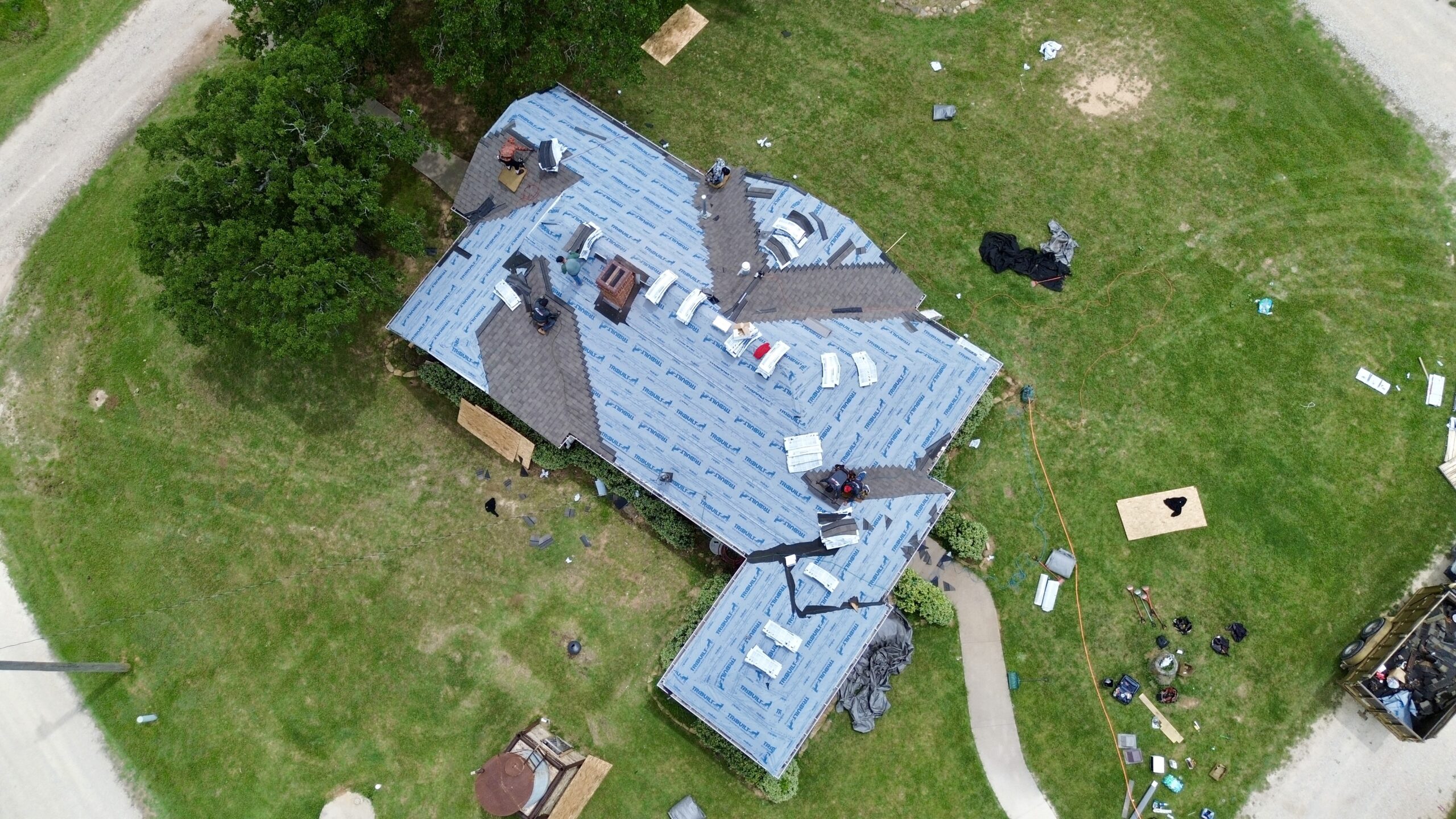
Steep and multi-level residential roofs create additional ladder challenges because workers may need to reach different elevations while maintaining stable access. Roof sections can vary in height, slope, and direction, making it important to plan each access point instead of moving ladders without considering the surrounding conditions. A ladder that works safely for one section may not be suitable for another.
Workers should assess the roof configuration before selecting access equipment. Dormers, valleys, roof extensions, porches, garages, and other connected structures can create complicated access routes. The ladder should be positioned where workers can transition safely without excessive stretching, twisting, or sideways movement.
Steep roofs require particular attention because the transition from ladder to roof can expose workers to fall hazards. Appropriate fall protection should be used where required, and workers should follow established procedures for moving from the ladder onto the elevated surface. The ladder itself does not eliminate the need for additional fall protection once the worker reaches the roof.
Multi-level roofs can also create problems when one ladder is used as a shortcut between different elevations. Workers should not improvise by placing one ladder on another or creating makeshift platforms. Each access system should be designed and used according to its intended purpose.
Roofing materials should also be managed carefully around steep access areas. Shingles, tools, and debris should not be placed where they can slide toward the ladder or interfere with the worker’s entry and exit. Keeping the access point clear helps maintain a predictable route.
When several workers are using different roof sections, communication becomes especially important. Workers should know which ladders are active and should avoid moving or repositioning equipment without informing others. This prevents unexpected changes that could create hazards for someone approaching the ladder.
Weather can make steep and multi-level roof access even more difficult. Rain, wind, frost, or other conditions can reduce traction and affect ladder stability. Work should be postponed or adjusted when conditions prevent safe access.
A carefully planned access system gives workers a more reliable route to difficult roof areas. Rather than relying on shortcuts, crews should select appropriate equipment, establish safe transitions, and maintain clear communication throughout the project.
Ladder Safety During Roof Installation and Tear-Off
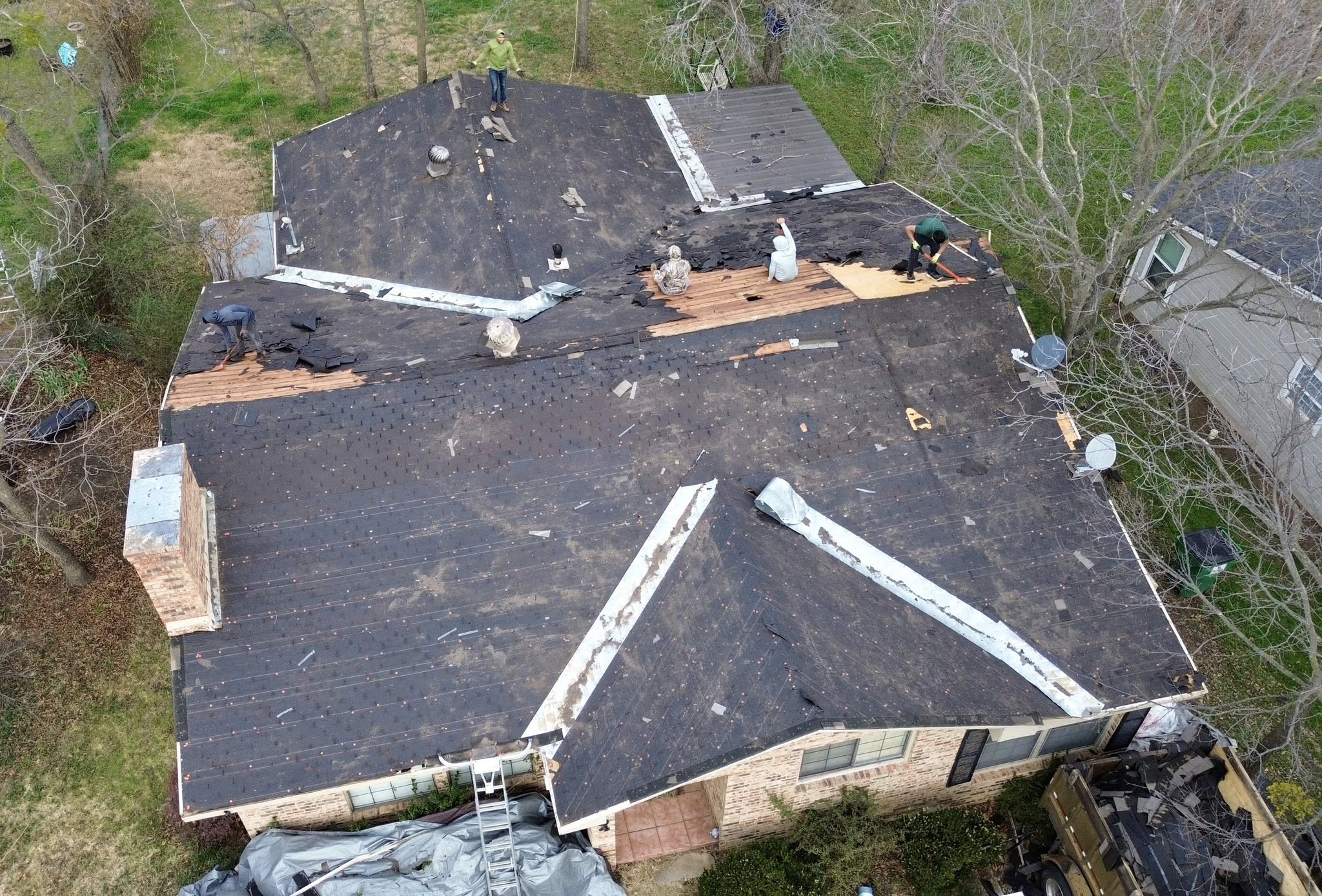
Ladder safety is important during every stage of roofing work, including tear-off and new roof installation. The work environment changes as old materials are removed, roof surfaces are exposed, and new components are installed. These changes can affect how workers approach and use ladders.
During tear-off, debris can accumulate around the base and top of the ladder. Nails, broken shingles, underlayment, and other waste should be controlled so workers can approach the ladder without stepping on sharp or unstable objects.
Workers should avoid throwing debris toward areas where ladders or access routes are located. Materials falling from the roof can strike the ladder or a person climbing it. Debris should be moved using controlled methods and directed toward designated collection areas.
As the roof changes during installation, the ladder position may need to be reassessed. A location that provided convenient access before tear-off may become unsuitable after roofing materials are removed or structural conditions are exposed. Workers should inspect the new conditions before continuing to use the access point.
The ground-level area around the ladder should remain clear throughout the project. Roofing materials should not be stacked against the ladder, and vehicles or equipment should not block the access route. Maintaining a clear area helps workers enter and leave safely.
Ladders should also be protected from unnecessary contact with moving equipment. Workers carrying materials should be aware of the ladder’s location and avoid striking it with tools, boards, flashing, or other objects.
At the end of each work period, debris should be cleared from the ladder area. The ladder should also be secured or stored according to the contractor’s procedures so unauthorized people cannot access the roof.
Maintaining ladder safety during changing work stages requires continuous awareness. Workers should not assume that yesterday’s setup remains appropriate today because the roof, materials, weather, and surrounding work conditions may have changed.
Ladder Safety for Roofing Contractors and Crews
Roofing contractors have an important responsibility to establish safe ladder procedures for their crews. Workers should receive appropriate training and understand how to inspect, position, climb, secure, and store ladders used on residential projects.
Supervisors should make sure workers understand the specific conditions of each jobsite. A ladder safety procedure that works on a single-story home with level ground may require adjustment for a taller property, uneven terrain, or a roof with multiple levels.
Routine ladder inspections should be part of the work process. Workers should check ladders before use and report defects immediately. Supervisors should also ensure that damaged equipment is removed from service and is not accidentally returned to the job.
Communication between workers is another important part of ladder safety. Crews should know when ladders are being moved, when access points change, and when other workers are using the same equipment. Clear communication can prevent accidental movement and unexpected obstruction.
Contractors should also consider homeowners when establishing ladder procedures. The worksite should be organized so residents can safely enter and leave the property without approaching active ladder areas. Temporary barriers or other controls may be useful where access needs to be restricted.
Safety meetings can reinforce important ladder practices. Short discussions before work begins can address the day’s weather, roof access, material movement, electrical hazards, and any changes to the worksite.
A strong safety culture encourages workers to stop and report unsafe conditions. Workers should not feel pressured to use an unstable ladder simply to maintain productivity. Addressing a problem immediately is generally safer than continuing until an accident occurs.
Homeowner and Family Safety Around Roofing Ladders
Homeowners should treat roofing ladders as part of an active construction area. A ladder placed against a house may look accessible, but it can lead directly to an elevated and potentially dangerous work zone. Residents should avoid climbing contractor ladders unless specifically instructed and authorized.
Children should be kept away from ladders and roofing equipment. Children may see a ladder as an opportunity to climb or play, without understanding the risks associated with an unfinished roof. Parents and caregivers should establish clear boundaries around the construction area.
Pets should also be kept away from ladder locations. Dogs and other animals can accidentally bump or move equipment while workers are climbing. Keeping pets in a secure area helps protect both the animals and the roofing crew.
Homeowners should avoid moving a ladder themselves. Even a small change in position can affect stability, electrical clearance, or roof access. If the ladder appears to block a doorway or another area, the homeowner should contact the contractor rather than repositioning it.
Visitors should also be informed about the active worksite. Friends, neighbors, delivery personnel, and other people may not recognize the hazards associated with roofing equipment. Clear communication can prevent them from entering restricted areas.
At the end of the workday, contractors should secure ladders according to their safety procedures. Homeowners should still keep children and pets away from the equipment until the contractor confirms that the area is safe.
Final Ladder Safety Checklist for Residential Roofing
A final ladder safety review helps ensure that important precautions are followed throughout the roofing project. Before use, workers should inspect the ladder for damage, contamination, missing components, and other defects. The equipment should be suitable for the worker, task, height, and surrounding environment.
The setup area should provide stable support, and the ladder should be positioned according to appropriate safety requirements. Electrical lines, doors, vehicles, pedestrians, landscaping, and other nearby hazards should be considered before climbing.
During use, workers should maintain controlled movement and avoid overreaching. Tools and materials should be transported using methods that do not interfere with safe climbing or exceed the ladder’s capacity.
Workers should also monitor changing weather and worksite conditions. If rain, wind, ice, debris, or another hazard makes the ladder unsafe, the activity should be stopped or modified according to established procedures.
Before leaving the site, ladders and other access equipment should be secured or stored appropriately. The surrounding area should be checked for debris, tools, and materials that could create hazards for homeowners or visitors.
Conclusion
Ladder safety is an essential part of residential roofing because ladders provide access to elevated work areas where mistakes can have serious consequences. Safe ladder use begins with selecting appropriate equipment and continues through inspection, setup, climbing, roof access, material handling, and end-of-day security.
Workers should never rely on shortcuts when positioning or using ladders. Stable surfaces, suitable equipment, proper securing methods, controlled climbing, and awareness of electrical and weather hazards all contribute to a safer work environment.
Roofing contractors can further reduce risks by training workers, inspecting equipment regularly, communicating clearly, and addressing unsafe conditions immediately. Homeowners also contribute by keeping family members and pets away from active work areas and avoiding unauthorized use of contractor equipment.
A ladder may be a basic piece of roofing equipment, but safe use requires careful attention to the conditions surrounding it. By making ladder safety a routine part of every residential roofing project, contractors and homeowners can help reduce preventable accidents and create a more controlled construction environment.