
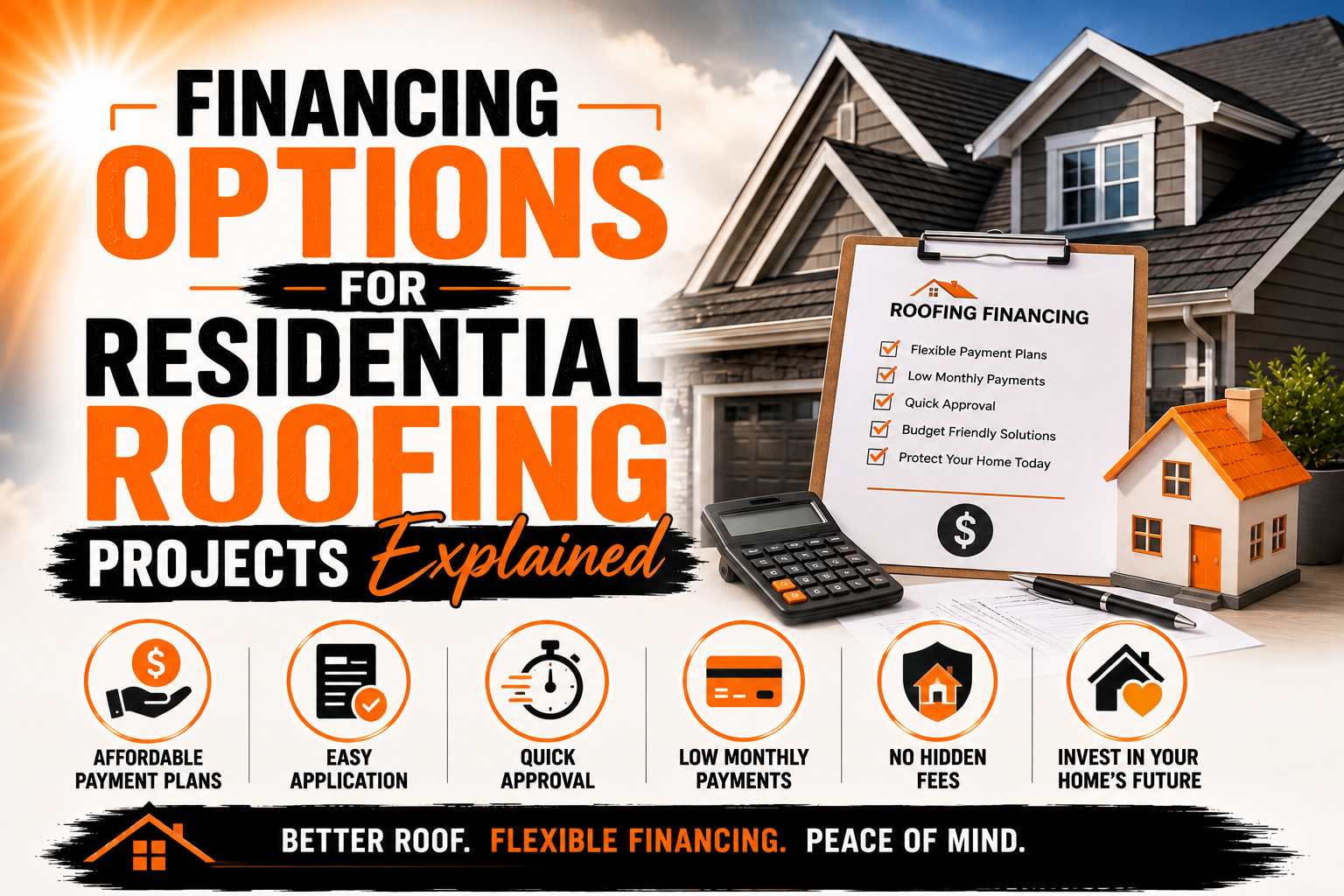
Financing Options for Residential Roofing Projects Explained
Introduction
A residential roofing project can be one of the larger expenses a homeowner faces, especially when a roof requires complete replacement rather than a small repair. Because roofing problems can develop unexpectedly, families may not always have enough savings available to cover the entire project immediately. Understanding the available financing options can help homeowners decide how to manage the expense without putting unnecessary pressure on their household finances.
Roofing financing can take several forms, including personal savings, personal loans, home equity products, credit-based financing, and financing programs offered through roofing contractors. Each option has different requirements, costs, repayment periods, and risks. The right choice depends on the homeowner’s financial situation, credit profile, available equity, project urgency, and ability to make regular payments.
Before selecting a financing method, homeowners should determine how much the roofing project is actually expected to cost. A professional inspection and detailed estimate can identify the roofing materials, labor, removal, disposal, repairs, and other services required. Knowing the full project amount makes it easier to determine how much financing is needed and whether part of the expense can be covered through savings.
Homeowners should also remember that financing increases the total cost of a project when interest or fees are involved. A roofing system that costs a certain amount in cash may cost considerably more when financed over several years. Comparing the annual percentage rate, repayment period, fees, and total repayment amount is therefore essential before signing a financing agreement.
The goal of roofing financing should be to make a necessary home improvement manageable while keeping the long-term financial burden under control. By understanding the major financing options and their differences, homeowners can make a more informed decision and avoid rushing into an arrangement simply because the monthly payment appears affordable.
Understanding Residential Roofing Project Costs
Before considering financing, homeowners should understand what is included in the roofing project’s total price. Roofing estimates can vary significantly because each property has different dimensions, materials, design features, accessibility, and existing conditions. A clear understanding of these costs helps homeowners avoid borrowing more money than necessary.
The primary roofing material is usually one of the largest expenses. Asphalt shingles, metal roofing, tile, slate, and synthetic products can have significantly different prices. Material selection should consider not only the initial purchase price but also durability, installation requirements, maintenance, and expected service life.
Labor is another major component. Professional installation requires skilled workers, safety equipment, preparation, and time. Steep roofs, complex designs, multiple levels, chimneys, skylights, and other features can increase installation requirements and therefore affect the final project price.
Roof removal can add another expense when an existing system needs to be replaced. Contractors may need to strip old materials, transport debris, and dispose of the waste properly. Multiple roofing layers or heavy materials can increase the amount of labor and disposal work required.
Underlying problems can also affect the final cost. Once old roofing materials are removed, contractors may discover damaged decking, moisture problems, deteriorated flashing, or inadequate ventilation. These issues may require additional work before the new roofing system can be installed correctly.
Homeowners should ask contractors to provide a detailed written estimate that separates major costs. This can make it easier to identify which expenses are essential and which improvements are optional. It also provides a better basis for determining how much money needs to be financed.
A simple breakdown can include:
- Roofing materials and accessories
- Labor and installation
- Existing roof removal and disposal
- Decking or structural repairs
- Flashing and ventilation
- Permits and inspections where required
- Cleanup and final project services
Once the total project cost is known, homeowners can compare financing options based on the amount they actually need to borrow. Borrowing only what is necessary can help reduce interest charges and make repayment more manageable.
Paying for Roofing With Personal Savings
Using personal savings is generally the simplest way to pay for a roofing project because it avoids interest charges and borrowing requirements. Homeowners who have enough money saved for the project can pay directly without taking on monthly debt. This can make the financial side of the project more straightforward.
Savings can be particularly useful for smaller roofing repairs. If a homeowner has an emergency fund or dedicated home maintenance savings, the money may be available to address a damaged area before the problem becomes more serious. Early repairs can sometimes prevent a larger roofing expense later.
However, homeowners should be careful about using all of their available savings for a roof. A major home improvement should not leave a family without enough money for other emergencies or essential expenses. Medical costs, vehicle repairs, employment changes, household emergencies, and other unexpected situations can occur after the roofing project is complete.
One approach is to use part of the savings and finance the remaining balance. This can reduce the amount borrowed while allowing the homeowner to preserve some cash reserves. Whether this makes sense depends on the interest rate of the financing and the amount of savings available.
Families should also consider the timing of the roofing project. If the roof is still performing adequately and replacement is not urgent, homeowners may have an opportunity to save additional money before beginning the work. Planning ahead can reduce the amount that ultimately needs to be financed.
For an emergency roof problem, however, waiting may not be practical. Water entering the home can damage ceilings, insulation, walls, electrical components, and other areas. In such situations, homeowners may need to combine available savings with another financing method to complete necessary repairs quickly.
Savings also provide flexibility when negotiating with contractors. A homeowner who can pay some or all of the project cost directly may have more choices when comparing proposals. However, the decision should be based on overall financial stability rather than using savings simply to avoid borrowing.
The key advantage of personal savings is that the homeowner does not pay financing interest. The main consideration is whether using those funds would leave enough financial protection for other household needs.
Home Improvement and Personal Loans
Personal loans are another option homeowners may consider when savings are insufficient to cover a roofing project. These loans are generally based on the borrower’s creditworthiness and ability to repay rather than requiring the home itself to serve as collateral. The exact terms vary by lender and borrower.
A personal loan can provide a fixed amount that may be suitable for a roofing project with a clearly defined cost. Depending on the loan terms, homeowners may make regular payments over a set period. A fixed repayment structure can make monthly budgeting easier because the payment schedule is generally established in advance.
Interest rates can vary significantly based on credit history, income, loan amount, repayment period, and lender requirements. Homeowners should compare offers rather than accepting the first available loan. The interest rate is important, but the annual percentage rate and total repayment amount can provide a more complete picture of the borrowing cost.
Loan fees should also be reviewed carefully. Some lenders may charge origination fees or other costs that increase the effective price of borrowing. Homeowners should ask whether there are application fees, early repayment charges, late fees, or other conditions associated with the loan.
The repayment period can also influence the total cost. A longer loan term may result in lower monthly payments, but interest can accumulate over a longer period. A shorter term may require larger monthly payments but can reduce the amount of interest paid over the life of the loan.
Homeowners should evaluate the monthly payment against their existing household obligations. A payment that appears manageable in isolation may become difficult when combined with mortgages, utilities, insurance, education expenses, vehicle payments, and other debts.
Personal loans can be useful when homeowners need a predictable financing structure without placing their home directly at risk as collateral. However, they still create a financial obligation that should be considered carefully before approval.
Before accepting a personal loan, homeowners should understand the exact amount they will receive, the interest rate, repayment period, fees, monthly payment, and total amount expected to be repaid. These details allow families to compare borrowing costs against other roofing financing options.
Home Equity Loans for Roofing Projects
A home equity loan allows eligible homeowners to borrow against some of the equity they have built in their property. The amount available can depend on factors such as the home’s value, existing mortgage balance, lender requirements, income, and credit profile. Because the loan is connected to the property, it should be considered carefully.
One potential advantage is that home equity loans can offer structured repayment with a fixed amount and, depending on the lender and market conditions, a fixed interest rate. This can make budgeting easier because homeowners know the scheduled payment for the repayment period.
Home equity loans may be considered for larger roofing projects where the homeowner needs to borrow a substantial amount. A complete roof replacement involving extensive repairs may cost more than a homeowner can comfortably cover through savings or a smaller personal loan.
However, using home equity involves important risks. The home generally serves as collateral for the loan, meaning failure to meet repayment obligations can have serious consequences. Homeowners should therefore avoid borrowing more than they can reasonably afford to repay.
The total cost of borrowing should also be evaluated carefully. Interest rates, closing costs, application fees, appraisal requirements, and other charges may apply depending on the lender and loan structure. These costs should be included when comparing home equity financing with other options.
Homeowners should also consider how long they expect to remain in the property. If a family plans to sell the home relatively soon, taking on a long-term financing obligation may require additional planning. The remaining loan balance and potential transaction costs can affect future financial decisions.
A home equity loan may be more appropriate for a substantial, planned roofing project than for a small repair. For smaller expenses, other financing options may involve less administrative work or fewer costs. The suitability depends on the amount needed and the homeowner’s overall financial position.
Before choosing this option, homeowners should compare the complete loan terms with alternatives. A lower monthly payment does not necessarily mean a lower total cost. Families should consider the interest rate, fees, repayment period, collateral requirements, and total repayment amount.
Home Equity Lines of Credit for Roofing
A home equity line of credit, commonly called a HELOC, is another financing method that allows eligible homeowners to borrow against available home equity. Unlike a traditional home equity loan, which generally provides a specific amount upfront, a HELOC can provide access to a credit line that can be used as needed during the borrowing period.
This structure may be useful when the final roofing cost is uncertain. For example, a homeowner may know that a roof needs replacement but may not know whether additional decking or structural repairs will be necessary until the old roofing is removed. Access to a credit line can provide flexibility when expenses change.
However, homeowners should understand that HELOC terms can differ from those of traditional loans. Interest rates may be variable depending on the product, which means monthly payments and borrowing costs can change. This creates an additional budgeting consideration for families.
The ability to borrow only what is needed can be another advantage. A homeowner may use part of the available credit for the roofing project rather than borrowing a large amount upfront. However, the homeowner should still monitor the balance carefully and avoid using the credit line for unnecessary expenses.
Because a HELOC is secured by the home, homeowners need to understand the consequences of failing to make required payments. Borrowing against home equity should be approached with the same care as any major secured debt.
Fees may also apply, depending on the lender and agreement. Homeowners should review the interest rate, draw period, repayment period, minimum payments, annual fees, closing costs, and any other charges before accepting the financing.
A HELOC can provide flexibility for roofing projects where costs may change, but that flexibility should be balanced against the risks of variable borrowing costs and secured debt. Families should calculate whether they can comfortably manage payments under different interest-rate scenarios.
The most suitable financing choice will depend on the homeowner’s circumstances. Personal savings may be preferable when sufficient funds are available, while personal loans or home equity products may provide alternatives when borrowing is necessary. Understanding how each option works allows homeowners to compare them based on total cost, repayment requirements, risk, and financial stability rather than choosing solely according to the monthly payment.
Credit Cards and Promotional Financing
Credit cards can provide a convenient way to pay for smaller roofing repairs or cover part of a larger project when other funds are unavailable. Many homeowners already have access to a credit card, which can make this option faster than applying for a separate loan. However, the cost of using a credit card can vary significantly depending on the interest rate, promotional period, fees, and repayment strategy.
Some credit cards offer promotional financing for new purchases, such as a temporary period with no interest if the required conditions are met. These offers can appear attractive for homeowners who expect to repay the entire balance within the promotional period. Before using such an offer, homeowners should carefully review the terms and determine whether the balance can realistically be cleared before the promotion ends.
A roofing project can become more expensive than initially expected because hidden damage may be discovered during installation. If the homeowner has already placed most of the project on a credit card, additional charges can increase the balance and make repayment more difficult. Maintaining a separate emergency reserve can therefore be important even when promotional financing is available.
Credit card interest can become expensive when a balance remains unpaid. A homeowner who makes only minimum payments may take considerably longer to repay the roofing expense and may pay substantially more than the original project price. For this reason, the monthly minimum should not be treated as the actual repayment plan.
Homeowners should also consider their existing credit card balances. Adding a large roofing expense to cards that are already carrying debt can increase overall financial pressure. It may also affect credit utilization and potentially influence future borrowing opportunities.
Before using a credit card, families should compare the total expected cost with other financing methods. A personal loan with a lower interest rate may be more suitable for a large roof replacement, while a credit card could be more practical for a smaller repair that can be repaid quickly.
Promotional offers also require careful attention to deadlines. If a homeowner intends to repay the balance before the promotional period ends, the required monthly payment should be calculated in advance. This helps ensure that the remaining balance does not become difficult to manage once the regular interest rate applies.
Credit cards can therefore be useful in certain situations, but they should generally be treated as a short-term financing tool rather than an automatic solution for a large roofing project. Homeowners should understand the interest rate, promotional conditions, fees, repayment period, and consequences of carrying the balance before making a decision.
Contractor-Provided Roofing Financing
Some roofing contractors offer financing programs through outside financial companies or lending partners. These programs may allow homeowners to apply for financing directly during the roofing process, which can make the application experience convenient. The availability and terms of these programs vary from one contractor and lender to another.
Contractor-provided financing may be particularly appealing when a homeowner needs to arrange a roof replacement quickly. Instead of searching independently for a lender, the homeowner may receive financing information alongside the roofing estimate. This can simplify the process, but convenience should not replace careful comparison.
Homeowners should determine who is actually providing the financing. In many cases, the roofing company is not the lender but works with a separate financial institution. Understanding the relationship can help homeowners know where questions about interest rates, repayment, billing, and account management should be directed.
Promotional financing may sometimes be available through contractor financing programs. These offers can include reduced interest or temporary promotional terms, but the homeowner should read the agreement carefully. The exact meaning of a promotional offer depends on its terms, and failing to meet the required conditions can result in unexpected costs.
The roofing contract and financing agreement should also be reviewed separately. The contractor’s proposal explains the work being performed, while the financing agreement establishes the borrowing terms. A homeowner should understand both documents before authorizing the project.
Homeowners should avoid allowing financing convenience to influence their contractor selection too heavily. A contractor should be evaluated based on qualifications, experience, references, insurance, workmanship, materials, and the quality of the proposal. Financing is only one part of the overall decision.
Comparing the contractor’s financing offer with independent options can also be useful. A bank, credit union, or other lender may offer different interest rates or repayment terms. The best financing choice is not necessarily the one that is easiest to apply for.
Families should also ask whether the financing arrangement changes the roofing price. In some cases, promotional financing may be associated with specific pricing structures or conditions. Comparing a cash price and financed price can help homeowners understand the actual financial cost of the arrangement.
Contractor-provided financing can be a practical option when its terms are competitive and transparent. However, homeowners should review the complete agreement, understand who the lender is, compare alternatives, and make sure the monthly payment fits comfortably within the household budget.
Government and Community Assistance Programs
Some homeowners may qualify for government, nonprofit, community, or local assistance programs that help with home repairs. These programs can vary widely by location and eligibility requirements, so homeowners should research options available in their particular area. Assistance may be directed toward specific groups, types of properties, income levels, or repair needs.
Programs may provide grants, low-interest loans, deferred loans, or other forms of financial support. The amount and purpose of assistance can also vary. Some programs may support general home improvements, while others may focus on health, safety, energy efficiency, weatherization, or urgent repairs.
Eligibility is often based on factors such as household income, property ownership, location, age of the home, household circumstances, or the nature of the repair. Homeowners should review the requirements carefully before assuming that a particular program will cover a roofing project.
Applications may require supporting documentation. This could include proof of ownership, income information, project estimates, property records, or evidence of the condition requiring repair. Families should allow enough time to gather documents and complete the application process.
Government or community assistance may also have limits on the contractors or materials that can be used. Some programs require approved contractors, specific construction standards, inspections, or prior authorization before work begins. Starting a project before receiving approval could potentially affect eligibility.
Homeowners should use official sources when researching assistance programs. Online advertisements or third-party services may contain outdated information or make promises that do not accurately reflect the actual program. Verifying the requirements through the responsible government or community organization is important.
Assistance programs may not cover the entire roofing expense. Families may still need to contribute savings or use another financing method for the remaining balance. Understanding the maximum assistance amount and eligible expenses can help homeowners plan accordingly.
Because program availability can change, homeowners should check current requirements before including assistance in their financial plan. A program that was available in a previous year may have different funding, eligibility rules, or application procedures later.
For qualifying families, assistance can reduce the amount that needs to be borrowed. However, it should be treated as one potential source of funding rather than the only plan. Having an alternative financing strategy can be useful if an application is delayed, denied, or provides less assistance than expected.
Insurance Claims and Storm Damage
Insurance can play an important role in financing certain roofing projects when damage results from a covered event. Severe storms, hail, wind, falling objects, or other events may cause damage that could qualify for coverage under some homeowners insurance policies. Coverage depends on the specific policy, exclusions, deductibles, and circumstances of the loss.
Homeowners should review their policy before assuming that insurance will pay for a roof replacement. Normal aging, deterioration, lack of maintenance, and certain excluded events may not be covered. The policy language determines whether a particular loss qualifies.
When significant storm damage occurs, homeowners should document the condition of the roof and surrounding property. Photographs, videos, dates, repair records, and contractor estimates can help provide information when discussing a claim. Documentation should be collected safely without placing the homeowner at risk by attempting to inspect a dangerous roof personally.
A professional roofing contractor may identify visible storm damage and provide an estimate for necessary repairs. However, homeowners should understand that the contractor does not determine insurance coverage. The insurance company evaluates the claim according to the policy and its claims process.
The deductible is another important consideration. Even when a claim is approved, the homeowner may be responsible for the policy’s applicable deductible. Families should include this amount in their financial planning rather than assuming the entire roofing project will be paid by insurance.
Temporary repairs may sometimes be necessary to prevent further damage after a storm. Covering exposed areas or addressing immediate leaks can help protect the home while the claim and permanent repairs are being arranged. Homeowners should keep records of emergency work and related expenses.
Families should also be cautious about contractors who make unrealistic promises regarding insurance claims. A reputable contractor should describe the physical roofing work clearly rather than guaranteeing that an insurer will approve a particular claim amount.
Insurance can reduce the amount a homeowner needs to finance, but it should not be treated as guaranteed funding until the claim has been reviewed and approved. Families should understand their policy, deductible, documentation requirements, and potential out-of-pocket expenses before developing the final financing plan.
Comparing Roofing Financing Options
Comparing financing options requires homeowners to look beyond the advertised monthly payment. A low monthly payment can result from a long repayment period, while a higher payment may come with a shorter term and lower total interest. The overall cost of borrowing is therefore more important than the payment amount alone.
Homeowners should compare the interest rate and annual percentage rate where applicable. The annual percentage rate can help provide a broader view of borrowing costs because it may account for certain fees in addition to the stated interest rate. However, homeowners should still review the full agreement for all charges and conditions.
The repayment period also matters. A longer term can make monthly payments easier to manage, but interest may accumulate for a longer period. A shorter term can reduce total interest but requires the homeowner to commit to larger regular payments.
Fees should be reviewed carefully. Depending on the financing method, homeowners may encounter origination fees, application charges, closing costs, annual fees, late-payment charges, or other expenses. These costs can make one financing option more expensive than another even when the advertised interest rates appear similar.
The following comparison can help homeowners organize their options:
| Financing Option | Main Advantage | Important Consideration |
|---|---|---|
| Personal savings | No borrowing interest | Reduces available cash reserves |
| Personal loan | Fixed borrowing amount and structured payments | Interest and lender fees |
| Home equity loan | May provide substantial funding | Home used as collateral |
| HELOC | Flexible access to available credit | Rate may vary |
| Credit card | Convenient and potentially fast | High interest if balance remains |
| Contractor financing | Convenient application process | Terms should be compared independently |
| Assistance programs | May reduce borrowing needs | Eligibility and funding limitations |
| Insurance claim | May cover eligible storm damage | Coverage and deductible depend on policy |
Homeowners should also compare the amount that can be borrowed with the actual project cost. Borrowing substantially more than necessary can increase interest expenses and create unnecessary debt. At the same time, borrowing too little may leave the homeowner unable to complete essential work.
The financial stability of the household should remain central to the decision. A financing option may appear attractive on paper but become difficult if income changes or other expenses increase. Families should consider whether they could continue making payments during an unexpected financial setback.
Understanding Interest Rates, Fees, and Repayment Terms
Interest rates are one of the most important elements of any roofing financing agreement because they determine how much borrowing costs over time. A lower interest rate generally reduces the cost of financing, but the rate should always be considered alongside fees, repayment length, and other conditions.
Fixed-rate financing generally provides a consistent interest rate for the agreed period. This can make household budgeting easier because the scheduled payment is more predictable. Variable-rate financing can change over time, which may cause payments or interest costs to increase under certain conditions.
Homeowners should determine whether the quoted rate is fixed or variable before accepting financing. This distinction is particularly important for larger roofing projects because repayment may continue for several years. A rate that changes during the repayment period can affect the family’s long-term budget.
The repayment term is equally important. Consider a hypothetical roofing balance of $10,000. A shorter repayment period may require larger monthly payments, while extending the term may reduce the monthly amount but increase the total interest paid. The homeowner should choose a term that balances affordability with the goal of minimizing unnecessary borrowing costs.
Fees can also affect the total amount repaid. An arrangement with a slightly lower interest rate may still be more expensive if it carries substantial upfront or ongoing fees. Families should therefore compare the total financial obligation rather than focusing on one number.
Homeowners should also understand what happens if a payment is late. Late fees, penalty interest, or other consequences may apply depending on the agreement. Automatic payments can sometimes help homeowners stay on schedule, but they should ensure sufficient funds are available in the account.
Before accepting financing, homeowners should calculate the expected total repayment whenever possible. This provides a clearer understanding of what the roof will ultimately cost after financing. Comparing this figure with available savings and alternative financing options can reveal which choice is financially reasonable.
A useful financing decision should provide enough money to complete necessary roofing work without creating an unmanageable household obligation. Homeowners should take time to read the agreement, ask questions about unfamiliar terms, and avoid signing documents they do not understand.
Roofing financing can make an important home improvement more accessible, but borrowing should always be approached carefully. Once homeowners understand interest rates, fees, repayment periods, collateral, and total costs, they are in a stronger position to compare financing options and select an arrangement that supports both the immediate roofing need and the family’s long-term financial stability.
How to Choose the Right Roofing Financing Option
Choosing a financing option for a residential roofing project requires more than finding a lender with an attractive monthly payment. Homeowners should consider the total project cost, available savings, credit position, repayment ability, interest rate, fees, and potential risks before making a decision. The right choice should make the roofing project financially manageable without creating unnecessary long-term debt.
The first step is to determine exactly how much financing is needed. A detailed roofing estimate should include materials, labor, removal, disposal, preparation, repairs, flashing, ventilation, permits, and other applicable expenses. If the homeowner has savings available, using part of those funds may reduce the amount that needs to be borrowed.
Homeowners should then compare several financing choices based on their individual circumstances. A smaller repair that can be repaid quickly may be suitable for savings or short-term credit, while a complete replacement may require a personal loan or home equity financing. Families should also consider whether the roof needs immediate attention or whether they have time to save additional money before starting the project.
The risk associated with each option should be considered as carefully as the interest rate. Unsecured financing may not place the home directly at risk, while home equity products use the property as collateral. Understanding this difference can help homeowners choose an option that matches their comfort level and financial stability.
Short-Term vs. Long-Term Financing
The repayment period can have a significant effect on the overall cost of roofing financing. Short-term financing generally requires larger monthly payments, but the debt can be eliminated sooner and may result in less interest paid over time. Long-term financing can make monthly payments easier to manage, but the homeowner may pay more interest because the balance remains outstanding for a longer period.
Families should avoid selecting a long repayment period simply because the monthly payment appears comfortable. A payment that is affordable today may result in a substantially higher total cost over several years. Homeowners should compare both the monthly obligation and the total expected repayment before choosing a term.
Short-term financing can work well when the roofing project is relatively small and the household has stable income. If the homeowner can comfortably make larger payments without affecting essential expenses or emergency savings, paying the balance sooner may reduce financing costs.
Long-term financing may be considered for a major roof replacement where paying a large amount each month would place too much pressure on the household budget. However, homeowners should understand the total interest cost and confirm that the payment schedule remains manageable.
Families should also consider future financial commitments. Mortgage expenses, education costs, vehicle payments, household bills, and other obligations may change over time. Choosing a repayment period that leaves reasonable room in the family budget can reduce financial stress.
The best repayment term is therefore not necessarily the shortest or longest available. It should provide a practical balance between monthly affordability and the total cost of borrowing.
How Credit Scores Can Affect Roofing Financing
A homeowner’s credit history can influence the financing options available for a roofing project. Lenders commonly review credit information when evaluating applications, although requirements vary between financial institutions and financing programs. Credit history can affect approval decisions, interest rates, borrowing limits, and repayment terms.
Homeowners with stronger credit profiles may have access to more competitive financing offers, while those with limited or weaker credit histories may receive higher rates or fewer choices. This does not mean that financing is impossible for homeowners with different credit circumstances, but the total cost may vary.
Before applying, homeowners should understand their general financial position and avoid submitting unnecessary applications to multiple lenders without comparing requirements. A carefully planned comparison can help identify suitable options while reducing the risk of taking on an unfavorable agreement.
Existing debt is another important consideration. Lenders may evaluate income and current financial obligations when determining whether a homeowner can comfortably manage additional payments. Families should also perform their own assessment rather than relying entirely on a lender’s approval decision.
A loan amount approved by a lender does not necessarily represent an amount the household should borrow. Homeowners should determine what payment fits comfortably within their budget after considering normal household expenses and savings goals.
If a homeowner has time before the roofing project becomes necessary, improving overall financial preparation may provide more options later. Maintaining timely payments on existing obligations and managing debt responsibly can support stronger financial positioning, although there is no guarantee of a particular financing result.
Avoiding Common Roofing Financing Mistakes
One common mistake is agreeing to financing before understanding the full roofing project cost. An initial estimate may change if hidden damage is discovered, so homeowners should ask how additional work will be priced. A contingency reserve can help prevent an unexpected repair from creating a financial emergency.
Another mistake is focusing entirely on monthly payments. A financing arrangement can advertise a low monthly amount while extending repayment over many years. Homeowners should always review the interest rate, fees, repayment period, and total expected repayment.
Choosing a contractor solely because financing is available can also create problems. The quality of the roofing contractor should be evaluated independently through experience, qualifications, insurance, references, workmanship, materials, and contract details. Financing convenience should not outweigh the importance of proper roofing installation.
Homeowners should also be cautious about pressure to sign immediately. A reputable contractor should provide enough information for the homeowner to understand the roofing scope and financing arrangement. Families should have an opportunity to review documents and ask questions before committing.
Another mistake is borrowing more than necessary. Financing extra money for unrelated purchases can increase interest costs and make the roofing debt harder to manage. Borrowing should generally be limited to the amount needed for the approved roofing work and reasonable project contingencies.
Homeowners should also read the financing agreement carefully. Important details can include promotional periods, variable rates, late fees, prepayment terms, collateral requirements, and conditions that may not be obvious from an advertisement. Understanding these details before signing can prevent unpleasant surprises later.
Creating a Roofing Payment Plan
Once a financing option has been selected, families should create a payment plan that fits their regular household budget. The monthly roofing payment should be considered alongside mortgage or rent, utilities, insurance, food, transportation, education, savings, and other recurring expenses. A realistic plan reduces the possibility of missed payments.
Homeowners can also decide whether to make additional payments when their financial situation allows. Paying extra toward certain types of loans may reduce the outstanding balance and potentially lower total interest, depending on the agreement. Before making additional payments, homeowners should confirm whether any prepayment restrictions or fees apply.
The payment plan should also account for unexpected financial changes. Families may experience changes in income, employment, household expenses, or other obligations during a multi-year repayment period. Keeping an emergency reserve can provide some protection against these situations.
Homeowners should maintain records of financing documents and roofing expenses. Contracts, invoices, payment confirmations, warranties, inspection records, and material information can be useful for future maintenance and financial planning. Keeping these documents organized can also make it easier to resolve questions if a disagreement occurs.
If a roofing project involves insurance reimbursement, homeowners should carefully coordinate payments and reimbursements rather than assuming funds will arrive immediately. Insurance processes can take time, and the homeowner may still have an immediate financial obligation depending on the contract and financing arrangement.
A good payment plan should ultimately make the roofing project manageable without compromising essential household needs. If the proposed payment would leave little room for emergencies or routine expenses, the homeowner may need to reconsider the financing amount, project scope, or repayment term.
Questions to Ask Before Accepting Financing
Before accepting roofing financing, homeowners should ask clear questions about both the roofing project and the financial agreement. Understanding the terms beforehand can help families avoid committing to a payment structure they cannot comfortably maintain.
Important questions include:
- What is the total amount being financed?
- What is the interest rate and annual percentage rate?
- Is the interest rate fixed or variable?
- What fees are charged?
- How long is the repayment period?
- What is the expected total amount repaid?
- Are there promotional financing conditions?
- What happens if a payment is late?
- Can the balance be paid early without a penalty?
- Is the home being used as collateral?
Homeowners should also ask the roofing contractor what happens if additional damage is discovered. The financing amount may need to change if substantial decking or structural repairs become necessary, so understanding the process in advance can make unexpected situations easier to manage.
The final roofing contract should clearly explain the work being performed, materials being used, payment schedule, warranties, cleanup responsibilities, and procedures for changes. The financing agreement should be reviewed separately so that homeowners understand both obligations.
Conclusion
Financing can make a residential roofing project more manageable when homeowners do not have enough savings to cover the full cost immediately. Personal loans, home equity products, credit cards, contractor financing, assistance programs, insurance coverage, and personal savings can each serve different situations. The most suitable option depends on the project’s size, urgency, household finances, credit profile, and ability to make regular payments.
Homeowners should compare financing based on more than the advertised monthly payment. Interest rates, fees, repayment terms, total repayment amounts, promotional conditions, and collateral requirements can significantly affect the true cost of borrowing. A financing option that appears inexpensive at first may become costly when extended over a long period.
Planning is especially important for families because roofing expenses can compete with other household priorities. Obtaining detailed roofing estimates, maintaining an emergency reserve, comparing financing offers, and understanding the complete contract can help homeowners make better financial decisions.
The goal should be to complete necessary roofing work while maintaining a healthy household budget. By borrowing only what is needed, selecting a realistic repayment period, and understanding all financing conditions before signing, homeowners can protect their property without taking on unnecessary financial pressure.