
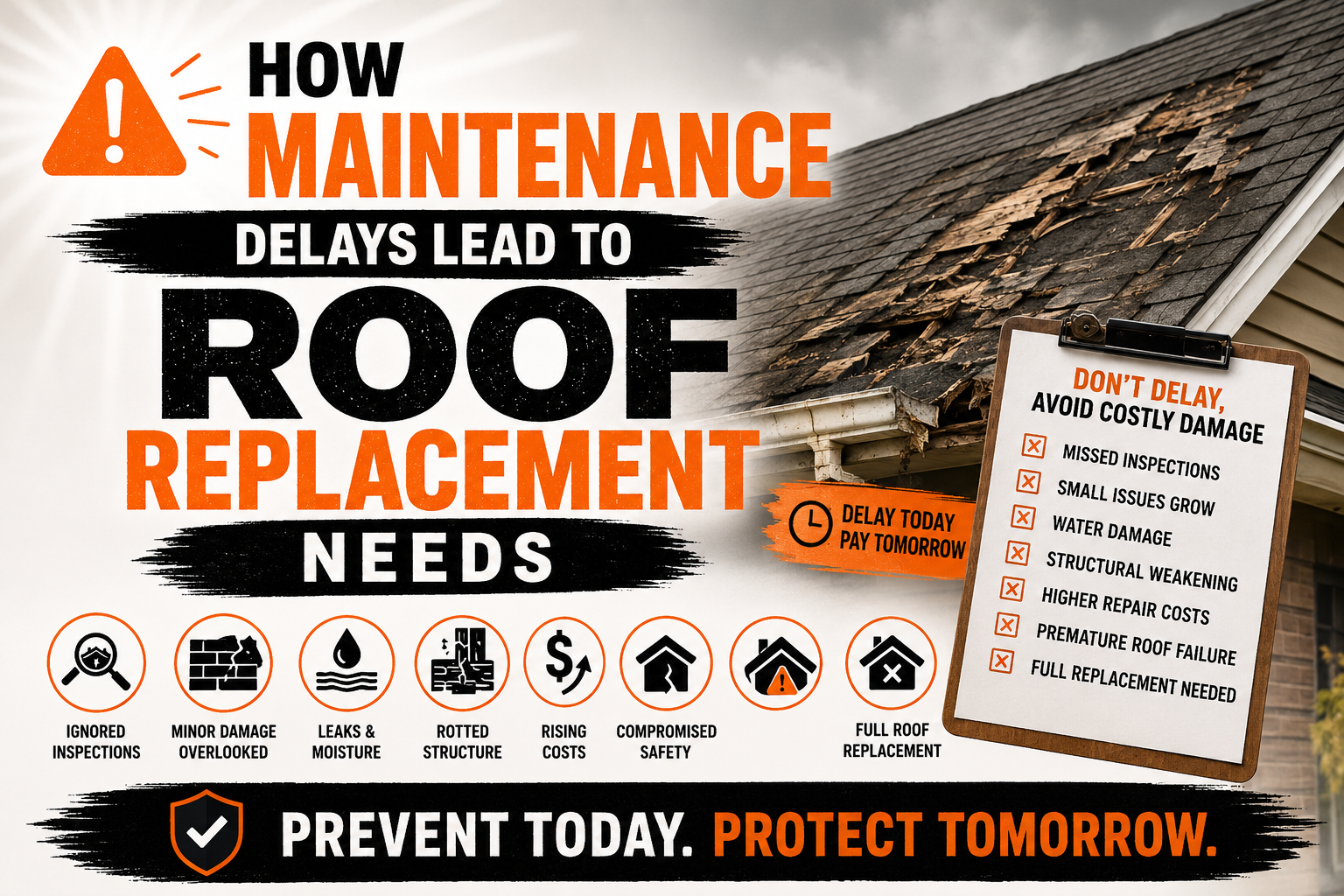
How Maintenance Delays Lead to Roof Replacement Needs
Introduction
A roof is one of the most valuable parts of any home or commercial building because it provides continuous protection against rain, wind, heat, snow, and changing weather conditions. Despite its importance, roof maintenance is often overlooked until visible problems begin to appear. Many property owners assume that if the roof is not leaking, it must still be in good condition. Unfortunately, roofing damage often develops slowly beneath the surface, making early problems difficult to detect without regular inspections.
Delaying maintenance may seem like a way to save money in the short term, but it usually has the opposite effect over time. Minor issues that could have been repaired quickly can gradually expand into widespread damage affecting the roof structure, insulation, and even the interior of the property. By the time obvious warning signs appear, repair costs may have increased significantly, and complete roof replacement may become the only practical solution.
Understanding how maintenance delays contribute to roof deterioration helps property owners make informed decisions before damage reaches a critical stage. Regular inspections, timely repairs, and preventive care can dramatically extend a roof’s lifespan while protecting the overall value of the property. This article explores how neglected maintenance gradually transforms manageable roofing issues into costly replacement projects.
Why Regular Roof Maintenance Matters
Every roofing system experiences natural wear throughout its service life. Sunlight, heavy rainfall, strong winds, fluctuating temperatures, and seasonal storms continuously place stress on roofing materials. While these conditions are unavoidable, proper maintenance helps minimize their long-term impact and preserves the roof’s protective capabilities.
Routine maintenance allows professionals to identify problems while they remain small and inexpensive to repair. Loose shingles, damaged flashing, clogged drainage systems, and minor sealant failures can often be corrected before they allow water to enter the roofing system. Addressing these issues early prevents further deterioration and helps maintain the roof’s structural integrity.
Maintenance also helps preserve manufacturer warranties. Many roofing manufacturers specify that regular inspections and maintenance are necessary to keep warranty coverage valid. Ignoring these requirements may result in denied warranty claims when significant damage eventually occurs.
A well-maintained roof performs more efficiently throughout every season. Properly functioning drainage systems, intact roofing materials, and effective ventilation work together to reduce moisture accumulation and temperature extremes. These factors help extend the life of roofing materials while improving the building’s overall energy efficiency.
The Hidden Cost of Delayed Roof Maintenance
One of the biggest misconceptions among property owners is that postponing maintenance saves money. While delaying inspections or small repairs may reduce immediate expenses, the hidden costs often become much greater as damage spreads throughout the roofing system.
Small leaks are an excellent example of this problem. A tiny opening around flashing or a missing shingle may allow only a small amount of water into the roof. Because the leak is initially minor, it often goes unnoticed for months. During this time, moisture gradually damages roof decking, insulation, framing components, and interior ceilings.
Water damage rarely remains confined to a single location. Moisture travels through wood, insulation, and structural materials, allowing deterioration to spread beyond the original entry point. What begins as a simple repair can eventually require replacing large sections of roofing materials and supporting structures.
Delayed maintenance also contributes to higher labor costs. Contractors can often complete small repairs quickly when damage is localized. Once deterioration becomes widespread, additional demolition, structural repairs, material replacement, and cleanup significantly increase project complexity and overall expenses.
Insurance coverage may also become more complicated when maintenance has been neglected. Some insurance policies distinguish between sudden storm damage and gradual deterioration caused by lack of maintenance. Property owners who postpone necessary repairs may discover that portions of the damage are not covered because they resulted from preventable neglect rather than unexpected events.
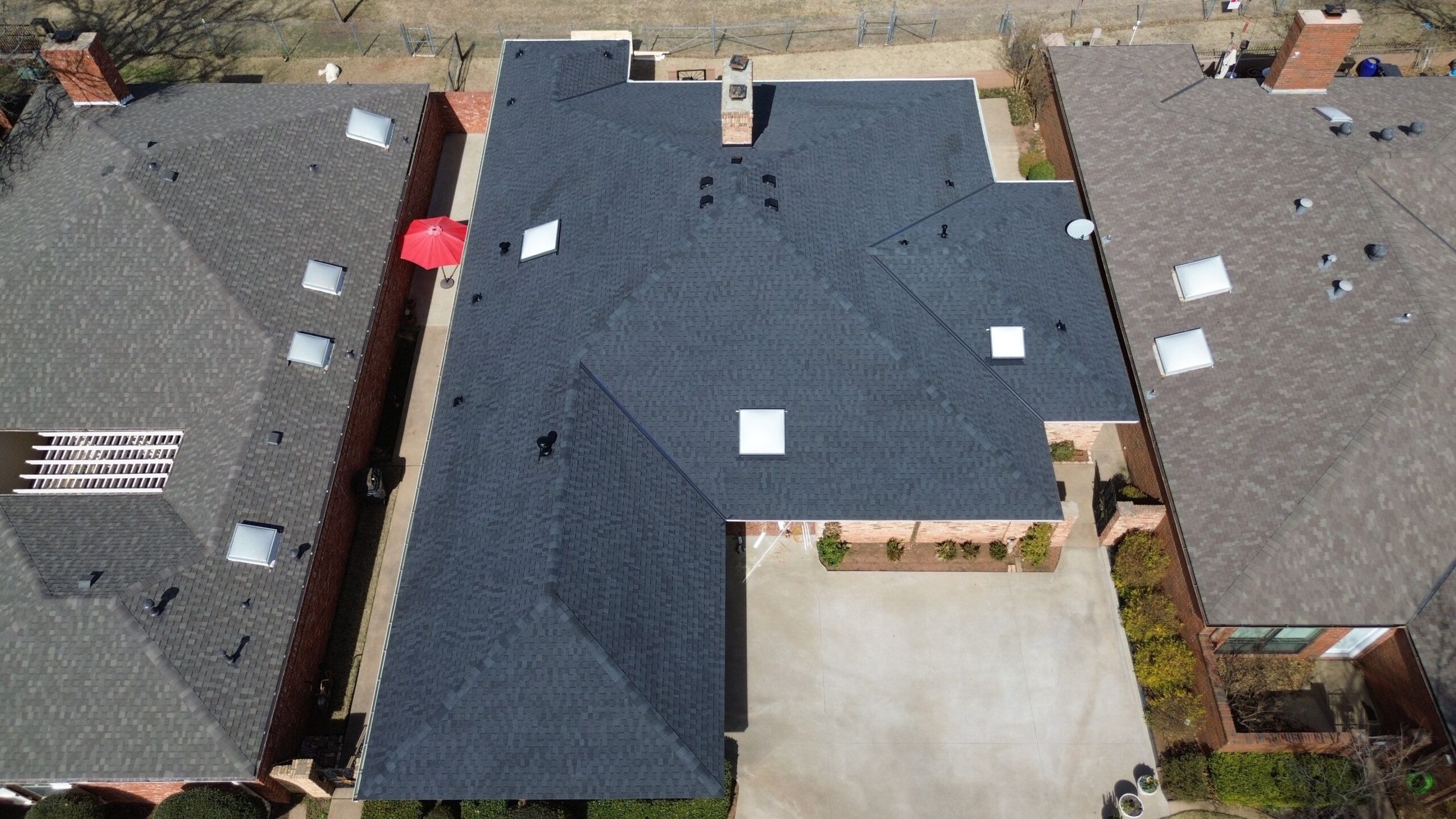
Common Reasons Homeowners Postpone Roof Maintenance
Many maintenance delays are not intentional. Instead, they result from common misunderstandings about roofing systems and their expected lifespan. Recognizing these reasons helps property owners avoid decisions that may eventually lead to premature roof replacement.
Some of the most common reasons include:
- Assuming the roof is fine because no leaks are visible.
- Believing maintenance is unnecessary for newer roofs.
- Waiting until after severe weather to schedule inspections.
- Attempting temporary repairs instead of permanent solutions.
- Delaying maintenance due to budget concerns.
These decisions often seem reasonable at first. However, roofing problems frequently develop beneath shingles, under flashing, or inside attic spaces where visible signs may not appear until substantial damage has already occurred.
Another contributing factor is the misconception that roofs require attention only after storms. While severe weather certainly causes damage, many roofing issues develop gradually through years of exposure to sunlight, moisture, thermal expansion, and normal aging. Routine inspections identify these developing problems before storms make them considerably worse.
Busy schedules also contribute to maintenance delays. Homeowners frequently prioritize visible improvements such as landscaping, painting, or interior remodeling while postponing roof inspections because the roof appears to be functioning normally. Unfortunately, hidden roofing deterioration continues regardless of other maintenance priorities.
Early Warning Signs That Should Never Be Ignored
Roofs usually provide multiple warning signs before complete failure occurs. Learning to recognize these indicators allows property owners to arrange repairs before replacement becomes necessary.
Missing or damaged shingles are among the most obvious signs. High winds, aging materials, and weather exposure gradually loosen shingles or cause them to crack. Even a small number of missing shingles exposes underlying materials to moisture and sunlight, accelerating deterioration.
Granule loss is another important warning sign for asphalt shingles. Over time, protective mineral granules begin washing into gutters or collecting around downspouts. Excessive granule loss leaves shingles vulnerable to ultraviolet damage and shortens their service life considerably.
Flashing deterioration should never be overlooked. Flashing protects vulnerable areas around chimneys, skylights, vents, and roof intersections where water is most likely to enter. Loose, rusted, or cracked flashing creates pathways for moisture that may remain hidden for long periods.
Interior warning signs often indicate that roof damage has already progressed beyond the exterior surface. Water stains on ceilings, peeling paint, bubbling drywall, mold growth, or unusual attic moisture suggest that water infiltration has been occurring for some time. Addressing these symptoms promptly may prevent more extensive structural damage.
Sagging roof sections require immediate professional evaluation. Uneven roof surfaces may indicate weakened decking, moisture damage, or structural deterioration beneath the roofing materials. Ignoring these signs significantly increases the likelihood of complete roof replacement.
How Small Roofing Problems Become Major Structural Issues
Roofing systems are designed to work as integrated layers rather than individual components. Shingles, underlayment, flashing, decking, insulation, ventilation, and drainage systems all depend on one another for proper performance. When one component fails, the entire system becomes more vulnerable.
Consider a single cracked shingle that develops after years of weather exposure. At first, the damage appears insignificant and may not even be noticeable from the ground. During heavy rain, however, small amounts of water begin penetrating beneath the damaged shingle.
Initially, the underlayment may provide temporary protection. As moisture exposure continues, the underlayment gradually weakens, allowing water to reach the wooden roof decking. The wood absorbs moisture repeatedly, leading to swelling, softening, and eventually decay.
Once roof decking deteriorates, structural fasteners lose their holding strength. Additional shingles become vulnerable to wind damage, creating larger openings that admit even more water. Moisture also reaches attic insulation, reducing its thermal efficiency and increasing heating and cooling costs.
Wood framing members exposed to persistent moisture become susceptible to fungal decay. Mold growth may develop inside attic spaces where ventilation is inadequate, affecting indoor air quality while creating additional cleanup expenses.
Eventually, structural components begin losing their load-bearing capacity. At this stage, replacing shingles alone is no longer sufficient because the underlying structure has already deteriorated. Extensive decking replacement and structural repairs become necessary before installing a new roofing system.
This progression illustrates why seemingly insignificant maintenance issues should never be ignored. Problems rarely remain isolated, and each stage of deterioration increases repair complexity and overall project cost.
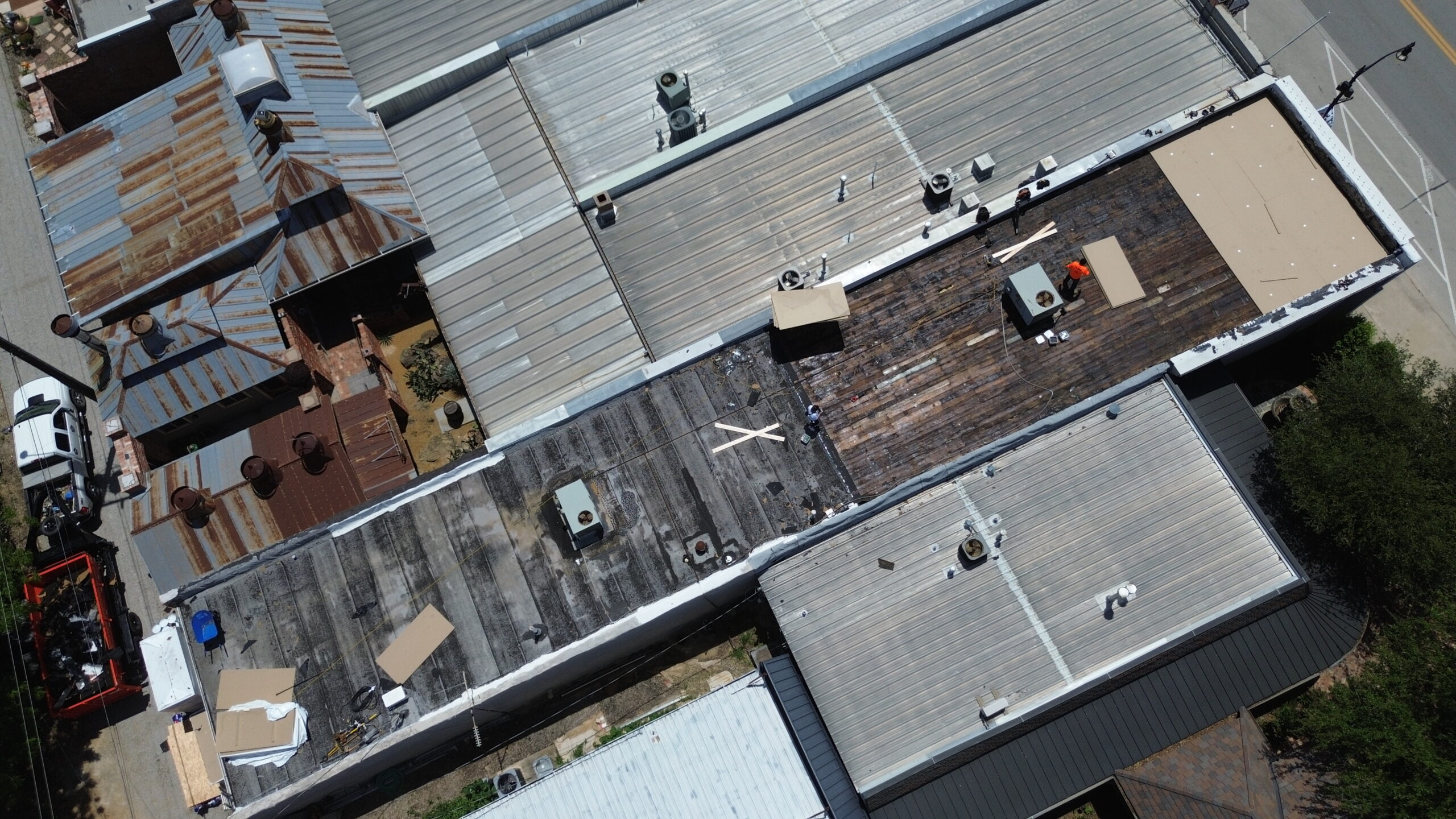
The Financial Impact of Waiting Too Long
Maintenance delays often create a cycle of increasing expenses that extends well beyond roofing materials. Every month that problems remain unresolved allows additional components to deteriorate, increasing both material requirements and labor costs.
A minor repair performed early in the damage process may require only replacing a few shingles or resealing flashing around a vent. These repairs are generally completed quickly with minimal disruption to the property owner.
When maintenance is delayed, however, contractors may discover water-damaged decking, saturated insulation, mold contamination, deteriorated framing, damaged ceilings, and compromised electrical systems. Each additional problem requires separate repairs before the roofing project can be completed successfully.
The financial impact extends beyond construction costs. Interior repairs, temporary relocation during major renovations, higher energy bills due to damaged insulation, and potential mold remediation all contribute to the overall expense of neglected maintenance.
Property values may also decline when roofing issues become visible. Prospective buyers often view roof replacement as a significant future expense and may negotiate lower purchase prices or request extensive repairs before completing a sale. Routine maintenance helps preserve curb appeal while protecting long-term property value.
Business owners face additional financial consequences when roofing problems disrupt operations. Water intrusion can damage inventory, equipment, office spaces, and customer areas. Temporary closures or operational interruptions may result in lost revenue that far exceeds the cost of preventive maintenance.
The following factors commonly increase the overall cost of delayed maintenance:
| Cost Factor | Early Maintenance | Delayed Maintenance |
|---|---|---|
| Roofing repairs | Small localized repairs | Large-scale replacement |
| Labor | Short repair visits | Extended reconstruction |
| Structural damage | Usually avoided | Often requires repairs |
| Energy efficiency | Maintained | Reduced due to insulation damage |
| Interior damage | Minimal | Ceiling, wall, flooring, and paint repairs |
| Property value | Better preserved | May decrease due to visible deterioration |
This comparison demonstrates how preventive maintenance consistently reduces long-term ownership costs while extending the usable life of the roofing system.
Building a Preventive Maintenance Mindset
Preventive maintenance begins with understanding that roofs require ongoing attention rather than emergency repairs after visible damage appears. Property owners who schedule regular inspections are more likely to identify developing issues before they threaten the entire roofing system.
Professional inspections should become part of routine property maintenance instead of being viewed as optional expenses. Roofing specialists are trained to identify subtle signs of deterioration that most homeowners cannot safely observe from ground level. Their recommendations often prevent minor defects from evolving into major structural concerns.
Seasonal awareness also plays an important role in preventive care. Weather conditions change throughout the year, and each season introduces different challenges for roofing materials. Regular evaluations after harsh weather and periodic maintenance throughout the year help maintain consistent roof performance and reduce the likelihood of unexpected failures.
Developing a proactive approach also encourages better budgeting for future maintenance. Setting aside funds for inspections and small repairs allows property owners to address issues promptly rather than postponing them until financial circumstances improve. This strategy often results in significantly lower overall ownership costs throughout the roof’s lifespan.
Finally, maintaining accurate records of inspections, repairs, and maintenance activities provides valuable information for future decision making. These records help contractors monitor recurring issues, demonstrate proper maintenance history, and support warranty claims when applicable. A well-documented maintenance history also reassures future buyers that the roof has been responsibly cared for, contributing to stronger property value and greater confidence during real estate transactions.
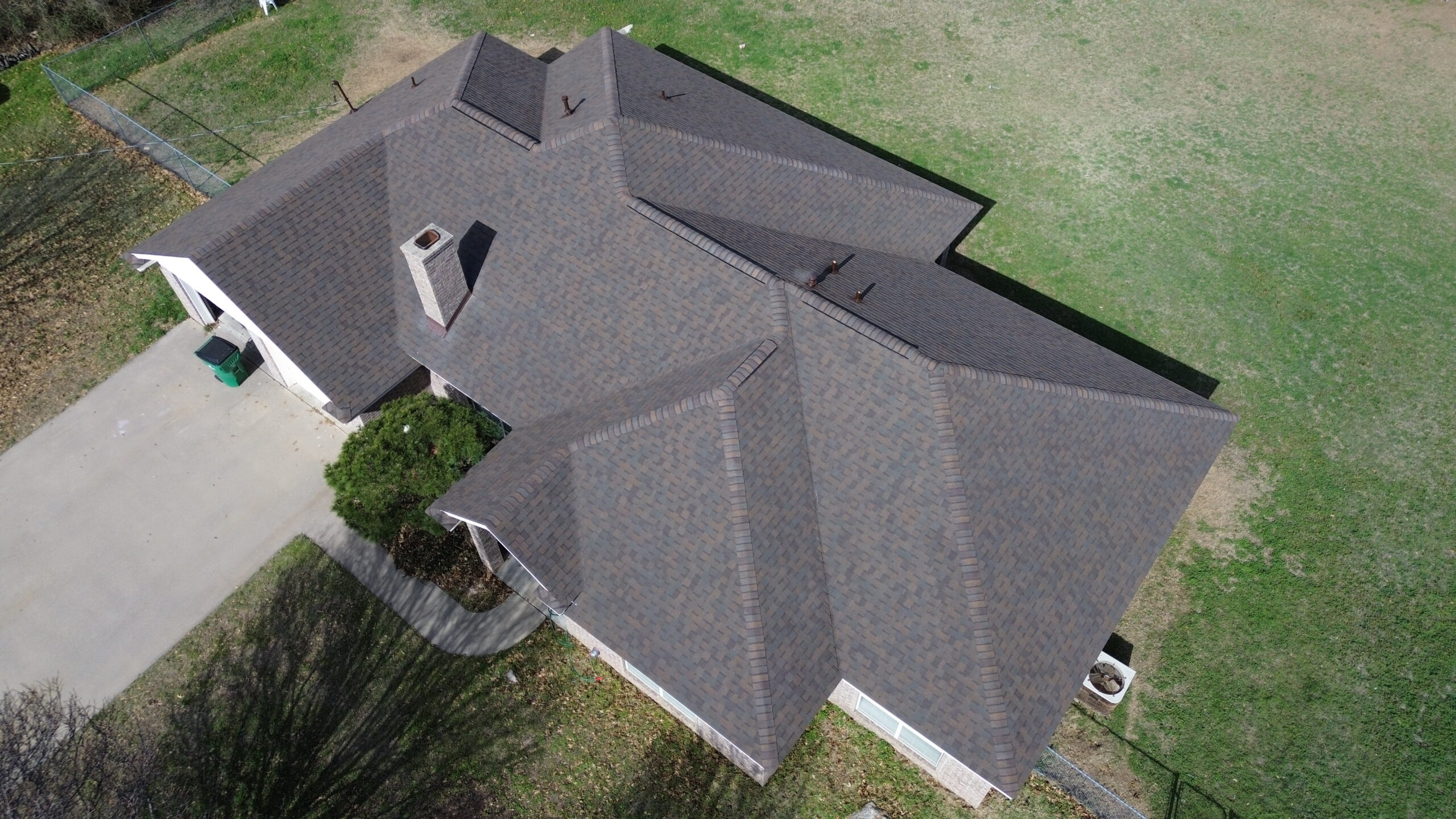
How Moisture Damage Accelerates Roof Deterioration
Moisture is one of the most destructive forces a roofing system can face. While roofing materials are designed to withstand rain and snow, they are not intended to trap water for long periods. When maintenance is delayed, even small openings in the roof allow moisture to enter areas where it can remain hidden for weeks or months.
Once water penetrates beneath the roofing materials, it begins affecting multiple layers of the roof. Wooden decking absorbs moisture and gradually loses its strength, while insulation becomes saturated and less effective. Because much of this damage occurs beneath the visible surface, property owners often remain unaware until obvious signs such as ceiling stains or mold begin to appear.
Repeated wetting and drying cycles also weaken adhesives, sealants, and fastening systems. Materials that once formed a watertight barrier begin separating, creating even larger pathways for water intrusion. As this cycle continues, the amount of damage increases after every rainfall.
Moisture does not only affect the roof itself. It can spread into attic spaces, walls, and ceilings, affecting electrical systems, drywall, flooring, and stored belongings. What began as a roofing problem gradually becomes a whole-building maintenance issue, increasing both repair costs and project complexity.
Another concern is biological growth. Damp environments provide ideal conditions for mold, mildew, and wood-decaying fungi. These organisms continue damaging structural materials as long as moisture remains present, making delayed maintenance increasingly expensive with every passing season.
The Effects of Weather Exposure on an Unmaintained Roof
Every roof is exposed to changing weather throughout the year. Sunlight, wind, heavy rainfall, freezing temperatures, and seasonal storms continuously affect roofing materials. A properly maintained roof is better equipped to resist these environmental stresses, while neglected roofs deteriorate much more rapidly.
Ultraviolet radiation from the sun slowly breaks down roofing materials over time. Asphalt shingles lose flexibility, protective coatings wear away, and sealants begin cracking. Without periodic maintenance, these aging materials become increasingly vulnerable to water infiltration and wind damage.
Temperature fluctuations create another challenge. Roofing materials expand during hot weather and contract when temperatures drop. This repeated movement gradually loosens fasteners, weakens joints, and creates small gaps that allow moisture to enter. Regular inspections identify these changes before they develop into significant problems.
Strong winds also expose weaknesses caused by delayed maintenance. Loose shingles that might have remained intact with timely repairs can be lifted away completely during storms. Missing shingles expose underlayment and decking to direct weather exposure, accelerating deterioration across larger sections of the roof.
Heavy rainfall magnifies existing maintenance issues. Clogged gutters, deteriorated flashing, damaged sealants, and blocked drainage systems prevent water from flowing away efficiently. Instead, water pools on the roof or flows beneath roofing materials, increasing the likelihood of leaks and structural damage.
In colder climates, freeze and thaw cycles can be especially destructive. Water entering small cracks expands when frozen, widening those openings and creating additional pathways for moisture. Each winter season can significantly increase damage if maintenance has already been postponed.
How Delayed Repairs Affect Roofing Materials
Every roofing material has an expected service life, but that lifespan depends heavily on consistent maintenance. Delaying repairs allows otherwise durable materials to deteriorate much faster than intended.
Asphalt shingles provide a good example. A single damaged shingle rarely requires replacing an entire roof. However, leaving that damage untreated allows water and sunlight to affect surrounding shingles. Nearby materials begin aging more rapidly, gradually expanding the affected area.
Metal roofing systems also require regular maintenance despite their durability. Fasteners may loosen over time, protective coatings can wear away, and sealants around joints eventually deteriorate. Ignoring these relatively minor issues allows corrosion and moisture intrusion to develop, reducing the roof’s long-term performance.
Tile roofs are known for their longevity, yet cracked or displaced tiles should never be ignored. Water entering beneath damaged tiles gradually weakens underlayment and roof decking. Although the tiles themselves may remain largely intact, hidden structural deterioration can eventually require substantial reconstruction.
Wood shake roofs depend heavily on maintenance because natural materials respond continuously to moisture and sunlight. Without periodic cleaning and treatment, wood becomes vulnerable to decay, insect activity, and excessive weathering. Delayed maintenance shortens the lifespan of both the shakes and the supporting structure beneath them.
Flat roofing systems present another unique challenge. Because water drains more slowly than on sloped roofs, blocked drains or damaged membranes quickly create standing water. Ponding water increases membrane deterioration while adding unnecessary weight to the roof structure, making timely maintenance especially important.
Regardless of roofing material, delayed repairs create a common pattern. Small localized defects gradually affect neighboring components until replacement becomes more practical than continued repairs.
The Relationship Between Roof Ventilation and Maintenance
Roof ventilation is often overlooked during routine maintenance, yet it plays a major role in preserving the health of the entire roofing system. Proper airflow regulates temperature and moisture levels inside the attic, helping roofing materials perform as intended throughout their service life.
When ventilation systems become blocked or damaged, excessive heat accumulates beneath the roof during warm weather. Higher temperatures accelerate the aging process of shingles, underlayment, and sealants. Roofing materials become brittle more quickly, reducing their ability to withstand normal weather exposure.
Moisture buildup is equally concerning. Everyday household activities such as cooking, bathing, and laundry generate water vapor that naturally rises into attic spaces. Without adequate ventilation, this moisture remains trapped beneath the roof, encouraging condensation and wood deterioration.
Delayed maintenance often allows ventilation openings to become obstructed by leaves, nests, insulation, or debris. Because airflow gradually decreases rather than stopping suddenly, the resulting damage may go unnoticed for long periods. During this time, insulation loses efficiency, mold growth becomes more likely, and structural wood absorbs excessive moisture.
Balanced ventilation also helps reduce ice dam formation in colder regions. Consistent attic temperatures prevent uneven snow melting, reducing the likelihood that water will refreeze near roof edges. Although ice dams may not affect every climate, the principle remains the same. Proper ventilation reduces unnecessary stress on roofing materials throughout the year.
Property owners sometimes focus only on visible roofing materials while overlooking attic conditions. In reality, ventilation and roofing performance are closely connected. Maintaining one without the other often limits the effectiveness of both.
Comparing Timely Maintenance and Delayed Repairs
The long-term condition of a roof often depends less on its age than on how consistently it has been maintained. Two roofs installed on the same day can perform very differently years later if one receives routine inspections while the other is largely ignored.
The following comparison highlights these differences.
| Maintenance Area | Timely Maintenance | Delayed Repairs |
|---|---|---|
| Minor damage | Repaired before spreading | Continues expanding |
| Water intrusion | Quickly controlled | Gradually damages structure |
| Roof lifespan | Often reaches expected service life | Frequently shortened |
| Energy efficiency | Better insulation performance | Increased heating and cooling costs |
| Repair costs | Generally predictable | Often increase unexpectedly |
| Replacement timing | Usually delayed for many years | May become necessary much sooner |
This comparison demonstrates that maintenance is not simply about fixing isolated problems. It is a strategy for protecting every component of the roofing system while reducing long-term ownership expenses.
Professional Roof Inspections and Their Long-Term Value
Many roofing problems cannot be identified safely or accurately from ground level. Professional inspections provide a detailed evaluation of roofing materials, flashing, drainage systems, ventilation, and structural components before visible damage develops.
Experienced roofing professionals recognize subtle warning signs that homeowners may overlook. Hairline cracks, lifting shingles, deteriorating sealants, hidden moisture damage, and early flashing failures often appear insignificant individually. Collectively, however, they reveal developing issues that should be addressed before they worsen.
Inspection reports also provide valuable documentation. Maintaining records of inspection dates, recommended repairs, and completed maintenance creates a clear history of the roof’s condition. These records can support warranty claims, assist during insurance discussions, and reassure prospective buyers if the property is eventually sold.
Modern inspection techniques further improve the ability to detect hidden damage. Moisture meters, thermal imaging equipment, and drone technology allow roofing professionals to evaluate areas that might otherwise remain inaccessible or difficult to inspect safely. These tools help identify trapped moisture and developing structural concerns before major repairs become necessary.
Scheduling inspections after severe weather is particularly beneficial. High winds, hail, and heavy storms may cause damage that is not immediately visible from the ground. Identifying these problems early prevents minor storm damage from evolving into widespread deterioration over the following months.
Routine inspections also provide an opportunity to prioritize maintenance according to urgency. Not every issue requires immediate replacement, and professional guidance helps property owners distinguish between routine maintenance, necessary repairs, and situations where replacement should begin to be considered.
Recognizing When Repairs Are No Longer Enough
Although timely maintenance can significantly extend a roof’s lifespan, every roofing system eventually reaches a point where repairs become less practical than replacement. Recognizing this transition helps property owners make informed decisions before investing repeatedly in temporary fixes.
One important indicator is the frequency of repairs. If leaks continue appearing in different areas despite previous repairs, the roofing system may be approaching the end of its useful life. Repeated patching often addresses individual symptoms without resolving widespread material deterioration.
Age also becomes an important consideration. Even well-maintained roofs experience gradual material fatigue after decades of exposure. Sealants lose flexibility, protective coatings wear away, and structural components experience cumulative stress. At a certain stage, replacement offers greater long-term value than ongoing repairs.
Extensive water damage beneath the roofing materials is another warning sign. When large sections of decking, insulation, or framing require replacement, installing new roofing materials over compromised structures is rarely the best solution. A complete replacement allows all damaged components to be addressed together while restoring the roof’s full protective performance.
Property owners should also consider future maintenance costs. Investing in repeated repairs over several years may ultimately exceed the cost of installing a new roofing system with improved materials, stronger warranties, and better energy efficiency. Evaluating these long-term financial considerations supports better decision making.
Understanding the difference between repairable damage and end-of-life deterioration prepares property owners for the final stage of responsible roof ownership. In the next part, we will examine how to create an effective maintenance plan, the essential maintenance tasks every property owner should follow, and the practical steps to take when roof replacement becomes the most reliable and cost-effective solution.
Creating an Effective Roof Maintenance Schedule
A roof maintenance schedule is one of the most effective ways to prevent unexpected damage and maximize the lifespan of a roofing system. Rather than waiting for visible problems to appear, a structured maintenance plan ensures that inspections and minor repairs occur before issues become serious. This proactive approach reduces the likelihood of costly emergency repairs and delays the need for complete roof replacement.
Most roofing professionals recommend inspecting a roof at least twice each year, typically during the spring and fall. Spring inspections help identify damage caused by winter weather, while fall inspections prepare the roof for colder temperatures and seasonal storms. Additional inspections should also be considered after severe weather events such as hailstorms, hurricanes, or unusually strong winds.
A maintenance schedule should include more than visual observations from the ground. Professional inspections provide a detailed assessment of shingles, flashing, gutters, ventilation systems, roof penetrations, and structural components. Even if no immediate repairs are required, these evaluations establish a record of the roof’s condition and help identify gradual changes over time.
Property owners should also maintain written records of every inspection and repair. Documentation makes it easier to monitor recurring issues, verify warranty compliance, and provide maintenance history if the property is sold. Organized records also help contractors understand previous repairs and recommend the most appropriate solutions when future maintenance becomes necessary.
Preventive maintenance should be viewed as a long-term investment rather than an optional expense. Small annual maintenance costs are typically much lower than the financial burden of extensive structural repairs or premature roof replacement.
Essential Roof Maintenance Tasks Every Property Owner Should Follow
Regular maintenance involves a series of practical tasks that help preserve the roof’s performance throughout its service life. While some basic observations can be made safely from the ground, most maintenance activities should be performed by qualified roofing professionals to ensure safety and accurate assessment.
Important maintenance tasks include:
- Inspect shingles, tiles, or metal panels for visible damage or movement.
- Remove leaves, branches, and debris that collect on the roof surface.
- Clean gutters and downspouts to maintain proper water drainage.
- Examine flashing around chimneys, skylights, vents, and roof intersections.
- Check attic spaces for moisture, mold, or signs of poor ventilation.
- Trim overhanging tree branches that may scrape roofing materials during storms.
- Schedule professional roof inspections at regular intervals and after severe weather.
These maintenance activities work together to reduce the likelihood of hidden damage. None of them individually guarantees a problem-free roof, but collectively they create a comprehensive strategy that significantly extends roofing lifespan.
Consistent maintenance also improves the effectiveness of other home improvement investments. Well-maintained insulation, ventilation, and drainage systems perform better when the roof remains structurally sound. This integrated approach protects both the roofing system and the building beneath it.
Steps to Take After Discovering Roof Damage
Even with consistent maintenance, roofing damage can occasionally occur because of severe weather, aging materials, or unexpected impacts. Responding quickly after discovering damage helps prevent additional deterioration and reduces the likelihood that repairs will escalate into full roof replacement.
The following steps provide a practical response plan:
- Perform a safe visual inspection from the ground without climbing onto the roof.
- Document visible damage by taking clear photographs for insurance and contractor reference.
- Prevent further interior damage by protecting belongings beneath active leaks whenever possible.
- Contact a qualified roofing professional for a detailed inspection and repair recommendation.
- Complete recommended repairs promptly rather than relying on temporary solutions for extended periods.
- Continue monitoring the repaired area during future inspections to confirm long-term performance.
Following these steps helps property owners respond calmly and effectively without creating additional safety risks. Attempting complex repairs without proper training can increase damage while exposing individuals to unnecessary hazards.
Quick action is particularly important when water has entered the building. Moisture spreads rapidly through insulation, drywall, and structural framing, making early intervention essential for limiting repair costs.
When Roof Replacement Becomes the Only Practical Solution
Although maintenance and repairs can extend a roof’s lifespan considerably, every roofing system eventually reaches a stage where replacement provides greater value than continued repairs. Understanding this transition helps property owners make informed financial decisions rather than repeatedly investing in temporary fixes.
Extensive material deterioration is one of the clearest indicators that replacement should be considered. When shingles become brittle across large areas, flashing deteriorates at multiple locations, and underlayment begins failing simultaneously, repairing isolated sections no longer addresses the overall condition of the roof.
Repeated leaks also suggest that the roofing system may be nearing the end of its service life. If water intrusion continues appearing in different locations despite multiple repairs, widespread aging rather than isolated defects may be responsible. Continuing to repair individual leaks often becomes less cost effective than replacing the roofing system entirely.
Structural damage beneath the roofing materials represents another important consideration. Water-damaged decking, weakened framing, widespread mold growth, and deteriorated insulation frequently require removal before a new roof can be installed. Once these conditions develop across large portions of the roof, replacement becomes the safest and most practical option.
Advances in roofing technology also influence replacement decisions. Modern roofing systems often provide improved durability, stronger wind resistance, better energy efficiency, and enhanced moisture protection compared with older materials. Property owners replacing an aging roof may benefit from these improvements while reducing future maintenance requirements.
Timing replacement before complete roof failure offers additional advantages. Planned replacement projects allow homeowners to compare contractors, select preferred materials, schedule work during favorable weather, and budget more effectively. Emergency replacement after major failure usually limits these choices while increasing stress and project urgency.
Protecting Your Investment Through Consistent Maintenance
Every property owner hopes to maximize the return on their investment, and the roof plays a central role in protecting that value. Consistent maintenance safeguards not only the roofing materials themselves but also every structural and interior component beneath them.
A properly maintained roof improves energy efficiency by protecting insulation and reducing unwanted air leakage. Heating and cooling systems operate more efficiently when the building envelope remains intact, contributing to lower utility costs throughout the year.
Routine maintenance also enhances property appearance. Clean roofing materials, properly functioning gutters, and well-maintained flashing contribute to stronger curb appeal and create a positive first impression for visitors and potential buyers. A roof in good condition often signals that the rest of the property has received similar care.
From a financial perspective, maintenance creates predictable expenses rather than unexpected emergencies. Small repairs completed as needed are generally easier to budget than major reconstruction projects resulting from years of neglected maintenance. This stability benefits homeowners, landlords, and commercial property owners alike.
Working with experienced roofing professionals further strengthens long-term roof performance. Qualified contractors understand local climate conditions, appropriate maintenance practices, and early warning signs that may not be visible during routine observations. Their expertise allows property owners to make informed decisions that extend roof life while reducing unnecessary expenditures.
Perhaps most importantly, consistent maintenance provides peace of mind. Knowing that the roof has been inspected, maintained, and repaired regularly reduces uncertainty during severe weather and helps ensure that the building remains protected throughout every season.
Conclusion
Maintenance delays rarely cause immediate roof failure, but they steadily create the conditions that make premature roof replacement unavoidable. Small issues such as loose shingles, damaged flashing, clogged gutters, and minor leaks often appear insignificant at first. However, when these problems remain unresolved, they allow moisture, weather exposure, and structural deterioration to spread throughout the roofing system.
As damage progresses, repair costs increase because multiple components become affected at the same time. Roof decking weakens, insulation loses effectiveness, ventilation problems develop, mold may begin growing, and structural framing can eventually suffer long-term deterioration. By the time these issues become clearly visible, replacing the roof is often more practical and cost effective than continuing to repair isolated areas.
The good news is that most of these outcomes are preventable. Regular inspections, timely repairs, proper drainage maintenance, and attention to early warning signs significantly extend roof lifespan while preserving the building’s structural integrity. A proactive maintenance strategy protects not only the roof but also the home’s interior, energy efficiency, and long-term property value.
Ultimately, a roof should never be viewed as a component that requires attention only after leaks appear. It is a system that performs best when maintained consistently throughout its service life. Investing in preventive maintenance today reduces future repair expenses, delays replacement for many years, and ensures that the roof continues providing reliable protection through every season.