
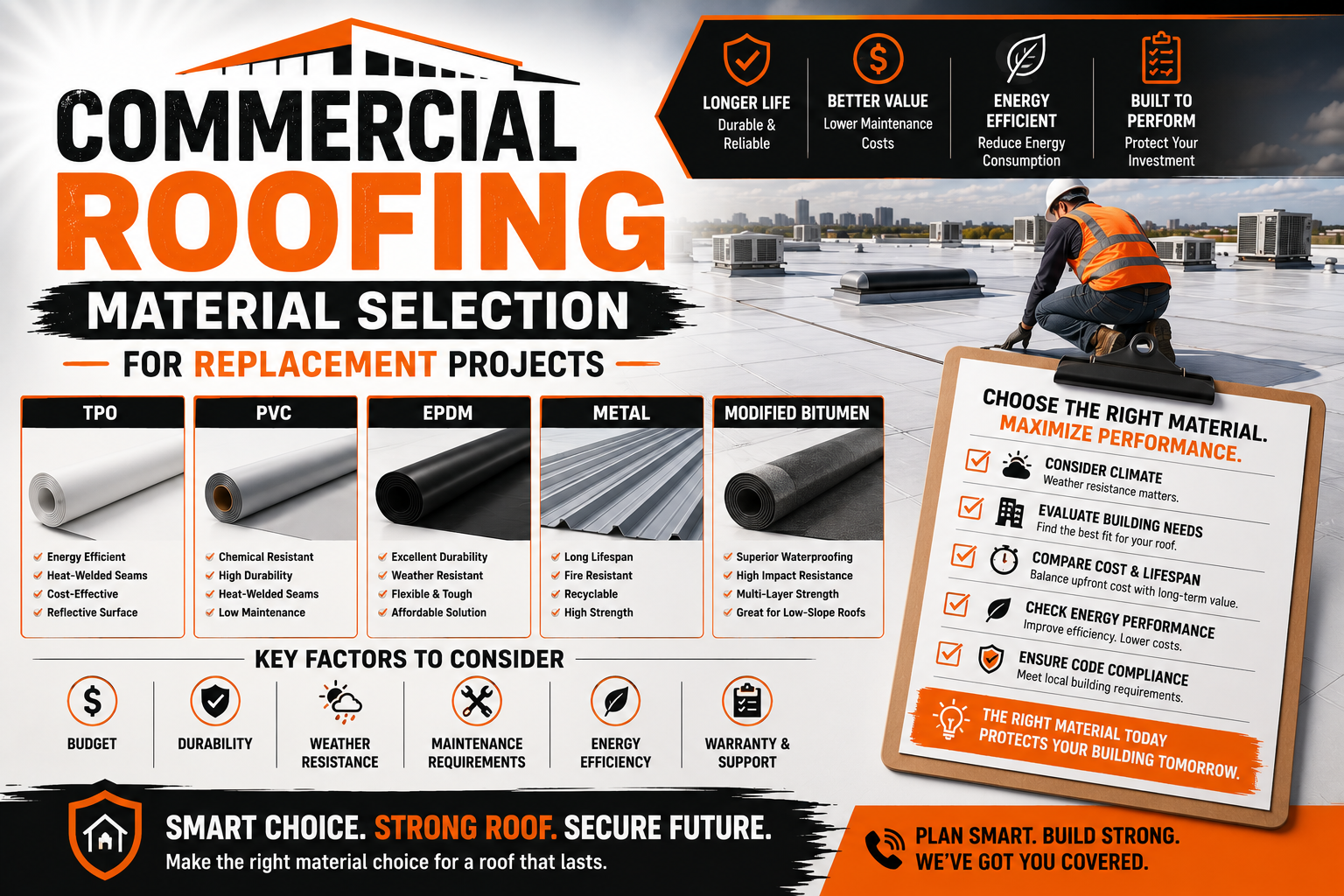
Commercial Roofing Material Selection for Replacement Projects
Introduction
Selecting the right roofing material is one of the most important decisions in any commercial roof replacement project. While all commercial roofing systems are designed to protect buildings from weather and environmental exposure, not every roofing material performs the same under different conditions. Factors such as climate, building design, energy efficiency goals, maintenance expectations, and budget all influence which roofing system provides the greatest long-term value.
A commercial roof represents a major financial investment that is expected to perform reliably for decades. Choosing an unsuitable roofing material may lead to premature deterioration, increased maintenance costs, higher energy consumption, and unexpected repairs. On the other hand, selecting a roofing system that matches the building’s operational needs can improve durability, reduce lifecycle costs, and enhance overall property value.
Modern commercial roofing materials have evolved significantly over the past several decades. Today’s property owners can choose from a wide variety of roofing systems, including single-ply membranes, metal roofing, built-up roofing, modified bitumen, spray polyurethane foam, and advanced roof coating technologies. Each system offers unique advantages depending on the building’s structure and operating environment.
Commercial roof replacement also presents an opportunity to improve building performance beyond simply replacing aging materials. Better insulation, reflective roofing systems, improved drainage, and sustainable roofing options can significantly reduce energy consumption while supporting long-term environmental goals.
Because roofing systems affect nearly every aspect of building performance, material selection should never be based solely on installation cost. Durability, maintenance requirements, expected lifespan, weather resistance, warranty coverage, and future repair considerations all deserve careful evaluation before making a final decision.
This guide explains the major factors involved in selecting commercial roofing materials for replacement projects. Understanding these considerations helps property owners, facility managers, and project teams choose roofing systems that provide dependable protection and long-term financial value.
Why Choosing the Right Roofing Material Matters
Commercial roofing materials perform far more functions than simply keeping water out of a building. The roofing system influences structural protection, energy efficiency, occupant comfort, maintenance costs, and the overall operating performance of the property. Selecting the appropriate material is therefore one of the most important decisions made during roof replacement planning.
The roof is continuously exposed to sunlight, rain, wind, snow, temperature changes, and environmental pollutants. Roofing materials must withstand these conditions year after year without losing their waterproofing capabilities or structural integrity. Materials that perform well in one climate may not be the best choice in another.
Long-term durability directly affects replacement costs. A roofing system with a longer service life may require a larger initial investment but often reduces maintenance expenses and delays future replacement projects. Evaluating expected lifespan helps property owners understand the true financial value of different roofing options.
Energy performance is another important consideration. Roofing materials influence how much solar heat enters the building, affecting heating and cooling requirements throughout the year. Reflective roofing systems, high-quality insulation, and properly designed roof assemblies contribute to lower utility expenses while improving indoor comfort.
Maintenance requirements also vary considerably between roofing systems. Some materials require frequent inspections and periodic repairs, while others need relatively little maintenance if installed correctly. Understanding these differences helps facility managers plan long-term maintenance budgets more accurately.
Weather resistance plays an equally important role. Commercial roofs must resist heavy rainfall, strong winds, hail, ultraviolet radiation, freeze-thaw cycles, and temperature fluctuations. Selecting materials designed for local environmental conditions improves roof reliability and reduces the likelihood of premature failure.
Insurance considerations may also influence material selection. Certain roofing systems demonstrate better fire resistance, wind performance, or impact resistance, potentially affecting insurance requirements and long-term risk management.
The right roofing material ultimately supports the building’s operational goals while protecting one of the organization’s largest physical assets. Investing time in careful material evaluation often results in better long-term performance and lower overall ownership costs.
Factors That Influence Commercial Roofing Material Selection
No single roofing material is ideal for every commercial building. Property owners should evaluate multiple technical, financial, and operational factors before deciding which roofing system best meets their needs.
Building size is one of the first considerations. Large warehouses, office buildings, shopping centers, schools, hospitals, and industrial facilities all have different roofing requirements. Roof area influences material quantities, installation methods, drainage design, and maintenance accessibility.
Roof slope significantly affects material suitability. Low-slope commercial roofs commonly use membrane systems, while steeper roofs may support metal panels or other roofing materials designed for greater water runoff. Selecting materials appropriate for the roof’s geometry improves long-term waterproofing performance.
Climate conditions also influence roofing decisions. Buildings located in regions with intense sunlight may benefit from highly reflective roofing systems, while colder climates often prioritize insulation and snow resistance. Areas exposed to hurricanes, high winds, or frequent hailstorms require materials specifically designed for those environmental conditions.
Budget considerations extend beyond installation costs. Property owners should evaluate the total lifecycle cost of each roofing system, including maintenance, repairs, energy consumption, warranty coverage, and expected replacement intervals. A lower-cost material may ultimately become more expensive if it requires frequent repairs or early replacement.
Building occupancy patterns should also be considered. Facilities operating continuously, such as hospitals or manufacturing plants, often require roofing systems that minimize maintenance interruptions while providing dependable long-term performance.
Local building codes may establish minimum requirements for fire resistance, wind uplift performance, insulation levels, and drainage design. Roofing materials must comply with applicable regulations before installation can begin.
Environmental objectives increasingly influence roofing decisions as well. Many organizations seek roofing systems that improve energy efficiency, support sustainable construction practices, or contribute toward green building certifications.
Future building modifications should not be overlooked. Planned rooftop equipment, solar panel installations, HVAC upgrades, or building expansions may influence which roofing materials provide the greatest flexibility for future improvements.
Carefully evaluating all of these factors helps ensure that roofing materials support both current operational requirements and long-term property management goals.
Evaluating Existing Roof Conditions Before Material Selection
Before selecting replacement materials, property owners should conduct a comprehensive evaluation of the existing roofing system. Understanding the current roof’s condition helps identify underlying issues that may influence material selection while preventing hidden problems from affecting the new installation.
A professional roof inspection usually begins with a visual examination of the roofing membrane, flashing, insulation, drainage systems, expansion joints, rooftop equipment, and structural components. Inspectors document signs of deterioration while identifying areas requiring further investigation.
Moisture detection plays an important role during roof evaluations. Wet insulation reduces thermal performance while increasing roof weight and accelerating structural deterioration. Infrared scanning or electronic moisture detection allows inspectors to locate trapped moisture beneath the roofing surface without extensive demolition.
Roof decking should also be evaluated carefully. Wood, steel, or concrete decks must provide adequate structural support for the selected replacement system. Damaged decking may require repair or reinforcement before new roofing materials can be installed safely.
Drainage performance deserves close attention as well. Ponding water often indicates inadequate roof slope, blocked drains, or deteriorated drainage components. Correcting these issues before installation helps preserve the performance of the new roofing system.
Roof penetrations surrounding HVAC equipment, plumbing vents, skylights, communication systems, and electrical conduits should also be inspected. Improper flashing or deteriorated sealants may allow moisture infiltration that affects insulation and structural components.
Historical maintenance records provide valuable information about recurring roofing problems. Frequent leaks in the same locations, repeated repair history, or premature material failures may indicate design issues that should be addressed during replacement planning.
Building energy performance can also reveal roofing deficiencies. High heating or cooling expenses may suggest inadequate insulation or excessive air leakage that should influence material selection and roof assembly design.
Comprehensive roof evaluations provide valuable technical information that helps property owners select replacement materials capable of solving existing performance problems while improving long-term reliability.
Matching Roofing Materials to Building Types and Climate
The most effective commercial roofing system is one that matches both the building’s operational requirements and the environmental conditions it will experience throughout its service life. Material selection should always consider how the roof will perform under real-world conditions rather than relying solely on manufacturer specifications.
Office buildings often prioritize energy efficiency, appearance, and long-term maintenance simplicity. Reflective membrane roofing systems or architectural metal roofing frequently provide suitable solutions for these facilities while supporting lower operating costs.
Warehouses generally emphasize durability and low maintenance because of their large roof areas. Single-ply membrane systems are commonly selected due to their relatively straightforward installation, reliable waterproofing, and compatibility with extensive roof surfaces.
Manufacturing facilities may require roofing systems capable of withstanding chemical exposure, rooftop equipment, vibration, or elevated temperatures. Material compatibility with industrial operations becomes especially important in these environments.
Healthcare facilities demand highly reliable roofing systems because interruptions caused by leaks or major repairs may affect essential services. Durable materials with excellent waterproofing performance and dependable warranties are often preferred.
Educational buildings frequently balance long service life, budget considerations, and minimal maintenance requirements. Roofing systems capable of providing decades of dependable performance help reduce future disruption to school operations.
Climate conditions also play a significant role in material selection. Warm regions often benefit from reflective roofing systems that reduce solar heat gain, while colder climates emphasize insulation performance and resistance to snow accumulation.
Coastal environments introduce additional challenges including salt exposure, high humidity, and hurricane-force winds. Roofing materials selected for these regions should demonstrate strong corrosion resistance and excellent wind uplift performance.
Mountain regions may require roofing systems capable of supporting heavy snow loads while resisting repeated freeze-thaw cycles. Selecting materials specifically designed for these conditions improves long-term durability.
Matching roofing materials to both building function and local climate creates a balanced roofing system capable of delivering reliable performance throughout its expected service life.
Developing a Material Selection Strategy
Successful commercial roof replacement begins with a structured material selection strategy rather than choosing products based only on familiarity or initial pricing. Developing a clear decision-making process allows property owners to compare roofing systems objectively while identifying the option that delivers the greatest long-term value.
The first step involves defining project priorities. Some organizations focus primarily on maximizing roof lifespan, while others emphasize energy efficiency, reduced maintenance, sustainability, or budget control. Establishing these priorities early simplifies later material comparisons.
Property managers should also identify any existing roofing problems they want the replacement project to solve. Chronic leaks, poor drainage, excessive maintenance, energy loss, or structural concerns should all influence material selection decisions.
Lifecycle cost analysis provides another valuable decision-making tool. Comparing installation expenses alongside expected maintenance costs, repair frequency, warranty coverage, energy savings, and replacement intervals offers a more complete understanding of each roofing system’s long-term financial impact.
Consulting experienced roofing professionals strengthens the selection process as well. Roofing contractors, architects, structural engineers, and roofing consultants provide technical expertise regarding material performance, installation requirements, and compatibility with existing building conditions.
Property owners should request detailed information from manufacturers regarding product testing, warranty terms, maintenance recommendations, and expected service life. Reviewing independent testing certifications also improves confidence in product quality.
Decision-makers often benefit from creating a comparison matrix that evaluates each roofing system according to important performance categories such as durability, weather resistance, maintenance, energy efficiency, installation complexity, and overall lifecycle value.
Finally, the selected roofing material should align with the organization’s long-term property management strategy. Choosing a roofing system that supports future building improvements, sustainability objectives, operational requirements, and maintenance capabilities creates greater value over the life of the building.
A well-developed material selection strategy reduces uncertainty while improving the likelihood that the completed commercial roof replacement will deliver dependable performance for decades. In the next part, we will compare the major commercial roofing materials available today, including single-ply membranes, metal roofing systems, built-up roofing, modified bitumen, spray polyurethane foam, roof coatings, and the installation considerations that influence long-term performance.
Single Ply Roofing Systems (TPO, PVC, and EPDM)
Single ply roofing systems are among the most widely used materials for commercial roof replacement projects. These roofing membranes provide reliable waterproofing, relatively fast installation, and long service life, making them suitable for office buildings, warehouses, retail centers, schools, and many industrial facilities. Although TPO, PVC, and EPDM belong to the same general category, each material offers unique characteristics that should be evaluated carefully.
Thermoplastic Polyolefin (TPO) roofing has become one of the most popular commercial roofing options because of its combination of energy efficiency, durability, and competitive pricing. TPO membranes are commonly manufactured in white or other light colors that reflect sunlight, helping reduce roof surface temperatures and lowering cooling costs during warm weather.
Polyvinyl Chloride (PVC) roofing provides many of the same energy-saving benefits while offering additional resistance to chemicals, grease, and industrial contaminants. These characteristics make PVC an excellent choice for restaurants, food processing facilities, manufacturing plants, and buildings where rooftop chemical exposure may occur.
Ethylene Propylene Diene Monomer (EPDM) roofing has been used successfully in commercial construction for many decades. Traditional EPDM membranes are black and absorb more solar heat than reflective systems, although lighter colored options and reflective coatings are also available. EPDM is well known for its flexibility, weather resistance, and dependable long-term performance.
Installation methods vary among single ply systems. Membranes may be mechanically fastened, fully adhered, or ballasted depending on building design, wind requirements, and manufacturer recommendations. Proper seam installation remains one of the most important factors affecting waterproofing performance.
Maintenance requirements for single ply roofing are generally straightforward. Routine inspections, drainage cleaning, seam evaluations, and prompt repair of accidental punctures help preserve roof performance throughout its service life.
Property owners should compare membrane thickness, warranty options, UV resistance, puncture resistance, and expected lifespan before selecting a single ply roofing system. The most appropriate material depends on the building’s operational requirements, environmental exposure, and long-term maintenance strategy.
Metal Roofing Systems for Commercial Buildings
Metal roofing has become an increasingly attractive option for commercial roof replacement because of its exceptional durability, long lifespan, and relatively low maintenance requirements. Modern commercial metal roofs are designed to withstand severe weather conditions while providing dependable protection for several decades.
Steel and aluminum remain the most common materials used in commercial metal roofing systems. Protective coatings improve corrosion resistance while helping the roof maintain its appearance and structural integrity throughout years of environmental exposure.
Standing seam metal roofing is one of the most popular commercial metal roof designs. Raised seams connect adjacent panels while reducing the number of exposed fasteners. This design improves waterproofing performance while allowing natural expansion and contraction caused by temperature changes.
Metal roofing performs particularly well in regions experiencing heavy snow, strong winds, or frequent rainfall. Smooth panel surfaces promote efficient water runoff while reducing snow accumulation compared to some other roofing systems.
Reflective finishes further improve energy efficiency by reducing solar heat absorption. Combined with adequate insulation, reflective metal roofing helps lower cooling costs while maintaining more comfortable indoor temperatures.
Commercial metal roofing also supports sustainability goals. Many metal roofing products contain recycled materials and can be recycled again at the end of their service life. Their extended lifespan further reduces the environmental impact associated with repeated roof replacement.
Installation quality remains especially important for metal roofing systems. Proper panel alignment, fastening techniques, flashing installation, and expansion joint design all influence long-term waterproofing and structural performance.
Although initial installation costs may exceed some membrane systems, metal roofing often delivers strong lifecycle value because of its durability, minimal maintenance requirements, and long expected service life. Property owners should evaluate both short-term and long-term financial considerations before selecting this roofing option.
Built Up Roofing (BUR) and Modified Bitumen Systems
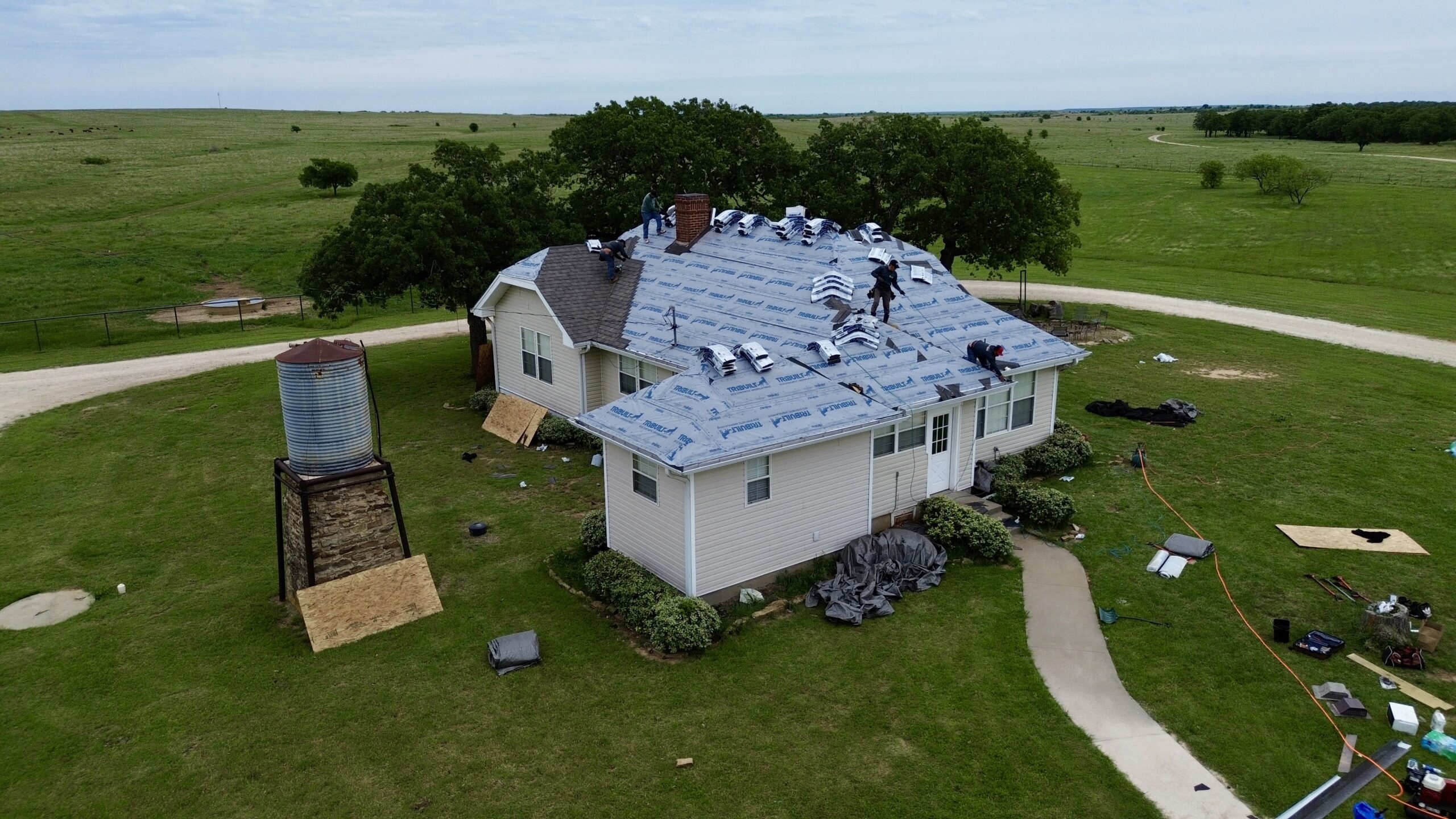
Built Up Roofing (BUR) has been used successfully on commercial buildings for more than a century and continues to provide dependable performance in many replacement projects. BUR systems consist of multiple alternating layers of roofing felt and asphalt that create a durable, multi-layer waterproofing assembly.
One of the primary advantages of BUR is redundancy. Because multiple waterproofing layers are incorporated into the roofing system, minor surface damage does not immediately compromise the roof’s ability to resist water intrusion. This layered construction provides additional protection against leaks.
BUR systems also demonstrate good resistance to foot traffic, making them suitable for buildings where maintenance personnel frequently access rooftop equipment. Their relatively thick construction helps resist punctures and mechanical damage under normal operating conditions.
Modified bitumen roofing represents an evolution of traditional BUR technology. Rather than relying solely on multiple built-up layers, modified bitumen incorporates polymer-modified asphalt reinforced with fiberglass or polyester materials to improve flexibility and durability.
Modified bitumen membranes may be installed using torch application, cold adhesives, self-adhering systems, or heat-welded methods depending on project requirements and manufacturer recommendations. These installation options provide greater flexibility for different building environments.
Energy efficiency can be improved by incorporating reflective surface coatings or mineral granules designed to reduce solar heat absorption. Additional insulation installed beneath the roofing system further strengthens thermal performance.
Routine maintenance typically includes seam inspections, drainage cleaning, flashing evaluations, and repair of localized surface damage when necessary. Proper maintenance helps these roofing systems provide dependable waterproofing over many years.
Both BUR and modified bitumen remain practical solutions for many commercial buildings, particularly where durability, redundancy, and proven long-term performance are primary decision-making factors.
Spray Polyurethane Foam and Roof Coating Systems
Spray Polyurethane Foam (SPF) roofing offers a unique approach to commercial roof replacement by combining insulation and waterproofing into a single integrated roofing system. Rather than installing separate insulation boards and membranes, SPF is sprayed directly onto the roof surface where it expands into a continuous insulating layer.
One of the greatest advantages of SPF roofing is its seamless construction. The absence of mechanical seams significantly reduces opportunities for water infiltration while improving air sealing across the roof surface.
SPF also provides excellent thermal insulation. Its high insulating value helps reduce heating and cooling demands throughout the year while improving overall building energy efficiency. Because the foam conforms closely to irregular roof surfaces, it also helps eliminate many gaps associated with traditional insulation systems.
Protective roof coatings are applied over the foam to shield it from ultraviolet radiation and weather exposure. These coatings require periodic renewal throughout the roof’s lifespan to maintain waterproofing performance and extend system durability.
Roof coating systems are also commonly applied to existing commercial roofs that remain structurally sound. Rather than replacing the entire roofing assembly, specialized coatings restore waterproofing performance while extending roof service life. However, coatings are not appropriate for every roofing condition and should only be considered after thorough roof evaluation.
Reflective coatings provide additional energy-saving benefits by reducing roof surface temperatures during sunny conditions. Lower heat absorption decreases cooling demands while supporting more comfortable indoor environments.
Installation quality remains particularly important for spray foam systems. Foam thickness, surface preparation, weather conditions, and coating application all influence long-term roofing performance.
Property owners considering SPF or roof coatings should evaluate building condition carefully to determine whether these systems provide the most practical long-term solution for their replacement project.
Evaluating Durability, Energy Efficiency, and Maintenance Requirements
Selecting commercial roofing materials requires balancing multiple performance characteristics rather than focusing on a single advantage. Durability, energy efficiency, maintenance requirements, and expected service life all contribute to the long-term value of the roofing investment.
Durability remains one of the most important considerations. Roofing materials should withstand years of exposure to sunlight, rainfall, wind, temperature fluctuations, and mechanical wear without losing their waterproofing capability. Longer-lasting materials generally reduce replacement frequency while lowering lifecycle costs.
Energy efficiency influences building operating expenses throughout the roof’s service life. Reflective membranes, insulated roofing assemblies, and cool roofing technologies reduce solar heat gain while decreasing heating and cooling demands. Lower utility costs often offset higher installation expenses over time.
Maintenance requirements vary significantly between roofing systems. Some materials require relatively frequent inspections, coating renewal, or seam maintenance, while others remain highly reliable with only routine preventive inspections.
Repair accessibility should also be considered. Roofing systems allowing localized repairs without extensive demolition simplify future maintenance while reducing long-term operating costs.
The following table summarizes important performance considerations:
| Roofing Characteristic | Why It Matters | Long-Term Benefit |
|---|---|---|
| Durability | Resists weather and aging | Longer roof lifespan |
| Energy Efficiency | Reduces heat transfer | Lower utility costs |
| Waterproofing | Prevents leaks | Protects building assets |
| Maintenance Needs | Determines inspection frequency | Lower maintenance expenses |
| Repair Simplicity | Easier future repairs | Reduced repair costs |
| Warranty Coverage | Protects investment | Greater financial security |
Property managers should evaluate these characteristics collectively rather than relying on any single performance measure when selecting replacement materials.
Installation Considerations and Material Compatibility
Even the highest-quality roofing material cannot perform as intended without proper installation. Roofing system performance depends on the compatibility of every component within the roof assembly as well as careful workmanship throughout construction.
Roof deck condition should always be evaluated before installation begins. Damaged steel, wood, or concrete decking may require repair before new roofing materials can be installed safely and effectively.
Insulation compatibility also influences roofing performance. Roofing membranes, insulation boards, adhesives, fasteners, vapor barriers, and attachment systems should all function together as a complete integrated assembly. Mixing incompatible products may reduce warranty protection while affecting long-term durability.
Roof penetrations require particular attention during installation. HVAC equipment, plumbing vents, skylights, communication systems, electrical conduits, and structural supports all require carefully designed flashing details to maintain waterproofing performance.
Drainage design should also be coordinated with the selected roofing material. Proper roof slope, drains, scuppers, gutters, and overflow systems help prevent standing water while protecting both roofing materials and insulation.
Weather conditions influence installation quality as well. Certain adhesives, membranes, coatings, and sealants require installation within specific temperature ranges to achieve optimal performance. Scheduling work during suitable environmental conditions improves long-term reliability.
Manufacturer installation guidelines should always be followed carefully. Approved installation procedures, fastening methods, seam preparation, flashing techniques, and inspection requirements help ensure warranty compliance while maximizing roofing performance.
Quality control inspections performed throughout construction verify that installation meets project specifications before work progresses to the next stage. Early identification of installation issues reduces costly corrections while improving long-term roof reliability.
Selecting compatible materials and emphasizing proper installation practices ensures that the commercial roofing system performs as a complete, integrated solution. In the final part, we will examine lifecycle cost analysis, sustainability considerations, common material selection mistakes, contractor collaboration, future maintenance planning, and conclude the guide to commercial roofing material selection for replacement projects.
Cost Analysis and Lifecycle Value of Roofing Materials
When selecting a commercial roofing material, focusing only on the initial installation price can lead to costly decisions in the future. The true value of a roofing system is determined by its lifecycle cost, which includes installation, maintenance, repairs, energy consumption, and eventual replacement expenses. Evaluating these factors provides a more accurate picture of long-term financial performance.
Initial installation costs vary significantly between roofing systems. Single-ply membranes generally offer competitive installation pricing, while metal roofing and certain premium systems often require higher upfront investments. However, higher installation costs do not necessarily mean a more expensive roof over its lifetime.
Maintenance expenses should also be included in financial planning. Roofing systems requiring frequent inspections, coating applications, or recurring repairs may generate higher long-term costs than systems with minimal maintenance requirements. Understanding expected maintenance schedules allows facility managers to budget more accurately.
Energy savings contribute substantially to lifecycle value. Reflective roofing materials, improved insulation, and energy-efficient roof assemblies reduce heating and cooling demands throughout the year. Lower utility bills can offset a significant portion of the initial investment over the roof’s service life.
Durability affects replacement frequency as well. Roofing materials that remain reliable for several decades reduce the need for future replacement projects, lowering overall ownership costs while minimizing operational disruptions.
Warranty coverage provides another important financial consideration. Comprehensive manufacturer warranties may reduce repair expenses while offering greater confidence in product performance. Property owners should carefully review warranty terms, maintenance requirements, and coverage limitations before making final decisions.
Business continuity also has financial value. Roofing systems that minimize maintenance interruptions and reduce the likelihood of unexpected leaks help organizations avoid operational losses, equipment damage, and costly emergency repairs.
Evaluating roofing materials using lifecycle cost analysis rather than installation cost alone allows organizations to make investment decisions that provide greater long-term financial returns.
Sustainability and Energy Efficient Roofing Options
Sustainability has become an increasingly important objective for commercial property owners. Modern roofing materials not only protect buildings but also contribute to reduced energy consumption, environmental responsibility, and long-term operational efficiency.
Reflective roofing systems remain one of the most effective sustainability improvements available during roof replacement. Light-colored membranes and reflective coatings reduce solar heat absorption, lowering roof surface temperatures and decreasing cooling demands during warmer months.
Improved insulation also supports sustainability goals by reducing heating and cooling energy requirements throughout the year. Better thermal performance decreases greenhouse gas emissions associated with building operation while improving occupant comfort.
Metal roofing systems contribute to environmental responsibility because many products contain recycled materials and can be recycled at the end of their service life. Their exceptional durability further reduces waste generated through repeated roof replacement projects.
Spray polyurethane foam systems improve sustainability by combining insulation and waterproofing into one integrated roofing assembly. High thermal performance contributes to lower energy consumption while reducing air leakage across the roof surface.
Many manufacturers now produce roofing materials using environmentally responsible manufacturing processes. Reduced emissions, recycled content, and sustainable raw materials support broader environmental objectives while maintaining high product quality.
Roof replacement also creates opportunities for future renewable energy improvements. Designing the roofing system to accommodate solar panels allows property owners to integrate renewable energy technologies more easily when organizational priorities or budgets permit.
Rainwater management systems can also be incorporated into commercial roofing projects. Proper drainage design, water collection systems, and stormwater management strategies contribute to sustainable site development while protecting the roofing system.
Organizations pursuing environmental certifications often benefit from selecting roofing materials that support energy efficiency and sustainable construction practices. Careful material selection helps align roofing investments with long-term environmental goals.
Common Material Selection Mistakes to Avoid
Choosing commercial roofing materials requires careful planning and technical evaluation. Several common mistakes can reduce roof performance, increase long-term costs, and shorten the lifespan of the replacement system. Recognizing these issues helps property owners make better decisions throughout the selection process.
One of the most common mistakes is selecting materials based solely on the lowest installation price. While controlling project costs is important, lower-priced roofing systems may require more frequent maintenance, consume more energy, or require earlier replacement. Evaluating lifecycle value generally produces better financial outcomes.
Another mistake is overlooking local climate conditions. Roofing materials that perform well in dry regions may not provide the same durability in areas with heavy rainfall, high humidity, strong winds, or extreme temperature changes. Environmental conditions should always influence material selection.
Some organizations fail to evaluate the condition of the existing roof before choosing replacement materials. Hidden structural damage, deteriorated insulation, poor drainage, or moisture intrusion may require design changes that affect the most appropriate roofing system.
Ignoring maintenance requirements is another frequent oversight. Every roofing material requires routine inspections and preventive maintenance. Property owners should select systems that match their maintenance capabilities and long-term facility management resources.
Compatibility between roofing components is equally important. Membranes, insulation, adhesives, fasteners, flashing, and sealants should function together as a complete roofing assembly. Mixing incompatible products may reduce performance while affecting manufacturer warranty coverage.
Choosing inexperienced contractors can also create long-term problems. Even premium roofing materials cannot compensate for poor installation practices. Qualified contractors with commercial roofing expertise significantly improve project outcomes.
Finally, some organizations neglect future building plans. Rooftop equipment additions, solar installations, or building expansions may influence roofing material selection. Planning ahead helps avoid unnecessary modifications after replacement has been completed.
Avoiding these common mistakes increases the likelihood that the new roofing system will provide dependable performance throughout its expected service life.
Working with Roofing Contractors and Manufacturers
Successful commercial roof replacement depends not only on selecting quality materials but also on working closely with experienced contractors and reputable manufacturers. Strong collaboration throughout the project helps ensure that roofing materials are selected, installed, and maintained according to industry best practices.
Contractor selection should begin with evaluating experience in commercial roofing rather than general construction alone. Contractors familiar with large commercial buildings understand complex roof assemblies, drainage systems, rooftop equipment coordination, and quality control requirements.
Property owners should request references from previous commercial roofing projects similar in size and complexity. Reviewing completed projects provides valuable insight into workmanship quality, project management capabilities, and long-term customer satisfaction.
Manufacturer support also contributes to successful material selection. Leading manufacturers provide technical guidance regarding product compatibility, installation requirements, warranty programs, and recommended maintenance procedures.
Project planning meetings involving contractors, manufacturers, consultants, architects, and facility managers help establish clear expectations before construction begins. Discussing project objectives, scheduling, material specifications, safety procedures, and quality standards reduces misunderstandings during installation.
Communication should continue throughout construction. Regular progress meetings allow project teams to address questions, evaluate installation quality, coordinate deliveries, and resolve technical issues before they affect the project schedule.
Manufacturer inspections performed during or after installation provide additional confidence that roofing materials have been installed according to approved procedures. These inspections may also support warranty activation and long-term product performance.
Property managers should maintain organized records of all project documentation, including contracts, product specifications, inspection reports, warranties, maintenance guidelines, and as-built drawings. These records become valuable resources throughout the roof’s operational life.
Strong collaboration between property owners, contractors, and manufacturers helps maximize roofing system performance while protecting the long-term investment.
Planning Future Maintenance Based on Material Choice
Every commercial roofing material requires ongoing maintenance, although the type and frequency of maintenance vary significantly between systems. Planning maintenance before roof installation helps preserve performance while extending service life.
Preventive maintenance should begin with scheduled roof inspections. Most commercial roofs benefit from inspections twice each year, with additional evaluations after major storms or unusual weather events. Routine inspections identify small issues before they become costly repairs.
Cleaning drainage systems remains one of the most important maintenance tasks regardless of roofing material. Roof drains, gutters, scuppers, and downspouts should remain free from debris to prevent standing water that may damage roofing materials or insulation.
Different roofing systems require different maintenance priorities. Single-ply membranes should be inspected for seam integrity and punctures, while metal roofs require evaluation of fasteners, panel connections, and protective coatings. Built-up roofing systems may require surface inspections for cracking or blistering, while spray foam roofs need periodic coating renewal.
Facility managers should coordinate rooftop maintenance activities with HVAC technicians and other service providers. Establishing designated access routes helps reduce accidental roof damage during equipment servicing.
Maintenance budgets should reflect the specific requirements of the selected roofing system. Planning for routine inspections, minor repairs, cleaning, and periodic maintenance allows organizations to avoid unexpected expenses while preserving warranty coverage.
Detailed maintenance records support long-term roof management. Inspection reports, repair documentation, photographs, warranty information, and maintenance schedules provide valuable historical information for future planning and decision-making.
The following maintenance activities should be included in most commercial roofing programs:
- Semiannual roof inspections.
- Cleaning drains and gutters.
- Inspecting flashing and roof penetrations.
- Repairing minor damage immediately.
- Monitoring rooftop equipment access.
- Updating maintenance records after each inspection.
Consistent preventive maintenance protects roofing performance while maximizing the return on investment from the replacement project.
Conclusion
Selecting the right commercial roofing material is one of the most significant decisions made during a roof replacement project. The chosen roofing system influences building protection, energy efficiency, maintenance requirements, operating costs, and overall property value for decades. Careful evaluation ensures that the roofing investment supports both immediate project objectives and long-term facility management goals.
Throughout this guide, we explored the key factors involved in commercial roofing material selection. We discussed the importance of evaluating existing roof conditions, understanding how climate and building type affect material performance, and developing a structured decision-making strategy before selecting replacement materials.
We also compared major commercial roofing systems, including single-ply membranes, metal roofing, built-up roofing, modified bitumen, spray polyurethane foam, and roof coating technologies. Each system offers unique strengths depending on project requirements, environmental conditions, and operational priorities.
Beyond material comparisons, we examined lifecycle cost analysis, sustainability, common selection mistakes, contractor collaboration, and future maintenance planning. These considerations help property owners move beyond initial installation costs and focus on the total value delivered throughout the roof’s service life.
A successful commercial roof replacement combines quality materials, professional installation, routine maintenance, and informed long-term planning. Property owners who carefully evaluate durability, energy efficiency, maintenance needs, warranty protection, and compatibility with future building improvements are better positioned to achieve reliable performance and lower ownership costs.
Ultimately, the best commercial roofing material is not simply the least expensive or the most popular option. It is the material that best matches the building’s structure, climate, operational requirements, budget, and long-term goals. By taking a comprehensive approach to material selection, organizations can protect their investment, improve building performance, reduce maintenance challenges, and ensure dependable roofing performance for many years to come.