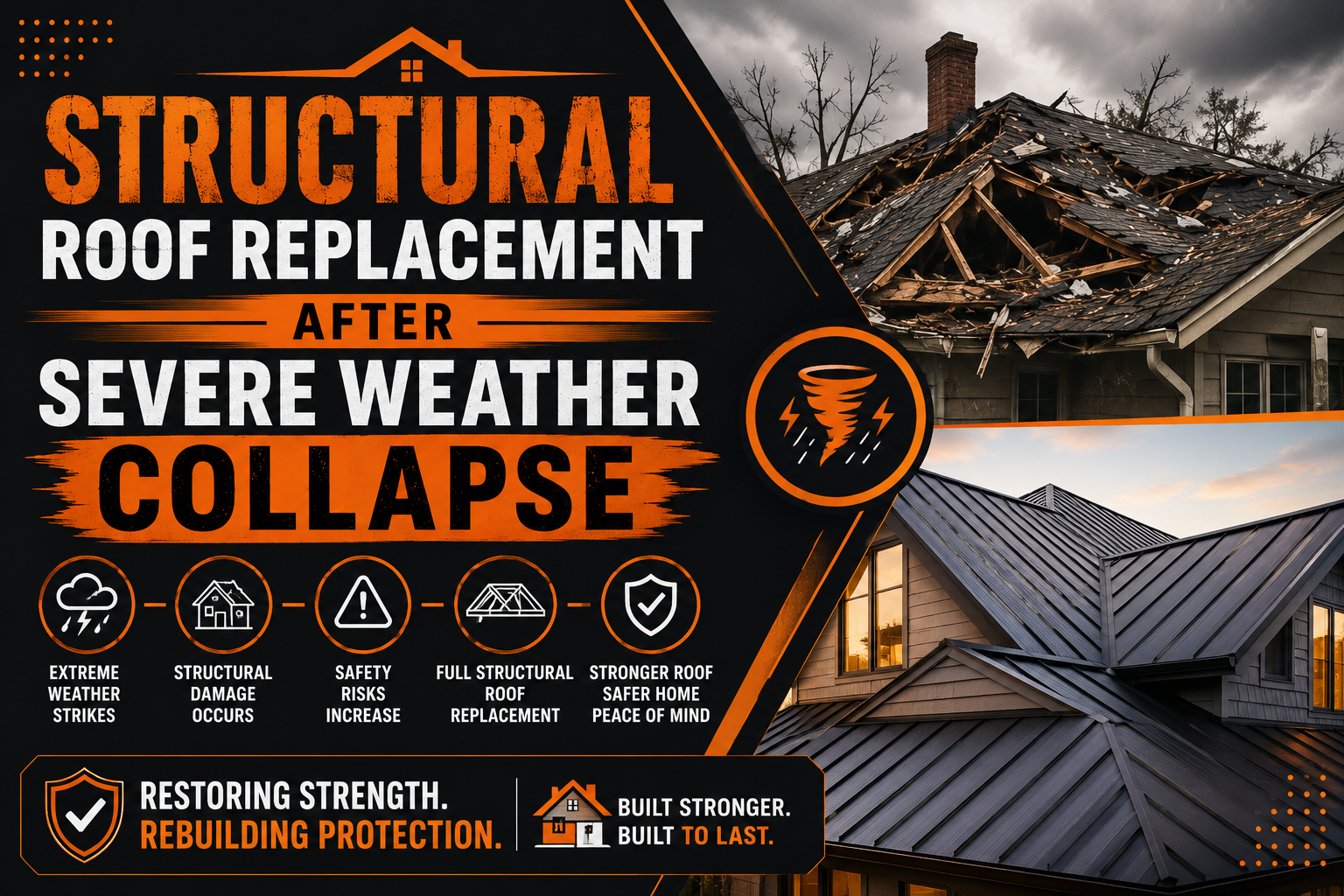
Structural Roof Replacement After Severe Weather Collapse
Introduction
Severe weather has the power to transform a secure home into a dangerous structure within a matter of minutes. Hurricanes, tornadoes, heavy snowfall, ice storms, straight-line winds, and intense rainfall all place enormous pressure on a roofing system. While many roofs experience only surface damage during these events, others suffer structural failures that make complete roof replacement unavoidable.
Structural roof damage differs significantly from ordinary roofing problems. Instead of affecting only shingles or metal panels, severe weather can weaken roof decking, crack rafters, break trusses, shift supporting walls, and compromise the entire framework that holds the roof in place. Once the structural integrity of the roof has been affected, simple repairs are often no longer sufficient to restore the home’s safety.
A roof collapse or major structural failure creates challenges that extend far beyond replacing roofing materials. Homeowners must protect the property from further damage, ensure the building is safe to occupy, document the damage carefully, work with insurance providers, and coordinate inspections involving roofing contractors, structural engineers, and local building authorities.
Understanding the complete structural roof replacement process helps homeowners make informed decisions during an extremely stressful situation. Knowing what to expect also reduces confusion while ensuring every stage of the recovery process is handled correctly.
This guide explains how severe weather leads to structural roof replacement projects and what homeowners should expect throughout the recovery journey. In this first part, we will explore how severe weather causes structural roof collapse, identify common types of structural damage, discuss essential safety measures, explain how to recognize hidden structural issues, and review the importance of documenting damage before professional evaluations begin.
How Severe Weather Causes Structural Roof Collapse
A roof is designed to withstand normal weather conditions, but extreme weather events can generate forces far beyond what many roofing systems were originally built to resist. Structural collapse often results from a combination of stresses rather than one isolated event.
High winds are one of the leading causes of structural roof failures. Powerful wind gusts create upward pressure beneath roofing materials while simultaneously pushing against the roof’s surface. If these forces exceed the strength of the roof framing or fastening system, structural components may begin separating from the building.
Heavy rainfall often contributes to collapse by allowing water to enter through damaged roofing materials. As insulation, roof decking, and framing absorb moisture, their weight increases while their structural strength decreases. Continued exposure may eventually lead to sagging or partial collapse.
Snow accumulation creates another significant structural hazard. Large amounts of wet snow place tremendous weight on the roof over an extended period. Older roofs or structures with existing weaknesses may no longer be capable of supporting the increased load.
Ice storms present similar challenges. Ice buildup adds substantial weight while repeated freezing and thawing cycles weaken roofing materials, flashing, and structural connections.
Tornadoes generate some of the most destructive forces affecting residential roofs. Extreme wind speeds can remove roofing materials almost instantly, exposing structural framing to direct wind pressure that may lift or collapse major portions of the roof.
Hurricanes combine several damaging conditions into one prolonged weather event. Wind, heavy rainfall, airborne debris, and falling trees often affect the roof simultaneously, greatly increasing the likelihood of structural failure.
Flooding may also contribute to structural roof replacement. Although floodwater usually affects lower portions of the home first, prolonged moisture exposure weakens framing members throughout the building and may indirectly affect roof stability over time.
Repeated weather exposure over many years further increases vulnerability. Aging roofing materials, deteriorated fasteners, weakened framing, and deferred maintenance reduce the roof’s ability to withstand severe storms when they eventually occur.
Understanding these different causes helps homeowners recognize that structural roof failures often develop through a combination of weather conditions rather than a single dramatic event.
Common Types of Structural Roof Damage
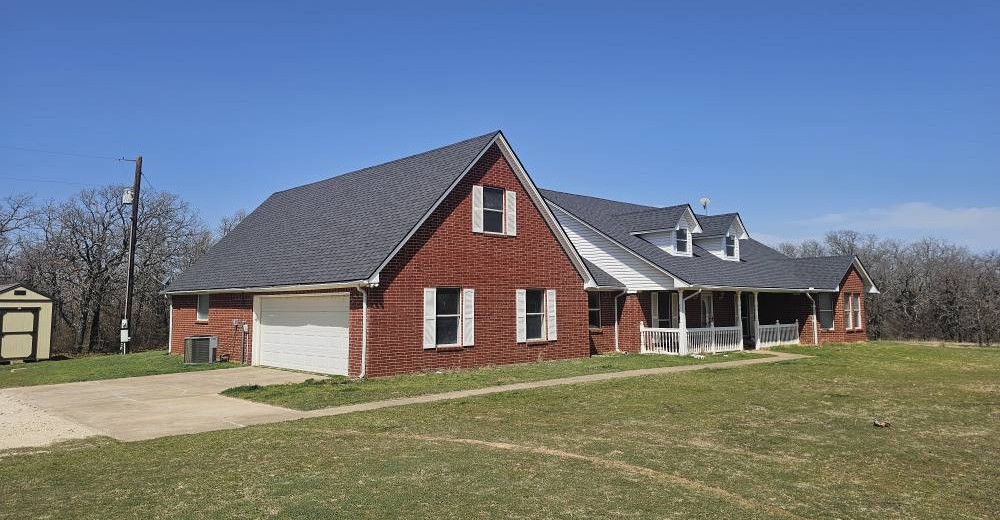
Structural roof damage extends far beyond broken shingles or visible leaks. Severe weather often affects the framework supporting the roof, making careful evaluation essential before determining whether repairs or replacement are appropriate.
Roof decking is frequently among the first structural components to suffer damage. High winds, falling debris, and prolonged water exposure may crack, split, or weaken the decking beneath the roofing materials. Damaged decking reduces the roof’s ability to support both its own weight and future weather loads.
Rafters play a critical role in distributing roof weight throughout the home. When these framing members crack, bend, or split during severe weather, the roof’s structural stability may become compromised even if the damage is not immediately visible from outside.
Roof trusses can also sustain significant damage. Trusses are engineered to distribute weight efficiently, but extreme weather or falling trees may fracture critical joints or permanently deform structural members.
Supporting walls occasionally shift after severe weather events. Structural movement affecting exterior or load-bearing walls changes the way weight is distributed throughout the roof, creating additional stress on framing components.
Roof connections deserve careful attention as well. Metal connectors, hurricane straps, fasteners, and framing joints may loosen or separate during severe storms. Even small failures at these connection points can affect the overall strength of the roofing system.
Water damage often compounds structural problems. Once moisture enters through damaged roofing materials, wooden framing absorbs water and gradually loses strength. Continued moisture exposure also encourages mold growth and wood decay that further weaken structural components.
Ceilings frequently display visible signs of structural distress before homeowners recognize problems within the roof itself. Sagging drywall, cracked plaster, separating ceiling joints, and uneven surfaces often indicate movement occurring above the finished ceiling.
Exterior warning signs should not be overlooked. Leaning chimneys, separated gutters, distorted roof lines, uneven ridges, and visible sagging all suggest that structural evaluation is necessary.
Every structural component works together to support the roofing system. Damage affecting even one part of the framework can influence the performance and safety of the entire roof.
Immediate Safety Actions After a Roof Collapse
Protecting personal safety must always take priority over property concerns after a structural roof collapse. Buildings affected by severe structural damage may become unstable without obvious warning, creating dangerous conditions for anyone entering the property.
If the roof has partially or completely collapsed, everyone should leave the building immediately unless emergency responders advise otherwise. Remaining inside a structurally compromised home increases the risk of injury from additional collapse.
Stay away from rooms directly beneath damaged roof sections. Ceilings weakened by broken framing, accumulated debris, or trapped water may fail unexpectedly even after the storm has ended.
Electrical hazards require particular caution. Water entering through the damaged roof may reach wiring, outlets, electrical panels, or ceiling fixtures. Homeowners should avoid touching affected electrical systems until qualified professionals confirm they are safe.
Gas leaks are another potential concern after severe structural damage. If gas odors are detected or damaged utility lines are suspected, leave the property immediately and contact emergency services.
Homeowners should never climb onto a structurally damaged roof. Sections that appear stable from a distance may collapse without warning because hidden framing members have already been compromised.
Instead, perform only a limited visual inspection from a safe distance. Observing the roof from ground level allows homeowners to identify obvious structural damage without exposing themselves to unnecessary danger.
Emergency responders or building officials may determine that the home is temporarily unsafe to occupy. Homeowners should follow these recommendations carefully until structural professionals complete detailed evaluations.
The following safety measures should always be completed before recovery work begins:
- Evacuate the building if structural collapse is suspected.
- Stay away from damaged roof sections and unstable ceilings.
- Avoid contact with damaged electrical equipment.
- Report gas leaks or damaged utility lines immediately.
- Do not climb onto the roof under any circumstances.
- Wait for professional structural evaluations before re-entering unsafe areas.
Following these precautions protects both homeowners and emergency personnel while reducing the risk of additional injuries during the recovery process.
Recognizing Visible and Hidden Structural Damage
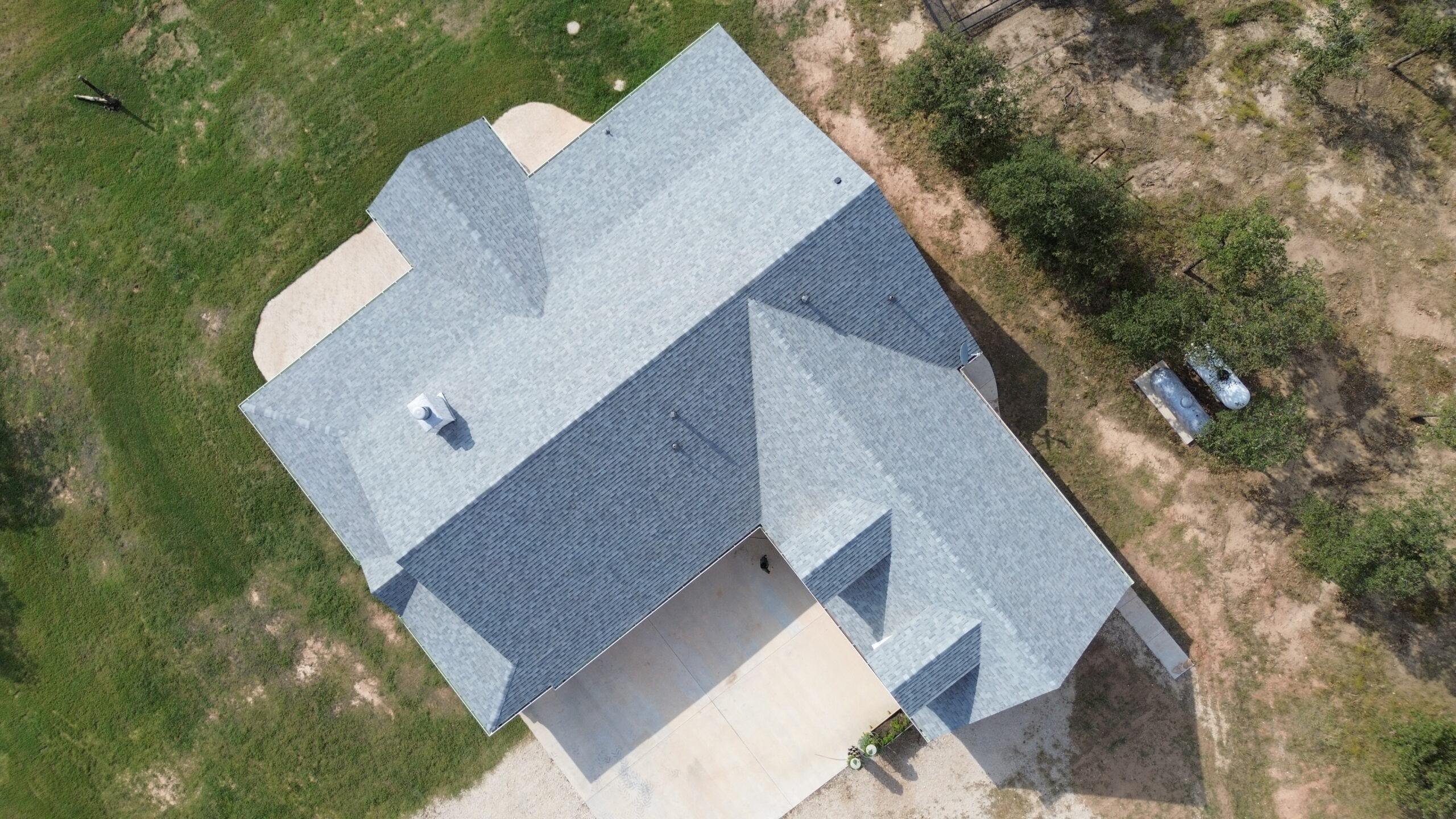
Some structural damage becomes immediately obvious after severe weather, while other problems remain hidden beneath roofing materials or inside wall and ceiling cavities. Recognizing both visible and concealed damage helps homeowners understand why professional inspections are essential.
Visible damage often includes collapsed roof sections, large holes, broken framing, missing roofing materials, or rooflines that appear uneven. These obvious failures usually indicate that significant structural work will be required.
However, hidden damage frequently presents a greater long-term concern. Structural framing may crack internally without visible surface damage, allowing the roof to continue supporting weight temporarily while its overall strength has already been reduced.
Water intrusion creates many hidden structural problems. Moisture entering through damaged roofing materials travels beneath the surface before reaching ceilings or walls. During this time, roof decking, insulation, rafters, and trusses may all absorb water and begin deteriorating.
Attic inspections often reveal problems before they become visible inside living spaces. Wet insulation, stained decking, mold growth, visible daylight, and warped framing members all indicate structural issues requiring immediate professional attention.
Doors and windows that suddenly become difficult to open or close may also suggest structural movement. As framing shifts, the home’s geometry changes slightly, affecting door and window alignment.
Interior cracks deserve careful observation as well. New cracks around ceilings, walls, door frames, or window openings often indicate that structural loads have shifted following severe weather.
Homeowners should also observe exterior changes. Leaning chimneys, separated gutters, cracked masonry, bowed walls, or visible roof sagging all provide valuable clues regarding possible structural damage.
Even when no obvious signs appear, severe weather capable of producing roof collapse elsewhere in the neighborhood justifies professional evaluation. Hidden structural damage often develops gradually before eventually producing visible symptoms.
Recognizing these warning signs helps homeowners respond quickly while avoiding assumptions based solely on the roof’s outward appearance.
Emergency Protection Before Structural Roof Replacement
Permanent structural roof replacement rarely begins immediately after severe weather. Insurance evaluations, engineering assessments, permit approvals, and contractor scheduling often require time. During this period, protecting the home from additional damage becomes extremely important.
Emergency tarping remains one of the most effective temporary protective measures. Properly installed tarps reduce water intrusion by covering exposed roof sections until permanent reconstruction can begin. These temporary coverings should be installed only by qualified professionals when structural conditions allow.
Openings created by collapsed roof sections should be secured whenever possible. Covering exposed attic spaces, broken skylights, damaged vents, and other openings limits additional rainwater from entering the structure.
Interior moisture control is equally important. Standing water should be removed promptly, while wet insulation, soaked drywall, and damaged materials should be evaluated to reduce the risk of mold growth and further structural deterioration.
Ventilation helps accelerate drying after water intrusion. Dehumidifiers and air circulation equipment reduce indoor humidity levels, helping preserve remaining structural materials until repairs begin.
Temporary supports may also be necessary in certain situations. Structural engineers sometimes recommend temporary bracing to stabilize damaged framing before reconstruction starts. These supports should always be installed by qualified professionals.
Homeowners should avoid attempting permanent structural repairs before insurance documentation and engineering evaluations have been completed. Premature repairs may remove important evidence needed to assess the full extent of the damage.
Emergency protection focuses on preserving the home’s remaining structural integrity while preparing the property for safe and efficient reconstruction.
Documenting Structural Damage for Insurance and Professional Evaluation
Accurate documentation becomes one of the most valuable resources throughout a structural roof replacement project. Detailed records help insurance companies, engineers, contractors, and building officials understand the full extent of the damage before reconstruction begins.
Begin by photographing the property from every exterior angle before moving debris whenever it is safe to do so. Wide photographs establish the overall condition of the home, while close-up images document collapsed roof sections, broken framing, damaged gutters, displaced roofing materials, and visible structural failures.
Interior documentation deserves equal attention. Photograph sagging ceilings, cracked walls, broken drywall, damaged insulation, exposed framing, water intrusion, and any personal belongings affected by the collapse.
Video recordings provide additional context by capturing the relationship between damaged areas throughout the home. Slow, continuous recordings help professionals better understand how structural failures extend across different parts of the building.
Written notes should also be maintained throughout the recovery process. Record the date and approximate time of the severe weather event, visible damage, emergency actions taken, temporary protective measures, and every conversation with insurance representatives, contractors, engineers, and building officials.
The following information should be collected as early as possible:
- Date and approximate time the severe weather occurred.
- Exterior photographs showing structural roof damage.
- Interior photographs documenting ceiling and framing damage.
- Videos showing the overall condition of the property.
- Receipts for emergency stabilization and temporary protection.
- Contact information for engineers, contractors, inspectors, and insurance representatives.
Organized documentation simplifies every stage of the recovery process. Insurance claims become easier to support, engineering evaluations become more accurate, and contractors receive a clearer understanding of the work required before structural roof replacement begins.
Professional Structural Roof Inspection
Once emergency protection has been completed and the property has been stabilized, the next stage is a comprehensive structural roof inspection. Unlike a standard roofing inspection that focuses primarily on roofing materials, a structural inspection evaluates the strength, stability, and integrity of the entire roof support system.
The inspection begins with an exterior assessment of the property. Roofing professionals examine the roofline for visible sagging, uneven ridges, displaced framing, damaged flashing, missing roofing materials, and signs of structural movement. These observations provide an initial understanding of how the severe weather affected the building.
Contractors then inspect the roof decking. Cracked, split, water-damaged, or crushed decking indicates that the structural foundation supporting the roofing system may require replacement before new roofing materials can be installed.
The attic receives special attention because many structural problems become visible from inside the building. Inspectors evaluate rafters, trusses, collar ties, support beams, and roof connections for cracks, bending, separation, or water damage. Moisture intrusion, mold development, and damaged insulation are also documented during this stage.
Roof connections are another critical area of evaluation. Hurricane straps, metal connectors, fasteners, and framing joints are inspected carefully because failures at these connection points can weaken the stability of the entire roof structure.
Supporting walls are also assessed for movement or damage. Structural shifts may create cracks around windows and doors, uneven wall surfaces, or separation between framing members that require correction before roof replacement begins.
Modern inspection methods often include moisture meters, laser measuring equipment, and thermal imaging technology. These tools help identify hidden moisture and structural irregularities without removing unnecessary building materials.
The inspection usually concludes with detailed measurements, photographs, and a written report. This report provides homeowners, insurance companies, and contractors with a clear understanding of the structural damage and the work required to restore the roof safely.
A thorough inspection ensures that every damaged component is identified before reconstruction begins, reducing the likelihood of unexpected structural problems during the replacement project.
Engineering Assessments and Building Code Requirements
When severe weather causes structural roof damage, roofing inspections alone are often not enough. Structural engineers may also be involved to determine whether the home’s framing remains capable of safely supporting a new roof.
Engineers evaluate how the weather event affected the building’s overall structural system. Their assessment extends beyond roofing materials to include load-bearing walls, support beams, roof framing, foundation movement, and the way structural loads are distributed throughout the home.
Roof trusses receive careful examination because they are designed to transfer roof loads efficiently. A cracked or deformed truss may affect neighboring structural members, making replacement or reinforcement necessary before reconstruction proceeds.
Engineers also calculate whether existing framing remains adequate for the new roofing materials. If homeowners choose heavier roofing products such as concrete or clay tiles, additional structural reinforcement may be required to support the increased weight safely.
Building codes play an important role throughout the replacement process. Local regulations often require damaged roofs to be rebuilt according to current construction standards rather than the standards that existed when the home was originally built.
Updated building codes may require stronger fastening systems, improved underlayment, enhanced roof-to-wall connections, hurricane straps, upgraded ventilation, or additional structural bracing. These improvements increase the roof’s ability to withstand future severe weather.
Permit approvals are generally required before structural reconstruction begins. Building officials review engineering plans and construction documents to verify that the proposed work complies with current safety standards.
Inspections performed during construction ensure each stage of the project meets code requirements. Framing, structural connections, decking, and roofing materials may all be inspected before the next construction phase proceeds.
Although engineering evaluations and permit approvals add time to the project, they provide confidence that the completed roof will meet modern safety standards while improving long-term structural performance.
When Structural Repairs Are Not Enough
One of the most important decisions after severe weather is determining whether structural repairs can restore the roof or whether complete replacement is necessary. This decision depends on the overall condition of the roof rather than one isolated area of damage.
Repairs may be appropriate when structural damage is limited to a small portion of the roof and the surrounding framing remains sound. Replacing individual rafters, sections of roof decking, or localized framing components can often restore structural integrity when damage is isolated.
Replacement becomes more likely when multiple structural components have been compromised. Widespread framing damage, collapsed roof sections, repeated water intrusion, or significant structural movement usually indicate that rebuilding the roof provides the safest long-term solution.
The age of the existing roof also influences the recommendation. Older roofing systems that already showed signs of deterioration before the weather event may not justify extensive structural repairs when complete replacement offers greater long-term reliability.
Water damage is another major consideration. Moisture affecting large sections of roof decking, insulation, framing, and ceiling materials often spreads beyond the visible impact area. Replacing the complete roofing system allows contractors to remove hidden damage and rebuild using new structural materials.
Repeated repairs should also be evaluated carefully. A roof that has experienced multiple repair projects over several years may no longer provide dependable protection during future storms.
Structural engineers and roofing contractors work together to determine the most practical solution. Their recommendations focus on restoring the home’s safety, structural integrity, and long-term durability rather than simply repairing the most visible damage.
Choosing replacement when necessary provides homeowners with a stronger roofing system designed to perform reliably for many years while meeting current building standards.
The Complete Structural Roof Replacement Process
Structural roof replacement involves considerably more work than replacing roofing materials alone. Every stage of the project is designed to restore both the roof’s appearance and the building’s structural strength.
Construction begins by protecting the surrounding property. Landscaping, windows, siding, and nearby structures are covered before demolition starts. This preparation reduces the risk of additional property damage throughout the project.
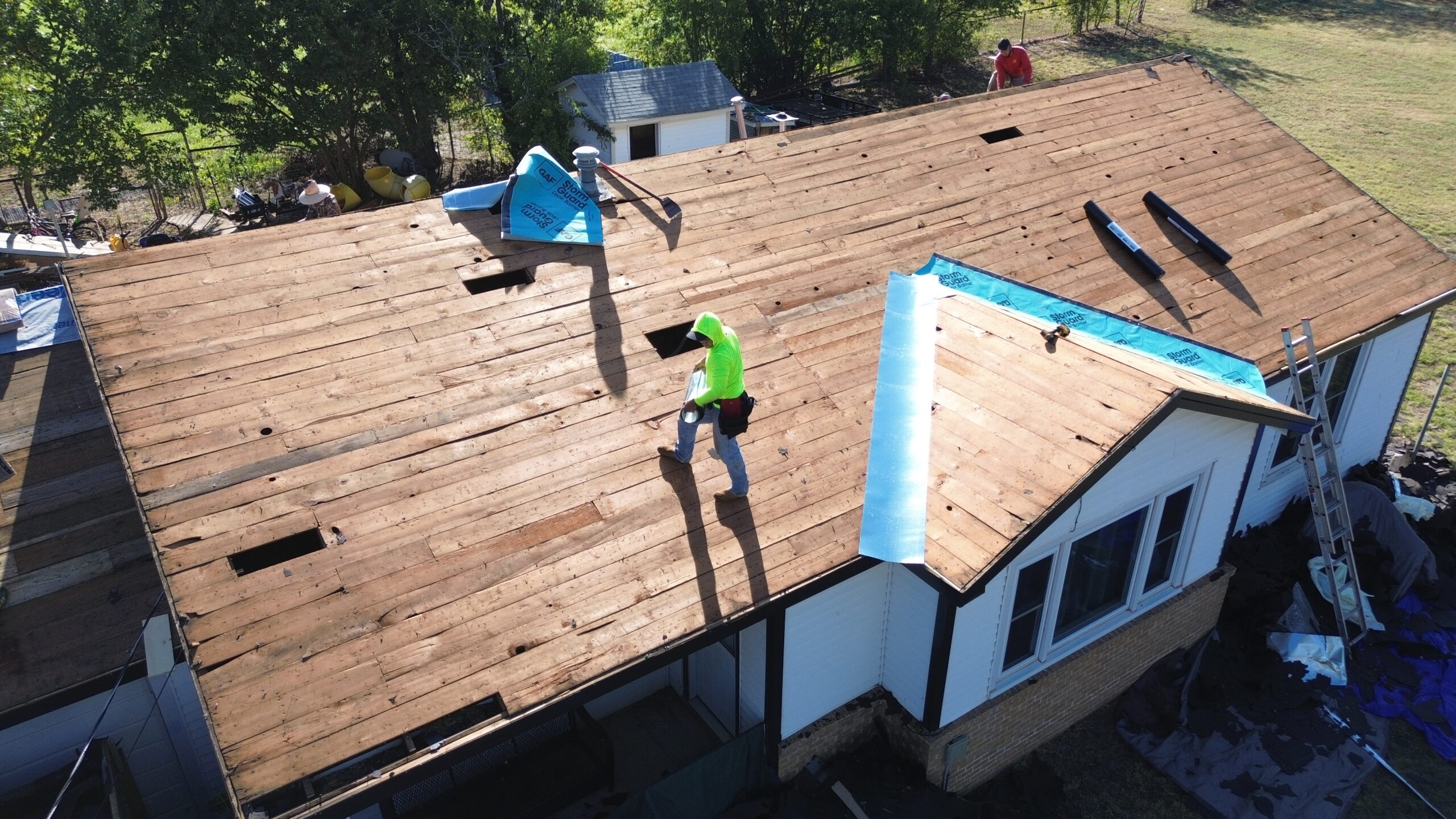
Damaged roofing materials are removed first, followed by any compromised underlayment, flashing, and roof decking. Contractors then remove structural framing members that have been identified for replacement.
Once demolition is complete, the remaining structural framework is inspected again. Exposing the roof completely often reveals additional damage that was hidden beneath roofing materials or ceiling finishes.
New structural components are installed according to engineering plans. Damaged rafters, trusses, support beams, blocking, and roof decking are replaced using approved construction methods and materials that comply with current building codes.
After the structural framework has been rebuilt, contractors install new underlayment and waterproof barriers. Special attention is given to roof valleys, eaves, penetrations, and other locations where water intrusion commonly occurs.
New flashing is installed around chimneys, skylights, plumbing vents, dormers, and wall intersections. Proper flashing installation is essential because these transition points experience concentrated water flow during storms.
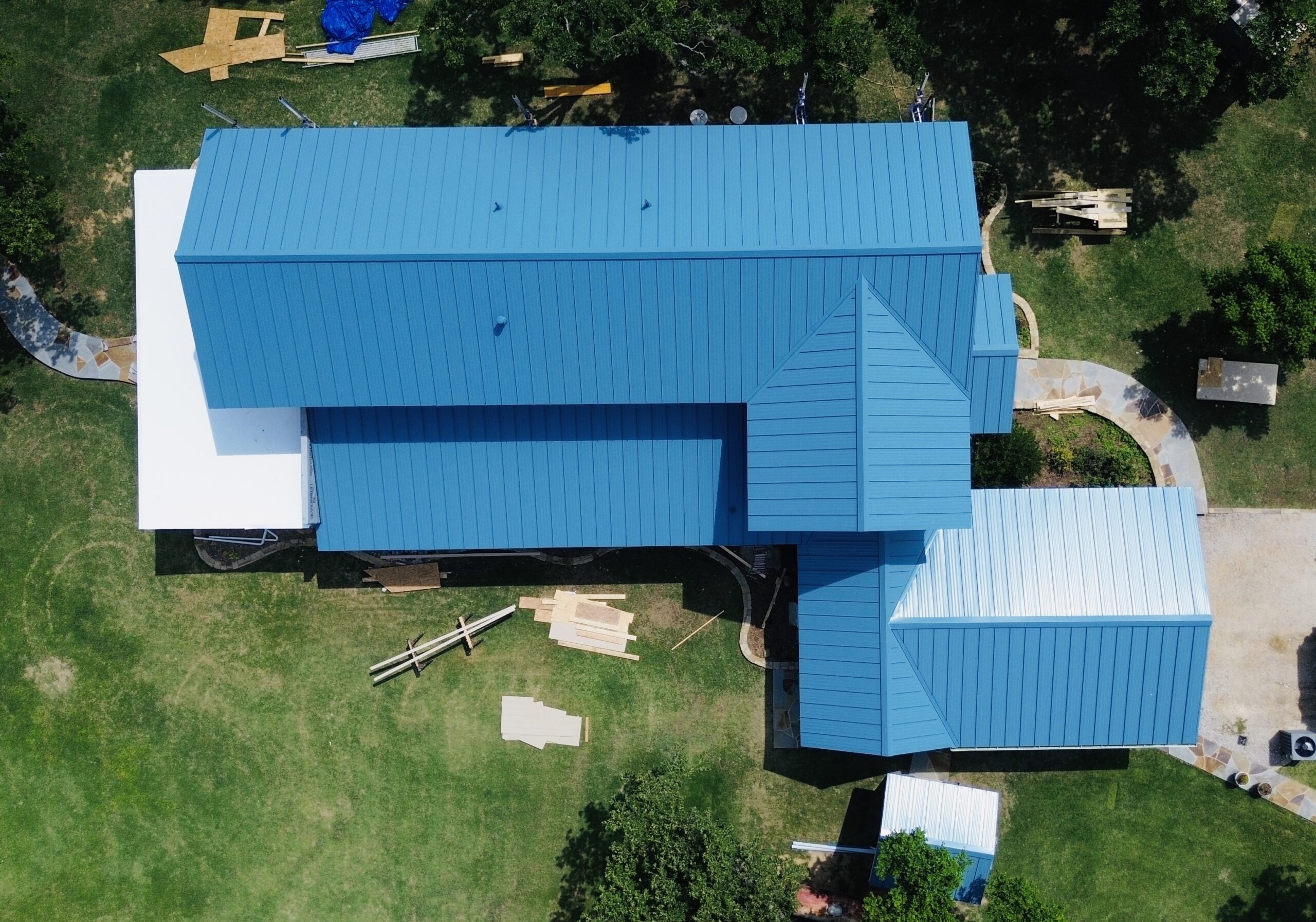
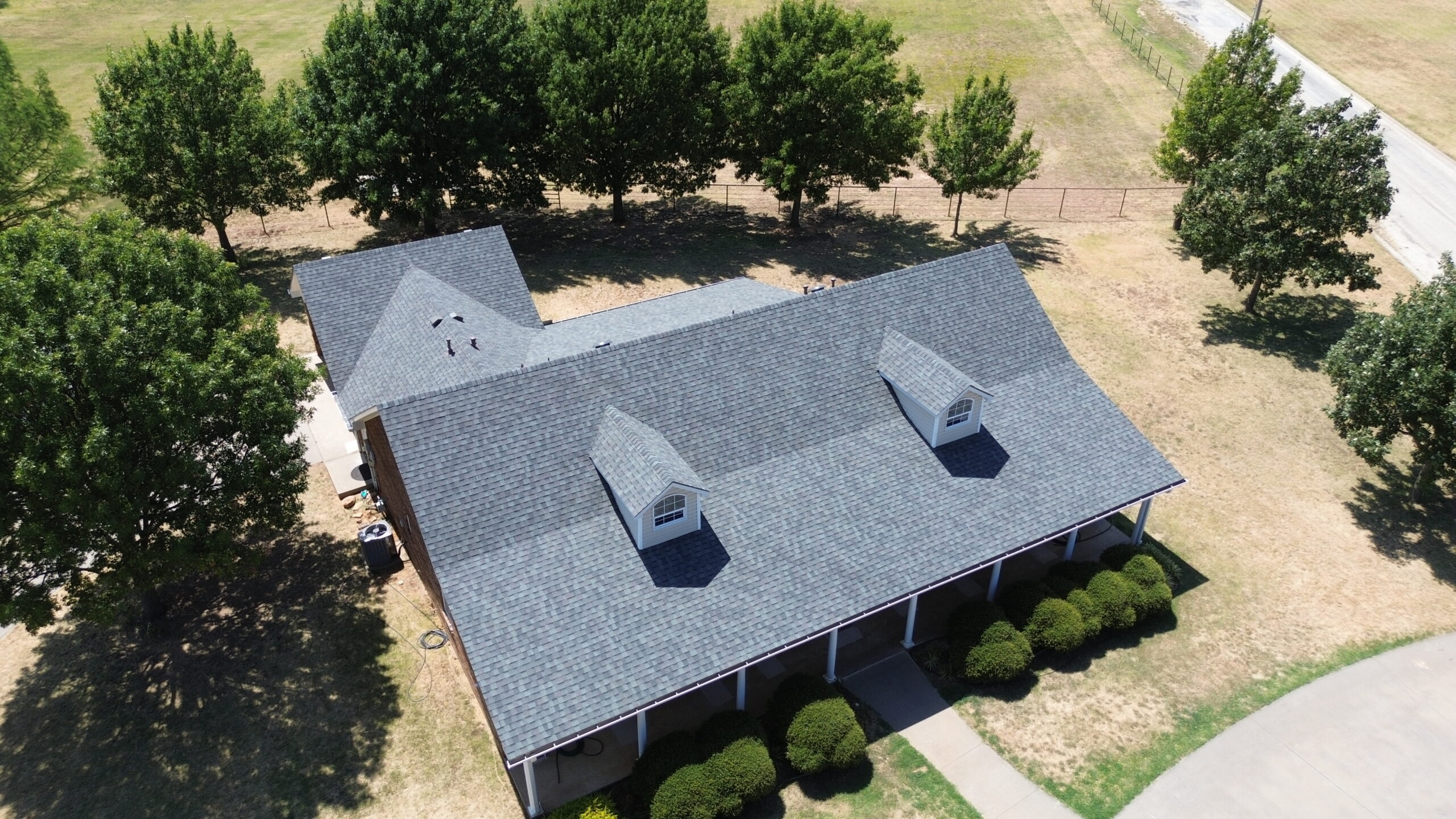
The selected roofing material is then installed according to manufacturer specifications. Contractors follow approved fastening patterns, spacing requirements, and installation techniques designed to maximize wind resistance and long-term durability.
Ventilation systems are evaluated and upgraded if necessary. Balanced attic ventilation helps regulate moisture, improves energy efficiency, and extends the service life of the roofing system.
Once construction has been completed, contractors perform a comprehensive quality inspection. Structural connections, flashing, roofing materials, ventilation components, and drainage systems are all checked carefully before the project is considered complete.
The final stage includes thorough site cleanup and removal of construction debris. Homeowners also receive warranty documentation, maintenance recommendations, and information regarding future inspections that will help preserve the new roofing system.
Working With Insurance During Major Structural Damage Claims
Insurance claims involving structural roof damage are often more complex than standard roofing claims because they involve multiple building components and higher repair costs. Maintaining organized documentation throughout the process helps simplify communication with insurance representatives.
The claim generally begins with notifying the insurance company after emergency stabilization has been completed. Homeowners provide photographs, videos, written notes, and a description of the severe weather event that caused the structural damage.
Insurance companies typically assign an adjuster to inspect the property. During this visit, the adjuster evaluates roof damage, structural conditions, interior damage, and other affected building components while reviewing the policy’s coverage.
Engineering reports often become valuable during this stage. Independent structural evaluations provide technical documentation explaining why repairs may be insufficient and why replacement is necessary.
Insurance companies also review contractor estimates, building code requirements, and the extent of structural reconstruction needed to restore the home safely. Clear documentation from every professional involved helps support accurate claim evaluations.
Homeowners should maintain records of every conversation, estimate, invoice, inspection report, and receipt throughout the project. Organized documentation reduces misunderstandings while creating a complete history of the recovery process.
Questions regarding coverage, deductibles, depreciation, or payment schedules should be addressed before construction begins. Understanding these details allows homeowners to plan the project more effectively while avoiding unexpected financial surprises.
Although structural claims often require additional time due to their complexity, consistent communication and complete documentation usually contribute to a smoother claims experience.
Choosing a Qualified Structural Roofing Contractor
Selecting the right contractor is one of the most important decisions during a structural roof replacement project. Because structural reconstruction involves far more than installing roofing materials, homeowners should choose professionals with experience handling complex weather-related damage.
Contractors should have proven experience with structural roof replacement, framing repairs, and major storm restoration projects. Familiarity with engineering plans, building codes, and structural reconstruction helps ensure the work is completed correctly.
Licensing and insurance should always be verified before signing a contract. Qualified contractors maintain the appropriate credentials and insurance coverage needed to protect both workers and homeowners throughout the project.
Written estimates should describe every aspect of the work clearly. Structural repairs, framing replacement, roofing materials, project schedules, warranties, cleanup responsibilities, permit requirements, and payment terms should all appear within the contract.
References from previous structural reconstruction projects provide valuable insight into workmanship quality, communication, scheduling reliability, and overall customer satisfaction.
Homeowners should avoid choosing contractors based solely on price. Extremely low estimates may exclude necessary structural work, use lower-quality materials, or overlook important building code requirements that affect long-term safety.
Communication remains essential throughout the project. Contractors who explain technical details clearly, coordinate effectively with engineers and inspectors, and provide regular progress updates often create a smoother construction experience.
Warranty coverage should also be discussed before work begins. Material warranties and workmanship warranties provide different types of protection, and homeowners should understand both before construction starts.
Selecting an experienced structural roofing contractor provides confidence that the completed roof will not only look new but also restore the home’s safety, stability, and resilience against future severe weather.
Factors That Affect Structural Roof Replacement Costs
Structural roof replacement is one of the most extensive home restoration projects because it involves rebuilding the framework that supports the entire roofing system. Unlike standard roof replacement, these projects often include structural engineering, framing reconstruction, permit approvals, and additional inspections that influence the overall cost.
The size of the roof is one of the most significant pricing factors. Larger homes require more structural materials, additional labor, and longer construction schedules. Roofs with multiple slopes, dormers, skylights, valleys, and complex architectural features also require more detailed framing work.
The extent of structural damage has an even greater influence on project costs. A roof with isolated framing damage requires far less reconstruction than one involving collapsed trusses, broken rafters, damaged load-bearing walls, or widespread roof deck failure.
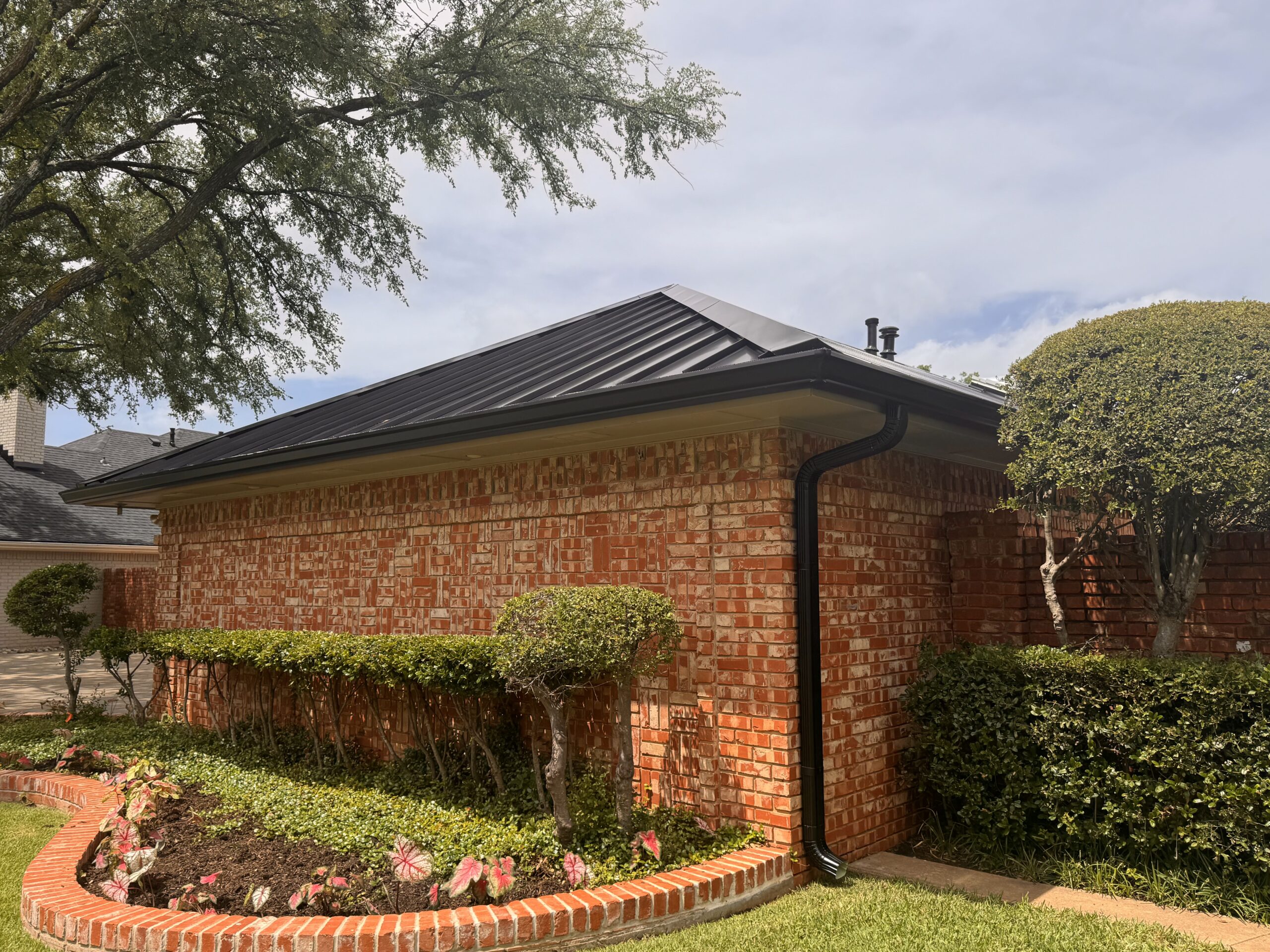
The roofing material selected for the new roof also affects the budget. Asphalt shingles generally offer the most economical option, while metal roofing, slate, clay tile, concrete tile, and premium synthetic materials require greater material and installation investments.
Structural engineering services contribute to the overall project cost as well. Engineering evaluations, calculations, construction drawings, and inspections help ensure the rebuilt roof complies with modern safety standards.
Permit fees and local building code requirements may also increase project expenses. Many jurisdictions require upgraded structural connections, improved fastening systems, reinforced framing, and enhanced wind resistance whenever major structural reconstruction is performed.
Interior restoration often becomes part of the overall project after severe roof collapse. Damaged ceilings, insulation, drywall, flooring, electrical systems, and ventilation components may all require replacement before the home is fully restored.
Cleanup and debris removal should also be considered. Demolishing damaged framing, disposing of roofing materials, and removing storm debris require specialized equipment and careful planning throughout the reconstruction process.
Although structural roof replacement represents a major financial investment, rebuilding the roof correctly provides long-term protection, restores the home’s structural integrity, and significantly improves safety during future severe weather events.
Preventing Future Structural Roof Failures
While no roof can completely eliminate the risk posed by extreme weather, homeowners can reduce the likelihood of structural failure through regular maintenance, timely repairs, and thoughtful upgrades.
Routine roof inspections provide the first line of defense. Professional inspections identify loose roofing materials, damaged flashing, deteriorated decking, and weakened framing before these issues develop into major structural concerns.
Maintaining gutters and downspouts helps protect the roof by directing water away from vulnerable structural components. Proper drainage reduces moisture accumulation that may weaken wood framing over time.
Tree maintenance is equally important. Dead branches, diseased trees, and overhanging limbs should be removed before severe weather arrives. Preventing tree impacts greatly reduces the risk of catastrophic structural roof damage.
Attic ventilation should also receive regular attention. Proper airflow reduces moisture accumulation, minimizes wood deterioration, and helps preserve structural framing throughout the roof system.
Addressing minor leaks promptly prevents water from reaching structural components. Even small roof leaks can gradually weaken decking, rafters, and trusses if moisture remains trapped for extended periods.
Homeowners living in regions frequently affected by hurricanes, tornadoes, or severe storms may also benefit from structural upgrades during replacement. Reinforced roof connections, hurricane straps, improved fastening systems, and impact-resistant roofing materials increase the roof’s ability to withstand extreme weather.
Seasonal maintenance should become part of every homeowner’s routine. Inspecting the roof before storm season allows developing problems to be corrected before severe weather places additional stress on the structure.
Preventive care not only protects the roof but also extends the lifespan of the entire building. Investing in routine maintenance is often far less expensive than recovering from a major structural failure.
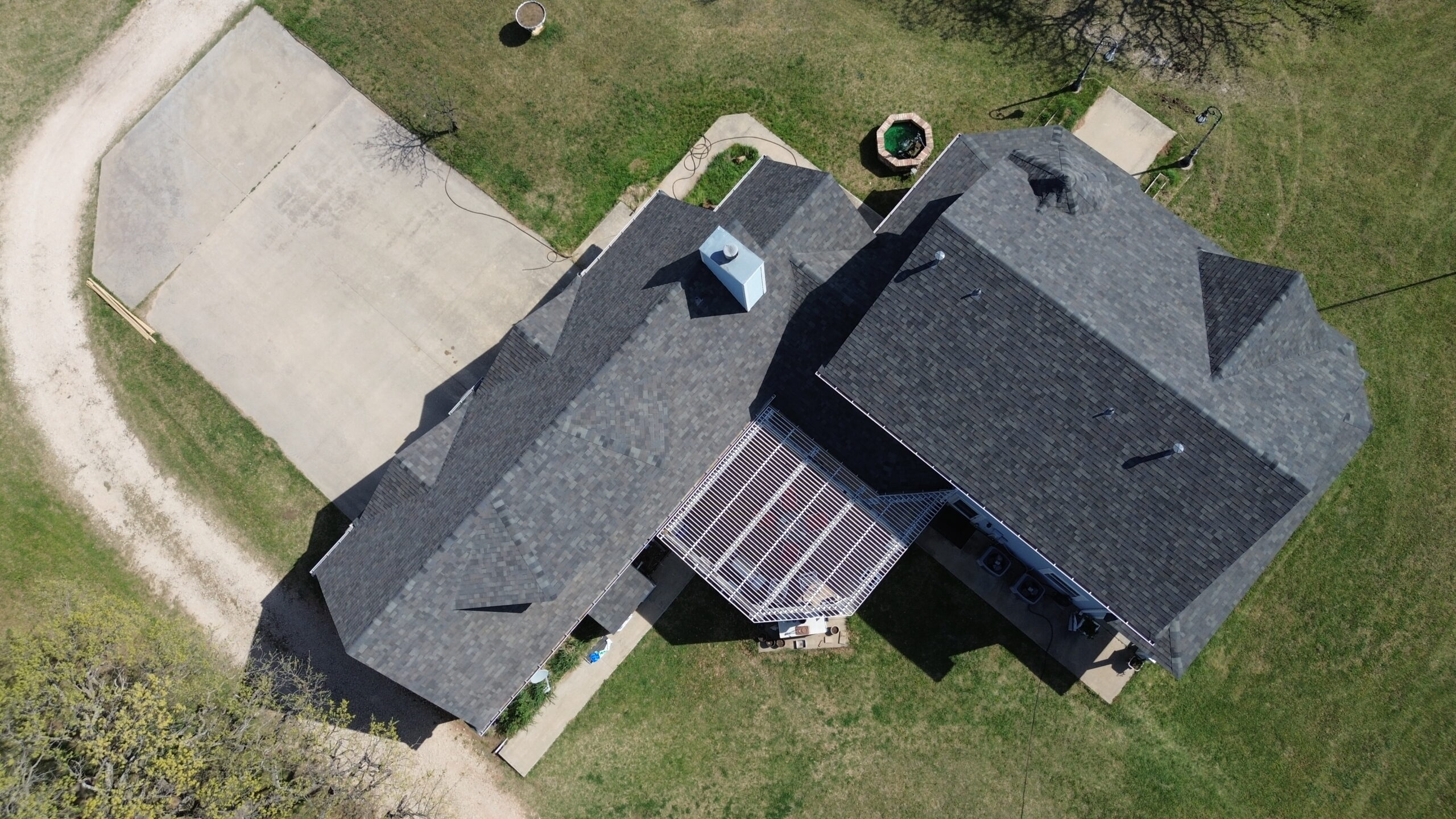
Long-Term Maintenance After Structural Roof Replacement
Completing a structural roof replacement marks the beginning of a new maintenance cycle rather than the end of roofing responsibilities. Consistent maintenance preserves the performance of both the structural framework and the roofing materials installed above it.
Visual roof inspections should be performed regularly from ground level. Homeowners can often identify displaced shingles, damaged flashing, clogged gutters, or storm debris without climbing onto the roof.
Professional roof inspections every few years provide additional assurance that structural components continue performing as intended. Experienced contractors evaluate both the visible roofing materials and the underlying support system for early signs of deterioration.
Keeping gutters free from leaves and debris remains one of the simplest maintenance practices. Proper drainage reduces standing water that may otherwise affect roof decking, fascia boards, and structural framing.
Attic inspections also play an important role. Damp insulation, mold growth, unusual odors, water stains, or visible daylight entering through the roof indicate that further investigation may be necessary.
Roof penetrations require periodic attention because flashing and sealants naturally deteriorate over time. Chimneys, skylights, plumbing vents, and exhaust vents should all be inspected regularly to maintain a watertight roofing system.
Tree maintenance should continue throughout the life of the roof. Trimming branches and removing hazardous trees reduces the likelihood of future structural damage caused by falling limbs or entire trees.
Maintaining accurate records of inspections, maintenance, and repairs also benefits homeowners. These records provide valuable information if future insurance claims, warranty questions, or property sales occur.
Regular maintenance helps preserve the investment made during structural reconstruction while reducing the likelihood of major repairs in the future.
Common Mistakes Homeowners Should Avoid
Recovering from structural roof damage often involves many complex decisions. Avoiding common mistakes helps homeowners reduce unnecessary costs while ensuring the rebuilding process proceeds safely and efficiently.
One common mistake is assuming that visible damage represents the full extent of the problem. Structural failures frequently extend beyond the obvious collapse area, affecting framing, decking, walls, and ceilings that require professional evaluation.
Another mistake is delaying engineering inspections. Temporary stabilization protects the property, but it should never replace a complete structural assessment performed by qualified professionals.
Some homeowners begin permanent reconstruction before documenting the original damage thoroughly. Comprehensive photographs, videos, engineering reports, and contractor inspections should be completed before damaged materials are removed whenever possible.
Choosing contractors based only on the lowest estimate can create long-term problems. Structural reconstruction requires specialized expertise, and incomplete work may compromise both safety and building code compliance.
Ignoring water damage inside the attic or ceiling cavities is another common oversight. Moisture trapped within structural components continues causing deterioration even after exterior roof repairs have been completed.
Homeowners should also avoid neglecting permit requirements. Structural reconstruction performed without proper approvals may create legal complications, delay insurance settlements, or require expensive corrective work later.
Skipping routine maintenance after reconstruction is another mistake that reduces the roof’s expected lifespan. Regular inspections allow small issues to be corrected before they develop into larger structural concerns.
Learning from these common mistakes helps homeowners protect both their investment and the long-term stability of the rebuilt roofing system.
Structural Roof Recovery Checklist
Recovering from severe structural roof damage involves multiple coordinated steps. The following checklist summarizes the complete recovery process discussed throughout this guide.
- Confirm everyone has safely evacuated the damaged structure.
- Contact emergency services if collapse or utility hazards exist.
- Arrange temporary stabilization and weather protection.
- Photograph all structural and interior damage thoroughly.
- Schedule professional roofing and engineering inspections.
- Notify the insurance company and begin the claims process.
- Review contractor proposals and verify qualifications.
- Complete structural reconstruction before roofing installation.
- Schedule regular inspections after the replacement is finished.
- Maintain the roof and surrounding property before future storm seasons.
Following this checklist helps homeowners stay organized while reducing confusion throughout the recovery process.
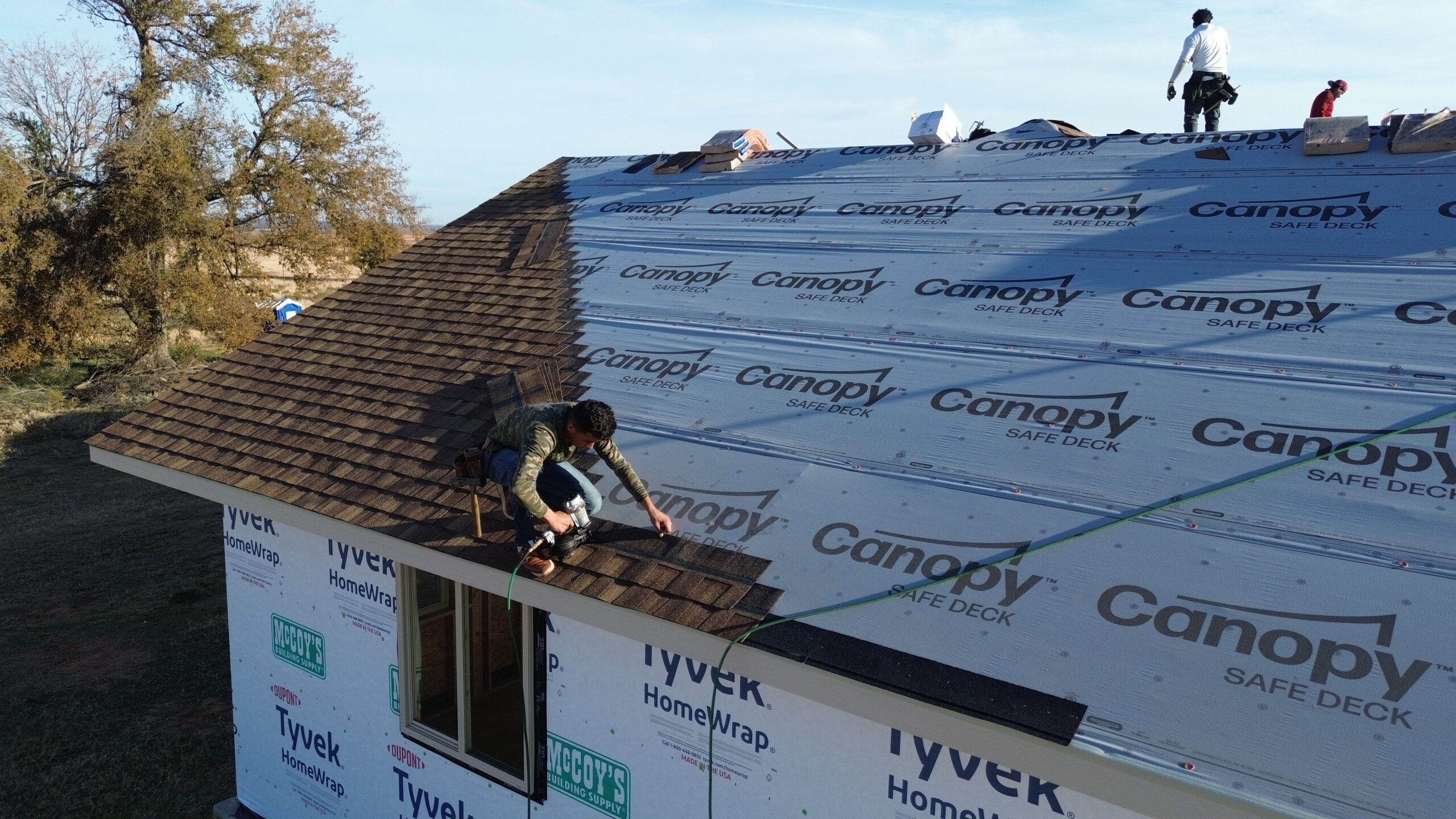
Structural Repair vs Full Roof Replacement Comparison
The following table summarizes situations in which structural repairs or complete roof replacement may generally be the most appropriate solution.
| Evaluation Factor | Structural Repair | Full Structural Roof Replacement |
|---|---|---|
| Extent of Damage | Limited structural area | Widespread structural failure |
| Roof Deck Condition | Mostly intact | Extensive decking replacement required |
| Framing | Minor rafter or truss repairs | Multiple framing members damaged |
| Roof Age | Newer roofing system | Older roof nearing the end of its lifespan |
| Water Damage | Localized moisture intrusion | Widespread structural moisture damage |
| Long-Term Value | Suitable for isolated structural issues | Better for major collapse or extensive damage |
Frequently Asked Questions
How can I tell if my roof has suffered structural damage after severe weather?
Structural damage often includes sagging rooflines, cracked ceilings, damaged rafters, broken trusses, uneven walls, sticking doors or windows, and significant water intrusion. A professional structural inspection is the most reliable way to determine the full extent of the damage.
Can a partially collapsed roof be repaired instead of replaced?
It depends on the amount of structural damage. If only a limited section of the framing has been affected and the remaining structure remains sound, repairs may be possible. Widespread structural failure usually requires complete replacement.
Why is a structural engineer sometimes required?
Structural engineers evaluate whether the home’s framing can safely support a rebuilt roof. Their recommendations help ensure reconstruction complies with building codes and restores the home’s structural integrity.
How long does structural roof replacement usually take?
Project timelines vary depending on the severity of the damage, engineering evaluations, permit approvals, insurance processing, material availability, weather conditions, and the complexity of the reconstruction. Structural projects generally require more time than standard roof replacements.
Will a new structurally reinforced roof provide better storm protection?
In many cases, yes. Modern building codes, stronger fastening systems, reinforced framing connections, improved underlayment, and upgraded roofing materials often provide greater resistance to severe weather than older roofing systems.
Conclusion
Structural roof collapse caused by severe weather is one of the most challenging situations a homeowner can experience. Unlike ordinary roofing damage, structural failures affect the framework supporting the entire roofing system, requiring careful evaluation, engineering expertise, and comprehensive reconstruction to restore the home’s safety.
The recovery process begins with protecting occupants, stabilizing the property, documenting the damage thoroughly, and arranging professional inspections. Engineering assessments, insurance coordination, building code compliance, and qualified contractors all play essential roles in ensuring the rebuilt roof meets modern safety standards and performs reliably for many years.
Replacing a structurally damaged roof is not simply about installing new roofing materials. It involves rebuilding the structural foundation that protects the home against future weather while improving durability, resilience, and overall property value. Addressing hidden framing damage, moisture intrusion, and weakened connections ensures that the completed roofing system functions as a single, dependable structure.
Long-term success depends on continued maintenance after reconstruction. Routine inspections, prompt repairs, proper drainage, healthy attic ventilation, tree maintenance, and seasonal preparation all contribute to preserving the roof’s structural integrity throughout its service life.
Although severe weather can cause devastating damage, informed planning and professional guidance make recovery far more manageable. By understanding the structural roof replacement process, working with qualified experts, and investing in quality materials and workmanship, homeowners can rebuild with confidence and create a stronger, safer home prepared for the challenges of future storms.