
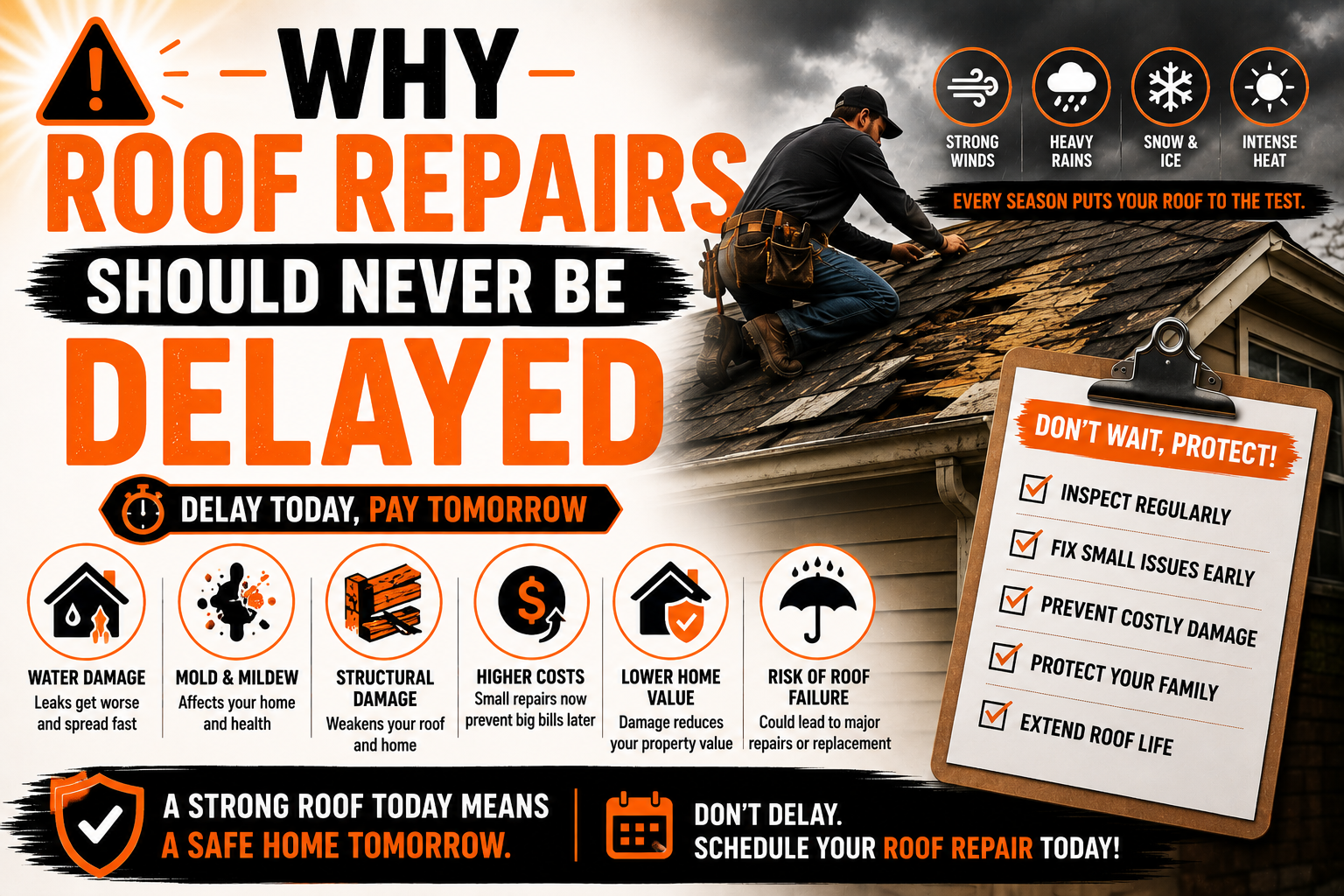
Why Roof Repairs Should Never Be Delayed
Introduction
A roof is one of the most important components of any home or commercial building because it protects everything beneath it from weather, moisture, temperature changes, and outside elements. Despite its critical role, roof damage is often ignored until it becomes impossible to overlook. A missing shingle, a small leak, or minor flashing damage may seem insignificant today, but these issues rarely remain small for long.
Many property owners delay roof repairs because the damage appears cosmetic or because there are no obvious signs of water entering the building. Others postpone repairs due to busy schedules, budget concerns, or the hope that the problem will not become worse. Unfortunately, roofing systems are constantly exposed to sunlight, rain, wind, and changing temperatures, meaning even minor damage can deteriorate much faster than expected.
Delaying roof repairs does not simply allow an existing problem to remain unchanged. Instead, it creates opportunities for moisture, structural damage, mold growth, insulation problems, and expensive repairs that could have been avoided with early action. The longer damage remains untreated, the more areas of the property become vulnerable.
Understanding why roof repairs should never be delayed helps homeowners, landlords, and business owners make informed decisions that protect both their property and their finances. Acting quickly when problems appear can extend the lifespan of a roof, reduce repair costs, and prevent small issues from becoming major construction projects.
Why Immediate Roof Repairs Matter
Every roofing system is designed to create a continuous protective barrier. When even one section becomes damaged, the roof can no longer perform at its full capacity. Water, wind, and debris naturally exploit weak points, allowing damage to spread beyond the original problem area.
For example, a single missing shingle exposes the underlayment to direct sunlight and rainfall. Over time, the protective layers beneath begin to deteriorate, allowing moisture to penetrate deeper into the roofing structure. What initially required a simple repair can gradually affect decking, insulation, ceilings, and interior walls.
Immediate repairs also preserve the overall integrity of the roofing system. Roofing materials work together to distribute water safely toward gutters and away from the building. When one component fails, surrounding materials often experience additional stress that accelerates wear and shortens their expected lifespan.
Addressing problems early also provides greater flexibility in scheduling repairs. Emergency roofing work often occurs during poor weather conditions or after severe damage has already developed. Planned maintenance, on the other hand, allows repairs to be completed safely and more efficiently.
Timely action protects not only the roof but also every part of the building beneath it. Furniture, flooring, electrical systems, insulation, and personal belongings all benefit when roof problems are corrected before water infiltration begins.
Common Reasons Homeowners Delay Roof Repairs
Although most property owners understand that roof damage should eventually be repaired, many postpone taking action for practical or financial reasons. Understanding these common reasons helps explain why delayed repairs occur so frequently.
One of the most common reasons is that the damage appears minor. A few missing shingles or a small ceiling stain may not seem urgent, especially if no active leak is visible. Many homeowners assume the roof can wait until the next maintenance season without realizing that hidden damage may already be developing beneath the surface.
Financial concerns also influence repair decisions. Some homeowners worry about repair costs and hope delaying the project will provide time to save money. Ironically, postponing repairs often increases overall expenses because damage spreads to additional roofing components and interior areas.
Busy schedules can also contribute to delayed maintenance. Between work, family responsibilities, and other home improvement projects, roof repairs may move lower on the priority list. Since roofing problems are often out of sight, they are easy to forget until visible damage becomes severe.
Weather uncertainty presents another challenge. Some property owners delay repairs because they are waiting for ideal weather conditions or planning to combine several home maintenance tasks into one project. While careful scheduling is beneficial, excessive delays can allow preventable damage to continue growing.
Another factor is the misconception that newer roofs do not require immediate attention. Even relatively new roofing systems can suffer storm damage, installation issues, or isolated failures that require prompt repairs regardless of the roof’s age.
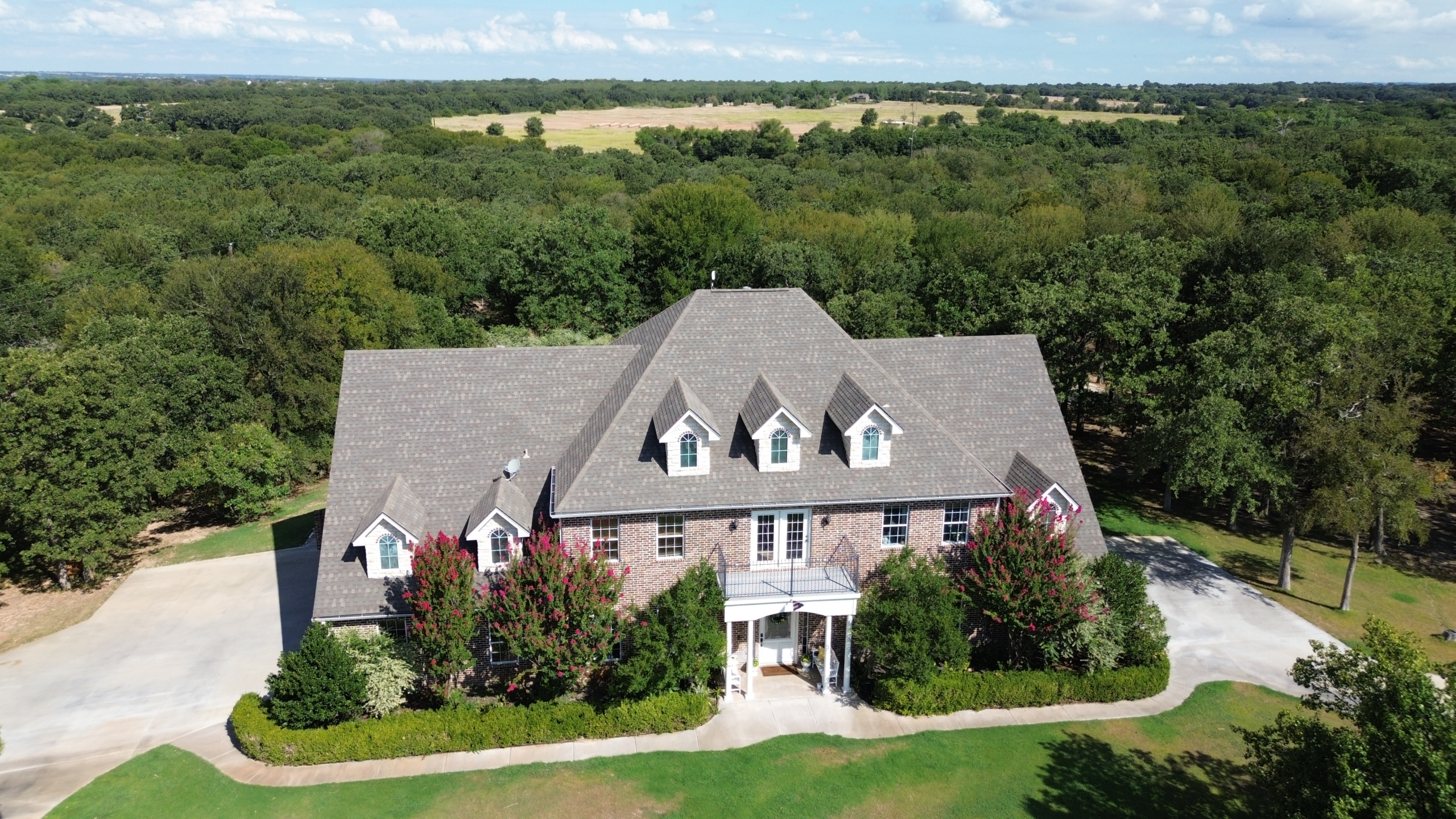
Small Roofing Problems That Quickly Become Major Damage
One of the biggest misconceptions about roof maintenance is that small problems remain small. In reality, roofing systems function as interconnected structures where damage in one location often affects surrounding components over time.
A cracked shingle may initially allow only a tiny amount of moisture beneath the roof covering. As repeated rainfall occurs, water gradually weakens underlayment, softens wooden decking, and creates favorable conditions for mold growth. Months later, the repair may involve replacing structural materials rather than simply installing a new shingle.
Loose flashing around chimneys, skylights, or roof vents presents another common example. Small gaps allow water to enter during heavy rain or wind driven storms. Because the moisture travels beneath roofing materials before becoming visible indoors, significant hidden damage can develop long before homeowners notice obvious warning signs.
Clogged gutters may also appear unrelated to roof damage, but overflowing water frequently backs up beneath shingles and along roof edges. Continuous moisture exposure weakens roofing materials while increasing the likelihood of wood rot and fascia deterioration.
Even a few damaged roofing nails can create entry points for water over time. Seasonal expansion and contraction caused by changing temperatures gradually enlarge these openings, allowing additional moisture to penetrate the roofing system.
Small repairs performed early often require minimal materials and labor. Waiting until damage spreads usually transforms a straightforward maintenance task into a far more expensive restoration project.
How Water Intrusion Spreads Throughout a Property
Water is one of the most destructive forces affecting residential and commercial buildings. Once it enters through a damaged roof, it rarely remains confined to the original entry point. Instead, moisture follows gravity, insulation, framing, wiring, and structural components as it spreads throughout the property.
A leak that begins near the roof ridge may eventually appear as a ceiling stain several feet away from its actual source. This makes locating roof leaks more difficult while allowing hidden moisture to remain trapped inside walls and attic spaces for extended periods.
As water travels through the building, insulation absorbs moisture and loses much of its thermal effectiveness. Damp insulation no longer provides the same level of energy efficiency, forcing heating and cooling systems to work harder throughout the year. This increases utility costs while reducing indoor comfort.
Wooden framing also absorbs moisture over time. Repeated wetting and drying cycles weaken structural components, encouraging rot and reducing the overall strength of the building. If left untreated, repairs may eventually require replacing rafters, trusses, or roof decking instead of simply repairing roofing materials.
Electrical systems are equally vulnerable. Water reaching wiring, lighting fixtures, or electrical panels creates potential safety hazards that extend well beyond roofing concerns. Protecting the roof therefore also protects critical building systems located inside the home.
Structural Damage Caused by Ignoring Roof Issues
The roof is supported by a network of structural components designed to carry the weight of roofing materials while resisting wind, rain, and environmental loads. When moisture repeatedly enters this structure, its strength gradually declines.
Wooden roof decking is particularly vulnerable because prolonged moisture exposure weakens fibers that normally provide structural support. Soft decking may eventually become unsafe to walk on and may no longer securely hold roofing fasteners. This increases the likelihood of additional roofing failures during storms.
Roof trusses and rafters can also suffer long term deterioration when leaks continue unchecked. Although these structural elements are designed for decades of service, persistent moisture significantly shortens their lifespan. Repairs become increasingly complicated as damage extends deeper into the building’s framework.
Ceilings and interior walls often provide the first visible evidence of structural moisture problems. Sagging drywall, peeling paint, bubbling finishes, and cracked plaster indicate that water has already traveled beyond the roof itself. At this stage, repairs typically involve multiple building systems rather than roofing alone.
Ignoring structural warning signs also affects occupant safety. Severely weakened roof sections may eventually struggle to support snow loads, heavy rainfall, or additional roofing materials during future repairs. Addressing problems early helps preserve the long term stability of the entire structure.
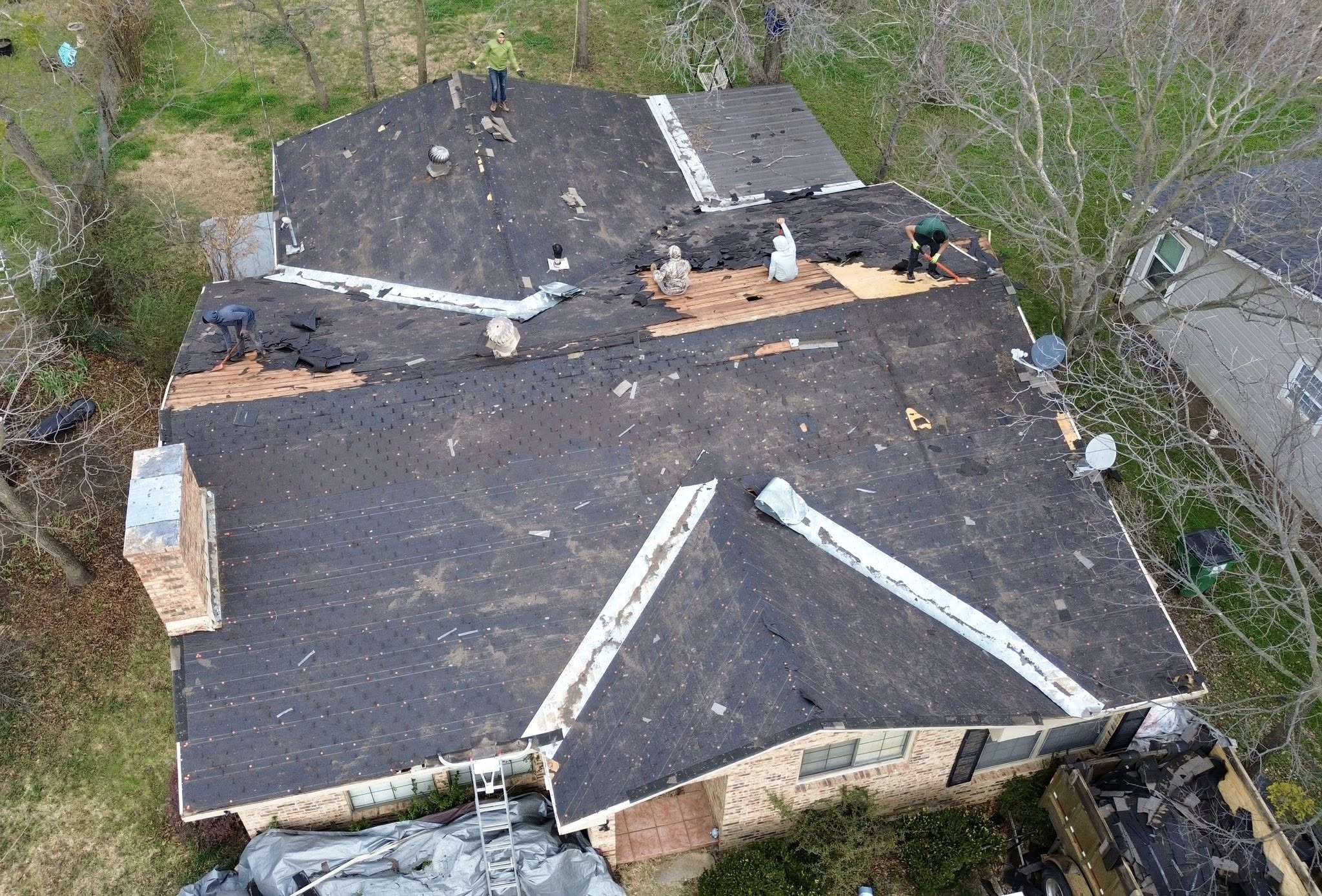
The Financial Cost of Delaying Roof Repairs
Many homeowners postpone repairs in an effort to save money, but delayed action often produces the opposite result. Roofing damage becomes progressively more expensive as additional materials and labor are required to restore affected areas.
A repair costing a few hundred dollars today may eventually require thousands of dollars once insulation, drywall, flooring, and structural framing become involved. Water rarely damages only one component of a building. Instead, every affected layer increases overall repair costs.
Insurance coverage may also become more complicated when preventable damage is ignored. Some policies distinguish between sudden accidental damage and deterioration caused by lack of maintenance. Delaying necessary repairs could reduce the likelihood of receiving full insurance compensation in certain situations.
Emergency repairs generally cost more than scheduled maintenance because contractors may need to respond outside normal working hours or during severe weather conditions. Urgent projects often require temporary protective measures before permanent repairs can begin, increasing labor and material expenses.
Property value may also decline when visible roofing problems remain unresolved. Prospective buyers often view roof damage as an indication that other maintenance issues may exist throughout the property. Investing in timely repairs helps preserve both market value and buyer confidence.
How Delayed Repairs Affect Energy Efficiency
A properly functioning roof contributes significantly to a building’s overall energy efficiency. Roofing materials, insulation, ventilation systems, and moisture barriers work together to regulate indoor temperatures while reducing unnecessary heating and cooling costs.
When roof damage allows moisture to enter insulation, thermal performance begins to decline. Wet insulation loses much of its ability to resist heat transfer, allowing warm air to escape during winter and excessive heat to enter during summer. As a result, heating and cooling equipment must operate longer to maintain comfortable indoor temperatures.
Roof leaks can also affect attic ventilation. Moisture accumulation may block airflow or encourage condensation that further reduces insulation performance. Poor ventilation creates additional strain on roofing materials while increasing indoor humidity levels.
Damaged roofing materials may also allow unwanted air leakage around roof penetrations, flashing, and structural openings. Even small gaps contribute to higher energy consumption over time because conditioned indoor air continuously escapes through these weak points.
Addressing roofing problems promptly helps maintain the efficiency of the entire building envelope. Lower energy consumption not only reduces monthly utility bills but also contributes to improved indoor comfort throughout every season.
Signs Your Roof Needs Immediate Attention
Many roofing problems provide warning signs long before catastrophic failure occurs. Recognizing these indicators allows homeowners to schedule repairs while damage remains relatively limited.
Some warning signs should never be ignored because they often indicate active roofing problems requiring prompt evaluation.
- Water stains on ceilings or interior walls
- Missing, cracked, or curling shingles
- Sagging sections of the roof
- Granules collecting inside gutters
- Damp attic insulation or musty odors
- Loose or damaged flashing around roof penetrations
- Visible sunlight entering through the attic roof structure
- Mold growth near ceilings or attic spaces
These symptoms do not always indicate extensive structural damage, but they do suggest that further inspection is necessary. Acting quickly after noticing these signs often prevents more serious and expensive problems from developing.
Regular visual inspections from the ground also help identify changes before interior damage occurs. Catching roofing issues early remains one of the most effective ways to extend the life of the entire roofing system.
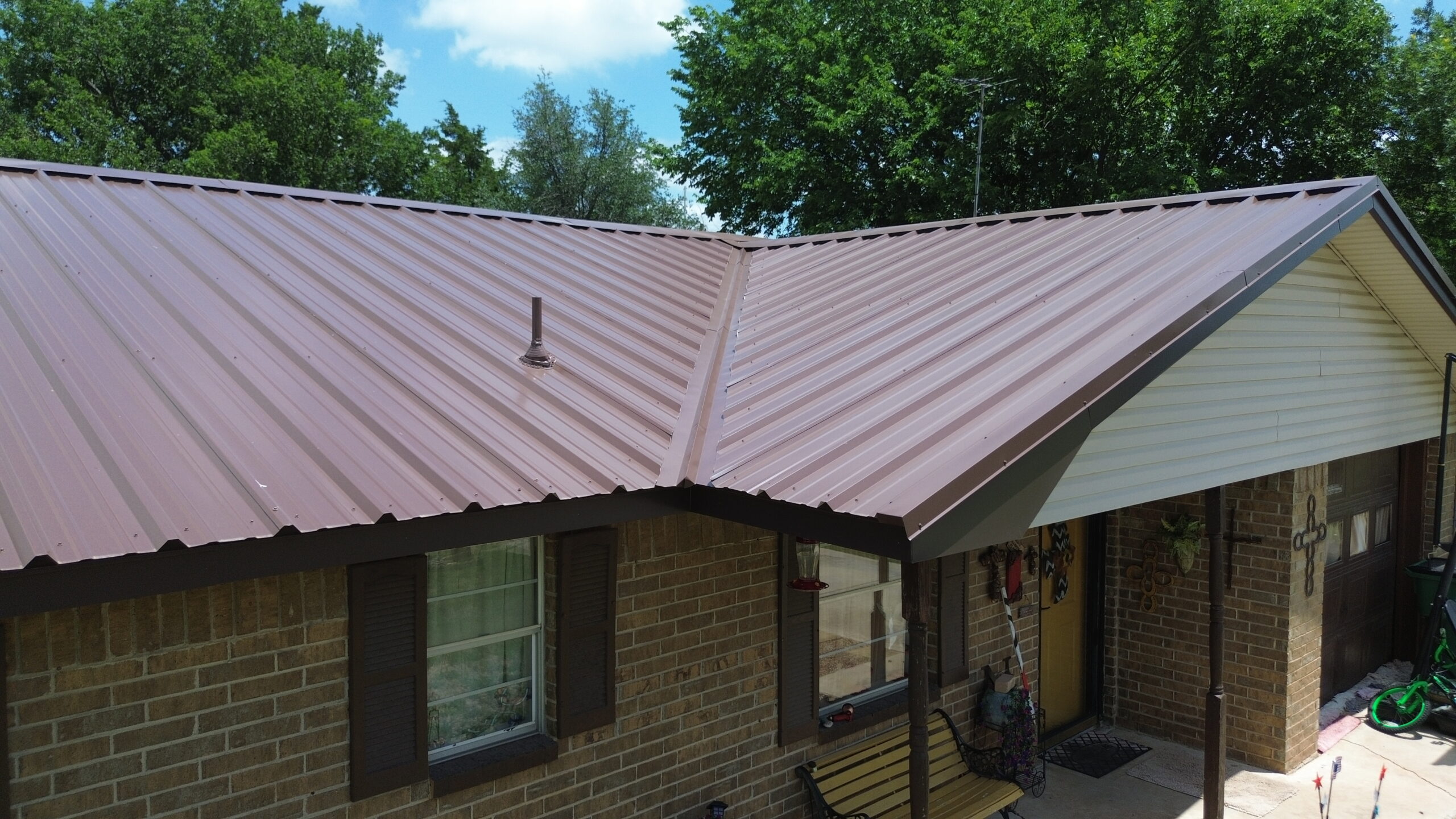
When a Minor Repair Can Prevent a Full Roof Replacement
One of the greatest advantages of timely roof maintenance is that small repairs often prevent the need for complete roof replacement. Every roofing system experiences normal wear over time, but routine maintenance slows this process by addressing isolated problems before they spread.
Homeowners should consider several questions when evaluating whether prompt repairs are appropriate.
- Is the damage limited to a small area of the roof?
- Are the surrounding roofing materials still in good condition?
- Has the leak been identified early before structural damage occurred?
- Is the roof still within its expected service life?
- Can damaged flashing, shingles, or sealants be replaced individually?
When the answer to most of these questions is yes, targeted repairs often restore the roof without requiring major reconstruction. Acting early preserves existing roofing materials while reducing long term maintenance costs.
Waiting too long changes this equation. As moisture spreads and structural components deteriorate, localized repairs become less effective because multiple roofing layers require replacement. What could have been a simple repair gradually evolves into a complete roofing project with significantly higher costs and longer completion times.
By understanding the true impact of delayed roof repairs, property owners can make proactive decisions that protect their homes, reduce expenses, and preserve the lifespan of their roofing investment. The next section explores the hidden consequences of postponing roof repairs, including mold growth, interior damage, pest infestations, safety concerns, and how repair costs increase as roofing problems continue to worsen.
How Moisture Leads to Mold and Mildew Growth
Moisture is one of the biggest threats to both a roofing system and the indoor environment of a building. When a roof leak is left unrepaired, even a small amount of water can create damp conditions that encourage mold and mildew growth. These fungi thrive in dark, humid spaces such as attics, ceilings, insulation, and wall cavities where moisture often remains trapped for long periods.
Unlike visible roof damage, mold can spread silently before homeowners realize there is a problem. By the time discoloration or musty odors become noticeable, mold may already have affected insulation, drywall, wooden framing, and other building materials. Removing widespread mold is often far more expensive than repairing the original roof leak.
Mold growth also affects indoor air quality. Tiny spores become airborne and circulate through heating and cooling systems, potentially causing discomfort for building occupants. Individuals with allergies, asthma, or respiratory conditions may experience greater sensitivity when mold contamination increases inside the property.
Repairing roof damage promptly limits the amount of moisture entering the building and removes the conditions that mold requires to grow. Preventing moisture intrusion is significantly easier and more affordable than remediating widespread mold contamination later.
Interior Damage Caused by Untreated Roof Leaks
Many homeowners focus primarily on the exterior roof while overlooking the damage occurring inside the building. Once water passes through roofing materials, it begins affecting ceilings, walls, flooring, insulation, furniture, and personal belongings. The longer a leak continues, the greater the likelihood that multiple areas will require repair.
Ceiling stains are often one of the earliest visible signs of a roof leak. Although these stains may appear cosmetic, they usually indicate that water has already traveled through insulation and structural framing. Simply repainting the ceiling without repairing the roof allows the underlying problem to continue.
Drywall absorbs moisture quickly, causing swelling, bubbling paint, peeling wallpaper, and weakened structural strength. Repeated exposure may eventually require complete replacement rather than simple cosmetic repairs. Wooden flooring can also warp, expand, or develop permanent staining after prolonged contact with moisture.
Water reaching carpets and furniture creates additional concerns because soft materials retain moisture for extended periods. This not only increases repair costs but also encourages mold growth and unpleasant odors throughout the home. Prompt roof repairs help protect valuable belongings before damage spreads beyond the roofing system.
Interior electrical fixtures deserve special attention whenever roof leaks occur. Water entering light fixtures, ceiling fans, or electrical wiring creates hazards that should never be ignored. Addressing the roof leak quickly reduces the likelihood of electrical damage and associated safety risks.
Pest Infestations Linked to Damaged Roofs
Roof damage does more than allow water into a building. It can also create convenient entry points for insects, rodents, birds, and other unwanted pests. Even small openings around damaged shingles, loose flashing, or deteriorated roof vents may provide enough space for pests to enter attic areas.
Once inside, pests often build nests within insulation or behind walls where they remain hidden from view. Rodents may chew electrical wiring, damage insulation, and contaminate stored belongings with droppings. Birds and squirrels can also displace roofing materials while expanding entry points that allow even more moisture into the building.
Insects such as termites, carpenter ants, and certain beetles are especially attracted to damp wood created by untreated roof leaks. Moisture softens wooden structures, making them easier for insects to invade and damage. Over time, pest activity combined with water damage can significantly weaken structural components.
Eliminating pests after an infestation has become established is usually more expensive than preventing their entry in the first place. Timely roof repairs seal vulnerable openings and help maintain the building’s protective barrier against both weather and wildlife.
Weather Conditions That Make Roof Damage Worse
Roof damage rarely remains unchanged because every season exposes roofing materials to additional environmental stress. Delaying repairs means allowing weather conditions to repeatedly affect already weakened sections of the roof, accelerating deterioration throughout the year.
Heavy rainfall is perhaps the most obvious concern. Water continually enters through damaged areas, saturating roofing materials and expanding existing leaks. Each storm increases the amount of moisture trapped within the roof structure, making future repairs more extensive.
Strong winds also contribute to worsening damage. Loose shingles that might have remained functional for several more months can be completely removed during high winds, exposing larger portions of the roof to direct weather exposure. Wind driven rain can also force moisture beneath roofing materials that previously appeared secure.
Snow and ice create additional challenges in colder climates. Water entering small roof openings may freeze overnight, expand, and enlarge cracks within roofing materials. Repeated freeze and thaw cycles gradually increase the size of damaged areas until extensive repairs become necessary.
Intense sunlight should not be overlooked either. Continuous ultraviolet exposure weakens roofing materials that have already lost their protective surface. Heat also causes repeated expansion and contraction, increasing stress on damaged shingles, flashing, and sealants.
Every weather event contributes to gradual deterioration, making early repairs one of the most effective ways to preserve the roof’s long term performance.
Impact on Property Value and Home Inspections
A well maintained roof is one of the strongest indicators that a property has been properly cared for over the years. Conversely, visible roof damage often raises concerns among potential buyers because it suggests additional maintenance issues may exist throughout the building.
During property inspections, roofing systems receive significant attention because they protect every major structural component beneath them. Inspectors typically evaluate missing shingles, flashing condition, drainage systems, signs of leaks, attic ventilation, and structural integrity. Even relatively small defects may appear in inspection reports.
When roof problems are identified during a home sale, buyers often request repairs before closing or negotiate lower purchase prices to offset anticipated repair costs. In competitive real estate markets, unresolved roofing issues may discourage buyers from making offers altogether.
Property appraisers also consider roof condition when evaluating market value. A roof requiring immediate repairs generally reduces the property’s overall appeal because future owners must budget for additional maintenance shortly after purchase.
Maintaining the roof through timely repairs helps preserve curb appeal, strengthens buyer confidence, and supports long term property value. Investing in preventive maintenance often produces financial benefits far beyond the repair itself.
Safety Risks Created by Damaged Roofs
Beyond financial concerns, delayed roof repairs can create serious safety hazards for everyone living or working inside the building. What begins as a minor roofing issue may eventually affect structural stability, indoor air quality, and electrical safety if left untreated.
Water damaged ceilings may weaken over time, increasing the risk of sagging drywall or falling ceiling materials. In severe cases, prolonged moisture exposure can compromise structural framing that supports sections of the roof. These conditions create hazards that extend well beyond cosmetic damage.
Slippery surfaces caused by ongoing leaks also increase the likelihood of slips and falls inside the building. Water reaching stairways, hallways, or flooring creates unexpected dangers for occupants, particularly young children and older adults.
Electrical hazards become increasingly significant as leaks spread through ceilings and wall cavities. Moisture contacting electrical wiring, outlets, or fixtures may increase the risk of equipment failure or electrical shock. Professional evaluation should always be considered if water has reached electrical components.
Roof damage can also affect emergency preparedness. During severe storms, a weakened roofing system is less capable of protecting occupants from heavy rain, strong winds, or falling debris. Addressing repairs early strengthens the building before extreme weather places additional stress on the structure.
Roof Repair vs Roof Replacement Cost Comparison
One of the strongest arguments for timely maintenance is the significant difference between repair costs and complete roof replacement. Although every roofing project is unique, addressing isolated problems early almost always costs less than replacing an entire roofing system.
The following comparison illustrates how delaying repairs can affect long term expenses.
| Situation | Immediate Roof Repair | Delayed Roof Repair |
|---|---|---|
| Damage Size | Limited to one small area | Often spreads across multiple sections |
| Repair Cost | Lower due to fewer materials and labor | Higher because additional components require replacement |
| Structural Damage | Usually minimal | May involve decking, rafters, insulation, and ceilings |
| Interior Repairs | Often unnecessary | Frequently required due to water intrusion |
| Project Duration | Usually completed quickly | Often takes considerably longer |
| Overall Financial Impact | Lower total investment | Significantly greater long term expense |
While every project differs depending on roof type, material, and damage severity, the overall trend remains consistent. Early intervention minimizes both direct repair costs and the indirect expenses associated with interior restoration.
Property owners should view routine roof maintenance as an investment rather than an avoidable expense. Spending a smaller amount today often prevents much larger financial commitments in the future.
Practical Tips for Preventing Roofing Problems Before They Escalate
Although weather and aging cannot be completely prevented, homeowners can take practical steps to reduce the likelihood of serious roof damage. Consistent maintenance helps identify small issues before they become costly emergencies.
Consider adopting the following preventive habits:
- Inspect the roof visually after major storms.
- Clean gutters and downspouts regularly to maintain proper drainage.
- Remove branches and debris that accumulate on the roof.
- Check attic spaces for signs of moisture or daylight entering through the roof.
- Schedule professional roof inspections every few years.
- Repair damaged shingles, flashing, and sealants as soon as problems are discovered.
- Keep nearby trees properly trimmed to reduce storm related damage.
These simple maintenance practices require relatively little time but significantly reduce the risk of extensive repairs later. Consistency is more valuable than waiting for visible damage to appear.
Preventive maintenance also allows homeowners to budget for planned repairs instead of facing unexpected emergency expenses. By identifying problems early, repairs can often be scheduled during favorable weather and completed more efficiently.
Understanding these hidden consequences highlights why postponing roof repairs rarely saves money or reduces inconvenience. In the final section, the focus will shift toward the long term advantages of prompt repairs, creating an effective maintenance plan, knowing when to hire a professional, understanding insurance considerations, addressing common roofing myths, and answering frequently asked questions before concluding the guide.
Creating a Proactive Roof Maintenance Plan
One of the best ways to avoid costly roof repairs is to adopt a proactive maintenance strategy instead of waiting for problems to become obvious. Regular inspections and timely repairs help extend the lifespan of roofing materials while reducing the likelihood of emergency situations. A well maintained roof performs more efficiently and provides better protection throughout every season.
A maintenance plan does not have to be complicated. Setting reminders to inspect the roof in spring and autumn provides two opportunities each year to identify potential issues before severe weather arrives. Additional inspections should also be scheduled after major storms, hail, or strong winds that may have damaged roofing materials.
Routine maintenance should include checking gutters, downspouts, flashing, roof vents, skylights, and visible roofing materials. Looking for missing shingles, loose flashing, clogged drainage systems, or signs of water intrusion allows repairs to be completed while problems remain manageable. Small investments in preventive maintenance often eliminate the need for much larger restoration projects later.
Keeping maintenance records also offers long term benefits. Recording inspection dates, completed repairs, contractor information, and warranty details creates a valuable history that helps track the condition of the roof over time. These records can also be useful when selling the property or filing insurance claims.
Homeowners who consistently maintain their roofs often experience fewer unexpected expenses. Instead of reacting to emergencies, they can plan repairs according to budget, weather conditions, and contractor availability.
When to Call a Professional Roofing Contractor
While homeowners can perform basic visual inspections and minor maintenance tasks, many roofing problems require professional expertise. Attempting repairs beyond one’s experience can increase both safety risks and repair costs if mistakes occur. Recognizing when professional assistance is necessary protects both the property and the people working on it.
Large roof leaks, structural damage, widespread missing shingles, damaged flashing around chimneys, or signs of sagging should always be evaluated by an experienced roofing contractor. These issues often involve hidden damage that cannot be fully assessed from the surface alone. Professional inspections help identify underlying problems before repairs begin.
Steep roofs also present significant safety concerns. Walking on high or sharply sloped roofs requires specialized equipment and training that most homeowners do not possess. Hiring professionals reduces the likelihood of falls while ensuring repairs meet industry standards.
Storm damage is another situation where expert evaluation becomes valuable. High winds, hail, and falling branches can damage roofing materials in ways that are not immediately visible. Professional roofers understand how to identify hidden weaknesses that may lead to future leaks if left untreated.
Choosing a qualified contractor is equally important. Homeowners should verify licensing where applicable, request proof of insurance, review customer feedback, and obtain written estimates before approving any work. Taking time to select a reputable contractor increases the likelihood of receiving durable, high quality repairs.
What to Expect During a Roof Inspection
Many property owners are uncertain about what happens during a professional roof inspection. Understanding the inspection process helps homeowners prepare while appreciating the value of regular evaluations.
A comprehensive inspection usually begins with an exterior assessment. Roofing materials, flashing, gutters, vents, chimneys, skylights, and visible structural components are carefully examined for signs of wear, storm damage, missing materials, or improper installation. The inspector also evaluates drainage patterns to ensure water is being directed away from the building effectively.
The attic is often inspected as well because many roofing problems become visible from inside the structure before appearing outdoors. Inspectors look for water stains, damp insulation, mold growth, inadequate ventilation, and daylight entering through roof openings. These observations provide important clues about hidden roof damage.
After completing the inspection, the contractor typically prepares a detailed report outlining current roof conditions, recommended repairs, and estimated timelines. Many reports include photographs that help homeowners understand exactly where problems exist and why repairs are necessary.
Regular inspections provide peace of mind even when no major issues are discovered. Confirming that the roof remains in good condition allows homeowners to plan future maintenance with confidence rather than worrying about hidden problems developing unnoticed.
Insurance Considerations for Roof Damage
Roof damage often raises questions about insurance coverage. Although every insurance policy is different, understanding the general relationship between roof maintenance and insurance claims helps homeowners make better decisions after discovering damage.
Insurance policies commonly cover sudden and accidental events such as windstorms, hail, or fallen trees when these incidents damage an otherwise well maintained roof. However, damage resulting from neglect or long term deterioration may not receive the same level of coverage. This makes timely maintenance especially important.
When roof damage occurs, homeowners should document the situation as soon as it is safe to do so. Clear photographs, inspection reports, repair estimates, and records of previous maintenance help support insurance claims if coverage applies. Accurate documentation also assists contractors in determining the full extent of damage.
Prompt reporting is another important factor. Waiting too long to notify the insurance provider may complicate the claims process because additional damage could occur after the original event. Addressing the issue quickly demonstrates responsible property maintenance.
Homeowners should also review their insurance policy periodically to understand deductibles, exclusions, and coverage limits related to roofing systems. Knowing what is covered before damage occurs makes future decisions less stressful and more informed.
Common Myths About Delaying Roof Repairs
Many misconceptions lead homeowners to postpone roof maintenance unnecessarily. Separating common myths from reality helps property owners make better decisions that protect both their homes and their finances.
Myth: A small leak is not a serious problem.
Even a tiny leak allows moisture to enter the building repeatedly. Over time, water damages insulation, wood, ceilings, and interior finishes, often creating repair costs far greater than fixing the original leak.
Myth: If there is no visible water inside, the roof is fine.
Roof damage frequently remains hidden for months before interior signs appear. Water can travel along structural components before becoming visible, meaning significant deterioration may already be occurring behind walls or above ceilings.
Myth: Roof repairs can always wait until next season.
Weather continues affecting damaged roofing materials every day. Delaying repairs through multiple storms or changing seasons often allows small problems to grow into extensive structural damage.
Myth: New roofs never need repairs.
Although newer roofs are generally more durable, they are not immune to storm damage, installation defects, or accidental impacts. Any roof, regardless of age, benefits from regular inspections and timely maintenance.
Myth: Repairs are always too expensive.
Minor repairs are usually much more affordable than replacing an entire roof or restoring extensive interior water damage. Early intervention almost always reduces long term expenses.
Understanding these misconceptions helps homeowners prioritize maintenance before small issues become major financial burdens.
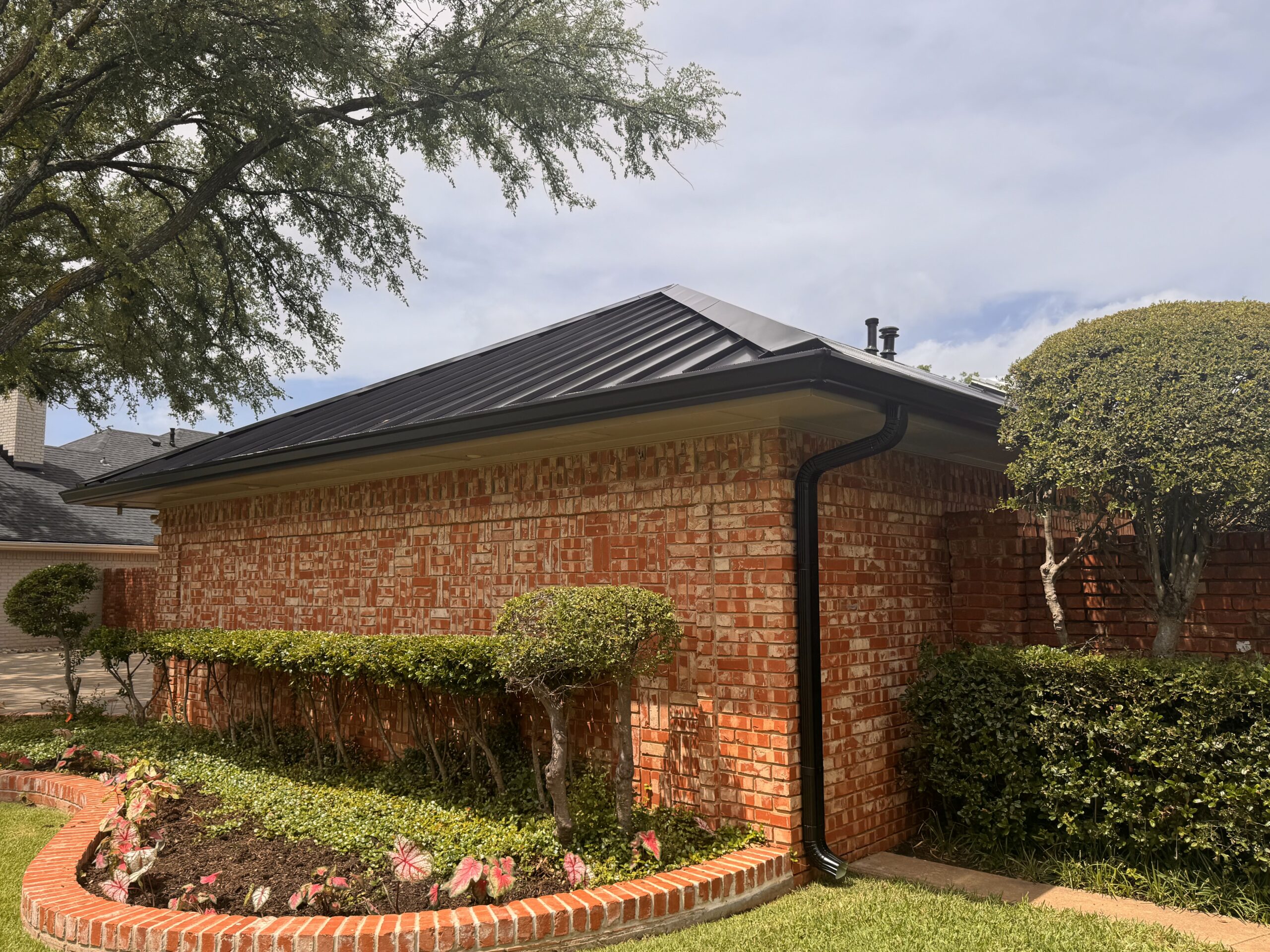
Frequently Asked Questions About Roof Repairs
Property owners often have similar concerns when deciding whether to schedule roof repairs. Addressing these common questions helps clarify why prompt action is so important.
How often should a roof be inspected?
Most experts recommend inspecting the roof at least twice each year, typically during spring and autumn. Additional inspections should also follow severe storms, hail, or unusually strong winds.
Can I delay repairs if the leak seems to have stopped?
A temporary absence of visible leaking does not necessarily mean the problem has been resolved. Moisture may still be entering the roof under different weather conditions or accumulating in hidden areas. Professional evaluation remains the safest approach.
How long can minor roof damage safely remain unrepaired?
There is no guaranteed safe waiting period because weather conditions and roof construction vary widely. Even minor damage should be evaluated and repaired as soon as practical to prevent further deterioration.
What is the biggest risk of delaying roof repairs?
The greatest risk is allowing water to penetrate deeper into the building. Moisture affects roofing materials, insulation, structural framing, ceilings, walls, flooring, and electrical systems, increasing both repair complexity and cost.
Can routine maintenance really extend roof lifespan?
Yes. Regular inspections, cleaning, and prompt repairs reduce unnecessary wear while allowing roofing materials to perform as intended for their expected service life. Preventive maintenance is one of the most effective ways to maximize a roof’s longevity.
Conclusion
Delaying roof repairs may seem like a practical way to save time or money, but the long term consequences often prove far more expensive than addressing problems early. A small leak, loose flashing, or missing shingle rarely remains an isolated issue. Instead, minor defects gradually allow moisture, weather, and structural deterioration to affect larger areas of the building.
Prompt roof repairs provide benefits that extend well beyond fixing visible damage. They protect structural components, preserve insulation, improve energy efficiency, reduce the risk of mold growth, and help maintain indoor comfort throughout the year. Acting quickly also minimizes disruption by allowing repairs to be completed before emergency situations develop.
A proactive approach to roof maintenance gives homeowners greater control over repair costs and scheduling. Regular inspections, routine cleaning, and timely repairs reduce unexpected expenses while extending the overall lifespan of the roofing system. Investing in preventive maintenance is almost always more affordable than responding to widespread damage after it has occurred.
Professional inspections play an important role in identifying hidden issues that may not be obvious during casual visual checks. Working with experienced roofing contractors ensures repairs are completed safely and according to accepted industry practices. Combined with proper documentation and insurance awareness, professional guidance helps homeowners make informed decisions about protecting their property.
Ultimately, a roof is one of the most valuable investments in any building. Treating small problems as urgent maintenance priorities rather than optional future projects helps preserve that investment for many years. By responding promptly to warning signs and following a consistent maintenance plan, property owners can avoid unnecessary expenses, improve safety, and ensure their roofs continue providing reliable protection through every season.