
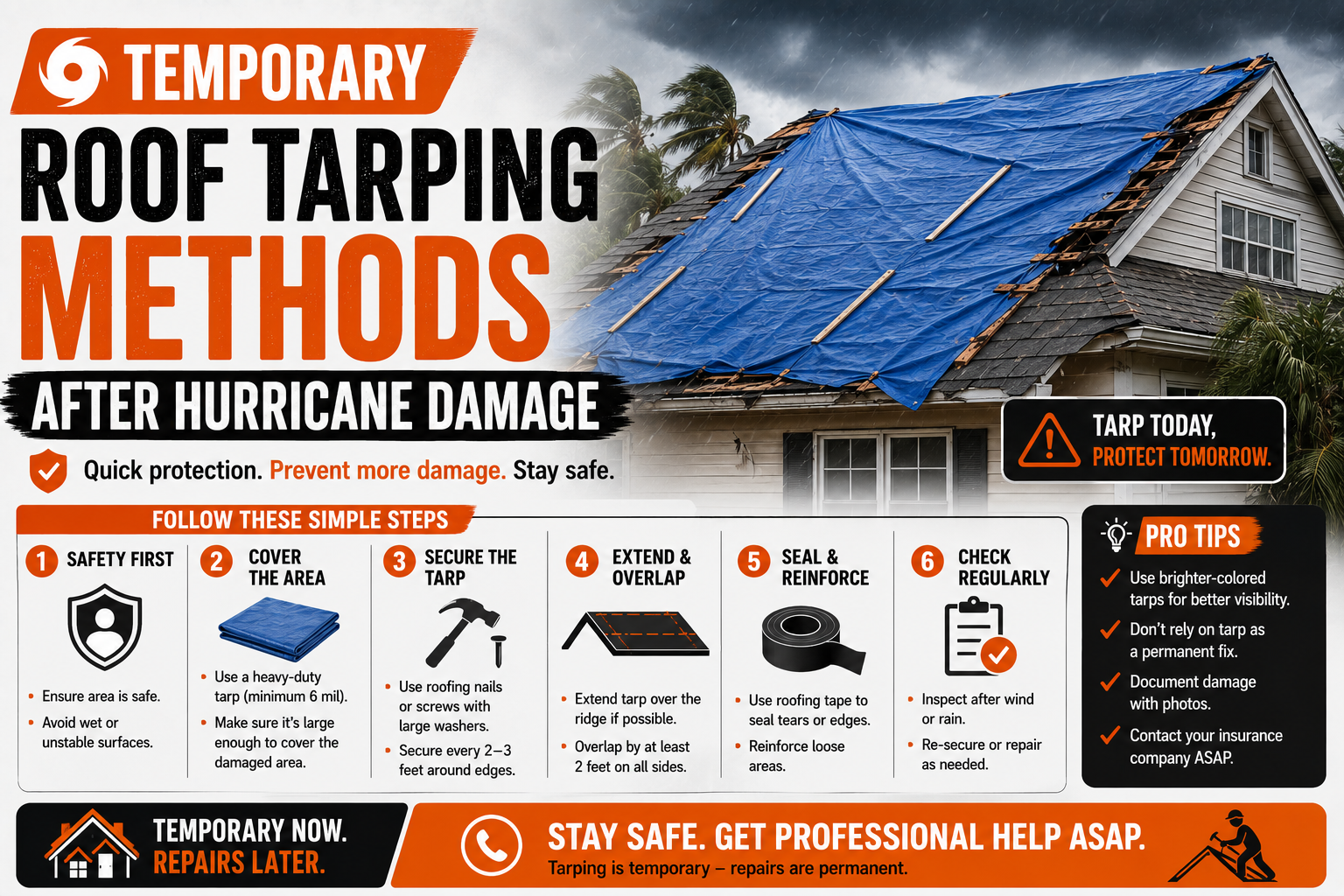
Temporary Roof Tarping Methods After Hurricane Damage
Introduction
Hurricanes are among the most destructive weather events a home can experience. Powerful winds, heavy rainfall, flying debris, and falling trees can leave roofing systems severely damaged within a matter of hours. Once the roof is compromised, the interior of the home becomes vulnerable to water intrusion, structural deterioration, mold growth, and damage to valuable belongings. Taking immediate action after the storm is essential to reduce further losses while permanent repairs are being arranged.
One of the most effective emergency measures after hurricane roof damage is temporary roof tarping. A properly installed tarp acts as a protective barrier that prevents rainwater from entering exposed sections of the roof. Although it is not a permanent repair, it provides valuable time for homeowners to arrange professional inspections, work with insurance companies, and schedule complete roof restoration.
Many homeowners mistakenly believe that placing any plastic sheet over a damaged area is enough to protect the roof. In reality, emergency roof tarping requires proper materials, careful installation, and secure fastening methods to withstand changing weather conditions. An improperly installed tarp may fail during the next storm, allowing even more water to enter the home.
Temporary roof tarping also plays an important role in the insurance claims process. Many homeowners insurance policies require property owners to take reasonable steps to prevent additional damage after a covered event. Installing a tarp promptly demonstrates responsible mitigation efforts and helps reduce secondary damage that could complicate an insurance claim.
The effectiveness of a roof tarp depends on more than simply covering a visible hole. Successful temporary protection requires understanding the type of roof damage, selecting appropriate materials, preparing the roof surface, and using installation techniques that minimize the risk of further deterioration. Each step contributes to protecting the home’s structure until permanent repairs can be completed safely.
This guide explains temporary roof tarping methods after hurricane damage, explores when emergency tarping becomes necessary, discusses safety considerations, and outlines the best practices that help homeowners protect their property during the critical period between the storm and permanent roof restoration.
Why Emergency Roof Tarping Is Critical After Hurricane Damage
A damaged roof should never be left exposed after a hurricane. Even if skies clear immediately after the storm, weather conditions can change quickly, and additional rainfall may enter through damaged roofing materials. Temporary tarping reduces this risk by creating an immediate barrier against moisture while preventing existing damage from spreading.
Water intrusion is often responsible for the most expensive consequences of hurricane roof damage. Once rain enters through broken shingles, missing panels, or punctured decking, it can travel through insulation, framing, ceilings, and interior walls. What initially appears to be a localized roof problem may soon affect multiple rooms inside the home.
Emergency tarping also helps preserve the structural integrity of the roofing system. Wet wooden decking gradually loses strength, especially if moisture remains trapped for extended periods. Reducing water exposure helps maintain the stability of the roof while contractors prepare for permanent repairs.
Protecting insulation is another important benefit. Once insulation becomes saturated, its thermal performance declines significantly. Damp insulation also creates favorable conditions for mold growth, unpleasant odors, and poor indoor air quality, increasing both repair costs and health concerns.
Interior finishes benefit from temporary roof protection as well. Ceilings, drywall, flooring, furniture, electrical systems, and personal belongings all become vulnerable once water enters through the roof. A properly installed tarp helps reduce these secondary losses by limiting additional moisture intrusion.
Prompt tarping also allows homeowners to organize repairs without unnecessary pressure. Rather than rushing into permanent restoration during the immediate aftermath of a hurricane, temporary protection provides time to obtain professional inspections, compare repair options, and coordinate with insurance representatives.
Understanding the Purpose of Temporary Roof Tarping
Temporary roof tarping serves one primary objective: protecting the home from further weather exposure until permanent repairs can be completed. It should never be viewed as a replacement for professional roofing work, but rather as an emergency measure that stabilizes the situation.
The tarp acts as a waterproof covering that redirects rainwater away from damaged areas. By covering exposed sections of the roof, it prevents additional moisture from entering openings created by wind, fallen branches, or flying debris. This protection helps preserve both the roofing system and the home’s interior.
Emergency tarping also limits the spread of existing damage. Water rarely remains confined to the original opening in the roof. It often follows structural members, insulation, and framing before appearing inside living spaces. Reducing water entry slows this progression and minimizes future repair requirements.
Another important purpose of tarping is protecting exposed roofing components from sunlight and changing weather conditions. Materials such as underlayment and roof decking deteriorate more rapidly when left uncovered after storm damage. Shielding these components helps preserve their condition until replacement begins.
Temporary tarps also improve job site safety for contractors performing inspections. Covering unstable or damaged sections reduces immediate weather related hazards while allowing professionals to evaluate the roof more effectively once conditions become safe.
Although temporary tarping offers valuable protection, it remains only one step within the broader roof restoration process. Homeowners should continue arranging inspections, documenting damage, and scheduling permanent repairs as soon as practical.
Common Types of Hurricane Roof Damage That Require Tarping
Not every roofing issue requires emergency tarping, but many forms of hurricane damage leave the home exposed to immediate water intrusion. Recognizing these situations allows homeowners to respond quickly before additional deterioration occurs.
Missing shingles are among the most common forms of hurricane damage. High winds can lift and remove roofing materials, exposing the underlayment beneath. If large sections of shingles are missing, installing a tarp helps prevent rain from reaching the underlying roof structure.
Metal roofing systems may experience lifted panels, separated seams, or detached fasteners after severe winds. These openings allow wind driven rain to enter beneath the roofing surface, making temporary protection important until repairs can be completed.
Tile roofs often suffer broken or displaced tiles when struck by airborne debris. Even if only a few tiles appear damaged, the exposed waterproofing layers beneath become vulnerable to moisture infiltration during subsequent storms.
Fallen tree branches frequently puncture roofing materials or crack roof decking. These impact points often create direct openings into the attic, making immediate tarping essential for preventing interior water damage.
Hurricanes may also damage roof flashing around chimneys, skylights, valleys, and roof vents. Since flashing seals naturally vulnerable roof transitions, even minor displacement can create pathways for significant water intrusion.
Large sections of roof decking occasionally become exposed when severe winds remove substantial portions of the roofing system. These situations require prompt temporary protection because structural wood begins absorbing moisture almost immediately after rainfall.
Choosing the Right Roofing Tarp and Materials
Selecting appropriate materials greatly influences how effectively a temporary roof tarp performs during changing weather conditions. Using low quality materials or unsuitable fasteners increases the likelihood of failure before permanent repairs can begin.
Heavy duty polyethylene tarps are commonly recommended because they provide excellent water resistance while remaining relatively lightweight. High quality tarps also resist tearing better than thin plastic sheets commonly used for household applications.
Tarp size is equally important. The covering should extend well beyond the damaged section of the roof to ensure rainwater flows over the tarp rather than beneath it. A tarp that barely covers the visible damage may leave surrounding roofing materials exposed.
Reinforced edges and durable grommets improve overall performance. These features distribute tension more evenly across the tarp, reducing the likelihood of tearing when exposed to strong winds. Well reinforced tarps generally remain secure longer than inexpensive alternatives.
Wooden furring strips are commonly used to anchor tarps without placing excessive stress on the material itself. Rather than relying solely on nails driven through the tarp, furring strips hold the edges securely while helping distribute wind loads across a larger surface area.
Fasteners should also be appropriate for the roof structure. Corrosion resistant screws often provide better holding strength than standard nails, particularly when temporary protection must remain in place for several weeks.
Additional materials such as waterproof tape, ropes, sandbags, and temporary sealants may assist with securing smaller sections depending on roof design and the nature of the damage. The goal is always to create a stable covering capable of resisting wind while directing water safely away from exposed areas.
Safety Precautions Before Installing a Roof Tarp
Roof safety should always take priority over protecting property. Hurricane damaged roofs may contain hidden structural weaknesses that make walking on them extremely dangerous. Homeowners should carefully evaluate conditions before attempting any temporary roof work.
The first consideration is weather. Roof tarping should never be attempted during active storms, high winds, heavy rain, or lightning. Wet roofing materials become extremely slippery, increasing the risk of falls even on relatively low pitched roofs.
Structural stability must also be assessed carefully. Roof sections weakened by fallen trees, collapsed decking, or significant framing damage may no longer support normal body weight. Entering these areas without professional evaluation can result in serious injury.
Proper safety equipment reduces many common hazards. Stable extension ladders, non slip footwear, work gloves, eye protection, and fall protection equipment all contribute to safer working conditions when roof access becomes necessary.
Homeowners should never work alone on a damaged roof. Having another person nearby provides assistance during ladder use, helps monitor changing conditions, and allows for a faster emergency response if an accident occurs.
Electrical hazards deserve particular attention after hurricanes. Fallen power lines, damaged electrical service equipment, or water contacting electrical wiring create risks that extend beyond the roof itself. Any suspected electrical hazards should be addressed before roof work begins.
When damage appears extensive or conditions remain unsafe, professional emergency roofing services represent the safest option. Experienced crews have specialized equipment and training that allow them to install temporary protection while minimizing risks to both themselves and the property.
Preparing the Damaged Roof for Temporary Protection
Proper preparation helps ensure that the temporary tarp performs effectively once installed. Rushing directly into installation without preparing the roof often reduces the tarp’s ability to resist wind and water.
The first step involves removing loose debris whenever it can be done safely. Broken branches, damaged shingles, loose flashing, and other storm debris may interfere with tarp placement or create sharp edges capable of tearing the material during strong winds.
The damaged area should then be inspected from a safe position to determine how far the tarp needs to extend. Since water frequently travels beyond the visible point of damage, the protective covering should include a generous margin around the affected section rather than covering only the obvious opening.
If standing water has accumulated on flat or low slope roofs, it should be removed carefully before installation whenever practical. Trapped water increases the weight placed on damaged structural components and may prevent the tarp from lying flat against the roof surface.
Sharp roofing materials, exposed nails, broken tiles, or splintered wood should also be identified before placing the tarp. These objects can puncture the covering over time, reducing its ability to protect the roof during additional rainfall. Addressing them before installation helps extend the effectiveness of the temporary protection.
Finally, all necessary tools and materials should be organized before climbing onto the roof. Having tarps, fasteners, furring strips, ladders, safety equipment, and basic tools readily available minimizes unnecessary movement across damaged roofing surfaces and allows the installation process to proceed more efficiently.
Temporary Roof Tarping Methods for Different Types of Roof Damage
Every hurricane leaves behind a different pattern of roof damage, so a single tarping method does not work for every situation. The size of the damaged area, the roof slope, the roofing material, and the overall structural condition all influence the most effective temporary protection strategy. Selecting the right approach helps keep the tarp secure until permanent repairs can begin.
Small punctures caused by flying debris usually require a tarp that extends several feet beyond the damaged area in every direction. Covering a larger section ensures rainwater flows over the tarp instead of finding its way beneath the edges. This method is commonly used when the surrounding roofing materials remain structurally sound.
When a large section of shingles has been blown away, the tarp should cover the entire exposed area as well as the undamaged roofing surrounding it. Extending the tarp toward the roof ridge helps direct water over the protective covering instead of underneath it. Proper overlap is essential for preventing leaks during additional storms.
Roofs damaged by fallen tree branches often require extra preparation before tarping. Broken branches, loose roofing materials, and unstable debris should be removed carefully whenever it is safe to do so. Once the surface has been cleared, the tarp can be positioned over the damaged section and secured without placing unnecessary stress on weakened roofing components.
Metal roofing systems require a slightly different approach because raised seams and panel profiles create uneven surfaces. The tarp should lie as smoothly as possible across the roof while remaining firmly secured at multiple points. Proper tension reduces the amount of movement caused by wind and limits premature wear.
Flat roofs present their own challenges because water does not drain as quickly as it does on steep slopes. The tarp should be installed in a way that avoids trapping standing water, since pooled water increases stress on both the damaged roof and the temporary covering.
In situations where multiple areas of the roof have been damaged, separate tarps may provide better protection than attempting to cover the entire roof with one oversized sheet. Smaller sections are often easier to secure properly and less likely to catch excessive wind during changing weather conditions.
How to Secure a Roof Tarp Against Strong Winds
A high quality tarp provides little protection if it is not secured correctly. Hurricanes are often followed by additional storms, making wind resistance one of the most important aspects of emergency roof tarping. Proper installation techniques help keep the tarp in place until permanent repairs are completed.
The tarp should always extend beyond the damaged section of the roof so that rainwater flows naturally over the protected area. If the edges stop too close to the damage, water can be driven underneath the tarp by strong winds, reducing its effectiveness.
Furring strips remain one of the most reliable methods for securing roof tarps. The edges of the tarp are wrapped around the wooden strips before fastening them to stable roof sections. This technique distributes tension across a wider area, reducing the likelihood of the tarp tearing around individual fasteners.
Maintaining even tension across the tarp is equally important. A tarp that sags or contains loose sections can collect rainwater or flap repeatedly in the wind. Continuous movement gradually weakens the material and increases the chance of failure during severe weather.
Fasteners should be installed into solid structural areas whenever possible. Attaching the tarp to unstable roofing materials or damaged decking may reduce holding strength and allow the covering to loosen unexpectedly.
Regular inspections are also necessary after installation. High winds, heavy rain, and temperature changes can gradually loosen fasteners or shift portions of the tarp. Identifying these issues early allows adjustments to be made before the temporary protection becomes ineffective.
Mistakes to Avoid During Emergency Roof Tarp Installation
Emergency situations often create pressure to act quickly, but rushing through the installation process can reduce the effectiveness of temporary roof protection. Understanding common mistakes helps homeowners avoid problems that may lead to additional property damage.
One of the most frequent mistakes is choosing a tarp that is too small. A covering that barely extends over the damaged area leaves surrounding roofing materials exposed and increases the likelihood of water entering beneath the edges during heavy rain.
Another common error involves placing fasteners directly through the middle of the tarp without proper support. Concentrated stress around individual fasteners can cause tearing when the tarp is exposed to strong winds. Reinforced attachment methods generally provide greater durability.
Some homeowners fail to remove loose debris before installing the tarp. Broken shingles, exposed nails, sharp branches, and damaged flashing can puncture the tarp over time, reducing its ability to provide continuous protection.
Ignoring roof safety is another serious mistake. Attempting to install a tarp during high winds, on wet roofing surfaces, or on structurally unstable sections greatly increases the risk of falls and injuries. No emergency repair is worth compromising personal safety.
Waiting too long before installing temporary protection can also create unnecessary problems. Every rainfall that reaches exposed roofing components increases the likelihood of moisture damage, mold growth, insulation deterioration, and structural decay.
Finally, some homeowners rely on temporary tarps for far longer than intended. While quality tarps provide valuable short term protection, they are not permanent roofing systems. Delaying professional repairs increases the risk that weather exposure will eventually overcome the temporary covering.
Comparing Common Roof Tarping Methods
Different roof conditions require different temporary protection techniques. Understanding the advantages and limitations of each approach helps homeowners appreciate why installation methods vary depending on the extent of the hurricane damage.
| Roof Tarping Method | Best Used For | Main Advantage | Limitation |
|---|---|---|---|
| Standard tarp secured with furring strips | Missing shingles and moderate roof damage | Strong wind resistance and reliable water protection | Requires stable roof sections for fastening |
| Oversized tarp extending to the roof ridge | Large exposed roof areas | Better water runoff and wider coverage | Uses more material and requires careful installation |
| Multiple smaller tarps | Several separate damaged areas | Easier to secure and replace individually | Requires careful overlap between sections |
| Flat roof temporary covering | Low slope and flat roofing systems | Helps protect large exposed surfaces | Must be monitored for standing water accumulation |
| Professional emergency tarping system | Severe structural damage | Comprehensive temporary protection with expert installation | Higher immediate cost than basic materials |
The most appropriate method depends on the roof’s condition, the weather forecast, and the extent of the hurricane damage. Professional assessments help determine which temporary solution provides the greatest level of protection until permanent restoration begins.
How Long a Temporary Roof Tarp Can Safely Remain in Place
Temporary roof tarps are designed to provide short term protection rather than permanent weather resistance. Although high quality materials can remain effective for several weeks or even months under favorable conditions, they should never replace professional roof repairs.
The lifespan of a tarp depends on several factors. Material quality, installation technique, exposure to sunlight, wind intensity, and repeated rainfall all influence how long the temporary covering continues performing effectively. Well installed reinforced tarps generally last longer than lightweight alternatives.
Weather conditions play a significant role in determining durability. Constant exposure to strong sunlight gradually weakens many tarp materials through ultraviolet degradation, while repeated storms place ongoing stress on fasteners and attachment points. Areas with frequent high winds may require more frequent inspections and adjustments.
The condition of the damaged roof also affects how long the tarp remains effective. Roofs with unstable decking or shifting structural components may place additional strain on the temporary covering, reducing its expected lifespan even when quality materials are used.
Regular inspections help identify developing problems before the tarp fails completely. Loose edges, torn sections, standing water, or damaged fasteners should be addressed promptly to maintain protection while permanent repairs are being arranged.
Whenever possible, permanent roof restoration should begin as soon as practical after emergency tarping. The longer temporary protection remains in place, the greater the possibility that weather, material aging, or structural movement will reduce its effectiveness.
Professional Emergency Roof Tarping vs DIY Installation
Many homeowners consider installing a temporary roof tarp themselves after a hurricane, especially when roofing contractors are in high demand following a major storm. While some minor situations may allow for safe temporary measures, professional installation often provides significant advantages.
Experienced roofing professionals understand how different roof designs respond to hurricane damage. They recognize hidden structural concerns, identify areas requiring additional support, and install tarps using methods designed to withstand changing weather conditions. Their experience helps reduce the likelihood of overlooked damage or improper installation.
Professional crews also have specialized safety equipment that allows them to work on damaged roofs more safely. Fall protection systems, stabilized ladders, and proper personal protective equipment reduce the risks associated with emergency roof access, particularly after severe storms.
Another advantage is the quality of the inspection performed during installation. Contractors frequently identify damage that homeowners cannot safely observe from the ground, including compromised flashing, weakened decking, damaged ventilation systems, and structural movement beneath the roofing materials. Discovering these issues early helps guide future repair planning.
Professional emergency tarping may also support the insurance process. Detailed inspection reports, photographs, and written documentation prepared during installation provide valuable evidence when filing or supporting a storm damage claim. Accurate documentation helps establish the condition of the roof before permanent repairs begin.
DIY installation may appear less expensive initially, but mistakes can become costly if the tarp fails during the next rainfall. Improper fastening, inadequate coverage, or unnoticed structural hazards may allow additional water intrusion that increases repair costs beyond the original hurricane damage.
For homeowners who choose to perform limited temporary protection themselves, safety should always remain the highest priority. If the roof appears unstable, the damage is extensive, or weather conditions remain unfavorable, waiting for qualified roofing professionals is generally the safest and most effective decision.
Inspecting the Roof After the Tarp Has Been Installed
Installing a temporary roof tarp is only the first stage of protecting a hurricane damaged home. Once the tarp is securely in place, regular inspections become essential to ensure it continues performing as intended. Changing weather conditions, strong winds, and continued exposure to sunlight can gradually reduce the effectiveness of even a well installed tarp.
The first inspection should take place shortly after installation if conditions are safe. Homeowners can check from the ground to verify that the tarp remains flat against the roof and that no edges have lifted. Early observations help identify installation issues before they become larger problems during the next rainfall.
Additional inspections should follow every significant weather event. High winds may loosen fasteners, shift the tarp, or create tears that allow water to reach the damaged roof beneath. Identifying these issues quickly helps maintain continuous protection until permanent repairs begin.
Interior inspections are equally important. Homeowners should continue monitoring ceilings, attic spaces, insulation, and upper walls for signs of new water intrusion. Fresh stains, damp insulation, peeling paint, or moldy odors may indicate that adjustments to the temporary protection are needed.
Roof drainage should also be observed after rainfall. Water should flow naturally off the tarp without collecting in large pools. Standing water increases stress on both the tarp and the damaged roof structure, potentially shortening the lifespan of the temporary protection.
These routine inspections require only a small investment of time but provide valuable peace of mind. Detecting problems early helps prevent secondary damage while ensuring the roof remains protected until permanent restoration is complete.
Insurance Considerations for Emergency Roof Tarping
Temporary roof tarping is not only a practical way to protect a home after hurricane damage, but it can also play an important role in the insurance claims process. Many homeowners insurance policies expect property owners to take reasonable steps to reduce additional damage after a covered event. Installing a tarp demonstrates that the homeowner acted responsibly while waiting for permanent repairs.
Documentation should begin before the tarp is installed whenever conditions allow. Photographs of the damaged roof, fallen debris, interior water intrusion, and surrounding property create an accurate record of the hurricane’s impact. These images help establish the condition of the roof before temporary protection changes its appearance.
Homeowners should also document the tarping process itself. Taking photographs after installation provides evidence that emergency mitigation measures were completed promptly. This information may become useful if questions arise regarding secondary water damage or repair timelines.
Receipts should be saved for all emergency expenses. Costs associated with tarps, fasteners, temporary repair materials, professional emergency services, and related protective measures may be relevant during the insurance claim, depending on policy terms and coverage.
Communication with the insurance company should occur as early as practical. Reporting the damage promptly allows the claim process to begin while evidence remains fresh. Homeowners should also ask whether the insurer has any specific documentation requirements or recommendations regarding emergency repairs.
It is important to remember that temporary tarping does not replace the need for a professional roof inspection. Insurance adjusters and roofing contractors still need to evaluate the full extent of the hurricane damage before permanent restoration begins. The tarp simply helps preserve the roof’s condition until that evaluation can take place.
Essential Steps After Installing a Temporary Roof Tarp
Once the tarp has been installed successfully, homeowners should continue taking proactive steps to protect both the property and the insurance claim.
- Inspect the tarp from the ground after every major rainfall or wind event.
- Monitor the attic and interior ceilings for signs of continued water intrusion.
- Keep photographs showing the condition of the tarp throughout the temporary protection period.
- Save receipts for emergency materials and mitigation services.
- Schedule a professional roof inspection as soon as qualified contractors become available.
- Contact the insurance company if additional damage is discovered after the tarp has been installed.
- Arrange permanent roof repairs as soon as insurance approval and contractor scheduling allow.
Following these steps helps ensure that temporary protection remains effective while reducing the likelihood of additional structural deterioration. Organized records also make it easier to answer questions that may arise during the repair or insurance process.
Best Practices for Maintaining a Temporary Roof Tarp
Although roof tarps are temporary by design, proper maintenance helps maximize their effectiveness while they remain in place. Simple preventive measures reduce the risk of unexpected failure before permanent repairs begin.
- Inspect the tarp regularly from a safe location on the ground.
- Remove lightweight debris that may accumulate around roof drainage areas if it can be done safely.
- Watch for loose edges, torn sections, or shifting fasteners after storms.
- Report new interior leaks promptly to the roofing contractor and insurance company if necessary.
- Avoid walking on the tarp unless absolutely necessary and only when proper safety precautions are in place.
- Schedule permanent roof repairs without unnecessary delay.
These practices help preserve the tarp’s protective performance while reducing the chance of additional water intrusion. Consistent monitoring also provides early warning if the temporary covering begins to deteriorate before permanent repairs are completed.
Transitioning From Temporary Protection to Permanent Roof Repairs
Temporary roof tarping provides valuable time, but it should always be followed by permanent repairs. A tarp cannot restore the roof’s structural strength, weather resistance, or long term durability. Planning the transition to permanent restoration should begin soon after emergency protection has been installed.
The first step involves obtaining a comprehensive roof inspection. Roofing professionals evaluate visible damage as well as hidden problems affecting decking, underlayment, flashing, ventilation systems, and structural framing. This detailed assessment ensures that repair plans address the complete extent of the hurricane damage rather than only the most obvious areas.
Repair decisions depend on the severity of the damage. Some roofs require replacement of individual shingles, flashing, or limited decking sections, while others may need extensive structural reconstruction or complete roof replacement. Accurate inspections provide the information needed to select the most appropriate solution.
Material selection also becomes an important consideration during permanent restoration. Many homeowners choose upgraded roofing products with improved wind resistance and impact ratings following hurricane damage. These improvements can increase the roof’s resilience during future storms while extending its overall service life.
Scheduling repairs promptly helps reduce the amount of time the temporary tarp remains exposed to weather. Although quality tarps provide reliable short term protection, permanent roofing materials offer the durability and performance necessary for long term home protection.
Once repairs are complete, homeowners should request documentation of the completed work, including warranties, inspection reports, and maintenance recommendations. Keeping these records organized supports future maintenance planning and may also be useful for insurance purposes.
Preventing Future Hurricane Roof Damage
While no roof can eliminate every risk associated with hurricanes, thoughtful preparation can significantly reduce the likelihood of severe damage. Preventive maintenance strengthens the roofing system and improves its ability to withstand future storms.
Routine roof inspections allow homeowners to identify loose shingles, deteriorated flashing, damaged sealants, and early signs of wear before hurricane season arrives. Correcting these issues while they are still minor improves the roof’s ability to resist high winds and heavy rainfall.
Tree maintenance is another essential preventive measure. Overhanging branches should be trimmed regularly to reduce the risk of impact damage during severe weather. Removing dead or diseased limbs also lowers the chance of unexpected branch failure during hurricanes.
Roof fastening systems should also be inspected periodically, particularly on older homes. Loose fasteners, deteriorated connectors, and aging roofing materials may reduce wind resistance over time. Addressing these concerns before hurricane season strengthens the roof’s overall structural performance.
Proper attic ventilation and insulation contribute to roof longevity as well. Balanced airflow reduces moisture accumulation, helps preserve structural wood, and supports consistent roof performance throughout changing weather conditions.
Gutters and downspouts should be cleaned regularly to maintain efficient drainage. Blocked drainage systems allow water to accumulate near roof edges, increasing moisture exposure during heavy rainfall and placing additional stress on vulnerable roofing components.
Homeowners living in hurricane prone regions may also consider impact resistant roofing materials during future replacements. Modern products designed for severe weather often provide improved resistance to wind uplift and flying debris, helping reduce damage during major storms.
Preparing before hurricane season is generally more effective than reacting after damage has already occurred. Consistent maintenance, routine inspections, and timely repairs provide the strongest defense against future roof damage while protecting the home’s overall structural integrity.
Conclusion
Temporary roof tarping is one of the most important emergency measures homeowners can take after hurricane damage. By covering exposed roofing areas quickly and correctly, a properly installed tarp helps prevent additional water intrusion, protects structural components, and reduces the risk of costly secondary damage while permanent repairs are being arranged.
Successful emergency tarping involves much more than simply placing a sheet over a damaged section of the roof. Choosing durable materials, following safe installation practices, securing the tarp against strong winds, and performing regular inspections all contribute to effective temporary protection. These measures provide valuable time for professional evaluations, insurance claim processing, and careful repair planning.
Temporary protection should always be viewed as part of a larger roof restoration strategy rather than a permanent solution. Comprehensive inspections, quality repairs, and timely replacement of damaged roofing components restore the roof’s strength, weather resistance, and long term reliability. Completing permanent repairs as soon as practical minimizes the risks associated with prolonged exposure to changing weather conditions.
Preparing for future hurricanes is equally important. Routine roof maintenance, regular tree trimming, improved drainage, and the use of high quality roofing materials all help strengthen a home’s ability to withstand severe weather. Combined with a well planned emergency response, these preventive measures reduce future repair costs and improve overall roof performance.
Understanding temporary roof tarping methods after hurricane damage allows homeowners to respond confidently when severe weather strikes. Acting quickly, prioritizing safety, and following proven temporary protection practices help safeguard the home while creating the best possible foundation for successful long term roof restoration.