
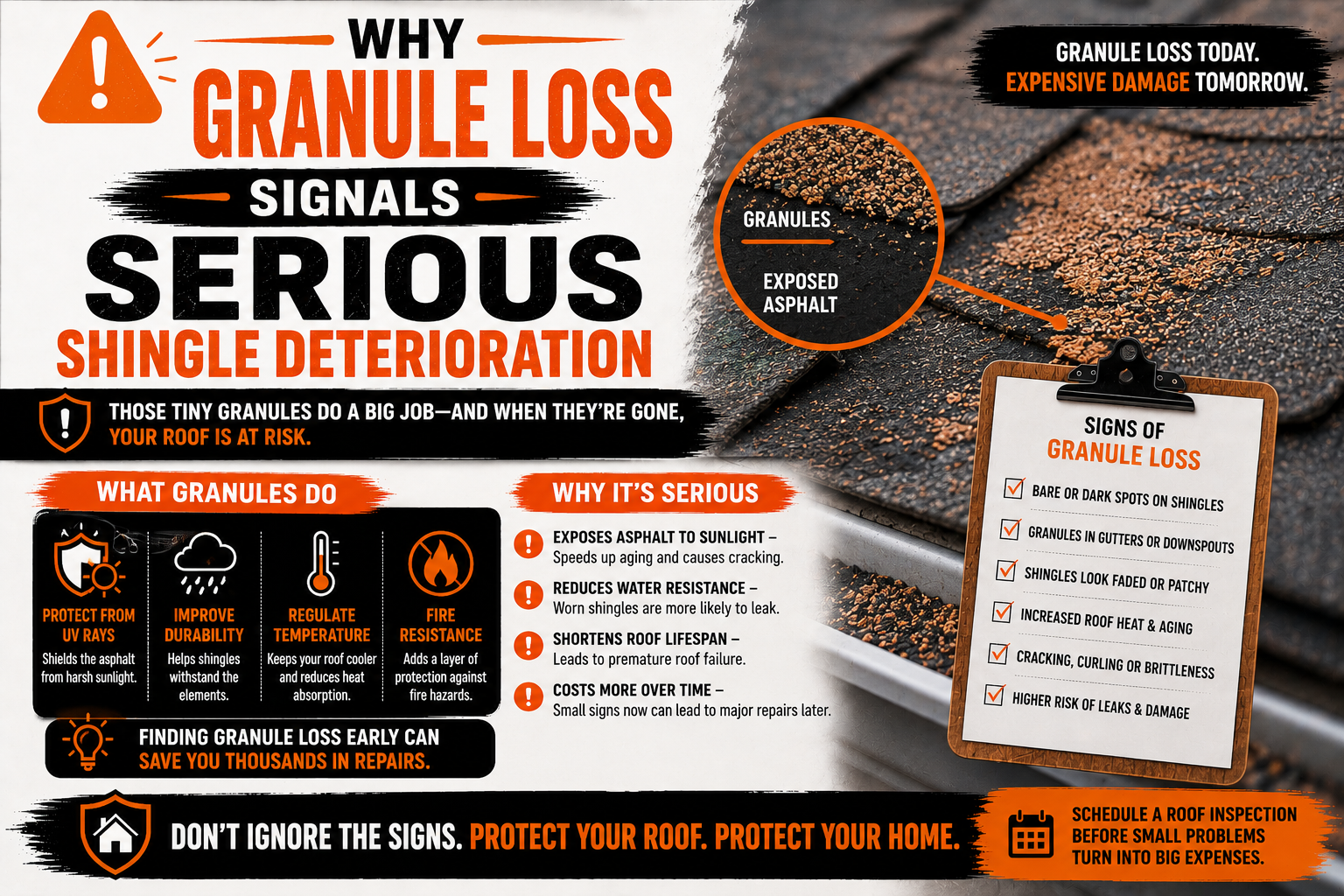
Why Granule Loss Signals Serious Shingle Deterioration
Introduction
An asphalt shingle roof is designed to withstand years of exposure to sunlight, rain, wind, and changing temperatures. While homeowners often watch for missing shingles or roof leaks, one of the earliest indicators of roofing deterioration is far less noticeable. Granule loss may begin gradually, but it often signals that the protective surface of the shingles is wearing away and the roof is becoming more vulnerable to long-term damage.
Roofing granules are the coarse mineral particles embedded into the outer surface of asphalt shingles during manufacturing. These granules perform much more than a decorative function. They shield the asphalt beneath from ultraviolet radiation, reduce weather-related wear, help regulate roof temperature, and contribute to the overall durability of the roofing system.
Small amounts of granule loss are normal throughout a roof’s lifespan. New roofs often shed loose granules left over from the manufacturing process, while older roofs naturally lose some granules as they age. The concern begins when granule loss becomes excessive or uneven because this often indicates that the shingles are deteriorating faster than expected.
Once the protective granule layer begins disappearing, the asphalt beneath becomes increasingly exposed to sunlight and weather. This exposure accelerates aging, reduces shingle flexibility, weakens weather resistance, and increases the likelihood of cracking, curling, and eventual roof leaks. What begins as a subtle change on the roof surface can eventually affect the entire roofing system.
Many homeowners first notice granule loss when cleaning gutters or observing dark patches on the roof. Others may not recognize the problem until a professional roof inspection reveals widespread surface wear. Learning to identify these early warning signs allows maintenance to begin before the roof experiences more serious structural deterioration.
Understanding why granule loss occurs, what it reveals about the condition of asphalt shingles, and how it affects long-term roof performance helps homeowners make informed maintenance decisions. Early recognition often extends the life of the roof while reducing the likelihood of expensive repairs or premature replacement.
What Are Asphalt Shingle Granules and Why They Matter
Roofing granules are small mineral particles permanently embedded into the outer surface of asphalt shingles during manufacturing. Although they appear simple, they perform several important functions that directly influence the durability and performance of the roofing system.
The granules act as the roof’s first line of defense against sunlight. Ultraviolet radiation gradually breaks down exposed asphalt, causing it to become brittle over time. By covering the asphalt layer, granules significantly slow this aging process and help preserve the flexibility of the shingles.
Granules also protect shingles from physical wear caused by weather. Rain, hail, wind-driven debris, and seasonal temperature changes constantly affect the roof surface. The mineral coating absorbs much of this impact, reducing direct damage to the asphalt beneath.
Roof temperature regulation is another important function. Light-colored or specially coated granules reflect a portion of the sun’s heat, helping limit surface temperatures during warm weather. Lower roof temperatures reduce thermal stress and contribute to longer shingle life.
Fire resistance is also enhanced through the presence of roofing granules. The mineral surface provides an additional layer of protection that helps improve the fire performance of many asphalt roofing products.
Granules contribute to the appearance of the roof as well. Their color, texture, and distribution create the finished look of asphalt shingles while helping maintain consistent color across the roofing system. Uneven granule loss often creates noticeable dark patches that affect curb appeal.
Every shingle depends on its granule layer to perform properly. Once large numbers of granules become detached, the asphalt beneath loses much of its protection against environmental exposure. This marks the beginning of accelerated shingle deterioration.
Although granules are small, they play a major role in determining how effectively an asphalt roof performs throughout its expected service life.
How Roofing Granules Protect Asphalt Shingles
The protective role of roofing granules extends far beyond improving the appearance of the roof. Together, these mineral particles form a durable surface that allows asphalt shingles to withstand years of environmental exposure while maintaining their structural integrity.
One of their primary responsibilities is blocking ultraviolet radiation. Direct sunlight continuously affects roofing materials throughout the year. Without the protective granule layer, ultraviolet rays quickly dry the asphalt binder, reducing flexibility and increasing the likelihood of cracking.
Granules also help distribute the force of rainfall across the roof surface. Instead of rain striking exposed asphalt directly, the mineral coating absorbs much of the impact. This gradual protection slows weather-related erosion and extends the useful life of the shingles.
Wind resistance is indirectly improved as well. Healthy shingles maintain their shape more effectively because protected asphalt remains flexible for longer periods. Flexible shingles resist cracking and respond better to normal expansion and contraction caused by changing temperatures.
Granules provide additional protection against hail and small airborne debris. While severe impacts can still damage shingles, the mineral surface reduces direct abrasion that would otherwise affect the asphalt layer underneath.
Temperature regulation is another important benefit. Roofing materials experience significant heating during sunny weather and cooling at night. Granules help moderate these temperature changes by reflecting part of the sun’s energy while shielding the asphalt from direct exposure.
The granule layer also helps preserve adhesive performance. Asphalt shingles rely on sealant strips to remain securely bonded together. Excessive surface temperatures accelerate adhesive aging, but granules reduce this effect by limiting heat transfer into the shingle.
Even moisture protection benefits from healthy granules. Although shingles themselves provide the primary water barrier, granules reduce surface wear that might otherwise create cracks or openings where water can eventually penetrate.
Together, these protective functions explain why widespread granule loss is considered one of the earliest indicators of declining roof performance.
Common Causes of Granule Loss
Granule loss develops for many different reasons, and the condition often results from several factors acting together rather than a single cause. Understanding these influences helps homeowners evaluate whether the observed wear is part of normal aging or an indication of more serious deterioration.
Natural weathering remains the most common cause. Asphalt shingles gradually lose small amounts of granules throughout their service life as they endure years of exposure to sunlight, rainfall, wind, and seasonal temperature changes. This slow process is expected as roofing materials age.
Ultraviolet radiation accelerates the breakdown of the asphalt binder holding the granules in place. As the asphalt becomes less flexible, granules loosen more easily and eventually detach from the shingle surface.
Severe weather also contributes significantly. Hailstorms, heavy rain, strong winds, and airborne debris repeatedly strike the roof, gradually dislodging protective granules. Although one storm may not cause noticeable deterioration, repeated exposure increases cumulative wear.
Foot traffic can remove granules surprisingly quickly. Walking across the roof unnecessarily creates friction that loosens surface particles, particularly on older shingles that have already begun aging. Roof inspections should therefore be performed carefully to minimize unnecessary wear.
Improper roof installation occasionally contributes to premature granule loss. Incorrect handling of shingles, poor storage before installation, or installation during unsuitable weather conditions may weaken the protective surface before the roof even begins normal service.
Poor attic ventilation indirectly affects granule retention by increasing roof temperatures. Excessive heat beneath the shingles accelerates asphalt aging, reducing the material’s ability to hold granules securely over time.
Manufacturing quality also influences long-term performance. Although modern asphalt shingles undergo strict quality control, lower-quality products or aging roofing materials may begin shedding granules earlier than premium alternatives.
Tree branches scraping against the roof and accumulated debris can gradually wear away the protective surface. Leaves retaining moisture for extended periods may also contribute to localized deterioration by creating persistently damp conditions.
Because granule loss often develops gradually, routine roof inspections are essential for distinguishing between normal aging and accelerated deterioration.
Early Warning Signs of Granule Deterioration
Granule deterioration rarely appears suddenly. Instead, homeowners usually notice subtle warning signs long before widespread roof damage becomes visible. Recognizing these early indicators allows maintenance decisions to be made while the roof still retains much of its protective capability.
One of the most common signs is excessive granule accumulation inside gutters or at the bottom of downspouts. While some loose granules are expected, unusually large amounts often suggest accelerated wear occurring across the roof surface.
Dark patches developing on asphalt shingles represent another important warning sign. These areas indicate that the protective granules have worn away, exposing the darker asphalt beneath to direct sunlight and weather.
Uneven roof coloration may also reveal localized granule loss. Sections receiving stronger sunlight or greater weather exposure sometimes deteriorate faster than shaded areas, creating visible differences in appearance.
Shingles may begin feeling smoother than expected when inspected by a qualified roofing professional. Healthy shingles have a rough, textured surface created by the embedded mineral granules. Excessive smoothness often indicates that many granules have already detached.
Early curling or cracking sometimes accompanies granule deterioration. As the asphalt loses its protective coating, it becomes increasingly brittle and less capable of resisting environmental stress. Surface damage often follows as weather exposure continues.
Roof inspections after hailstorms or severe wind events may reveal fresh areas of granule loss. Even when shingles remain attached, storm impacts can remove significant portions of the protective mineral surface.
Inside the attic, subtle moisture signs occasionally develop before roof leaks become obvious. Damp insulation, faint water stains on roof decking, or increased attic temperatures may indicate that deteriorating shingles are beginning to lose their protective performance.
Monitoring these warning signs regularly helps homeowners recognize developing roof problems before widespread structural damage occurs.
Why Small Amounts of Granule Loss Should Not Be Ignored
Many homeowners assume that granule loss becomes a concern only after large bare patches appear on the roof. In reality, even relatively small areas of accelerated granule loss deserve attention because they often represent the beginning of a much larger deterioration process.
Each missing granule exposes a tiny portion of the asphalt beneath. Individually these areas appear insignificant, but collectively they increase the amount of asphalt directly exposed to sunlight and changing weather. Over time, this exposure accelerates the aging of the affected shingles.
The deterioration process rarely remains confined to one location. Once granule loss begins, nearby areas often experience similar environmental conditions that gradually produce comparable wear. Small patches may therefore expand steadily across the roof surface.
Granule loss also reduces the roof’s ability to resist heat. Exposed asphalt absorbs more solar energy than the original mineral surface, increasing roof temperatures during warm weather. Higher temperatures contribute to faster asphalt deterioration and weaker adhesive performance.
Wind-driven rain presents another concern. While granule loss alone does not immediately create leaks, continued surface deterioration eventually weakens the shingles enough for cracking, curling, or lifting to occur. These later stages significantly increase the likelihood of water intrusion.
Routine maintenance becomes much more effective when granule loss is identified early. Professional inspections performed during the initial stages of deterioration often reveal opportunities for targeted repairs before widespread roof replacement becomes necessary.
Ignoring minor granule loss allows environmental exposure to continue uninterrupted. As asphalt becomes increasingly brittle, surrounding shingles experience greater stress during storms and seasonal temperature changes, accelerating overall roof aging.
Recognizing these small warning signs encourages proactive roof maintenance rather than reactive repairs. Understanding how granule loss develops provides valuable insight into the long-term condition of the roofing system and establishes the foundation for evaluating the more advanced stages of shingle deterioration.
How Granule Loss Accelerates Shingle Deterioration
Granule loss is not simply a cosmetic issue that affects the appearance of a roof. Once the protective mineral coating begins wearing away, the deterioration of the asphalt shingles often accelerates. The exposed asphalt becomes increasingly vulnerable to environmental conditions that gradually reduce the roof’s ability to provide reliable protection.
One of the first changes occurs when ultraviolet radiation reaches the asphalt layer beneath the missing granules. Without the protective mineral coating, sunlight directly affects the asphalt binder that gives the shingle its flexibility. Continued exposure causes the asphalt to dry out, harden, and become more brittle over time.
As flexibility decreases, shingles become less capable of expanding and contracting with changing temperatures. Instead of adapting to seasonal weather, the material begins developing small cracks and surface fractures. These defects gradually grow larger as the roof continues aging.
Granule loss also affects the adhesive strips that help neighboring shingles remain securely bonded together. Higher surface temperatures caused by increased sunlight accelerate adhesive aging, reducing the roof’s resistance to wind uplift. As the adhesive weakens, shingles become more likely to lift during storms.
Repeated weather exposure creates additional stress on the roof surface. Rain, wind, and temperature fluctuations repeatedly affect exposed asphalt that no longer has the protective cushion provided by roofing granules. Over time, this constant exposure shortens the lifespan of the shingles.
The deterioration process often spreads across surrounding shingles as well. Roof sections experiencing similar weather conditions frequently develop comparable granule loss, allowing the affected area to expand gradually rather than remaining isolated.
As shingles continue deteriorating, they become more susceptible to curling, clawing, cracking, and eventual breakage. These visible changes usually indicate that the roof has progressed beyond simple surface wear and is approaching more advanced stages of aging.
Although granule loss develops gradually, the resulting damage often accelerates once the protective surface has been compromised. Recognizing this progression helps homeowners appreciate why early inspections are so important.
The Hidden Damage Beneath Worn Shingle Surfaces
The disappearance of roofing granules affects much more than the visible surface of the shingles. As deterioration progresses, hidden roofing components become increasingly exposed to conditions that may eventually compromise the entire roofing system.
One of the first layers affected is the asphalt coating itself. With fewer granules available to shield it from sunlight, the asphalt gradually becomes harder and more brittle. This internal deterioration may not be immediately visible, but it significantly reduces the durability of the shingle.
The fiberglass reinforcement embedded within many asphalt shingles also depends on the surrounding asphalt for protection. As the asphalt deteriorates, the reinforcement becomes more vulnerable to repeated bending caused by wind and temperature changes. This gradually weakens the structural integrity of the shingle.
Underlayment located beneath the shingles may also experience greater exposure over time. Although granule loss alone does not immediately expose the underlayment, deteriorating shingles become less effective at directing water away from the roof. This increases the likelihood that moisture will eventually reach the protective layer beneath.
Roof decking becomes vulnerable if moisture continues penetrating through aging shingles. Wood absorbs water gradually, allowing swelling, softening, and structural weakening to develop over extended periods. These changes often remain hidden until a professional inspection or roof repair reveals the extent of the damage.
Roofing nails and fasteners may also experience increased exposure to moisture if shingles begin cracking or lifting after significant granule loss. Corrosion developing around these fasteners gradually reduces their holding strength while increasing the risk of wind-related shingle movement.
Attic insulation may eventually become affected if prolonged moisture enters the roof assembly. Wet insulation loses much of its thermal resistance, reducing energy efficiency while creating favorable conditions for mold growth.
Because these forms of deterioration occur beneath the roof surface, homeowners may remain unaware that structural changes are taking place. Regular roof inspections help identify hidden damage before it spreads into larger and more expensive repairs.
Environmental Factors That Increase Granule Loss
Every asphalt roof experiences natural weathering, but certain environmental conditions accelerate granule loss far more rapidly than others. Understanding these influences allows homeowners to recognize why some roofs deteriorate sooner than expected.
Continuous sunlight remains one of the most significant factors. Roof slopes receiving direct sunlight for much of the day experience higher surface temperatures and greater ultraviolet exposure. Over many years, this combination gradually weakens the asphalt binder that secures the granules.
Regions with frequent temperature fluctuations also place additional stress on roofing materials. Daily heating and cooling cycles cause shingles to expand and contract repeatedly. This movement slowly loosens granules, especially on older roofs where the asphalt has already begun hardening.
Strong winds contribute in several ways. Wind-driven dust and airborne debris create surface abrasion, while repeated shingle movement during storms weakens the bond between granules and asphalt. Areas frequently exposed to high winds often experience faster surface wear.
Heavy rainfall also influences long-term deterioration. Although rain alone does not remove large quantities of granules, years of repeated weather exposure gradually wear the roof surface. Combined with wind and temperature changes, rainfall becomes part of the natural aging process.
Hailstorms can accelerate granule loss dramatically. Even moderate hail impacts may dislodge protective granules without creating obvious cracks or punctures in the shingles. These damaged areas often continue deteriorating long after the storm has passed.
Tree cover affects roofs in different ways. Overhanging branches may scrape shingles during windy conditions, while leaves and organic debris trap moisture against the roof surface. Extended dampness contributes to faster aging in affected sections.
Poor attic ventilation increases roof temperatures from below. Heat trapped beneath the roof accelerates asphalt aging and reduces the material’s ability to retain granules. Proper ventilation helps slow this process while improving overall roof performance.
Air pollution and airborne contaminants may also contribute to long-term deterioration in some environments. Although their effects develop gradually, constant exposure can influence how quickly roofing materials age over several decades.
Environmental conditions cannot be eliminated, but understanding their impact helps homeowners plan inspections and maintenance more effectively.
How to Inspect a Roof for Granule Deterioration Safely
Routine inspections allow homeowners to identify granule loss before it progresses into more serious roofing problems. A careful inspection also helps distinguish normal aging from conditions requiring professional attention.
Begin by observing the roof from ground level. Walk around the property and look for dark patches, uneven coloration, or sections where shingles appear smoother than surrounding areas. These visual differences often indicate that protective granules have worn away.
Binoculars provide a closer view without requiring roof access. Focus on roof slopes receiving the greatest sunlight because these areas often experience earlier granule deterioration. Compare different roof sections to determine whether the wear is localized or widespread.
Inspect gutters and downspouts for roofing granules. A small amount is expected over time, but excessive accumulation may indicate accelerated surface deterioration. Checking gutters after heavy rainfall can help identify ongoing granule loss.
Examine the ground around downspout outlets as well. Granules carried through the drainage system frequently collect near splash blocks or drainage areas, providing another indication of roof wear.
If attic access is available and conditions are safe, inspect the underside of the roof for moisture stains, damp insulation, mold, or visible daylight. Although these signs do not directly confirm granule loss, they may indicate that deteriorating shingles have begun affecting the roof’s protective performance.
Avoid walking on the roof unless proper safety equipment and experience are available. Foot traffic may dislodge additional granules, particularly on older shingles that have already become brittle. Professional roof inspections remain the safest option for close examination.
Photographing the roof during inspections creates a useful maintenance record. Comparing images over time makes it easier to recognize gradual changes in roof appearance and identify areas where deterioration is progressing.
Regular inspections performed before and after severe weather seasons provide the best opportunity to detect developing granule loss while maintenance options remain relatively straightforward.
Repair vs Replacement Decisions for Granule Damage
Once significant granule loss has been identified, homeowners often face an important decision regarding repairs or roof replacement. The appropriate solution depends on the severity of the deterioration, the age of the roof, and the condition of the underlying roofing system.
Localized granule loss affecting only a small section of the roof may sometimes be addressed through targeted repairs if the surrounding shingles remain in good condition. Replacing damaged shingles early can help restore protection before deterioration spreads further.
Widespread granule loss across multiple roof slopes often indicates that the roofing materials are aging consistently. In these situations, replacing only a few shingles may not provide a lasting solution because neighboring shingles are likely experiencing similar deterioration.
Roof age is another important consideration. Asphalt shingles approaching the end of their expected service life generally benefit more from comprehensive replacement than repeated repairs. Investing in multiple repairs on an aging roof often becomes less cost-effective over time.
Hidden structural damage should also influence the decision. Moisture-damaged roof decking, deteriorated underlayment, weakened flashing, or attic moisture problems require more extensive repairs than replacing surface shingles alone.
Energy efficiency may decline as deteriorating shingles allow greater heat absorption and moisture intrusion. Replacing an aging roof often improves thermal performance while restoring the roof’s ability to resist future weather conditions.
A professional roof inspection provides valuable information when evaluating repair options. Examining both visible shingle deterioration and hidden roofing components helps determine whether localized repairs will provide reliable long-term protection.
Choosing between repair and replacement should always consider both current roof condition and expected future performance. Addressing the root cause of granule loss provides greater long-term value than focusing only on surface appearance.
| Granule Loss Condition | Typical Roof Appearance | Recommended Action |
|---|---|---|
| Light granule loss | Small amounts in gutters with minimal visible wear | Continue monitoring and schedule routine inspections |
| Moderate granule loss | Localized dark patches and slight surface wear | Professional inspection and targeted repairs if appropriate |
| Widespread granule loss | Multiple roof sections showing exposed asphalt | Evaluate overall roof condition and repair needs |
| Severe granule loss | Large exposed areas with cracking or curling shingles | Consider roof replacement after comprehensive inspection |
| Granule loss with leaks | Surface deterioration accompanied by moisture intrusion | Immediate professional assessment and structural repairs if necessary |
Understanding how granule loss affects both the visible roof surface and the hidden roofing system highlights why early attention is so important. Recognizing the progression of deterioration provides the foundation for making informed maintenance decisions while helping homeowners preserve the long-term performance of their asphalt roof.
What Homeowners Should Do After Discovering Granule Loss
Finding roofing granules in gutters or noticing worn patches on asphalt shingles should never be dismissed as a normal cosmetic change without further evaluation. While some granule loss naturally occurs throughout a roof’s lifespan, excessive or uneven deterioration often indicates that the shingles are beginning to lose their protective capabilities. Responding early helps prevent more serious roofing problems from developing.
Begin by determining whether the granule loss is isolated or widespread. A small amount of wear on one section of the roof may result from localized weather exposure, while widespread deterioration across multiple roof slopes often suggests that the roofing system is aging as a whole. Comparing different sections of the roof provides valuable insight into the overall condition.
Inspect the gutters and downspouts for accumulated granules after heavy rainfall. Small amounts are expected, especially on newer roofs, but repeated accumulation over time may indicate accelerated surface deterioration. Monitoring changes rather than relying on a single observation provides a more accurate picture of roof performance.
Examine the roof for additional warning signs such as curling shingles, cracked surfaces, missing granules, exposed asphalt, or lifted edges. Granule loss rarely occurs in isolation, and identifying related symptoms helps determine whether the roof requires localized repairs or more comprehensive attention.
If it is safe to access the attic, inspect the underside of the roof for water stains, damp insulation, mold growth, or unusual odors. These signs may indicate that deteriorating shingles have already begun allowing moisture to affect the roofing system beneath the surface.
Avoid pressure washing or aggressively cleaning the roof after noticing granule loss. Harsh cleaning methods can remove additional granules and accelerate deterioration. Roofing materials should be handled carefully to preserve the remaining protective surface.
Photograph areas showing noticeable granule loss and compare them with future inspections. Keeping a visual record helps determine whether the deterioration is progressing gradually or accelerating after storms or seasonal weather changes.
Scheduling a professional roof inspection is often the best next step when significant granule loss is observed. A detailed assessment identifies whether the condition is consistent with normal aging or whether underlying roofing problems require prompt attention.
Preventing Premature Granule Deterioration
Although granule loss cannot be eliminated entirely, proper roof maintenance can significantly slow the rate of deterioration. Preventive care helps preserve the protective surface of asphalt shingles while extending the overall lifespan of the roofing system.
Routine roof inspections remain one of the most effective maintenance practices. Examining the roof several times each year helps identify developing problems before large sections of granules become detached. Early repairs often reduce long-term roofing expenses.
Maintaining proper attic ventilation helps regulate roof temperatures throughout the year. Excessive heat trapped beneath the roof accelerates asphalt aging and weakens the bond that holds granules in place. Balanced airflow supports healthier roofing materials over time.
Adequate attic insulation works together with ventilation to create more stable roof temperatures. Reducing extreme temperature fluctuations helps limit the repeated expansion and contraction that contributes to surface deterioration.
Keeping gutters clean also supports long-term roof health. Proper drainage prevents water from backing up along roof edges, reducing prolonged moisture exposure that may accelerate aging in vulnerable areas.
Tree maintenance provides additional protection. Trimming branches that hang above the roof minimizes contact between limbs and shingles while reducing debris accumulation that traps moisture on the roof surface.
Prompt repairs after severe weather help prevent localized damage from spreading. Hail impacts, wind damage, and fallen branches may remove protective granules even when shingles remain attached. Addressing these issues early helps preserve the surrounding roofing materials.
Limiting unnecessary foot traffic also reduces surface wear. Walking across asphalt shingles can dislodge granules, particularly on older roofs where the asphalt has become less flexible. Roof access should be limited whenever possible.
Professional roof inspections become increasingly valuable as the roof ages. Experienced inspectors can recognize subtle patterns of granule loss that homeowners may overlook while identifying maintenance opportunities before major deterioration develops.
Roof Maintenance Checklist for Monitoring Granule Loss
A consistent maintenance routine helps homeowners detect changes in roof condition before widespread deterioration occurs.
- Inspect the roof from the ground at least twice each year using binoculars if necessary.
- Check gutters and downspouts regularly for excessive roofing granules.
- Compare roof color across different slopes to identify uneven wear or exposed asphalt.
- Inspect the attic for moisture, mold, water stains, or daylight entering through the roof.
- Remove leaves, branches, and debris that remain on the roof after storms.
- Examine shingles for curling, cracking, lifting, or additional signs of aging.
- Arrange a professional roof inspection whenever significant granule loss or storm damage is suspected.
Following this checklist throughout the year helps identify gradual changes before they affect the overall performance of the roofing system. Regular monitoring also makes it easier to distinguish normal aging from accelerated deterioration.
Best Practices for Extending Asphalt Shingle Lifespan
Long-lasting asphalt roofs depend on consistent maintenance rather than waiting for visible damage to appear. A few preventive habits can significantly improve roof performance while slowing granule deterioration.
The following practices help extend the life of asphalt shingles:
- Inspect the roof before and after severe weather seasons.
- Maintain balanced attic ventilation and adequate insulation.
- Keep gutters and downspouts free of leaves and debris.
- Repair damaged shingles and flashing as soon as problems are discovered.
- Trim overhanging tree branches to reduce impact damage and debris buildup.
- Limit unnecessary foot traffic on the roof.
- Monitor attic conditions for signs of moisture or poor ventilation.
- Schedule regular professional roof inspections, particularly as the roof ages.
These maintenance practices help preserve the protective granule layer while reducing the likelihood of premature roof replacement. Consistent care also improves the roof’s ability to withstand changing weather conditions throughout the year.
Frequently Asked Questions
Is some granule loss normal on asphalt shingles?
Yes. Small amounts of granule loss are expected, especially on newly installed roofs and older roofing systems. The concern arises when granule loss becomes excessive, uneven, or is accompanied by other signs of deterioration.
Why are there roofing granules in my gutters?
Granules naturally wash into gutters over time as shingles age. Large or increasing amounts may indicate accelerated roof wear that should be inspected more closely.
Can granule loss cause roof leaks?
Granule loss alone does not immediately create leaks. However, as shingles continue deteriorating, the exposed asphalt becomes more susceptible to cracking, curling, and weather damage that can eventually allow water to enter the roof.
Does hail always remove roofing granules?
Not always, but hail can dislodge protective granules without causing obvious shingle cracks. Even moderate hail impacts may accelerate long-term roof deterioration.
Should I replace a roof because of granule loss?
It depends on the severity of the deterioration, the age of the roof, and the condition of the underlying roofing system. Localized granule loss may require only repairs, while widespread deterioration often justifies roof replacement.
How often should I inspect my roof for granule loss?
Most homeowners should inspect their roof at least twice a year and after major storms. Regular inspections make it easier to identify gradual changes before they become significant.
Can pressure washing remove roofing granules?
Yes. High-pressure washing can strip granules from asphalt shingles and shorten the lifespan of the roof. Gentle maintenance methods are recommended to avoid unnecessary surface damage.
Conclusion
Granule loss is one of the earliest visible indicators that asphalt shingles are beginning to lose their long-term protective capabilities. Although a small amount of surface wear is expected as roofing materials age, excessive or uneven granule loss often signals that the shingles are becoming increasingly vulnerable to sunlight, temperature extremes, wind, and moisture. Recognizing these changes early allows homeowners to address roofing concerns before more serious deterioration develops.
The protective granule layer performs several essential functions throughout the life of an asphalt roof. It shields the asphalt from ultraviolet radiation, reduces weather-related wear, helps regulate roof temperatures, and improves the overall durability of the roofing system. As this protective layer gradually disappears, the asphalt beneath becomes exposed to conditions that accelerate aging and reduce the roof’s ability to withstand future weather events.
Understanding the progression of granule loss also highlights the importance of evaluating the roof as a complete system rather than focusing only on surface appearance. Worn shingles may eventually affect underlayment, roof decking, insulation, flashing, and other structural components if deterioration continues unchecked. Regular inspections help identify these hidden risks before they require extensive repairs.
Consistent maintenance remains the most effective way to preserve asphalt shingles and extend the life of the roof. Routine inspections, proper attic ventilation, clean gutters, prompt storm repairs, limited roof traffic, and professional evaluations all contribute to slowing granule deterioration while maintaining reliable roof performance. Preventive care protects both the roofing materials and the structure beneath them.
Ultimately, granule loss should be viewed as an important maintenance signal rather than simply a cosmetic concern. By recognizing the early warning signs, monitoring changes over time, and responding with timely inspections or repairs, homeowners can improve the longevity of their asphalt roof, reduce the likelihood of unexpected leaks, and protect their home from the long-term consequences of advanced shingle deterioration.