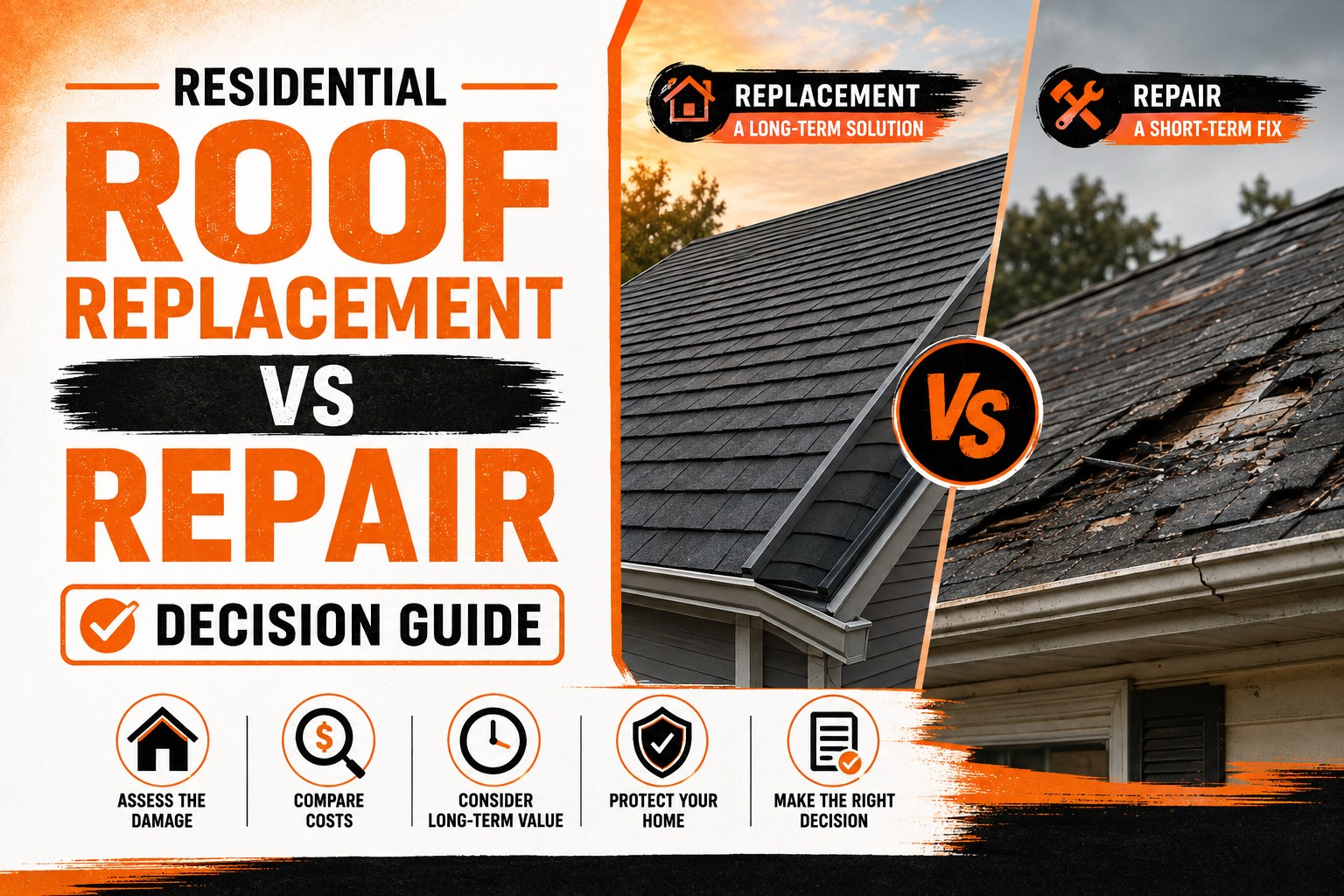
Residential Roof Replacement vs Repair Decision Guide
Introduction
Deciding whether to repair or replace a residential roof can be difficult for homeowners, especially when the visible problem appears relatively small. A missing shingle, ceiling stain, or damaged flashing may seem like an obvious repair situation, but the visible issue does not always reveal what is happening underneath the roofing system. Understanding the roof’s age, overall condition, damage extent, and repair history can help homeowners make a more informed decision.
Roof repair is often appropriate when damage is limited and the rest of the roofing system remains in good condition. A qualified contractor may be able to replace damaged shingles, repair flashing, seal a localized leak, or correct another isolated problem without disturbing the entire roof. When the roof is relatively young and structurally sound, a targeted repair can be a practical way to restore protection while avoiding an unnecessary replacement.
Replacement becomes more relevant when damage is widespread or the roofing system has reached the end of its useful service life. Multiple leaks, extensive material deterioration, damaged decking, sagging sections, and repeated repair problems can indicate that the roof is no longer a good candidate for isolated fixes. In these situations, continuing to repair individual areas may only postpone a larger project while allowing other weaknesses to develop.
Cost is another major consideration, but homeowners should avoid comparing repair and replacement based only on the immediate price. A repair may be less expensive today, yet repeated repairs over several years can eventually cost more than a planned replacement. The potential cost of interior water damage and structural deterioration should also be considered when deciding how quickly to act.
The most reliable approach is to evaluate the roofing system as a whole. A professional inspection can help identify visible and hidden problems, estimate the remaining service life, and explain whether repair or replacement provides the more practical long-term solution.
Evaluating the Age and Overall Condition of the Roof
Roof age is one of the first factors homeowners should consider when deciding between repair and replacement. Every roofing material has an expected service life, although actual performance depends on installation quality, climate, maintenance, ventilation, weather exposure, and other conditions. A roof’s age alone does not automatically determine what should be done, but it provides important context for understanding its condition.
A relatively new roof with isolated damage is often a strong candidate for repair. If most of the roofing materials remain intact and the underlying structure is sound, replacing a small damaged area can restore the roof without requiring a complete project. This approach can be particularly practical when the damage resulted from a single event such as a fallen branch or localized wind damage.
As a roof becomes older, homeowners should pay greater attention to widespread deterioration. Shingles may become brittle, lose granules, curl at the edges, crack, or become increasingly vulnerable to wind and moisture. When these conditions affect large portions of the roof, replacing a few individual shingles may not provide a dependable long-term solution.
The roof’s repair history is also important. A roof that has required several leak repairs, flashing repairs, and material replacements may be showing signs of broader deterioration. Each repair may address an immediate problem, but repeated failures can indicate that the roofing system is approaching the end of its practical service life.
Homeowners should also look for signs that deterioration is occurring across multiple roof sections. If one slope appears relatively healthy while several other slopes show advanced damage, the decision becomes more complicated than simply replacing the most damaged area. The contractor should evaluate whether the remaining roof can reasonably be expected to perform alongside the repaired sections.
Environmental exposure can affect roof aging as well. Strong sunlight, heavy rainfall, high winds, hail, temperature changes, and nearby trees can accelerate wear. Two roofs of the same age may therefore have very different conditions depending on their exposure and maintenance history.
An older roof does not automatically require immediate replacement, just as a newer roof is not guaranteed to be repairable. The key is to consider age together with physical condition. When significant deterioration appears across the system, replacement becomes increasingly practical.
Identifying Damage That Can Usually Be Repaired
Many common roofing problems can be repaired when they are limited to specific areas and the rest of the roofing system remains structurally sound. Repairing localized damage can save homeowners the expense and disruption of replacing a roof that still has substantial useful life. However, the repair should address the actual source of the problem rather than simply covering the visible symptom.
A few missing or damaged asphalt shingles are a common example. Strong winds can loosen individual shingles, while falling branches can crack or remove them. If the surrounding shingles remain in good condition, a contractor may be able to replace the damaged pieces and restore the affected area.
Small flashing problems can also often be repaired. Flashing around chimneys, vents, skylights, or roof intersections can deteriorate or become displaced over time. When the failure is isolated and the surrounding roofing materials remain healthy, repairing or replacing the affected flashing may be sufficient.
A localized roof leak does not necessarily mean that the entire roof needs replacement. The contractor should determine where water is entering and whether the surrounding materials have suffered significant deterioration. If the source can be corrected and the roofing system is otherwise in good condition, a targeted repair may provide a suitable solution.
Minor damage from a storm can sometimes be addressed in the same way. For example, if a small area of shingles has been damaged while the remainder of the roof remains secure and healthy, repairing the affected section may be more appropriate than replacing the entire roof.
Repairs are generally more effective when the existing roofing material is still available and compatible with replacement components. Matching older materials can sometimes be difficult, particularly when the original product has been discontinued. Even when an exact match is unavailable, a professional can determine whether a suitable repair is possible.
The condition of the roof deck is also important. A repair may be appropriate when the underlying decking remains dry, stable, and structurally sound. If the decking beneath the damaged area is rotten or extensively weakened, the repair may need to involve more than replacing the exterior material.
Homeowners should also consider whether the repair is expected to provide meaningful remaining service life. Spending money on a repair can make sense when the roof is otherwise healthy and likely to remain functional for years. If the roof is already severely aged, however, the same repair may only postpone replacement for a short period.
Recognizing Damage That May Require Full Replacement
Some roofing problems are too extensive for isolated repairs to provide a reliable long-term solution. Widespread deterioration is one of the clearest signs that homeowners should consider replacement. When multiple roof sections are failing at the same time, repairing each individual problem can become increasingly expensive and ineffective.
Multiple active leaks are another important warning sign. A single leak may have a straightforward cause, but leaks appearing in several areas can indicate that the roofing system has lost its ability to consistently resist water. Continued moisture can eventually affect decking, insulation, ceilings, walls, and other parts of the home.
Sagging sections should receive immediate professional attention. A visibly uneven roof may indicate damaged decking or problems with the supporting structure. Structural concerns cannot be solved simply by installing new shingles over the affected area and may require broader replacement or reconstruction.
Extensive shingle deterioration can also make replacement more practical. Widespread curling, cracking, missing granules, brittleness, and exposed underlayment suggest that the roof covering is no longer performing as intended. Replacing a few shingles in an otherwise failing system is unlikely to provide consistent protection.
Storm damage can also reach replacement level. A severe windstorm, hail event, hurricane, tornado, or falling debris can damage large portions of the roofing system. If the damage affects numerous slopes, penetrations, flashing areas, or underlying components, a complete replacement may be more practical than extensive patching.
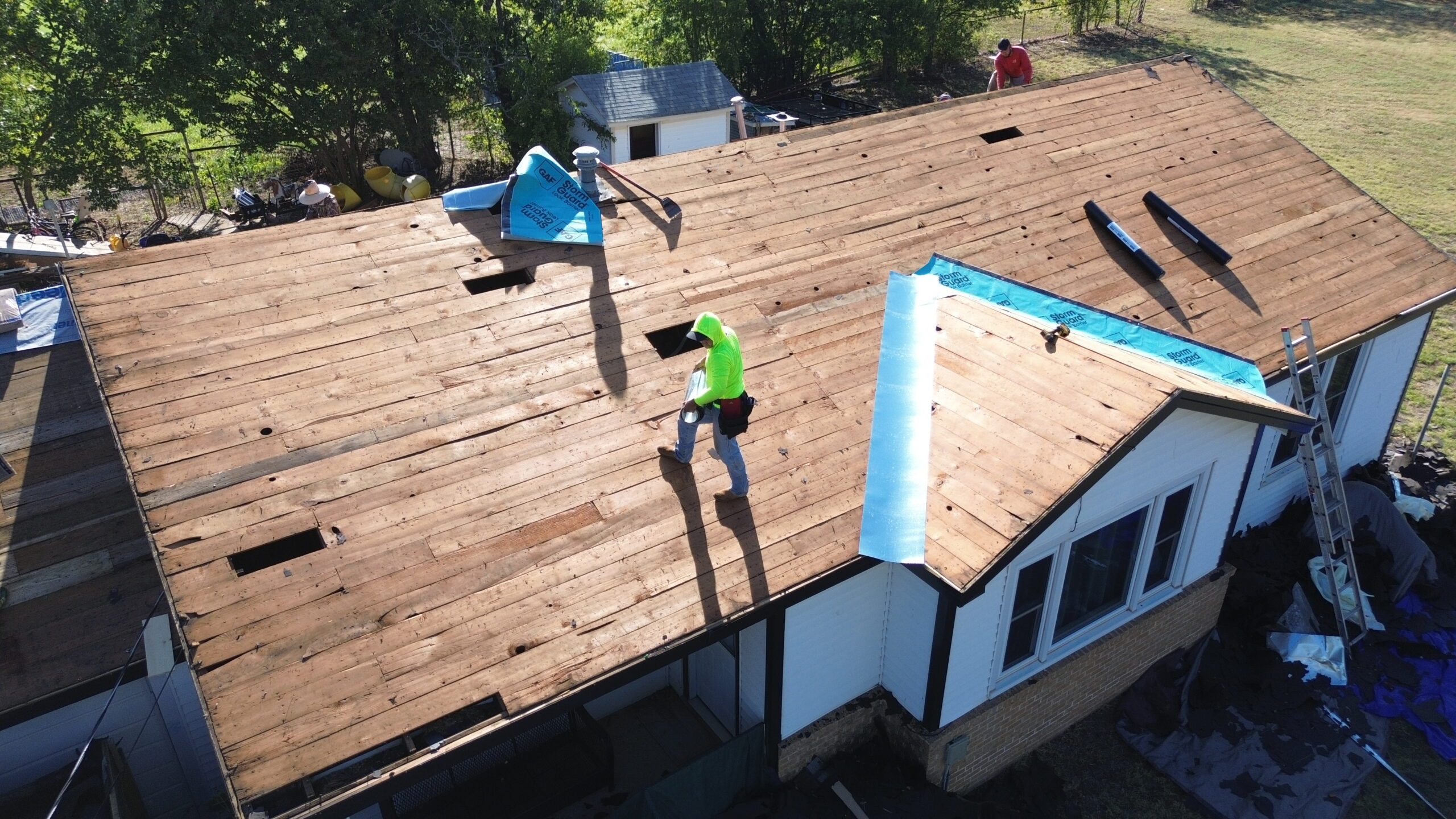
Another consideration is the presence of damaged decking. When moisture has affected large portions of the underlying structure, removing the existing roof may be necessary to access and replace the damaged material. A complete replacement provides an opportunity to inspect the deck thoroughly and rebuild the roofing assembly on a sound surface.
Homeowners should also pay attention to repeated repair failures. If the same roof continues developing leaks after multiple professional repairs, there may be a broader issue that individual fixes cannot resolve. Continuing to patch the system without addressing its overall condition can increase costs while delaying the inevitable replacement.
Replacement does not necessarily mean that every roof component will be damaged or defective. Rather, it may be the most practical way to restore the system as a whole when enough major components have deteriorated.
Comparing Repair Costs With Replacement Costs
Cost comparison is one of the most important parts of the repair-versus-replacement decision, but homeowners should look beyond the immediate invoice. A repair may cost significantly less than replacement today, yet the long-term financial outcome can be different if additional repairs are likely to follow.
A useful comparison begins with the current repair estimate. Homeowners should understand exactly what the contractor is fixing and how long the repair is reasonably expected to last. A repair that addresses an isolated problem on a healthy roof may offer excellent value, while a similar repair on an aging roof may provide only temporary relief.
The history of previous repairs should then be considered. If the homeowner has already paid for several repairs in recent years, the combined cost can provide useful context. Repeated spending on an aging roofing system may eventually approach the cost of replacement without providing the same level of reliability.
The expected remaining life of the existing roof is another important factor. If a repair can reasonably extend the useful life of a relatively young roof, it may be financially sensible. If the roof is already near the end of its expected service period, homeowners may prefer to invest in replacement rather than continue paying for short-term fixes.
Potential secondary damage should also be included in the calculation. An unresolved leak can damage insulation, drywall, ceilings, flooring, and structural components. These costs may not appear in the roofing estimate but can become part of the overall financial impact of delaying replacement.
Homeowners should request a detailed estimate for both options when the situation is uncertain. A contractor may be able to explain what a repair would involve and what a complete replacement would address. Comparing the two scopes can make the decision clearer.
The cheapest immediate option is not always the least expensive long-term choice. Homeowners should consider reliability, remaining service life, maintenance requirements, future repair risks, and the potential consequences of continued deterioration.
Considering Roofing Materials and Previous Repairs
The type of roofing material can significantly influence whether repair or replacement is practical. Asphalt shingles, metal panels, tile, slate, and other systems have different installation methods, expected service lives, repair requirements, and material availability. The decision should therefore take the existing roofing system into account.
Asphalt shingles are often relatively straightforward to repair when compatible replacement products are available. However, older shingles can become difficult to match as manufacturers discontinue specific colors and styles. A visible patch may therefore differ from the surrounding roof even when the repair is technically successful.
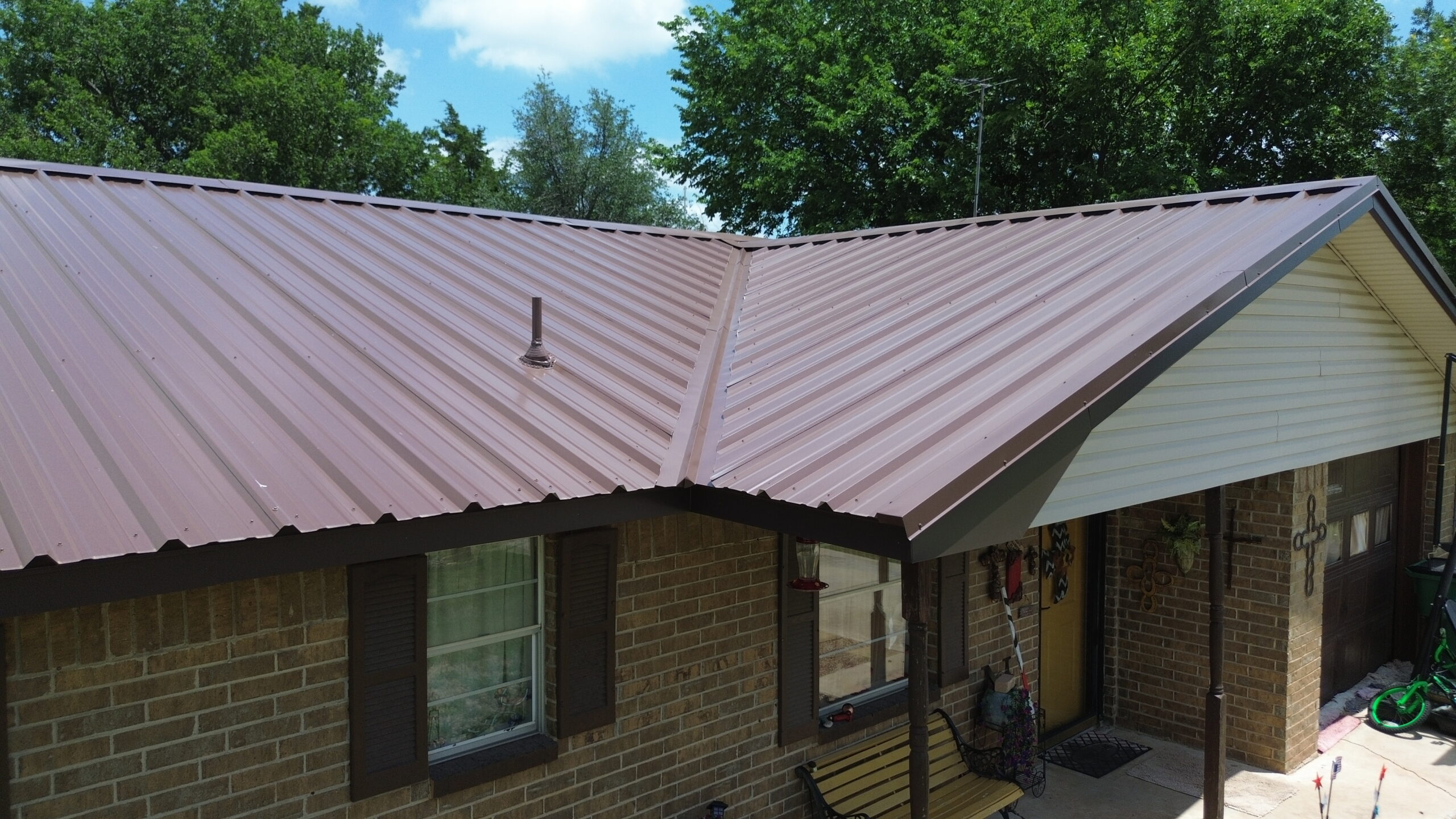
Metal roofing can also be repaired in certain situations, but the appropriate method depends on the type of panel and the location of the damage. Isolated punctures, loose fasteners, or damaged sections may be addressed by a qualified professional. Widespread corrosion or repeated failures, however, can make broader replacement more practical.
Tile and slate systems may allow individual damaged pieces to be replaced while the underlying structure remains sound. These materials can sometimes provide long service lives, making localized repair a reasonable option. However, widespread breakage, underlayment deterioration, or structural problems can change the recommendation.
Previous repairs should be examined carefully regardless of the material. Multiple layers of patches, sealants, replacement materials, or altered flashing can complicate future repairs. If a roof has been repeatedly modified, the contractor may need to remove portions of the existing system to determine what is actually causing the recurring problem.
Compatibility is also important when adding new materials to an existing roof. Roofing components must work together to maintain proper drainage and weather resistance. Using a replacement material that does not integrate appropriately with the existing system can create new problems.
The decision should therefore consider not only what is damaged today but also how the existing materials are likely to perform after the proposed repair. A professional can explain whether repairing the current system is practical or whether replacement would create a more consistent and dependable roofing assembly.
Extent and Location of Roof Damage
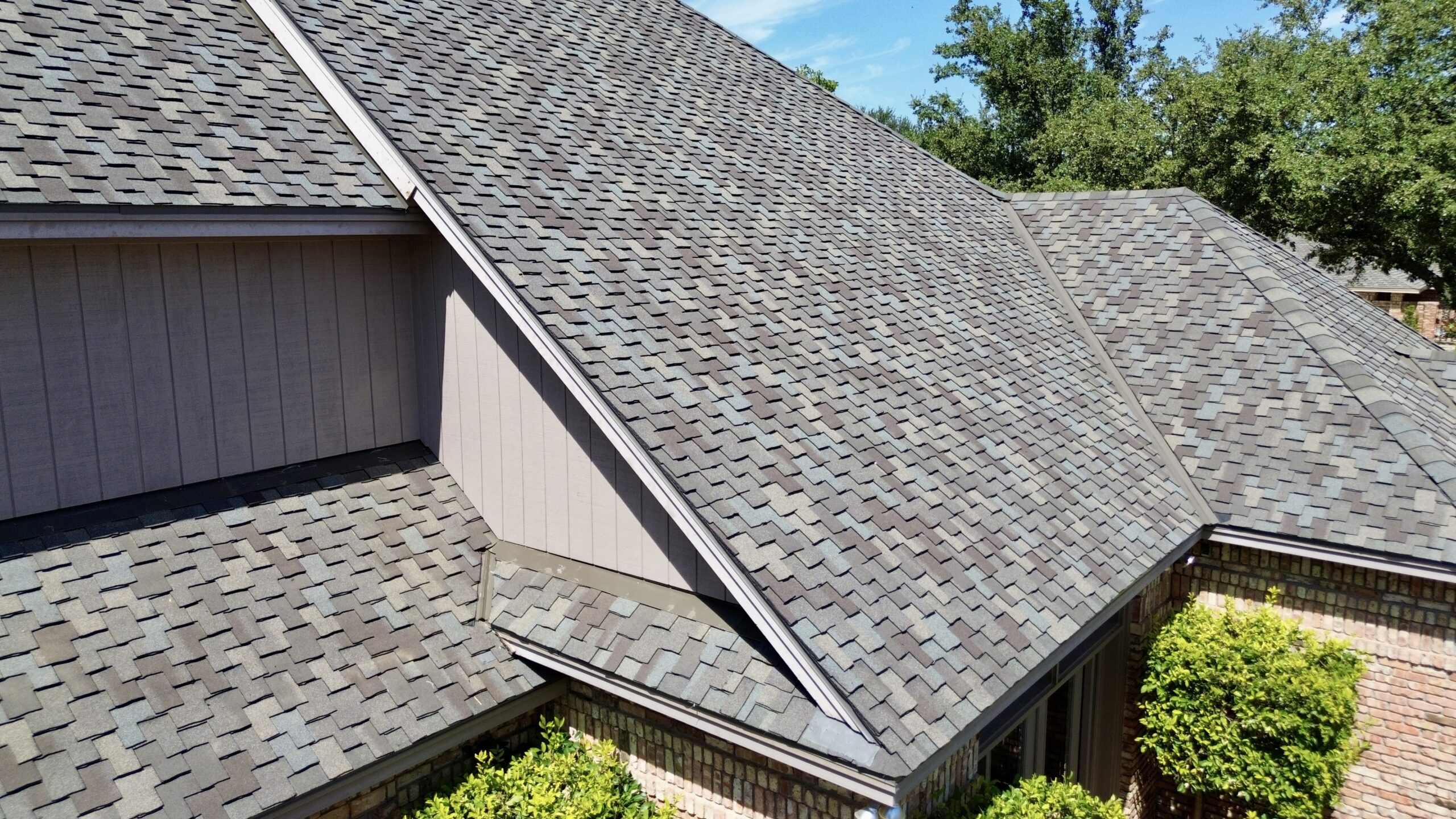
The extent and location of roof damage are major factors when deciding whether repair or replacement is appropriate. A problem affecting one small section can often be handled without disturbing the entire roofing system, while damage spread across several slopes may indicate that the roof has reached a more serious stage of deterioration. The location of the damage also matters because certain areas are more exposed to water and weather than others.
Roof valleys are especially important because they collect and direct water from multiple roof sections. Damage in a valley can create persistent moisture problems if it is not corrected properly. If the valley failure is isolated and the surrounding materials remain healthy, a targeted repair may be enough, but widespread deterioration around several valleys can make replacement more practical.
Roof edges and areas around chimneys, skylights, vents, and walls also deserve careful evaluation. These locations contain joints and penetrations where roofing materials must be properly integrated. A small flashing failure may be repairable, but multiple failing penetrations across an aging roof can indicate that the entire system needs more extensive work.
Wind damage should also be evaluated based on its distribution. If a storm removes a few shingles from one area, those materials may be replaced individually. When wind lifts or damages large sections throughout the roof, however, the remaining materials may have been weakened even when the damage is not immediately visible from the ground.
Hail can create similar challenges. Individual impact marks may be addressed in some situations, but widespread hail damage can affect the protective surface of numerous shingles. A professional inspection can determine whether the damage is localized or sufficiently extensive to justify replacement.
The roof’s slope and orientation can also influence the decision. One section may receive greater sunlight, wind, or rainfall exposure than another, resulting in uneven deterioration. Homeowners should avoid assuming that the condition of one visible roof section represents the condition of the entire system.
A detailed inspection should therefore document where damage exists and how much of the roof is affected. Understanding the distribution of problems helps homeowners compare a localized repair with the broader benefits of replacing the complete roofing system.
Roof Leaks and Water Damage
Roof leaks are among the most common reasons homeowners begin considering repair or replacement. A leak should never be ignored because water can travel through roofing layers and building materials before becoming visible inside the home. However, the presence of a leak alone does not automatically mean that the entire roof must be replaced.
An isolated leak may result from a damaged shingle, failed flashing, deteriorated seal, or another localized problem. If the roofing materials surrounding the leak remain in good condition and the underlying structure is sound, correcting the source may be enough to restore proper protection.
Recurring leaks require more attention. If the same area continues leaking after previous repairs, the original problem may not have been fully addressed. Alternatively, the surrounding roofing materials may have deteriorated to the point where additional water is finding new paths into the structure.
Multiple leaks in different parts of the home can be a stronger indication of widespread roofing failure. When water enters through several roof areas, repairing each leak separately may become an ongoing cycle. A complete inspection can determine whether these failures are connected to the overall age and condition of the roofing system.
Interior water damage should also be considered. Ceiling stains, peeling paint, damp walls, damaged insulation, or moisture in the attic can indicate that a roof problem has already affected other parts of the property. Repairing the roof remains the priority, but homeowners may also need to address secondary damage caused by prolonged moisture exposure.
Mold-like growth and musty odors can also be signs of persistent moisture. These conditions should be evaluated carefully rather than simply covered with paint or replaced cosmetically. If the moisture source remains active, interior repairs may fail again.
Homeowners should also understand that the visible location of a ceiling stain may not match the actual entry point on the roof. Water can travel along decking, framing, insulation, and other surfaces before appearing indoors. This is why simply sealing the area directly above a stain may not solve the problem.
When leaks are widespread, recurring, or associated with significant deterioration, replacement becomes increasingly reasonable. A new roofing system can address the entire weather barrier rather than treating individual symptoms. The decision should still be based on professional assessment, but persistent water intrusion is an important warning sign that should not be postponed.
Structural Damage and Roof Deck Condition
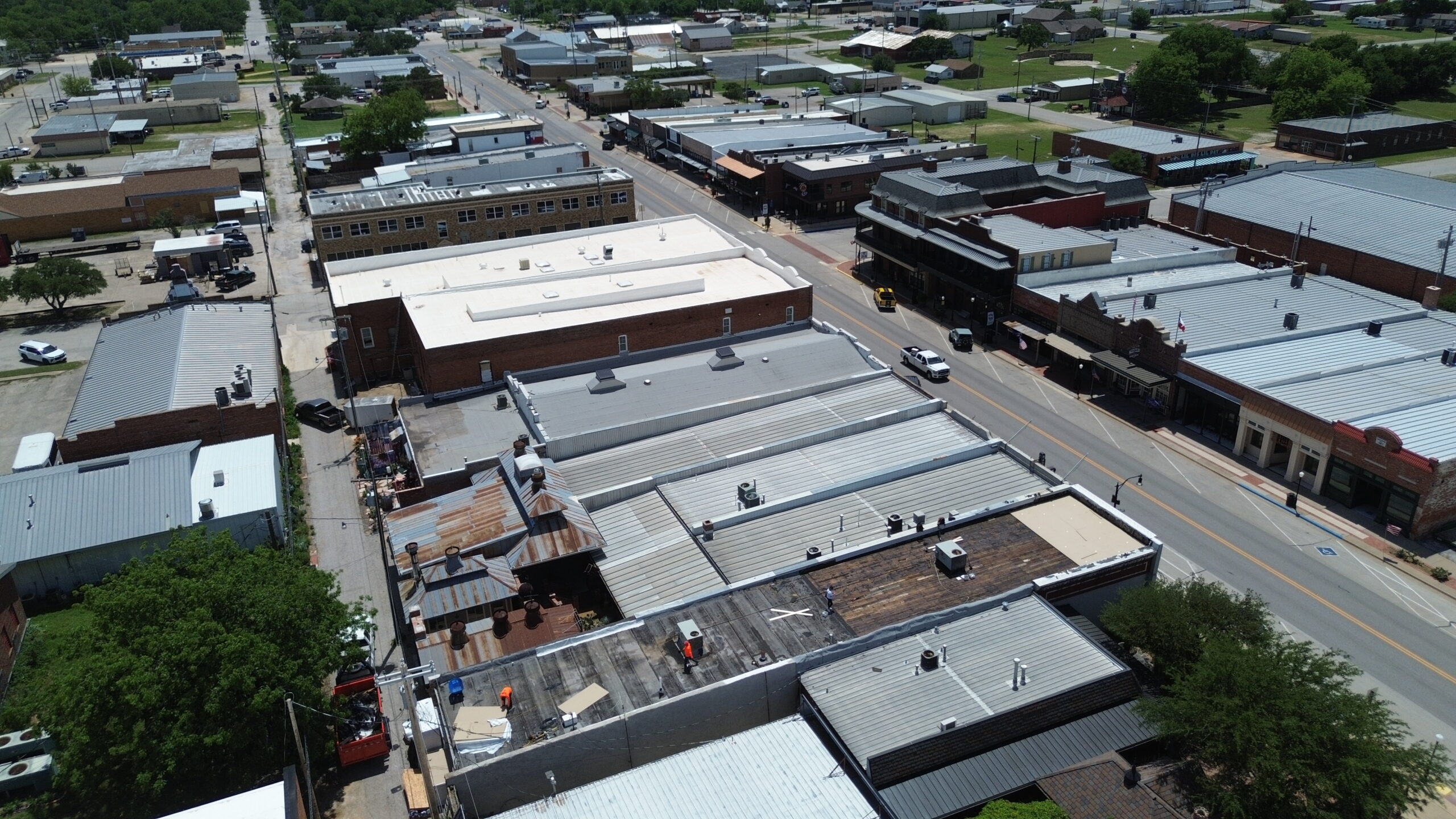
The condition of the roof deck can fundamentally change the repair-versus-replacement decision. The deck provides the supporting surface beneath the exterior roofing material, so it must be sufficiently strong and stable for the new roofing system. When the decking is significantly damaged, replacing only the visible roofing material may not solve the underlying problem.
Moisture is one of the most common causes of roof deck deterioration. Long-term leaks can cause wood to soften, swell, crack, or rot. The damage may remain hidden beneath shingles until the roofing material is removed, which means homeowners cannot always determine the full condition of the deck from an exterior inspection.
A small damaged section of decking can often be replaced as part of a repair or limited roof project. If deterioration is widespread, however, the work becomes more extensive. The contractor may need to remove large portions of the existing roof before replacing the affected deck and installing a new roofing system.
Sagging is another warning sign that deserves immediate professional evaluation. A visibly uneven roof can indicate weakened decking or problems with supporting components. Because structural issues can affect the safety and stability of the home, homeowners should not attempt to correct these conditions with surface-level repairs.
Rafters and trusses may also be affected by long-term moisture exposure or structural stress. If these components show significant deterioration, additional professional evaluation may be necessary. Structural repairs can increase both the cost and duration of the project, but they should not be skipped simply to keep the original estimate low.
Ventilation can contribute to long-term roof performance as well. Poor attic ventilation can allow excessive heat and moisture to accumulate, potentially accelerating deterioration of roofing materials and wood components. When replacement is necessary, homeowners have an opportunity to evaluate whether the ventilation system should be improved.
The presence of structural damage does not automatically mean that every part of the roof must be replaced. The extent of the problem should be determined by a qualified professional. However, significant structural deterioration generally makes a simple shingle repair insufficient.
Homeowners should ask whether the proposed repair addresses the underlying structural condition or merely covers it. A reliable roofing solution should provide a stable surface and properly functioning components beneath the exterior material.
Storm and Weather Damage
Severe weather can make the repair-versus-replacement decision more complicated because the damage may be sudden, widespread, and difficult to assess immediately. Wind, hail, heavy rain, falling branches, and other events can affect both the visible roofing material and components underneath.
Wind can lift, crease, loosen, or remove shingles and other roofing materials. When only a few pieces are affected, replacement of the damaged materials may be appropriate. If wind has compromised large sections, the contractor should evaluate whether the remaining roofing material has also been weakened.
Hail can damage shingles through repeated impacts that remove protective granules or create bruised areas. Some hail damage may not be obvious from ground level. A professional inspection can help identify whether the impacts are localized or widespread enough to affect the overall performance of the roofing system.
Falling branches can cause punctures, cracks, or structural damage. A large branch may damage the roofing material and the decking beneath it at the same time. In these situations, a simple exterior patch may not be sufficient because the supporting structure also needs to be inspected.
Heavy rain can worsen storm damage by entering through exposed areas. Once the protective surface is compromised, water can reach the underlayment, decking, insulation, and interior spaces. Prompt temporary protection may be necessary while the permanent repair or replacement decision is being made.
Homeowners should document storm damage from safe locations. Photographs of missing materials, fallen branches, visible openings, interior water damage, and other conditions can provide useful records. Previous photographs of the roof can also help demonstrate its condition before the event when available.
Insurance may become relevant after certain weather events. Whether damage is covered depends on the individual policy and circumstances. Homeowners should contact their insurer, understand applicable deductibles and requirements, and avoid assuming that every storm-related problem will automatically qualify for replacement coverage.
A contractor can provide an inspection and estimate, but insurance coverage is determined according to the policy. Homeowners should keep contractor reports, photographs, receipts, and other documentation organized throughout the process.
When weather damage is widespread, replacement may provide a more consistent solution than repairing numerous sections. However, the final recommendation should consider the actual extent of damage, age of the roof, condition of the remaining materials, and cost of restoring the system.
Energy Efficiency, Ventilation, and Overall Roofing Performance
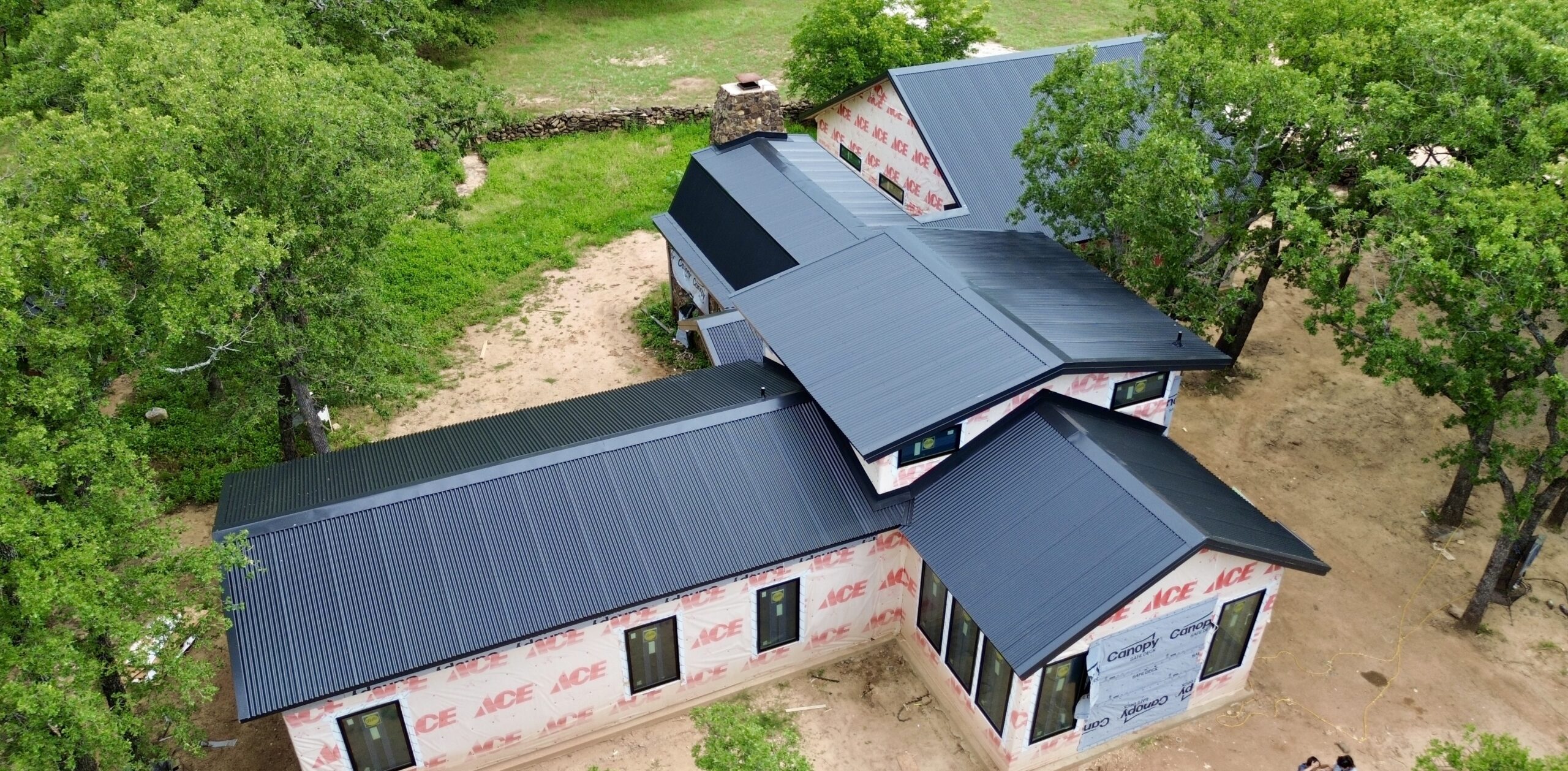
The repair-versus-replacement decision should also consider how effectively the existing roof performs as a complete system. A roof is responsible for more than keeping rain out. Its design and supporting components can influence attic temperature, moisture control, ventilation, drainage, and the overall comfort of the home.
Poor attic ventilation can contribute to excessive heat and moisture accumulation. These conditions can affect roofing materials and wood components over time. If ventilation problems are identified during an inspection, homeowners should discuss whether the issue can be corrected through a targeted improvement or whether replacement provides a better opportunity to redesign the system.
A relatively new roof with a ventilation problem may not need complete replacement solely because airflow is inadequate. In some situations, improving vents or correcting blocked airflow can address the underlying issue. However, if poor ventilation has already caused widespread material deterioration, a larger project may be justified.
Energy performance can also be considered when evaluating replacement. Older roofing materials may not provide the same performance characteristics as newer products designed for specific environmental conditions. Homeowners can discuss available options with a contractor, but energy-related upgrades should be evaluated based on the home’s climate and overall design.
Drainage is another part of roofing performance. Gutters, downspouts, valleys, and roof slopes should work together to move water away from the structure. If drainage problems are contributing to leaks or deterioration, repairing only the visible roofing material may not solve the underlying issue.
Homeowners should also consider how well the existing roofing system handles severe weather. If the roof has repeatedly suffered damage from normal local weather conditions, it may be worth discussing whether a different material or installation approach could provide improved performance during replacement.
The goal is not to replace a roof simply because a newer product exists. Replacement should provide a meaningful improvement in protection, durability, reliability, or overall condition. When the existing system remains sound, a targeted repair or component upgrade may offer better value.
A professional evaluation can help identify whether the problem is isolated to one component or reflects a broader performance issue. This distinction is important because homeowners should spend money on replacement when it solves a meaningful problem rather than treating replacement as the default answer to every roofing concern.
Insurance, Warranties, and Comparing Professional Estimates
Insurance, warranties, and professional estimates can all influence the final repair-versus-replacement decision. Homeowners should understand these factors before committing to either option because they can affect the immediate cost and the long-term value of the work.
Insurance may help with certain types of sudden damage, particularly when caused by a covered weather event. Ordinary aging, gradual deterioration, and maintenance-related problems may be treated differently. Homeowners should review their policy and communicate directly with their insurer rather than assuming that a particular repair or replacement will be covered.
Documentation can make the process easier. Homeowners should keep photographs, inspection reports, previous repair records, receipts, and information about the date and cause of significant damage. These records can provide useful evidence when discussing a claim or evaluating how the roof has changed over time.
Warranties should also be reviewed carefully. Roofing manufacturers may provide warranties for specific products, while contractors may offer separate workmanship coverage. The terms can differ, and homeowners should understand what is covered, how long coverage lasts, and what maintenance or installation conditions apply.
When the repair-versus-replacement decision remains unclear, homeowners should obtain detailed professional estimates for both options when possible. A repair estimate should explain the exact problem being corrected and the expected scope of work. A replacement estimate should identify the new roofing system, removal process, underlying repairs, installation, cleanup, and warranty information.
Homeowners should compare complete scopes rather than simply comparing prices. A low repair estimate may exclude necessary preparation, while a low replacement estimate may omit decking repairs or other essential components. Understanding what each price includes creates a more accurate comparison.
The following questions can help homeowners evaluate an estimate:
- What caused the current roofing problem?
- Is the damage isolated or widespread?
- How much useful life is likely to remain after the proposed repair?
- What condition is the roof deck in?
- What additional problems could be discovered during the work?
- What materials and warranties are included?
- How will unexpected costs be handled?
A professional contractor should be willing to answer these questions without creating unnecessary pressure. Homeowners should have enough information to make a decision based on condition, cost, expected service life, and long-term protection.
By considering insurance, warranties, and complete estimates alongside the physical condition of the roof, homeowners can move closer to a decision that fits both their property and their budget.
When Repair Is Usually the Better Choice
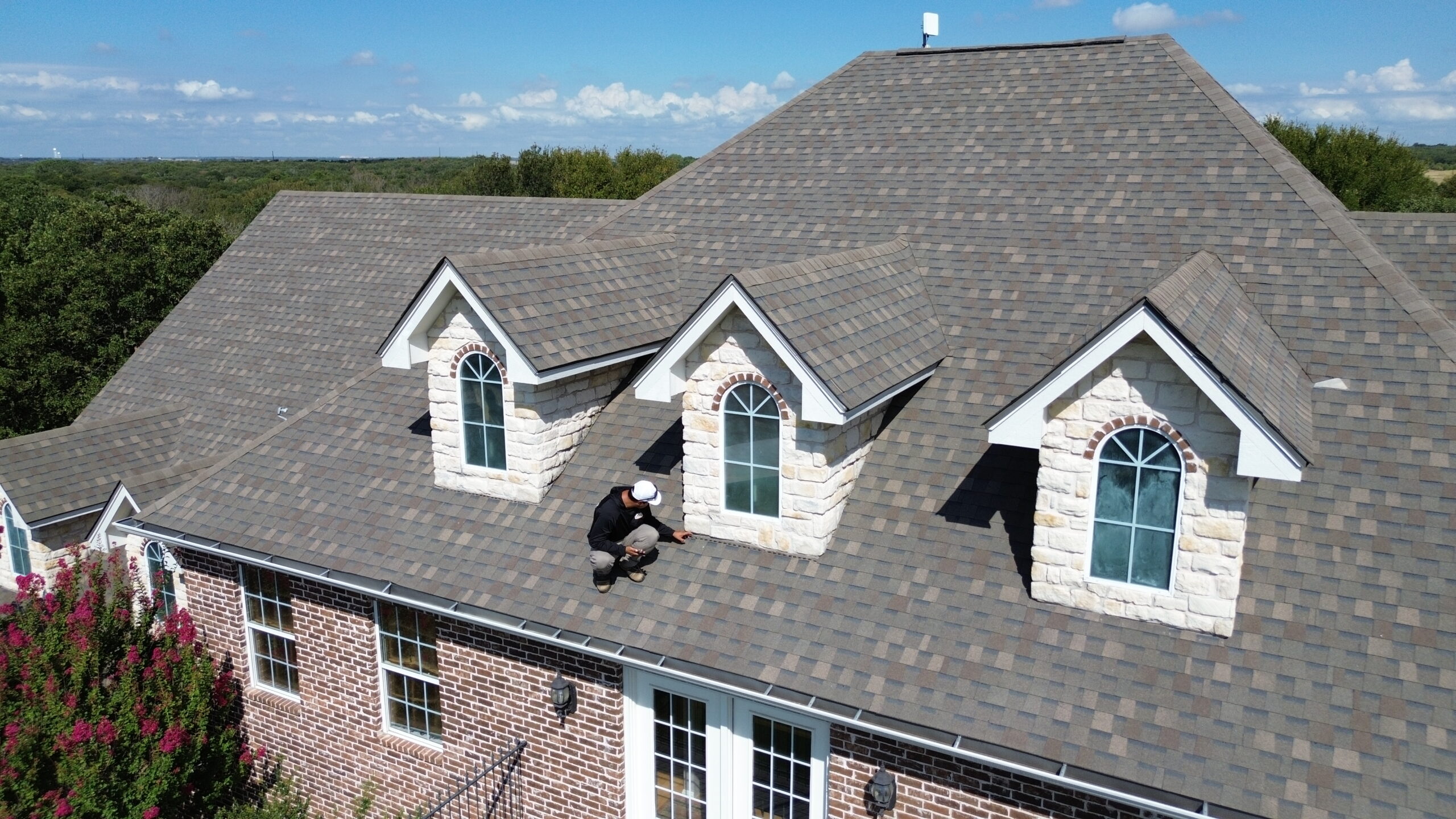
Roof repair is often the more sensible option when the damage is limited, the existing roofing system is relatively healthy, and the underlying structure remains sound. A homeowner should not automatically replace an entire roof because of one damaged shingle, a small leak, or an isolated flashing problem. When the rest of the system has substantial useful life remaining, targeted repairs can restore protection without the cost and disruption of a complete replacement.
Localized damage is one of the strongest situations for choosing repair. A few missing shingles after a windstorm, a damaged section caused by falling debris, or a small flashing failure can often be corrected without disturbing the surrounding roofing system. The contractor should still inspect the affected area carefully to make sure the visible problem has not caused hidden damage underneath.
Roof age is another important consideration. A relatively new roof that has been properly installed and maintained may have many years of useful service remaining. Spending money on a full replacement in response to a small problem may therefore provide little additional value compared with repairing the specific damaged area.
The condition of the roof deck also matters. If the decking is stable, dry, and structurally sound, a localized repair can be practical. When the supporting surface has not been compromised, there is less reason to disturb large portions of the existing roofing system.
Repair may also make sense when the expected cost is reasonable compared with the remaining life of the roof. Homeowners should ask the contractor how long the repair is expected to last and whether other significant problems are likely to develop soon. A repair that provides several additional years of dependable protection can be a worthwhile investment.
However, homeowners should avoid treating a repair as a permanent solution when the roof is clearly approaching the end of its service life. If the same problem continues returning or new issues appear frequently, it may be more practical to plan for replacement instead.
When Replacement Is Usually the Better Choice
Full roof replacement becomes more appropriate when the roofing system has widespread deterioration, significant structural problems, or repeated failures. The decision should be based on the condition of the entire system rather than one isolated defect. When many components are failing together, continuing to repair individual areas can become inefficient and expensive.
An aging roof with widespread material deterioration is a common example. Shingles may curl, crack, lose granules, become brittle, or fail to remain securely attached. When these conditions affect large areas, replacing a few individual shingles will not restore the overall condition of the roof.
Multiple recurring leaks can also indicate that replacement is necessary. If repairs have already been performed but water continues entering through different locations, the roofing system may have broader weaknesses. Replacing the complete system can provide a new weather barrier instead of continuing a cycle of leak detection and patching.
Structural damage is another major reason to consider replacement. Sagging sections, widespread rotten decking, or deteriorated supporting components can make a simple surface repair inadequate. The underlying structure needs to be stable before a new exterior roofing material can provide reliable protection.
Severe storm damage may also justify replacement. When wind, hail, falling debris, or other weather events affect a large percentage of the roof, repairing each damaged section may not be practical. A professional assessment can determine whether the remaining materials have enough integrity to continue functioning.
Replacement may also make sense when repair costs are becoming excessive. If a homeowner has paid for several repairs over a short period and another significant repair is now required, comparing the accumulated expenses with a complete replacement estimate can provide useful perspective.
The goal is not to replace every roof at the first sign of damage. Replacement should be recommended when the overall condition, age, repair history, structural integrity, and expected remaining service life make continued repairs less practical.
Understanding the Long-Term Financial Impact
The financial decision between repair and replacement should extend beyond the immediate cost of the work. Homeowners should consider what they are likely to spend over the next several years and what level of protection each option can provide. A lower upfront price does not always result in the lowest overall cost.
For example, a homeowner may receive a relatively inexpensive repair estimate for an aging roof. If the repair solves one leak but another develops several months later, additional labor and materials may be required. Repeating this process can gradually increase the total cost without providing the predictability of a new roofing system.
The potential cost of secondary damage should also be considered. A leaking roof can damage insulation, ceilings, drywall, flooring, electrical components, and structural materials. These expenses may be much larger than the original roofing repair if water intrusion continues for an extended period.
A replacement involves a larger initial investment, but it can provide a new roofing system with more predictable performance. Homeowners can address deteriorated decking, flashing, underlayment, ventilation, and other components during the project rather than repeatedly repairing isolated failures.
Long-term value also depends on material selection and installation quality. A properly installed roofing system using suitable materials may provide dependable protection for many years. Choosing appropriate materials and a qualified contractor can reduce the likelihood of premature problems.
Homeowners should also consider maintenance requirements. A repair may preserve an older system that requires more frequent monitoring, while replacement can provide a fresh starting point for long-term maintenance. Neither option eliminates maintenance completely, but the expected maintenance needs should be part of the financial comparison.
The best financial decision is therefore the one that balances immediate affordability with future reliability. Homeowners should compare the current repair cost, expected repair life, previous maintenance expenses, likely future problems, replacement cost, and potential secondary damage before deciding.
Preparing for a Roof Replacement
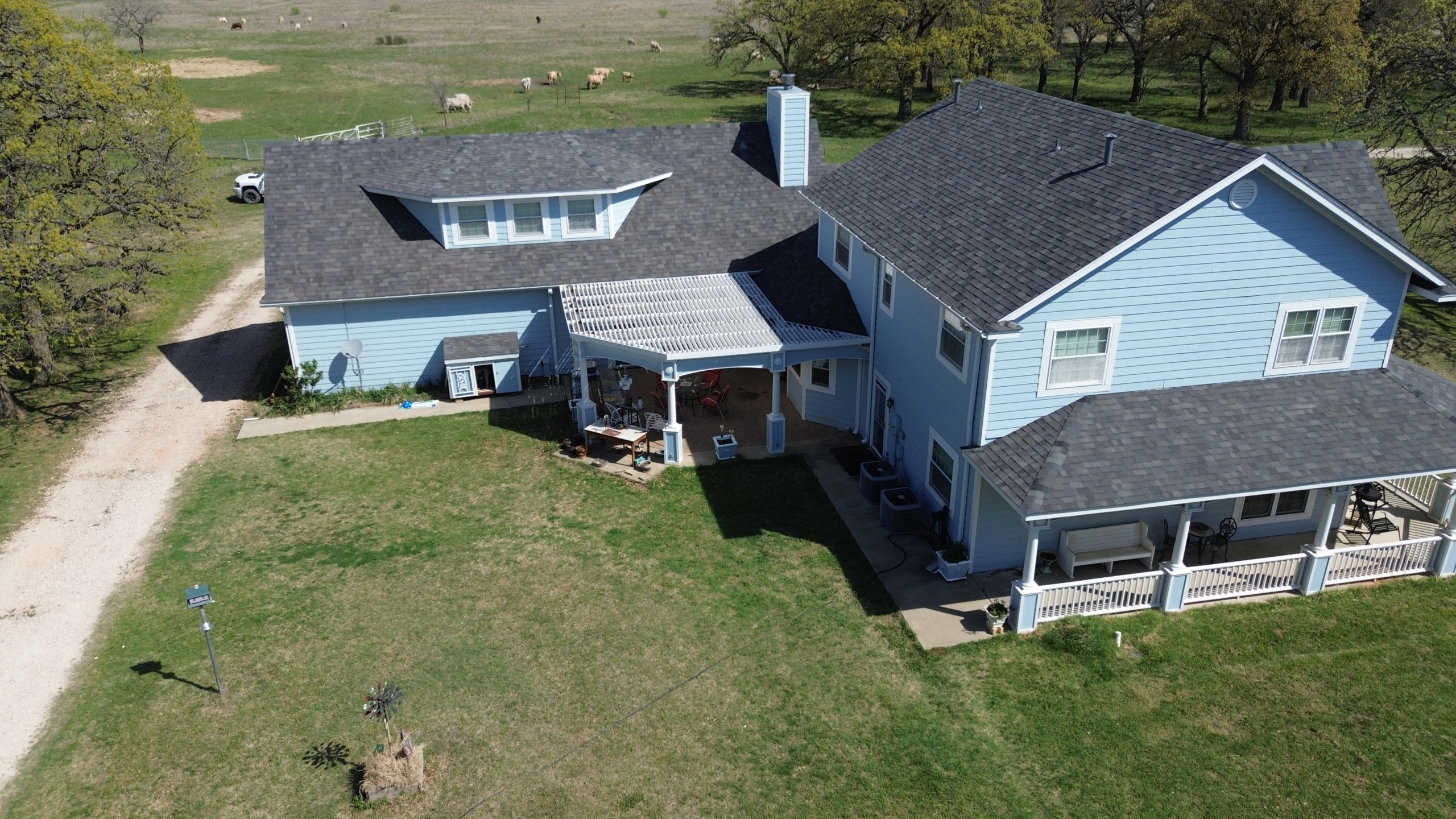
When replacement becomes the better option, homeowners should begin planning the project carefully. The first step is obtaining a detailed professional assessment that explains why replacement is recommended and what components will be included. Understanding the scope makes it easier to build a realistic budget and compare contractors.
Material selection should be based on the home’s structure, climate, appearance, expected service life, and available budget. Asphalt shingles may be appropriate for many homes, while metal, tile, slate, or other systems may be suitable in different circumstances. Homeowners should compare durability, maintenance, installation requirements, and warranties rather than choosing only by appearance.
Contractor selection is equally important. Homeowners should research experience, insurance, required credentials, references, reviews, warranties, and previous work. A detailed written estimate should explain removal, disposal, underlayment, flashing, ventilation, decking repairs, installation, cleanup, and procedures for unexpected conditions.
Budget planning should include more than the basic roofing material and labor. Hidden decking damage, structural repairs, permits, drainage improvements, and other components can affect the final cost. Setting aside a reasonable contingency can help homeowners manage legitimate unexpected expenses.
The property should also be prepared before construction begins. Outdoor furniture, vehicles, fragile belongings, and unnecessary attic contents may need to be moved or protected. Children and pets should remain away from active work zones because roofing involves ladders, tools, heavy materials, and falling debris.
Scheduling should allow flexibility for weather. Rain, strong winds, or other unsafe conditions can delay installation, and homeowners should understand that a responsible contractor may pause work rather than compromise safety or installation quality.
Once the project is complete, homeowners should review the finished roof, confirm cleanup, collect warranties and documentation, and establish a basic maintenance routine. Good preparation can make the replacement process more organized and reduce unnecessary surprises.
Common Mistakes Homeowners Should Avoid
One of the most common mistakes is delaying a serious roofing problem because the initial repair appears affordable. Small problems can become larger when water continues entering the roofing system. Homeowners should address leaks, structural warning signs, and widespread deterioration promptly.
Another mistake is repeatedly repairing the same area without investigating why the problem keeps returning. A recurring leak may indicate deteriorated surrounding materials, failed flashing, poor drainage, or another underlying problem. Continuing to patch the visible symptom may not provide a lasting solution.
Choosing a contractor solely because of the lowest price can also create problems. A low estimate may exclude important components, use unsuitable materials, or provide limited workmanship coverage. Homeowners should compare complete project scopes rather than selecting the smallest number.
Some homeowners make the opposite mistake by assuming that every roofing problem requires full replacement. Replacing a relatively new and structurally sound roof because of one isolated defect can result in unnecessary expense. Professional inspection is important because repair can be a better choice when damage is limited.
Ignoring the roof deck is another serious mistake. New shingles cannot compensate for rotten or structurally weak decking. Homeowners should ask whether the underlying surface has been inspected and how damaged sections will be handled.
Finally, homeowners should avoid making decisions without considering long-term value. The cheapest repair may not be the best investment if the roof is near the end of its useful life. Similarly, the most expensive replacement is not automatically the best option if a well-maintained roof still has substantial service life remaining.
A balanced decision considers condition, age, damage, repair history, cost, remaining life, and future risks. Taking time to evaluate these factors can prevent both unnecessary replacement and prolonged neglect.
Practical Repair vs Replacement Checklist
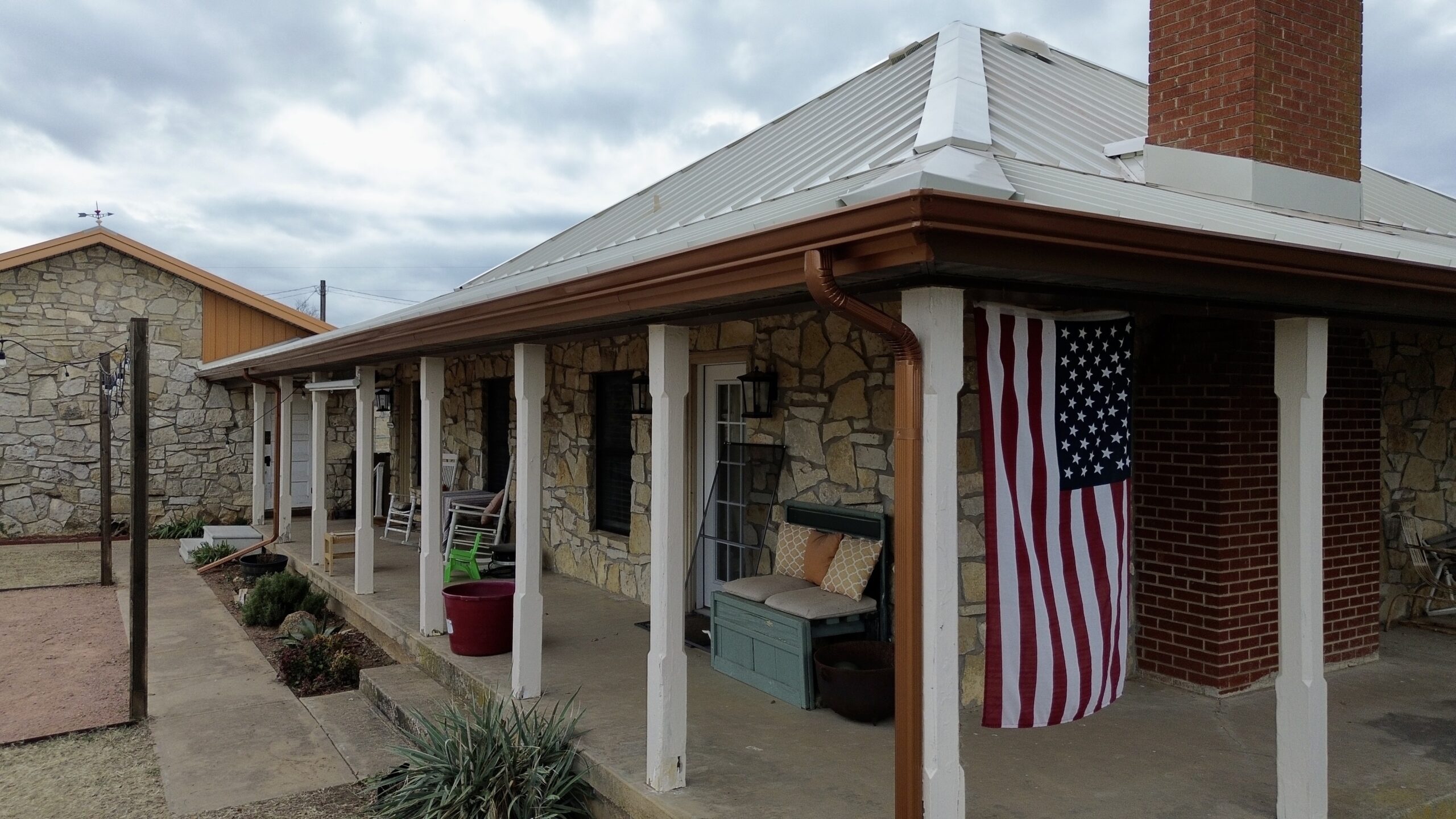
Before making a final decision, homeowners can organize the most important information into a simple comparison. The goal is to determine whether the existing roof still provides enough value to justify repair or whether replacement would provide better long-term protection.
The following questions can help guide the decision:
- How old is the current roofing system?
- Is the damage isolated or spread across several areas?
- Are there recurring leaks?
- Is the roof deck dry, stable, and structurally sound?
- Has the roof required several repairs in recent years?
- How much useful life is likely to remain after repair?
- What is the estimated cost of the proposed repair?
- What would a complete replacement cost?
- Are there signs of widespread material deterioration?
- Has severe weather caused extensive damage?
- What warranties are available for repair and replacement?
- Could continued leaks cause additional interior or structural damage?
A professional inspection should support the answers to these questions. Homeowners should ask contractors to explain the evidence behind their recommendations rather than relying on general assumptions based only on roof age or appearance.
If the roof is relatively young, structurally sound, and affected by limited damage, repair will often be the logical starting point. If the roof is old, repeatedly leaking, structurally compromised, or deteriorated across large areas, replacement is more likely to provide better long-term value.
The final decision should also reflect the homeowner’s plans for the property. Someone planning to remain in the home for many years may place greater value on the long-term reliability of a new roof. A homeowner considering a near-term sale may have different priorities, although the roof’s actual condition should still be addressed honestly and professionally.
Conclusion
Choosing between residential roof repair and full replacement requires more than looking at the visible damage or comparing two price tags. The right decision depends on the roof’s age, material, structural condition, extent of damage, repair history, remaining service life, and expected future performance.
Repair can be an excellent option when damage is localized and the rest of the roofing system remains healthy. Replacing a few shingles, correcting isolated flashing problems, or repairing a specific leak can restore protection without the cost and disruption of a complete replacement.
Replacement becomes more appropriate when deterioration is widespread, leaks are recurring, structural components are damaged, or the roof has reached the end of its useful life. In these situations, continued repairs may provide only temporary relief while allowing additional problems to develop.
Cost should always be considered in a long-term context. Homeowners should compare the immediate repair expense with previous repair costs, expected future maintenance, potential secondary damage, and the investment required for a new roofing system. This broader comparison can reveal which option provides better value rather than simply which one costs less today.
Professional inspection is one of the most important steps in the process. A qualified roofing contractor can identify hidden damage, assess the condition of the roof deck and supporting components, and explain whether repair or replacement is appropriate. Homeowners should seek detailed estimates and avoid making major decisions based solely on assumptions or the lowest available price.
The ultimate goal is to maintain a safe, reliable, and weather-resistant roofing system. Repair should not be used indefinitely to postpone a replacement that has become necessary, while replacement should not be pursued when a sound roof can be effectively restored through targeted work.
By evaluating the complete roofing system, understanding the financial implications, asking informed questions, and planning for the future, homeowners can make a confident repair-versus-replacement decision. A thoughtful choice can protect the home, control long-term costs, and ensure that the roofing investment provides dependable performance for years to come.