
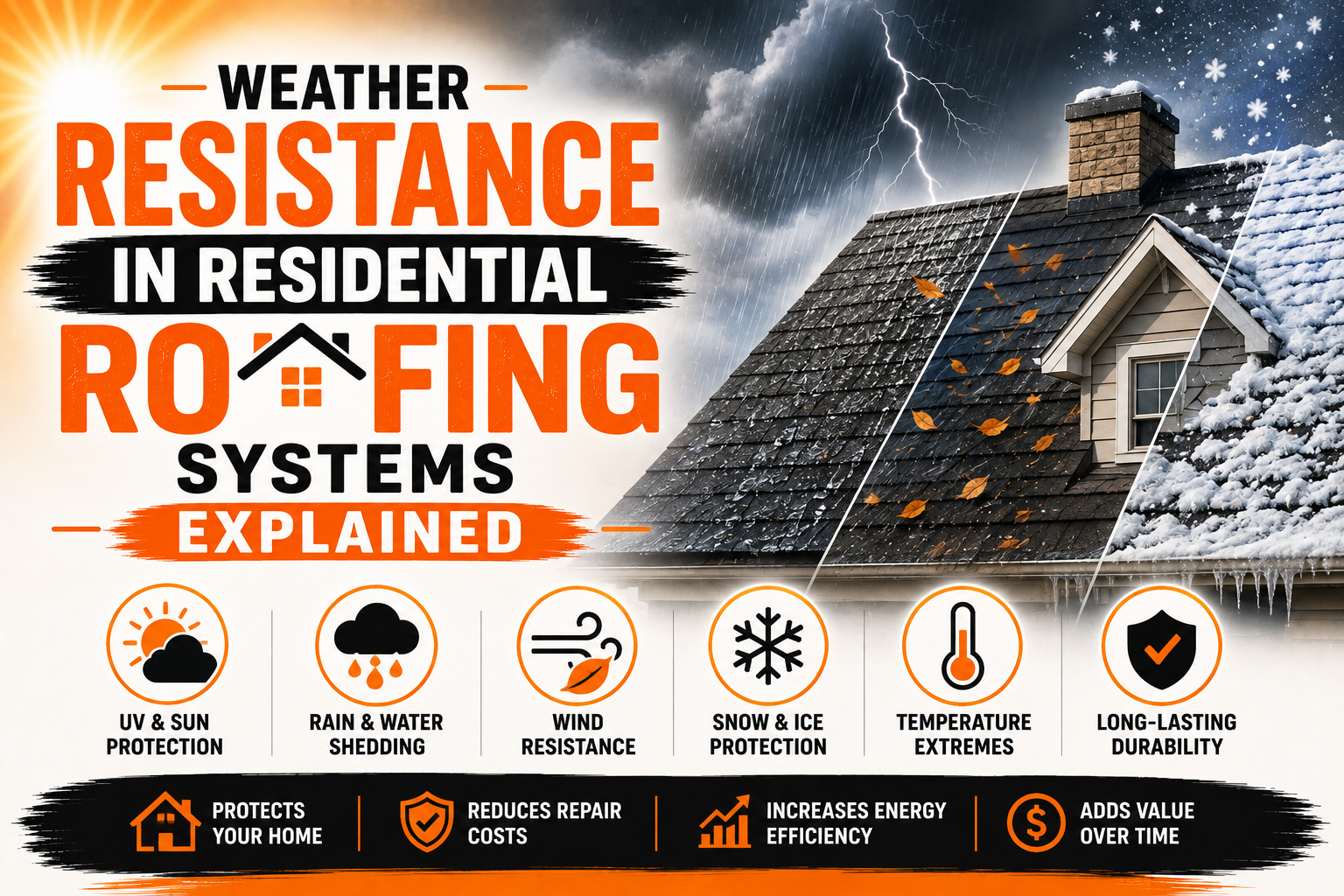
Weather Resistance in Residential Roofing Systems Explained
Introduction
A residential roof is the home’s first major defense against changing weather conditions. Every day, roofing materials are exposed to sunlight, rain, wind, humidity, temperature changes, and airborne debris that can gradually affect their performance. A weather-resistant roofing system is designed to manage these conditions while protecting the structure, interior spaces, insulation, and other building components from damage.
Weather resistance is not determined by the roofing material alone. The roof deck, underlayment, flashing, fasteners, ventilation, drainage, and installation quality all contribute to how well the complete system performs. A durable material can still develop problems when it is installed incorrectly or when important supporting components are neglected.
Different climates also create different challenges for residential roofs. A roof in a hot and sunny region may experience intense ultraviolet exposure and thermal movement, while a roof in an area with frequent storms may face strong winds, heavy rain, and impact from debris. Understanding these weather-related stresses helps homeowners choose suitable materials and maintain their roofs more effectively.
The goal of weather resistance is not simply to prevent a roof from leaking during ordinary rainfall. A well-designed system should continue protecting the home through repeated exposure to difficult conditions while allowing water to drain properly and supporting materials to remain protected. Understanding how these systems respond to individual weather factors provides a useful foundation for making better roofing decisions.
Understanding Weather Resistance in Roofing Systems
Weather resistance describes a roofing system’s ability to withstand environmental conditions without losing its ability to protect the building. This includes resistance to water penetration, wind uplift, heat, ultraviolet radiation, temperature fluctuations, and other conditions that can gradually or suddenly affect roofing performance. A roof with good weather resistance should continue performing its primary protective functions even as it experiences repeated exposure.
One important distinction is the difference between weather resistance and complete weatherproofing. No residential roof is completely unaffected by severe weather or aging, and every roofing material has limits. Weather resistance means the system is designed to reduce the likelihood of damage and maintain reliable performance under expected environmental conditions.
Several components work together to achieve this protection. The outer roofing material handles direct exposure, while underlayment provides an additional protective layer beneath it. Flashing protects vulnerable transitions and penetrations, while gutters, valleys, and slopes help move water away from the structure.
The roof’s design also affects its ability to handle weather. Roof pitch, orientation, drainage paths, overhangs, ventilation, and material selection all influence performance. A roofing system designed for its local environment can generally handle weather conditions more effectively than one selected without considering climate and building characteristics.
Weather resistance is influenced by several major factors:
- Quality and type of roofing material
- Installation methods and workmanship
- Roof slope and drainage design
- Underlayment and flashing condition
- Local temperature and precipitation patterns
- Wind and storm exposure
- Maintenance and inspection practices
The interaction between these factors is important because a weakness in one area can affect the entire system. For example, a durable roof surface may still experience interior water damage if flashing around a chimney or vent is poorly installed. Similarly, strong roofing materials may perform poorly if fasteners are incorrectly positioned or drainage is blocked.
A roof’s weather performance should therefore be viewed as a system-level characteristic rather than a single product feature. This approach becomes especially important when homeowners compare materials and evaluate their suitability for different climates.
How Rain and Moisture Affect Residential Roofs
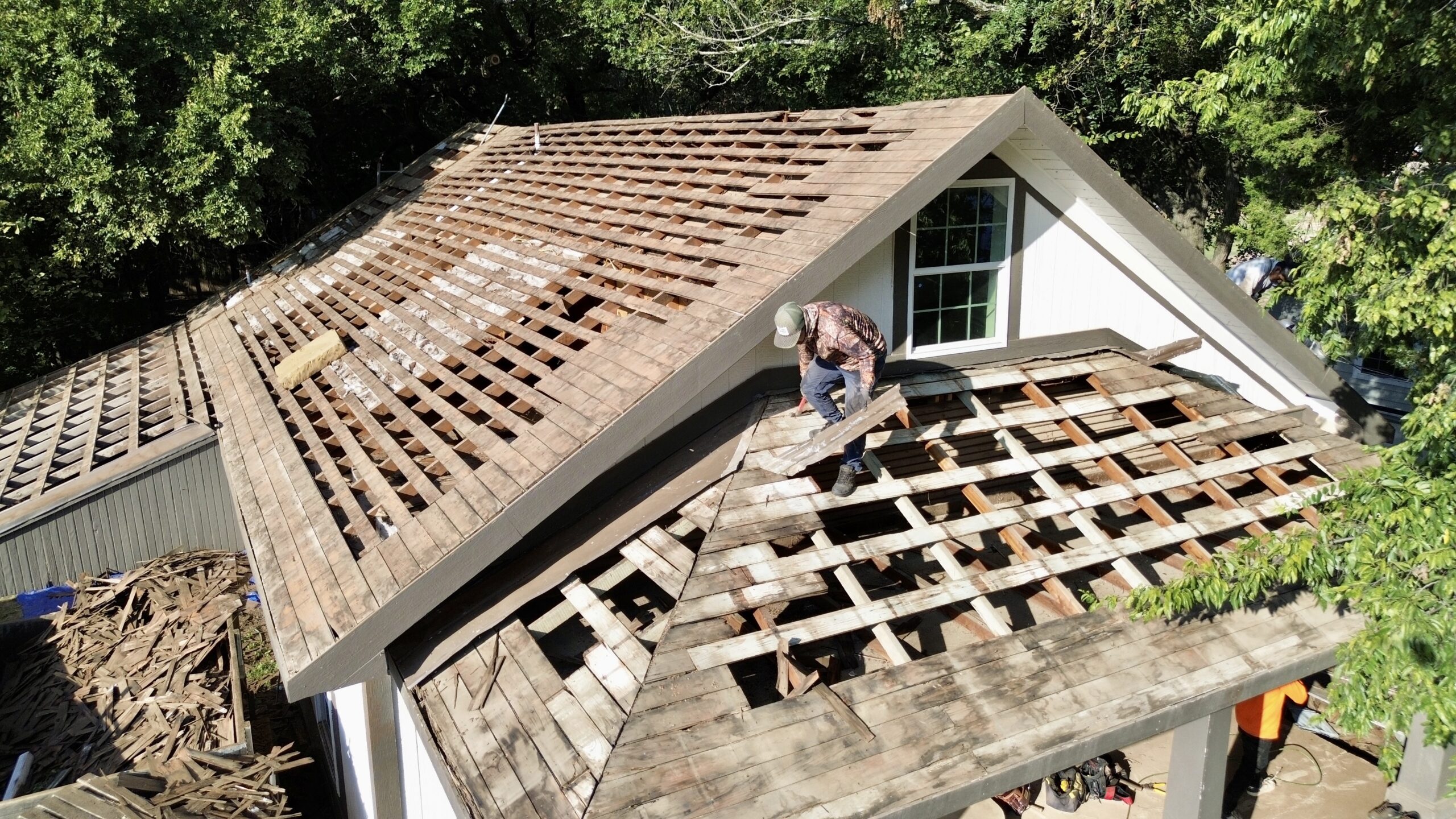
Rain is one of the most common weather conditions affecting residential roofing systems. While most roofing materials are designed to shed water, repeated exposure can gradually reveal weaknesses in materials, seams, flashing, drainage, or installation. The ability to move water quickly away from the roof is therefore central to long-term weather resistance.
Water normally reaches the roof surface and flows downward according to the roof’s slope. Shingles, tiles, panels, or other covering materials direct the water toward valleys, gutters, and drainage points. When these pathways remain clear and properly designed, water has less opportunity to collect around vulnerable areas.
Standing water creates a different situation. When water remains on a roof for extended periods, it can place additional stress on roofing materials and increase the likelihood of moisture reaching joints or deteriorated areas. Flat and low-slope roofs can be particularly dependent on effective drainage because water may move more slowly across their surfaces.
Heavy rainfall can also expose small weaknesses that may not be noticeable during normal weather. Damaged flashing, missing roofing components, deteriorated sealants, or blocked drainage paths can allow water to reach areas beneath the outer roof surface. Once moisture enters the roofing assembly, it may affect the roof deck, insulation, framing, and interior finishes.
Moisture problems can sometimes remain hidden for extended periods. A small leak may not immediately create a visible ceiling stain because water can travel along framing or other building materials before appearing indoors. This makes regular inspections valuable, particularly after periods of heavy rainfall.
Gutters and downspouts play an important role in rain resistance. They collect water from the roof and direct it away from exterior walls and foundations. When gutters become clogged, water may overflow against fascia boards or accumulate around roof edges, creating problems that extend beyond the roofing material itself.
Flashing is another critical defense against rainfall. It is commonly used around chimneys, vents, skylights, walls, valleys, and other areas where different surfaces meet. Properly installed flashing helps guide water away from openings and reduces the risk of moisture entering vulnerable joints.
The underlayment provides another layer of protection beneath many roofing materials. If rain reaches beneath a shingle, tile, or other surface component, a properly installed underlayment can provide additional resistance against water reaching the roof deck. Its condition becomes especially important when the outer roofing layer has been damaged or displaced.
Effective rain resistance therefore depends on more than simply selecting a waterproof-looking material. The entire system must provide continuous paths for water to drain while protecting transitions, penetrations, edges, and underlying structural components.
Wind Resistance and Roofing Performance
Wind can affect residential roofs in several different ways, ranging from gradual wear to sudden storm damage. Strong winds can lift roofing materials, loosen fasteners, damage flashing, and carry branches or other debris onto the roof surface. The severity of wind damage depends on wind speed, roof design, material type, installation quality, and the condition of the roofing system.
Wind pressure does not affect every part of a roof equally. Roof edges, corners, and areas near changes in direction can experience significant forces during strong storms. If roofing materials are not securely attached, these areas may become starting points for damage that spreads across larger sections.
Asphalt shingles rely on proper fastening and sealing to resist wind uplift. When nails are incorrectly positioned, insufficiently installed, or exposed to long-term deterioration, individual shingles may become more vulnerable. Once one section is lifted or removed, surrounding materials can become increasingly exposed to wind and rain.
Metal roofing systems use panels, seams, clips, or fasteners to secure the roof covering to the structure. Their performance depends heavily on correct attachment and installation details. Loose fasteners, damaged seams, or deteriorated seals can reduce the system’s ability to resist wind-driven rain.
Tile and slate have different wind-resistance characteristics because of their weight and attachment methods. Heavy materials can provide substantial stability, but individual pieces can still become displaced during severe weather if fastening systems fail. Broken or displaced pieces should be assessed promptly because openings can expose the underlayment and roof deck.
Wind-driven rain presents an additional challenge. Rain falling vertically may be shed effectively by a properly designed roof, but strong winds can force water sideways or upward against vulnerable areas. Flashing, seals, underlayment, and properly overlapped roofing components become particularly important under these conditions.
Roof geometry also influences wind performance. Steep slopes, complex roof shapes, multiple valleys, dormers, and penetrations can create areas where wind behaves differently. Good design and professional installation help ensure that these vulnerable locations receive appropriate protection.
After a severe wind event, homeowners should avoid assuming that the absence of an interior leak means the roof is undamaged. Missing or lifted materials can allow future rainfall to enter even when water has not yet reached the interior. A professional inspection can identify damage that is difficult to see from ground level.
Heat, Sunlight, and Ultraviolet Exposure
Heat and sunlight are major contributors to long-term roofing weathering, especially in regions that experience strong year-round solar exposure. Roofing materials can become extremely hot during direct sunlight, and repeated heating and cooling can cause physical changes over time. Ultraviolet radiation can also affect coatings, colors, flexibility, and surface properties.
Thermal movement occurs because materials expand when heated and contract as temperatures fall. Repeated expansion and contraction can place stress on seams, fasteners, joints, sealants, and other connections. Materials and installation systems that accommodate this movement are better positioned to maintain their performance over many years.
Asphalt shingles can gradually lose some of their protective characteristics as they age under sunlight. Surface granules help shield the asphalt from ultraviolet radiation, but gradual granule loss and weathering can occur. Excessive surface deterioration may reduce the material’s ability to resist further exposure.
Metal roofing can also experience changes from prolonged sunlight. Protective coatings may gradually fade or lose some of their original appearance, although coating quality can significantly influence long-term performance. The underlying metal remains protected when the coating system is maintained properly and vulnerable areas are addressed promptly.
Some roofing materials naturally tolerate high solar exposure better than others. Clay and slate, for example, can maintain their physical properties for long periods, although other components of their roofing systems may still deteriorate. Synthetic materials vary considerably, making product specifications and environmental testing important considerations.
Heat can also affect the space beneath the roof. Poor attic ventilation can allow excessive heat to accumulate, increasing temperatures within the roof assembly. Moisture management and ventilation therefore form an important part of overall roof durability, particularly in hot climates.
Roof color can influence solar heat absorption as well. Darker surfaces generally absorb more solar energy than lighter surfaces, although actual roof performance depends on material composition, ventilation, insulation, and local conditions. Homeowners should consider the entire building envelope rather than expecting roof color alone to solve heat-related concerns.
Protecting roofing materials from excessive environmental stress begins with suitable material selection and proper system design. When the roof is designed to accommodate local heat, sunlight, drainage, and ventilation conditions, the materials have a better opportunity to maintain their protective performance.
How Roofing Materials Respond to Weather
Different residential roofing materials provide different forms of weather resistance, and their strengths become more noticeable when they are exposed to specific environmental conditions. Asphalt shingles are widely used because they offer practical protection at a relatively accessible cost, while metal roofing is valued for durability and resistance to many severe weather conditions. Tile, slate, wood, and synthetic materials each bring their own combination of advantages and limitations.
Asphalt shingles can provide dependable protection when properly installed and maintained. They are designed to shed rain and resist ordinary wind exposure, but severe storms can cause granule loss, cracking, lifting, or missing shingles. Their performance can also vary significantly depending on shingle quality, roof slope, ventilation, and local weather.
Metal roofing is generally recognized for strong resistance to rain, wind, and fire when the appropriate system is selected and correctly installed. However, coatings, fasteners, seams, and flashing still require attention as the roof ages. Corrosion resistance can also become particularly important in humid or coastal environments.
Clay and concrete tiles can perform well under intense sunlight and many forms of weather exposure. Their rigid construction provides durability, but individual tiles may crack or shift due to impact, movement, or improper handling. The underlayment beneath the tiles remains an important part of the weather-resistant system.
Slate can provide exceptional long-term durability when high-quality material and appropriate installation methods are used. However, individual slate pieces can break and fastening components can eventually deteriorate. Because slate systems are specialized, repairs should generally be handled by professionals familiar with the material.
Wood roofing responds differently because it is an organic material. Moisture, sunlight, biological growth, and ventilation conditions can strongly influence its performance. Proper maintenance and moisture management are especially important when wood is used in climates with frequent rainfall or high humidity.
Synthetic and composite roofing materials offer another option for homeowners seeking specific combinations of appearance, weight, and weather resistance. Their performance depends heavily on the particular product, so homeowners should review manufacturer specifications rather than assuming all synthetic systems perform identically.
Weather resistance ultimately comes from the interaction of material properties, system design, installation quality, and maintenance. Understanding how each material responds to rain, wind, heat, and other environmental stresses makes it easier to evaluate which roofing system is appropriate for a particular home. In the next part, the discussion will move into hail, snow, humidity, flashing, material comparisons, and the important role installation quality plays in protecting a roof against demanding weather conditions.
Hail and Impact Resistance in Residential Roofing
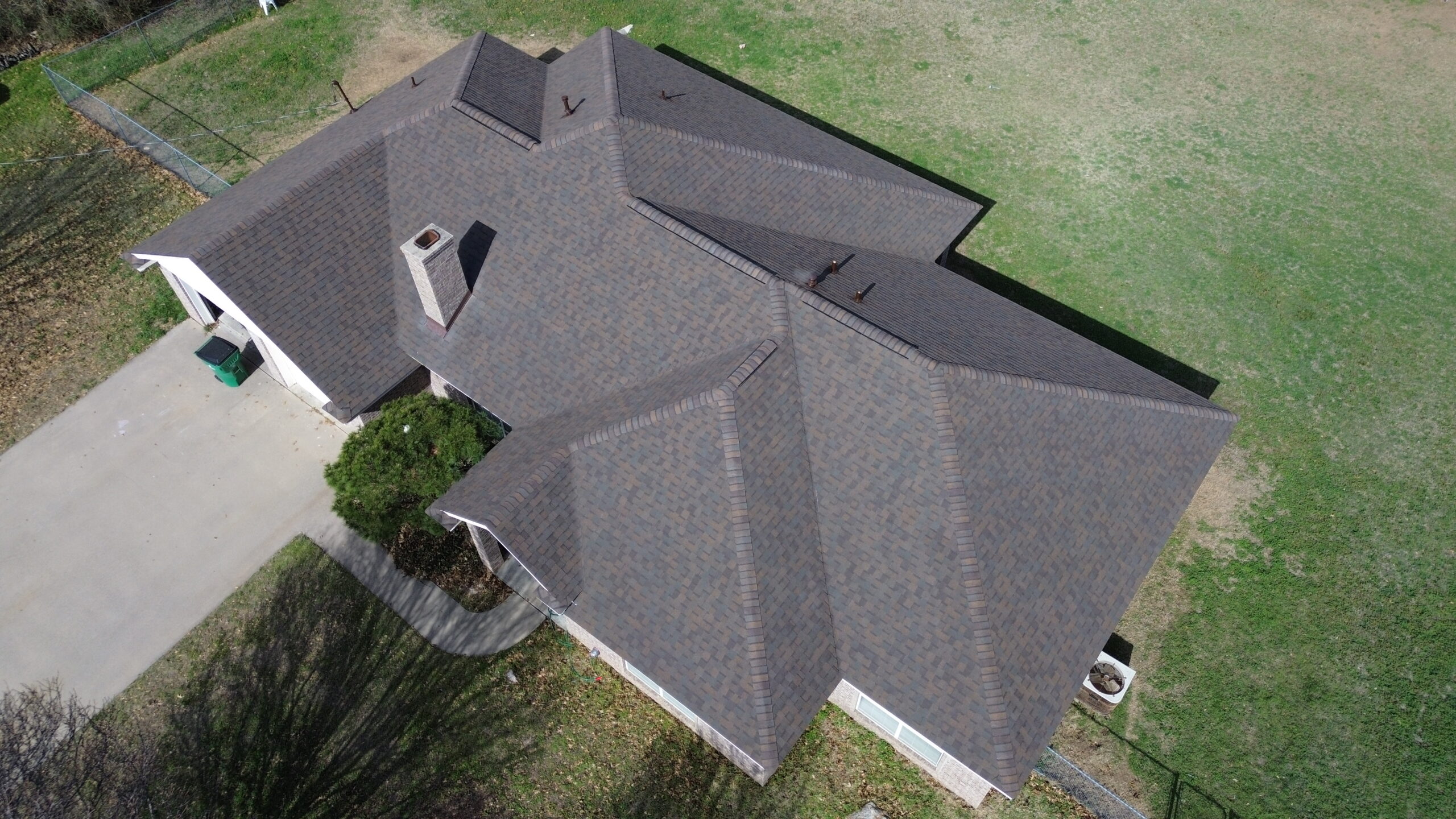
Hail can create some of the most sudden and difficult-to-detect forms of residential roof damage. Unlike ordinary rain or sunlight, hail can strike roofing materials with significant force within a short period. The resulting damage may range from small surface marks to cracked, broken, or displaced roofing components that eventually allow water to enter the home.
The level of hail resistance depends heavily on the roofing material and product design. Asphalt shingles can be manufactured with reinforced construction and impact-resistant features, while metal roofing can generally withstand many types of impact but may develop visible dents. Tile and slate can resist many weather conditions but may crack when struck directly by larger hailstones.
Hail damage is not always immediately obvious from the ground. Small impacts may damage protective granules or create fractures that become more significant after repeated exposure to rain and temperature changes. A roof can therefore appear acceptable while having weakened areas that deserve professional evaluation.
Roof slope can also influence how hail impacts a roofing system. The angle of the surface affects how directly hailstones strike the material and how quickly they move away after contact. However, no roof slope completely eliminates the risk of hail damage during a severe storm.
Nearby trees and surrounding structures can increase the risk as well. Strong storms may cause branches to fall or debris to strike the roof at the same time as hail. This can create multiple types of damage that should be considered during a post-storm inspection.
After a major hailstorm, homeowners should look for visible dents, cracked materials, exposed areas, damaged flashing, and excessive granules in gutters. Interior signs such as new ceiling stains or damp attic insulation should also be taken seriously. Even when no immediate leak is visible, professional inspection can help determine whether the roofing system has suffered hidden damage.
Impact-resistant roofing products may be worth considering in regions where hailstorms occur frequently. However, homeowners should evaluate the complete system rather than focusing only on a product label. Proper installation, underlayment, flashing, and maintenance still influence how the roof performs after repeated storms.
Snow, Ice, and Freeze-Thaw Conditions
Snow and ice create different demands for residential roofing systems than hot or rainy climates. Accumulated snow can add substantial weight to the roof structure, while melting and refreezing can create moisture-related problems. Roofing materials, drainage systems, flashing, and structural components must work together to manage these conditions.
Roof slope is especially important in areas that receive significant snowfall. Steeper roofs can encourage snow to slide away naturally, while lower-slope systems may retain snow for longer periods. However, roof design must account for the local climate and expected snow loads rather than relying on slope alone.
Ice dams can develop when heat escapes from the living area into the attic and warms portions of the roof surface. Snow may melt in these warmer areas and then refreeze near colder roof edges. The resulting ice can interfere with drainage and allow water to move beneath roofing materials.
Proper attic insulation and ventilation can help reduce uneven roof temperatures. Keeping warm air inside the conditioned portion of the building while allowing appropriate attic airflow can help maintain more consistent roof temperatures. This is an important part of managing ice-related risks in cold climates.
Freeze-thaw cycles can also affect roofing materials. Water can enter small cracks or porous areas, freeze as temperatures drop, and expand within those spaces. Repeated cycles may gradually enlarge existing defects, especially when materials or components are already weakened.
Tile and masonry-based roofing materials require particular attention in regions with frequent freezing conditions. Some products are designed specifically for cold climates, while others may be more vulnerable to repeated moisture and freezing. Product selection should therefore account for the local temperature range and installation requirements.
Metal roofing can perform well in snowy environments when properly designed and installed. Snow guards may sometimes be appropriate where sliding snow could create a safety hazard or damage lower roof sections. Fasteners, seams, flashing, and drainage components still require inspection because winter conditions can expose weaknesses in these areas.
Snow should not normally be removed from a roof using methods that could damage the roofing surface. Sharp tools, excessive force, or careless walking can create cracks and punctures. When snow accumulation becomes a structural or safety concern, professional assessment is generally the safer approach.
Resistance to Humidity, Mold, and Biological Growth
Humidity can have a significant effect on roofing performance, especially in warm and wet environments. Moisture in the air can contribute to condensation, biological growth, corrosion, and deterioration of materials when ventilation and drainage are inadequate. The roofing surface is only one part of this equation because attic conditions can also influence long-term moisture performance.
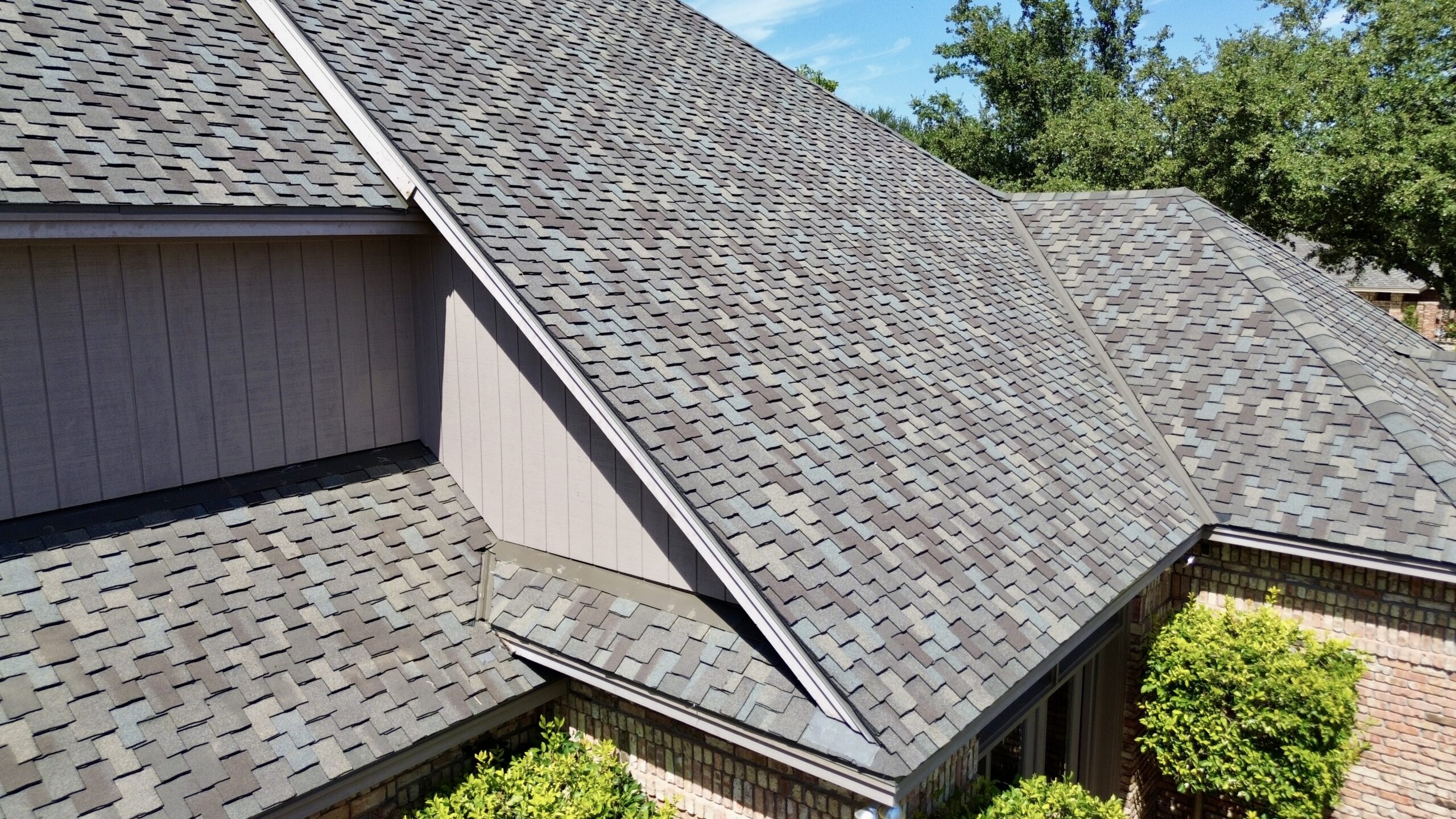
Moss, algae, and fungi can develop on roofing materials when moisture remains available for extended periods. Shaded roof sections are particularly susceptible because they receive less sunlight and may dry more slowly after rainfall. Dense vegetation near the home can increase this effect by limiting airflow and allowing debris to accumulate.
Algae can create dark streaks or patches on some roofing surfaces. While discoloration is often primarily an appearance concern, persistent moisture associated with biological growth may contribute to broader deterioration. Homeowners should therefore consider both the visible growth and the environmental conditions allowing it to develop.
Moss can be more concerning when it becomes thick enough to retain moisture against roofing materials. On certain surfaces, moss may also lift or disturb components as it grows. Removing it improperly can cause additional damage, so cleaning methods should be appropriate for the roofing material.
Humidity can also contribute to condensation beneath the roof. When warm, moist air reaches cooler surfaces, water vapor can condense and create moisture within the attic or roof assembly. Persistent condensation may damage insulation, wood components, fasteners, and other building materials.
Ventilation helps manage this problem by allowing air movement through appropriate attic spaces. However, ventilation should be combined with proper air sealing and insulation because uncontrolled air movement from the living area can carry moisture into the attic. The entire building assembly must therefore be considered.
Metal roofing deserves particular attention in humid or coastal environments because moisture can contribute to corrosion when protective coatings or vulnerable components are damaged. Proper material selection and compatible fasteners can reduce this risk. Regular inspections can also identify scratches, rust, and coating deterioration before they become more extensive.
Homeowners can reduce moisture-related roofing problems by keeping gutters clear, controlling nearby vegetation, maintaining ventilation, repairing leaks quickly, and avoiding unnecessary roof coverings or modifications that interfere with drainage. These simple practices can help roofing systems dry more effectively after wet weather.
Roofing Flashing, Seals, and Water Protection
Flashing is one of the most important components of a weather-resistant roofing system because it protects areas where the roof intersects with other building elements. These locations include chimneys, walls, skylights, vents, valleys, pipes, and roof edges. Without suitable flashing, water can find openings even when the main roofing material remains in excellent condition.
Flashing works by directing water away from vulnerable joints and toward drainage paths. Its design must account for water movement, material expansion, and the shape of the surrounding roof. Poorly installed flashing can create areas where water becomes trapped or redirected toward the structure.
Sealants are also used in selected roofing details, although they should not be viewed as a substitute for proper flashing and mechanical protection. Sealants can deteriorate through sunlight, temperature changes, moisture, and movement. When a seal fails, water may enter around penetrations or joints.
Roof penetrations require particular attention because they interrupt the continuous surface of the roof. Vents and pipes, for example, need properly integrated flashing or specialized components that remain watertight as the roofing system ages. Damaged boots, cracked seals, or loose flashing can become common sources of leaks.
Valleys also deserve careful inspection because they collect and direct substantial amounts of rainwater. Leaves and debris can accumulate in these areas and interfere with drainage. The materials used in valleys must be compatible with the roofing system and installed according to appropriate water-shedding principles.
Roof edges can be vulnerable to wind-driven rain and water overflow. Drip edges and properly designed gutters help direct water away from fascia and other structural elements. Damaged or poorly positioned edge components can contribute to moisture entering areas beneath the roof covering.
Weather-resistant flashing should remain integrated with the surrounding roofing system rather than functioning as an isolated patch. When repairs are necessary, replacement materials should be compatible with existing roofing components. Mixing unsuitable metals or materials can sometimes create additional deterioration through chemical reactions or incompatible movement.
Regular inspection of flashing can prevent relatively small problems from becoming expensive interior repairs. Because many flashing defects are difficult to identify from inside the home, professional roof inspections can be valuable as the system becomes older or after severe weather.
Comparing Weather Resistance Across Roofing Materials
No single roofing material is best for every climate or weather condition. Each material has characteristics that make it more suitable for certain environments and less suitable for others. Homeowners should therefore compare weather resistance according to the specific hazards their property is likely to experience.
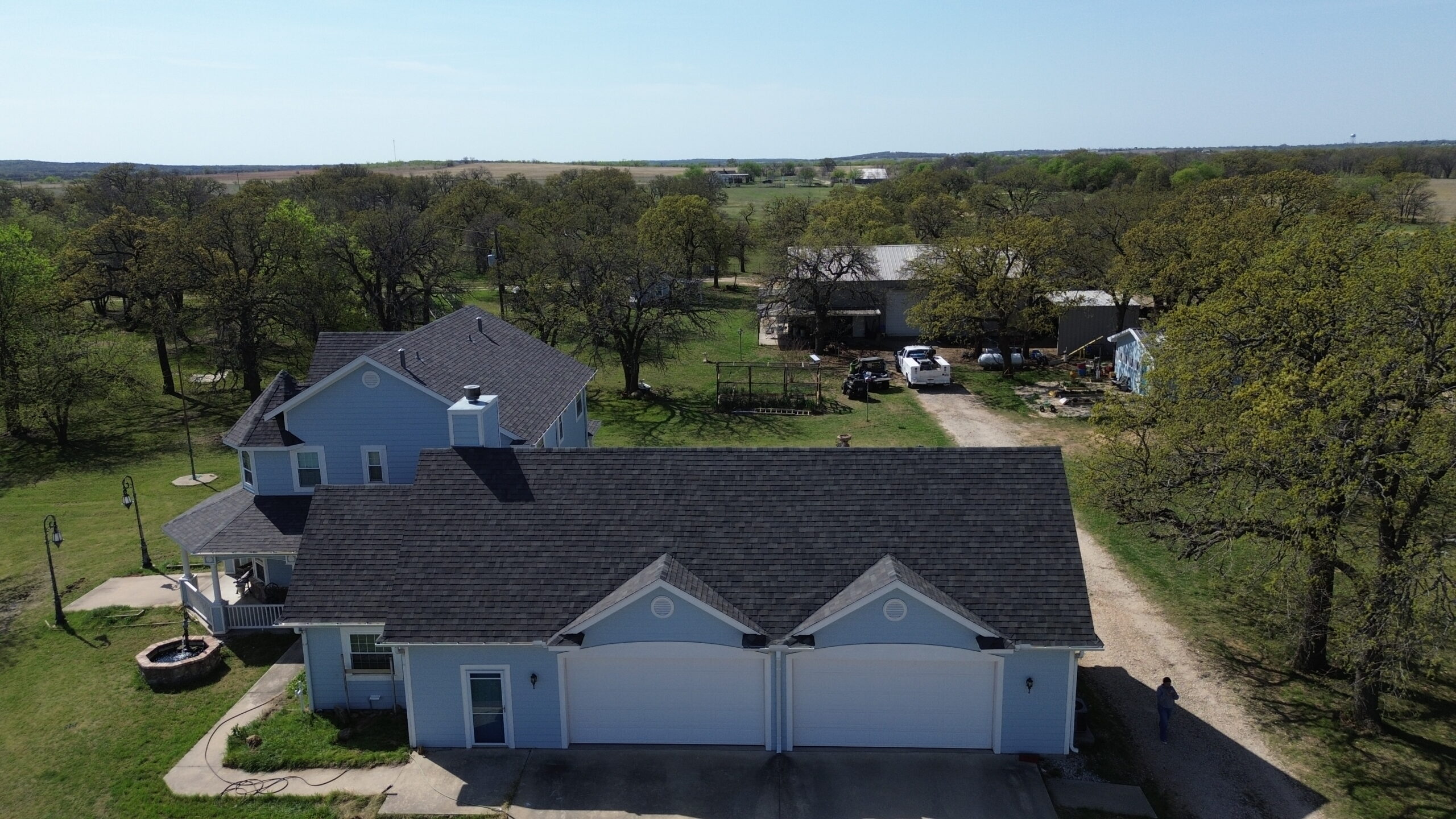
Asphalt shingles remain a common choice because they offer practical performance across many residential environments. Quality shingles can resist rain and ordinary wind exposure, while specialized products may provide improved impact or wind resistance. Their performance can decline when severe weather repeatedly damages the surface or when installation and maintenance are inadequate.
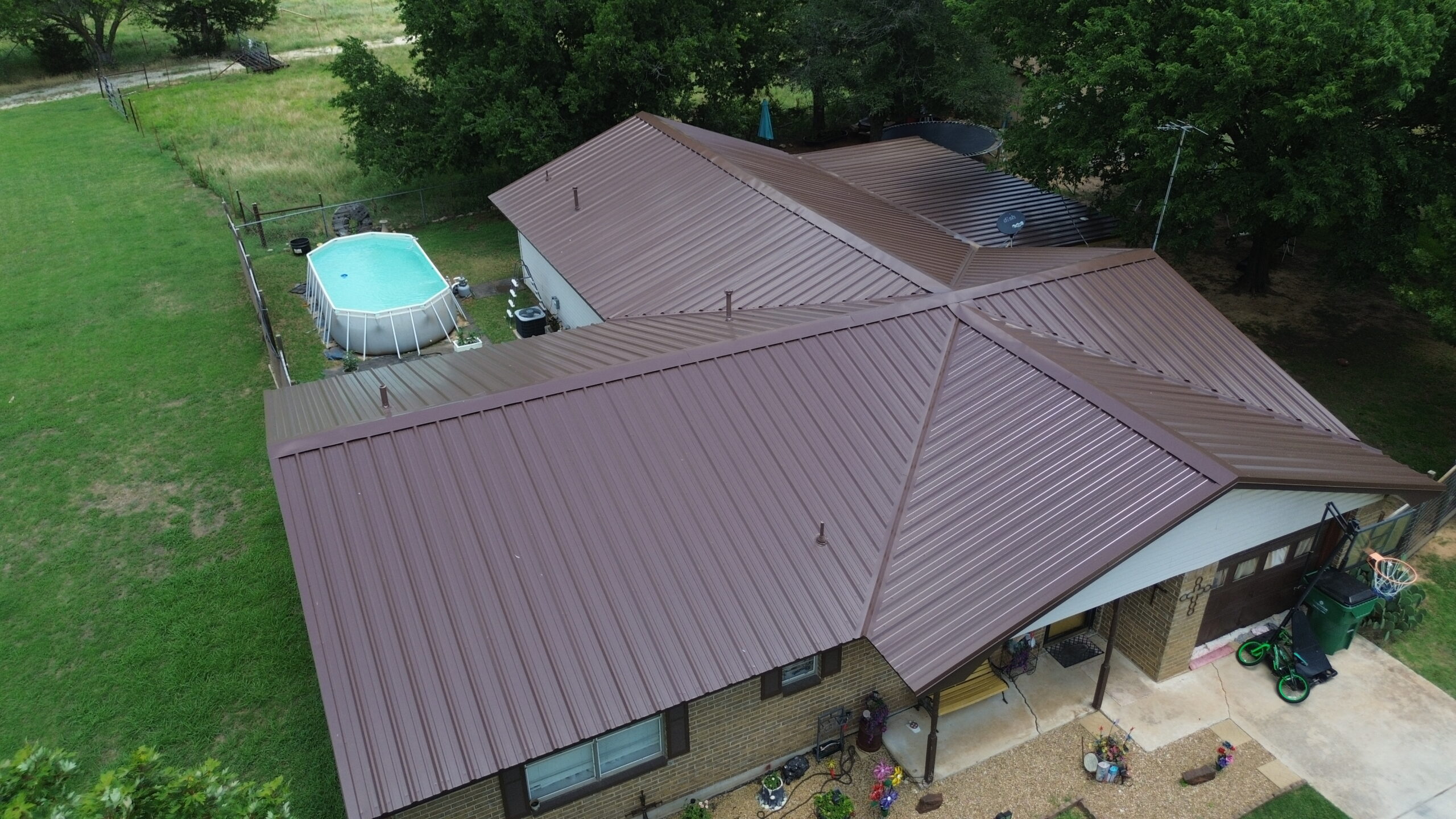
Metal roofing is often selected for its ability to handle strong weather conditions. Properly installed systems can provide excellent resistance to wind, rain, fire, and many forms of impact. The specific metal, coating, fastening system, and installation details still matter, especially in coastal or highly humid environments.
Clay and concrete tile provide strong resistance to sunlight and many forms of weathering. Their main vulnerability during severe storms can involve individual tiles becoming cracked or displaced. Their weight and installation requirements also need to be considered before selection.
Slate is valued for its long-term durability and resistance to many environmental stresses. However, it is not immune to impact damage, and its specialized installation and repair requirements can make it more demanding to maintain. The structural capacity of the building must also be appropriate for the material’s weight.
Wood roofing can provide effective weather performance when installed and maintained in suitable environments. Its sensitivity to moisture, biological growth, and fire conditions makes climate and maintenance particularly important. Proper spacing, ventilation, treatment, and drainage can help improve its long-term performance.
Synthetic roofing products can offer useful combinations of impact resistance, low weight, appearance, and moisture resistance. Their performance varies significantly between products, so homeowners should review testing information and manufacturer requirements. A synthetic roof should be judged according to its specific construction rather than its category alone.
| Roofing Material | Rain Resistance | Wind Resistance | Heat Resistance | Impact Considerations |
|---|---|---|---|---|
| Asphalt shingles | Good | Good to very good | Good | Product dependent |
| Metal roofing | Excellent | Very good | Very good | May dent depending on product |
| Clay tile | Excellent | Good to very good | Excellent | Individual tiles can crack |
| Concrete tile | Excellent | Good to very good | Very good | Can crack under strong impact |
| Slate | Excellent | Very good | Excellent | Individual pieces can break |
| Wood roofing | Good with maintenance | Good | Moderate to good | Can be damaged by severe impact |
| Synthetic roofing | Good to excellent | Product dependent | Product dependent | Often designed for improved impact resistance |
These comparisons provide a general guide rather than a guarantee of performance. Actual results depend on product specifications, installation quality, roof design, climate, and maintenance. Homeowners should evaluate the complete roofing system before deciding which material provides the best protection.
How Installation Quality Affects Weather Performance
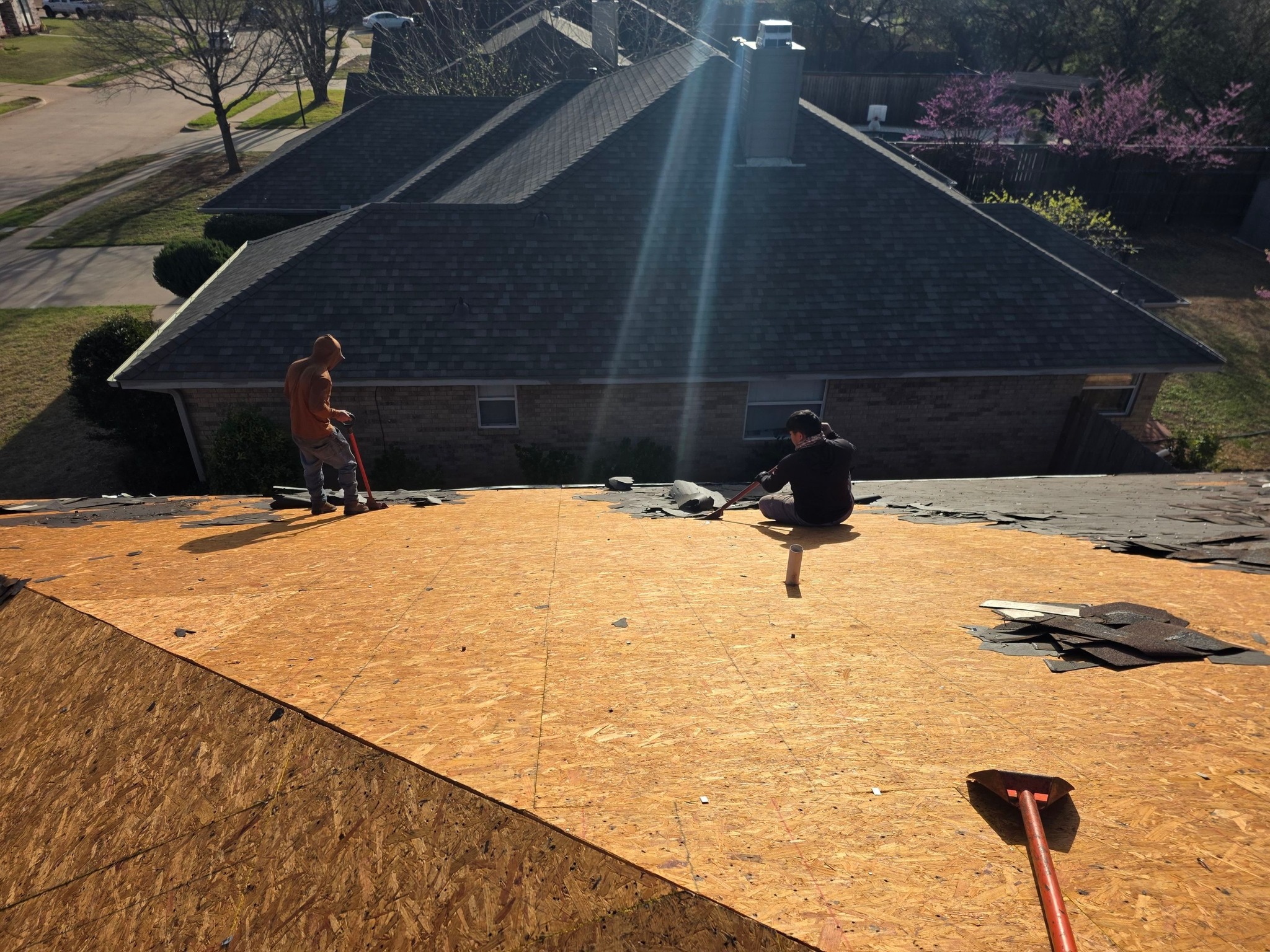
Even the most weather-resistant roofing material can perform poorly when it is installed incorrectly. Installation determines whether the materials are properly connected, overlapped, fastened, flashed, ventilated, and integrated with the building. Errors during installation can create weaknesses that may remain hidden until the roof encounters severe weather.
Fastener placement is particularly important for shingles, metal panels, tiles, and other mechanically attached systems. Incorrectly placed or insufficient fasteners can reduce resistance to wind uplift. Overdriving fasteners can also damage roofing components and create potential moisture entry points.
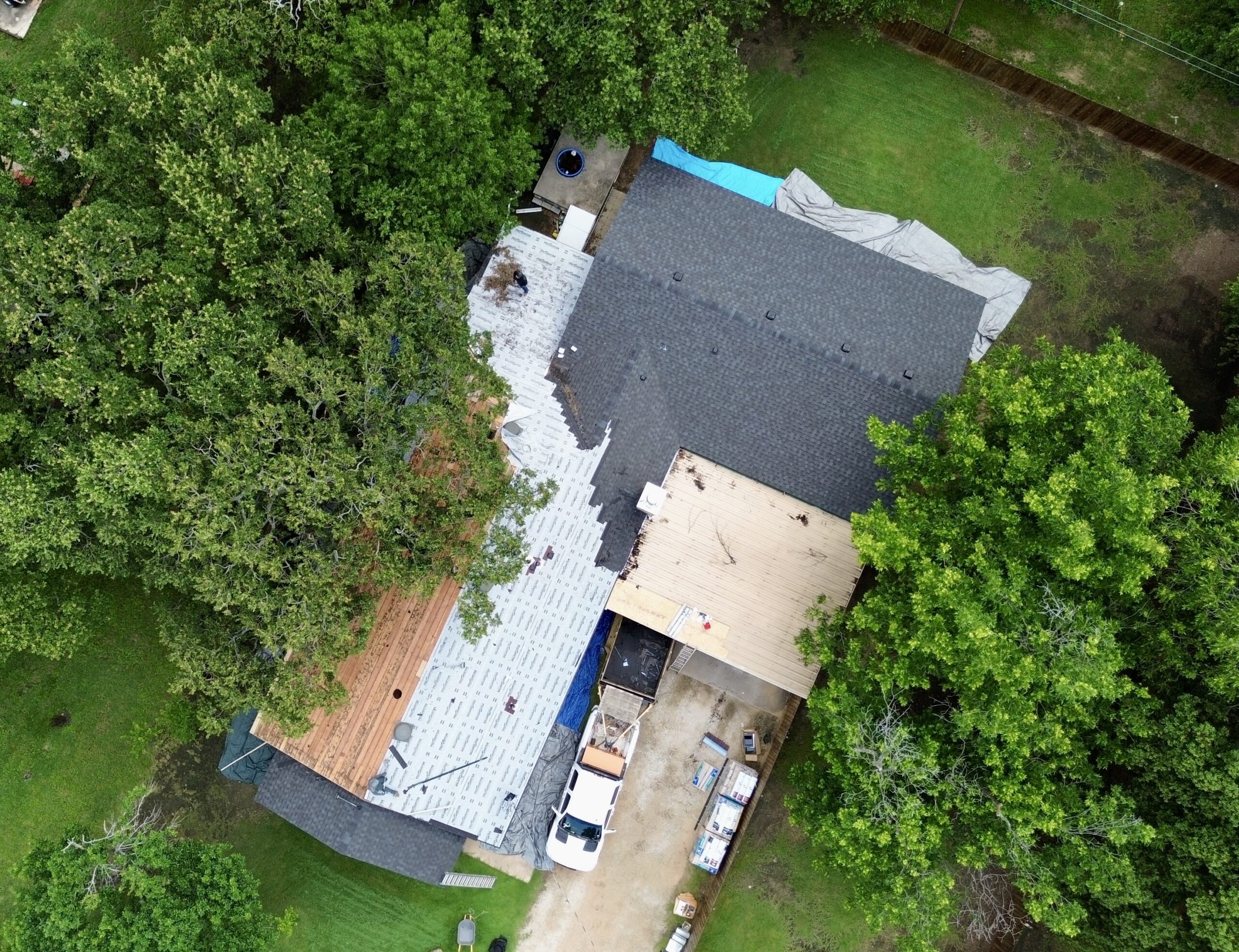
Underlayment must be installed correctly to provide an effective secondary moisture barrier. Gaps, poor overlaps, damaged sections, or unsuitable materials can reduce protection when water passes beneath the primary roof covering. The correct underlayment system should be selected according to the roof design and local requirements.
Flashing installation is another major area where workmanship affects weather resistance. Flashing should be properly integrated with surrounding materials rather than simply placed over visible gaps. Transitions around chimneys, walls, vents, skylights, and valleys require careful detailing because these areas are frequently exposed to complex water movement.
Ventilation should also be incorporated into the overall roof design. Improper ventilation can contribute to heat and moisture buildup, potentially reducing the lifespan of roofing and supporting components. Balanced airflow and proper insulation can help maintain more stable conditions within the roof assembly.
Installation quality is therefore one of the strongest factors connecting a roofing material’s advertised performance with its real-world results. A homeowner may choose a highly durable product, but that investment can be undermined by poor workmanship. Selecting experienced professionals, following manufacturer requirements, and inspecting critical installation details can help ensure that the roof is prepared to handle the weather conditions it will encounter throughout its service life.
Maintenance Strategies for Weather-Resistant Roofs
Maintaining a weather-resistant roof is an ongoing process that begins soon after installation and continues throughout the roof’s service life. Even strong roofing materials can gradually lose performance when exposed to sunlight, rain, wind, humidity, temperature changes, and debris. Regular maintenance helps identify developing weaknesses before they become major sources of water intrusion or structural damage.
Routine inspections should focus on the entire roofing system rather than only the visible roof covering. Homeowners should check for damaged shingles, cracked tiles, loose panels, deteriorated flashing, exposed fasteners, blocked valleys, damaged seals, and areas where water may collect. Professional inspections are especially useful because some problems can develop beneath the surface or in locations that are difficult to see safely from the ground.
Gutters and downspouts should remain clear throughout the year. Leaves, branches, dirt, and other debris can prevent water from flowing away efficiently, causing overflow near roof edges and exterior walls. In areas with many trees, gutters may require more frequent attention because repeated debris accumulation can interfere with drainage during heavy rainfall.
The roof should also be inspected after significant storms. Strong wind, hail, heavy rain, and falling branches can cause damage that may not produce an immediate leak. Finding and repairing storm-related damage early can prevent a small defect from becoming a larger moisture problem.
Homeowners should avoid using unsuitable cleaning methods on roofing materials. Pressure washing, harsh chemicals, sharp tools, or unnecessary foot traffic can damage protective surfaces and reduce weather resistance. Cleaning and maintenance methods should always be appropriate for the specific material and recommended by the manufacturer or a qualified roofing professional.
Attic conditions should be included in the maintenance routine as well. Signs of moisture, condensation, damaged insulation, mold growth, or inadequate airflow can indicate problems that may eventually affect the roof. Proper ventilation and insulation help control temperature and moisture while supporting the long-term performance of the roofing system.
Small repairs should be addressed before they become widespread. Replacing a damaged flashing component, sealing an appropriate joint, replacing a missing shingle, or repairing a blocked drainage area may prevent much more expensive damage later. Timely maintenance is therefore one of the simplest ways to preserve a roof’s ability to resist changing weather.
Warning Signs of Weather-Related Roofing Damage
Weather-related roof damage does not always appear immediately after a storm. Some defects are obvious, while others develop gradually as repeated exposure weakens materials and allows moisture to enter. Recognizing warning signs can help homeowners arrange an inspection before damage spreads into the roof deck or interior of the home.
Missing or lifted shingles are common indicators of wind damage. A shingle may appear slightly raised or displaced even when it has not completely separated from the roof. If the attachment has been weakened, future storms can create additional movement and expose the underlying layers.
Metal roofing may show dents, scratches, corrosion, loose fasteners, or damaged seams after severe weather. A dent is not automatically a sign that the entire roof needs replacement, but damage should be assessed to determine whether the protective coating or watertight connections have been affected. Rust around fasteners or joints can also indicate areas that require attention.
Broken or displaced tiles and slate pieces are important warning signs because they can create openings in the roofing surface. The underlying material may continue providing temporary protection, but leaving damaged sections exposed can increase the risk of water penetration. Repairs should be completed carefully because improper movement across tile or slate roofs can create additional breakage.
Interior evidence can be equally important. Water stains on ceilings or walls, damp insulation, peeling paint, musty odors, and unexplained moisture can indicate that water has reached the building interior. The visible location of a stain may not correspond directly with the point where water entered the roof.
Homeowners should pay particular attention to these conditions:
- New or recurring ceiling stains
- Damaged or missing roofing components
- Visible gaps around flashing or roof penetrations
- Sagging areas of the roof
- Persistent moisture or condensation in the attic
- Excessive granules or roofing debris in gutters
- Corrosion, cracking, or deteriorated seals
A roof can still look attractive while developing problems beneath the surface. For this reason, visual appearance should never be the only factor used to judge weather resistance. The age, material condition, installation quality, previous repairs, and storm history should all be considered when evaluating the roof.
Improving Roof Performance Before Severe Weather
Preparing a roof before severe weather can reduce the likelihood of preventable damage. While no residential roofing system can guarantee complete protection during extreme conditions, proper preparation can improve the roof’s ability to manage wind, rain, hail, and debris.
One useful step is inspecting the roof before the storm season begins. Loose shingles, damaged flashing, deteriorated seals, blocked valleys, and other defects are easier to correct before heavy weather arrives. Waiting until a major storm is approaching may make repairs more difficult or impossible.
Trees around the property should also be evaluated. Overhanging branches can scrape roofing materials during windy conditions and may fall onto the roof during severe storms. Removing hazardous branches and maintaining suitable clearance can reduce the risk of impact damage.
Gutters and downspouts should be cleaned before periods of expected heavy rainfall. Water needs a clear path away from the roof and the structure. Blocked drainage can turn an otherwise manageable rainfall event into a significant moisture problem.
Roof penetrations deserve special attention before storm season. Chimneys, vents, skylights, and pipes should have secure flashing and properly maintained seals. These areas can become particularly vulnerable when wind-driven rain forces water against joints and transitions.
Homeowners should also understand the limitations of their roofing material. An asphalt shingle system designed for ordinary conditions may not provide the same level of impact resistance as a specialized product. Similarly, a roofing system suitable for a dry climate may require different considerations in an area with heavy snow, high humidity, or frequent hurricanes.
Preparation can be approached through a simple sequence:
- Inspect the roofing surface and identify visible defects.
- Check flashing, penetrations, valleys, gutters, and drainage paths.
- Remove or manage nearby branches that could strike the roof.
- Repair minor weaknesses before severe weather arrives.
- Review the roof’s age and previous storm damage history.
- Arrange a professional inspection when conditions are difficult to evaluate safely.
Preparing early provides more time to correct weaknesses and reduces the likelihood of emergency repairs during severe weather. It also helps homeowners understand the current condition of the roofing system before an event occurs.
Repair or Replacement After Weather Damage
After severe weather, homeowners often face the difficult question of whether the roof needs a repair or complete replacement. The answer depends on the type, location, age, and extent of damage. A small number of damaged components may be repairable, while widespread deterioration can make replacement more practical.
The first step is identifying the cause of the damage. Wind, hail, heavy rain, falling branches, snow, or long-term moisture exposure can produce different types of defects. Understanding the cause helps determine whether the problem is isolated or part of a larger weakness.
The roof’s age is also important. Repairing a relatively new roof with limited storm damage may be a sensible way to restore performance. On an older roof that already has widespread weathering, repeated repairs may provide only temporary benefits because additional components may fail soon afterward.
The condition of the underlying structure should also be evaluated. Water that has entered through damaged roofing materials may affect the roof deck, insulation, framing, or interior finishes. Replacing only the visible surface without addressing moisture-related damage can allow problems to continue.
Material availability can influence repair decisions as well. Matching older roofing products may be difficult when a material has been discontinued or changed significantly. A professional may need to determine whether a compatible repair is possible without creating noticeable differences in appearance or performance.
Insurance considerations may also arise after major weather events. Homeowners should document visible damage, keep records of maintenance and repairs, and follow their policy’s procedures when making a claim. Professional inspection reports and photographs can help provide useful documentation.
Replacement may become the better option when damage is extensive, the roof is near the end of its expected service life, or multiple areas have already experienced deterioration. A replacement project also creates an opportunity to improve flashing, ventilation, drainage, underlayment, and material selection.
The most important principle is to avoid making a decision based solely on one damaged area. A complete assessment should consider the entire roofing system and its ability to provide reliable weather protection for the years ahead.
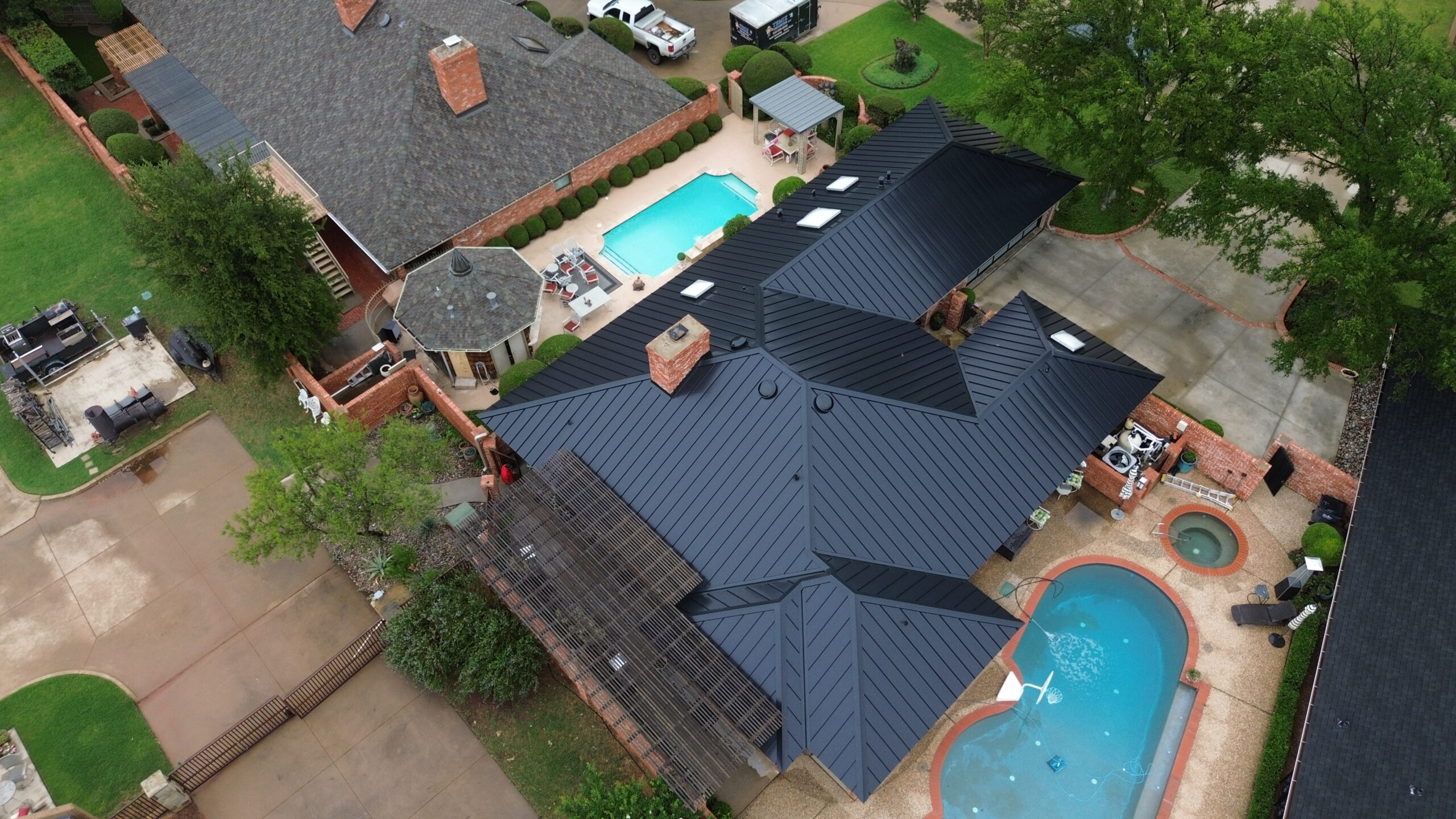
Choosing Roofing Materials for Local Weather Conditions
The best roofing material for a home depends heavily on the weather conditions it is expected to face. A material that performs exceptionally well in one environment may require additional considerations in another. Homeowners should therefore begin material selection by understanding the local climate and the specific weather risks associated with the property.
Areas with frequent high winds require careful attention to fastening systems, edge details, roof design, and wind-rated materials. Asphalt shingles with appropriate wind performance, properly attached metal systems, and securely installed tile can all provide good results when matched to the conditions and installed correctly.
Regions with frequent hailstorms may benefit from roofing products designed and tested for impact resistance. Metal, certain reinforced shingle products, and selected synthetic systems may provide useful options depending on the home’s design and budget. However, impact resistance should be considered alongside installation quality and the condition of supporting components.
Hot and sunny climates create different priorities. Materials need to tolerate prolonged ultraviolet exposure and repeated temperature changes without excessive deterioration. Proper attic ventilation, insulation, reflective properties, and suitable coatings can also contribute to overall roof performance.
Cold and snowy climates require consideration of snow loads, ice formation, freeze-thaw cycles, drainage, and ventilation. Roofing materials should be appropriate for repeated freezing conditions, while the overall roof design should support effective water management as snow and ice melt.
Humid and coastal areas create additional challenges because moisture and salt exposure can accelerate deterioration of vulnerable components. Corrosion-resistant metals, suitable coatings, proper ventilation, and regular maintenance can help reduce these risks. Roofing materials should be selected with the surrounding environment in mind rather than relying only on general durability ratings.
A useful material-selection approach is to compare the following factors:
| Weather Condition | Important Roofing Considerations | Materials or Features to Evaluate |
|---|---|---|
| Heavy rain | Drainage, flashing, underlayment | Water-shedding systems and quality flashing |
| Strong wind | Fastening, edges, seams | Wind-rated shingles and secure panel systems |
| Hail | Impact resistance | Reinforced shingles, metal, selected synthetic products |
| Extreme heat | UV and thermal performance | Durable coatings and suitable ventilation |
| Snow and ice | Load, drainage, freeze-thaw resistance | Appropriate slope, ventilation, and cold-weather products |
| High humidity | Moisture and biological growth | Ventilation and moisture-resistant systems |
| Coastal exposure | Salt and corrosion | Corrosion-resistant metals and compatible fasteners |
The table demonstrates that weather resistance should be matched to actual environmental conditions. There is no universal roofing material that eliminates every weather-related risk. Instead, the strongest results come from combining an appropriate material with suitable design, professional installation, and consistent maintenance.
Conclusion
Weather resistance is one of the most important characteristics to consider when evaluating a residential roofing system. A roof must deal with rain, wind, sunlight, heat, hail, snow, humidity, and temperature changes while continuing to protect the structure beneath it. Its performance depends not only on the visible roofing material but also on underlayment, flashing, fasteners, drainage, ventilation, roof design, and installation quality.
Different roofing materials respond to weather in different ways. Asphalt shingles can provide practical and reliable protection when properly installed, metal roofing can offer strong resistance to many severe conditions, and tile and slate can provide long-term durability when their structural and maintenance requirements are properly managed. Wood and synthetic systems can also perform effectively when they are selected for suitable environments and maintained according to their specific needs.
Preparation and maintenance are just as important as material selection. Regular inspections, clear drainage systems, properly maintained flashing, controlled vegetation, adequate ventilation, and timely repairs can help prevent small weaknesses from becoming major failures. After severe weather, a professional inspection can reveal damage that may not be visible from the ground or inside the home.
Ultimately, a weather-resistant roof should be viewed as a complete protective system rather than a single product. The right combination of material, design, installation, maintenance, and climate suitability gives a residential roof the best opportunity to withstand changing weather and provide dependable protection throughout its useful life.