
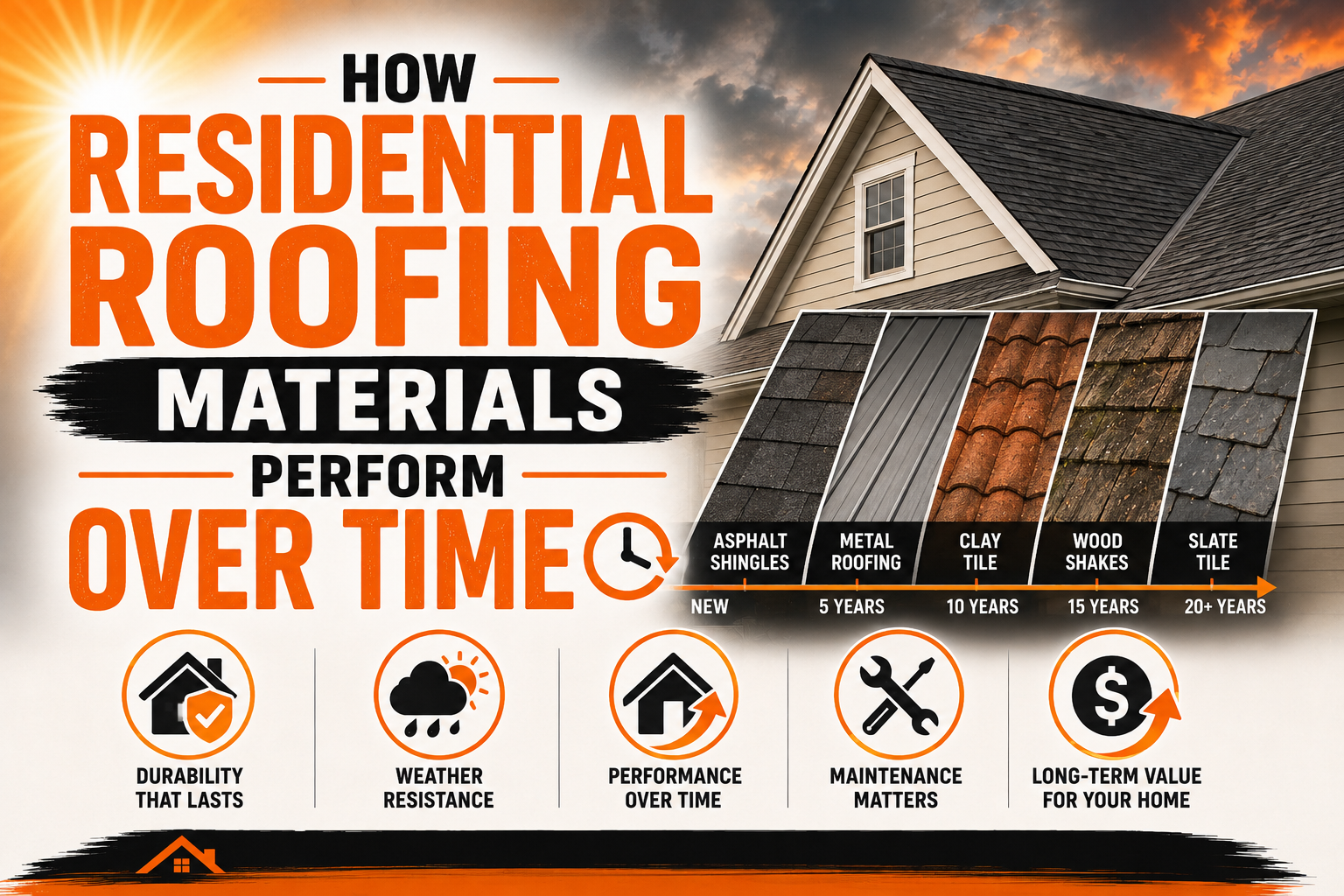
How Residential Roofing Materials Perform Over Time
Introduction
A residential roof does much more than keep rain and sunlight out of a home. It protects the structure, supports indoor comfort, helps control moisture, and contributes significantly to the property’s appearance and value. Because a roof remains exposed to changing weather conditions every day, its performance naturally changes as the years pass. Understanding how residential roofing materials perform over time can help homeowners recognize normal aging, plan maintenance, and make better decisions about repairs or replacement.
Every roofing material responds differently to age and environmental exposure. Asphalt shingles may gradually lose protective granules, metal roofing can experience coating changes or surface corrosion, and other materials may develop cracks, discoloration, or weathering. The actual service life of a roof depends not only on the material itself but also on installation quality, ventilation, drainage, climate, maintenance, and exposure to severe weather.
A roof that is properly installed and maintained can often perform well for many years, while a poorly installed roof may develop problems much earlier. For homeowners, the important question is not simply how long a particular roofing material is advertised to last. It is also how that material behaves throughout its service life and what can be done to preserve its performance.
How Roofing Materials Change With Age
Roofing materials are designed to withstand repeated exposure to environmental conditions, but no material remains completely unchanged. Ultraviolet radiation, temperature fluctuations, rain, wind, humidity, snow, ice, and airborne debris can gradually affect the surface and underlying components. Over time, these factors can reduce the material’s ability to resist moisture and maintain its original appearance.
One of the most important aging processes is repeated expansion and contraction. Roofing materials heat up during sunny conditions and cool down when temperatures fall. This constant movement can place stress on seams, fasteners, joints, sealants, and surrounding components. Materials that are exposed to frequent and extreme temperature changes may show signs of aging sooner than those in more moderate environments.
Moisture is another major factor in long-term roof performance. Water that remains on or beneath roofing materials can contribute to deterioration, staining, mold growth, corrosion, or damage to the roof deck. Good drainage is therefore essential because a roofing system performs best when water is directed away from vulnerable areas instead of being allowed to remain against them.
The condition of a roof can also be affected by biological growth. In damp or shaded areas, moss, algae, and similar growth can develop on certain roofing materials. These organisms may not immediately cause structural damage, but heavy growth can retain moisture and interfere with normal surface performance.
Several common factors influence how quickly a roof ages:
- Local climate and seasonal temperature changes
- Quality of the original installation
- Regular inspection and maintenance
- Ventilation and attic moisture control
- Exposure to wind, hail, falling branches, and debris
- Roof slope and drainage conditions
- Quality and compatibility of roofing materials
These factors explain why two roofs made from the same material can have very different performance histories. A roof installed correctly and maintained consistently may remain functional long after another roof of the same material has begun experiencing significant problems.
Asphalt Shingles and Their Long-Term Performance
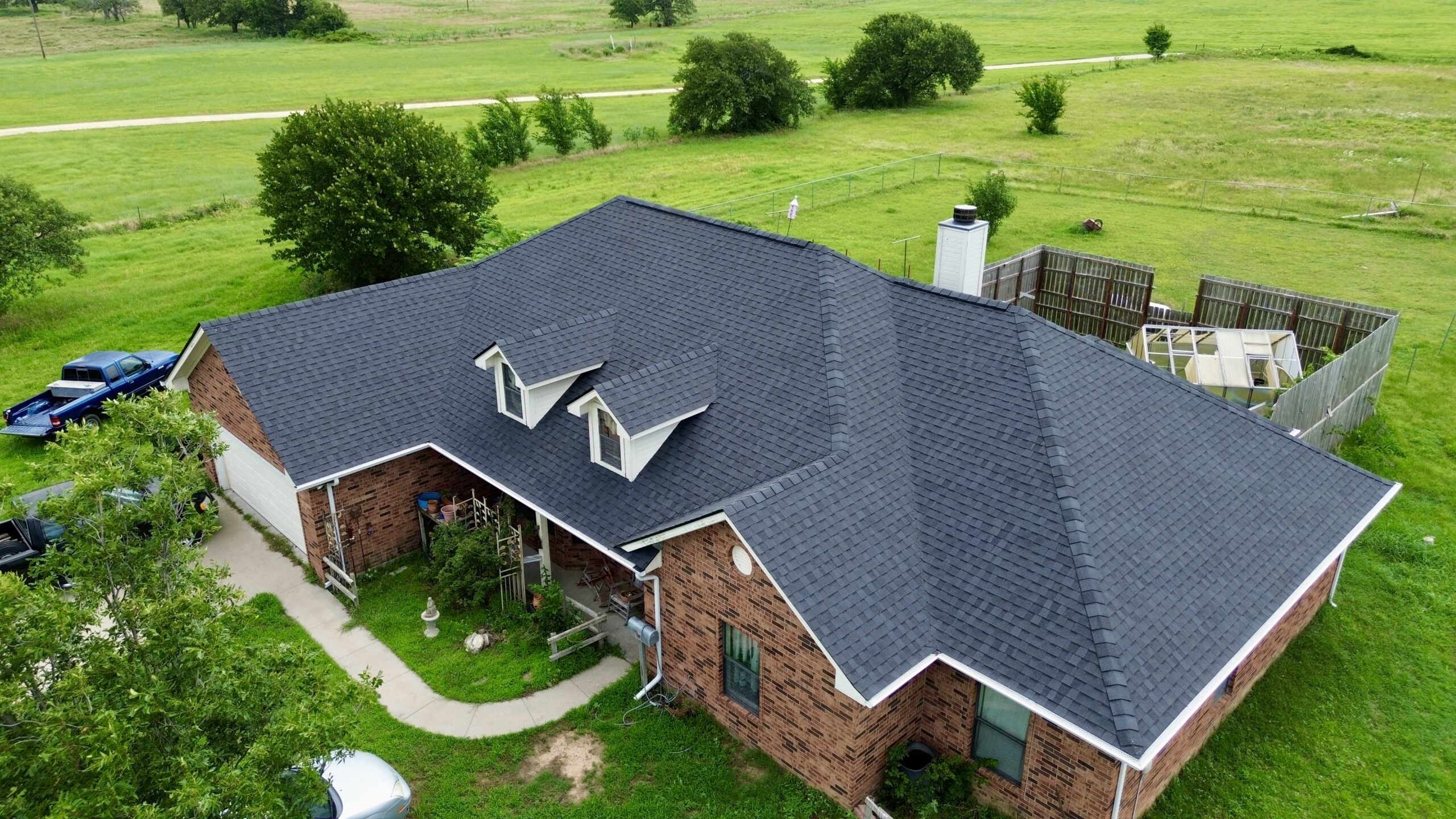
Asphalt shingles remain one of the most widely used residential roofing materials because they offer a practical balance between cost, appearance, installation flexibility, and performance. They are available in several styles and quality levels, allowing homeowners to choose products suited to different budgets and architectural designs. Their long-term performance, however, depends heavily on weather exposure and maintenance.
Asphalt shingles generally begin aging from the moment they are exposed to outdoor conditions. Sunlight gradually affects the asphalt and protective surface, while wind and rain repeatedly stress the shingle tabs and surrounding areas. The mineral granules embedded in the surface help protect the shingles from ultraviolet exposure, but some granule loss is expected as the roof becomes older.
Color changes can also become noticeable with age. Some shingles may fade gradually because of prolonged exposure to sunlight, while algae can create dark streaks or discoloration in humid environments. Although changes in appearance do not always mean that a roof has failed, they can provide useful clues about the roof’s age and exposure conditions.
More serious signs appear when shingles lose flexibility or begin to deteriorate physically. Cracked, curled, blistered, or missing shingles can create openings where water may enter the roofing system. Once moisture reaches the underlayment or roof deck, damage can spread beyond the visible surface and become more expensive to correct.
The quality of installation also has a major influence on asphalt shingle performance. Proper fastening, correct alignment, suitable underlayment, adequate flashing, and appropriate ventilation all contribute to a longer-lasting roofing system. Even high-quality shingles can perform poorly when important installation details are overlooked.
Regular inspections can help identify developing problems before they become widespread. Homeowners should pay particular attention after major storms because high winds can loosen or remove shingles, while hail can damage the surface without always producing an obvious leak inside the home. Early repairs can help prevent small defects from developing into larger moisture problems.
Metal Roofing and Performance Over the Years
Metal roofing has become increasingly popular in residential construction because of its durability, versatility, and resistance to many common weather conditions. Depending on the product and installation system, metal roofs can be manufactured from materials such as steel, aluminum, copper, or other metal alloys. Their performance over time is strongly influenced by the quality of the metal, protective coating, fastening system, and installation.
One of the major advantages of metal roofing is its resistance to many forms of physical weathering. Properly installed metal panels can withstand strong winds and repeated rain exposure, while many systems are designed to resist impact and fire effectively. However, metal roofing is not completely maintenance-free.
Protective coatings play an important role in long-term performance. Painted or coated metal surfaces are designed to protect the underlying material from environmental exposure. Over many years, sunlight can gradually change the appearance of the coating, while scratches or exposed areas can create locations where corrosion may develop under unfavorable conditions.
Fasteners and joints require particular attention because they can become vulnerable as a roof ages. Thermal movement causes metal panels to expand and contract, and this movement places stress on connection points. If fasteners loosen, seals deteriorate, or flashing becomes damaged, water may find a path into the roofing assembly.
Different metal roofing systems also respond differently to coastal air, industrial pollution, humidity, and other environmental conditions. For example, areas with high moisture or salt exposure may require careful material selection and maintenance to limit corrosion risks. Choosing compatible metals and coatings is important because contact between unsuitable materials can sometimes accelerate corrosion.
A metal roof can continue to perform effectively for decades when its components remain in good condition. Routine inspections should focus on panel condition, fasteners, seams, flashing, penetrations, drainage areas, and signs of corrosion. Small coating or fastening problems are generally easier to address before they affect larger sections of the roof.
The Role of Installation Quality in Roof Longevity
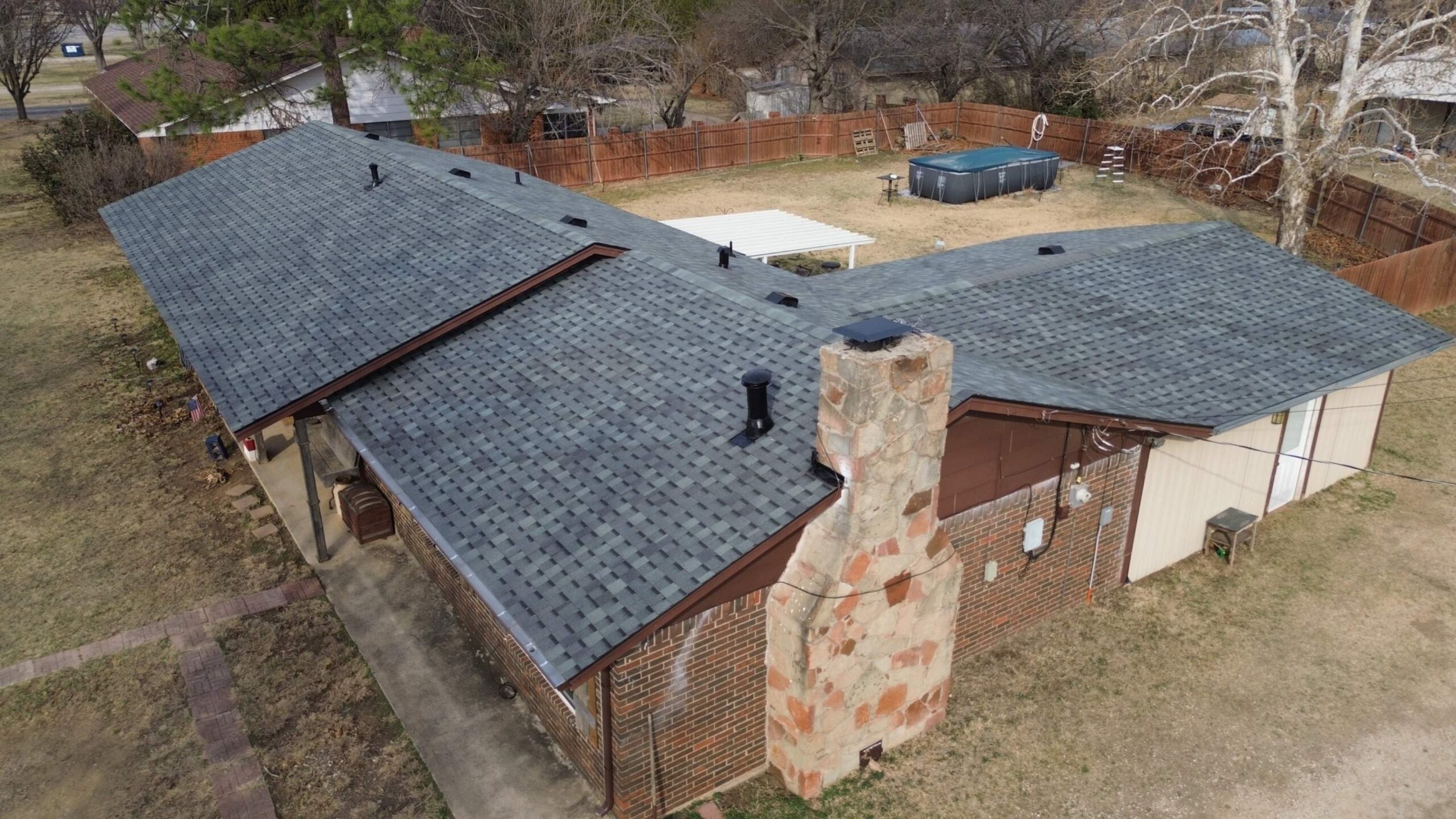
Roofing material specifications provide useful information about expected performance, but the material itself is only one part of a complete roofing system. Installation quality can determine whether the roof reaches its expected service life or begins developing problems much earlier. Even durable materials can fail prematurely when they are installed incorrectly.
A properly installed roof should include suitable underlayment, effective flashing, secure attachment, correct ventilation, and appropriate drainage. These components work together to protect the building from water intrusion and manage the stresses created by weather. When one part of the system is defective, problems can sometimes spread to other areas.
Flashing is especially important around chimneys, vents, skylights, walls, valleys, and other roof penetrations. These locations create natural opportunities for water to enter, so they require careful detailing and compatible materials. Damaged or improperly installed flashing can cause leaks even when the surrounding roofing material appears to be in good condition.
Roof ventilation also affects long-term performance. Poor attic ventilation can allow heat and moisture to accumulate beneath the roof, creating conditions that contribute to premature deterioration. Excess moisture may affect insulation, wood components, fasteners, and other parts of the building assembly.
Drainage should also remain effective throughout the roof’s service life. Gutters, downspouts, valleys, and roof slopes must work together to move water away from the structure. Leaves, branches, dirt, and other debris can interfere with drainage and increase the amount of moisture retained around roofing components.
For homeowners, this means that choosing a durable roofing material is only the beginning. The installation process and supporting components are equally important to achieving reliable long-term performance.
Early Maintenance for Long-Term Roof Performance
Maintenance is one of the most effective ways to extend the useful life of residential roofing materials. It does not stop natural aging, but it can reduce avoidable damage and give homeowners an opportunity to address small issues before they become major repairs. A consistent maintenance approach is particularly valuable as a roof moves from its early years into middle and later stages of service.
Visual inspections should be performed periodically and after significant weather events. Homeowners can look for obvious changes such as missing shingles, damaged flashing, visible corrosion, standing water, unusual surface discoloration, or debris accumulation. Problems that are difficult to assess safely from ground level should be inspected by a qualified roofing professional.
Keeping drainage systems clear is another basic but important maintenance task. Clogged gutters can cause water to back up near roof edges and fascia components, increasing the risk of moisture damage. Downspouts should also direct water far enough away from the home’s foundation to prevent repeated saturation around the structure.
Trees near the house should be monitored as well. Overhanging branches can scrape roofing surfaces, drop debris, block drainage paths, and increase the risk of impact damage during storms. Maintaining suitable clearance can reduce several of these risks while making roof inspections easier.
Homeowners should also avoid unnecessary foot traffic on roofing materials. Walking across shingles, tiles, or other surfaces can cause damage that may not be immediately visible. If roof access is required for maintenance or inspection, appropriate safety procedures and professional assistance should be considered.
The most useful maintenance habits include:
- Inspect the roof regularly and after severe weather.
- Keep gutters, valleys, and drainage paths free from debris.
- Address damaged flashing, shingles, panels, or seals promptly.
- Monitor attic ventilation and moisture conditions.
- Keep nearby trees and branches under control.
As residential roofing materials continue to age, these early maintenance practices provide a foundation for understanding how a roof’s condition changes over time. The differences become even more noticeable when comparing additional materials, including tile, slate, wood, and modern synthetic roofing systems, each of which responds to environmental exposure in its own way.
Clay and Concrete Tile Roofing Over Time
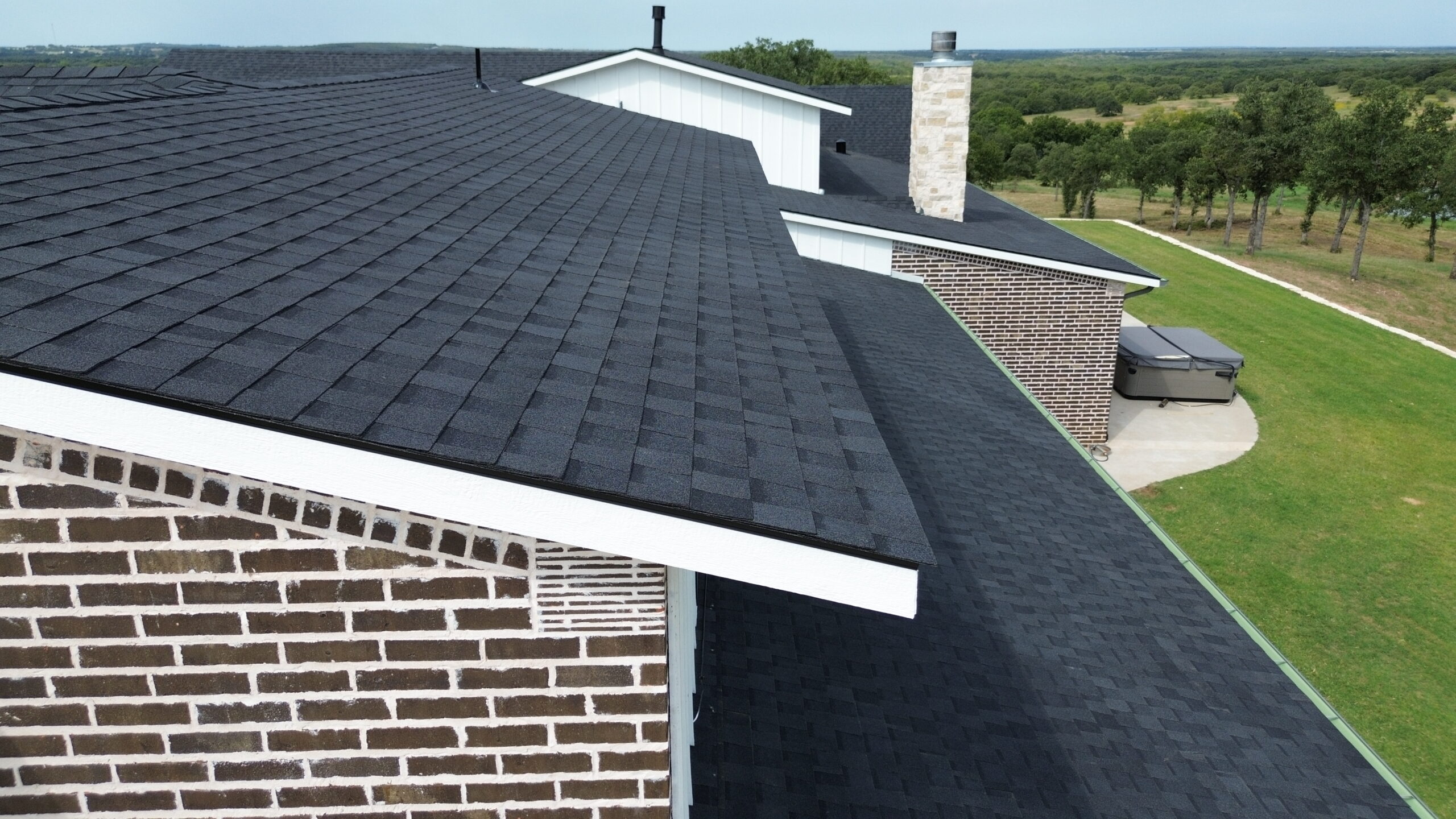
Clay and concrete tiles are known for combining long service life with a distinctive appearance, making them popular choices for homes where durability and architectural character are important. Both materials can withstand substantial exposure to sunlight, rain, and temperature changes, although their performance depends on the quality of the tiles, supporting structure, installation methods, and local climate. Unlike some flexible roofing products, tile systems are rigid, so their long-term condition needs to be evaluated by looking at both the tiles and the components beneath them.
Clay tiles are produced from natural clay that is shaped and hardened through high-temperature firing. This process creates a roofing material that can remain stable for many years with relatively little surface deterioration. Clay generally handles ultraviolet exposure very well and does not decay like organic roofing materials, although individual tiles can crack or break when subjected to impact or improper handling.
Concrete tiles are manufactured from cement-based mixtures and can also provide strong long-term performance. Their appearance may change gradually because of weather exposure, and some finishes can fade over time. Concrete is generally heavier than many other roofing materials, so the home’s structural capacity and the original roof design must be appropriate for the additional load.
One of the main challenges with tile roofing is that the visible tile surface is only part of the system. Underlayment, flashing, battens, fasteners, and other components can age even when the tiles themselves remain attractive. A roof may therefore require maintenance or partial repairs before the tiles have reached the end of their useful life.
Tile roofs also need careful inspection after severe weather. A few broken tiles can create vulnerable areas where water may reach the underlayment or roof deck. Replacing damaged tiles promptly helps preserve the overall system and prevents localized defects from becoming larger moisture problems.
Another consideration is foot traffic. Walking directly on tiles can cause cracking, especially when weight is placed on unsupported sections. Professional inspection and repair are often preferable because trained roofing personnel can identify safe areas for access and reduce the risk of accidental damage.
With appropriate installation and maintenance, clay and concrete tile roofs can remain functional for a very long period. Their durability makes them attractive for homeowners seeking long-term value, but their weight, installation requirements, and individual tile condition should always be considered when evaluating their performance.
Slate Roofing and Long-Term Durability
Natural slate is one of the most durable traditional roofing materials available for residential construction. It is formed from natural stone and is valued for its strength, appearance, resistance to weather, and potentially very long service life. Unlike manufactured materials that gradually lose surface properties, quality slate can retain much of its original character for decades when it is properly selected and installed.
The durability of slate depends partly on the quality and type of stone. Not all slate performs identically, and variations in mineral composition can influence how the material responds to moisture and freezing conditions. High-quality roofing slate is selected specifically for its ability to withstand repeated environmental exposure.
Slate roofing is also highly resistant to sunlight and does not experience the same type of surface degradation associated with some asphalt products. However, individual slate pieces can break if they are struck by falling branches, hail, or other objects. Damage can also occur when people walk on the roof without proper knowledge of how to distribute their weight.
The supporting system is particularly important for slate. Slate is heavy, and the roof structure must be capable of carrying the intended load. During an inspection, professionals may therefore examine not only the visible slate but also the fasteners, flashing, underlayment, and structural components.
Fastener deterioration can become an important issue as a slate roof ages. When nails or other attachment components corrode or fail, individual slates may loosen even though the stone itself remains in good condition. This illustrates why roof longevity should always be evaluated as a system rather than by looking at the primary roofing material alone.
Repairs also require specialized knowledge. Replacing slate with an unsuitable material or using incorrect fastening techniques can create additional problems. Proper repair should preserve the existing roof’s drainage pattern and appearance while ensuring that replacement components are compatible with the original system.
For homeowners considering slate, the initial investment can be higher than that of many common roofing products. However, its long service potential can make it valuable over the full life of the property when installation, structural requirements, and maintenance are properly managed.
Wood Roofing and Natural Weathering
Wood shingles and shakes provide a natural appearance that is difficult to reproduce with many manufactured roofing products. Cedar and other suitable wood species have traditionally been used because they can provide reasonable resistance to outdoor exposure when properly prepared and maintained. At the same time, wood roofing requires more attention to environmental conditions because organic materials naturally change as they age.
Sunlight gradually changes the appearance of exposed wood. Fresh wood may have a warm, consistent appearance, while long-term ultraviolet exposure can cause the surface to weather and develop gray or silver tones. This color change is often a natural part of aging and does not automatically mean that the roof has failed.
Moisture management is particularly important for wood roofing. Wood can absorb and release moisture as environmental conditions change, and repeated wetting can contribute to deterioration when the roof cannot dry effectively. Areas that remain shaded or poorly ventilated for long periods may be especially vulnerable.
Biological growth can also affect wood roofs. Moss, algae, fungi, and other organisms may develop when moisture remains on the surface. Heavy biological growth can hold additional moisture against the wood and contribute to decay over time, particularly when combined with poor drainage or inadequate ventilation.
Proper installation plays a major role in preventing these problems. Wood shingles and shakes need adequate spacing and ventilation so that moisture can escape rather than becoming trapped. Flashing and drainage details must also be maintained because water accumulation around roof penetrations can accelerate deterioration.
Fire exposure is another consideration for wood roofing. Depending on local regulations and product treatments, certain wood roofing systems may require specific fire-resistance characteristics. Homeowners should consider local climate, building requirements, and the availability of properly treated products before selecting wood.
A wood roof can provide good performance when its environment is suitable and maintenance is consistent. However, homeowners should expect visible weathering and understand that natural appearance changes are part of the material’s lifecycle. Regular inspection is especially important because early signs of splitting, decay, moisture retention, or biological growth can often be addressed before widespread deterioration develops.
Synthetic and Composite Roofing Materials
Synthetic and composite roofing products have expanded the range of choices available to homeowners. These materials are often manufactured to imitate the appearance of slate, wood, or other traditional roofing products while offering different combinations of weight, durability, and maintenance requirements. Their long-term performance varies considerably depending on the formulation and quality of the specific product.
Many synthetic roofing products are designed to resist moisture and impact while remaining lighter than natural slate or tile. This can make them suitable for homes where structural limitations make heavier materials less practical. Some products are also engineered to provide consistent color and texture across the roof.
A major benefit of synthetic materials is that they can combine appearance with relatively predictable manufacturing characteristics. Unlike natural materials, which may vary from piece to piece, manufactured products are generally produced to specific dimensions and performance requirements. This consistency can simplify installation and replacement.
However, homeowners should not assume that all synthetic roofing materials have identical performance. Different products can respond differently to ultraviolet radiation, temperature changes, impact, moisture, and repeated thermal movement. Manufacturer specifications, installation instructions, warranties, and independent performance information should therefore be reviewed before making a selection.
As synthetic roofs age, changes may include fading, surface wear, brittleness, or movement of individual components depending on the product. Fasteners, flashing, underlayment, and sealants can also deteriorate independently of the roofing surface. A professional assessment should consider the entire roofing assembly rather than relying only on the visible appearance.
Maintenance requirements may be lower than those associated with some natural materials, but no synthetic roof should be considered completely maintenance-free. Debris, blocked drainage, damaged flashing, and storm-related defects can still affect performance.
Synthetic and composite products can be especially useful for homeowners seeking a particular architectural appearance without the weight or maintenance demands of natural slate, wood, or tile. Their value depends on choosing a proven product and ensuring that installation follows the manufacturer’s requirements.
Environmental Exposure and Roofing Performance
The environment surrounding a home has a major influence on how quickly roofing materials age. A roof in a hot, sunny region experiences different stresses from one located in a cold climate with repeated freeze-thaw cycles. Coastal homes may face salt exposure, while properties surrounded by trees may experience more debris, shade, and biological growth.
Ultraviolet radiation is one of the most consistent sources of long-term roof exposure. Materials that remain in direct sunlight for years can experience gradual changes in color, flexibility, surface coatings, and protective properties. Roof orientation can also influence exposure because sections facing stronger sunlight may age differently from shaded sections.
Wind creates another significant source of stress. Strong gusts can lift shingles, loosen panels, damage flashing, or move debris across the roof surface. Repeated wind exposure can weaken attachment points over time, while major storms can cause sudden damage that requires immediate attention.
Rain and humidity create additional challenges. Persistent moisture can accelerate corrosion in vulnerable metal components and increase the risk of biological growth on certain roofing materials. Effective drainage and adequate ventilation help reduce these risks by allowing water to move away and trapped moisture to escape.
Cold climates introduce their own concerns. Repeated freezing and thawing can place stress on porous materials and create movement around joints and seams. Ice accumulation can also interfere with drainage and contribute to water intrusion when roofing details are not designed or maintained properly.
Air quality can influence roofing as well. Dust, pollution, industrial particles, and airborne chemicals can settle on surfaces and contribute to discoloration or material degradation in certain environments. Regular cleaning should be approached carefully because aggressive methods can damage roofing surfaces.
These environmental differences explain why expected service-life estimates should be treated as general guidelines rather than guarantees. The same roofing product may perform very differently depending on where it is installed and how consistently it is maintained.
Comparing Service Life and Long-Term Performance
Residential roofing materials differ substantially in how they respond to aging, but service life should never be considered the only measure of performance. A material with a long potential lifespan may have higher installation costs or more demanding structural requirements, while a lower-cost material may be easier to repair or replace. Homeowners should therefore evaluate durability together with maintenance, climate suitability, appearance, installation, and lifecycle cost.
The following comparison provides a general overview of common residential roofing materials:
| Roofing Material | Long-Term Strength | Common Aging Concerns | Maintenance Considerations |
|---|---|---|---|
| Asphalt shingles | Good | Granule loss, curling, cracking, wind damage | Regular inspection and prompt repairs |
| Metal roofing | Very good | Coating wear, corrosion, fastener issues | Inspect seams, fasteners, coatings, and flashing |
| Clay tile | Excellent | Cracked or broken tiles, underlayment aging | Replace damaged tiles and inspect supporting components |
| Concrete tile | Excellent | Cracking, surface changes, underlayment aging | Monitor tiles, drainage, and underlying system |
| Slate | Excellent | Broken slate, fastener deterioration | Specialized inspection and repair |
| Wood roofing | Moderate to good | Moisture damage, splitting, decay, biological growth | More frequent inspection and moisture management |
| Synthetic roofing | Good to very good | Product-specific fading, wear, brittleness | Follow manufacturer guidance and inspect components |
The table demonstrates why a roofing material should be evaluated according to the complete system rather than a single durability rating. Installation quality, climate, ventilation, drainage, maintenance, and storm exposure can significantly alter real-world results.
Homeowners should also consider how easily a material can be repaired. Asphalt shingles are widely available and can often be replaced in individual sections, while slate and specialized synthetic products may require more specific materials and skilled labor. Tile systems can also require careful matching to maintain both performance and appearance.
Long-term value is therefore created through a combination of durability and practical ownership requirements. A roof that performs reliably, receives timely maintenance, and remains suitable for its environment can provide strong value regardless of whether it is made from asphalt, metal, tile, slate, wood, or a synthetic product.
As these roofing systems move further through their service lives, maintenance becomes increasingly important. Recognizing warning signs, understanding when repairs are practical, and knowing when replacement provides better long-term value will help homeowners manage the final stages of a roof’s lifecycle more effectively.
Maintenance Strategies That Extend Roof Performance
Residential roofing materials naturally age, but regular maintenance can significantly influence how well they perform throughout their useful life. Maintenance does not make a roof last forever, yet it can reduce preventable damage, identify developing problems early, and protect the components beneath the visible roofing surface. This becomes increasingly important as a roof moves from its early years into the middle and later stages of service.
A practical maintenance program should begin with regular visual inspections. Homeowners should look for missing or damaged shingles, cracked tiles, loose metal panels, deteriorated flashing, exposed fasteners, damaged seals, and unusual areas of discoloration. Inspections are particularly valuable after severe storms because wind, hail, falling branches, and heavy rainfall can create damage that may not immediately produce an interior leak.
Gutters and downspouts also deserve regular attention because they are closely connected to roof performance. Leaves, dirt, branches, and other debris can restrict water movement and cause moisture to remain near roof edges. Keeping drainage systems clear helps prevent water from backing up against roofing components, fascia, soffits, and other vulnerable areas.
Roof penetrations should receive special attention during inspections. Chimneys, vents, skylights, pipes, and other openings require flashing and seals that remain watertight as the roof moves and ages. When these areas deteriorate, water can enter through a small opening and gradually affect insulation, decking, framing, or interior finishes.
Ventilation and attic conditions should also be monitored throughout the roof’s life. Excessive heat and moisture beneath a roof can contribute to premature deterioration of roofing components and supporting materials. Proper airflow helps control temperature and moisture while creating a healthier environment for the entire roofing assembly.
Maintenance should also be appropriate for the material being used. Asphalt shingles, metal, tile, slate, wood, and synthetic systems have different requirements, so aggressive cleaning or unsuitable repair methods can sometimes cause more harm than good. Following manufacturer recommendations and using qualified roofing professionals for specialized work can help preserve the original performance of the system.
Warning Signs That a Roof Is Aging
Understanding normal aging helps homeowners distinguish between cosmetic changes and conditions that require attention. Some changes, such as gradual color variation or minor surface weathering, may simply indicate that a roofing material has been exposed to the elements. Other signs can indicate that the roof’s protective function is beginning to decline.
For asphalt shingles, common warning signs include excessive granule loss, curling, cracking, blistering, missing shingles, and exposed areas. Granules found repeatedly in gutters can indicate surface deterioration, particularly when the roof is already older. Several damaged shingles may be repairable, but widespread deterioration can indicate that replacement should be considered.
Metal roofs can show aging through fading coatings, rust, loose fasteners, damaged seams, or deterioration around flashing. Surface discoloration does not necessarily mean that the roof has reached the end of its service life. However, visible corrosion or openings around joints should be assessed before moisture reaches underlying components.
Tile and slate roofs may remain visually attractive even when individual components or supporting materials have deteriorated. Broken, slipped, or missing tiles and slate pieces can expose vulnerable areas to water. Underlayment and flashing may also age before the primary material appears severely worn.
Wood roofing requires attention to splitting, soft areas, decay, persistent moisture, moss, and fungal growth. Because wood is an organic material, prolonged moisture exposure can create deterioration that may progress beneath the surface. Regular inspection is therefore especially important for identifying early changes.
Several warning signs should encourage homeowners to arrange a professional inspection:
- Repeated leaks or unexplained ceiling stains
- Large areas of damaged or missing roofing materials
- Sagging roof sections
- Extensive corrosion or exposed fasteners
- Widespread cracking, curling, or deterioration
- Persistent moisture or ventilation problems in the attic
A single warning sign does not always mean that complete replacement is necessary. The age of the roof, extent of damage, material type, previous repairs, and condition of the underlying structure should all be considered before making a final decision.
Repair or Replacement: Making the Right Decision
One of the most important decisions during a roof’s later years is determining whether repairs can restore reliable performance or whether replacement is the more practical option. Choosing incorrectly can result in unnecessary spending on repeated repairs or, conversely, continued maintenance of a roof that is already approaching the end of its useful life.
The first consideration is the extent of deterioration. A roof with isolated damage may often be repaired successfully, particularly when most of the surrounding material remains in good condition. Replacing a few damaged shingles, tiles, or metal components can extend the useful life of the existing system without requiring a complete reconstruction.
The second consideration is the roof’s age. Older roofing materials are more likely to have multiple components approaching the end of their service lives at the same time. Even when an individual repair solves the immediate problem, additional failures may develop elsewhere as the roof continues aging.
The third consideration is the condition of the underlying structure. Water intrusion that has reached the roof deck, insulation, framing, or interior spaces can make a seemingly minor roofing problem more complicated. Repairing the visible surface without addressing moisture-related damage underneath may allow the problem to return.
A practical decision-making process can include these steps:
- Identify the location and cause of the problem rather than repairing only the visible symptom.
- Evaluate the age and overall condition of the roofing material and supporting components.
- Determine whether damage is isolated or widespread across the roof.
- Compare the expected cost of continued repairs with the benefits of replacement.
- Consider future maintenance requirements and the expected service life of the proposed solution.
Replacement can make more sense when deterioration is widespread, leaks are recurring, or major components have reached the end of their useful life. A new roof may also provide an opportunity to improve ventilation, flashing, drainage, insulation, or material selection rather than continuing with an aging system.
However, replacement should not automatically be recommended simply because a roof has reached a particular age. Service-life estimates are influenced by climate, installation quality, maintenance, and material condition. A professional inspection can provide a more accurate assessment of whether the existing roof still has meaningful service potential.
Lifecycle Cost and Long-Term Roofing Value
The initial price of roofing materials is only one part of the total cost of owning a roof. A homeowner may pay less at installation but spend more over time if the material requires frequent repairs or reaches replacement age relatively quickly. Conversely, a higher initial investment can sometimes provide greater long-term value when the material performs reliably and requires fewer major interventions.
Lifecycle cost includes several factors beyond the purchase price. Installation labor, maintenance, repairs, cleaning, replacement components, energy considerations, and eventual replacement all contribute to the overall financial impact. The appropriate balance depends on the property, local climate, available budget, and expected length of ownership.
For example, asphalt shingles may be attractive because of their comparatively accessible installation cost and widespread availability. Metal, tile, or slate can require greater initial investment, but their potential longevity may make them attractive for homeowners planning to remain in the property for many years.
Maintenance costs should also be considered. Some roofing systems are relatively simple to repair because replacement materials are widely available, while specialized systems may require experienced contractors and specific components. The availability of qualified installers can therefore influence the practical value of a roofing material.
Energy performance may also affect long-term value. Roof color, material properties, ventilation, insulation, and the overall building envelope can influence how much heat enters or leaves a home. A roofing material should not be evaluated in isolation because attic insulation and ventilation also play important roles in indoor comfort and energy consumption.
Property value is another consideration. A well-maintained roof can improve the overall condition and appearance of a home, while visible deterioration may raise concerns for buyers. Choosing a roofing system that complements the home’s design while providing dependable protection can contribute to long-term property appeal.
The best roofing investment is therefore not necessarily the cheapest or most expensive option. It is the system that provides an appropriate combination of durability, maintenance requirements, climate suitability, appearance, installation quality, and lifecycle cost.
Choosing Roofing Materials for Long-Term Performance
Selecting a roofing material should begin with the conditions the roof will experience rather than appearance alone. Homeowners should consider local weather patterns, roof slope, exposure to sunlight, rainfall, wind, humidity, temperature changes, and nearby vegetation. These factors can help determine which materials are most suitable for the property’s environment.
The home’s structure must also be considered. Heavy materials such as certain tile and slate systems may require appropriate structural capacity, while lightweight options can provide greater flexibility for some buildings. A qualified professional can determine whether the existing structure is suitable for a proposed roofing system.
Installation expertise is equally important. A high-performance material cannot deliver its expected benefits if flashing, fastening, underlayment, ventilation, or drainage is installed incorrectly. Homeowners should therefore evaluate the experience and qualifications of the contractor as carefully as the material itself.
Warranty information should also be reviewed carefully. Product warranties may cover manufacturing defects but may not cover poor installation, inadequate maintenance, severe weather, or unrelated building problems. Understanding the difference between material coverage and workmanship responsibility can prevent confusion later.
Appearance and architectural compatibility matter as well. Roofing contributes significantly to the visual character of a home, so material selection should complement the building’s design, surrounding environment, and long-term maintenance expectations. A roof that looks attractive at installation should also remain practical to maintain as it ages.
Homeowners can use a simple set of questions when comparing materials:
- Is the material appropriate for the local climate?
- Can the existing structure support the roofing system?
- How much maintenance will it require?
- Are qualified installers and replacement materials available?
- How does the expected lifecycle cost compare with alternatives?
- What installation and product warranties are provided?
Taking time to answer these questions can reduce the likelihood of choosing a material based solely on initial appearance or advertised lifespan. A roofing system should be selected as a complete investment rather than as an isolated product.
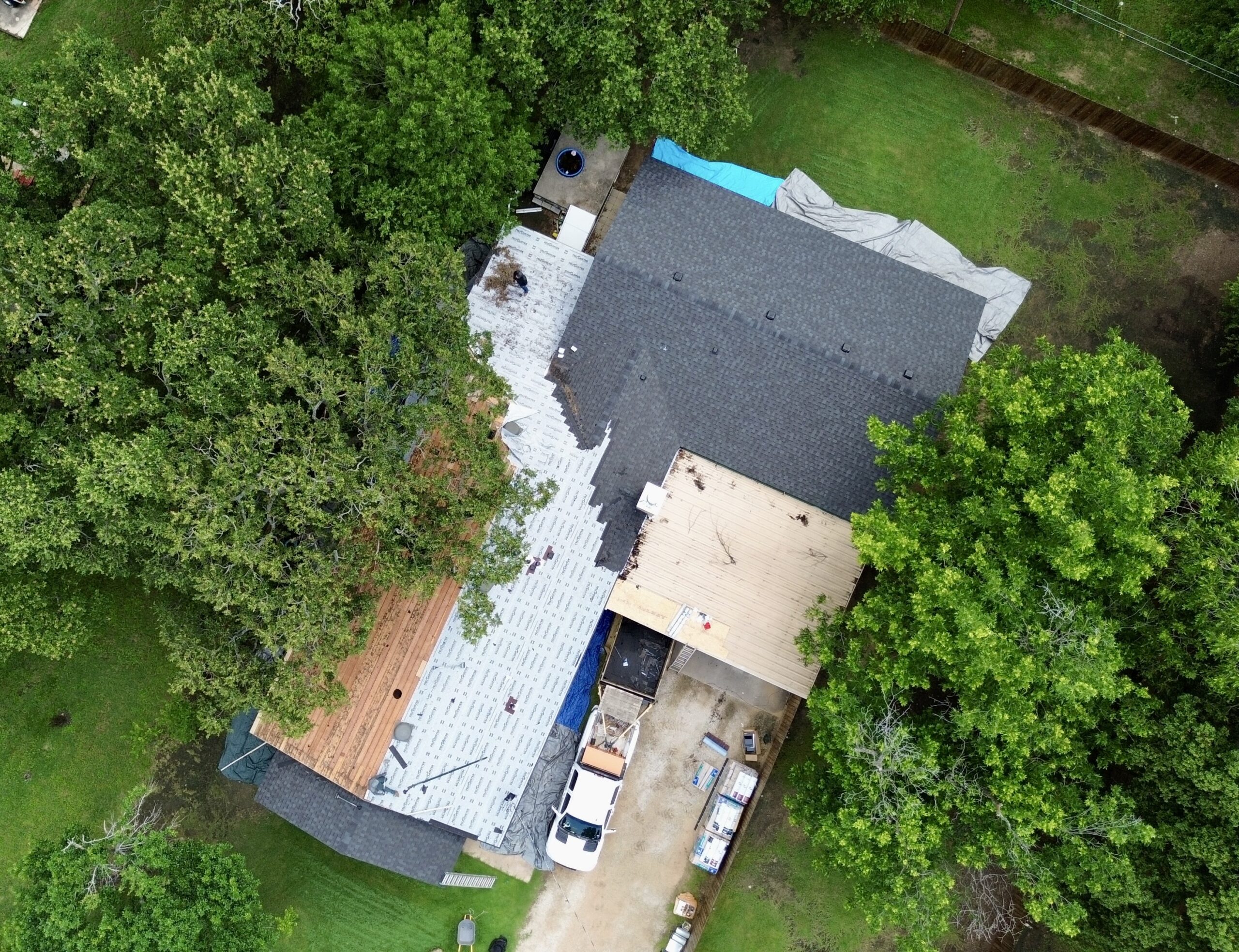
Managing a Roof Throughout Its Entire Life
Residential roofing performs best when homeowners treat it as a long-term system instead of waiting for visible leaks before taking action. The early years are generally focused on protecting the installation and identifying storm-related damage, while the middle years require greater attention to normal weathering and component deterioration. During later years, inspections become increasingly important for deciding whether continued repairs or replacement provides the better result.
Different materials follow different aging patterns. Asphalt shingles may gradually lose surface granules and flexibility, metal systems may experience coating and fastener changes, tile and slate can remain durable while individual pieces require replacement, and wood roofing may need closer moisture management. Synthetic materials can provide consistent performance, but their behavior still depends on product quality, installation, environmental exposure, and maintenance.
The surrounding environment should always remain part of the evaluation. Sunlight, wind, rain, humidity, temperature changes, salt exposure, pollution, trees, and debris can all influence how quickly a roofing system changes. A roof’s actual condition is therefore more meaningful than an age number printed on a product specification.
Good roof management can be summarized through a few consistent habits. Inspect the roof regularly, keep drainage paths clear, address minor damage promptly, monitor attic conditions, and seek professional assessment when problems extend beyond simple maintenance. These practices help prevent small defects from becoming expensive structural or interior damage.
Ultimately, the performance of residential roofing materials over time depends on a combination of material quality, installation, environmental exposure, maintenance, and timely decision-making. A durable material can provide excellent protection, but its full potential is reached only when the entire roofing system is properly designed, installed, inspected, and maintained.
Conclusion
Residential roofing materials do not age in exactly the same way, and there is no single service-life expectation that applies to every home. Asphalt shingles, metal, clay and concrete tile, slate, wood, and synthetic roofing systems each have different strengths, maintenance requirements, and responses to weather exposure. Understanding these differences allows homeowners to make more informed decisions about maintenance, repairs, and eventual replacement.
Long-term roof performance begins with choosing a material that suits the home’s structure and local environment. It continues with professional installation, effective ventilation, proper drainage, regular inspections, and prompt attention to developing problems. These factors can make a significant difference in whether a roofing system reaches its expected service potential.
The most important lesson is that roof longevity should be viewed as a complete lifecycle rather than a simple expiration date. A roof that receives appropriate care can often provide dependable protection for many years, while neglected problems can shorten the useful life of even highly durable materials. By understanding how roofing materials change over time and responding to warning signs early, homeowners can protect their property, control long-term costs, and maintain a safer and more reliable home.