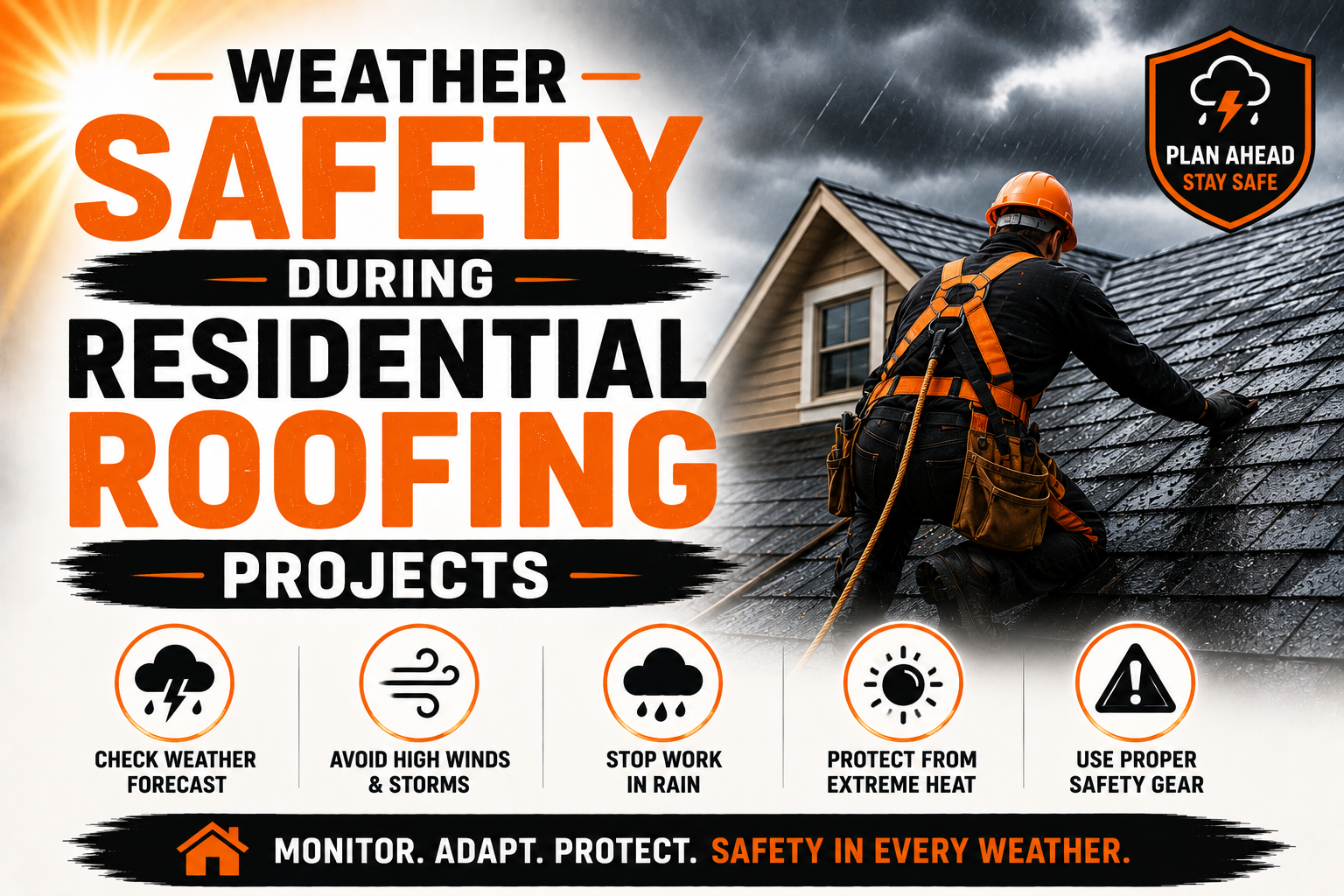
Weather Safety During Residential Roofing Projects
Introduction
Weather conditions can change a routine residential roofing project into a serious safety risk within minutes. Roofing contractors work at elevated heights, handle tools and materials, and move across surfaces that can become slippery, unstable, or difficult to control when exposed to rain, wind, extreme heat, or other severe conditions. A strong weather safety plan helps contractors recognize changing conditions and make informed decisions before workers are exposed to unnecessary hazards.
Weather affects almost every stage of roofing work. Rain can make shingles, tiles, decking, ladders, and scaffolding slippery, while strong winds can move loose materials and make large roofing products difficult to control. High temperatures can create heat-related risks, and cold conditions can affect worker movement, material handling, and roof surface conditions.
Contractors should not treat weather monitoring as something that happens only when a storm is already visible. Weather conditions should be considered during project planning, before workers begin each shift, and throughout the working day. A forecast may indicate conditions that require changes to the schedule, additional protective measures, or temporary suspension of work.
A safe roofing operation needs clear procedures for deciding when work can continue and when workers should leave the roof. These decisions should be based on actual site conditions, reliable weather information, the type of work being performed, and the capabilities of the workers and equipment. Waiting until conditions become obviously dangerous can leave crews with limited time to secure materials and reach a safe location.
Weather safety is also connected to property protection. A partially completed roof can expose the building to water intrusion if rain arrives unexpectedly. Contractors therefore need to balance worker safety with proper preparation of the structure, using appropriate temporary protection when work must stop.
The goal is not to eliminate roofing work during every change in weather. Instead, contractors should identify foreseeable weather hazards, prepare for them, monitor conditions, and establish clear procedures that prioritize worker safety. Good planning can reduce injuries, protect materials, and help keep residential roofing projects on schedule without encouraging crews to work through dangerous conditions.
Understanding Weather Risks Before Work Begins
Weather safety should begin before workers arrive on the roof. Contractors should review the expected conditions for the planned work period and determine whether the forecast could affect access, material handling, roof stability, or worker health. This review should be part of the daily planning process rather than an occasional precaution.
Different roofing tasks have different weather sensitivities. Installing shingles during light wind may be manageable under appropriate conditions, while handling large sheets, insulation boards, underlayment, or other lightweight materials may become hazardous much sooner. Contractors should consider the specific materials and tasks planned for each shift.
Rain is one of the most common weather hazards on roofing projects. Wet surfaces can significantly reduce traction, especially on sloped roofs, ladders, temporary walkways, and roof decking. Even a short period of rainfall can create conditions where a worker who normally moves safely can suddenly lose footing.
Wind presents another major concern. Roofing materials can act like sails when exposed to strong gusts, and unsecured materials can become airborne. Workers may also lose balance when carrying large or lightweight materials, particularly near roof edges.
Lightning creates a separate hazard because workers on exposed roofs can be particularly vulnerable during thunderstorms. When lightning is present or a storm is approaching, contractors should have a clear procedure for stopping outdoor work and moving workers to an appropriate safe location.
Extreme temperatures can also affect worker safety. Hot conditions increase the risk of heat stress, dehydration, fatigue, and reduced concentration, while cold conditions can cause discomfort, reduced dexterity, and difficulty maintaining safe footing.
Contractors should consider several factors before starting a weather-sensitive roofing shift:
- Current weather conditions at the jobsite
- Forecasted rain, wind, lightning, or severe weather
- Expected temperature and humidity
- Condition of roof surfaces and access equipment
- Type of roofing work planned
- Time required to secure materials and leave the roof safely
The decision to proceed should never depend on the forecast alone. Conditions at the actual property can differ from general regional forecasts because of surrounding buildings, terrain, exposed roof areas, and rapidly changing storms.
A weather check should therefore be repeated throughout the day. Supervisors should communicate changing conditions to the crew and be prepared to stop work when conditions become unsafe.
Rain and Wet Surface Safety
Rain can create some of the most immediate hazards on a residential roofing project. Roofing materials, roof decking, ladders, scaffolds, and other access surfaces can become slippery, increasing the possibility of slips and falls. Water can also make it more difficult for workers to maintain stable footing while handling tools and materials.
Roofing work should be evaluated carefully whenever rain is expected or begins during construction. Contractors should determine whether the roof surface remains safe for the specific task being performed. If conditions create an unacceptable slip or fall hazard, work should be suspended until the surface and access routes can be made safe.
Wet decking can be particularly dangerous during roof replacement. Once old roofing materials have been removed, exposed sheathing may provide less traction than a finished roof surface. Workers should not assume that a familiar roof is safe simply because they have worked on it previously.
Rain can also affect adhesives and other roofing products. Some materials have specific installation requirements concerning moisture, temperature, or surface conditions. Contractors should follow manufacturer instructions and avoid installing products under conditions that could compromise their performance.
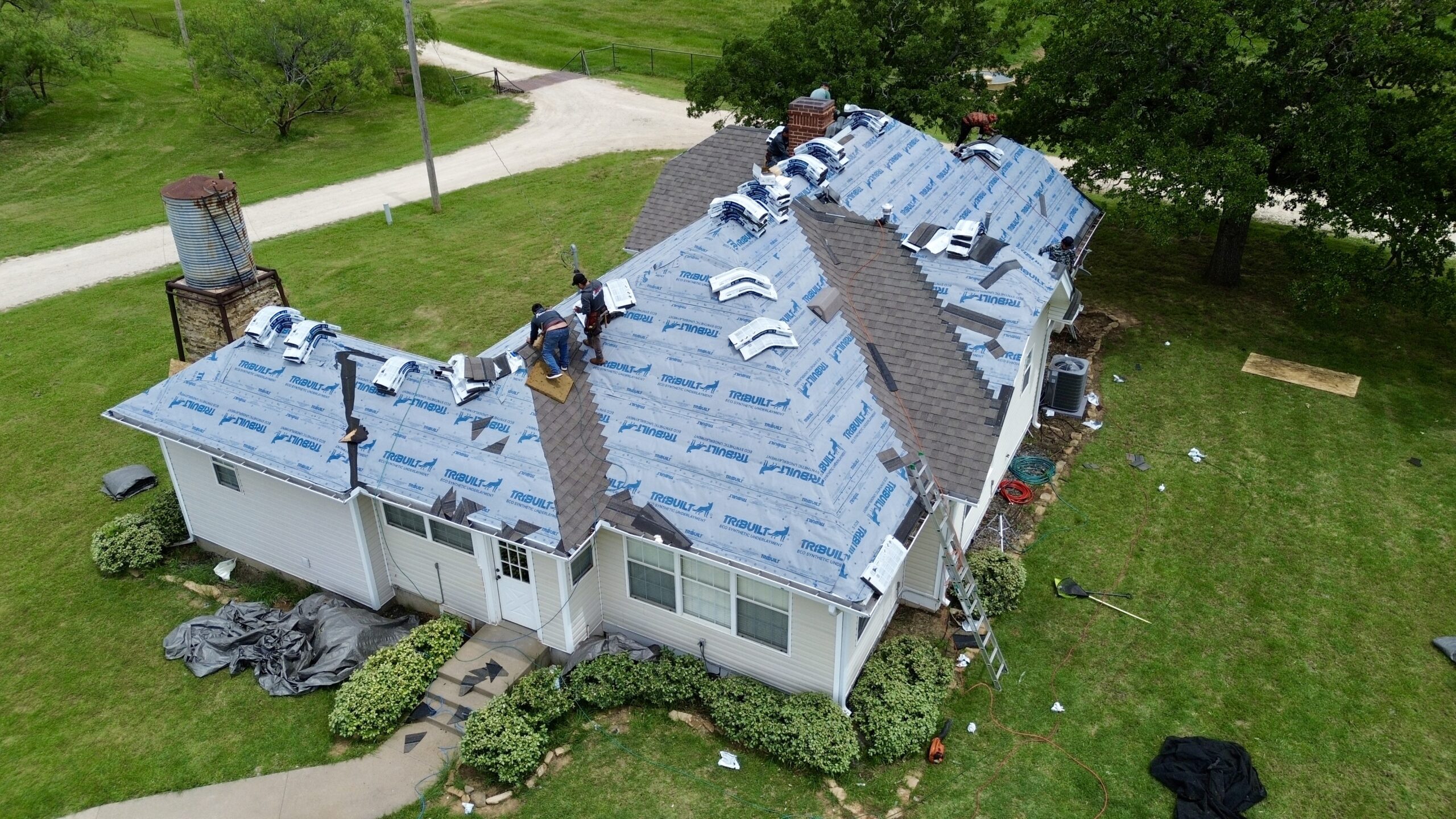
Temporary weather protection is important when work stops unexpectedly. A partially completed roof can allow rainwater to enter the building if exposed areas are not properly protected. Contractors should plan in advance for how underlayment, tarps, temporary coverings, or other appropriate measures will be used when necessary.
Ladders deserve additional attention during wet conditions. Workers should verify that ladder surfaces and access points are stable and free from excessive water accumulation. If an access route becomes unsafe, workers should not continue using it simply to avoid delaying the project.
Rain can also affect electrical safety. Wet conditions can increase hazards associated with electrical tools, extension cords, and temporary power equipment. Contractors should ensure that electrical equipment is suitable for the working conditions and protected as required.
The safest approach is to treat wet conditions as a changing hazard rather than a minor inconvenience. Supervisors should continually evaluate whether workers can maintain secure footing, safely control materials, and access the roof without unnecessary exposure to falls or other risks.
Wind Safety for Residential Roofing Crews
Wind can create serious hazards because roofing work involves lightweight materials, elevated surfaces, and exposed edges. Strong gusts can move unsecured shingles, underlayment, insulation, panels, tools, and debris. A material that appears stable during calm conditions can become dangerous when wind speed increases suddenly.
Workers carrying materials are particularly vulnerable. Large sheets or panels can catch wind and become difficult to control, potentially affecting a worker’s balance. Contractors should evaluate whether the planned material-handling task can be performed safely under current conditions.
Roof edges are another major concern during windy weather. Workers may be exposed to stronger gusts near open edges, especially on higher buildings or roofs with little surrounding protection. Contractors should follow appropriate fall-protection procedures and avoid unnecessary exposure when wind conditions become hazardous.
Loose materials should be secured whenever work is underway, but securing materials should not be treated as a substitute for stopping work when conditions become unsafe. A strong gust can move materials despite temporary controls, particularly when large surfaces are involved.
Wind can also affect ladders, scaffolding, temporary platforms, and other equipment. Contractors should inspect access systems after significant weather changes and make sure they remain stable and suitable for use.
Roofing debris can become a hazard to people on the ground as well as workers on the roof. Tools, scraps, packaging, and other loose items should be controlled and removed from exposed areas. The worksite should be organized so that unexpected wind has fewer loose objects to move.
Weather conditions should be monitored continuously when wind is a concern. Gusts can be more important than the average wind speed for certain roofing tasks because sudden increases may affect worker balance and material control.
When conditions exceed the safe limits established by the employer, manufacturer, project procedures, or applicable safety requirements, work should stop. Crews should have enough time to secure materials and leave the roof safely rather than waiting until wind conditions become severe.
Lightning and Thunderstorm Safety
Lightning presents a serious risk to workers performing outdoor roofing activities. Roofers often work on elevated and exposed surfaces, making thunderstorms particularly dangerous. Because lightning can occur before heavy rain reaches the jobsite, contractors should not wait for rainfall before taking action when a storm is approaching.
Weather monitoring should include awareness of thunderstorm development and lightning activity. Supervisors should communicate the warning procedure to the crew before work begins so workers know what to do if conditions deteriorate.
When lightning is detected or thunder indicates that a storm is close enough to create a hazard, outdoor roofing work should be suspended according to the company’s safety procedure and applicable guidance. Workers should move away from exposed roof areas and seek an appropriate safer location.
Tools and materials should not be left unsecured when a storm is approaching. However, securing equipment should never require workers to remain on an exposed roof when conditions are already unsafe. The safety procedure should provide enough time for workers to leave the roof before the storm reaches the site.
Roofing crews should also understand that a short interruption may be preferable to continuing work during uncertain conditions. Storms can intensify quickly, and visibility can deteriorate before workers have enough time to safely descend from the roof.
After a thunderstorm passes, work should not automatically resume immediately. Supervisors should reassess the weather, roof conditions, access equipment, and remaining hazards. Wet surfaces, damaged materials, standing water, or additional storms may continue to create risks even after lightning is no longer visible.
Clear communication is especially important during rapidly changing weather. Every worker should know who has authority to stop the job and where the crew should go when severe weather approaches. A simple and understood procedure can reduce hesitation when quick action is required.
Heat, Sun, and Extreme Temperature Safety
Hot weather can create significant risks during residential roofing because workers may spend long periods on exposed surfaces under direct sunlight. Roofing materials can also become extremely hot, increasing discomfort and contributing to heat-related illness. The combination of physical labor, protective clothing, elevated temperatures, and limited shade can make roofing work particularly demanding.
Contractors should plan hot-weather work around environmental conditions whenever possible. Work schedules may be adjusted to avoid the hottest parts of the day, particularly when extreme temperatures are expected. Supervisors should also monitor workers for signs that heat is affecting their ability to work safely.
Hydration should be treated as a routine part of the workday rather than something workers consider only when they become thirsty. Employers should make suitable drinking water readily available and provide appropriate opportunities for workers to take breaks.
Rest periods can help workers recover from heat exposure and physical exertion. Shaded or otherwise cooler recovery areas are particularly valuable on hot roofing jobs. Workers should be encouraged to report symptoms rather than continuing until they become severe.
Heat can also affect concentration and decision-making. Fatigue may cause workers to overlook fall hazards, mishandle tools, or make mistakes when installing materials. Supervisors should consider worker condition when deciding whether a task can safely continue.
Protective clothing and equipment should be selected with the working environment in mind while still meeting safety requirements. Workers should follow established procedures for protecting themselves from sun exposure and other heat-related hazards.
Cold weather creates different challenges. Low temperatures can reduce hand dexterity, increase discomfort, and make surfaces slippery when frost, ice, or snow is present. Contractors should inspect the roof and access equipment before allowing workers to begin work in cold conditions.
Weather safety is therefore not limited to storms. Temperature, sunlight, humidity, and surface conditions can all influence whether roofing work can be performed safely. A well-planned contractor considers these factors before assigning work and continues monitoring them throughout the shift.
Cold Weather, Snow, and Ice Safety
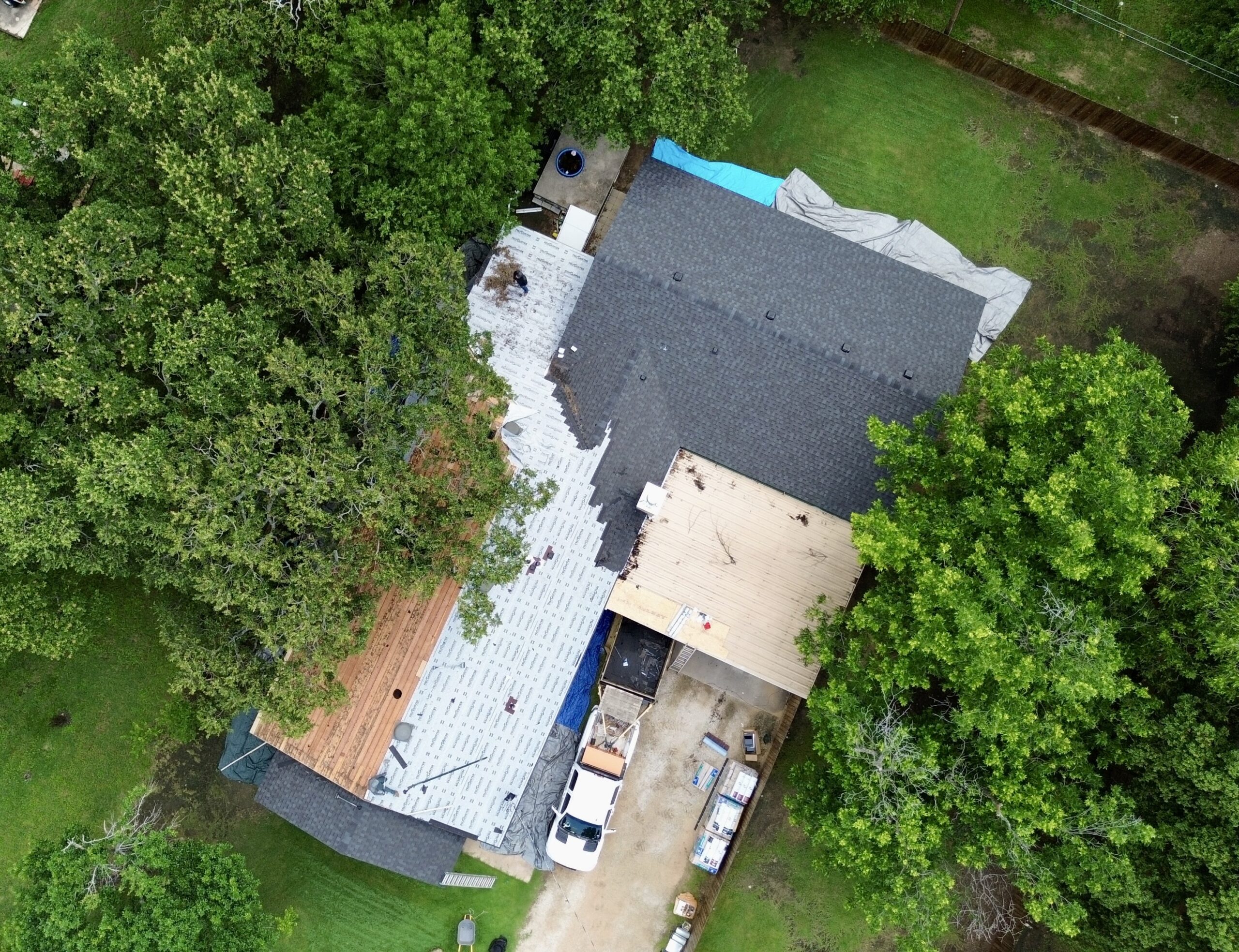
Cold weather creates unique hazards for residential roofing crews because low temperatures can affect worker mobility, roof surfaces, tools, and roofing materials. Frost, ice, and snow can make sloped surfaces extremely slippery and may hide hazards that would normally be easy to identify. Contractors should evaluate the roof carefully before allowing workers to begin tasks during freezing conditions.
Snow accumulation can also place additional weight on the roof structure. Before workers access a roof with significant snow, contractors should consider whether the structure can safely support the existing load along with workers, equipment, and additional materials. If structural concerns exist, the condition should be evaluated by an appropriately qualified professional before work continues.
Ice is especially dangerous around roof edges, valleys, ladders, scaffolding, and access points. Even a thin layer of ice can significantly reduce traction and make normal movement difficult. Workers should not attempt to continue roofing simply because the ice appears limited to a small area.
Cold temperatures can also affect roofing products. Some adhesives, sealants, membranes, and other materials have specific temperature requirements for proper application. Contractors should review manufacturer instructions before using products in cold conditions and should not assume that a product will perform normally at every temperature.
Workers can also experience reduced dexterity in cold weather. Cold hands may make it harder to grip tools, fasteners, and materials accurately. Appropriate protective clothing and gloves should be selected without creating additional problems with tool handling or movement.
Wind combined with cold temperatures can make conditions significantly more difficult. Wind can increase the rate at which workers lose body heat while also making elevated work more challenging. Supervisors should consider the combined effect of temperature, wind, roof condition, and work duration instead of evaluating temperature alone.
Before beginning cold-weather roofing work, contractors should inspect ladders and other access equipment for ice and frost. Access routes should be cleared and made suitable for use before workers climb to the roof. Conditions should also be reassessed if temperatures change during the workday.
Snow and ice can also conceal roof damage. Workers may be unable to see deteriorated decking, damaged flashing, or other defects beneath accumulated material. Removing snow or ice should be performed using appropriate methods that do not create additional hazards or damage the roofing system.
When cold conditions become unsafe, work should be postponed until conditions improve. Protecting an unfinished roof from weather is important, but temporary weather protection should never require workers to remain in hazardous conditions. Proper planning allows contractors to secure the building while protecting the crew.
Weather-Related Fall Protection Considerations
Fall protection is a fundamental concern during residential roofing work, and changing weather can make fall hazards more difficult to control. Rain, ice, wind, heat, and reduced visibility can all affect a worker’s ability to maintain balance on an elevated surface. Weather conditions should therefore be considered whenever fall-protection measures are planned or reviewed.
Roof slope is an important factor in determining the level of risk. A surface that may be manageable during dry conditions can become significantly more hazardous when wet. Contractors should evaluate the actual condition of the roof rather than relying only on its normal slope classification.
Fall-protection equipment must remain suitable for the working environment. Harnesses, lifelines, anchors, guardrails, and other systems should be inspected regularly and after severe weather events. Equipment exposed to excessive moisture, heat, chemicals, or physical damage may require additional evaluation.
Roof edges should receive particular attention during windy or wet conditions. Workers may instinctively move closer to an edge when handling materials or avoiding obstacles, increasing their exposure to a fall. Work areas should be organized to reduce unnecessary movement near unprotected edges.
Ladders can become especially hazardous during rain, frost, or strong wind. Workers should use stable access equipment and follow established procedures for safe ladder positioning and use. A ladder that was secure earlier in the day may need to be reassessed after weather conditions change.
Temporary walkways and roof platforms should also be checked. Water, ice, dust, loose materials, and debris can reduce traction and create unexpected obstacles. Supervisors should make sure these areas remain clear throughout the shift.
Weather can also affect fall-protection anchors and attachment points. Contractors should verify that equipment remains properly positioned and has not been damaged or displaced by wind or other conditions. Temporary systems should be installed and used according to their applicable requirements.
Workers should be encouraged to report unsafe conditions immediately. A person who notices that a surface has become slippery or that wind is affecting balance should have a clear method for stopping the task and informing the supervisor. Early reporting can prevent a minor weather change from becoming a serious accident.
Fall protection should never be viewed as permission to continue working in conditions that are otherwise unsafe. It is one part of a broader safety system. When weather creates unacceptable risks, the appropriate response may be to stop work rather than relying on additional protective equipment alone.
Protecting Roofing Materials and Equipment During Severe Weather
Weather safety involves protecting workers as well as materials, tools, and equipment. Roofing materials can be damaged by rain, wind, excessive heat, or improper storage. Poor material control can also create hazards if loose products or equipment are moved by changing weather.
Lightweight materials should be secured whenever they are stored on the roof or around the worksite. Underlayment, insulation, packaging, and other materials can be lifted by strong gusts and become dangerous projectiles. Materials should be stored in accordance with manufacturer recommendations and site safety procedures.
Shingles and roofing panels should also be protected from unnecessary moisture before installation. Some products may have specific storage requirements that must be followed. Contractors should review product instructions and avoid storing materials where they could be exposed to conditions that compromise their quality.
Tools should be secured when workers leave the roof. A tool left near an edge can become a falling-object hazard during a sudden gust. Tool organization should therefore be part of the routine before breaks, weather interruptions, and the end of each workday.
Scaffolding, temporary platforms, ladders, tarps, and other equipment can also be affected by wind and rain. Contractors should inspect these items after significant weather changes. Damaged or displaced equipment should not be returned to service until it has been properly evaluated.
Tarps and temporary covers require particular attention because large sheets can catch wind. Temporary weather protection should be installed securely and in a way that does not create additional hazards for workers or the building. Contractors should use appropriate methods rather than improvising when severe weather is expected.
When a storm approaches, the crew should have a clear sequence for securing the site. Workers should not rush to collect materials while conditions are deteriorating. The procedure should prioritize getting workers to safety first and securing remaining materials only when it can be done safely.
After severe weather, contractors should inspect the worksite before restarting operations. This includes checking roofing materials, ladders, scaffolding, electrical equipment, temporary coverings, and the roof itself. Wind may have moved objects or caused damage that was not immediately visible.
Good material management reduces both property damage and worker exposure. A well-organized site is easier to secure when weather changes unexpectedly and creates fewer loose objects that can become hazards.
Weather Monitoring and Daily Roofing Safety Planning
Reliable weather monitoring should be integrated into the daily roofing safety process. Contractors should review conditions before the workday begins and continue monitoring them throughout the shift. A forecast that looks safe in the morning may change considerably by afternoon.
The supervisor should consider both current conditions and expected changes. Rain may be several hours away, but crews may need enough time to finish a safe stopping point, secure materials, protect exposed sections, and leave the roof. Waiting until severe weather is already at the site can create unnecessary pressure.
Weather information should come from reliable sources. Contractors can use appropriate weather services, alerts, radar information, and local observations to identify approaching storms or significant temperature changes. Site conditions should always be considered alongside forecasts because conditions can vary from one location to another.
The daily safety meeting is a useful opportunity to discuss weather. Workers should know what conditions are expected, which tasks are planned, and what signs will require work to stop. Clear expectations reduce uncertainty when conditions begin changing.
A weather-related safety plan should identify who has authority to stop roofing work. Workers should not feel pressured to continue because of project deadlines when conditions have become unsafe. A clear stop-work procedure allows decisions to be made quickly without confusion.
Weather monitoring should also account for the type of roof being worked on. A large, open roof may be more exposed to wind than a smaller roof surrounded by structures. Roof height, slope, orientation, surrounding buildings, and nearby trees can all influence how weather affects the work area.
Contractors should consider the time required to evacuate the roof safely. Workers need sufficient time to descend using appropriate access routes and move to a safer location. The decision to stop should therefore occur before conditions become extreme.
Weather checks should be repeated after breaks, lunch periods, and significant changes in conditions. Supervisors should also reassess the site following rain, storms, or strong winds before allowing work to resume.
Consistent monitoring creates a proactive safety culture. Instead of reacting to weather emergencies, crews can identify hazards early and adjust their work accordingly.
Emergency Procedures for Sudden Weather Changes
Even with careful planning, weather can change unexpectedly during a roofing project. A sudden storm, strong wind, heavy rainfall, or lightning event can create hazards before workers have completed the task they are performing. Contractors should establish emergency procedures so workers know how to respond without confusion.
The first priority during a sudden weather event should be worker safety. Employees should stop tasks when conditions become dangerous and follow the established route away from the roof. Tools and materials should not be prioritized over getting workers to a safe location.
Emergency access routes should be identified before work begins. Workers should know which ladders, stairs, or other approved access systems they should use when leaving the roof. These routes should remain clear throughout the project.
Communication is particularly important during rapidly changing conditions. Supervisors should have a reliable method for notifying workers when work must stop. Everyone on the site should understand the meaning of the warning and know where to go.
If workers must leave materials exposed, the contractor should have a plan for protecting the building after the crew reaches safety. Temporary protection can be addressed once conditions permit safe action. Workers should not be sent back onto an unsafe roof simply because materials need to be secured.
After the weather event, the supervisor should inspect the site before restarting work. The roof surface may be wet or damaged, access equipment may have shifted, and materials may have been displaced. Electrical systems and temporary equipment should also be checked when appropriate.
The work should resume only when conditions have returned to an acceptable level and the necessary safety checks have been completed. If damage has occurred, the affected area should be evaluated before workers return.
Emergency procedures should be practiced and communicated rather than existing only as written instructions. Workers who understand the response plan are more likely to act quickly when weather changes unexpectedly. Regular communication also helps new workers and subcontractors understand the site’s expectations.
Rescheduling Roofing Work Because of Weather
Sometimes the safest decision is to postpone roofing work rather than attempt to work around unfavorable weather. Rescheduling can affect project deadlines, labor arrangements, material deliveries, and homeowner expectations, but these challenges are generally easier to manage than an injury or major property damage caused by unsafe working conditions.
Contractors should establish weather-related scheduling procedures before work begins. Homeowners should understand that roofing schedules can change when severe conditions are expected. Clear communication helps prevent pressure on workers to continue when conditions are unsafe.
Material deliveries may also need to be adjusted. Roofing products should not be delivered too early if they cannot be stored safely under the expected conditions. Contractors should coordinate delivery timing with the project schedule and available protected storage.
Subcontractors should be informed when weather affects the project. If multiple crews are involved, everyone should receive the same information about delays, site access, and revised work times. This reduces confusion and prevents workers from arriving at a site that is not safe to operate.
A weather delay should also be documented when appropriate. Contractors can record the conditions that caused the delay and the work that was affected. Good records can help explain schedule changes to homeowners and project managers.
Rescheduling can also provide an opportunity to adjust the work plan. If extreme heat is expected, crews may begin earlier and avoid the hottest portion of the day when appropriate. If storms are forecast for a particular period, contractors may reorganize tasks so that work is completed during safer conditions.
Weather delays are a normal part of responsible roofing operations. A professional contractor should prioritize safe working conditions while maintaining realistic communication about project timing. The objective is not simply to finish the roof quickly, but to complete the work without exposing workers or the property to unnecessary weather-related risks.
Severe Storm Preparation and Work Stoppage Procedures
Severe storms can develop quickly and create several hazards at the same time, including heavy rain, strong wind, lightning, hail, and reduced visibility. Residential roofing crews should have a clear procedure for recognizing when conditions are becoming unsafe and stopping work before workers are exposed to unnecessary danger. A storm plan should be established before the project begins rather than created during an emergency.
The supervisor should monitor reliable weather information throughout the workday and compare forecasts with actual conditions at the jobsite. When severe weather is approaching, workers should be given enough warning to stop their tasks, secure materials when it is safe to do so, and leave the roof using an approved access route. The decision to stop work should never be delayed simply because the crew is close to completing a particular section.
Storm preparation should also consider the condition of the partially completed roof. Exposed decking, underlayment, insulation, or other components may need temporary protection to reduce the possibility of water entering the structure. However, workers should only perform this protection when conditions remain safe enough to do so.
Loose materials should be secured before severe weather arrives whenever there is sufficient time and safe access. Shingles, panels, tools, packaging, tarps, and other lightweight objects can become airborne during strong winds. Securing these materials reduces the risk of damage to the property, vehicles, neighboring structures, and people around the worksite.
Workers should know where to go when outdoor roofing work is suspended. A designated safer location should be identified before the project begins, and access to that location should remain clear. Everyone on the site, including subcontractors and temporary workers, should understand the emergency procedure.
After a storm passes, roofing work should not resume automatically. The supervisor should inspect the roof, ladders, scaffolding, temporary protection, electrical equipment, materials, and surrounding property for damage or changed conditions. Wet surfaces, displaced equipment, damaged roof sections, or additional approaching storms may require work to remain suspended.
Storm preparation is most effective when it is practiced as part of normal site safety. Workers who understand the procedure are more likely to respond quickly and calmly when weather conditions change. This reduces confusion and gives the crew a better opportunity to leave elevated work areas safely.
Hail, Heavy Rain, and Reduced Visibility Hazards
Hail can create a serious hazard during residential roofing work because it can injure workers, damage materials, and make roof surfaces difficult to navigate. Even small hail can become dangerous when combined with wind and elevated work. Contractors should stop exposed roofing activities when hail creates unsafe conditions and move workers to a suitable protected location.
Heavy rain creates additional problems because it can quickly reduce traction on sloped surfaces. Water may also collect on roof decking, walkways, ladders, and scaffolding. Workers should not attempt to maintain production simply because rainfall is expected to be temporary, especially when the surface has become unsafe.
Visibility is another important consideration during severe weather. Heavy rain, dust, fog, or storm conditions can make it difficult for workers to identify roof edges, tools, materials, and changes in surface elevation. Reduced visibility can increase the likelihood of trips, slips, incorrect material placement, and falls.
Roofing materials may also become difficult to handle during heavy rain or hail. Wet underlayment, panels, and other products can change in weight or flexibility and may become more difficult to control. Workers should follow the manufacturer’s requirements and avoid handling materials when conditions create an unacceptable risk.
Hail and heavy rainfall can also damage temporary weather protection. Tarps and coverings may shift, tear, or collect water if they are not properly installed. After severe precipitation, contractors should inspect temporary protection before relying on it to protect the building.
Water can also expose weaknesses in the existing roof during replacement. Leaks may become more noticeable once rain reaches unfinished areas. Contractors should identify and address water intrusion rather than covering damaged areas without determining the source.
When visibility becomes poor, supervisors should consider stopping elevated work even if wind or rainfall alone might appear manageable. Workers need enough visibility to move safely and recognize hazards around them. A short interruption is generally preferable to continuing work under conditions where hazards cannot be clearly seen.
Safe Handling of Roofing Tools and Electrical Equipment in Weather
Weather conditions can affect the safe use of roofing tools and electrical equipment. Rain and moisture may create additional hazards around power tools, extension cords, temporary electrical systems, and other equipment. Contractors should ensure that equipment is appropriate for the working conditions and maintained according to applicable safety requirements.
Power cords should be positioned so they do not create unnecessary trip hazards or become exposed to standing water. Damaged cords, plugs, or electrical equipment should not be used. Workers should report damaged equipment immediately rather than attempting temporary repairs without authorization.
Wet conditions require particular caution when using electrical tools. If rain begins while electrical equipment is being used outdoors, workers should follow established procedures for stopping the equipment and moving to a safe location. Equipment should not be handled carelessly simply to keep the project moving.
Hand tools can also become difficult to control in wet or cold conditions. Reduced grip can affect hammers, utility knives, drills, and other equipment. Workers should use appropriate protective equipment while maintaining sufficient control over the tools required for the task.
Wind can create hazards when using large tools or materials. Equipment with cords, hoses, long handles, or large surfaces can become difficult to control during gusty conditions. Supervisors should evaluate whether the planned activity can be completed safely before allowing work to continue.
Tools should be stored securely when workers leave the roof because of weather. Items placed near edges can become falling objects when strong winds develop. A designated storage area can help keep equipment organized and reduce the number of loose objects exposed to changing conditions.
After significant weather, electrical and powered equipment should be inspected before use. Moisture, physical damage, or displaced components may not be immediately obvious. Workers should follow company procedures for inspecting and returning equipment to service.
Good equipment management reduces weather-related risks and helps protect the crew from hazards that may develop during changing conditions. Weather safety should therefore be incorporated into tool management rather than treated as a separate concern.
Protecting Workers During Weather-Related Delays
Weather delays can affect the entire roofing project, but workers should never be pressured to continue unsafe activities simply to maintain the original schedule. Supervisors and project managers should communicate clearly when work is postponed and explain when the crew is expected to return.
During delays, workers may need to remain at the site while weather conditions are monitored. If they are not actively working, they should remain in an appropriate safe area rather than waiting on the roof. The site should be organized so that workers can leave elevated areas quickly when conditions deteriorate.
Heat-related delays may require changes to the work schedule rather than a complete shutdown. When temperatures are high, contractors can consider adjusting working hours, increasing rest opportunities, providing water, and monitoring workers for signs of heat-related illness. The work plan should reflect the actual environmental conditions rather than relying only on the original schedule.
Cold-weather delays may require similar adjustments. Frost, ice, snow, or freezing temperatures can make roof surfaces unsuitable for work. Contractors should wait until surfaces and access routes can be safely used rather than encouraging workers to take unnecessary risks.
Weather delays can also affect material protection. Materials should remain properly covered or stored during extended periods of inactivity. Contractors should inspect temporary coverings periodically because changing wind and precipitation can cause them to shift.
Communication with homeowners is important when delays occur. The contractor should explain that weather-related scheduling changes are intended to protect workers and the property. Providing realistic information about the revised schedule can help maintain trust and prevent misunderstandings.
Project managers should also communicate weather delays to subcontractors and suppliers. Deliveries may need to be postponed, and crews may need to be rescheduled. Coordinating these changes reduces unnecessary site visits and prevents workers from arriving when the roof is not safe to access.
A well-managed weather delay is therefore part of professional roofing operations. Protecting workers during an interruption helps ensure that the project can resume efficiently once conditions improve.
Post-Weather Inspection Before Roofing Work Resumes
A roof should be inspected after significant weather before workers return to normal operations. Storms can change site conditions even when there is no obvious structural damage from the ground. Wind may move materials, rain may make surfaces slippery, and temporary protection may become damaged.
The roof surface should be checked for standing water, loose materials, damaged roofing components, debris, and other hazards. Contractors should also examine exposed decking and temporary weatherproofing if the roof was unfinished when the storm arrived.
Access equipment requires inspection as well. Ladders, scaffolding, temporary platforms, guardrails, and other systems may have shifted or become unstable during strong wind or heavy rainfall. Workers should not use equipment until the supervisor has confirmed that it remains suitable.
Electrical equipment should also be checked after wet weather. Any equipment exposed to moisture or damage should be handled according to established safety procedures. Workers should not assume that equipment is safe simply because it worked normally before the storm.
The surrounding property should be inspected for hazards created by the weather. Fallen branches, damaged structures, loose debris, standing water, and other conditions may affect access to the roof. These hazards should be addressed before normal operations resume.
Weather conditions should also be reviewed again before restarting. A storm may have passed temporarily while another system is approaching. Supervisors should consider the remaining forecast as well as the immediate conditions at the property.
The inspection should be documented when appropriate, especially after severe weather or an event that caused visible damage. Photographs can help record conditions before repairs or cleanup begin. This documentation may also help contractors explain changes in project scope to homeowners.
Only after the necessary checks have been completed should workers return to the roof. A structured restart process helps prevent crews from immediately returning to work simply because the rain or wind has stopped.
Building a Weather-Safe Roofing Program
Weather safety is most effective when it becomes part of the contractor’s regular safety program rather than an occasional response to severe conditions. Companies should establish clear procedures for monitoring weather, communicating warnings, stopping work, securing materials, protecting unfinished roofs, and inspecting the site before operations resume.
Workers should receive training on the weather hazards they are likely to encounter. Training can cover slippery surfaces, wind exposure, lightning, heat, cold, storm procedures, emergency evacuation, and proper equipment handling. Workers should also understand that they have a responsibility to report changing conditions and unsafe situations.
Supervisors play an important role in enforcing weather safety procedures. They should monitor conditions throughout the workday and make timely decisions when weather changes. Production deadlines should never override established safety procedures.
A weather safety plan should also identify responsibilities clearly. Workers need to know who monitors conditions, who communicates warnings, who can stop work, and who evaluates the site before operations resume. Clear responsibilities reduce hesitation during rapidly changing situations.
Contractors should review their weather procedures after significant incidents or repeated delays. If workers encountered difficulties securing materials, leaving the roof, communicating warnings, or protecting the building, the company can use that experience to improve future planning.
A strong weather safety program can include:
- Daily weather checks before work begins
- Continued monitoring during roofing operations
- Clear stop-work procedures
- Safe routes for leaving elevated work areas
- Proper protection of unfinished roof sections
- Secure storage of tools and materials
- Worker hydration and temperature controls
- Post-storm inspection procedures
- Clear communication with homeowners and subcontractors
These measures help create a consistent approach across different residential roofing projects. They also make it easier for new employees and subcontractors to understand the company’s expectations.
Conclusion
Weather is one of the most important variables contractors must consider during residential roofing projects. Rain, wind, lightning, heat, cold, hail, snow, and rapidly changing conditions can affect worker safety, material handling, roof stability, and the condition of the partially completed building. Recognizing these risks early allows contractors to make safer decisions throughout the project.
Effective weather safety begins with planning. Contractors should review forecasts, evaluate site conditions, understand the characteristics of the roof, and consider the specific tasks scheduled for the day. Weather monitoring should continue during the work period because conditions can change significantly after the initial morning assessment.
Workers should always have clear procedures for stopping work and leaving the roof when conditions become unsafe. Securing materials and protecting the building are important, but these actions should never expose workers to unnecessary risks. A properly prepared crew knows when to stop, where to go, and how to respond when severe weather develops.
After weather events, roofing operations should resume only after the site, roof surface, access equipment, tools, materials, and temporary protection have been inspected. Taking time to complete these checks can prevent injuries caused by hazards that were created or exposed by the storm.
Ultimately, weather safety is not about avoiding every difficult weather condition. It is about recognizing when conditions can be managed safely, knowing when additional precautions are required, and understanding when work must stop. Contractors who make weather awareness part of daily roofing operations can protect their workers, reduce property damage, improve project planning, and build a stronger culture of safety across every residential roofing project.