
How Poor Ventilation Leads to Roof Damage
Introduction
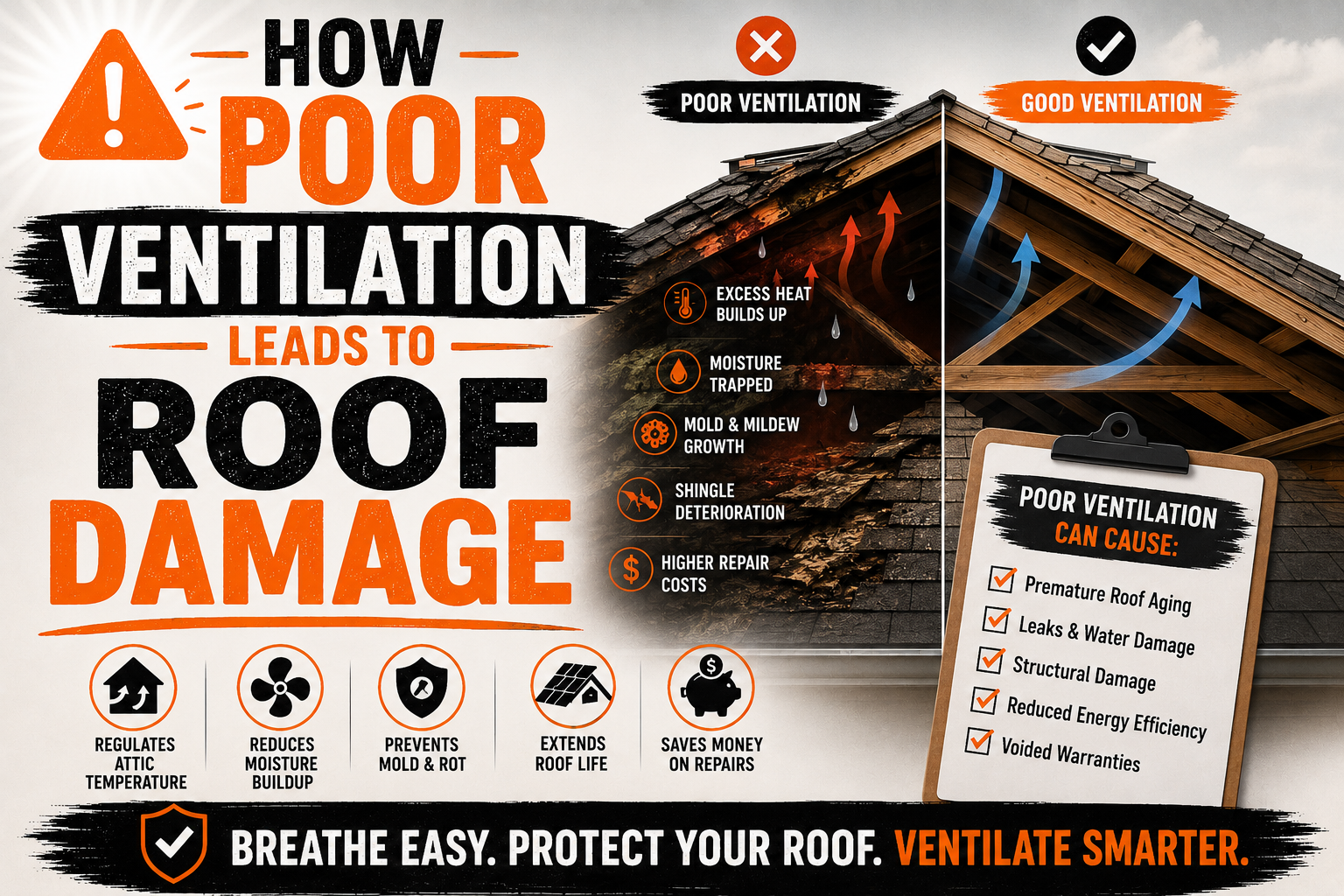
A roof is designed to protect a home from weather, but its long-term performance depends on much more than strong roofing materials and quality installation. One of the most overlooked factors influencing roof durability is proper ventilation. A well-ventilated roof allows heat and moisture to move through the attic efficiently, helping maintain stable conditions beneath the roofing system. When ventilation is inadequate, excess heat and moisture accumulate over time, gradually damaging roofing materials, structural components, insulation, and even the home’s indoor environment.
Many homeowners focus on visible roofing problems such as missing shingles, leaks, or storm damage while overlooking the condition of the attic ventilation system. Unfortunately, poor ventilation often causes damage that remains hidden for years before obvious warning signs appear. By the time ceiling stains, mold growth, or sagging roof sections become noticeable, the underlying ventilation issues may have already caused significant deterioration.
Roof ventilation functions as part of a balanced system. Fresh outdoor air enters through intake vents, usually located near the roof’s lower edge, while warm, moist air exits through exhaust vents positioned near the roof peak. This continuous airflow regulates attic temperature and moisture levels throughout the year. When any part of this system becomes blocked, damaged, or improperly designed, airflow decreases and harmful conditions begin developing inside the roof structure.
Poor ventilation affects homes during every season. Summer heat trapped inside the attic accelerates the aging of roofing materials while increasing cooling costs. During colder months, moisture generated inside the home condenses in the attic, creating conditions that encourage mold growth, wood rot, and insulation damage. These problems often combine to shorten the roof’s lifespan while increasing maintenance expenses.
Understanding how poor ventilation leads to roof damage allows homeowners to identify warning signs early, improve maintenance practices, and protect one of the most valuable parts of their property. Proper ventilation not only extends roof life but also improves energy efficiency, indoor comfort, and long-term home performance.
This guide explains how roof ventilation works, why it is essential, the common causes of ventilation problems, and how improving airflow helps prevent costly roof damage throughout the life of the roofing system.
Understanding How Roof Ventilation Works
Roof ventilation is a continuous airflow system designed to regulate temperature and moisture within the attic space. Rather than relying on mechanical equipment, most residential roofing systems use natural air movement to maintain balanced conditions beneath the roof throughout the year.
The ventilation process begins with intake vents located near the lower edges of the roof, commonly beneath the roof overhang. These vents allow cooler outdoor air to enter the attic, replacing warmer air that naturally rises toward the roof peak. As fresh air enters, it pushes warm, humid air upward where it exits through exhaust vents positioned near the highest point of the roof.
This constant movement of air helps maintain stable attic conditions regardless of the season. During summer, ventilation removes excessive heat that would otherwise build beneath the roof. During winter, continuous airflow reduces moisture accumulation by carrying humid air outside before condensation forms on structural components.
Balanced airflow is the key to effective roof ventilation. Intake and exhaust vents must work together to create consistent air circulation. If intake vents become blocked or insufficient, exhaust vents cannot remove warm air efficiently. Similarly, adequate intake without proper exhaust limits the overall effectiveness of the ventilation system.
Roof ventilation also supports the performance of insulation. Dry insulation retains its ability to regulate indoor temperatures effectively, while excessive attic moisture reduces insulation performance and increases household energy consumption. Proper airflow helps preserve insulation by minimizing moisture buildup throughout the year.
The ventilation system therefore functions as an invisible but essential part of the roof. Although homeowners rarely notice it during normal operation, balanced airflow protects roofing materials, structural components, and indoor comfort every day.
Why Proper Roof Ventilation Is Essential
Proper roof ventilation contributes to the overall health of the entire home by controlling two major factors that affect roofing systems over time: heat and moisture. Without adequate ventilation, both conditions gradually damage roofing materials while increasing maintenance costs and reducing roof lifespan.
One of the primary benefits of proper ventilation is temperature regulation. During hot weather, sunlight heats the roof surface throughout the day. Without sufficient airflow, this heat becomes trapped inside the attic, creating temperatures significantly higher than those outdoors. Excessive heat accelerates the aging of shingles, dries roofing sealants, weakens adhesives, and increases stress on other roofing components.
Moisture control is equally important. Everyday household activities such as cooking, bathing, laundry, and normal breathing generate water vapor inside the home. Some of this moisture naturally rises into the attic. Proper ventilation removes humid air before condensation develops on roof decking, rafters, and insulation.
Ventilation also improves the efficiency of heating and cooling systems. Excess attic heat forces air conditioning equipment to work harder during summer, while moisture-damaged insulation reduces thermal performance throughout the year. Balanced ventilation helps maintain stable indoor temperatures while lowering energy consumption.
Structural protection represents another significant advantage. Dry wood remains stronger and more durable than wood exposed to prolonged moisture. By preventing condensation, proper ventilation protects roof decking, framing, and other structural components from rot and deterioration.
Roof warranties may also emphasize ventilation requirements. Some roofing manufacturers recommend maintaining adequate ventilation to support long-term material performance. Following these recommendations contributes to both roof durability and proper maintenance practices.
Proper roof ventilation therefore provides benefits extending far beyond the attic itself, protecting roofing materials, reducing operating costs, and improving the long-term condition of the home.
Common Causes of Poor Roof Ventilation
Poor roof ventilation develops for many different reasons, and identifying these causes is the first step toward preventing long-term roof damage. Some ventilation problems originate during roof installation, while others develop gradually because of maintenance issues or changes made to the home over time.
Blocked intake vents are among the most common causes of restricted airflow. Insulation installed too close to soffit vents may prevent outside air from entering the attic. Without sufficient intake airflow, the entire ventilation system becomes less effective because warm air cannot be displaced properly.
Blocked exhaust vents create similar problems. Leaves, bird nests, debris, or damaged vent covers restrict the escape of warm, humid air. As airflow decreases, attic temperatures and moisture levels gradually increase.
Insufficient ventilation design also contributes to poor performance. Some homes simply lack enough intake or exhaust vents to support adequate air circulation. Roof additions, renovations, or previous repairs may alter the original ventilation balance without homeowners realizing the impact.
Improper roof repairs occasionally create ventilation problems as well. During reroofing projects, vents may be covered accidentally, replaced incorrectly, or removed without installing suitable alternatives. These changes reduce airflow even though the roofing materials themselves appear properly installed.
Poor attic insulation placement can also interfere with ventilation. Although insulation improves energy efficiency, incorrectly installed insulation may block ventilation pathways intended to carry fresh air through the attic. Maintaining clear airflow channels is essential for balanced ventilation.
Natural aging contributes as well. Vent covers, screens, flashing, and ventilation components gradually deteriorate because of weather exposure. Without routine inspections, these problems may remain unnoticed until ventilation performance declines significantly.
Recognizing these common causes allows homeowners to correct ventilation problems before they contribute to more extensive roofing damage.
Early Signs of Ventilation Problems in a Roof
Poor roof ventilation usually develops gradually, making early warning signs especially valuable for preventing long-term damage. Homeowners who recognize these indicators can arrange inspections before excessive heat or moisture causes widespread deterioration within the roofing system.
One of the earliest signs is unusually high attic temperatures during warm weather. Although attics naturally become warmer than living spaces, excessively hot attic conditions often indicate inadequate airflow. Trapped heat accelerates roofing material aging while increasing cooling demands throughout the home.
Moisture accumulation inside the attic provides another important warning sign. Damp insulation, water stains on roof decking, visible condensation, or musty odors suggest that humid air is not being removed efficiently. These conditions create favorable environments for mold growth and wood deterioration.
Mold or mildew appearing on attic framing, insulation, or roof decking frequently indicates long-term ventilation concerns. Because mold requires moisture to grow, its presence often reflects excessive humidity rather than direct roof leaks alone.
Roofing materials themselves may also reveal ventilation problems. Premature shingle aging, curling edges, blistering, or uneven weathering sometimes result from excessive attic heat beneath the roof surface. Although several factors influence shingle condition, ventilation should be evaluated whenever unusual aging patterns appear.
Ice formation near roof edges during winter may also indicate ventilation concerns in colder climates. Warm attic air melts snow on the roof, allowing water to refreeze near colder roof edges. This repeated freezing process may eventually contribute to moisture problems beneath roofing materials.
Increasing household energy bills provide another indirect warning sign. Poor attic ventilation forces heating and cooling systems to compensate for unstable attic temperatures, increasing monthly energy consumption throughout the year.
Recognizing these early signs allows homeowners to investigate ventilation performance before structural repairs become necessary.
How Poor Airflow Affects Roofing Materials
Roofing materials are designed to withstand years of weather exposure, but poor airflow beneath the roof accelerates natural aging by creating environmental conditions that place continuous stress on every roofing component. Heat and moisture trapped inside the attic gradually weaken materials from below even while the roof continues facing weather from above.
Asphalt shingles are particularly sensitive to excessive heat. High attic temperatures soften asphalt compounds, accelerate granule loss, and reduce shingle flexibility. Over time, shingles become brittle, increasing their susceptibility to cracking, curling, and wind damage.
Roofing sealants also deteriorate more rapidly when exposed to prolonged heat. Sealants surrounding flashing, vents, skylights, and roof penetrations gradually lose elasticity, allowing moisture to enter vulnerable roof areas. Once these protective seals weaken, repair needs often increase.
Wood-based roof decking experiences different challenges. Excessive humidity allows moisture to penetrate wood fibers, reducing structural strength while encouraging mold growth and rot. Prolonged exposure eventually weakens the roof’s ability to support roofing materials effectively.
Metal roofing components are not immune to ventilation problems either. Continuous moisture exposure may contribute to corrosion of certain fasteners or metal accessories over time, particularly where condensation remains trapped inside the attic.
Roof underlayment also benefits from balanced ventilation. Although designed as a secondary moisture barrier, prolonged heat and humidity gradually reduce underlayment performance, especially when surrounding roofing materials have already begun deteriorating.
Because all roofing components function together, damage affecting one material often influences neighboring sections of the roofing system. Maintaining proper airflow therefore protects every layer beneath the roof surface rather than only the visible roofing materials.
The Relationship Between Attic Ventilation and Roof Health
Attic ventilation and roof health are closely connected because the attic serves as the environment directly beneath the roofing system. Conditions within this space influence how effectively roofing materials perform throughout every season.
A well-ventilated attic maintains relatively stable temperature and humidity levels. Fresh air entering through intake vents replaces warm, humid air exiting through exhaust vents, preventing excessive environmental stress on roofing components. Stable attic conditions help preserve shingles, flashing, roof decking, insulation, and structural framing.
Poor ventilation disrupts this balance. Heat trapped during summer increases thermal stress on roofing materials, while moisture accumulating during colder months encourages condensation and structural deterioration. These conditions gradually shorten roof lifespan even if the roof appears undamaged from outside.
Attic ventilation also influences insulation performance. Dry insulation maintains its designed thermal resistance, helping regulate indoor temperatures efficiently. Moisture-saturated insulation loses much of its insulating ability, increasing household energy costs while contributing to additional condensation.
Structural framing benefits as well. Rafters, trusses, and roof decking remain stronger when protected from prolonged moisture exposure. Proper ventilation preserves these structural components by reducing humidity and preventing wood decay.
The relationship between ventilation and roof health extends to routine maintenance. Contractors evaluating roof performance frequently inspect attic conditions because hidden ventilation problems often explain premature roofing deterioration or recurring maintenance concerns.
Maintaining healthy attic ventilation therefore supports every aspect of roof performance while protecting both the roofing system and the home’s interior environment.
Why Regular Ventilation Inspections Matter
Because ventilation problems often develop gradually and remain hidden inside the attic, regular inspections play a critical role in preventing roof damage. Identifying restricted airflow early allows homeowners to make relatively simple corrections before heat and moisture create widespread structural issues.
Professional inspections evaluate both intake and exhaust ventilation components. Contractors check for blocked vents, damaged vent covers, deteriorated flashing, insulation obstructing airflow, and signs of moisture accumulation throughout the attic. These inspections provide a complete assessment of ventilation performance rather than focusing only on visible roofing materials.
Attic conditions receive careful attention during inspections. Moisture stains, mold growth, damp insulation, condensation, unusual odors, and excessive heat all provide valuable clues regarding ventilation effectiveness. Early identification of these issues prevents additional deterioration.
Seasonal inspections are particularly valuable because changing weather influences ventilation demands throughout the year. Evaluating the roof before summer heat or winter moisture conditions allows homeowners to improve airflow before environmental stress becomes more severe.
Inspection records also support long-term maintenance planning. Contractors can monitor ventilation performance over time, recommend improvements, and identify developing concerns before major repairs become necessary. These records contribute to more predictable maintenance expenses while protecting roof longevity.
Homeowners benefit from greater energy efficiency as well. Correcting ventilation problems discovered during inspections improves attic airflow, helping heating and cooling systems operate more efficiently throughout every season.
Regular ventilation inspections therefore serve as an essential preventive maintenance practice that protects roofing materials, structural components, indoor comfort, and long-term property value.
How Excess Heat Damages Roofing Systems
Excessive attic heat is one of the most damaging consequences of poor roof ventilation. During sunny weather, roofing materials absorb a significant amount of solar energy throughout the day. Without proper airflow to remove this heat, attic temperatures can rise dramatically, placing continuous stress on every layer of the roofing system.
Asphalt shingles are particularly vulnerable to prolonged heat exposure. Elevated temperatures accelerate the aging process by causing the asphalt to lose flexibility more quickly. Over time, shingles may become brittle, develop surface cracks, curl at the edges, or lose protective granules earlier than expected. These changes reduce the roof’s ability to withstand wind, rain, and seasonal weather conditions.
Roof sealants also suffer from excessive heat. Sealants around flashing, roof vents, skylights, and chimneys gradually dry out when exposed to consistently high temperatures. Once these sealants lose elasticity, they become more likely to crack or separate, allowing water to enter vulnerable areas of the roof.
Roof decking experiences indirect heat-related stress as well. Continuous temperature fluctuations cause roofing materials and structural components to expand during the day and contract as temperatures cool at night. These repeated cycles gradually weaken joints, fasteners, and connections throughout the roofing system.
High attic temperatures also affect indoor comfort. Heat trapped beneath the roof radiates downward into living spaces, forcing air conditioning systems to work harder to maintain comfortable indoor temperatures. Increased energy consumption places additional strain on cooling equipment while raising monthly utility costs.
Preventing excessive attic heat through proper ventilation helps preserve roofing materials, improve energy efficiency, and reduce long-term maintenance expenses.
Moisture Buildup and Its Impact on Roof Structure
While excessive heat creates major roofing challenges during warm weather, trapped moisture often becomes the most significant threat throughout cooler seasons. Everyday household activities continuously generate water vapor that naturally rises toward the attic. Without adequate ventilation, this moisture accumulates instead of being carried safely outside.
Cooking, showering, laundry, and even normal breathing contribute humidity to the indoor environment. As warm, moisture-laden air enters the attic, it may condense when it contacts cooler roof surfaces. Repeated condensation gradually wets roof decking, rafters, insulation, and other structural components.
Wood is particularly sensitive to prolonged moisture exposure. Damp roof decking may begin losing strength over time as wood fibers absorb water. Continued moisture encourages fungal growth and eventually increases the risk of wood rot if conditions remain unchanged.
Mold and mildew are additional concerns. Persistent humidity creates favorable conditions for mold development on roof framing, insulation, and attic surfaces. Beyond affecting structural materials, mold may also contribute to reduced indoor air quality if left untreated.
Moisture also affects insulation performance. Wet insulation loses much of its ability to regulate indoor temperatures because trapped water reduces its thermal resistance. As insulation becomes less effective, heating and cooling systems consume more energy to maintain comfortable indoor conditions.
Metal roofing components may also experience moisture-related deterioration. Fasteners, flashing, and other metal accessories remain vulnerable to corrosion when condensation persists for extended periods inside the attic.
Proper ventilation removes excess humidity before condensation develops, helping preserve structural strength while protecting every component beneath the roof surface.
Common Roof Problems Caused by Poor Ventilation
Poor roof ventilation contributes to numerous roofing problems, many of which develop gradually over several years before becoming obvious. Understanding these common issues helps homeowners recognize the importance of maintaining balanced airflow beneath the roof.
Premature shingle aging is among the most frequently observed problems. Continuous exposure to excessive attic heat accelerates material deterioration, causing shingles to curl, crack, blister, or lose protective granules sooner than expected. These changes reduce weather resistance while increasing repair frequency.
Roof leaks also become more likely. Deteriorated sealants, weakened flashing, and damaged roofing materials create pathways for moisture to enter the roofing system. Although ventilation problems may not directly cause leaks, they accelerate the aging processes that contribute to leak development.
Wood deterioration presents another serious concern. Moisture trapped inside poorly ventilated attics gradually affects roof decking, rafters, and trusses. Structural weakening may remain hidden until sagging roof sections, visible wood damage, or interior water stains begin appearing.
Ice dams may develop in colder climates because warm attic temperatures melt snow resting on the roof. As melted water reaches colder roof edges, it refreezes and gradually forms ice barriers that prevent proper drainage. Water trapped behind these barriers may eventually penetrate beneath roofing materials.
Insulation damage also becomes increasingly common when humidity remains elevated. Damp insulation compresses, loses effectiveness, and may require replacement if moisture exposure continues for extended periods.
Another consequence involves reduced roof lifespan. Roofing systems exposed to excessive heat and moisture often require repairs more frequently than properly ventilated roofs, increasing long-term maintenance costs while shortening overall service life.
Addressing ventilation concerns early helps reduce the likelihood of these problems while preserving the condition of the roofing system.
Table: Ventilation Problems and Their Effects on Roof Components
The following table illustrates how common ventilation problems affect different parts of the roofing system.
| Ventilation Problem | Roof Component Affected | Potential Result |
|---|---|---|
| Excess attic heat | Asphalt shingles | Premature aging, curling, cracking, granule loss |
| High attic humidity | Roof decking | Moisture damage, wood rot, structural weakening |
| Poor airflow | Roof sealants | Drying, cracking, reduced waterproof protection |
| Condensation | Insulation | Reduced thermal performance and higher energy costs |
| Blocked intake vents | Entire ventilation system | Inadequate airflow and trapped heat |
| Blocked exhaust vents | Attic environment | Moisture accumulation and excessive temperatures |
| Long-term ventilation imbalance | Complete roofing system | Increased repair frequency and reduced roof lifespan |
Understanding how ventilation problems affect specific roofing components helps homeowners appreciate why balanced airflow remains essential for long-term roof performance.
How Poor Ventilation Increases Energy Costs
Roof ventilation has a direct influence on household energy efficiency because attic conditions affect how effectively heating and cooling systems regulate indoor temperatures. Poor ventilation creates environmental conditions that increase energy consumption throughout the year.
During summer, trapped attic heat radiates downward into the home’s living spaces. Even with adequate insulation, excessive attic temperatures place additional thermal stress on ceilings and upper floors. Air conditioning systems must operate longer to remove this unwanted heat, increasing electricity consumption and utility expenses.
The situation reverses during cooler months when moisture becomes the primary concern. Damp insulation loses much of its thermal resistance because water reduces its ability to trap insulating air. As insulation performance declines, heated indoor air escapes more easily through the attic, increasing heating requirements.
Heating and cooling equipment may also experience additional wear because of longer operating cycles. Systems working harder to compensate for unstable attic conditions often require more frequent maintenance while experiencing greater long-term mechanical stress.
Poor ventilation also contributes to inconsistent indoor comfort. Rooms directly beneath the attic may become significantly warmer during summer or colder during winter compared with the rest of the home. These temperature variations often encourage homeowners to adjust thermostat settings, further increasing energy use.
Improving attic ventilation helps create more stable temperatures beneath the roof while preserving insulation performance. Balanced airflow allows heating and cooling systems to operate more efficiently, reducing monthly utility costs and extending equipment lifespan.
Energy savings therefore represent an important long-term benefit of maintaining proper roof ventilation.
The Role of Proper Intake and Exhaust Ventilation
Effective roof ventilation depends on maintaining balanced airflow between intake and exhaust ventilation. These two components work together continuously, allowing fresh outdoor air to replace warm, humid attic air throughout the year.
Intake vents are usually installed along the lower portions of the roof, often beneath roof overhangs. Their purpose is to admit cooler outside air into the attic. This incoming air creates the pressure needed to move warmer air upward through the ventilation system.
Exhaust vents are positioned near the roof peak where naturally rising warm air can escape. Because warm air is less dense than cool air, it naturally moves toward higher points within the attic before exiting through these vents. This continuous movement creates passive ventilation without requiring mechanical equipment.
Balanced airflow is essential because both intake and exhaust systems depend on one another. Installing numerous exhaust vents without adequate intake limits airflow because insufficient replacement air enters the attic. Similarly, abundant intake ventilation without sufficient exhaust prevents warm air from leaving efficiently.
Vent placement also affects overall performance. Even when adequate numbers of vents are present, poor positioning may reduce airflow through certain attic areas. Professional roof design considers roof size, attic layout, local climate, and ventilation requirements to achieve balanced circulation.
Routine maintenance helps preserve ventilation effectiveness as well. Cleaning vent openings, inspecting protective screens, removing debris, and ensuring insulation does not block intake pathways all contribute to maintaining consistent airflow.
Understanding the relationship between intake and exhaust ventilation helps homeowners recognize why both systems must function together to protect roof health effectively.
Professional Solutions for Improving Roof Ventilation
Correcting poor roof ventilation often requires a comprehensive evaluation rather than simply adding more vents. Professional roofing contractors assess the entire roofing system to determine how airflow can be improved while maintaining balanced ventilation throughout the attic.
The evaluation typically begins with an inspection of existing intake and exhaust vents. Contractors identify blocked openings, damaged vent covers, deteriorated flashing, insulation restricting airflow, and signs of excessive heat or moisture accumulation inside the attic. These observations help determine the underlying cause of ventilation problems.
In some cases, improving ventilation involves increasing intake airflow. Contractors may recommend clearing blocked soffit vents, installing additional intake ventilation, or repositioning insulation to restore unobstructed air movement beneath the roof.
Other homes benefit from improved exhaust ventilation. Additional ridge vents, roof vents, or other exhaust systems may be installed to increase the removal of warm, humid attic air. These improvements are carefully balanced with intake ventilation to maintain consistent airflow.
Attic insulation and air sealing may also require adjustment. Proper insulation placement supports energy efficiency while ensuring ventilation pathways remain open. Contractors evaluate both systems together because insulation and ventilation work closely to regulate attic conditions.
During major roof replacement projects, ventilation improvements are often incorporated into the overall roofing design. Upgrading ventilation while new roofing materials are being installed provides an opportunity to improve long-term roof performance without requiring separate structural modifications later.
Professional ventilation improvements therefore address the complete roofing system rather than isolated symptoms, creating healthier attic conditions that protect roofing materials, reduce energy costs, and extend roof lifespan.
Long Term Financial Consequences of Poor Roof Ventilation
Poor roof ventilation often begins as a hidden problem, but its financial impact becomes increasingly significant over time. Homeowners may not notice ventilation issues immediately because the damage develops gradually inside the attic and beneath the roofing materials. By the time visible symptoms appear, repairs frequently involve much more than correcting the ventilation system itself.
One of the largest long-term expenses is premature roof replacement. Excessive attic heat accelerates the aging of shingles, flashing, sealants, and underlayment, reducing the roof’s expected lifespan. Replacing a roof years earlier than anticipated represents a major financial burden that could often be avoided with proper ventilation.
Structural repairs create additional costs. Moisture trapped inside the attic gradually weakens roof decking, rafters, trusses, and other wood components. Repairing or replacing structural elements requires more labor and materials than correcting ventilation problems in their early stages.
Energy costs also increase over time. Poor ventilation forces heating and cooling systems to work harder throughout the year because excessive heat and moisture reduce insulation performance and make indoor temperatures more difficult to regulate. Although monthly increases may seem modest, higher utility bills accumulate into substantial long-term expenses.
Moisture-related problems such as mold growth introduce further financial concerns. Mold remediation, insulation replacement, and interior repairs may become necessary if humidity remains uncontrolled for extended periods. These projects often involve multiple areas of the home beyond the roofing system.
Recurring roof repairs add to the overall cost as well. Homeowners may repeatedly replace damaged shingles or repair leaks without realizing that poor ventilation continues causing the same problems. Addressing the ventilation issue permanently often reduces future repair frequency while lowering lifetime maintenance costs.
Investing in proper ventilation therefore protects not only the roof but also the homeowner’s long-term financial stability by preventing avoidable repair and operating expenses.
Common Ventilation Mistakes Homeowners Should Avoid
Many ventilation problems result from simple mistakes that can be prevented through proper maintenance and informed decision making. Recognizing these common errors helps homeowners maintain healthier roofing systems while reducing the likelihood of expensive repairs.
One of the most frequent mistakes is blocking soffit vents with insulation. Although insulation improves energy efficiency, placing it directly over intake vents prevents fresh air from entering the attic. Without sufficient intake airflow, the entire ventilation system becomes less effective regardless of the number of exhaust vents installed.
Ignoring attic inspections is another common mistake. Because ventilation problems often remain hidden, homeowners may not notice excessive heat, condensation, mold, or damp insulation until significant damage has already developed. Regular inspections identify these issues before repairs become extensive.
Some homeowners also assume that installing additional exhaust vents alone will solve ventilation problems. Effective roof ventilation requires balanced intake and exhaust airflow. Increasing one without improving the other may provide limited benefits while leaving underlying airflow issues unresolved.
Delaying repairs to damaged vents also contributes to poor ventilation. Broken vent covers, blocked screens, loose flashing, or damaged ridge vents reduce airflow and allow moisture to accumulate gradually inside the attic. Prompt repairs help maintain continuous air circulation.
Another mistake involves overlooking the importance of seasonal maintenance. Leaves, debris, bird nests, and other obstructions may gradually restrict ventilation openings throughout the year. Routine cleaning helps preserve proper airflow regardless of the season.
Attempting major ventilation modifications without professional evaluation may also create new problems. Every roof has different ventilation requirements based on its size, design, attic layout, and local climate. Professional recommendations help ensure ventilation improvements remain balanced and effective.
Avoiding these common mistakes helps homeowners protect their roofing systems while extending the roof’s useful life.
Building a Roof Maintenance Plan That Includes Ventilation
An effective roof maintenance plan should include ventilation as a regular part of routine inspections rather than focusing only on visible roofing materials. Because airflow influences every component beneath the roof, monitoring ventilation consistently helps prevent many common roofing problems.
Professional inspections should evaluate both the roof exterior and the attic interior. Contractors assess shingles, flashing, vents, insulation, roof decking, and structural framing while looking for signs of excessive heat or moisture. Comprehensive evaluations provide a complete understanding of roof health.
Seasonal inspections are especially valuable. Before summer, ventilation should be checked to ensure excessive attic heat can escape efficiently. Before winter, contractors should verify that moisture control remains effective to reduce condensation and protect structural components.
Routine homeowner observations also contribute to the maintenance plan. Watching for unusually high attic temperatures, damp insulation, mold, musty odors, blocked vents, or rising energy bills helps identify developing ventilation concerns between professional inspections.
Cleaning should become a regular maintenance activity as well. Removing leaves, dust, debris, and other obstructions from vent openings helps maintain unrestricted airflow throughout the year. Gutters and roof valleys should also remain clear because proper drainage supports overall roof health.
Maintaining organized records strengthens the maintenance strategy. Inspection reports, repair invoices, photographs, contractor recommendations, and ventilation improvements provide a valuable history that supports future maintenance planning and warranty documentation.
Including ventilation within the overall roof maintenance plan creates a proactive approach that protects roofing materials, improves energy efficiency, and reduces long-term repair expenses.
How Proper Ventilation Extends Roof Lifespan
Proper roof ventilation contributes directly to extending the lifespan of the entire roofing system because it reduces many of the environmental conditions responsible for premature material deterioration. Balanced airflow protects roofing components throughout every season while improving their long-term performance.
Temperature regulation is one of the most important benefits. Removing excessive attic heat during warm weather reduces thermal stress on shingles, flashing, sealants, and underlayment. Roofing materials exposed to lower temperatures generally retain flexibility and weather resistance for longer periods.
Moisture control provides equally significant protection. Continuous airflow removes humid air before condensation develops on roof decking, rafters, and insulation. Dry structural components remain stronger while resisting mold growth, wood rot, and moisture-related deterioration.
Proper ventilation also improves the effectiveness of roof repairs. Replacement shingles, flashing, and sealants installed within a well-ventilated attic experience less environmental stress, allowing repairs to remain effective for longer periods. This reduces repair frequency while improving overall roof reliability.
Energy efficiency contributes indirectly to roof longevity as well. Stable attic temperatures reduce stress on insulation and heating or cooling equipment while maintaining more consistent indoor conditions. Balanced environmental conditions benefit both the roofing system and the home as a whole.
Regular ventilation maintenance also supports early problem detection. Homeowners and contractors monitoring ventilation are more likely to discover developing roofing issues before structural damage becomes widespread. Prompt repairs preserve the integrity of the entire roofing system.
By controlling heat and moisture continuously, proper ventilation creates an environment where roofing materials can perform according to their intended lifespan while minimizing unnecessary wear and maintenance.
Practical Tips for Maintaining Healthy Roof Ventilation
Simple maintenance practices can greatly improve attic airflow and reduce the risk of ventilation-related roof damage.
- Schedule professional roof and attic inspections at least once each year.
- Keep soffit vents, ridge vents, and other ventilation openings free from debris.
- Ensure attic insulation does not block intake ventilation pathways.
- Repair damaged vent covers, flashing, or ventilation components as soon as problems are discovered.
- Monitor the attic for excessive heat, condensation, damp insulation, or musty odors.
- Trim nearby tree branches to reduce leaves and debris that may block roof vents.
- Clean gutters and roof valleys regularly to support overall roof drainage and performance.
- Keep records of inspections, ventilation improvements, and maintenance activities for future reference.
Consistent attention to these maintenance practices helps preserve balanced airflow while protecting the roofing system from long-term damage.
Steps to Improve Roof Ventilation and Prevent Damage
A structured approach helps homeowners maintain effective ventilation throughout the life of the roof.
- Arrange a professional roof and attic inspection to evaluate the current ventilation system.
- Identify blocked intake or exhaust vents and remove any obstructions restricting airflow.
- Ensure attic insulation is positioned correctly without covering soffit or intake vents.
- Repair or replace damaged ventilation components, flashing, or vent covers as needed.
- Improve the balance between intake and exhaust ventilation if airflow is inadequate.
- Monitor attic conditions regularly for excessive heat, condensation, mold, or moisture accumulation.
- Schedule seasonal inspections before summer and winter to prepare the roof for changing weather conditions.
- Continue preventive maintenance by cleaning vents, inspecting roofing materials, and documenting all repairs and improvements.
Following these steps creates a balanced ventilation system that supports healthier roofing materials, lower energy costs, and fewer long-term repair issues.
Conclusion
Roof ventilation is one of the most important yet frequently overlooked factors influencing the long-term performance of a roofing system. While shingles, flashing, and other roofing materials receive much of the attention during inspections and repairs, the airflow beneath the roof quietly protects these components every day. When ventilation functions properly, it regulates temperature, controls moisture, preserves structural materials, and creates conditions that allow the roof to perform as intended throughout its lifespan.
Poor ventilation, on the other hand, gradually exposes the roof to continuous heat and moisture stress. Excessive attic temperatures accelerate the aging of roofing materials, while trapped humidity encourages condensation, mold growth, wood rot, insulation damage, and structural deterioration. Because these problems often develop slowly, homeowners may not recognize the underlying cause until repair costs become substantial.
Maintaining balanced intake and exhaust ventilation provides benefits that extend far beyond the roof itself. Proper airflow improves energy efficiency, lowers heating and cooling costs, protects indoor comfort, reduces emergency repairs, and extends the life of roofing materials. Regular inspections, seasonal maintenance, clean ventilation openings, and prompt repairs all contribute to preserving this important balance.
Professional evaluations also play an essential role because ventilation problems are not always visible from outside the home. Experienced roofing contractors can identify blocked vents, inadequate airflow, insulation issues, moisture buildup, and other hidden conditions before they lead to widespread structural damage. Correcting these concerns early is almost always more affordable than repairing the consequences of long-term ventilation failure.
Ultimately, proper roof ventilation should be considered an essential part of every homeowner’s maintenance strategy. By understanding how ventilation works, recognizing the warning signs of poor airflow, maintaining balanced intake and exhaust systems, and scheduling regular inspections, homeowners can protect their roofing investment, improve energy efficiency, reduce long-term repair costs, and ensure their roof continues providing reliable protection for many years to come.