
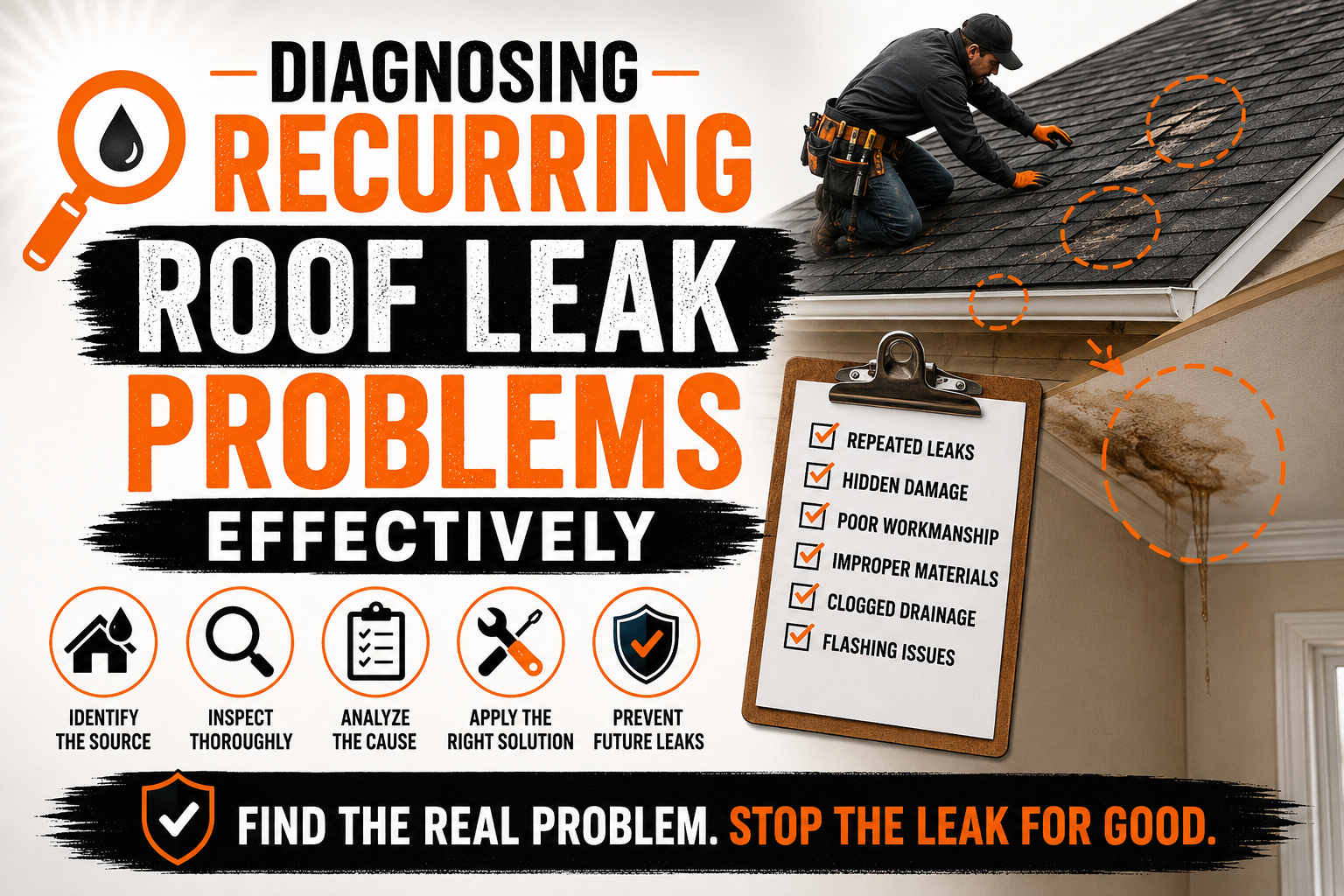
Diagnosing Recurring Roof Leak Problems Effectively
Introduction
A roof leak that returns repeatedly is more than an inconvenience. It is often a sign that the underlying problem has not been correctly identified or fully repaired. While a temporary fix may stop water from entering for a short period, the true source of the leak can continue causing hidden damage inside the roofing system.
Recurring roof leaks affect residential homes, commercial buildings, and multi family properties alike. They can damage ceilings, insulation, walls, electrical systems, flooring, and structural components if left unresolved. Beyond the visible water stains, persistent leaks may also create conditions that encourage mold growth and reduce indoor air quality.
Many property owners assume that water always enters directly above the area where the leak becomes visible. In reality, water can travel along roof decking, rafters, insulation, or structural framing before finally appearing inside the building. This makes diagnosing recurring roof leaks much more challenging than simply repairing the nearest visible damage.
Effective diagnosis requires understanding how roofing systems work as complete protective assemblies. Roofing materials, flashing, underlayment, ventilation, drainage, and structural components all play important roles in preventing water intrusion. A weakness in any of these areas can contribute to recurring leaks.
Ignoring repeated leaks often leads to escalating repair costs. Moisture that remains trapped within the roofing system gradually weakens wood, reduces insulation performance, and shortens the lifespan of roofing materials. Addressing the root cause early protects both the roof and the building beneath it.
This article explores why recurring roof leaks happen, how they develop over time, the warning signs that should never be ignored, and why identifying the true source of water intrusion is essential for achieving a lasting repair.
Why Recurring Roof Leaks Are More Than a Surface Problem
Recurring roof leaks rarely result from a single isolated defect. In most cases, they indicate that one or more underlying issues remain unresolved. Simply replacing damaged shingles or applying additional sealant may stop visible water for a while, but it often fails to correct the conditions allowing moisture to enter the roofing system.
A roof functions as several protective layers working together. The outer roofing material shields against weather, flashing seals vulnerable joints, underlayment provides secondary protection, insulation regulates temperature, and ventilation helps control moisture. When one component begins to fail, the performance of the entire system may gradually decline.
Water intrusion is particularly difficult to diagnose because moisture rarely follows a straight path. Rainwater can enter through one location and travel several feet before becoming visible inside the building. This movement often causes homeowners to repair the wrong section of the roof while the true source of the leak remains untouched.
Hidden moisture creates additional concerns beyond the leak itself. Wet insulation loses much of its thermal efficiency, increasing heating and cooling costs. Wooden framing exposed to repeated moisture may weaken over time, while damp environments encourage mold and mildew growth that can affect indoor air quality.
Recurring leaks also place additional stress on interior building materials. Drywall, paint, ceiling finishes, flooring, and electrical fixtures all become vulnerable when exposed to repeated moisture. What begins as a relatively small roofing issue can eventually require extensive interior restoration.
Commercial buildings often experience even greater challenges because of larger roof surfaces and more complex roofing systems. Flat roofs, rooftop mechanical equipment, skylights, and multiple drainage points create additional opportunities for water intrusion if maintenance is neglected.
The age of the roofing system also influences leak behavior. Older roofs may develop several small weaknesses simultaneously, making it difficult to determine whether recurring leaks originate from one location or multiple problem areas. Comprehensive inspections become increasingly important as roofing materials approach the end of their service life.
Weather conditions frequently expose weaknesses that remain unnoticed during dry periods. Heavy rainfall, wind-driven rain, melting snow, or prolonged storms may force water through small openings that otherwise appear harmless. Repeated seasonal exposure gradually enlarges these vulnerabilities.
Understanding that recurring leaks represent system-wide concerns rather than isolated defects helps property owners make better maintenance decisions. Focusing on the complete roofing assembly instead of only the visible leak leads to more reliable and longer-lasting repairs.
Understanding How Roof Leaks Develop Over Time
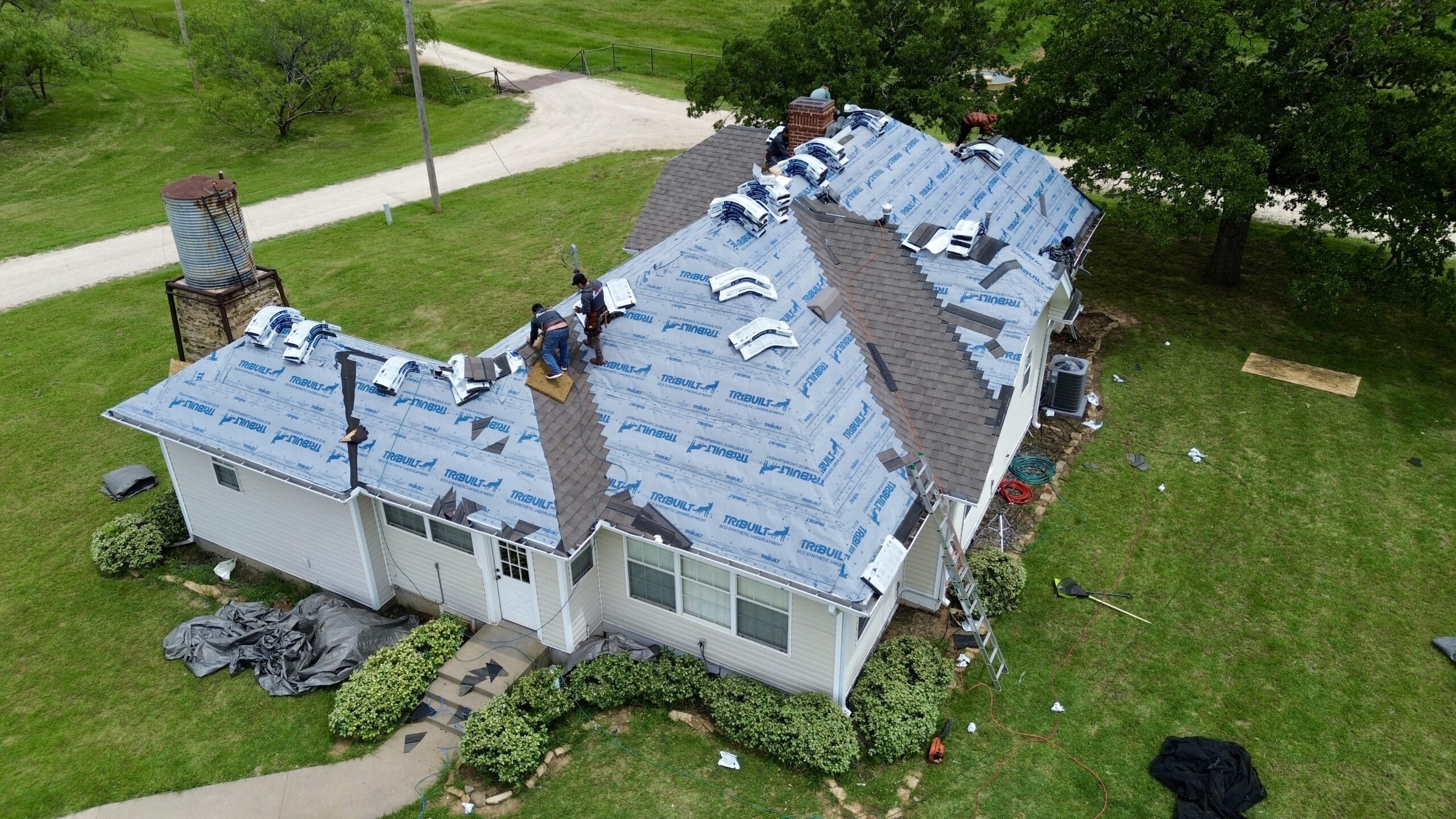
Roof leaks usually develop gradually rather than appearing suddenly. Most begin as small defects that allow limited amounts of moisture to enter the roofing system. Over months or even years, repeated weather exposure enlarges these weaknesses until visible interior damage finally appears.
Weathering is one of the primary causes of gradual roof deterioration. Continuous exposure to sunlight, rain, wind, temperature changes, and airborne debris slowly weakens roofing materials. Protective coatings wear away, sealants become brittle, and flashing may loosen as materials expand and contract through changing seasons.
Moisture intrusion often starts with microscopic openings that are impossible to detect without careful inspection. Water repeatedly entering these small gaps slowly damages surrounding materials, enlarging the opening with each storm. Eventually, enough moisture enters to produce noticeable leaks inside the building.
Thermal expansion also contributes to leak development. Roofing materials naturally expand during hot weather and contract as temperatures fall. This continuous movement places stress on joints, fasteners, flashing, and sealants, gradually creating opportunities for water to penetrate the roof.
Wind plays a significant role as well. Strong winds can lift shingles, loosen flashing, or force rain beneath roofing materials. Even if visible damage appears minor after a storm, repeated wind exposure may continue weakening vulnerable sections of the roof.
Drainage problems accelerate leak development by allowing water to remain on the roof longer than intended. Blocked gutters, clogged roof drains, or improper roof slopes increase moisture exposure, giving water additional time to penetrate weakened materials.
Small repairs completed without addressing the underlying cause often contribute to recurring problems. Applying roof cement or replacing a few shingles may temporarily hide symptoms while moisture continues entering through nearby defects that remain untreated.
The roof’s age also affects how leaks develop. Older roofing systems often contain multiple areas of wear rather than a single damaged location. As materials naturally deteriorate, several small weaknesses may begin leaking around the same time, making diagnosis more complex.
Building movement introduces another factor. Foundations settle gradually, framing shifts slightly, and roofing components respond to structural changes over time. These movements may create small gaps around flashing, roof penetrations, or joints that eventually permit water intrusion.
Understanding how leaks develop helps explain why recurring roof problems often require detailed inspections instead of quick visual repairs. Identifying every contributing factor improves the likelihood of achieving a permanent solution rather than another temporary fix.
Common Causes of Recurring Roof Leaks
Although every roofing system is different, several problems consistently account for most recurring roof leaks. Recognizing these common causes helps property owners understand why some repairs fail while others provide lasting protection.
Damaged flashing remains one of the leading sources of recurring leaks. Flashing protects vulnerable areas around chimneys, skylights, vents, roof valleys, and wall intersections. Once flashing loosens, corrodes, or separates from surrounding materials, water easily enters these openings during rainfall.
Missing or damaged roofing materials also create recurring problems. Cracked shingles, broken tiles, punctured membranes, or deteriorated metal panels expose the underlying roofing system to direct weather. Temporary patching may delay leaks briefly but often fails if surrounding materials continue deteriorating.
Improper roof installation contributes significantly to long-term leak issues. Incorrect fastening, poor flashing placement, inadequate overlap between roofing materials, or improper sealing can create weaknesses that become apparent only after years of weather exposure.
Clogged drainage systems frequently allow water to accumulate on the roof surface. Standing water increases pressure on roofing materials while creating additional opportunities for moisture to penetrate seams, joints, and small defects.
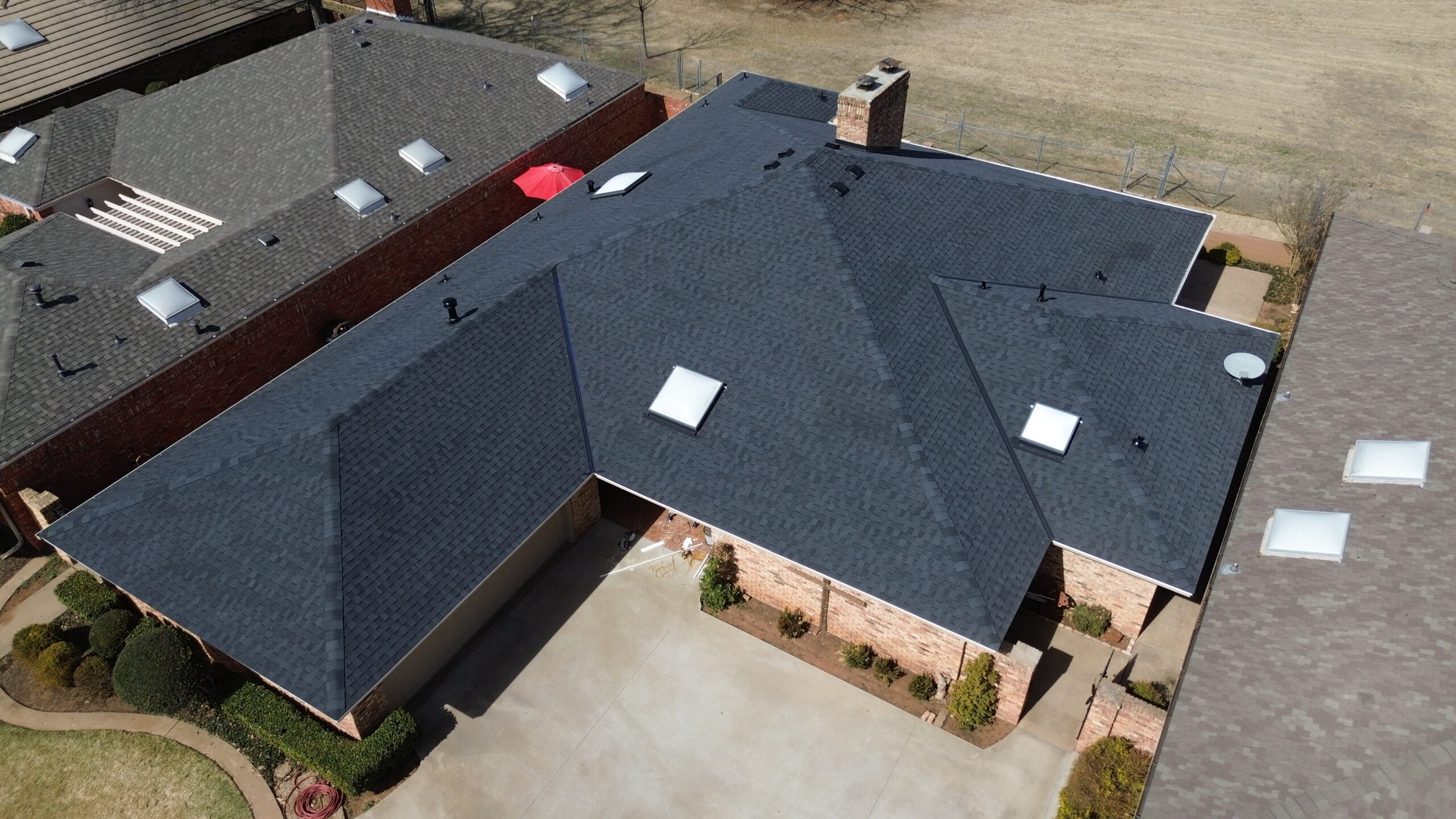
Roof penetrations deserve special attention because every pipe, vent, satellite mount, HVAC unit, or skylight interrupts the roof’s continuous protective surface. Damaged seals around these penetrations commonly become sources of persistent leaks.
Worn sealants also contribute to recurring water intrusion. Sealants naturally deteriorate because of ultraviolet exposure, changing temperatures, and weather conditions. As they lose flexibility, cracks develop that allow water to bypass protective barriers.
Storm damage often creates problems that remain hidden after severe weather passes. Wind may slightly lift roofing materials without removing them completely, while hail can fracture protective surfaces that later allow moisture infiltration.
Moisture trapped beneath roofing materials presents another challenge. Once water enters beneath shingles or membranes, it may remain hidden while gradually weakening underlayment, decking, and insulation. Surface repairs alone rarely eliminate these concealed moisture sources.
Improper previous repairs sometimes become recurring leak sources themselves. Incompatible materials, poorly applied patches, or repairs that ignore surrounding damage may temporarily reduce water entry while failing to restore the roof’s overall weather resistance.
Many recurring leaks result from several contributing factors working together rather than one obvious defect. A damaged flashing section combined with clogged gutters and deteriorated sealant, for example, creates conditions where repeated water intrusion becomes increasingly difficult to eliminate without comprehensive repairs.
Early Warning Signs That Indicate an Ongoing Leak
Recurring roof leaks usually provide several warning signs before extensive structural damage develops. Recognizing these indicators early allows property owners to investigate the problem before repairs become more complicated and expensive.
Water stains on ceilings are among the most familiar signs of roof leaks. Brown, yellow, or discolored patches often appear after rainfall, although the actual entry point may be located several feet away on the roof. These stains typically grow larger with each recurring leak event.
Peeling paint or bubbling drywall also suggests hidden moisture accumulation. As water repeatedly enters wall or ceiling cavities, interior finishes begin separating from underlying surfaces. These visible changes often indicate that moisture has been present for an extended period.
Persistent damp odors deserve immediate attention. Musty smells inside upper floors, attics, or ceiling spaces frequently indicate trapped moisture that may not yet be visible. Mold and mildew often begin developing before water damage becomes obvious.
Visible mold growth around ceilings, walls, or attic insulation represents another important warning sign. Mold requires moisture to survive, making its presence a strong indicator that water continues entering the building somewhere within the roofing system.
Residents may also notice dripping water during specific weather conditions rather than after every rainfall. Leaks that appear only during wind-driven rain or prolonged storms often suggest flashing failures or roof penetrations rather than widespread roof damage.
Higher indoor humidity can provide another clue. Moisture entering through the roof increases indoor humidity levels, particularly within attic spaces. Excess humidity may also contribute to condensation on windows or HVAC equipment.
Changes in insulation performance sometimes indicate hidden leaks. Upper rooms may become more difficult to cool during summer or harder to heat during winter because wet insulation loses much of its ability to resist heat transfer.
Attic inspections often reveal valuable evidence before interior living spaces are affected. Water stains on roof decking, damp insulation, rusted fasteners, or daylight visible through the roof all suggest that moisture intrusion requires immediate investigation.
Exterior warning signs should not be ignored either. Missing shingles, damaged flashing, clogged gutters, deteriorated sealants, or sagging roof sections frequently indicate areas where water may already be entering the roofing system.
Property owners who respond quickly to these early warning signs often avoid much larger repair projects. Prompt diagnosis limits moisture exposure, protects structural materials, and improves the likelihood that recurring leaks can be resolved before widespread damage occurs.
Why Temporary Repairs Often Fail
Temporary roof repairs can be useful during emergencies, but they rarely provide permanent solutions for recurring leaks. Their primary purpose is to reduce immediate water intrusion until comprehensive repairs can be completed under suitable weather conditions.
One of the biggest reasons temporary repairs fail is that they focus on symptoms rather than causes. Applying roof sealant over a visible crack may stop water briefly, but it does not address deteriorated flashing, damaged underlayment, or structural issues hidden beneath the roofing surface.
Water movement also complicates temporary repairs. Because moisture often travels beneath roofing materials before becoming visible indoors, repairing the apparent leak location may leave the actual entry point untouched. Rainwater simply continues following its original pathway into the building.
Roofing materials naturally expand and contract as temperatures change throughout the day. Temporary patching materials often lack the flexibility needed to withstand this continuous movement. Over time, cracks reopen and water once again finds its way into the roof assembly.
Weather exposure gradually weakens emergency repair materials as well. Sunlight, rain, wind, and fluctuating temperatures reduce the effectiveness of temporary sealants, tapes, and patching compounds. Repairs that initially appear successful may begin failing after only a few weeks or months.
Another common issue involves repairing only the visibly damaged section while ignoring surrounding materials. Roofing components exposed to the same weather conditions often deteriorate together. If neighboring shingles, flashing, or sealants remain compromised, new leaks may develop immediately beside the repaired area.
Temporary repairs can also create a false sense of security. Once interior dripping stops, property owners may assume the problem has been solved and postpone further inspections. Meanwhile, hidden moisture continues damaging insulation, decking, and structural framing beneath the roof.
Professional roof diagnosis goes beyond applying repair materials. It identifies the complete path water follows through the roofing system, evaluates the condition of surrounding components, and determines whether multiple defects contribute to the recurring leak.
Lasting repairs require correcting the underlying cause rather than simply blocking visible water. When roofing materials, flashing, drainage, ventilation, and structural components are evaluated together, repairs become more durable and significantly reduce the likelihood of future leaks.
Understanding the limitations of temporary repairs helps property owners make informed maintenance decisions. Emergency measures remain valuable for protecting the building during unexpected weather, but permanent solutions always begin with an accurate diagnosis of the true source of the recurring roof leak.
Planning Roof Repairs Without Disrupting Residents
Roof repairs in multi family housing require careful planning because construction takes place while residents continue living in the building. Unlike vacant properties, occupied buildings demand a balance between efficient repairs and minimal disruption to daily life. Proper coordination helps protect residents while allowing contractors to complete the work safely.
A detailed roof inspection should always be completed before scheduling repairs. Understanding the full extent of the damage allows property owners to prioritize work and avoid unexpected delays once the project begins. Repairs can also be divided into phases if the damaged area is extensive.
Communication is one of the most important parts of project planning. Residents should receive advance notice about repair schedules, expected noise, parking changes, and temporary access restrictions. Keeping occupants informed reduces confusion and encourages cooperation throughout the project.
Weather conditions should also be considered before work begins. Scheduling repairs during favorable weather reduces interruptions and lowers the risk of additional water damage while roofing materials are exposed.
Construction materials and equipment should be stored in designated locations that do not interfere with building entrances or emergency exits. Maintaining clean work areas improves safety while making the project more organized and efficient.
Noise cannot be completely avoided during roof repairs, but scheduling louder activities during normal daytime hours minimizes inconvenience for residents. Property managers should also remain available to answer questions and address concerns throughout the project.
Proper planning allows repairs to progress more smoothly while protecting both residents and the building. A well-organized project is more likely to finish on time, remain within budget, and produce lasting results.
Choosing the Right Roofing Materials for Multi Family Buildings
Selecting appropriate roofing materials has a direct impact on durability, maintenance requirements, and long-term costs. The best material depends on the building’s design, local climate, and expected maintenance schedule rather than price alone.
Climate should always influence material selection. Roofing systems in hot climates benefit from reflective materials that reduce heat absorption, while regions with frequent rain or snow require products designed for effective moisture resistance.
Asphalt shingles remain a common option for smaller multi family buildings because they provide reliable performance and are relatively easy to repair. Metal roofing offers excellent durability and energy efficiency, making it a popular choice for larger residential properties.
Flat roofs often use membrane systems because they provide continuous waterproof protection over large roof areas. Proper installation is essential since seams, flashing, and drainage all contribute to long-term performance.
Durability should also account for rooftop traffic. Maintenance workers frequently access HVAC systems and other equipment, so roofing materials should withstand regular foot traffic without excessive wear.
Maintenance requirements are another important consideration. Choosing materials that match the property’s maintenance capabilities helps reduce long-term repair costs while extending roof lifespan.
The ideal roofing material provides a balance between durability, performance, energy efficiency, and overall value. Careful selection reduces future maintenance while improving the building’s overall protection.
Safety Requirements During Roof Repair Projects
Roof repairs on occupied buildings require strict safety procedures to protect workers and residents alike. Every project should begin with a comprehensive safety plan before construction starts.
Workers must use appropriate fall protection equipment such as harnesses, guardrails, and safety anchors while performing repairs at height. These systems reduce accident risks while supporting safe working conditions throughout the project.
Ground-level safety is equally important. Temporary barriers, warning signs, and restricted work zones prevent residents from entering hazardous areas where tools or materials could fall.
Roofing materials should be stored securely to prevent movement caused by wind or accidental contact. Organized storage also reduces trip hazards while allowing contractors to work more efficiently.
Weather conditions should be monitored continuously. High winds, heavy rain, or lightning may require work to stop temporarily until conditions improve. Protecting workers and maintaining repair quality should always take priority over meeting project deadlines.
Property managers should also keep residents informed about restricted areas and temporary entrance changes. Clear communication supports safer movement around the property throughout construction.
Strong safety practices protect everyone involved while helping repairs progress with fewer interruptions.
Managing Budgets and Long Term Maintenance Costs
Effective budget planning involves more than estimating repair costs. Property owners should consider future maintenance expenses, expected roof lifespan, and potential energy savings when evaluating repair options.
Professional inspections provide the information needed to develop realistic budgets. Understanding the full extent of roof damage reduces the likelihood of unexpected expenses after construction begins.
Routine maintenance generally costs much less than emergency repairs. Small repairs completed promptly often prevent larger structural problems that require significantly greater investment.
Material quality also influences long-term costs. While premium products may require higher initial spending, they often provide longer service life and lower maintenance requirements.
Energy-efficient roofing improvements can further reduce operating expenses by improving insulation and ventilation. These benefits continue long after repairs are completed.
Maintaining dedicated maintenance funds allows repairs to be completed promptly when problems arise. Planned maintenance is generally more affordable than emergency restoration following severe roof failure.
Viewing roof repairs as long-term investments rather than isolated expenses helps property owners make better financial decisions while protecting the value of the building.
Working with Professional Roofing Contractors
Choosing an experienced roofing contractor is essential for achieving reliable repair results. Contractors familiar with multi family housing understand the additional planning and communication required for occupied buildings.
Property owners should verify licensing, insurance, and previous experience before selecting a contractor. Reviewing completed projects and client references provides valuable insight into workmanship and reliability.
Detailed written proposals help prevent misunderstandings. Project scope, materials, timelines, warranties, and estimated costs should all be clearly documented before work begins.
Communication should continue throughout the repair process. Contractors should provide updates on project progress while discussing any unexpected issues that require additional work.
Final inspections ensure repairs meet agreed standards before the project is considered complete. Quality workmanship and proper documentation help reduce future maintenance concerns while protecting the owner’s investment.
Working with qualified professionals improves repair quality, project organization, and long-term roof performance.
Comparing Repair and Replacement Decisions
Choosing between roof repair and roof replacement depends on the condition of the roofing system rather than the size of one visible problem. Professional inspections help determine which option provides the greatest long-term value.
| Factor | Roof Repair | Roof Replacement |
|---|---|---|
| Initial Cost | Lower upfront expense | Higher initial investment |
| Best For | Localized or minor damage | Extensive or widespread deterioration |
| Project Duration | Usually shorter | Longer because of larger project scope |
| Resident Disruption | Less disruption | Greater temporary disruption |
| Energy Efficiency | Improves repaired areas | Improves the entire roofing system |
| Future Maintenance | May require additional repairs | Typically lower during early years |
| Structural Improvement | Limited to repaired sections | Addresses hidden structural concerns |
| Long Term Value | Effective when the roof remains in good condition | Better when the roof is nearing the end of its service life |
The right decision depends on the roof’s age, overall condition, repair history, and long-term maintenance goals. Evaluating both immediate costs and future performance allows property owners to choose the most practical solution for their multi family housing investment.
Effective Repair Strategies for Long Term Leak Prevention
Successfully repairing a recurring roof leak requires more than sealing the area where water becomes visible. Long-term results depend on identifying and correcting the root cause of the problem while restoring the integrity of the entire roofing system. Repairs that address only surface damage often provide temporary relief but rarely eliminate recurring water intrusion.
The first priority is replacing damaged roofing materials rather than attempting to reuse components that have already deteriorated. Cracked shingles, punctured membranes, damaged tiles, or corroded metal panels should be replaced with compatible materials that match the existing roofing system. This approach creates a stronger and more consistent barrier against future weather exposure.
Flashing repairs are equally important because flashing protects the most vulnerable areas of the roof. Chimneys, skylights, roof valleys, vents, and wall intersections require properly installed flashing that directs water away from joints and openings. Replacing deteriorated flashing often resolves leak problems that repeated sealant applications cannot.
Repairing the underlayment is necessary when moisture has penetrated beneath the roof covering. Since the underlayment serves as a secondary waterproof barrier, damaged sections should be replaced before installing new roofing materials. Ignoring hidden underlayment damage increases the likelihood that leaks will return.
Roof decking should also be inspected during repairs. Soft, warped, or rotted decking weakens the roofing system and may prevent new materials from performing correctly. Replacing damaged structural components creates a stable foundation that supports long-term roof performance.
Improving drainage helps reduce future water intrusion. Cleaning gutters, repairing downspouts, correcting drainage slopes, and clearing roof drains allow rainwater to leave the roof more efficiently. Better drainage reduces the amount of time moisture remains in contact with roofing materials.
Ventilation improvements provide additional long-term benefits. Proper attic ventilation reduces heat and moisture accumulation, helping roofing materials last longer while preventing condensation that may be mistaken for roof leaks. Balanced ventilation also improves the overall energy efficiency of the building.
High-quality repair materials contribute significantly to long-term durability. Using products recommended by the roofing manufacturer helps ensure compatibility while maintaining consistent performance throughout the repaired section.
Every repair project should conclude with a detailed inspection to verify workmanship. Confirming that flashing, roofing materials, drainage systems, and ventilation components all function correctly reduces the likelihood of recurring leaks after repairs are completed.
Long-term leak prevention depends on treating the roofing system as a complete assembly rather than focusing on individual damaged components. Comprehensive repairs provide greater reliability while reducing future maintenance needs.
Preventive Maintenance to Reduce Future Roof Leak Problems
Preventive maintenance remains one of the most effective ways to reduce the risk of recurring roof leaks. Routine inspections and timely repairs help identify developing problems before they allow significant water intrusion. Consistent maintenance also extends the service life of roofing materials while protecting the building from avoidable damage.
Scheduling professional roof inspections at least once each year provides an opportunity to evaluate the condition of roofing materials, flashing, drainage systems, and ventilation. Additional inspections after severe storms help identify damage that may not be immediately visible from the ground.
Keeping the roof clean plays an important role in moisture management. Leaves, branches, dirt, and other debris trap water against roofing materials while blocking drainage pathways. Removing this buildup allows the roof to dry more quickly after rainfall.
Gutters and downspouts should remain clear throughout the year. Blocked drainage systems cause water to overflow onto roofing materials and increase the likelihood of leaks along roof edges and exterior walls. Regular cleaning supports proper water flow during heavy rain.
Roof penetrations deserve ongoing attention because sealants naturally deteriorate over time. Periodically inspecting flashing around vents, chimneys, skylights, and mechanical equipment allows worn sealants to be replaced before water begins entering the building.
Attic inspections provide valuable information about the roof’s hidden condition. Moisture stains, damp insulation, mold growth, or unusual odors often indicate developing roofing issues before visible interior leaks appear. Identifying these signs early helps reduce repair costs.
Tree maintenance also contributes to roof protection. Trimming overhanging branches reduces the risk of impact damage during storms while limiting debris accumulation on the roof surface. Healthy trees and a clean roof work together to reduce maintenance requirements.
Property owners should also monitor indoor warning signs. Ceiling stains, peeling paint, damp odors, increased humidity, or unexplained temperature changes may indicate roofing problems that require professional evaluation.
Maintaining detailed records of inspections and repairs helps identify recurring issues over time. Documentation provides valuable information about previous maintenance activities while supporting better planning for future repairs.
Preventive maintenance creates long-term value by reducing emergency repairs, protecting structural components, improving energy efficiency, and extending the lifespan of the roofing system. Small maintenance efforts completed consistently often prevent much larger restoration projects.
When Roof Replacement Is a Better Solution Than Repeated Repairs
Although many recurring leaks can be corrected through professional repairs, there are situations where replacing the roof provides a more practical and cost-effective solution. Understanding when repairs are no longer sufficient helps property owners make informed long-term decisions.
The age of the roof is one of the most important factors. Every roofing material has an expected service life, and once that lifespan is nearly reached, repeated repairs become less effective because deterioration is often widespread rather than isolated. Investing in a new roof may provide better value than continuing to repair aging materials.
Multiple recurring leaks across different areas of the roof also suggest that replacement should be considered. When several unrelated leaks develop within a short period, the roofing system may have reached a stage where repairs only address individual symptoms rather than the overall condition.
Extensive structural damage is another clear indicator. Moisture that has affected roof decking, framing, insulation, or other structural components often requires more comprehensive restoration than surface repairs alone can provide. Replacing the roof allows these hidden problems to be corrected at the same time.
Repeated storm damage may also influence the decision. Roofs that have experienced multiple hailstorms, high winds, or severe weather events sometimes develop widespread weaknesses that reduce long-term reliability even after repairs are completed.
Energy efficiency goals provide another reason to consider replacement. Modern roofing systems often include improved insulation, ventilation, and reflective materials that reduce heating and cooling costs while providing better moisture protection than older roofing assemblies.
Repair costs should also be evaluated over time rather than individually. Frequent repair projects may eventually exceed the cost of installing a completely new roofing system. Comparing cumulative repair expenses with replacement costs helps determine the most economical option.
Property renovations often present an ideal opportunity for roof replacement. Installing a new roof during major remodeling projects allows multiple improvements to be completed together while reducing future disruptions.
Building value is another consideration. A new roof enhances curb appeal, improves buyer confidence, and often increases the overall market value of the property. These benefits may become particularly important for owners planning to sell in the future.
Professional inspections provide valuable guidance when making replacement decisions. Roofing specialists can evaluate the condition of the entire system and recommend whether continued repairs or complete replacement will provide the greatest long-term benefit.
Choosing replacement at the appropriate time helps avoid the cycle of repeated repairs while restoring reliable weather protection, improving efficiency, and reducing future maintenance requirements.
Best Practices for Homeowners and Property Managers
Successfully managing recurring roof leaks requires consistent attention, informed decision making, and a proactive maintenance strategy. Following proven best practices helps reduce the likelihood of repeated problems while protecting both the building and its occupants.
Property owners should never ignore even small leaks. Water damage often spreads behind ceilings and walls long before visible signs appear indoors. Investigating minor leaks promptly prevents them from developing into larger structural concerns.
Routine inspections should become part of every property’s maintenance schedule. Professional evaluations identify developing issues that may not be noticeable during casual visual observations. Regular inspections also provide valuable records of the roof’s condition over time.
Maintenance should always focus on the entire roofing system rather than isolated damaged areas. Roofing materials, flashing, drainage systems, ventilation, and insulation work together to protect the building. Evaluating every component improves diagnostic accuracy and repair quality.
Working with experienced roofing professionals increases the likelihood of lasting repairs. Qualified contractors understand how water moves through roofing systems and can identify hidden problems that temporary repairs often overlook.
Quality materials should be prioritized whenever repairs are performed. Durable roofing products and compatible repair materials provide better long-term performance while reducing the need for repeated maintenance.
Weather awareness also supports better roof management. Scheduling inspections after severe storms allows hidden damage to be identified before leaks begin affecting the building interior. Early intervention often results in simpler and less expensive repairs.
Property managers should encourage occupants to report water stains, unusual odors, or signs of moisture immediately. Residents frequently notice subtle changes before maintenance personnel become aware of developing roofing problems.
Accurate documentation supports better maintenance planning. Recording inspection findings, completed repairs, warranty information, and recurring concerns creates a valuable maintenance history that guides future decisions.
Most importantly, property owners should view roof maintenance as an ongoing investment rather than a response to emergencies. Consistent care preserves the roofing system, protects the building, and reduces long-term ownership costs.
Steps to Diagnose a Recurring Roof Leak
Finding the true source of a recurring leak requires a structured approach rather than relying on assumptions.
- Record when and under what weather conditions the leak occurs.
- Inspect interior ceilings, walls, and attic spaces for moisture patterns.
- Examine the exterior roof for damaged roofing materials and flashing.
- Check roof penetrations such as vents, chimneys, skylights, and HVAC equipment.
- Inspect gutters, roof drains, and downspouts for blockages or poor drainage.
- Evaluate attic ventilation and insulation for moisture damage or condensation.
- Perform controlled water testing if the leak source remains unclear.
- Repair the underlying cause rather than only the visible symptoms.
- Verify the repair through a follow-up inspection after rainfall.
- Continue routine maintenance to prevent future recurring leaks.
Following these steps improves diagnostic accuracy while reducing the likelihood that recurring leaks will return after repairs are completed.
Frequently Asked Questions
Why does my roof leak only during heavy rain?
Heavy rainfall places greater stress on roofing systems and may expose weaknesses that remain unnoticed during lighter showers. Problems with flashing, drainage, or roof penetrations commonly become apparent under these conditions.
Can a roof leak appear far from the actual damage?
Yes. Water often travels along roof decking, rafters, insulation, or structural framing before becoming visible indoors. This is why the location of the ceiling stain does not always match the point where water entered the roof.
How do I know if the leak has been completely repaired?
A professional inspection combined with observation during future rainfall provides the best confirmation. The absence of new water stains, moisture, or damp odors indicates that the repair has likely addressed the underlying problem.
Can clogged gutters cause recurring roof leaks?
Yes. Blocked gutters prevent proper drainage, allowing water to collect along roof edges or back up beneath roofing materials. Regular gutter maintenance helps reduce this risk.
Should I repair the roof myself?
Minor maintenance such as removing debris from gutters may be appropriate for some homeowners. However, diagnosing and repairing recurring roof leaks often requires professional expertise because the visible leak may not represent the actual source of water intrusion.
How often should I inspect my roof for leak problems?
A complete inspection at least once each year, along with additional inspections after severe storms, helps identify developing issues before they become major repairs.
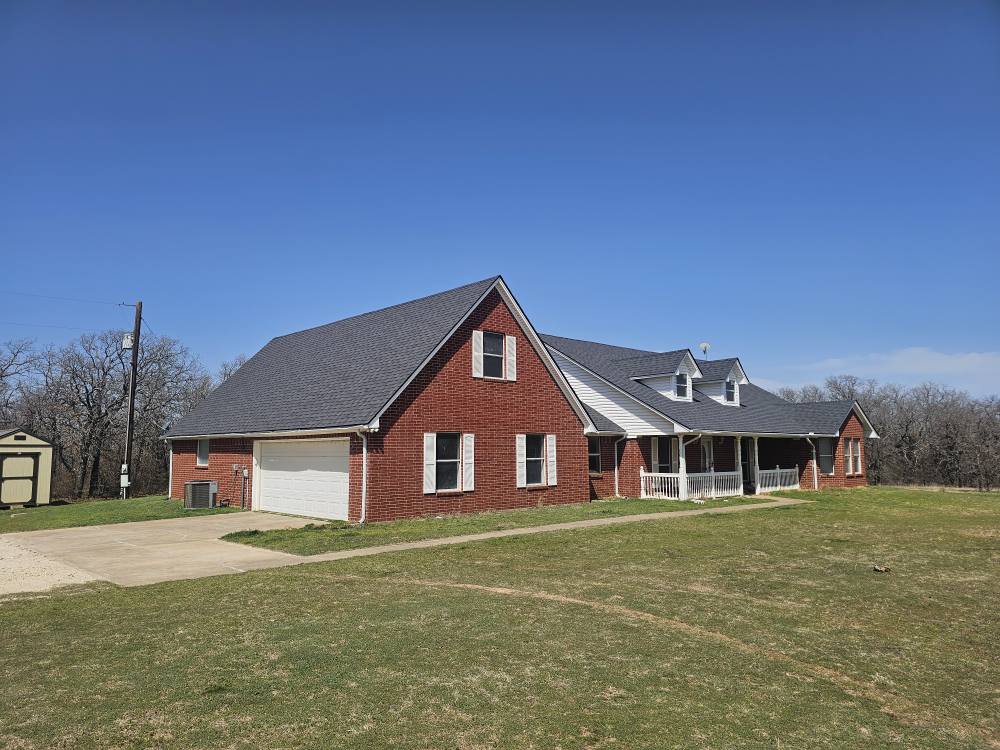
Roof Leak Prevention Checklist
Use this checklist throughout the year to help reduce the risk of recurring roof leaks.
- Schedule annual professional roof inspections.
- Inspect the roof after severe weather events.
- Keep gutters and downspouts free of debris.
- Remove leaves and branches from the roof surface.
- Check flashing around chimneys, vents, and skylights.
- Monitor attic spaces for moisture or mold.
- Repair damaged roofing materials promptly.
- Maintain detailed records of inspections and repairs.
Following these maintenance practices consistently helps preserve the roofing system while reducing the likelihood of future water intrusion.
Conclusion
Recurring roof leaks are rarely random events. They usually indicate that the underlying source of water intrusion has not been fully identified or properly repaired. While temporary solutions may stop visible dripping for a short time, lasting protection requires a thorough understanding of how the entire roofing system functions.
Throughout this article, we explored how recurring leaks develop, the common causes behind persistent water intrusion, and the importance of recognizing early warning signs before significant structural damage occurs. We also examined the value of professional inspections, hidden leak sources, weather influences, material performance, and effective diagnostic techniques.
Accurate diagnosis remains the foundation of every successful roof repair. Identifying the true path of water entry allows repairs to address the root cause instead of repeatedly treating the same symptoms. This approach protects roofing materials, insulation, structural components, and interior finishes from ongoing moisture damage.
Preventive maintenance is equally important for long-term roof performance. Regular inspections, clean drainage systems, timely repairs, proper ventilation, and quality workmanship all contribute to reducing the likelihood of recurring leaks while extending the life of the roofing system.
In situations where repeated repairs no longer provide reliable protection, roof replacement may offer the most practical long-term solution. Modern roofing systems provide improved durability, energy efficiency, and weather resistance that help minimize future maintenance concerns.
Ultimately, diagnosing recurring roof leak problems effectively requires patience, careful investigation, and a commitment to solving the underlying issue rather than masking visible symptoms. Property owners who invest in thorough inspections, professional repairs, and consistent maintenance can protect their buildings, reduce long-term costs, and enjoy greater confidence that their roofs will continue providing dependable protection for many years.