
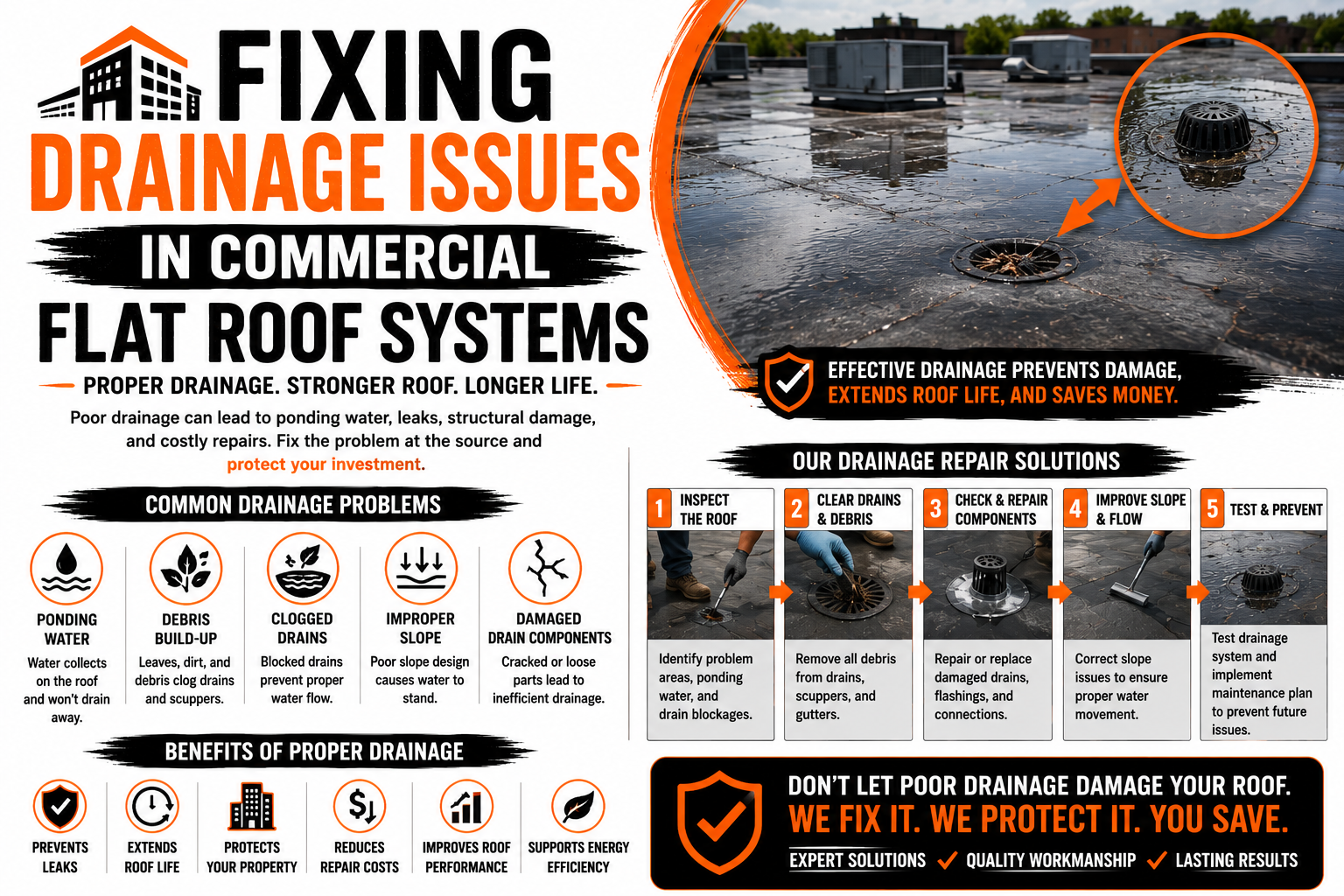
Fixing Drainage Issues in Commercial Flat Roof Systems
Introduction
Commercial flat roofs are designed to provide dependable protection for office buildings, warehouses, retail centers, schools, healthcare facilities, and industrial properties. Unlike steep sloped roofs that naturally shed water quickly, flat roofs rely on carefully engineered drainage systems to remove rainwater efficiently. When these systems function properly, they help preserve the roofing membrane, insulation, structural components, and the building interior.
Although commercial flat roofs appear level, they are built with a slight slope that directs water toward designated drainage points. Roof drains, scuppers, gutters, downspouts, and internal piping all work together to prevent water from remaining on the roof after rainfall. Even small interruptions in this drainage process can create standing water that places continuous stress on the roofing system.
Poor drainage is one of the leading causes of premature roof deterioration. Water that remains on the roof for extended periods gradually weakens roofing materials, increases the likelihood of leaks, accelerates membrane aging, and adds unnecessary weight to the building structure. What initially seems like a minor drainage issue can eventually result in costly repairs affecting much more than the roof itself.
Many drainage problems develop slowly over time. Debris accumulation, clogged drains, structural settlement, damaged gutters, blocked downspouts, and aging roofing materials often contribute to water retention without immediately producing obvious interior leaks. By the time visible signs appear inside the building, hidden damage may already have spread beneath the roofing membrane.
Understanding how commercial flat roof drainage systems work and recognizing the early warning signs of drainage failure allows property owners and facility managers to address problems before they become major structural concerns. Preventive maintenance not only extends roof lifespan but also reduces emergency repair costs and minimizes disruptions to daily business operations.
This guide explains why proper drainage is essential for commercial flat roofs, how drainage systems operate, the most common causes of poor water flow, and the warning signs property owners should never ignore. Later sections will examine inspection methods, repair solutions, preventive maintenance strategies, and long term approaches for keeping commercial roofing systems free from drainage related damage.
Why Proper Drainage Matters for Commercial Flat Roofs
Effective drainage is one of the most important factors influencing the lifespan of a commercial flat roof. Every roofing component is designed with the expectation that rainwater will be removed within a reasonable period after a storm. When water remains on the roof longer than intended, nearly every part of the roofing system experiences additional stress.
The roofing membrane serves as the building’s primary waterproof barrier. While modern membranes are engineered to resist prolonged moisture exposure, continuous standing water accelerates aging and increases the likelihood of membrane deterioration. Over time, seams, flashing, and repair areas become more vulnerable to failure under constant moisture.
Proper drainage also protects insulation beneath the roofing membrane. If water enters the roofing assembly through small defects, insulation absorbs moisture and loses much of its thermal performance. Reduced insulation efficiency forces heating and cooling systems to work harder, increasing energy costs throughout the building.
Structural components benefit significantly from efficient water removal as well. Standing water adds substantial weight to the roof surface, especially after heavy rainfall. Although commercial roofs are designed to support considerable loads, prolonged water accumulation places unnecessary stress on structural members and may contribute to long term deflection or settlement.
Good drainage also helps preserve building interiors. By preventing water from entering the roofing system, effective drainage reduces the risk of ceiling stains, damaged drywall, mold growth, electrical hazards, and interruptions to business operations. Commercial properties often face financial losses beyond repair expenses when roof leaks affect employees, customers, or inventory.
Routine drainage maintenance provides additional financial benefits. Cleaning drains and correcting minor drainage issues typically costs far less than repairing saturated insulation, replacing damaged roofing materials, or restoring interior finishes after a significant leak. Preventive maintenance consistently offers one of the highest returns on investment for commercial roof management.
Ultimately, proper drainage supports every aspect of roof performance. It reduces wear, improves durability, protects building assets, and helps commercial roofing systems achieve their intended service life.
How Commercial Flat Roof Drainage Systems Work
Commercial flat roof drainage systems are carefully designed to move water away from the roof surface as efficiently as possible. Although these roofs appear completely flat, they actually include subtle slopes that direct rainwater toward designated collection points.
Internal roof drains are among the most common drainage solutions for large commercial buildings. Positioned at strategic low points, these drains collect water and channel it through concealed piping within the building before safely discharging it into the stormwater system. Proper placement ensures water flows naturally toward each drain during rainfall.
Scuppers provide another effective drainage method. Installed along parapet walls, scuppers allow water to exit the roof horizontally before flowing into exterior downspouts or collection systems. Many commercial buildings combine scuppers with internal drains to provide additional drainage capacity during heavy storms.
Gutters and downspouts play an important role on certain commercial properties, particularly buildings with lower parapet walls or slightly sloped roof sections. Gutters collect runoff at roof edges while downspouts transport water safely away from the building foundation.
Roof slope remains a critical component regardless of the drainage system used. Even a small slope helps water move toward drains instead of collecting randomly across the roof surface. Proper roof design ensures low areas correspond with drainage locations to minimize standing water after storms.
Insulation also contributes to drainage performance. Tapered insulation systems create controlled roof slopes without altering the structural deck itself. These systems improve drainage on new construction while also serving as an effective solution during roof replacement projects.
Drainage accessories further improve system reliability. Drain strainers prevent leaves and debris from entering drainage pipes, overflow drains provide backup protection during severe storms, and expansion joints accommodate building movement without disrupting water flow.
Every drainage component must work together to maintain efficient water removal. When even one element becomes blocked or damaged, the entire drainage system may become less effective, allowing water to remain on the roof longer than intended.
Common Causes of Poor Drainage on Commercial Flat Roofs
Drainage problems rarely develop from a single cause. Most commercial flat roofs experience reduced drainage performance because multiple issues gradually combine over time. Understanding these contributing factors helps property owners identify concerns before they create significant roofing damage.
Clogged roof drains remain one of the most common causes of standing water. Leaves, dirt, branches, packaging materials, and windblown debris accumulate around drain openings, restricting water flow during rainfall. Even partial blockages slow drainage enough to allow water to pond across the roof surface.
Blocked gutters and downspouts create similar problems. Debris trapped within gutters prevents water from flowing freely toward downspouts, causing overflow that increases moisture exposure around roof edges and building walls. Routine cleaning significantly reduces this risk.
Structural settlement gradually alters roof slopes as buildings age. Small changes in the supporting structure may create new low spots where water collects instead of flowing toward designated drainage points. These depressions often become more pronounced over time if left uncorrected.
Damaged roofing materials also affect drainage performance. Membrane shrinkage, deteriorated insulation, failed repairs, or localized roof deflection may interrupt the smooth movement of water across the roof surface. Minor surface irregularities sometimes create persistent ponding areas after every rainfall.
Improper original roof design occasionally contributes to ongoing drainage difficulties. Inadequate drain placement, insufficient roof slope, or undersized drainage components may struggle to handle heavy rainfall, particularly during severe storms.
Poor maintenance practices frequently accelerate drainage problems. Roofs that receive infrequent inspections often accumulate debris gradually until drainage capacity becomes noticeably reduced. Small issues that could have been corrected easily eventually develop into more expensive repairs.
Seasonal weather conditions also influence drainage performance. Heavy leaf fall during autumn, snow accumulation during winter, and storm related debris throughout the year all increase the importance of routine maintenance for commercial drainage systems.
Recognizing these causes helps building owners establish maintenance programs that address problems before water accumulation begins affecting roofing performance.
Early Warning Signs of Commercial Roof Drainage Problems
Commercial roofing systems usually provide noticeable warning signs before drainage issues become severe. Recognizing these indicators allows facility managers to arrange inspections while corrective measures remain relatively straightforward and cost effective.
Standing water remaining on the roof more than forty eight hours after rainfall is one of the clearest signs of inadequate drainage. Although small amounts of temporary ponding may occur following exceptionally heavy storms, persistent water accumulation indicates that drainage performance should be evaluated.
Visible debris surrounding roof drains often suggests restricted water flow. Leaves, dirt, branches, plastic materials, and construction debris accumulating near drain openings reduce drainage capacity and should be removed promptly before rainfall increases water retention.
Stains or discoloration around drainage areas may indicate frequent moisture exposure. These changes often develop gradually as water repeatedly remains in the same locations after storms. While discoloration alone does not confirm drainage failure, it frequently warrants closer inspection.
Membrane deterioration near low points also deserves attention. Wrinkling, blistering, seam separation, or premature weathering often appear more rapidly where standing water places continuous stress on roofing materials.
Interior warning signs may include ceiling stains, damp insulation, peeling paint, mold growth, or musty odors. Because water often travels beneath the roofing membrane before becoming visible indoors, these symptoms frequently indicate that drainage problems have already progressed beyond the roof surface.
Overflowing gutters during moderate rainfall provide another useful indicator. If gutters spill water despite average rain conditions, blockages or insufficient drainage capacity may require professional evaluation.
Unusual plant growth or accumulated organic material on the roof also suggests that water remains in certain areas long enough to support vegetation. Moss, algae, or small weeds indicate persistent moisture conditions that should be corrected before roofing materials deteriorate further.
Regular roof inspections make these warning signs easier to identify while repairs remain relatively simple. Early intervention consistently reduces both repair costs and operational disruptions.
Risks of Ignoring Drainage Issues
Allowing drainage problems to persist places every component of a commercial roofing system under unnecessary stress. While standing water may initially appear harmless, prolonged moisture exposure gradually affects roofing materials, structural elements, insulation, and building interiors.
The roofing membrane experiences continuous deterioration when exposed to ponding water. Prolonged moisture accelerates material aging while increasing the likelihood of seam separation, blister formation, membrane cracking, and flashing failure. Once waterproof integrity is compromised, water begins entering the roofing assembly.
Wet insulation quickly loses its thermal effectiveness. As insulation becomes saturated, heating and cooling systems require additional energy to maintain comfortable indoor temperatures. This hidden consequence often increases operating expenses long before visible leaks develop.
Structural loading presents another concern. Standing water is significantly heavier than many property owners realize, particularly across large commercial roof surfaces. Repeated exposure to excessive water weight may contribute to long term roof deflection, structural fatigue, or localized settlement.
Interior building damage frequently follows prolonged drainage failure. Water entering through compromised roofing materials affects ceilings, drywall, flooring, electrical systems, office equipment, inventory, and finished spaces. For commercial facilities, these repairs often coincide with interrupted business operations and financial losses beyond construction costs.
Moisture trapped within the roofing system also creates conditions favorable for mold development. While not every drainage problem results in mold, persistent dampness increases the likelihood of microbial growth within insulation and concealed building cavities.
Emergency repairs generally cost far more than preventive maintenance. Addressing clogged drains or correcting minor drainage deficiencies early often prevents extensive roof restoration, insulation replacement, and structural repairs later.
The safest and most economical approach is proactive maintenance supported by regular professional inspections. In the next part, we will examine the most common commercial roof drainage problems in greater detail, explain how poor drainage damages roofing systems over time, explore professional inspection methods, compare repair solutions, and review preventive maintenance practices that help commercial flat roofs drain efficiently throughout their service life.
The Most Common Drainage Problems in Commercial Flat Roof Systems
Commercial flat roofs rely on efficient drainage to perform properly, but several recurring issues can interfere with water flow over time. Identifying these problems early allows property owners to correct them before they lead to widespread roofing damage.
Clogged roof drains remain the most frequent drainage issue. Leaves, dirt, gravel, packaging materials, bird nests, and other debris gradually accumulate around drain openings, restricting water flow during rainfall. Even partial blockages can slow drainage enough to create ponding water across large roof sections.
Blocked scuppers create similar concerns. Since scuppers discharge water through parapet walls, any obstruction reduces their ability to remove runoff efficiently. Debris buildup, damaged flashing, or improperly maintained protective screens often contribute to restricted water flow.
Gutters and downspouts also require regular maintenance. Accumulated debris prevents water from moving freely toward discharge points, causing gutters to overflow and increasing moisture exposure along roof edges and exterior walls. During heavy storms, blocked downspouts may force water back onto the roof surface.
Ponding water caused by low spots is another common challenge. Structural settlement, insulation compression, or gradual roof deflection may create depressions where water consistently collects after rainfall. These areas remain wet much longer than the surrounding roof, accelerating membrane aging and increasing the likelihood of leaks.
Improper roof slope sometimes contributes to ongoing drainage problems. If water cannot naturally reach drains because the roof lacks adequate slope, standing water becomes a recurring issue regardless of how clean the drainage components remain.
Damaged drain assemblies also affect drainage efficiency. Loose drain strainers, deteriorated flashing, cracked drain bowls, or separated membrane connections allow water to bypass intended drainage paths while increasing the possibility of leaks around drain openings.
Overflow drainage systems deserve equal attention. Overflow drains and emergency scuppers provide backup protection during exceptionally heavy rainfall. If these systems become blocked or damaged, the roof loses an important safeguard against excessive water accumulation.
Understanding these common drainage issues helps property owners recognize why routine inspections remain one of the most effective ways to protect commercial roofing systems.
How Poor Drainage Leads to Roof Damage
Water that remains on a commercial flat roof longer than intended gradually affects nearly every roofing component. While the damage often develops slowly, its long term impact can be significant if drainage problems are not corrected promptly.
The roofing membrane experiences constant moisture exposure in areas where water repeatedly ponds. Continuous wetting accelerates material aging, reduces flexibility, and increases the likelihood of cracking, blistering, seam separation, and flashing deterioration. As the membrane weakens, opportunities for water infiltration become more frequent.
Moisture entering beneath the membrane quickly affects insulation. Wet insulation loses much of its thermal resistance, forcing heating and cooling systems to consume more energy throughout the building. Increased operating costs often become one of the earliest hidden consequences of poor roof drainage.
Adhesives bonding roofing components together may also deteriorate under prolonged moisture exposure. As these bonds weaken, sections of the membrane become more susceptible to movement during temperature changes, increasing the possibility of additional roofing defects.
Structural components gradually experience increased stress from standing water. Although commercial roofs are engineered to support substantial loads, water weighs considerably more than many property owners realize. Persistent ponding adds unnecessary weight that may contribute to roof deflection or localized settlement over time.
Drainage problems frequently create a cycle of worsening conditions. Standing water accelerates membrane deterioration, which allows more moisture to enter the roofing assembly. Wet insulation compresses more easily, creating deeper low spots where additional water collects after future storms.
Interior building damage often develops after hidden moisture spreads beneath the roofing system. Ceiling stains, peeling paint, damaged drywall, mold growth, electrical issues, and ruined inventory may all result from drainage problems that initially appeared minor on the roof surface.
Repair costs increase substantially once water reaches structural or interior components. Addressing drainage issues early helps prevent this progression while preserving both the roofing system and the building it protects.
Inspecting a Commercial Flat Roof Drainage System
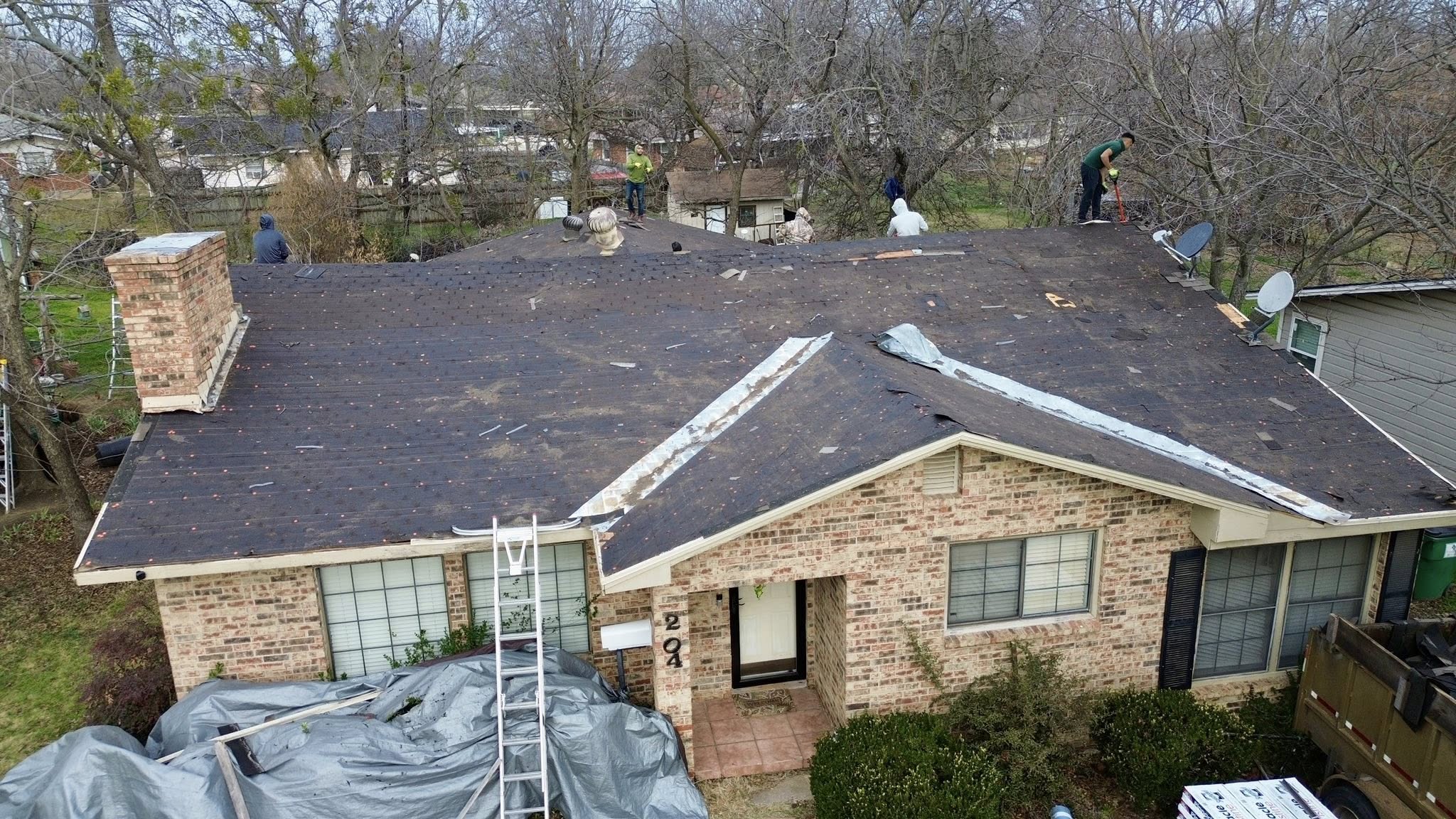
A thorough drainage inspection involves much more than checking whether roof drains appear clear. Professional evaluations examine every component responsible for directing water safely away from the roofing system while identifying conditions that may reduce drainage efficiency.
Visual inspection begins with the overall roof surface. Contractors look for standing water, low areas, membrane deterioration, debris accumulation, damaged flashing, and signs of previous water retention. The location and size of ponding areas provide valuable information about drainage performance.
Roof drains receive detailed examination because they represent the primary water collection points. Inspectors verify that strainers remain securely attached, drain openings are unobstructed, flashing is intact, and surrounding membrane sections show no evidence of deterioration.
Scuppers, gutters, and downspouts are also evaluated carefully. Contractors check for debris buildup, corrosion, loose connections, improper slope, and physical damage that may interfere with water flow. Even minor restrictions can reduce drainage capacity during heavy rainfall.
Roof slope plays an important role in inspection findings. Contractors identify low spots where water consistently accumulates after storms and determine whether structural settlement, insulation compression, or construction irregularities contribute to these conditions.
Specialized moisture detection equipment may be used when water infiltration is suspected. Infrared imaging identifies temperature differences associated with wet insulation, while moisture meters and electronic leak detection help locate concealed water beneath the roofing membrane without unnecessary removal of roofing materials.
Interior inspections often complement exterior observations. Water stains, damp ceiling materials, mold growth, or elevated indoor humidity may help confirm that drainage deficiencies have already affected the building interior. Comparing both sets of observations improves diagnostic accuracy.
Detailed inspection reports typically include photographs, condition assessments, repair recommendations, and maintenance priorities. These reports help property owners make informed decisions while establishing a valuable maintenance history for future roof evaluations.
Repair Solutions for Different Drainage Issues
The most effective drainage repairs address both the immediate problem and its underlying cause. Simply removing standing water without correcting the reason it accumulated often results in recurring issues after the next rainfall.
Clogged drains are usually resolved through thorough cleaning. Debris surrounding drain openings is removed, drain strainers are inspected or replaced if necessary, and internal piping is checked to ensure unrestricted water flow. Regular cleaning remains one of the simplest and most cost effective drainage solutions.
Blocked gutters and downspouts require similar attention. Contractors remove accumulated debris, repair damaged sections, verify proper alignment, and confirm that water flows freely away from the building foundation. Preventive gutter maintenance significantly improves overall roof drainage.
Low spots causing persistent ponding often require more comprehensive repairs. Depending on the severity of the condition, contractors may install tapered insulation, rebuild localized roof sections, or correct structural irregularities contributing to water accumulation. These solutions restore positive drainage while reducing long term membrane stress.
Damaged drain assemblies are repaired by replacing deteriorated components and restoring waterproof flashing around drain openings. Proper integration between the roofing membrane and drainage system is essential for preventing leaks during heavy rainfall.
Overflow drainage systems should also be restored whenever deficiencies are identified. Cleaning overflow scuppers, replacing damaged overflow drains, and ensuring emergency drainage pathways remain unobstructed improves roof protection during unusually intense storms.
In cases where roof design limits drainage performance, larger improvements may be recommended. Additional drains, redesigned drainage layouts, or improved roof slopes help increase water removal capacity while reducing future maintenance requirements.
Every repair should be followed by careful testing to verify proper drainage. Confirming that water flows efficiently toward designated collection points helps ensure repairs deliver the intended long term results.
Comparing Commercial Flat Roof Drainage Solutions
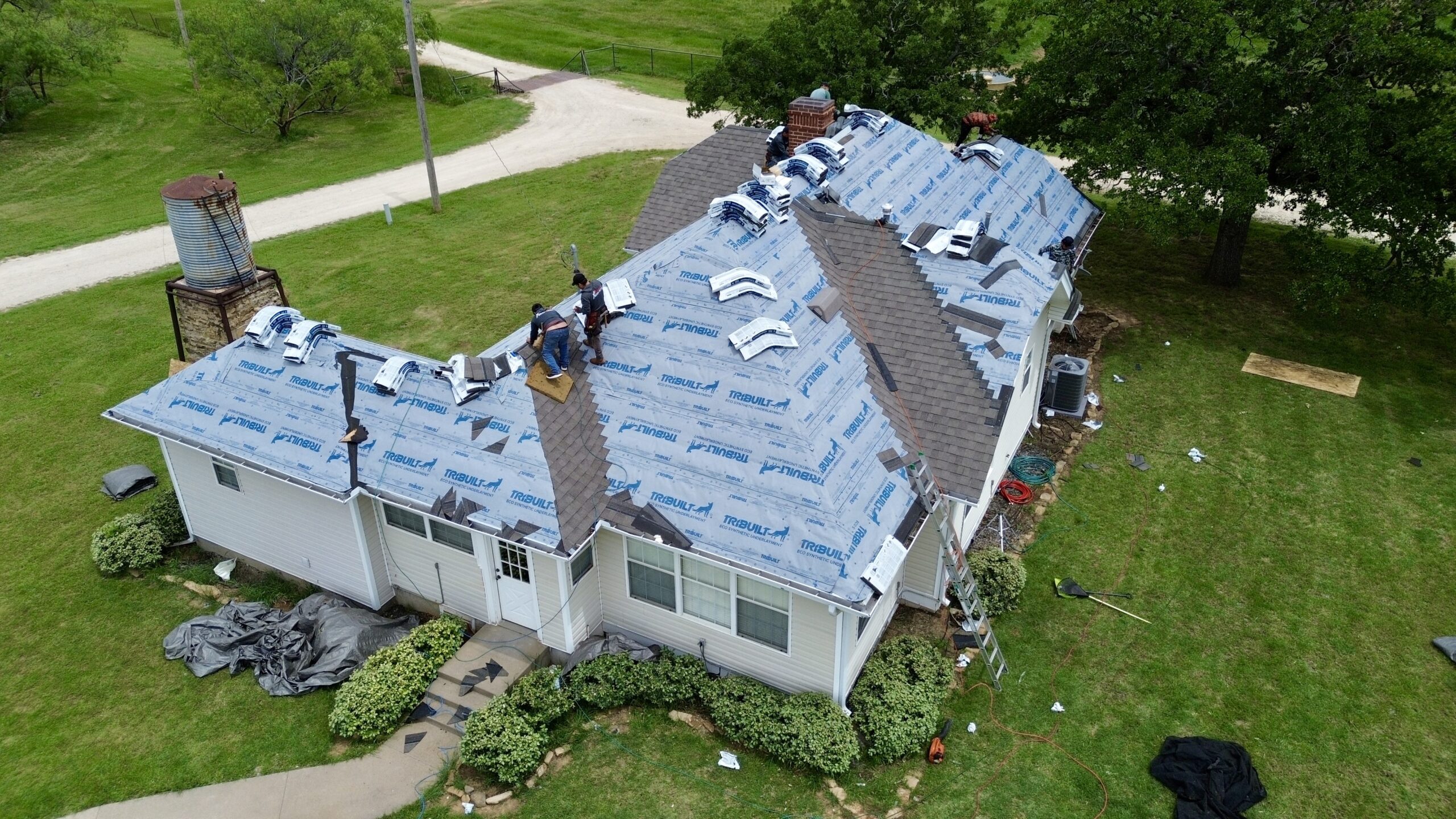
Different drainage issues require different repair strategies. The most appropriate solution depends on the cause of the problem, the condition of the roofing system, and the long term performance goals for the building.
| Drainage Problem | Common Cause | Typical Repair Solution | Long Term Effectiveness |
|---|---|---|---|
| Clogged Roof Drains | Debris accumulation | Clean drains and install or replace drain strainers | High with routine maintenance |
| Blocked Gutters and Downspouts | Leaves, dirt, and debris | Clean, repair, and realign gutter system | High |
| Ponding Water | Low spots or roof settlement | Install tapered insulation or rebuild affected roof section | High |
| Damaged Drain Flashing | Aging materials or membrane failure | Replace flashing and restore waterproof seal | High |
| Inadequate Drainage Capacity | Original design limitations | Add drains or redesign drainage layout | Very High |
| Overflow Drain Failure | Blockage or damaged components | Restore emergency drainage system | High |
Selecting the right repair method ensures that drainage improvements address the root cause rather than only the visible symptoms. Professional assessments help determine which solution provides the greatest long term value while minimizing future maintenance needs.
Preventive Maintenance to Keep Drainage Systems Working Efficiently
Preventive maintenance remains the most effective way to avoid drainage related roofing problems. Regular inspections and simple maintenance tasks help ensure water continues flowing efficiently throughout the roof’s service life.
A proactive maintenance program also reduces emergency repairs by identifying developing drainage issues before they affect roofing materials or building interiors.
Recommended preventive maintenance practices include:
- Schedule professional roof inspections at least twice each year.
- Remove leaves, branches, dirt, and debris from roof drains and gutters.
- Inspect drain strainers and replace damaged components promptly.
- Monitor areas where ponding water has occurred previously.
- Check flashing around drains, scuppers, and roof penetrations after severe weather.
- Ensure overflow drains remain clear and fully operational.
- Maintain detailed records of inspections, repairs, and drainage improvements.
Property owners should also limit unnecessary roof traffic that may damage drainage components or interfere with roof slopes. Maintenance personnel working near drains should avoid placing equipment directly over drainage openings or allowing debris to enter the system during repairs.
Consistent preventive maintenance protects not only the drainage system but also the roofing membrane, insulation, structural components, and interior building spaces. By keeping drainage pathways functioning properly, commercial property owners significantly reduce the risk of costly water related damage.
As commercial roofs continue aging, however, some drainage issues eventually require more than routine maintenance. In the final part of this guide, we will examine when localized drainage repairs remain sufficient, discuss situations requiring larger roof modifications, explore best practices for maintaining effective commercial roof drainage, explain how to choose a qualified roofing contractor, and conclude with long term strategies for preventing drainage problems.
When Drainage Repairs Are Enough and When Larger Roof Modifications Are Needed
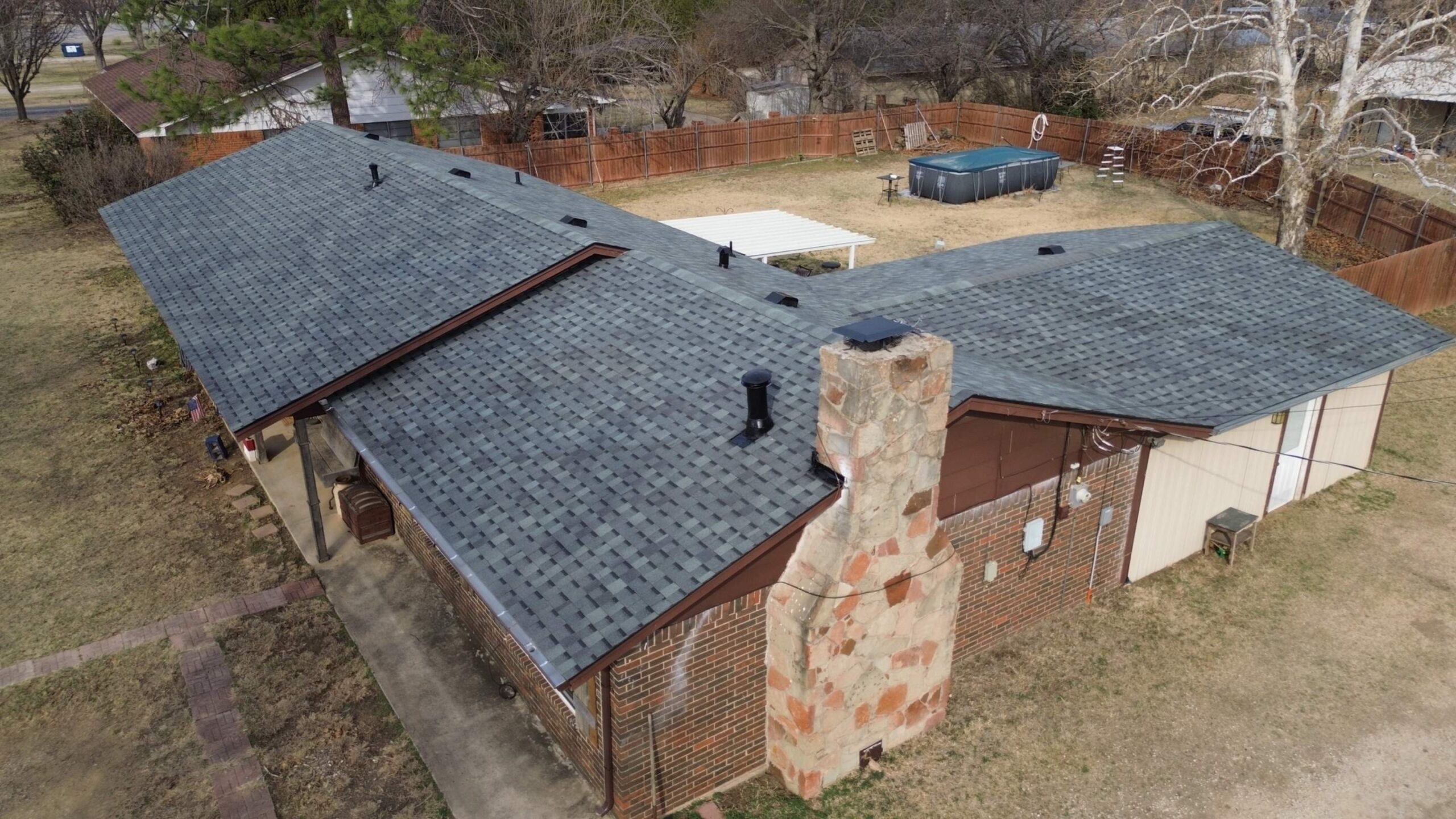
Not every commercial roof drainage issue requires a major renovation. Many problems can be resolved through localized repairs when they are identified early and the overall roofing system remains in good condition. The key is determining whether the issue is isolated or part of a broader roofing deficiency.
Routine maintenance is often sufficient for clogged drains, blocked gutters, damaged drain strainers, or minor flashing deterioration. Once debris is removed and damaged components are repaired, water usually resumes flowing as intended. These types of repairs are relatively inexpensive and help prevent more significant roofing problems from developing.
Localized ponding water may also be corrected without replacing the entire roof. If inspections reveal that only one or two small areas retain water because of minor insulation compression or localized membrane irregularities, contractors can often rebuild those sections using tapered insulation or targeted roof repairs.
More extensive modifications become necessary when drainage issues affect large portions of the roof. Widespread ponding, multiple low spots, recurring drainage failures, or structural settlement often indicate that the existing roof design no longer provides adequate water management. In these situations, repairing isolated areas may only offer temporary improvement.
Older roofing systems also require careful evaluation. As commercial roofs approach the end of their service life, repeated drainage related repairs may become increasingly frequent. Investing in larger improvements or complete roof replacement often provides greater long term value than continually addressing isolated problems.
Insufficient drainage capacity presents another situation where larger modifications are appropriate. Buildings experiencing heavier rainfall than originally anticipated or roofs expanded through renovations may require additional drains, upgraded gutter systems, or redesigned drainage layouts to handle increased water volume safely.
Structural concerns must also be considered. If standing water has contributed to roof deflection or settlement, correcting only the drainage components may not fully resolve the issue. Structural repairs combined with drainage improvements help restore long term roof performance while reducing future maintenance requirements.
Professional roof evaluations provide valuable guidance when deciding between repairs and larger modifications. Contractors assess drainage performance, structural conditions, membrane integrity, and expected roof lifespan before recommending the most practical solution.
Best Practices for Maintaining Proper Commercial Roof Drainage
Maintaining efficient drainage requires more than occasional cleaning after storms. A consistent maintenance program helps preserve roof performance while reducing the likelihood of unexpected drainage failures throughout the year.
The following best practices support long term commercial roof drainage performance:
- Schedule professional roof inspections every spring and autumn to evaluate drainage components and overall roof condition.
- Clean roof drains, scuppers, gutters, and downspouts regularly to prevent debris from restricting water flow.
- Remove standing water promptly and investigate the underlying cause whenever ponding persists after rainfall.
- Repair damaged flashing, drain assemblies, and membrane defects before moisture reaches the roofing system.
- Monitor areas with previous drainage problems during every inspection to identify recurring issues early.
- Keep rooftop equipment installations organized so pipes, cables, and supports do not interfere with drainage pathways.
- Inspect the roof immediately after severe storms to identify debris accumulation or drainage damage.
- Maintain accurate records of inspections, repairs, drainage improvements, and contractor recommendations for future reference.
Following these practices helps prevent small drainage issues from becoming major structural concerns. Consistent maintenance also extends roof lifespan by reducing continuous moisture exposure and preserving waterproof performance.
Preventive care supports more predictable budgeting as well. Planned maintenance projects typically cost far less than emergency repairs following severe water intrusion or prolonged drainage failure.
Choosing a Professional Commercial Roofing Contractor
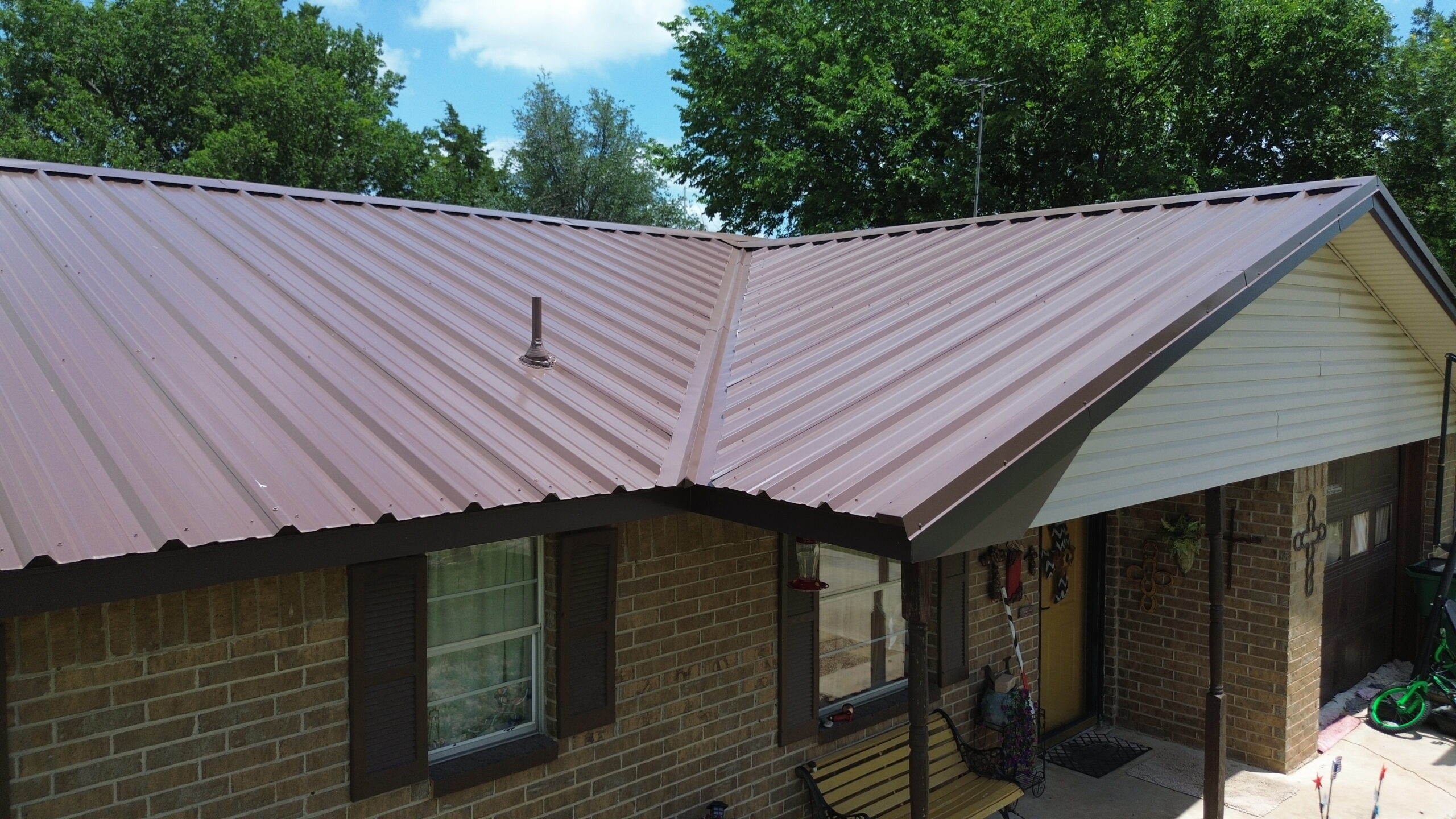
Commercial roof drainage systems involve more than simply clearing blocked drains. Identifying the true cause of water retention often requires specialized knowledge of roofing materials, structural design, insulation systems, and drainage engineering. Selecting an experienced roofing contractor therefore plays a major role in achieving reliable long term results.
A qualified contractor begins every project with a comprehensive inspection. Rather than focusing solely on visible standing water, they evaluate roof slope, membrane condition, drain locations, flashing integrity, structural movement, and the overall performance of the drainage system. This broader assessment helps ensure recommendations address the underlying cause rather than only the symptoms.
Experience with commercial roofing systems is equally important. Large commercial buildings often include internal drainage networks, tapered insulation systems, overflow drains, expansion joints, and multiple roofing materials. Contractors familiar with these components can develop repair strategies that preserve the integrity of the entire roofing system.
Professional communication also contributes to successful roofing projects. Reliable contractors explain inspection findings clearly, provide written repair recommendations, discuss expected outcomes, and outline future maintenance priorities. Property owners benefit from understanding both the immediate repairs and the long term management plan.
High quality contractors use compatible roofing materials and drainage components that meet manufacturer specifications. Properly integrated flashing, drain assemblies, sealants, and membrane repairs provide greater durability than temporary solutions using unsuitable materials.
Safety standards remain especially important on commercial roofing projects. Large roof areas, elevated work locations, mechanical equipment, and changing weather conditions require careful planning throughout every repair. Contractors following established safety procedures help protect workers while reducing the risk of accidental roof damage.
Many commercial roofing companies also offer scheduled maintenance programs that include routine inspections, drainage cleaning, condition reports, and preventive repairs. These ongoing services help identify developing concerns before they interrupt business operations or require emergency intervention.
Choosing an experienced contractor is an investment in both the roof and the building. Skilled workmanship combined with regular maintenance significantly improves drainage performance while extending the lifespan of the entire roofing system.
Long Term Strategies for Preventing Drainage Problems
Preventing drainage issues requires a long term perspective rather than responding only after standing water becomes visible. Commercial roofs perform best when maintenance, inspections, and drainage improvements are integrated into an ongoing building management strategy.
Seasonal inspections should remain a priority throughout the roof’s service life. Spring inspections identify damage resulting from winter weather, while autumn inspections prepare drainage systems for falling leaves, heavy rain, and colder temperatures. Addressing small deficiencies before seasonal changes reduces the likelihood of major drainage failures.
Regular cleaning plays an equally important role. Removing debris from roof surfaces, gutters, drains, and scuppers prevents blockages that restrict water flow. Clean drainage systems also make inspections more effective because roofing materials remain visible and easier to evaluate.
Monitoring roof slopes over time helps identify gradual structural changes before they become serious. Buildings naturally settle as they age, and subtle changes in roof elevation may create new low areas where water begins collecting. Early detection allows corrective measures to be planned before extensive ponding develops.
Roof access should also be managed carefully. Maintenance personnel servicing rooftop equipment should avoid storing materials near drains or creating obstacles that interfere with water flow. Organized rooftop layouts improve both drainage efficiency and maintenance safety.
Property owners should remain attentive to conditions inside the building as well. Ceiling stains, peeling paint, damp insulation, unusual odors, or unexplained humidity increases may indicate hidden drainage problems even when exterior symptoms appear minor. Prompt investigation prevents small leaks from developing into larger restoration projects.
Keeping detailed maintenance records strengthens long term roof management. Inspection reports, repair histories, drainage improvements, photographs, and contractor recommendations help identify recurring issues while supporting more accurate budgeting for future maintenance needs.
A proactive maintenance strategy ultimately protects far more than the drainage system. It preserves membrane integrity, maintains insulation performance, safeguards structural components, reduces energy costs, minimizes business interruptions, and extends the overall lifespan of the commercial roofing system.
Conclusion
Proper drainage is one of the most important factors influencing the performance and longevity of a commercial flat roof. Every component of the roofing system depends on efficient water removal to prevent standing water, preserve waterproof integrity, and protect the building beneath. When drainage systems function correctly, they help reduce wear on roofing materials while minimizing the risk of leaks and structural damage.
Throughout this guide, we explored how commercial flat roof drainage systems operate, the common causes of poor drainage, the warning signs of developing problems, the effects of standing water on roofing performance, professional inspection methods, repair solutions, and long term maintenance strategies. We also examined when localized drainage repairs are sufficient and when larger roof modifications provide the better long term investment.
Successful drainage management requires more than responding to visible ponding after storms. Routine inspections, timely maintenance, proper cleaning, compatible repairs, and experienced professional support all contribute to keeping commercial roofing systems functioning efficiently throughout their service life. Addressing drainage concerns early helps prevent moisture from reaching insulation, structural components, and interior building spaces.
The most effective approach to commercial roof drainage is proactive rather than reactive. By maintaining clear drainage pathways, monitoring roof conditions regularly, correcting deficiencies promptly, and working with qualified roofing professionals, property owners can extend roof lifespan, reduce maintenance costs, improve building performance, and protect their investment for many years to come.