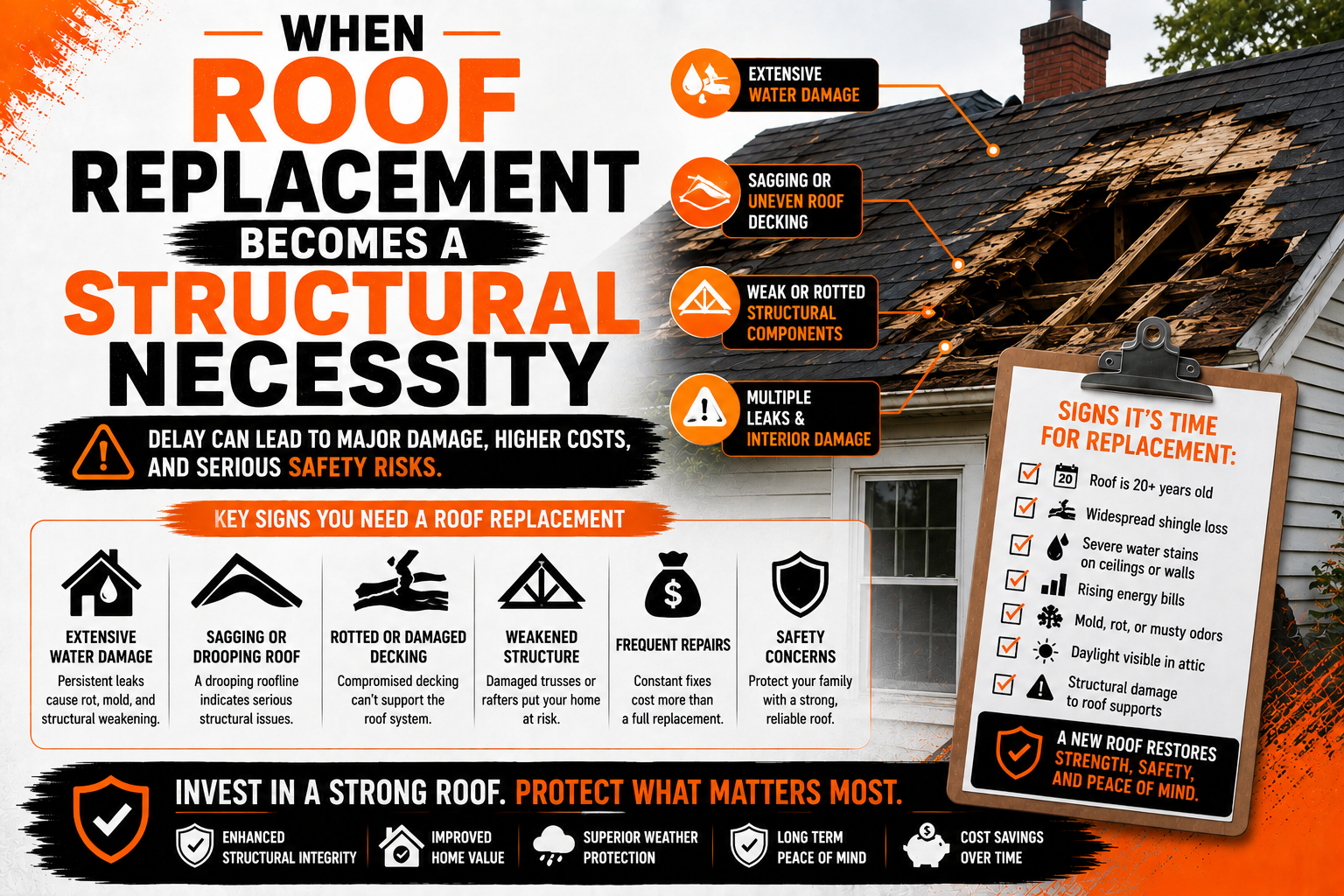
When Roof Replacement Becomes Structural Necessity
Introduction
Most property owners think about roof replacement only when they notice leaks, missing shingles, or visible wear. While these issues certainly deserve attention, they are not always the most important reason to replace a roof. In many situations, the condition of the roofing system directly affects the stability and safety of the entire structure beneath it.
A roof is far more than the outer covering that protects a building from rain, wind, and sunlight. It is a critical structural component that distributes loads, supports insulation systems, helps maintain indoor conditions, and protects framing members from moisture damage. When the roof begins to fail structurally, the problem extends well beyond water intrusion and cosmetic deterioration.
Many buildings continue functioning even as hidden structural damage develops beneath the roofing materials. Property owners often repair isolated leaks or replace damaged sections without realizing that the underlying deck, trusses, rafters, or supporting members have already weakened. By the time obvious warning signs appear inside the building, the structural integrity may already be compromised.
Knowing when roof replacement becomes a structural necessity instead of a routine maintenance project helps property owners make informed decisions. Delaying action after structural deterioration begins can increase repair costs, create safety hazards, and even shorten the lifespan of the entire building.
This article explores how structural roof problems develop, the warning signs that indicate replacement is necessary, and why timely intervention protects both the building and its occupants. Understanding these factors makes it easier to distinguish between a roof that simply needs repairs and one that has reached the point where complete replacement is the only responsible solution.
The True Role of a Roof in Structural Stability
Many people view the roof as a protective shell that keeps weather outside. Although weather protection is one of its primary functions, a roof also plays an essential role in maintaining the overall structural balance of a building. Every component works together to transfer loads safely from the roof surface through the walls and ultimately into the building foundation.
The roofing materials themselves represent only the visible portion of a much larger structural system. Underneath shingles, membranes, or metal panels lies a framework consisting of roof decking, rafters, trusses, fasteners, insulation, and various support elements. When any of these components begin to weaken, the entire roofing system becomes vulnerable.
Structural roofs must safely handle numerous types of loads throughout their lifespan. These include the constant weight of roofing materials, temporary loads from maintenance workers, accumulated rainwater, snow in colder climates, equipment installed on commercial roofs, and wind forces that create uplift pressure.
Even a well-built roof experiences gradual stress over decades of service. Daily temperature changes cause materials to expand and contract repeatedly. Seasonal storms expose the structure to moisture and wind. Minor movement within the building frame also affects roofing components over time.
A structurally sound roof distributes these forces evenly across the supporting framework. However, when certain components deteriorate, loads become unevenly distributed. This creates additional stress on neighboring structural members, accelerating deterioration throughout the system instead of limiting damage to one isolated area.
This interconnected design explains why structural roofing issues rarely remain localized. What begins as moisture around one flashing detail can eventually weaken roof decking, affect support beams, and spread deterioration across a much larger section of the building.
Why Roof Replacement Is Sometimes More Than a Maintenance Decision
Roof maintenance focuses on extending the useful life of an existing roofing system. Cleaning drains, replacing damaged shingles, repairing flashing, sealing penetrations, and correcting minor leaks all help preserve a healthy roof. These measures are effective only when the underlying structure remains strong.
Structural deterioration changes the nature of the decision entirely. Once key components begin losing their ability to support loads safely, repairs no longer address the underlying problem. Instead, they merely cover symptoms while deterioration continues beneath the surface.
Many property owners hesitate when replacement is recommended because the roof may still appear relatively intact from the outside. A building can look perfectly acceptable while moisture slowly destroys wooden framing, corrodes steel members, or weakens fastening systems hidden beneath the roofing material.
Repeated repair cycles often create a false sense of security. Each repair temporarily resolves visible leaks, but hidden structural damage continues progressing unnoticed. Eventually, repair costs accumulate without restoring the roof’s original strength or reliability.
Professional inspections sometimes uncover structural deficiencies during what was expected to be a routine maintenance visit. Contractors may discover rotted decking beneath small leaks, widespread fastener corrosion, saturated insulation, or weakened support members that cannot safely support additional repairs.
At that stage, replacement is no longer primarily about improving appearance or stopping leaks. It becomes necessary to restore the building’s structural integrity and ensure the roof can safely perform its intended function for many years.
Understanding this distinction helps property owners recognize why structural replacement recommendations are based on engineering realities rather than simply the age or appearance of roofing materials.
How Roof Systems Age Beyond Surface Damage
Roof aging rarely occurs in a perfectly predictable manner. While visible roofing materials gradually deteriorate from exposure to sunlight, weather, and temperature fluctuations, hidden structural components often follow a different timeline. Some may remain in excellent condition for decades, while others deteriorate rapidly due to moisture or construction deficiencies.
Ultraviolet radiation slowly breaks down many roofing materials by reducing flexibility and causing surface cracking. Wind gradually loosens fasteners, while repeated thermal expansion places stress on seams, joints, and attachment points. These visible changes often receive the most attention because they are easy to identify during inspections.
Hidden deterioration, however, frequently causes greater concern. Water entering through even a small opening may remain trapped beneath roofing layers for extended periods. Moisture slowly damages roof decking, insulation, framing members, and fastening systems without producing immediate interior leaks.
Wood components absorb moisture over time, creating favorable conditions for rot and fungal growth. As wood fibers weaken, they gradually lose their ability to support structural loads. This process may continue for years before visible sagging or deformation becomes apparent.
Metal structural members face different challenges. Persistent moisture encourages corrosion, reducing the thickness and strength of steel components. Rusted connectors, brackets, and fasteners may eventually fail under loads they previously supported without difficulty.
Modern insulation systems also influence structural aging. Wet insulation loses much of its thermal performance while retaining additional weight. That extra weight increases stress on roof framing, especially after heavy rainfall when moisture accumulation reaches its highest levels.
Because structural deterioration often develops below finished roofing materials, many problems remain hidden until extensive damage has already occurred. This is why comprehensive inspections frequently include moisture detection, core sampling, and evaluation of structural components rather than relying solely on surface observations.
Warning Signs That Point to Structural Concerns
Not every roofing problem indicates structural failure, but certain warning signs deserve immediate attention because they suggest damage extends beyond the surface. Recognizing these indicators early allows property owners to investigate before conditions become significantly worse.
Roof sagging remains one of the clearest signs that structural components may be weakening. A roof should maintain consistent lines across its surface. Areas that appear uneven, depressed, or bowed often indicate deterioration beneath the visible roofing materials.
Persistent leaks occurring in multiple locations may also signal broader structural issues. When isolated repairs fail repeatedly or new leaks continue appearing throughout the building, moisture may already be affecting large sections of the roof system.
Interior warning signs often develop gradually. Ceiling stains that continue expanding despite previous repairs suggest ongoing moisture intrusion. Peeling paint, bubbling finishes, warped ceiling panels, and mold growth may all indicate long-term water exposure affecting structural components.
Doors and windows that suddenly become difficult to open or close can occasionally relate to structural movement caused by roof deterioration. Although several building issues may produce similar symptoms, roof-related structural movement should never be overlooked during a comprehensive inspection.
Commercial buildings frequently display warning signs around rooftop equipment. HVAC units that begin sitting unevenly, ponding water that remains after rainfall, or noticeable movement around equipment supports may all indicate structural changes occurring beneath the roof membrane.
Inside attics or mechanical spaces, exposed framing provides valuable clues about structural health. Cracked rafters, dark moisture stains, fungal growth, split connections, rusted fasteners, or visible daylight entering through roof assemblies all deserve immediate professional evaluation.
Property owners should also pay attention to unusual sounds during storms or high winds. Creaking, popping, or shifting noises may indicate structural members moving under loads they were previously able to support without difficulty.
While no single symptom automatically confirms structural failure, multiple warning signs appearing together greatly increase the likelihood that replacement should be considered rather than another cycle of repairs.
Common Causes of Structural Roof Failure
Structural roof failure rarely results from a single event. In most cases, it develops through years of combined environmental exposure, deferred maintenance, material aging, and gradual deterioration. Understanding these causes helps explain why replacement sometimes becomes unavoidable despite repeated repair efforts.
Water intrusion remains the leading cause of structural roof damage worldwide. Moisture enters through damaged flashing, cracked membranes, failed sealants, clogged drainage systems, or storm damage. Once inside, water slowly weakens structural materials while remaining hidden beneath finished roofing layers.
Poor drainage significantly accelerates deterioration. Standing water increases the amount of time roofing materials remain saturated after rainfall. Continuous moisture exposure affects decking, insulation, adhesives, and structural framing, gradually reducing their strength over many years.
Extreme weather events place sudden stress on roofing systems. High winds create uplift forces capable of loosening fasteners and damaging structural connections. Heavy rainfall increases moisture exposure, while hail impacts may fracture protective roofing materials and expose vulnerable layers beneath.
Construction quality also influences long-term structural performance. Improper fastening patterns, inadequate ventilation, incorrect flashing installation, or poorly designed drainage systems often shorten the lifespan of roofing assemblies by allowing moisture or movement to affect structural components earlier than expected.
Aging naturally contributes to structural decline as well. Even high-quality roofing systems eventually reach the limits of their service life. Materials become less flexible, connections loosen, protective coatings wear away, and cumulative environmental stress gradually weakens the entire system.
Deferred maintenance frequently transforms manageable issues into structural problems. Small leaks that remain unrepaired for months or years allow moisture to spread into framing members and support structures. Problems that might once have required simple repairs eventually demand complete structural replacement.
Buildings that undergo multiple reroofing projects without proper evaluation may also experience excessive loading. Additional roofing layers increase dead weight on the structure, especially when combined with saturated insulation or accumulated debris. Over time, this additional load contributes to structural fatigue.
These causes often interact rather than occurring independently. A minor construction defect may allow water intrusion, which accelerates material aging, weakens structural components, and ultimately leads to conditions where replacement becomes the safest and most practical solution.
Roof Damage vs Structural Damage
One of the most important distinctions property owners can understand is the difference between ordinary roof damage and structural roof damage. Although the two often occur together, they require very different solutions and carry very different levels of risk.
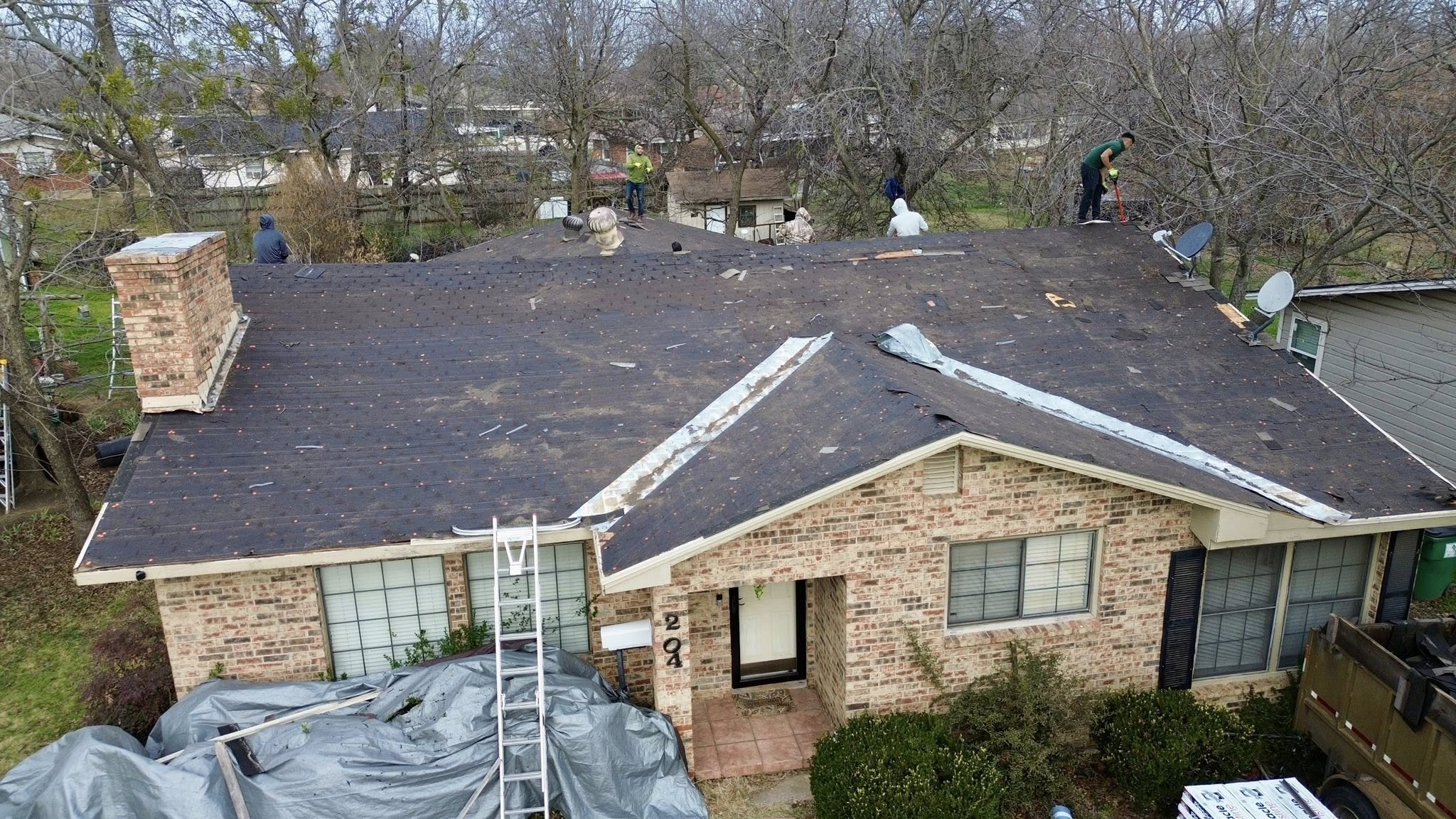
Roof damage typically affects the protective outer layers designed to shield the building from weather. Examples include cracked shingles, damaged flashing, worn membranes, loose fasteners, deteriorated sealants, or localized leaks. These issues usually remain limited to the roofing system itself and can often be repaired without replacing the entire roof.
Structural damage affects the components responsible for supporting the roof and safely transferring loads throughout the building. This includes roof decking, rafters, trusses, joists, beams, support columns, and their associated connections. Once these elements deteriorate, repairs become significantly more complex.
The following comparison highlights the key differences between the two types of damage.
| Roof Damage | Structural Damage |
|---|---|
| Primarily affects outer roofing materials | Affects load-bearing structural components |
| Often repairable through localized work | Frequently requires partial or complete replacement |
| Usually visible during routine inspections | Often hidden beneath roofing materials |
| Primarily causes weather-related issues | May compromise building safety and stability |
| Lower immediate structural risk | Higher risk of progressive failure if ignored |
Confusing these two categories often leads to ineffective repair strategies. Replacing damaged shingles over weakened decking may temporarily improve appearance, but it does not restore the roof’s structural capacity.
Professional inspections focus on identifying whether deterioration remains confined to surface materials or has spread into structural components. That distinction ultimately determines whether continued repairs remain practical or whether complete replacement becomes the safer long-term solution.
Inspection Findings That Often Lead to Replacement Instead of Repair
Comprehensive roof inspections evaluate far more than visible roofing materials. Experienced inspectors examine structural conditions that cannot be identified through surface observations alone. Their findings often determine whether repairs remain appropriate or whether replacement is necessary.
One of the most significant discoveries involves deteriorated roof decking. Soft, delaminated, or rotted decking no longer provides adequate support for roofing materials. Even if new roofing is installed over damaged decking, the underlying structural weakness remains unresolved.
Extensive moisture trapped beneath roofing systems also raises serious concerns. Moisture mapping frequently reveals saturated insulation extending well beyond visible leak locations. Large areas of trapped water indicate long-term deterioration that simple repairs cannot eliminate.
Inspectors also evaluate structural framing for movement, cracking, or deformation. Rafters that have twisted, trusses showing connector failures, or beams displaying excessive deflection suggest that structural loads are no longer being distributed as originally designed.
Fastener condition provides another important indicator of structural health. Corroded attachment systems, loose mechanical connections, or widespread fastener pullout reduce the roof’s resistance to wind uplift and other environmental forces. These deficiencies often require more extensive corrective work than isolated repairs can provide.
Commercial buildings sometimes reveal widespread membrane shrinkage that places excessive stress on perimeter attachments and structural edges. Over time, this tension affects supporting components and increases the likelihood of progressive failure during severe weather.
Building code compliance also influences replacement decisions. Older roofing systems may no longer satisfy current structural requirements, especially following major renovations or occupancy changes. Bringing the building into compliance often requires replacing both roofing materials and supporting structural components.
Before recommending replacement, inspectors generally consider several factors together rather than relying on one isolated defect. Their evaluation typically includes:
- Overall condition of structural framing
- Extent of moisture infiltration
- Remaining service life of roofing materials
- Safety risks associated with continued repairs
- Long-term cost effectiveness of repair versus replacement
These findings help property owners understand that replacement recommendations are based on the condition of the complete roofing system rather than cosmetic appearance alone. When structural integrity begins declining, replacing the roof becomes an investment in the safety, durability, and future performance of the entire building rather than simply installing new roofing materials.
How Structural Roof Damage Progresses Over Time
Structural roof damage rarely develops overnight. In most cases, deterioration follows a gradual path that begins with relatively minor defects before expanding into widespread structural problems. Understanding this progression helps property owners recognize why delaying replacement often increases both repair complexity and overall costs.
The process frequently starts with a small weakness in the roofing system. A damaged flashing, cracked membrane, missing shingle, or failed seal around a roof penetration may allow small amounts of water to enter the structure. Initially, the problem appears manageable because the visible damage seems limited.
As moisture continues entering the roof assembly, surrounding materials begin absorbing water. Insulation retains moisture, wood framing gradually weakens, adhesives lose their effectiveness, and metal components become vulnerable to corrosion. These changes occur beneath the finished roof surface, making them difficult to detect during casual inspections.
Temperature changes accelerate the deterioration process. Materials repeatedly expand during warm weather and contract as temperatures fall, placing additional stress on already weakened components. Every expansion and contraction cycle slightly enlarges existing cracks and creates new pathways for water intrusion.
Wind events further increase the strain on compromised roofing systems. Sections that once resisted uplift effectively may begin flexing under pressure, causing fasteners to loosen and connections to weaken. Even moderate storms can create additional structural movement when underlying support members have already deteriorated.
As damage spreads, the roof gradually loses its ability to distribute loads evenly. Instead of sharing weight across the entire framework, certain structural members begin carrying more stress than originally intended. This imbalance accelerates deterioration in neighboring components, allowing structural problems to spread throughout the roof system.
Eventually, visible symptoms become impossible to ignore. Roof sagging becomes more pronounced, ceiling damage increases, leaks appear in multiple locations, and structural movement affects other parts of the building. By this stage, repairs that might have been practical years earlier often no longer provide a reliable long-term solution.
Recognizing this gradual progression highlights why early intervention is so valuable. Addressing structural concerns before deterioration reaches advanced stages preserves more of the building’s original framework and reduces the likelihood of extensive reconstruction.
The Impact on Load Bearing Components
Every roof depends on a network of load bearing components working together to support both permanent and temporary loads. These elements include rafters, trusses, joists, beams, columns, roof decking, and their connecting hardware. When one component weakens, the additional stress placed on surrounding members can create a chain reaction throughout the structure.
Roof framing is carefully engineered to distribute weight evenly. The dead load includes roofing materials, insulation, decking, mechanical equipment, and permanent fixtures. Live loads include maintenance personnel, rainwater accumulation, wind forces, and, in some regions, snow loads.
When moisture weakens one section of the framing, nearby structural members begin carrying more weight. While these adjacent components may initially compensate for the added stress, they were not designed to support increased loads indefinitely. Over time, excessive loading contributes to bending, cracking, or permanent deformation.
Wood framing often exhibits gradual changes before complete failure occurs. Rafters may begin bowing slightly, connections loosen, and support members lose their original stiffness. Although these changes may appear minor individually, together they reduce the roof’s overall structural capacity.
Steel framing experiences a different pattern of deterioration. Corrosion reduces the cross-sectional thickness of structural members, gradually decreasing their strength. Rusted bolts, brackets, and welded connections also compromise the ability of the roof to resist movement during storms or heavy loading.
Concrete roof structures face their own challenges. Water infiltration may reach reinforcing steel embedded within the concrete, leading to corrosion that causes cracking and spalling. As reinforcement weakens, the concrete loses much of its structural reliability.
Modern buildings often include rooftop equipment such as HVAC systems, solar panels, communication equipment, and mechanical units. These installations add concentrated loads to specific areas of the roof. If supporting members beneath these systems deteriorate, localized structural failure becomes increasingly likely.
Professional engineers evaluate load bearing performance by considering the condition of every structural element rather than focusing only on visible roofing materials. Their assessments help determine whether repairs can safely restore structural performance or whether replacement provides the only dependable solution.
Moisture Damage and Hidden Structural Deterioration
Water remains the single most destructive force affecting roofing structures. Unlike sudden storm damage, moisture-related deterioration usually develops slowly and quietly, allowing significant structural weakening before obvious warning signs appear inside the building.
Even small roof leaks can introduce surprising amounts of water over time. Rain entering through a tiny opening may travel considerable distances before becoming visible indoors. As a result, the location of interior water stains often differs significantly from the original point of roof failure.
Wood components continuously exposed to moisture begin losing structural integrity as their fibers break down. Fungal decay accelerates this process by consuming portions of the wood, reducing its ability to support loads safely. Once rot becomes widespread, replacing the affected framing often becomes unavoidable.
Moisture also creates ideal conditions for mold growth. While mold primarily raises indoor air quality concerns, its presence frequently indicates prolonged water exposure affecting surrounding structural materials. Treating mold without addressing the underlying roof problem rarely provides a lasting solution.
Steel components hidden within roof assemblies experience gradual corrosion whenever protective coatings fail or persistent moisture remains trapped nearby. Rust expands as it forms, placing additional stress on surrounding materials while reducing the strength of structural connections.
Insulation becomes another hidden victim of water intrusion. Wet insulation not only loses thermal efficiency but also becomes substantially heavier than when dry. This increased weight adds continuous stress to structural framing, particularly during extended periods of wet weather.
Modern roofing systems often include vapor barriers and multiple protective layers designed to control moisture movement. When these systems become compromised, trapped water may remain inside the roof assembly for months without producing visible interior leaks. During this time, deterioration continues unchecked beneath the roofing surface.
Advanced inspection methods help identify hidden moisture before major structural failure occurs. Infrared imaging, electronic moisture detection, and core sampling allow professionals to locate saturated materials that cannot be identified through visual inspection alone. These techniques often reveal that damage extends far beyond areas showing obvious signs of leakage.
The hidden nature of moisture damage explains why roof replacement recommendations sometimes surprise property owners. What appears to be an isolated leak on the surface may actually represent years of progressive structural deterioration concealed beneath the finished roofing system.
Roof Deck Failure and Its Consequences
The roof deck serves as the structural foundation supporting all roofing materials installed above it. Whether constructed from plywood, oriented strand board, steel decking, or concrete panels, the deck transfers loads to the framing system while providing a stable base for waterproofing materials.
Because the roof deck remains hidden beneath finished roofing, deterioration often goes unnoticed until significant structural problems develop. Small leaks may soften wooden decking gradually, while corrosion weakens steel decking from below. Both situations reduce the roof’s ability to support normal loading safely.
One of the earliest signs of deck deterioration is localized softness underfoot during roof inspections. Areas that flex noticeably or feel unstable indicate that structural integrity has already declined. Installing new roofing materials over weakened decking does not restore structural strength and may actually conceal worsening conditions.
Roof deck failure also affects fastener performance. Nails, screws, and mechanical attachments rely on sound decking to remain secure. As decking weakens, fasteners gradually lose holding power, making roofing materials more susceptible to wind damage during storms.
Commercial flat roofs face additional concerns related to deck deflection. As structural capacity decreases, sections of the deck may sag slightly, creating depressions where rainwater collects. Standing water increases the overall load while extending moisture exposure, accelerating deterioration even further.
Progressive deck failure may eventually compromise rooftop equipment. Mechanical units installed on weakened decking can shift, settle unevenly, or create additional stress concentrations that worsen existing structural problems. Equipment movement also increases the likelihood of damaged utility connections and additional roof penetrations.
Replacing deteriorated roof decking typically requires removing existing roofing materials to expose the underlying structure. Although this increases project scope compared to surface repairs, restoring the deck ensures that the replacement roof begins with a solid structural foundation capable of supporting decades of reliable service.
Ignoring deck deterioration rarely produces positive outcomes. The longer weakened decking remains in service, the greater the likelihood that damage will spread into framing members and supporting structural components beneath it.
How Different Roofing Materials Influence Structural Performance
The type of roofing material installed on a building influences structural performance throughout the roof’s lifespan. Different materials vary in weight, flexibility, durability, installation methods, and maintenance requirements, all of which affect long-term structural behavior.
Asphalt shingles remain one of the most common residential roofing materials because they balance affordability with relatively low weight. However, multiple layers installed over previous roofs increase dead load substantially, placing additional stress on older framing systems that may not have been designed for the extra weight.
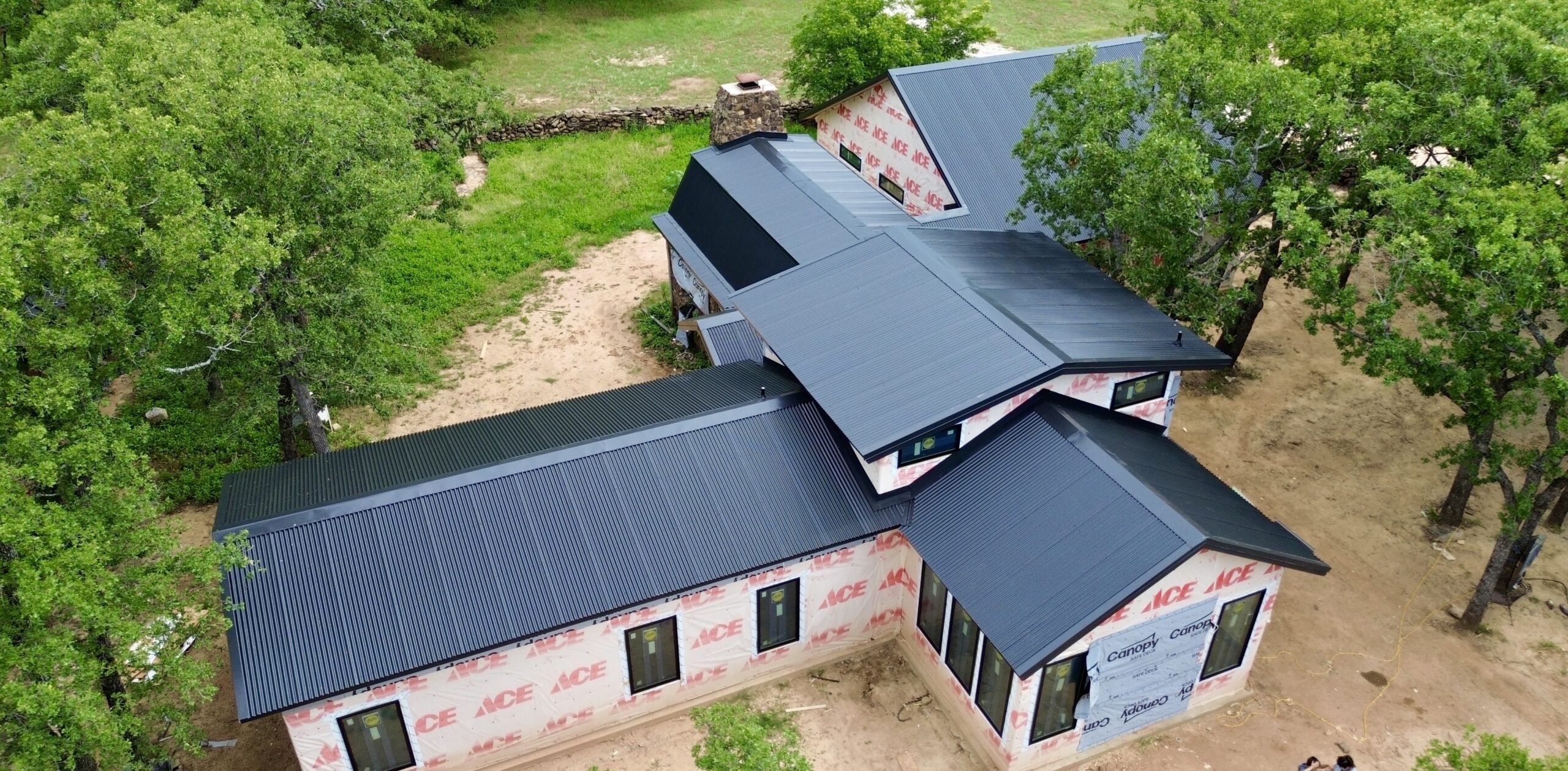
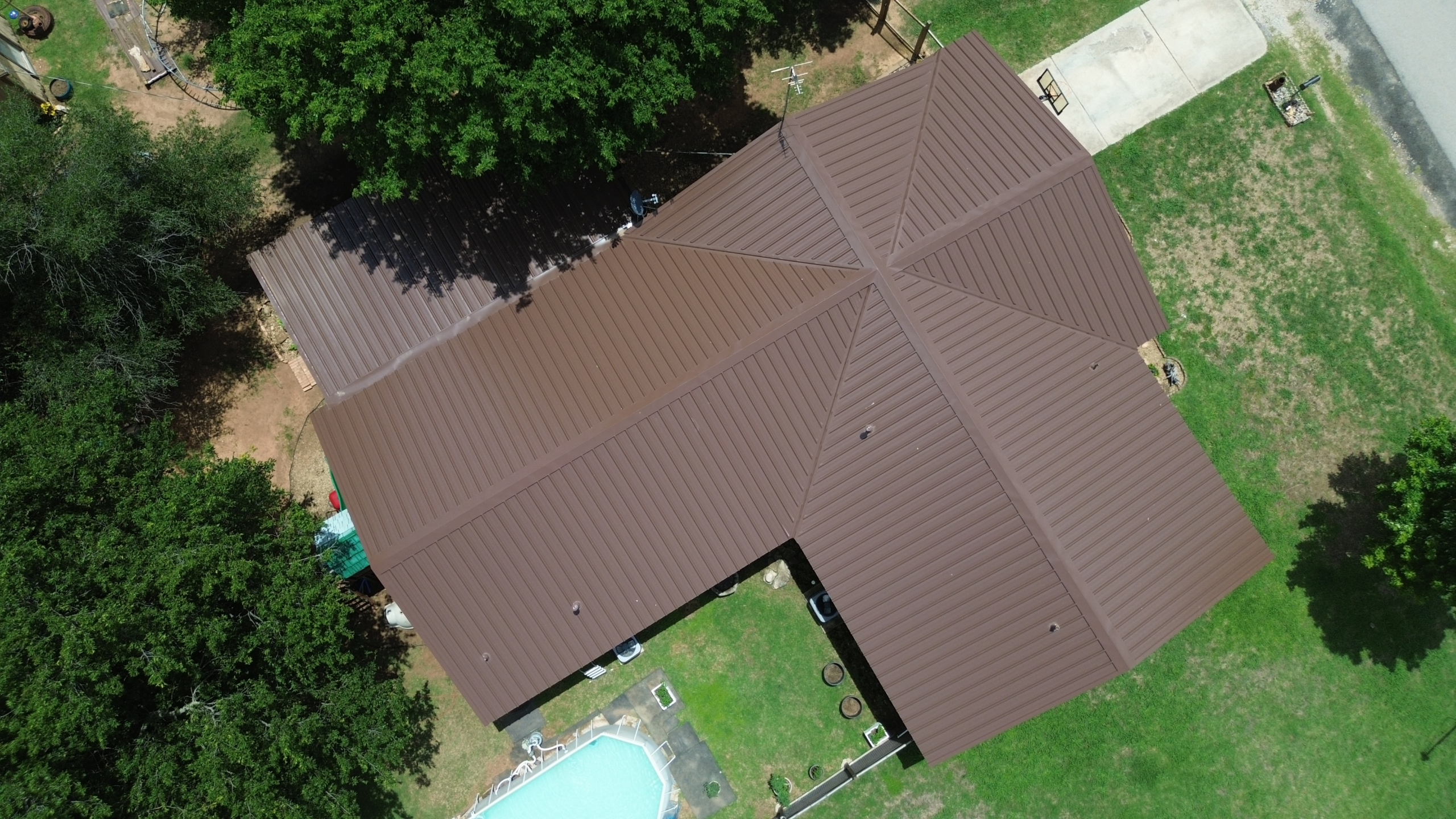
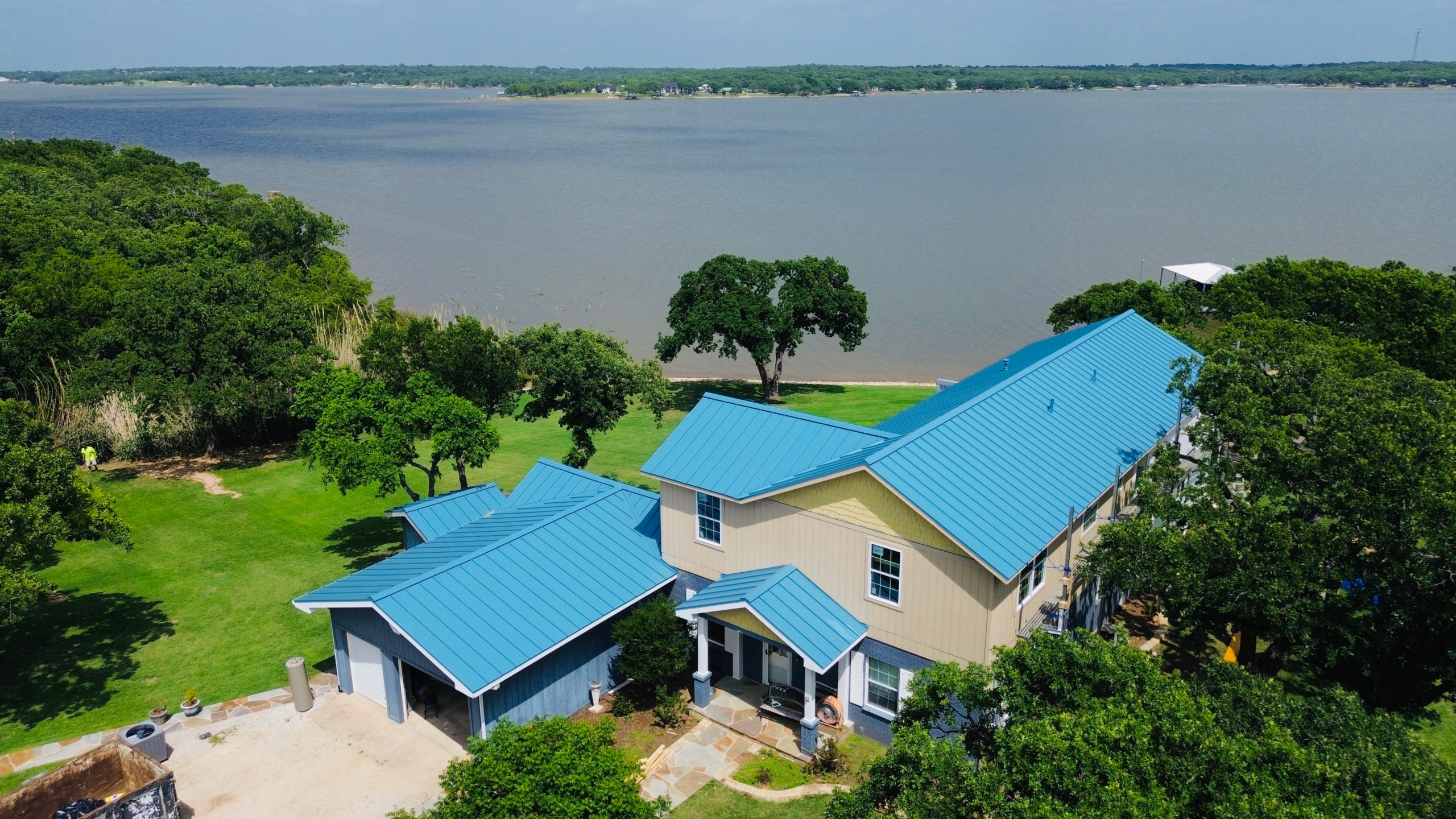
Metal roofing offers excellent durability while remaining significantly lighter than many traditional materials. Reduced weight lowers structural demands and often makes metal systems attractive for buildings where existing framing has limited reserve capacity. Proper installation remains essential because wind uplift forces differ from those affecting heavier roofing systems.
Clay and concrete tiles provide exceptional longevity but create much higher structural loads. Buildings originally designed for lighter roofing materials may require structural reinforcement before heavier tile systems can be safely installed. Engineering evaluations become especially important during such upgrades.
Slate roofing combines remarkable durability with considerable weight. Historic buildings often feature framing specifically designed for slate installations, but replacement projects must carefully assess whether existing structural members remain capable of supporting similar loads after decades of service.
Single-ply membrane systems commonly used on commercial buildings offer relatively lightweight waterproofing solutions. Their performance depends heavily on proper attachment methods, drainage design, and substrate condition. Membranes installed over deteriorated structural components cannot compensate for underlying weaknesses.
Selecting replacement materials requires balancing durability, maintenance needs, climate conditions, and structural capacity. Professional engineers and roofing specialists evaluate these factors together to ensure that the replacement system complements the building’s structural characteristics rather than placing unnecessary stress on aging components.
Commercial vs Residential Structural Roof Challenges
Although residential and commercial roofs share the same basic purpose, the structural challenges affecting each type differ considerably. Building design, roof configuration, occupancy requirements, and maintenance practices all influence how structural deterioration develops and how replacement decisions are made.
Residential roofs typically feature sloped designs that encourage efficient water runoff. Their structural systems often consist of rafters or prefabricated trusses supporting relatively lightweight roofing materials. Because these systems are generally simpler, localized damage may be easier to identify during inspections.
Commercial roofs frequently use large flat or low-slope designs spanning much greater distances without intermediate supports. These expansive areas rely on engineered framing systems that must safely support roofing materials, insulation, mechanical equipment, maintenance traffic, and environmental loads simultaneously.
Drainage challenges also differ significantly. Residential roofs usually shed water quickly through gravity, while commercial roofs depend on carefully designed internal drains, scuppers, or gutters. Even minor drainage problems on flat roofs can create ponding water that substantially increases structural loading.
Mechanical equipment presents another major difference. Commercial buildings often support numerous HVAC units, ventilation systems, solar arrays, communication equipment, and maintenance walkways. Each installation creates concentrated loads requiring careful structural evaluation throughout the roof’s service life.
Inspection frequency also varies. Commercial roofs generally receive more regular professional inspections due to warranty requirements and maintenance programs. Residential roofs, however, are often inspected only after noticeable problems develop, allowing hidden structural deterioration to progress further before discovery.
Replacement planning differs as well. Commercial projects must often minimize business disruption while maintaining occupant safety and protecting sensitive equipment. Residential replacements typically involve shorter project durations but may require temporary relocation if extensive structural repairs become necessary.
Despite these differences, both residential and commercial properties benefit from early identification of structural problems. Delaying replacement after structural deterioration begins increases costs, extends repair timelines, and raises the likelihood of additional building damage regardless of property type.
When Repairs No Longer Make Financial or Structural Sense
Every roof eventually reaches a point where continued repairs provide diminishing returns. Determining exactly when that point arrives requires evaluating both structural condition and long-term financial impact rather than focusing solely on immediate repair costs.
Many property owners understandably prefer repairing isolated problems because the initial expense appears lower than complete replacement. However, repeated repairs often become more expensive over time when structural deterioration continues progressing beneath the roofing materials.
Age plays an important role but should never be the only deciding factor. Some well-maintained roofs continue performing effectively beyond their expected lifespan, while others require replacement much earlier due to severe weather exposure, construction deficiencies, or prolonged moisture damage.
Repair history provides valuable insight into overall roof performance. Multiple leak repairs within a short period often indicate that deterioration is becoming widespread rather than remaining localized. Each additional repair may address one symptom while leaving numerous hidden problems unresolved.
Insurance considerations also influence replacement decisions. Some insurers closely evaluate aging roofing systems when determining coverage or premiums. Extensive structural deterioration may affect claim eligibility if damage results from long-term neglect rather than sudden events.
Business interruption and operational risks deserve careful consideration as well. Commercial property owners may lose significantly more revenue from emergency structural failures than they would spend on planned roof replacement performed under controlled conditions.
A practical evaluation often includes several important questions.
- Has the roof required increasingly frequent repairs during recent years?
- Are structural components showing measurable signs of deterioration?
- Will repairs meaningfully extend the roof’s service life?
- Does continued repair create unacceptable safety risks?
- Would replacement provide better long-term value and reliability?
Answering these questions objectively helps property owners avoid investing substantial resources into repairs that cannot restore structural integrity. In many situations, replacement represents not only the safer choice but also the more financially responsible investment over the building’s remaining lifespan.
Engineering Assessments Before Roof Replacement
When a roof has reached the point where structural concerns are suspected, a comprehensive engineering assessment becomes one of the most valuable steps in the replacement process. Rather than relying solely on visible signs of deterioration, engineers evaluate how the roof performs as a structural system and whether it can continue supporting expected loads safely.
The assessment usually begins with a review of the building’s history. Previous repairs, renovation records, storm damage, roof overlays, and maintenance reports help professionals understand how the roofing system has changed over time. Older buildings often contain modifications that are no longer visible but continue affecting structural performance.
Visual inspections are then combined with more detailed investigative methods. Engineers look for sagging roof sections, cracked framing members, deteriorated decking, loose connections, and signs of excessive movement. Moisture detection equipment, infrared imaging, and selective material sampling provide additional information that surface inspections alone cannot reveal.
Load calculations also play an important role. Modern buildings often carry equipment that was never part of the original design, including larger HVAC systems, solar panels, communication equipment, and rooftop safety systems. Engineers verify whether the existing structure can safely support these loads after years of aging and exposure.
Building code compliance is another important consideration. Construction standards evolve over time to improve safety and performance. A replacement project provides an opportunity to bring the roof closer to current structural requirements where practical, improving long-term reliability and reducing future risks.
The results of the assessment guide every major decision that follows. Instead of replacing materials based on assumptions, property owners receive recommendations supported by measurable structural evidence, helping them invest confidently in a roofing system designed for long-term performance.
The Roof Replacement Process for Structurally Compromised Buildings
Replacing a structurally compromised roof involves much more than removing old roofing materials and installing new ones. The project restores the building’s ability to safely resist environmental forces while protecting occupants and extending the service life of the structure.
The first stage involves careful planning. Contractors coordinate schedules, arrange material deliveries, prepare safety procedures, and identify areas requiring structural reinforcement before roofing work begins. For occupied buildings, planning also minimizes disruption to daily operations.
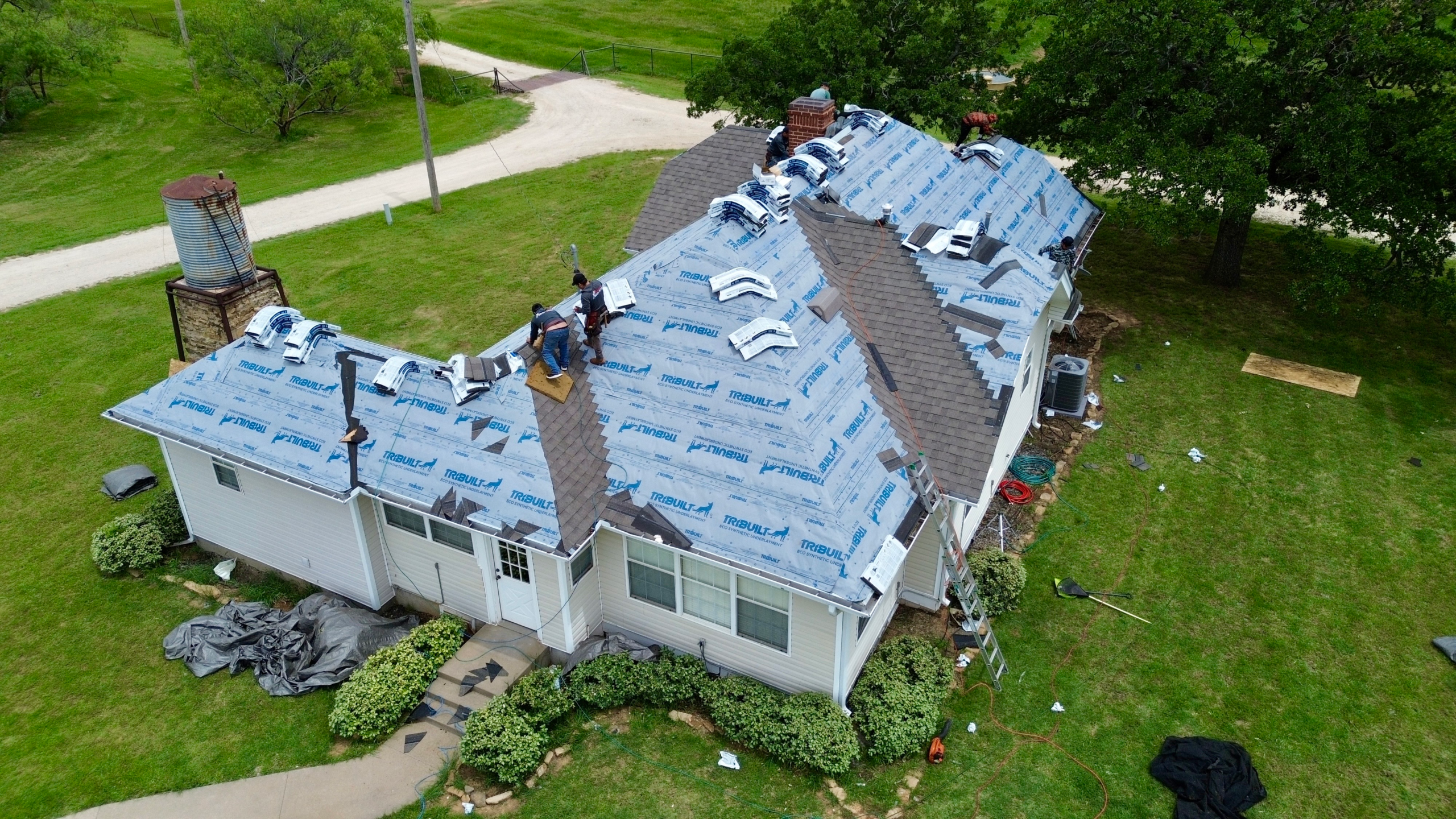
Existing roofing materials are then removed to expose the structural components beneath. This phase often reveals hidden deterioration that was impossible to evaluate during preliminary inspections. Damaged decking, weakened framing, and deteriorated fasteners can now be fully assessed and replaced where necessary.
Structural repairs follow before new roofing materials are installed. Depending on the condition of the building, this may involve replacing sections of roof decking, reinforcing trusses, installing new framing members, repairing steel connections, or strengthening support beams.
Once the structural framework has been restored, contractors install the new roofing system according to manufacturer specifications and engineering requirements. Proper installation is essential because even premium roofing materials cannot perform effectively when installed incorrectly.
Drainage systems receive special attention during replacement. Gutters, downspouts, internal drains, scuppers, and roof slopes are evaluated to ensure water leaves the roof efficiently. Improved drainage reduces the likelihood of future moisture-related structural deterioration.
Quality inspections continue throughout the project rather than only after completion. Each stage is evaluated to confirm that structural repairs, waterproofing details, insulation placement, and roofing installation meet design expectations before work progresses to the next phase.
By approaching replacement as a structural restoration project rather than a simple roofing upgrade, property owners significantly improve the long-term durability and safety of their buildings.
Choosing the Right Roofing System for Long Term Structural Protection
Selecting the right roofing system involves much more than comparing material prices or appearance. The replacement roof should complement the building’s structural design, climate conditions, maintenance capabilities, and expected service life.
Weight is one of the first considerations. Heavier roofing materials may provide excellent durability, but they also increase structural demands. Engineers evaluate whether the existing framing can safely support the selected system without requiring additional reinforcement.
Climate plays an equally important role. Buildings located in regions with frequent storms require roofing systems capable of resisting high wind uplift. Areas receiving heavy rainfall benefit from drainage designs that minimize water accumulation, while regions with significant temperature variation require materials capable of handling repeated expansion and contraction.
Maintenance expectations should also influence material selection. Some roofing systems require periodic inspections, cleaning, and sealant replacement to achieve their expected lifespan. Others demand relatively little routine maintenance while still providing reliable weather protection.
Energy performance has become increasingly important during roof replacement projects. Reflective roofing materials, improved insulation systems, and modern ventilation designs help reduce indoor temperature fluctuations while decreasing stress caused by repeated thermal cycling.
Sustainability considerations continue gaining importance as well. Durable roofing materials that require fewer replacements reduce long-term waste, while recyclable products contribute to environmentally responsible construction practices. Longer-lasting systems also reduce the frequency of major structural work over the building’s lifetime.
Property owners should avoid selecting materials based solely on initial cost. A roofing system with a higher purchase price may provide substantially better structural protection, lower maintenance expenses, and a longer service life, making it the more economical investment over several decades.
Preventing Future Structural Roof Problems
Although no roof lasts forever, proper maintenance significantly reduces the likelihood of premature structural deterioration. Preventive care focuses on identifying small issues before they develop into problems requiring major structural repairs or complete replacement.
Regular inspections remain the foundation of effective roof maintenance. Professional evaluations performed at scheduled intervals help identify early signs of wear, drainage problems, damaged flashing, and moisture intrusion before structural components become affected.
Keeping drainage systems clean is equally important. Leaves, debris, and dirt can block gutters, internal drains, and downspouts, allowing water to remain on the roof much longer than intended. Prolonged ponding increases structural loading while accelerating material deterioration.
Tree branches should also be monitored carefully. Overhanging limbs can damage roofing materials during storms while depositing leaves that obstruct drainage pathways. Maintaining adequate clearance helps reduce both mechanical damage and moisture-related problems.
Prompt repairs prevent minor defects from expanding into major structural concerns. Small membrane punctures, damaged flashing, loose fasteners, and cracked sealants should be addressed as soon as they are discovered rather than postponed until larger problems develop.
Property owners can further reduce long-term structural risks by adopting several practical maintenance habits.
- Schedule professional roof inspections at recommended intervals.
- Keep drainage systems free from debris throughout the year.
- Repair minor defects before moisture reaches structural components.
- Limit unnecessary foot traffic on vulnerable roof areas.
- Monitor rooftop equipment for movement or support problems.
- Maintain accurate records of inspections, repairs, and maintenance activities.
Consistent maintenance cannot eliminate natural aging, but it can substantially delay structural deterioration and maximize the useful life of the roofing system.
Questions Property Owners Should Ask Before Approving Replacement
Approving a structural roof replacement represents a significant investment, making informed decision-making essential. Asking the right questions before work begins helps property owners understand the scope of the project and avoid unexpected challenges during construction.
Many replacement decisions focus primarily on roofing materials while overlooking structural considerations. A detailed discussion with contractors and engineers ensures that hidden deterioration receives appropriate attention instead of being concealed beneath new roofing products.
Several questions deserve careful consideration before approving any structural roof replacement.
- Which structural components require repair or replacement?
- What evidence supports replacing the roof instead of repairing it?
- Will the new roofing system meet current structural and building code requirements?
- How will drainage be improved to prevent future moisture damage?
- What warranty applies to both roofing materials and installation workmanship?
- How will hidden structural issues discovered during construction be handled?
- What maintenance schedule will help maximize the lifespan of the new roof?
The answers to these questions provide valuable insight into the quality of the proposed solution. Reputable contractors explain recommendations clearly, document structural findings, and describe how replacement will improve long-term building performance.
Taking time to understand the project also reduces the likelihood of misunderstandings after construction begins. Well-informed property owners are better prepared to evaluate proposals, compare contractors, and make decisions that protect both their investment and building occupants.
Best Practices After a Structural Roof Replacement
Completing a structural roof replacement marks the beginning of a new maintenance cycle rather than the end of roof care. Proper management during the years following installation helps ensure the new system achieves its expected lifespan while protecting the restored structural framework.
Documentation should be organized immediately after project completion. Inspection reports, engineering assessments, warranties, maintenance recommendations, photographs, and repair records create a valuable history that simplifies future inspections and maintenance planning.
Routine inspections should begin according to the manufacturer’s recommendations rather than waiting for problems to appear. Early inspections confirm that roofing materials remain secure, drainage systems function correctly, and structural repairs continue performing as intended.
Property managers should also establish procedures for documenting severe weather events. After major storms, professional inspections help identify any damage before it develops into hidden structural deterioration. Even when no visible leaks appear indoors, rooftop evaluations provide reassurance that the system remains intact.
Access to the roof should remain controlled whenever possible. Unnecessary foot traffic increases the risk of accidental damage to roofing materials, particularly around penetrations, seams, and drainage components. Maintenance personnel should follow designated walk paths where appropriate.
Communication between building owners, maintenance teams, and roofing professionals also contributes to long-term success. Reporting small concerns promptly allows corrective action before structural problems begin developing beneath the roofing surface.
A well-maintained replacement roof often delivers decades of reliable service. The investment made during structural replacement continues providing value when supported by consistent inspections, responsible maintenance, and timely repairs.
Final Thoughts
Roof replacement is often viewed as a response to visible wear or persistent leaks, but structural deterioration changes the conversation entirely. Once the supporting framework begins losing its strength, the roof no longer functions as a simple weather barrier. It becomes a critical safety issue affecting the stability and longevity of the entire building.
Recognizing the difference between cosmetic roofing problems and structural deficiencies allows property owners to make better decisions before damage becomes extensive. Comprehensive inspections, engineering assessments, and timely replacement preserve not only the roof itself but also the investment represented by the entire property.
Delaying replacement after structural deterioration has begun rarely saves money over the long term. Instead, it often increases repair costs, expands the scope of damage, and exposes occupants to avoidable safety risks. Addressing structural issues promptly provides greater peace of mind while extending the useful life of the building.
Conclusion
A roof serves as one of the most important structural components of any building, supporting loads, protecting interior spaces, and preserving the integrity of the framework beneath it. While routine maintenance and localized repairs can successfully address many roofing problems, there comes a point where deterioration extends beyond the surface and compromises the structure itself. At that stage, replacement becomes a necessity rather than an option.
Throughout this article, we have explored how structural roof damage develops, why moisture remains one of its greatest threats, how weakened decking and framing affect overall building stability, and why delaying replacement often leads to greater financial and structural consequences. We have also examined the value of engineering assessments, proper material selection, preventive maintenance, and informed decision-making during replacement projects.
Understanding these principles helps property owners move beyond reacting to visible leaks and instead focus on the long-term health of their buildings. A structurally sound roof provides more than protection from the weather. It supports the entire building, safeguards its occupants, improves energy efficiency, and preserves property value for many years.
When inspections reveal that the roof has become a structural liability, acting promptly is the most responsible course of action. Investing in a professionally planned and properly installed replacement restores confidence in the building’s safety while reducing future maintenance challenges. Ultimately, replacing a structurally compromised roof is not simply about installing new materials. It is about protecting the strength, stability, and future of the property itself.