Roof Inspection Reports Explained for Homeowners
Introduction
A roof inspection provides valuable information about the condition of one of the most important parts of any home. However, the inspection itself is only part of the process. The detailed report prepared after the inspection is what helps homeowners understand the findings, prioritize repairs, plan maintenance, and make informed decisions about their property. Without a clear report, it can be difficult to know the severity of roof issues or determine the next steps.
Many homeowners receive a roof inspection report filled with technical terms, photographs, measurements, and repair recommendations that may seem confusing at first. While the document is designed to communicate the roof’s condition, understanding what each section means is essential for making confident maintenance and financial decisions. Learning how to read these reports helps homeowners separate minor maintenance items from problems that require immediate attention.
A professional roof inspection report serves many purposes beyond identifying damage. It documents the roof’s current condition, creates a record for future comparisons, supports warranty requirements, assists with insurance claims, and provides evidence during real estate transactions. Whether the roof is new or several decades old, a well-prepared report offers valuable insight into its overall performance and expected maintenance needs.
Understanding how roof inspection reports are organized allows homeowners to communicate more effectively with roofing contractors, insurance companies, and home buyers. Throughout this guide, we will explain every major section commonly found in roof inspection reports, clarify the meaning of inspection findings, and show how these reports help protect both the property and the homeowner’s investment.
What Is a Roof Inspection Report?
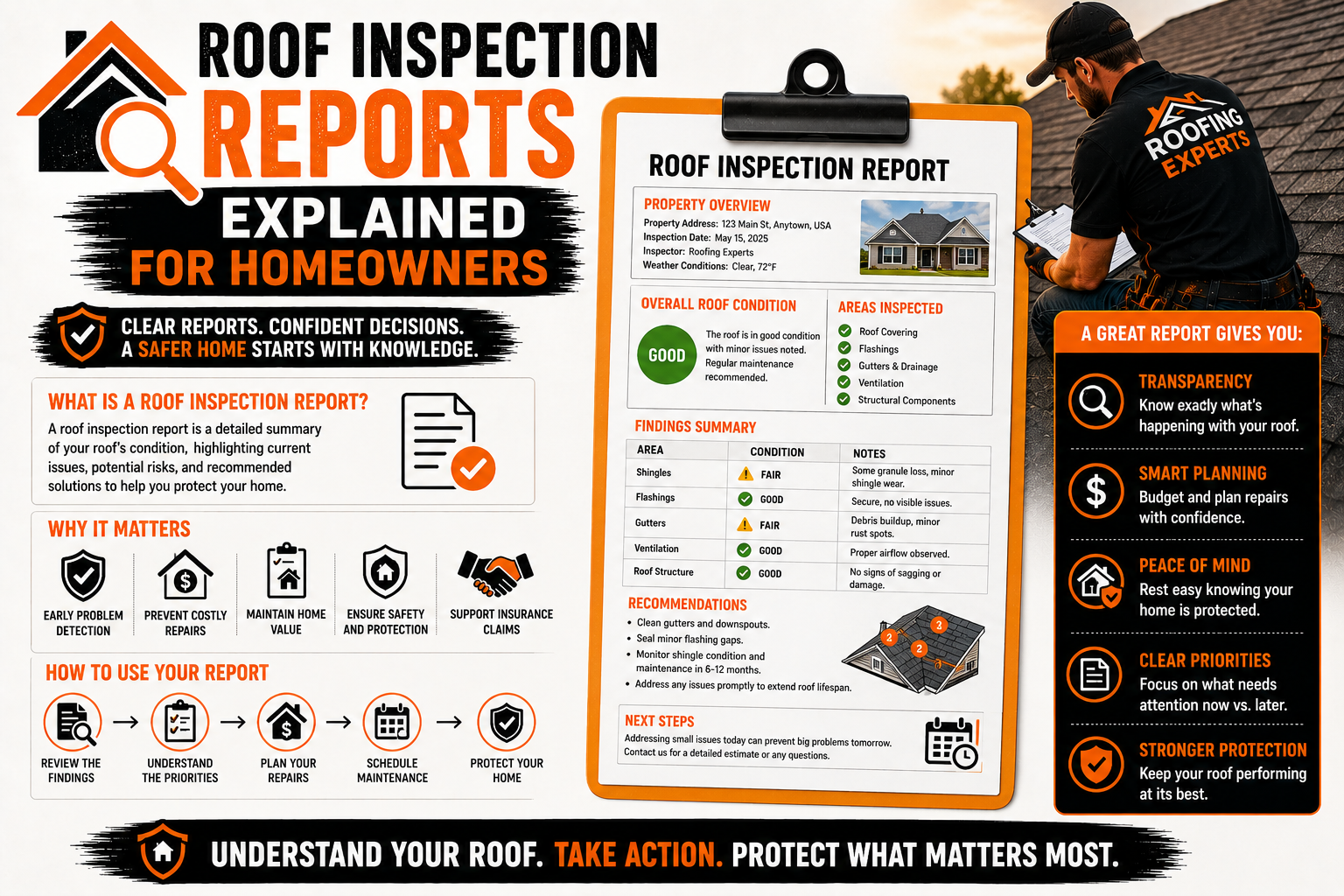
A roof inspection report is a written document prepared after a professional evaluation of a roofing system. It summarizes the inspector’s observations, identifies existing or developing problems, documents the overall condition of the roof, and provides recommendations for maintenance, repairs, or replacement when necessary.
Unlike a simple verbal opinion, a formal inspection report creates a permanent record of the roof’s condition at a specific point in time. The document often includes written observations, photographs, measurements, diagrams, moisture findings, and detailed descriptions of roofing components that were examined during the inspection.
The report does not simply list visible damage. It explains how different roofing components are performing, whether any defects require attention, and how those issues may affect the roof’s ability to protect the building in the future. This broader perspective helps homeowners understand both current conditions and potential long-term concerns.
Professional reports also establish a baseline for future inspections. When inspectors return in later years, they can compare new observations with previous reports to determine whether roof conditions have remained stable or whether certain problems have progressed over time.
Inspection reports vary depending on the roof type, inspection purpose, and company performing the evaluation. A report prepared for annual maintenance may emphasize preventive care, while a report prepared after storm damage may focus on documenting weather-related impacts for insurance purposes.
Regardless of the format, the primary objective remains the same. A roof inspection report communicates accurate, organized, and understandable information that helps homeowners make informed decisions regarding roof maintenance and repairs.
Why Roof Inspection Reports Are Important for Homeowners
Many homeowners view roof inspections as a way to identify leaks or storm damage, but the written report provides benefits that continue long after the inspection is complete. It serves as an essential reference for maintaining the roof throughout its service life.
One of the greatest advantages is informed decision-making. Instead of relying on assumptions or verbal explanations, homeowners receive documented evidence describing the roof’s actual condition. This allows maintenance priorities to be based on verified findings rather than uncertainty.
Roof inspection reports also help homeowners budget for future repairs. Not every issue requires immediate attention, and the report often distinguishes between urgent repairs, recommended maintenance, and long-term planning items. This allows property owners to schedule improvements according to both urgency and available resources.
Another important benefit involves protecting property value. Well-documented maintenance records demonstrate responsible ownership and may increase buyer confidence during real estate transactions. Prospective buyers often appreciate seeing evidence that the roof has been inspected and properly maintained.
Inspection reports also improve communication with roofing contractors. Instead of describing problems from memory, homeowners can refer directly to documented findings, photographs, and recommendations when requesting repair estimates or comparing contractor proposals.
Insurance claims frequently rely on detailed inspection reports as supporting documentation. After storms or other covered events, reports provide evidence of roof conditions, helping insurers distinguish between recent damage and pre-existing deterioration.
Routine reports also encourage preventive maintenance. Small problems identified during inspections can often be repaired before they develop into major structural issues, reducing long-term ownership costs while extending the lifespan of the roofing system.
Who Prepares a Professional Roof Inspection Report?
A professional roof inspection report is typically prepared by an experienced roofing inspector, licensed roofing contractor, building inspector, or other qualified professional with expertise in evaluating roofing systems. The qualifications of the individual preparing the report directly influence its accuracy and usefulness.
Professional inspectors receive training in roofing materials, construction methods, moisture intrusion, structural behavior, drainage systems, flashing installation, and weather-related roof damage. Their experience enables them to recognize both obvious defects and subtle warning signs that less experienced individuals might overlook.
During the inspection, the professional carefully documents observations rather than relying solely on memory. Photographs, measurements, notes, moisture readings, and visual evidence collected throughout the evaluation become part of the final report, ensuring that recommendations are supported by documented findings.
Some inspection reports are prepared as part of routine maintenance programs, while others are created for specific purposes such as insurance claims, real estate transactions, warranty inspections, or post-storm evaluations. Although the focus may differ, professional reporting standards remain consistent across these situations.
Advanced inspection technology often supports the reporting process. Thermal imaging cameras, moisture meters, drones, and digital documentation software help inspectors collect more accurate information while creating detailed reports that clearly explain roof conditions.
Professional inspectors also maintain objectivity. Rather than recommending unnecessary repairs, they evaluate the roof based on observable evidence and established roofing practices. This impartial approach provides homeowners with reliable information they can trust when making important maintenance decisions.
Choosing a qualified professional is therefore just as important as scheduling the inspection itself. A thorough inspection conducted by an experienced inspector results in a report that accurately reflects the condition of the roofing system.
When Should You Request a Roof Inspection Report?
Roof inspection reports are valuable throughout the life of a property, not just when visible roof problems occur. Requesting inspections at the appropriate times helps homeowners identify developing issues before they become expensive repairs.
Annual inspections are among the most common reasons to request a report. Regular evaluations establish a maintenance history that allows homeowners to monitor roof performance over time while addressing minor issues before they worsen.
Storm damage inspections should be scheduled after significant weather events such as hailstorms, hurricanes, strong winds, or heavy snowfall. Even when damage is not immediately visible from the ground, professional reports help identify hidden problems that may require prompt repair.
Property purchases also justify comprehensive roof inspection reports. Buyers gain a clearer understanding of the roof’s condition before completing the transaction, while sellers demonstrate transparency by providing recent inspection documentation.
Homeowners planning major renovations often request inspections before installing solar panels, skylights, rooftop HVAC equipment, or other additions. Verifying roof condition beforehand reduces the risk of installing expensive equipment on a roof nearing the end of its service life.
Reports are equally valuable after roof repairs or replacement projects. Follow-up inspections confirm that completed work meets expected standards and that no additional concerns remain within the roofing system.
Homeowners should also request inspections whenever warning signs appear, including ceiling stains, attic moisture, mold growth, unusual odors, sagging roof sections, or unexplained increases in indoor humidity. Early documentation often prevents relatively small issues from developing into much larger structural problems.
Main Sections Included in a Roof Inspection Report
Although report formats vary between companies, most professional roof inspection reports contain similar core sections. Understanding the purpose of each section helps homeowners navigate the document more confidently and interpret the inspector’s findings accurately.
The report usually begins with basic property information. This section identifies the property address, inspection date, weather conditions, roof type, roofing materials, inspector’s name, and the reason for the inspection. These details establish the context for the observations that follow.
Next comes the roof overview. This portion summarizes the overall condition of the roofing system and highlights significant findings. It provides homeowners with a quick understanding of the roof’s general health before presenting more detailed information.
The inspection findings section contains the majority of the report. Here, inspectors describe individual roof components, document visible defects, identify areas requiring attention, and explain how observed conditions may affect roof performance.
Supporting photographs accompany many findings. Images allow homeowners to see damage directly instead of relying solely on written descriptions. Labels, arrows, or annotations often highlight specific defects to improve clarity.
Many reports also include maintenance recommendations. Rather than simply identifying problems, inspectors explain which repairs should be completed immediately, which items require monitoring, and which maintenance activities will help preserve the roof’s condition.
Additional sections may include moisture assessments, attic observations, drainage evaluations, ventilation findings, warranty information, or estimated remaining service life depending on the scope of the inspection.
The following components are commonly included in professional roof inspection reports:
- Property and inspection information
- Roof type and construction details
- Overall roof condition summary
- Detailed inspection observations
- Photographs with annotations
- Identified deficiencies
- Maintenance recommendations
- Repair priorities
- Inspector’s comments and conclusions
Understanding these sections allows homeowners to read inspection reports more efficiently while recognizing the importance of each part of the document.
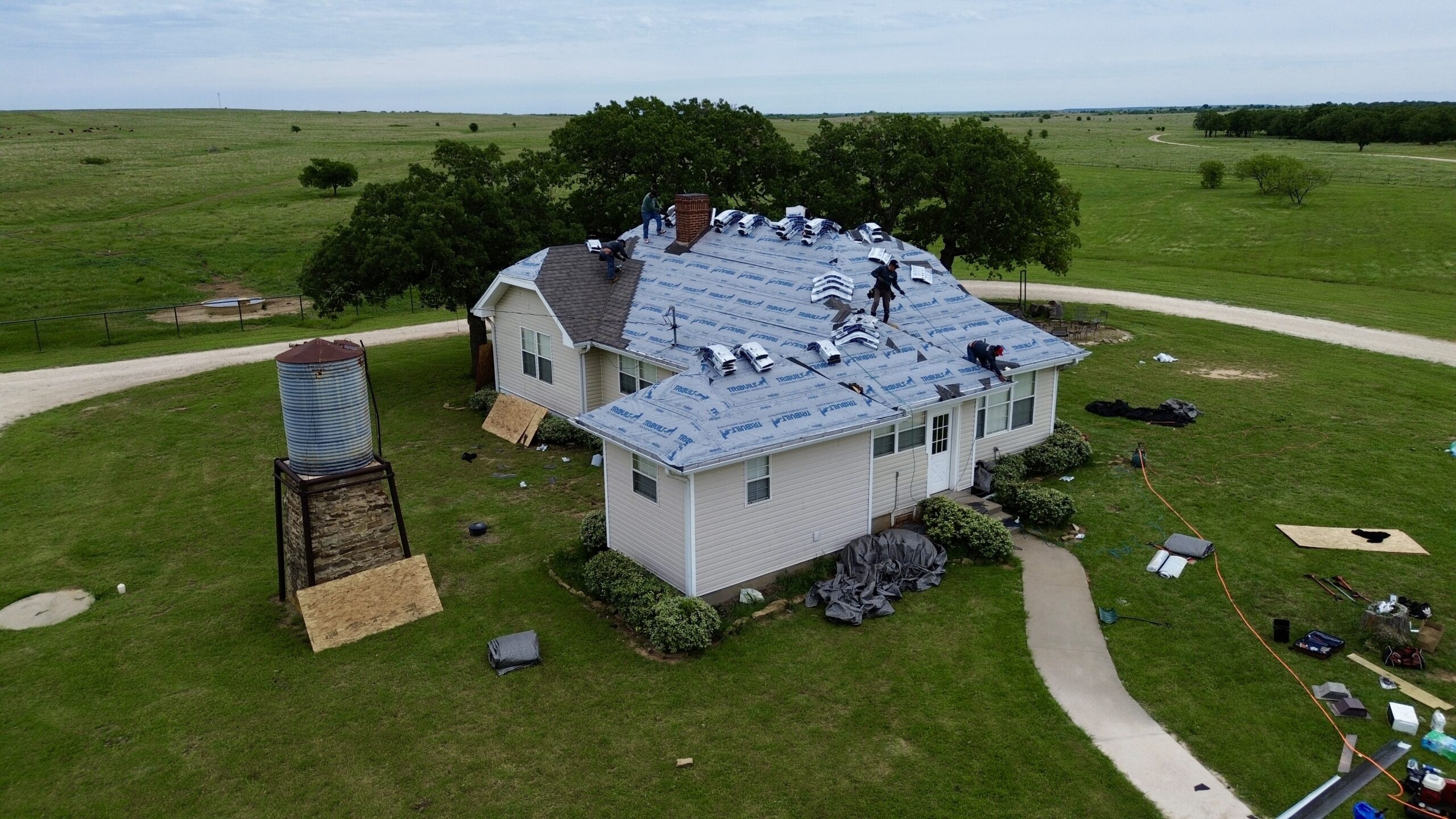
Understanding the Overall Roof Condition Assessment
One of the first sections homeowners usually read is the overall roof condition assessment. This summary provides a broad evaluation of the roofing system based on the inspector’s observations during the inspection.
Rather than describing every individual defect, this assessment communicates the general health of the roof. It may indicate whether the roof is in excellent, good, fair, aging, or poor condition depending on factors such as material wear, structural stability, drainage performance, moisture intrusion, and overall maintenance history.
The condition rating should not be interpreted as a prediction that the roof will fail immediately. Instead, it reflects how well the roofing system is currently performing relative to its expected service life and visible condition.
Inspectors consider multiple factors before assigning an overall assessment. Roofing material age, weather exposure, maintenance quality, previous repairs, structural integrity, ventilation performance, flashing condition, and moisture evidence all contribute to the final evaluation.
Homeowners should also understand that two roofs of the same age may receive very different condition assessments. Proper maintenance, installation quality, local climate, and exposure to severe weather all influence how roofing materials age over time.
When reviewing this section, it is helpful to focus on the explanation accompanying the rating rather than the rating alone. The written comments provide context about why the roof received its assessment and identify the most significant factors affecting its current condition.
The overall assessment also serves as a guide for future planning. A roof rated in good condition may require only routine maintenance, while a roof showing advanced deterioration may need more frequent inspections or long-term replacement planning. Understanding this summary helps homeowners make informed decisions before more detailed findings are presented in the remainder of the report.
In the next part of this guide, we will examine the most common findings listed in roof inspection reports, explain how inspectors classify roof damage, explore the role of photographs and diagrams, compare repair recommendations with replacement recommendations through a detailed table, and clarify the technical terminology that often causes confusion for homeowners.
Breaking Down Common Findings in Roof Inspection Reports
The findings section is the heart of a roof inspection report because it explains exactly what the inspector observed during the evaluation. Rather than simply stating whether the roof is in good or poor condition, this section provides detailed information about each roofing component and describes any conditions that may require attention.
Most reports organize findings by roof component rather than by severity. Roofing materials, flashing, gutters, vents, chimneys, skylights, attic spaces, insulation, and drainage systems are typically evaluated separately. This structure makes it easier for homeowners to understand which parts of the roofing system are performing well and which areas need maintenance.
Not every finding represents a major problem. Professional inspectors frequently document normal aging, minor cosmetic wear, and maintenance items that do not require immediate repair. These observations help establish a complete record of the roof’s condition and provide useful reference points for future inspections.
More significant findings usually involve conditions that may reduce the roof’s ability to prevent water intrusion or withstand weather exposure. Examples include damaged flashing, deteriorated sealants, loose shingles, moisture intrusion, blocked drainage systems, or structural movement that affects roof performance.
Inspection findings often distinguish between observed conditions and recommended actions. A report may identify cracked sealant around a vent without suggesting immediate replacement if the defect remains minor. Conversely, active roof leaks or structural concerns typically receive higher priority because delaying repairs could lead to more extensive damage.
Understanding the findings section requires reading the inspector’s explanations rather than focusing only on highlighted issues. The written comments often provide important context about the severity, likely cause, and recommended response for each observation.
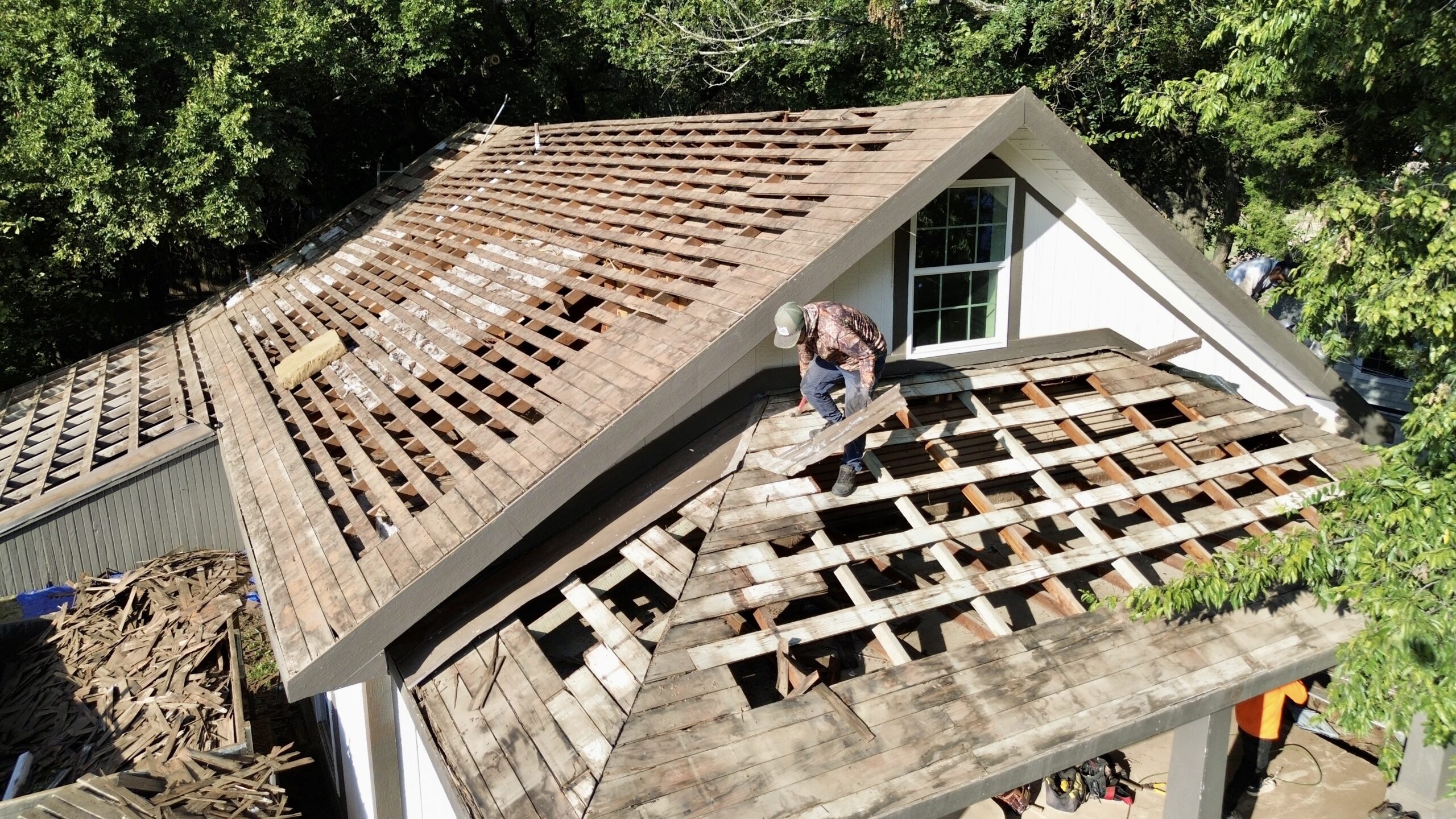
Understanding Roof Damage Classifications
Professional roof inspection reports frequently classify damage according to its severity and urgency. These classifications help homeowners prioritize maintenance and avoid treating every roof issue as an emergency.
Minor defects generally involve conditions that should be monitored or addressed during routine maintenance. These issues may include isolated cracked sealant, small areas of surface wear, limited granule loss, or minor gutter debris that does not yet affect roof performance.
Moderate damage typically requires planned repairs within a reasonable timeframe. Loose flashing, damaged shingles, localized moisture intrusion, or developing drainage problems may fall into this category because they have the potential to worsen if left unresolved.
Severe damage represents conditions requiring prompt attention. Active leaks, structural movement, extensive storm damage, widespread moisture intrusion, or deteriorated roofing materials capable of allowing significant water entry generally receive the highest repair priority.
Some reports also distinguish between cosmetic damage and functional damage. Cosmetic issues affect appearance but do not significantly reduce roof performance, while functional damage directly compromises the roof’s ability to protect the building from weather.
Inspectors use these classifications to help homeowners make informed maintenance decisions instead of reacting emotionally to every observation. Understanding the relative importance of each issue supports more effective budgeting and repair planning.
Photos, Diagrams, and Documentation in Inspection Reports
Photographs are among the most valuable parts of a professional roof inspection report because they allow homeowners to see the inspector’s observations firsthand. Visual documentation reduces misunderstandings and helps explain technical findings more clearly than written descriptions alone.
Most reports include photographs of both areas in good condition and areas requiring attention. Showing healthy roofing components provides useful context while demonstrating that the inspection covered the entire roofing system rather than only damaged locations.
Images often contain arrows, circles, labels, or notes identifying the specific issue being discussed. These annotations make it easier for homeowners to recognize cracks, lifted flashing, deteriorated sealants, moisture staining, or other conditions that might otherwise be difficult to notice.
Many inspectors also include overview photographs showing the roof as a whole before presenting close-up images of individual concerns. This combination helps homeowners understand both the location and the extent of any identified problems.
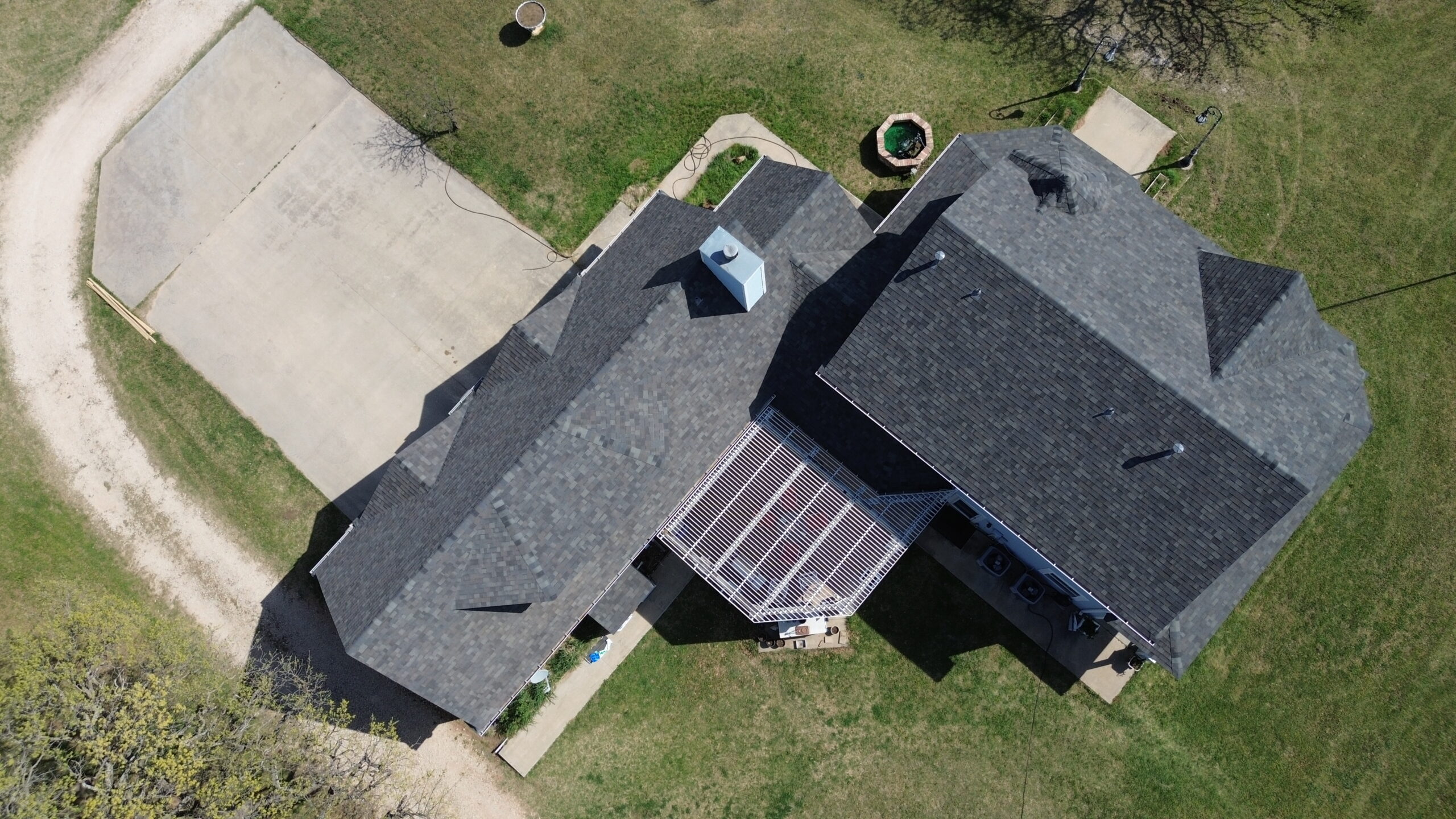
Some reports contain roof diagrams illustrating the position of defects across the roofing system. These diagrams become especially useful when multiple repairs are recommended because they allow contractors to locate affected areas quickly during future maintenance visits.
Digital inspection software has further improved documentation quality. Modern reports often include high-resolution images, measurement data, inspection timestamps, and organized photo galleries that provide a detailed visual record of roof conditions.
Visual documentation also supports future comparisons. During subsequent inspections, new photographs can be compared with earlier images to determine whether roof conditions have remained stable or whether certain defects have progressed over time.
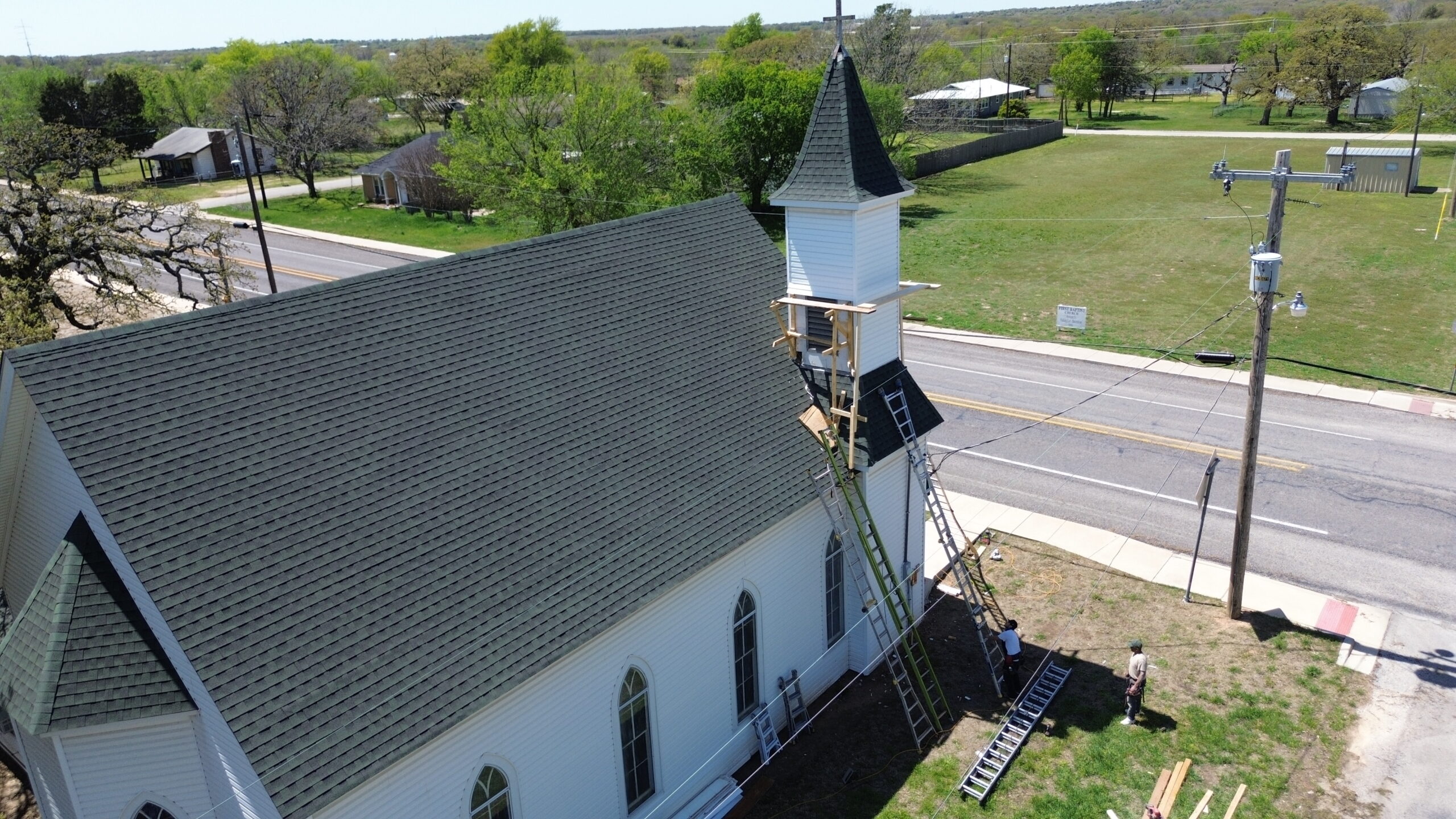
Recommended Repairs vs Recommended Replacement
One section that often causes confusion involves the distinction between repair recommendations and replacement recommendations. Homeowners sometimes assume that every roof defect requires complete replacement, but professional inspection reports carefully separate localized repair needs from situations where replacing the roof may be more practical.
Repairs focus on correcting specific problems while preserving the majority of the existing roofing system. Replacement becomes a consideration when repairs are no longer cost-effective or when the roof has reached the end of its expected service life.
The following comparison highlights the key differences.
| Recommendation | Roof Repair | Roof Replacement |
|---|---|---|
| Scope of Work | Addresses specific damaged areas | Replaces most or all roofing materials |
| Typical Situation | Localized defects or isolated leaks | Extensive deterioration or widespread damage |
| Cost | Generally lower initial investment | Higher upfront investment |
| Project Duration | Usually shorter | Typically requires more time |
| Roof Condition | Overall roof remains structurally sound | Roof has significant aging or multiple failures |
| Long-Term Goal | Extend existing roof lifespan | Install a new roofing system with a fresh service life |
The inspector’s recommendation is based on several factors rather than age alone. Roof material condition, structural integrity, repair history, maintenance costs, moisture damage, and expected remaining lifespan all influence whether repair or replacement represents the better long-term solution.
Homeowners should carefully read the explanation accompanying each recommendation. The reasoning behind the recommendation often provides more valuable information than the recommendation itself.
How to Read Inspection Comments Without Confusion
Technical language can make roof inspection reports appear more complicated than they actually are. Fortunately, most professional reports follow a logical structure that allows homeowners to understand the inspector’s observations by focusing on the context surrounding each comment.
The first step is distinguishing between observations and conclusions. An observation describes what the inspector saw during the inspection, while the conclusion explains why that observation matters and whether any action is recommended.
Comments should also be interpreted together rather than individually. A single note describing minor flashing wear may seem concerning on its own, but additional comments elsewhere in the report may explain that the flashing remains functional and simply requires routine monitoring.
Many reports include limitations describing areas that could not be fully inspected because of weather conditions, restricted access, rooftop equipment, or safety concerns. These notes do not necessarily indicate roof problems but instead explain why certain components were evaluated differently.
It is also important to understand that inspectors document both current conditions and potential future concerns. Some comments identify immediate repair needs, while others simply encourage homeowners to monitor aging components during future maintenance.
Reading the report from beginning to end provides a clearer understanding than focusing only on highlighted photographs or isolated comments. The overall narrative explains how individual findings relate to the roof’s general condition.
When questions remain after reviewing the report, homeowners should contact the inspector directly. Professional inspectors are generally willing to explain their findings and clarify technical language that may be unfamiliar.
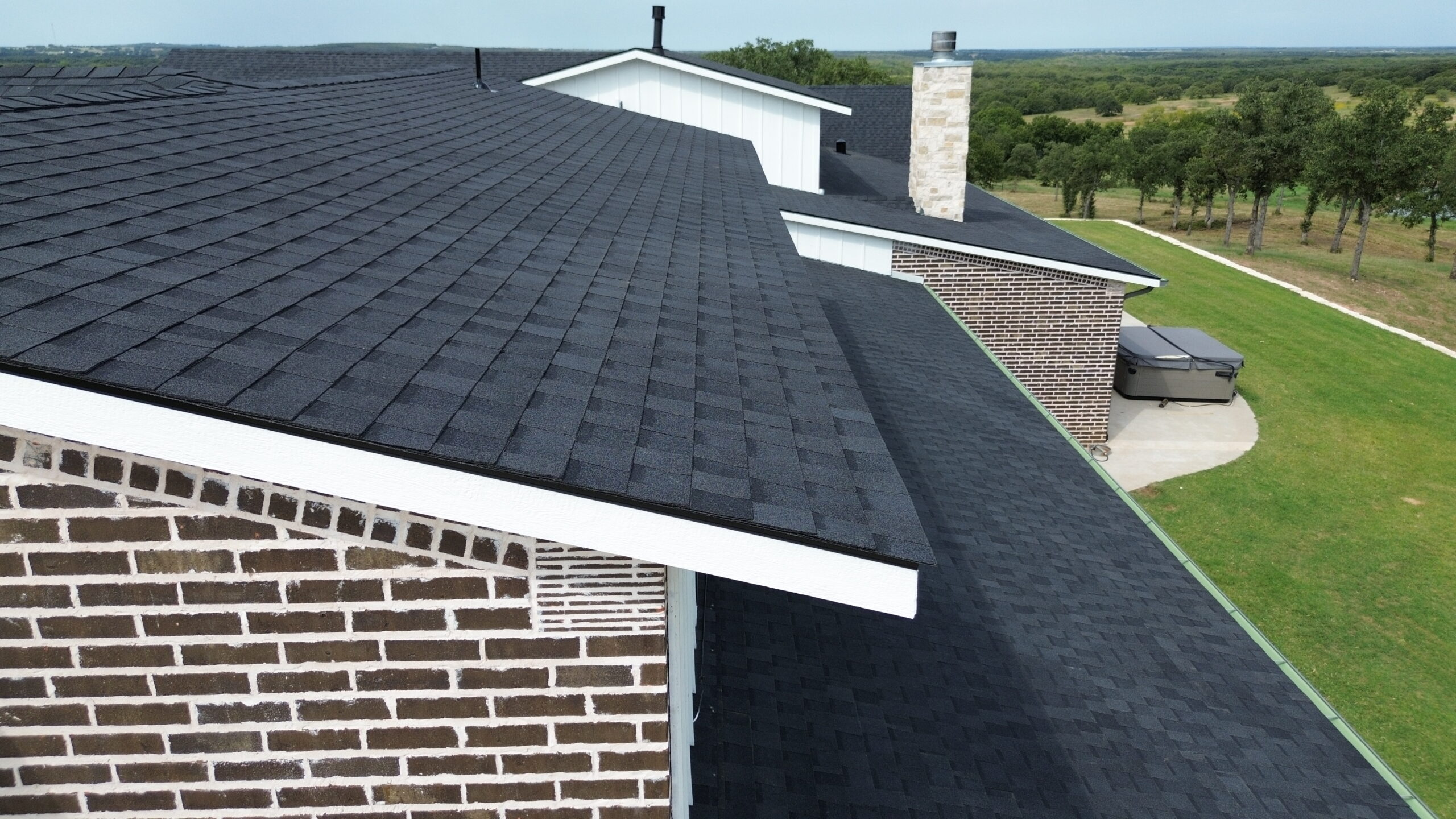
Understanding Inspection Report Terminology
Roof inspection reports often contain technical terminology that may be unfamiliar to homeowners. While these terms accurately describe roofing conditions, understanding their meaning makes the report much easier to interpret.
Words such as “deterioration,” “weathering,” and “aging” generally describe normal changes that occur as roofing materials become older. These terms do not automatically indicate roof failure but instead help explain how materials have responded to years of weather exposure.
The term “deficiency” refers to any condition that reduces the roof’s performance or differs from accepted installation or maintenance standards. Deficiencies range from minor maintenance items to significant structural concerns depending on their severity.
Inspectors frequently use the word “localized” to indicate that damage is limited to a relatively small area rather than affecting the entire roof. Localized issues often support repair recommendations instead of complete replacement.
“Moisture intrusion” describes water entering the roofing system, while “moisture staining” refers to visible evidence that water has been present at some point. These terms are related but do not necessarily indicate the same level of active roof leakage.
Another common phrase is “monitor for changes.” This recommendation means the condition does not currently require immediate repair but should be evaluated during future inspections to ensure it does not worsen over time.
The following terms appear frequently in professional roof inspection reports:
- Flashing – Metal material installed around roof transitions to prevent water intrusion.
- Roof Decking – Structural surface beneath the roofing material that supports the roof covering.
- Underlayment – Protective layer installed between the roof deck and exterior roofing material.
- Ponding Water – Water remaining on the roof surface for an extended period after rainfall.
- Granule Loss – Wear affecting the protective surface of asphalt shingles.
- Penetration – Any opening through the roof created by vents, chimneys, skylights, or equipment.
Understanding these terms makes the report far easier to read and reduces confusion when discussing inspection findings with roofing contractors or insurance representatives.
In the final part of this guide, we will explore how roof inspection reports support insurance claims, explain their importance during home buying and selling, discuss how they contribute to long-term roof maintenance planning, examine common mistakes homeowners make when interpreting reports, answer frequently asked questions, and conclude with the key lessons every homeowner should remember when reviewing a professional roof inspection report.
Using Roof Inspection Reports for Insurance Claims
Roof inspection reports often become one of the most valuable documents when homeowners file insurance claims after storms or other covered events. A detailed report provides objective evidence of the roof’s condition, helping insurance companies evaluate the extent of damage and determine whether repairs or replacement may be covered under the policy.
Professional reports typically include photographs, written observations, measurements, and descriptions of damaged roofing components. This documentation creates a clear record that supports the claim while reducing uncertainty about the condition of the roof at the time of the inspection.
When storm damage is involved, inspectors often identify the type of damage observed. Wind-lifted shingles, hail impacts, damaged flashing, punctured roofing materials, or fallen tree limbs are usually documented carefully because these findings may influence the insurance evaluation process.
Inspection reports also help distinguish recent storm damage from normal aging or long-term deterioration. Insurance providers generally evaluate whether the damage resulted from a covered event or from gradual wear over time. Accurate documentation assists in making this distinction.
Homeowners should keep copies of inspection reports, photographs, repair estimates, and maintenance records together. Having organized documentation allows claims to proceed more smoothly and helps answer questions that may arise during the review process.
Although inspection reports provide valuable evidence, they do not guarantee claim approval. Insurance decisions ultimately depend on policy terms, coverage limits, exclusions, and the insurer’s own assessment. However, a professional report strengthens the documentation available during the claims process.
Using Inspection Reports for Home Buying and Selling
Roof inspection reports play an important role in residential real estate transactions because they provide buyers and sellers with a clear understanding of the roof’s condition before ownership changes hands. Since roof replacement can represent a significant expense, accurate information helps both parties make informed decisions.
Homebuyers often request roof inspections during the property evaluation period. The report identifies existing defects, estimates the general condition of the roof, and highlights maintenance items that may require attention after purchase. This information allows buyers to better understand future ownership costs.
Sellers also benefit from obtaining professional inspection reports before listing their property. Addressing roof issues in advance or providing recent inspection documentation demonstrates transparency and may increase buyer confidence throughout the transaction.
Inspection reports frequently become part of negotiation discussions. If significant roofing problems are identified, buyers and sellers may agree on repairs, financial credits, or adjusted purchase terms before closing. Having a professionally prepared report helps keep these discussions focused on documented facts.
Lenders may also request roof condition information for certain properties, particularly when visible deterioration exists. Inspection reports help demonstrate whether the roof remains functional and capable of protecting the home adequately.
Even after the sale is complete, the report serves as a valuable maintenance reference for the new owner. It establishes a starting point that can be compared with future inspections as the roofing system continues to age.
How Roof Inspection Reports Help with Long-Term Maintenance
One of the greatest long-term benefits of roof inspection reports is their ability to support preventive maintenance planning. Rather than reacting only after leaks develop, homeowners can use inspection findings to schedule maintenance before minor issues become major repairs.
Routine inspection reports establish a maintenance history that documents how the roof changes over time. Comparing reports from different years allows homeowners and contractors to monitor aging, evaluate repair effectiveness, and identify patterns that might otherwise go unnoticed.
Inspection reports also help prioritize maintenance tasks. Instead of attempting to address every recommendation immediately, homeowners can organize repairs according to urgency, budget, and expected impact on roof performance.
Planning maintenance in advance often reduces overall ownership costs. Scheduled repairs are generally less expensive than emergency repairs because contractors have more flexibility, and localized damage is less likely to spread throughout the roofing system.
The reports also help homeowners prepare financially for eventual roof replacement. As inspections document gradual aging, property owners gain a realistic understanding of the roof’s remaining service life and can begin budgeting for future replacement before it becomes an emergency.
Maintaining organized inspection records benefits future inspections as well. Contractors reviewing previous reports can quickly identify recurring concerns, evaluate whether earlier repairs performed successfully, and recommend appropriate next steps based on documented roof history.
Consistent reporting transforms roof maintenance from a reactive process into a planned strategy that protects both the building and the homeowner’s long-term investment.
Common Mistakes Homeowners Make When Reading Inspection Reports
Although professional reports are designed to be informative, homeowners sometimes misunderstand important details or overlook valuable information contained within the document. Avoiding these common mistakes leads to better maintenance decisions and more productive conversations with roofing professionals.
One frequent mistake is reading only the overall condition rating while ignoring the detailed explanations. The summary provides a useful overview, but the written findings explain why the inspector reached that conclusion and identify the specific areas requiring attention.
Another mistake involves assuming that every listed issue demands immediate repair. Professional inspectors document all observable conditions, including routine maintenance items that simply require monitoring during future inspections. Reading the recommended priority helps distinguish urgent problems from normal maintenance.
Some homeowners focus exclusively on photographs without reading the accompanying descriptions. While images provide valuable visual evidence, the written comments explain the significance of each observation and often include recommendations that are not obvious from the photograph alone.
Ignoring preventive maintenance recommendations is another common error. Small issues such as deteriorating sealant, minor flashing wear, or clogged gutters may seem unimportant, but addressing them early often prevents more extensive repairs in the future.
Many homeowners also fail to keep inspection reports after repairs are completed. Maintaining organized records creates a valuable maintenance history that supports future inspections, warranty documentation, insurance claims, and property sales.
Finally, some property owners hesitate to ask questions when technical language appears confusing. Professional inspectors expect homeowners to request clarification and are generally happy to explain their findings in more accessible terms.
Frequently Asked Questions
How long should I keep a roof inspection report?
It is recommended to keep roof inspection reports for as long as you own the property. They provide valuable maintenance history and may be useful for insurance claims, warranty documentation, future inspections, and real estate transactions.
Does a roof inspection report include repair costs?
Not always. Some reports focus only on inspection findings and recommendations, while others may include estimated repair costs or suggest obtaining separate contractor estimates for pricing.
Can I use one inspection report for multiple purposes?
Yes. Depending on its scope, a professional roof inspection report may be useful for maintenance planning, insurance documentation, warranty records, home sales, and contractor consultations. However, some organizations may request a more recent inspection if significant time has passed.
Should I schedule another inspection after repairs are completed?
Yes. A follow-up inspection helps verify that repairs were completed properly and confirms that the roofing system is functioning as expected. It also creates updated documentation reflecting the roof’s current condition.
What should I do if I do not understand part of my inspection report?
Contact the inspector who prepared the report. They can explain technical terminology, clarify recommendations, and answer questions about the observations documented during the inspection.
Conclusion
A roof inspection report is much more than a checklist of roofing problems. It is a comprehensive record that explains the condition of the roofing system, documents important observations, prioritizes maintenance needs, and provides homeowners with the information required to make informed decisions about repairs and long-term roof care.
Understanding how to read the report transforms it from a technical document into a practical planning tool. By learning the meaning of inspection findings, damage classifications, photographs, recommendations, and professional terminology, homeowners can better communicate with roofing contractors, insurance providers, and real estate professionals.
Professional inspection reports also provide long-term value beyond the initial inspection. They establish maintenance history, support insurance claims, assist with property transactions, verify completed repairs, and help homeowners monitor the condition of their roofs as they age. Regular inspections combined with organized documentation make it easier to identify changes over time and respond before small issues develop into expensive structural problems.
The most effective approach is to view roof inspection reports as part of an ongoing maintenance strategy rather than a one-time document. Scheduling routine inspections, reviewing reports carefully, asking questions when clarification is needed, and acting promptly on important recommendations help maximize roof lifespan while protecting the home’s structure and value. With a clear understanding of what a professional roof inspection report contains and how to use it, homeowners can confidently make decisions that preserve the safety, performance, and reliability of their roofing system for many years to come.