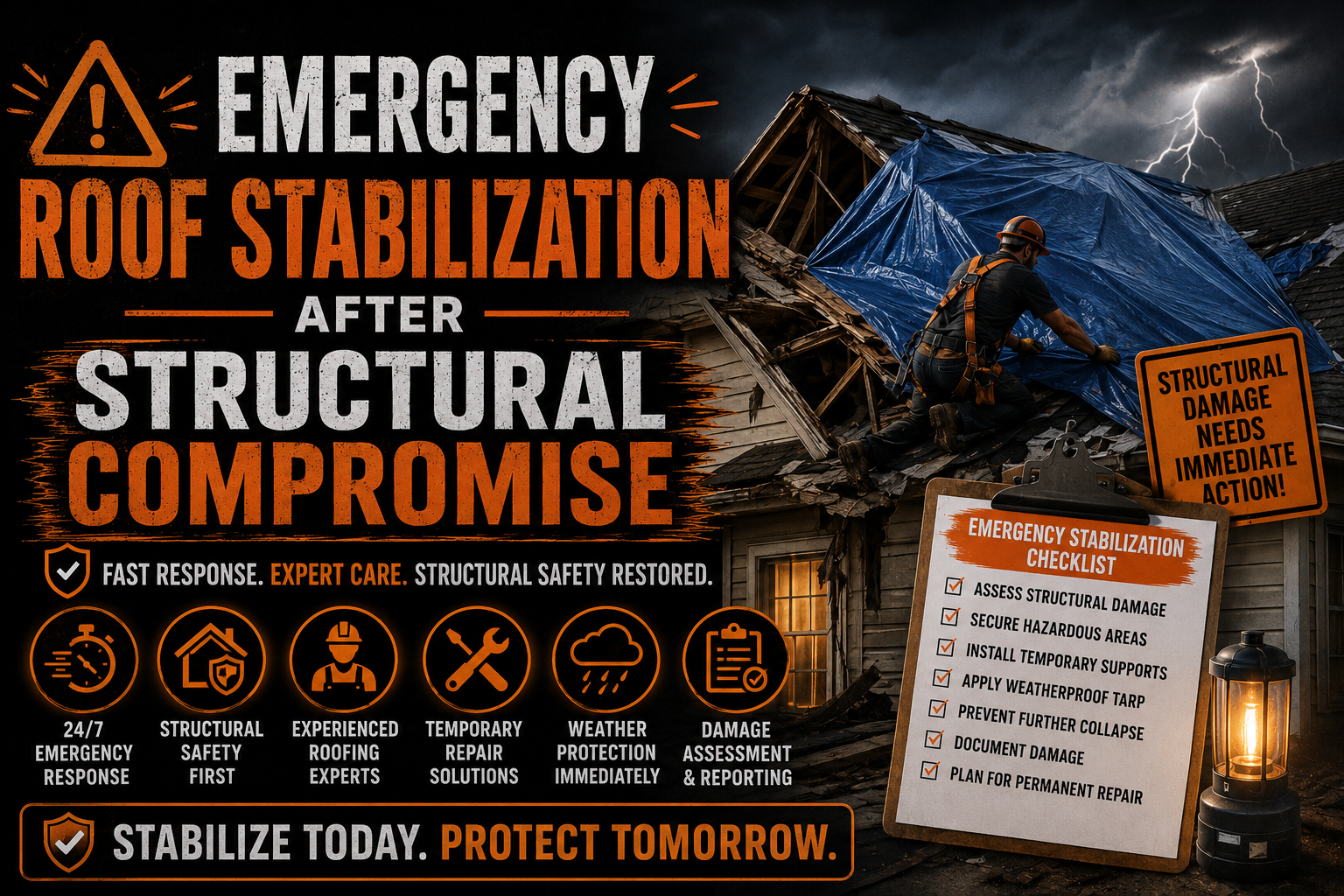
Emergency Roof Stabilization After Structural Compromise
Introduction
Structural roof damage is one of the most serious emergencies a property owner can face. Unlike minor leaks or a few missing shingles, structural compromise affects the roof’s ability to safely support its own weight and protect the building beneath it. Severe storms, falling trees, fire, prolonged water intrusion, and other major events can weaken critical structural components, creating conditions that require immediate attention.
Emergency roof stabilization is a temporary process that helps reduce the risk of additional structural failure until permanent repairs can be completed. Its purpose is not to restore the roof permanently but to secure the damaged area, minimize further deterioration, and provide enough stability for a professional assessment. Acting quickly after structural damage can help limit repair costs while protecting both the building and its occupants.
Every structural roofing emergency is unique because no two buildings experience damage in exactly the same way. The size of the affected area, the type of roofing system, weather conditions, and the extent of structural failure all influence the most appropriate stabilization approach. Understanding these factors allows property owners to make safer decisions during stressful situations.
Personal safety must always remain the highest priority. A structurally compromised roof can collapse without warning, making it dangerous to approach or inspect closely without proper precautions. In many cases, the safest action is to evacuate the affected area and allow trained professionals to perform the initial evaluation.
This guide explains what structural roof compromise involves, the warning signs that require immediate stabilization, the first steps to take after discovering major roof damage, and the equipment commonly used to provide temporary protection before permanent restoration begins.
Understanding Structural Roof Compromise
A roof is more than its outer covering of shingles, tiles, or metal panels. Beneath the visible roofing materials lies a structural framework that supports the entire roofing system and distributes weight safely throughout the building. When these supporting components become weakened or damaged, the roof may no longer perform safely even if portions of the exterior still appear intact.
Structural roof compromise occurs when the strength or stability of essential load bearing components has been reduced. Damage may affect roof trusses, rafters, decking, support beams, or other structural elements responsible for carrying the roof’s weight. Once these components are weakened, additional stress from rain, snow, or wind may increase the likelihood of partial or complete collapse.
Unlike cosmetic roofing damage, structural problems often continue worsening after the initial event. Water entering through damaged sections accelerates wood deterioration, weakens fasteners, and increases the overall weight supported by already compromised framing. Without prompt stabilization, relatively localized damage can spread throughout a much larger section of the roof.
Some structural failures occur suddenly after severe weather, while others develop gradually over months or years because of long term moisture exposure or neglected maintenance. Recognizing the difference between surface damage and structural compromise is essential for choosing the appropriate emergency response.
Common Causes of Structural Roof Damage
Many different events can weaken a roof’s structural framework. Understanding these causes helps property owners recognize why emergency stabilization may become necessary after certain types of damage.
Severe windstorms frequently place tremendous pressure on roofing systems. High winds can remove roofing materials while also placing unusual stress on rafters, trusses, and roof connections. In extreme cases, portions of the roof structure may shift or become partially detached from supporting walls.
Heavy rainfall often contributes to structural damage when roof leaks remain untreated. Continuous moisture gradually weakens wooden framing members through rot, fungal growth, and long term deterioration. Water saturated materials also become significantly heavier, increasing stress on the remaining structural components.
Fallen trees represent another common cause of major roof compromise. Even relatively small branches can puncture roofing materials, while large limbs or entire trees may crush trusses, rafters, and roof decking. Impact damage frequently extends beyond the visible point of contact.
Fire can also affect structural stability long after the flames have been extinguished. Heat weakens wood framing, damages metal connectors, and reduces the strength of roofing materials. Water used during firefighting efforts may introduce additional moisture related damage that complicates restoration.
Snow accumulation creates another potential hazard in colder climates. Excessive snow loads place continuous weight on roof framing, particularly if drifting or ice accumulation occurs unevenly across the roof surface. Older structures may become especially vulnerable during prolonged winter storms.
Long term neglect can also contribute to structural compromise. Years of small leaks, deteriorated flashing, inadequate ventilation, or deferred maintenance gradually weaken roofing components until relatively minor weather events trigger major failures.
Structural Damage Versus Cosmetic Roof Damage
Not all roof damage represents an immediate structural emergency. Distinguishing between cosmetic damage and structural compromise helps determine the appropriate level of response while avoiding unnecessary risks.
Cosmetic damage generally affects only the outer roofing materials without reducing the roof’s overall structural strength. Missing shingles, minor hail dents, damaged gutters, or small flashing problems often require repair but do not necessarily indicate that the roof is unsafe to support its normal loads.
Structural damage, on the other hand, affects the components responsible for supporting the roof itself. Broken rafters, cracked trusses, sagging decking, separated support connections, or weakened framing reduce the roof’s ability to carry weight safely. These conditions require much greater caution because collapse may occur without additional warning.
Some roofing emergencies involve both cosmetic and structural damage simultaneously. A fallen tree, for example, may remove shingles while also breaking structural framing beneath the roof covering. Evaluating only the visible surface damage may overlook much more serious hidden problems.
Property owners should avoid assuming that limited exterior damage means the roof structure remains safe. Many structural failures develop beneath intact roofing materials where they cannot be seen without detailed inspection.
Warning Signs That Indicate Immediate Stabilization Is Needed
Certain warning signs suggest that a roof may have experienced structural compromise requiring immediate professional attention. Recognizing these indicators helps property owners respond before additional failures occur.
Visible sagging is one of the clearest signs of structural distress. Roof sections that appear lower than surrounding areas may indicate weakened rafters, damaged trusses, or deteriorated decking. Even slight changes in roof shape deserve careful evaluation following severe weather.
Interior ceilings may also provide important clues. Large cracks, bowing drywall, or ceilings that appear to be pulling away from walls often suggest movement within the roof structure above. These conditions become especially concerning if they develop suddenly after a storm or heavy snowfall.
Doors and windows that unexpectedly become difficult to open or close may indicate structural shifting. Although several issues can affect door alignment, sudden changes following roof damage may suggest movement within the building’s supporting framework.
Unusual noises should never be ignored. Creaking, popping, cracking, or snapping sounds coming from the roof structure sometimes indicate that framing members are shifting under increased stress. These sounds may become more noticeable during windy conditions or while snow and water loads increase.
Water pooling inside ceilings or visible daylight entering through the attic may also signal serious structural damage. These conditions often accompany roof failures that require immediate stabilization before additional weather exposure worsens the problem.
Immediate Actions After Discovering Structural Roof Damage
The moments immediately following the discovery of structural roof damage are critical. Making calm, informed decisions helps reduce the risk of injury while protecting the building from additional deterioration.
The first priority should always be ensuring the safety of everyone inside the building. If there are signs of possible roof collapse, occupants should leave the affected area immediately and move to a safe location until professionals have evaluated the structure.
Once occupants are safe, the damaged section should be isolated whenever practical. Preventing unnecessary access reduces the likelihood of injuries if structural conditions continue deteriorating.
If weather conditions allow, a visual assessment can be performed from the ground. Binoculars or cameras with zoom capabilities often provide useful information without requiring anyone to climb onto the roof. Property owners should avoid walking beneath visibly damaged roof sections during this assessment.
Photographs should be taken whenever it is safe to do so. Documenting visible damage before temporary stabilization begins helps support insurance claims while providing valuable information for contractors performing future repairs.
Emergency roofing contractors, structural engineers, or other qualified professionals should be contacted as soon as possible. Structural roof damage typically requires specialized evaluation beyond what temporary repairs alone can provide.
Protecting Occupants Before Protecting the Roof
Although minimizing property damage is important, protecting human life always comes first during structural roofing emergencies. Buildings can be repaired, but injuries resulting from unstable roof conditions may have permanent consequences.
Rooms located directly beneath damaged roof sections should be evacuated immediately if there is any concern about structural stability. Occupants should avoid spending time beneath sagging ceilings, large roof depressions, or areas showing active movement.
Furniture and personal belongings should only be removed if doing so does not place anyone at unnecessary risk. Entering unstable portions of the building simply to retrieve property should be avoided until professionals determine the structure is safe.
Children and pets should remain well away from affected areas throughout the emergency response. Curious individuals may not recognize hidden structural hazards, making restricted access especially important.
Keeping everyone informed about unsafe areas also reduces accidental entry during the stabilization process. Clear communication helps ensure that emergency responders and contractors can work without additional safety concerns.
Securing the Affected Area
Once occupants have been moved to safety, the damaged area should be secured to prevent unnecessary access. This step helps reduce injuries while preserving the scene for professional assessment.
Interior doors leading to compromised rooms may be closed and marked clearly to discourage entry. Temporary barriers or caution tape can also help identify hazardous areas until repairs begin.
Outside the building, areas beneath damaged roof sections should remain clear because loose materials may continue falling after the initial event. Wind, additional rainfall, or shifting structural components can dislodge roofing materials without warning.
Vehicles should also be moved away from unstable roof sections whenever practical. Protecting nearby property helps minimize additional losses if structural failure continues before stabilization can be completed.
Maintaining a safe perimeter allows emergency personnel to inspect the damage more efficiently while reducing unnecessary exposure to hazardous conditions.
Preventing Additional Interior Damage
Although structural safety remains the highest priority, reducing ongoing interior damage is also important when it can be done safely. Water entering through compromised roofing continues damaging ceilings, insulation, flooring, and personal belongings until temporary protection is established.
Buckets or waterproof containers may be placed beneath active leaks if the area remains structurally safe to enter briefly. Plastic sheeting can also help protect furniture and valuable possessions from additional moisture.
Improving indoor ventilation may reduce humidity levels after water intrusion. However, ventilation efforts should never require entering unstable roof spaces or compromised attic areas.
Electrical equipment located near active leaks should be approached with caution. If water is reaching outlets, light fixtures, or electrical panels, the affected circuits should remain off until inspected by qualified professionals.
These temporary interior measures help limit secondary damage while waiting for professional roof stabilization to begin.
Essential Safety Precautions Before Any Stabilization Work
Emergency roof stabilization should never begin until the overall safety of the situation has been carefully evaluated. Structural damage introduces hazards that are often far more serious than those associated with ordinary roof repairs.
The initial assessment should always begin from the ground. Walking onto a structurally compromised roof without professional evaluation can place unnecessary weight on weakened framing and increase the risk of collapse.
Weather conditions should also be considered before any stabilization efforts. High winds, heavy rainfall, lightning, or snow create additional loads and reduce visibility, making emergency work considerably more dangerous.
Personal protective equipment is essential whenever professionals begin stabilization activities. Hard hats, safety boots, eye protection, gloves, and fall protection systems help reduce injuries while working around unstable structures.
No temporary repair should be attempted if there is uncertainty about the roof’s ability to support additional weight. Waiting for qualified structural evaluation is always the safer choice when major compromise is suspected.

Emergency Roof Stabilization Equipment and Materials
Specialized equipment allows emergency crews to stabilize damaged roofs while reducing the risk of further structural failure. The specific materials used depend on the extent of the damage, the roof design, and the conditions at the site.
Temporary support posts are commonly installed beneath weakened structural members to transfer loads safely until permanent repairs can begin. Adjustable support systems provide flexibility while accommodating different building configurations.
Heavy duty waterproof tarps are frequently used to protect exposed roof sections from additional rainfall. Although they do not restore structural strength, they help reduce further water intrusion that could worsen existing damage.
Temporary bracing materials such as engineered lumber, steel braces, and reinforced framing components help stabilize compromised roof sections during emergency operations. These supports are designed only for short term use until permanent structural repairs are completed.
The table below highlights several common materials used during emergency roof stabilization.
| Emergency Material | Temporary Purpose |
|---|---|
| Heavy duty roof tarp | Prevents additional water intrusion |
| Adjustable support posts | Supports weakened structural members |
| Temporary wood bracing | Stabilizes damaged framing |
| Steel support braces | Reinforces compromised roof sections |
| Plastic sheeting | Protects interior areas from moisture |
| Safety barriers | Restricts access to hazardous locations |
When Emergency Roof Stabilization Is Necessary
Emergency roof stabilization becomes necessary when structural damage creates an immediate risk to the building or its occupants. Unlike routine roof repairs, stabilization focuses on preventing additional movement, limiting further deterioration, and reducing the possibility of partial or complete collapse until permanent restoration can begin.
The need for stabilization depends on both the severity of the damage and the condition of the supporting structure. A roof that has lost a few shingles may only require temporary weather protection, while one with damaged trusses or sagging framing demands immediate structural attention.
Weather conditions also influence the urgency of stabilization. Forecasts calling for additional rain, snow, or strong winds increase the stress placed on an already weakened roof. Temporary support systems help reduce the chance of further structural failure while waiting for comprehensive repairs.
Professional assessment should always determine the most appropriate stabilization method. Every building has different structural characteristics, making it important to match the emergency response to the specific type of damage rather than applying a standard solution.
Storm Damage That Requires Immediate Stabilization
Severe storms are one of the leading causes of structural roof emergencies. High winds, hail, and heavy rainfall often affect more than just the outer roofing materials, placing significant stress on the structural framework beneath.
Powerful wind gusts can partially separate roof framing from supporting walls or loosen critical structural connections. Although the roof may remain standing initially, its ability to withstand additional weather may be greatly reduced.
Large hailstones can weaken roofing systems by damaging protective layers and allowing water to reach structural components. Continued rainfall following a hailstorm accelerates deterioration by soaking insulation, roof decking, and wooden framing.
Hurricanes, tornadoes, and straight line winds frequently create widespread structural damage that extends across large portions of the roof. Temporary stabilization in these situations focuses on preventing additional movement while protecting exposed areas from further weather exposure.
Emergency stabilization becomes especially important when storms remove large sections of roofing materials. Exposed framing and decking deteriorate rapidly when left unprotected during repeated rainfall.
Stabilizing Roofs Damaged by Fallen Trees
Tree impacts often produce some of the most severe forms of roof damage because they combine structural failure with significant weather exposure. Even relatively small trees can break rafters, crack roof decking, and damage supporting walls when they fall onto a building.
The first priority after a tree impact is ensuring everyone has safely evacuated the affected area. Structural conditions may continue changing after the initial impact, particularly if sections of the tree remain resting on the roof.
Removing a fallen tree should never begin before the roof has been evaluated professionally. The tree itself may temporarily support damaged structural components, and improper removal can trigger additional collapse.
Temporary stabilization generally begins by securing the surrounding structure while protecting exposed areas from rainfall. Waterproof coverings help reduce further water damage, while temporary supports may be installed beneath weakened framing to limit additional movement.
Every tree impact creates unique structural challenges, making detailed inspection essential before permanent repair planning begins.
Emergency Stabilization Following Fire Damage
Fire damaged roofs often appear more stable than they actually are. High temperatures weaken wood framing, reduce the strength of metal fasteners, and alter the structural properties of many building materials. Even if the roof remains standing after the fire has been extinguished, hidden structural compromise may still exist.
Water used during firefighting introduces another challenge by saturating already weakened materials. Wet framing becomes heavier while losing strength, increasing the overall load carried by damaged structural components.
Temporary stabilization after a fire typically focuses on supporting weakened framing while protecting the structure from additional weather exposure. Waterproof coverings prevent rainfall from entering through damaged roofing materials, helping preserve the building until detailed inspections can be completed.
Professionals also evaluate the extent of heat damage before recommending permanent repairs. Structural members that appear undamaged externally may have experienced internal weakening caused by prolonged exposure to high temperatures.
Careful stabilization following fire damage helps preserve the remaining structure while creating a safer environment for restoration work.
Managing Water Saturation and Long Term Structural Deterioration
Not every structural roofing emergency results from a single dramatic event. Some roofs gradually become structurally compromised because of years of water intrusion, neglected maintenance, and slow deterioration.
Persistent roof leaks eventually weaken wooden framing through rot and fungal growth. Moisture also affects fasteners, connectors, and structural joints, reducing their ability to support normal roof loads.
Water saturated insulation adds considerable weight to the roof assembly. Combined with weakened framing, this additional load increases the likelihood of sagging and structural movement.
Temporary stabilization in these situations often involves reducing structural stress while preventing additional moisture from entering the building. Waterproof coverings, temporary supports, and improved drainage all contribute to slowing further deterioration.
Although stabilization provides valuable short term protection, long term water damage almost always requires extensive permanent repairs to restore the roof’s structural integrity.
Stabilizing Roofs Affected by Heavy Snow Loads
Snow accumulation places continuous downward pressure on roofing systems. When snowfall exceeds the roof’s design capacity or becomes unevenly distributed, structural components may begin showing signs of distress.
Ice accumulation further increases roof weight while interfering with proper drainage. As snow melts and refreezes, trapped water may enter beneath roofing materials, adding moisture related damage to the existing structural stress.
Visible roof sagging during winter should always be treated seriously. Attempting to remove snow from a structurally compromised roof without proper training may actually increase the risk of collapse.
Temporary stabilization often includes reducing roof loads where it can be done safely while supporting weakened structural components from below. Professional evaluation determines the safest method based on the roof design and the extent of the damage.
Prompt stabilization following excessive snow loading helps reduce the chance of additional structural failure before permanent repairs begin.
Temporary Roof Support Systems
Temporary support systems play a critical role during structural roof emergencies because they help transfer loads away from weakened components. These supports reduce movement within the damaged area while allowing professionals to evaluate the structure more safely.
Adjustable steel support posts are commonly used because they provide reliable load carrying capacity while accommodating different ceiling heights. These supports can be positioned beneath damaged beams or roof framing to provide temporary reinforcement.
Wooden support assemblies may also be constructed for certain stabilization projects. Properly designed temporary bracing distributes structural loads while helping maintain the building’s stability until permanent reconstruction begins.
The placement of every temporary support requires careful planning. Supports must transfer loads to stable portions of the building rather than placing additional pressure on already weakened structural components.
Temporary supports should never be installed without understanding the building’s structural system. Incorrect placement may reduce stability rather than improve it.
Temporary Bracing Techniques
Bracing provides additional stability by limiting unwanted movement within damaged structural components. During emergency roof stabilization, bracing helps prevent weakened framing from shifting while repairs are being planned.
Diagonal bracing is commonly used to improve lateral stability. By connecting structural members at strategic angles, these braces reduce movement caused by wind, uneven loading, or continued structural settling.
Horizontal bracing may also be installed to reinforce weakened framing connections. This technique helps distribute loads more evenly while reducing stress on damaged components.
Engineered lumber and steel braces are frequently selected because they provide predictable structural performance during temporary applications. Material selection depends on the building design, the extent of the damage, and the anticipated loading conditions.
Temporary bracing remains in place only until permanent structural repairs restore the roof’s original strength.
Emergency Roof Tarping During Structural Stabilization
Protecting the roof from additional weather exposure is an important part of the stabilization process. Rainwater entering through damaged roofing materials continues weakening structural components, making temporary waterproofing essential whenever conditions allow.
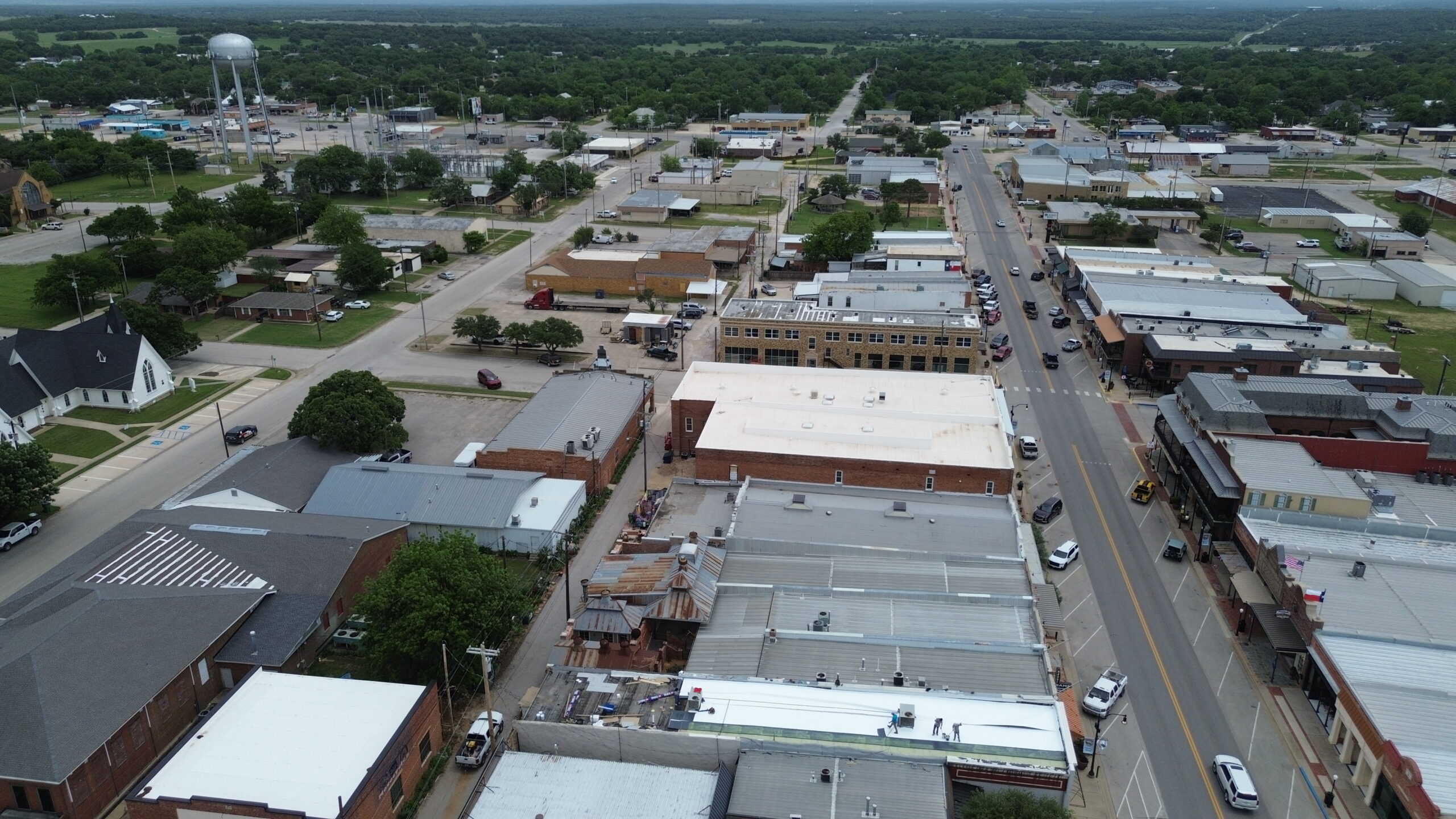
Heavy duty waterproof tarps are commonly installed after the structure has been stabilized sufficiently to allow safe access. These coverings help divert rainwater away from exposed roof decking while reducing moisture infiltration.
Proper placement is especially important during structural emergencies. The tarp should cover not only the visible opening but also extend onto undamaged roofing materials to improve water shedding.
Temporary tarps should never be viewed as structural supports. Their purpose is simply to reduce additional water damage while permanent repairs are being arranged.
Regular inspections remain necessary because strong winds and continued weather exposure gradually weaken temporary waterproof coverings over time.
Protecting the Interior During Stabilization
Structural roof damage often exposes the building interior to rain, debris, and changing weather conditions. Protecting interior spaces helps reduce restoration costs while preserving personal belongings and building materials.
Furniture, electronics, and important documents should be relocated whenever it can be done safely. Items that cannot be moved may be covered with heavy plastic sheeting to reduce moisture exposure.
Buckets and temporary drainage containers help manage active leaks while stabilization work is underway. These containers should be monitored regularly to prevent overflow during prolonged rainfall.
Ventilation also helps reduce humidity levels caused by water intrusion. Improving airflow limits moisture accumulation and slows mold development while permanent repairs are being scheduled.
Electrical systems located near active leaks require particular attention. If water reaches outlets, light fixtures, or electrical panels, those areas should remain isolated until qualified electricians complete a thorough inspection.
Common Mistakes During Emergency Roof Stabilization
Emergency stabilization is intended to reduce risk, but certain mistakes can unintentionally make structural conditions worse. Avoiding these errors improves safety while helping preserve the building until permanent restoration begins.
Attempting to walk across a visibly sagging roof is one of the most dangerous mistakes. Additional weight may overload weakened structural members and increase the possibility of collapse.
Removing fallen trees before structural evaluation is another common error. In some situations, the tree temporarily supports damaged roof sections, and premature removal may cause additional structural failure.
Ignoring small structural warning signs also creates unnecessary risk. Minor sagging, unusual noises, or widening ceiling cracks often indicate larger hidden problems developing beneath the roofing materials.
Using temporary repairs as long term solutions is equally problematic. Support systems, tarps, and emergency bracing are designed only to stabilize the structure temporarily until permanent repairs can be completed.
Understanding these common mistakes helps property owners make safer decisions during structural roofing emergencies while protecting both the building and everyone inside it.
Monitoring the Roof After Emergency Stabilization
Emergency roof stabilization is only the first step in managing structural damage. Once temporary supports and protective measures have been installed, the structure should be monitored carefully until permanent repairs are completed. Changing weather conditions, additional loading, and natural movement within the damaged structure can all affect the stability of the temporary system.
The first inspection should take place after the next significant weather event if it is safe to do so. Heavy rainfall, strong winds, or snowfall may place additional stress on weakened structural members, making early identification of new problems especially important.
Visual inspections should begin from the ground whenever possible. Sagging roof sections, shifting tarps, fallen debris, or changes in the roofline may indicate that structural conditions have changed since stabilization was completed.
Interior inspections also provide valuable information. New ceiling cracks, expanding water stains, or fresh movement around walls and door frames may suggest that the roof structure continues to settle or weaken.
Any noticeable changes should be reported immediately to the roofing contractor or structural engineer responsible for the stabilization work. Prompt evaluation helps prevent small issues from developing into larger structural failures.
Signs That the Structure May Be Becoming Unstable Again
Temporary stabilization systems are designed to reduce risk, but they cannot completely eliminate structural movement in every situation. Recognizing warning signs of continued instability helps property owners respond before additional damage occurs.
Increasing roof sagging is one of the clearest indications that structural loads are changing. If the roof appears lower than it did immediately after stabilization, professional evaluation should be requested without delay.
New cracks developing in ceilings, walls, or around window and door openings may also indicate movement within the building’s structural framework. While small cosmetic cracks can occur naturally, rapidly expanding cracks following structural damage require immediate attention.
Unusual sounds should never be ignored. Loud creaking, snapping, popping, or shifting noises may suggest that framing members or temporary supports are experiencing additional stress.
Doors and windows that suddenly become difficult to operate after stabilization can also signal ongoing structural movement. These changes may reflect subtle shifts within the building that require further investigation.
Watch for these important warning signs:
- Increased roof sagging.
- New or widening ceiling cracks.
- Fresh water intrusion after rainfall.
- Unusual structural noises.
- Shifting temporary supports.
- Doors or windows becoming misaligned.
If any of these conditions develop, the affected area should remain restricted until professionals determine the structure is safe.
Temporary Maintenance After Roof Stabilization
Although permanent repairs should be completed as soon as practical, temporary maintenance helps preserve the effectiveness of emergency stabilization while restoration plans are finalized.
Roof tarps should be inspected periodically to confirm they remain securely attached. Wind, sunlight, and repeated rainfall gradually weaken temporary coverings, making occasional adjustments necessary.
Debris should be removed carefully from tarps whenever it can be done safely. Leaves, branches, and standing water place unnecessary stress on temporary coverings while increasing the risk of tearing.
Interior moisture should also be managed throughout the waiting period. Drying damp materials promptly helps reduce mold growth while limiting additional deterioration of structural components.
Property owners should avoid making modifications to temporary supports unless specifically instructed by qualified professionals. Even seemingly minor adjustments can alter structural load paths and reduce the effectiveness of the stabilization system.
Maintaining clear communication with the repair contractor ensures that temporary protection remains effective until permanent reconstruction begins.
Transitioning From Temporary Stabilization to Permanent Repairs
Temporary stabilization provides valuable protection, but it is only intended to create a safer environment for permanent restoration. Once the building has been secured, attention shifts toward repairing or replacing damaged structural components.
The transition begins with a comprehensive structural inspection. Roofing contractors and structural engineers evaluate every affected area to determine the full extent of the damage, including problems that may not have been visible during the emergency response.
Damaged roofing materials are removed carefully to expose the underlying structural framework. This process allows professionals to inspect rafters, trusses, roof decking, beams, and structural connections for hidden deterioration.
Repair plans are then developed based on the condition of each component. Some structural members may require reinforcement, while others must be replaced completely to restore the building’s strength.
Temporary supports remain in place until permanent structural elements are capable of safely carrying the roof’s load. Removing supports too early may place unnecessary stress on partially completed repairs.
Structural Components Commonly Repaired or Replaced
Permanent roof restoration often extends well beyond replacing shingles or repairing visible leaks. Structural compromise frequently affects several interconnected components that work together to support the roofing system.
Roof decking is commonly replaced when prolonged moisture exposure has caused swelling, rot, or delamination. New decking provides a stable foundation for the roofing materials installed above it.
Damaged rafters and trusses may also require repair or replacement. These components form the primary structural framework of the roof, making their condition critical to the overall stability of the building.
Support beams, collar ties, ridge boards, and structural connectors receive careful evaluation during restoration. Even small amounts of damage to these elements can reduce the roof’s long term performance if left uncorrected.
Once structural repairs have been completed, new underlayment, flashing, ventilation components, and roofing materials are installed to restore full weather protection.
Preventing Future Structural Roof Damage
While some severe weather events cannot be prevented, regular maintenance significantly reduces the likelihood of structural roofing emergencies. Proactive inspections often identify developing problems before they progress into major structural failures.
Annual roof inspections allow contractors to detect loose flashing, deteriorated sealants, damaged shingles, and early signs of moisture intrusion. Correcting these issues promptly helps preserve the structural framework beneath the roof covering.
Keeping gutters and downspouts clean also contributes to long term roof health. Efficient drainage prevents water from backing up beneath roofing materials and reduces prolonged moisture exposure around roof edges.
Tree maintenance should not be overlooked. Removing dead limbs and trimming branches that extend over the roof reduces the chance of impact damage during storms.
Proper attic ventilation also plays an important role in preventing structural deterioration. Good airflow helps control moisture levels, reducing condensation that can weaken wood framing over time.
The following maintenance practices help reduce the risk of structural roof damage:
- Schedule professional roof inspections every year.
- Inspect the roof after major storms.
- Repair roof leaks immediately.
- Keep gutters and downspouts free of debris.
- Trim overhanging tree branches regularly.
- Maintain proper attic ventilation.
- Replace damaged roofing materials before they fail.
Consistent maintenance cannot eliminate every emergency, but it greatly improves the roof’s ability to withstand severe weather and long term environmental exposure.
Preparing an Emergency Response Plan
Having an emergency response plan before structural damage occurs allows homeowners and property managers to react more effectively during stressful situations. Planning ahead reduces confusion and helps ensure that safety remains the top priority.
Emergency contact information should be stored in an easily accessible location. This includes roofing contractors, structural engineers, insurance providers, utility companies, and local emergency services.
Important documents such as insurance policies, property records, and photographs of the roof’s condition should also be organized before storm season. These records can simplify the insurance claims process if structural damage occurs.
Emergency supplies should be inspected regularly and replaced as needed. Waterproof tarps, plastic sheeting, flashlights, batteries, work gloves, and basic safety equipment all contribute to a more organized response.
Family members or building occupants should understand evacuation procedures and know which areas to avoid if structural damage is suspected. Clear communication helps reduce unnecessary risks during emergencies.
Frequently Asked Questions
What is emergency roof stabilization?
Emergency roof stabilization is a temporary process that helps secure a structurally damaged roof, reduce additional movement, and protect the building until permanent structural repairs can be completed.
Can I stabilize a structurally damaged roof myself?
Minor protective measures inside the building may be possible, but structural roof stabilization should generally be performed by qualified professionals because of the risk of collapse and hidden structural damage.
How long can temporary stabilization remain in place?
The timeframe varies depending on the extent of the damage, weather conditions, and the type of stabilization used. Temporary systems are intended only to provide short term protection until permanent repairs begin.
Should I enter a building with a sagging roof?
A sagging roof may indicate structural failure. The affected area should be avoided until it has been inspected and declared safe by qualified professionals.
Does homeowners insurance usually cover emergency roof stabilization?
Many insurance policies provide coverage for reasonable emergency measures taken to prevent additional damage after a covered event. Coverage varies, so policy details should always be reviewed with the insurance provider.
What should I do if the temporary supports appear to move?
Do not attempt to adjust the supports yourself. Restrict access to the affected area and contact the contractor or structural engineer responsible for the stabilization as soon as possible.
Conclusion
Emergency roof stabilization is a critical response when structural compromise threatens the safety of a building and its occupants. Whether the damage results from severe storms, fallen trees, fire, prolonged water intrusion, or excessive snow loads, temporary stabilization helps reduce the risk of further structural failure while providing valuable time for detailed inspections and permanent repairs.
Effective stabilization depends on recognizing structural warning signs early, prioritizing occupant safety, using appropriate temporary support systems, and preventing additional weather exposure. Just as importantly, temporary measures should never be mistaken for permanent solutions. Comprehensive structural repairs are essential to fully restore the roof’s strength, stability, and long term performance.
Routine inspections, prompt maintenance, proper drainage, and seasonal preparation remain the most effective ways to reduce the likelihood of future structural roofing emergencies. By combining preventive care with a well planned emergency response, property owners can better protect their buildings, minimize repair costs, and ensure a safer environment when unexpected structural damage occurs.