
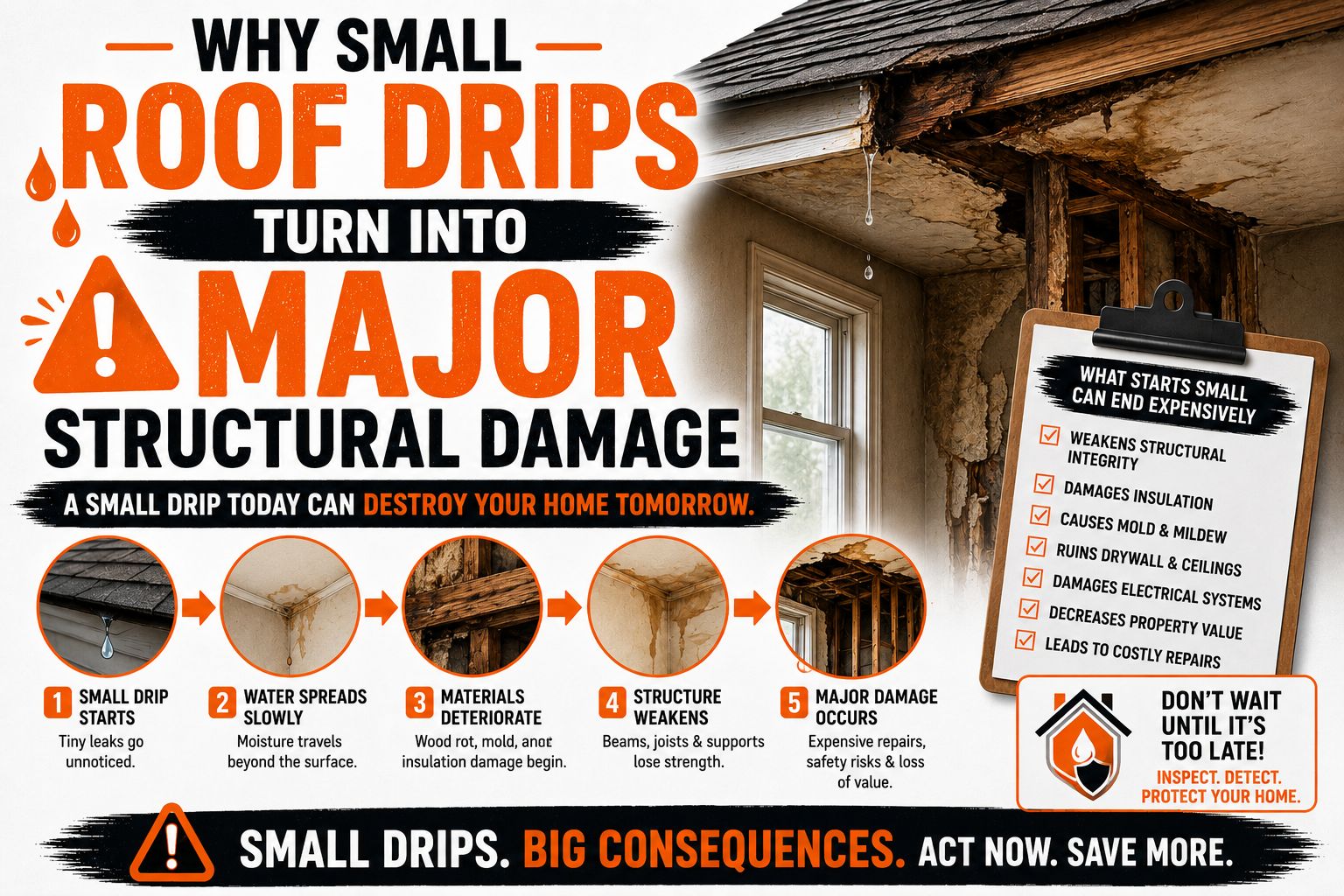
Why Small Roof Drips Turn Into Major Structural Damage
Introduction
A small roof drip may seem like nothing more than a minor inconvenience. You might place a bucket underneath the leak, wipe away a damp spot on the ceiling, and promise yourself that you will deal with it later. Unfortunately, this simple delay is often where much larger and more expensive problems begin.
Many homeowners assume that if only a few drops of water are entering the house, the damage must also be small. In reality, water rarely stays where it first appears. It travels through roofing materials, insulation, wooden framing, ceilings, and walls before becoming visible inside the home.
Because this movement happens out of sight, a roof leak can quietly damage important structural components for weeks or even months. By the time obvious signs appear, repairs often involve much more than replacing a few shingles. Contractors may need to repair framing, insulation, drywall, flooring, and even electrical systems.
The good news is that understanding how these leaks develop makes it much easier to stop them before they become major structural issues. Recognizing the warning signs early can save thousands of dollars while protecting the long term safety and value of your home.
In this guide, we will explore how seemingly harmless roof drips evolve into serious structural damage. We will also examine why early detection plays such an important role in preventing costly repairs and extending the life of your roofing system.
Why Small Roof Drips Are Often Ignored
One of the biggest reasons roof leaks become severe is that they usually start quietly. A homeowner may notice a tiny water stain after heavy rain but see nothing unusual once the weather clears. Since the leak appears to stop, it often feels like there is no immediate danger.
Another reason these problems are overlooked is that roofs are naturally out of sight. Unlike plumbing leaks beneath a sink or a broken appliance, roof damage is difficult to inspect without climbing onto the house. Many people simply hope the problem will not get worse.
Seasonal weather also contributes to delays. A leak may only appear during storms with strong winds or prolonged rainfall. During dry weather, everything seems normal, creating the false impression that the issue has resolved itself.
Some homeowners hesitate because they worry about repair costs. Ironically, postponing a relatively inexpensive repair often leads to significantly higher expenses once structural damage develops. What could have been a simple repair may eventually require replacing major portions of the roof or repairing interior components.
Modern homes also contain multiple layers that hide water intrusion. Roofing materials, underlayment, insulation, drywall, and ceiling finishes can all conceal moisture. By the time visible damage appears indoors, water has often been affecting the home for a considerable period.
Small leaks also tend to spread slowly rather than causing immediate destruction. Since damage develops gradually, homeowners become accustomed to the occasional drip or stain and underestimate its seriousness. This slow progression makes roof leaks especially dangerous.
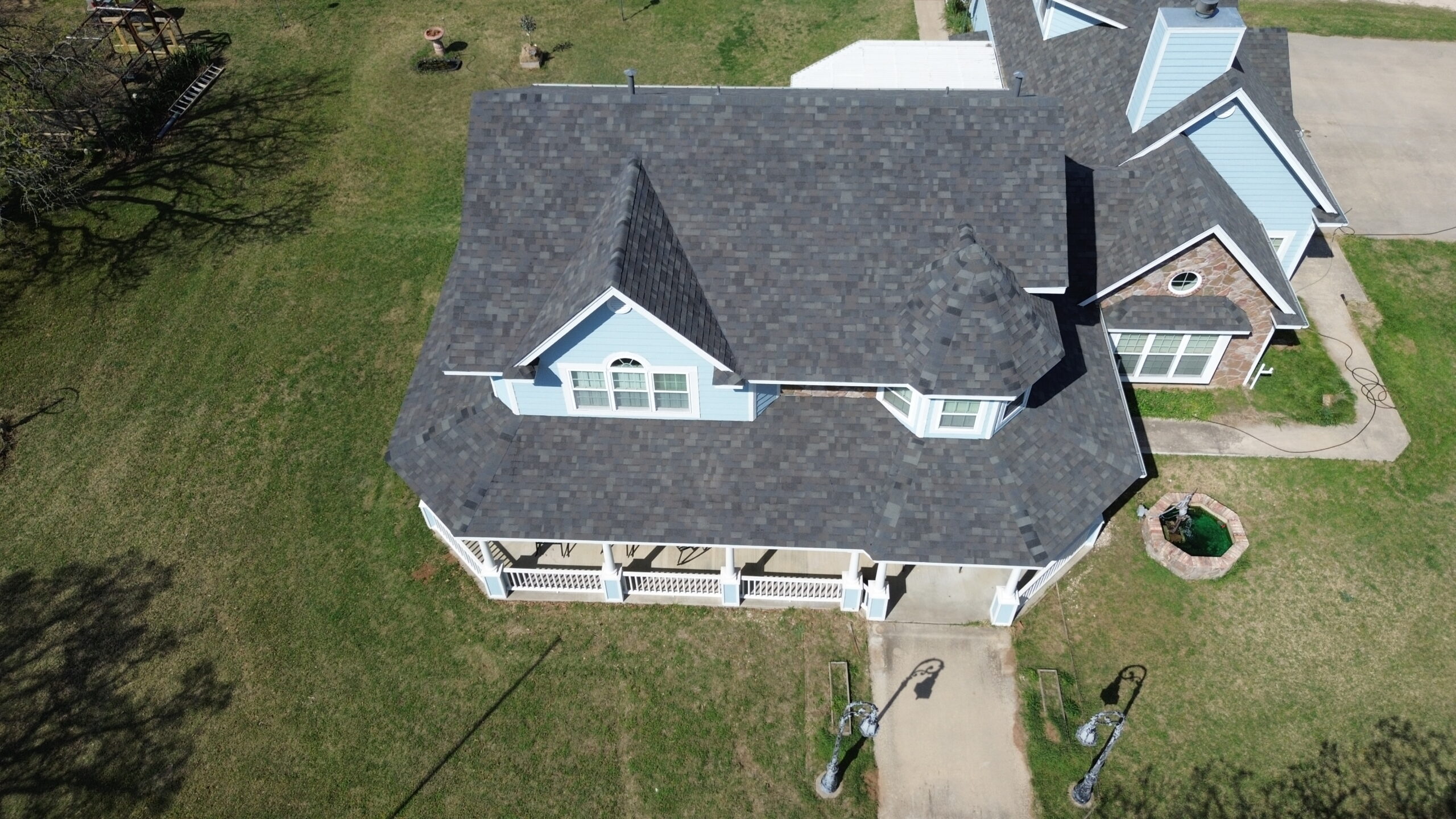
How a Tiny Leak Begins
Every roof is designed to shed water efficiently. Shingles, flashing, underlayment, and drainage systems work together to guide rainwater safely away from the home. When one component fails, even slightly, water gains an opportunity to enter areas where it does not belong.
A tiny gap between shingles may seem insignificant, but wind driven rain can push moisture underneath the roofing surface. Once water bypasses the outer protective layer, it begins moving through materials that were never intended to stay wet.
In many cases, the initial opening is no larger than the width of a nail hole. However, repeated exposure to rain allows moisture to enter again and again. Each storm adds more water to the hidden sections of the roof.
Temperature changes also play an important role. Roofing materials expand during hot weather and contract when temperatures drop. This natural movement gradually widens small cracks and weakens seals around vents, chimneys, skylights, and flashing.
As water repeatedly enters these vulnerable areas, wooden roof decking begins absorbing moisture. Even though the process is slow, wood fibers gradually weaken as they remain damp for extended periods. The roof may still appear solid from the outside while deterioration continues underneath.
Eventually, gravity pulls water downward through insulation and framing members. Instead of dripping straight down, moisture often travels sideways along beams, nails, or other building materials before appearing inside the house. This makes locating the actual source of the leak much more challenging.
Common Causes of Small Roof Drips
Roof leaks can develop for many different reasons. While severe storms sometimes create sudden damage, many leaks begin because of normal wear that occurs over several years.
Understanding these common causes helps homeowners recognize potential risks before water enters the home.
Common causes include:
- Aging or cracked shingles
- Damaged roof flashing around chimneys and vents
- Loose or missing roofing nails
- Worn sealant around roof penetrations
- Clogged gutters that force water beneath shingles
- Ice dams in colder climates
- Wind lifted roofing materials
- Fallen branches causing minor punctures
- Improper roof installation
- Natural aging of roofing materials
Each of these issues may begin as a relatively small defect. However, every rainfall increases the opportunity for moisture to penetrate deeper into the roofing system.
Many homeowners assume only old roofs develop leaks. While aging certainly increases risk, newer roofs can also experience problems if installation errors, storm damage, or poor ventilation create weak points.
Regular maintenance significantly reduces these risks. Small repairs performed early often prevent much larger structural problems from developing later.
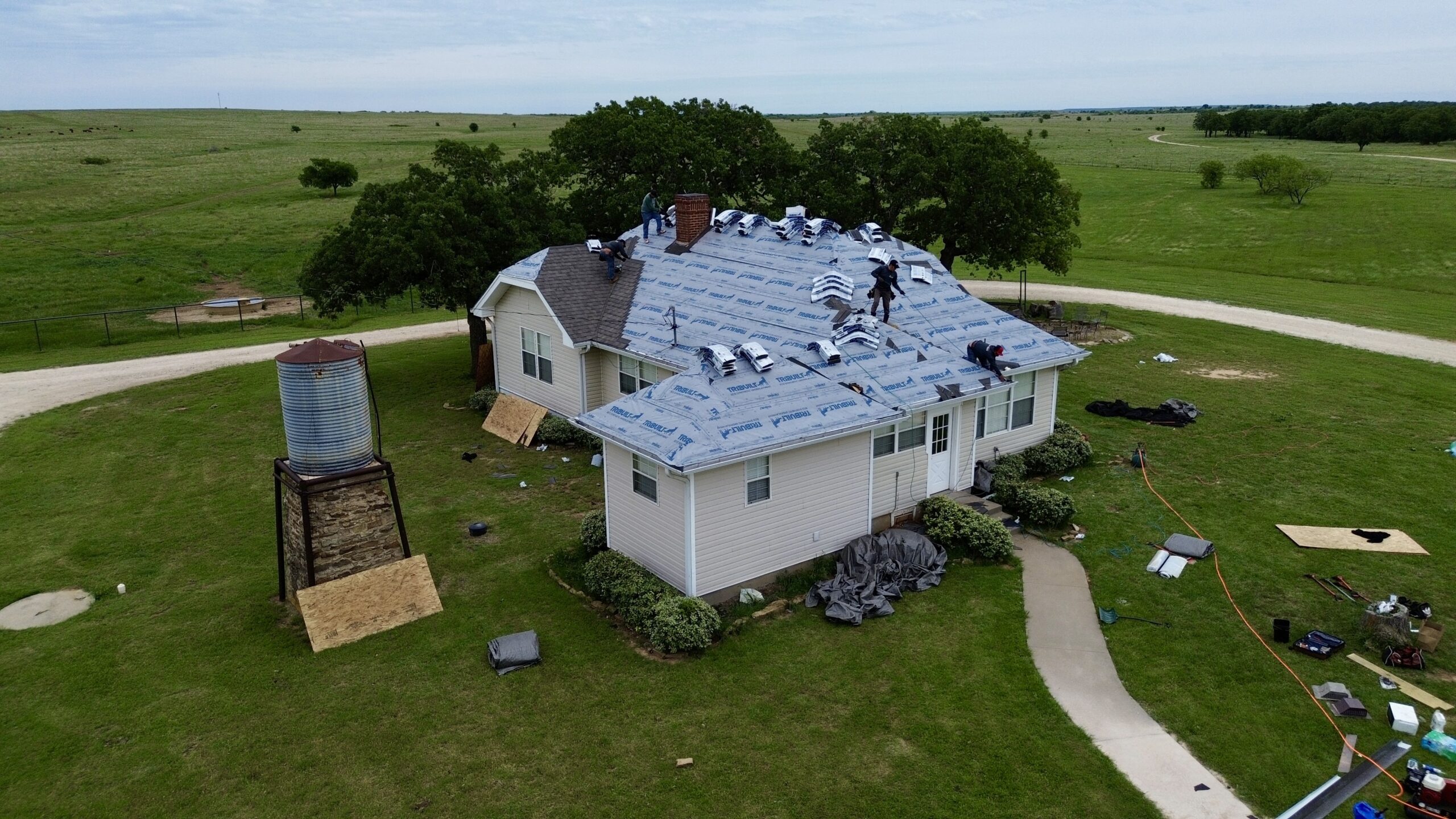
What Happens When Water Enters Your Roofing System
Once water penetrates beneath the outer roofing surface, it enters an environment that is highly vulnerable to moisture damage. Unlike shingles that are designed to withstand rain, the materials underneath are intended to remain dry.
Roof decking is usually made from plywood or oriented strand board. Both materials absorb water when exposed repeatedly. As moisture content increases, the wood begins losing strength and may eventually soften or warp.
Wet insulation creates another serious concern. Insulation works by trapping air within its fibers, helping regulate indoor temperatures throughout the year. When soaked with water, those air pockets disappear, dramatically reducing energy efficiency.
A home with wet insulation often experiences higher heating and cooling costs. HVAC systems must work harder to maintain comfortable indoor temperatures because the insulation no longer performs as intended.
Moisture also creates ideal conditions for biological growth. While mold development will be explored later in this guide, it is important to understand that consistently damp building materials provide everything microorganisms need to multiply.
Metal fasteners inside the roof assembly can also begin corroding. Nails, screws, and connectors slowly weaken as moisture exposure continues over time. Although corrosion is rarely visible from inside the home, it gradually reduces the overall durability of the roofing system.
Water may also collect in hidden pockets before eventually evaporating. Unfortunately, repeated wetting and drying cycles accelerate deterioration because building materials continuously expand and contract. This ongoing movement weakens connections throughout the roof assembly.
The Hidden Journey of Water Inside a Home
One of the most misunderstood aspects of roof leaks is how water travels after entering the home. Many homeowners naturally assume that the drip appearing in one room originates directly above it. In reality, water often follows a much more complicated path.
Gravity certainly influences water movement, but it is not the only factor. Moisture also follows framing members, electrical wiring, pipes, insulation, and even the underside of roof decking before finally becoming visible.
For example, water entering near a chimney may travel several feet along rafters before reaching the ceiling. The stain that appears in the living room may actually originate from damage located much higher on the roof.
Capillary action further complicates this process. Water naturally moves through tiny spaces between building materials, allowing moisture to spread horizontally as well as vertically. This explains why damage sometimes appears far away from the original leak.
Insulation can temporarily absorb large amounts of water before becoming saturated. During this period, homeowners may not notice any visible signs indoors even though moisture has already affected multiple building components.
Once insulation reaches its maximum capacity, water begins dripping onto drywall. Ceiling stains then appear, often weeks after the leak initially developed. This delayed visibility gives homeowners the impression that the problem started recently when, in reality, hidden damage has been progressing for much longer.
Because water follows unpredictable paths, professional inspections often include moisture detection equipment rather than relying solely on visible stains. Finding the true entry point is essential for preventing future leaks.
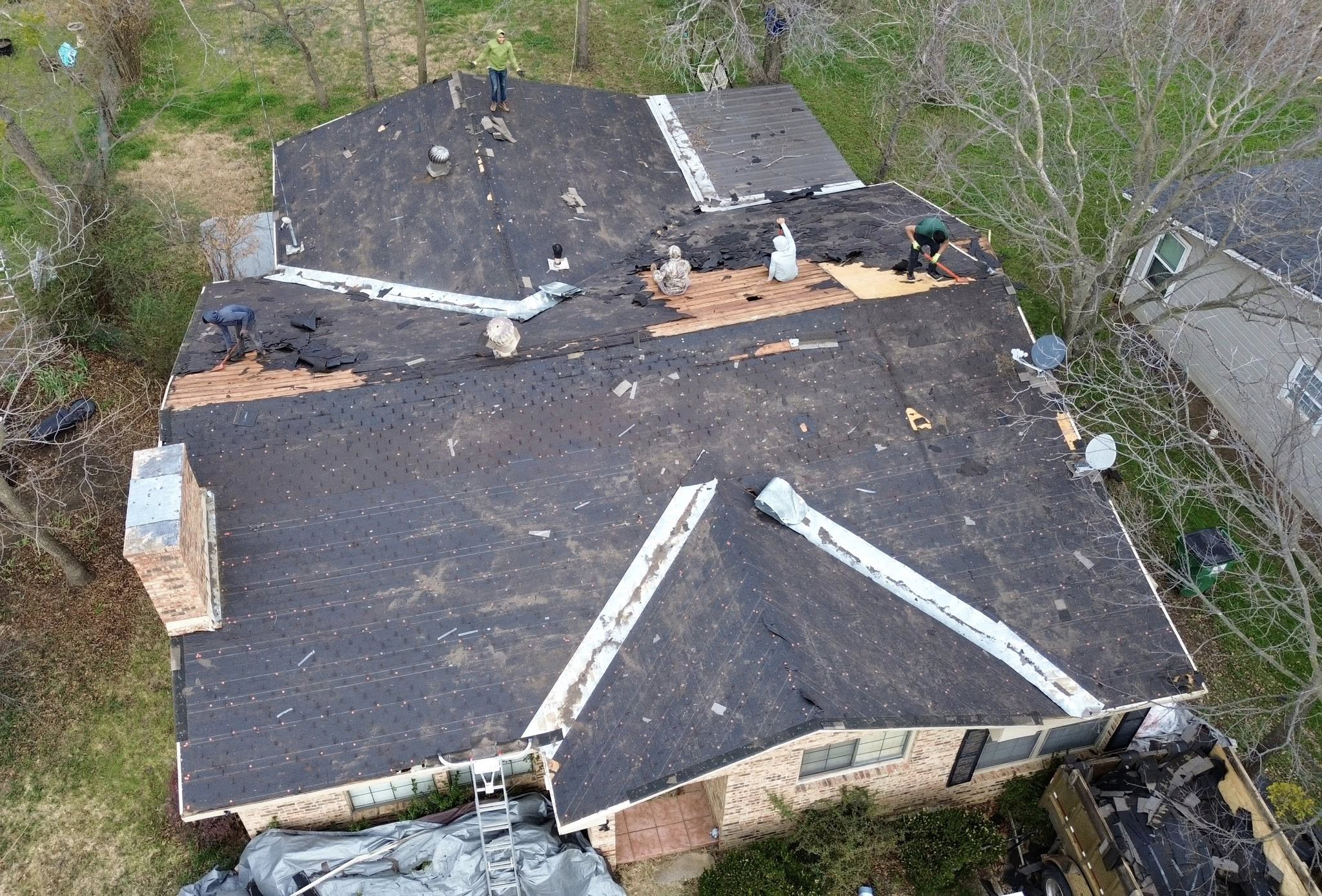
Early Warning Signs Homeowners Should Never Ignore
Roof leaks rarely appear without providing some form of warning. Learning to recognize these early indicators allows homeowners to address problems before structural damage becomes extensive.
Some warning signs are obvious, while others develop gradually over time. Paying close attention to changes inside and outside the home can make a significant difference.
The following signs deserve immediate attention whenever they appear:
| Warning Sign | What It May Indicate |
|---|---|
| Ceiling water stains | Active or previous roof leak above the ceiling |
| Peeling interior paint | Moisture trapped behind walls or ceilings |
| Damp attic insulation | Water entering through the roofing system |
| Musty indoor odor | Hidden moisture accumulation |
| Curling or missing shingles | Increased vulnerability to water intrusion |
| Rust around flashing | Deteriorating roof seals |
| Sagging ceiling areas | Water saturation weakening structural materials |
| Dripping during rainfall | Active leak requiring immediate inspection |
Many homeowners assume a stain that has dried is no longer a concern. Unfortunately, the absence of active dripping does not necessarily mean the leak has disappeared. The next storm may reactivate the same pathway and continue the damage.
Attics deserve special attention because they often reveal roof problems before living spaces do. Dark water stains, damp insulation, mold growth, or visible daylight entering through the roof should all be investigated promptly.
Exterior inspections also help identify developing issues. Missing shingles, damaged flashing, clogged gutters, and debris accumulation can all contribute to future leaks if left unaddressed.
The earlier these warning signs are recognized, the easier and less expensive repairs typically become. Small corrective measures taken today often prevent widespread structural deterioration tomorrow.
In the next part, we will examine how continued moisture exposure begins damaging insulation, drywall, framing, and other structural components. We will also explore why delaying even minor roof repairs can dramatically increase restoration costs over time.
How Roof Drips Damage Insulation, Wood, and Drywall
When a roof leak continues for weeks or months, the damage extends far beyond the roofing materials. Water slowly works its way through multiple layers of the home, affecting insulation, wooden framing, drywall, and ceiling finishes. Since much of this damage happens out of sight, homeowners often underestimate the seriousness of a small drip.
Insulation is usually the first interior material affected after water passes through the roof decking. Fiberglass and cellulose insulation are designed to trap air, creating a barrier that helps regulate indoor temperatures. Once these materials become wet, they lose much of their insulating ability and can remain damp long after the rain has stopped.
Wet insulation also becomes significantly heavier than when it is dry. This extra weight places additional stress on ceiling materials and may eventually contribute to sagging drywall. Even after drying, insulation rarely regains its original performance and often requires replacement.
Wooden roof framing faces another major risk. Rafters, trusses, and roof decking absorb moisture gradually, allowing water to penetrate deep into the wood fibers. While the process is slow, repeated exposure weakens the structural integrity of these essential building components.
Wood naturally expands when it absorbs moisture and contracts as it dries. Continuous cycles of expansion and contraction create internal stress that can lead to cracks, warping, twisting, and separation at joints. Over time, these changes reduce the strength of the roof structure.
Drywall is especially vulnerable because it absorbs water quickly. Ceiling panels begin softening as moisture spreads through the gypsum core, causing discoloration, bubbling paint, and eventually crumbling surfaces. Homeowners may first notice a faint yellow stain, only to discover months later that an entire section of ceiling requires replacement.
Paint and textured ceiling finishes offer little protection against ongoing water intrusion. Once moisture reaches these decorative layers, peeling, blistering, and staining become increasingly noticeable. Cosmetic repairs alone cannot solve the underlying problem because the source of the moisture remains active.
Flooring can also become affected if leaks continue long enough. Water running through interior walls may reach hardwood floors, carpeting, or laminate surfaces, creating swelling, buckling, and permanent staining. In multi story homes, damage can spread from the attic all the way to the lowest floor.
Cabinets, furniture, stored belongings, and personal valuables may also suffer water damage. Homeowners often focus on repairing visible ceiling stains while overlooking moisture that has quietly affected nearby possessions.
One important point to remember is that water rarely damages only one material. By the time a ceiling stain appears, several different components may already have been exposed to repeated moisture, making repairs more extensive than expected.
The Structural Risks That Develop Over Time
Structural damage rarely happens overnight. Instead, it develops gradually as water continues weakening the materials responsible for supporting the home. This slow progression is exactly what makes roof leaks so dangerous.
Roof decking provides the foundation that supports shingles and distributes weight across the framing system. As moisture repeatedly enters the decking, the wood begins softening and losing its ability to support loads effectively. What starts as minor deterioration may eventually require partial roof reconstruction.
Rafters and trusses are equally important structural components. These members transfer the weight of the roof to the exterior walls of the house. Prolonged exposure to moisture reduces their strength and may cause slight movement that affects the roof’s overall stability.
In severe cases, weakened framing allows portions of the roof to sag. Even small changes in roof alignment can create additional drainage problems because water begins collecting in low spots rather than flowing toward gutters.
This standing water accelerates deterioration by increasing the amount of time roofing materials remain wet. Instead of drying quickly after rain, affected areas stay damp for extended periods, allowing even more moisture to penetrate the structure.
Fasteners also play a critical role in roof stability. Nails, screws, brackets, and metal connectors slowly corrode when repeatedly exposed to moisture. As corrosion progresses, these connections become weaker, reducing the ability of the roof to withstand strong winds and heavy weather.
Foundation issues may seem unrelated to roof leaks, but poor water management can eventually contribute to problems around the home’s base. Overflowing gutters and persistent water intrusion increase soil moisture near the foundation, creating additional concerns that extend well beyond the roof itself.
Homes located in regions with frequent rainfall experience even greater risk if small leaks remain unrepaired. Continuous moisture provides little opportunity for affected materials to dry completely, allowing damage to accumulate steadily throughout the year.
Repeated freeze and thaw cycles introduce another challenge in colder climates. Water trapped inside small cracks expands as it freezes, making openings larger with each winter season. This natural process accelerates roof deterioration and increases the likelihood of future leaks.
The structural effects of roof leaks become more expensive because damage spreads from one component to another. Instead of replacing a single section of roofing, contractors may need to repair framing, sheathing, ceilings, insulation, flooring, and interior finishes all within the same project.
Mold Growth and Indoor Air Quality Concerns
Moisture and mold are closely connected. Whenever water remains trapped inside a home for extended periods, conditions become favorable for mold growth. A slow roof leak provides exactly the type of environment that mold needs to develop.
Many homeowners believe mold only grows after flooding or major water disasters. In reality, even a small but consistent roof drip can create enough moisture for mold colonies to form inside walls, ceilings, and attic spaces.
The biggest challenge is that mold often grows where it cannot easily be seen. Behind drywall, beneath insulation, and inside ceiling cavities, mold can spread for months before visible signs appear inside the living space.
As mold grows, it releases microscopic spores into the air. These airborne particles travel throughout the home using natural airflow and HVAC systems. Occupants may begin noticing a persistent musty odor before they ever see visible mold.
Indoor air quality gradually declines as mold spreads. People who spend extended time inside the home may experience discomfort, especially if they are sensitive to airborne particles. Although every individual responds differently, maintaining a dry indoor environment remains one of the best ways to reduce mold related concerns.
Attics are particularly susceptible because they often have limited airflow compared to living spaces. Warm temperatures combined with trapped moisture create ideal conditions for mold growth on roof decking, rafters, and insulation.
Ventilation problems can make the situation worse. When humid air cannot escape properly, moisture accumulates more quickly, increasing condensation and extending drying times after rainfall.
Mold remediation is frequently much more expensive than repairing the original roof leak. Once contamination spreads throughout hidden areas, specialized cleaning, removal of affected materials, and restoration may all become necessary.
Preventing mold is almost always easier than removing it. Addressing roof leaks promptly limits moisture exposure and reduces the chance that mold will establish itself inside the structure.
How Water Reaches Electrical Systems
Many homeowners focus on visible water damage while overlooking another serious concern. Roof leaks can eventually affect electrical systems hidden inside ceilings and walls, creating hazards that require immediate attention.
Electrical wiring is commonly routed through attic spaces and wall cavities. As water travels along framing members, it may eventually reach junction boxes, lighting fixtures, switches, or electrical cables.
Water naturally follows the path of least resistance. In some situations, moisture travels along electrical wiring before dripping into ceiling fixtures or wall outlets. This unexpected movement makes locating the original leak even more difficult.
Light fixtures often provide one of the first visible signs that water has reached electrical components. Homeowners may notice discoloration around recessed lighting, moisture inside fixture covers, or occasional dripping from ceiling lights during heavy rain.
Circuit interruptions may also occur if water enters electrical connections. Damp wiring can affect the performance of switches, outlets, and lighting systems, leading to unexpected power issues.
If water is observed near electrical equipment, it is important to avoid direct contact with affected components until the situation has been properly evaluated. Safety should always take priority over investigating the source of the leak.
Professional repairs typically involve both roofing specialists and licensed electricians whenever water intrusion has affected electrical systems. Addressing only the roof without inspecting electrical components may leave hidden issues unresolved.
Financial Costs of Delaying Roof Repairs
One of the most common reasons homeowners postpone roof repairs is the desire to save money. Unfortunately, delaying action usually produces the opposite result. The longer water remains inside the structure, the greater the overall repair costs become.
A small roof repair often addresses a limited area before surrounding materials become damaged. Replacing a few shingles, repairing flashing, or sealing a roof penetration is generally much less expensive than restoring multiple structural components.
Once moisture spreads throughout the home, repair costs increase rapidly. Contractors may need to remove damaged insulation, replace drywall, repair framing, repaint ceilings, install new flooring, and restore affected electrical systems.
Insurance claims can also become more complicated when maintenance issues are ignored for extended periods. Prompt action demonstrates responsible homeownership and may help limit additional losses before they become widespread.
Temporary fixes frequently create a false sense of security. Applying roof sealant to a visible crack or placing containers beneath ceiling drips may reduce immediate inconvenience, but these measures rarely solve the underlying cause of water intrusion.
Another hidden expense involves energy efficiency. Wet insulation forces heating and cooling systems to operate longer because conditioned air escapes more easily through compromised areas of the building envelope. Higher utility bills gradually add to the financial impact of an unresolved leak.
Property value may also decline when roof problems become obvious during a home inspection. Buyers often request significant repair credits or negotiate lower purchase prices after discovering evidence of water damage.
The difference between early intervention and delayed repairs can be substantial.
| Repair Situation | Typical Scope of Work | Relative Cost Impact |
|---|---|---|
| Early leak detection | Replace damaged shingles, repair flashing, reseal vulnerable areas | Low |
| Moderate water intrusion | Roofing repairs plus insulation and drywall replacement | Moderate |
| Long term untreated leak | Structural framing repairs, mold remediation, ceiling restoration, electrical repairs, flooring replacement, interior finishing | High |
The table highlights an important reality. The cost of repairing a roof leak increases because water continues affecting additional materials every time it rains.
Many homeowners only think about the roof itself when budgeting for repairs. In practice, untreated leaks often require work from multiple trades, including roofers, carpenters, drywall specialists, painters, flooring installers, mold remediation professionals, and electricians.
Understanding these long term financial consequences reinforces why early repairs are almost always the most economical choice. In the final part of this guide, we will explore practical strategies for preventing roof drips, the importance of regular inspections, the steps homeowners should take immediately after discovering a leak, frequently asked questions, and a complete conclusion that ties everything together.
How to Prevent Small Roof Drips From Becoming Major Problems
Preventing roof leaks is much easier than repairing widespread structural damage. While no roofing system lasts forever, regular maintenance and timely repairs greatly reduce the likelihood of water entering your home. A proactive approach helps protect both the roof itself and everything beneath it.
Routine inspections are one of the most effective ways to identify developing problems. Small issues such as cracked shingles, loose flashing, or deteriorating sealant can often be repaired before they allow significant water intrusion. Catching these problems early keeps repair costs manageable and extends the life of the roofing system.
Seasonal weather changes make inspections even more important. Heavy rain, strong winds, hail, and falling branches can all create damage that is difficult to notice from the ground. Scheduling inspections after major storms helps ensure hidden issues are discovered before they become larger concerns.
Keeping gutters and downspouts clean is another essential part of roof maintenance. When gutters become clogged with leaves and debris, rainwater cannot flow away properly. Instead, water backs up beneath shingles and increases the risk of leaks around the roof edge.
Tree maintenance also plays a valuable role in preventing roof damage. Overhanging branches can scrape roofing materials during windy conditions while falling limbs may puncture shingles or flashing. Trimming branches that extend above the roof reduces these risks and helps keep gutters free of debris.
Proper attic ventilation should never be overlooked. Good airflow allows excess heat and moisture to escape, reducing condensation that can contribute to wood deterioration and mold growth. Balanced ventilation also helps roofing materials perform better throughout changing seasons.
Homeowners should also pay attention to attic insulation. Adequate insulation helps regulate temperatures while reducing the chance of condensation forming beneath the roof deck. Together, insulation and ventilation create an environment that supports a healthier and longer lasting roofing system.
Small repairs should never be postponed simply because a leak appears minor. Even if water only enters during heavy storms, repeated exposure allows moisture to accumulate inside structural components. Addressing problems early is one of the most effective ways to avoid expensive restoration work later.
Professional Roof Inspections and Preventive Maintenance
Although homeowners can perform basic visual checks from the ground, professional inspections provide a much more detailed evaluation of the roof’s condition. Experienced roofing professionals know where leaks commonly develop and can identify warning signs that may not be obvious to an untrained eye.
Professional inspections typically include an assessment of shingles, flashing, roof penetrations, valleys, gutters, ventilation systems, and visible structural components. Inspectors also look for signs of moisture intrusion that may indicate hidden damage beneath the roofing surface.
Many roofing issues begin in areas surrounding vents, skylights, chimneys, and plumbing penetrations. These locations contain multiple joints and seals that naturally experience wear over time. Regular inspections help identify deteriorating sealants before they allow water inside.
Attic evaluations are another valuable part of preventive maintenance. Inspectors often examine roof decking, insulation, ventilation, and framing for signs of staining, moisture, mold, or wood deterioration. These hidden spaces frequently reveal problems long before they become visible inside living areas.
Preventive maintenance also extends the lifespan of roofing materials. Replacing damaged shingles promptly prevents surrounding shingles from becoming exposed to additional wind and water. This reduces the likelihood of larger sections of the roof requiring premature replacement.
Homeowners often wonder how frequently inspections should be scheduled. While the exact timing depends on the roof’s age, local climate, and recent weather events, regular inspections provide valuable peace of mind and allow developing issues to be addressed before they become major structural concerns.
Steps Homeowners Should Take After Discovering a Leak
Finding a roof leak can be stressful, but taking the right steps immediately helps limit further damage while making repairs more effective. Acting quickly protects both the structure of the home and the belongings inside it.
The following actions are recommended after discovering a roof leak:
- Move furniture, electronics, and valuable belongings away from the affected area whenever possible.
- Place a bucket or waterproof container beneath active drips to prevent additional floor damage.
- Dry standing water using towels or other absorbent materials to reduce moisture accumulation.
- Document visible damage with photographs for future reference if repairs or insurance documentation become necessary.
- Inspect the attic carefully if it is safe to do so, looking for damp insulation, water stains, or visible entry points.
- Arrange for a professional roof inspection as soon as possible to identify and repair the actual source of the leak.
- Continue monitoring the repaired area during future rainfall to confirm that the problem has been fully resolved.
Taking these steps promptly minimizes the amount of water that remains inside the structure. Early action also helps prevent additional damage from developing while permanent repairs are being arranged.
Best Practices for Protecting Your Home Year Round
Long term roof protection depends on consistent maintenance rather than waiting for problems to appear. A few preventive habits performed throughout the year can significantly reduce the likelihood of unexpected leaks.
Some of the most effective practices include:
- Inspect the roof after severe storms whenever it is safe to do so.
- Keep gutters and downspouts free from leaves and debris.
- Trim tree branches that hang directly above the roof.
- Replace damaged shingles before surrounding materials become affected.
- Check attic spaces periodically for moisture or unusual odors.
- Maintain proper attic ventilation throughout the year.
- Schedule professional roof inspections on a regular basis.
- Address even minor signs of water intrusion without unnecessary delays.
These simple habits help homeowners identify developing issues while they are still manageable. Consistent maintenance also contributes to better energy efficiency, improved indoor comfort, and a longer service life for the entire roofing system.
Frequently Asked Questions
Can a very small roof leak really cause structural damage?
Yes. Even a slow drip introduces moisture into building materials that are designed to remain dry. Over time, repeated exposure can weaken wood, damage insulation, stain ceilings, and contribute to widespread structural deterioration.
Why does the ceiling stain appear far from the actual roof leak?
Water often travels along roof decking, rafters, insulation, or framing before it becomes visible. The location of an interior stain is not always directly below the point where water enters the roof.
Will a roof leak stop on its own?
A leak may appear to disappear during dry weather, but the underlying damage usually remains. The next period of rainfall often reactivates the same pathway and allows additional water to enter the home.
How quickly should a roof leak be repaired?
A roof leak should be inspected and repaired as soon as it is discovered. Prompt repairs reduce the amount of moisture entering the home and help prevent structural damage from spreading.
Can wet insulation dry out without being replaced?
Some insulation may dry under certain conditions, but prolonged saturation often reduces its effectiveness permanently. A professional inspection can determine whether replacement is necessary.
Is replacing the roof always necessary after a leak?
Not always. Many leaks can be resolved with targeted repairs if they are discovered early. Extensive roof replacement is generally considered only when damage is widespread or the roofing system has reached the end of its service life.
Conclusion
Small roof drips rarely remain small for long. What begins as a few drops of water entering through a damaged shingle or worn section of flashing can quietly spread through insulation, wood framing, drywall, and other structural components before becoming visible inside the home.
The greatest danger lies in the hidden nature of water damage. Moisture travels through roofing systems, follows framing members, weakens structural materials, and creates favorable conditions for mold growth long before obvious warning signs appear. By the time stains develop on ceilings or walls, the leak has often been active for much longer than expected.
Ignoring these early signs can transform an inexpensive repair into a major restoration project involving multiple areas of the home. Structural repairs, insulation replacement, mold remediation, electrical work, and interior restoration all become more likely as water continues to spread with every rainfall.
Regular inspections, routine maintenance, and prompt repairs remain the most effective ways to protect your property. Addressing a minor roof drip as soon as it is discovered helps preserve the strength of your home’s structure, improves energy efficiency, prevents unnecessary expenses, and provides greater peace of mind for years to come.
A roof is one of the most important protective systems a home has. Giving small leaks the attention they deserve today is one of the smartest investments homeowners can make to avoid major structural damage tomorrow.